Category Archives: beauty

Enlightenment, a very short story

illustration 5 enlightenment

Enlightenment, a very short story

He felt awake when he saw her sitting at the bar, as though all his previous life had been a slow, lazy dream.  She looked like a girl from one of those sex shops in Amsterdam, wholesome and perverted at the same time.  Her hair was perfectly straight and hung down her back to her waist. Her forehead was a smooth, wide dome of innocence.  Her flesh was abundant, stark white and glowing, spilling slightly over the waist of her leather skirt.  Baby fat.  He could tell she’d outgrow it.  Regeneration was her game.

She said, “I prefer to travel alone, no fluff or chatter.”   She spoke of the outer and inner journey.  She didn’t know which was the more important.  “I am my own  mysterious stranger,” she said.

When they got back to her room, he saw how her bed was opposite a huge fireplace, black; it felt like ghosts were everywhere, but especially in the fireplace, coming down the chimney. The wind made sounds around the eaves and windows, such a big wind, it was spring but the wind was fierce and strong. Her room scared him, he would rather have been anywhere else. But he couldn’t leave, the girl was already undressing on the bed.  She looked at him from under her fall of hair.  The now-naked girl lay back on the pillows and smiled.  He felt as awake as the Buddha under the bodhi tree.


1 Comment

Filed under beauty, compassion, enlightenment, fiction, identity, karma, love, man, men, mysterious, redhead, relationships, sex, short stories, soul, truth, universe, warmth, winter, woman, women, youth

Divine Love, Divine Hate, an essay

illustration divine love divine hate

Divine Love, Divine Hate, an essay

Scientists have of late discovered that music stimulates the same areas of the brain as food and sex. That’s why listening to music can bring a chill, raise the small hairs on the back of the neck. That’s why music demands — and gets — our closest attention. You need me, the music calls, you need me to survive, to perpetuate your species. Without me, you will have less well-being, less pleasure and satisfaction. What a design! Food, sex and — music.

The pleasure centers of the brain — the reptilian, primitive intelligence — is not involved in abstract thought but entrusted with the very essence of staying alive. Yet the impulses and desires which originate there find means of expression in our higher intelligence. Food and sex are necessary for survival, so necessary that sometimes it seems as though the whole human world, all human society and culture, can be thought of as nothing more than an interesting mechanism to keep us supplied with food and sex.

The appreciation of music springs from that same primal area of the brain — could this possibly mean there must be a God, after all — a God who gave us another instinct, one for pleasure and beauty, in addition to our basic instincts to survive? Music, a divine invention with no practical purpose. No purpose at all other than to inspire in us joy, mystery, fear and abandon.

Think of all the emotions we can express with food, sex and music:   passion, joy, disinterest, experimentation, violence, anger, tenderness, wistfulness, meditation, transcendence. Food, sex and music can be used to communicate, even intensify, all these emotions, yet the trio can also be used to push us past all of these feelings to a region of Godlike rationality and knowledge. Yes, occasionally our existence becomes clear, understood fully until surface complexity falls away into the deeper simplicity of detached understanding. A strangely quiet joy — a joy beyond anything prosaic.

A poetic joy, able to recreate itself in the mind forever. Sometimes the memory of such enlightenment is what keeps us going when the enlightenment itself feels as far away as Uranus or Pluto — as cold, as unreachable. Remembering how once we held it in our bodies and it filled us so there was nothing empty, noting lacking, nothing to fear — not even death. It is a knowledge, a contentment, which infants possess without awareness. To possess this peace with awareness is the greatest achievement, but one which few people are able to sustain for long. We hold it and fall in love with it and in an instant it twists out of our hands and flashes off into the distance like an agile, silvery minnow. Enlightenment as God’s minnow. Look at it too closely, try to keep it too long, and you may never see it again.

I myself have only a rather wobbly faith in God’s existence, but I nonetheless feel pity for people who declare without hesitation that nothing divine exists. What a drab, ugly world their interior castles must be, with only themselves for company.

The divine cannot be ruled out. We cannot know what exists beyond our senses.   Certainly people have been enraptured by the idea of divinity — especially, most recently, the notions of divine anger, divine vengeance — modern terrorists have embraced these, but without embracing the corresponding ideas of divine love and divine compassion. Yes, people have fastened their wills on the idea of divine judgment, but they have ignored completely divine forgiveness.

The cockroach is as marvelous a creation as anything — see it scuttle away from the light, a most marvelous mechanism, see it copulate, see it reproduce itself, see it taste its food with pleasure twinkling in its delicate, wavelike feelers. No less miraculous than us. But we have an ability the cockroach does not have — to be self-aware of our divine impulses — our duty as human beings is to dive both below and above our own ordinary human consciousness. To bring all our unconscious knowledge and desires into to the conscious realm — both those desires labeled primitive and those labeled exalted.

Some elements of love are to be found in the roach. It loves its life: flees from danger, attempts to avoid harm, and tries to survive no matter what the odds. This is where the terrorists have failed. They have embraced only half the divine order — divine hate — the half that appeals to them more and suits their political purposes. They need to stretch themselves, accept all things God has created — even those they find distasteful or abhorrent — and leave the judging to God. They need to cultivate in themselves divine compassion and divine love. Terrorists profess they love God, but they do not love God’s creation — therefore that love is flawed, is not really love at all. Their love has turned inside out into hate.

They need to learn from the cockroach, as do we all. We possess vast potential for divine virtue, yet are so capable of falling into the abyss of pride. These terrorists have fallen, and they are trying to pull us down with them. We must not surrender to only part of the divine order. We must catch ourselves with the feelers of the insect before we tumble too far.

I cannot blame anyone who feels the need to destroy the terrorists. I feel that need myself, the blood lust of anger and retribution. But we must find a response pleasing to the divine. That is what prayer is — thinking about what a divinely perfect being might do, waiting for the small voice to tell us the right way to handle this new permutation of evil — without ourselves falling under its wicked spell.

This is what all religious searching has been aimed at. Whether we believe God exists or not — we can imagine God, as God might exist. Sometimes it is better to die than to kill the blameless. We can feel such things in our deepest selves, and these places are just as important to reach with the conscious mind as the highest levels of abstract thought.

We can imagine God, we can love God, we can honor God, and that is what matters most, not whether God truly exists. Good and evil, love and hate, right and wrong, call it whatever you like. It is our uniquely human gift, our uniquely human burden. Did we ask for this? Be careful what you wish for, goes the old admonition. Would I rather be my dog, or my cat? Sometimes I envy their peace of mind. They don’t know about world wars. But my most divine pleasures, feeling them and knowing that I am pleased, and knowing why — in this way I have my cake and eat it, too. The lure of that apple in the garden is a lovely allegory, whether it happened or not — we invented it. This is the quality of our humanity which we can never give back, no matter how much we might want to.

10 Comments

Filed under beauty, charity, compassion, enlightenment, essay, faith, forgiveness, god, hope, humanity, love, peace, world

The Message She Sent, a short story

illustration the message she sent

The Message She Sent, a short story

Geri and her little sister, Rachel, were both deaf. Geri was a year or two younger than I; Rachel was a year or two younger than Geri. I never met their parents, so I don’t know if they were deaf, too. The two deaf sisters latched onto me probably because I was the only kid in the neighborhood who could bear to look them in the eye and try, laboriously, to understand what it was they were trying to say. This was during the era when all deaf children with even a small degree of hearing were made to wear cumbersome, boxy hearing aids strapped to the body and were trained, with varying but always limited degrees of success, to speak. Some deaf children growing up at that time were forcibly kept from using sign language.

The hearing world wanted them to blend in, to not cause trouble. The philosophy was to treat them just like the hearing, well-nigh ignore their disability. The approach had worked only slightly for Geri. She could speak, in a flat, nasal voice, but she left out many of the necessary sounds of the words. Her lips moved correctly, her teeth and tongue worked properly together as she’d been shown, but a word like “hello” would be unrecognizable without great effort on the part of the listener. I had to read her lips, too, just as she read mine.

She taught me the alphabet in sign language, and tried to teach me signs for whole words, but I couldn’t seem to remember them no matter how much we worked together. Sometimes I had her write things down, but mostly, I understood what she wanted to tell me without much trouble. We communicated a lot without any language. In fact, the very best times with Geri were when there was nothing to say, no requirement for communication whatsoever, when all that was necessary was a simple co-appreciation of events, a shared glance and smile. Geri’s hearty, soundless laughter was infectious and could usually cause me to fall to my knees with mutual hilarity.

She was a beautiful girl, far more so than I. Her hair was sun-streaked blonde and fell to her waist — her arms and legs were so long she seemed like a young antelope. Her skin was a clear, delicate buff — her eyes stood out, big, round and blue, set in a long, fine and lively face. Her eyebrows were usually raised in attitudes of curiosity, delight, or occasionally, trepidation. The only thing less than perfect were her buck teeth, but even those were startling white, gleaming, and pushed her rosy, full lips into a charming pout of concern.

Her sister Rachel, on the other hand, was a little troll. Similar to Geri in certain respects, but short-limbed and stout, not fat but packaged with strong, barrel muscles. She could not speak at all, wore no hearing aid, and only grunted. Geri’s hands flew, talking to Rachel. But Rachel, when she came over to my house, was interested chiefly in food, and eventually didn’t wait for an offering but rummaged through our pantry and refrigerator on her own and ate anything she pleased.

The first time she did so, I was shocked and angry because ours was not a house of plenty and I knew I would be in trouble when my parents found out, but Rachel turned her face to me with such complete incomprehension and joy as she ate, that I knew there was nothing to be done. Geri scolded her with her fingers but Rachel wouldn’t turn her head out of the refrigerator to look. She loved sweets, cookies or candy, even fruit yogurt. We didn’t have much, but she ate whatever we had in its entirety. Geri, by contrast, would hold one cookie and make it last, nibbling tiny bites in neat order.

Our daily bike races — Geri’s hair flying out behind her — were evenly matched. Geri always seemed on the verge of flight; sometimes it seemed God’s cruelest trick that she had no wings to carry her about. Climbing trees could take an entire Saturday. So could sitting under the bushes watching an anthill or hunting for duck nests. Geri always seemed to know where to look to find something beautiful. Her favorite game, though, was to give chase or be chased. She’d tap my shoulder and take off. I’d do the same. But the other kids in the neighborhood would leave the area in a hurry whenever they saw Geri and her sister coming.

Slowly, Geri and Rachel began to be my only company. They were always there. First thing in the morning, last at night. Whenever the doorbell rang, it was them. I didn’t mind, exactly, until the kids at the bus stop started conspicuously falling silent as I approached. They’d move their lips and pretend to keep talking. I tried to ignore them, not very successfully.

One day, Geri wanted to brush my hair — her fingers were monkeylike on my scalp, and her touch provoked a tender shiver and the rising of small hairs on the back of my neck and shoulders. Her hands were gentle, even courtly, with the brush. Then she indicated to me she wanted to braid it. She did, but so terribly loose that afterward I was afraid to move my head too far in one direction or the other for fear of spoiling her work.

She was guileless, unsullied by the meanness or lasciviousness that was slowly engulfing the other neighborhood kids our age — yet late at night in my bed, when she inevitably appeared in my winding-down thoughts, I was startled to find myself imagining her dancing in the nude — turning her head this way and that, angling her arms and legs in slow Kabuki triangles. She was above the messiness of our lives, lofted into the thin blue stratosphere by an absence of one sense combined with a flowering of something else — a physical sensibility like that of a genius. I was stunned to worship many times by her careful placement of herself — her torso, arms and legs, arranged so gracefully.

I cannot tell you why, 30 years later, the thought and image of Geri renders me still and quiet, hushed and worshipful, feeling clumsy, insignificant and most profoundly inept. No — that’s a lie. I can. She was a beautiful deaf girl who loved me — this was the message she sent into the roots of my hair, lifting each section of braid like it was a rare, dissected, pulsing nerve. She made two careful braids, one behind each ear. The way she parted my hair with the comb was like zipping my head open and rearranging the numb contents. She was a beautiful creation. Her deafness had become to me not a defect, but a gift. She seemed like a butterfly perched on my finger. That delicate — but a butterfly who came back to me over and over.

Other friends grew distant; it took me weeks to notice. I lived in a world of chosen wordlessness. More than once, Geri put on the huge padded headphones from my father’s stereo — signaling me to turn the volume all the way up — and we danced, Geri with the headphones on, trailing the cord. I could hear the beat of the music, tinny, through the cups around Geri’s ears. Geri’s smile grew bigger than her face. Her buck teeth glowed as she tossed her long hair around, and I was happy, too.

Then one particular Saturday, Geri did not appear shortly after the dawn as was her habitual routine. Feeling odd, a bit adrift but also a bit scot-free, I rode my bike aimlessly down the road and ran into another bunch of kids, playing a more or less moronic game we called “TV Tag.” I hadn’t played it with them in a long time. The point of the game was to hide, to run for the base at a strategic moment, but then to call out the name of a television show if and when you were tagged, and if the TV show hadn’t yet been called by someone else, that meant you wouldn’t have to be “it” yet. We were in the thick of the game when someone spotted Geri and Rachel on foot headed toward us.

The sudden, unspoken agreement was for the group — yes, even me — to hide from the deaf girls, not to embrace them in our play, but to banish them utterly. Thus, I learned from the other children who’d been doing so for months how pitifully easy it was to hide from the deaf girls and to stay hidden, since we could call out their moving whereabouts freely to the others, and merely shifted farther and farther down the block away from them, running as fast as we could, shrieking as loudly as we pleased. That day, I learned a most horrible game of hide & seek. I have never forgotten the way Geri’s face looked, alarmed at first, then slowly sad, so very sad and lonely, pale and drawn — and from my ever-changing hiding places I saw her eyes, felt her gaze as she scanned the bushes for me, and heard her calling my name, that nasal and malformed sound I had grown to love. We didn’t stop hiding until she and Rachel had given up and, presumably, gone home.

Yes, I was a droll girl in those days — I hid from my deaf best friend and later the same day fed a morsel of prosciutto, Italian ham, to my Jewish best friend, Melinda. My misdeeds had to keep chop-chop with my brand-new knowledge of my own baseness. I knew it wasn’t a sin for her if she didn’t know it was ham — I told her it was Italian corned beef, and she, with misplaced faith, believed me. I understood I would be the one who went to Hell for it. Oddly enough, Melinda was the least deaf of anyone I knew. She could hear, it seemed, my thoughts. But only Geri knew my feelings.

If I could hold that girl and kiss her now, I would. With delight and affection, as if she were a sweet, melting jelly bean against my lips. I would tell her how I never forgot her, and never forgave myself. Because from that day — when I heard her call my name over and over and could not bring myself to answer — it was as if I was the one who was truly deaf, and she the one who could hear.


1 Comment

Filed under ancient history, apologia, apology, beauty, childhood, compassion, fiction, girls, ignorance, karma, life, love, mea culpa, mysterious, personal responsibility, regret, short stories, sisters, soul, spirit, teenagers, youth

Crocuses, a poem

illustration crocuses

Crocuses, a poem


I.  Signs of Spring

Suddenly, there they were by the front door,

and at my son’s preschool — purple and yellow

and green, poking through the snow

like small erections, out of the body of the earth,

the earth’s slumbering winter body.

My husband was always at work then,

they, the flowers, were my best companions.

“God is!” they said. “We’re God’s greatest effort,” they said,

“We’re God’s peeping blooms, despair must go to sleep,

and all creatures must go out of their lairs to frolic.”

My husband did not feel the urge.


II.  The Mole

Such loneliness I had battled all winter!

I made chicken, hot crescent rolls,

and buttered beans to make us happy,

but my husband was never hungry.

Lots of things took his appetite clean away.

I hadn’t scrubbed the toilet in two weeks,

this distressed him, he was a stern master.

The crocuses were so calm and forgiving,

purple and yellow like bruises;

my husband inflicted bruises without knowing.

He could not see, or did not want to.

His face lit up upon our child, that was all.

He was too important to sweep, or dust, or scrub.

I was the babysitter. I was happy with the crocuses,

and then one day, a dead mole; my son didn’t know

what dead meant, so I had to explain it.

He petted the soft fur, wanted to snuggle it

to his cheek. We paid homage to the mole.

We buried it under the snow, amid the crocuses.


III.   Troubling Questions

My husband didn’t know the bruises he left behind;

the flowers were my trusted companions.

His face lit up, gazing upon his son,

his finest possession; my husband would jerk him

away from me, hate in his eyes, when the crying boy

awoke in the night. The crocuses poked their heads out,

asking questions I couldn’t answer. My husband

didn’t want to see the bruises, or he was colorblind.

He was too important to notice the marks.

The crocuses asked, “Where is pleasure?”

“Not here,” I said. “Maybe next door?”


IV.  The Body’s Lament

The earth’s body was waking up,

but mine wasn’t, my husband was too important

to worry about my body. The head of his penis

was purple like the crocuses, but it asked no questions.

His body was warm, but not for me:

for the pure idea of sex, the attractive notion.

He wanted a thinner, more charming woman

with a better degree, one who would clean the house

more often, and with a smile.

Oh, he wanted a warm, dark place to set

himself, but one with no conversation.

As I put away the winter wools, the smell of mothballs,

white, crystalline like snow, inflamed my fears.

When the rest of spring arrived,

the warm air did not ease the tightness,

the block of ice around my heart.

2 Comments

Filed under beauty, compassion, earth, eternal, eternity, father, flowers, god, health, heart, identity, kindness, life, love, man, marriage, maturity, men, mother, mysterious, nature, relationships, sex, soul, spirit, spring, warmth, winter, woman, women

Handkerchief, a prose poem

illustration handkerchief

Handkerchief, a prose poem


Made of linen, wide band of tatted lace around the edge, now slightly torn.


The linen is white, tinted grayish-green, the lace silvery like sea foam, and that delicate.


In 1900, a bride carried this in her bodice, next to her heart, and when she saw her fiancé at the altar, she began to perspire. Her salts are in the fabric still.


How she loved him in that moment…. What isn’t here is the rest — six children, five boys and a girl, the farmhouse so cold in the mornings, before she lit the fire.


Her husband’s waxy handlebar moustache, his pleated ruby waistcoats, hand-sewn each night until her shoulders ached.


How many times had she tried to imagine their wedding night as she tatted her lace, each delicate loop like a caress?


1 Comment

Filed under beauty, eternal, eternity, heart, karma, kindness, life, love, man, marriage, men, mortality, mysterious, poetry, prose poetry, relationships, soul, spirit, spiritual, woman, women

Have You Ever Met the Love of Your Life?, a short story

illustration have you ever met the love of your life

Have You Ever Met the Love of Your Life?, a short story

Nasreen, Marion’s dance teacher, was short, dark and wide. She wore black leotards under her frothy, voluminous gold-threaded saris, and glowing silver rings on her largest and smallest toes, which were connected to ankle bracelets by delicate jeweled chains. When she moved, and the big belt of coins around her hips started to sing, Marion often thought of a curtain of water emerging from an alabaster frog’s curving mouth. Nasreen’s lips and toenails were always painted fiery orange, and the air near her smelled of cardamom, nutmeg, and cloves. Nasreen had been famous in her youth — she treated all her students with exaggerated courtesy but for some reason, took a special interest in Marion.

From the start, Eleanor, Marion’s sister, thought Marion was crazy, and the whole Oriental-dance notion (she couldn’t bring herself to say the word “belly” out loud) ridiculous. “Why on earth do you want to get up on stage and wiggle back and forth like a cat in heat?” she had asked.

“I’ve always thought it looked so graceful,” said Marion. “It sort of mesmerizes you, it’s so soothing to watch.”

“Soothing? Graceful?” Eleanor rolled her eyes and tossed her head. Her neat French twist bobbled, and a wisp of hair fell to tickle her cheek. She shuddered and tucked it behind her ear. “Grotesque is more like it. I’ve always thought those women looked like they were trying to eliminate peach pits from their digestive tract.”

The two sisters lived together — they had always lived together — in an apartment across the street from the house they’d grown up in, a gaunt, three-story Victorian. After Mother died, as soon as could be considered decent, they had sold the big place and gotten rid of the ponderous mahogany furniture. They kept only Eleanor’s player piano, some threadbare Persian rugs, and their mother’s elderly miniature pinscher. Marion filled the apartment with pickled-pine French country and delicate ruffled draperies in red toile.

Soft-hearted Marion said the rosary thrice daily and didn’t care much if her clothes matched; Eleanor, the younger, was a late-blooming atheist, but knew how to dress. Eleanor had been engaged once years ago but they had never managed to decide on a wedding date — the hopeful young man had insisted she keep the ring anyway, a flawless one-carat diamond set in platinum. She looked at it every night, sitting in her jewelry box, but never wore it.

***

Marion’s first formal belly-dancing costume was to be hand-tailored by her teacher Nasreen’s younger brother, Ahmet. He was known all over the world belly-dancing community for his brilliant costume designs; the only reason she was able to afford him at all was Nasreen’s incessant wheedling on her behalf — as one of his sister’s most deserving pupils, Ahmet finally agreed to let Marion have the outfit at cost.

“I see you in red,” said Nasreen.

“I was thinking of pink. Maybe powder blue?” said Marion.

“Red, it must be red,” said Nasreen. “Ahmet, what do you suggest?”

He leaned back, folded his arms across his chest, and squinted first at his feet, then at Marion, then at the stacked bolts of silk gauze rising to the ceiling, and then at his sister. “Yes, red for the trousers and the outer sari,” he said with a faint smile. “And the front of the bustier heavily sewn with pierced and gilded centimes.”

“Perfect!” said Nasreen, and she and Ahmet gave each other conspiratorial smiles. “Remember the one you made for me so many years ago?” she asked.

“Of course!” said Ahmet. “Now get up on the stool. I need to get your measurements,” he said to Marion, his smooth, warm fingertips galvanizing her arm as he prodded her into compliance with the tape measure.

When Marion described Ahmet’s fitting and design process, Eleanor was incredulous. “You’re going to wear red see-through pants and a bra made of nothing but gold spangles and call yourself Ayita?” she asked.

“It’s my stage name,” said Marion. “It means dancer.”

“Well, isn’t that cute!” said Eleanor, slapping the kitchen table with a rolled-up newspaper she’d been using to pursue a small green fly. “I suppose next you’ll be getting your nose pierced and wearing a veil.”

“Good Lord, no,” said Marion.

“I hope you won’t ever expect me to come see you make an idiot out of yourself,” said Eleanor.

“No way,” said Marion. “You’d make me a nervous wreck. I’d never be able to concentrate on performing.”

“Ah, yes — the great artiste needs her concentration! What a load of manure!” said Eleanor.

“I just want to have some fun. I need a change.” asked Marion. “Why are you making such a big deal?”

“Because I think a woman your age parading around dressed like a harem girl is absurd,” said Eleanor. “Because every Arab I’ve ever met treated women like second-class citizens. Because I know you’re doing this just to irritate me. Hobby, my eye. Why couldn’t it have been needlepoint, or gardening?” Eleanor glared, but Marion just shrugged and continued eating her toast.

Marion’s finished dance outfit was a huge success. As a precautionary measure, she danced privately in Ahmet’s workroom for Nasreen. Nasreen stood with her arms folded across her chest. As the music started and Marion began to dance, Nasreen’s eyes narrowed and her lips grew thin. She tilted her head and stared. Marion felt awkward, but after the first few seconds, the music and soothing movements overwhelmed everything else. The glittering red costume transformed Marion; she lost herself to something bigger, her hands were two white birds flying, twirling, graceful on the fluid stalks of her arms. Her smile was steady, effortless. The glittery silk billowed around her legs like cool wind. For the first time, her body moved on its own, strong and agile. “That’s it, you’re ready,” said Nasreen.

“For what?” asked Marion, wiping her damp forehead with a jingly forearm.

“A trip. To Paris. A month from Saturday. I’m putting an international dance exhibition together. I want you to go with me, to dance.”

Marion protested. “I couldn’t. I’m not that good.”

“Yes, I’m afraid you are.” Nasreen pulled a passport application out of her cavernous black purse. She shook Marion’s shoulder. “Why did you want to learn to dance in the first place? What are you waiting for?”

            ***

Eleanor wouldn’t let Marion travel to Paris with only Nasreen and Ahmet for company. Eleanor put her foot down; Marion hadn’t been able to say “no” loud enough. It was Marion’s first overseas journey: she’d underestimated jet lag. She awoke abruptly at 2 a.m., trembling through her arms and legs as if on amphetamines. Eleanor – she’d been to Ireland and Spain, she knew better, she’d taken four different pills to zonk herself out — was sound asleep, mouth open, a tiny puddle of saliva glistening on her pillow. Nasreen also slept, lying curled on her side, hands tucked under her chin, emitting the most genteel and melodious of snores. Marion didn’t want to turn on the lamp and produce chaos, there was enough of that within her; instead she went downstairs to seek light and order in the lobby.

The desk clerk on duty — a tall, thin Algerian graduate student — was very eager to demonstrate his grasp of English. His dissertation was going to be about the evolution of American street slang, curse words or something. He announced himself to be Muslim; this formality alarmed her briefly, but he seemed to possess abundant humor, lightness, reason. His name was Badr, which meant “full moon.” The image suited him. His smiling face was boyish, benign; his moustache highlighted the fact his skin was silken as a girl’s. Dark chestnut hair lay in soft curls against his cheeks. His clothes were rumpled and mismatched, like an absentminded schoolboy’s.

The small lounge area was arranged with delicate birch wood cafe tables and slippery turquoise-upholstered armchairs. She noticed Ahmet sitting over in the farthest dark corner, wearing a long yellow silk tunic over his rumpled jeans, pretending to read the newspaper. Marion raised her hand in greeting; Ahmet nodded. Badr served her mineral water and orange juice. She tried to read the French newspaper lying open in front of her, understanding only every third or fourth word. Every time Marion glanced over to see if Ahmet was still there, his eyes were upon her. He folded, inspected, and re-folded his own paper for several odd minutes, then picked up his drink and wandered over to the bar.

“May I sit here?” he asked, pointing to the stool next to her. He seemed embarrassed, or shy, or ill.

“Sure,” she said, shrugging.

“Can’t sleep?” he asked.

“Not a chance. They’re both sound asleep, though.” She adjusted herself on the stool, crossed her legs at the ankle, then at the knee, and then rested her elbows atop the bar. Her hands clung to each other like nervous gerbils.

***

“You’re jealous,” said Marion four hours later, when she finally got back to the room she shared with her sister and found Eleanor livid with rage. “For once I’m having a good time, and you just can’t stand it. It’s not my fault you’re so lonely.”

“I’m not lonely,” said Eleanor, glaring at Marion with laser beam eyes of death.

“Yes, you are,” said Marion. “We both are.” She thought then of the way Ahmet’s lips had tasted when she kissed him goodbye before opening the door to the brightly lit hallway. She thought of the way his hands felt, stroking the small of her back, running down her hips past the hipbones down to the upper thigh. She thought of the way he held her when he came, murmuring her name into her ear like a tiny puff of wind, carrying a sound she couldn’t quite recognize at first. Her name. The man knew how to say her name.

“Have you ever met the love of your life?” Marion asked Eleanor.

“Oh my god! You’re in la-la land,” said Eleanor.

“Have you ever met the love of your life?” Marion asked again.

Eleanor stared at her, her lips moving, but no sound coming forth. Her hand struck out quick as a venomous snake and slapped Marion’s forearm viciously, which hurt like the devil — but Marion was so amused she laughed, which only made Eleanor slap her arm again and again, harder and harder. The harder Eleanor slapped her, the harder Marion laughed. Suddenly Marion grabbed both Eleanor’s wrists and twisted them so hard Eleanor shrieked.

“Have you ever met the love of your life?” Marion whispered. A full minute ticked by in silence. Marion waited. She felt Eleanor’s arms relax and go limp.

“I’ve never even thought of asking that question,” said Eleanor.

When both sisters shocked themselves by starting to cry, they pulled each other close, each of them bear-hugging the other — grouchy/beatific, horrified/overjoyed — as though both their lives depended on it – which they suddenly realized was now, always had been, and would always be, the truth. Marion and Eleanor had finally let each other in, all the way in.

2 Comments

Filed under beauty, blood, compassion, daughters, eternity, girls, heart, karma, kindness, love, maturity, mourning, mysterious, paris, personal responsibility, regret, relationships, short stories, sisters, soul, spirit, travel, truth, universe, warmth

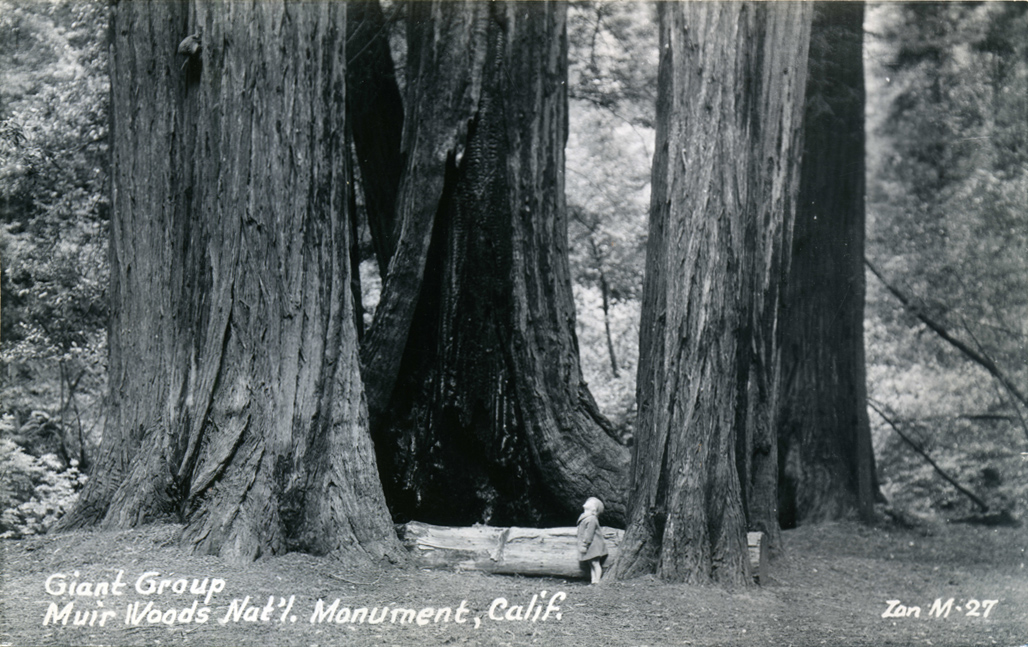
Muir Woods, a poem

illustration muir woods

Muir Woods, a poem


The eye is drawn, farther and farther

toward thin blue sky until the green feathery


tops of the trees are like the northern pole

on some dream planet. Your carsickness


from the ride up the mountain begins to fade,

leaving behind a breathless, weepy echo


not unlike your first religious fervor.

Then, you stared at Jesus’ sad face for hours,


wondering what it was that made him

love you. Here, it is the usual paralysis,


nerves made dumb by the unaccustomed

richness of perfect light. Vague, starry eyes


like yours feel at home. The air is weighty,

burdensome, solemn. Tall and slender, your guide


touches your wrist, and for a moment, you too

want to leave the surface of the earth


forever. Shyly, she picks up a tiny

pinecone, smaller than a toy. You laugh


when she tells you this is their seed:

all around, their ravaged, hollow


corpses litter the ground

like the bones of God.


In this place you feel helpless,

childlike, and you can understand a wish


to die here, never leave this hush.

They’re only trees, you tell yourself.


Yes, only trees, you think, standing still with

your neck bent back; wondering if they hear you.


2 Comments

Filed under beauty, earth, eternity, god, good, mortality, mysterious, nature, soul, spirit, spiritual, truth, universe, wood

The Nearness of Heroism, a short story

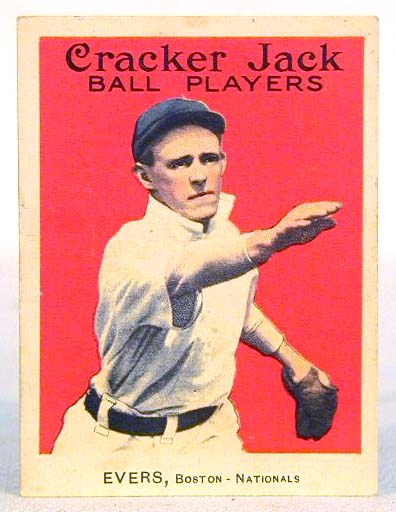
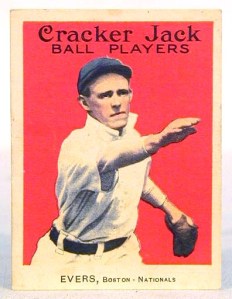
illustration the nearness of heroism cracker-jack-eversillustration the nearness of heroism

(Originally published in The Paumanok Review)

The Nearness of Heroism, a short story

They tell me he was the first man I ever saw nude; that when I asked him, pointing, in my high, three-year old’s simper, what “that thing” was, he didn’t even flinch. He stood in the big tiled shower stall, holding the door ajar with one hand, toweling himself off with the other.

“I’m a little teapot,” he sang, in his exuberant tenor. “Short and stout. This is my handle, this is my spout.”

They say I stared, and then frowned, running out to demand of my grandmother on the spot — I want to be a little teapot! Show me my spout! Where is it? Where is my spout?

Where, indeed? If only the gulf could have been reduced to those dimensions. Am I wrong to feel we would have been closer, had I been a boy? Would he have loved me more, or less?

***

I liked to sneak up on him while he used his glove, just out of the shower, a white towel tight around his waist, his hair slicked back, parted precisely. Even from my earliest memories, the old baseball glove was missing one or two fingers, the ball deprived of whole sections of its leather wrapping, worn through to the string-mended core in several spots. Both glove and ball had darkened to the color of cured tobacco, carrying a sheen of sweat-polished grime that lent a gleam akin to the finest shellac. Arms moving, hands a blur, he would move in automatic rhythms of meditation, pounding gloved fist with clenched ball as his lips moved, the words inaudible, his gray eyes focusing up and out at an angle, viewing a corner of patterned plaster, seeing something I wanted to share but couldn’t.

Then he’d notice me. He’d stop in mid-pound, his mouth open for an abrupt chuckle, too embarrassed to be embarrassed. “Hey there, lady,” he’d say, the broad vowels of his Brookline childhood making his words seem exotic.

He kept the glove and ball on the highest shelf of his closet, a level I couldn’t reach, not even with a step-stool.

***

He was, in fact, the only male presence in my life, even after I started to dwell on the concept of boys, the one I ran to in the early morning — crawling into his bed, burrowing deep under the covers, where he sang the old songs he’d learned from his Irish mother and held me in his arms, my nose burrowing into his soft feather pillow, into his wrinkled cotton pajamas, seeking out his bitter-tea-with-lemon smell, seeking out his body’s distinctive shape and radiating warmth, which possessed a steely eloquence no less comforting than my grandmother’s padded torso. Since he was home with us every day, having retired years before I was born, I didn’t realize he was different from other men, other fathers, who were defined not by their presence but by their absence.

“Oh, you dirty little devil,” he’d sing, “Does your mother know you’re out? With your hands in your pockets and your shirttail out?”

I would hear my grandmother fuming from across the room, not speaking but moving the various brushes and trinkets around on the glass-topped surface of her dresser with snappish clinks and taps. At other times, whenever he knew she disapproved, he’d make disrespectful rubber-faces behind her back until my face couldn’t keep a secret any more, and, looking at me, she’d see some sign of what was going on, then wheel indignantly, catching him in some fish-lipped, pouting impersonation of her, their demeanor so ridiculous, so upside-down, that for a moment it seemed that he was a small boy again, no one’s husband, and she his strict governess, no one’s wife.

***

He was related to me by marriage, not by blood, something that seemed to bother him a lot more than it bothered me, especially near the end of his life. From the very beginning, I had pledged my allegiance to him, had given him that affirmative declaration of the heart, and for a short time, during childhood, it seemed that he had pledged the bond in return and accepted me as his own. Not even in dreams did I measure him any differently than I measured his wife, my grandmother. As I grew older, however, and he grew more and more frail, the absence of an actual cell between us appeared to chip away at his feelings. “I don’t have any family of my own, you know,” he’d say, gazing at me as if for sympathy, never knowing how caustic the mild-sounding words were to my ears.

“I’m your family, aren’t I?” I asked him, the first time he brought it up, but he shook his head, smiling at me with a thin-lipped yet dreamy smile.

“It’s not the same,” he answered.

***

On various occasions, as his health became less certain, I promised him one of my eyes, one of my ears, one of my kidneys, half my heart, half my liver, half my stomach: everything and anything he needed to survive, anything he might need to be comfortable, which I swore to give to him when he got “old.”

***

In my last year of college, I had a boyfriend who got physical with me on several occasions. Nothing serious, no marks: a thump on the head with one knuckle, a scuffle in the yard, pushing matches. One day I reacted badly, bolting my apartment door and calling home. He answered on the first ring, but, having expected my grandmother, I found I couldn’t stop the tears. His voice deepened, becoming rough around the edges as he interrogated me. An old man, on six kinds of heart medication, he swore he’d drive the four hundred miles and teach the boy a lesson.

“No, Grampa,” I said. “It’s all right. I’m breaking up with him. Don’t worry.”

“Call the police if he comes to the door again,” he said. “Have him arrested.”

This reaction, despite his often-repeated joke: “Never hit a woman,” he’d say, shaking his head, staring at my grandmother’s back. “Use an axe.”

***

His fourth heart attack came only days before my wedding. He managed to walk me down the aisle anyway, spiffy and broad-shouldered in his plain black dinner jacket, a single pink rosebud clipped to his lapel. Since both my parents were dead, he was “giving me away” to my fiancé, a practice I found offensive on feminist grounds, because it seemed to exclude my grandmother from the giving. So we compromised: when asked by the priest, “Who gives this woman?” he was to answer, “Her grandmother and I do.” Except, when the moment came, he said only “I do.” My grandmother, standing in the front row in her baby blue satin lace and picture hat, whacked the prayer rail with her wedding service programme in frustration. The sound echoed off the front wall of the small church and stayed with me for the rest of the day.

Later, at the reception, he was critical of the music we had selected without consulting him: a wandering string quartet. “All your guests are leaving,” he said, after his fourth or fifth glass of champagne took hold. “Why didn’t you have a real band? Some dancing. It’s like a funeral in here.” I trembled all over from the exertion of holding my tongue. Only if I had screamed at him, my face reddening under its halo of white silk flowers, would he have been happy.

***

I was home for a long-overdue visit when the last battle came. Semi-invalided, by then, Grampa moved only from the bed to his recliner, spending the day reading the paper in a slow, deliberate rustle. The television blared for hours each evening, his expensive hearing aids — the same kind Reagan used, he’d told me — plucked from his canals and discarded, tossed into a dainty porcelain ashtray: hand-painted with a rising, twisting phoenix, it was the only memento he had kept from his service in Germany during the war.

He didn’t like going to bed at night, waiting until two or three in the morning to call for my grandmother to help him to his room. Arising no earlier than noon the next day, he’d swear he hadn’t slept a wink. “He snored like a baby all morning,” my grandmother would whisper.

His appetite was slight too, and then one day, nonexistent. Supper waited out in the dining room: over my grandmother’s objections I took him in a bowl of ice cream. He lay against his pillows while I spooned it into his mouth, noticing how he lipped the spoon as I withdrew it, sucking it like a baby. The bowl finished, he thanked me, his voice hoarse with exhaustion. Turning to leave, I heard him start coughing, a deep cough that seemed to come from his gut, his eyes widening under the thick cataract glasses, his cheeks bulging, seemingly an imitation of his old comic fish-face. For a moment I laughed, thinking it a joke, but he put his hand over his mouth and made as if to hold his lips together with his fingers. He was trying to keep from throwing up all over the bed, I realized, running for a basin, almost too late.

After Gran and I cleaned him up, I felt his forehead. It was hot, dry, but the rest of him was clammy and covered with an oily sweat. As I took his temperature, Gran called the doctor, who told us to get him to the hospital right away. When we told Grampa where we were taking him, he shook his head. “Now what’d you go and do that for?” he said.

He looked so small and frail laying there it was a surprise to find I couldn’t carry him — what remained of him was deceptively heavy, as if his bones were filled with lead. It took both of us to get him out to the car. Each step seemed so difficult, so impossible — by the time he lowered himself clumsily into the front seat, he was glistening with a symmetric pattern of droplets, the sweat beading his skin like opalescent sequins.

***

At the hospital, an orderly dressed in green surgical scrubs helped Grampa from the car into a wheelchair. The orderly was tall and long-limbed, and moved with an ease, a lean fluidity born of professional indifference. His arms were the color of imported chocolate, warm coppery highlights underlying the pigment. His arms were like a god’s: so full of life and possibilities, I held my breath as he lifted the skeletal, ashen old body of my grandfather out of the car. I couldn’t say what the orderly’s face looked like other than that it was — like the motion of his limbs — devoid of both pity and scorn. His eyes remained downcast, looking only at Grampa in the chair — and I wanted to speak, but nothing came to mind, only regret at not being permitted to be similarly borne away, out of my own uncertainty and into a place defined by someone else’s ministrations.

The young man’s arms, in that moment, seemed to emit forensic signals, speaking without words to a pain I hadn’t realized was there, the arms themselves justifying birth, justifying suffering, justifying death: paying for perfection all over again — skin so smooth it looked hairless, poreless, as if it smelled of allspice and cinnamon and blood and salt. The arms were immaculately sculpted; the bones just long enough, granting a perfect inertia between muscularity and leanness. The miracle of such arms and skin held my attention like a time-release dose of whatever manna makes heaven heaven, and so it was that I found myself spiraling into an upward-rushing eddy of panic when the orderly left, forever, just seconds later, rolling my grandfather to the admitting desk like so much cargo, then vanishing into the angular whiteness and pulsing fluorescence of the hospital corridors.

***

We left Grampa there, in the midst of a cotillion of duly licensed strangers — what choice did we have, not knowing, not wanting to know, not capable of that knowledge? By not speaking, we maintained a positive attitude. His room seemed comfortable, his nurses kind. His glasses glinted, the reflection obscuring his eyes, as we waved goodbye from the doorway.

By the next morning, he had been moved to the intensive care unit. He was comatose, hooked up to a ventilator, stripped of his pajamas, gleaming plastic tubes invading his throat, his nose, his bladder, his veins — his heart had stopped in the night, from the pneumonia: the doctors speculated he might have had irreversible brain damage before they got it going again.

Machines everywhere, whirring, beeping — my grandmother and I couldn’t even touch him. His chest shook under the ventilator’s control, his whole body quivered. The vent itself hissed, clicking, coaxing his reluctant breath, forcing it when it hesitated. Pushing his lungs in and out without his body’s permission. The respirator had a device to allow him to breathe for himself, if he could, like training wheels on a child’s bicycle, and sometimes he did, but even that primitive desire for oxygen would vanish, and the machine would kick in to bring him the next breath.

We were there when the respiratory people had to change his breathing tube. With the most well-meaning, tender sort of violence, they ministered to the tubes, his whole body curling into a fetal position with the deep, gaglike coughing that resulted. They couldn’t say if he’d ever wake up, or whether he’d come off the ventilator. His arms were twisted, contorted, the hands grasping at nothing with a desperation that made my shoulders quiver in an involuntary spasm of sympathy. I bought him a tiny teddy bear, uncurling his stiff fingers to place the bear against the taut, unyielding palm. His other hand appeared to relax once the toy was in place, but perhaps it was only my imagination.

***

My grandmother and I, without speaking, understood our own feelings clearly enough. We wanted him gone; this kind of life was too painful to watch. We wanted it to come:   but at the same time felt wicked and evil. Who knew what he himself would have wanted? In the end, she signed the thick sheaf of papers authorizing no further “heroic measures.” Each place for her signature was marked with special red removable tabs.

***

In a sort of minor miracle, in several days he did awake, and they removed the intrusion of the ventilator. He was himself, more or less, and knew who we were, but underlying that surface was a terrible confusion. “How’s Jessie?” he asked me calmly, the name of my great-grandmother, dead long before I was born. His memories suffered no restraint; no contradictions existed in his inner flow of time. “Seeing you’s the best present I could have gotten,” he told us. “I’m going to take us all on a vacation when I get out of here.”

He seemed better than he had in years: I left for home, knowing it wouldn’t last; for the first time not wondering whether he would live or not. Later that day, I called him at the hospital from a thousand miles away and let him speak to my husband and my daughter. Say I love you, I told them. Say I love you, Grampa.

***

The next day he slipped back into unconsciousness, gently, easily, as a bar of soap floats downward in warm water. Notwithstanding the papers, the hospital wanted to put him back on the ventilator. No, Gran told them, no ventilator. No more.

***

I asked her what he had looked like, at the end. He lay on his side in the bed, she said, breathing shallowly. He didn’t seem to be in pain. He panted a little, she said, not moving, his face smooth.

I feared perhaps we had decided it the wrong way. Grampa’s doctor, without saying anything, seemed to look at us as if we were bad people, as if we cared more about ourselves than Grampa himself. As if we were selfish.

***

It wasn’t until a couple months after the funeral I thought to look for his glove and ball. I searched his closet first: most of his clothes and things were already gone, and the closet seemed a different space, altered by no longer containing him. When I couldn’t find them I didn’t panic — I knew Gran had put them away somewhere safe for me.

“Where’s Grampa’s glove and ball?” I asked her, not wanting to reveal how much I wanted to have them, now that he wasn’’t there to keep them away.

“What, those old things?” she asked, incredulous. “You wanted me to save those?”

I gaped at her then. The floor under my feet got soft; my knees turned into grating stone stubs lashed together by rusted wire. She was right, in a way, since at the last the glove hadn’t been a glove, just a thumb, the ball not a ball, either, but a roundish wad of wrapped string, its leather covering gone. That was all he’d had left, all I’d wanted: a piece of him I’d thought I was entitled to.

I would have kept them in a little box and looked at them every now and then, touched them with my finger. Maybe, if I was feeling daring, I would have taken the glove thumb and slipped it on, holding the ball in my hand, sliding the brittle thumb piece back and forth over the grimy string. I would have smelled them: a few tentative whiffs of the powdery leather.

***

I didn’t yell at her, there was no point. It was over. In spite of my outward act of forgiveness, I couldn’t help thinking that perhaps what Grampa had said all along was true — maybe people did reserve the deepest sort of caring for their own blood, maybe that kind of caring was inseparable from cells, inalienable from life. Gran hadn’t cared as much about his feelings about the glove as she had about mine, for example. Or was it just that she didn’t care as much about the archival, historical things as I did? Whatever the explanation, it was done: she had not even understood enough to realize the issue existed.

“Why didn’t you tell me not to throw them out?” she asked later. “Why didn’t you tell me you wanted them?”

It was simple: I thought she knew. “I just assumed you’d keep them,” I said. “They meant so much to him.”

“They were ratty old things,” she said. “Just pieces, really. They were unrecognizable.”

***

I told myself that perhaps it was a good thing that the glove thumb and string ball were gone. I’d wanted them for the wrong reasons. I’d wanted something I didn’t deserve. I felt hungry — empty — but without focus, without specific appetite. He — damn him! — was leaving me all over again, and for the third time: the person I’d wanted him to be; the person he’d been; the person I’d wanted him to remain.

I thought of all the other useless things I already had in my personal archives, from my father’s crocheted baby blanket to clothes worn by my mother in college. I thought of letters they’d written to each other before I was born, airmail letters on thin blue tissue, drawn in irregular strokes of faded ink. I thought of brittle brown paperbacks and the curling edges of photographs. We are naked in our mourning, we cannot speak, and we cannot touch.

Grampa was gone; the glove and ball were gone; I was still here. The hell with it — I didn’t want to know, I didn’t want to hear what the dead had to say anymore. Only in dreams would the dead be able to seek me out again.

The dead never say much, anyway, not even in dreams. They look into my eyes, mainly, their own abrim with a solitary sort of gentleness, hoping to inoculate me against what they know is unnecessary sorrow — unnecessary love? — hoping to protect me from whatever it is that only they can see: all the while, nodding their heads in a slow, assured rhythm, a rhythm nearly invisible to the unaided eye.


3 Comments

Filed under beauty, boys, childhood, compassion, death, development, eternal, eternity, fathers, fiction, funeral, god, good, health, heart, history, identity, justice, karma, kindness, life, logic, love, man, manhood, maturity, men, mortality, mourning, mysterious, parenting, personal responsibility, regret, relationships, short stories, soul, spirit, spiritual, truth, universe, warmth, youth

Going To Sea, a poem

Apache, 105-foot D. Presles and J. Pierrejean charter yacht

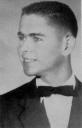
illustration barry huplits high school photo


Going To Sea

(for Barry Huplits)


She is a great white boat, carved

of wood, lacquered to a blinding

sheen, her sails immense, floating


over my head like the wings

of a fearsome angel. I sit

on her prow, clinging to the slight


metal rail, and together we leap

over the waves like some illiterate,

dangerous god. I am a mermaid,


a brightly colored figurehead,

thrust into the salt spray to bring luck.

The power of the water flings me to and fro,


but I hold fast, panting, the rich smell

of the sea making me drunk. As we pass

the ragged rock walls of the inlet,


I see the towering dwellings of men,

though these quickly fall behind our path,

growing tiny, frail to the elements


I have momentarily harnessed. We brush

great clumps of weeds, then the color beneath

changes from murky green to depthless indigo,


the froth of the peaks suddenly

light, riddled airy like the childish,

gladdened heart inside my chest.


In my net are jerking glass shrimp,

Tiny, tassled fish that look like

bits of leaf, one lone needle-nosed


eel, sinuous even in his distress,

and when I have stared long enough,

I fling them back to their wet lives


without regret. Under the sharp

edges of the sun, skin grows heated,

reddened as if by love’s rough brush,


yet we keep on, moving into the horizon,

towards the vanished place of wildness,

full of an impeccable, golden light.


Leave a comment

Filed under ancient history, beauty, compassion, earth, eternal, eternity, god, good, history, identity, karma, kindness, life, love, mysterious, nature, poetry, soul, spirit, spiritual, truth, universe, warmth, wood, youth

Weightlifting, a short story

illustration weightlifting 2illustration weightlifting

Weightlifting, a short story

Laurel stood in the alley beside the entrance to the Flower of India’s outdoor patio, and the stifling, smoggy Burbank sun was so hot she could feel droplets of sweat rolling down her back and her ribcage and between her breasts, soaking her nurse’s costume. She was hemmed in by a dented maroon B210, a smelly green garbage dumpster, and by the presence of her spurned lover. Jason had drawn himself erect to his full 4-foot-9-inch height (a foot shorter than Laurel herself) and was trying not to tense his neck — specifically his sternomastoid muscles — because he knew how much that pissed her off.

“Jason,” she said. “It’s not worth this. We should both calm down, O.K.?”

“I am calm,” Jason said. “I’m completely calm. I’m just confused. You’re very confusing, Laurel. Maybe you could go over it one more time?”

“I’m late for work,” she said. “I told you I only had an hour for lunch. I don’t know anything I could add to make it clearer. How many times do you want me to say I don’t want to see you anymore?”

Jason stared up at her. Without realizing it, he tensed his sternomastoids, his neck vanishing in the thick round cords. Jesus, Laurel thought, there he goes again!

He blinked his eyes. “I’ll be home tonight. Could you please call? Please?”

“Oh, God,” she said. “All right. If it helps. I’ll call.”

Jason nodded. His neck relaxed. He looked more normal, but not completely normal, never completely normal. That was one of the problems. He looked like an an eleven-year-old in an inflatable Halloween “muscle” bodysuit. People stared at him everywhere he went; and stared at Laurel when she was with him.

In the beginning, she thought she’d be able to handle it. After all, his face was beautiful, startling eyes, neat brows, and strong chin. The proportions of his body were perfect, if you viewed him from a distance. And the physical side of the relationship was fantastic. He was a perfect little doll: an expensive toy, like from the Black Licorice Whip on Santa Monica and Sunset. But she was wrong. She couldn’t handle it.

“Bye, Jason,” she said.

She started to move, edging her body through the narrow space between him and the dumpster, but she didn’t do it fast enough. Jason reached out. He wanted to embrace her, sweep her back in his arms, and carry her off like Clark Gable with Vivien Leigh. But nine times out of ten he didn’t have the leverage; he had the strength but not the right angle of lift. If he’d tried, he would have toppled Laurel into the open dumpster.

So all he could do instead was hug her. His nose rested atop the shelf of her breasts; his breath caught a little in his chest and he inhaled deeply, almost a sob, and that was his big mistake. Through her costume — today she was a bit player on a soap — through the thin white material, he smelled her perfume, the heavy frangipani oil she got at Mrs. Gooch’s in Redondo, and when he smelled that oil he couldn’t help himself.

He plunged his face into her breasts, and though he felt absurd he couldn’t stop himself; it happened and he could do nothing, not even after he remembered that this was one of the things she really hated. His face snuggled into that frangipani scent, into the soft flesh of her bosom, and his head wiggled back and forth like a rooting newborn.

Laurel stood, her chin resting on his head, tangling his straight, silky blonde hair as his head moved back and forth at her breasts. She had an urge to rise up and smash him on the crown of his head with her chin. She had read somewhere that you could kill a person with your chin, supposedly it was one of the hardest bones in the body, but, no — maybe that was the elbow. Anyway, this was all her fault.

“I’ve got to go,” she said.

He untangled himself and stepped back. His eyes were red and his face was red and his thick hair was wild.

“Goodbye,” he said. And as soon as he saw her car drive off toward the studio, he attacked the wooden fence of the restaurant’s patio with his bare fists. Then he went home, and spent an hour peroxiding his hands and pulling splinters out with an eyebrow tweezers Laurel had left at his apartment, on one of the rare occasions he had persuaded her to spend the night.

***

Back at work, Laurel went to the makeup room. The hair lady pulled one of the hot curler sets over and started re-rolling Laurel’s hair. Laurel closed her eyes, and let the brushing and tugging lull her.

Jason was an actor, too, and in her heart Laurel had to admit he was much more talented than she. If he’d had maybe two or three inches more in height, he could have been cast in a slew of parts. But as it was, being 4-foot-9, he was shut out. Oh, he got a few far-out costume alien roles, and the occasional little person job, but the irony was that he was actually too tall for the best of those parts. Like when they were making that Star Wars sequel and they needed people for the little fuzzy things, the Ewoks, Jason wasn’t even called to audition. Too tall. Laurel had just met him then, and she never forgot how he reacted.

He got totally bombed — must have drunk at least three six-packs of beer. Being as small as he was, relatively speaking, that was probably enough to have killed him. He showed up at Laurel’s apartment, the third-floor place in West Hollywood with the center courtyard and pool. He danced around like a maniac in the open-air hallway outside her front door. Laurel literally peed in her pants when all of a sudden he vaulted over the railing. She ran to the edge, feeling the iron grillwork vibrating from his push off, but by the time she looked down she’d heard the blessed splash. She ran down to drag him out of the water.

This white-haired biddy on the first floor had screamed at her as she tried to half-carry, half-drag the semi-comatose, muttering Jason upstairs.

“Is that your son?” the crone yelled. “I’m going to report you to the welfare department. Letting a little boy jump off a third-story railing — he could have been killed. You should have been watching him better, lady!”

Laurel got him up to the apartment and put his head in the toilet and told him to throw up. Then she put him on the couch and covered him with a blanket.

The next morning, when she awoke, Jason was already gone, but there were flowers everywhere. He had gone around the corner to Lucky’s and bought their entire cut flower stock. Every pot and pan and glass she owned was stuffed, crammed, overflowing with flowers.

***

Laurel opened her eyes and saw Freddie standing over her, ready to touch up the makeup. She leaned her head back, he tilted the chair, and then she could feel him brushing her lids with fresh eye shadow.

Today was the fourth time in eight months she had tried to break it off with Jason. She had to make it clean, this time, otherwise it was going to take both of them right over the edge. Usually, Laurel was better at this sort of thing. With Jason, though, the relationship had lingered on her doorstep like a yowling, starving cat. She’d get to a certain point, then Jason would suck her in with his green eyes; her courage would fall away. She would backtrack; afraid she was making the wrong move. For a few weeks, she would be filled with hope. She would think, maybe Jason and I can make ourselves a place in the world.

“Open your peepers, darling,” Freddie said.

“You’ve given me eyes again! And lips. Too bad I can’t have you come over to my house every time I have a date.”

“You flatter me, honey,” Freddie said. “Nothing here that nature didn’t give you. Just me and Max Factor helping out a little.”

Laurel went off to her dressing room to look over the script. This morning she’d spoken two lines, this afternoon she had three. In this afternoon’s scene, she had to cut ski pants off the legs of the character of “Sue Roper,” after a tragic fall on the slopes. Her three lines were, “Hold her down while I remove her pants,” “There’s a lot of bleeding here,” and “We need to get this young woman to X-ray, pronto!” If the director tried to “direct” her today, with this garbage, she thought she might bite his hand off at the wrist.

***

After work, she went to dance class. She wasn’t with it; the teacher kept coming over and fussing with her arms, her legs, pushing her hips down, tucking her butt under. When it was her turn to do a solo, she almost forgot the routine. Snapping her head around for the turns, she nearly lost her balance.

Leaving class, she shivered as her tired rump touched the icy vinyl of the car’s upholstery. At Ralph’s, she bought one single-serving Chocolate Supreme frozen cupcake. As she opened her front door, she noticed the message light on her machine flashing. The light flashed one-two-three-four-five-six-seven. Seven calls! She hoped they weren’t all from Jason.

She kicked off her shoes and dropped her bags, pressing the Play button.

“Hi, Laurel. Oh, are you working? This is Katherine. If you want to eat, I’m meeting a bunch of people at El Coyote around eight, hope we see you?” Click. Beep.

“Uh, this is The Strand Bookstore. The book you ordered, uh, the poetry book, is in. Thanks.” Click. Beep.

“Laurel. I’m sorry about today at the restaurant. I’ve got to see you tonight. Please call.” Click. Beep.

“This is Dr. Petersen’s office, calling to confirm an appointment for Laurel Bragg on Wednesday, the eighth of December, at 3:30 p.m.” Click. Beep.

“Hi there. Remember me? I’m back from the Oregon festival, it was terrific. Give me a buzz; I’ve got a nice script sitting here with your name on it.” Click. Beep.

“Laurel. I’m sorry. I’m waiting for your call. I’ll sit by the phone all night.” Click. Beep.

“I know we can get through this. I have faith.” Click. Beep.

Faith. What a crock, Laurel thought. What did Jason have faith in? Did he look at everything in his life the way he looked at his weights? Did he think if he pushed hard enough, if he pushed enough times, that he could push them both into a happy ending?

She unwrapped the frozen cupcake. She nuked it, poured herself a glass of milk, and sat cross-legged in the middle of her living room. Three calls. She would have bet on all seven. Maybe this time, he knew. Maybe this time they’d both be smart enough to let it die with a little dignity.

She finished eating and lay down, staring out the window at the wispy gray clouds passing over the full moon. She pulled her knees up to her chest, feeling her aching spine crack. Then she heard a knock at the door.

“Who is it?” she said.

She could barely hear his voice; looked like he was in one of his whispering moods.

“It’s me,” Jason said.

She dragged herself up and looked out the peephole. The top of his head was just visible through the dirty lens.

She opened the door: he looked down at the ground, staring at his feet. He wore his leather jacket with the sheepskin collar, the one from the little boy’s dress department at Magnin’s. Wound tight around his neck was a red and black striped muffler with long black fringe, but the jacket was open all the way; he didn’t have any shirt on underneath. His lips were turning blue.

His eyes were bright, the whites clear, but the rims of his eyelids were deep red. “Can I come in?” he said.

A chest-bursting sigh heaved out of her; she clicked her teeth together in her jaw. He looked like he was going to crumple up in a heap on her doorstep.

“Sure,” she said. “I’m just tired. I had a depressing dance class. Come in. You must be freezing.”

She sat down on the couch. He closed the door, leaning against the wall with his hands in his pockets. Well, what’s it going to be tonight? she thought.

“Laurel,” he said. He sat down next to her. Reaching up, he pulled her head down to the center of his bare chest and held her like that, bent over, her face chilled by the leather and the cold zipper of his jacket. Her cheek was against his smooth chest — not a hair on it because he had it waxed, and she could smell the soap he used, Jesus, he was always so damned clean. Then she felt drops on her face, warmish drops, first one, then another, then drop-drop-drop-drop.

He let go and stood, pulling her to her feet; sometimes she forgot how strong he was. All he needed was the proper leverage and he could pick her up, carry her. Not the Gone With the Wind scene again, she thought — I don’t know if I can take it.

He picked her up and kissed her; his lips were pale and cold as he opened his mouth, pushing his tongue past her lips, over her teeth, moving it back and forth over their sharp edges. For a moment — as he held her without effort, as she felt his body through the thick leather and the canvas of his jeans — she imagined that things were different, that when they went out together nobody gave them funny looks, nobody gawked at her like she was a pervert or a dwarf-hag or a pedophile.

He lowered her legs and her feet touched the ground. She straightened her legs and stood. He craned his neck back to look her in the eye, and she saw that his eyes were dry, but the whites weren’t clear now, they were webbed in red, matching the inflamed edges of his eyelids.

“All I want is this, Laurel,” he said. “You don’t have to go anywhere with me. I won’t expect anything.”

She looked down at his face. “What are you saying? What have you come down to? There are ten thousand women in L.A. who would be good for you. Can’t you see it’s not worth it?”

“I don’t know,” he said. “I can’t see much of anything. I curse you all day under my breath, I bad-mouth you to my therapist, and I have a dart board with your picture on it. But at night, it’s not like that. Then, it’s like nothing bad has ever happened.”

He turned his face away and she stared at the top of his head. I can’t believe this groveling, she thought, this is really bad, sick, and pathetic. I can’t believe I have robbed another human being of so much dignity. It isn’t Jason who’s being weak here, it’s me, I’m the weak one who can’t do what has to be done.

“Jason, I’m sorry,” she said. “This isn’t any good. You don’t really want to slink in here after dark like some criminal.”

“Yes, I do,” he said.

“Well, forget it,” she said. “Believe what I am saying to you. This thing cannot work. This is the end of it.” His neck tensed, his sternomastoids swelling and rising until he looked like an alarmed turtle. There he goes again, she thought. Will he ever stop?

Jason’s eyes got shinier, water building up inside his lower eyelids, about to spill out, over the edge. Suddenly, his hand flew up; he leaned in towards her to follow through with the swing; his open palm connected with the center of her chest and her body bounced off it. The thud of the blow and the echo throbbed in her sternum, in her breasts, in her spine; her teeth snapped together and she bit her tongue, tasting blood, as her knees gave way, sending her to the floor.

“I never wanted to tell you this,” he said, “but as an actress, you stink.”

As she bucked and heaved on the rug, trying to force some air back into her lungs, he was moving out the door, slamming it as he ran; the wall of the apartment shook and the brass guard chain rattled back and forth; tick-tick, tick-tick. Jason was right — she’d chosen the wrong line of work; the wrong life. She went to sleep for the night where she had fallen, rolling atop her rumpled satchel, in her sweat-stained leotard, the remains of Freddie’s makeup job smeared over her face like the greasy ashes of a penitent, and though the next morning she couldn’t remember her dreams, she knew that they had been filled with a great heat and a great darkness, and most of all, the sensation of a relentless, unforgiving gravity.

1 Comment

Filed under beauty, boys, compassion, girls, good, heart, hypocrisy, justice, karma, kindness, life, love, man, manhood, maturity, men, personal responsibility, regret, relationships, sex, short stories, soul, truth, universe, warmth, woman, women, youth