Category Archives: eternal

The Nearness of Heroism, a short story

illustration the nearness of heroism cracker-jack-eversillustration the nearness of heroism

(Originally published in The Paumanok Review)

The Nearness of Heroism, a short story

They tell me he was the first man I ever saw nude; that when I asked him, pointing, in my high, three-year old’s simper, what “that thing” was, he didn’t even flinch. He stood in the big tiled shower stall, holding the door ajar with one hand, toweling himself off with the other.

“I’m a little teapot,” he sang, in his exuberant tenor. “Short and stout. This is my handle, this is my spout.”

They say I stared, and then frowned, running out to demand of my grandmother on the spot — I want to be a little teapot! Show me my spout! Where is it? Where is my spout?

Where, indeed? If only the gulf could have been reduced to those dimensions. Am I wrong to feel we would have been closer, had I been a boy? Would he have loved me more, or less?

***

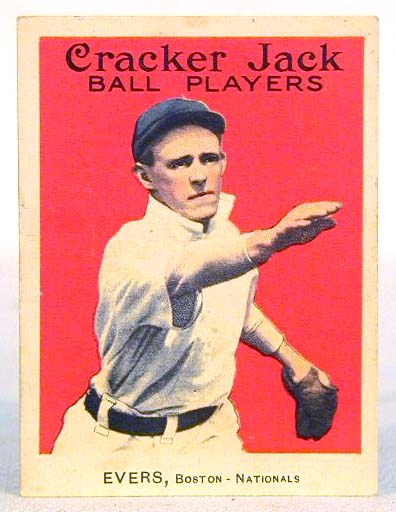
I liked to sneak up on him while he used his glove, just out of the shower, a white towel tight around his waist, his hair slicked back, parted precisely. Even from my earliest memories, the old baseball glove was missing one or two fingers, the ball deprived of whole sections of its leather wrapping, worn through to the string-mended core in several spots. Both glove and ball had darkened to the color of cured tobacco, carrying a sheen of sweat-polished grime that lent a gleam akin to the finest shellac. Arms moving, hands a blur, he would move in automatic rhythms of meditation, pounding gloved fist with clenched ball as his lips moved, the words inaudible, his gray eyes focusing up and out at an angle, viewing a corner of patterned plaster, seeing something I wanted to share but couldn’t.

Then he’d notice me. He’d stop in mid-pound, his mouth open for an abrupt chuckle, too embarrassed to be embarrassed. “Hey there, lady,” he’d say, the broad vowels of his Brookline childhood making his words seem exotic.

He kept the glove and ball on the highest shelf of his closet, a level I couldn’t reach, not even with a step-stool.

***

He was, in fact, the only male presence in my life, even after I started to dwell on the concept of boys, the one I ran to in the early morning — crawling into his bed, burrowing deep under the covers, where he sang the old songs he’d learned from his Irish mother and held me in his arms, my nose burrowing into his soft feather pillow, into his wrinkled cotton pajamas, seeking out his bitter-tea-with-lemon smell, seeking out his body’s distinctive shape and radiating warmth, which possessed a steely eloquence no less comforting than my grandmother’s padded torso. Since he was home with us every day, having retired years before I was born, I didn’t realize he was different from other men, other fathers, who were defined not by their presence but by their absence.

“Oh, you dirty little devil,” he’d sing, “Does your mother know you’re out? With your hands in your pockets and your shirttail out?”

I would hear my grandmother fuming from across the room, not speaking but moving the various brushes and trinkets around on the glass-topped surface of her dresser with snappish clinks and taps. At other times, whenever he knew she disapproved, he’d make disrespectful rubber-faces behind her back until my face couldn’t keep a secret any more, and, looking at me, she’d see some sign of what was going on, then wheel indignantly, catching him in some fish-lipped, pouting impersonation of her, their demeanor so ridiculous, so upside-down, that for a moment it seemed that he was a small boy again, no one’s husband, and she his strict governess, no one’s wife.

***

He was related to me by marriage, not by blood, something that seemed to bother him a lot more than it bothered me, especially near the end of his life. From the very beginning, I had pledged my allegiance to him, had given him that affirmative declaration of the heart, and for a short time, during childhood, it seemed that he had pledged the bond in return and accepted me as his own. Not even in dreams did I measure him any differently than I measured his wife, my grandmother. As I grew older, however, and he grew more and more frail, the absence of an actual cell between us appeared to chip away at his feelings. “I don’t have any family of my own, you know,” he’d say, gazing at me as if for sympathy, never knowing how caustic the mild-sounding words were to my ears.

“I’m your family, aren’t I?” I asked him, the first time he brought it up, but he shook his head, smiling at me with a thin-lipped yet dreamy smile.

“It’s not the same,” he answered.

***

On various occasions, as his health became less certain, I promised him one of my eyes, one of my ears, one of my kidneys, half my heart, half my liver, half my stomach: everything and anything he needed to survive, anything he might need to be comfortable, which I swore to give to him when he got “old.”

***

In my last year of college, I had a boyfriend who got physical with me on several occasions. Nothing serious, no marks: a thump on the head with one knuckle, a scuffle in the yard, pushing matches. One day I reacted badly, bolting my apartment door and calling home. He answered on the first ring, but, having expected my grandmother, I found I couldn’t stop the tears. His voice deepened, becoming rough around the edges as he interrogated me. An old man, on six kinds of heart medication, he swore he’d drive the four hundred miles and teach the boy a lesson.

“No, Grampa,” I said. “It’s all right. I’m breaking up with him. Don’t worry.”

“Call the police if he comes to the door again,” he said. “Have him arrested.”

This reaction, despite his often-repeated joke: “Never hit a woman,” he’d say, shaking his head, staring at my grandmother’s back. “Use an axe.”

***

His fourth heart attack came only days before my wedding. He managed to walk me down the aisle anyway, spiffy and broad-shouldered in his plain black dinner jacket, a single pink rosebud clipped to his lapel. Since both my parents were dead, he was “giving me away” to my fiancé, a practice I found offensive on feminist grounds, because it seemed to exclude my grandmother from the giving. So we compromised: when asked by the priest, “Who gives this woman?” he was to answer, “Her grandmother and I do.” Except, when the moment came, he said only “I do.” My grandmother, standing in the front row in her baby blue satin lace and picture hat, whacked the prayer rail with her wedding service programme in frustration. The sound echoed off the front wall of the small church and stayed with me for the rest of the day.

Later, at the reception, he was critical of the music we had selected without consulting him: a wandering string quartet. “All your guests are leaving,” he said, after his fourth or fifth glass of champagne took hold. “Why didn’t you have a real band? Some dancing. It’s like a funeral in here.” I trembled all over from the exertion of holding my tongue. Only if I had screamed at him, my face reddening under its halo of white silk flowers, would he have been happy.

***

I was home for a long-overdue visit when the last battle came. Semi-invalided, by then, Grampa moved only from the bed to his recliner, spending the day reading the paper in a slow, deliberate rustle. The television blared for hours each evening, his expensive hearing aids — the same kind Reagan used, he’d told me — plucked from his canals and discarded, tossed into a dainty porcelain ashtray: hand-painted with a rising, twisting phoenix, it was the only memento he had kept from his service in Germany during the war.

He didn’t like going to bed at night, waiting until two or three in the morning to call for my grandmother to help him to his room. Arising no earlier than noon the next day, he’d swear he hadn’t slept a wink. “He snored like a baby all morning,” my grandmother would whisper.

His appetite was slight too, and then one day, nonexistent. Supper waited out in the dining room: over my grandmother’s objections I took him in a bowl of ice cream. He lay against his pillows while I spooned it into his mouth, noticing how he lipped the spoon as I withdrew it, sucking it like a baby. The bowl finished, he thanked me, his voice hoarse with exhaustion. Turning to leave, I heard him start coughing, a deep cough that seemed to come from his gut, his eyes widening under the thick cataract glasses, his cheeks bulging, seemingly an imitation of his old comic fish-face. For a moment I laughed, thinking it a joke, but he put his hand over his mouth and made as if to hold his lips together with his fingers. He was trying to keep from throwing up all over the bed, I realized, running for a basin, almost too late.

After Gran and I cleaned him up, I felt his forehead. It was hot, dry, but the rest of him was clammy and covered with an oily sweat. As I took his temperature, Gran called the doctor, who told us to get him to the hospital right away. When we told Grampa where we were taking him, he shook his head. “Now what’d you go and do that for?” he said.

He looked so small and frail laying there it was a surprise to find I couldn’t carry him — what remained of him was deceptively heavy, as if his bones were filled with lead. It took both of us to get him out to the car. Each step seemed so difficult, so impossible — by the time he lowered himself clumsily into the front seat, he was glistening with a symmetric pattern of droplets, the sweat beading his skin like opalescent sequins.

***

At the hospital, an orderly dressed in green surgical scrubs helped Grampa from the car into a wheelchair. The orderly was tall and long-limbed, and moved with an ease, a lean fluidity born of professional indifference. His arms were the color of imported chocolate, warm coppery highlights underlying the pigment. His arms were like a god’s: so full of life and possibilities, I held my breath as he lifted the skeletal, ashen old body of my grandfather out of the car. I couldn’t say what the orderly’s face looked like other than that it was — like the motion of his limbs — devoid of both pity and scorn. His eyes remained downcast, looking only at Grampa in the chair — and I wanted to speak, but nothing came to mind, only regret at not being permitted to be similarly borne away, out of my own uncertainty and into a place defined by someone else’s ministrations.

The young man’s arms, in that moment, seemed to emit forensic signals, speaking without words to a pain I hadn’t realized was there, the arms themselves justifying birth, justifying suffering, justifying death: paying for perfection all over again — skin so smooth it looked hairless, poreless, as if it smelled of allspice and cinnamon and blood and salt. The arms were immaculately sculpted; the bones just long enough, granting a perfect inertia between muscularity and leanness. The miracle of such arms and skin held my attention like a time-release dose of whatever manna makes heaven heaven, and so it was that I found myself spiraling into an upward-rushing eddy of panic when the orderly left, forever, just seconds later, rolling my grandfather to the admitting desk like so much cargo, then vanishing into the angular whiteness and pulsing fluorescence of the hospital corridors.

***

We left Grampa there, in the midst of a cotillion of duly licensed strangers — what choice did we have, not knowing, not wanting to know, not capable of that knowledge? By not speaking, we maintained a positive attitude. His room seemed comfortable, his nurses kind. His glasses glinted, the reflection obscuring his eyes, as we waved goodbye from the doorway.

By the next morning, he had been moved to the intensive care unit. He was comatose, hooked up to a ventilator, stripped of his pajamas, gleaming plastic tubes invading his throat, his nose, his bladder, his veins — his heart had stopped in the night, from the pneumonia: the doctors speculated he might have had irreversible brain damage before they got it going again.

Machines everywhere, whirring, beeping — my grandmother and I couldn’t even touch him. His chest shook under the ventilator’s control, his whole body quivered. The vent itself hissed, clicking, coaxing his reluctant breath, forcing it when it hesitated. Pushing his lungs in and out without his body’s permission. The respirator had a device to allow him to breathe for himself, if he could, like training wheels on a child’s bicycle, and sometimes he did, but even that primitive desire for oxygen would vanish, and the machine would kick in to bring him the next breath.

We were there when the respiratory people had to change his breathing tube. With the most well-meaning, tender sort of violence, they ministered to the tubes, his whole body curling into a fetal position with the deep, gaglike coughing that resulted. They couldn’t say if he’d ever wake up, or whether he’d come off the ventilator. His arms were twisted, contorted, the hands grasping at nothing with a desperation that made my shoulders quiver in an involuntary spasm of sympathy. I bought him a tiny teddy bear, uncurling his stiff fingers to place the bear against the taut, unyielding palm. His other hand appeared to relax once the toy was in place, but perhaps it was only my imagination.

***

My grandmother and I, without speaking, understood our own feelings clearly enough. We wanted him gone; this kind of life was too painful to watch. We wanted it to come:   but at the same time felt wicked and evil. Who knew what he himself would have wanted? In the end, she signed the thick sheaf of papers authorizing no further “heroic measures.” Each place for her signature was marked with special red removable tabs.

***

In a sort of minor miracle, in several days he did awake, and they removed the intrusion of the ventilator. He was himself, more or less, and knew who we were, but underlying that surface was a terrible confusion. “How’s Jessie?” he asked me calmly, the name of my great-grandmother, dead long before I was born. His memories suffered no restraint; no contradictions existed in his inner flow of time. “Seeing you’s the best present I could have gotten,” he told us. “I’m going to take us all on a vacation when I get out of here.”

He seemed better than he had in years: I left for home, knowing it wouldn’t last; for the first time not wondering whether he would live or not. Later that day, I called him at the hospital from a thousand miles away and let him speak to my husband and my daughter. Say I love you, I told them. Say I love you, Grampa.

***

The next day he slipped back into unconsciousness, gently, easily, as a bar of soap floats downward in warm water. Notwithstanding the papers, the hospital wanted to put him back on the ventilator. No, Gran told them, no ventilator. No more.

***

I asked her what he had looked like, at the end. He lay on his side in the bed, she said, breathing shallowly. He didn’t seem to be in pain. He panted a little, she said, not moving, his face smooth.

I feared perhaps we had decided it the wrong way. Grampa’s doctor, without saying anything, seemed to look at us as if we were bad people, as if we cared more about ourselves than Grampa himself. As if we were selfish.

***

It wasn’t until a couple months after the funeral I thought to look for his glove and ball. I searched his closet first: most of his clothes and things were already gone, and the closet seemed a different space, altered by no longer containing him. When I couldn’t find them I didn’t panic — I knew Gran had put them away somewhere safe for me.

“Where’s Grampa’s glove and ball?” I asked her, not wanting to reveal how much I wanted to have them, now that he wasn’’t there to keep them away.

“What, those old things?” she asked, incredulous. “You wanted me to save those?”

I gaped at her then. The floor under my feet got soft; my knees turned into grating stone stubs lashed together by rusted wire. She was right, in a way, since at the last the glove hadn’t been a glove, just a thumb, the ball not a ball, either, but a roundish wad of wrapped string, its leather covering gone. That was all he’d had left, all I’d wanted: a piece of him I’d thought I was entitled to.

I would have kept them in a little box and looked at them every now and then, touched them with my finger. Maybe, if I was feeling daring, I would have taken the glove thumb and slipped it on, holding the ball in my hand, sliding the brittle thumb piece back and forth over the grimy string. I would have smelled them: a few tentative whiffs of the powdery leather.

***

I didn’t yell at her, there was no point. It was over. In spite of my outward act of forgiveness, I couldn’t help thinking that perhaps what Grampa had said all along was true — maybe people did reserve the deepest sort of caring for their own blood, maybe that kind of caring was inseparable from cells, inalienable from life. Gran hadn’t cared as much about his feelings about the glove as she had about mine, for example. Or was it just that she didn’t care as much about the archival, historical things as I did? Whatever the explanation, it was done: she had not even understood enough to realize the issue existed.

“Why didn’t you tell me not to throw them out?” she asked later. “Why didn’t you tell me you wanted them?”

It was simple: I thought she knew. “I just assumed you’d keep them,” I said. “They meant so much to him.”

“They were ratty old things,” she said. “Just pieces, really. They were unrecognizable.”

***

I told myself that perhaps it was a good thing that the glove thumb and string ball were gone. I’d wanted them for the wrong reasons. I’d wanted something I didn’t deserve. I felt hungry — empty — but without focus, without specific appetite. He — damn him! — was leaving me all over again, and for the third time: the person I’d wanted him to be; the person he’d been; the person I’d wanted him to remain.

I thought of all the other useless things I already had in my personal archives, from my father’s crocheted baby blanket to clothes worn by my mother in college. I thought of letters they’d written to each other before I was born, airmail letters on thin blue tissue, drawn in irregular strokes of faded ink. I thought of brittle brown paperbacks and the curling edges of photographs. We are naked in our mourning, we cannot speak, and we cannot touch.

Grampa was gone; the glove and ball were gone; I was still here. The hell with it — I didn’t want to know, I didn’t want to hear what the dead had to say anymore. Only in dreams would the dead be able to seek me out again.

The dead never say much, anyway, not even in dreams. They look into my eyes, mainly, their own abrim with a solitary sort of gentleness, hoping to inoculate me against what they know is unnecessary sorrow — unnecessary love? — hoping to protect me from whatever it is that only they can see: all the while, nodding their heads in a slow, assured rhythm, a rhythm nearly invisible to the unaided eye.
3 Comments

Filed under beauty, boys, childhood, compassion, death, development, eternal, eternity, fathers, fiction, funeral, god, good, health, heart, history, identity, justice, karma, kindness, life, logic, love, man, manhood, maturity, men, mortality, mourning, mysterious, parenting, personal responsibility, regret, relationships, short stories, soul, spirit, spiritual, truth, universe, warmth, youth

Going To Sea, a poem

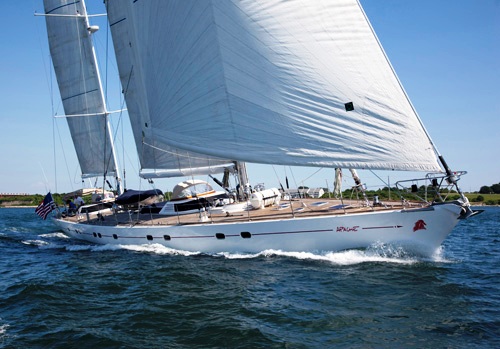
Apache, 105-foot D. Presles and J. Pierrejean charter yacht

illustration barry huplits high school photo


Going To Sea

(for Barry Huplits)


She is a great white boat, carved

of wood, lacquered to a blinding

sheen, her sails immense, floating


over my head like the wings

of a fearsome angel. I sit

on her prow, clinging to the slight


metal rail, and together we leap

over the waves like some illiterate,

dangerous god. I am a mermaid,


a brightly colored figurehead,

thrust into the salt spray to bring luck.

The power of the water flings me to and fro,


but I hold fast, panting, the rich smell

of the sea making me drunk. As we pass

the ragged rock walls of the inlet,


I see the towering dwellings of men,

though these quickly fall behind our path,

growing tiny, frail to the elements


I have momentarily harnessed. We brush

great clumps of weeds, then the color beneath

changes from murky green to depthless indigo,


the froth of the peaks suddenly

light, riddled airy like the childish,

gladdened heart inside my chest.


In my net are jerking glass shrimp,

Tiny, tassled fish that look like

bits of leaf, one lone needle-nosed


eel, sinuous even in his distress,

and when I have stared long enough,

I fling them back to their wet lives


without regret. Under the sharp

edges of the sun, skin grows heated,

reddened as if by love’s rough brush,


yet we keep on, moving into the horizon,

towards the vanished place of wildness,

full of an impeccable, golden light.


Leave a comment

Filed under ancient history, beauty, compassion, earth, eternal, eternity, god, good, history, identity, karma, kindness, life, love, mysterious, nature, poetry, soul, spirit, spiritual, truth, universe, warmth, wood, youth

Blood Mother, a poem (sculpture in the Orsay Museum, Paris)

illustration blood mother
Blood Mother, a poem (sculpture in the Orsay Museum, Paris)

She is made of wood, a silken hardness that begs touching.
Should anyone reach, trail a fingertip across her flesh,
the man in straps would speak, his mumbled words rasping
through the stopped air, turning beating cells boorish,

piercing desire’s heart, killing a love so old, so pure,
it has no real name. Such is obvious from the way she stands,
lifting her heavy hair, each hand the careful cynosure
of being — she drapes the primal fiber like garlands,

letting it flow free only to capture the thickness of trees.
Her eyes are closed. Under abraded lids resides the look
everyone knows: pupils enlarged by pain; simple refugees
from knowledge received of the body, woman’s final textbook.

The belly asks first. It says come, reside here within me,
neither cold, nor afraid, nor desirous — twirl and dream
of nothing but this spare salt universe, wear only veins, silky
wisps of hair, discreet, pale limbs enfolded by soft cream.

Her feet nourish the ground, her head becomes the forest.
Walk where her shadow falls, seek the margin of her arms,
soothe your tired neck in mother’s lucid heat, hedonist
entity you have become, set in blind motion under charms

worked by no laboratory scientist in a trim white robe.
Rather, you emerged redly from a thousand other deaths,
one messy cauldron holding shapes; the patient, springy web
of chosen elements drawn together, joined by many faiths.

The breasts want, too. Child, they sing in unison, nourish your
body with our thin white blood — suckle, cradle the nipple deep
against the palate, pull the flow from a dozen small pores, gnaw
strong like a velveted vise, drink true until you swallow sleep.

The need to believe is more than skin. Need is the whole glossy
image on this lonely wall; what it means to be such a mechanism!
She never schemed for her fey power — nor does she expect mercy.
You exist, mere fragile accident, in perfect jeweled synchronism.

Not as simple as punishment, nor as complex as grace, her skills
for life reside at a place men cannot enter, no fault of their
own. They build instead the world, of brick, stone; shy stabiles
meant to appease longing, courageous memorials to light, to air.

2 Comments

Filed under art, art history, beauty, blood, compassion, earth, eternal, eternity, heart, love, man, mother, mothers, nature, orsay museum, paris, poetry, sculpture, soul, spirit, spiritual, warmth, woman, wood

Alabaster, Briefly, a short story

illustration alabaster briefly

Alabaster, Briefly

After the hurricane, but before the power came back on, Ella went out walking with her daughter, Katie, to survey the damage.  The huge old ficus tree in front of the library had toppled over, its immense grove of roots lying naked, withering now in the sun.  “Nana’s tree gots broken,” the three-year-old said.  Humidity bore down on everything like a weighted fishing net.  The tree had been a twig thirty-five years ago, when Ella was a kindergartner.  She remembered the planting ceremony — her mother, president of Friends of the Library, in a blue linen sheath and white gloves, stepping on the edge of a shiny new shovel.

Now the tree, too, was dying.  The shelter it had provided was still dark and cool — the web of roots from each branch created a division of rooms like a house.  Ella pitied that sodden, gigantic mass, torn from the soil, not dead yet, but no hope, terminal.  How long did it take a tree to die?  Uprooted for half a day, the leaves were still supple and green.  It would take days for them to wilt, weeks for a crew to cut the tree into logs and load the logs into a wood chipper.  Her mother would be long-buried by then.

It was late August, and Sophia’s diagnosis had come in January, just after New Year’s.  Ella was far away when it happened, stuck in New Jersey with a new job.  Now her mother needed her and she was marooned.  She had turned into one of those people she hated, one of the ones who moved away from their family to chase money, thoughtless and selfish, leaving their sick, their aged in the hands of underpaid nurses.  “She’s in good hands,” Sophia’s friends told her over the phone, meaning the hospital.

Ella flew down after her mother’s surgery.  The decision to operate and the actual sawing open of her mother’s skull had happened faster than Ella could get there.  When she arrived, her mother was in the Surgical Intensive Care unit, bed number three.  Sophia couldn’t talk yet.  Her head was wrapped in a helmet of gauze, and over that, someone had placed a flowered disposable surgical cap.  She looked like a confused scrubwoman.

Ella’s reaction when, at first, Sophia didn’t know her was not heroism but, rather, numb acquiescence, a slow nod to absolutes.  Ella performed the worst sort of cowardice:  cutting the lines free before it was over.  In that first hour, Ella could feel the passage beginning, away from her mother — the slow casting off from love, the mournful horns, departing from a foggy land of illness.  Her mother had a ruddy stubbornness Ella was shocked to see.  Over Sophia’s lunch tray — each food sealed in a separate dish — her hands danced above a nonexistent teacup, squeezing a lemon primly into thin air.  She had gone another way, in her soft hat, her skin hot, glossy as if with fever, the surface papery-soft but no longer familiar.

After that, Sophia’s pale and knowing return to her usual self was anticlimactic.  Ella had expected to cry more, to feel something else, not this.  Nothing was how Ella had imagined it, not Sophia’s furtive, over-the-shoulder glances of fear, not the way Ella’s stomach dropped as she stepped into the room, not the aching bones, not the past no longer claimed.  Her mother seemed glued, as never before, to the newspaper and the television news shows.  Finally, Sophia confessed to Ella how, for a couple of weeks after the operation, she had been under the brain-surgery-induced delusion that she’d murdered somebody, by stuffing them full of shoe trees, and had been waiting for it to be on the news, in the paper.  How she’d kept waiting for the police to march in and cuff her, drag her off to jail.  Sophia and Ella laughed, and the way the humor was mixed with horror was something entirely new to them both.  Brain tumor jokes — a new genre, previously unexplored.  How do you get a woman to stop shopping?  Remove part of her brain.

The social worker at the hospital sent Ella out to look for nursing homes.  In one of them, a man, or rather, a man’s body — with no visible, communicable cognitive function — was being fed through a gastric tube, through his abdomen.  Ella took in the odor of urine, other bodily smells and functions.  The man was an ideal nursing home patient, permanently hooked to his nourishment line like a freakish, prize-winning, squash.  The nurses rolled him side to side in stages, every two hours, to prevent bedsores.  He never opened his eyes or moaned.  His family seldom, if ever, visited, the nurse said.  Ella stood at his open door until the nurse drew her away.  Ella wondered if she was seeing Sophia’s future.  Is that what her mother’s life — everybody’s life — would boil down to?  The specter of death winked at Ella through perfect cat’s eyes.  What was past the curtain?

There are far worse things than dying young, dying suddenly.  And so Ella said no to the nursing home.  She calculated how much money her mother had and decided to spend it to make Sophia’s remaining life as comfortable as it could be, considering the fact that inside Sophia’s skull was a bomb, gathering energy to explode.  Ella hired someone to nurse her mother twenty-four hours a day, seven days a week.  Someone with the right hands, the right smell.  She interviewed them over the phone, scheduled in-person interviews.

Lillie had a gold tooth in front and wore outrageous wigs:  red, blonde, honey chestnut.  Her bosom was soft, like feather pillows.  Ella knew Lillie was right for the job from the first second.  How was that possible?  All Lillie’s Bible-thumping was okay by Ella.  She knew Sophia would be well cared for.  She knew Lillie wouldn’t steal anything.  She knew Lillie wasn’t, in any way, a spoiler.

Lillie believed in Hell.  She described it one night, a pit filled with fire and snakes.  Lillie’s eyes widened and Ella could see the white all around the dark iris, merged with the pupil in fear.   Lillie believed in speaking in tongues, in visions, but she hadn’t made the commitment to become a Christian because, she confessed, she knew she wasn’t strong enough yet to keep all the Commandments.  Lillie had borne a six-year-old son, father unmentioned, who lived back home with family.  He was her shame but also her delight.  She named him Christophe and had him baptized the same day he was born.  She might not be saved, but her son was.

She was from Jamaica and already spoke in two tongues — one, a lilting version of Standard English, the other, a speedy patois she used to converse with family and friends.  Ella wondered if Lillie had secrets — when Lillie spoke like that, Ella tried but couldn’t understand.  She had inklings she, herself, was being talked about.

Lillie was good to Sophia and Katie.  Katie loved to snuggle with Lillie in her bed, rolling against her enormous bosom, watching cartoons.  Katie sought out Lillie’s bed even when Lillie was not in it.  Lillie cooked chicken and rice dishes with a lot of saffron.  Her hair oils and hygiene products covered the bathroom counter and the windowsill in the shower.  She had feminine cleansing wash, feminine cleansing wipes, feminine deodorant spray and coconut-scented douche.  Ella wondered what Lillie was trying to wash away with all that stuff.

Ella and Lillie met frequently in the night, checking on Sophia.  Ella usually slept in a T-shirt, Lillie in a long, shiny pastel gown with lace about the neck.  She glided softly on her plump bare feet and suffered from insomnia.  When Ella couldn’t sleep, she’d listen at Lillie’s door and if the television was on, she’d knock.  Together, they passed hours watching twenty-year-old British slapstick on PBS.  Lillie never laughed, but most of the time Ella couldn’t stop until she suddenly remembered why the two of them were there.

You never know enough about a particular cancer until after the patient, in this case, your mother, is dying, Ella thought.  Then you know, you get the whole picture.  Then you’re suddenly an expert on the ugliness of the tumor’s tentacles laying waste to the brain, pushing aside healthy cells, strangling them in the search for nutrients, a vigorous weed nothing can kill.  Healthier than normal brain tissue, hardy as a kudzu vine.  The operation had removed a clump from inside Sophia’s head — mixed normal brain and cancer.  What part of Sophia’s personality had been stored in those cells, then disposed of and lost to the hospital’s furnace?  These neurons and those neurons, together, perhaps held the memory of Ella’s birth — Sophia couldn’t remember what she couldn’t remember.  Ella didn’t want to know for sure what was gone.

An area of brain, diseased, removed, yet the surgeon explained how the microscopic roots fanned out — to remove Sophia’s entire tumor would be to remove her entire brain.  The surgery would provide some extra time on earth, a substantial number of better days, but would not stave the weed off for long.  Eight months almost to the day.  The radiation treatments barely slowed the growth.  The terrible vitality of the cancer equaled the slow deflation of Sophia’s life.  Ella was useless to help in that regard, but took care of all the practical details, made it possible for Sophia to die in her own room, her own bed, on her own sheets and pillows.

Time moved forward but memory moved in many directions.  Sophia’s oncologist said, “The cancer appears to be in remission.”  Ella, an intelligent woman, a scientific woman, found herself pleading for divine intervention, for the laser beam of God to drill into Sophia’s head and burn out the tumor.  Appearances of remission, external, controlled for a time.  Sophia walked, talked, and played bridge again.  But for eight months lived in the shadow of death.  Ella was buoyed by the mercy of not knowing; crushed by the agony of not knowing.  Sophia lived on the edge of the river, where each tussock of cool grass might be the last.

Sophia became confused, just as she had before they opened her head.  She started taking pain pills for the growing headaches.  “I don’t know if they think they’re fooling me,” Sophia said.

Ella caught her mother looking through her 19th-century medical dictionary, the same one Ella had pored over as a child, staring endlessly at the pictures of congenital birth defects.  Hydrocephalus, and the like.  You never know what cancer will do until it’s already done it, Ella thought.  She wanted to transcend her awkwardness in speaking to her mother about her own death, but wasn’t able to.  She held her breath until she felt faint, but no words came to her.  Sophia knew she was dying; Ella pretended she, herself, didn’t.  It felt like Sophia knew Ella was merely pretending, and spared her anyway, one last act of maternal grace.  Apparently, Ella was good for only the simplest things, things like comforting her mother with voice and touch as she became more and more childlike.

But really, Ella wasn’t good even for that.  One afternoon when Sophia was knocked flat with pain, Ella tried to lie down in bed with her, stroke her back, the way her mother had done for her all her life.  “No, don’t, it hurts,” Sophia said.

Ella, feeling helpless anywhere but at her mother’s side, stared for hours at old photographs.  In one was the three-year-old Sophia, sitting on her father’s knee, dressed in white, a huge bow on the top of her head, a mass of dark curls, her small legs unexpectedly spindly, her feet surprisingly bare.  The sole of her foot held the whorls of this day, this moment.  Ella tried but couldn’t decipher the expression in her grandfather’s eyes.  What would he say, that circumspect ghost?  How to explain to him, how to excuse the futility of all Ella’s lavish preparations?

That night, Ella dreamed Sophia gave her old Bible to Lillie instead of her.  And in the dream Ella was terribly hurt by that, but since her mother was dying, tried not to show it, and wondered, with the agony of a child, why her mother hated her so much.  Lillie’s eyes, round and widened, with either alarm or fear, darted hawk-like around each room, and those eyes, surrounded by her smooth features and her gleaming, dark-brown skin, those quick eyes seemed to hold all feelings, all knowledge.

It was Lillie, Ella had to admit, who did the most work for Sophia.  In the days that followed, Ella could only watch as the bond between the two became stronger.  The next week, Ella was back in New Jersey, resigning from her job and packing the contents of her office.

“Take as much time as you need,” her boss said kindly, but she knew he didn’t really mean it.

“I need more time than you can possibly imagine,” she said, and he nodded and tried to look sad.

On the phone later that morning, Lillie told Ella how Sophia seemed so much more cheerful since Ella had departed.  “She’s perked up so much,” Lillie said.  Ella wasn’t surprised.

Back in Florida for good, Ella grew angrier by the day.  She lay awake nights fuming about the receptionists in the oncologist’s office who made her feel like an obnoxious pest for calling.  Their crisp, girlish voices made plain there was nothing more they could do other than prescribe painkillers.  Why didn’t Ella realize that and leave them alone?  Then she chided herself for being enraged by their callousness.  Rational thought had vanished.  Ella’s remaining thoughts and feelings flew around like feathers and fur and sometimes, like lazy dust balls.

Katie, at bedtime:  “I’m scared of monsters.  A tiger is in here.”  When asked to cease and desist:  “I’m just being quiet.  Don’t talk, Mommy.”  Ella watched her breathe after she fell asleep — both her daughter and her mother were flying along far, far above her, and she couldn’t seem to rise.

The day before the hurricane Sophia said, “Hi, sweetie,” and smiled when she saw Ella.  Sophia was close to dying but Ella felt her mother still knew her.  Sophia held Ella’s hand and kissed it.  She rubbed Ella’s arm.  Her mother’s head, as Ella adjusted it on the pillow, felt so warm, so heavy, and so sweet.  Her hair — smoothed flat behind her ears.  Her nails painted red by Lillie, she lay on pink embroidered sheets, sporting pale shamrocks on her homely nightdress.  The steel bed-rail gleamed, chilling against Ella’s thighs as she leaned in to try to glean some intricate, fine-grained meaning from the hour.  The charging ceramic horse she had hung over her mother’s bed, the one which had driven bad dreams away in childhood, his mane still wild and golden against the gloom, would be only a minor talisman in the end.

A urine catheter and bag hung on the hospital bed’s side-rail.  “Is that juice?” Katie asked the first time she saw it, and Sophia and Ella both laughed.  The tubes were transparent at first, then, growing clouded and organic with use, became less a fixture than anything.

It was too hard for Ella to bear.  Every time she went in the room her mother grabbed her hand, gripping with all her strength.  The way she looked at Ella — she wanted to tell her something, but what?  Ella wished she could stay away.  She wished it wasn’t like this.  She wished they could just sit in the living room together, watching TV and Sophia could needlepoint.

Ella waited for the hurricane.  Last week had been her mother’s birthday — the storm would be her penultimate gift.  But Ella didn’t know that until afterward.  Memory back-filtered such telling details — pictures of the dying mother were snapped, then parts of the view faded but parts brightened.  Life as journey, as vision, as caress.  Each thing became smaller at first, then loomed larger.  Her mother’s eyes, teeth, hair.  Perception was flawed.  The hopeless interpretation of the mind.  Where was her guardian angel?

Suddenly, Ella was in love with hurricanes as never before — yes, there was the threat of death, nothing new, especially these days, but there was also the stupefying power of the wind, the pelting rain.  Ella longed to be in awe, in supplication, flattened, watching the storm roll over her body like a man would, naked, trembling with powerful need of her, shouting with passion as she lay under him.  She was overwhelmed by the feeling that this was the way things needed to be.  For so long, a storm had been raging inside her — it was a relief to have it visible, a relief to simply be reduced to holding on.

In the past, when Ella’s mother wasn’t dying, she always drank to excess when a hurricane was approaching.  Sophia had always seemed terrified by the darkening sky, the strengthening gusts of wind, and the first huge, cold, solitary raindrops that pelted heads at random.  When hurricanes were on the horizon, she cooked elaborate cream sauces, and served lemon-and-honey tea shot with brandy in crystal cups.  When a hurricane arrived, Sophia was always more or less unconscious.

But this time, Sophia wasn’t afraid at all, instead, comforting Katie from her deathbed — the three-year-old crawled in with her, not Ella, in the middle of the hurricane.  Ella was too tired to have any more hurt feelings.  “There, there, nothing’s wrong, baby,” Sophia crooned.  Ella pretended it was herself in her mother’s grasp.

Sophia wasn’t afraid, and then Katie wasn’t, either.  Sophia, in the middle of that hurricane night, showed Katie it was just the wind… showed her the trees, whispered into her ear, in the midst of baby curls.  Ella knew how that felt, her mother’s velvet skin between the ear and the shoulder, all of it perfumed silk.  Ella closed her eyes and slept.

Later that night, just before dawn, while the wind ravaged the trees and tugged on the roof of the house, Ella woke to hear Sophia speak for the last time, the sleeping Katie draped across her chest.  “Ella, Ella,” her mother breathed over and over, quietly, so as not to wake the child she held.  “Ella, Ella.”  Sophia smoothed hair she believed was Ella’s as she whispered.  Ella watched from her mattress on the floor, afraid to move.

Sophia’s death waited while the wind roared, her death staring with great golden leopard eyes, unblinking.  The mercy of the teeth sunk into the throat.  To stay, to leave — it became the tiniest of steps.  The tears in her eyes.  The death dance, the death rattle.  The odd, rhythmic, hitching respiration, the sticky sweat, the clock wound up by Sophia’s parents’ lovemaking finally unwound.  Sophia died late on the morning after the hurricane.  Ella was there, holding Sophia, as she drew her final breath.  And then exhaled.  Tick-tock — then nothing.

In truth, she lost track of her mother’s breathing as it stuttered and missed — her own heartbeat seeming to slow down — had that really been the last, the last?  Waiting for the next inhalation, straining to hear.  Ella just missed it, missed it.  Then it dawned on her, too late, Sophia wasn’t breathing any more.  Or was she?

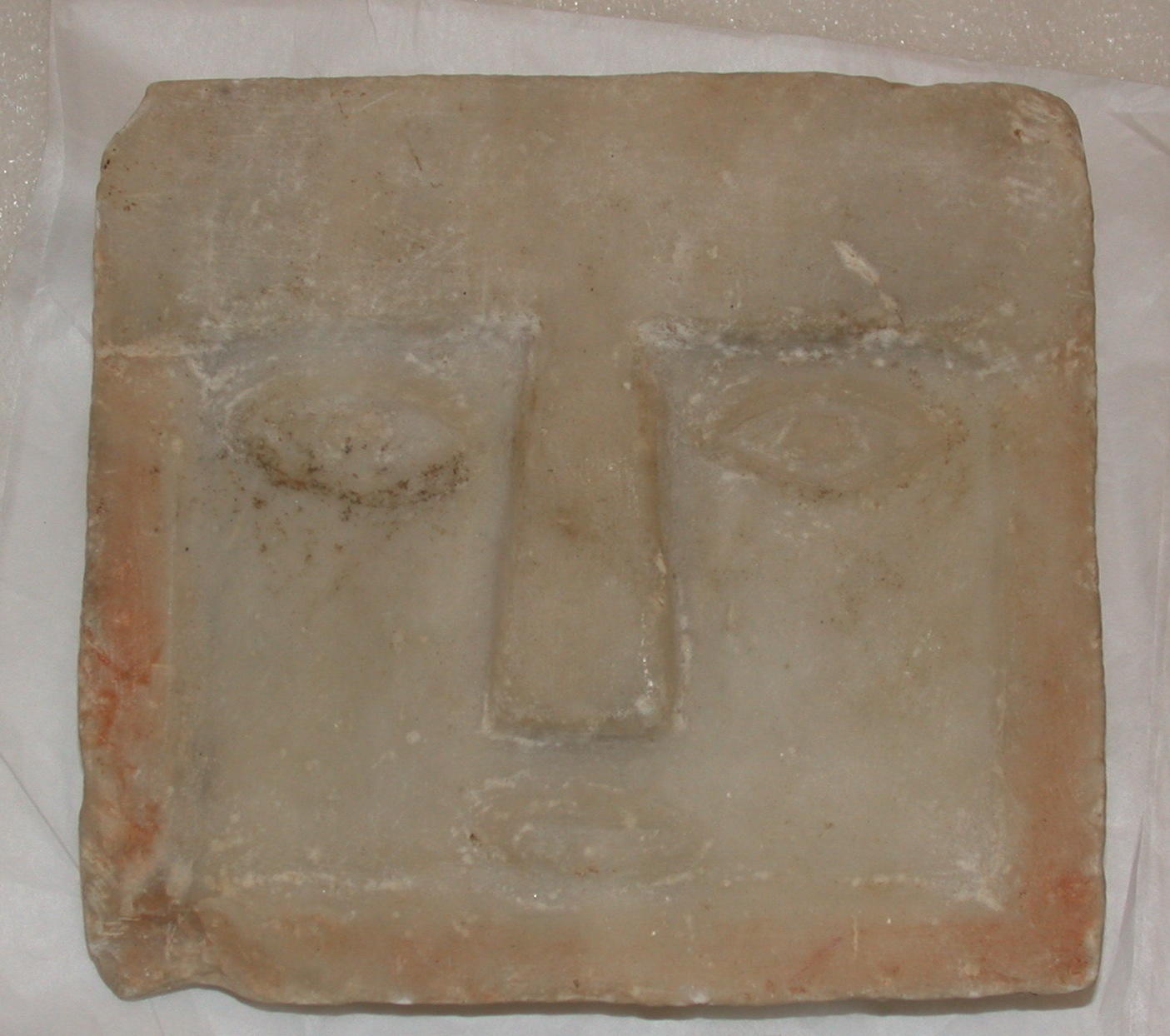
“I think I saw her chest move,” Lillie said, panting hard.  She ran to Sophia’s dresser and grabbed a mirror, holding it in over Sophia’s face, peering for signs of breath.  Lillie’s eyes were dazed, her hands trembling, humid, as she passed the mirror to Ella.  At first Sophia’s hand felt the same as always, but in a few minutes her color had completely gone.  Her skin was whiter than Ella had ever seen it.  White, translucent, her dead mother became alabaster, briefly — a warm, heavy sculpture.  The funeral home people didn’t let Ella watch her mother stiffen, cool.  They hustled her out of the room, didn’t let the daughter see them zipping her mother’s body into a bag.  Had they forgotten that zippers made noise?

Lillie hovered over Ella as if she were spun glass, falling toward the floor.  Lillie’s hands were once again warm, strong and capable, but in the end had not been enough to keep Sophia alive.  She stripped the rented hospital deathbed and sponged the plastic-covered mattress with lilac-scented disinfectant.  Ella crept into the bathroom and locked the door, listening to the sounds outside with great weariness.  She eyed the bathroom window, wondered if she could fit through.

The water Ella drank to wash down her first tranquilizer was terribly cold.  On her tongue it was like an immaculate knife.  When Ella told Katie that Sophia was up in heaven now, with God and the angels, Katie’s voice grew soft and sad:  “I wanted her to stay the way she was.”  Me, too, Ella thought.  Me, too.

Ella stood in the driveway and watched the black hearse move off down the road.  Lillie was soon engrossed in cooking — gigantic pots of black beans and yellow rice.  The smells filled the house, harmonizing with the soapy lilac already there.  Ella’s first post-hurricane, post-mother walk with Katie was a mixture of familiarity and revelation — she was used to seeing that kind of wreckage.  She was prepared for the smell – the ocean things, dead and rotting washed-up things.

That night, Lillie snored through it all, her mouth hanging open, trusting, defenseless, still waiting to be strong enough to get saved.  She had not heard Sophia’s last words, and for that Ella was glad. Ella, Ella, Sophia sang out in the night like a chant, the repetition of the name apparently bringing her ease when might otherwise have been terrified.  Ella realized, as she had not before, how much she loved wind and rain, how much she loved how the world was made disheveled and clean by a hurricane.  She clutched her daughter’s small, hot hand, wondering how the child would remember this day; remember her when it came to that.  “Nana’s tree gots broken,” Katie said again.  The child lifted her arms, asking to be held, and Ella obeyed.  She buried her nose in the curve of Katie’s neck and breathed.

3 Comments

Filed under acceptance, anthem, baby, beauty, bible, birth, childbirth, childhood, compassion, courage, daughter, daughters, death, development, dream, dreams, ella, eternal, eternity, evolution, faith, family, health, love, mothers, mysterious, science, short stories