Category Archives: maturity

If You Seek It Like Silver, a short story

illustration if you seek it like silver bohemian rhapsody freddie mercury.jpgIf You Seek It Like Silver

My father was evasive on the subject of ancestors. Emigrating, as he did, from the dark heart of Bohemia, he must have understood that some mixing of races was inevitable. Otherness was part of him — visible in his eyes, in his cheeks, in the reluctant way he wore his necktie. He forced himself to stand still and proper his whole life — in due time even Anglicizing his name — but try as he might, never managed to forget who he was and where he came from. That was why he ended up erasing himself until all that was left with a pen & ink silhouette.

My mother was not evasive about anything. Or so I thought. In fact, she was so brutally honest, she admitted to my father that her idea of “socializing” was to invite everyone in the neighborhood over, once a year, for cocktails and hors d’oeuvres (whore’s ovaries, she called them). Other than that, she kept our family as stiff & guarded as Alcatraz. My father seemed to be quieter, to drink a little more, to sit a little longer in front of the television. Then one day my little brother came home dirty, sweaty & crying, from his very first day of school.

“They all called me a dirty Bohunk,” he sobbed.

“Well, why do you listen to the stupid, mean kids?” my mother grumbled. She sat at the dining room table hand-tinting my little brother’s most recent black-and-white, artsy portrait photograph. In the picture, he leaned against a Victorian-style porch railing, his blond curls glinting in the studio light, caressing a large sailboat. “Quit complaining about your feelings. Feelings were made to be conquered.”

My little brother and I were eight years apart, and were nothing alike. I was tall, angular and dark, and had a talent for rages that seemed to be sudden, but were slow-developing and complex in origin. He had inherited the large-boned, pink-and-ivory glow and the sound, dreamless sleep of my mother’s family.

“But I want to have friends, Ma,” he shouted. His chest, like mine, wheezed & he coughed

“You’re there to get education first,” she said. “In two weeks they’ll have forgotten all about your last name. They’ll go on to other games.”

“No they won’t. They’ll never forget. They’ll keep saying it until I die.” He turned, running out of the room, and then we heard him clatter down the porch steps, banging the porch door behind him.

My mother frowned and stared, as if waiting for me to go after him; instead I began setting the table for dinner. “He’ll get over it,” she said, turning around. “Just like you did.” No, I thought; he’s going to learn to ignore his feelings; just like you; disgust. The last thing I wanted to be was anything like my mother; who freaked me out; who wasn’t comforting; who scolded her way into your brain like a hot branding iron. Imposing her will; all over the place; over your spirit. Branded spirit; oppressed spirit; dying spirit.

My little brother wasn’t gone very long, but upon returning, got into his pajamas and went straight to bed, refusing to eat. This had never happened before. Daddy went up and sat on the edge of his bed. I watched from the hallway. Wake up, I thought; wake the hell up!

“Don’t you want something to eat, sport?” Daddy asked. He hadn’t cared so much about my feelings when this had happened to me. Then, he’d been silent, letting Ma handle the whole thing. I suppose he felt it was different for a boy — when a boy cried, it mattered. You too, Daddy, I thought; you need to wake up, too; ignoring things; postponing things; assimilating yourself into your life rather than creating your life; quit playing possum; get up out of that chair; change the channel; yourself.

I was surprised when the next day, Daddy told us what he wanted to do. So was everybody else. My mother most of all. I had never seen the two of them like this. My stomach fell into some icy, limitless abyss in the universe; I had to get out of it, immediately.

“I’m going to change our family name,” he announced. “I should have done it long ago. I should have done it before we were married.” My mother sat in her chair, breathing in short gasps, as if she’d received a sudden whack to the chest. Finally she spoke.

“But it’s my last name too,” she said. “I think it’s ridiculous!”

“It’s not just for him,” my father shouted, slapping the newspaper against his legs. “It’s for all of us. I’m God-damned sick and tired of having everyone get our name wrong. Every time we order something, open an account, write a check, we get these asinine comments. Life’s too short for this. I’m changing my name, and the kids’ names, and that’s that.”

“That’s not a choice,” she hissed, “and you know it.” She kicked her pumps off, throwing them against the floor. “You’ve allowed me no say in this.” Now she was all for individuality; feelings; identity; spirit; it’s always just a question of whose ox is being gored by someone else’s ox. I felt like an ox, dragging my dysfunctional family along. Get out of here, I thought. Get out of here and find something to laugh about; or at least smile about.

And what on earth would I tell people at school? Somehow, facing the teachers with a new name seemed even worse than telling all my friends. It was just like my mother and father to ignore the fact that this whole thing would be the hardest on me. They were already grown up, and Dennis was just a little kid. I was the one stuck in the middle. I sat there examining my nails, not wanting to see their faces at this moment. Fox-holing my soul, stuffing it into a warm, soft hidey-hole; as safe as that icy abyss had been dangerous.

***

The name change happened at the end of summer. On my last day before joining the WASP tribe, such as it was; white bread; vanilla ice cream; whipped potatoes; roasted meats; sugar cookies; freshly squeezed orange juice. The day was bright and sunny and dry; my best friend and I were out in the backyard, perfecting our variety show. That day I was the emcee, she was the sponsor, and we each did half the guest acts. We had tap shoes, and purple and yellow shorts from gym class, and a small piece of plywood to serve as a stage. She also had a fringed felt skirt of her cousin’s and a pair of black kitten heels, for the commercials. Nothing else mattered until tomorrow. Stranded on a desert island, nowhere to run to, nowhere to hide; naked but for the protective coloration in my mind. No one outside the family knew about our imminent name-change.

In an attempt to make peace, Daddy let Ma choose the new last name. She picked one which sounded horrible at first, but gradually became appealing. I begged Ma to send out announcement cards to my friends’ parents and to my teachers, but she just closed her eyes.

“You’re going to have to tell them yourself,” she said.

“She’s just scared to tell them she’s not going to be a dirty Bohunk anymore,” said my little brother. “I’m not scared.”

“What do you mean?” I yelled. “Don’t make me laugh. You’re the most scared one of all. You’re so scared, you’re the whole reason we’re doing this stupid thing.”

“No he isn’t,” said Ma. “Don’t blame your brother. Now go find something to do, both of you. I don’t want to hear any more fighting.”

“I bet you like being a Bohunk,” he whispered as we walked down the hallway toward the front door. “You’re stupid, not me. You’re a stupid Bohunk girl.” He ran out the door, ducking my attempted slap with an expert sideways twist.

When he appeared in the backyard, jeering and laughing at my best friend and me, pointing at us and smeared about the face with dirt and grape soda, I picked up a large rock and threw it at the fence where he stood — to scare him. The rock, being inanimate, didn’t understand, and so, obeying the laws of physics, bounced obediently off the fence, then into his head. A large egg-shaped lump sprang out instantly, right in the middle of his forehead. The skin swelled bigger and bigger before my eyes like a balloon. He swayed and fell down on the ground right where he was. Without even looking back at my friend, I ran — out of the yard, down the rear alley, and out of the neighborhood. I ran till my breath burned in my windpipe, then kept on walking.

***

Our house was five and a half miles inland. I walked all the way to the boardwalk in my tap shoes, the metal taps tapping and grinding against the sidewalk with every step. Blisters formed on my heels, but I kept on, walking slower, placing my feet against the sidewalks with more care. The wind had begun to pick up; the decorative streamers on my favorite ice-cream parlor puffed and snapped.

The boardwalk was crowded, as usual, with transient peddlers. Amid the portable push-carts was a large, gleaming Airstream trailer. Its bulbous surface reflected the milling crowd like a funhouse mirror. As I approached, drawn like a magpie to the smooth, shiny aluminum surface, I noticed a young woman sitting at a folding display table in front of the trailer. She was missing several of her front teeth. Other than that, she was beautiful, her eyes large and clear, her skin like velvet. The dumpy baby in her lap was drooling and babbling like any ordinary kid. My heart leaped inside my chest suddenly, for no reason.

The brand-new Airstream was hitched up to a horrible-looking pickup truck: scabrous, multi-layered paint, rotting fenders. I stood, my legs trembling, examining the large array of beaded purses on her table, and also peeking in the side window of the trailer — the built-in furniture inside was pale pink, and sheathed in plastic. I picked up one of the small purses, completely covered with tiny glass beads, sewn in a dark Oriental-rug pattern. The beaded bag was sinuous and heavy in my hands, like a living thing.

“Can you tell me my fortune?” I asked the lady, my heart pounding against my chest like a small fist.

She stared at me for a moment, then laughed, causing the baby on her lap to startle, his small fat arms jerking. But he, too, smiled after a moment, a toothless grin that matched her own. The baby grabbed at her long hair, stuffing a large handful of it into his mouth.

“No, I can’t,” she said, shaking her head. “But if you dance,” she said, pointing down at my dusty tap shoes, “I’ll give you something.”

“You mean right here?” I asked. “In front of all these people?”

“Sure,” she said. “I love tap-dancing. I’ll give you that purse, if you want.”

The purse’s beading was dark purple, amber and bottle-green. I glanced around at the people strolling by, wondering what they’d think, whether they’d laugh. But it didn’t really matter, did it? I had stepped across some invisible line: tap-dancing on the beach was nothing for a Bohunk like me.

“Okay,” I said. I moved away from the table and raised my arms, spreading them like stiff, flightless wings. Nodding at her, I began my spring recital piece, the one I did wearing a silver top hat and spats. Though the sound of my taps was muffled by the rough-laid planks of the boardwalk, I knew my form was perfect. I finished, and she brought her baby’s hands together with her own, holding his wrists and slapping his tiny palms in mock applause, but then she stopped and smiled, and I knew she’d been pleased.

“Take it,” she said, gesturing toward the table.

“Thank you,” I said, letting the prize swing from my fingers, the beaded loops of fringe rustling against my arm like the curious touch of a stranger. I stood for a moment, noticing her eyes, which from a distance had appeared dark brown, edged in black: surrounding her pupils were small featherings of blue, green, yellow, brown and gray. “I think I killed my brother,” I told her, starting to cry.

“No you didn’t,” she said. “He’s not dead. You can go home.”

“How do you know?” I asked, clutching the bag to my chest. The baby snuggled against her, leaning into her generous breasts, sucking his fingers and blinking his eyes slowly, falling toward sleep.

“You dance too well to be a murderer,” she said, frowning. “Go home to your… fortune.”

As I turned to leave, I saw a handsome boy in a vivid yellow windbreaker watching me from the boardwalk’s edge. His lean face was sculptured, his cheekbones and chin jutting out. His mouth was open — not a smile — and his teeth were square and white. As my eyes met his… his face benign, expressionless… he made his hands into tight fists, arms stiff and straight at his sides, and began nodding his head — forward and back, forward and back. Yes, he indicated. Yes.

“Take your new purse and go home,” the woman said again, turning to look at the strange boy. “But first give the baby a kiss, for luck.” So I bent down, kissing the baby’s drool-wet cheek, struggling with the impulse to dry my lips on my sleeve as I turned away.

***

By the time I got home, it was dark. A police car was parked in front of the house. As I tried the front door-handle and started to knock, it opened and my mother stood to one side, holding the door, as I walked into the foyer. She reached out, as if to embrace me, but at the last minute changed her mind and pushed me away. I don’t care, I thought. I don’t fucking care. For a moment? I hated her with every cell in my body. Then Daddy grabbed me, squeezing me so hard around the ribs I couldn’t inhale.

“Are they going to arrest her for throwing rocks at me?” asked my little brother from the top of the stairs.

“Certainly not,” said my mother. “Go back to bed.”

***

The next day was hot — the smog so thick it dimmed the sun’s rays. Somehow, that weird half-light made the air seem even hotter than the real temperature. We toured the marble-floored courthouse downtown, meeting our lawyer outside the judge’s office. The secretary ushered us in. The judge had a lot of fluffy white hair and a waxed, curlicue handlebar mustache that gave me the shivers. As I walked by him, he winked.

He asked us if we had any dishonest or criminal reasons for changing our names — then asked us if we were all sure it was what we wanted. I wasn’t sure — I saw my mother start to say something, too, but the judge didn’t notice. He looked at me.

“What about you, young lady?” he asked. “Do you want to change your name to something that everybody in the U.S. can spell?”

My heart felt like a fat frog, quivering, and I couldn’t speak. The judge didn’t wait for my answer, just started chuckling to himself, then he signed the sheaf of official papers with a judge-like flourish and changed me from a Bohunk into an American.

***

I went to confession that week with a lot to say. The new priest had a strange kind of beauty — artfully shaped eyebrows, large protruding eyes, fleshy but precise lips, dimpled chin. His English was faintly accented. I liked to imagine he was in love with me, but too saintly to break his vows — he twisted and turned each night upon his hard, narrow cot, praying in vain for relief from the tempting visions of me. In the booth, the words came easily.

“I almost killed my brother,” I told him. I waited in the hot, breathy silence. “I committed perjury.” Still nothing. “I looked on a man with lust,” I said, remembering the taut face of the boy on the beach. Now tell me I’m evil, I thought. Tell me I’m going to hell, talk to me about the pit of fire, the writhing serpents.

“Do you fear for your soul?” he asked.

“Yes,” I answered. “Everything has changed. I’m not the same as I used to be.”

“God knows what’s in your heart,” he said. “Sometimes being ashamed is the most important thing. It’s the first step to changing.” He cleared his throat.

“I’m supposed to be changing? Does changing your name count?” I couldn’t help laughing — then wondered if laughter in the confessional was some sort of sin.

“Changing your name? You mean by marriage?” He sounded shocked.

“No, my family — we all changed our last name. Because my father was ashamed. Because no one knew how to spell it. Because he didn’t want anyone to think we were — strange.” I waited; his silence was interminable. I heard him sigh.

“A name can be very important for the peace of the soul.”

“But nobody asked if I wanted to change.”

“Your father did what he thought was right.”

“But I can’t stop being angry,” I said, almost crying.

“Pray for your anger to be taken from you,” he said. “Pray for guidance.”

But wasn’t he supposed to give me that — guidance? Where was his usual sympathy? I felt weak, dizzy.

“Yes, Father,” I said, though tears had started. “I’ll pray for guidance.”   Pushing the booth’s wooden door open — so hard it knocked against the outer wall of the adjacent confessional — I felt Father startle and jump inside his half of the booth in the second before I slipped my shoes off and ran out of the church.

***

A bunch of us freshman girls journeyed to the first school dance of the year as a dateless yet hopeful group. As we stood talking and laughing — eyeing the large group of stag boys near the gym doors — we fussed with our hair and rattled our charm bracelets. The tall, good-looking boy I’d seen that awful day at the beach approached, and invited me to dance.

“Did you get married over the summer or something?” he asked, tossing his forelock out of his eyes as we twirled out to the middle of the floor.

“Married?” I said, peering up at his face in the dim, dance-floor light. His eyes were large, round and brown, and his lower lip full so that even his scowl had a goofy, angelic quality. “Are you kidding or something?” I asked.

“Well, last thing I knew your last name was different.” He smiled and tapped my name tag with one finger. “So, I figure either I’m going senile, or you got married.” He winked. “Odds are, I’m not senile.”

“Are you sure?” I asked, smiling.

“Well, sometimes I wonder.” He laughed, caressing my back softly as we danced.

“My father changed our last name over the summer,” I said. “Tired of having it misspelled, stuff like that.”

“Well, this one will attract less attention, that’s for sure.”

“Yes, it will,” I said, and then the fast song was over. We stopped, standing together for a moment, then another song began, but we didn’t resume dancing.

“Would you like to go get a soda?” he asked.

“Yeah, sure,” I said, nodding. We went out to the main entry hall, where some members of the student council were selling refreshments: Cokes, brownies, small bags of popcorn.

“It’s hot in there. Let’s walk around the courtyard for a minute,” he said, holding the cold green bottle against his forehead. He held out his hand to lead me, and I noticed it trembling. We sat down on the edge of a concrete planter, hidden from the dance behind its large circular hedge. The music sounded tinny from out here, but a slight breeze was blowing, and the air had a clean smell. He took a long swig of his soda, then put the bottle down. “You’re so beautiful,” he whispered, sounding like he might cry. He put his hand against my breast, squeezing me as though caressing some exotic fruit, and then, upon discerning no obvious resistance, he leaned forward with his lips pursed. As he kissed me, his hand kept on moving, pulling at the buttons of my blouse, sliding around under my clothing and tugging at the hooks on my brassiere like a small inquisitive animal.

***

My feelings over the next few days were a dizzying combination of exhilaration and despair. I’d let him touch me, and it had felt good — but the fact that I’d allowed it to happen disgusted me. It was part of my body that had betrayed me — some fundamental weakness — a new aspect of myself I’d never be able to get rid of. I kept looking in the mirror: the dark circles under my eyes seemed worse, and my complexion got hazy. My hair seemed altered, losing its shine, its color. I felt suddenly younger and older at the same time. Ma and I were shopping for groceries when I felt caution melt away inside me.

“Did anybody ever try to touch you under your blouse?” I asked her, in the frozen food aisle.

“What do you mean, touch?” she asked.

“Like on a date or something,” I said.

“Of course,” she snorted, throwing half-a-dozen packages of peas into the cart. “What do you think, that’s a recent invention?”

“What did you do, then?”

“I kept their hands away,” she said. “I made them stop.”

“Well, what about Daddy?” I asked. “Did he ever try? He must have.”

“I’m not going to go into the specifics with you,” she said. “Just don’t let things go that far.” She turned and stared at me.

“No, of course not,” I said, feeling the blood heat up inside my lying cheeks, my lying neck. I knew she noticed. No way out.

***

“I don’t know why I bother,” she said, stirring a pot of tiny meatballs in sauce, her hair coiled in gleaming pin-curl clips. “No one invites us back.” My mother was more cranky than usual about her annual cocktail party.

“That’s not why you give the party, is it?” my father asked, laughing. “You wouldn’t go to most of these people’s houses, anyway. No, you just want them to be in your debt.” He patted her. “Just like me,” he added. People were trickling in when one of Daddy’s friends brought up the name change.

“When I got the invitation, I was stumped for a minute,” he said. “I thought, who do I know who changed their damn name? If you’re trying to lose the bill collectors, you forgot the most important thing — get the hell out of Dodge!” He threw his head back and laughed; a braying ass. My mother felt the same way and poured her drink on his shoes. For once, for one blessed moment, I agreed with her completely on something. Common ground. The beginning of our real, far deadlier arguments.

“I don’t care what you think,” she said, waving her arms over her head. “Any of you!” The whole group fell quiet, and after a moment, people who had just arrived began moving toward the hall closet to get their coats.

“Now, wait a minute,” my father said. “He was just kidding!”

“Gee, so was I,” she said. “Couldn’t you tell?” She kicked off her shoes, then ran up the stairs; I watched, then scrambled up after her. In her bedroom, she flopped down on the bed, heedless of the starched, organdy collar and bows on her black dress. She jerked her legs back and forth, back and forth, and her stockings hissed against the satin of the bedspread. “I knew from the day I met your father we’d never be soul mates or anything,” she said. “But I was hoping for something better than this.”

“I’m sure he was hoping for something better, too,” I said. “Do you know how horrible you can be? Do you?” I wasn’t going to end up like her, or like him — or like anybody in my family. It didn’t matter what my name was. “If Daddy and I hadn’t been there watching, you wouldn’t have poured that drink on the man, would you?” I hate you, I thought. And you hate me, too. Own it, you fucking cunt.

“That’s the craziest thing I’ve ever heard,” she snorted, throwing her arm across her eyes. “You and your theories. I was just mad, that’s all.” She couldn’t, or wouldn’t, live for long outside her locked, electrified steel cage of rage, I realized.

She shook her head, and her hair, pinned in a loose bun, fell free and tangled in a soft cloak around her neck. My own breathing became the most delicate of rhythms. I closed my eyes and stood next to the door, swaying in place. She was absolutely right: her daughter was a rebel both by nature and by choice. Too much Order… too much Chaos… then back again, a beautiful, inscrutable figure eight. Ma kept on talking, talking about the right way to do everything, the petulant sound of her voice changing inside my head into a soothing, abstract blur, like river water over smooth, flesh-colored rocks. Grief and guilt flew out of me: sharp arrows of silver, or cobalt glass. My own insatiable needs burst their seed casings; moving shapes cast their inscrutable dark shadows against the walls of my secret cave; I fell in love with the light of my tiny, disobedient candle. I kept on nodding and nodding; pretending to listen; planning my escape.
3 Comments

Filed under acceptance, adolescence, anger, anthem, anthropology, baby, beauty, birth, blood, boys, child neglect, childhood, civil rights, compassion, courage, daughter, daughters, death, development, dream, dreams, eternal, eternity, everything, evolution, faith, family, father, fatherhood, fathers, fear, fiction, forgiveness, god, grief, health, heart, hope, human beings, humanity, hypocrisy, identity, ignorance, insecurity, judicial branch, judiciary, justice, karma, law, legal system, life, logic, loss, love, man, manhood, maturity, men, mortality, mother, mothers, mourning, mysterious, parenting, passion, personal responsibility, regret, relationships, religion, sex, short stories, soul, spirit, spiritual, spirituality, teenagers, transcendence, transitions, truth, united states of america, universe, wish, woman, women, world, youth

How Art Thou Received? (a prayer for refugees)

How Art Thou Received? (a prayer for refugees)

Imagine: suddenly, without warning (because that is how war arrives) you are a war refugee! Simply running away from being murdered. And how are you received when you can finally stop running, when you are out of range of the guns, the bombs, the blood? No countries to take you. No one to feed you. You are a skeletal pawn in a skeletal game.

Embalmed corpses declare war on the living and fight for their “territory” against other embalmed corpses using armies of young people; embalmed corpses feeding on fresh, young blood.

I know something is very wrong, somewhere. It must be addressed, and addressed properly. Our prayer, our incantation, our spell to heal, must be more powerfully crafted, more distilled, more essential, than was the horrid spell we are trying to break: a tradition of might over right, strong but wrong, a spell of ignorance which has caused so much harm, and is trying to do more… powered by the love of power, the love of control over people.

The scarred parts of the heart can be replenished; the broken parts, glued; the weak parts, strengthened; the fear assuaged, the pain relieved. But the desire to change, to truly alchemize oneself, spin that straw into gold… the gold of the sun… the silver of the stars… the red planet… the North Star… primal navigation by looking not at the ground, but by looking up, to the sky… that kind of desire doesn’t visit often.

If you want to know where you are going, be sure your map is accurate, or at least doesn’t kill you. Migrating birds know this. Power & Liberation. Slave & free. Joy & Suffering. High & low.

Craving slaves, some are trying to roll us back to serfdom, only they can use our own science & technology to rape us! Serfdom: tied by birth to land. You are a pawn, a source of income; in thrall to your Lord and Master. Freeing serfs is always a struggle. Brute force arm-wrestles the human race, and brute force often pins people to the mat, but… you cannot keep people down for long. The oppressed will continue to spring up and defend their inalienable human rights. All people are created equal: including our ancestors, who existed long before the self-anointed first “private property” owners. Human beings are endowed by their creator with certain inalienable rights, yes? The earth cannot belong to any one of us. Period. We own this planet. All of us.


2 Comments

Filed under acceptance, amerka, ancient history, anger, anthem, anthropology, apologia, apology, appeals, assholes, baha'i, beauty, bible, birth, black, blood, born again, buddhist, Catholic, charity, child abuse, child neglect, christian, civil rights, compassion, con man, con men, corporate states of amerka, courage, criminal, criminal behavior, criminals, daughter, daughters, death, development, dream, dreams, earth, easter, emperor, empire, enlightenment, eternal, eternity, eve, everything, evil, evolution, faith, family, father, fatherhood, fathers, fear, fish, flowers, for children, forgiveness, friendship, funeral, gay marriage, girls, god, good, grief, health, heart, hindu, history, hope, human beings, humanity, hypocrisy, identity, idiots, ignorance, jesus, jewish, judiciary, justice, karma, kindness, law, legal system, legal writing, letters, lgbt, life, logic, loss, love, mama, man, manhood, manifesto, marble, marriage, matricide, maturity, mea culpa, men, mitochondria, mortality, mother, mothers, mourning, murder, muslim, mysterious, nature, notes, parenting, passion, peace, personal responsibility, pope francis, pregnancy, rant, rastafarian, regret, relationships, religion, rome, Saint Teresa, science, sex, sisters, soul, spirit, spiritual, spirituality, spring, star spangled banner, tea party mad hatters, teenagers, transcendence, transitions, travel, tribute, truth, ultra right wing loons, Uncategorized, united states of america, universe, users, veterans, war, warmth, wish, woman, women, wood, world, youth, zoroastrian

Meet Nana Awere Damoah: The Ghanaian Voice of Objectivity and Reason

A great interview, an interesting dialogue, a thought provoking interviewer! Hallelujah!

Leave a comment

Filed under anthem, beauty, black, courage, development, dream, dreams, earth, enlightenment, eternal, everything, faith, family, friendship, god, good, heart, history, hope, human beings, humanity, identity, justice, life, logic, love, maturity, nonfiction, passion, peace, recommended reblogs, sisters, soul, spirit, spiritual, spirituality, transcendence, transitions, travel, tribute, truth, universe, warmth, wish, world

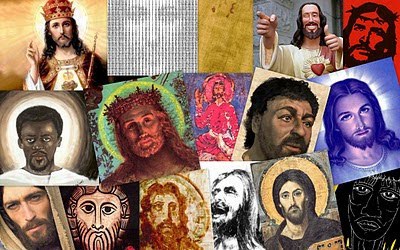
Edie Sedgwick Discusses Her Early Years, a Monologue/Poem/Story/Lyric.

illustration edie sedgwickI felt I was Gloria, some angel living in her own hallucination of time. We were angels on LSD, on LPS. I was cheesecake, chocolate-dribbled, sexy & asexual, pop-rocks eye candy. Wrapped in a wealthy, yet tragic, past. DEEP BREATH. With my dreamy tones; those slow, hypnotic lyrics, my subliminal heavenly chorus of all that is female, the goddess inside us. Hypnotic, larger than life.

And so were the commercials. We really were all famous for about 15 minutes, but we couldn’t see that, all we could see was right now, right then. The atom bomb age, the Cold War, suicides, the Third World starving to death… children dropping like flies in Africa from famine. India, hit by an earthquake. Viet Nam cranking up, with war profits for the conglomerating corporations; divvying up the spoils of war. Kennedy, dead in Texas.

Be the girl all the bad boys want. DEEP BREATH. Sex turned into a Technicolor rock show, pure fantasy; turned into reality. People started living according to their own fantasies of what the world was like. The awakening grew harder; grew easer; grew harder; again & again.

Material wealth. An intoxicant. A drug. Addictive behavior. Spread it around. Moderation in everything. Reasonable assumptions? No? DEEP BREATH. Spell it the fuck out. Rules-based understanding. It takes me a long, long, long time to learn all the rules, all the techniques, all the subtleties. But when I figure something out, I have fucking figured the fuck out of it! DEEP BREATH.

I’m a dreamer; I’m a practical schemer. I’m a dreamer with a BMW; I’m a bad-ass schemer; I’m a waterlogged dreamer; I give up when there is trouble; I run like a rabbit. I dig in like a lion at bay.

Falling in love is wonderful. Once you fall in, take care never to fall out. Find something to keep your love alive… anything! Fasten on & fasten hard. In every way, so they say. Rumors fly. Determining actual facts is hard. All the shit I ever believed about myself came true. DEEP BREATH.

So, my body believes, at least. Next, to make my logical mind decipher the hieroglyphs. DEEP BREATH. Then my heart shall feel; then my soul shall live. DEEP BREATH.

It’s what Andy always used to say: artists are artists, no matter their profession or occupation or job or outward circumstances, and artists are the commodities of the very wealthy. DEEP BREATH. We’re all falling prey.

4 Comments

Filed under acceptance, addiction, adolescence, adult children of alcoholics, alcoholism, ancient history, anthem, anthropology, apologia, art, art history, baby, beauty, birth, blood, child abuse, childhood, compassion, courage, development, dreams, earth, enlightenment, eternal, eternity, eve, everything, evil, evolution, faith, fear, fiction, forgiveness, friendship, god, grief, hope, identity, justice, karma, kindness, life, logic, loss, love, manifesto, maturity, mortality, mysterious, passion, poetry, prose poetry, regret, relationships, sex, short stories, soul, spirit, spiritual, spirituality, transcendence, transitions, tribute, truth, united states of america, universe, war, woman, women, world, youth

Judy Garland and The Banana Tree, an essay


illustration judy somewhere over the rainbowillustration banana tree

A banana tree is a metaphor for life, really… it dies after it bears fruit. It gives its life to produce the next generation. Banana leaves are so useful. Useful when they’re green, and useful when they’re brown. Generation upon generation. That really is a sacred word, generation. WE generate ideas, too. So can’t WE generate more peace, rather than more war? Can’t OUR fuel be love, not hate? Yes, just like the banana tree, sometimes destruction is necessary to create new life… recycling? Reincarnation?

One way of looking at things is to take a leap of faith – decide that when WE die, nothing will be lost; everything will be gained. WE leave behind US a legacy, all of US, shaping the reality of the UNIVERSE. The UNIVERSE is alive through US! The UNIVERSE writes songs and stories and mathematics and music through US! WE are engines! WE are alive! WE are organic! WE, human beings, are evolving right this second! LIFE doesn’t stand still! LIFE adapts, or ceases! LIFE IS EVOLUTION. Trying to cling too desperately to the past is to entomb the SELF in stone, alone, buried alive, dying. WE’RE alive until WE’RE dead.

Value this opportunity. Don’t throw it away. Take care of OUR home, planet Earth. Take care of OUR fellow travelers. Send not a sword, but an olive branch to OUR enemies as well as OUR friends. OUR bitterest enemy may turn out to be OUR best companion. Only time will tell. WE live within moments, WE exist within history, and WE are passionate within the spirit. Train that energy! Use passion to create, not to destroy! Destructive passion, combined with weapons of all kinds, might kill US all. Respond to life with logic AND emotion. Let US use OUR brains and OUR gut. Instead of the falling abyss of dread, the rising flutter of joy… and at the end of life, may WE all have truly, truly, truly found PEACE.

Cue Judy Garland, “Somewhere Over The Rainbow.”

2 Comments

Filed under acceptance, anthem, appeals, baha'i, beauty, born again, buddhist, charity, christian, civil rights, compassion, courage, death, dream, dreams, earth, enlightenment, essay, eternal, eternity, everything, evolution, faith, family, fish, flowers, forgiveness, friendship, god, good, heart, hindu, history, hope, human beings, humanity, jewish, justice, karma, kindness, life, logic, love, manifesto, marriage, maturity, muslim, mysterious, nature, passion, peace, personal responsibility, rastafarian, relationships, soul, spirit, spiritual, spirituality, transcendence, transitions, travel, tribute, truth, universe, warmth, wish, world, zoroastrian

Savior, a short story

illustration savior

Savior, a short story

The young man seemed so out-of-place in her mother’s living room. Maria stood in the doorway with her mother’s groceries, her purse on her shoulder, key ring dangling off one numb pinkie, clutching the heaviest bag propped on her hip, the bag that contained her mother’s supply of Diet Coke. Her mother and this man were sitting together on a Victorian loveseat on loan from Maria’s antique shop, their knees almost touching, the man’s arm draped across the ornate wooden back, his fingers curled behind her mother’s left shoulder. Her mother had a photo album spread out, one leaf resting on her lap, the other resting on his. Maria could see herself, at two, nude in the tub. Christ, she thought, what’s she showing him those for?

The young man leaped up after a few moments of uncomfortable silence, running his hand over his hair and smiling. Her mother folded the album closed, holding out her arm, and he helped her up, a gesture Maria herself had never mastered, helping old people up out of their seats. She tried too hard, using the wrong position and too much lift, until their sharp old elbows jutted out at alarming angles but their behinds hadn’t lifted an inch.

He had a medium build, wavy blonde hair, a deep tan — he was almost, but not quite, handsome. His eyes were too close together and his nose too long: as Maria met his direct gaze, she felt uneasy at his obvious affection for her mother, the implication of knowledge which came from his confident manner. He looked as though he was already sure he knew the older woman’s mind; already sure she must be lonely.

“I’d like to introduce you to my daughter, Maria,” her mother said. “Maria, this is David. He found my wallet over at the library and was kind enough to track me down. I couldn’t believe it when he called. I didn’t even know it was missing yet.”

“That is lucky,” Maria said. “Really lucky,” she continued, smiling in her mother’s direction, one eyebrow arched, whereupon her mother shook her head once, violently, and her daughter’s unspoken reprimand was expertly dismissed.

“Oh, it wasn’t luck,” said David, the sound of his voice causing the small hairs at the back of Maria’s neck to rise. “Nothing’s a matter of luck. Life is all planned for us, down to the last detail.” He nodded, smiling at Maria, his arms hanging relaxed at his sides, and the suspicion came to Maria that he was crazy. Crazy but safe, one of the harmless ones, the kind that made her want to go a little crazy too because they seemed so sure of themselves.

Most of Maria’s son Richard’s friends were the same type, that’s how she knew. Richard — she never thought of him as “Kurma-devi-dasi,” although she respected his desires and addressed him that way — was crazy but harmless too, although she knew she couldn’t see him as clearly in that way as she could a stranger. To this day she was able to discern the fuzzy cartoon of his infant features on his serene face when he smiled at her — the memory of his toothless gums clamped like a rhythmic vise on her breast would come to her, looking at his shaved head and his orange cotton robes as he chanted over his prayer beads, and she would be filled with a sorrowful rage that made her chest shrink into itself.

Not his grandmother, though — she had sat with her grandson over at the temple for hours when he first became a devotee, sitting in a rocking chair next to him as he said his prayers in front of the little richly clothed doll of Krishna. She told Maria it made her feel closer to her own idea of God just being in a place like that. In theory, Maria agreed, but the issue wasn’t whether the temple was a nice place to spend an afternoon, the issue was whether it was a good way for Richard to spend the rest of his life — sewing holy Hindu god and goddess doll clothes on an old black Singer?

“I don’t know about a plan,” Maria replied. “I’m lucky if I know where I am, half the time. If it’s Wednesday, this must be my mom’s apartment — you know?”

He said nothing at first, not seeming offended, not defensive, just staring at her with eyes so full of a giddy, knowing light — his face loomed toward her, and tension rolled through her stomach as his mouth moved into a drawn bow of compassion. It didn’t matter that he wasn’t handsome; he radiated an alarming level of charm. “Down to the last detail,” he repeated, arching his eyebrows and opening his eyes a bit wider, his pupils enlarging like a lover’s, and the sound of his voice vibrated within her ears, warm and solid like hands pressed against her temples.

“Then one of the details must be that I’ve got to put this bag down before my arms fall off,” she said, forcing a laugh. “Excuse me.” She turned away and walked up the hall to the kitchen. By the time she’d finished putting the groceries away — rearranging pantry and refrigerator shelves, purposely taking far longer than usual — he’d already gone. Great. Now their lives were stuck together like flood trash swirling down her mother’s raging river. David would be there for her mother — be there always and forever, overflowing with that sickening, confident love, and her mother would never be able to blame him, not for anything.

***

Maria was uncomfortable with the amount of time her mother was spending with David, but didn’t dare say too much. There was nothing overtly objectionable about him, other than his religious fervor — and how could she term that a fault? Her mother wouldn’t listen, anyway. Whenever Maria brought the subject up, her mother would groan, “Oh, boy, here we go again,” and she would frown, which consisted of one sharp, off-center line in the middle of her forehead. “You don’t have to like him, sweetie,” she’d say, “but I wish you did.”

Still, her mother’s interests seemed to be shifting. Odd books and papers came and went on the coffee table, crowding out the usual hodgepodge of half-finished crosswords and literary journals: treatises on wild herbs, population-density maps, computer programming manuals, military histories. Flipping through a ratty emergency-medicine textbook, Maria saw numerous large, yellow-highlighted portions and margin notes in both an unfamiliar, childish hand and her mother’s own neat back slant. “What is all this stuff?” she asked, holding the book out to her mother.

“I’m getting ready,” her mother said. She sat down opposite Maria and picked up a needlepoint pillow, arms crossed, mashing it to her tummy like a teddy bear.

“Ready for what?” asked Maria.

“The end of the world,” said her mother. “You know, Armageddon.”

***

At first, Maria’s son agreed with her concerns, not at all what she expected and a strangely intolerant position for him to take — considering his own lifestyle — his agreement only making her feel worse. They sat in the temple’s empty dining hall. “I’m with you, Mom,” Richard said. “The guy sounds like a real case.” He rubbed his hand over his prickly scalp and yawned, his left hand fumbling inside the peach-colored sack of meditation beads that hung from his neck. He scratched his nose, smearing the delicate yellow makeup lines drawn there that symbolically pointed up: up to God, up to heaven. “Have you checked Grandma’s bank accounts lately? He could be some kind of con artist.”

“No, no,” she said. “That’s not the kind of thing I’m worried about. He seems sincere enough. He’s no con artist. It’s just — your grandmother is really starting to believe what he says — how Armageddon is coming, all that stuff. You should see the books he’s got her reading.” Maria leaned on her elbows, cupping her chin. Richard closed his eyes for a moment, tilting his head to one side like a duck.

“Then again, I suppose the guy could be right on,” he said, his eyes still closed. He looked asleep, his skin pale and fragile. “Maybe that’s what bothers you. I’ve been trying to get through to you on that level for years. At least Grandma’s started thinking about her future.”

“Her future?” Maria asked, her voice louder than before, wanting to reach across the picnic table and shake him by his choke collar of tiny wooden beads. “At eighty-five? People that age should be beyond this kind of worry. It isn’t right. He’s getting her all stirred up — and for what? If all that biblical stuff happened, she’d never survive.”

“You’re just jealous,” he said. He opened his eyes and stared at her, his thick black lashes tangled and dusty-looking. His pupils were pinpricks inside the blotched hazel irises, and as he spoke he stood up too fast, banging his shins on the metal tubing of the cheap table. He grimaced and squatted for a moment, rubbing his leg. “You can’t stand it when someone believes in something you don’t. I thought you were worried this guy was some kind of sleazy fake, but now you’re telling me what freaks you out is that he’s the real thing. Make up your mind. You should be happy Grandma’s paying attention to what’s out there.” He turned and walked away, his robes ruffling out behind him, his rubber sandals slapping the bare wooden floor. “I’ve got devotions to attend to,” he said, not turning back to face her as he walked, his voice thin, echoing across the length of the long, barren room.

***

The earliest occasion Maria could remember wanting her mother’s opinion was in the seventh grade. Maria had just turned twelve, and had her first crush. She was stringy and awkward in those days, large-kneed and carrying a head of vigorous, curly hair she flattened down into a matted-looking cushion in desperation. Then the quiet boy started walking her home from the bus stop.

She remembered him still: pale blue eyes, so large and widely spaced that they gave him a somewhat doe-like expression. His jaw, however, was firm, angular, and thus saved his face from weakness. Warm hands lay against hers, trembling, stroking her fingers up and down in an hypnotic rhythm. “Do you want to go steady?” he’d asked her, unable to meet her eyes. That meant wearing a silver identification bracelet, his name engraved about her wrist for everyone to see; his property. She hoped his name was in block capitals, not that loopy script: it looked better.

“I don’t know,” she said, and went home to ask her mother’s opinion, a matter of form perhaps, but something she wanted; the camaraderie of womanhood revealed at last. This could be the common ground between them.

“Honey, I just don’t think going steady is a good idea at your age,” said her mother. They sat in the dining room, wallpapered with tiny brown pineapples. “You’re too young to get so deeply involved with a boy.”

“But lots of girls do it,” she said, knowing this was a flawed argument, but even as the shipwrecked are driven to drink seawater, her words carried a dreamlike hope.

“You asked for my opinion,” said her mother, “and I’ve given it to you. It’s up to you to make the decision. I’m not saying no, I’m just saying I wouldn’t if I were you.”

In the end, she told the boy no — and was informed that the going-steady offer had been withdrawn in the interim — and she realized by heeding her mother’s counsel she had been saved from a greater and more penetrating level of humiliation than she imagined even existed. But — that wasn’t the point. Maria knew her mother would never have said no to one of her own teenage boyfriends — that was a lie. Safe advice given as a — joke, as an experiment. Didn’t Maria have the right to be strong-willed? Didn’t she have the right to her own losses? She never stopped trying after that, but the drama was gone.

***

Then Maria found her mother in the bathtub. She entered the apartment, carrying her mother’s dry cleaning: a few sweaters, a wool suit, a pink blouse. She heard water running, a slight, far-off sound, as if from the next apartment. The bathroom door was closed. The only sound was a rolling and a swishing, as though a large fish reclining in the tub had shifted position. Alarmed, Maria opened the door. Her mother was sitting upright in the full tub, a small trickle of water dribbling from the faucet. The tub was full to overflowing. Her mother was wearing a purple shower cap embroidered with large seahorses.

“Go away,” she whispered, as Maria stood, confused. A bristling red pincushion sat on the edge of the tub, dangling a red cloth strawberry from a green cord into the water. The strawberry bobbed on the surface. In her mother’s hand was a large straight pin, on her wrist several thin scratches. She jabbed with the pearl-headed pin, her hands unsteady.

“What are you doing?” asked Maria, her voice shrill, terror coursing through her. “What in the hell are you doing?”

Her mother turned to her, her unfocused eyes shining and rolling up toward the ceiling as she spoke. “Trying to kill myself,” she said.

“With pins?” shrieked Maria. “Jesus, Mother!”

“I wanted to flush my head down the toilet,” her mother continued, “but it wouldn’t go down.”

***

On the third night of her mother’s emergency hospitalization, Maria dreamed she was sitting in her living room drinking tea with one of her college professors, a sloppy but verbally precise little man. In reality, she hadn’t liked him at first, but she had taken every course he taught because — unlike the majority of his students — she got A’s from him. She came to admire his sincere and stringent approach, forgiving him his greasy, untrimmed hair, his baggy, stained chinos and ancient, Filipino-style dress shirts.

And so, in the dream, her old professor, uncharacteristically neat, his hair washed and combed, his pants pressed, was explaining to her that he had theater tickets for tonight’s performance — would she like to join him for dinner and a show?

I’m sorry, she said, but I don’t think I can get a baby-sitter on such short notice. It’s already six o’clock.

He raised his eyebrows. I had no idea you were married with a child, he said. Well, that’s too bad, my dear. Perhaps we can arrange it some other time.

As he shuffled off down the sidewalk, Maria wanted to call after him: Wait… I don’t really have a husband… I don’t really have a child… it’s all a mistake. Come back. I want to go with you.

But she was silent, knowing it wouldn’t make any difference what she said. He was already too far away, and could not hear.

***

The next day, when Maria arrived at the hospital, her mother’s newest flowers were wilting in the heat. Her mother had turned the room’s thermostat up to 85 degrees and wore a sweater and cracked pink leather mules. Still, the new additions were beautiful: three dozen roses, white, yellow, and coral, stuffed into a too-small mayonnaise jar, the faded label turned to the wall. Maria stood in the doorway for a moment, holding a brown paper sack full of the day’s requested items — mostly cosmetics — looking at the bright splash of color. “Hi there,” she said to her mother, who sat hunched on the edge of her bed, flipping through a current TV Guide.

“Hi,” said her mother. “Is it cold out? You look chilly.”

“It’s cool, but the sun’s warm,” said Maria. “Who gave you these roses?” She leaned over to smell them, her nose brushing the petals.

“David,” said her mother. “He brought them by this morning on his way to work.” She squinted at Maria, her glasses speckled with bits of dust, so filthy Maria wondered if she could see anything at all. “He didn’t know I was here; he found out just this morning from my across-the-hall neighbor. He was taping a note to my front door.” She unrolled a package of breath mints and placed one on her tongue. “I thought you would have called him by now — it’s been three weeks, after all.”

“I didn’t think it was such a great idea for you to have a lot of visitors.”

“A lot?” Her mother raised her eyebrows, which were nearly invisible. She penciled them in most days, but today she’d left them defiantly natural. “Any, you mean. You’re the only one I’ve seen other than the doctor, until this morning.”

“What did he say about visitors?” Maria asked.

“It’s fine, as long as I feel up to it. They’re still fine-tuning the dosage on the blood thinner, other than that I could go home already.” She held out her arm, shoving the loose sweater back above the elbow. Small scabs dotted her forearm. “They’re sticking me every four hours, round the clock. They’ve got to balance it just right. So I won’t have another stroke but so I won’t bleed to death, either.”

She stared at Maria, her eyes shining. Her mother’s voice dropped low and fluid, almost a murmur; Maria remembered that voice from long-ago midnights, giving comfort to a distraught child. “I know you were scared when you found me all confused like that in the tub, sweetie.” Maria said nothing. Her mother raised her chin with a jerking nod, relapsed motherhood dropping away from her like a fragment of dry skin, her voice back to normal. “But really, I’m okay now. It was a very minor thing — you heard when the doctor told me I was one lucky lady.”

***

An hour later, on her way out, Maria saw David from across the hospital’s visitor parking lot as she stepped on the black mat that made the door swing open. He was dressed in jeans and a pink polo shirt, his hair still wet from the shower, combed flat across his head, just beginning to spring away in wisps where the blond curls regained tension as they dried. She stopped short, turning and walking back inside, toward the gift shop, where she stood in the farthest corner. She picked up a stuffed animal and pretended to scrutinize the price while she watched the door. When he passed, moving toward the elevators, she followed. He entered one and the doors closed. Maria waited and got the next one, her heart pounding.

She got off on her mother’s floor, going away from her mother’s room, back toward the nurse’s station and lounge on the north end. Settling in one of the low, soft chairs, she stared up at the wall-mounted television, the evening news in full swing, recounted events drifting over her, seeming important but incomprehensible, the words passing through the air like puffs of smoke. Muscles tense, palms clammy, she took out a pen and paper and began jotting notes of what she wanted to say.

She jumped, startled, as she heard David speak. She saw his back, visible from the doorway, over at the nurse’s station where he spoke to the charge nurse. “I think there’s something wrong with her call button,” he said. “She says she’s pressed it a bunch of times without hearing anything over the intercom.” The nurse, a thin, tired-looking woman wearing lavender scrubs, nodded.

“Okay, I’ll be there in a minute,” the nurse said.

David turned to leave, and then he saw Maria and stopped, his mouth forming an exaggerated O, his eyebrows lifting. Maria felt a clammy flush rise up over her neck, a dull enveloping embarrassment. He smiled like a placid baby, walking to her and holding his hand out. She clasped his hand for a moment, feeling the solid meat of it, the warmth and hardness of his callused palm. “You don’t know what to believe in,” he said, his voice calm and slow, “and that’s natural. It’s a process of evolution you’re going through. Think of your mother’s illness as the catalyst.” He opened his arms and bent at the waist, hugging her so hard she couldn’t inhale, then he removed himself and stood looking down at her, his head cocked, his blue eyes luminous and warm, a crinkly-eyed smile starting to show.

“You’re crazy,” she said, feeling her throat seize up as her heart beat shook her ribcage like a wild animal — she had difficulty speaking. She paused as her chest eased, then forged on. “A catalyst?” she repeated. “I know what to believe — I believe you’re causing all my mother’s problems. She doesn’t need your brand of stress right now. And I don’t need this kind of condescension. Telling me I’m OK. I don’t need you for that. You’re not any kind of expert.”

“No, I’m not,” he said, the smile gone from his mouth but his eyes still glowing with a trace of it like a madman’s. “And since when do you care about expert opinion?” He reached out and stroked her hair, saying her name in his gentle murmur, Maria, Maria, and she flashed — it’s finally happening to me, it’s finally here — a jolt of vertigo as if she’d been through all this before, a hundred, a thousand, no, ten thousand times…. “You don’t care about anyone’s opinion but your own,” he said.

Their lives were now joined – with force of will and love he’d plucked her up and tucked her into the golden cup of his heart as quickly and easily as he would rescue a fear-crazed puppy clinging to a torn-off tree limb, just before that puppy swirled away to her doom down a swift, swollen river. Maria wanted to run, to hide, to retrace her steps, but it was too late. David would be there for her — be there always and forever, surrounding her with this… curious compassion of his, and she would never be able to scare this one away, no matter what she tried.

3 Comments

Filed under compassion, daughters, death, development, eternal, faith, fiction, forgiveness, heart, hope, identity, karma, kindness, life, love, man, maturity, mother, mothers, mysterious, peace, personal responsibility, relationships, short stories, soul, spirit, woman

September 5, 1980, a letter to my Nana

img097

September 5, 1980

Dear Nana,

I am sorry I didn’t send you a birthday card on time. I didn’t forget, I bought a card and addressed it and put a stamp on it and everything, I just neglected to drop it in the mailbox. And since it was late anyway, I figured I would just save up some money and get you a present to go along with it. So just prepare yourself for an extra-special present. I won’t give you any hints, either. So just sweat it out.

Everything is going just fine. My job is going well, except the work is not all that interesting. But at least I have plenty to do. Mr. Perkins is in Canada right now, doing some work for the Canadian government, so that’s why I can write this letter at work. Because there’s not all that much to do.

Has Mom gotten me an application for the U. of Fla.? I’m going to apply to U.C.L.A. also. Then when the time comes I will have two options. But no matter what I decide I will be home for Christmas. So don’t worry about that. I wouldn’t miss another Christmas with all of you. I’ve already missed two. So no more.

I almost got a dog the other day. They keep dogs at work, two of them, and there was this other dog that started hanging around. He was a stray and he was really skinny. Then about two days ago he showed up limping. His hip was all out of joint, and he was scared of everybody. So I told Mr. Perkins about it and he said that if I could catch him and take him to the vet’s that he would pay the bill if it wasn’t too much. So I caught him by feeding him and then grabbing him. I took him to the vet’s and they X-rayed his hip but it was too badly crushed and it would cost over $300 to fix it. So we had him put to sleep. I felt so bad about that. I cried and cried. You know how I am about animals.

I have decided to major in prelaw. It’s a big decision but it’s something that I want to do. A lot of reasons persuaded me. And besides, lawyers run in our family. This is the fourth generation – your dad, mom’s dad, and my dad, and now me. I’m the first woman to do it. It’s about time the women in this family took advantage of their brains. Grandpa Geremia says that we’re smarter than all the men anyway.  Look at Mom!   She’s got a lot upstairs, and the only reason she didn’t get a chance to take advantage of it is because she’s a woman and women are the ones who get the short end of the stick always. I’ve really been getting interested in promoting women’s rights lately.

Throughout history, men have had all the power. And I’m tired of it. I heard on the radio that women comprise 53% of the population, yet in the Senate there are only two women. 2 out of 100. That’s certainly not even close to equal representation. Women don’t even get respect. At work here, I’m treated like some cute little girl who is just learning to tie my shoes. And I resent it. Of course, I don’t complain because I need to get along with these people, but I resent it all the same. I read in a book called The Women’s Room that “people may hate niggers and Puerto Ricans and Chinks, but at least they are afraid of them. Women don’t even get the respect of fear.” And it’s so true. Look at you, Nana. You have the makings of one hell of a politician in you. You’re a terrific leader. You have charisma. But you haven’t done it. Maybe because you didn’t want to, but maybe because you were afraid. Oh, I don’t know. Remember when they wanted you to run for City Council? You could have won easily. You could still win. I think you ought to do it. After all, Reagan’s over 68 years old and he’s running for public office.

By the way, do you know what I’ve heard about Reagan?

  1. He believes in astrology.
  2. He accused Carter of being in cahoots with the KKK when he himself refused to address the NAACP.
  3. When he was governor of California, he wanted to cut down the Sequoia trees in the parks because he thought that “once you’ve seen a tree, you’ve seen a tree.”
  4. He set troops out to quell student protest when the students had stated their pledge of nonviolent demonstration.
  5. He’s against abortion even in cases of rape. True, not many women who get raped conceive a child due to the trauma of it, but it does happen. And why should a woman give birth to a child of rape?

True, Carter is in many ways no better than Reagan. But I don’t want to vote for Carter, either. I want to vote for Barry Commoner. Barry Commoner believes in solar power, he wants to bring back the railroad system as a form of mass travel, he doesn’t believe in war and huge military budgets for no reason, and he believes in letting people come first in government. He believes in the nationalization of the energy industry. No one is perfect, though, and I realize that campaign promises are sometimes just that, but I feel that Barry Commoner is a better candidate than either Carter or Reagan. But he’s not perfect, either. I’m not being swayed by some Godlike figure or anything. He’s just an ordinary person.

Let’s talk about the nationalization of the energy industry for a moment. (Don’t I sound grown up, Nan?) Did you know that one of the reasons nuclear power plants are becoming more widespread even though they’re so dangerous is that the oil companies own all the uranium minds? The reason no one has developed solar power yet is because the oil companies can’t buy the sun.

Let’s face it, sooner or later we’re going to run out of everything – coal, natural gas, oil, even uranium. The only thing we will have for billions of years is the sun. Everything on this planet was created by the sun. The oil was made from algae deposits that were fueled by the sun. The sun is a clean, safe source of energy. So why don’t we use it? Because it’s also free. There’s no way to rent sunlight because it’s free. No one can own it. So the people who control this country, i.e., the huge conglomerate corporations, aren’t too thrilled over the prospect of unlimited amounts of free energy because they’ll go bankrupt.

Now, don’t get me wrong. I’m not against free enterprise or anything. What I am against, though, is when the profit margins of Exxon go up 200% in one year. That’s going too far. Profit is fine, but 200%, when the whole world is being squeezed dry because of the high prices of fuel? That’s un-humanitarian, and disgraceful.

Did you know that Nestles, the chocolate corporation, also manufactures infant formula? In third world countries like Nigeria and India and the like, they were telling uneducated mothers that infant formula was superior to mother’s milk. At precisely the same time, doctors in this country were finding out that mother’s milk was in fact the best thing for babies. That nothing was superior for infants. But did Nestles stop telling them that? No. Their profits in this country were going down because of the drop in sales, so they had to make it up somewhere else. By fooling poor, uneducated, starving people. That’s the kind of thing I’m against.

I guess I’m getting more political in my old age.  That’s why I have decided to major in prelaw. So I can do something about the things that I feel are unfair. Or at least I can try. Like I said, I’m not against free enterprise. What I am against is exploitation and un-humanitarianism.

7 Comments

Filed under ancient history, compassion, development, earth, enlightenment, eternity, faith, forgiveness, god, heart, history, hope, humanity, identity, justice, karma, kindness, law, legal system, life, logic, love, maturity, nature, peace, personal responsibility, science, soul, spirit, spiritual, truth, universe, woman, women, world, youth

Catalyst to a Potato, a poem

illustration catalyst to a potato 3

Catalyst to a Potato, a poem


Can I perform the miracles of earth, sun, water?

Can I be the warmth that gently pries open

eyes, that coaxes forth pale shoots, that causes


hardness to soften to green? If I throw the potato

against the wall again and again, will I ever cause

the potato to change? For so long, I tried to form


myself in the potato’s image. I tried to become

round, dense and heavy with stability, I tried

to protect myself. It did not work, it failed.


Now all there is left is her, one small girl alone

in the world. Her lips are redder than mine ever

were. Her shoulders are strong, she is not fragile.


You were the potato, the one I could never change.

Lobbing you again and again brought no result,

no visible difference. Yet in your eyes I am


the one who remained indifferent. I am not

ashamed, yet I am the one who needs to change.

You want only to rebuild. Take stock of your


small garden, not everything there is sound.

There is no such thing as healing. There is only

covering over, sweeping under, tamping down.


You know we will never love each other again,

yet you do not weep. This time I will not do it

for you. I am finished with praying for miracles.

3 Comments

Filed under ancient history, anger, apologia, compassion, development, divorce, earth, heart, justice, karma, logic, love, marriage, maturity, mea culpa, mourning, mysterious, nature, personal responsibility, poetry, regret, relationships, soul, spirit, spiritual, truth

Crocuses, a poem

illustration crocuses

Crocuses, a poem


I.  Signs of Spring

Suddenly, there they were by the front door,

and at my son’s preschool — purple and yellow

and green, poking through the snow

like small erections, out of the body of the earth,

the earth’s slumbering winter body.

My husband was always at work then,

they, the flowers, were my best companions.

“God is!” they said. “We’re God’s greatest effort,” they said,

“We’re God’s peeping blooms, despair must go to sleep,

and all creatures must go out of their lairs to frolic.”

My husband did not feel the urge.


II.  The Mole

Such loneliness I had battled all winter!

I made chicken, hot crescent rolls,

and buttered beans to make us happy,

but my husband was never hungry.

Lots of things took his appetite clean away.

I hadn’t scrubbed the toilet in two weeks,

this distressed him, he was a stern master.

The crocuses were so calm and forgiving,

purple and yellow like bruises;

my husband inflicted bruises without knowing.

He could not see, or did not want to.

His face lit up upon our child, that was all.

He was too important to sweep, or dust, or scrub.

I was the babysitter. I was happy with the crocuses,

and then one day, a dead mole; my son didn’t know

what dead meant, so I had to explain it.

He petted the soft fur, wanted to snuggle it

to his cheek. We paid homage to the mole.

We buried it under the snow, amid the crocuses.


III.   Troubling Questions

My husband didn’t know the bruises he left behind;

the flowers were my trusted companions.

His face lit up, gazing upon his son,

his finest possession; my husband would jerk him

away from me, hate in his eyes, when the crying boy

awoke in the night. The crocuses poked their heads out,

asking questions I couldn’t answer. My husband

didn’t want to see the bruises, or he was colorblind.

He was too important to notice the marks.

The crocuses asked, “Where is pleasure?”

“Not here,” I said. “Maybe next door?”


IV.  The Body’s Lament

The earth’s body was waking up,

but mine wasn’t, my husband was too important

to worry about my body. The head of his penis

was purple like the crocuses, but it asked no questions.

His body was warm, but not for me:

for the pure idea of sex, the attractive notion.

He wanted a thinner, more charming woman

with a better degree, one who would clean the house

more often, and with a smile.

Oh, he wanted a warm, dark place to set

himself, but one with no conversation.

As I put away the winter wools, the smell of mothballs,

white, crystalline like snow, inflamed my fears.

When the rest of spring arrived,

the warm air did not ease the tightness,

the block of ice around my heart.

2 Comments

Filed under beauty, compassion, earth, eternal, eternity, father, flowers, god, health, heart, identity, kindness, life, love, man, marriage, maturity, men, mother, mysterious, nature, relationships, sex, soul, spirit, spring, warmth, winter, woman, women

Have You Ever Met the Love of Your Life?, a short story

illustration have you ever met the love of your life

Have You Ever Met the Love of Your Life?, a short story

Nasreen, Marion’s dance teacher, was short, dark and wide. She wore black leotards under her frothy, voluminous gold-threaded saris, and glowing silver rings on her largest and smallest toes, which were connected to ankle bracelets by delicate jeweled chains. When she moved, and the big belt of coins around her hips started to sing, Marion often thought of a curtain of water emerging from an alabaster frog’s curving mouth. Nasreen’s lips and toenails were always painted fiery orange, and the air near her smelled of cardamom, nutmeg, and cloves. Nasreen had been famous in her youth — she treated all her students with exaggerated courtesy but for some reason, took a special interest in Marion.

From the start, Eleanor, Marion’s sister, thought Marion was crazy, and the whole Oriental-dance notion (she couldn’t bring herself to say the word “belly” out loud) ridiculous. “Why on earth do you want to get up on stage and wiggle back and forth like a cat in heat?” she had asked.

“I’ve always thought it looked so graceful,” said Marion. “It sort of mesmerizes you, it’s so soothing to watch.”

“Soothing? Graceful?” Eleanor rolled her eyes and tossed her head. Her neat French twist bobbled, and a wisp of hair fell to tickle her cheek. She shuddered and tucked it behind her ear. “Grotesque is more like it. I’ve always thought those women looked like they were trying to eliminate peach pits from their digestive tract.”

The two sisters lived together — they had always lived together — in an apartment across the street from the house they’d grown up in, a gaunt, three-story Victorian. After Mother died, as soon as could be considered decent, they had sold the big place and gotten rid of the ponderous mahogany furniture. They kept only Eleanor’s player piano, some threadbare Persian rugs, and their mother’s elderly miniature pinscher. Marion filled the apartment with pickled-pine French country and delicate ruffled draperies in red toile.

Soft-hearted Marion said the rosary thrice daily and didn’t care much if her clothes matched; Eleanor, the younger, was a late-blooming atheist, but knew how to dress. Eleanor had been engaged once years ago but they had never managed to decide on a wedding date — the hopeful young man had insisted she keep the ring anyway, a flawless one-carat diamond set in platinum. She looked at it every night, sitting in her jewelry box, but never wore it.

***

Marion’s first formal belly-dancing costume was to be hand-tailored by her teacher Nasreen’s younger brother, Ahmet. He was known all over the world belly-dancing community for his brilliant costume designs; the only reason she was able to afford him at all was Nasreen’s incessant wheedling on her behalf — as one of his sister’s most deserving pupils, Ahmet finally agreed to let Marion have the outfit at cost.

“I see you in red,” said Nasreen.

“I was thinking of pink. Maybe powder blue?” said Marion.

“Red, it must be red,” said Nasreen. “Ahmet, what do you suggest?”

He leaned back, folded his arms across his chest, and squinted first at his feet, then at Marion, then at the stacked bolts of silk gauze rising to the ceiling, and then at his sister. “Yes, red for the trousers and the outer sari,” he said with a faint smile. “And the front of the bustier heavily sewn with pierced and gilded centimes.”

“Perfect!” said Nasreen, and she and Ahmet gave each other conspiratorial smiles. “Remember the one you made for me so many years ago?” she asked.

“Of course!” said Ahmet. “Now get up on the stool. I need to get your measurements,” he said to Marion, his smooth, warm fingertips galvanizing her arm as he prodded her into compliance with the tape measure.

When Marion described Ahmet’s fitting and design process, Eleanor was incredulous. “You’re going to wear red see-through pants and a bra made of nothing but gold spangles and call yourself Ayita?” she asked.

“It’s my stage name,” said Marion. “It means dancer.”

“Well, isn’t that cute!” said Eleanor, slapping the kitchen table with a rolled-up newspaper she’d been using to pursue a small green fly. “I suppose next you’ll be getting your nose pierced and wearing a veil.”

“Good Lord, no,” said Marion.

“I hope you won’t ever expect me to come see you make an idiot out of yourself,” said Eleanor.

“No way,” said Marion. “You’d make me a nervous wreck. I’d never be able to concentrate on performing.”

“Ah, yes — the great artiste needs her concentration! What a load of manure!” said Eleanor.

“I just want to have some fun. I need a change.” asked Marion. “Why are you making such a big deal?”

“Because I think a woman your age parading around dressed like a harem girl is absurd,” said Eleanor. “Because every Arab I’ve ever met treated women like second-class citizens. Because I know you’re doing this just to irritate me. Hobby, my eye. Why couldn’t it have been needlepoint, or gardening?” Eleanor glared, but Marion just shrugged and continued eating her toast.

Marion’s finished dance outfit was a huge success. As a precautionary measure, she danced privately in Ahmet’s workroom for Nasreen. Nasreen stood with her arms folded across her chest. As the music started and Marion began to dance, Nasreen’s eyes narrowed and her lips grew thin. She tilted her head and stared. Marion felt awkward, but after the first few seconds, the music and soothing movements overwhelmed everything else. The glittering red costume transformed Marion; she lost herself to something bigger, her hands were two white birds flying, twirling, graceful on the fluid stalks of her arms. Her smile was steady, effortless. The glittery silk billowed around her legs like cool wind. For the first time, her body moved on its own, strong and agile. “That’s it, you’re ready,” said Nasreen.

“For what?” asked Marion, wiping her damp forehead with a jingly forearm.

“A trip. To Paris. A month from Saturday. I’m putting an international dance exhibition together. I want you to go with me, to dance.”

Marion protested. “I couldn’t. I’m not that good.”

“Yes, I’m afraid you are.” Nasreen pulled a passport application out of her cavernous black purse. She shook Marion’s shoulder. “Why did you want to learn to dance in the first place? What are you waiting for?”

            ***

Eleanor wouldn’t let Marion travel to Paris with only Nasreen and Ahmet for company. Eleanor put her foot down; Marion hadn’t been able to say “no” loud enough. It was Marion’s first overseas journey: she’d underestimated jet lag. She awoke abruptly at 2 a.m., trembling through her arms and legs as if on amphetamines. Eleanor – she’d been to Ireland and Spain, she knew better, she’d taken four different pills to zonk herself out — was sound asleep, mouth open, a tiny puddle of saliva glistening on her pillow. Nasreen also slept, lying curled on her side, hands tucked under her chin, emitting the most genteel and melodious of snores. Marion didn’t want to turn on the lamp and produce chaos, there was enough of that within her; instead she went downstairs to seek light and order in the lobby.

The desk clerk on duty — a tall, thin Algerian graduate student — was very eager to demonstrate his grasp of English. His dissertation was going to be about the evolution of American street slang, curse words or something. He announced himself to be Muslim; this formality alarmed her briefly, but he seemed to possess abundant humor, lightness, reason. His name was Badr, which meant “full moon.” The image suited him. His smiling face was boyish, benign; his moustache highlighted the fact his skin was silken as a girl’s. Dark chestnut hair lay in soft curls against his cheeks. His clothes were rumpled and mismatched, like an absentminded schoolboy’s.

The small lounge area was arranged with delicate birch wood cafe tables and slippery turquoise-upholstered armchairs. She noticed Ahmet sitting over in the farthest dark corner, wearing a long yellow silk tunic over his rumpled jeans, pretending to read the newspaper. Marion raised her hand in greeting; Ahmet nodded. Badr served her mineral water and orange juice. She tried to read the French newspaper lying open in front of her, understanding only every third or fourth word. Every time Marion glanced over to see if Ahmet was still there, his eyes were upon her. He folded, inspected, and re-folded his own paper for several odd minutes, then picked up his drink and wandered over to the bar.

“May I sit here?” he asked, pointing to the stool next to her. He seemed embarrassed, or shy, or ill.

“Sure,” she said, shrugging.

“Can’t sleep?” he asked.

“Not a chance. They’re both sound asleep, though.” She adjusted herself on the stool, crossed her legs at the ankle, then at the knee, and then rested her elbows atop the bar. Her hands clung to each other like nervous gerbils.

***

“You’re jealous,” said Marion four hours later, when she finally got back to the room she shared with her sister and found Eleanor livid with rage. “For once I’m having a good time, and you just can’t stand it. It’s not my fault you’re so lonely.”

“I’m not lonely,” said Eleanor, glaring at Marion with laser beam eyes of death.

“Yes, you are,” said Marion. “We both are.” She thought then of the way Ahmet’s lips had tasted when she kissed him goodbye before opening the door to the brightly lit hallway. She thought of the way his hands felt, stroking the small of her back, running down her hips past the hipbones down to the upper thigh. She thought of the way he held her when he came, murmuring her name into her ear like a tiny puff of wind, carrying a sound she couldn’t quite recognize at first. Her name. The man knew how to say her name.

“Have you ever met the love of your life?” Marion asked Eleanor.

“Oh my god! You’re in la-la land,” said Eleanor.

“Have you ever met the love of your life?” Marion asked again.

Eleanor stared at her, her lips moving, but no sound coming forth. Her hand struck out quick as a venomous snake and slapped Marion’s forearm viciously, which hurt like the devil — but Marion was so amused she laughed, which only made Eleanor slap her arm again and again, harder and harder. The harder Eleanor slapped her, the harder Marion laughed. Suddenly Marion grabbed both Eleanor’s wrists and twisted them so hard Eleanor shrieked.

“Have you ever met the love of your life?” Marion whispered. A full minute ticked by in silence. Marion waited. She felt Eleanor’s arms relax and go limp.

“I’ve never even thought of asking that question,” said Eleanor.

When both sisters shocked themselves by starting to cry, they pulled each other close, each of them bear-hugging the other — grouchy/beatific, horrified/overjoyed — as though both their lives depended on it – which they suddenly realized was now, always had been, and would always be, the truth. Marion and Eleanor had finally let each other in, all the way in.

2 Comments

Filed under beauty, blood, compassion, daughters, eternity, girls, heart, karma, kindness, love, maturity, mourning, mysterious, paris, personal responsibility, regret, relationships, short stories, sisters, soul, spirit, travel, truth, universe, warmth