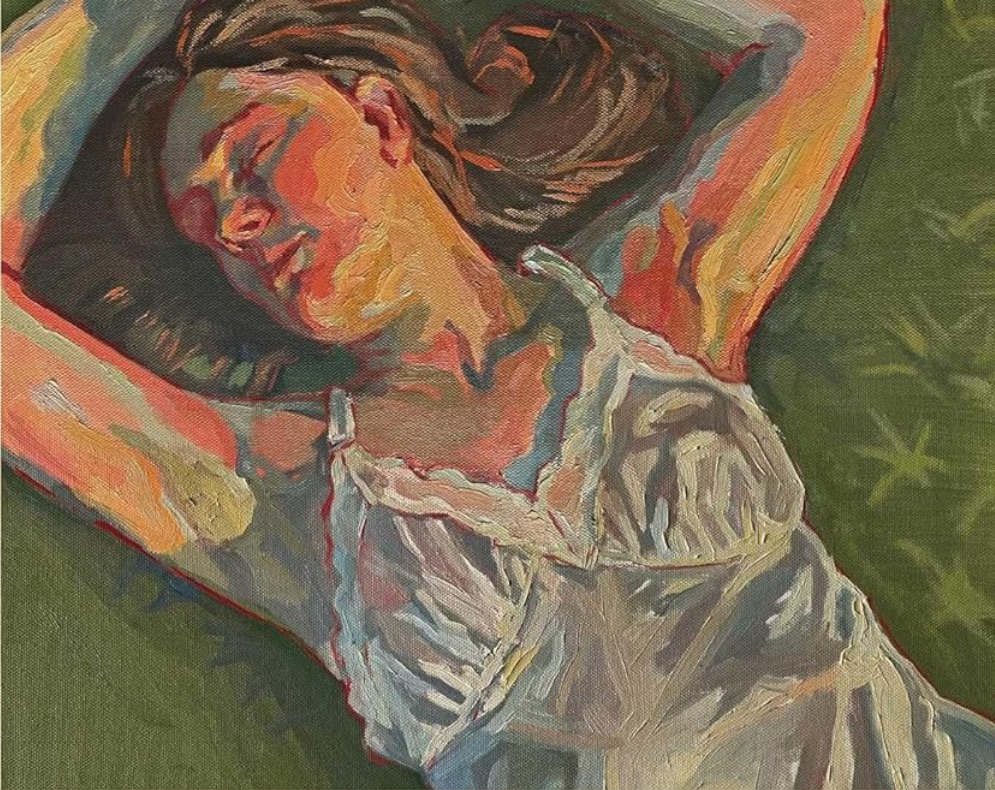
All sleepers seem helpless, snuggled up or spread out limp snoring a little breathing slowly completely at ease maybe some twitches when they dream, but they are not helpless. They are whole. They are sturdy.
Coral Shores in Fort Lauderdale — I grew up there. I fished, climbed trees, rode my bike, played tag, hide and seek, spin the bottle. Learned to drive. My first baby-sitting job, first real job, first 10-speed bike. My first kiss. Every plant had a spirit then. I huddled next to trees, bushes in awe. The sea-grape tree, the kumquat tree, the croton bushes, wild and colorful and hearty — nothing could kill them. The gardenias, the Key limes, the Norfolk pines, the hibiscus, the roses, the Florida holly, the ficus. And the grass and weeds. Some little weed grew a pod just like a pea-plant. I’d split the pod and eat the tiny sticky seeds, pop them between my front teeth, then pull a green blade of grass and suck on it. I’d eat coconuts fresh off the tree. The whole world was sensual, bright colors, tastes. The outside world was like my best dreams.
Our next-door neighbors, the Parkers, went back to Canada every summer. Mrs. Parker was almost bald. Small and stout, a good housekeeper and kind to kids. The kumquats in her yard looked like they’d be sweet — small, round, glossy orange, cute as the button on a baby’s tummy. But the taste made your whole face turn inside out. I’d gather kumquats, take in their beauty, and think, what a shame, what a waste. The birds liked them. The flies sucked on the mushy rotten ones in the neat circle of dirt surrounding the tree in the Parker’s ocean of perfect sod. “Kumquats,” my mom would sigh. Mrs. Parker made marmalade from them, sugary with an underlying tangy bite.
Mr. Parker was retired, always wore darkish, tinted glasses and didn’t speak much. Mrs. Parker made kumquat marmalade. I was fascinated by her baldness. The Parkers had two grown sons who visited a lot. Rickey and Charley. Rickey was my father’s childhood friend. A Vietnam vet. He was tall, wild-haired, and handsome. Sometimes he wore a beard, sometimes he was clean-shaven. His wife was Greer. Greer was thin, small-framed, with wispy hair and pale skin. And her eyes were great big smoky traps, too big for her face. She was always barefoot, indoors and out, sitting like a monkey with one foot up on her chair. Greer’s hands were always in motion, smoking, gesturing, touching her face, hair, anything. Her voice sounded like sex; like the Oracle of Delphi. Absolute authority. She wanted a baby, got only miscarriages.
She gave me things: a lion’s head silver ring; makeup and hair tips; sorrow. Her eyes were big and soft. Rickey didn’t talk to me much, but when he did my heart leaped in my chest like it was trying to get out. Charley, Rickey’s older brother, was a magician and clown. Card tricks, coin tricks. He spooked me a little. Rickey and Charley didn’t seem like brothers — not much physical or emotional resemblance. Personalities far apart — Mr. Chat-em-Up and Mr. Mountain Man.
Secretly, I was waiting for someone to discover me, like a diamond hidden in gravel. I wanted my discoverer’s joy to draw a crowd. I knew some elderly millionaire with no family would leave me his fortune; I was that lovable, at least to myself. To my mom and dad I was a handy, though lazy, fetch-it girl. I was in the process of forming an identity, like a larva inside a nacocoon. I wanted some clue on how to be a woman.
I was in love with Rickey and with Greer. She wasn’t exactly pretty, like my mom, but you wanted to touch her all the time. Be near her. The voice, the eyes, the manner, the name. Rickey had grown up with my dad, next-door neighbors. They were beach boys together. The soft life in Fort Lauderdale. My dad went to college to avoid the war. When he partied too much and flunked out, he enlisted in the Coast Guard rather than waiting for the draft. He was in Greece most of the time, getting drunk and squiring beautiful girls. He knew European girls didn’t shave their legs or under their arms. He made it clear how he knew this. His stack of Playboy magazines under the bathroom sink — in his bedside chest, under the bed. Always hidden, even the recent issue.
Geraniums and four o’clocks. Night-blooming jasmine and the plum-like fruits it gave, glossy and sticky. Someone said they were poisonous but I had to taste them anyway. I’d dissect every flower, every seed pod. I had to climb, or try to climb, every tree. Crawl into every shrub or hedge. Test the soil. Dig for fossil shells. Everything seemed beautiful and perfect, even when it was deformed. Like the seawall bugs that were missing half their legs. Never could catch one of those — my squeamishness, their speed.
Rickey and Greer gave me a birthday card one year. “To a very fine lady on her 13th birthday — don’t break too many hearts. Love, Greer.” Rickey had written: “Greer’s right about you, she’s always right, listen to her. You’re beautiful inside and out.”
Rickey would be there in the shadows while she gave me my feminine peptalks — she gave me the first idea I had that a man might want me, someday — yet she made me want her, too. She opened the bud of my sexuality without ever mentioning sex. Her makeup tips, her hairstyle tips, skincare tips, her fashion sense, her jewelry — giving me her lion’s head ring! She made being a woman (as opposed to being a girl) seem appealing. My mother, for all her beauty, made being a woman seem repulsive. Greer was the first person who made me want to grow up.
Hermit crabs, fiddler crabs — one day the road was littered with hermits, a mass migration. Where were they headed? Sometimes I’d sit on the edge of a murky mangrove bed and watch the fiddlers signaling each other with that one giant claw. The tiny claw would be busy, too, with feeding and grooming. From just the right distance, I could hear the music they were making. A symphony of small notes from a muddy shore. The claws moving up and down like piano keys.
Greer still wore Rickey’s dog-tags. They jangled, it became the sound of Greer to me. What are those? I asked her. These are Rickey’s dog-tags, from the Army, she said. Can I see them? She pulled them off, dropped them over my head. What’s this for? I asked, pointing to the notch. Rickey leaned over, picked up the tags, touched my lips with them. This is so they can stick it between your two front teeth when you’re dead. Ohhh, I said. Was it really terrible, being over there? I asked. Greer leaned in, her face still. She pulled the chain back over my head. She held the tags. Didn’t put them back on, then or ever again. She seemed afraid of something, but I didn’t know what. Rickey’s eyes softened, he blinked. It was pretty bad, he said.
Once, after a rainstorm, thousands of land crabs came out of their holes to keep from drowning. One found its way into our bathroom. Clacking its legs at me — get away, dangerous. I stretched out a stick for it to grab — it pinched on and rode all the way outside, hanging with ferocity. Eyes on stalks swiveling, like a watchful old lady schoolteacher.
I tried out for cheerleading — Pop Warner football league. Our team was the Red Tide. We hardly ever won, it was an embarrassment at first, then a tradition. We looked at the winning teams with pity — they didn’t know what real loyalty was. Our uniform was a white blouse and pleated skirt, red sweater vest and saddle shoes with red knee socks. We played our games at Holiday Park, under the bright lights. It was a horror when someone I actually knew came to see a game. Anonymity was preferred. The skirt would fly around, show my red-clad tush. I could feel all the blood rushing to my cheeks when someone, most notably Ricky Parker and Greer, would lean over the chain-link fence to say hi. If no one knew me, I was much braver, much more bold.
Later, Rickey carried me on his shoulders to the car, took us out for sundaes. I noticed circles under Greer’s eyes. She finally got pregnant, and as the months passed, looked more and more like a twig carrying a basketball.
Once Greer’s morning sickness passed, we were once more at home in our tropical landscape. Greer’s favorite flower was the hibiscus. We’d spend hours staining our lips with red hibiscus petals, eating the flowers, coating our cheeks with bright yellow pollen. And the three-pronged red velvet stamen, we’d use to stamp designs on our skin. Temporary tattoos.
Surinam cherries, all shades, from maroon to orange to clear red. Bright, everything bright. People decorated inside with bland colors — they needed a quiet zone to retreat to when all that tropical energy sapped them. Off-white, beige, celery green, pale yellow, baby blue. And the hum of the air-conditioners always in the background, like white noise machines. Terrazzo floor cool beneath the bare feet. Drapes pulled to keep out the light. And the butterflies. Inside was underwater.
I walked in one night while Greer was holding Rickey, who was in the grip of something I had no reference for and could only think of as late-night drunkenness. He had been drinking, yes, but later I realized that wasn’t the whole story. His tears, his shaking, his crying shocked me, but Greer calmed me down with her eyes while she calmed Rickey with her touch. She’d become a buoy he held onto. She was floating for him. She had a natural buoyancy, all women do, she told me, that’s what keeps men above water. Women are what keep them going after they’ve been through that hell, she said. And Greer shone in the light, Rickey’s salvation, his cuddly.
I got a POW bracelet that I would end up wearing forever, for Major Andrew Galloway. One, two, three, four, we don’t want your fucking war. “Mrs. Andrew Galloway,” I’d write in my spiral notebooks from school. One day toward the end of Greer’s pregnancy, shouting floated over from next door when Rickey and Greer came to visit. The U.S. was finally pulling out, it was on the news. I watched people I’d never seen before but would never forget, crowded on a rooftop, scrambling like bugs to cling to the helicopters, but too many, they started falling, falling off the bird, off the roof. Their panic made me panic, all the way across the world. What had Rickey really been through, and for what? Had we really lost the war?
I comforted myself with tree-snails, land crabs, Cuban toads, mockingbirds, cardinals, chameleons and Cuban anoles. Once I was digging and disturbed a lizard’s nest. Tiny white eggs buried just beneath the surface. I never saw one hatch. The lizards came in all sizes — from one inch to six or eight inches long. I was always startled when one of my captives bit me. They’d fake being tame until you finally relaxed around them — then they’d be gone.
I found Greer holding Rickey not just late at night anymore, but in the middle of the day, sometimes first thing in the morning. His eyes looked worn out all the time. Greer’s baby was due any day, but she decided I needed my hair done up fancy. We sat at the Parker’s kitchen table while she fussed behind me with pink plastic rollers and hairspray. She said Rickey was taking a nap, but we heard him tossing around restlessly all the way from down the hall. By the time he gave up on the nap I guess he decided he’d had enough of listening to himself crying like a baby. We didn’t hear anything then until he was in the doorway. He had something in his hands and then he put the gun under his chin and raised his head, tilting it back, never breaking eye contact. He looked at me, not at Greer. He pulled the trigger and his body fell back. From the front, he looked the same only dead. But the green sculptured rug was dark brown. His hair was bloody. Greer started to wail — long, deep, low, gut-wrenching. Listening to her wail was the worst part. Worse than Rickey’s eyes at the end.
Even after Rickey was gone, the neighborhood still burst with life — plant and animal. The ducks, the birds, the toads and lizards, the flock of wild parrots that would screech by overhead — the fish in the canal — catfish, mullet, puffers and mudskippers. The fish in our pond — mollies, swordtails, guppies, goldfish. That year during a hurricane the canal crept up and merged with the fishpond. I waded through the yard, the fish with me, swimming around my toes. Nothing to be done, no way to get them back. After that, my dad moved the fishpond indoors and built a waterfall. The tiny fish would leap at the falling water, like navigating salmon. Sometimes they’d miss their aim and I’d find a tiny body drying out on the rug. That made me so mad I wouldn’t even bury them, just toss them into the canal for the living fish to eat. Still, I could sit for hours at the edge of the pond and pretend I was down at the bottom with them, just another fish. We fish had a king and queen, a palace, all our favorite spots. I was the most beautiful of all the princesses.
I figured it out finally and then I wasn’t so mad at Rickey. When he looked at me like that, he was pushing off me like you’d push off the wall of the pool after you turn, to get yourself moving fast again. Putting all your leg into that push, because you were at your limit and it was all you were going to be able to do just to get back to where you’d started. He was so tired. Rickey didn’t want to swim any more. Not even with Greer holding him up, not even with a baby coming. He just wanted to get out of the water, back to dry land.
Every moment of her life had been marked by her soul, waiting and restless, trying to elevate itself. Yearning. In the end, she had done what she had HAD to do… she recognized herself only from a great distance. Was she Mary Poppins? Pollyanna? A doe-eyed Disney princess? She remembered driving across Western flatlands, as fast as she could, her head out the window, her face into the sere wind.
She, an Air Force pilot’s daughter, felt bad for the poor stewardesses, who knew what was coming in a way mere passengers could not know… stoically dumping everyone’s shoes in the bathroom. Collecting all sharp things, taking people’s eye-glasses away from them. She remembered walking along the edges of the Atlantic, feeling the cool sand under her toes. Mother Universe keeps her eyes on us all.
Someone reached out to grasp her hand, solid & firm. She grasped back. She looked at the sun through the little window, a flashing brilliant light, and lightly closed her eyes. It would be quick, merciful, and good. And right now? Right now she was still alive. She was still a witness. There was no other way to get through life. Mercy was revealed, and blinded her. Everyone was waiting.
What inspired her? A seemingly insignificant little turtle, named Max… Max who sneezed. Dear, little, humble, Max! How the mighty could fall. Schadenfreude: a word she had to admit was genius. After Max? Then there came the little red hen.
“Listen, honey,” the Wife told her friend. “Go on then, and fuck him. Go on, confide in him your hopes, dreams & fears! You go on, beg him for mercy, for forgiveness, for permission to have a life apart from his. Go on now, and you be his wife.” The two of them sat frozen, four icy blue eyes wild, two heads of hair crackling, one jaw hanging an inch with shock. The wife licked her lips. “Don’t judge a book by its cover; and certainly not by its dust jacket. Everybody’s story has more than one side. Don’t believe everything you hear.”
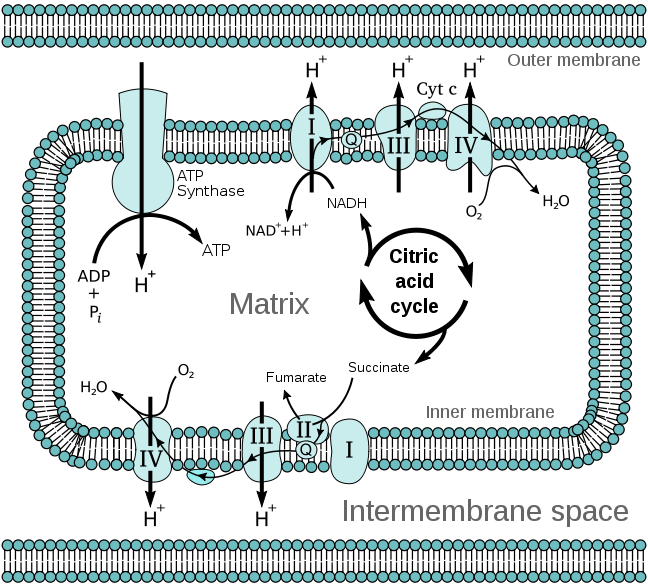
The Other sat, listening for the answers with every cell of her body. She could feel mitochondria working inside herself, she could feel the mitochondria chugging away in every single person in the restaurant — the fuel of molecular energy turning substance into the stuff of life. But she perceived only silence. The engine of life, the mitochondria? She stared off into space.
“Look, you asshole,” the Wife said, and she stood up & grabbed the check, her gauntlet thrown. The icy, motionless, blue Other sniffed loudly. The Wife kept on, plunging a sword through the Other’s breastbone… twisting. The Wife wanted blood, as was her right. Her old life was over. Her new life was being born, right that second.
“How dare you,” the Wife told the Other. “You will need me someday. You might learn you have influenza and mononucleosis at the same time. You could need a year’s bed rest to heal your lungs & liver. Someday, you might get arrested for something which isn’t even a crime! You might find out you have a brain tumor. You might die in jail. A wise, wise man I know told me the ends of things are always coiled up, rising from their beginnings. He changed my life.”
When Things Got Too Weird For Ripley (Believe It Or Not)
Notwithstanding the fact that he still received more letters every year than anyone on earth, including Santa Claus (Believe It Or Not), his sinking fits of despair started to occur with frightening regularity, after the war. On his way to the far East, for the first time since Pearl Harbor Day, he stood on the naked, turkey-breast hull of the sunken battleship Arizona, looking down at his own well-shod feet as though the rolled steel were transparent. He could see the innocently disarrayed skeletons of the young men entombed inside (Believe It Or Not). His full, delicate lips, firmly closed, covering his distinctive, protruding teeth. He was speechless for the first time, in fifty-odd years.
Oddly, he couldn’t take his mind off his Tibetan skull-bowl, back home. He felt the hinged roof of the bowl under his cold fingers, he tasted warm, sacramental blood and wine, mixed in equal parts, sharp and bitter against the roof of his mouth like the blade of a rusty, iron sword. For the microphones, he read aloud the notes he had with him, but his voice wasn’t Ripley’s anymore, it was the gentle, quavery voice of an old, old man.
Since his first success, he had been a hard-working, hard-playing man, with the immodest tastes of an oriental emperor. He earned a million dollars a year, and knew how to spend it. On better days, he’d have six smart, well-dressed women under his roof, for energetic conversation, for private fun and games. Out on his secluded spit of land in the middle of Oyster Bay, they’d barbecue whole pigs, split sides of beef, and the flavor of the smoked flesh he tore into was marvelous, marvelous.
Later that day, continuing his flight from Hawaii to Japan, he lost track of where he was for a few moments, and through his puffy, heavy lids, the woman bending over him with the pitcher of pink lemonade looked exactly like the love of his life, dead ten years that month of cancer. Dear, sweet, Ola, he almost said, but caught himself. Though his temples sweated copiously, he refused to soil his handkerchief, letting his shirt become wet, stiff with his salt.
His live radio broadcast, next morning, from Hiroshima’s approximate ground zero, wasn’t easy, not with him sitting at a card table, fumbling with watches frozen at the moment of detonation, staring at a vaporized child’s wool-and-silk-ribbon slippers, retrieved intact from the dunes of sticky ash (Believe It Or Not); the only artifact to survive the blast for many thousands of square yards. He haggled over price and bought it for his newest museum, opening the next month in Las Vegas.
As long as he could remember, he’d been happily locked in an embrace with the whole odd, eclectic world, savoring each one-of-a-kind moment his physical bulk passed through. Here at Hiroshima, for the first time, that innocent enthusiasm which had brought him so very far from Riverside, California seemed to encircle his tired neck like one of the great unwieldy money-stones of New Zealand, giving little joy.
Upon reaching his final destination, Shanghai, he saw his dearest, most beloved city in a panic: everyone knew the Reds were marching down from the hills. It was only a matter of time before the soul of China became engorged and insensible with Mao’s revolution. Voracious appetite of old absent, he forced down a quart of sticky rice with Seven Delicacies for show, for form, so as not to upset his agent.
A week later, back in New York, for the second time he faltered while on the air, then passed out, slithering to the floor in his fine wool suit like a large scrubbed potato, hands scrabbling against the studio floor, grasping the taped microphone cords with a syncopated rhythm, his young female assistant staring at him like a ritual mask, her mouth a lipsticked slash of fear, babbling nonsense until they thought to turn the mike off: the perils of live broadcasting.
That very night, Rip called his next-door neighbors from the hospital; I’m getting out of here tomorrow morning, he said. I’m taking us on a long vacation, God knows we all deserve it. He hung up the black phone and leaned back, dead before his head touched the pillow. Years later, his dearest friends all said it was a blessing he didn’t live to see how the world changed. The world changed and made his collection of physical oddities seem, by comparison (Believe It Or Not) warm, safe, what we dream of when we dream of heaven, not one of us doubting for a minute, anymore, that fact is stranger than fiction.
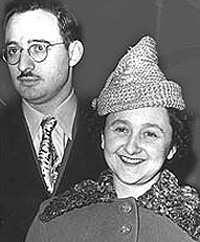
Ethel arrived for court that day in a wool elf hat, beaming. Her chin had grown double; her skin was flawless and glowing. She wore a bit of lipstick. Julius didn’t smile or frown — he looked like a man who had just woken up from a long, dreamless sleep. Ethel draped her gloved hand over her belly as if to shield herself from unseen bullets.
Ethel & Julius grew up poor in New York, and came of age during the Great Depression. They grew up going to rallies for the WPA, listening to radio broadcasts by FDR. I grew up watching the rich debauch themselves in South Florida, and came of age during the Disco Years, the anything-goes Seventies. John Travolta, spinning like a dervish in his white polyester three-piece suit.
Ethel and Julius and I were all politically inflamed at an early age — I wrote to Nixon at age 11 to protest lax emission control standards, and got a personal letter back, signed by Rosemary Woods, Queen of the Accidental Erasure. Julius was contacted by the KGB and asked to spy for the U.S.S.R. He found it flattering — was he really that important? — an offer he couldn’t refuse. There were no KGB agents contacting me, but if they had… how would I have answered?
Unfortunately, in addition to the political, I also got inflamed past all reason by my mother’s drinking — I used to fling her gallon jug bottles of wine into the canal in the backyard. My reaction was a type of revolution: I wanted to throw off the chains of her alcoholism and be free at last. I wanted to throw off the chains of her drunken love just as much, if not more, than Julius wanted working men and women to throw off the chains of their capitalist oppressors.
I had an ongoing fantasy: a mother who could be confided in, a mother who wouldn’t judge, become angry, or load me up with confessions of her own, far greater problems than mine would ever be. Once, I dreamed Ethel was my mother and it was a relief; I knew she’d fight for me; have my best interests at heart. She looked to be a normal mother, cooking meatloaf and mashed potatoes in her tiny apartment kitchen, smoothing her boys’ foreheads after bad dreams, murmuring soothing words in the darkness.
My father and his left-wing ardor neatly complemented the Rosenbergs. He once ran for Santa Monica, California city council on the Communist Party ticket. It was only a few years after Kent State, the simultaneous apex & abyss of the “age of Aquarius.” My father and I never discussed the Rosenbergs; we were in agreement on most things.
Ethel, Julius and I all studied Marxist doctrine, and I toyed with the idea of joining the American Communist Party. I read the Party’s official platform (from the 60s), and decided, after considering Ethel & Julius’ fate, that joining wasn’t such a great idea. To think was private, to act, public. Plus? I wanted to be a lawyer someday.
The Rosenbergs had a larger purpose — to transform society from what they viewed as unfair to something more egalitarian. This is what most political rebels have wanted. But who defines fair? Those in power? The USSR hardly turned out to be an entity worth dying for. Are Julius & Ethel content in their graves? Maybe I should have been sent to the electric chair.
All of us spin out of control in some fashion; Ethel & Julius got caught committing actual crimes. The main evidence against them was the testimony of Ethel’s brother, a man who turned State’s Evidence to protect his OWN WIFE. He didn’t actually believe Ethel & Julius would ever be executed. The government only wanted the Rosenbergs to name names. They, however, remained silent.
After their deaths, Julius & Ethel were laid out in religious garb. They didn’t look dead, just asleep. The embalmer did an excellent job. Three hundred people came to look at them. The dead Rosenbergs left behind two young sons — I left behind my mother, slowly dying. She was a child who wouldn’t grow up. I couldn’t be her mother — her own mother couldn’t even be her mother anymore. She had worn everyone out! Julius, Ethel, don’t ask for God’s forgiveness — I can’t bring myself to. God should be asking us for ours. Our enemies have already forgotten us.
Twenty years ago we finally went to see the sights,
riding the train through flashing dim green suburb,
glassy sharp-edged slum, the skin stretched
pale and tight over your fine cheekbones —
you didn’t really know how to be afraid of death,
simply of heights and under-grounds:
you wanted always to be on the surface of the earth.
Your demise was still an abstraction,
discussed in the evening while sucking cool mints —
the natural order of things. I dragged you
all the way to the city under the water from Hoboken,
then marched you up to the roof of what was the tallest
building in the whole world when you were young.
I haven’t been here since it was built, you said,
and though the blood sank to your innards in panic,
you kept walking; I kept pushing and pulling you
forward, propelling your solid weight like a cart
loaded with spring lambs. Your hand, soft
wrinkled palm, roughened fingers speckled white
around the knuckles, gripped mine, but I showed
no mercy; I was forcing you to confront the bitter
end ahead of schedule. I was being cruel
to make you go look at the thin sparkling air
of the heavens and you knew it. But later,
my love, as you lay sweating, heavy and motionless
in your bed as though carved of wood, deprived
for weeks of even the common decency of words,
weren’t you glad you went with me once more to the top?
In the beginning, I almost hated them for bringing me into the world…
alone as egg, one floats weightless, drifting peacefully like a helium balloon,
and as sperm, one swims in ever-widening circles with serene joy.
I never approved the union: his tiny-tailed kamikaze wriggling to oblivion,
smashing headfirst into the mammalian membrane of her egg.
But now I love my frail universe; evidence of their short, fraught marriage.
They cooked me in the kitchen, first upon a midcentury, glitter-red dinette set,
then on gleaming, spotless black & white linoleum. I remember my mother
at that exact moment, the way she arched dizzily beneath him half-clothed…
her strapless formal askew, her silk stockings awry, her feet bare
after kicking off her spike heels. Barefoot & pregnant in the kitchen, she learned
quickly to live with organized madness. A love collision, a soft accident, birthed me.
She opened her soul to my father like a flower opening to the sun & he did the same;
my hands, my feet, my face suddenly called into existence by heat & explosions.
Group of beautiful young women strolling on a beach
Pretty Young Women, Playing A Game
The stupid party game I suggested that night was called “the worst moment of your life.” A half-dozen of us were playing, sitting cross-legged in a circle on the floor. The prettiest, Kelly, resembled a long-past period of fashion, with her trembling dusty-yellow curls, her sharp little chin — her eyes were bright blue, her frame delicate. We had been up all night; the sun was close to rising, but the birds hadn’t started their relentless cheerful, spell-breaking noise.
Kelly didn’t want to play at first, but the rest of us insisted, figuring what? That not making head cheerleader was her life’s worst tragedy? That’s what happens again and again to women like her, they try to explain why they don’t want to talk about it… but no one listens.
The second prettiest one, Vicki, was pale and fleshy, moving with a clumsy, yet charming, slowness that made the rest of us wonder if it was an act… or could she really be that dumb? Across the undersides of her velvety forearms gleamed a network of thin white scars… the baby she’d left at her mother’s that night was not her husband’s. Mistakes get made; the child’s father was never heard from again.
Oh, but now Vicki wanted to get remarried so badly it made every other woman in the room flush with embarrassment just hearing her mention her latest lover’s name. We knew because of the kid that wasn’t his he would never agree to marry her; but she was so beautiful… scars, sad eyes and all… that he couldn’t say no to what she offered up nightly.
So, after being pushed & pushed & pushed & pushed & pushed into participating, Kelly narrated the worst moment of her life. Her twin sister was in the middle of a divorce. We never knew she HAD a sister. A few days before Christmas, the estranged husband called — he had lots of presents for the kids. She agreed to meet him at a gas station down the street. The only thing he gave her was three bullets — one in the spleen, one in the right lung, one in the throat.
“At least he had the decency to shoot himself too,” Kelly says sobbing. “How does marriage turn into murder?” The rest of us watched tears plop out of her eyes like clear glass pearls; we heard the birds finally, blessedly, began to chatter, bringing relentless life back into the world.







 Kimberly Townsend Palmer