Tag Archives: florida

Lillie Mae Lovett, a prose poem

Image

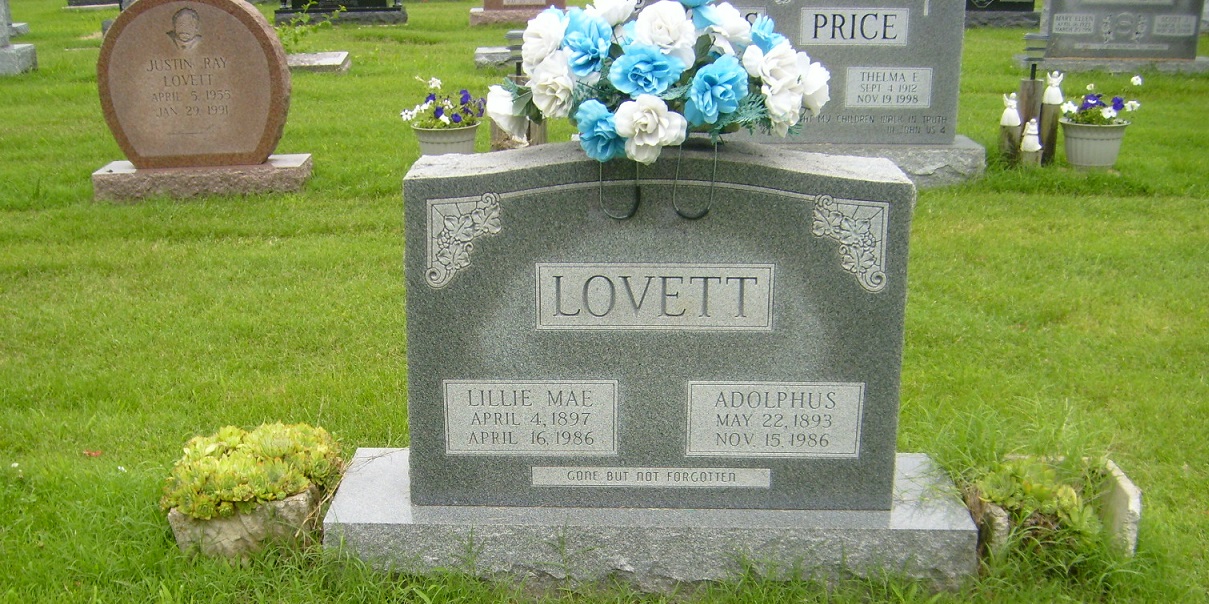
Lillie Mae was the first person, other than her mother, Ella remembered being in love with.  She — Lillie Mae — chewed gum, had a gold front tooth, wore long, dark auburn wigs, bright and warm against her dark brown skin.  She — Ella — buried her nose in Lillie Mae’s neck, held up high in her arms.  Heard the muted snapping of the gum in Lillie Mae’s mouth.  Lillie Mae could get Ella, a picky eater, to eat when no one else could.  For Lillie Mae, Ella would open her jaws for the spoon.

Leave a comment

Filed under for children, health, mysterious, notes, prose poetry, short stories

martha’s china, a short story

illustration martha's china

Martha’s China

“I’ve met a nice girl,” Martha’s divorced son, Paul, had announced one Sunday. “Her name’s Lidia. I want you to meet her sometime.”

“Well, why don’t you bring her to dinner with you next week?” she said. As she put her coffee cup down into the saucer, her wrist twisted suddenly and she nearly dropped it, making a terrible chipping sound. Holding her breath, she ran her hand over the bottom of the cup but found it unharmed. She smiled at Paul and touched her necklace. “Call me by Wednesday to let me know for sure.” Then she decided she’d sit and sip coffee and smile at her son; she was entitled. Paul looked just like his father only better, his shoulders wider, his hair thicker, his teeth larger, his eyes a purer blue.

***

This year, in honor of Thanksgiving, Martha’s second daughter-in-law, Lidia, wore a white jumpsuit, gold belt and shoes, and a great deal of white plastic jewelry. A long bead necklace was wrapped twice and knotted around her neck, bangle bracelets in random widths jangled everywhere, too-heavy earrings sagged the little holes in her lobes. There was a brooch too, some sort of spidery circle with a gold anchor dangling in its center.

Unfortunately, the white Thanksgiving jumpsuit was tight everywhere that Lidia wasn’t. Martha breathed deep and smiled anyway, gripping the hot solid hand firmly, glad to be helped up the front stoop even by a woman like this. Well, at least she’s got him going to church again, Martha thought — we’ll just see how long that lasts. Before his and Lidia’s wedding day, Paul hadn’t set foot in a church of any kind for twenty-five years, not since the last day he hung up his altar boy outfit. He’d had a civil ceremony with his first wife. Maybe that was her fault too — hell, everything seemed to be the mother’s fault, these days.

Martha should have known from the beginning how this second marriage would turn out. Lidia had no hesitation in her voice. Brassy. From the very beginning, she just blared right out with everything. “Hello, Mom,” she’d say to Martha, her cheeks round and orange with too much makeup, front teeth stretching her upper lip, keeping it from ever completely closing, making the words come out slippery-sounding: too loud, too bright. Not a lisp, but damned close. All she needed was a fluffy tail to snap behind her, Martha thought — it would go right with the rest of her chittering.

Not like Neal’s mother, Paul’s first wife, Joanne. Martha sighed, remembering Joanne as she sat down on the too-soft living room sofa, some rattan thing covered with the kind of material she would have expected to see worn by a belly dancer. Why, for all her problems, Joanne had been a lady. Martha had told her son that when he’d brought Joanne home for dinner for the very first time. “This girl’s too good for you,” she had said, right at the table in front of everybody. Damned if her conscience wasn’t clear on that one. Poor Joanne hadn’t known what she was getting into — none of them had. Not that Paul was a monster, just lazy. Almost spineless except when it came to his expensive toys. Those damned boats. Martha couldn’t stand it, but what could she do?

“Happy Thanksgiving, Mom,” Lidia said, plopping herself down next to Martha. “I hope you brought your appetite.”

Martha smiled. “Thank you, dear,” she said, patting her daughter-in-law’s hand lightly.

***

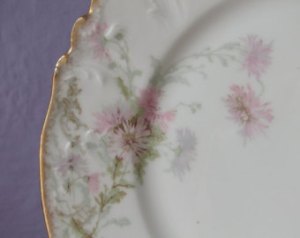
Martha’s china was Limoges. There was a border of tiny flowers, handpainted pink and green and a broad line of gold around the edges, the coffee and demitasse cups so thin you could see through them when you held them up to the light, like eggshells. Martha had inherited it from her mother and father when she was eight.

The accident that killed them had involved electricity. Whether it had been lightning or wiring, she never knew. In any case, she tried to imagine their final moments based on what she knew of electricity from watching movies and reading the encyclopedia. Waking early in the mornings, she would throw off the covers and lie there in the pearly dark, stretching her arms and legs out, stiff, at right angles. She would open her mouth until she heard her jaw pop. Her body would tremble, her lips sting. When she finally let herself go limp it was a relief to be back.

Martha was sent away to boarding school the following year; her parents’ money was managed by some cousins of her father’s. During her senior year, she was called in to the headmistress’ office and informed: fiduciary malfeasance. Of course she would receive her degree with the rest of her class. The words “charity case” were never used. Much later, memory and resentment molded the set of her mouth, pinching her lips with sharp lines: by the time she was fifty, no one guessed she had once been smoothly, delicately beautiful, the kind of looker other women couldn’t even bring themselves to dislike, although their first impulse was always to try.

***

“Where’s Paul?” Martha asked.

“Oh, he had to run out to the store,” Lidia said. “I forgot the cranberry sauce.” She chuckled, shaking her head. A small fleck of saliva flew from her lips as her teeth drew back. “Brain like a sieve sometimes. He’ll be back any minute now.” She stood up and walked over to the door leading to the T.V. room. “Neal! Eddie! Get off that Nintendo and come say hello to Grandma Bergen.”

Their boys had been five when Lidia and Paul married. It hadn’t bothered Martha at the time that they wanted Lidia’s boy, Eddie, to call her Grandma, too.

“Hi Grandma,” said Neal. “Happy Thanksgiving.” He bent and kissed her shyly and she felt a slight prickling fuzz tickle her face with the kiss. He was so white-blonde it wasn’t something she would have noticed from a distance. He was growing up, that was clear. He had a small pimple on his chin.

“Grandma, how’s it going?” Eddie said, and he stuck out his hand. She shook it, his hand warm and heavy like Lidia’s.

“Very well, Eddie,” she said. “Thank you.”

***

In the end, “fiduciary malfeasance” notwithstanding, young Martha had been able to keep the china and the silver, and her father’s monogrammed, twelve-piece dresser set. There was a little cash left over. She managed to graduate from Boston University by wearing the same dresses all four years and waitressing at Woolworth’s, not precisely what she would have chosen, but good enough for a Massachusetts teaching certificate. She interviewed at high schools all over but ended up teaching back in Brookline, where she had been born. Wanting to keep her figure, she joined the municipal tennis league. They played tournaments once a month. It seemed like a good way to meet people, better than church, which is what the other teachers did. Using God as a dating service was hardly a ticket to heaven.

***

“Can I get you anything, Mom?” Lidia asked her. “Some iced tea or a Coke?” Paul and Lidia were born-again Baptists now: no alcohol, even on holidays.

Martha smiled slightly as she remembered the old joke: What’s a Methodist? A Baptist who can read. “Iced tea sounds nice,” Martha said. She heard the gravel in the driveway crunching and the dogs started to bark. “That must be Paul. Go tell him his mother’s here.”

“Oh, he probably saw your car already,” Lidia said. “I’ll be right back with the tea.”

***

Martha’s ex-husband, Fred Bergen, had been a handsome young man, five years older than Martha. He was well over six feet, blue-eyed and blonde, with smooth Scandinavian skin that turned a dark, clear brown every summer. Martha was dark, eyes and hair, except for her skin, which was thin and light, looking almost transparent in the sun, a raised mole in the inside crook of her elbow the only mark on her. Next to him she looked like a foreigner, but her ancestry was English on both sides. He had gone off to Dartmouth to study Engineering but came home to Brookline to be a gentleman.

He was an ace tennis player; she was ready to get married. Her china saw frequent use. The teaching certificate moved into her scarf drawer. They had one child, a boy, named Paul, after her father.

The first few years after Paul was born, they lived just outside Concord, on the farm her husband Fred had inherited from his family. The three of them rode through the woods almost every Sunday, Paul on his Shetland pony, the reins tied to the side loop of her saddle. She especially loved the fall woods, the bare trees making everything look so clean. Everything was gray, but there were no real shadows.

***

“Well, hello there!” Paul said, pulling his satin baseball jacket off as he stood in the living room doorway. Throwing it over a chair, he sat down across from her. His smile was broad, his square white teeth perfect. The skin around his eyes wrinkled heavily as he smiled, pulled up into bags thrown into even harsher relief by the lenses of his glasses, something that still surprised her. If her son was getting old, she wondered, what was she?

“Hello there, yourself,” she said. She held one arm out to him, summoning. Heaving himself up out of the chair, he bent for a kiss. She smelled shaving lotion and dandruff shampoo; he fumbled at her cheek. She took one of his hands in hers, feeling the hard, dry skin of his fingers, squeezing it twice. Sitting down next to her this time, his breath whooshed out as if he had been holding it.

“How’s your father?” she asked. Their divorce had come years ago, when, of course, she was considered too old for it. Separated for a long time already, she nonetheless wanted the formality of the piece of paper. She took her own Social Security, not Fred’s, so it didn’t really change anything in a practical sense. It had been the kind of case the judge laughed at right in court. That irked her more than any of the rest.

Family holidays, of course, nothing had to change.

***

Martha had blamed herself the second time the money went. Not as much as she blamed Fred, of course. But she, of all people, should have seen it coming. The gin games at the country club were no surprise, but as for the horse races — she had had no idea. They sold the farm to pay off his gambling debts, land that had been owned by the Bergens for three hundred years. Neither of them had ever lived anywhere but Massachusetts. It was Fred who promoted Florida. He’d heard there were still bargains to be had in Miami.

They bought three lots with the money they had left, building an apartment building on the water in Coral Gables. Fred’s tan became year-round. He had started to put on weight, but it came off now that he was busy with the yard work and repairs around the building — five units — wearing swim trunks and sandals, beachcomber style. Martha packed her wool suits away in a trunk under the stairs. They both looked ten years younger, so maybe it was for the best.

Paul started first grade, then second, then third. When she found him rummaging through the old trunk full of woolens for a Halloween costume, she realized it was finally time to clean house. She got rid of all that heavy winter clothing, except for one pair of jodhpurs, sort of a souvenir, not having any use for them anymore but afraid she’d be sorry later.

She used the Limoges every Thanksgiving and Christmas, but then the company finally discontinued the old pattern, and she was afraid of ruining the set. Counting the different pieces, she wrote the numbers down on a 3×5 card taped to the inside of the china closet’s door. She’d dust the outside of the closet, telling Paul — someday, when you get married, this will be yours. Okay, he’d say, nodding. Is it all right if I go fishing with Gary this afternoon after school? She’d tell him yes, then watch him run out the door, worrying he’d never know what he had really come from.

But had knowing where she, herself, “came from” ever done her any good, she wondered?

***

“Oh, Dad’s the same as ever,” Paul said to Martha, rolling his eyes. “He ought to be here soon. I called Yellow Cab this morning. They were supposed to pick him up at one-thirty.”

Fred’s eyes were shot, but it was really the drinking that kept him from behind the wheel: the way his hands shook.

“Now, why did you go and do that?” Martha said. “I could have picked him up on my way.”

“I knew you’d say that,” Paul said. Then he chuckled. “I figured the cab deal was easier for everybody. If you really want to, you could drive him home, I guess.”

“I was only married to the man for forty-five years,” Martha said. “I can put up with him for one more hour in the car. Besides, then he won’t be able to stop and get loaded.”

Paul snorted, a half-laugh. “I don’t worry about it. I’ve already told him if he wants to kill himself he should go ahead.”

***

When Paul flunked out of the University of Miami his junior year, he had two options: the Coast Guard or Vietnam. It wasn’t really much of a choice. He spent the first eighteen months in Greece, working on Radio Free Europe. His letters home were short. The girls are beautiful here, he wrote. Martha was relieved when he was sent back to the States and stationed in Key West — no Greek wife, and that was fine. Every week or so he’d drive up for dinner.

She loosened up a little about the china. What’s the point in having something you don’t use? She would ask herself. She felt relatively safe using it for coffee and dessert since there were fourteen each of the small plates, cups and saucers. She could break two and still have a set of twelve.

***

Paul pressed his lips together and twisted them to one side. “Besides, as long as it’s not in my house, I really don’t care how much he drinks. It’s not my problem anymore.” He shook his head as if trying to convince himself.

Lidia came back in, holding a glass of tea in one hand and a magazine in the other. The ice tinkled as she walked. “Mom,” she said, “this is something we’re really proud of.” She handed the magazine to Martha, putting the tea on the coffee table. “It’s on the last page,” she said.

Martha opened her purse for her reading glasses: frosted blue frames with half lenses, on a silver chain. She held them to her nose, the chain rattling against her string of amber beads as she fiddled with the magazine. It was last month’s copy of Florida Sportsman — on the last page was a photograph of Paul on the deck of his boat, holding up a very large and very dead bull dolphin, his fingers hooked in the poor creature’s gill covers. “My, my,” she said, looking up from the magazine and raising her eyebrows. “Isn’t that something!”

“The fish was forty-nine pounds, even,” Paul said. “Half a pound over the local record.”

Martha smiled, peering at her son over her glasses. He wasn’t a outright gambler, that was true, but in a hundred other ways he was exactly like his father. This fishing obsession: did he really think it was enough? A person she raised from a baby — living his adult life primarily through jerkings and spinnings felt from the end of a pole.

“Congratulations,” Martha said, removing her glasses and folding them carefully, setting them on the coffee table in front of her. “I hope you’re having the fish mounted.”

“Of course,” Lidia said, leaning over the back of Paul’s chair, her solid brown arms wrapped around his neck and her chin resting lightly on the top of his head. “The boys and I are giving it to him for an early Christmas present.” Paul twisted his head and smiled up at her.

The dogs barked again. A cab pulled into the driveway. The noise of the idling engine echoed against the stuccoed concrete block of the house. Fred climbed awkwardly out of the back seat, wearing an old plaid patchwork sport-coat and thin wire-rimmed glasses, his wispy gray hair blowing crazily in the breeze. Martha heard him call toward the open living room windows.

“Hello!” he said, his voice strained. His hand trembled as he futilely tried to smooth his hair. Finally he put both hands to the sides of his head, cupped behind his ears, calling again. “Somebody come out here and help me, would you? I’ve got some pies to bring in.”

Paul looked at Lidia and then back over at Martha, rolling his eyes. “The mincemeat,” he said. “I told him we already had dessert this year. Oh, well.” He got up and went out to help his father.

***

Martha had cooked a leg of lamb in honor of meeting Joanne. Putting real butter out for the mashed potatoes, she even brought out the big serving platter and the covered vegetable dishes from the Limoges. The dessert plates and coffee cups were on the table too, as usual.

Joanne was a nice girl, Martha saw that immediately. She wore a green linen suit and matching pumps; her hair was long, just past her shoulders, with square bangs, a white headband holding it back neatly. Her hand was small and cool in Martha’s own as she said hello. “It’s so nice to meet you, Mrs. Bergen,” she said.

“Oh, please call me Martha.”

“All right,” Joanne said, smiling. Her teeth were as glossy and prettily shaped as kernels of white corn. “Your home is lovely. It seems so nice and cool on the water.”

“Yes, we enjoy it,” Martha said. “Are you a native of Miami?”

“Not quite,” said Joanne. “I was born in Delaware. But we moved here when I was three, so I really have no memory of the cold.”

“We moved down from Boston when Paul was just a little older than that,” Martha said. “I don’t think I could survive a New England winter now.”

Joanne admired the table. “It’s so beautiful!” She touched the covered tureen in front of her. “Is this Rosenthal?”

“No, Limoges,” said Martha. “It belonged to my parents. The pattern is discontinued, you know, so I don’t use it very often. But this is a special occasion.” She looked over at Paul and smiled.

She gave Joanne and Paul the Limoges as a wedding gift.

***

“Fred’s always loved mincemeat pie,” Martha said. “It’s the only thing he ever learned how to cook himself. The man eats out of a can, breakfast, lunch, and dinner.”

“It’s cute,” Lidia said. “My father couldn’t boil water without instructions. I like a man who cooks, even if it’s only one thing.”

Martha stared at her. “Pie crust is quite an accomplishment, when you think about it that way,” she said, nodding her head and smiling. “I suppose I could break down and have a piece this year. The heck with watching my weight on Thanksgiving.”

Fred puffed his way into the living room, wiping his glasses. His eyes looked small and defenseless, his face flushed even more than usual. “Well, that was a rare event,” he said. “An American cabdriver, white to boot. I asked the guy what he was doing driving a cab.” Shaking his head, he put his glasses back on, then took out a hard rubber comb and swiped at his hair. “He must be a real loser.” He lowered himself into the armchair next to the sofa. She caught a whiff of him: dry, musty. His pants were creased smartly but there was a faded grease stain on the knee. Turning to Martha, he held out his hand to her, which trembled although she knew he strained to hold it firm, and she felt a piercing of loss for him. I suppose in his own way, he pities me too, she thought. She must appear just as sad to him, even without a tremble.

“Hello, my dear,” he said, and he kissed her hand, his lips warm and slightly moist.

***

Poor Joanne hadn’t wanted to quit her job at the bank, but Paul insisted after Neal was born. “No son of mine is going to be raised by a babysitter,” he said. Martha felt he had a point — but what good was it if Joanne was miserable at home? She herself had missed teaching, although she’d never seriously considered going back to work until Paul was in high school. But she certainly wasn’t going to come between husband and wife. Her two cents, she kept to herself. Then Paul told her Joanne was having a problem with her drinking. He’d seen enough of that with his own father, he said, to last a lifetime. After he filed for divorce and custody of Neal, she didn’t mention anything to anybody, just decided to reclaim all she had left of her barely-remembered parents.

“Well, hi,” Paul said, when he opened the door and saw her, unannounced. His eyebrows were raised, but he didn’t ask. “Joanne’s with Neal down the street at the Gallagher’s. Kids’ birthday party.”

“That’s no problem. I’m here to get the china,” she said. Paul stared at her. He didn’t seem to understand. “The Limoges.”

“Oh, that,” he said, moving back out of her way as if he were afraid, and an odd memory of him at two years old flew by her, making her weak, making her want to squeeze him. They hadn’t hugged in years: they weren’t the huggy type, like some. Still, she had some idea what she was missing.

“Let me think a minute where we keep it,” he continued, taking his glasses off and rubbing one eye slowly. It reddened and he put his glasses back on. “That cabinet over there, maybe?” he said. “Underneath?”

“I know where it is,” she said. Joanne would never forgive her, but it couldn’t be helped. She packed the china in the special boxes she’d bought on her way over; Paul carried the boxes to the car for her.

Before the divorce was final, she called Joanne to explain. She realized Joanne knew her history, but still, she was ready to apologize — but Joanne hung up on her in the middle of it.

***

“Well, it’s about time we sat down at the table,” said Lidia. “Neal! Eddie! Turkey time!”

Martha hauled herself up, out of the overstuffed sofa. She held her arm out to Fred, still struggling in his armchair like a snail trying to flip its shell. “Let me help you,” she said.

“It’s a nice chair, but it’s hell to get out of,” Fred said. His touch was strangely comforting, and she held his hand firmly even after he was up out of the chair. They had the past in common if not the future. At my age, that’s about all you can ask for, she thought.

She led Fred into the dining room and they sat down opposite the boys. “What a beautiful turkey!” Martha said. And what an ugly serving platter, she thought.

She had given the old Limoges set back to Paul on his and Linda’s fifth anniversary, hoping to see it on the table on holidays, hoping Paul knew what t meant to her. But this platter was a cheap ceramic. I don’t know why I ever imagined Lidia would appreciate my Limoges, she thought. It looks like she picked this piece of junk up for a buck ninety-eight at K-mart — worse yet, at a church rummage sale. You’d think Paul would say something, though.

“This is an interesting platter,” Martha said to no one in particular after she sat down, putting her fingers out and stroking the edge. The feel of it was clumsy, the overglaze too shiny, far too thick: like somebody brushed it on with a pair of old socks. “Such bright colors.”

“Do you like it?” Lidia asked, smiling. “Paul picked that out just last week. It’s from Italy. Really perks up the bird, doesn’t it?”

“Yes,” Martha said. She looked around the table. Surely there was something? But it was all the same. Thick peasant pottery — vegetable dishes, gravy boat. It was everywhere. “I suppose it is nice to have a change of scene at the table once in a while.” She unrolled her silverware and placed her napkin in her lap, smoothing it down over her knees.

They were slicing the mincemeat pie when she asked for coffee. “Mom, I’m sorry, I didn’t brew any,” Lidia said, frowning. “We’ve gotten out of the habit now that you’re the only person who drinks it. I’ve got some instant, is that all right?”

“Of course,” Martha said. “As long as you’re going out to the kitchen for it, would you mind putting it in one of the old cups for me? They’re so nice and thin it makes the coffee wonderful.”

Lidia turned and looked at Paul, although it seemed she still spoke to Martha. “The old cups?” she said. “You mean from the set you gave us?”

“Yes,” Martha said, nodding, adjusting her plate of mincemeat with two fingers. She turned to Paul expectantly as well.

“Paul,” Lidia said finally, when he said nothing. “Didn’t you talk to her about that?”

He looked up at the ceiling and forced air out of his closed lips, a burbling inter-spousal sigh. “Oh, boy,” he said. “Here we go again. I told you it was okay to donate it. We’ve used that stuff maybe five times in five years.” Looking back down from the ceiling, he turned to face Lidia. His face wavered, an uncertainty seeped in around the corners. “Actually, I don’t think I did mention it to her.” Turning to his mother, his head moved slowly, as if he had slept on his neck wrong and had a terrible crick. “You didn’t want it back again, did you, Mom? I don’t think they’ve had the sale yet. All the stuff is just sitting in the vestry meeting room.”

Martha sat perfectly still, taking in the light as it reflected off his face, which suddenly seemed ten, no twenty, years younger. Her breath held fast, but not trusting herself to let it out, she drew her napkin from her lap. Stalling, she used the napkin to clean her glasses, now hanging around her neck on their beaded chain. The thick polyester was wrinkle-proof but hardly absorbent, so all she managed to do with it was smear the lenses, making them worse than before. Dust and grease wouldn’t leave. “What sale?”

Lidia answered. “The annual white elephant sale. We sent over the china as a donation.”

“Oh,” Martha said. She picked up her fork and nipped the point off her piece of pie, scraping the tines harshly along the pottery surface as she scooped up the mincemeat. “If it’s not too much trouble I would like you to get the china back.” She looked across the table at Paul as if they were the only two in the room. “Don’t you think you should have asked me first?”

“I didn’t realize it was still your property,” Paul said, his face reddening. “It seems to me when you give somebody something that ought to be the end of it.” He stood up and leaned over the table, balanced on his fingertips. “I’ll get the china back, don’t worry. And then I never want to see it again.”

“I’m sorry,” Martha said. What’s wrong with me that I didn’t see this coming? she wondered. C-plus motherhood, is that what I’m left with?

“She’s been nuts over that china since I met her,” Fred said, shaking his head. “I’ve tried to tell her she shouldn’t let something like that get such a hold over her. It’s not healthy.”

Martha grabbed his arm, hard, and Fred turned to her, his eyes wide with surprise. She shook his arm a little as she spoke. “You keep out of it. It’s nothing to do with you.”

“You see what I mean?” he said, winking in Lidia’s direction.

“I’ll go get your coffee, Mom,” Lidia said.

***

After finishing her pie and a cup of microwaved instant, she had Neal walk her out to the car. Paul would have to call Fred a cab after all. “My back’s bothering me,” she explained. “I want to get home and right into a hot tub.”

“Grandma,” Neal said, holding her arm as she walked slowly down the slippery gravel drive. “Don’t take it personal. The china, I mean. They don’t have anything old in the house. They aren’t into antique stuff.”

She felt as lightheaded as when she awoke in the middle of the night, fighting to remember some crazy dream. There’s no panic like the panic of an old woman, she thought — though we’re supposed to have wisdom. The panic ebbed a little as she exhaled, and she sighed. “I wanted them to save it for you, Neal. For when you get married.”

Neal shook his head. “That’s a long way off, Grandma.” He laughed shortly, running his fingers through his long bangs. “Maybe never, who knows? Anyway, it’s better if you keep the china at your house. It takes up so much room.”

“Is that what Lidia says?” she asked him, but he only shrugged. The boy had learned something she hadn’t, she realized. “Oh, never mind,” she said, suddenly limp. She opened the car door and sat down heavily. “Bend down and let me give you a kiss.”

“Goodbye, Grandma,” Neal said. “Happy Thanksgiving.”

As she looked in her rear view mirror, driving off, she could see him standing out in the middle of the street, waving to her. Well, what did I expect, anyway? she thought bitterly. A memory pricked her suddenly, making her eyes water, partly from tears gathering but partly from the glare off the road and the way her thoughts shifted her eyes’ focus from the road itself to something impossibly far-off — a forced gaze she found difficult to wrench out of. She idled for a long time at the first stop sign out of sight of Paul and Lidia’s. Years ago — her mother’s hand, stroking her hair, leaning over the edge of the bed in the darkness. A firm touch, though it tickled and made her shiver just a little. For the life of her, though, she couldn’t recall the sound of her mother’s voice. Just one word, she thought. Just one. She waited to hear.

A horn sounded behind her and she jumped, startled so brilliantly it hurt to breathe for a moment. “All right, all right, what’s the rush, buddy?” she said, jerking her gaze back to business, blinking as her eyes finally overflowed, fat round drops. But the fabric of her black skirt instantly absorbed the tears, and so, looking down at her lap for confirmation, before she pressed the gas pedal, she saw only the faintest of shadows staining the darkness of the fine wool.

Leave a comment

Filed under short stories

The Poetry Teacher Feeds Me a Raisin, a poem

illustration the poetry teacher feeds me a raisin

The Poetry Teacher Feeds Me a Raisin

It feels like communion
She’s like a priestess
I’m sucking
on a round sweet gob
of sunlight
And I see her buying the raisins,
handing money
to the pale register girl
Her hands are strong
like my mother’s
She’s feeding me,
I’ve never had a teacher
feed me and earlier I wanted
to shrink down and crawl
into her pocket, her purse,
into the braided locks of her hair,
holding her fast
as if life depended on it,
and of course it does.
I have been touched
by the light and cannot
go back except
to make things sweet
like this fruit.

3 Comments

Filed under poetry

Mockingbird (Mimus Polyglottos), a poem

illustration mockingbird mimus polyglottos

Mockingbird (Mimus Polyglottos)

I had to draw you in third grade —
a report on Florida, my home state then.
Looked in books, didn’t like the flatness,
lack of color, so sought you in the yard,
rewarded by sudden vocal flourish,

clean as the sun’s flaming disc
in the tropical sky. No one can
trap your beauty on paper. Graceful twists,
curious angled head, feather flutter soft.
White stripe of wing. Sly copyist,

copycat, derivative virtuoso
elegantly arrayed in gray and white —
au fait like the nun who taught me,
her voice hung in the air like yours.
Secret messages from God.

I knew all birds once I knew you,
uberbird, condensed history of music,
your knowing lentil eye. You knew me.
Stared at me, saucy songster, head cocked,
more brilliant and beautiful than I would ever be.

A bird aptly chosen and laughing
for this land which also mocks us —
the sun’s burning rays, the leaden air,
the flood of migratory bodies from duller climes…
you are wiser, don’t have to travel

with your pearly gray and white, never
tiring slender leg and so
quick, quick on the wing.
Your song — who needs other birds,
you can do them all, I listen for you still.

Sing to me sister, brother, mother,
father, friend — you have my gratitude.
Take me away with you…
give me some of your wildness,
give me your voice, your bright eye.

You know what you like,
you can hear something once
and sing about it forever. Your music helped
when Mommy reeked of whiskey
and tried to snuggle in bed with me.

Where does an eight-year-old
learn to send that kind of love away?
I cried that night but you sang to me
in the morning. You watched me swing
from the holly tree, you were there

when everything happened,
you saw it all and sang your tunes,
gave me the comfort of lovely noise
to fill my head when all around was ugly.
You were nursemaid to my heart.

11 Comments

Filed under poetry

Christmas Eve Next Door, a poem

841 oleander drive

CHRISTMAS EVE NEXT DOOR

Next door is a house painted peach,

roofed with thick white tiles, its mature

shrubbery pruned horribly precise.


The rumor is Eileen was the first woman

poor Larry ever slept with.  For thirty years

the two of them have kept to themselves,


now they understand why no one bothered

to butt in, and suddenly begin to argue.

Eileen sits alone in her room, maybe drunk,


maybe nuts, even she can’t tell.  She screams

once, then says nothing for days.  Late

on Christmas Eve, she emerges in her


quilted satin robe, only to assault the visiting

cars parked out front on her swale, pulling

antennas off, gouging paint with a screwdriver,


vicious, more vicious than she ever imagined

she could be.  Her high, shrill voice pierces

the hushed air.  Summoned peace officers


shrug their burly shoulders and offer Larry

boxes of soft, greasy pastries.  He feels almost

relieved when they finally take her


into custody, though he hates

to think of her in the same holding cell

with a bunch of sleazy streetwalkers.

1 Comment

Filed under poetry

cockroaches, firelogs, and personal archives: my personal, award-winning horror movie for today

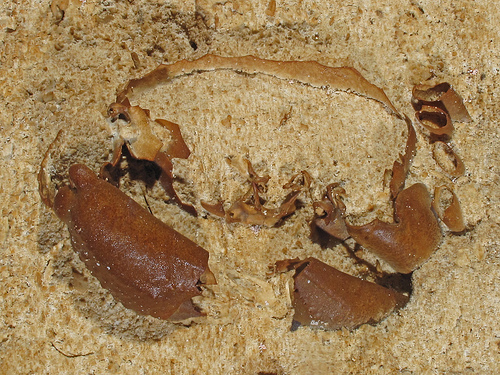
american cockroach life stages

okay, i should first tell you three things:  i have never liked “firelogs” OR cockroaches; i have always LOVED old photographs, sentimental papers, family archives & stuff like that.  firelogs being those fake things that people who don’t know how to build a REAL fire use to build a fire.  it’s a wimpy, no-good shortcut & my first husband, who knew his firebuilding stuff, wouldn’t have used a “firelog” for all the wealth in china, which is to say he would have rather gone to his death kicking & screaming.  he was, after all, an indian guide with his father, used to build models of warships to have REAL WARS with his youthful, boyhood friends in the creek, and would gladly set his hours-of-work-invested masterpieces on fire just to have the satisfaction of winning!!  get my position on firelogs?  and see how i can see noble virtues even in people whom i couldn’t manage to stay married to?  my judgment is, in other words, EXTREMELY RELIABLE & TRUSTWORTHY.  i don’t say that to toot my own horn.  ask anyone who has really loved me & been the recipient of my love.  ANYONE, i dare you.

on to cockroaches.  i would rather deal with the deadliest poisonous snake on the planet than a cockroach.  poisonous snakes at least exhibit LOGICAL behavior.  cockroaches are entirely unpredictable.  they will fly toward you, away from you, straight up, straight down, they will hide, attack, scuttle into the woodwork, fly into the light — and they will do all these things SIMULTANEOUSLY.  you leave a poisonous snake alone, you creep quietly and smoothly at the highest speed possible in the opposite direction from said snake — with respect in your heart and self-preservation in your mind — that admittedly lethal snake will leave you alone.  all that being said, there are still a few people whom make cockroaches look GOOD.  their names are unavailable to the public, or in fact, anyone but me.  as a poet & an attorney, i keep secrets for two separate livings/careers/vocations/callings/professions.  so don’t bother to ask.

next we must discuss the third topic:  my family & personal archives.  i am very careful & protective of these.  i don’t have a fireproof safe like my dear grandfather the tax attorney/professional trustee, but i am careful enough for my purposes.  today, however, makes me question that prior assumption.  i was in the process of posting to this “blog” a poem about my darling eldest daughter, and i wanted to add to the post the first picture ever taken of her, the picture that inspired the poem (well, actually SHE inspired the poem, but the picture would have helped people understand exactly HOW she managed that inspiration).  so, i opened the built-in brick and cypress floor cabinet the builders of my danish modern home (1953, and they were in fact from denmark) added to store their firewood, right next to the fireplace itself, and incorporated beautifully into the design of the room.  a lovely piece of work, in other words.  yes, i opened this cabinet.  do you want to know what i found?  do you really? i don’t know that you want the grisly details.  suffice it to say, roaches cannot chew through the thick plastic of the bins i have my archives contained in, the contents sorted by type, author, & era.  carefully packed.  tightly sealed.  so don’t panic, the contents of those bins are perfectly fine.  let’s just say, it is obvious where the roach problem i have experienced this season so far has been coming from (the large, american cockroach/”palmetto bug” kind, not the little horrible german cockroach kind which is easily controlled just by cleaning up ones kitchen & having a pest control service)!

roaches CAN, however, chew right through the wrappers of the case of “firelogs” i had also stored in the aforementioned fireside cabinet  to keep them away from my darling kitty maynard.  he smelled them once, the day they came home from the store, and tore a “firelog” bag open himself & proceeded to gorge on this “firelog” because it smelled of molasses, thick rich molasses that made anyone, animal or human, who smelled it crave molasses cake or cookies, or anything prepared with molasses, or even just a big, gnarly spoonful of it, placed in the mouth with reverence.  when maynard did this, he shortly thereafter vomited the stinkiest vomit & shat the stinkiest diarrhea  i have ever personally observed, and let me just say right here that i have experienced vomit, bloody vomit, diarrhea, bloody diarrhea, and every other possible combination of horrifying personal body fluids & excretions you can imagine, and had to clean them up unaided except by a steam cleaner.  get my drift?  of course the animal poison control hotline, which costs almost $100 just to consult, but is worth every penny, explained to me that while producing unpleasant effects, the “firelogs” were not toxic and that my darling kitty would be ok.  still, after this incident, just to be safe, i thence stored the case of “firelogs” inside my solid, unbreachable (or so i thought) cabinet so that we would not have to be subject to any more foul, stinking bodily excretions, nor have to clean up same.

it took me quite a while (a few hours, anyway) to get into the right headspace to clean up this debacle.  luckily, my bug man placed baits inside the chimney (which was their conduit in & out of the house to get food & water), AND closed the flue, which my ex husband & i mistakenly thought we had closed at the beginning of last winter.  oops!  big, big, big mistake when you are dealing with cockroaches.  you must think like a tiny, flexible, numberless, resourceful invading army.  you must think small, which isn’t always easy!!!!!!!!!!  my grudging respect for these creatures (which god, after all, thought should be here for some reason which i will press him for, when & if we meet in person), has had to be adjusted even farther upward.  it is not mythology alone which says they will be the last surviving creatures on this earth should we experience some lethal global tragedy.  damn!

3 Comments

Filed under humor, notes

stone crab fossil, a poem

ocalina floridana stone crab fossil

Stone Crab Fossil

My daughter and I
wear our matching crab T-shirts.
We are known for our prickly natures,
our quick defenses.
We stare at Ocalina floridana,
which, though dead, reaches out
as if for rescue with its fat claws —
now pale, delicate shades of gray rock,
not orange and black as in life:
a desperate ghost crab.
Entombed in mud for millennia,
turned slowly to stone
by seep of minerals. The flesh
would have been delicious
with melted butter. Side-walker,
harbinger of bad luck, omen of the great flood,
enemy to all snakes, brave
in the face of death, the humble crab
goes down swinging. The crab does not run
from danger, the crab does not abandon
pride in the moment of attack.
When I was pregnant with her,
I had a taste for crab-cakes.
Sometimes I wear a hard shell,
sometimes I wish I could shed it,
leave it rolling down the beach
while I slip back into the clear water.
This year she learned to read,
tells me the name of everything
in the museum. Sometimes, just like me,
she doesn’t want to talk, she wants
to be alone. I hope someday,
should she ever have need,
she seeks me out, reaches toward me
in her distress, lets me in again.

4 Comments

Filed under poetry

chameleon, a poem

illustration chameleon green-anole-lizard-00021

Chameleon

Now she is the color of lichen-splattered bark,
not brown, not gray, not silver — without turning
her head, her small alarmed eye rotates in full

orbit, sweeping me from head to toe, a cruel, knowing
assessment… I don’t measure up, I can tell
from her expression. I wait, wanting to see her

go green, that hot, bright jewel color she does so well.
She creeps down the trunk, movements slow, smooth,
almost invisible. From time to time, she glances

my way; then an ant catches her attention.
Her nimble, rolling eye follows the tiny creature
crawling back past her tail — still afraid of me,

she doesn’t give chase. Off her long hind paw
dangles a limp glove of molted skin. In annoyance,
she curves sleek head toward delicate toes and bites;

she chews the dry scales, then swallows. Her throat
is pale, silken white; her fat tongue glossy pink.
Minutes pass — she pretends to sleep; the eye

closest to me closes, but the other stays wide.
A large iridescent fly alights on the leaves below;
suddenly she flings herself into the air, slender limbs

flared outward, mouth already open, and twists her head
to one side, shaking the insect clamped in her jaws,
the better to subdue it. I breathe faster as she grows

pale, paler, then glows so tender just for me
in the shadows, the clear green seeping down from her
low forehead as a shy leaf unfolds in early spring.

4 Comments

Filed under poetry

down in florida, a short story

illustration down in florida snapping ass

Down in Florida

            From the age of nine months, Ella grew up in Fort Lauderdale.  Her mother divorced her father up in Michigan and quickly ran south and east, to get far away from the gossipy and condemning former in-laws, and almost as quickly remarried an old college sweetheart, a Coast Guard man.  Ella was tall and fair with red hair and freckles.  She was a daydreamer and a romantic who was dying to take bold action to change her life completely, but kept her true self a tight secret:  everyone else thought she was practical and down-to-earth and would never have the guts to do anything to shock anybody.  She lived on the water and went to high school, and for fun on weekends, even though she was underage, she and her friends usually went out to discos, mostly to one called Mr. Pip’s which was just down the highway from her house.

The city of Fort Lauderdale was full of transients and drunks and drug dealers and well-off retired people from up north.  Bars and discos and private social clubs lined every main drag.  People drove expensive sports cars imported from Germany, Italy and England.  The good houses were on the water and the bad houses weren’t.  The deep-water port was always busy with cargo and passenger ships, and the marina alongside was always full of long, sleek private yachts stopping on their way either back up north or down farther south, to the islands of the Caribbean.

A main road called A-1-A ran along the public beachfront, between the strand and the big hotels.  From Ella’s back door you could see one of the hundreds of canals woven through the city that led into the Intracoastal Waterway and from there to the harbor and the jumbled rock jetties where the tide rushed by and the Atlantic.  The ocean was always beautiful, warm and flat, with a gradual change of color from green to blue to deep indigo along the horizon.  The breezes always blew, the air like a caress on the bare skin, and the tropical flowers always bloomed big and moist like open throbbing hearts.  From her back door Ella could see across the canal to U.S. 1, the oldest main highway lined with gourmet groceries and liquor stores and scuba diving shops and the endless procession of traffic to the beach.  Sometimes all the tourists on the beach looked the same — white and puffy and greedy for the sun’s warmth.

One typical Friday night, Ella and her best friend Tami first went downtown to Lester’s Bar, where the mugs were heavy and frosted, the beer was icy-cold, and the hors d’oeuvres were free.  Then they went over to Yesterday’s, on the Intracoastal.  Tami and a guy named Peanut hung around together the whole time, and Ella felt weird sitting at the bar all by herself.  Finally, Ella met someone named Jerry, who turned out to be a captain at Yesterday’s and she talked to him for a while.  At Jerry’s invitation, all four of them went to the Brickyard, a private club just west of U.S. 1.  Not once the entire evening had the underage girls been asked for I.D.s.  Over margaritas at the Brickyard, Ella told Jerry how old she really was — seventeen — and he flipped.

He went off by himself but when Ella and Tami were getting ready to leave he came over to say goodbye.  He asked Ella to please come home with him.  She said she wasn’t ready for that.  Then he walked Ella out to the parking lot, and they stood there and he gave her a tiny little kiss.  Your lipstick tastes good, he said, too good.  And he asked Ella, again, to please come home with him, but she said she was too scared.  She asked him, would he still be friends with her, and he said sure.  Then Ella said goodbye and got into Tami’s car, only she forgot she still had Jerry’s cigarettes.  She got out to give them back, and asked him again, would he still be friends with her.  He said, why are you so worried about that, and she said she didn’t know.  Ella wondered if he really liked her or just wanted a piece of ass.

Then, on another Friday night, she and Tami went to a place called My Second Home to play pool.  They ordered pitchers of beer and Ella teetered on her high heels and fussed over her lipstick between shots and got a little bit drunk.  A youngish man named Jeff, with the deep tan and scruffy sun-bleached hair of a true beach bum, invited them over to swim at his apartment complex nearby.  Tami said no, she’d rather play pool, but Ella went along with him — Tami just shook her head in amusement.  Once they got to Jeff’s house, Ella didn’t feel much like swimming anymore.  Jeff gave her a pair of cutoff shorts to wear and she went into the bathroom to change.  When she came out, Jeff was waiting for her and he kissed her slowly and gently and his lips were soft, but his hands were hard and rough and insistent.

Somehow, they ended up in Jeff’s bedroom on his bed, and over a period of time he got most of his own and then Ella’s clothes off, and he climbed on top of her again and again, but each time she kicked him off with her legs.  I don’t want to get pregnant, she said, which was true, but the real reason she didn’t want to have sex with him is she could feel he wasn’t the right person for her.  You won’t get pregnant, he said.  You’ll get your period at the end of the month just like you always do, he said.  She kept her legs together and put her feet against his chest and pushed him away from her over and over.  It happened so many times she lost count but the word rape never even entered her mind until the next day.  He never did get it in.  Finally he gave up and drove her back to the bar and in the parking lot sitting in his car with the engine running he leaned over and said to Ella, at least let me teach you how to kiss.  Then he showed her how to leave off kissing a man delicately, with some transition, not to pull her lips away from his like one would somewhat abruptly pull the petals off a daisy while chanting, he loves me, he loves me not.

Then Charlie was at Mr. Pip’s one Saturday night.  He had been done with college for a few years but still lived with his parents because he was more comfortable in his old room than he’d be in some affordable apartment.  His mother and father were elegant, wealthy people and believed Charlie was the smartest boy they’d ever seen.  Charlie had curly black hair styled in a small Afro and prominent brown eyes, and Ella noticed the way he had of staring right at the other girls and then her like his glasses were secret X-ray goggles from the back of a comic book.  She liked his eyes because they were so very curious besides seeming a little bit dangerous but she never imagined she’d end up dancing with him or going out on dates with him.

Even though his eyes cut into her in a way that made her feel attractive and desirable, Ella didn’t like Charlie very much at first.  She didn’t like the way he asked all those other girls to dance before he asked her.  She didn’t like how he laughed at her when she initially refused to dance with him, though she liked how he didn’t take no for an answer.  She hated herself for how she knocked his glasses off on the dance floor with her elbow while he twirled her around like a doll.  She hated how his parents acted like she wasn’t good enough when he brought her home to meet them.  But she liked how he stared at her, hungry and curious and patient.  Staring back at him for any length of time made her feel funny, dizzy and small, like she imagined being hypnotized would feel.

All the time after she met him Ella wondered if Charlie would fall in love with her.  He seemed too jaded for that.  He talked about his college days and the hundreds of lovers he’d already had and Ella’s non-Jewishness and how his mother disliked Ella but his father liked her a lot.  On their dates, he took her to good restaurants and gave her too much wine to drink, and stared at her with his hungry eyes, but he didn’t seem to be in love with her.  He eventually got a job selling stereos, which his father said was a waste of his talents.  Ella would go out with him every weekend, and stay out too late, and then her mother and her stepfather would make snippy remarks about her the next day as if she wasn’t even in the room.  Ella decided she wanted to sleep with Charlie even if he hadn’t fallen in love with her.

She wondered if Charlie would ask her to get married after they slept together.  If he didn’t ask her to get married, she decided that would mean he probably had never loved her.  One week Charlie’s parents went to Italy on vacation, so Charlie invited her over for dinner at his house.  He cooked heavily spiced Indian dishes, and served French white wine.  The kitchen was full of gleaming copper pots and the countertops were polished slabs of green stone.  They sat at a long, low oak table that Charlie said came from a nunnery in Spain.  He unbuttoned her blouse while she sat eating some ground lamb and rice.  She was starving but she didn’t take more than what he served her because she didn’t want to eat like a pig in front of him.  She sat and spooned the food into her mouth like she was dreaming.  He held her left hand and never stopped rubbing the back of it with his thumb.  He had a blurry, bloodshot look like he’d been drinking before she got there.

After a while he led her by the hand into his parents’ bedroom, through their bathroom and into their sauna.  His parents’ bedroom furniture was carved and gilded French, and the carpet was a primarily pale beige Aubusson and the bedspread was pale beige silk with a woven floral design, and all Ella kept thinking was how any little spot at all was going to stick right out and be totally noticeable.  He undressed her in a room full of mirrors then took his own clothes off.  She wasn’t relaxed in the sauna at all.  When she saw him naked she felt afraid but also excited.  His muscles were large and well-defined from lifting weights and he had a patch of fine curly black hair in the middle of his chest and a thicker, coarser patch of hair below.  They sat in the sauna for a while then took a cool shower together, and he did most of the touching.

He led her up the stairs to his bedroom, both of them naked, and from the stairwell across his parents’ wide living room, through the huge glass doors leading out to the terrace and the Intracoastal beyond, she could see the lights of boats like glimmering fairy jewels — red and green and white, doubled by their reflection off the water, every ripple of water caused by the outgoing tide sparkling, too.  The carpet of the stairs was soft underfoot and so thick her toes sank into the pile and caused her to wade up the stairs, struggling against the nap of the rug like gooey caramel.  His room had dark green walls and dark green sheets and there was a huge cabinet filled with stereo equipment against one wall.  He stopped to put on a record, some soothing instrumental jazz — slithery clarinet and round fat saxophone punctuated by the rasp of a brush across a drumhead.  She stood in the light from the hallway and let him take her to the bed.

They rolled together in the bed, the smooth fine sheets and the cool pillows.  His hair brushed her all over as he worked and she lay there thinking of nothing except what it was going to feel like.  She could hardly concentrate on what he was doing and she had no clear idea of what it was she was supposed to be doing.  He placed her hands on himself in various locations and told her to imagine she was touching herself.  He padded to his bathroom and came out with a box of Trojans.  He put one on and knelt over her, resting his weight on his knees and his elbows and with his glasses off his eyes were huge and dark and poring over her face like searchlights.  She felt part of herself tear loose and dematerialize and go up and into his eyes as though they were portals to outer space and though she hadn’t planned on it and certainly had no intention of saying it out loud she thought to herself with a bit of a shock, this is the right time and the right place and the right man.

There was a warm feeling all over her body and in her thighs and her belly there were occasional jabs of what was almost but not quite like pain, delicate lightning bolts along the nerves that felt like silent music.  She willed herself open to him, mind, body and soul but her body remained uncooperative.  He moved confidently and gracefully between her legs but all that happened for what seemed to her like hours was a dull ache centered around a point of resistance as if she were being prodded with a dry stick.  She blamed herself for being dry and closed up and she was ashamed of it and thought she probably looked ugly to him.  He didn’t seem to lose any of his enthusiasm for the task but kept right on fiddling around trying to get it in.  Finally it slipped past some sort of barrier and it still hurt but now there was a liquid feel, a dark slow movement inside her, a curious hungry swallowing up of something.  It still hurt but it seemed to be going the way it was designed to go.

Afterward she felt lassitude in all her limbs, a leaden weight that could not be defeated and she lay on Charlie’s bed looking out the window toward the water and every now and then she heard the horn of a boat waiting for the bridge to rise, waiting to get into the open passage to the sea.  The bed was soft and warm and sweet, and Charlie slept beside her breathing shallowly like a child and his arm rested against her hip and her throat was full and the room seemed to pulse in and out, in and out like when she had a fever but she knew she had no fever now.  She lay there for a time listening to Charlie breathe and when she turned to get out of bed his arm reached for her and he sighed and his eyes fluttered open.  Where are you going? he said.  I have to go home, she said, my parentsYou’re kidding, he said.  No, I have to go, she said, and she got out of his bed and went down the stairs alone through his parents’ room and put on her clothes.

Between her legs was a soreness impossible to ignore and through her panties the seam of her slacks rubbed against her and instead of fabric felt like the bark of a tree.  Charlie was waiting at the bottom of the stairs, barefoot and shirtless but wearing a pair of trousers.  He had his glasses on and he was looking at her face with his usual patient hunger but his eyes were at the same time distant, trying to look past her, as if he too was feeling something he had not been expecting to feel.  He put his arm around her shoulder and they walked to her car.  Please stay, he said after she got in the car and closed the door and rolled down the window.

I can’t, she said.

Call me when you get home, he said.

Okay, she said.

She drove off and in the rearview mirror she watched him standing in the driveway until she rounded a corner and could no longer see his house.  There was a slight chill and the vinyl upholstery of the car felt cold and damp.  It was late and there were few cars on the road and as she drove along the streets which were nearly deserted but still lit up and gaudy with neon, she was astonished by the strange new rawness inside her.  She had not expected to feel so much; she had not expected to love him.  She had not really known what she was giving up nor what she was receiving:  that place within her which always before seemed complete, that place which she now thought of as wonderfully empty, waiting for the next time it would be filled by her lover.

4 Comments

Filed under short stories

these are my people; i am the 4th generation in my family to be admitted to the practice of law

illustration these are my people

HISTORY OF THE SEAL OF THE FLORIDA BOARD OF BAR EXAMINERS

The Seal was designed and the original casting was made by the Board’s Executive Director in 1962 and 1963. It was adopted by the Board subject to approval by the Supreme Court on January 10, 1964, in Daytona Beach, Florida.

The Supreme Court of Florida unanimously approved the Seal on April 13, 1964, and the original casting was permanently deposited in the Supreme Court safe on that date.

The central figure on the Seal is a griffin, a universally accepted symbol for vigilance. The griffin is holding the Nordic symbol for fidelity which comes from Nordic mythology. Beneath the griffin appears the Latin phrase “Clemens iustitiae custodia.” Custodia is the word used for keeping watch in order to protect, and Clementia is used technically for leniency in punishing offenses. Closely translated, this phrase means “Compassionate and vigilant protection of justice.” Expanded, this would mean the watchful protection (or preservation) of justice, a watchful or protective preservation which is compassionate or merciful. The Arabic numerals “1955” indicate the year of the creation of the Florida Board of Bar Examiners.

RULE 3. BACKGROUND INVESTIGATION

3-10 Standards of an Attorney. An attorney should have a record of conduct that justifies the trust of clients, adversaries, courts, and others with respect to the professional duties owed to him or her.

3-10.1 Essential Eligibility Requirements. The board considers the following attributes to be essential for all applicants and registrants seeking admission to The Florida Bar:

(a) knowledge of the fundamental principles of law and their application;
(b) ability to reason logically and accurately analyze legal problems; and,
(c) ability to and the likelihood that, in the practice of law, one will:
(1) comply with deadlines;
(2) communicate candidly and civilly with clients, attorneys, courts, and others;
(3) conduct financial dealings in a responsible, honest, and trustworthy manner;
(4) avoid acts that are illegal, dishonest, fraudulent, or deceitful; and,
(5) comply with the requirements of applicable state, local, and federal laws, rules, and regulations; any applicable order of a court or tribunal; and the Rules of Professional Conduct.

3-11 Disqualifying Conduct. A record manifesting a lack of honesty, trustworthiness, diligence, or reliability of an applicant or registrant may constitute a basis for denial of admission. The revelation or discovery of any of the following may be cause for further inquiry before the board recommends whether the applicant or registrant possesses the character and fitness to practice law:

(a) unlawful conduct;
(b) academic misconduct;
(c) making or procuring any false or misleading statement or omission of relevant information, including any false or misleading statement or omission on the Bar Application, or any amendment, or in any testimony or sworn statement submitted to the board;
(d) misconduct in employment;
(e) acts involving dishonesty, fraud, deceit, or misrepresentation;
(f) abuse of legal process;
(g) financial irresponsibility;
(h) neglect of professional obligations;
(i) violation of an order of a court;
(j) evidence of mental or emotional instability;
(k) evidence of drug or alcohol dependency;
(l) denial of admission to the bar in another jurisdiction on character and fitness grounds;
(m) disciplinary action by a lawyer disciplinary agency or other professional disciplinary agency of any jurisdiction; or
(n) any other conduct that reflects adversely on the character or fitness of the applicant.

Leave a comment

Filed under notes