Tag Archives: men

True Love, a short story

illustration true love

True Love

            Mythical, that’s how they looked — when she got up close, she experienced both hormonal lightning flashes and the peculiar sensation of having a trick knee.  The famous Gower brothers:  high foreheads, broad shoulders, meaty yet sculpted forearms.  Granted, for Amy, myth and heroism consisted of “Jason and the Argonauts,” and the Classic Comic Books version of “The Iliad and the Odyssey,” but she was on the right track.

“This is Amy,” said her friend Claudia.  She stood with her arm across Amy’s shoulders.  “This is my ex-husband, Burnett, and this is Carey — we call him Shorty.”

It was admirable the way Claudia and her ex hadn’t let their divorce get in the way of business.  Amy wondered if she were capable of such sophistication — perhaps it was bound up with the Bohemian temperament musicians were supposed to have.

“Nice to meet you,” Amy said.  “I’m enjoying your music.”

“Thanks, Amy,” said Shorty.  “That’s what we like to hear.”

“Mind if I sit here?” he asked.

“No, please,” she said.

He chewed his little red straw, stirring his drink with a finger.  The gesture was boyish, clumsy.

“How long have you been playing here?” she asked.

“Six months,” said Shorty.  “The owner is a jerk, but he’s hardly ever around.”

“Well, I’m glad the band stayed together,” said Amy.  “This is the most fun I’ve had in a long time.”

He tossed his head, and gave her an aw-shucks-ma’am grin, showing his teeth and squinting his eyes.

“Me too,” he said, touching her arm.

“You’re just as pretty as Claudia said you were,” he said.

“Oh, I bet you say that to all your groupies,” she said, laughing.  He laughed too, squeezing her arm.  She felt his large fingers against her skin, the calluses on his fingertips.

They had another job tomorrow night, he said, over at Lazy Susan’s.  Would she like to come listen?

“A friend of mine is having a party we could go to,” he added.  “It won’t get cranking until around two a.m. — you know, a bunch of musicians.”

“Sounds great,” she said.

“Stay for the next set, won’t you?” he asked her, tipping his glass to drain it.  The lime wedge fell on his nose, and he laughed, then put it in his mouth and sucked the pulp.

She sipped her wine.  A bit drunk, she was relaxed even more by the sound that poured over her, brushing her skin like velvet.

When the music was finished, Shorty walked her out to her car, opening and closing the door of the little Datsun for her.  Squatting on his heels, he rested his elbows on the open window, leaning his chin on his hands.

“I don’t do this very often,” he said, his face dusky under the streetlight.  “Ask anybody, they’ll tell you.  I’m not a flirt.  I don’t operate that way.”

He took her hand and held it, shaking his bangs out of his eyes.  Staring at her, his eyes were sleepy-looking.

“Yes, ma’am, it’s been a real pleasure,” he said, drawling the words out, going corn-pone, laughing.

***

Shorty was sweet, honest, Claudia said, a guy who would do anything for you.  It was true, he didn’t pick up women.

“But he’s kind of involved with somebody,” she said.  “It’s a weird thing:  they’re separated right now.  I know he’ll tell you himself, so don’t say anything.”

“Separated?”  Amy said.  Gruesome visions of surgery flashed in her head, the kind used for taking apart Siamese twins.

“Well, he and Bonnie have lived together, off and on, for years,” Claudia said.  “Lately, it’s been mostly off, but neither one of them has ended it.”

“Where is she now?”  Amy asked.

“Dallas.  She manages a restaurant out there.  Some relative of hers got her the job.  Everybody thinks she’s been bad to Shorty.  He needs to get on with his life.”  Claudia shrugged.

“I don’t understand how people can live like that,” Amy said.

“I know,” Claudia said, sighing.  “So if you get close with Shorty, you better keep Bonnie in mind.  They go back a long time.”

“I’m not looking for anything serious,” Amy said, twirling her hair.  “I just want to have some fun.”

In fact, whenever she broke up with someone, she’d swear she would never get “involved” again — she would become independent, self-sufficient.  Then she’d wake up months later — as if from a trance — realizing that she had somehow ended up in another relationship.

***

The musicians were taking a break when she walked in, and Shorty was standing in the entryway talking on the phone.  He mimed delight, his eyebrows raised, and he beckoned.  She stood near him:  bending, he put his arm across her shoulder, drawing her to his side.  He pulled her tight against his body, curling his arm around her neck and looking down at her curiously from that skewed, clumsy angle.  She could smell him; fresh, clean sweat that carried the smell of his aftershave, and underneath that, the blunted tang of alcohol and bar smoke.

“You sure are a sight for sore eyes,” he said.  “I’ve been thinking about you all day.  I was starting to think you’d forgotten.”  His face was mobile, relaxed, expressing shy fascination.

He wanted to stop home and change before the party.  “You don’t mind, do you?” he asked.

“Of course not.”  She followed him in her car.

Waiting in his living room, she flipped through his magazines:  RollingStone, Time, and Omni.  He emerged from the bedroom with a clean shirt on, hair wet, combed down tight, the tooth-mark pattern of the comb pressed into it and a few wet curls on the back of his neck dripping on his shoulders.  His skin was fair; a dark mole next to his mouth stood out against the flush of color brought out by the shower.

“Let’s take my car over to the party,” he said.

His back seat was folded down, the space crammed full of guitar cases and scuffed black boxes.  He sat with his hands on the steering wheel as if he were trying to remember how to drive.  Then he fished a half-smashed pack of cigarettes out of the side pocket on the door.  He lit one, dented and pressed flat, inhaling with a sigh, thin lengths of smoke swirling about his face.  He offered the crumpled pack to Amy.  “No thanks,” she said.  “I don’t smoke.”

“Neither do I,” he said.  “I like the way it looks sometimes, how your hands feel lighting up.”

Shrugging, he pulled out the ashtray, tucking the smoldering butt into one of the grooves.  In one smooth motion, he leaned over the gear shift and kissed her, cradling her head in his hands.  Then he let go and took her hand, laying it in his lap, against the rough-sewn corduroy crotch of his jeans, and he whispered.

“See what you do to me?” he said.

***

Later that night, she discovered the shoes.  On the floor of the bathroom, tossed in front of the linen closet, she saw a pair of running shoes, women’s, size five.  She held one of them up to her bare foot.  Her own size nine looked huge next to the tiny shoe.

Carrying it back to bed with her, she lay down next to him, holding the shoe up with one arm, over her face, the laces dangling down, almost brushing her nose.

“Whose is this?” she asked.

“That’s Bonnie’s,” he said.

Amy let the shoe drop to the floor.  The room was still, quiet.  She felt a protective third eyelid go down over something vulnerable inside her.  “Is she living here?” Amy asked.

“Hell, no,” he said.  “I haven’t heard a word from her in at least six months.”

She found herself possessed by quiescent maturity, a vague memory of some letter to the editor she’d read in Playgirl.  She would handle it in that abstract way; not a whimper would come out of her.  She took the shoe and put it back in the bathroom, coming back to bed, and drawing the comforter up over her bare shoulder.  As she had known would happen — her reward for being a good girl — he reached out under the blankets, pulling her to him and curling around her, her head hooked under his chin and her feet pressed against his shins.  He was warm and soft-skinned and large and solid, all at once.  She was in a masculine sort of womb.

“You’re the only one here with me,” he said.

She could see something that looked like love, the old kiss-me-until-I-die extravaganza.  She couldn’t tell him, could she?  Her blood swelled and pounded and she imagined saying it, imagined him saying it back, falling asleep next to him at last, her mind flickering through images like the arthritic film projectors she remembered from high school:  tiny shoes, and faceless petite women wearing nothing but a mist of blue glitter as they dove into murky tropical lagoons in the dark.

***

For Shorty’s birthday, they were going to an expensive restaurant.  Almost ready to go pick him up, she was slipping into her shoes when the phone rang.

“I’m sorry,” he said.  “I’m not going to be able to make it tonight.  Bonnie flew in this afternoon.”  He paused; Amy said nothing.  She didn’t intend the silence to be accusatory, but that was how he seemed to take it.  “Amy, I swear,” he said.  “I had no idea she was coming.  She called from the airport and said she was here to wish me a happy birthday.”

Amy breathed in, her chest stretching until it hurt.  For a moment she didn’t know how the air would get out — some sort of one-way valve had shut down — but then her chest was empty.  She waited.

“I’m sorry,” he said, whispering now.  “She’s in the next room.  I don’t know what else to say.”

“Well, have a happy birthday,” she said.  She placed the phone in the cradle in slow motion.

***

Amy drove over to the bar.  Burnett was there, of course, and some other guy on bass, filling in for Shorty.  She had his birthday present — a gold chain — shoved in her purse.  When the band went on break, she and Burnett walked outside.  They sat in her car in the darkness.

“He’s with Bonnie,” she said.

She took the small velvet box out of her purse, handing it to Burnett.  He held it for a moment, and then put it on the dash.

“My brother doesn’t know what he’s doing,” he said.

“Neither do I,” she said.

He picked the box up and held it, his eyebrows raised, questioning.  Shaking her head, she closed his fingers over it.  “This is really nice,” he said, when he opened it.

She took the ends of the clasp and put the chain on him — his neck damp, but round and full and hard as a barrel under her fingers.  As she worked with the necklace, the tiny lever on the clasp stabbed underneath her thumbnail.  She sucked on her finger, tasting blood.  The strand of gold glinted against his skin, his long hair sweeping past it and over his shoulders, the pale blonde glow of the hair as pretty as any woman’s.

She drove home with Burnett after the bar closed.  In his living room, sitting on a sprung green brocade sofa, they drank beer in silence, the room lit by one enormous rainbow drip candle.  Putting his empty bottle down, Burnett stood and held out his hand; she didn’t hesitate, just rose to follow.  His bedroom was tiny; the double bed used up all the space.  She had to hitch her way around the nightstand and halfway there, she toppled, falling panicked, then sprawled on the bed.  Burnett looked down at her, pulling his shirt tail out of his pants.

The brothers were like two sides of the same coin.  When she closed her eyes, they had the same feel, the same weight; they even smelled the same; except she knew it wasn’t Shorty because of the way the long hair trailed over her skin when he bent over her.  It tickled her skin like a spider’s web, it was so silky.

***

When Amy phoned Shorty, a woman answered on the second ring.  She didn’t hang up the way she had planned.  She asked for him.

“Hello?” he said.  He sounded tense.

“Hi.  It’s me.  Was that Bonnie?” she asked.

“Yes,” he said.  She could hear him breathing and Bonnie talking in the background.  “Who is it?”  Amy heard.  The sound got muffled; she tried but she couldn’t make out his answer.

“Listen, I’m sorry,” she said when he came back on the line, her voice low and even.  Her stomach rolled with a peculiar heaviness, making everything seem vague and faraway.  “I know you can’t talk now.  Call me when you can, okay?”

“I will,” he said.  “You take care of yourself.”  His voice was slower, his drawl back to its normal rhythm.  He sounded relieved — she was being so civilized, so unlike what he had probably expected.  Although it wasn’t Shorty’s fault — he hadn’t lied to her — somehow, she was being too nice.

***

Amy had a New Year’s Eve vision:  a slow-motion perfume ad, a fuzzy dream of sensual retribution.  Oh, how she’d make him regret what he’d passed by on the way to his dry banquet!  Her heart — the childish construct of it, the big red valentine — was beginning to resemble a checkerboard.  Amy loved New Year’s — for an hour at least, everything seemed limitless.

Claudia was equally superstitious, always serving a big Southern breakfast — beans, greens, ham hocks, cornbread — at midnight.  “Don’t tell me you didn’t know about eating black-eyed peas on New Year’s?”  Claudia asked.

“Honestly,” said Amy, “I’ve never heard of it.”

“Well, you need some luck then, girl,” said Claudia.

“Yeah,” said Amy.  “I guess I do.”

***

The very first person she saw at Claudia’s party was Shorty.  His back was to her, but she knew even that angle; no plane of his body was unfamiliar, and she realized that was about as close as she — as close as anybody — could get to a person.  Shorty was standing next to Burnett; the boundary between their bodies seemed arbitrary.

Burnett spotted her first.  Smiling and nodding, he tapped his brother and waved.  Shorty turned toward her:  both men stood, grinning in her direction.  She didn’t care; all her pretenses flamed out in one big burn.  She shocked herself and then knew — with the thigh-weakening flush of any decent sort of compulsion — it still wasn’t enough.

Shorty pressed through the crowd toward her.  When he put his arm across her shoulders, she understood; either Burnett hadn’t told him or — more likely — it didn’t matter.  Perhaps this way was better; now they were of a piece.

“I’ve missed you,” he said.  It was the truth, she knew, not just a line.  He wasn’t a flirt, he didn’t operate that way.

“I’ve missed you, too,” she said.  “How’ve you been?”

“Okay,” he said.  “Bonnie went off to Mexico for the holidays.”  Shaking his head, he frowned — as if to say, isn’t that woman a mess?  “I’m just glad to see you.”  She knew he was glad; he was as honest as they came.

Claudia floated up with Burnett, her arm around him, her thumb hooked in one of his belt loops.

“Hey, you two,” she said, smiling.  “I wanted to tell you the good news–we’re getting remarried.  Isn’t that wild?  We’re going to do it at 11:59, kind of romantic, huh?”

“That’s great,” Shorty said, pleasure warming his voice, deepening his drawl.  “I always knew you two would get back together.”

I guess I did too, Amy thought.  Burnett’s not a flirt, either.

But she said, laughing, “This way you’ll never forget when your anniversary is, right?”

“That’s right,” Burnett said.  Amy cocked her head, winking at him, so small a motion that anyone watching would have seen only her eyes flicker as she bared her teeth.  She thought she saw him wink back the same way, flinging his hair out of his face and over his shoulder with a toss of his head.

A few minutes before midnight, Claudia and Burnett exchanged their vows.  The bride’s eyes glistened, her lips red, her skin pale underneath her freckles.  As the groom kissed her she put both her hands on his buttocks and squeezed them.  Everybody hooted and laughed.  “Going to be one hell of a wedding night!” somebody shouted.

Yeah, Amy thought.  One hell of a wedding night.

“Let’s go,” Shorty said, leaning down to whisper in her ear, his breath tickling and smelling of beer.  “I’d like to get out of this crowd.”  Putting his arm around her, he slid his fingers under the waistband of her jeans, rucking up her blouse and brushing the bare skin of her hips.

Her head felt swollen, too large for the rest of her.  Who was she, now?  She felt dizzy but she didn’t stop:  she couldn’t stop.  She had known all along, hadn’t she?  Shorty was — the kind of guy who would do anything for you.

“Yes,” she said.  “Let’s go.”
7 Comments

Filed under short stories

birth control in the ancient world, a poem

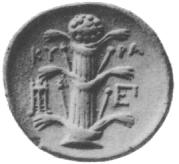
illustration Silphium stalkillustration silphium seed 200px-Cyrenecoin

Birth Control in the Ancient World

By the third century, our old favorite,
Silphium, was extinct. Overharvested,
the plant had been worth its weight
in silver for a generation.
Gone forever were the bright yellow

flowers, the glossy, deeply lobed
leaves. We turned next to a close
relative, asafoetida, a pungent spice,
yes, but much less effective.
Besides, our breath smelled

always of fermenting fish;
the men started to complain;
thus the population swelled.
Queen Anne’s Lace grew wild
in the countryside; we brewed strong

tea or simply chewed the hard little
grains dry after the act…. If that
didn’t work, we tried artemesia,
abortifacient, only toxic in excess —
Artemis, goddess of women, protector

of childbirth, let us down rather more
frequently than we deserved.
The truly desperate ones might
gorge themselves on pomegranates;
the red juice stained their lips,

made them look fevered; sometimes
that did the trick. By the twelfth
century, only a few midwives knew
which herbs prevented the seed from
planting itself; they were banished

as witches and we lost that knowledge
for five hundred years — not so long
a time that we didn’t remember what it
had felt like, to love as often
as we liked without consequences.

2 Comments

Filed under poetry

the swiftness of dream-time, a poem

Taylor Swift Is A Paris Beauty

The Swiftness of Dream-Time

She confides unduly in strangers, asking
inappropriate, intimate questions. She has
startling, beautiful eyes, a pale luminous brown,

fringed by heavy black lashes. The fair skin
of her lids glistens like the wings of a moth,
and the expansive way she smiles makes her

delicate pink lips almost disappear. She lives
in the dream-time before marriage and children,
unschooled by the constant companionship of small

relentless demands, unaware of the eternal
ramifications of peeling herself raw
like a thick stalk of sweet cane, exposing her pithy

heart to people who don’t care to understand
the need to be loved, hidden warts and all.
Some people can never be trusted, she feels this

in her bones, yet she doesn’t want to believe it;
the ache of betrayal is like cancer of the marrow,
an oily red liquid pouring from her center

to drown the most fragile of her cells.
On personality tests, she engages in flights of fantasy:
happiness wings past just out of reach, grazing

her face with its sharp, heavy wings, ruffling her fine
hair with the remarkable swiftness of its passage.
Sitting in her green armchair, she becomes

engrossed in old forgotten novels, flipping
the tissue-thin paper with impatience,
sweeping the fallen crumbs of leather binding

off her taut, bony lap with fingers sticky
from futile perspiration. If the man she thinks
she loves asked her to marry him, she would say

yes without hesitation, but it wouldn’t make her
happy — nothing will ever satisfy her, for very long.
She doesn’t know what she wants and never will.

3 Comments

Filed under poetry

love kills, a short-short story, (originally published in crossconnect)

illustration love kills tattoo

(originally published in CrossConnect)

Love Kills
They killed me, those boys. Every day, getting off the bus, they killed me. I’d be walking away from the stop already, trying not to look, hearing them draw together and trail at my heels like a pack of wolves. I’ve wasted too much time since then trying to figure out why I feel dead inside.

They don’t know what they did to me, but I’m not God, I can’t forgive them. One of them was the first boy I ever kissed. That was spin-the-bottle, behind the holly bushes at the end of the canal. The trashy, sandy space between the seawall and the bowling alley parking lot, where the branches of the mangroves trailed down into the murky water like the sad arms of ghosts. He kissed me there. His lips were wet, trembling, soft as a child’s, and softer than mine.

Why’d he kiss me, then? That’s what I’ve asked a thousand times. Girls, did you ever kiss a man you were ashamed of? One you wouldn’t be caught dead with in other circumstances? The answer is yes. We all did. But, following our mistake, did we then gather up our friends and acquaintances and confront the unfortunate man daily, taunt him with his ugliness every single day for a year? Did we, in a gang of six or ten, pant and bark at him as wild dogs, throwing flecks of spittle onto the back of his fleeing, burning neck?

On better days he wasn’t cruel, but fast and solid, when I bounced against him in a crowded game of flashlight tag. His immovable, sweaty arms encircled me one late spring twilight, and though I wriggled and strained to get away, I wondered what it was like; making love with a boy, how it would feel, our naked bodies pressed together, his aroused skin slipping into my aroused skin, male into female like a dull knife into butter.

There were also the black boys at the back of the room. They wore their clothes differently, as if the cloth covering them wasn’t important, wasn’t doing them any favors. The way their dark skin bled out of the shirt-cuffs like hot ink made me crazy. It was as if women were already part of them, not something foreign. One boy touched my ass, not sly or shy, just placing his open palm against my turned hip like it was a loaf of bread. He never looked my way without smiling.

Once, I was almost raped. I made a mistake and went to this older guy’s apartment, as clean and tidy as a church. That one climbed atop me again and again, rumpling his black-sheeted bed and it seemed like hours went by, my legs twin automatic pistons, pushing his nude weight off and away. He didn’t become violent, so finally he quit trying. But later, I let him teach me how to kiss. To leave off a man’s mouth slowly, gently, instead of rising away like a slap interrupted.

Seems like they all have a thing for plain, big-titted blondes, doesn’t it? The sweetest one I ever had, a model, brought me a warm washcloth, after. His whole body was as hard and smooth and glossy as a horse’s. He held my knees up and washed me like I was a baby, but I never saw him again. The flesh may mesh, but boys perfect like that don’t ever forget why you went with them in the first place. And, girls, truly — are there any other kind but the kind that kill?

I love the idea of a man, regardless.

5 Comments

Filed under short stories

made in heaven, a short story (originally published in exquisite corpse)

illustration made in heaven sheet

Made in Heaven

(originally published in Exquisite Corpse)


The Test

He believes in eugenics — his line was bred for sad brown eyes turned down on the outer corners.  He feels his Self slipping away, somehow.  The Self he was creating — he did it, he was tied to a woman, a woman who didn’t really want him, a woman who flailed at being tied to men like an unbroken yearling colt flails at the lead chain.  He fell in love with her watching her walk in the grass at the side of the road — bare arms, long brown dress, square brown handbag, pale white skin, waist-length brown hair.  He’d had ten cups of coffee pulling an all-nighter to teach his first medieval history class.  His role:  the nervous young professor.  He stopped to give her a ride — his first day on the job, he didn’t want to fail some test, by not stopping, and then she was just like some wild horse, he knew he had to marry her to keep the other predators at bay, they’d have chewed through her throat in a heartbeat.  He’d never seen eyes like hers.  Unattainable.  One morning, he woke up, he was married.

The Question

Sometimes he thought the way his wife acted in public was like doing a strip-tease inside the Dome of the Rock — asking for it; bad stuff going down out there, he said in his mind over and over whenever she started up, giving people looks of… what was it, exactly? Then one day, driving to work, dawn breaking, coffee clutched in hand, he watched a flock of birds pass by, bits of black looking like a school of fish coursing through the sky.  Landing on a new-mown field, the birds hopped among the grain stubble, picking up leavings.  His wife with her unsatisfiable longings was like that, a ballet too graceful to be endured.  How was he going to stay?  How was he going to leave?  He goes to the office and tries not to think about it, but it’s there every second, floating in the air in front of everything he tries to focus on, like text on an invisible TelePrompTer.  It wouldn’t matter — his wife could run off with the car, all the money, his heart — still he’d never stop asking her to come back.

The Wish

His newly-adopted hometown was full of squares and smiles:  people walking by, talking and laughing to the air.  For years, his wife had this best friend who always thought she, the friend, was dying.  Sometimes his wife got irritated with her best friend’s fear and wished the woman would get it over with already.  She’d been dying for over 10 years now.  Except one time, after his wife hung up on her friend disgusted by her seeming hypochondria, the friend actually ended up in the hospital with a heart attack.  His wife told him God was teaching her not to make wishes.  That night, she sat nude in front of the closet-door mirror bawling like she’d just gotten a bad haircut.  Which she had, at her own hand.  Hacked her hair off with kitchen shears like an insane nun taking her final vows.

The Need

Long ago, his wife says, she lived in a warmer climate.  Her first love was a coconut palm, phallic and bristly.  Round brown fruits.  She scaled the tree again and again, could never make it all the way to the top.  She got a crush on every boy that talked to her that year.  She quit reading the Bible when she got to Job — after her own father lost his two sons in separate car accidents, he just lay down on the couch and died, for which she never forgave him.  Maybe it was the fact her father willed himself to die, left her on her own too young — maybe that, and the two dead brothers, made her feel like any man was better than none.

The Surprise

A spade is a spade.  Death and time are as big as the universe.  Even your wife’s dying friend can be deceptively spry, hale and affectionate; she can give bear hugs.  The dying friend can move to Lulu, Florida, after she gets out of the hospital for what she doesn’t know will be the last time.  The sky over her can be blood blue with thin white clouds like cobwebs.  A dying woman’s dentures can deteriorate — first a missing eyetooth, then going brown in front in weird streaks.  Evidence of her inner corruption.  Even a dying woman can be financially abusive.  His wife always handed over his money like Kleenex to people with pathetic sob stories; whether they were dying or not, she’d have bankrupted him if he allowed it.  Surprise!  His wife’s so-called dying friend can actually die.  His wife cried and cried, even though she told him only yesterday she was afraid her friend only wanted her money.

The Rule

Yet, that impulsive woman he married, she got pregnant the first night, the condom slipped off and was found wadded up next to her cervix — she baked and baked, after she lost that baby.  Even the day of the miscarriage, her favorite Dixie Lily flour was soft and cool and white on the table, her nimble hands unevenly pigmented, strong and capable, dusted with the white powder, holding a green-handled rolling pin.  She was like a horse trainer, she’d never hit you with her hands, only with something held in them, usually a hairbrush, the bristly side.  She wanted you to obey, but not to fear.

The Nudity

Die, black smile — his wife was like any ordinary woman you fall in love with on the side of the road, touching her own lips, feeling her own breath.  She was not comfortable with him.  She was not comfortable belonging to any man.  She lost another man’s baby the year before she married.  Now she is fighting depression off with a big stick.  In his favorite picture of her, his wife’s flesh looks so soft as to be eminently pierceable by the polar bear tusks in the head she’s leaning on.  Sometimes she’d cry hard and couldn’t get out of bed, other times she was just plain hard and he couldn’t get through to her heart — like she was compensating for the too-naked times, by not allowing touch.

The Drug

They vacationed incessantly — Omega at the desert — she wore a backless sundress, and all her spinal knobs were visible to the casual observer.  She was verging on plump when he met her, then she became lean, tireless and angular.  He doesn’t care either way — he knows she’s no good for him but he can’t give her up.  Maybe it’s that he’s never had lovemaking that good with anybody but her.  An hour in bed makes up for the days of misery trying to live with the rest of her.  He understands now how addicts can keep shooting up, even when they know it’s killing them.

The Problem

At a frown from him, at the slightest disappointment seen or unseen, she’d bolt; he wouldn’t see her for days.  Then he felt as hollow as an abandoned house, weathered gray clapboard siding, rusty tin roof, part of the roof gone so you see the rafters underneath.  He took long walks early in the morning trying not to think about her; he saw a rising flock of birds, confetti against gray-blue.  He was walking through flatness, brown plains, splashes of green, a dull sky, murky at the horizon.  A grain elevator through the mist, far-off, looks small like a toy.  Is he a toy, for her?  He buys a cup of coffee at Love’s Truck Stop on Fountain Rd.

The Fear

Her name, he sees it written everywhere — on a metal tower with guy wires, the upper half of the tower obscured by clouds.  He sees her name on maps, even at City Hall on a quick stop in Broken Arrow, Oklahoma, for coffee and smokes.  Diana, the huntress — but she can’t bring herself to butcher her kills.  She leaves them to rot.  Or maybe she stores the carcasses in some psychic smokehouse, preserving them within herself for some imaginary future famine.  As if she’ll ever be alone, as if she’ll ever lose her gift for making others feel sorry for her, sorry enough that they pick her up hitchhiking and end up married.

The Disease

Heat and a white smile — he visited another sick friend, imagining making love to Diana in a hospital bed.  What would it be like, to care for her until death?  Would it make him forgive her at last?  Would she be able to forgive herself?  Diamond logic cuts through psychological scar tissue, removing old growths, old infections, but then comes pain, bleeding, and the collapse of drained and emptied dreams.  When he aches for her, but in the same moment rejoices in her absence, assault-eating seems like his only option.  He sits in front of the sports games on TV, bags of snacks next to him.  The cat sleeps on his feet.  It doesn’t matter who is playing, he always roots for the underdog.

The Conundrum

Before she came back after their first separation, he decided that the flat glare of the sun loved him more than any woman he’d ever known — he wasn’t even surprised when he read in the newspaper how two thugs beat a gay college student, tied him to a fence and left him for dead.  She is ill, mentally, spiritually; he knows this but something equally twisted in him needs to be around that illness, in order to feel himself healthy.  Who, then, is the worse off?

The Return

She came back to him over and over, and every time she was hard at her music again, trying to get perfect that rhythm only she could hear; practicing, pure mindless female energy — dressing up in fur and spangles, frothy material, fancy.  When she got like that, you could tell she wanted to persuade some mysterious Somebody to do a secret Something for her.  She wanted to tempt, to bewitch.  He let her practice her music on him, he took it into himself, her beauty, her nature, her vengeance.

The Desire

He had pity — she was piteous — her legs moving like a deer’s, then wrapped around his waist — thin, delicate, poised for fleeing.  Once she told him she loved to feel womanly, but the only way she could achieve that was to see herself as physically, mentally and spiritually complementary to whatever man she was with.  She could then mold herself to accommodate his subtle shape the way the space between her legs accommodated him, and the womanly experience came to her through that forming, that clinging.  Yin/yang, two halves of a sphere, with herself having structure only when against the man’s half.  And sooner or later, she always stopped assuming that complementary shape, as soon as she started seeing things in a man’s shape she didn’t want to cling to — what man doesn’t have weaknesses — and that left her feeling like a neutered being, not male, not female.  Barely alive.

The Change

A spade is to be pitied for having to bury a woman like her, he thought upon waking early one morning to stare at her sleeping face, drained of pain and fear, sweet as a baby’s — but the light was all wrong for this time of morning, damn that daylight savings time.  Change, he hated any kind of change.  She should stay in one place; there can be no love without commitment and full knowledge.  Yet even regarding her deep within the throes of her struggle, primed with the proper amount of pity, he felt their beauty together, as a couple, was almost equal to infinity — but then again, mating cockroaches could fly toward the light too.

The Ultimatum

One day when she said, “Let me out of the damned car, now,” he stopped, let her go — thought “finis.”  She ran toward an idle hay baler & mountains of mown hay in a field; after that, she ran through a field of milo.  Then came a sheet of rain.  While he waited for her to return, he picked handfuls of yellow flowers beside the brown stubble.  She was his ultimate fantasy — her hooded eyes, high cheekbones, firm jaw, and full lips.  Gleaming brown hair.  He said to her the next morning, grinning like a chimp, “I live for simple things now:  coffee and a cigarette in the morning, beer and a cigarette at night.  That’s my life.”

The Petition

Scent-paths are the most primal in the brain — one day he read about how, in the next state, a cyanide suicide’s body gave off fumes and made nine others ill.  His wife’s baby breath slowly turned into dragon breath.  A crazy tarot card reader told him seven was the optimal number for a point of view, whatever that meant — then during the month of July, his own mother walked the Great Wall of China, worrying about his pending divorce.

The Secret

Money could always make her come back — who was it that wrote, “Wealth is power?”  King Cotton.  After all, his family had bales of cotton the size of railroad cars, covered with blue or yellow plastic.  Chicken houses the size of football fields.  Tractor-trailer cars stacked with white chickens, still alive.  Numerous Arkansas mountain shanties.  On one particular tract of farmland, there was pampas grass and a rotting tin-roofed general store.  Not to mention abandoned buildings, too numerous to count.

The Charade

He felt his smiles turning into complex equations, numbers, letters, factors squared.  Also that July, his wife fell madly in love with Puerto Rican twins.  She sat in the college Spanish lab for hours, trying to acquire the accent of a native speaker.  Later, she asked him to take her in for an abortion.  Him, a male, like a wide column of stationary air before her warm front, her hurricane eye — she left him wishing he were a virile but tender auto mechanic instead of a college history teacher.

The Truth

Dig up the heart that was properly buried and leave it defenseless again — in a dream the next night, baby fists flailed against him, their full force like the blow of colliding with large bumblebees.  Heavy but miniature.  His wife, woozy with painkillers, crawled into bed beside him, woke him up, told him how in college a virgin boyfriend of hers, frustrated because she wouldn’t sleep with him, punched a brick wall, injuring his fist.  Crooked paths lead to God — his wife then told him how it was with the elder Puerto Rican twin, Emilio, that she first stayed awake all night long, so hungry, but then he pissed her off with his blond boyfriend:  using her as a cover so nobody would know he went both ways.

The Aftermath

The sun’s light always reminded him of diamonds — his favorite teacher once told him, “Don’t waste your gifts.”  He was too much in love with the teacher to ask what gifts she meant.  Now he thought he knew.  The sun ate his heart anyway, it didn’t care about his promises — he was bereft beyond bereft when his wife left him for the last time.  All his friends and acquaintances told him how he’d be better off.  He was, and yet he wasn’t.  Everything he has dreamt since then, since she was gone, was in black and white — he wanted to hear the white noises of the wind, he wanted to fly down the tunnels of green, he wanted the warm salt water to gently burn his eyes clean, he wanted all his enemies dead, he wanted the memories removed.

The Legacy

His wife loved white sheets — they made love that last time in a bed so white it looked like barely repressed violence.  In the center of all that pain, something brought them both rising smiles — together, they were convulsed by spasms of laughter, uncontrollable as an orgasm.  It seemed like laughing at a funeral — insane but maybe the sanest response of all.  She gave him one lasting gift, his black smile at infinity… infectious.  Even as he walked around, zombie-like, memories of the failed marriage ringing in his skull like aftershock of a car crash, total strangers started propositioning him out of the blue.  Male and female.

The Effort

The heart, it seems, can expand, then collapse, both to an infinite factor.  He noticed, one day at lunch downtown, lots of little people he’d never seen before.  Or maybe he saw before, but he didn’t notice.  Had she left him that ability as well?  Fat, strangely shaped people, people who looked mentally disabled, odd angles of eyebrow, odd expressions of puzzlement.  Then, he noticed a very pretty woman in a garden-print shift & orange straw hat, no makeup on except blood-red lipstick.  She could be his wife’s twin.  She ordered grilled turkey & Havarti with cucumbers.  Unlike his departed wife, she was apparently an effortless mother; her child was immaculate, dressed in hand-sewn clothes.  If she ever left her husband, the world outside might swallow her whole — but he’d do his best to convince her she had to — for both of them — at least try.

4 Comments

Filed under short stories

Inside the Emerald, a short story


illustration inside the emerald

(originally published in Snake Nation Review)

Inside the Emerald

Brett sat on my kitchen counter — ancient, mottled pink and gray Formica — wearing tight corduroy jeans, cut off at mid-thigh. My eyes couldn’t stay away from his meaty, shaved bicyclist’s legs, hanging there, swaying, his feet clad in hiking boots. Brett’s bulk scared me, but on another level it seemed clownish. He was trying to seduce me, but it wasn’t working. He couldn’t get things moving: he seemed pendulous, awkward.

Besides which, I couldn’t stand his beard. It was one of those really long ones; it touched his chest. It made me think of old age, of death and decomposition and depressing black-and- white movies. He looked freakish, a cultural throwback; the medieval flagellant, the cold-weather mountain man.

“Let’s have a love affair,” he said. His voice was pinched, immobilized in the hairs of his nose, but also vibrating deep inside his chest, grumbly, as if emanating from some internal conjoined twin. He sounded like a crabby Yogi Bear — if it could ever be in Yogi’s nature to growl. Brett’s words issued as moist, cartoonish blips from his vulnerable, full-lipped mouth — crazily out of place — which he had tried, rightly but in vain, to shroud with the man-o-the- mountain facial hair. He paused, and I heard him inhale with dramatic volume. Even with my back turned, I felt him: the usual Bela Lugosi, eye-piercing stare. My father used to stare just like that.

I knew Brett was trying — as best he could, considering all he had to work with was my back — to gauge my response to the small bomb he had dropped, but I was better than he was at the Noel Coward pause-and-inhale stuff. I learned that kind of fencing with my dad, pinked and bloodied up one side and down the other over the years by the old man’s twisted paternal style. So I didn’t allow Brett the satisfaction of any reaction. Not yet. I stood there like a precision-cast-vinyl replica of a woman, my head and neck frozen. My hands continued to move in the soapy sink, washing the plates we had eaten our Chinese take-out lunch off of.

He went on with it, nonetheless. He tackled it the way he tackled most things: wielding his big mountain man shovel, putting his big hiking boot foot on it and wedging it down into the deep black dirt, getting ready to lever it up and begin digging the hole he would plant himself in. What he didn’t understand was that the dirt he sought, underneath a thin black velvet glaze of allure, was full of rocks, chock full of scattered rocks and broken glass and rusted out tin cans, no good for growing anything, let alone a love affair. He didn’t know me like he thought he did.

“Let’s read poetry to each other naked in bed,” he said. “What do you say? Maybe delve into the eighteenth century romantics?” He cocked his big head, drooping it to one side as if his neck was a weak green twig or something. He looked silly, a dancing bear. Only a parakeet would have looked good tilting its head coyly like that, for God’s sake.

But it didn’t matter, really, whether he looked silly or not. The truth is, I have never gone for that sort of thing, light romance. I need a much heavier diet. I only involve myself in relationships with guys who are doomed in some respect. And from fifty yards I could smell that Brett had no doom in him, no tragedy, no neurosis, nothing for me to sink my teeth into. Even with all the effort he had put into trying to look weird and funky, the poor guy couldn’t choke out his bland, middle-class roots.

I was trying to figure out how to tell him a part of all this in a delicate manner. God knows, I didn’t want to hurt Brett’s feelings. I was fresh out of subtlety, though, dried up like an old bean, so I thought, oh, fuck it. “I can’t do that,” I said. I paused for effect, while I studied the pentagram decal stuck to the window over the sink by the previous tenant. “It wouldn’t be good for me,” I said.

He slid off the counter. The corduroy seat of his shorts made a soft zipping sound as he moved. His thick, long-distance leg muscles lengthened and stretched and caught him. Then he was standing behind me, and in my narrow galley kitchen we were too close. Like a blind person, I could sense the shadow of his presence hovering behind me. Leaning further in over the sink, I stared out the dirty panes at the trunk of the old oak that towered over my apartment, imagining that the rough, pitted bark of the tree was a skin that could feel.

He moved closer. Putting one of his paws on my shoulder, he turned me around, using just enough tender force to overcome my stiff and melancholic resistance. I could smell him then, he smelled big and clean and boring, he smelled like a dresser drawer full of my grandfather’s plaid flannel pajamas. He hugged me to him. “A full body hug,” my father would have said. Tilting my chin up, he bent down and kissed me, covering my face with the cotton candy beard.

The beard folded in upon itself — a surprisingly buoyant cushion — and rustled against my face, scratchy but soft, like Mohair fleece. His lips were pliant and fleshy, damp with saliva. I had been keeping score — totting poor Brett up into columns, determining whether he was aligning with my positive or my negative energy states, (as my dad’s silly, overpaid psychotherapist would recommend), that would have been the second point against him: the wrong kiss. First point against him:  the wrong ego.

As he kissed me, he ground his crotch into me, gingerly at first but then heavily, as if his glands had jolted him with a blast of desire, hormonal lightning, deep in his gut. He swiveled his pelvis, back and forth, up and down, with a bearlike urgency. While this crotch action was not entirely unpleasant, and I felt something intriguing — like a hard length of garden hose — snug within his corduroys, I stood resolute and did not yield.

I had too much pride in my careful, cultivated reputation as a rough-and-tumble woman, however, not to allow my mouth to show some aspect of life. So, though all other parts of me were still and quiet, on hold, my mouth moved elastic to match his, stretching to keep up with the pace of the kiss. There is nothing worse than kissing a limp mouth. Unfortunately, he mistook that slight response, that mere politeness, as encouragement and I felt his tongue become a part of the embrace, tentative at first, and then defiant, presumptive, as if it were a separate entity.

“Come on,” he said, in a gruff but wheedling tone, when he had finished the sloppy kiss, and despite my lack of enthusiasm for it, despite the fact that my face felt like it was covered with a thin mucilage — the kind distilled from horses’ hooves that used to sit in my grandmother’s bottom desk drawer in a little glass bottle with a rubber slit nipple on the end — I was exhilarated. “Let’s have an old-fashioned love affair,” he said. “It would be great fun.”

He was trying to sound sophisticated; English, maybe? His eyes appeared tiny, almond shaped, a little slanted — evil but somehow Santa Claus-ish, glittering out from the reddish blonde Brillo-cloud of facial hair. He even had long, tangled eyebrow hairs that drooped down and tickled the skin of his eyelids. My fingers itched to get the scissors out and cut them clean off, prune those asinine hairs down and give him more controllable eyebrows.

“Would you like a glass of wine?” I said. My customary reaction to a sudden sexual advance — wanted or not — is to pretend I haven’t understood either a word or a gesture they’ve used, or maybe that I understood, but think it’s a joke, a protective coloration of innocence. This approach developed because I wasn’t beautiful or pretty or even cute as a teenager and therefore never developed the casual flirting ways with men that most girls use as a method of self-defense. So, at twenty-one, when I discovered myself with some good looks — in a long-legged, small-breasted, short-haired kind of way — I was unprepared.

Usually, with the average guy, my quaint, bashful, non-reaction to any overtures comes across as being polite, as being a “good girl” underneath my thin veneer of jean-jacket toughness, and most of the time they like it, it makes them feel secure and even benevolent. With Brett, though, with his vast I.Q. and his intellectual affectation, this method instead seemed rude. I felt as if I’d slapped him: but to be honest, I was glad. I got off on what I had unintentionally inflicted; I enjoyed seeing the great Brett backpedaling.

“Yes, wine would be nice,” he said, surprised but doing his best to cope. I could tell none of this was lining up with the way he had planned it. I poured him a glass of cheap jug red. I handed him the wine and moved away from him, away from his beard and his lips, backing out of the narrow slum kitchen.

I went across the tiny living room of my student-ghetto garage apartment — so pathetic, the very floor of the place was uneven, as if somebody was on a real bender sixty years ago when they poured the slab for the old place. It rose and fell, cracking the old brown and white linoleum tiles, hazardous for bare toes. I sat down on my sprung sofa. The coffee table was an old, square mirror and two plastic milk crates, weighted down with old magazines. I looked down at the mirror table and in its feeble silver glassiness I saw Brett looming, immense. It was like a Dali painting, the way his naked knees knobbed out in the foreshortened perspective I had, making him look more muscle-bound than he really was.

I knew he was debating whether or not to sit next to me on the couch: since I didn’t look up at him in invitation he decided to use the floor. He had to force his legs into a cross-legged position with both hands because in his various exertions, he’d sacrificed muscular limberness for strength.

“And why don’t you think a love affair would be good for you?” he said, jumping back a bit, his voice keyed in a different tone. It was much smoother, much gentler, and I saw the pupils of his eyes expanding, softening the pale blue irises. Whether it was a reaction to the change in light, or rather, true sympathy for my reference to emotional self-protectiveness, I couldn’t really tell.

“I think it would be very good for you,” he said — not waiting for me to answer. By that pronouncement, I didn’t know whether he meant good for me mentally, or physically, or — and I still don’t know whether this is possible for someone with my temperament — both. Whatever his intent, I realized his ego was even more threatening than I had first imagined. Did he think he could cure me so easily, with just a few swipes of the old garden hose, of the intricate, self-indulgent melancholy I had made a part of myself?

“Well, I don’t,” I said, a little cranky. His face became formal once more, his hurt pupils drawing back up into pinpricks, his eyes going blank, although I could still see the ghosts of what they had been a second ago. Now it was as if I’d slapped him twice. The guy had probably sixty, seventy pounds on me, but in our screwy emotional inverse I was the one who was the heavy. So I tried to soften it — after all, you never know when you might need something from somebody. “Don’t burn your bridges,” as my father used to say.

Mostly, I didn’t want Brett to think I was a bitch — even though that was perhaps true — because it has always seemed to me to be the worst possible thing a guy can think about a girl, even worse than thinking she’s a slut. “I mean, it’s just not what I’m looking for,” I said, my voice warmer. “I recently got out of a very hard relationship.”

In a flash, his face shifted once more. I couldn’t see exactly how, because of the beard, but by watching his eyes and his mouth I could tell he felt he had the upper hand again. “A ‘relationship’ is not what I’m talking about having,” he said, and I heard a crash of cymbals on our imaginary soundtrack. “I’m talking about a simple love affair. Something with no strings attached. Something we can have fond memories of when we’re eighty and in the nursing home, you know?” He eyed me, licking his lips. The top layers of his mustache hairs were swept around and slicked down by his rotating tongue, curling over the bottom edge of his upper lip, the ends of the hairs fastened between his lips when he closed them.

And then, when he started to speak again, opening his mouth once more in slow motion like an oracle, I saw the wet mustache hairs pop up, springing back out of his mouth as if they were alive. “Think of it as a recreational affair. Haven’t you ever had one of those?” he said. He was back to his Noel Coward script then, sophisticated, jaded; in his world-weariness he’d done it all: didn’t I know? I didn’t bother to tell him, but I did have one of those once, a light hearted recreational fling. I slept with this self-infatuated neo-Beatnik guy, for laughs. But when he said he was going to write dialogue for us to follow, that he wanted us to wear costumes and act out fantasy roles, I dropped him the same way I dropped this little white oval pebble I picked up once that in my hand turned out to be an ancient, petrified segment of dog turd. For me, sex has always been meaty and sweaty and risky enough without any overblown twists.

“Do you like Joni Mitchell?” I said. From the way his eyes widened, he must have thought he was in the door. She’s a sure thing, real girl music, right? But I hadn’t decided yet. I enjoyed the tension in the air, the dark mist of unconsummation: it’s never the same after I’ve gone through with it. The creeping imperfection syndrome comes on me in dribs and drabs. Like a series of photographs taken with a strobe-light flash, the pictures are crazy and disjointed at first, then, when I get a whole series of them laid out in a row, the pattern evolves.

The guy interrupts me with territorial pomposity during group conversations, for example. I find out he voted for a real egghead in the last election. Or I finally read his dissertation proposal and discover the thing is even more vacuous than I had expected. It’s like the old nightmare I used to have as a kid. In it, I’m always trying to make up this bed, but no matter how hard I pull and tug on the sheets, I can never smooth them out, they stay crumpled for all eternity.

And in the end, those little picky things, the flaws which all men carry, like the dirt specks inside an emerald — which one by one are only cosmetic nuisances, easily remedied by a little mental liposuction — get totted up and up and up, resonating in my wicked female mind. So, on some wan, hung-over morning, when I am forced at last to look at my momentary lover with a critical eye, I can’t believe I ever allowed actual physical contact to occur: I have to face the chore of getting rid of the lunk. But, in the beginning, it always seems that the newest one will be the sweetest yet.

Brett, the object of this balancing test, sat there staring down at the dull brown shag carpet, bought for nine-ninety-nine at the Salvation Army. I walked over to the stereo. Flipping through the discs, I got to the shadowy picture of Blue and pulled it out.

As a young teenager, when I went through the normal smoking-menthol-cigarettes- pilfered-from-your-mother-after-everyone-else-is-asleep-and-blowing-the-smoke-out-your- cracked-window-while-listening-to-The-Blue-Oyster-Cult-single-“Don’t-Fear-The-Reaper” stage, I knew that if I’d been born with prominent cheekbones and a voice like Joni’s, my life would have been a better and more poetic thing. Crazed, handsome geniuses in love with me forever and all that: what every thirteen-year-old girl wants. I pressed the button and her voice, in its honeyed, silvery sharpness circled around Brett and me. Like bio-feedback self-hypnosis, the electricity of my brain was altered by the sound. The music made him look more attractive — makeup for the mind. Isn’t that how girl music got its reputation? The beard, even the lips, started to make some dreamlike sense in the scheme of this day.

As I walked over and sat down on the floor next to Brett, he turned away, sulking, playing hurt, looking out through the French doors across the room. In one proprietary, music-playing motion I had turned the tables back again, somehow. My body was my own again, and I could tell he didn’t like it. But the only way I can allow myself to be taken is to imagine I’m the one behind the wheel — to keep in my heart and believe in my relative toughness, my outer shield of manipulation.

I saw then that Brett was a little confused; he was trying to remember how our conversation had started. I reached for his chin, at first finding only empty whiskers, groping through the soft stuff of his beard until his chin slid home between my fingers. I gripped it and turned his head, bringing his eyes to meet mine. “There’s no such thing as a simple love affair,” I said. “And I know I’ll never make it to eighty.” I leaned in.

Brushing his lids with my fingertips, I fluttered his eyes closed. My delicate touch would not have dislodged the pigments off a butterfly’s wing. He sat there, an impressive slab of alien chromosomes in his flannel shirt, the sleeves pushed up, revealing the golden, and wooly covering of his forearms. With his eyes closed, his face, even with all that hair, grew youthful, almost boyish. What harm could possibly befall me? The black chasm of a man’s secret heart beckoned, and I felt a quaint, mothering softness begin to take hold of my body. “Lotsa laughs,” crooned the recorded voice like a silk ribbon inside my head, as I started to unbutton his shirt, moving over him with all the gentleness, all the neediness, all the grace I could summon.

2 Comments

Filed under short stories

doctor’s report: patient a, a short story

img244

(originally published in Burning Word)

Doctor’s Report: Patient A, a short story

Patient A is a living museum of femininity, and serves as transitory evidence of extensive neo-geo-psycho-socio-eco-political movement. Designed and built in the second half of the twentieth century, she first gained philanthropic prominence with a cynical, witty, overeducated man eight years her senior, Charles F. She stayed faithful to Charles F. for six months, but the intriguing tales of his former romantic partners, then numbering in the several hundred, irretrievably seized her imagination. She left, and never looked back. She shops for new men the way other women shop for new shoes.

She invariably rejects both the too-easy conquest and the too-stubborn resistance. Every season countless men flock near to witness her fleeting, hormonally-induced states of passion, and observe for themselves her classic “XX” architecture.

If it seems that everything has already been said about Patient A, then it is up to the curious investigator to discover her for themselves, for she offers infinite variety. She is a woman for night-owls, early-birds, strollers, culture-vultures, devotees of high fashion, low-lifers, luxury-seekers, ascetics, flower-givers, wine-drinkers, the avant-garde, the old guard, fans of high times, fans of art, or just plain fans. Spend your time walking with her through parks, along leaf-lined boulevards, window-shopping, drinking coffee in sidewalk cafes, or overdosing on her sweet, flowery smell. Patient A is the sum of all the men who have loved her, described her, and taught her. She combines the unique with the humdrum — note her fine, trembling sensitivity, her bullheaded obstinacy, her spurts of unbounded energy, her fits of restlessness, irrational generosity, contemptible stinginess, as well as her innate proclivity for sleeping all day on the couch, unwashed dishes piled high in the sink.

In her twenties, following several remarkably disastrous affairs with high-strung youths, she gradually assumed supremacy over William B., an older, stolid man with a government job. Beautiful buildings sprang up around her person, the arts flourished within her living room, and she gained renown as the creative capital of the household.

She was kind and good and true to William B. for longer than she had ever been with any man. She wanted to settle down with her mate and raise a herd of children. Justice was what she had in mind. As you sow, so shall you reap. She had a set of rules in her head, and she did not break them until she had no choice left but to live or die. Everything unkind her husband said was made even heavier by something kind he left unsaid, and the weight of his personality dragged on her like a universe. Omissions are not accidents — in this belief she is said by many to be unreasonable. It’s so unrefined to object to a fleeing wife. He could have tried to even things out. She held the cosmos on her inadequate neck, and how it ached at night!

For a long time after she finally left him, she was afraid of love and all things human. There was no one left to speak to, and the fact that she never made anyone other than herself smile didn’t help. She realizes now every woman fights her own private war, and what seemed like losing was really winning. Every good thing is for such a very short time — bring forth roses in haste from the rocky ground, the growing season will not come again. She longs to drink honey from the honey-flower. She is free of barbed wire, yet cannot erase the blood of the sacrificed. How can she love again, ever?

She must do the best she can. Her last romantic partner told her to find a good husband. He, himself, was too much of an adventurer and would not fit the bill he imposed. Patient A believes everything will be all right, if only she can find the right man. He must be rich, not in money but in spirit. He must allow her to travel the world in safety. He must be like the father and mother she never had. He must both take care of her and let himself be taken care of — the balance herein is extremely delicate and can sometimes even be spoiled merely by improper breathing. This is an order impossible to fill.

Patient A has developed self-induced amnesia as an art form. Patient A hardly remembers her Mother and Father’s arms, their hearts and minds — where are they, why did they leave, what did they expect of her, anyway? Even so, she prays to their memory, which resembles nothing more than a pair of white herons dressed up as guardian angels — she prays — please deliver to me wisdom, please deliver strength, on your snowy wings bring me goodness and bravery. She sleeps, and in her dreams never speaks. Footsteps must be paced to meet an obstacle at every stride. Stillness is hard, so much harder than words.

Beached whales keep on breathing, trembling as their skin dries and cracks. Unaffected people gather pine cones for adornment. It is human nature to stand in the center of a thing. The most faithful feeling always shows itself by restraint. A match, not a marriage, was made between Patient A and her husband, William B. It was an unfortunate incident, fortunately ended. To define grace with any degree of eloquence requires an inquisitive hand. The only stronghold powerful enough to trust to is love. In the end, Patient A will be as ordinary and egotistical and hard-hearted as anybody else. If you nevertheless choose to pursue her, she will not be gracious, she will not absolve you.

3 Comments

Filed under short stories

the sword is a weapon of love, a poem

illustration sword is a weapon of love illustration sword is a weapon of love globe hand

The Sword is a Weapon of Love

(originally published in Stark Raving Sanity)


Brutal insight into a relationship occurs when the beloved

vomits in the bed… what can be borne, is, what cannot, dies.

Onslaughts of clarity come in the small hours like chest pains.

Can love survive endless trips to buy food?


Control your feelings — tie your hands together behind your back,

don’t pick up that stone.  Family is a genetic firestorm, shelter

yourself in a den carved out of solid rock.  Money is what creates evil.

A man I know lies whenever he can, if it will save a buck.

When you cannot decipher the callings of your heart

and soul, listen to loud music.


My grandmother left me a pair of silver goblets, which I

refuse to polish… I drank out of them on my wedding day —

they turned black instantly.  Beware of men

with black hair and dark eyes.  Beware of men who covet

objects of beauty, including you.  Their first

priority on the list of acquisitions is marriage.


When you have two opposing desires, do nothing.

Do first the one, then the other, if possible.

Take both paths simultaneously, and lie to everyone.


Beware of men who accuse you of interrupting.

If you fast for a day, you will experience quick and forceful change in your life.

The sword is a weapon of love. To be cut is to love deeply.

I know a man who hanged himself. His wife cut him down with his own sword.


In the bathroom, use lots of soap, feel emotionally cleansed.

Watch the moon, record it daily, change the color of your hair often.

Let the vines grow over the top of your roof, they will

penetrate your attic and a small wilderness will evolve over your head.


Always have a globe nearby to help you feel small.

Whenever you are embarrassed, take all your clothes off.

This will help you to remember what is really important.

Leave a comment

Filed under love, men, mysterious, poetry, relationships, sex, soul, spirit, spiritual, women