Tag Archives: motherhood

Walking Tour, a short story

illustration walking tour

Walking Tour

Kate — though she wished Hal wouldn’t work so hard — knew he wasn’t as bad as some; not like the ones who crashed on the couch in the lounge at 4 a.m., crawling home at seven to shower and change and get back in time to teach at eight. No, she and Hal had some social life; they were close to several of the other young married professors — they took turns hosting dinner parties, and sometimes on Fridays they all met for a few beers downtown. And, of course, she and Hal had always talked about taking real advantage of his academic calendar — short vacations during midterm breaks, escaping New Jersey for Maine or Vermont in the summer — though they hadn’t managed anything like that yet. They’d been married for four and a half years — their daughter, Rebecca, was two — but so far the only real vacation they’d ever had together was their honeymoon.

That was why, to celebrate their fifth wedding anniversary in July, Hal suggested they take a car trip through New England — just the two of them. Kate agreed to the idea, and her mother was willing to come up from Washington to stay with Rebecca — but, as the date of the trip got closer and closer, Hal became frustrated, even irritable, when Kate was unable, or unwilling, to make the smallest of decisions concerning the trip.

He brought home plenty of maps and guidebooks for them to go over together — but Kate found when she tried to read through the material, she got floaty and detached, incapable of linear thought. Hal would stare at her, his eyebrows raised in mild interrogation. “Sure, that sounds good,” she’d say, nodding in desperate agreement with whatever he had suggested.

Hal had always been the more methodical planner. Perhaps that was what was holding her back.

“Do you want to go on this trip, or not?” he asked her, at one point, sounding exasperated.

“Yes, yes, of course.” She looked up at a large cobweb draped over the window molding. One loose corner of the web waved in the air currents like a miniature flag. Damn this house, she thought. “You’ve read all the books. I’m sure whatever you decide on will be great.”

“Then I don’t want to hear any complaints,” Hal said.

“You won’t,” she said. “I have faith in your judgment.”

As it was, she could barely manage to pack. Her wardrobe was entirely inappropriate, she thought: her suits left over from work were too formal, but her everyday clothes made her look like just another suburban hausfrau.

The morning of the first day, as Hal backed out of the driveway, Kate’s mother held baby Rebecca up, flapping her tiny arm for her in a mock goodbye, the child herself oblivious to their departure. Kate waved goodbye back more vigorously than she had intended.

“She’ll be fine,” Hal said, smiling at her and patting her hand.

“Oh, I know,” Kate replied, shrugging. She hated to seem like a stereotypical mother, but she felt both annoyed and vaguely panicky.

The drive was easy, the traffic light. Kate worked on a piece of needlepoint she’d started while pregnant with Rebecca. The first scheduled stop was halfway through Connecticut — a small, formerly decaying town, adjacent to the state university, located in the middle of vast, uncultivated pasture. The house they were to sleep in was centuries old, though it, like the rest of the recently renovated buildings, looked brand new. Kate tried to imagine what this place had been like back when the house was built. Nothing much came to her — images of women in long, scratchy wool dresses, perhaps, similarly clothed children covered with prickly heat.

The owners of the bed-and-breakfast were pleasant enough. Husband and wife, gourmet vegetarians — new-age bodies thin and neat; limbs long and slow-moving; dark, bowl-shaped haircuts giving them an ascetic-Oriental look.

Even before the walking began, Kate was exhausted. Oh, she’d been low-energy for as long as she could remember, starting around puberty — but she’d been even more that way after the birth of their daughter. She craved feeling zippy, peppy, and enthusiastic as others craved chocolate, champagne, sex. She’d discovered, however, that the more she slept, the drabber and more leaden she became.

Kate had very little to say to Hal over dinner. At the historic tavern restaurant he’d chosen from the guidebooks, she looked enviously at the surrounding couples — coveting what seemed an easier and more satisfying intimacy than their own. The food was good, the ingredients fresh and dramatically prepared, but she wondered why he had picked this town. Their room at the bed-and-breakfast was clean and lovingly decorated — but something seemed to be missing. Of course she couldn’t possibly say anything to Hal. She had let him plan everything.

Moreover, she had the horrible sinking feeling, that she would never be any good at vacations. In her family, the appearance of tourism had always been something to be strictly avoided.

Vacationers, her parents said, always seemed such bores. Hal, on the other hand, seemed at ease in his role as traveler. She tried to relax, to copy his behavior, to see everything through his eyes, but it seemed an arduous task, barely worth the effort. Enjoying this sort of travel must be a genetic trait — in which case she was doomed.

The second day, they drove on to Boston. In the car, Kate began to feel so alienated from Hal — from even their physical surroundings — that she was frightened. Without the baby, she felt light as helium, and dizzy with unaccustomed altitude. Yet she was also glad to be rid of the child. At every opportunity, she looked into Hal’s eyes over and over again, waiting for him to reassure her, waiting for the comforting rush of affection to take hold and be returned. Upon checking in at the famous, 100-year-old hotel Hal had selected, they discovered in their room incongruous sixties shag carpet, faintly damp, faded bedspreads, and chipped Formica furniture. Only the bathroom was authentic, with its small, hexagonal white tiles, massive, pull-chain toilet, and stubby porcelain faucet-handles.

Again, she could reveal none of her discomfort to Hal. There were no excuses for her. It was true that, ever since she’d quit her job to stay home full-time with Rebecca, her wants and desires seemed less and less clear, less discernible — even to herself. Thus, she often found herself waiting for things to happen around her, griping when events didn’t happen at the right time or in the right sequence to suit her. Had she always been this way, she wondered? She fell asleep that night as abruptly and uneasily as though knocked over the head with a large hammer.

The next day — at least for the first hour or two — the walking tour of old Boston was successful. Kate loved the feel of the tidy old churches: the bare, wide-board floors, the quaint boxed-in pews, the high pulpits covered by conical sounding boards. She and Hal hiked all the way from their downtown hotel to the watery edge of the city. But the day grew sunnier and sunnier, hotter and hotter, until, after lunch, all she wanted to do was sleep.
“I’m getting tired,” she said. “How about going back to the hotel for a nap?”

“You can nap when we get home,” said Hal. “Napping wasn’t in my plan.” He smiled unforgivingly. “Next on our itinerary is the Battle of Bunker Hill memorial.”

“Oh,” she said, nodding her head resignedly.

They got lost on the way over, both of them confused by the number of bridges and interchanges, though Hal refused to pull into a gas station for directions. The neighborhoods they passed through grew more and more ominous-looking. Then Kate spotted the monument’s tower, which could be seen over the rooftops from several blocks away.

Standing in the small museum built next to the monument, Kate listened carefully to the guide’s lecture. Jostled by the other visitors, she nonetheless peered through dusty glass at a miniaturized tableau of the battle. She couldn’t believe it, but she even got choked up, reminded anew of the preposterous bravery of the untrained American farmers taking on the redcoats. Why, she hadn’t gotten emotional about that sort of thing since high school! Hoping no one saw, she wiped her teary eyes and felt like an imbecile.

Inside the darkness of the monument tower, even one loud-and-cocky school group of robust twelve-year-olds became red-faced and silent, panting during the steep climb. The odor of many thousands of perspiring bodies hung in the air like an almost-visible curtain. Still, upon reaching the top, Kate had to admit that the view — though rather claustrophobically viewed from between corroding iron bars set into tiny, deep-cut windows, the wide stone sills themselves further ornamented by large, multicolored wads of gum — was panoramic.

Hal’s entire vacation plan, Kate now realized, consisted of walking, walking, and walking. The next day, on their way west, out to the Berkshires, they stopped at a restored Shaker Village. Again, more miles to be traversed, through wet grassy fields and gaping wallows of mud. Kate’s sneakers were a disgrace. But she found she enjoyed touring the dormitory buildings: men on one floor, women and children on another. The sect’s emphasis on celibacy and the members’ resultant childlessness caused her a strange, unexpected envy. Why hadn’t she thought of that? No one to worry about but herself.

“What a wonderful idea!” she said to Hal, turning to face him, surrounded by the cots in the middle of the women’s dormitory — pretending she was joking — and they both laughed. Suddenly, she craved the hard, simple life that the narrow, rather lumpy Shaker cots suggested. One’s life decisions made by the elders, no questions asked. Unfortunately, toward the end of the tour Kate discovered that the last surviving Shaker community of elders had already decided: no more members admitted! Even so, she imagined what it would be like — being far away from Rebecca for the first time since her birth, it was almost as if the baby had never existed. Could Kate really forget her so easily? She concluded she could not, then felt absurdly guilty.

That night, spent in a lovely old mansion near Tanglewood, was no better than the rest. She feared the trip would be over before she figured out why she wasn’t enjoying it. Her conversations with Hal were horribly self-conscious, forced in a way that she’d never experienced before. At dinner, the two of them were the only ones in the hotel’s restaurant — the music festival hadn’t started yet — so the empty tables around them made the staleness of their words even more obvious to her. The waiter, however, hovered over them: there was, it seemed, an oversupply of waiters. She drank too much, and though they made love back in the hotel room, it was more out of a sense of not-to-be-missed opportunity than of passion.

The next morning, they started for home. Kate had a peculiar rotten feeling, formless and overwhelming like motion sickness. She thought of how much money they’d spent on the trip and how it had been wasted on her. She was incapable of appreciating anything! She resigned herself to going home feeling even more tired and depressed than when she’d left. In self-disgust, she rolled up her needlepoint and contemplated throwing it out the window. As she was drifting off into a light, disoriented sleep, just before they crossed over the Tappan Zee, Hal saw a highway sign that caught his eye — something he hadn’t planned. A scenic overlook called Wappingers Falls, located in the middle of a large state park. One last hike. Just what I need, Kate thought.

“Look it up in the guidebook,” he told her.

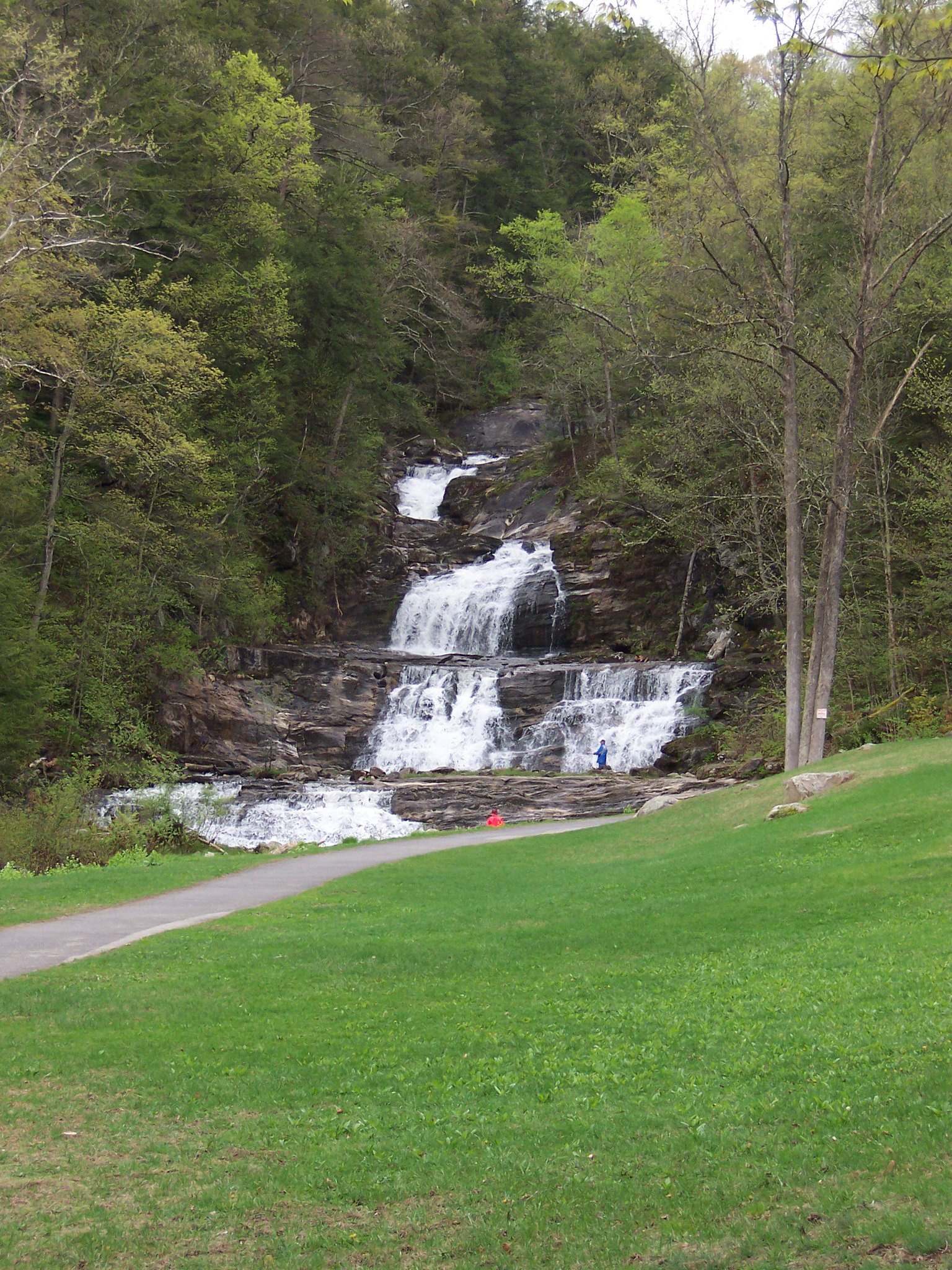
“It says it’s a big waterfall,” Kate said.

“No kidding,” Hal said sarcastically. His tone turned to one of reflection. “Wait, wait. Now I remember. I read about this one. It’s supposed to be really beautiful.” Still driving, he turned to her for a moment. “Don’t be such a wet blanket.”

Saying nothing, she slammed the guidebook closed, and was not at all surprised when he took the following exit. She considered waiting in the car while he hiked alone, but as they drove through the park, something in Hal’s face opened up as he hunted for a parking space — she seemed to remember that particular demeanor, his earnest expression from years ago, that one where he really looked her in the eye. A remarkably clean light of awareness shone out of his pupils, bewitching her utterly. So, giving him the benefit of the doubt, she walked up to the falls with him.

The march up the mountain made her calves cramp bitterly. She forgot about his eyes and regretted having come. She couldn’t decide which aspect of the vacation had been the worst. Deep in self-loathing, she did not speak at all on the trail. They passed several laughing groups on their way down, and she felt horribly conspicuous in her sullenness. She lagged farther and farther behind Hal, becoming irritated when he didn’t wait up for her. She rolled her eyes at the dark canopy of trees, shaking her head, and then Hal disappeared around a bend in the trail.
As she walked, alone now, the air changed, becoming eerily fragrant, sweet with the mysterious smell of growing things and dirt. Presently, she could hear the water rushing in the river, then she could glimpse through the trees the rapid, swirling current, the translucent shine of the mountain water. Breaking into a fast jog, she labored up the steep path to catch up with Hal. She walked rapidly, next to him, eyeing him surreptitiously, checking his face for the look she remembered she’d seen earlier, but it was gone. They went around another sharp curve, and then the trees opened up into a large clearing. There was a narrow stairway carved into the huge granite boulders in front of them.
As she went down the stone steps, her view of the falls still blocked by trees, Hal held his hand out to steady her at the bottom. She stood gingerly on a patch of moss and raised her eyes to the sound of the water. The falls themselves almost made her stop breathing: high, jutting projections of rock; twisted, angular trees growing between the boulders; the surrounding sky bright blue and cloudless. There was something she’d never seen before in these rocks, in this moss, in the sight and spray-mist feel of this water. The falls bathed her face with a soft sigh of coolness — a breath of fresh air, moistened by God. She felt some sort of calcified anger snap in two, giving way inside her like a dry stick; with that, the merest bit of her accumulated, self-hating poisons began leaching out and away, and that was enough.

She had always been such a reluctant, grudging optimist — always, in the end, forced, against her will, to appreciate the universe, despite her tiredness, despite her crankiness. Kate wasn’t silly enough to believe she would be able to change her whole outlook overnight, but if she wanted it badly enough, she knew this moment could be the beginning of a new way of looking at the rest of her life. This — this rocky fall of water was somehow the truest thing she’d ever seen — dramatic, passionate, and dangerous — and it was demanding admiration from her. Whatever made this made me too, she thought. She stared at the exploding mass of water, the roaring noise soothing her like a baby.

Hal reached out and touched her arm. “So. Was this worth walking two miles?”

She turned to him, wondering at the smooth warmth of his palm, the slow gentleness of his voice. It was so seldom she and Hal were ever in sync. It was like he was a stranger most of the time — but not now. Perhaps this was also what had been missing. “Yes, it was worth it,” she said.

“Did you have a good time?” he asked her solemnly. “Was it a good vacation?”

“I did,” she said, and she squeezed his hand.

“Now, let’s go home to the kid,” he said, smiling as he turned away from the falls. She leaned forward and kissed him. “I actually missed her,” he sighed. Kate didn’t reply.

“Race you to the car,” she called, turning away from her husband and rising up the stairs, running as fast as she could down the angled mountain trail, moving easily towards home.

Leave a comment

Filed under short stories

Beautiful Daughter, Handsome Father, a short story

rjp & ktp august 1971

Beautiful Daughter, Handsome Father

Marlene, her father’s lover, is down on the beach, sitting on the sand cross-legged, nursing the baby.  If Leah looks out the living room window she can see her there, sitting and facing the ocean.  Marlene’s thin cloak is rippling in the breeze, her head held high and tilted back, as though she is worshipping something — her own new status as a mother, perhaps?

Leah’s father met Marlene at the Venice Health Foods Supermarket, where she worked behind the purification supplements counter.  He had wandered to browse, got spellbound in front of the blue-green algae, and left carrying her phone number and a gallon of aloe pulp.  Marlene quit the supermarket a few months later, soon after they moved in together.

Her father has just shown her the videotape of that moment two weeks ago when the baby finally slid out of Marlene’s body.  It took eighteen hours to produce the head and that first shoulder, but then the rest of it — the dangling arms, the loosely curled fists, the puckered knees and feet that seemed sculpted from marzipan — swished free with one last interminable push, followed by a dribbling of translucent fluid tinted pale amber.

He cut the cord himself, took the sterile scissors in his trembling hand and, in between where they tied it off in two places with thick black surgical thread, he snipped.  On the video, he looks like he was ready for it to be difficult — preparing to hack away at it until he passed out — but it surprised him and parted smoothly, like a thick rope of licorice.

After shutting off the tape and pointing out the still figure of Marlene down on the strand, he shows Leah around his new apartment.  The entire layout is visible from the foyer, but it’s something to do to break the ice.  This is the first time she’s visited since high school, when he sold his house.  Before that, from the ages of two until twelve, she didn’t see him at all.

“This is the bedroom,” he says, gesturing to an open doorway off the square front hall.  There is a mattress lying on the floor, sheets and pillows and thick, Mexican-looking blankets tossed in an unmade rumple.  “The bathroom is through there.”  He points within, to a half-open door at the far corner of the bedroom.  “The kitchen,” he says, waving at another doorway with the other arm, his first arm still aloft at an oblique angle toward the bathroom.  For a moment he looks like a ballet dancer, muscles strung on wires.

In the kitchen are two wooden barstools and a commercial-sized juicer.  “This is where you’ll be sleeping,” he says, walking two steps in from the foyer.  “The living room.”  There is no furniture, nothing at all, merely the carpet, grubby beige shag.

Leah says nothing for a moment.  The apartment is cold and damp from the ocean.  It smells clean, though; a trace of peppermint soap drifts from the bathroom.  When she speaks, she tries to sound casual.  “Have you got something for me to sleep on?” she asks.  “A cot or something?”  He looks at her, arms folded.  She stands silently.  At his old house she had her own room and bath.

“Well,” he says, rubbing his chin.  “I thought we’d get a roll of three-inch foam-rubber for you.  A mattress.”

“Oh.”  She is embarrassed, and sorry she brought it up.  She moves to the window, touches the gauze curtains, faded Indian print with fluid girls twirling on their toes.

“I planned to get it today.  There’s an upholstery shop down the street.”

“Oh?” she says.  He has not prepared for her visit, is she that unimportant?

“I didn’t think you’d really come.  Not after the last time.”

“When is Marlene coming back up here?” Leah says.

“She’ll be down at the beach until we go to get her.  I wanted us to have some time alone first.”

“How much did the baby weigh?”

“Nine pounds,” he says.  He stands at the window, gazing at the beach.  Leah fidgets and stuffs her hands in her pockets.

“Were you going to name me Jedidiah, if I’d been a boy?”

“Who told you that?”

“Mom.”

“Well, she didn’t like the name in the first place.  I doubt she’d have let me give it to you.”  He sighs.  Leah looks down at the rug.  “Why do you ask?” he asks.

“Just curious.”

Her father takes a step toward Leah.  He touches her cheek and shakes his head.  Then he strokes his beard with both hands, smoothing his hair back.  “Well.  I’m going to make some juice.  Do you want some?”

“What kind?”

“I’m not sure.  Let’s go see.”  He opens the refrigerator and bends down, rooting through the shelves, opening bins.  The juice machine on the table is an old appliance, dull and scratched white with rounded corners and a big shiny metal “GE” logo on the center of the motor.  It goes with the rest of the place — his usual ceremonial shabbiness.

He crouches and Leah’s view of him is blocked by the open door.  “Hello, beautiful daughter,” he says, leaning his head around to smile at her.

“Hello, handsome father,” she says, and sticks out her tongue.

He laughs.  “There are beets, carrots, celery, some apples.  I think I’ll have beet-celery.”  He leans back against the counter, and scratches his head.  “Have you ever had fresh-squeezed juice before?”

“Not this kind,” she says.  “What is it like?”  Her idea of health food is banana yogurt.

“It’s a lot stronger-tasting than the bottled stuff.  We’d better start you off with some fruit, but I don’t think you’d like plain apple.  How about apple-carrot?”

“I guess so,” she says, rubbing her damp palms against her pants.

He stands at the sink, scrubbing the beets and the carrots with a brush.  Rinsing the apples and the celery, he does not peel, core, or seed anything, just cuts it into chunks and lays it on the counter next to the enormous juicing machine.  His off-white fisherman’s sweater is thick and luxurious, a jarring contrast to his dingy ripped jeans and his skinny, emaciated wrists.  She turns away from him and looks out the window at the pale blue, slow-rolling waves.

“I’ve been doing a lot of juice fasts,” he says.  He is much thinner than last time; she is skittish about touching him, feeling the sharp edges of his bones everywhere.  He seems in good enough shape, though:  who else his age can jog twelve miles in wet sand?

Because of his shoulder-length, strawberry blond hair — just a touch of silver running through it — and the leanness of his jawbone, her acquaintances from college flirted with him, sometimes just to measure her reaction, but sometimes not.  They all thought she was lucky.

“Surely you’re not trying to lose weight?” Leah says.

“No, I drink a hell of a lot of juice.  But it’s just that and water for twenty-four hours.  It really cleanses the system.”

“Don’t you get hungry?”

“No, not at all.  See, you have all the sugar in the juice to keep you going.  So you are eating, in a sense.”

“But you’re already so thin.”

“Juice fasting isn’t to lose weight,” he says.  “I don’t lose a pound.  It’s to give your system a rest.  To eliminate toxins.”  He starts feeding the chunks into the juicer.  The beet juice is blood-red, frothy, and then the celery goes through, diluting it to a muddy pink.  “Want a taste?”

“No, thanks,” she says.  “It looks gross.”

He takes a sip of the juice, the froth clinging to his mustache.  Then he feeds some carrots and apples through the grinding machine.  After tasting it, he hands her the glass.  Leah drinks.  The juice is pungent, the earthy sharpness of the carrots drowning out the sweetness of the apples.  As she tilts the glass, a heavy layer of sediment from the skins and peels falls out and settles to the bottom.

“I can’t drink this,” she says, her tongue coated with a cloying thickness, the taste in her mouth like liquid chalk.

He watches her as he drinks from his own glass, sucking the foam from his upper lip.  “Well, it’s something you’ve got to get used to.  An acquired taste.”

Leah puts her juice down on the counter.  Unsnapping her barrette, she tosses her head once to loosen her hair, and then puts the barrette into her jacket pocket.

“I’m hungry,” she says.

“We could go over to the Meatless Mess Hall.”

“Great,” Leah says.  She picks up the glass of juice again, and then puts it down without drinking.  “I’m sure it’s good for you,” she says.  All she can think about is getting out of his apartment.  Her mind races and she can’t even label what she’s feeling.  “Why don’t we go to the beach?” she says.  Her voice is high, her face hot.

“Okay.”

They walk downstairs.  The old hallways are dim, smelling of cooking grease, clove cigarettes, and Lysol.  The stuccoed walls are painted a glossy institutional green.  Following him down the creaking steps, she stares at his spindly buttocks — barely brushing the inside of the narrow seat of his jeans — as his legs propel him before her.  When she saw him again, after ten years, he couldn’t get enough of her sitting in his lap.  His thighs were lean, his hipbones sharp, and she herself felt too large, too awkward to be his daughter.

On the beach, Marlene’s face is stark and beautiful, the bones jutting and declining, transforming the clean ocean light of December into a solemn sculpture.

The baby is wrapped in several layers of flannel receiving blankets, striped pink and blue on white, the blanket corners fluttering in the chill breeze.  Leah peers over the edge of the blanket, seeing the baby’s cafe-au-lait forehead, his black, damp-looking corkscrew curls and his eyes, shut tight against the light and wind.

Leah and Marlene look at each other.  The wind slams into Leah’s body like a giant animal.  A few plump gulls glide over the waves.  Her father clears his throat.  “Marlene.  This is Leah.  Leah, Marlene.”  She nods to Leah, one slow, dignified sweep of her head.  Several heavy bracelets, open bangles with knobs like acorns molded at the ends, glow against her skin, the gold dulled by a dense network of minuscule scratches.  “And this is,” he says, holding his arms out and taking the wrapped bundle from Marlene’s arms, “Jedidiah.”  He snuggles the baby against his thick sweater, bending and brushing his lips against the silky fine fuzz on its head.

Leah bends and leans forward, her hair falling into her eyes so that she must twist it to one side, making a thick rope over her shoulder.  She squints up at Marlene, who nods at her like a queen again.  Marlene takes the baby back.  “I’ve got to get him inside,” she says.  “It’s getting cold.”  She turns away, her robe billowing up, punctuating the sweep of her long legs.

“Wait a minute,” her father calls, hurrying after her, leaving Leah alone.  “We were just on our way over to the Meatless.”

Marlene stares at the ground.  Leah’s father looks down, too.  “All right,” Marlene says, looking up and nodding, her face set harder around the mouth.

At the Meatless Mess Hall, they sit at a table in the back corner.  The vinyl tablecloth is stiff and slippery when Leah tries to lean on it with her elbows.  Her arms keep sliding, so she gives up, sits back on the wooden bench and hangs her arms down at her sides like a child in church.  Marlene folds her robe to one side over her shoulder and nurses the baby.  Though Leah doesn’t want to look, she manages to catch one sideways glimpse of the purplish-brown, swollen nipple.  Once the baby latches on, Marlene drapes the robe back into place, covering herself.

“I’ll have the millet casserole and a pot of herb tea,” Marlene says, when the waiter comes.  “And honey with the tea, please.”

“I want grilled tofu and a side order of steamed vegetables,” her father says.

“I’m not hungry,” Leah says.  The waiter has two tiny diamond studs in his nose, and from her seat, Leah can see up his nostrils to the backs of the earrings.

Taking her barrette out of her jacket, she puts it in her mouth and pulls her hair back with both hands.  She reaches behind her head with the barrette and hears the tiny snap of the clasp.  “Is this my half-brother?” she says, glancing over at Marlene with her arms still bent over her head.

Marlene’s forehead crinkles, and then relaxes.  “No,” she says, looking not back at Leah, but across at Leah’s father, her eyes twin chocolate stones.  “I was already pregnant when we met.”

“Why didn’t you tell me that?” Leah says, turning to face her father.  Her elbow slips off the table, accidentally jabbing the waiter.

“Excuse me,” the waiter says.  He sops up spilt tea with a dingy rag.

Marlene’s face doesn’t move at all.  It is smooth and dark, the kind of face where expressions leave no permanent mark, unlike her father’s thin Slavic skin, where a shadow of everything he’s ever done or said or thought still lurks.  He glances at Leah, then turns to look out the restaurant’s long row of windows.

“Why are you doing this, if it’s not your child?” Leah asks.

“Why not?” he says, smiling a small, thin-lipped smile.

She blinks at him.  “I see,” she says.  “Better late than never?”

Leah’s father reaches over and touches Leah’s hair, stroking the side of her head, something she is barely able to tolerate.  His hands, long and slender, feel tentative like a cat’s paws.  When he hugs her, his arms press in, then release, press in, and release — the movement comes like waves, it makes her seasick, but she can’t seem to draw away from him until he’s ready to let her go.

Her father and Marlene sit and eat.  When Marlene is finished, she stands up, drawing the baby out from under her cloak where it fell asleep after nursing.  She cradles it, murmurs to it, and readjusts its blankets.  There is something — a grain or two of millet — stuck to the corner of her mouth.  It looks like a beauty spot against her skin.  “I’m so tired,” she says.  “See you at home.”  As Marlene turns to leave, she puts her hand on Leah’s shoulder, patting her like a dog.

Her father pays the bill and he and Leah walk back to the strand.  She remembers years ago, the first time he brought her here, to see the roller-skaters and the old black man who played scratchy blues guitar.  Leah had picked up a piece of driftwood and scratched words in the sand.  “I love you, Daddy,” she had written.  The wind had been icy cold and what she mourns most of all from that time is the way he felt so big and warm and solid when he hugged her, shielding her from the wind, lifting her up off her feet.  They stood together like that for a long time.  He had smelled so clean, so pure, like the ocean, a sweet yet salty moistness that she’d found nowhere else but on the Pacific.

They turn to go back to his apartment.  “Dad,” she says.  “Would you mind if I stayed with Grandma tonight?  It’ll be easier.  You won’t have to bother with the mattress.”

He takes her wrist, his fingers encircling it like a heavy bracelet.  “You can’t stand being here?”

“No, I can’t” she says.  “I feel awkward.  A fifth wheel.”

“Well, I hope I haven’t done anything to make you feel that way,” he says.

“You haven’t,” she says.  She stares at him.  His palm against her wrist is cool and dry.  She bites the inside of her cheek.  “Didn’t you wonder how I was doing, all that time?”

“I thought about you every day,” he says, holding her wrist tighter.

They walk back to his apartment building.  Leah turns and tilts her head.  Putting his hands on her shoulders, he stands in front of her, leaning on her with most of his weight, pressing down a bit, causing her to bend at the knees, their old game.

When her father gets to the top of the steps, before entering the dark vestibule, he pauses and looks at her.  “Goodbye, beautiful daughter,” he calls.

“Goodbye, handsome father,” she answers.

7 Comments

Filed under short stories

the eternal conversation, a poem

IMG_1265

The Eternal Conversation

Hard wood portends on my truth, I long to burn every tree,

I long to sift the gray ash of discontent

for the few teeth and bits that remain.

My body is full of small holes,

the better to let you pass through me.

You old vagabond, the sun is you,

the sun is your heart, the sun is your eyes.

Look at me, I will blind you, you will remember nothing.

You will remember only how it felt to come inside me.

I melt men like sugar cubes.

Give me fountains of blue wine to drown myself in.

Let me swill from your fountains.

Let me piss in your bed and make you love it.

Only give me glory and work,

and I will tell you all I know, gladly.

This is what I know.

This.

Pretend you’re my father:  your one spurt of joy

caused me to begin ticking in your pocket.

Pretend you know my name.

Pretend you have always been with me.

Don’t forget me, don’t forget to wind me up,

don’t break the thin gold chain attaching me to your heart.

I am not a cat, I don’t have a plaintive past,

I can’t meow for attention.  I could try to scratch you,

but you would only fling me away in hatred, off to the floor.

Yet away you go, with soap to pass your outrage,

cleansing your sins like so much dry grit.

You boil your soup of amnesia,

burn your tongue with it,

lose the ability to taste anything, ever.

You are like a tourniquet of the breast,

keeping me tied to the earth.  I never let myself float,

I was always afraid I would never return to sanity.

I am an old vagabond, I will die without you.

But that is nothing new.  You abandoned me

on my first day.  You didn’t care what time it was then.

All you cared about was yourself.  You couldn’t live

your promises.  You are nothing.

You have no heart, you have only your tired words.

Taunt the people who are less fortunate than you.

Make them suffer even more, that is your duty and function.

Speak nothing without hunger and death

being always in your mind — these are

the only real problems.  This love, this is an illusion.

There is no love.  There has never been love.

There is only madness, heat and passion.

The game is to force myself out of myself,

into the bigger picture.  I want to be everyone,

all at once.  To rid myself of these cramps.

To stretch the labored muscles, to tear them,

to rend them from the bone, to flay the entire beast

and let it dry in the sun until it is harmless meat.

Dance with fossils without ceasing life.  The past haunts

but it does not weigh down our joy.  We can weep

and laugh simultaneously.  We do not need drugs for this.

I am finished viewing sickness at last.

I have no more patience for dying.  I will bury the dead,

but I will not visit their graves.  I will plant flowers

to bloom in perpetuity, then I will take my filmy scarves

and fly away toward joy.  I will sprout wings,

they will carry me to my own heart.

Those who have passed under my hand won’t suffer,

I am a slim ivory blade, sharper than a razor’s edge.

I am skillful at dispatching those who love me.

I am the merciful murderess, the killer who weeps

as she cuts the veins, sorrow for the blood but joy for the heat.

The others I have jettisoned are always sad,

they think of me with mingled regret and malice,

but they shouldn’t mourn, they’re better off without me,

this I know for I know where I have buried all the dead.

Courage for life, alleys are for the party afterwards,

the wake for the soul.  The body remains upright.

We live without life, we breathe without air.

We fuck without coming.  We give birth

without understanding the process.

The hospital where I will say my last good-byes

to everyone who harmed me, everyone who tried

to caress me.  I built the building, I know its every corridor.

May we all have a plain dance upon dying.

May we go stately to our blessed rot.

May we laugh as the teeth fall from our jaws.

I hope to see my destination, at least from a distance.

Will it be like a train through the mountains?

Will the air rush in to meet me?  Will the air

be like a baby’s kisses?

I see an old vagabond, moronic or just born,

and it is a mirror I stare at.  I have studied all the books,

but can remember only one thing.

Despair is a waste of time.

With artists, we dance my young age and love,

but white hair and rigor mortis are just around the corner.

I can get through anything in one minute segments.

I can breathe the pain through myself,

I can detach it from my body.

I am told when I was sleeping I was at my best.

That is when I hurt no one but myself.

In dreams, I am kind, I am eternal.

Respond to me, you seller of happiness.

Money can buy everything, didn’t you know?

They are only lying to you to keep you down.

The raw chicken sits on the board, weeping juice,

and it is cold under my hands.  To lift the carcass

takes more than I have.  How did my mother,

my grandmother, manage it?

I have been a good feaster of pain —

I have made the banquet from whatever bones were left.

I have seasoned the food until it does not remember

from whence it came.

Riches, I have dispossessed. I work hard

for tomorrow’s bread.  Someone will take care of me.

The poor are patriots, the poor can pass through the gates

into nothing special.  I am nothing special.

I am a very special nothing.

I have been asleep until I heard your voice.

I thought you despised me.  I tried to touch you,

but you were far away, and could not sleep.

You lost the paper with my name on it.

You forgot everything I taught you.

You old vagabond, you are maudlin and past.

I am the future.  I am the young blood,

the hawker, the fresh pain.

I hear what you say, I am only a poor man

but I will live to bury you.  I will live

until my energy is spent.  Then I will

tender my resignation.  Where is my combat pay?

The only true war is the war to be true.

Sharpen your teeth on my bones.

I have undressed the apple that moored me

to the board of my clothing.  There is no nakedness left

beneath this flesh.  I have fucked a thousand like you.

1 Comment

Filed under poetry

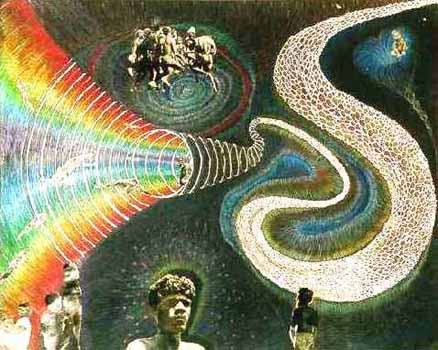
the dreaming (dream-time)

illustration dreamtime

“They [Australian aboriginal peoples] believe that every person essentially exists eternally in the Dreaming. This eternal part existed before the life of the individual begins, and continues to exist when the life of the individual ends. Both before and after life, it is believed that this spirit-child exists in the Dreaming and is only initiated into life by being born through a mother. The spirit of the child is culturally understood to enter the developing fetus during the fifth month of pregnancy.[2] When the mother felt the child move in the womb for the first time, it was thought that this was the work of the spirit of the land in which the mother then stood. Upon birth, the child is considered to be a special custodian of that part of his country and is taught the stories and songlines of that place.”

i already knew this, without knowing i knew it.  i recognized it immediately.  this is true.

3 Comments

Filed under notes

the swiftness of dream-time, a poem

Taylor Swift Is A Paris Beauty

The Swiftness of Dream-Time

She confides unduly in strangers, asking
inappropriate, intimate questions. She has
startling, beautiful eyes, a pale luminous brown,

fringed by heavy black lashes. The fair skin
of her lids glistens like the wings of a moth,
and the expansive way she smiles makes her

delicate pink lips almost disappear. She lives
in the dream-time before marriage and children,
unschooled by the constant companionship of small

relentless demands, unaware of the eternal
ramifications of peeling herself raw
like a thick stalk of sweet cane, exposing her pithy

heart to people who don’t care to understand
the need to be loved, hidden warts and all.
Some people can never be trusted, she feels this

in her bones, yet she doesn’t want to believe it;
the ache of betrayal is like cancer of the marrow,
an oily red liquid pouring from her center

to drown the most fragile of her cells.
On personality tests, she engages in flights of fantasy:
happiness wings past just out of reach, grazing

her face with its sharp, heavy wings, ruffling her fine
hair with the remarkable swiftness of its passage.
Sitting in her green armchair, she becomes

engrossed in old forgotten novels, flipping
the tissue-thin paper with impatience,
sweeping the fallen crumbs of leather binding

off her taut, bony lap with fingers sticky
from futile perspiration. If the man she thinks
she loves asked her to marry him, she would say

yes without hesitation, but it wouldn’t make her
happy — nothing will ever satisfy her, for very long.
She doesn’t know what she wants and never will.

3 Comments

Filed under poetry

the conductress of milk, a poem

Image

(originally published in Stirring:  A Literary Collection)


The Conductress of Milk


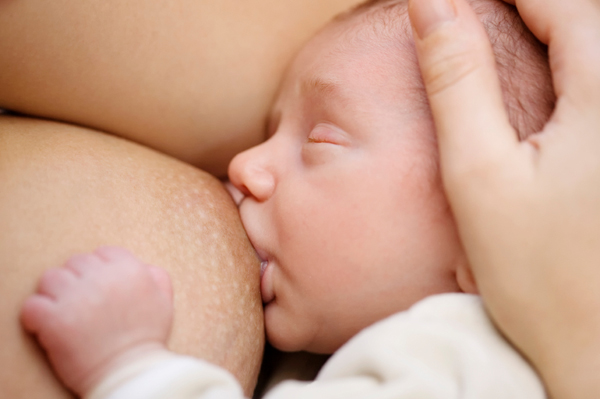
I am a conduit, pure liquid medium. 

It is like bleeding, I prostrate myself

to her lips, lay low while she sends

eloquent messages with her tiny, velvety hands,


her eyes dreaming, smiling.  At 3 a.m.

she has the strength of a legend. 

She grasps her own thumbs tightly

while she sucks on me.  There is pain,


but not too much.  I hew roads

through this darkness, telling her how one day

we will visit Paris, leaning over the old

sandstone edge of my favorite bridge


across the Seine.  The passage exhausts,

yet chronicles how time can stand still,

how the illusion of eternity creates its own value. 

I feel like an impostor — only the fact I’m lactating


convinces me I’m her mother.  How quickly

she goes from one emotional state to the next —

she can be fussing one second and smiling

to herself the next.  The silkiness of her cheek,


slick with spilt milk, is like angelwings.

She kicks her legs out straight while nursing,

moves her hands and arms like Leonard Bernstein

conducting — she moves her head for emphasis,


sometimes pulling back on the breast,

stretching the nipple.  She smacks her lips,

then pops off and lets go.

She looks up at me, wide-eyed, but soon


drops off into a very pleasant looking

milk-sucking stupor, a milky drunkenness,

a milk-sucking intoxication.  No wonder

we all ache for drugs afterward.


Leave a comment

Filed under poetry