Tag Archives: sex

Love Is A Wound In The Body

illustration liadan 7th century poetess nun

Gain without gladness

Is in the bargain I have struck

–Liadan (7th century A.D.)

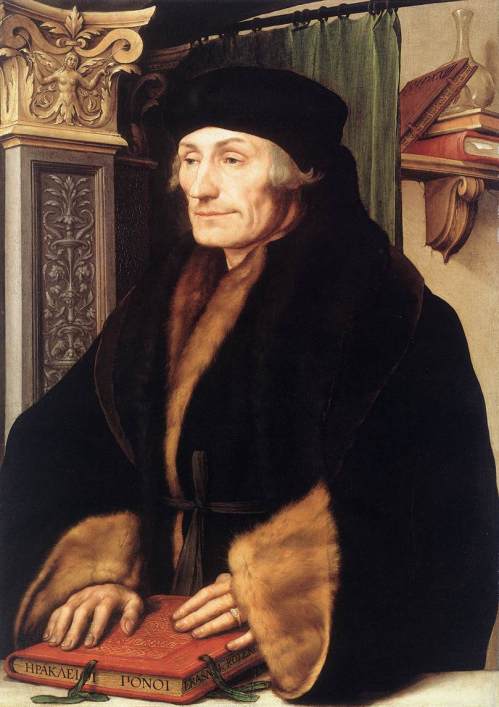
Illustration erasmus holbein

But he who hides his sickness

can hardly be brought back to health;

love is a wound in the body,

and yet nothing appears on the outside.

–Erasmus, Paraphrase on the Gospel of John (pub. 1523)

illustration marie of france

What would become of her finer qualities

if she didn’t nourish them by a secret love?

–Marie de France (1160 – 1215?)

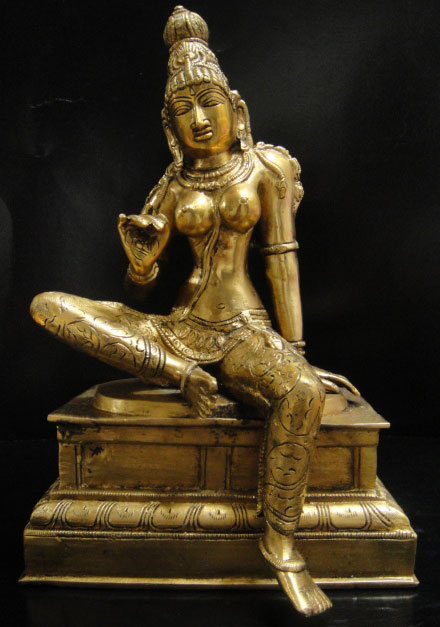
illustration mother of sumangala

A free woman. At last free!

Free from slavery in the kitchen

where I walked back and forth

stained and squalid among cooking pots.

–Mother of Sumangala (3rd – 1st century B.C.)

1 Comment

Filed under ancient history, anthropology, art, beauty, compassion, courage, development, dream, dreams, enlightenment, eternal, eternity, everything, evolution, faith, forgiveness, god, good, heart, history, hope, human beings, humanity, identity, justice, karma, kindness, life, logic, love, mysterious, peace, personal responsibility, poetry, recommended reblogs, relationships, soul, spirit, spiritual, spirituality, transcendence, truth, universe, warmth, wish, world

The Latest Fashion: New Toilettes, a poem

illustration new toilettesThe Latest Fashion:  New Toilettes, a poem

(title and subtitles from an essay by Mallarmé)

 I.  An At-Home Gown in Garnet Velvet.

I receive you at my front door, formally, immaculately dressed, delicately arrayed, impeccably scented.  You think of me as I last appeared at the beach, tousled, salt-encrusted, and burned by the sun, dusted from scalp to toe with golden sand.  You see underneath my gown a double exposure — the natural, the cultivated — which rises up so that my two brown eyes turn to four, eyes within eyes, nudity within garnet velvet.

You think of wine, the vintner’s trembling hands caressing grapes, silently pleading with them to reveal when they will give up their most perfect secrets.  We live for moments such as those, we live to take up our wine in a crystal goblet and put it to our lips and breathe the scent of rain, sun, earth and sweetness.  Sweetness which has by virtue of aging embraced its opposite — sweetness which has given birth to tart recognition.

We are both innocent as three-year-olds and jaded as madams.  You touch the supple velvet, but what you are feeling is the smoothness of my insides.  I remember the sound you made, long ago, an explosive sound which you tried so valiantly to muffle.  The report of your exhalation was echoed in each cell of my body.  Garnet velvet becomes a skin I will shed.  Nothing before was unskinned.  I will turn myself inside out, only for you.

II.  A Hostess Gown in Gray Russian Satin.

 Together, we receive cadres of admirers — come to look upon our glowing faces, hear the way we laugh, breathe in the air of passion which surrounds us.  We understand this loveliness we display is not ours, rather on loan merely, a magnification of the same electric forces which keep every atom together, proton and electron and neutron dancing their way in a wild mazurka.  Those atomic particles, those rapscallions.

My gray dress hugs my body tightly, exposing each curve, revealing my body but keeping it a magnificent secret at the same time.  When your fingertips slide across my shoulders, the fabric moans, and the assembly gasps.  I can take no credit for my beauty, only for the courage to allow it free rein.  And I count every electron of your body, I feel the whirling clouds as they circle your atomic nuclei, endlessly proclaiming not beauty, not usefulness, but truth.

Please be advised you are in the presence of ananda.  Or at the very least, maple syrup.  Even the trees know.  How the sparks flew when first we met!  We confused the friction with dislike, at least until you saw me lick my lips.  Gray satin reminds us of the cries of mourning doves, the way they’d scatter as your car pulled into my driveway.  Such murmurings as felt like satin threads, pulled through my heart.  You came to me.  I will stay found.

III.  A Frock for Paying Calls in Plum-colored Faille.

We deign to visit the world, after a twenty-three year sabbatical, and everywhere we go the air matches my dress.  The moon becomes a large opal, the sky an onyx abyss into which I fall upward, tethered only by your voice.  When you laugh, I hear my father.  I hear the way he held me, our skin where it touched on fire with longing only for more bare skin.  He died too soon, and so did I.

My skirt is cut on the bias — when I walk it moves as the tops of the Australian pines moved that day you first kissed me, at the beginning of hurricane season.  You and I ask our hosts if they are prepared, but they don’t understand.  Once, you lusted for books — 27,000 of them — 19 cartons fit into your truck, each trip.  The hardwood shelves groaned under the beautiful weight of your hope.  Please, don’t read too much into the facts.  What do the pages tell you?  Do you remember when you hated me?

It is so difficult to construct a garment on the bias, I must consult experts in the field.  I show them the dress I wear, ask, can you make me the same dress, in the same fabric, over and over.  I want nothing varied, because in this dress is all the world.  My father has been dead now for longer than I knew him.  I still see his hair, iridescent red-gold feathers, under my fingertips, my nails painted purple.  I asked for you.  I found your succulent eyes.

4 Comments

Filed under dream, dreams, love, men, mysterious, nature, passion, poetry, prose poetry, relationships, sex, woman, women

The Way of All Flesh, a short story

illustration the way of all flesh 4illustration the way of all flesh

The Way of All Flesh, a short story

Professor Rathlin was tall and skinny, with a beard and wild red hair. He wore sandals without socks, even in winter. During lectures, I stared at his feet, the toes in particular, the way the nails were so broad and smooth. But all that toe-worshiping was moot, because rumor was he had a girlfriend. Plus, I had Jacob. Despite, or maybe because of all that, I went regularly to Rathlin’s office hours. His office was even better than his toes, insulated with books, one whole wall covered with photographs of his family.

“Look at this one,” he said one day, pointing to a group black-and-white, maybe the third grade. From the clothes, I could tell he was at least as old as my mother, if not older. “You think you can pick me out?” he asked. He leaned back in his swivel chair, browsing through his chin whiskers. I looked hard, mentally shaving off facial hair, pulling his hairline forward, and erasing weather lines. Scanning the photo, row by row, I started to sweat.

I was almost ready to go back to the beginning, which was a disaster in a job like this — they all start to look alike. Then, I saw one boy’s eyes, his mouth, his forehead, a cowlick. I pressed my finger to the glass and said, “Here.”

He squinted to see which face I’d pointed to. He rolled his chair close, the chair-arm touching my leg just above the knee. “Right,” he said, as his chair pushed me, almost knocking me off-balance. “Sorry,” he said, swiveling back. “How about this one?” he asked. He pointed to a bigger photo, three little boys who looked like almost like triplets. They were dressed the same — plaid shorts with suspenders, white starched round-collar blouses, knee socks with saddle shoes. The tallest was missing his two front teeth and the middle one held the smallest — chubby in the face from babyhood — hugged on his lap. “Which one is me?”

“Oh, my God,” I said. I tried to camouflage, make out like I was amused. I knew I’d get an “A” in his class, this spotlight tutorial was about something else. He put his smile away and tried to look neutral. His eyes held anthropological glee.

I saw him in the toddler, the one with the dimpled knees, the brightest eyes. “The baby,” I said.

He laughed, throwing his head back for a moment. “Not many get that one,” he said, nodding his head. “Sit down,” he said, motioning to a chair behind boxes crammed with what looked like field diaries. I sat, and not knowing where to put my backpack, plunked it into my lap, clutching it like an old lady with a purse. Clutching it like my mother would have.

“Would you have breakfast with me next week?” he said, opening his desk drawer and fumbling inside it. He pulled out a ragged calendar.

“Sure,” I said.

***

“White people like to get the body in the ground within two or three days,” said Mr. Clements, our guest lecturer. “In black families, at least a week goes by before the burial. Black funerals draw more relatives — folks take longer coming by bus and so forth, so you allow the extra time.”

I thought of my first funeral, my great-grandfather, when I was six. Mom bought me a new navy-blue coat and hat for church, but as I was getting in the shiny black car at the funeral home, she decided I shouldn’t go to the church. Instead, I sat with the undertaker’s shy daughter in the waiting room, tapping my patent-leather heels.

***

The week after midterms, Jacob, Margot and I went out for a beer and some reggae. We sat up front, getting our sternums massaged by the bass. Margot and I drank too much beer and smoked too many cigarettes. She chuckled a lot, high up in her throat, and seemed half in the bag already, but she was tricky that way — in reality, just like my mother, she had a stable middle range of drunkenness that she could stay in for what seemed like forever. Jacob had nursed a warm Perrier for a couple of hours.

Margot leaned over and whispered in my ear. “He is cute, isn’t he?”

I laughed, leaning over and bumping shoulders with her as I spoke, a gesture I thought I’d gotten rid of in the seventh grade. “Isn’t he!” I said. I admired Margot — her well-placed laughter, her cynical, observant eye. When I saw her looking at Jacob in a way I’d seen before, I decided to let her have him.

I’ve never been the jealous, clinging type; I’ve always gotten out at the first hint of trouble. What kind of fool wants to be with someone who doesn’t want them? No, I view romance and love as Fated, unattainable unless bestowed on us by chemicals. There’s nothing gradual about that gut-wrenching attraction — it either springs up full blown or never exists at all. My mom and I proved this a million times over. I knew there was a certain risk. If it turned out against me — if she wanted him, if he wanted her — I’d have to be able to swallow that bitter pill and live.

“Would you mind if I asked him to dance?” she said. Asking permission, as if he were my property — not the way Margot usually acted. Jacob had been a virgin when we met. Margot knew, and the fact was tantalizing; even with the first sharp edge taken off, those boys can look so lovely.

“No, sure, go ahead.” As she leaned over to shout her invitation, her heavy breasts touched my arm.

I watched them on the dance floor. Jacob was long and lean — like a greyhound — dark hair just brushing his shoulders, and narrow, slanted brown eyes. Sometimes his eyes made him look dumb, sometimes a little fierce, but most of the time they made for a sort of refreshing blankness.

He danced with her, but he kept looking back at my table. I smoked and sucked on my bottle of beer, the carbonation stinging my upper lip.

I looked up and saw Jacob motioning, beckoning me to come out on the floor. He was sweating, there were dark spots scattered on his shirt and circles under his arms. When I got there, after wading through the hot bumping bodies, the three of us danced in a sort of conga line. For a couple of minutes I had this bizarre fantasy that somehow we’d all end up naked and in bed together.

Jacob snapped his fingers and swung his head, tossing his long hair, strands catching in his mouth like a girl’s. Margot had a funky Egyptian hand move she seemed stuck on. I concentrated on the looseness and fragility of my shoulders, letting my arms bounce wildly. We laughed, but the music was so loud we couldn’t hear the sound. We watched each other’s mouths gulp, like goldfish.

Jacob leaned close enough to speak. His hand grasped my hip bone. “Margot’s drunk,” he said.

“No, she’s not,” I said, closing my eyes, nodding my head with the music, brushing his ear as I spoke and picking up some of his sweat. “She’s just pretending. She can drink us all under the table.”

Margot screamed, opening her mouth wide, then gasped and laughed, fanning herself. I nodded and pinched her elbow — her arm plump, soft-looking, but hard with muscle underneath — and she minced off the dance floor.

“She felt me up while we were dancing,” Jacob said. “Put her hand on my ass.” His face looked glazed and hurt. I looked over at the band and kept moving and wondered which buttock she had touched and whether he still felt the warmth of her hand, glowing under his jeans.

“She just likes you,” I said. “The way I like you. The way everybody likes you.” I held my arms up and tilted my head back until I was dizzy, in the process almost falling into some other people. Jacob caught me before I fell into the tangle of mike stands and wires at the middle of the band’s stage. I felt my shoulder blade compress under his thumb.

“I thought you loved me,” he said, and I could smell his breath, sour just like his sweat. I wanted to shake him, make his head rattle. “Are you telling me you want me to fuck her?” he asked. A cold, hard, bitchiness drew down over my psyche in an instant, like a reptile’s third eyelid.

“Let go,” I said, shrugging my shoulder out of his hand, away from him — like when Mom would try to hold me down on the bed in one of her drunken vapors.

Jacob kept on dancing, expressionless, his eyes even more blank than usual. If I had been seeing him for the very first time, I might have thought he was insane. He touched my neck with his finger, tracing the angle of my chin.

As I walked away, I turned back to look. His eyes were closed; his face was smooth except for the silly little unshaved jazz bow under his lower lip, which until a couple of minutes ago I had liked. His body was turning and bobbing with the music, but his hands were drawn up into fists and his arms were down stiff at his sides.

“I’ve got to get home — my feet are killing me. Would you mind giving him a ride?” I stared down at Margot, sitting at our table, not meaning to but seeing anyway the cleavage where her full breasts pressed together. For a minute, she looked ridiculous, puffed up with air like some inflatable doll. I wondered what it would feel like to lay my head on that kind of cushion. I looked back at Jacob, dancing in front of the speakers.

“Sure, no problem,” Margot said.

“Talk to you later,” I said, and I left. I wasn’t mad at either of them, not really.

***

“This is a skull I was asked to identify for a murder trial last year,” said the medical examiner. He looked mild and well-groomed. Lying in a clump of tall grass, the skull was turned away from the camera, its curves a rusty brown except for some scattered patches of pale hair. “This was how it was found.” The slide projector whirred. “Here’s a better view,” he said, and the picture showed the skull head-on, the skull looking paler and the carved teeth glowing white against a formal background of black felt.

I thought of my second funeral, the one where I got to see a body — I was trotted right up to the shabby green kneeler in front of the casket. Great-Aunt Alice’s hair had been given a fresh apricot rinse, the curls prim and dull against the white satin pillow. The flesh of her crossed arms was flattened, as if she’d been pressed in a book. I feared her eyes and lips would somehow fly open and regard me with a blind and terrifying insolence. My remaining great-aunts stood in a cluster around me, weeping, kissing her, the dangling chains of their rosaries sliding, mussing her makeup, her lipstick, her hair.

“Give her a kiss goodbye.” I bent, lips pursed, brushing the well-powdered cheek that felt as cold and hard as my wooden desk at school. A sharp medicinal smell mixed with perfume and hairspray made me sneeze. I creased my forehead to mimic sorrow, all the while barely managing to contain the giddy, shameful laughter bubbling up inside me like silver air through black water.

***

“I think you should do this professor,” Margot said, when I told her about my date with Rathlin. Jacob and I had made up — sort of. He insisted Margot wasn’t his type, shaking his head and laughing — unkind laughter, I felt, not wanting to join him in his gaiety because it felt disloyal to her — at the same time wondering why on earth I held my laughter back. Nothing had happened between the two of them, Jacob added, and in that I believed him, because the one thing I felt certain of was he could not tell a lie.

After Margot and I hung up, after I’d sipped almost an entire bottle of wine, I sat at the kitchen table with one last glass and a cigarette, writing in my journal. “I think he likes me,” I wrote, meaning Rathlin, alcohol having made my loopy script even bigger than usual. After twelve more pages elaborating on that general theme, I don’t remember how I got from the table to my bed.

***

“This, of course, is my favorite holiday,” Rathlin said, grinning. He’d taken the video last summer in Mexico, documenting a rural celebration of “el Dia de los Muertos” — the Day of the Dead. Spindly-legged children cavorted in front of the camera, dancing brown and barefoot, wearing cartoonish papier-mâché skull masks and shaking small tin skeletons hanging from long sticks. The painted tin strips rattled against each other like wind chimes. It all seemed less gruesome than absurd.

After Aunt Alice, funerals got easier. My Uncle Frank looked better than anyone — or maybe it’s just easier to do a good job on a man. His hair wasn’t stiff or sprayed at all, just brushed back off his forehead. Even his glasses sat in the right position. I could see my reflection in the lenses as I leaned over the casket to rearrange the lay of his necktie.

***

“You’re not ready?” Rathlin asked, arriving almost an hour early for our breakfast date. Stiff and hung over, I hadn’t dressed or showered. I felt naked, though I was bundled inside sweatpants, a nightgown and a flannel robe. In the shower, I thought about what I’d say to him over breakfast. The only other professor I’d ever gotten this friendly with had been a Vietnam veteran, still a little strung out by that experience, which I found completely understandable. He’d taken me home to meet his mother. He said that when he looked at me, he saw “healthy children.” Feeling more panicked than flattered — I was eighteen to his thirty-five — and wanting to defuse the situation somehow, I said, “What is that, something like the Grateful Dead?”

After pulling my clothes on over damp skin, I went to tell him I was ready. I stuck my head out of the bathroom to see Rathlin searching through my dresser drawers. My eyes got big. “What are you doing?”

“Field observation,” he said, his lips drawn back and his teeth blazing white at me through the darkness of his beard. I saw he was in the drawer where I kept my vibrator.

I marched over and pushed the drawer shut. Then I propelled him out of my bedroom — laughing through my clenched teeth to keep the action on the level of buffoonery, pretending I had just caught him being naughty. His steps were tiny; he twisted his head around to catch my expression. I kept my face neutral, using the fake laugh as an excuse to look everywhere but his eyes.

I mumbled my order to the waitress and sat silent. It ruined the sight of him, being his measured subject. I knew our studies together would never be the same.

***

“The traditional color of mourning in Japan is white,” said the tall woman, an old graduate-school colleague of Rathlin’s visiting from Osaka University. “Whereas the normal color of celebration is black.” For the natural sterility of white and the corresponding fertility of black, she explained. I stared at Rathlin, chin on my hand, while she spoke, watching as faint color rose along the sides of his neck and he fiddled with his moustache. She drew a plain white kimono from her bag, holding it spread out against her body, an abstract design woven into the material itself, like a tapestry.

I had worn the traditional American black dress at my mother’s funeral. Up until then, everyone in my family — including her — had slopped around to those things wearing pastels, whatever stuff they seemed to have in the closet, but by then I knew it wasn’t right.

***

Home from afternoon classes, I was startled to find my front door unlocked and standing ajar. Then I heard Jacob’s voice. “Don’t worry, it’s only me,” he called, as I hesitated outside the door, my heart racing.

“Jesus, you scared me,” I said, dropping my backpack inside the door, clutching my chest and breathing hard as I walked into the room.

Jacob sat on the living room floor, five empty bottles from a six-pack of beer balanced around him, the sixth one half-empty in his hand. He didn’t look up when I came into the room, just tilted the bottle back and took a swig. His eyes were bloodshot from the beer. My journal was lying open on the couch.

“So, what’s going on between you and Dr. Rathlin?” I felt a draining sensation from head to toe, gravity pulling all my organs down, squeezing them into my feet. He wiped his mouth with his sleeve. For a second or two, I was afraid; that passed when I saw his eyes. They were petulant, sullen, and his mouth was puckered as if he might cry. I remembered a baby picture he had once shown me, and over all the sickness roiling inside me was a horrible urge to laugh.

“Dr. Rathlin?” I said. “Nothing. Absolutely nothing.” And of course it was true — there was nothing — that was the awful part. Even so, I sounded like some ridiculous soap-opera bad girl, and he the walking wounded Boy Scout.

“You’re not having an affair?” He stood up, struggling for his balance — I kept myself from reaching over to help him — and at last he got upright, teetering in the floor space between the empty beer bottles. It reminded me of the first night we’d slept together, the two of us standing next to my bed, the stark white of his jockey shorts gleaming in the darkness, like an angel’s wings against the deep brown of his skin — “Help me through this,” he had said, teetering just like he was now, clinging to me as if I were a pier protecting him from some onrushing wave, and I had been filled with respect for his proffered virginity.

Honestly?” Through his veil of drunkenness I could see a sort of relief. “I thought….” His chest hitched, a gassy hiccup. “I thought you two must be having an affair.”

He looked out the window, frowning with concentration, as if hoping to catch sight of someone he recognized. “Why?” I asked him, knowing as I asked there could never be enough of an answer.

“I’m sorry,” he said, his body sagging, and when he sagged I saw a glimpse of what he would look like as an old man, when gravity would have gotten the best of even his kind of body. He cleared his throat. “At first, I thought you were writing about us, about me. So I turned one page back, to read the rest.”

“Why on earth would you assume I was writing about you?” I asked, honing the vowels into bright knives of sarcasm, sounding exactly like my mother, riled up into a taut, glossy witchiness. I knew from experience how much blood that voice could draw.

His mouth twitched. He squinted in the slanted afternoon sun that filled the room, and his eyes were like a lizard’s. I realized from the very beginning he had thought of himself as being the smarter one.

***

After a huge bowl of Margot’s guacamole, which we slathered over corn chips, sucking our fingers pale between each bite, we ended up calling out to order pizza, and thus never got to the half-gallon of ice cream in the freezer. We flirted with the pizza delivery guy when he got there — I don’t remember exactly how, but it consisted of exchanging pseudo-knowing glances between ourselves and then looking back at him and laughing with what we thought was a bell-like, sophisticated tone, the speed of our laughter almost, but not quite, as fast as a giggle, and in retrospect I’m sure the guy pegged us for a couple of crazy, shitfaced sluts and got the hell out of there as fast as he could — and the last thing I remember with any kind of clarity is that first bite of pizza, eaten sitting cross legged on the floor in front of Margot’s coffee table. I know, too, that we kept on talking for hours, but I can’t recall what we said because each couplet of our sentences was so complete, so profound, so far beyond our sensibilities when sober, that the pearls of wisdom thus harvested could not be held, but floated away into the atmosphere, nacreous gems of the moment.

Eventually the conversation hit a lull. I lay down on Margot’s couch, kicking off my shoes, intending only to rest my eyes, and was instantly unconscious.

Sometime in the night I awoke. The only source of light was a single fat candle we had lit earlier, stuck on the iron spike of a gaudy, wrought-iron coach lantern she had gotten at some garage sale. As best I could make out, given the gluey condition of my eyes, Margot was floating above the floorboards; though her legs moved beneath her, approximating walking, she resembled the silent bouncing ball in a T.V. sing-along.

She was naked. Her breasts were large and round, pale glowing globes tipped in a deeper pink. Below the straight line of her spine followed buttocks so round and firm that, when linked with her bosom by way of her waspy middle, made her torso look fantastic. No cellulite, no jiggles marred her floatation, and upon that dreamlike observation I closed my eyes again. By the time she went back through the room, I must have been asleep, since the next thing I knew was the delicate light of dawn.

“Margot,” I called, standing at the door of her bedroom, a heaped lump of quilt in the center of her bed the only sign of occupancy. “It’s around six-thirty. I’m going to go home.”

No sound, then a rustling of the heavy quilt, and Margot’s pale face and bare shoulder poked out. She’d slept in her mascara, too. “Wait. Let me give you some coffee first,” she said, her mouth so dry I could hear the faint puckering of her lips as they moved over her teeth.

I sat down next to her on the bed. Margot’s arm moved against mine, her skin hairless, soft, radiating a feverish heat. I stared at the rounded curve of her bent elbow, remembering how I’d last seen my own mother’s body, dressed in her nicest, newest dress. Her features had been painted and molded, her nose and chin just a little too waxy, a little too pointed, for perfection.

I leaned over Margot and felt her breasts crush my own into pneumatic oblivion. She flinched as I laid my head on her shoulder, pressing into her living warmth, but I couldn’t help myself. I knew she wasn’t the cuddly type. My mother hadn’t been, either — she was so soft on the surface and so hard underneath. She was dead, and I missed her, but I didn’t really want her to come back from wherever it was she’d gone. My time to follow her would come soon enough, and maybe by that time she would have forgiven me for ruining her life with my pathetic neediness. I knew I was taking liberties with Margot, but I kept holding onto her anyway, waiting for her to gather up the nerve to push me away.

Leave a comment

Filed under anthropology, boys, college, death, fiction, friendship, girls, life, men, relationships, sex, short stories, women

The Evolution of the Orgasm, a poem

illustration the evolution of the orgasm

The Evolution of the Orgasm, a poem

Does the new-twinned cell, as it sorts out
one tangled rat’s nest of nucleus

from the other with its slow patient dance
of cytoplasm and membrane, somehow know

the sweet involuntary contraction and release
of its division?  An organism’s inner tension

promotes as well as restrains
total disintegration.  Is each duplicating

mitochondrion frozen fast in the stream
of its own powerful, mindless barrage

of electrons?  Life on a cellular level
is both straightforward and incomprehensible.

Could any physical laws possibly hold
resolute in the embrace of such rapture?

Was the orgasm the means of our worldly
creation, or the end?  Less can be more,

but not in this case.  Is what makes you
come so easily explained?  As usual, let us

personify:  she is rich-skinned, veiled
cool in a white ruffled nightshirt….

Well-muscled, each movement sure, swift,
with only one purpose.  Her hair is short

or long, pulled tight or draped loose,
but the look in her eyes is a steely

constant, it says, I know you. I have always
known you.  I will know you even after

your tired flesh has flown away singing
through the air like a frightened dove,

and your pale, forgetful bones have fallen
into fine dry grit.  In my relentless arms

you will learn to surrender all fears, all
your dark secrets.  Forever and ever

will I love you.  Is it any wonder we dream
of her so often, with such helpless longing?

1 Comment

Filed under compassion, courage, eternity, evolution, fear, human beings, love, man, mitochondria, mortality, nature, passion, personification, poetry, sex, woman

Enlightenment, a very short story

illustration 5 enlightenment

Enlightenment, a very short story

He felt awake when he saw her sitting at the bar, as though all his previous life had been a slow, lazy dream.  She looked like a girl from one of those sex shops in Amsterdam, wholesome and perverted at the same time.  Her hair was perfectly straight and hung down her back to her waist. Her forehead was a smooth, wide dome of innocence.  Her flesh was abundant, stark white and glowing, spilling slightly over the waist of her leather skirt.  Baby fat.  He could tell she’d outgrow it.  Regeneration was her game.

She said, “I prefer to travel alone, no fluff or chatter.”   She spoke of the outer and inner journey.  She didn’t know which was the more important.  “I am my own  mysterious stranger,” she said.

When they got back to her room, he saw how her bed was opposite a huge fireplace, black; it felt like ghosts were everywhere, but especially in the fireplace, coming down the chimney. The wind made sounds around the eaves and windows, such a big wind, it was spring but the wind was fierce and strong. Her room scared him, he would rather have been anywhere else. But he couldn’t leave, the girl was already undressing on the bed.  She looked at him from under her fall of hair.  The now-naked girl lay back on the pillows and smiled.  He felt as awake as the Buddha under the bodhi tree.


1 Comment

Filed under beauty, compassion, enlightenment, fiction, identity, karma, love, man, men, mysterious, redhead, relationships, sex, short stories, soul, truth, universe, warmth, winter, woman, women, youth

Divine Love, Divine Hate, an essay

illustration divine love divine hate

Divine Love, Divine Hate, an essay

Scientists have of late discovered that music stimulates the same areas of the brain as food and sex. That’s why listening to music can bring a chill, raise the small hairs on the back of the neck. That’s why music demands — and gets — our closest attention. You need me, the music calls, you need me to survive, to perpetuate your species. Without me, you will have less well-being, less pleasure and satisfaction. What a design! Food, sex and — music.

The pleasure centers of the brain — the reptilian, primitive intelligence — is not involved in abstract thought but entrusted with the very essence of staying alive. Yet the impulses and desires which originate there find means of expression in our higher intelligence. Food and sex are necessary for survival, so necessary that sometimes it seems as though the whole human world, all human society and culture, can be thought of as nothing more than an interesting mechanism to keep us supplied with food and sex.

The appreciation of music springs from that same primal area of the brain — could this possibly mean there must be a God, after all — a God who gave us another instinct, one for pleasure and beauty, in addition to our basic instincts to survive? Music, a divine invention with no practical purpose. No purpose at all other than to inspire in us joy, mystery, fear and abandon.

Think of all the emotions we can express with food, sex and music:   passion, joy, disinterest, experimentation, violence, anger, tenderness, wistfulness, meditation, transcendence. Food, sex and music can be used to communicate, even intensify, all these emotions, yet the trio can also be used to push us past all of these feelings to a region of Godlike rationality and knowledge. Yes, occasionally our existence becomes clear, understood fully until surface complexity falls away into the deeper simplicity of detached understanding. A strangely quiet joy — a joy beyond anything prosaic.

A poetic joy, able to recreate itself in the mind forever. Sometimes the memory of such enlightenment is what keeps us going when the enlightenment itself feels as far away as Uranus or Pluto — as cold, as unreachable. Remembering how once we held it in our bodies and it filled us so there was nothing empty, noting lacking, nothing to fear — not even death. It is a knowledge, a contentment, which infants possess without awareness. To possess this peace with awareness is the greatest achievement, but one which few people are able to sustain for long. We hold it and fall in love with it and in an instant it twists out of our hands and flashes off into the distance like an agile, silvery minnow. Enlightenment as God’s minnow. Look at it too closely, try to keep it too long, and you may never see it again.

I myself have only a rather wobbly faith in God’s existence, but I nonetheless feel pity for people who declare without hesitation that nothing divine exists. What a drab, ugly world their interior castles must be, with only themselves for company.

The divine cannot be ruled out. We cannot know what exists beyond our senses.   Certainly people have been enraptured by the idea of divinity — especially, most recently, the notions of divine anger, divine vengeance — modern terrorists have embraced these, but without embracing the corresponding ideas of divine love and divine compassion. Yes, people have fastened their wills on the idea of divine judgment, but they have ignored completely divine forgiveness.

The cockroach is as marvelous a creation as anything — see it scuttle away from the light, a most marvelous mechanism, see it copulate, see it reproduce itself, see it taste its food with pleasure twinkling in its delicate, wavelike feelers. No less miraculous than us. But we have an ability the cockroach does not have — to be self-aware of our divine impulses — our duty as human beings is to dive both below and above our own ordinary human consciousness. To bring all our unconscious knowledge and desires into to the conscious realm — both those desires labeled primitive and those labeled exalted.

Some elements of love are to be found in the roach. It loves its life: flees from danger, attempts to avoid harm, and tries to survive no matter what the odds. This is where the terrorists have failed. They have embraced only half the divine order — divine hate — the half that appeals to them more and suits their political purposes. They need to stretch themselves, accept all things God has created — even those they find distasteful or abhorrent — and leave the judging to God. They need to cultivate in themselves divine compassion and divine love. Terrorists profess they love God, but they do not love God’s creation — therefore that love is flawed, is not really love at all. Their love has turned inside out into hate.

They need to learn from the cockroach, as do we all. We possess vast potential for divine virtue, yet are so capable of falling into the abyss of pride. These terrorists have fallen, and they are trying to pull us down with them. We must not surrender to only part of the divine order. We must catch ourselves with the feelers of the insect before we tumble too far.

I cannot blame anyone who feels the need to destroy the terrorists. I feel that need myself, the blood lust of anger and retribution. But we must find a response pleasing to the divine. That is what prayer is — thinking about what a divinely perfect being might do, waiting for the small voice to tell us the right way to handle this new permutation of evil — without ourselves falling under its wicked spell.

This is what all religious searching has been aimed at. Whether we believe God exists or not — we can imagine God, as God might exist. Sometimes it is better to die than to kill the blameless. We can feel such things in our deepest selves, and these places are just as important to reach with the conscious mind as the highest levels of abstract thought.

We can imagine God, we can love God, we can honor God, and that is what matters most, not whether God truly exists. Good and evil, love and hate, right and wrong, call it whatever you like. It is our uniquely human gift, our uniquely human burden. Did we ask for this? Be careful what you wish for, goes the old admonition. Would I rather be my dog, or my cat? Sometimes I envy their peace of mind. They don’t know about world wars. But my most divine pleasures, feeling them and knowing that I am pleased, and knowing why — in this way I have my cake and eat it, too. The lure of that apple in the garden is a lovely allegory, whether it happened or not — we invented it. This is the quality of our humanity which we can never give back, no matter how much we might want to.

10 Comments

Filed under beauty, charity, compassion, enlightenment, essay, faith, forgiveness, god, hope, humanity, love, peace, world

Crocuses, a poem

illustration crocuses

Crocuses, a poem


I.  Signs of Spring

Suddenly, there they were by the front door,

and at my son’s preschool — purple and yellow

and green, poking through the snow

like small erections, out of the body of the earth,

the earth’s slumbering winter body.

My husband was always at work then,

they, the flowers, were my best companions.

“God is!” they said. “We’re God’s greatest effort,” they said,

“We’re God’s peeping blooms, despair must go to sleep,

and all creatures must go out of their lairs to frolic.”

My husband did not feel the urge.


II.  The Mole

Such loneliness I had battled all winter!

I made chicken, hot crescent rolls,

and buttered beans to make us happy,

but my husband was never hungry.

Lots of things took his appetite clean away.

I hadn’t scrubbed the toilet in two weeks,

this distressed him, he was a stern master.

The crocuses were so calm and forgiving,

purple and yellow like bruises;

my husband inflicted bruises without knowing.

He could not see, or did not want to.

His face lit up upon our child, that was all.

He was too important to sweep, or dust, or scrub.

I was the babysitter. I was happy with the crocuses,

and then one day, a dead mole; my son didn’t know

what dead meant, so I had to explain it.

He petted the soft fur, wanted to snuggle it

to his cheek. We paid homage to the mole.

We buried it under the snow, amid the crocuses.


III.   Troubling Questions

My husband didn’t know the bruises he left behind;

the flowers were my trusted companions.

His face lit up, gazing upon his son,

his finest possession; my husband would jerk him

away from me, hate in his eyes, when the crying boy

awoke in the night. The crocuses poked their heads out,

asking questions I couldn’t answer. My husband

didn’t want to see the bruises, or he was colorblind.

He was too important to notice the marks.

The crocuses asked, “Where is pleasure?”

“Not here,” I said. “Maybe next door?”


IV.  The Body’s Lament

The earth’s body was waking up,

but mine wasn’t, my husband was too important

to worry about my body. The head of his penis

was purple like the crocuses, but it asked no questions.

His body was warm, but not for me:

for the pure idea of sex, the attractive notion.

He wanted a thinner, more charming woman

with a better degree, one who would clean the house

more often, and with a smile.

Oh, he wanted a warm, dark place to set

himself, but one with no conversation.

As I put away the winter wools, the smell of mothballs,

white, crystalline like snow, inflamed my fears.

When the rest of spring arrived,

the warm air did not ease the tightness,

the block of ice around my heart.

2 Comments

Filed under beauty, compassion, earth, eternal, eternity, father, flowers, god, health, heart, identity, kindness, life, love, man, marriage, maturity, men, mother, mysterious, nature, relationships, sex, soul, spirit, spring, warmth, winter, woman, women

Have You Ever Met the Love of Your Life?, a short story

illustration have you ever met the love of your life

Have You Ever Met the Love of Your Life?, a short story

Nasreen, Marion’s dance teacher, was short, dark and wide. She wore black leotards under her frothy, voluminous gold-threaded saris, and glowing silver rings on her largest and smallest toes, which were connected to ankle bracelets by delicate jeweled chains. When she moved, and the big belt of coins around her hips started to sing, Marion often thought of a curtain of water emerging from an alabaster frog’s curving mouth. Nasreen’s lips and toenails were always painted fiery orange, and the air near her smelled of cardamom, nutmeg, and cloves. Nasreen had been famous in her youth — she treated all her students with exaggerated courtesy but for some reason, took a special interest in Marion.

From the start, Eleanor, Marion’s sister, thought Marion was crazy, and the whole Oriental-dance notion (she couldn’t bring herself to say the word “belly” out loud) ridiculous. “Why on earth do you want to get up on stage and wiggle back and forth like a cat in heat?” she had asked.

“I’ve always thought it looked so graceful,” said Marion. “It sort of mesmerizes you, it’s so soothing to watch.”

“Soothing? Graceful?” Eleanor rolled her eyes and tossed her head. Her neat French twist bobbled, and a wisp of hair fell to tickle her cheek. She shuddered and tucked it behind her ear. “Grotesque is more like it. I’ve always thought those women looked like they were trying to eliminate peach pits from their digestive tract.”

The two sisters lived together — they had always lived together — in an apartment across the street from the house they’d grown up in, a gaunt, three-story Victorian. After Mother died, as soon as could be considered decent, they had sold the big place and gotten rid of the ponderous mahogany furniture. They kept only Eleanor’s player piano, some threadbare Persian rugs, and their mother’s elderly miniature pinscher. Marion filled the apartment with pickled-pine French country and delicate ruffled draperies in red toile.

Soft-hearted Marion said the rosary thrice daily and didn’t care much if her clothes matched; Eleanor, the younger, was a late-blooming atheist, but knew how to dress. Eleanor had been engaged once years ago but they had never managed to decide on a wedding date — the hopeful young man had insisted she keep the ring anyway, a flawless one-carat diamond set in platinum. She looked at it every night, sitting in her jewelry box, but never wore it.

***

Marion’s first formal belly-dancing costume was to be hand-tailored by her teacher Nasreen’s younger brother, Ahmet. He was known all over the world belly-dancing community for his brilliant costume designs; the only reason she was able to afford him at all was Nasreen’s incessant wheedling on her behalf — as one of his sister’s most deserving pupils, Ahmet finally agreed to let Marion have the outfit at cost.

“I see you in red,” said Nasreen.

“I was thinking of pink. Maybe powder blue?” said Marion.

“Red, it must be red,” said Nasreen. “Ahmet, what do you suggest?”

He leaned back, folded his arms across his chest, and squinted first at his feet, then at Marion, then at the stacked bolts of silk gauze rising to the ceiling, and then at his sister. “Yes, red for the trousers and the outer sari,” he said with a faint smile. “And the front of the bustier heavily sewn with pierced and gilded centimes.”

“Perfect!” said Nasreen, and she and Ahmet gave each other conspiratorial smiles. “Remember the one you made for me so many years ago?” she asked.

“Of course!” said Ahmet. “Now get up on the stool. I need to get your measurements,” he said to Marion, his smooth, warm fingertips galvanizing her arm as he prodded her into compliance with the tape measure.

When Marion described Ahmet’s fitting and design process, Eleanor was incredulous. “You’re going to wear red see-through pants and a bra made of nothing but gold spangles and call yourself Ayita?” she asked.

“It’s my stage name,” said Marion. “It means dancer.”

“Well, isn’t that cute!” said Eleanor, slapping the kitchen table with a rolled-up newspaper she’d been using to pursue a small green fly. “I suppose next you’ll be getting your nose pierced and wearing a veil.”

“Good Lord, no,” said Marion.

“I hope you won’t ever expect me to come see you make an idiot out of yourself,” said Eleanor.

“No way,” said Marion. “You’d make me a nervous wreck. I’d never be able to concentrate on performing.”

“Ah, yes — the great artiste needs her concentration! What a load of manure!” said Eleanor.

“I just want to have some fun. I need a change.” asked Marion. “Why are you making such a big deal?”

“Because I think a woman your age parading around dressed like a harem girl is absurd,” said Eleanor. “Because every Arab I’ve ever met treated women like second-class citizens. Because I know you’re doing this just to irritate me. Hobby, my eye. Why couldn’t it have been needlepoint, or gardening?” Eleanor glared, but Marion just shrugged and continued eating her toast.

Marion’s finished dance outfit was a huge success. As a precautionary measure, she danced privately in Ahmet’s workroom for Nasreen. Nasreen stood with her arms folded across her chest. As the music started and Marion began to dance, Nasreen’s eyes narrowed and her lips grew thin. She tilted her head and stared. Marion felt awkward, but after the first few seconds, the music and soothing movements overwhelmed everything else. The glittering red costume transformed Marion; she lost herself to something bigger, her hands were two white birds flying, twirling, graceful on the fluid stalks of her arms. Her smile was steady, effortless. The glittery silk billowed around her legs like cool wind. For the first time, her body moved on its own, strong and agile. “That’s it, you’re ready,” said Nasreen.

“For what?” asked Marion, wiping her damp forehead with a jingly forearm.

“A trip. To Paris. A month from Saturday. I’m putting an international dance exhibition together. I want you to go with me, to dance.”

Marion protested. “I couldn’t. I’m not that good.”

“Yes, I’m afraid you are.” Nasreen pulled a passport application out of her cavernous black purse. She shook Marion’s shoulder. “Why did you want to learn to dance in the first place? What are you waiting for?”

            ***

Eleanor wouldn’t let Marion travel to Paris with only Nasreen and Ahmet for company. Eleanor put her foot down; Marion hadn’t been able to say “no” loud enough. It was Marion’s first overseas journey: she’d underestimated jet lag. She awoke abruptly at 2 a.m., trembling through her arms and legs as if on amphetamines. Eleanor – she’d been to Ireland and Spain, she knew better, she’d taken four different pills to zonk herself out — was sound asleep, mouth open, a tiny puddle of saliva glistening on her pillow. Nasreen also slept, lying curled on her side, hands tucked under her chin, emitting the most genteel and melodious of snores. Marion didn’t want to turn on the lamp and produce chaos, there was enough of that within her; instead she went downstairs to seek light and order in the lobby.

The desk clerk on duty — a tall, thin Algerian graduate student — was very eager to demonstrate his grasp of English. His dissertation was going to be about the evolution of American street slang, curse words or something. He announced himself to be Muslim; this formality alarmed her briefly, but he seemed to possess abundant humor, lightness, reason. His name was Badr, which meant “full moon.” The image suited him. His smiling face was boyish, benign; his moustache highlighted the fact his skin was silken as a girl’s. Dark chestnut hair lay in soft curls against his cheeks. His clothes were rumpled and mismatched, like an absentminded schoolboy’s.

The small lounge area was arranged with delicate birch wood cafe tables and slippery turquoise-upholstered armchairs. She noticed Ahmet sitting over in the farthest dark corner, wearing a long yellow silk tunic over his rumpled jeans, pretending to read the newspaper. Marion raised her hand in greeting; Ahmet nodded. Badr served her mineral water and orange juice. She tried to read the French newspaper lying open in front of her, understanding only every third or fourth word. Every time Marion glanced over to see if Ahmet was still there, his eyes were upon her. He folded, inspected, and re-folded his own paper for several odd minutes, then picked up his drink and wandered over to the bar.

“May I sit here?” he asked, pointing to the stool next to her. He seemed embarrassed, or shy, or ill.

“Sure,” she said, shrugging.

“Can’t sleep?” he asked.

“Not a chance. They’re both sound asleep, though.” She adjusted herself on the stool, crossed her legs at the ankle, then at the knee, and then rested her elbows atop the bar. Her hands clung to each other like nervous gerbils.

***

“You’re jealous,” said Marion four hours later, when she finally got back to the room she shared with her sister and found Eleanor livid with rage. “For once I’m having a good time, and you just can’t stand it. It’s not my fault you’re so lonely.”

“I’m not lonely,” said Eleanor, glaring at Marion with laser beam eyes of death.

“Yes, you are,” said Marion. “We both are.” She thought then of the way Ahmet’s lips had tasted when she kissed him goodbye before opening the door to the brightly lit hallway. She thought of the way his hands felt, stroking the small of her back, running down her hips past the hipbones down to the upper thigh. She thought of the way he held her when he came, murmuring her name into her ear like a tiny puff of wind, carrying a sound she couldn’t quite recognize at first. Her name. The man knew how to say her name.

“Have you ever met the love of your life?” Marion asked Eleanor.

“Oh my god! You’re in la-la land,” said Eleanor.

“Have you ever met the love of your life?” Marion asked again.

Eleanor stared at her, her lips moving, but no sound coming forth. Her hand struck out quick as a venomous snake and slapped Marion’s forearm viciously, which hurt like the devil — but Marion was so amused she laughed, which only made Eleanor slap her arm again and again, harder and harder. The harder Eleanor slapped her, the harder Marion laughed. Suddenly Marion grabbed both Eleanor’s wrists and twisted them so hard Eleanor shrieked.

“Have you ever met the love of your life?” Marion whispered. A full minute ticked by in silence. Marion waited. She felt Eleanor’s arms relax and go limp.

“I’ve never even thought of asking that question,” said Eleanor.

When both sisters shocked themselves by starting to cry, they pulled each other close, each of them bear-hugging the other — grouchy/beatific, horrified/overjoyed — as though both their lives depended on it – which they suddenly realized was now, always had been, and would always be, the truth. Marion and Eleanor had finally let each other in, all the way in.

2 Comments

Filed under beauty, blood, compassion, daughters, eternity, girls, heart, karma, kindness, love, maturity, mourning, mysterious, paris, personal responsibility, regret, relationships, short stories, sisters, soul, spirit, travel, truth, universe, warmth

Weightlifting, a short story

illustration weightlifting 2illustration weightlifting

Weightlifting, a short story

Laurel stood in the alley beside the entrance to the Flower of India’s outdoor patio, and the stifling, smoggy Burbank sun was so hot she could feel droplets of sweat rolling down her back and her ribcage and between her breasts, soaking her nurse’s costume. She was hemmed in by a dented maroon B210, a smelly green garbage dumpster, and by the presence of her spurned lover. Jason had drawn himself erect to his full 4-foot-9-inch height (a foot shorter than Laurel herself) and was trying not to tense his neck — specifically his sternomastoid muscles — because he knew how much that pissed her off.

“Jason,” she said. “It’s not worth this. We should both calm down, O.K.?”

“I am calm,” Jason said. “I’m completely calm. I’m just confused. You’re very confusing, Laurel. Maybe you could go over it one more time?”

“I’m late for work,” she said. “I told you I only had an hour for lunch. I don’t know anything I could add to make it clearer. How many times do you want me to say I don’t want to see you anymore?”

Jason stared up at her. Without realizing it, he tensed his sternomastoids, his neck vanishing in the thick round cords. Jesus, Laurel thought, there he goes again!

He blinked his eyes. “I’ll be home tonight. Could you please call? Please?”

“Oh, God,” she said. “All right. If it helps. I’ll call.”

Jason nodded. His neck relaxed. He looked more normal, but not completely normal, never completely normal. That was one of the problems. He looked like an an eleven-year-old in an inflatable Halloween “muscle” bodysuit. People stared at him everywhere he went; and stared at Laurel when she was with him.

In the beginning, she thought she’d be able to handle it. After all, his face was beautiful, startling eyes, neat brows, and strong chin. The proportions of his body were perfect, if you viewed him from a distance. And the physical side of the relationship was fantastic. He was a perfect little doll: an expensive toy, like from the Black Licorice Whip on Santa Monica and Sunset. But she was wrong. She couldn’t handle it.

“Bye, Jason,” she said.

She started to move, edging her body through the narrow space between him and the dumpster, but she didn’t do it fast enough. Jason reached out. He wanted to embrace her, sweep her back in his arms, and carry her off like Clark Gable with Vivien Leigh. But nine times out of ten he didn’t have the leverage; he had the strength but not the right angle of lift. If he’d tried, he would have toppled Laurel into the open dumpster.

So all he could do instead was hug her. His nose rested atop the shelf of her breasts; his breath caught a little in his chest and he inhaled deeply, almost a sob, and that was his big mistake. Through her costume — today she was a bit player on a soap — through the thin white material, he smelled her perfume, the heavy frangipani oil she got at Mrs. Gooch’s in Redondo, and when he smelled that oil he couldn’t help himself.

He plunged his face into her breasts, and though he felt absurd he couldn’t stop himself; it happened and he could do nothing, not even after he remembered that this was one of the things she really hated. His face snuggled into that frangipani scent, into the soft flesh of her bosom, and his head wiggled back and forth like a rooting newborn.

Laurel stood, her chin resting on his head, tangling his straight, silky blonde hair as his head moved back and forth at her breasts. She had an urge to rise up and smash him on the crown of his head with her chin. She had read somewhere that you could kill a person with your chin, supposedly it was one of the hardest bones in the body, but, no — maybe that was the elbow. Anyway, this was all her fault.

“I’ve got to go,” she said.

He untangled himself and stepped back. His eyes were red and his face was red and his thick hair was wild.

“Goodbye,” he said. And as soon as he saw her car drive off toward the studio, he attacked the wooden fence of the restaurant’s patio with his bare fists. Then he went home, and spent an hour peroxiding his hands and pulling splinters out with an eyebrow tweezers Laurel had left at his apartment, on one of the rare occasions he had persuaded her to spend the night.

***

Back at work, Laurel went to the makeup room. The hair lady pulled one of the hot curler sets over and started re-rolling Laurel’s hair. Laurel closed her eyes, and let the brushing and tugging lull her.

Jason was an actor, too, and in her heart Laurel had to admit he was much more talented than she. If he’d had maybe two or three inches more in height, he could have been cast in a slew of parts. But as it was, being 4-foot-9, he was shut out. Oh, he got a few far-out costume alien roles, and the occasional little person job, but the irony was that he was actually too tall for the best of those parts. Like when they were making that Star Wars sequel and they needed people for the little fuzzy things, the Ewoks, Jason wasn’t even called to audition. Too tall. Laurel had just met him then, and she never forgot how he reacted.

He got totally bombed — must have drunk at least three six-packs of beer. Being as small as he was, relatively speaking, that was probably enough to have killed him. He showed up at Laurel’s apartment, the third-floor place in West Hollywood with the center courtyard and pool. He danced around like a maniac in the open-air hallway outside her front door. Laurel literally peed in her pants when all of a sudden he vaulted over the railing. She ran to the edge, feeling the iron grillwork vibrating from his push off, but by the time she looked down she’d heard the blessed splash. She ran down to drag him out of the water.

This white-haired biddy on the first floor had screamed at her as she tried to half-carry, half-drag the semi-comatose, muttering Jason upstairs.

“Is that your son?” the crone yelled. “I’m going to report you to the welfare department. Letting a little boy jump off a third-story railing — he could have been killed. You should have been watching him better, lady!”

Laurel got him up to the apartment and put his head in the toilet and told him to throw up. Then she put him on the couch and covered him with a blanket.

The next morning, when she awoke, Jason was already gone, but there were flowers everywhere. He had gone around the corner to Lucky’s and bought their entire cut flower stock. Every pot and pan and glass she owned was stuffed, crammed, overflowing with flowers.

***

Laurel opened her eyes and saw Freddie standing over her, ready to touch up the makeup. She leaned her head back, he tilted the chair, and then she could feel him brushing her lids with fresh eye shadow.

Today was the fourth time in eight months she had tried to break it off with Jason. She had to make it clean, this time, otherwise it was going to take both of them right over the edge. Usually, Laurel was better at this sort of thing. With Jason, though, the relationship had lingered on her doorstep like a yowling, starving cat. She’d get to a certain point, then Jason would suck her in with his green eyes; her courage would fall away. She would backtrack; afraid she was making the wrong move. For a few weeks, she would be filled with hope. She would think, maybe Jason and I can make ourselves a place in the world.

“Open your peepers, darling,” Freddie said.

“You’ve given me eyes again! And lips. Too bad I can’t have you come over to my house every time I have a date.”

“You flatter me, honey,” Freddie said. “Nothing here that nature didn’t give you. Just me and Max Factor helping out a little.”

Laurel went off to her dressing room to look over the script. This morning she’d spoken two lines, this afternoon she had three. In this afternoon’s scene, she had to cut ski pants off the legs of the character of “Sue Roper,” after a tragic fall on the slopes. Her three lines were, “Hold her down while I remove her pants,” “There’s a lot of bleeding here,” and “We need to get this young woman to X-ray, pronto!” If the director tried to “direct” her today, with this garbage, she thought she might bite his hand off at the wrist.

***

After work, she went to dance class. She wasn’t with it; the teacher kept coming over and fussing with her arms, her legs, pushing her hips down, tucking her butt under. When it was her turn to do a solo, she almost forgot the routine. Snapping her head around for the turns, she nearly lost her balance.

Leaving class, she shivered as her tired rump touched the icy vinyl of the car’s upholstery. At Ralph’s, she bought one single-serving Chocolate Supreme frozen cupcake. As she opened her front door, she noticed the message light on her machine flashing. The light flashed one-two-three-four-five-six-seven. Seven calls! She hoped they weren’t all from Jason.

She kicked off her shoes and dropped her bags, pressing the Play button.

“Hi, Laurel. Oh, are you working? This is Katherine. If you want to eat, I’m meeting a bunch of people at El Coyote around eight, hope we see you?” Click. Beep.

“Uh, this is The Strand Bookstore. The book you ordered, uh, the poetry book, is in. Thanks.” Click. Beep.

“Laurel. I’m sorry about today at the restaurant. I’ve got to see you tonight. Please call.” Click. Beep.

“This is Dr. Petersen’s office, calling to confirm an appointment for Laurel Bragg on Wednesday, the eighth of December, at 3:30 p.m.” Click. Beep.

“Hi there. Remember me? I’m back from the Oregon festival, it was terrific. Give me a buzz; I’ve got a nice script sitting here with your name on it.” Click. Beep.

“Laurel. I’m sorry. I’m waiting for your call. I’ll sit by the phone all night.” Click. Beep.

“I know we can get through this. I have faith.” Click. Beep.

Faith. What a crock, Laurel thought. What did Jason have faith in? Did he look at everything in his life the way he looked at his weights? Did he think if he pushed hard enough, if he pushed enough times, that he could push them both into a happy ending?

She unwrapped the frozen cupcake. She nuked it, poured herself a glass of milk, and sat cross-legged in the middle of her living room. Three calls. She would have bet on all seven. Maybe this time, he knew. Maybe this time they’d both be smart enough to let it die with a little dignity.

She finished eating and lay down, staring out the window at the wispy gray clouds passing over the full moon. She pulled her knees up to her chest, feeling her aching spine crack. Then she heard a knock at the door.

“Who is it?” she said.

She could barely hear his voice; looked like he was in one of his whispering moods.

“It’s me,” Jason said.

She dragged herself up and looked out the peephole. The top of his head was just visible through the dirty lens.

She opened the door: he looked down at the ground, staring at his feet. He wore his leather jacket with the sheepskin collar, the one from the little boy’s dress department at Magnin’s. Wound tight around his neck was a red and black striped muffler with long black fringe, but the jacket was open all the way; he didn’t have any shirt on underneath. His lips were turning blue.

His eyes were bright, the whites clear, but the rims of his eyelids were deep red. “Can I come in?” he said.

A chest-bursting sigh heaved out of her; she clicked her teeth together in her jaw. He looked like he was going to crumple up in a heap on her doorstep.

“Sure,” she said. “I’m just tired. I had a depressing dance class. Come in. You must be freezing.”

She sat down on the couch. He closed the door, leaning against the wall with his hands in his pockets. Well, what’s it going to be tonight? she thought.

“Laurel,” he said. He sat down next to her. Reaching up, he pulled her head down to the center of his bare chest and held her like that, bent over, her face chilled by the leather and the cold zipper of his jacket. Her cheek was against his smooth chest — not a hair on it because he had it waxed, and she could smell the soap he used, Jesus, he was always so damned clean. Then she felt drops on her face, warmish drops, first one, then another, then drop-drop-drop-drop.

He let go and stood, pulling her to her feet; sometimes she forgot how strong he was. All he needed was the proper leverage and he could pick her up, carry her. Not the Gone With the Wind scene again, she thought — I don’t know if I can take it.

He picked her up and kissed her; his lips were pale and cold as he opened his mouth, pushing his tongue past her lips, over her teeth, moving it back and forth over their sharp edges. For a moment — as he held her without effort, as she felt his body through the thick leather and the canvas of his jeans — she imagined that things were different, that when they went out together nobody gave them funny looks, nobody gawked at her like she was a pervert or a dwarf-hag or a pedophile.

He lowered her legs and her feet touched the ground. She straightened her legs and stood. He craned his neck back to look her in the eye, and she saw that his eyes were dry, but the whites weren’t clear now, they were webbed in red, matching the inflamed edges of his eyelids.

“All I want is this, Laurel,” he said. “You don’t have to go anywhere with me. I won’t expect anything.”

She looked down at his face. “What are you saying? What have you come down to? There are ten thousand women in L.A. who would be good for you. Can’t you see it’s not worth it?”

“I don’t know,” he said. “I can’t see much of anything. I curse you all day under my breath, I bad-mouth you to my therapist, and I have a dart board with your picture on it. But at night, it’s not like that. Then, it’s like nothing bad has ever happened.”

He turned his face away and she stared at the top of his head. I can’t believe this groveling, she thought, this is really bad, sick, and pathetic. I can’t believe I have robbed another human being of so much dignity. It isn’t Jason who’s being weak here, it’s me, I’m the weak one who can’t do what has to be done.

“Jason, I’m sorry,” she said. “This isn’t any good. You don’t really want to slink in here after dark like some criminal.”

“Yes, I do,” he said.

“Well, forget it,” she said. “Believe what I am saying to you. This thing cannot work. This is the end of it.” His neck tensed, his sternomastoids swelling and rising until he looked like an alarmed turtle. There he goes again, she thought. Will he ever stop?

Jason’s eyes got shinier, water building up inside his lower eyelids, about to spill out, over the edge. Suddenly, his hand flew up; he leaned in towards her to follow through with the swing; his open palm connected with the center of her chest and her body bounced off it. The thud of the blow and the echo throbbed in her sternum, in her breasts, in her spine; her teeth snapped together and she bit her tongue, tasting blood, as her knees gave way, sending her to the floor.

“I never wanted to tell you this,” he said, “but as an actress, you stink.”

As she bucked and heaved on the rug, trying to force some air back into her lungs, he was moving out the door, slamming it as he ran; the wall of the apartment shook and the brass guard chain rattled back and forth; tick-tick, tick-tick. Jason was right — she’d chosen the wrong line of work; the wrong life. She went to sleep for the night where she had fallen, rolling atop her rumpled satchel, in her sweat-stained leotard, the remains of Freddie’s makeup job smeared over her face like the greasy ashes of a penitent, and though the next morning she couldn’t remember her dreams, she knew that they had been filled with a great heat and a great darkness, and most of all, the sensation of a relentless, unforgiving gravity.

1 Comment

Filed under beauty, boys, compassion, girls, good, heart, hypocrisy, justice, karma, kindness, life, love, man, manhood, maturity, men, personal responsibility, regret, relationships, sex, short stories, soul, truth, universe, warmth, woman, women, youth

Searching for Dreams in Little Havana, a short story/novel excerpt

illustration searching for dreams in little havana

Searching for Dreams in Little Havana, a short story

Karen knows it’s a bad sign when she sits wondering whether the man she’s crazy in love with is a liar, or a fool, or both. Fuck first, talk later, yes, that approach seems outdated, rather quaint. Impatience has always been her biggest problem. The way this one calls women bitches, it’s like a warning beacon, but she’s not listening because she already thinks she loves him.

Karen wants this man. Or rather, she wants something, and she is trying to figure out if it is him. She orders a latte made with chocolate milk, lights another cigarette. The waiter serving her is thin to the point of illness — his sharp elbows have worn holes in the sleeves of his chambray blouse. The waiter looks nothing like the man she thinks she wants. She wonders if the waiter wants anyone, right now.

“Can I get you anything else?” he, the waiter, asks.

“An audience with the Pope?” she says. “Eternal life, maybe?” She is only partly kidding. She has had her past lives examined under hypnosis. She remembers being locked in a tomb in France. She did not care for it.

The waiter laughs and shakes his head. He flees from her the way young waiters always flee from her — looking back over his shoulder, tossing his hair out of his eyes, knees trembling like a young mule deer’s.


Karen calls Edward, the man she thinks she wants, from her office. While the phone is ringing, her assistant comes to the doorway. She holds a sheaf of papers which Karen knows is the monthly billing.

“Go away,” Karen says to her, smiling. This is the way she talks to all her employees — imperious jokes, self-mocking but at the same time crushing and heavy with the power she refrains always from using.

“Hello,” says Edward.

“What are you doing?” Karen asks.

“Paying bills,” he says.

“Can I come over?”

“Right now?”

“I told you I was impatient. I’m tired of dictating.”

“I need to dust off,” he says. “Shower, change.”

“Twenty minutes?” she says.

“Make it forty,” he says.

Before she gets out of the office, her ex-husband calls. Donald is furious, he is always furious, it is the reason they are no longer married. Donald has forgotten how to have fun. Either he has forgotten, or he never knew. He is a very practical person, he runs a tidy house, a neat garden, a solid social life. Karen is no longer sure what drew her to him in the first place. She tries to remember, often when she lies down to sleep she thinks of what it was like to live with him — the predictable days, the fully planned weekends. He never kissed or bit her in the throes of passion, merely covered his face with his hands, as though trying to block her out. He never talks about religion, nor politics, nor his health.

“Where have you been?” her ex-husband says. “You missed Sara’s school open house. I tried calling you all day. Didn’t your secretary tell you?”

“I had an emergency to attend to,” she says. “One of my clients was stranded in Baltimore.”

“Well, there’s always a reason,” he says. “There’s always a reason for the way you neglect your personal life.”

“I guess that’s why you divorced me,” she says. Karen remembers the day she told him she didn’t want to stay married to him — he threw his shoes at her , but they landed in the kitchen sink, splattering her with soapy water. She can have no doubts.

She kept waiting for Donald to have an affair, so she wouldn’t have to. But he was lazy, he put aside passion and loveliness and focused only on money. He could make a lot of it, it was his best talent.


At thirty-five, Karen gets carded one last time for cigarettes, tells the clerk she’s really old, takes off her sunglasses to show him her crow’s feet. Later, her man Edward says with heat, oh, he wanted you. She laughs nervously. No man is able to endure her — it comes from how her father left, how he wanted to stab her when she was born, how her secret heart is looking for some man to make up for that, to endure every hateful thing she can say but never leave.

Most of her adult life has been spent sleeping, so when Karen develops insomnia, she assumes it’s her own fault, always having been a slugabed. She has the blues every day even before she gets up. Life is both too full and too empty to tolerate. Like a snake, she holds everything in fierce embrace, she has loved it all so much, it is dead. She has slept enough, she decides, she’ll make the best of these wakeful hours. She takes up needlepoint, cross-stitch, knitting and crochet, and soon her living room is filled with her creations. Still, she misses her dreams.

Karen goes to a shop in Little Havana, searching for some harmless herbal remedy, something almost, but not quite, a placebo. She’s a firm believer in the power of the mind over the body. Witchcraft is another thing entirely, so when the pale shop-woman draws back a beaded curtain and motions her in to the back room, which smells of burnt sugar, she hesitates. She takes in the woman’s hairy upper lip, her gold canine tooth, her precisely lined red lips, her sexy upper arms — decides it’s worth a try.

Hirsuteness notwithstanding, the pale woman is abnormally beautiful, the kind of beauty women admire and men find frightening — hard, pristine, with sharp angles everywhere. This lady’s nose is a work of art, of architecture, of poetry. All Karen wants is to close her eyes and dream of this moment, twist it into a candy fluff to sustain her through the miserable waking hours.

It’s her desperation, Karen guesses, which has aroused the shop-woman’s sixth sense, a sympathy so strong her pale hands shake as they hold the tangle of beads behind her. Karen blinks back tears, surprised. The bottle the woman chooses is purple, with a gold foil label. Imported from Cuba, it reads. Cuban witchcraft — Castro hasn’t killed every colonial superstition, evidently.

And the voice in Karen’s head says: do what you must, and break your heart down even farther, you haven’t touched the depths yet, of where I will take you. And you will weep for your own folly, and still not be satisfied. You ask for sleep. What can you live without most easily? What can you give up, forever?

2 Comments

Filed under beauty, divorce, evil, good, love, marriage, men, mysterious, relationships, sex, short stories, truth, women