
I was thirteen the first time I had to lie to the police to protect someone I loved, a short story.
Monthly Archives: April 2014
I was thirteen the first time I had to lie to the police to protect someone I loved, a short story

I was Thirteen the First Time I Had to Lie to the Police to Protect Someone I Loved, a short story
I was thirteen, in my first year of high school, and one afternoon I was home watching TV by myself while my mother went to pick up my little brother from nursery school. The doorbell rang: a police officer stood outside, tall and broad and scary. He had gleaming handcuffs and an oily looking gun buckled to his belt; a long black stick with ominous scuffmarks hung at his side. “Your mother’s okay, but she’s been in an accident,” he said. Less than an hour ago I’d seen the way her whole body swayed as she went out the door. Her empty glass was sitting right behind me in the kitchen, unrinsed and still reeking of Scotch.
Even now I see my mother’s face, soft and drunk, pale and frightful, moving through the darkness, soaring over me as mysterious and unreachable as the moon. Her affection waxed and waned, never constant. When she’d had enough to drink, she loved me, but the way she went about her mother love, pulling at me with sorrowful, clumsy arms given unnatural strength by liquor, made my flesh wither under her touch.
“She hit a boy on a bicycle,” the policeman said. “Do you know if she’s been drinking?” he asked. He shifted his weight from one leg to both legs evenly, spread his feet wider on the cement walkway and moved his arms from his sides to his belly, holding his hands together down low at his belt.
“No,” I answered the policeman, looking unflinchingly into his eyes, which was excruciating but imperative, I knew, if I wanted him to believe me. “She hasn’t been drinking.”
My mother had skin like rose petals, eyes like a fawn’s. There were the rare times when she forgot to be sad, if only when some equally sad eyed man noticed her. If a man loved her to the point of obsession, to the point of contemplating suicide, she imagined she might find the strength within herself to survive, but she eventually rejected all such suitors, wanting only those who were hard nosed and cold blooded, as her father and, later, her husbands were. Remote, a source of funds and orders and criticism, the closest men in her life approved of her external beauty but not her soul. They didn’t care what she wanted: they wanted her to be like all the other girls and women, to be beautiful and obedient. They broke her will; she broke their hearts.
She was memorable for simple things: her rose garden and her Scotch and water, her menthol cigarettes and her Pucci nightgowns, her ladylike hands and her A cup breasts, her bitterness, her resignation, her unending string of sentimental, alcoholic boyfriends. She taught me how not to be. How not to live. A psychic once told me she was my one true soul mate in this life and that my heart had been broken the day I was born, that first hazy time I looked into her eyes and saw nothing there for me. One normal thing I remember is hanging clothes out to dry with her in the backyard when the dryer was broken. Once, she even took me out to the movies.
“Are you sure she’s not drunk?” the policeman said. His face was a smooth blank, revealing nothing, but then so was mine. “She’s acting pretty out of it.”
“She gets that way whenever she’s really upset,” I said.
“We need you to come take care of your brother,” he said. “While we decide what to do.”
The policeman herded me into his car, and we drove to the place Mom had the accident. They’d already taken the boy away in an ambulance; all that remained was his bright yellow bicycle, its frame horribly crooked, its front wheel bent almost in half, sprawled on the ground in front of my mother’s car, a powder blue Cutlass Supreme. I glanced offhand at the front of the car, afraid to look too long, afraid the policemen would be able to tell something from the way I acted, but I didn’t notice dents or blood or anything. Even without that, the bike, obviously brand new before the wreck, was as frightening as a dead body. Mom was sitting in the back of another patrol car, and her eyes were red, her face was wet.
My three year old brother sat beside her, and I could tell he hadn’t cried yet, but I could tell when he did it was going to last a very long time. Then I wanted to tell the police she was drunk, yes, she was drunk today and every single afternoon of my life, but the way she looked — her beautiful hands trembling as she smoked — temporarily severed the connection between my conscience and my voicebox. I couldn’t talk at all, because I knew I’d cry. I’d protect her from the police, make sure she wouldn’t end up in jail, but later, I would coldly steal money from her wallet, cigarettes from her purse, clothes from her closet. In the end, the boy on the bike died, and she died, too.
Toward the end, my mother said she was on fire from the neck down. Her arms and legs felt like they were glowing, orange red, molten. But her head felt like a block of ice. She was emotionally or spiritually paralyzed, she said, and worried about whether the condition was permanent. She felt like the nerves from her head down to her body were cut, and she didn’t know if they would ever grow back.
Right before the end, she said she could not distinguish life from dreams; she slept little, ate even less. She didn’t feel mad, she felt terribly, irrevocably sane. Everywhere she walked the ground seemed on the verge of opening up into blackness, into fire. If only she could go mad, she said. When I found her cold and stiff on the living room floor, she wore nothing but blue nylon panties and her white gold wristwatch, given to her by her own mother in 1958.
A watch which is in my jewelry box, upstairs, right this second, and which I wore to the Palm Sunday service, yesterday, at Holy Faith Catholic Church. I took Communion from Father John, even though I am not now, and have never been, and never will be, officially a Catholic. My friend Clyde, my dear friend, mentor, and fellow lawyer, told me that he thought I would still be eligible for Heaven, regardless of what the Catholic Church, as an institution, might determine.
Because of all this, and a couple of other things which I won’t bother to mention here, I had to hold myself very still, and open my eyes a bit wide, during the reading of Jesus’s betrayal in the Garden of Gethsemane in order not to allow the fucking tears to drop out of my eyes. Yes, I am a liar. So sue me. Good luck!
Filed under legal writing, mysterious, prose poetry, short stories
Lunar meditation: A poem of your choice
try reading this while listening to gregorian chants: offertoria

Here is a poem I wrote in February of 2011.
Rememberings of a Dream Long Ago
Send me away on a boat of spices &herbs,
floating away with the perfume of incense.
A sailing pyre of lament and hope for the future.
The realms diverge and converge on the ocean waves.
Will you send me away?
Into the depths of the white light?
Into the warmest lands of glaciers and
coldest worlds of desert? I’m sailing
away into the other-realms, yearning
for so much more than this
everyday monotony..Betham and Nugent filled my mind most of the time.
Shakespeare on others, on the more drunken nights
But know that my words were always meant to be read
By the light of the moon and by the scent of the sea.
Sailing away, I salute the ancients, the old and young.
My fire burns always, the Light of the Way.
View original post 207 more words
Filed under Uncategorized
Lillie Mae Lovett, a prose poem
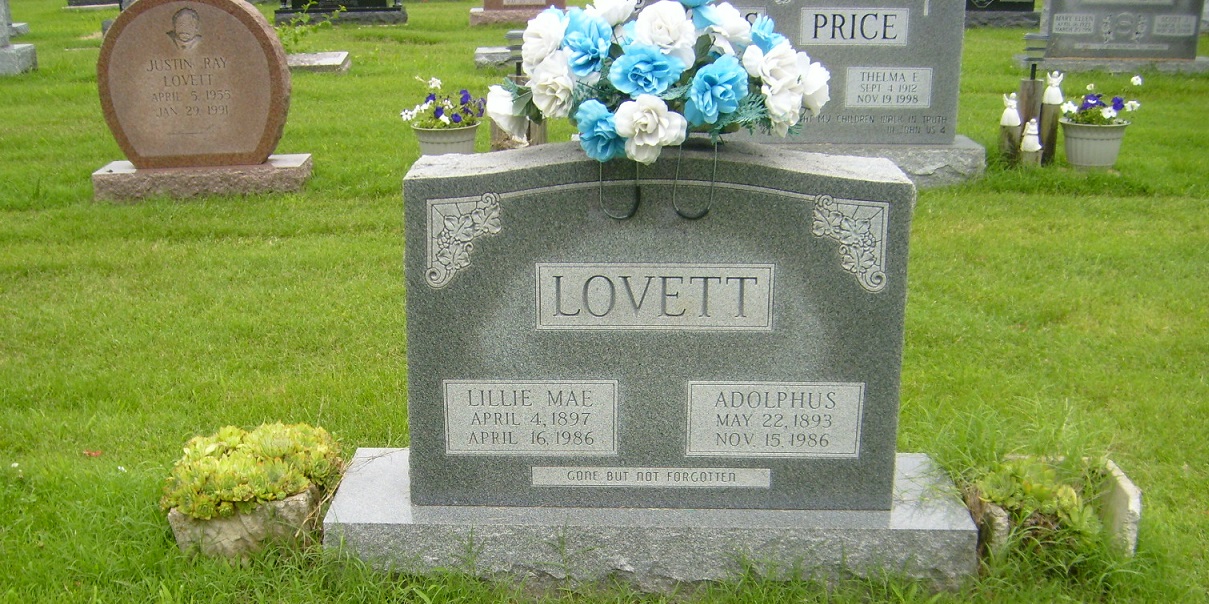
Lillie Mae was the first person, other than her mother, Ella remembered being in love with. She — Lillie Mae — chewed gum, had a gold front tooth, wore long, dark auburn wigs, bright and warm against her dark brown skin. She — Ella — buried her nose in Lillie Mae’s neck, held up high in her arms. Heard the muted snapping of the gum in Lillie Mae’s mouth. Lillie Mae could get Ella, a picky eater, to eat when no one else could. For Lillie Mae, Ella would open her jaws for the spoon.
Filed under for children, health, mysterious, notes, prose poetry, short stories
Former Monsanto Appointees to the FDA, USDA, and EPA


Monsanto Position | Individual | Federal Position |
|---|---|---|
Senior Vice President for Clinical Affairs at G.D. Searle and Co. (merged with Monsanto) | Michael A. Friedman | Acting Commissioner of the FDA |
Consultant to Searle’s Public Relation Firm (merged with Monsanto) | Arthur Hull Hayes | Previously FDA Commissioner |
Top Monsanto Scientist, oversaw approval of rBGH | Margaret Miller | Appointed Deputy Director of FDA, 1991 |
Worked on Monsanto-funded rBGH in connection with Cornell University | Suzanne Sechen | FDA Reviewer on Scientific Data |
Attorney for Monsanto for 7 years, previous Head of Monsanto Washington D.C. Office | Michael Taylor | Former FDA Deputy Commision for Policy. In 2010 appointed Senior Advisor to FDA Commissioner |
Former Monsanto Lawyer | Clarence Thomas | Appointed to U.S. Supreme Court in 1991 |
Served on Board of Directors at Calgene, a Monsanto Biotech Subsidiary | Anne Veneman | Appointed head of USDA in 2001 |
Retired Senior Vice President for Public Policy at Monsanto | Dr. Virginia Weldon | Previously, member of FDA’s Metabolism… |
View original post 31 more words
Filed under Uncategorized
from my folder: defense lawyer’s greed: my lawyer made me do it, by steven lubet

MY LAWYER MADE ME DO IT
Steven Lubet
05‑01‑2003
Sooner or later, nearly every lawyer has to confront some variant on the dilemma of zealous representation. How do we justify representing clients whose goals are morally questionable or even flatly offensive? The standard answer is that lawyers serve society by facilitating client autonomy, allowing individuals and corporations to make informed decisions about their legal rights. As Samuel Johnson explained nearly 250 years ago, “A lawyer is to do for his client all that his client might fairly do for himself.” Thus, corporate counsel (following each new accounting fraud) and public defenders (in almost every case) deliver the same ready reply to a relentlessly familiar question: How can you defend those people? Well, it isn’t always easy, but we are just doing our job.
Lawyers have come to expect skepticism, if not outright scorn, when representing, say, polluters or criminals. But until recently, it was a safe bet that no one had to be embarrassed about a client like the Catholic Archdiocese of Boston. In recent months, however, the litigation over clergy abuse has become so acrimonious that many parishioners are openly questioning the basic decency of the church’s legal strategy, going so far as to accuse the defense of inflicting new trauma on the abuse victims. Representatives of the archdiocese responded by blaming it all on their counsel ‑‑ “Our lawyers made us do it” ‑‑ as though the church has no control over the tactics employed in its name.
More than 500 civil cases have been filed against the Boston archdiocese, alleging sexual abuse by priests and a decades‑long cover‑up by the local hierarchy. Last December, amid charges of stonewalling and complicity, Cardinal Bernard Law was forced to resign, replaced temporarily by an apostolic administrator, Bishop Richard Lennon. From the beginning, Bishop Lennon promised a new tone of reconciliation and healing. He announced his intention to settle the outstanding litigation, and promised to make therapy available to every victim who comes forward.
In the meantime, however, the church continued to mount a forceful defense in court, engaging in a level of trench warfare that would make Johnnie Cochran proud. For example, defense lawyers filed a breathtaking motion to dismiss all 500 cases on First Amendment grounds, arguing that the civil authorities could not interfere with the “bishop‑priest relationship.” It was claimed that the constant reassignment of known child molesters was beyond the reach of the law, because the supervision of priests was exclusively an ecclesiastical matter.
Predictably, the motion was denied, but not before Bishop Lennon explained that his attorneys had insisted on the hardball tactic because “failure to do this could very well result in the insurance companies walking away from us, saying that we have not exercised all of our avenues of defense.”
It was barely noticed at the time, but Bishop Lennon had actually adopted the classic lawyer’s excuse. Absolving himself of any moral responsibility for the maneuver ‑‑ much less the cost and anxiety it imposed on the injured plaintiffs ‑‑ he invoked the nature of the legal process as justification for an outrageous ploy. Attorneys routinely seek to escape the consequences of their actions by deferring to their clients’ instructions, but this was an entirely new twist on an old theme. The apostolic administrator washed his hands of his own decision, blaming the insurers and lawyers instead.
It gets much worse.
In January 2003 the church’s defense team began serving deposition subpoenas on plaintiffs’ psychotherapists, including some who had actually been hired by the archdiocese itself to provide treatment to abuse survivors. From a legal perspective, of course, this was not particularly out of the ordinary. The psychotherapist privilege is waived when a plaintiff claims damages for emotional trauma.
From a moral perspective, however, it was a disaster. The church had encouraged victims to come forward and had even set up a special Office of Healing and Assistance to facilitate therapy, as part of Bishop Lennon’s announced preference for settlement over litigation. Then the archdiocese turned around and insisted on invading the patient‑therapist relationship in a way that many victims regarded as jeopardizing their recovery.
The reaction was furious. A coalition of psychologists and victims’ rights activists denounced the depositions as “revictimization” and “reabuse” of patients who were “already broken members” of the church’s flock. Without disputing the church’s legal right to take the depositions, the group complained that the tactic was inconsistent with Lennon’s professed commitment to justice and healing. The victims’ therapy, they said, would be “permanently harmed by the intrusion of the legal system.”
One prominent psychotherapist, who had previously been invited to address the United States Conference of Catholic Bishops, put it even more bluntly: “I think that this is very despicable and deceitful. To say [that] ‘the church loves you’ and ‘we want to help you’ and then to invade your treatment is really just wrong. It may be legally okay, but it’s wrong.”
In response, an archdiocesan spokeswoman declared that the depositions were lawful and necessary: “If the victims choose to sue … we feel that we’re obligated to defend ourselves.”
Maintaining that the archdiocese still supported therapy for survivors, she insisted that the support stood “separate and distinct from the litigation process.” And lest there be any mistake, another church official remarked, “It’s a very tragic set of circumstances, but when you get to the litigation stage, there are certain things lawyers insist on doing to protect their clients.”
Thus, the Boston archdiocese inverted the very premise of the attorney‑client relationship, relying on the purported demands of counsel to justify its own moral blundering. Lawyers naturally recommend strategies that enhance the likelihood of success in litigation. To those who see themselves as legal technicians, the human toll is irrelevant so long as the tactic is lawful. The autonomous client is entitled to zealous representation, and the attorney is helpless to refuse.
But that same stricture never applies to the clients themselves. There is no conception of litigation in which a client can decline to be an independent moral actor. In fact, the American Bar Association’s Model Rules of Professional Conduct specifically call upon lawyers to “defer to the client” in regard to other “persons who might be adversely affected” by litigation. While any good lawyer would urge the archdiocese to authorize the depositions of victims’ therapists, no lawyer could compel it. That is why we call it “advice of counsel.”
The basic purpose of taking a therapist’s deposition, after all, is to undermine the plaintiff’s monetary claim for emotional distress. A good transcript ‑‑ filled with artfully extracted admissions and potential impeachment ‑‑ becomes a useful weapon in negotiation or at trial. An early deposition in the midst of settlement talks is an unmistakably aggressive move, especially in the case of a vulnerable plaintiff who has suffered clergy abuse. (In several hundred cases, all discovery has been stayed for 90 days pursuant to a “stand‑down” order intended to facilitate settlement; in other cases, however, the contentious litigation continues unabated, as the archdiocese recently moved for the entry of a gag order against a lead attorney for plaintiffs.)
The leaders of the Boston archdiocese may opt for compromise and settlement, or they may choose to litigate to the bitter end. As an outsider, I would defend their legal right to make either choice. But no client has the moral right to raise the flag of reconciliation while instructing counsel to scorch the earth.
Steven Lubet is a professor of law at Northwestern University. His most recent book is “Nothing but the Truth: Why Trial Lawyers Don’t, Can’t and Shouldn’t Have to Tell the Whole Truth.” E‑mail: slubet@law.northwestern.edu.
Filed under health, legal writing, mysterious, notes, recommended reblogs
Monster to Monster, a poem

Monster to Monster
I did you a favor
to let you go, to push you away,
to release you. You were too conscious
to be my mate. I need someone
who doesn’t think so much,
who is impervious to my suffering.
Even with someone like that,
I feel I am too painful to be borne.
It is a bigger thing than both of us
being monsters. The words I write
are my gift to you, the only thing
I can possibly give now. I took
so much, I have to give something
back. Even if I am a monster,
do you think that means I don’t
suffer when contemplating
my monstrosity? You think because
I did not stay, I did not love.
I loved as much as any wounded
creature can. I loved as much
as a woman without a whole heart
can love. I loved you in my way,
the only way I have.
Filed under mysterious, poetry
The Healer and I, a prose poem

The Healer and I
Fay, the healer and I, the subject, both consult my body in its entirety. Fay directs me to examine the sensations within this body, the instrument of change I have placed upon her table. There is first the feeling of water dripping, ice melting, inside the body. The dripping is insistent, patient, slow. The water is flowing from the head to the feet, and from the feet down into the earth itself.
What is melting the ice? Light, and heat, from a source outside the body. The ice melts, bringing forgotten memories & feelings. A vision of mountaintops, sheathed in ice, but below the ice, green plants wait, alive, waiting to raise their heads, once the ice is gone. Luxuriant jungle foliage, frozen water holding it down. The ice melts, the water is freed — the water nourishes the plants growing on the mountainside. The water has been held in stasis, unable to feed the growth of the plants, but now it is melting.
The water is itself pure & clear, it does not care about having been frozen, it exists only in this moment, the moment of flow. The water is good, the force melting it is good, the plants are good, the mountain is good — there is no bad thing, only cycles of stasis & flux. We, Fay and I, are in a period of change.
The spine is specifically consulted, the spine feels stirrings it has not felt for some time. “Desolation is a file, and the endurance of darkness is preparation for great light.” (St. John of the Cross.) The frozen water has had its purpose — there can be no journey without rest. Soon, the ice will melt altogether. Yet the spine quivers with some unexamined tension, apart from the melting of the ice.
A sensation of another presence, another entity, squirming under the touch, ticklish, evading….
Filed under health, mysterious, prose poetry, science


 Kimberly Townsend Palmer