Category Archives: blood

Edie Sedgwick Discusses Her Early Years, a Monologue/Poem/Story/Lyric.

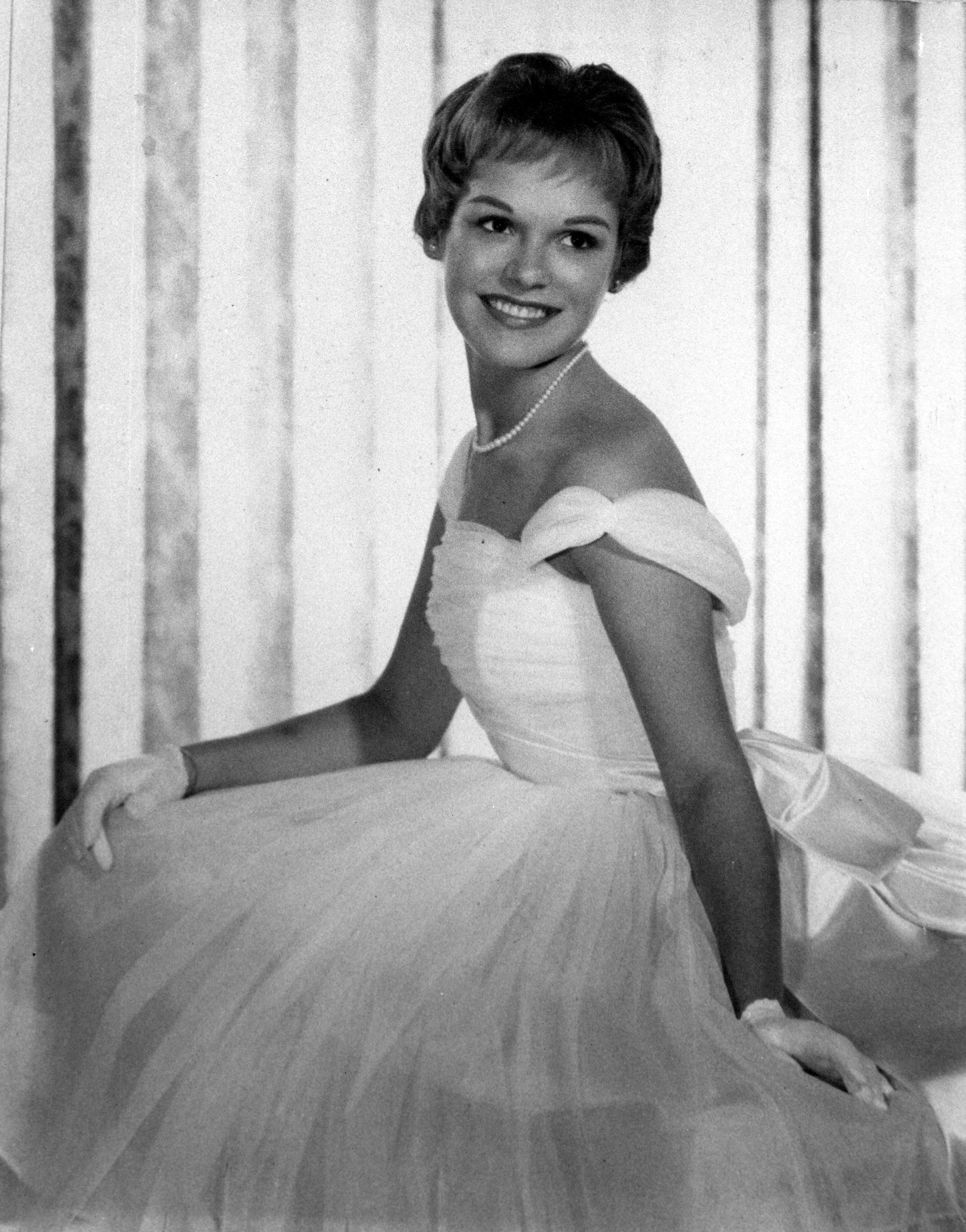
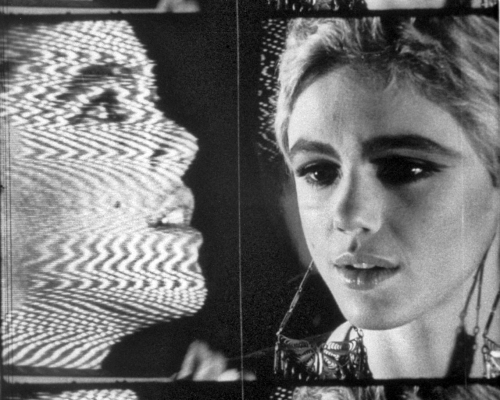
illustration edie sedgwickI felt I was Gloria, some angel living in her own hallucination of time. We were angels on LSD, on LPS. I was cheesecake, chocolate-dribbled, sexy & asexual, pop-rocks eye candy. Wrapped in a wealthy, yet tragic, past. DEEP BREATH. With my dreamy tones; those slow, hypnotic lyrics, my subliminal heavenly chorus of all that is female, the goddess inside us. Hypnotic, larger than life.

And so were the commercials. We really were all famous for about 15 minutes, but we couldn’t see that, all we could see was right now, right then. The atom bomb age, the Cold War, suicides, the Third World starving to death… children dropping like flies in Africa from famine. India, hit by an earthquake. Viet Nam cranking up, with war profits for the conglomerating corporations; divvying up the spoils of war. Kennedy, dead in Texas.

Be the girl all the bad boys want. DEEP BREATH. Sex turned into a Technicolor rock show, pure fantasy; turned into reality. People started living according to their own fantasies of what the world was like. The awakening grew harder; grew easer; grew harder; again & again.

Material wealth. An intoxicant. A drug. Addictive behavior. Spread it around. Moderation in everything. Reasonable assumptions? No? DEEP BREATH. Spell it the fuck out. Rules-based understanding. It takes me a long, long, long time to learn all the rules, all the techniques, all the subtleties. But when I figure something out, I have fucking figured the fuck out of it! DEEP BREATH.

I’m a dreamer; I’m a practical schemer. I’m a dreamer with a BMW; I’m a bad-ass schemer; I’m a waterlogged dreamer; I give up when there is trouble; I run like a rabbit. I dig in like a lion at bay.

Falling in love is wonderful. Once you fall in, take care never to fall out. Find something to keep your love alive… anything! Fasten on & fasten hard. In every way, so they say. Rumors fly. Determining actual facts is hard. All the shit I ever believed about myself came true. DEEP BREATH.

So, my body believes, at least. Next, to make my logical mind decipher the hieroglyphs. DEEP BREATH. Then my heart shall feel; then my soul shall live. DEEP BREATH.

It’s what Andy always used to say: artists are artists, no matter their profession or occupation or job or outward circumstances, and artists are the commodities of the very wealthy. DEEP BREATH. We’re all falling prey.

4 Comments

Filed under acceptance, addiction, adolescence, adult children of alcoholics, alcoholism, ancient history, anthem, anthropology, apologia, art, art history, baby, beauty, birth, blood, child abuse, childhood, compassion, courage, development, dreams, earth, enlightenment, eternal, eternity, eve, everything, evil, evolution, faith, fear, fiction, forgiveness, friendship, god, grief, hope, identity, justice, karma, kindness, life, logic, loss, love, manifesto, maturity, mortality, mysterious, passion, poetry, prose poetry, regret, relationships, sex, short stories, soul, spirit, spiritual, spirituality, transcendence, transitions, tribute, truth, united states of america, universe, war, woman, women, world, youth

Things We Never Said, a short story

img058 alcoholics anonymous big blue book

Things We Never Said, a short story

She was beautiful, as all mothers are to their children, but it was far more than that. Total strangers told me how beautiful my mother was. She was particularly fine-boned and delicate. Her skin was the softest I’ve known, her arms and hands the most stubborn, the most lethal.

Mom was an alcoholic, of course, and the most gruesomely stubborn person I’ve ever known. She went past simple denial and created her own alternative universe. Once, some quack psychiatrist she was seeing told her she wasn’t a “true” alcoholic — that she only drank out of boredom. She clung to that unfortunate phrase of absolution, repeating it like a robot in a variety of situations, until the day she died at 44 from alcoholic pancreatitis.

The only way we ever got her into rehab was when we threatened to call the police about obtaining drugs by false pretenses. She’d call the drugstore and tell them it was Dr. So-and-so’s office, would they please fill a prescription for such-and-such, three refills, please.

She got stiff all over when she drank, not like a normal drinker who gets loose. Stiff, and with a duck-legged walk that made my flesh crawl. I can’t tell you how many times I just let her lay there on the floor where she’d stumbled in a drunken stupor. I couldn’t bring myself to touch her.

If only Mom could have been more like Charity Hope Valentine, the taxi dancer in “Sweet Charity” who, after being pinched, pawed at, fondled, ridiculed, robbed, tattooed, thrown from a bridge, trapped in an elevator, and deserted at the altar, rather meekly accepts the cheery and somehow redeeming gift of a single daisy from a group of 60s flower children, pulling herself out of her misery yet again, and living “hopefully” ever after.

My mother and I both said “I love you,” a lot, and to no avail. Neither of us believed in love. We believed only in self-preservation. Trust was unknown. I have never learned the reasons for staying with another. All I can think of, now that I’m married, is what I’m missing, giving up for the other. How short life is, and how unhappy.

I took a developmental psychology course once, while my mother was still alive. The teacher explained that no child ever actually dreams of killing the mother. Infantile rage exists, yes, murderous anger exists, yes, but the true desire to kill can never be resident in the child’s subconscious. “The instinct for preservation is too great,” she said.

When I told her, later and in private, how I’d dreamed that very act, how in my dreams I’d taken the great butcher knife out of the kitchen drawer and stabbed it viciously and repeatedly into my mother’s fine and delicately boned chest, she shook her head skeptically.

“You didn’t really dream that,” she insisted. “You only think you did.” I didn’t argue. I was still too afraid it might happen in reality to insist that it had happened in dreams.

She was never a very good mother. I was never a very good daughter. After she died, I went to confess my guilt over my record as a daughter once, to an Episcopal priest. “I let my mother down,” I told him.

“No, you didn’t,” he insisted. “You were the child. You had the right to go off and live your own life.” I was angry at him, and never went back.

I still feel guilty about the first time I knew I’d hurt her feelings. She made me a bunny rabbit salad – a scoop of cottage cheese for the bunny’s face, cut up vegetables for the bunny’s ears, eyes, nose, and whiskers. It was adorable. But I hated cottage cheese, and salad. I was four years old. “I don’t like cottage cheese,” I told her.

“Just try it,” she said.

“No.” I refused over and over again. Finally, she ran out of the kitchen, to the bathroom, and I knew she was crying. I sat in the kitchen, staring at the rabbit, not eating it. I didn’t follow her, I didn’t apologize, and I sat there until someone, probably my grandmother, covered the plate with a piece of plastic wrap and put it in the refrigerator. I knew I was never going to eat that bunny rabbit salad.

I mailed the invitations to my own daughter’s birthday party today. She’ll be four in sixteen days. Oddly enough, all I could think of as I wrote out the cards was how much my own mother would have enjoyed seeing my child, her first grandchild. I know exactly what my mother’s face would look like if she were at the party — lovely, tremulous, inevitably a little weepy. I also know half of my pleasure would come from seeing the tenderness in my mother’s wide brown eyes as together we would watch my little Katie blow out all her candles.


3 Comments

Filed under addiction, alcoholism, blood, child abuse, child neglect, childhood, children of alcoholics, compassion, daughters, death, development, fiction, forgiveness, girls, hope, life, logic, love, mama, matricide, mea culpa, mortality, mother, mothers, mourning, murder, parenting, personal responsibility, regret, relationships, short stories, soul, spirit, truth, woman, women, youth

hearts

When our heart breaks, it opens like an eggshell, and if we let it emerge, out comes a bigger, stronger, more forgiving heart… we awaken to Spirit, and understand that love is the only reality.  The rest is illusion.  Only love matters.

2 Comments

Filed under beauty, blood, compassion, development, enlightenment, eternal, eternity, faith, forgiveness, god, good, health, heart, hope, humanity, karma, kindness, life, logic, love, mysterious, nature, peace, personal responsibility, relationships, soul, spirit, spiritual, truth, Uncategorized, warmth, world

Summer Evening, Beaumont, a poem

illustration murder in beaumont

Summer Evening, Beaumont, a poem


I was not there. I am only an observer.

The four-year old on his tricycle is

dressed for the heat in loose shorts

and nothing else. His hair appears


disarrayed as he stares at the ground.

The back of his bare skull is as finely

carved as a newborn’s, the delicate

shadows of his shoulder bones ask for


touch. The clumsy chalk lines on the

pavement are from a murder and he

knows it — the blood came out last

night as the torpid sun was going down.


This boy has to make stories up in

his head, but the shy universe he

creates is a notion he’ll never share.

I was not there. I am only an observer.


The dead man was 300 pounds and didn’t

talk much, as he, too, was waiting for a

miracle. Gang members used five or six

bullets, then ran away without taking his


wallet, the item they wanted most of all.

I was not there. I am only an observer.

Hours earlier, the victim had left his

rented home in all-white Vidor; he told


how the folks there threatened to hang him,

he told how lonely it was to wake up every

day and remember where he was. He wasn’t

afraid, he said, just tired of fighting.


2 Comments

Filed under anger, blood, compassion, criminal, criminal behavior, criminals, death, evil, funeral, history, ignorance, karma, mortality, murder, poetry

Have You Ever Met the Love of Your Life?, a short story

illustration have you ever met the love of your life

Have You Ever Met the Love of Your Life?, a short story

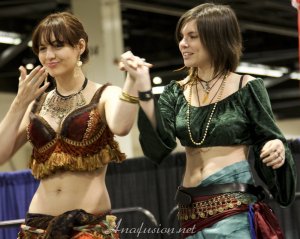
Nasreen, Marion’s dance teacher, was short, dark and wide. She wore black leotards under her frothy, voluminous gold-threaded saris, and glowing silver rings on her largest and smallest toes, which were connected to ankle bracelets by delicate jeweled chains. When she moved, and the big belt of coins around her hips started to sing, Marion often thought of a curtain of water emerging from an alabaster frog’s curving mouth. Nasreen’s lips and toenails were always painted fiery orange, and the air near her smelled of cardamom, nutmeg, and cloves. Nasreen had been famous in her youth — she treated all her students with exaggerated courtesy but for some reason, took a special interest in Marion.

From the start, Eleanor, Marion’s sister, thought Marion was crazy, and the whole Oriental-dance notion (she couldn’t bring herself to say the word “belly” out loud) ridiculous. “Why on earth do you want to get up on stage and wiggle back and forth like a cat in heat?” she had asked.

“I’ve always thought it looked so graceful,” said Marion. “It sort of mesmerizes you, it’s so soothing to watch.”

“Soothing? Graceful?” Eleanor rolled her eyes and tossed her head. Her neat French twist bobbled, and a wisp of hair fell to tickle her cheek. She shuddered and tucked it behind her ear. “Grotesque is more like it. I’ve always thought those women looked like they were trying to eliminate peach pits from their digestive tract.”

The two sisters lived together — they had always lived together — in an apartment across the street from the house they’d grown up in, a gaunt, three-story Victorian. After Mother died, as soon as could be considered decent, they had sold the big place and gotten rid of the ponderous mahogany furniture. They kept only Eleanor’s player piano, some threadbare Persian rugs, and their mother’s elderly miniature pinscher. Marion filled the apartment with pickled-pine French country and delicate ruffled draperies in red toile.

Soft-hearted Marion said the rosary thrice daily and didn’t care much if her clothes matched; Eleanor, the younger, was a late-blooming atheist, but knew how to dress. Eleanor had been engaged once years ago but they had never managed to decide on a wedding date — the hopeful young man had insisted she keep the ring anyway, a flawless one-carat diamond set in platinum. She looked at it every night, sitting in her jewelry box, but never wore it.

***

Marion’s first formal belly-dancing costume was to be hand-tailored by her teacher Nasreen’s younger brother, Ahmet. He was known all over the world belly-dancing community for his brilliant costume designs; the only reason she was able to afford him at all was Nasreen’s incessant wheedling on her behalf — as one of his sister’s most deserving pupils, Ahmet finally agreed to let Marion have the outfit at cost.

“I see you in red,” said Nasreen.

“I was thinking of pink. Maybe powder blue?” said Marion.

“Red, it must be red,” said Nasreen. “Ahmet, what do you suggest?”

He leaned back, folded his arms across his chest, and squinted first at his feet, then at Marion, then at the stacked bolts of silk gauze rising to the ceiling, and then at his sister. “Yes, red for the trousers and the outer sari,” he said with a faint smile. “And the front of the bustier heavily sewn with pierced and gilded centimes.”

“Perfect!” said Nasreen, and she and Ahmet gave each other conspiratorial smiles. “Remember the one you made for me so many years ago?” she asked.

“Of course!” said Ahmet. “Now get up on the stool. I need to get your measurements,” he said to Marion, his smooth, warm fingertips galvanizing her arm as he prodded her into compliance with the tape measure.

When Marion described Ahmet’s fitting and design process, Eleanor was incredulous. “You’re going to wear red see-through pants and a bra made of nothing but gold spangles and call yourself Ayita?” she asked.

“It’s my stage name,” said Marion. “It means dancer.”

“Well, isn’t that cute!” said Eleanor, slapping the kitchen table with a rolled-up newspaper she’d been using to pursue a small green fly. “I suppose next you’ll be getting your nose pierced and wearing a veil.”

“Good Lord, no,” said Marion.

“I hope you won’t ever expect me to come see you make an idiot out of yourself,” said Eleanor.

“No way,” said Marion. “You’d make me a nervous wreck. I’d never be able to concentrate on performing.”

“Ah, yes — the great artiste needs her concentration! What a load of manure!” said Eleanor.

“I just want to have some fun. I need a change.” asked Marion. “Why are you making such a big deal?”

“Because I think a woman your age parading around dressed like a harem girl is absurd,” said Eleanor. “Because every Arab I’ve ever met treated women like second-class citizens. Because I know you’re doing this just to irritate me. Hobby, my eye. Why couldn’t it have been needlepoint, or gardening?” Eleanor glared, but Marion just shrugged and continued eating her toast.

Marion’s finished dance outfit was a huge success. As a precautionary measure, she danced privately in Ahmet’s workroom for Nasreen. Nasreen stood with her arms folded across her chest. As the music started and Marion began to dance, Nasreen’s eyes narrowed and her lips grew thin. She tilted her head and stared. Marion felt awkward, but after the first few seconds, the music and soothing movements overwhelmed everything else. The glittering red costume transformed Marion; she lost herself to something bigger, her hands were two white birds flying, twirling, graceful on the fluid stalks of her arms. Her smile was steady, effortless. The glittery silk billowed around her legs like cool wind. For the first time, her body moved on its own, strong and agile. “That’s it, you’re ready,” said Nasreen.

“For what?” asked Marion, wiping her damp forehead with a jingly forearm.

“A trip. To Paris. A month from Saturday. I’m putting an international dance exhibition together. I want you to go with me, to dance.”

Marion protested. “I couldn’t. I’m not that good.”

“Yes, I’m afraid you are.” Nasreen pulled a passport application out of her cavernous black purse. She shook Marion’s shoulder. “Why did you want to learn to dance in the first place? What are you waiting for?”

            ***

Eleanor wouldn’t let Marion travel to Paris with only Nasreen and Ahmet for company. Eleanor put her foot down; Marion hadn’t been able to say “no” loud enough. It was Marion’s first overseas journey: she’d underestimated jet lag. She awoke abruptly at 2 a.m., trembling through her arms and legs as if on amphetamines. Eleanor – she’d been to Ireland and Spain, she knew better, she’d taken four different pills to zonk herself out — was sound asleep, mouth open, a tiny puddle of saliva glistening on her pillow. Nasreen also slept, lying curled on her side, hands tucked under her chin, emitting the most genteel and melodious of snores. Marion didn’t want to turn on the lamp and produce chaos, there was enough of that within her; instead she went downstairs to seek light and order in the lobby.

The desk clerk on duty — a tall, thin Algerian graduate student — was very eager to demonstrate his grasp of English. His dissertation was going to be about the evolution of American street slang, curse words or something. He announced himself to be Muslim; this formality alarmed her briefly, but he seemed to possess abundant humor, lightness, reason. His name was Badr, which meant “full moon.” The image suited him. His smiling face was boyish, benign; his moustache highlighted the fact his skin was silken as a girl’s. Dark chestnut hair lay in soft curls against his cheeks. His clothes were rumpled and mismatched, like an absentminded schoolboy’s.

The small lounge area was arranged with delicate birch wood cafe tables and slippery turquoise-upholstered armchairs. She noticed Ahmet sitting over in the farthest dark corner, wearing a long yellow silk tunic over his rumpled jeans, pretending to read the newspaper. Marion raised her hand in greeting; Ahmet nodded. Badr served her mineral water and orange juice. She tried to read the French newspaper lying open in front of her, understanding only every third or fourth word. Every time Marion glanced over to see if Ahmet was still there, his eyes were upon her. He folded, inspected, and re-folded his own paper for several odd minutes, then picked up his drink and wandered over to the bar.

“May I sit here?” he asked, pointing to the stool next to her. He seemed embarrassed, or shy, or ill.

“Sure,” she said, shrugging.

“Can’t sleep?” he asked.

“Not a chance. They’re both sound asleep, though.” She adjusted herself on the stool, crossed her legs at the ankle, then at the knee, and then rested her elbows atop the bar. Her hands clung to each other like nervous gerbils.

***

“You’re jealous,” said Marion four hours later, when she finally got back to the room she shared with her sister and found Eleanor livid with rage. “For once I’m having a good time, and you just can’t stand it. It’s not my fault you’re so lonely.”

“I’m not lonely,” said Eleanor, glaring at Marion with laser beam eyes of death.

“Yes, you are,” said Marion. “We both are.” She thought then of the way Ahmet’s lips had tasted when she kissed him goodbye before opening the door to the brightly lit hallway. She thought of the way his hands felt, stroking the small of her back, running down her hips past the hipbones down to the upper thigh. She thought of the way he held her when he came, murmuring her name into her ear like a tiny puff of wind, carrying a sound she couldn’t quite recognize at first. Her name. The man knew how to say her name.

“Have you ever met the love of your life?” Marion asked Eleanor.

“Oh my god! You’re in la-la land,” said Eleanor.

“Have you ever met the love of your life?” Marion asked again.

Eleanor stared at her, her lips moving, but no sound coming forth. Her hand struck out quick as a venomous snake and slapped Marion’s forearm viciously, which hurt like the devil — but Marion was so amused she laughed, which only made Eleanor slap her arm again and again, harder and harder. The harder Eleanor slapped her, the harder Marion laughed. Suddenly Marion grabbed both Eleanor’s wrists and twisted them so hard Eleanor shrieked.

“Have you ever met the love of your life?” Marion whispered. A full minute ticked by in silence. Marion waited. She felt Eleanor’s arms relax and go limp.

“I’ve never even thought of asking that question,” said Eleanor.

When both sisters shocked themselves by starting to cry, they pulled each other close, each of them bear-hugging the other — grouchy/beatific, horrified/overjoyed — as though both their lives depended on it – which they suddenly realized was now, always had been, and would always be, the truth. Marion and Eleanor had finally let each other in, all the way in.

2 Comments

Filed under beauty, blood, compassion, daughters, eternity, girls, heart, karma, kindness, love, maturity, mourning, mysterious, paris, personal responsibility, regret, relationships, short stories, sisters, soul, spirit, travel, truth, universe, warmth

Blood Mother, a poem (sculpture in the Orsay Museum, Paris)

illustration blood mother
Blood Mother, a poem (sculpture in the Orsay Museum, Paris)

She is made of wood, a silken hardness that begs touching.
Should anyone reach, trail a fingertip across her flesh,
the man in straps would speak, his mumbled words rasping
through the stopped air, turning beating cells boorish,

piercing desire’s heart, killing a love so old, so pure,
it has no real name. Such is obvious from the way she stands,
lifting her heavy hair, each hand the careful cynosure
of being — she drapes the primal fiber like garlands,

letting it flow free only to capture the thickness of trees.
Her eyes are closed. Under abraded lids resides the look
everyone knows: pupils enlarged by pain; simple refugees
from knowledge received of the body, woman’s final textbook.

The belly asks first. It says come, reside here within me,
neither cold, nor afraid, nor desirous — twirl and dream
of nothing but this spare salt universe, wear only veins, silky
wisps of hair, discreet, pale limbs enfolded by soft cream.

Her feet nourish the ground, her head becomes the forest.
Walk where her shadow falls, seek the margin of her arms,
soothe your tired neck in mother’s lucid heat, hedonist
entity you have become, set in blind motion under charms

worked by no laboratory scientist in a trim white robe.
Rather, you emerged redly from a thousand other deaths,
one messy cauldron holding shapes; the patient, springy web
of chosen elements drawn together, joined by many faiths.

The breasts want, too. Child, they sing in unison, nourish your
body with our thin white blood — suckle, cradle the nipple deep
against the palate, pull the flow from a dozen small pores, gnaw
strong like a velveted vise, drink true until you swallow sleep.

The need to believe is more than skin. Need is the whole glossy
image on this lonely wall; what it means to be such a mechanism!
She never schemed for her fey power — nor does she expect mercy.
You exist, mere fragile accident, in perfect jeweled synchronism.

Not as simple as punishment, nor as complex as grace, her skills
for life reside at a place men cannot enter, no fault of their
own. They build instead the world, of brick, stone; shy stabiles
meant to appease longing, courageous memorials to light, to air.

2 Comments

Filed under art, art history, beauty, blood, compassion, earth, eternal, eternity, heart, love, man, mother, mothers, nature, orsay museum, paris, poetry, sculpture, soul, spirit, spiritual, warmth, woman, wood