Category Archives: daughters

The First Time I Met My Father, a very, very short story

illustration the first time i met my father

The First Time I Met My Father, a very, very short story.

The first time I saw him, I was not dazzled. He was too tall and wiry, and he had too much red hair, flying off his head like an unmown hayfield. His eyes were too chilly, a piercing blue that made me feel like an insect on a pin. He was brimful of himself, but at the same time tried to project a false humility. When he found out I was trying out for cheerleading, he tried to talk me out of it. He’d only met me for the first time and hadn’t even met my friends, but somehow he’d already found them incomplete, just because they weren’t political radicals. “Why do you want to be a cheerleader?” he asked, chewing on the straw of his soda while he squinted.

“Because it’s fun,” I said. I shook my head, throwing my bangs back out of my eyes to glare at him. “Because it’s good exercise.”

“Do you know that the players will feel like it’s their right to sleep with you?” he asked.

“I’m not sleeping with anybody,” I said.

“I hope not.”

“You think anybody’s going to be able to talk me into something I don’t want to do?”

“Maybe.”

The arrogance he displayed made me want to slap him, punch him, kick him, or at least knock a couple teeth out.

3 Comments

Filed under absent father, daughters, family, fathers, fiction

Living On The Moon, a poem

illustration living on the moon

Living On The Moon, a poem

I remember all she had, stockpiled
in a child’s Easter basket.  Necklaces
of ivory, turquoise and amber beads —
hopelessly broken and tangled.  Cheap

metal pins, plastic bracelets, a dozen
stilled watches.  Dried-out jars
of skin cream, mangled greeting cards,
portraits of her sisters.  Often,

I allowed her to caress my face with
her trembling, soiled hands.  On the pillow,
my head next to hers, pretending
I was a small child, and she my beloved

mother.  Afterward, I scrubbed myself pink
with harsh soap.  In a moment captured
years ago, Brandy, her tiny poodle,
dances on his hind legs, his pink toenails

scrabbling against her tanned,
scrawny calves, a rhinestone collar
tight around his limber ashen neck.
She tempts him to please her with a bit

of bacon — herself very plump around
the middle, silver hair teased and
sprayed, a perfect bouffant.  You
would never guess then she was fated

to end up living on the surface of the moon,
by herself, without shame, without desire.
I must restring the beads, drape them over
a mirror, say a few words to her picture.

She will appear in my dreams nightly, dancing
with a small white dog, twirling her brittle
bones around and around until they catch fire.
She will sparkle like cut glass; gulping for air.

5 Comments

Filed under compassion, daughters, poetry

Things We Never Said, a short story

img058 alcoholics anonymous big blue book

Things We Never Said, a short story

She was beautiful, as all mothers are to their children, but it was far more than that. Total strangers told me how beautiful my mother was. She was particularly fine-boned and delicate. Her skin was the softest I’ve known, her arms and hands the most stubborn, the most lethal.

Mom was an alcoholic, of course, and the most gruesomely stubborn person I’ve ever known. She went past simple denial and created her own alternative universe. Once, some quack psychiatrist she was seeing told her she wasn’t a “true” alcoholic — that she only drank out of boredom. She clung to that unfortunate phrase of absolution, repeating it like a robot in a variety of situations, until the day she died at 44 from alcoholic pancreatitis.

The only way we ever got her into rehab was when we threatened to call the police about obtaining drugs by false pretenses. She’d call the drugstore and tell them it was Dr. So-and-so’s office, would they please fill a prescription for such-and-such, three refills, please.

She got stiff all over when she drank, not like a normal drinker who gets loose. Stiff, and with a duck-legged walk that made my flesh crawl. I can’t tell you how many times I just let her lay there on the floor where she’d stumbled in a drunken stupor. I couldn’t bring myself to touch her.

If only Mom could have been more like Charity Hope Valentine, the taxi dancer in “Sweet Charity” who, after being pinched, pawed at, fondled, ridiculed, robbed, tattooed, thrown from a bridge, trapped in an elevator, and deserted at the altar, rather meekly accepts the cheery and somehow redeeming gift of a single daisy from a group of 60s flower children, pulling herself out of her misery yet again, and living “hopefully” ever after.

My mother and I both said “I love you,” a lot, and to no avail. Neither of us believed in love. We believed only in self-preservation. Trust was unknown. I have never learned the reasons for staying with another. All I can think of, now that I’m married, is what I’m missing, giving up for the other. How short life is, and how unhappy.

I took a developmental psychology course once, while my mother was still alive. The teacher explained that no child ever actually dreams of killing the mother. Infantile rage exists, yes, murderous anger exists, yes, but the true desire to kill can never be resident in the child’s subconscious. “The instinct for preservation is too great,” she said.

When I told her, later and in private, how I’d dreamed that very act, how in my dreams I’d taken the great butcher knife out of the kitchen drawer and stabbed it viciously and repeatedly into my mother’s fine and delicately boned chest, she shook her head skeptically.

“You didn’t really dream that,” she insisted. “You only think you did.” I didn’t argue. I was still too afraid it might happen in reality to insist that it had happened in dreams.

She was never a very good mother. I was never a very good daughter. After she died, I went to confess my guilt over my record as a daughter once, to an Episcopal priest. “I let my mother down,” I told him.

“No, you didn’t,” he insisted. “You were the child. You had the right to go off and live your own life.” I was angry at him, and never went back.

I still feel guilty about the first time I knew I’d hurt her feelings. She made me a bunny rabbit salad – a scoop of cottage cheese for the bunny’s face, cut up vegetables for the bunny’s ears, eyes, nose, and whiskers. It was adorable. But I hated cottage cheese, and salad. I was four years old. “I don’t like cottage cheese,” I told her.

“Just try it,” she said.

“No.” I refused over and over again. Finally, she ran out of the kitchen, to the bathroom, and I knew she was crying. I sat in the kitchen, staring at the rabbit, not eating it. I didn’t follow her, I didn’t apologize, and I sat there until someone, probably my grandmother, covered the plate with a piece of plastic wrap and put it in the refrigerator. I knew I was never going to eat that bunny rabbit salad.

I mailed the invitations to my own daughter’s birthday party today. She’ll be four in sixteen days. Oddly enough, all I could think of as I wrote out the cards was how much my own mother would have enjoyed seeing my child, her first grandchild. I know exactly what my mother’s face would look like if she were at the party — lovely, tremulous, inevitably a little weepy. I also know half of my pleasure would come from seeing the tenderness in my mother’s wide brown eyes as together we would watch my little Katie blow out all her candles.


3 Comments

Filed under addiction, alcoholism, blood, child abuse, child neglect, childhood, children of alcoholics, compassion, daughters, death, development, fiction, forgiveness, girls, hope, life, logic, love, mama, matricide, mea culpa, mortality, mother, mothers, mourning, murder, parenting, personal responsibility, regret, relationships, short stories, soul, spirit, truth, woman, women, youth

Savior, a short story

illustration savior

Savior, a short story

The young man seemed so out-of-place in her mother’s living room. Maria stood in the doorway with her mother’s groceries, her purse on her shoulder, key ring dangling off one numb pinkie, clutching the heaviest bag propped on her hip, the bag that contained her mother’s supply of Diet Coke. Her mother and this man were sitting together on a Victorian loveseat on loan from Maria’s antique shop, their knees almost touching, the man’s arm draped across the ornate wooden back, his fingers curled behind her mother’s left shoulder. Her mother had a photo album spread out, one leaf resting on her lap, the other resting on his. Maria could see herself, at two, nude in the tub. Christ, she thought, what’s she showing him those for?

The young man leaped up after a few moments of uncomfortable silence, running his hand over his hair and smiling. Her mother folded the album closed, holding out her arm, and he helped her up, a gesture Maria herself had never mastered, helping old people up out of their seats. She tried too hard, using the wrong position and too much lift, until their sharp old elbows jutted out at alarming angles but their behinds hadn’t lifted an inch.

He had a medium build, wavy blonde hair, a deep tan — he was almost, but not quite, handsome. His eyes were too close together and his nose too long: as Maria met his direct gaze, she felt uneasy at his obvious affection for her mother, the implication of knowledge which came from his confident manner. He looked as though he was already sure he knew the older woman’s mind; already sure she must be lonely.

“I’d like to introduce you to my daughter, Maria,” her mother said. “Maria, this is David. He found my wallet over at the library and was kind enough to track me down. I couldn’t believe it when he called. I didn’t even know it was missing yet.”

“That is lucky,” Maria said. “Really lucky,” she continued, smiling in her mother’s direction, one eyebrow arched, whereupon her mother shook her head once, violently, and her daughter’s unspoken reprimand was expertly dismissed.

“Oh, it wasn’t luck,” said David, the sound of his voice causing the small hairs at the back of Maria’s neck to rise. “Nothing’s a matter of luck. Life is all planned for us, down to the last detail.” He nodded, smiling at Maria, his arms hanging relaxed at his sides, and the suspicion came to Maria that he was crazy. Crazy but safe, one of the harmless ones, the kind that made her want to go a little crazy too because they seemed so sure of themselves.

Most of Maria’s son Richard’s friends were the same type, that’s how she knew. Richard — she never thought of him as “Kurma-devi-dasi,” although she respected his desires and addressed him that way — was crazy but harmless too, although she knew she couldn’t see him as clearly in that way as she could a stranger. To this day she was able to discern the fuzzy cartoon of his infant features on his serene face when he smiled at her — the memory of his toothless gums clamped like a rhythmic vise on her breast would come to her, looking at his shaved head and his orange cotton robes as he chanted over his prayer beads, and she would be filled with a sorrowful rage that made her chest shrink into itself.

Not his grandmother, though — she had sat with her grandson over at the temple for hours when he first became a devotee, sitting in a rocking chair next to him as he said his prayers in front of the little richly clothed doll of Krishna. She told Maria it made her feel closer to her own idea of God just being in a place like that. In theory, Maria agreed, but the issue wasn’t whether the temple was a nice place to spend an afternoon, the issue was whether it was a good way for Richard to spend the rest of his life — sewing holy Hindu god and goddess doll clothes on an old black Singer?

“I don’t know about a plan,” Maria replied. “I’m lucky if I know where I am, half the time. If it’s Wednesday, this must be my mom’s apartment — you know?”

He said nothing at first, not seeming offended, not defensive, just staring at her with eyes so full of a giddy, knowing light — his face loomed toward her, and tension rolled through her stomach as his mouth moved into a drawn bow of compassion. It didn’t matter that he wasn’t handsome; he radiated an alarming level of charm. “Down to the last detail,” he repeated, arching his eyebrows and opening his eyes a bit wider, his pupils enlarging like a lover’s, and the sound of his voice vibrated within her ears, warm and solid like hands pressed against her temples.

“Then one of the details must be that I’ve got to put this bag down before my arms fall off,” she said, forcing a laugh. “Excuse me.” She turned away and walked up the hall to the kitchen. By the time she’d finished putting the groceries away — rearranging pantry and refrigerator shelves, purposely taking far longer than usual — he’d already gone. Great. Now their lives were stuck together like flood trash swirling down her mother’s raging river. David would be there for her mother — be there always and forever, overflowing with that sickening, confident love, and her mother would never be able to blame him, not for anything.

***

Maria was uncomfortable with the amount of time her mother was spending with David, but didn’t dare say too much. There was nothing overtly objectionable about him, other than his religious fervor — and how could she term that a fault? Her mother wouldn’t listen, anyway. Whenever Maria brought the subject up, her mother would groan, “Oh, boy, here we go again,” and she would frown, which consisted of one sharp, off-center line in the middle of her forehead. “You don’t have to like him, sweetie,” she’d say, “but I wish you did.”

Still, her mother’s interests seemed to be shifting. Odd books and papers came and went on the coffee table, crowding out the usual hodgepodge of half-finished crosswords and literary journals: treatises on wild herbs, population-density maps, computer programming manuals, military histories. Flipping through a ratty emergency-medicine textbook, Maria saw numerous large, yellow-highlighted portions and margin notes in both an unfamiliar, childish hand and her mother’s own neat back slant. “What is all this stuff?” she asked, holding the book out to her mother.

“I’m getting ready,” her mother said. She sat down opposite Maria and picked up a needlepoint pillow, arms crossed, mashing it to her tummy like a teddy bear.

“Ready for what?” asked Maria.

“The end of the world,” said her mother. “You know, Armageddon.”

***

At first, Maria’s son agreed with her concerns, not at all what she expected and a strangely intolerant position for him to take — considering his own lifestyle — his agreement only making her feel worse. They sat in the temple’s empty dining hall. “I’m with you, Mom,” Richard said. “The guy sounds like a real case.” He rubbed his hand over his prickly scalp and yawned, his left hand fumbling inside the peach-colored sack of meditation beads that hung from his neck. He scratched his nose, smearing the delicate yellow makeup lines drawn there that symbolically pointed up: up to God, up to heaven. “Have you checked Grandma’s bank accounts lately? He could be some kind of con artist.”

“No, no,” she said. “That’s not the kind of thing I’m worried about. He seems sincere enough. He’s no con artist. It’s just — your grandmother is really starting to believe what he says — how Armageddon is coming, all that stuff. You should see the books he’s got her reading.” Maria leaned on her elbows, cupping her chin. Richard closed his eyes for a moment, tilting his head to one side like a duck.

“Then again, I suppose the guy could be right on,” he said, his eyes still closed. He looked asleep, his skin pale and fragile. “Maybe that’s what bothers you. I’ve been trying to get through to you on that level for years. At least Grandma’s started thinking about her future.”

“Her future?” Maria asked, her voice louder than before, wanting to reach across the picnic table and shake him by his choke collar of tiny wooden beads. “At eighty-five? People that age should be beyond this kind of worry. It isn’t right. He’s getting her all stirred up — and for what? If all that biblical stuff happened, she’d never survive.”

“You’re just jealous,” he said. He opened his eyes and stared at her, his thick black lashes tangled and dusty-looking. His pupils were pinpricks inside the blotched hazel irises, and as he spoke he stood up too fast, banging his shins on the metal tubing of the cheap table. He grimaced and squatted for a moment, rubbing his leg. “You can’t stand it when someone believes in something you don’t. I thought you were worried this guy was some kind of sleazy fake, but now you’re telling me what freaks you out is that he’s the real thing. Make up your mind. You should be happy Grandma’s paying attention to what’s out there.” He turned and walked away, his robes ruffling out behind him, his rubber sandals slapping the bare wooden floor. “I’ve got devotions to attend to,” he said, not turning back to face her as he walked, his voice thin, echoing across the length of the long, barren room.

***

The earliest occasion Maria could remember wanting her mother’s opinion was in the seventh grade. Maria had just turned twelve, and had her first crush. She was stringy and awkward in those days, large-kneed and carrying a head of vigorous, curly hair she flattened down into a matted-looking cushion in desperation. Then the quiet boy started walking her home from the bus stop.

She remembered him still: pale blue eyes, so large and widely spaced that they gave him a somewhat doe-like expression. His jaw, however, was firm, angular, and thus saved his face from weakness. Warm hands lay against hers, trembling, stroking her fingers up and down in an hypnotic rhythm. “Do you want to go steady?” he’d asked her, unable to meet her eyes. That meant wearing a silver identification bracelet, his name engraved about her wrist for everyone to see; his property. She hoped his name was in block capitals, not that loopy script: it looked better.

“I don’t know,” she said, and went home to ask her mother’s opinion, a matter of form perhaps, but something she wanted; the camaraderie of womanhood revealed at last. This could be the common ground between them.

“Honey, I just don’t think going steady is a good idea at your age,” said her mother. They sat in the dining room, wallpapered with tiny brown pineapples. “You’re too young to get so deeply involved with a boy.”

“But lots of girls do it,” she said, knowing this was a flawed argument, but even as the shipwrecked are driven to drink seawater, her words carried a dreamlike hope.

“You asked for my opinion,” said her mother, “and I’ve given it to you. It’s up to you to make the decision. I’m not saying no, I’m just saying I wouldn’t if I were you.”

In the end, she told the boy no — and was informed that the going-steady offer had been withdrawn in the interim — and she realized by heeding her mother’s counsel she had been saved from a greater and more penetrating level of humiliation than she imagined even existed. But — that wasn’t the point. Maria knew her mother would never have said no to one of her own teenage boyfriends — that was a lie. Safe advice given as a — joke, as an experiment. Didn’t Maria have the right to be strong-willed? Didn’t she have the right to her own losses? She never stopped trying after that, but the drama was gone.

***

Then Maria found her mother in the bathtub. She entered the apartment, carrying her mother’s dry cleaning: a few sweaters, a wool suit, a pink blouse. She heard water running, a slight, far-off sound, as if from the next apartment. The bathroom door was closed. The only sound was a rolling and a swishing, as though a large fish reclining in the tub had shifted position. Alarmed, Maria opened the door. Her mother was sitting upright in the full tub, a small trickle of water dribbling from the faucet. The tub was full to overflowing. Her mother was wearing a purple shower cap embroidered with large seahorses.

“Go away,” she whispered, as Maria stood, confused. A bristling red pincushion sat on the edge of the tub, dangling a red cloth strawberry from a green cord into the water. The strawberry bobbed on the surface. In her mother’s hand was a large straight pin, on her wrist several thin scratches. She jabbed with the pearl-headed pin, her hands unsteady.

“What are you doing?” asked Maria, her voice shrill, terror coursing through her. “What in the hell are you doing?”

Her mother turned to her, her unfocused eyes shining and rolling up toward the ceiling as she spoke. “Trying to kill myself,” she said.

“With pins?” shrieked Maria. “Jesus, Mother!”

“I wanted to flush my head down the toilet,” her mother continued, “but it wouldn’t go down.”

***

On the third night of her mother’s emergency hospitalization, Maria dreamed she was sitting in her living room drinking tea with one of her college professors, a sloppy but verbally precise little man. In reality, she hadn’t liked him at first, but she had taken every course he taught because — unlike the majority of his students — she got A’s from him. She came to admire his sincere and stringent approach, forgiving him his greasy, untrimmed hair, his baggy, stained chinos and ancient, Filipino-style dress shirts.

And so, in the dream, her old professor, uncharacteristically neat, his hair washed and combed, his pants pressed, was explaining to her that he had theater tickets for tonight’s performance — would she like to join him for dinner and a show?

I’m sorry, she said, but I don’t think I can get a baby-sitter on such short notice. It’s already six o’clock.

He raised his eyebrows. I had no idea you were married with a child, he said. Well, that’s too bad, my dear. Perhaps we can arrange it some other time.

As he shuffled off down the sidewalk, Maria wanted to call after him: Wait… I don’t really have a husband… I don’t really have a child… it’s all a mistake. Come back. I want to go with you.

But she was silent, knowing it wouldn’t make any difference what she said. He was already too far away, and could not hear.

***

The next day, when Maria arrived at the hospital, her mother’s newest flowers were wilting in the heat. Her mother had turned the room’s thermostat up to 85 degrees and wore a sweater and cracked pink leather mules. Still, the new additions were beautiful: three dozen roses, white, yellow, and coral, stuffed into a too-small mayonnaise jar, the faded label turned to the wall. Maria stood in the doorway for a moment, holding a brown paper sack full of the day’s requested items — mostly cosmetics — looking at the bright splash of color. “Hi there,” she said to her mother, who sat hunched on the edge of her bed, flipping through a current TV Guide.

“Hi,” said her mother. “Is it cold out? You look chilly.”

“It’s cool, but the sun’s warm,” said Maria. “Who gave you these roses?” She leaned over to smell them, her nose brushing the petals.

“David,” said her mother. “He brought them by this morning on his way to work.” She squinted at Maria, her glasses speckled with bits of dust, so filthy Maria wondered if she could see anything at all. “He didn’t know I was here; he found out just this morning from my across-the-hall neighbor. He was taping a note to my front door.” She unrolled a package of breath mints and placed one on her tongue. “I thought you would have called him by now — it’s been three weeks, after all.”

“I didn’t think it was such a great idea for you to have a lot of visitors.”

“A lot?” Her mother raised her eyebrows, which were nearly invisible. She penciled them in most days, but today she’d left them defiantly natural. “Any, you mean. You’re the only one I’ve seen other than the doctor, until this morning.”

“What did he say about visitors?” Maria asked.

“It’s fine, as long as I feel up to it. They’re still fine-tuning the dosage on the blood thinner, other than that I could go home already.” She held out her arm, shoving the loose sweater back above the elbow. Small scabs dotted her forearm. “They’re sticking me every four hours, round the clock. They’ve got to balance it just right. So I won’t have another stroke but so I won’t bleed to death, either.”

She stared at Maria, her eyes shining. Her mother’s voice dropped low and fluid, almost a murmur; Maria remembered that voice from long-ago midnights, giving comfort to a distraught child. “I know you were scared when you found me all confused like that in the tub, sweetie.” Maria said nothing. Her mother raised her chin with a jerking nod, relapsed motherhood dropping away from her like a fragment of dry skin, her voice back to normal. “But really, I’m okay now. It was a very minor thing — you heard when the doctor told me I was one lucky lady.”

***

An hour later, on her way out, Maria saw David from across the hospital’s visitor parking lot as she stepped on the black mat that made the door swing open. He was dressed in jeans and a pink polo shirt, his hair still wet from the shower, combed flat across his head, just beginning to spring away in wisps where the blond curls regained tension as they dried. She stopped short, turning and walking back inside, toward the gift shop, where she stood in the farthest corner. She picked up a stuffed animal and pretended to scrutinize the price while she watched the door. When he passed, moving toward the elevators, she followed. He entered one and the doors closed. Maria waited and got the next one, her heart pounding.

She got off on her mother’s floor, going away from her mother’s room, back toward the nurse’s station and lounge on the north end. Settling in one of the low, soft chairs, she stared up at the wall-mounted television, the evening news in full swing, recounted events drifting over her, seeming important but incomprehensible, the words passing through the air like puffs of smoke. Muscles tense, palms clammy, she took out a pen and paper and began jotting notes of what she wanted to say.

She jumped, startled, as she heard David speak. She saw his back, visible from the doorway, over at the nurse’s station where he spoke to the charge nurse. “I think there’s something wrong with her call button,” he said. “She says she’s pressed it a bunch of times without hearing anything over the intercom.” The nurse, a thin, tired-looking woman wearing lavender scrubs, nodded.

“Okay, I’ll be there in a minute,” the nurse said.

David turned to leave, and then he saw Maria and stopped, his mouth forming an exaggerated O, his eyebrows lifting. Maria felt a clammy flush rise up over her neck, a dull enveloping embarrassment. He smiled like a placid baby, walking to her and holding his hand out. She clasped his hand for a moment, feeling the solid meat of it, the warmth and hardness of his callused palm. “You don’t know what to believe in,” he said, his voice calm and slow, “and that’s natural. It’s a process of evolution you’re going through. Think of your mother’s illness as the catalyst.” He opened his arms and bent at the waist, hugging her so hard she couldn’t inhale, then he removed himself and stood looking down at her, his head cocked, his blue eyes luminous and warm, a crinkly-eyed smile starting to show.

“You’re crazy,” she said, feeling her throat seize up as her heart beat shook her ribcage like a wild animal — she had difficulty speaking. She paused as her chest eased, then forged on. “A catalyst?” she repeated. “I know what to believe — I believe you’re causing all my mother’s problems. She doesn’t need your brand of stress right now. And I don’t need this kind of condescension. Telling me I’m OK. I don’t need you for that. You’re not any kind of expert.”

“No, I’m not,” he said, the smile gone from his mouth but his eyes still glowing with a trace of it like a madman’s. “And since when do you care about expert opinion?” He reached out and stroked her hair, saying her name in his gentle murmur, Maria, Maria, and she flashed — it’s finally happening to me, it’s finally here — a jolt of vertigo as if she’d been through all this before, a hundred, a thousand, no, ten thousand times…. “You don’t care about anyone’s opinion but your own,” he said.

Their lives were now joined – with force of will and love he’d plucked her up and tucked her into the golden cup of his heart as quickly and easily as he would rescue a fear-crazed puppy clinging to a torn-off tree limb, just before that puppy swirled away to her doom down a swift, swollen river. Maria wanted to run, to hide, to retrace her steps, but it was too late. David would be there for her — be there always and forever, surrounding her with this… curious compassion of his, and she would never be able to scare this one away, no matter what she tried.

3 Comments

Filed under compassion, daughters, death, development, eternal, faith, fiction, forgiveness, heart, hope, identity, karma, kindness, life, love, man, maturity, mother, mothers, mysterious, peace, personal responsibility, relationships, short stories, soul, spirit, woman

Inside A Red Heart, a short story

illustration inside a red heart

Inside A Red Heart, a short story

Ella’s life hadn’t always been like this. It was hurricane season, always the worst part of the year, but especially so this time. The cheap, post-divorce apartment Ella had moved to had flimsy sprayed-Styrofoam interior walls so thin she felt she could easily stick a pencil through them. The doors felt like balsa-wood, so hollow and weightless she couldn’t even slam them when she got mad, only sweep air currents through the frames. The rooms were carpeted wall-to-wall in a sticky celery-green shag which she could not bring herself to walk on barefoot. Hurricane preparations were meaningless in such a place, like diamond jewelry on a dying prostitute.

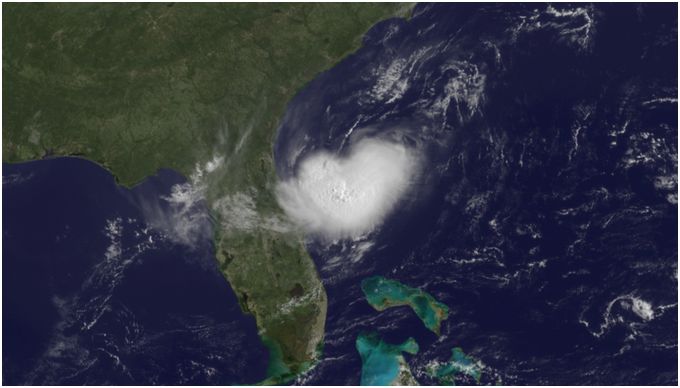
But today, Hurricane Naomi was 52 miles offshore, moving steadily along a stubborn, eerily direct path toward Ella’s apartment, when her father decided they’d better start getting ready, taping the windows. “They say this doesn’t help in the slightest,” she told him after finishing the first window, her arms already trembling and aching from reaching high over her head. She wanted to be an eagle, aloft without moving. “Even in a solidly built building,” she added spitefully.

“I don’t care what they say,” he said. “At least it’ll keep the broken glass from taking our eyes out.”

They finished taping over the second set of windows. She looked up at the sky; the brittle palm-fronds rattled and shook like frantic spiders. The bamboo rustled, probably full of rats. Tiny ants raced back and forth over the side of the house in some sort of military maneuver. Dropping hibiscus blossoms had stained the sidewalk red. A crushed bug was what captivated her attention. A sudden gust of cool air rushed over her neck, then after a moment everything stilled and the sun came out from behind the clouds. Against the dirty gray sky it looked abnormally bright.

“You look good in sleeveless tops,” her father said. “You should wear them more often.”

“Since when do you care how I look?” she asked.

“Is that how you usually take a compliment? No wonder you’re single. Forget I said anything,” he said. “Go inside and get the rest of the tape, please.”


Ella was mad about everything. Men especially, all the men she’d tried to get along with to no avail. Now, even strange men spitting on the sidewalk made her gag and retch. The phone rang — it was another man trying to sell her something. Listening to his voice on the machine, she decided she didn’t want any more goods or services, ever. She was fully capable of ignoring the outside world for weeks at a time. Finally, when her mailbox was stuffed so full nothing else would fit inside, she’d empty it and burn the contents.

After her divorce, she had refused to bring any of the old furniture from the house, not a stick. Granted, none of it was in such great shape, but she certainly couldn’t afford to buy new. Instead, she slept on a clammy air mattress for months, kept her clothes in cardboard boxes. Friends told her she was an idiot for not taking everything she could get from that tiresome lying hypocrite she’d married, but she just glared and shook her head, pressing her stubborn mouth against her teeth so hard her lips bleached white. Nobody knew how she managed to pay the rent or bring home groceries on what she made. Flying bullets couldn’t have been any more stressful than this, she thought.

There was a vague analogy between Ella and the rest of the world, that was all. She tried to understand men, but couldn’t quite manage it: they spoke, their lips moved, and sound issued forth, untranslatable. How was it they rose out of bed every morning so chipper? She was missing something they had. She navigated through her day like a ballerina dancing on broken glass.

When they’d finished taping the windows, her father poured a second cup of coffee for both of them. Breakfast consisted of coffee with plenty of cream. There was the long day to get through, then they were going fishing that night off the pier. They would stop at the bait shop for a bucket of shrimp and they would get ice cream cones — mint chocolate chip — and they would sit with their poles and wait for a nibble. Every now and then, without intending to, they’d sideswipe the truth.

He was visiting Ella for a week. He lived down in the Keys now, where he had always wanted to live; he loved to fish. Her mother had died three years ago, totally unexpected. No cancer for her, just a heart attack, plain and simple. Her parents had been happily married, but as soon as her mother died her father sold the house and went as far away from his past as he could get. Illness, for Ella, was something she would not allow time for, in that way she was exactly like her mother — though Ella wanted a good, solid tomb as a memorial when her time came to be one of the dead.

Her dog growled at her father as he moved his feet under the table. Ella’s crazy dog — he growled at everybody but he didn’t mean anything by it. He had long white whiskers and a moth-eaten coat.

“That damn dog,” her father said.

“I know, Pop,” she said.

“I don’t know why you put up with that,” he said.

“He’s harmless,” she said.

“I suppose he’s a good watchdog,” her father said.

“Not really,” she said. “He only growls when it’s someone he knows.”

“You mean he doesn’t growl at strangers?”

“No.” She laughed. Was he going to find a moral in this somewhere?

“Should I be flattered that he growls at me, then?”

“Sometimes he even growls at me.”

“I wouldn’t keep a dog like that.”


Since childhood, she’d loved to watch her father bait fishhooks. His long hands were careful and slow and the deliberateness of his touch delighted her. Not like her — she’d been falling over herself since puberty. Invariably she felt like a nuisance underfoot. She missed the neat quick grace of childhood. Whatever synthesis produced her from her mother’s and her father’s body, she couldn’t now imagine. Her father’s laughter was musical — her mother’s and her own like the braying of an ass. She secretly decided her mother had been cheating on him with someone else when she was conceived.

Until adolescence she’d been a precious little thing — then a hostile barrage of hormones turned her into somebody she didn’t even recognize: braces, knobby knees, confused skin, rebellious hair. To call her a girl was a misnomer of the highest magnitude. Something dark had entered the world along with her own blood the first time she got her period.

Once, in high school, her father had walked in her room without knocking and caught her masturbating; what a shame, he said, if you didn’t have so many pimples you might be able to get a boy to do that for you. His mind, like his body — like his heart — was angular; without softness; without love — he wouldn’t give her a second chance. The walls had zoomed in and out like they were breathing. She remembered the dress she wore, white with red and blue sailboats. Just like a ship being launched, only she kept running aground.

To this day, she wore only plain pearls, believing her skin too pasty to carry color. The only exotic thing about her was the color of her hair. Her hair was the color of rust; decaying iron. Growing up, her father never told her how pretty she was. But one night after a bad dream he took her back to her bed and rubbed her back.

Woken in the middle of the night like that, he was a different person, wordless and gentle. He’d held her so tight she couldn’t inhale. His silent, bulky warmth radiated through her and she wasn’t scared of anything. Everything in her room was painted either blue or green — how was painting any different than telling a story? He started rubbing her arm below the elbow; she was his. She wanted him to touch her underneath her nightgown but he didn’t. It made her feel awful to remember that now.


The TV was on with the volume turned down, and she was tracking Naomi on a grocery bag chart. She perched stiff on the couch, uncomfortable in her ragged cutoff shorts. Her father took a chair from the dining table and sat on it turned backwards, leaning toward her, his big perfect hands hanging over the chair’s back, his legs spread out like a cowboy’s. The dog growled from under the table.

“If you died right now,” he said, “you would go straight to Hell because you haven’t accepted Jesus Christ as your personal savior.” Pop loved his simple theories. He loved his cut-and-dried formulas. From the time her mother had died, her father had become born again and worried far too much about the condition of Ella’s immortal soul.

“How do you know?” she asked. “Isn’t God the only one who can judge a person?”

“It’s very simple,” he said. “Right now you’re a Nonbeliever. Nonbelievers go straight to Hell.”

“Says you,” she said.

“Says God,” he said.

“So according to you I could break every single one of the Ten Commandments, but as long as I accepted Jesus one second before I died, I wouldn’t go to Hell?”

“God’s grace,” he said. “His gift to us. Ask, and you shall be forgiven.”

Her father was telling her to ask for forgiveness! Selling all the gifts he’d ever given her and frittering the money away with nothing to show for it appealed to her. The flowers he sent for her birthday always wilted immediately, anyway.

“So God will forgive me for whatever I’ve done,” she said. “But will you?”

“First, you have to ask,” he said.


Hurricane Naomi wouldn’t arrive until tomorrow or the next day. Though at first Ella had looked forward to fishing off the pier, dusk arrived too soon; the coming darkness was like a funeral shroud. Her father drove his old rattletrap pickup truck towards the beach like it was a priceless antique. At the bait shop, they stood in line behind a girl, about 10 or 11, and her mother, also buying bait. The girl got into a silly argument with her mother about what they should buy, what sort of bait. “Shut up,” the girl said to her mother. Ella recoiled. Was there ever a place to be, truly, anonymous?

She remembered a time she’d told her own mother to shut up. Upon hearing, her father had slapped her across the face and broken her glasses. Her skull buzzed for a long time afterward, her jaw aching where the heel of his hand connected. She didn’t believe she’d been the same person at all back then.

She almost never cried in front of him, and especially not then, not about being slapped: she flat-out refused her tear ducts the indulgence. Nothing physical he did could get her crying — he had to use his voice, his drawling sarcasm, to knock her senseless enough for tears. She’d be so ashamed to cry in front of him like a big, blubbering idiot.

But then, getting her fishing pole ready over on the pier, a hook jabbed her finger. She’d been stabbed with hooks before; she didn’t remember it hurting so much. Was the air pressure from the coming hurricane making her stupid? She sucked blood out of the puncture. Her eyes started to sting, her throat to burn. She froze, her body paralyzed by embarrassment. She couldn’t help it, she started to cry, the convulsions shaking her.

“What’s the matter?” he asked. “Is your finger that bad? Let me see.”

“It’s not my finger,” she said, still in the grip of the horrible tears. He took her hand and held it close to his face, peering.

“Doesn’t look that deep,” he said.

“It’s not,” she said. Her nerves were strung out, yes, aptly put — as if her spine had been stretched, her entire body hanging off it in tiny sections which at any moment might start whirling away in terror.

She grabbed his shoulders and stood on tiptoe, leaning into him with all her weight. She kissed him full on the lips, pressing the whole length of her body against him the way she had when she was still too young to know any better, and for once he actually let her. She kissed him as though her life depended on being kissed back. And it did. And he did.


He had never told her she was pretty until after her mother died. Family tradition was for the parents to wait, remote icebergs, for warm currents of love to reach them from their children. She didn’t see the harm in that. The truth was, she had always wanted him as much as he wanted her. Tall and silvery-blond, his pool-water blue eyes fringed with gold lashes, he was still handsome for his age. He only smoked those awful cigars when he fished. Since her mother died, he hadn’t so much as looked at another woman, romantically speaking.

Even her ex-husband had been jealous of her father. He, her husband, was smaller than her father in every way measurable, emotionally as well as physically. Her ex-husband was such a small man. He had mewled incessantly about his boundaries, his boundaries — which didn’t keep him from stalking her and her post-marital lovers whenever his feelings were hurt. But if she read his journal, she was guilty of a great crime. What were boundaries, anyway? Even her ex-husband’s new wife was commiserating with Ella now about his smallness.

Too late, Ella had figured out she only got excited by what was forbidden, by a body’s unfamiliarity to her. Anybody like her who chose to marry was making a mistake. Once a thing became familiar, that took all the life out of her desire. She and her string of relative-stranger lovers ate Chinese takeout in bed, soy sauce dripping on their skin, which added another flavor to their mouth play. Fried rice, hot and greasy.

What neither Ella nor her father talked about that night on the fishing pier or any other night was how, way back when, she had left the back door unlocked one day and the baby, Ella’s little brother, had gotten into the backyard unsupervised and drowned in the canal. The water had seemed too shallow for anyone to die in. She was eleven — the next day she bled on her underpants for the first time. She wondered which was the bigger reason her father never looked at her the same way again.

Just now her father’s lips had tasted like his cigars, sour and sweet all at once, when she kissed him. Ella removed herself from his arms only after her skin against his grew slick with perspiration. The two of them finished up their bucket of shrimp after that, but they spoke little and caught nothing worth keeping. Back at her apartment with its ridiculous taped windows, her father began packing his small suitcase. The bellicose dog lay on the armchair across the room, for once not growling. “Damn hurricane,” he said. “Maybe I can get all the way home before they evacuate the island.”

“Are you crazy?” she asked. “You’ll have to leave again as soon as you get there.”

“I don’t think I can stay here tonight,” he said.

“You’re blaming me, aren’t you?” she asked. “Like you always do.”

“It’s not that, Ella,” he answered. “It’s got nothing to do with that.”

She touched his arm, and he flinched, then caught himself. “It was all my fault,” she said.

“No, it wasn’t,” he said. “If you’re asking, I’m answering.” He looked up from his suitcase, and for the first time all day his eyes looked old and tired. “Please don’t ask me to stay,” he said.


At midnight she sat awake, wondering what would happen next. Nothing good, she imagined. She didn’t know how she’d become such a curiosity. She was looking for what had gone wrong with a vengeance. Rooting through out-of-date phone books, through cards and letters she’d kept packed away since college. Excavating her past life, like an archeologist, was a great haven of sanity; as soon as she opened the first box, she felt safe from the present, it was suspended from happening, nothing more would ever happen to her until she straightened out all the previous mistakes. A pale blue chiffon scarf of her mother’s was folded underneath a stack of them. She was perennially accused of wanting to rehash the past. But it hadn’t been properly hashed over the first time, couldn’t any of these dolts see that?

A spider laid in the bottom of the box, its legs curled tightly. Though clearly dead, she worried lest it should somehow jump on her. A handmade Valentine’s Day card stuck out of the jumble like a sore thumb. The card was unsigned, but she recognized the handwriting. It was hers. She’d drawn a picture of a naked man inside a red heart. Her first boyfriend, a creative type, had insisted they make each other cards. How had she ended up with all this stuff? Ella flung herself back onto the bed so hard her teeth snapped together and she bit her tongue. Her bones ached. Her desire was killing her; she didn’t even know what it was she desired. She had to get out of the house for a bit, hurricane or no hurricane, or she’d go nuts.

She dragged her quivering dog — not so crazy after all — out to the car and drove over to her parent’s old house through Naomi’s outer fringes. Thunder rolled above her along with heavy sheets of rain like pronouncements from God. The dog cowered in her lap. She turned the car engine off and got out, the dog in her arms, hiding his head in her armpit. She stood searching the horizon, letting the rain wash over her face. It was the same whenever she made love to a man, she made sure to shower afterward.

Behind the house she’d grown up in, behind the canal her baby brother had drowned in, sat the northern edge of the Everglades. A flat, wet landscape — one she never tired looking at. Dun-colored saw grass, rippling under the steady currents of wind, stretched as far as she could see. Her mother’s chiffon scarf, monogrammed with her maiden initials, was her new good-luck charm. There was, as usual, no witness to her actions.

At least I’m brave enough to come back here, she thought. Her hair blew into her eyes and she held the dog tighter. She was startled when from behind her headlights moved over the undulating saw grass; she turned to see who it was. Squinting against the light, she saw her father’s tall figure get out and stand next to the car, calling and waving — she couldn’t hear much of what he was saying over the wind but she could tell he was crying. Like a flag on a pole, her mother’s scarf whipped in the wind around her neck, causing her to lift her chin and stand taller and straighter than she had for a long time. She could feel it. Her life was going to change.

5 Comments

Filed under childhood, compassion, daughters, death, development, divorce, ella, eternal, father, fathers, fiction, forgiveness, girls, health, heart, hope, justice, karma, kindness, life, love, marriage, men, mortality, mourning, mysterious, personal responsibility, regret, relationships, short stories, soul, spirit, women

Have You Ever Met the Love of Your Life?, a short story

illustration have you ever met the love of your life

Have You Ever Met the Love of Your Life?, a short story

Nasreen, Marion’s dance teacher, was short, dark and wide. She wore black leotards under her frothy, voluminous gold-threaded saris, and glowing silver rings on her largest and smallest toes, which were connected to ankle bracelets by delicate jeweled chains. When she moved, and the big belt of coins around her hips started to sing, Marion often thought of a curtain of water emerging from an alabaster frog’s curving mouth. Nasreen’s lips and toenails were always painted fiery orange, and the air near her smelled of cardamom, nutmeg, and cloves. Nasreen had been famous in her youth — she treated all her students with exaggerated courtesy but for some reason, took a special interest in Marion.

From the start, Eleanor, Marion’s sister, thought Marion was crazy, and the whole Oriental-dance notion (she couldn’t bring herself to say the word “belly” out loud) ridiculous. “Why on earth do you want to get up on stage and wiggle back and forth like a cat in heat?” she had asked.

“I’ve always thought it looked so graceful,” said Marion. “It sort of mesmerizes you, it’s so soothing to watch.”

“Soothing? Graceful?” Eleanor rolled her eyes and tossed her head. Her neat French twist bobbled, and a wisp of hair fell to tickle her cheek. She shuddered and tucked it behind her ear. “Grotesque is more like it. I’ve always thought those women looked like they were trying to eliminate peach pits from their digestive tract.”

The two sisters lived together — they had always lived together — in an apartment across the street from the house they’d grown up in, a gaunt, three-story Victorian. After Mother died, as soon as could be considered decent, they had sold the big place and gotten rid of the ponderous mahogany furniture. They kept only Eleanor’s player piano, some threadbare Persian rugs, and their mother’s elderly miniature pinscher. Marion filled the apartment with pickled-pine French country and delicate ruffled draperies in red toile.

Soft-hearted Marion said the rosary thrice daily and didn’t care much if her clothes matched; Eleanor, the younger, was a late-blooming atheist, but knew how to dress. Eleanor had been engaged once years ago but they had never managed to decide on a wedding date — the hopeful young man had insisted she keep the ring anyway, a flawless one-carat diamond set in platinum. She looked at it every night, sitting in her jewelry box, but never wore it.

***

Marion’s first formal belly-dancing costume was to be hand-tailored by her teacher Nasreen’s younger brother, Ahmet. He was known all over the world belly-dancing community for his brilliant costume designs; the only reason she was able to afford him at all was Nasreen’s incessant wheedling on her behalf — as one of his sister’s most deserving pupils, Ahmet finally agreed to let Marion have the outfit at cost.

“I see you in red,” said Nasreen.

“I was thinking of pink. Maybe powder blue?” said Marion.

“Red, it must be red,” said Nasreen. “Ahmet, what do you suggest?”

He leaned back, folded his arms across his chest, and squinted first at his feet, then at Marion, then at the stacked bolts of silk gauze rising to the ceiling, and then at his sister. “Yes, red for the trousers and the outer sari,” he said with a faint smile. “And the front of the bustier heavily sewn with pierced and gilded centimes.”

“Perfect!” said Nasreen, and she and Ahmet gave each other conspiratorial smiles. “Remember the one you made for me so many years ago?” she asked.

“Of course!” said Ahmet. “Now get up on the stool. I need to get your measurements,” he said to Marion, his smooth, warm fingertips galvanizing her arm as he prodded her into compliance with the tape measure.

When Marion described Ahmet’s fitting and design process, Eleanor was incredulous. “You’re going to wear red see-through pants and a bra made of nothing but gold spangles and call yourself Ayita?” she asked.

“It’s my stage name,” said Marion. “It means dancer.”

“Well, isn’t that cute!” said Eleanor, slapping the kitchen table with a rolled-up newspaper she’d been using to pursue a small green fly. “I suppose next you’ll be getting your nose pierced and wearing a veil.”

“Good Lord, no,” said Marion.

“I hope you won’t ever expect me to come see you make an idiot out of yourself,” said Eleanor.

“No way,” said Marion. “You’d make me a nervous wreck. I’d never be able to concentrate on performing.”

“Ah, yes — the great artiste needs her concentration! What a load of manure!” said Eleanor.

“I just want to have some fun. I need a change.” asked Marion. “Why are you making such a big deal?”

“Because I think a woman your age parading around dressed like a harem girl is absurd,” said Eleanor. “Because every Arab I’ve ever met treated women like second-class citizens. Because I know you’re doing this just to irritate me. Hobby, my eye. Why couldn’t it have been needlepoint, or gardening?” Eleanor glared, but Marion just shrugged and continued eating her toast.

Marion’s finished dance outfit was a huge success. As a precautionary measure, she danced privately in Ahmet’s workroom for Nasreen. Nasreen stood with her arms folded across her chest. As the music started and Marion began to dance, Nasreen’s eyes narrowed and her lips grew thin. She tilted her head and stared. Marion felt awkward, but after the first few seconds, the music and soothing movements overwhelmed everything else. The glittering red costume transformed Marion; she lost herself to something bigger, her hands were two white birds flying, twirling, graceful on the fluid stalks of her arms. Her smile was steady, effortless. The glittery silk billowed around her legs like cool wind. For the first time, her body moved on its own, strong and agile. “That’s it, you’re ready,” said Nasreen.

“For what?” asked Marion, wiping her damp forehead with a jingly forearm.

“A trip. To Paris. A month from Saturday. I’m putting an international dance exhibition together. I want you to go with me, to dance.”

Marion protested. “I couldn’t. I’m not that good.”

“Yes, I’m afraid you are.” Nasreen pulled a passport application out of her cavernous black purse. She shook Marion’s shoulder. “Why did you want to learn to dance in the first place? What are you waiting for?”

            ***

Eleanor wouldn’t let Marion travel to Paris with only Nasreen and Ahmet for company. Eleanor put her foot down; Marion hadn’t been able to say “no” loud enough. It was Marion’s first overseas journey: she’d underestimated jet lag. She awoke abruptly at 2 a.m., trembling through her arms and legs as if on amphetamines. Eleanor – she’d been to Ireland and Spain, she knew better, she’d taken four different pills to zonk herself out — was sound asleep, mouth open, a tiny puddle of saliva glistening on her pillow. Nasreen also slept, lying curled on her side, hands tucked under her chin, emitting the most genteel and melodious of snores. Marion didn’t want to turn on the lamp and produce chaos, there was enough of that within her; instead she went downstairs to seek light and order in the lobby.

The desk clerk on duty — a tall, thin Algerian graduate student — was very eager to demonstrate his grasp of English. His dissertation was going to be about the evolution of American street slang, curse words or something. He announced himself to be Muslim; this formality alarmed her briefly, but he seemed to possess abundant humor, lightness, reason. His name was Badr, which meant “full moon.” The image suited him. His smiling face was boyish, benign; his moustache highlighted the fact his skin was silken as a girl’s. Dark chestnut hair lay in soft curls against his cheeks. His clothes were rumpled and mismatched, like an absentminded schoolboy’s.

The small lounge area was arranged with delicate birch wood cafe tables and slippery turquoise-upholstered armchairs. She noticed Ahmet sitting over in the farthest dark corner, wearing a long yellow silk tunic over his rumpled jeans, pretending to read the newspaper. Marion raised her hand in greeting; Ahmet nodded. Badr served her mineral water and orange juice. She tried to read the French newspaper lying open in front of her, understanding only every third or fourth word. Every time Marion glanced over to see if Ahmet was still there, his eyes were upon her. He folded, inspected, and re-folded his own paper for several odd minutes, then picked up his drink and wandered over to the bar.

“May I sit here?” he asked, pointing to the stool next to her. He seemed embarrassed, or shy, or ill.

“Sure,” she said, shrugging.

“Can’t sleep?” he asked.

“Not a chance. They’re both sound asleep, though.” She adjusted herself on the stool, crossed her legs at the ankle, then at the knee, and then rested her elbows atop the bar. Her hands clung to each other like nervous gerbils.

***

“You’re jealous,” said Marion four hours later, when she finally got back to the room she shared with her sister and found Eleanor livid with rage. “For once I’m having a good time, and you just can’t stand it. It’s not my fault you’re so lonely.”

“I’m not lonely,” said Eleanor, glaring at Marion with laser beam eyes of death.

“Yes, you are,” said Marion. “We both are.” She thought then of the way Ahmet’s lips had tasted when she kissed him goodbye before opening the door to the brightly lit hallway. She thought of the way his hands felt, stroking the small of her back, running down her hips past the hipbones down to the upper thigh. She thought of the way he held her when he came, murmuring her name into her ear like a tiny puff of wind, carrying a sound she couldn’t quite recognize at first. Her name. The man knew how to say her name.

“Have you ever met the love of your life?” Marion asked Eleanor.

“Oh my god! You’re in la-la land,” said Eleanor.

“Have you ever met the love of your life?” Marion asked again.

Eleanor stared at her, her lips moving, but no sound coming forth. Her hand struck out quick as a venomous snake and slapped Marion’s forearm viciously, which hurt like the devil — but Marion was so amused she laughed, which only made Eleanor slap her arm again and again, harder and harder. The harder Eleanor slapped her, the harder Marion laughed. Suddenly Marion grabbed both Eleanor’s wrists and twisted them so hard Eleanor shrieked.

“Have you ever met the love of your life?” Marion whispered. A full minute ticked by in silence. Marion waited. She felt Eleanor’s arms relax and go limp.

“I’ve never even thought of asking that question,” said Eleanor.

When both sisters shocked themselves by starting to cry, they pulled each other close, each of them bear-hugging the other — grouchy/beatific, horrified/overjoyed — as though both their lives depended on it – which they suddenly realized was now, always had been, and would always be, the truth. Marion and Eleanor had finally let each other in, all the way in.

2 Comments

Filed under beauty, blood, compassion, daughters, eternity, girls, heart, karma, kindness, love, maturity, mourning, mysterious, paris, personal responsibility, regret, relationships, short stories, sisters, soul, spirit, travel, truth, universe, warmth

Lovely Girl, a short-short story

illustration lovely girl
Lovely Girl, a short-short story

Jan. 11, 1979

Kenneth got into a big fight with his father last night. His Dad said that he follows me around like a puppet, and that he’s being bought. Then his Dad told him he was a lazy little bastard for not fixing his car & going somewhere with his mother. Then Kenneth said something back and his Dad tried to choke him and Kenneth left & went to the library.

I have a feeling Kenneth’s Dad hates me, or at least dislikes me. He would probably be a lot happier if I wasn’t going out with Kenneth. I would like to go up to his Dad and say that if he would prefer Kenneth not go out with me — because he thinks Kenneth would be better able to concentrate on sports & school — I will comply.

All I know for sure is that I don’t know anything anymore. Sometimes, I want to go far away – to Europe, maybe – and meet strange people and find out how to live. But then I get scared and I am suddenly glad to be in my safe room with all my possessions that tell me who I am supposed to be. I don’t know who I am – I used to, but things have changed so much, I’m not sure anymore.

Ever since Mom and my stepdad got divorced, it’s been harder and harder to just live. Mom is getting worse with the booze and sometimes I get so angry that I scream at her. Then I feel awful and try to hug her and tell her I’m sorry, but she’s so out of it she just stands there, swaying a little with her eyes half-crossed, and I end up stomping into my room and slamming the door and locking it. Then I lie on my bed and stare at the ceiling and sigh.

It’s the best just after I get home from classes at community college. Mom isn’t here, and I am alone. No one can bother me, and if the phone rings I don’t answer it. It gives me a sense of power – listening to that phone ring and ring and ring until whoever is calling hangs up, frustrated. I close all the curtains and put on records and smoke cigarettes. In my cool, dark cave I find peace for a few hours.

At six o’clock, though, I hear that fucking bitch, my mother, put her key in the lock, and I jump up and run down the hall to my room to get away. If Mom says something to me, I try to be nice, but it’s usually only a few minutes before our voices become sharp and anger is in the air again. Until she’s blotto, that is. Then, wobbling and bleary-eyed, she’s all lovey-dovey, but also by then all I want to do is shake her until her head falls off!

The only positive things in my life are Amy and Kenneth. Amy is my best friend and Kenneth is my lover. They know, and once in a while I can talk to them about it, but I know that friends can only take so much before they are tired of hearing it. The only person that would listen to everything you said and be interested was a psychologist or psychiatrist, and I’ve thought about going to one, but it’s really too expensive. So I just don’t let myself think about things most of the time.

I keep this journal and write my thoughts down, and that helps a little. Most of the time I’m fine, but it’s always there, hanging over me. Actually, I function very well. I graduated in the top five percent of my high school class, and after a year at junior college I have a 3.8 average. And I’ve never gotten into any serious trouble at all. I’m what grandmothers like to call a “lovely girl.” On the outside. Happy? What did happiness ever have to do with any of my fucking life choices?

3 Comments

Filed under addiction, alcoholism, child abuse, child neglect, childhood, children of alcoholics, college, compassion, daughters, development, fiction, identity, insecurity, mothers, relationships, short stories, teenagers, youth

Rosalia (Rosa multiflora), a poem

illustration rosalia

Rosalia (December 13, 1918 – December 6, 1920), was a child who died of pneumonia.  Her father was so grieved by her death, he hired a famous embalmer to preserve her body.  It is still nearly perfectly preserved, nearly 100 years later.  This poem was written after observing a  garden near her tomb, planted with the flower she was named for, Rosa multiflora, commonly called Rosalia, an especially fragrant and vigorous climbing rose.


Rosalia (Rosa multiflora)


The haughty snail rears up, large and indolent,

its creamy shell ponderous, though rakishly tilted.

The knowing eyes unfurl on stalks greyish-violet,

above tender undulate flesh, faintly quilted


as if by past misdeeds. Near a warm slate path

thrust through the damask-brown earth, a small bird

dips wings, cocks head, perches on the birdbath

shaped in the lithe innocence of a fair-haired


Roman cherub. The rose-heads swoon in the sun,

lazy petals curled inward to form delicate bowls

ravished by enormous bees, whose silvery finespun

wings vibrate, ceaseless keepers of love’s oversoul.

2 Comments

Filed under beauty, daughters, fathers, love, mourning, mysterious, nature, parenting, poetry, truth

Hungry Baby, a short story

hungry child

Hungry Baby

Whenever Ella was feeling close to the edge, a hair’s-breadth from lunacy, she liked to shop for groceries. She went up and down all the aisles, methodically picking out food. She threw boxes and jars and bags and cans willy-nilly in her cart, always stocking up for the big one, the storm that would tear the roof off. It’s a habit, one she learned as a child. The women in her family were bony, starry-eyed drunks, with bad skin and lank hair, but by God, they knew how to grocery shop.

She was in this twitchy, nervous state because her mother had showed up again last night. She would never know if it was just a dream: she hoped it was. Ella opened her eyes and saw her mother standing next to the bed, almost touching the mattress. She didn’t smile or speak, but simply shook her head. Mama seemed angry; Ella could tell her mother wanted to hit her. Mama was jealous that Ella was still alive, driving Mama’s car, watching her TV, wearing her jewelry. Ella met her fierce gaze without moving, then closed her lids against the image like hurricane shutters.

The room was so dark, and her mother was like a column of gray smoke, rising over Ella. Meeting death hadn’t changed Mama’s face one bit. How was it that Ella still missed her? That was an embarrassing, childish pain, an overgrown mouth sucking a rubber pacifier. There would never be a second chance for Mama and Ella; Ella wished she could believe in heaven like she believed in hell. If her mother had loved herself, or Ella, even a little, maybe she’d have pulled through the dark waters. But poor Mama was so full of self-hate there was no room for anything else. Now Ella was afraid her mother’s habits were coming after her.

Ella confessed it; often she had hated her mother too, while she lived. She even killed her mother once, in a dream. She stabbed Mama many times with a kitchen knife, and it felt right, like it was the only graceful way out for both of them. There wasn’t as much blood as Ella expected, though there was still enough to soak her mother’s nightgown all the way through. When she woke, clammy and trembling, Ella hurried to Mama’s room to make sure she still breathed. Ella knelt at the side of her bed, watching her mother’s scrawny chest. At first, it didn’t stir, and Ella almost cried out. Then she saw movement, enough to know her mother lived. Forever after, she feared the terrible anger in herself. It was always waiting, a tiger with ivory teeth and steel claws — waiting for her to stumble, to lose her grasp on mercy, on forgiveness, and throw open its cage.

Wishing her mother was dead half the time didn’t keep Ella from breaking down the door in a panic when she thought she’d overdosed. After the first incident, Ella wasn’t all that worried, she knew her mother to be too much of a bumbler, she would screw it up, or not finish, like she did everything else. The door became only an excuse for Ella to use her rage, to make her hatred tangible, give it life, a physical existence. She used a heavy folding chair, swinging it over and over again, watching first the splintered crack appear, then the bit of light, marveling at how the door-frame itself gave way all at once and the entire door fell cleanly into the room. Mama sprawled on her bed, half-clothed, her knobby knees the bulkiest part of her, her huge, brown, doe-like eyes looking puzzled. Even with all the noise, Mama was so out of it, she couldn’t figure out how Ella had gotten in the room. Later, sober, she realized she’d underestimated her daughter, she hadn’t known what Ella was capable of. Much later, a couple of years after Ella left home, after a hundred false starts, Mama managed to finish what she’d begun.

Ella shopped hours for the perfect funeral dress; pulled grimly through all the racks, looking at everything dark. No, not dark, black. “Nobody wears mourning black anymore,” the saleslady said, but for her own mother, Ella insisted. In photographs, she appeared the proper, bereaved daughter. She spent three days wearing the black dress, feeling grimy by the day of the burial, and glad of it.

They buried her mother in front of a croton bush, God, how Mama had hated those things, crotons. Ella stared at the shiny marble urn where it sat in the little hole, the tacky brass plaque glued to the top. She couldn’t object to the shrubbery, not with the priest standing there, tall and lean and handsome like some Marlboro Man, chanting and swinging his billowy canister of incense on its copper chain, the black robes clinging to him under the harsh weight of the sun, his hand so big and hard when she shook it, her knees almost gave way.

That night, Ella left the house long after dark, she walked in shaky high heels down the street and around the corner, ruining the delicate heel tips on the asphalt. She decided to keep walking until she dropped; to walk forever if no one came running after her. She stopped only a couple of miles away, limp from the humid August air. Crickets vibrated, frogs exhaled, stars flickered; the glowing, yellow windows of strangers were her last comfort, her final safe haven. Nothing but love for those strangers kept her from leaving for good, nothing but fear of the anger-tiger kept her from going any farther after her mother; Ella stood alone in the velvet grief of that hot summer night, calling her mother’s name over and over again like a stupid, hungry baby.

3 Comments

Filed under addiction, alcoholism, anger, apologia, black, child abuse, child neglect, daughters, ella, eve, evil, funeral, girls, god, good, health, ignorance, justice, karma, kindness, love, mama, matricide, mothers, mourning, murder, mysterious, parenting, regret, relationships, short stories, truth

what makes a good dominatrix, a short story

illustration what makes a good dominatrix

What Makes A Good Dominatrix

 1.  Married Men

I’ve had men, married men, fall in love with me and offer to leave their wives, just because I told them I had red hair all over. Years ago, I used to think I would never get involved with a married man. That was before my own marriage broke up and I realized just how bad it can be, trapped in that dry, crumbling life, that intimate desert. You’ll do anything for a sip of water. Anything. I’ve had married men tell me, before I met you, I hated to get out of bed in the morning. Yes, I’ve done things I swore I’d never do. Life carries certain traps for the unwary.

When my mother’s marriages broke up, she always took to the bottle. I haven’t done that yet, though the other night I did drink a whole bottle of wine by myself. Felt like shit the next day. Drinking kills two days, the day of the binge and the day after. When I got married, I thought it was forever. So did he. He was five years older. I only go with younger men now. Helps give me an edge, being female. Younger men are grateful to older women. One old boyfriend warned me that as I got into my thirties it would be harder and harder for me to find men. It hasn’t, though. Seems they pop up when I least expect them.

My soon-to-be-ex-husband, he’s even dating an older woman now. I call her the feel-good woman, because that’s what she does for him — makes him feel good about himself. I only remind him of everything he did wrong, all the mistakes he made that he plans never to make again. He thinks he won’t make the same errors in the future because he’ll be with a different person, and there will be a whole different load of emotional baggage to contend with. Do I sound bitter?

I should explain, the reason he has a girlfriend is because I have a boyfriend. It was unfortunate the way it happened — I did things out of order. I should have moved out before I got a boyfriend. I wasn’t thinking clearly. Was it my fault that after 17 years of not coming I went a little nuts?   Now, my husband admits he treated me in ways that make him ashamed of himself, but he’s not willing to make it up. He’s past all that, he’s healed, and he’s going to start rebuilding his life in a positive way. Wish I could. I’m not as quick on the uptake as he is. I had no idea how much my heart was woven into his coldness.

When he called me a slut in public the first time, we were out in front of our daughter’s gymnastics studio. You know the crowd that hangs out there — typical suburban moms — fashion coordinates, nice shoes, lipstick, sweet little clutch bags — I was inside a swarm of those when he laid that one on me. I tried to pretend no one was watching. I didn’t look at any of them, not even the one with the spangled t-shirt tied into a knot over her skinny hips. I stared at the sidewalk, counted to ten, inhaled, exhaled, and felt the moments wash over me like cool water. I thought about the endless waves of orgasms I planned on having that night with my lover, the way their magic would lift me up on their purple foamy crest and wipe all this ugliness clean out of my head.

2.  Love

In her early thirties, my mom’s sister was involved with a married man. He wouldn’t leave his wife because of the children. Aunt Frieda put up with his unannounced, late night visits for years. It’s all about men loving us. We love them without thinking, that’s the way our hormones take us. We’ve got to persuade them to love us in spite of theirs. I used to be so mad at Aunt Frieda for her lack of morals — I’ve since learned my moral desert is even more profound than hers. I was the first love of her life, she tells me now. She took care of me every weekend until I was almost two, used to chase me down the long dark hallways of my grandparent’s house, which I loved. I still love being chased down hallways, as long as it’s with a friendly intent. Everybody wants to be chased by someone who loves them, caught in their arms and held tight….

A couple days ago, I watched this documentary, about a lesbian sado-masochist. She seemed so calm, so together, so gentle and caring, and I’m not any of those things, so I paid her close attention. She said she gets put into bondage whenever she’s depressed — it makes her feel safe. I thought about all the ordinary power games people play out in the real world, and to twine it into sex seems perfectly natural. I can definitely understand why a person might want to dominate another, or be dominated by another.   The world is too scary; people have to put up with too many kinds of shit. They want to control when they get hurt.

This married guy I met in a bar, John, wants me to dominate him. His wife won’t, so he’s asked me. She thinks those sorts of people are weirdoes. Well, she’s right — but what’s wrong with being a weirdo? I mean, they’re not criminals. I think she’s just afraid she won’t be able to handle him. I love submissive men, the larger the better. That’s why you tie them up, see….

John was sitting there, looking perfectly normal, and a big beefy ex-football player. He bought me a drink, seemed harmless. We talked about his medical practice — he’s a chiropractor, the guys who crack your back. Big, strong hands; the way he held his drink at the bar was so graceful. He talked about his wife a lot at first. She’s perfect, he said. I mean, they’re soul-mates and everything. She just won’t dominate him. Isn’t it funny what people want? They want a little of everything, all at different times. Sometimes I really love to dominate a man. Other times, I don’t have anything but softness and submission in my whole body.

My soon-to-be-ex-husband will tell you how bitchy I am. My boyfriend says my husband didn’t know what kind of woman I was, but he did. My husband knew me to the core. He knew what was there, and decided one day he didn’t want any more of it. Talk about high maintenance! Some men will tell you they’ve never met a woman who wasn’t — but let my husband have his dreams. The bright, successful, completely self-sufficient woman. Like, what would she be doing looking for somebody like him then? For that matter, why would she want a man at all?

I’ve tried to do without men. I love women, I think they’re beautiful, I get along with them better than men — I just miss that crazy anatomical difference. Anatomy being destiny, and all.

3.  Loneliness

So John said, dominate me, please, Mistress. I said, how? But he can’t tell me, he doesn’t have enough words. I’m on my own to figure it out. He wants to be my slave. I guess I could pretend he’s my ex-husband, and go from there. John needs me to wear a leather jumpsuit, preferably red. He wants me to ride him like a big dog, make him crawl; lick the bottom of my shoes and stuff. He wants me to tie him to the bed and almost burn him with a cigarette.

He said the woman he used to do this with almost killed him. She sat on his face, started coming, and forgot to let him breathe. He had to bite her to get some air, and he explained what had happened, and she apologized for almost killing him, but then of course she had to whip him again for being bad. He said his dick springs into life when women are mean to him. He’s 6′ 3″, 235 pounds, and he wants to be powerless. He wants to surrender control. He wants the woman to have it all. It’s not whips and chains, it’s pure power.

I found this book called “What Makes a Great Dominatrix.” Full of practical pointers. For example, you have to be mysterious to the submissive person. You have to maintain a certain dignity and distance. If you’re too familiar, too chatty, evidently it ruins the illusion. Because it’s really the submissive who’s in control. A good dominant doesn’t do anything the submissive doesn’t really want. That torture thing is a myth. Nope, the submissives have to beg you for it. You’re doing them a big huge favor when you give them what they want. It’s so nice to be needed by someone. John needs me. Lots of loneliness out there in the world.

I don’t know whether I’m just afraid to be alone or whether I’m really loony over men just like my mother. She let it affect her mind, though — for her, it went way beyond the level of harmless hobby. Consequently, she lost a lot of things. One day, she even lost me. That’s when I knew it had to end badly. I knew she’d end up on somebody’s floor, naked to the waist, watch stopped.

I was crazy about horses — and boys — during my formative sexual years. Horses were all I drew, in the margins of my class notes, on the back of my class folders — the teacher’s voice would fade away, and all I’d hear was the clopping of hoofs, the whinnying of the great beast that could carry me away from all the pain. I wanted to run away every night, but didn’t because I didn’t know how I’d make my way in the world. I should have run away, it would have turned out better. All the things I would have missed, sure I think of those; but I would have been blissfully ignorant of many things. Such as the way my mother looked, dead on the floor, naked to the waist, watch stopped. Think of not knowing that, think of being spared that agony. Replaying in memory the nightly scenes, the gaunt body flung against my door, pleading for admission. Unlike me, she didn’t have what it takes to dominate anyone or anything. I think I’ve got what it takes. And yes, I still pray for amnesia every morning.

2 Comments

Filed under boys, daughters, fathers, girls, health, love, mothers, mysterious, science, sex, short stories