Category Archives: nature

The Evolution of the Orgasm, a poem

illustration the evolution of the orgasm

The Evolution of the Orgasm, a poem

Does the new-twinned cell, as it sorts out
one tangled rat’s nest of nucleus

from the other with its slow patient dance
of cytoplasm and membrane, somehow know

the sweet involuntary contraction and release
of its division?  An organism’s inner tension

promotes as well as restrains
total disintegration.  Is each duplicating

mitochondrion frozen fast in the stream
of its own powerful, mindless barrage

of electrons?  Life on a cellular level
is both straightforward and incomprehensible.

Could any physical laws possibly hold
resolute in the embrace of such rapture?

Was the orgasm the means of our worldly
creation, or the end?  Less can be more,

but not in this case.  Is what makes you
come so easily explained?  As usual, let us

personify:  she is rich-skinned, veiled
cool in a white ruffled nightshirt….

Well-muscled, each movement sure, swift,
with only one purpose.  Her hair is short

or long, pulled tight or draped loose,
but the look in her eyes is a steely

constant, it says, I know you. I have always
known you.  I will know you even after

your tired flesh has flown away singing
through the air like a frightened dove,

and your pale, forgetful bones have fallen
into fine dry grit.  In my relentless arms

you will learn to surrender all fears, all
your dark secrets.  Forever and ever

will I love you.  Is it any wonder we dream
of her so often, with such helpless longing?

1 Comment

Filed under compassion, courage, eternity, evolution, fear, human beings, love, man, mitochondria, mortality, nature, passion, personification, poetry, sex, woman

hearts

When our heart breaks, it opens like an eggshell, and if we let it emerge, out comes a bigger, stronger, more forgiving heart… we awaken to Spirit, and understand that love is the only reality.  The rest is illusion.  Only love matters.

2 Comments

Filed under beauty, blood, compassion, development, enlightenment, eternal, eternity, faith, forgiveness, god, good, health, heart, hope, humanity, karma, kindness, life, logic, love, mysterious, nature, peace, personal responsibility, relationships, soul, spirit, spiritual, truth, Uncategorized, warmth, world

September 5, 1980, a letter to my Nana

img097

September 5, 1980

Dear Nana,

I am sorry I didn’t send you a birthday card on time. I didn’t forget, I bought a card and addressed it and put a stamp on it and everything, I just neglected to drop it in the mailbox. And since it was late anyway, I figured I would just save up some money and get you a present to go along with it. So just prepare yourself for an extra-special present. I won’t give you any hints, either. So just sweat it out.

Everything is going just fine. My job is going well, except the work is not all that interesting. But at least I have plenty to do. Mr. Perkins is in Canada right now, doing some work for the Canadian government, so that’s why I can write this letter at work. Because there’s not all that much to do.

Has Mom gotten me an application for the U. of Fla.? I’m going to apply to U.C.L.A. also. Then when the time comes I will have two options. But no matter what I decide I will be home for Christmas. So don’t worry about that. I wouldn’t miss another Christmas with all of you. I’ve already missed two. So no more.

I almost got a dog the other day. They keep dogs at work, two of them, and there was this other dog that started hanging around. He was a stray and he was really skinny. Then about two days ago he showed up limping. His hip was all out of joint, and he was scared of everybody. So I told Mr. Perkins about it and he said that if I could catch him and take him to the vet’s that he would pay the bill if it wasn’t too much. So I caught him by feeding him and then grabbing him. I took him to the vet’s and they X-rayed his hip but it was too badly crushed and it would cost over $300 to fix it. So we had him put to sleep. I felt so bad about that. I cried and cried. You know how I am about animals.

I have decided to major in prelaw. It’s a big decision but it’s something that I want to do. A lot of reasons persuaded me. And besides, lawyers run in our family. This is the fourth generation – your dad, mom’s dad, and my dad, and now me. I’m the first woman to do it. It’s about time the women in this family took advantage of their brains. Grandpa Geremia says that we’re smarter than all the men anyway.  Look at Mom!   She’s got a lot upstairs, and the only reason she didn’t get a chance to take advantage of it is because she’s a woman and women are the ones who get the short end of the stick always. I’ve really been getting interested in promoting women’s rights lately.

Throughout history, men have had all the power. And I’m tired of it. I heard on the radio that women comprise 53% of the population, yet in the Senate there are only two women. 2 out of 100. That’s certainly not even close to equal representation. Women don’t even get respect. At work here, I’m treated like some cute little girl who is just learning to tie my shoes. And I resent it. Of course, I don’t complain because I need to get along with these people, but I resent it all the same. I read in a book called The Women’s Room that “people may hate niggers and Puerto Ricans and Chinks, but at least they are afraid of them. Women don’t even get the respect of fear.” And it’s so true. Look at you, Nana. You have the makings of one hell of a politician in you. You’re a terrific leader. You have charisma. But you haven’t done it. Maybe because you didn’t want to, but maybe because you were afraid. Oh, I don’t know. Remember when they wanted you to run for City Council? You could have won easily. You could still win. I think you ought to do it. After all, Reagan’s over 68 years old and he’s running for public office.

By the way, do you know what I’ve heard about Reagan?

  1. He believes in astrology.
  2. He accused Carter of being in cahoots with the KKK when he himself refused to address the NAACP.
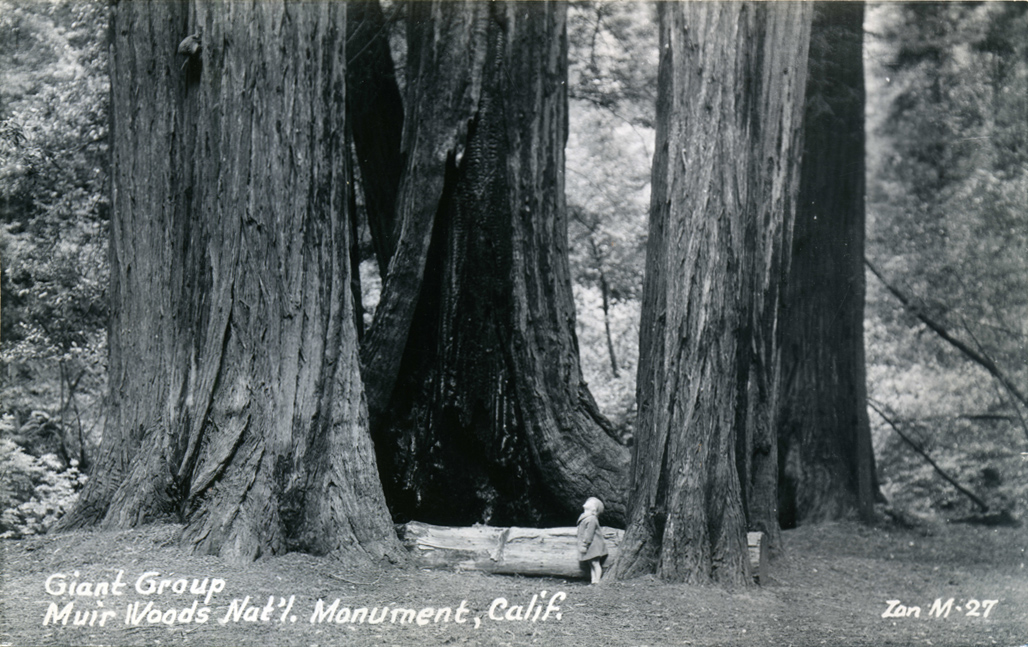
  3. When he was governor of California, he wanted to cut down the Sequoia trees in the parks because he thought that “once you’ve seen a tree, you’ve seen a tree.”
  4. He set troops out to quell student protest when the students had stated their pledge of nonviolent demonstration.
  5. He’s against abortion even in cases of rape. True, not many women who get raped conceive a child due to the trauma of it, but it does happen. And why should a woman give birth to a child of rape?

True, Carter is in many ways no better than Reagan. But I don’t want to vote for Carter, either. I want to vote for Barry Commoner. Barry Commoner believes in solar power, he wants to bring back the railroad system as a form of mass travel, he doesn’t believe in war and huge military budgets for no reason, and he believes in letting people come first in government. He believes in the nationalization of the energy industry. No one is perfect, though, and I realize that campaign promises are sometimes just that, but I feel that Barry Commoner is a better candidate than either Carter or Reagan. But he’s not perfect, either. I’m not being swayed by some Godlike figure or anything. He’s just an ordinary person.

Let’s talk about the nationalization of the energy industry for a moment. (Don’t I sound grown up, Nan?) Did you know that one of the reasons nuclear power plants are becoming more widespread even though they’re so dangerous is that the oil companies own all the uranium minds? The reason no one has developed solar power yet is because the oil companies can’t buy the sun.

Let’s face it, sooner or later we’re going to run out of everything – coal, natural gas, oil, even uranium. The only thing we will have for billions of years is the sun. Everything on this planet was created by the sun. The oil was made from algae deposits that were fueled by the sun. The sun is a clean, safe source of energy. So why don’t we use it? Because it’s also free. There’s no way to rent sunlight because it’s free. No one can own it. So the people who control this country, i.e., the huge conglomerate corporations, aren’t too thrilled over the prospect of unlimited amounts of free energy because they’ll go bankrupt.

Now, don’t get me wrong. I’m not against free enterprise or anything. What I am against, though, is when the profit margins of Exxon go up 200% in one year. That’s going too far. Profit is fine, but 200%, when the whole world is being squeezed dry because of the high prices of fuel? That’s un-humanitarian, and disgraceful.

Did you know that Nestles, the chocolate corporation, also manufactures infant formula? In third world countries like Nigeria and India and the like, they were telling uneducated mothers that infant formula was superior to mother’s milk. At precisely the same time, doctors in this country were finding out that mother’s milk was in fact the best thing for babies. That nothing was superior for infants. But did Nestles stop telling them that? No. Their profits in this country were going down because of the drop in sales, so they had to make it up somewhere else. By fooling poor, uneducated, starving people. That’s the kind of thing I’m against.

I guess I’m getting more political in my old age.  That’s why I have decided to major in prelaw. So I can do something about the things that I feel are unfair. Or at least I can try. Like I said, I’m not against free enterprise. What I am against is exploitation and un-humanitarianism.

7 Comments

Filed under ancient history, compassion, development, earth, enlightenment, eternity, faith, forgiveness, god, heart, history, hope, humanity, identity, justice, karma, kindness, law, legal system, life, logic, love, maturity, nature, peace, personal responsibility, science, soul, spirit, spiritual, truth, universe, woman, women, world, youth

Catalyst to a Potato, a poem

illustration catalyst to a potato 3

Catalyst to a Potato, a poem


Can I perform the miracles of earth, sun, water?

Can I be the warmth that gently pries open

eyes, that coaxes forth pale shoots, that causes


hardness to soften to green? If I throw the potato

against the wall again and again, will I ever cause

the potato to change? For so long, I tried to form


myself in the potato’s image. I tried to become

round, dense and heavy with stability, I tried

to protect myself. It did not work, it failed.


Now all there is left is her, one small girl alone

in the world. Her lips are redder than mine ever

were. Her shoulders are strong, she is not fragile.


You were the potato, the one I could never change.

Lobbing you again and again brought no result,

no visible difference. Yet in your eyes I am


the one who remained indifferent. I am not

ashamed, yet I am the one who needs to change.

You want only to rebuild. Take stock of your


small garden, not everything there is sound.

There is no such thing as healing. There is only

covering over, sweeping under, tamping down.


You know we will never love each other again,

yet you do not weep. This time I will not do it

for you. I am finished with praying for miracles.

3 Comments

Filed under ancient history, anger, apologia, compassion, development, divorce, earth, heart, justice, karma, logic, love, marriage, maturity, mea culpa, mourning, mysterious, nature, personal responsibility, poetry, regret, relationships, soul, spirit, spiritual, truth

Crocuses, a poem

illustration crocuses

Crocuses, a poem


I.  Signs of Spring

Suddenly, there they were by the front door,

and at my son’s preschool — purple and yellow

and green, poking through the snow

like small erections, out of the body of the earth,

the earth’s slumbering winter body.

My husband was always at work then,

they, the flowers, were my best companions.

“God is!” they said. “We’re God’s greatest effort,” they said,

“We’re God’s peeping blooms, despair must go to sleep,

and all creatures must go out of their lairs to frolic.”

My husband did not feel the urge.


II.  The Mole

Such loneliness I had battled all winter!

I made chicken, hot crescent rolls,

and buttered beans to make us happy,

but my husband was never hungry.

Lots of things took his appetite clean away.

I hadn’t scrubbed the toilet in two weeks,

this distressed him, he was a stern master.

The crocuses were so calm and forgiving,

purple and yellow like bruises;

my husband inflicted bruises without knowing.

He could not see, or did not want to.

His face lit up upon our child, that was all.

He was too important to sweep, or dust, or scrub.

I was the babysitter. I was happy with the crocuses,

and then one day, a dead mole; my son didn’t know

what dead meant, so I had to explain it.

He petted the soft fur, wanted to snuggle it

to his cheek. We paid homage to the mole.

We buried it under the snow, amid the crocuses.


III.   Troubling Questions

My husband didn’t know the bruises he left behind;

the flowers were my trusted companions.

His face lit up, gazing upon his son,

his finest possession; my husband would jerk him

away from me, hate in his eyes, when the crying boy

awoke in the night. The crocuses poked their heads out,

asking questions I couldn’t answer. My husband

didn’t want to see the bruises, or he was colorblind.

He was too important to notice the marks.

The crocuses asked, “Where is pleasure?”

“Not here,” I said. “Maybe next door?”


IV.  The Body’s Lament

The earth’s body was waking up,

but mine wasn’t, my husband was too important

to worry about my body. The head of his penis

was purple like the crocuses, but it asked no questions.

His body was warm, but not for me:

for the pure idea of sex, the attractive notion.

He wanted a thinner, more charming woman

with a better degree, one who would clean the house

more often, and with a smile.

Oh, he wanted a warm, dark place to set

himself, but one with no conversation.

As I put away the winter wools, the smell of mothballs,

white, crystalline like snow, inflamed my fears.

When the rest of spring arrived,

the warm air did not ease the tightness,

the block of ice around my heart.

2 Comments

Filed under beauty, compassion, earth, eternal, eternity, father, flowers, god, health, heart, identity, kindness, life, love, man, marriage, maturity, men, mother, mysterious, nature, relationships, sex, soul, spirit, spring, warmth, winter, woman, women

Muir Woods, a poem

illustration muir woods

Muir Woods, a poem


The eye is drawn, farther and farther

toward thin blue sky until the green feathery


tops of the trees are like the northern pole

on some dream planet. Your carsickness


from the ride up the mountain begins to fade,

leaving behind a breathless, weepy echo


not unlike your first religious fervor.

Then, you stared at Jesus’ sad face for hours,


wondering what it was that made him

love you. Here, it is the usual paralysis,


nerves made dumb by the unaccustomed

richness of perfect light. Vague, starry eyes


like yours feel at home. The air is weighty,

burdensome, solemn. Tall and slender, your guide


touches your wrist, and for a moment, you too

want to leave the surface of the earth


forever. Shyly, she picks up a tiny

pinecone, smaller than a toy. You laugh


when she tells you this is their seed:

all around, their ravaged, hollow


corpses litter the ground

like the bones of God.


In this place you feel helpless,

childlike, and you can understand a wish


to die here, never leave this hush.

They’re only trees, you tell yourself.


Yes, only trees, you think, standing still with

your neck bent back; wondering if they hear you.


2 Comments

Filed under beauty, earth, eternity, god, good, mortality, mysterious, nature, soul, spirit, spiritual, truth, universe, wood

Eat Or Be Eaten, a short story

illustration dog alligator suit

Eat Or Be Eaten, a short story

Annemarie often sat within the bright sobriety of the campus coffee shop down the street from her and Roy’s house. The air there was filled with academic fulmination and the evaporating mists of senseless arguments, much like the state of her marriage. She was acknowledged by the college students as one of those bizarre, florid creatures from the 80’s, and they let her go about her pursuits, unfettered but slow.

“I can’t stand that place,” Roy said. “I don’t see how you can sit there day after day.” His comment, for her, aptly illustrated how unaware he was that her main occupation while there was mulling over whether or not to file for divorce.

“It makes me feel wired,” Annemarie said.

“You can say that again,” Roy said.

“Why don’t you meet me there for coffee sometime?” she said.

“Things are too crazy at the office right now,” he said.

One such crazy evening, after dinner, the air was busy gossiping with itself — Annemarie could feel it fluttering along her cheeks inquisitively, and the moon rose early, bouncing light off the red tiled roof. She put on her ratty ski jacket and then poured herself a tiny refreshment of Scotch, which she imbibed cautiously. Her small thick hands, gripping a kitchen chair like death, were chalky at the edges. The clanking emptiness of the room — of her life — created a milky haze over her sight. For what seemed like the hundredth night in a row, she invited Roy over to the lake on campus to see the alligators. For the first time, he said yes.

They rambled along the verdant avenue and before them flitted two zebra butterflies, as if teasing Annemarie to fly. Her husband, his blank, uncomprehending eyes, was at once her soul and her shame. It was horrible to have people such as him think ill of you, think you were wrong. It was small and ugly and soul-shaking. You felt as if you were coming apart like a cheap paperback, pages from your head fluttering to the floor every time somebody breathed on you. She wasn’t much for men herself — she never learned how to tell a sweet one from a poisonous one and besides, she’d never been convinced there was much difference. But a truly radiant woman never hustles off through life unaccompanied.

A small crowd was gathered on the boardwalk over the water — a leather-skinned old German couple, a tall skinny man with a pot-belly holding a toddler, three young college women with lush clouds of permed hair and tight little asses. A little girl came up with coral roses in a bucket balanced on her hip. The German people spoke softly to each other in German.

“We saw a wild boar on the highway back in the mountains in Kentucky,” said the man with the blond baby. “I thought it was a dog lying on the side of the road. Then I saw its tusks.”

Annemarie’s future, single life would be simple like this, among unpretentious people like these — she’d come see the alligators every night before dark with the out-of-towners. She would hear the gators’ mating calls, the deep bellows in the late spring. She’d appreciate the real elegance of nature. Roy appreciated only his new $60,000 car and his tax-free municipal bonds.

The alligator for this evening was a good seven-footer. It floated perfectly still on the surface of the water, the scales on its back pushing through like a miniature mountain range. Its fat front paws hung limp in the clear lake water. It seemed only a little threatening in the smooth summer light. The gator had a large sly grin.

Roy was from the North – he’d never been around alligators before. Florida was alien territory to him. People from the North always freaked out about the gators. Annemarie wanted to give Roy a thrill. She wanted to overwhelm him with her earthy, sensible, swampy ways. She rubbed his hand humbly and forgot to play the grouch.

“They like marshmallows the best,” the tall, chatty man holding the toddler said. The boy wore a short jumpsuit appliquéd with giraffes. The German couple nodded, the old man pushing his fluorescent yellow golf cap back on his forehead. “Let’s see what I’ve got in the truck,” the man said.

“That?” the little boy said, pointing.

“Alligator,” Annemarie told him. The boy nodded and bit his forefinger.

“Teeth,” he said.

“Yes,” she said. “The alligator has lots of teeth.”

It was strong, it would eat her if it could. That was the way to be, she thought. That was the new simple way she would live, with or without a husband. Eat or be eaten. Roy hadn’t the slightest affinity for animals. Annemarie wanted to live a simple life. She didn’t want to be angry, ever again. Mostly, that was it. She could not afford any more to be bored with living — she didn’t have that kind of time. Her husband had become accustomed to disagreeing with her almost all of the time, as a method of entertainment.

The man with the baby came back with a vending-machine package of peanut butter cheese crackers. Annemarie shivered. Suddenly, she wasn’t so sure about feeding the thing. What if it came up on the bank? She had read how alligators could run 40 miles an hour over short distances. The man threw a cracker in the water near the alligator’s head. The animal whipped its head sideways and took a big gulp of water, inhaling the cracker. They all got a nice view of its teeth. The gator pumped its jaws, as if savoring the peanut butter, and the water clouded with dissolving cracker. Roy stood apart from the group, his face dark and tense. Annemarie leaned on her elbows, hanging over the railing of the boardwalk.

“Did you know it’s against the law to feed the alligators?” one of the young women with big hair asked. Her sharp voice made Annemarie jump.

“Really?” Annemarie said.

“Is that so?” the tall man said.

“It’s a felony,” the young woman said. “And there’s a fine.”

“How much is the fine?” asked Annemarie.

“A thousand dollars,” the young woman said.

“Really?” Annemarie might be afraid of the alligator but she wasn’t afraid of this young woman, with her elaborate hairdo and her half-pound of gold jewelry. This was the kind of woman Roy would marry next, she was sure. This kind would give him a lot less trouble. This kind would have no desire to feed reptiles of any sort. She directed herself to see marriage for what it was, not its tedious demonstration. The pretty young woman flipped her perfect locks over her shoulders and glared at the man with the peanut butter crackers. He threw another cracker to the alligator and laughed. His baby laughed too, throwing his head back so his fine pale hair waved in the breeze.

“The alligators get tame and that’s when they start eating dogs,” the young woman said. “And small children.” She was businesslike, her voice chilly with authority. The mystery of feeding the dangerous beast was lost on her, thought Annemarie. It was exactly the sort of thing Roy would say. Annemarie’s neck began to tingle, blood fury gathering in her cheeks. The tall man grinned at the snotty college girl and slowly pushed his glasses up with his middle finger.

“Then they have to shoot them,” the girl added. “So it’s really not a good thing to feed these animals.” The young woman had her nose up. Literally had her nose up; her voice resonated with indignation and righteous anger.

Annemarie pushed her arm against Roy.

“Maybe she’s right,” Roy whispered. He sounded reasonable, the way he always did.

“Oh, Christ, what’s the harm?” Annemarie said. She was still leery of the alligator, floating, for the moment seeming as harmless as a large rotting log, but she was enraged nonetheless. The hell with all of them, Annemarie thought. What do they know about right and wrong? What do they know about anger? What do they know about eating or being eaten?

“Great attitude,” the young woman said to Annemarie, shaking her head. “Come on, let’s get out of here.” The three lithe girls walked off, whispering to each other in disgust.

“Throw one of the crackers up on the bank,” Annemarie told the man, now her partner in crime, her body trembling. They were all standing on the wooden boardwalk over the water. She decided this animal was a deserving gator, nothing to be afraid of. She would bring it whole chickens, she decided. It would be her personal ritual. Her wants and needs had boiled down to nothing. It was amazing what she could do without, now she had decided to end her marriage. She would take one pot, a frying pan, and a wooden spatula when she left. That was all she needed. That was all anybody needed. Let him have the expensive cookware she was always cleaning improperly.

The man with the little boy threw a cracker onto the muddy bank. The alligator turned its head sideways and tried to pick up the cracker. Its teeth grazed the mud, making deep tracks. The cracker wouldn’t budge. The animal hauled itself onto the bank and took a mouthful of mud with the cracker. The man threw another cracker on the bank, and the gator swallowed it down. In the fading light, its teeth glowed pure and white. It did slow pushups on its meaty little forearms. Mud clotted its elbows, and the man threw more crackers. The German people oohed and aahed.

“I’m not putting you down,” the man said to his baby. The baby writhed in his arms.

“Teeth,” the baby yelled. “That!”

“Don’t put him down,” Annemarie told the man.

“No kidding,” the man said.

I could do this every night, Annemarie thought. Hang with the simple folk and feed dangerous wild animals like a crazy woman. She imagined the alligator getting angry, running toward her at forty miles an hour. She’d leap onto the railing of the boardwalk. She’d grab hold of the gator’s jaws and hold them closed with one hand, like the Seminole gator wrestlers at the orange groves she’d visited as a child. Reptilian rage was what she’d become practiced at. She had Roy to thank.

She remembered how all the muscles in an alligator’s jaws were for closing the mouth, not opening it. You could hold a gator’s mouth closed and flip it over on its back, and it would black out. The great beast would lie there, paws twitching, flabby white belly quivering. She still remembered one particular Seminole wrestler’s shiny black hair, slicked back off his forehead. He was lean and brown and his stomach muscles cast shadows upon one another. Her family had always watched the gator wrestling and bought rough sacks of tangelos and navel oranges. Annemarie had liked to squeeze the fruit and strain the juice, and think of the man’s bronze skin against the harsh concrete of the wrestling pit while she drank.

Now, Roy had never seen a gator wrestler in his life. He thought life was all harmless monkey jungles and parrot gardens and butterfly habitats. Annemarie knew better. She wanted to live on the edge, she wanted things out in the open. She didn’t want her problems hiding in the shadows anymore.

Annemarie stood against the wooden railing of the boardwalk and watched the alligator scraping the mud of the bank with its handsome teeth, trying for one last cracker. “Throw some more,” she told the man. Reflected light shone out of the gator’s dark eyes.

“Are you sure this is safe?” Roy asked. “That thing is huge. Didn’t you say a dog got eaten here last week?”

“Of course it’s not safe. That’s the point.”

“What’s got into you tonight?” Roy said. “Are you coming up on your period?”

“What kind of question is that?” She went rigid with black demented wrath.

Roy shoved his hands in his pockets and stared at the ground. “Sorry.”

A black-and-white pulled off the main road, crunching over the loose gravel. “Police,” the German couple murmured. The two old people scuttled to the benches at the end of the boardwalk and sat down, removing their hats. The tall man stuffed the half-empty package of crackers into the pocket of his shorts. Car headlights flashed over the surface of the lake, then Annemarie was blinded by police flashlights.

“They’ll have to search me,” the tall man whispered.

“We got a complaint about someone feeding the gators,” said the first cop. He was short, and plump, with a dark bristly mustache. His partner was tall and black and stood several feet behind him. He held the flashlight while the white guy spoke. “People, this is a third-degree felony. You’ll go to jail.”

“Crackers,” the baby said. “Crackers!”

“Did they shoot that gator that ate the dog?” the tall man said.

“No,” said the white cop. “That might be it right there.” His partner shone the flashlight on the alligator. Its pupils contracted in the glare. It raised its chin above the water and smacked the surface. Annemarie felt water splash her legs. “It’s breeding season,” said the officer. “They’ll come at you at the drop of a hat.”

“Who was feeding the gators?” said the black cop.

“None of us,” said the tall man. The little boy grabbed his nose, and his father pushed his hand away. “There’ve been people coming and going for half an hour.”

Annemarie said nothing, leaning over the railing, her arms cradling her breasts, droplets of sweat rolling down her back. Roy stood at the other end of the boardwalk, his cigarette glowing.

She remembered the first time he had ever touched her. Roy’s fingertips had moved slowly back and forth over her forearm, the same way the gator’s paws now rocked in the water. His fingers had brushed against the side of her breasts, that was all. She had wanted his touch on her, back then. Where had it all gone?

“We could call the Florida Game and Freshwater Fish Commission right now and they’d come down and cuff you,” said the white cop.

“I’m sure they would,” said the tall man.

“Teeth!” his baby boy shouted. “That,” the child said, one small finger pointing into the darkness of the swampy bank. “Hungry!” the boy squealed. His father shifted his weight from one foot to the other and back again. The police officers feigned disinterest and strode nonchalantly down the boardwalk, toward the German couple. She couldn’t hear what they said, but she saw how they shone their light into the old man’s eyes.

“Well, I’m going to get this little guy home to bed,” said the tall man, looking at Annemarie and smiling.

Annemarie nodded. “Let’s go,” she said to Roy. They walked toward the parking lot.

The policemen waited for them at the entrance to the boardwalk. “We have two witnesses who said they saw you feeding the gator,” the white one said. The old German couple huddled together on the bench nearby.

“Then you’ve got two liars,” Roy said. The German man patted his chest and looked at the ground.

“They both said it was a white male with a blue shirt.”

Roy’s shirt was blue, long-sleeved, covered with little paisleys. Annemarie had given it to him for Christmas. The man with the baby had on a blue T-shirt saying, “Eat Oysters, Live Longer.”

“There’ve been a lot of guys here with blue shirts,” Roy said, shrugging. The policemen took a few steps toward him, shining the flashlight in his face. Roy held his cigarette to his lips but didn’t inhale.

“I don’t like it when people lie to me,” said the cop. He touched the grip of his nightstick. Annemarie moved closer to Roy.

“Shit,” Roy said under his breath.

Back on the bench, the old German woman coughed, both hands over her mouth.

“I’ve been with my husband the whole time,” Annemarie told the officers. “He wasn’t feeding the alligators.”

“Care to sign a statement?” asked the black cop.

“Why can’t you just leave us alone?” Annemarie said.

“This is our job, lady.”

“Pretty messed-up job. Hassling people.”

“Is that right? Would you care to empty your pockets?”

“I told you, we weren’t feeding the alligator.”

“Maybe we think you were. Maybe we’re getting ready to arrest you and your husband here.”

“You do that and you’ll get slapped with a lawsuit.”

“So sue me. You’re under arrest.”

“What?”

Roy held his hand out. “Now, wait a minute,” he said.

Annemarie heard a rustling in the reeds behind her. She felt something slither over her shoes. At her feet was a tiny alligator, six inches long. Nobody else seemed to notice.

“You’re under arrest,” the officer repeated, his words to Annemarie slow and drawn out as though he were talking to a foreigner.

“What for?” Annemarie asked.

“For feeding the alligators.”

The big gator on the bank bellowed, its pale throat pumping like a frog’s. The German couple shrieked and ran down the path toward the parking lot. The cop pointed his flashlight toward the noise. Out of the reeds swarmed dozens of baby gators.

“I told you people it was breeding season,” said the white cop. The reeds rustled again and this time Annemarie heard a loud croaking sound. The big gator stood there, raised up on its forelegs, its jaws hanging open. The pink fleshy gullet pulsed in the flashlight’s beam. The teeth were dull yellow at the roots, gleaming pale ivory at the points.

“Holy shit,” the black cop said, grabbing Annemarie’s arm.

“Get the hell out of here,” shouted the white cop.

“I am,” the other cop said. He started toward the car, yanking hard on Annemarie’s shoulder.

“Leave me alone,” Annemarie said. She watched the animal while the officer struggled to pull her away. She went limp, buckling at the knees and kneeling on the ground. “Just leave me alone.” She wasn’t angry anymore, not at anyone or anything, especially not at her soon to be ex-husband. The spirit of her rage had gone into the animal. Pure reptile.

“Are you crazy?” screamed the cop.

The big gator sucked air and croaked again. It raised and lowered its head. The babies scuttled back toward it, milling under its body and peeping loudly like baby chicks. The alligator’s thick tail whipped back and forth through the reeds, and finally the cop ran off, leaving Annemarie in the mud. Why had she been trying so hard? Who had she been trying to fool? This was how it was. Eat or be eaten — the end of one angry life marked only the beginning of another. She closed her eyes as she heard the roar of the gator coming closer.

Roy knelt beside her. “You don’t want to do this,” he said.

“Do what?” Annemarie said.

“Get this alligator shot,” he said. “It’s not going to help.”

He was right. The alligator had never done anything to her. She looked at Roy. He had not been shattered by any of it. His eyes begged, but for once he wasn’t judging her. For once, maybe for the first time, it seemed like he understood her. Life could be so simple, once you got rid of all that confusion. She realized that there was no telling what would happen after today.

“Come on,” Roy yelled, grabbing her arm and pulling her to her feet, and his hand against her skin felt better than she remembered. She ran behind him, her feet sliding over the muddy gravel, not afraid, but laughing like a madwoman. Let everyone see me for what I am, she thought. Let them observe my fiery trail from a safe distance, and weep for their own. Roy glanced back at her as they ran, but Annemarie’s lips did not move — she ran honestly, tripping across her own feet. She could feel the sea moving around inside her head, and she laughed.

2 Comments

Filed under anger, criminal, criminal behavior, criminals, divorce, fiction, justice, law, life, love, marriage, mysterious, nature, personal responsibility, regret, relationships, satire, short stories, soul, truth

Going To Sea, a poem

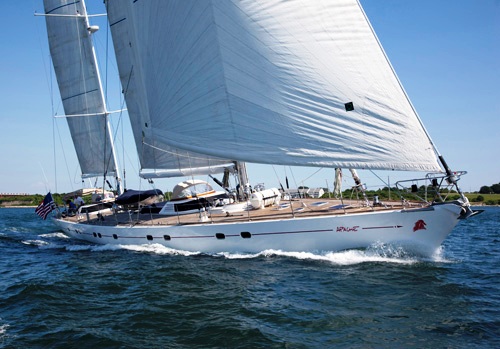
Apache, 105-foot D. Presles and J. Pierrejean charter yacht

illustration barry huplits high school photo


Going To Sea

(for Barry Huplits)


She is a great white boat, carved

of wood, lacquered to a blinding

sheen, her sails immense, floating


over my head like the wings

of a fearsome angel. I sit

on her prow, clinging to the slight


metal rail, and together we leap

over the waves like some illiterate,

dangerous god. I am a mermaid,


a brightly colored figurehead,

thrust into the salt spray to bring luck.

The power of the water flings me to and fro,


but I hold fast, panting, the rich smell

of the sea making me drunk. As we pass

the ragged rock walls of the inlet,


I see the towering dwellings of men,

though these quickly fall behind our path,

growing tiny, frail to the elements


I have momentarily harnessed. We brush

great clumps of weeds, then the color beneath

changes from murky green to depthless indigo,


the froth of the peaks suddenly

light, riddled airy like the childish,

gladdened heart inside my chest.


In my net are jerking glass shrimp,

Tiny, tassled fish that look like

bits of leaf, one lone needle-nosed


eel, sinuous even in his distress,

and when I have stared long enough,

I fling them back to their wet lives


without regret. Under the sharp

edges of the sun, skin grows heated,

reddened as if by love’s rough brush,


yet we keep on, moving into the horizon,

towards the vanished place of wildness,

full of an impeccable, golden light.


Leave a comment

Filed under ancient history, beauty, compassion, earth, eternal, eternity, god, good, history, identity, karma, kindness, life, love, mysterious, nature, poetry, soul, spirit, spiritual, truth, universe, warmth, wood, youth

Blood Mother, a poem (sculpture in the Orsay Museum, Paris)

illustration blood mother
Blood Mother, a poem (sculpture in the Orsay Museum, Paris)

She is made of wood, a silken hardness that begs touching.
Should anyone reach, trail a fingertip across her flesh,
the man in straps would speak, his mumbled words rasping
through the stopped air, turning beating cells boorish,

piercing desire’s heart, killing a love so old, so pure,
it has no real name. Such is obvious from the way she stands,
lifting her heavy hair, each hand the careful cynosure
of being — she drapes the primal fiber like garlands,

letting it flow free only to capture the thickness of trees.
Her eyes are closed. Under abraded lids resides the look
everyone knows: pupils enlarged by pain; simple refugees
from knowledge received of the body, woman’s final textbook.

The belly asks first. It says come, reside here within me,
neither cold, nor afraid, nor desirous — twirl and dream
of nothing but this spare salt universe, wear only veins, silky
wisps of hair, discreet, pale limbs enfolded by soft cream.

Her feet nourish the ground, her head becomes the forest.
Walk where her shadow falls, seek the margin of her arms,
soothe your tired neck in mother’s lucid heat, hedonist
entity you have become, set in blind motion under charms

worked by no laboratory scientist in a trim white robe.
Rather, you emerged redly from a thousand other deaths,
one messy cauldron holding shapes; the patient, springy web
of chosen elements drawn together, joined by many faiths.

The breasts want, too. Child, they sing in unison, nourish your
body with our thin white blood — suckle, cradle the nipple deep
against the palate, pull the flow from a dozen small pores, gnaw
strong like a velveted vise, drink true until you swallow sleep.

The need to believe is more than skin. Need is the whole glossy
image on this lonely wall; what it means to be such a mechanism!
She never schemed for her fey power — nor does she expect mercy.
You exist, mere fragile accident, in perfect jeweled synchronism.

Not as simple as punishment, nor as complex as grace, her skills
for life reside at a place men cannot enter, no fault of their
own. They build instead the world, of brick, stone; shy stabiles
meant to appease longing, courageous memorials to light, to air.

2 Comments

Filed under art, art history, beauty, blood, compassion, earth, eternal, eternity, heart, love, man, mother, mothers, nature, orsay museum, paris, poetry, sculpture, soul, spirit, spiritual, warmth, woman, wood

Rosalia (Rosa multiflora), a poem

illustration rosalia

Rosalia (December 13, 1918 – December 6, 1920), was a child who died of pneumonia.  Her father was so grieved by her death, he hired a famous embalmer to preserve her body.  It is still nearly perfectly preserved, nearly 100 years later.  This poem was written after observing a  garden near her tomb, planted with the flower she was named for, Rosa multiflora, commonly called Rosalia, an especially fragrant and vigorous climbing rose.


Rosalia (Rosa multiflora)


The haughty snail rears up, large and indolent,

its creamy shell ponderous, though rakishly tilted.

The knowing eyes unfurl on stalks greyish-violet,

above tender undulate flesh, faintly quilted


as if by past misdeeds. Near a warm slate path

thrust through the damask-brown earth, a small bird

dips wings, cocks head, perches on the birdbath

shaped in the lithe innocence of a fair-haired


Roman cherub. The rose-heads swoon in the sun,

lazy petals curled inward to form delicate bowls

ravished by enormous bees, whose silvery finespun

wings vibrate, ceaseless keepers of love’s oversoul.

2 Comments

Filed under beauty, daughters, fathers, love, mourning, mysterious, nature, parenting, poetry, truth