Category Archives: peace

Savior, a short story

illustration savior

Savior, a short story

The young man seemed so out-of-place in her mother’s living room. Maria stood in the doorway with her mother’s groceries, her purse on her shoulder, key ring dangling off one numb pinkie, clutching the heaviest bag propped on her hip, the bag that contained her mother’s supply of Diet Coke. Her mother and this man were sitting together on a Victorian loveseat on loan from Maria’s antique shop, their knees almost touching, the man’s arm draped across the ornate wooden back, his fingers curled behind her mother’s left shoulder. Her mother had a photo album spread out, one leaf resting on her lap, the other resting on his. Maria could see herself, at two, nude in the tub. Christ, she thought, what’s she showing him those for?

The young man leaped up after a few moments of uncomfortable silence, running his hand over his hair and smiling. Her mother folded the album closed, holding out her arm, and he helped her up, a gesture Maria herself had never mastered, helping old people up out of their seats. She tried too hard, using the wrong position and too much lift, until their sharp old elbows jutted out at alarming angles but their behinds hadn’t lifted an inch.

He had a medium build, wavy blonde hair, a deep tan — he was almost, but not quite, handsome. His eyes were too close together and his nose too long: as Maria met his direct gaze, she felt uneasy at his obvious affection for her mother, the implication of knowledge which came from his confident manner. He looked as though he was already sure he knew the older woman’s mind; already sure she must be lonely.

“I’d like to introduce you to my daughter, Maria,” her mother said. “Maria, this is David. He found my wallet over at the library and was kind enough to track me down. I couldn’t believe it when he called. I didn’t even know it was missing yet.”

“That is lucky,” Maria said. “Really lucky,” she continued, smiling in her mother’s direction, one eyebrow arched, whereupon her mother shook her head once, violently, and her daughter’s unspoken reprimand was expertly dismissed.

“Oh, it wasn’t luck,” said David, the sound of his voice causing the small hairs at the back of Maria’s neck to rise. “Nothing’s a matter of luck. Life is all planned for us, down to the last detail.” He nodded, smiling at Maria, his arms hanging relaxed at his sides, and the suspicion came to Maria that he was crazy. Crazy but safe, one of the harmless ones, the kind that made her want to go a little crazy too because they seemed so sure of themselves.

Most of Maria’s son Richard’s friends were the same type, that’s how she knew. Richard — she never thought of him as “Kurma-devi-dasi,” although she respected his desires and addressed him that way — was crazy but harmless too, although she knew she couldn’t see him as clearly in that way as she could a stranger. To this day she was able to discern the fuzzy cartoon of his infant features on his serene face when he smiled at her — the memory of his toothless gums clamped like a rhythmic vise on her breast would come to her, looking at his shaved head and his orange cotton robes as he chanted over his prayer beads, and she would be filled with a sorrowful rage that made her chest shrink into itself.

Not his grandmother, though — she had sat with her grandson over at the temple for hours when he first became a devotee, sitting in a rocking chair next to him as he said his prayers in front of the little richly clothed doll of Krishna. She told Maria it made her feel closer to her own idea of God just being in a place like that. In theory, Maria agreed, but the issue wasn’t whether the temple was a nice place to spend an afternoon, the issue was whether it was a good way for Richard to spend the rest of his life — sewing holy Hindu god and goddess doll clothes on an old black Singer?

“I don’t know about a plan,” Maria replied. “I’m lucky if I know where I am, half the time. If it’s Wednesday, this must be my mom’s apartment — you know?”

He said nothing at first, not seeming offended, not defensive, just staring at her with eyes so full of a giddy, knowing light — his face loomed toward her, and tension rolled through her stomach as his mouth moved into a drawn bow of compassion. It didn’t matter that he wasn’t handsome; he radiated an alarming level of charm. “Down to the last detail,” he repeated, arching his eyebrows and opening his eyes a bit wider, his pupils enlarging like a lover’s, and the sound of his voice vibrated within her ears, warm and solid like hands pressed against her temples.

“Then one of the details must be that I’ve got to put this bag down before my arms fall off,” she said, forcing a laugh. “Excuse me.” She turned away and walked up the hall to the kitchen. By the time she’d finished putting the groceries away — rearranging pantry and refrigerator shelves, purposely taking far longer than usual — he’d already gone. Great. Now their lives were stuck together like flood trash swirling down her mother’s raging river. David would be there for her mother — be there always and forever, overflowing with that sickening, confident love, and her mother would never be able to blame him, not for anything.

***

Maria was uncomfortable with the amount of time her mother was spending with David, but didn’t dare say too much. There was nothing overtly objectionable about him, other than his religious fervor — and how could she term that a fault? Her mother wouldn’t listen, anyway. Whenever Maria brought the subject up, her mother would groan, “Oh, boy, here we go again,” and she would frown, which consisted of one sharp, off-center line in the middle of her forehead. “You don’t have to like him, sweetie,” she’d say, “but I wish you did.”

Still, her mother’s interests seemed to be shifting. Odd books and papers came and went on the coffee table, crowding out the usual hodgepodge of half-finished crosswords and literary journals: treatises on wild herbs, population-density maps, computer programming manuals, military histories. Flipping through a ratty emergency-medicine textbook, Maria saw numerous large, yellow-highlighted portions and margin notes in both an unfamiliar, childish hand and her mother’s own neat back slant. “What is all this stuff?” she asked, holding the book out to her mother.

“I’m getting ready,” her mother said. She sat down opposite Maria and picked up a needlepoint pillow, arms crossed, mashing it to her tummy like a teddy bear.

“Ready for what?” asked Maria.

“The end of the world,” said her mother. “You know, Armageddon.”

***

At first, Maria’s son agreed with her concerns, not at all what she expected and a strangely intolerant position for him to take — considering his own lifestyle — his agreement only making her feel worse. They sat in the temple’s empty dining hall. “I’m with you, Mom,” Richard said. “The guy sounds like a real case.” He rubbed his hand over his prickly scalp and yawned, his left hand fumbling inside the peach-colored sack of meditation beads that hung from his neck. He scratched his nose, smearing the delicate yellow makeup lines drawn there that symbolically pointed up: up to God, up to heaven. “Have you checked Grandma’s bank accounts lately? He could be some kind of con artist.”

“No, no,” she said. “That’s not the kind of thing I’m worried about. He seems sincere enough. He’s no con artist. It’s just — your grandmother is really starting to believe what he says — how Armageddon is coming, all that stuff. You should see the books he’s got her reading.” Maria leaned on her elbows, cupping her chin. Richard closed his eyes for a moment, tilting his head to one side like a duck.

“Then again, I suppose the guy could be right on,” he said, his eyes still closed. He looked asleep, his skin pale and fragile. “Maybe that’s what bothers you. I’ve been trying to get through to you on that level for years. At least Grandma’s started thinking about her future.”

“Her future?” Maria asked, her voice louder than before, wanting to reach across the picnic table and shake him by his choke collar of tiny wooden beads. “At eighty-five? People that age should be beyond this kind of worry. It isn’t right. He’s getting her all stirred up — and for what? If all that biblical stuff happened, she’d never survive.”

“You’re just jealous,” he said. He opened his eyes and stared at her, his thick black lashes tangled and dusty-looking. His pupils were pinpricks inside the blotched hazel irises, and as he spoke he stood up too fast, banging his shins on the metal tubing of the cheap table. He grimaced and squatted for a moment, rubbing his leg. “You can’t stand it when someone believes in something you don’t. I thought you were worried this guy was some kind of sleazy fake, but now you’re telling me what freaks you out is that he’s the real thing. Make up your mind. You should be happy Grandma’s paying attention to what’s out there.” He turned and walked away, his robes ruffling out behind him, his rubber sandals slapping the bare wooden floor. “I’ve got devotions to attend to,” he said, not turning back to face her as he walked, his voice thin, echoing across the length of the long, barren room.

***

The earliest occasion Maria could remember wanting her mother’s opinion was in the seventh grade. Maria had just turned twelve, and had her first crush. She was stringy and awkward in those days, large-kneed and carrying a head of vigorous, curly hair she flattened down into a matted-looking cushion in desperation. Then the quiet boy started walking her home from the bus stop.

She remembered him still: pale blue eyes, so large and widely spaced that they gave him a somewhat doe-like expression. His jaw, however, was firm, angular, and thus saved his face from weakness. Warm hands lay against hers, trembling, stroking her fingers up and down in an hypnotic rhythm. “Do you want to go steady?” he’d asked her, unable to meet her eyes. That meant wearing a silver identification bracelet, his name engraved about her wrist for everyone to see; his property. She hoped his name was in block capitals, not that loopy script: it looked better.

“I don’t know,” she said, and went home to ask her mother’s opinion, a matter of form perhaps, but something she wanted; the camaraderie of womanhood revealed at last. This could be the common ground between them.

“Honey, I just don’t think going steady is a good idea at your age,” said her mother. They sat in the dining room, wallpapered with tiny brown pineapples. “You’re too young to get so deeply involved with a boy.”

“But lots of girls do it,” she said, knowing this was a flawed argument, but even as the shipwrecked are driven to drink seawater, her words carried a dreamlike hope.

“You asked for my opinion,” said her mother, “and I’ve given it to you. It’s up to you to make the decision. I’m not saying no, I’m just saying I wouldn’t if I were you.”

In the end, she told the boy no — and was informed that the going-steady offer had been withdrawn in the interim — and she realized by heeding her mother’s counsel she had been saved from a greater and more penetrating level of humiliation than she imagined even existed. But — that wasn’t the point. Maria knew her mother would never have said no to one of her own teenage boyfriends — that was a lie. Safe advice given as a — joke, as an experiment. Didn’t Maria have the right to be strong-willed? Didn’t she have the right to her own losses? She never stopped trying after that, but the drama was gone.

***

Then Maria found her mother in the bathtub. She entered the apartment, carrying her mother’s dry cleaning: a few sweaters, a wool suit, a pink blouse. She heard water running, a slight, far-off sound, as if from the next apartment. The bathroom door was closed. The only sound was a rolling and a swishing, as though a large fish reclining in the tub had shifted position. Alarmed, Maria opened the door. Her mother was sitting upright in the full tub, a small trickle of water dribbling from the faucet. The tub was full to overflowing. Her mother was wearing a purple shower cap embroidered with large seahorses.

“Go away,” she whispered, as Maria stood, confused. A bristling red pincushion sat on the edge of the tub, dangling a red cloth strawberry from a green cord into the water. The strawberry bobbed on the surface. In her mother’s hand was a large straight pin, on her wrist several thin scratches. She jabbed with the pearl-headed pin, her hands unsteady.

“What are you doing?” asked Maria, her voice shrill, terror coursing through her. “What in the hell are you doing?”

Her mother turned to her, her unfocused eyes shining and rolling up toward the ceiling as she spoke. “Trying to kill myself,” she said.

“With pins?” shrieked Maria. “Jesus, Mother!”

“I wanted to flush my head down the toilet,” her mother continued, “but it wouldn’t go down.”

***

On the third night of her mother’s emergency hospitalization, Maria dreamed she was sitting in her living room drinking tea with one of her college professors, a sloppy but verbally precise little man. In reality, she hadn’t liked him at first, but she had taken every course he taught because — unlike the majority of his students — she got A’s from him. She came to admire his sincere and stringent approach, forgiving him his greasy, untrimmed hair, his baggy, stained chinos and ancient, Filipino-style dress shirts.

And so, in the dream, her old professor, uncharacteristically neat, his hair washed and combed, his pants pressed, was explaining to her that he had theater tickets for tonight’s performance — would she like to join him for dinner and a show?

I’m sorry, she said, but I don’t think I can get a baby-sitter on such short notice. It’s already six o’clock.

He raised his eyebrows. I had no idea you were married with a child, he said. Well, that’s too bad, my dear. Perhaps we can arrange it some other time.

As he shuffled off down the sidewalk, Maria wanted to call after him: Wait… I don’t really have a husband… I don’t really have a child… it’s all a mistake. Come back. I want to go with you.

But she was silent, knowing it wouldn’t make any difference what she said. He was already too far away, and could not hear.

***

The next day, when Maria arrived at the hospital, her mother’s newest flowers were wilting in the heat. Her mother had turned the room’s thermostat up to 85 degrees and wore a sweater and cracked pink leather mules. Still, the new additions were beautiful: three dozen roses, white, yellow, and coral, stuffed into a too-small mayonnaise jar, the faded label turned to the wall. Maria stood in the doorway for a moment, holding a brown paper sack full of the day’s requested items — mostly cosmetics — looking at the bright splash of color. “Hi there,” she said to her mother, who sat hunched on the edge of her bed, flipping through a current TV Guide.

“Hi,” said her mother. “Is it cold out? You look chilly.”

“It’s cool, but the sun’s warm,” said Maria. “Who gave you these roses?” She leaned over to smell them, her nose brushing the petals.

“David,” said her mother. “He brought them by this morning on his way to work.” She squinted at Maria, her glasses speckled with bits of dust, so filthy Maria wondered if she could see anything at all. “He didn’t know I was here; he found out just this morning from my across-the-hall neighbor. He was taping a note to my front door.” She unrolled a package of breath mints and placed one on her tongue. “I thought you would have called him by now — it’s been three weeks, after all.”

“I didn’t think it was such a great idea for you to have a lot of visitors.”

“A lot?” Her mother raised her eyebrows, which were nearly invisible. She penciled them in most days, but today she’d left them defiantly natural. “Any, you mean. You’re the only one I’ve seen other than the doctor, until this morning.”

“What did he say about visitors?” Maria asked.

“It’s fine, as long as I feel up to it. They’re still fine-tuning the dosage on the blood thinner, other than that I could go home already.” She held out her arm, shoving the loose sweater back above the elbow. Small scabs dotted her forearm. “They’re sticking me every four hours, round the clock. They’ve got to balance it just right. So I won’t have another stroke but so I won’t bleed to death, either.”

She stared at Maria, her eyes shining. Her mother’s voice dropped low and fluid, almost a murmur; Maria remembered that voice from long-ago midnights, giving comfort to a distraught child. “I know you were scared when you found me all confused like that in the tub, sweetie.” Maria said nothing. Her mother raised her chin with a jerking nod, relapsed motherhood dropping away from her like a fragment of dry skin, her voice back to normal. “But really, I’m okay now. It was a very minor thing — you heard when the doctor told me I was one lucky lady.”

***

An hour later, on her way out, Maria saw David from across the hospital’s visitor parking lot as she stepped on the black mat that made the door swing open. He was dressed in jeans and a pink polo shirt, his hair still wet from the shower, combed flat across his head, just beginning to spring away in wisps where the blond curls regained tension as they dried. She stopped short, turning and walking back inside, toward the gift shop, where she stood in the farthest corner. She picked up a stuffed animal and pretended to scrutinize the price while she watched the door. When he passed, moving toward the elevators, she followed. He entered one and the doors closed. Maria waited and got the next one, her heart pounding.

She got off on her mother’s floor, going away from her mother’s room, back toward the nurse’s station and lounge on the north end. Settling in one of the low, soft chairs, she stared up at the wall-mounted television, the evening news in full swing, recounted events drifting over her, seeming important but incomprehensible, the words passing through the air like puffs of smoke. Muscles tense, palms clammy, she took out a pen and paper and began jotting notes of what she wanted to say.

She jumped, startled, as she heard David speak. She saw his back, visible from the doorway, over at the nurse’s station where he spoke to the charge nurse. “I think there’s something wrong with her call button,” he said. “She says she’s pressed it a bunch of times without hearing anything over the intercom.” The nurse, a thin, tired-looking woman wearing lavender scrubs, nodded.

“Okay, I’ll be there in a minute,” the nurse said.

David turned to leave, and then he saw Maria and stopped, his mouth forming an exaggerated O, his eyebrows lifting. Maria felt a clammy flush rise up over her neck, a dull enveloping embarrassment. He smiled like a placid baby, walking to her and holding his hand out. She clasped his hand for a moment, feeling the solid meat of it, the warmth and hardness of his callused palm. “You don’t know what to believe in,” he said, his voice calm and slow, “and that’s natural. It’s a process of evolution you’re going through. Think of your mother’s illness as the catalyst.” He opened his arms and bent at the waist, hugging her so hard she couldn’t inhale, then he removed himself and stood looking down at her, his head cocked, his blue eyes luminous and warm, a crinkly-eyed smile starting to show.

“You’re crazy,” she said, feeling her throat seize up as her heart beat shook her ribcage like a wild animal — she had difficulty speaking. She paused as her chest eased, then forged on. “A catalyst?” she repeated. “I know what to believe — I believe you’re causing all my mother’s problems. She doesn’t need your brand of stress right now. And I don’t need this kind of condescension. Telling me I’m OK. I don’t need you for that. You’re not any kind of expert.”

“No, I’m not,” he said, the smile gone from his mouth but his eyes still glowing with a trace of it like a madman’s. “And since when do you care about expert opinion?” He reached out and stroked her hair, saying her name in his gentle murmur, Maria, Maria, and she flashed — it’s finally happening to me, it’s finally here — a jolt of vertigo as if she’d been through all this before, a hundred, a thousand, no, ten thousand times…. “You don’t care about anyone’s opinion but your own,” he said.

Their lives were now joined – with force of will and love he’d plucked her up and tucked her into the golden cup of his heart as quickly and easily as he would rescue a fear-crazed puppy clinging to a torn-off tree limb, just before that puppy swirled away to her doom down a swift, swollen river. Maria wanted to run, to hide, to retrace her steps, but it was too late. David would be there for her — be there always and forever, surrounding her with this… curious compassion of his, and she would never be able to scare this one away, no matter what she tried.
3 Comments

Filed under compassion, daughters, death, development, eternal, faith, fiction, forgiveness, heart, hope, identity, karma, kindness, life, love, man, maturity, mother, mothers, mysterious, peace, personal responsibility, relationships, short stories, soul, spirit, woman

September 5, 1980, a letter to my Nana

img097

September 5, 1980

Dear Nana,

I am sorry I didn’t send you a birthday card on time. I didn’t forget, I bought a card and addressed it and put a stamp on it and everything, I just neglected to drop it in the mailbox. And since it was late anyway, I figured I would just save up some money and get you a present to go along with it. So just prepare yourself for an extra-special present. I won’t give you any hints, either. So just sweat it out.

Everything is going just fine. My job is going well, except the work is not all that interesting. But at least I have plenty to do. Mr. Perkins is in Canada right now, doing some work for the Canadian government, so that’s why I can write this letter at work. Because there’s not all that much to do.

Has Mom gotten me an application for the U. of Fla.? I’m going to apply to U.C.L.A. also. Then when the time comes I will have two options. But no matter what I decide I will be home for Christmas. So don’t worry about that. I wouldn’t miss another Christmas with all of you. I’ve already missed two. So no more.

I almost got a dog the other day. They keep dogs at work, two of them, and there was this other dog that started hanging around. He was a stray and he was really skinny. Then about two days ago he showed up limping. His hip was all out of joint, and he was scared of everybody. So I told Mr. Perkins about it and he said that if I could catch him and take him to the vet’s that he would pay the bill if it wasn’t too much. So I caught him by feeding him and then grabbing him. I took him to the vet’s and they X-rayed his hip but it was too badly crushed and it would cost over $300 to fix it. So we had him put to sleep. I felt so bad about that. I cried and cried. You know how I am about animals.

I have decided to major in prelaw. It’s a big decision but it’s something that I want to do. A lot of reasons persuaded me. And besides, lawyers run in our family. This is the fourth generation – your dad, mom’s dad, and my dad, and now me. I’m the first woman to do it. It’s about time the women in this family took advantage of their brains. Grandpa Geremia says that we’re smarter than all the men anyway.  Look at Mom!   She’s got a lot upstairs, and the only reason she didn’t get a chance to take advantage of it is because she’s a woman and women are the ones who get the short end of the stick always. I’ve really been getting interested in promoting women’s rights lately.

Throughout history, men have had all the power. And I’m tired of it. I heard on the radio that women comprise 53% of the population, yet in the Senate there are only two women. 2 out of 100. That’s certainly not even close to equal representation. Women don’t even get respect. At work here, I’m treated like some cute little girl who is just learning to tie my shoes. And I resent it. Of course, I don’t complain because I need to get along with these people, but I resent it all the same. I read in a book called The Women’s Room that “people may hate niggers and Puerto Ricans and Chinks, but at least they are afraid of them. Women don’t even get the respect of fear.” And it’s so true. Look at you, Nana. You have the makings of one hell of a politician in you. You’re a terrific leader. You have charisma. But you haven’t done it. Maybe because you didn’t want to, but maybe because you were afraid. Oh, I don’t know. Remember when they wanted you to run for City Council? You could have won easily. You could still win. I think you ought to do it. After all, Reagan’s over 68 years old and he’s running for public office.

By the way, do you know what I’ve heard about Reagan?

  1. He believes in astrology.
  2. He accused Carter of being in cahoots with the KKK when he himself refused to address the NAACP.
  3. When he was governor of California, he wanted to cut down the Sequoia trees in the parks because he thought that “once you’ve seen a tree, you’ve seen a tree.”
  4. He set troops out to quell student protest when the students had stated their pledge of nonviolent demonstration.
  5. He’s against abortion even in cases of rape. True, not many women who get raped conceive a child due to the trauma of it, but it does happen. And why should a woman give birth to a child of rape?

True, Carter is in many ways no better than Reagan. But I don’t want to vote for Carter, either. I want to vote for Barry Commoner. Barry Commoner believes in solar power, he wants to bring back the railroad system as a form of mass travel, he doesn’t believe in war and huge military budgets for no reason, and he believes in letting people come first in government. He believes in the nationalization of the energy industry. No one is perfect, though, and I realize that campaign promises are sometimes just that, but I feel that Barry Commoner is a better candidate than either Carter or Reagan. But he’s not perfect, either. I’m not being swayed by some Godlike figure or anything. He’s just an ordinary person.

Let’s talk about the nationalization of the energy industry for a moment. (Don’t I sound grown up, Nan?) Did you know that one of the reasons nuclear power plants are becoming more widespread even though they’re so dangerous is that the oil companies own all the uranium minds? The reason no one has developed solar power yet is because the oil companies can’t buy the sun.

Let’s face it, sooner or later we’re going to run out of everything – coal, natural gas, oil, even uranium. The only thing we will have for billions of years is the sun. Everything on this planet was created by the sun. The oil was made from algae deposits that were fueled by the sun. The sun is a clean, safe source of energy. So why don’t we use it? Because it’s also free. There’s no way to rent sunlight because it’s free. No one can own it. So the people who control this country, i.e., the huge conglomerate corporations, aren’t too thrilled over the prospect of unlimited amounts of free energy because they’ll go bankrupt.

Now, don’t get me wrong. I’m not against free enterprise or anything. What I am against, though, is when the profit margins of Exxon go up 200% in one year. That’s going too far. Profit is fine, but 200%, when the whole world is being squeezed dry because of the high prices of fuel? That’s un-humanitarian, and disgraceful.

Did you know that Nestles, the chocolate corporation, also manufactures infant formula? In third world countries like Nigeria and India and the like, they were telling uneducated mothers that infant formula was superior to mother’s milk. At precisely the same time, doctors in this country were finding out that mother’s milk was in fact the best thing for babies. That nothing was superior for infants. But did Nestles stop telling them that? No. Their profits in this country were going down because of the drop in sales, so they had to make it up somewhere else. By fooling poor, uneducated, starving people. That’s the kind of thing I’m against.

I guess I’m getting more political in my old age.  That’s why I have decided to major in prelaw. So I can do something about the things that I feel are unfair. Or at least I can try. Like I said, I’m not against free enterprise. What I am against is exploitation and un-humanitarianism.

7 Comments

Filed under ancient history, compassion, development, earth, enlightenment, eternity, faith, forgiveness, god, heart, history, hope, humanity, identity, justice, karma, kindness, law, legal system, life, logic, love, maturity, nature, peace, personal responsibility, science, soul, spirit, spiritual, truth, universe, woman, women, world, youth

Divine Love, Divine Hate, an essay

illustration divine love divine hate

Divine Love, Divine Hate, an essay

Scientists have of late discovered that music stimulates the same areas of the brain as food and sex. That’s why listening to music can bring a chill, raise the small hairs on the back of the neck. That’s why music demands — and gets — our closest attention. You need me, the music calls, you need me to survive, to perpetuate your species. Without me, you will have less well-being, less pleasure and satisfaction. What a design! Food, sex and — music.

The pleasure centers of the brain — the reptilian, primitive intelligence — is not involved in abstract thought but entrusted with the very essence of staying alive. Yet the impulses and desires which originate there find means of expression in our higher intelligence. Food and sex are necessary for survival, so necessary that sometimes it seems as though the whole human world, all human society and culture, can be thought of as nothing more than an interesting mechanism to keep us supplied with food and sex.

The appreciation of music springs from that same primal area of the brain — could this possibly mean there must be a God, after all — a God who gave us another instinct, one for pleasure and beauty, in addition to our basic instincts to survive? Music, a divine invention with no practical purpose. No purpose at all other than to inspire in us joy, mystery, fear and abandon.

Think of all the emotions we can express with food, sex and music:   passion, joy, disinterest, experimentation, violence, anger, tenderness, wistfulness, meditation, transcendence. Food, sex and music can be used to communicate, even intensify, all these emotions, yet the trio can also be used to push us past all of these feelings to a region of Godlike rationality and knowledge. Yes, occasionally our existence becomes clear, understood fully until surface complexity falls away into the deeper simplicity of detached understanding. A strangely quiet joy — a joy beyond anything prosaic.

A poetic joy, able to recreate itself in the mind forever. Sometimes the memory of such enlightenment is what keeps us going when the enlightenment itself feels as far away as Uranus or Pluto — as cold, as unreachable. Remembering how once we held it in our bodies and it filled us so there was nothing empty, noting lacking, nothing to fear — not even death. It is a knowledge, a contentment, which infants possess without awareness. To possess this peace with awareness is the greatest achievement, but one which few people are able to sustain for long. We hold it and fall in love with it and in an instant it twists out of our hands and flashes off into the distance like an agile, silvery minnow. Enlightenment as God’s minnow. Look at it too closely, try to keep it too long, and you may never see it again.

I myself have only a rather wobbly faith in God’s existence, but I nonetheless feel pity for people who declare without hesitation that nothing divine exists. What a drab, ugly world their interior castles must be, with only themselves for company.

The divine cannot be ruled out. We cannot know what exists beyond our senses.   Certainly people have been enraptured by the idea of divinity — especially, most recently, the notions of divine anger, divine vengeance — modern terrorists have embraced these, but without embracing the corresponding ideas of divine love and divine compassion. Yes, people have fastened their wills on the idea of divine judgment, but they have ignored completely divine forgiveness.

The cockroach is as marvelous a creation as anything — see it scuttle away from the light, a most marvelous mechanism, see it copulate, see it reproduce itself, see it taste its food with pleasure twinkling in its delicate, wavelike feelers. No less miraculous than us. But we have an ability the cockroach does not have — to be self-aware of our divine impulses — our duty as human beings is to dive both below and above our own ordinary human consciousness. To bring all our unconscious knowledge and desires into to the conscious realm — both those desires labeled primitive and those labeled exalted.

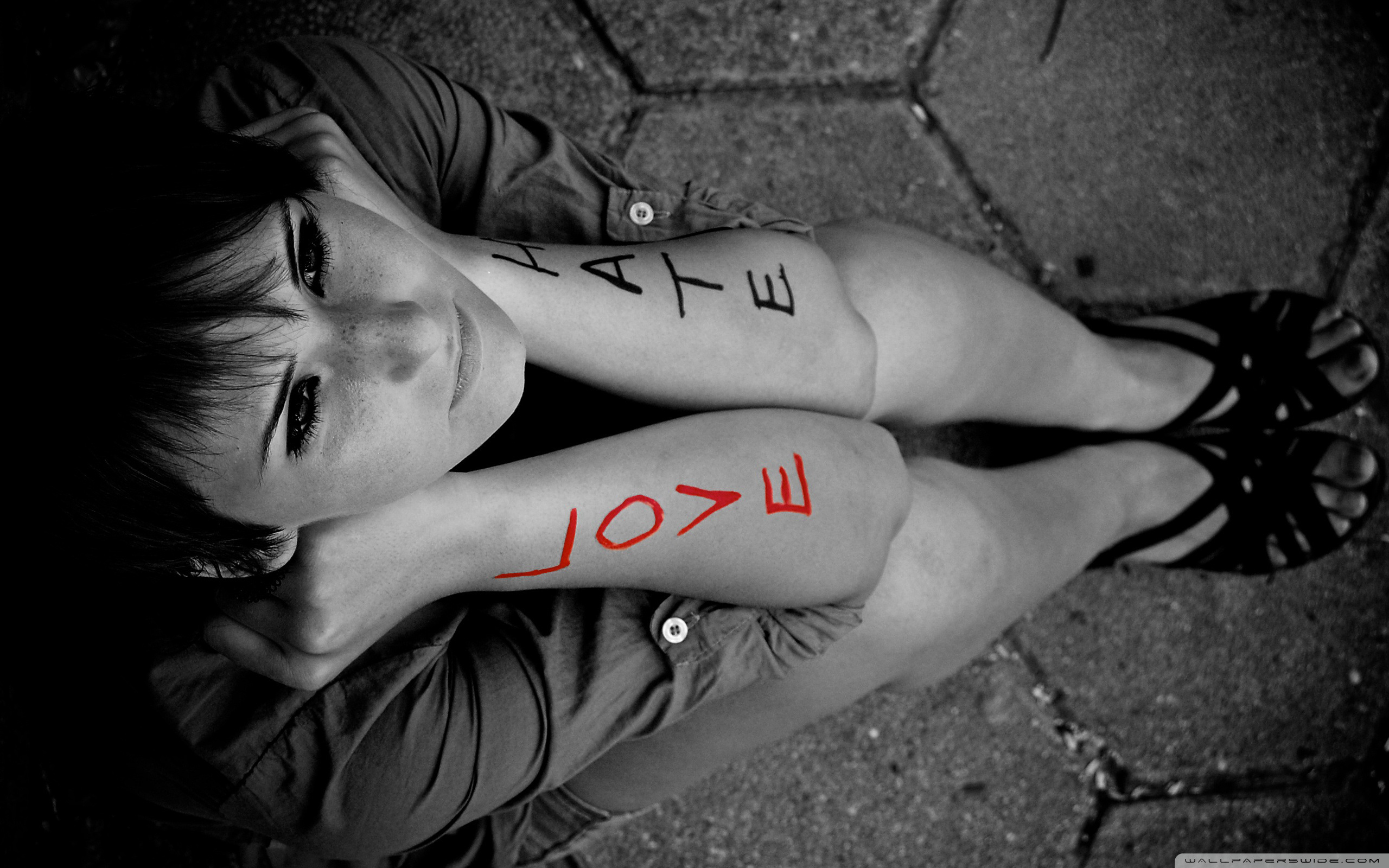
Some elements of love are to be found in the roach. It loves its life: flees from danger, attempts to avoid harm, and tries to survive no matter what the odds. This is where the terrorists have failed. They have embraced only half the divine order — divine hate — the half that appeals to them more and suits their political purposes. They need to stretch themselves, accept all things God has created — even those they find distasteful or abhorrent — and leave the judging to God. They need to cultivate in themselves divine compassion and divine love. Terrorists profess they love God, but they do not love God’s creation — therefore that love is flawed, is not really love at all. Their love has turned inside out into hate.

They need to learn from the cockroach, as do we all. We possess vast potential for divine virtue, yet are so capable of falling into the abyss of pride. These terrorists have fallen, and they are trying to pull us down with them. We must not surrender to only part of the divine order. We must catch ourselves with the feelers of the insect before we tumble too far.

I cannot blame anyone who feels the need to destroy the terrorists. I feel that need myself, the blood lust of anger and retribution. But we must find a response pleasing to the divine. That is what prayer is — thinking about what a divinely perfect being might do, waiting for the small voice to tell us the right way to handle this new permutation of evil — without ourselves falling under its wicked spell.

This is what all religious searching has been aimed at. Whether we believe God exists or not — we can imagine God, as God might exist. Sometimes it is better to die than to kill the blameless. We can feel such things in our deepest selves, and these places are just as important to reach with the conscious mind as the highest levels of abstract thought.

We can imagine God, we can love God, we can honor God, and that is what matters most, not whether God truly exists. Good and evil, love and hate, right and wrong, call it whatever you like. It is our uniquely human gift, our uniquely human burden. Did we ask for this? Be careful what you wish for, goes the old admonition. Would I rather be my dog, or my cat? Sometimes I envy their peace of mind. They don’t know about world wars. But my most divine pleasures, feeling them and knowing that I am pleased, and knowing why — in this way I have my cake and eat it, too. The lure of that apple in the garden is a lovely allegory, whether it happened or not — we invented it. This is the quality of our humanity which we can never give back, no matter how much we might want to.

10 Comments

Filed under beauty, charity, compassion, enlightenment, essay, faith, forgiveness, god, hope, humanity, love, peace, world

notes from september 18, 2001: richard

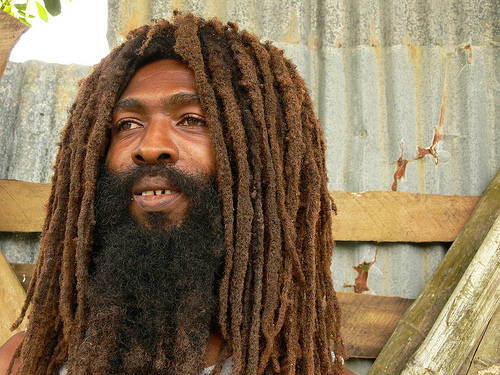
illustration rastafarian man

Notes from September 18, 2001: Richard

That morning, I heard my three-year-old daughter wake up and say with delight, “It’s not dark out anymore.” I went in and saw her already sitting up in bed — the brilliant sunlight streaming in through the pink, translucent curtain of her bedroom — and saw how her head was haloed, as usual, by what resembled the pale, disorderly golden floss some people put on their Christmas trees. Angel hair — she was a tousled, blinking pink-and-gold person, recently emerged from babyhood.

“That’s right,” I said. “It’s not dark out anymore. Good morning.” She flopped back down and remained lying in her bed, even after I folded her white net safety-rail down. “What a beautiful girl,” I said, smiling down at her.

“I can’t get up,” she said.

“Why not?” I asked.

“I can’t get up because I’m dead.”

My heart darted out of my chest, chirping and flapping and shedding feathers like a startled wren but somehow I managed to feign businesslike nonchalance and smile reassuringly. “You’re not dead.” The effects of the terrorist attacks one week ago had filtered all the way down to toddlers far away in Florida.

Well, later that morning, after dropping her at her baby-sitter’s, I stopped at a mini-market at S.E. 9th Street and University Avenue to get a bottle of water. As I pulled up, there was a guy tottering oddly across the sidewalk in front of the market, very tall and skinny, and his long, skinny pink tongue hung out like a dog’s, quivering with each stride. I hoped — no, prayed — that he would not speak to me. He stood in front of me at the counter to purchase a bottle of cheap wine with some very tattered, dirty money. His coins were coated with sand and dirt, and the clerk swept them into a pile then covered them with a napkin as he left the store. I paid for my water. Several middle-aged men stood talking energetically while their lottery tickets printed out.

After paying for the water, I walked to my car and there stood a tall, picturesque man, vibrant and attractive even though missing most of his teeth. He wore a black cap with stars embroidered along the front: three black stars, on a vivid yellow ribbon band. A paler yellow jumpsuit, a long beaded necklace — and long, luxuriant dreadlocks. He wore a couple of rings on his hands, a small silver nose-ring, and a gold earring in his left ear. He was quite handsome, though at the same time I could tell he’d recently been through some very hard times, and probably had been in those bad times for a quite a while.

For a second, I worried, because of the other man, and that man’s obvious level of dissociation with the world (I really had prayed to avoid him), but in a second of observing this man, I knew I was on much more solid ground. I wouldn’t be talking to a total lunatic. He held out to me a book — a Bible — and said he had just seen someone throw it in the trash, and God had told him to get it out and now pass it on to me. I took the book from him, bedraggled and slightly crusted on the cover with God-knows-what. I felt instantly ashamed for worrying what germs might be on the cover of the old, battered Bible, but I forced myself to disregard that, and act untroubled.

During our brief chat, he told me he was a Vietnam veteran. He pulled out a battered leather wallet and showed me his VA Hospital ID, which I knew to be genuine, as I have seen others: his picture was on it, and his name and date of birth. He was born Christmas Day, 1947.  I cannot remember his last name, only his first name, Richard, the same as my father’s.  I looked at the ID and then back at his face, and what I saw was an honorable man, intelligence shining out through his eyes, but also in his eyes a sadness that probably ran deeper than I could ever imagine. His radiance and his sorrow ran through me like a knife, because of my very-realistic fear we’ll now be in another war – one which will kill many young men and destroy the spirits of many more. I was suddenly and inexplicably paralyzed by grief for him, as a veteran, as a street person, as someone now obviously fairly troubled in life. I saw him as he must have been, all those years ago, young and strong and relatively unscarred, and the breath caught in my chest, seeing him both then and now in the very same instant.

After a few moments, he asked very gently and politely if I had any money I could give him to buy some coffee. I was so happy he asked for something, so I could give him something. Ordinarily, I would give someone in this situation a few dollars, but I gave him $20 — I just wanted to give him something. Nobody can give him back what he lost, and money is a poor substitute for what he lost, but it’s a substitute nonetheless. Money and kindness are all we can really give. He went inside, and I buckled my seatbelt, turned on the car, grabbed the steering wheel, but then sank down over it, clutching it, sobbing for the first time in a long time, not caring in the slightest who saw me or heard me. It felt like a release; I only wish it had gone on longer. He came out with his coffee, saw me hunched over sobbing, and got alarmed — he knocked on my window.

“Are you okay?” he asked. Genuine concern; sincere compassion. I can detect those things in other people from the slightest of nonverbal cues, unguarded genuineness and sincerity are so rare in this world. His sincerity made it better, but also worse at the same time.

“I’m okay,” I choked out between sobs. “It’s just this whole thing.” He didn’t have to ask what I meant, because of course he already knew. The power of these events to affect us has crossed every kind of barrier — sex, race, socioeconomic status, education level, sanity level — we’re all family right now. I rolled down the window and he embraced me. I was grateful for the human compassion, pure and simple. His smell was strong and complicated, some of the notes pleasant, some sour, but oh, so real and human and I drank it in, all of it, the bitter and the sweet, a primal metaphor for this crazy life itself. He asked, tentatively and graciously, could he sit with me a while.
“Yes,” I answered. “Please.”

He started to talk, and I listened, giving him my fullest attention. I bonded with him in a way I’ve never bonded with any stranger in such a short time. I guess we spent about an hour together. Richard, from West Virginia. He is a Vietnam veteran, former Marine, former POW. He talked generally about what he was trained to do in the Marines, but said he didn’t want to tell me anything too specific about his experiences during the war — he said women shouldn’t ever hear such things. We talked about everything there is for human beings to talk about and he read to me from the Psalms and Matthew. So devout, so earnest, he held my hand in his while he read Scripture, ministering to me like a Sister.

In fact, he had been in the past a minister, he said, and from his familiarity with the chapters of the Bible I knew he wasn’t exaggerating. He has two living daughters, now grown, and another daughter who died at age two, just two years ago, from a heart ailment. He has his deceased baby’s name tattooed on his shoulder, plus three scars from cigarette burns — two for each of her birthdays, and a third for the day she died. He cried twice with me, once while talking about her — Zaidyn — and a second time while talking about how his stepfather used to beat his mother, years ago. He told me he still calls his mother “Mommy” when he calls her on the phone.

“Do you think that’s stupid?” he asked. “For a grown man to say, Mommy?”

“Absolutely not,” I answered. “I think it’s wonderful. I think more grown men should.”

He has been barred from our local homeless shelter, St. Francis house, for two years for giving food he obtained there to someone else. It’s a rule there, you’re not supposed to do that, share your rations. What a dehumanizing policy. It’s our basic need, to share. Damn them for that. He lived in Jamaica at some point for five years, his grandfather was born there. One of his grandmothers was a full-blooded Cherokee. He had played conga drums with Bob Marley.

I felt, I think, something like the presence of what human beings call the Divine. Divine love. I comforted him, he comforted me. I gave him another $20, all I had left in my wallet. He blessed me, I blessed him back with all my heart.

He still played conga drums around town. He knew of Ajamu Mutima, another drummer. “Another tall, skinny dude with dreads,” he said, laughing. As Richard and I spoke, I thought often of my father, and my stepmother Dorothy (his African-American wife), and of the rich heritage from Africa we all need to embrace.

He spoke of his lost two-year-old saying to him “I love you, Dada.” As a fellow parent, I knew how precious those words were. His pain at her loss, I felt it palpably, physically.

He knew when to end the interaction, and for that too, I was grateful, as I was overwhelmed and needed to go off and write it all down so I would never forget. Though I didn’t want to break our contact, I somehow understood it had to be broken, because it had been so miraculous, we had gotten so much from each other, we didn’t want anything to detract from the miracle. We didn’t want to descend into ordinariness with each other. He didn’t want it to end, either, but he was gracious enough to know to end it. Restraint can be admirable; sometimes, less is indeed more. But we were both reluctant to leave each other, and when I started the car and put it in reverse, he approached the window one more time. And that, too, was perfect.

Because he asked me, at the end, the question that made it all even more clear, more passionate and more profound. The question that made it, well, I don’t use this word much, but there is no other word to use in English — perfect.

“Did you feel it, too?” he asked me. He looked at me, searching my face with his deep brown eyes, eyes that held the world in that moment. Eyes I wanted to fall into.

I knew precisely what he meant, and I had indeed felt it. He had asked a question I couldn’t even have begun to formulate, so overcome was I with my feelings. “Yes,” I answered. “Yes,” I repeated, nodding to him with absolute recognition, and with that he leaned in and embraced me with joyous intensity for one final moment. I returned his affection as I would return my own child’s, or my mother’s. I am profoundly grateful, and I will never forget him. It’s true, Mystery can manifest in the most unlikely ways. We fell together like long-lost twins, then slowly let each other go.  Without saying much of anything but “Did you feel it, too,” and “yes,” we both knew without doubt that he was a noble person with an eternal soul, and so was I, and we had finally found each other for all eternity in a single hour. The force resonating through our bodies was Divine.

6 Comments

Filed under 9/11, bible, daughters, fatherhood, memoir, notes, peace, rastafarian, veterans, war