Category Archives: poetry

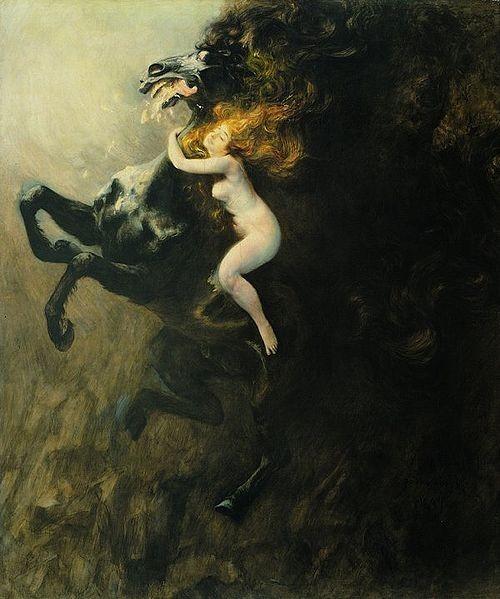
Living On The Moon, a poem

illustration living on the moon

Living On The Moon, a poem

I remember all she had, stockpiled
in a child’s Easter basket.  Necklaces
of ivory, turquoise and amber beads —
hopelessly broken and tangled.  Cheap

metal pins, plastic bracelets, a dozen
stilled watches.  Dried-out jars
of skin cream, mangled greeting cards,
portraits of her sisters.  Often,

I allowed her to caress my face with
her trembling, soiled hands.  On the pillow,
my head next to hers, pretending
I was a small child, and she my beloved

mother.  Afterward, I scrubbed myself pink
with harsh soap.  In a moment captured
years ago, Brandy, her tiny poodle,
dances on his hind legs, his pink toenails

scrabbling against her tanned,
scrawny calves, a rhinestone collar
tight around his limber ashen neck.
She tempts him to please her with a bit

of bacon — herself very plump around
the middle, silver hair teased and
sprayed, a perfect bouffant.  You
would never guess then she was fated

to end up living on the surface of the moon,
by herself, without shame, without desire.
I must restring the beads, drape them over
a mirror, say a few words to her picture.

She will appear in my dreams nightly, dancing
with a small white dog, twirling her brittle
bones around and around until they catch fire.
She will sparkle like cut glass; gulping for air.

5 Comments

Filed under compassion, daughters, poetry

The Evolution of the Orgasm, a poem

illustration the evolution of the orgasm

The Evolution of the Orgasm, a poem

Does the new-twinned cell, as it sorts out
one tangled rat’s nest of nucleus

from the other with its slow patient dance
of cytoplasm and membrane, somehow know

the sweet involuntary contraction and release
of its division?  An organism’s inner tension

promotes as well as restrains
total disintegration.  Is each duplicating

mitochondrion frozen fast in the stream
of its own powerful, mindless barrage

of electrons?  Life on a cellular level
is both straightforward and incomprehensible.

Could any physical laws possibly hold
resolute in the embrace of such rapture?

Was the orgasm the means of our worldly
creation, or the end?  Less can be more,

but not in this case.  Is what makes you
come so easily explained?  As usual, let us

personify:  she is rich-skinned, veiled
cool in a white ruffled nightshirt….

Well-muscled, each movement sure, swift,
with only one purpose.  Her hair is short

or long, pulled tight or draped loose,
but the look in her eyes is a steely

constant, it says, I know you. I have always
known you.  I will know you even after

your tired flesh has flown away singing
through the air like a frightened dove,

and your pale, forgetful bones have fallen
into fine dry grit.  In my relentless arms

you will learn to surrender all fears, all
your dark secrets.  Forever and ever

will I love you.  Is it any wonder we dream
of her so often, with such helpless longing?

1 Comment

Filed under compassion, courage, eternity, evolution, fear, human beings, love, man, mitochondria, mortality, nature, passion, personification, poetry, sex, woman

Summer Evening, Beaumont, a poem

illustration murder in beaumont

Summer Evening, Beaumont, a poem


I was not there. I am only an observer.

The four-year old on his tricycle is

dressed for the heat in loose shorts

and nothing else. His hair appears


disarrayed as he stares at the ground.

The back of his bare skull is as finely

carved as a newborn’s, the delicate

shadows of his shoulder bones ask for


touch. The clumsy chalk lines on the

pavement are from a murder and he

knows it — the blood came out last

night as the torpid sun was going down.


This boy has to make stories up in

his head, but the shy universe he

creates is a notion he’ll never share.

I was not there. I am only an observer.


The dead man was 300 pounds and didn’t

talk much, as he, too, was waiting for a

miracle. Gang members used five or six

bullets, then ran away without taking his


wallet, the item they wanted most of all.

I was not there. I am only an observer.

Hours earlier, the victim had left his

rented home in all-white Vidor; he told


how the folks there threatened to hang him,

he told how lonely it was to wake up every

day and remember where he was. He wasn’t

afraid, he said, just tired of fighting.


2 Comments

Filed under anger, blood, compassion, criminal, criminal behavior, criminals, death, evil, funeral, history, ignorance, karma, mortality, murder, poetry

Catalyst to a Potato, a poem

illustration catalyst to a potato 3

Catalyst to a Potato, a poem


Can I perform the miracles of earth, sun, water?

Can I be the warmth that gently pries open

eyes, that coaxes forth pale shoots, that causes


hardness to soften to green? If I throw the potato

against the wall again and again, will I ever cause

the potato to change? For so long, I tried to form


myself in the potato’s image. I tried to become

round, dense and heavy with stability, I tried

to protect myself. It did not work, it failed.


Now all there is left is her, one small girl alone

in the world. Her lips are redder than mine ever

were. Her shoulders are strong, she is not fragile.


You were the potato, the one I could never change.

Lobbing you again and again brought no result,

no visible difference. Yet in your eyes I am


the one who remained indifferent. I am not

ashamed, yet I am the one who needs to change.

You want only to rebuild. Take stock of your


small garden, not everything there is sound.

There is no such thing as healing. There is only

covering over, sweeping under, tamping down.


You know we will never love each other again,

yet you do not weep. This time I will not do it

for you. I am finished with praying for miracles.

3 Comments

Filed under ancient history, anger, apologia, compassion, development, divorce, earth, heart, justice, karma, logic, love, marriage, maturity, mea culpa, mourning, mysterious, nature, personal responsibility, poetry, regret, relationships, soul, spirit, spiritual, truth

Mr. Rogers Visits Koko the Gorilla, a poem

illustration mr rogers visits koko the gorilla

Mr. Rogers Visits Koko the Gorilla, a poem


Koko was clearly in love with him.

He was the human equivalent


of what in her world would be a male silverback

& I think she would have adopted him into her tribe


in a heartbeat. She took his shoes & socks off

& tickled his feet & pressed them to her own.


She kissed his hands & groomed his face & hair

with her fingertips. She wanted his gold cufflinks


(to remember him by) & you could hear the anxiety

in his voice when he said “My grandfather


gave those to me.” Really, really hoping

he was going to get away still possessing


his treasured cufflinks. What if Koko

had insisted? Would Penny have been able


to talk her out of it? Distract her to something else?

Mr. Rogers seemed nervous but in awe


at the communion with such a “being,”

as he called her. She flirted, playing


peekaboo with him, her large eyes knowing & coy

from underneath a cloth covered with pictures of kittens.


1 Comment

Filed under love, mysterious, poetry, relationships, science, soul, spirit

Handkerchief, a prose poem

illustration handkerchief

Handkerchief, a prose poem


Made of linen, wide band of tatted lace around the edge, now slightly torn.


The linen is white, tinted grayish-green, the lace silvery like sea foam, and that delicate.


In 1900, a bride carried this in her bodice, next to her heart, and when she saw her fiancé at the altar, she began to perspire. Her salts are in the fabric still.


How she loved him in that moment…. What isn’t here is the rest — six children, five boys and a girl, the farmhouse so cold in the mornings, before she lit the fire.


Her husband’s waxy handlebar moustache, his pleated ruby waistcoats, hand-sewn each night until her shoulders ached.


How many times had she tried to imagine their wedding night as she tatted her lace, each delicate loop like a caress?


1 Comment

Filed under beauty, eternal, eternity, heart, karma, kindness, life, love, man, marriage, men, mortality, mysterious, poetry, prose poetry, relationships, soul, spirit, spiritual, woman, women

Going To Sea, a poem

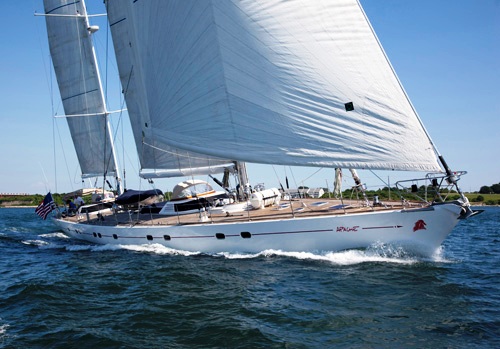
Apache, 105-foot D. Presles and J. Pierrejean charter yacht

illustration barry huplits high school photo


Going To Sea

(for Barry Huplits)


She is a great white boat, carved

of wood, lacquered to a blinding

sheen, her sails immense, floating


over my head like the wings

of a fearsome angel. I sit

on her prow, clinging to the slight


metal rail, and together we leap

over the waves like some illiterate,

dangerous god. I am a mermaid,


a brightly colored figurehead,

thrust into the salt spray to bring luck.

The power of the water flings me to and fro,


but I hold fast, panting, the rich smell

of the sea making me drunk. As we pass

the ragged rock walls of the inlet,


I see the towering dwellings of men,

though these quickly fall behind our path,

growing tiny, frail to the elements


I have momentarily harnessed. We brush

great clumps of weeds, then the color beneath

changes from murky green to depthless indigo,


the froth of the peaks suddenly

light, riddled airy like the childish,

gladdened heart inside my chest.


In my net are jerking glass shrimp,

Tiny, tassled fish that look like

bits of leaf, one lone needle-nosed


eel, sinuous even in his distress,

and when I have stared long enough,

I fling them back to their wet lives


without regret. Under the sharp

edges of the sun, skin grows heated,

reddened as if by love’s rough brush,


yet we keep on, moving into the horizon,

towards the vanished place of wildness,

full of an impeccable, golden light.


Leave a comment

Filed under ancient history, beauty, compassion, earth, eternal, eternity, god, good, history, identity, karma, kindness, life, love, mysterious, nature, poetry, soul, spirit, spiritual, truth, universe, warmth, wood, youth

Blood Mother, a poem (sculpture in the Orsay Museum, Paris)

illustration blood mother
Blood Mother, a poem (sculpture in the Orsay Museum, Paris)

She is made of wood, a silken hardness that begs touching.
Should anyone reach, trail a fingertip across her flesh,
the man in straps would speak, his mumbled words rasping
through the stopped air, turning beating cells boorish,

piercing desire’s heart, killing a love so old, so pure,
it has no real name. Such is obvious from the way she stands,
lifting her heavy hair, each hand the careful cynosure
of being — she drapes the primal fiber like garlands,

letting it flow free only to capture the thickness of trees.
Her eyes are closed. Under abraded lids resides the look
everyone knows: pupils enlarged by pain; simple refugees
from knowledge received of the body, woman’s final textbook.

The belly asks first. It says come, reside here within me,
neither cold, nor afraid, nor desirous — twirl and dream
of nothing but this spare salt universe, wear only veins, silky
wisps of hair, discreet, pale limbs enfolded by soft cream.

Her feet nourish the ground, her head becomes the forest.
Walk where her shadow falls, seek the margin of her arms,
soothe your tired neck in mother’s lucid heat, hedonist
entity you have become, set in blind motion under charms

worked by no laboratory scientist in a trim white robe.
Rather, you emerged redly from a thousand other deaths,
one messy cauldron holding shapes; the patient, springy web
of chosen elements drawn together, joined by many faiths.

The breasts want, too. Child, they sing in unison, nourish your
body with our thin white blood — suckle, cradle the nipple deep
against the palate, pull the flow from a dozen small pores, gnaw
strong like a velveted vise, drink true until you swallow sleep.

The need to believe is more than skin. Need is the whole glossy
image on this lonely wall; what it means to be such a mechanism!
She never schemed for her fey power — nor does she expect mercy.
You exist, mere fragile accident, in perfect jeweled synchronism.

Not as simple as punishment, nor as complex as grace, her skills
for life reside at a place men cannot enter, no fault of their
own. They build instead the world, of brick, stone; shy stabiles
meant to appease longing, courageous memorials to light, to air.

2 Comments

Filed under art, art history, beauty, blood, compassion, earth, eternal, eternity, heart, love, man, mother, mothers, nature, orsay museum, paris, poetry, sculpture, soul, spirit, spiritual, warmth, woman, wood

Heads of Caracalla, a poem

illustration 1 heads of Caracalla

illustration 2 heads of caracalla

MC 0464

Heads of Caracalla, a poem

There are three of the ancient busts on display
in the Louvre.  Poor soul:  he only controlled
his great empire for six years.  I’ve been married
for seven, and though it isn’t like ruling Rome,

it’s hard enough.  Thus, I can’t imagine how
he managed, even if he could imprison or execute
at will.  Maybe stress did him in at twenty-nine.
True enough, during the heated third century

after Christ, the common man was too often dead
by thirty, teeth rotted away to stumps,
complexion scarred and worn, creased deep
like pegged and scraped hides drying in the sun.

Surely Caracalla’s own hands were soft,
languorous and pudgy, with those meticulous
shiny nails?  Perhaps he was afflicted
with diabetes, or simply poisoned by his lovely

but illiterate wife.  Will anyone wonder
what carried me off after a thousand years —
or even ten?  During three decades on earth,
sculptors recorded all his secrets:  first the pretty

baby, innocent and round-cheeked as any three-year-old,
blunt-cut curls springing away from his tender forehead
like the petals of an iris.  Around the time
of his ascension, he had become sullen, his eyes

impenetrable, glassy, his torso clumsy, thick-necked,
his full, full lips bowed with palpable cruelty.
I must admit, by the year of his death, he’d grown
into his flesh — he looks wise, even kind,

and his drilled marble eyes are lively, holding
a gleam of curiosity for something outside his own
imperial body.  I place my finger against the hard marble
cheek, hearing my own frail life tapping its brisk heels.

Leave a comment

Filed under ancient history, art, art history, beauty, bust, childhood, death, emperor, empire, everything, history, life, louvre, manhood, marble, maturity, mortality, museums, paris, poetry, rome, sculpture, travel, universe, youth

Rosalia (Rosa multiflora), a poem

illustration rosalia

Rosalia (December 13, 1918 – December 6, 1920), was a child who died of pneumonia.  Her father was so grieved by her death, he hired a famous embalmer to preserve her body.  It is still nearly perfectly preserved, nearly 100 years later.  This poem was written after observing a  garden near her tomb, planted with the flower she was named for, Rosa multiflora, commonly called Rosalia, an especially fragrant and vigorous climbing rose.


Rosalia (Rosa multiflora)


The haughty snail rears up, large and indolent,

its creamy shell ponderous, though rakishly tilted.

The knowing eyes unfurl on stalks greyish-violet,

above tender undulate flesh, faintly quilted


as if by past misdeeds. Near a warm slate path

thrust through the damask-brown earth, a small bird

dips wings, cocks head, perches on the birdbath

shaped in the lithe innocence of a fair-haired


Roman cherub. The rose-heads swoon in the sun,

lazy petals curled inward to form delicate bowls

ravished by enormous bees, whose silvery finespun

wings vibrate, ceaseless keepers of love’s oversoul.

2 Comments

Filed under beauty, daughters, fathers, love, mourning, mysterious, nature, parenting, poetry, truth