Category Archives: woman

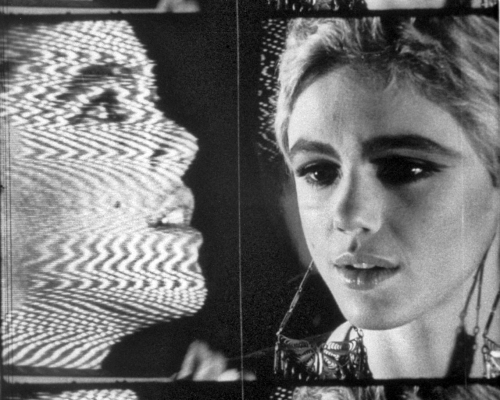
Edie Sedgwick Discusses Her Early Years, a Monologue/Poem/Story/Lyric.

illustration edie sedgwickI felt I was Gloria, some angel living in her own hallucination of time. We were angels on LSD, on LPS. I was cheesecake, chocolate-dribbled, sexy & asexual, pop-rocks eye candy. Wrapped in a wealthy, yet tragic, past. DEEP BREATH. With my dreamy tones; those slow, hypnotic lyrics, my subliminal heavenly chorus of all that is female, the goddess inside us. Hypnotic, larger than life.

And so were the commercials. We really were all famous for about 15 minutes, but we couldn’t see that, all we could see was right now, right then. The atom bomb age, the Cold War, suicides, the Third World starving to death… children dropping like flies in Africa from famine. India, hit by an earthquake. Viet Nam cranking up, with war profits for the conglomerating corporations; divvying up the spoils of war. Kennedy, dead in Texas.

Be the girl all the bad boys want. DEEP BREATH. Sex turned into a Technicolor rock show, pure fantasy; turned into reality. People started living according to their own fantasies of what the world was like. The awakening grew harder; grew easer; grew harder; again & again.

Material wealth. An intoxicant. A drug. Addictive behavior. Spread it around. Moderation in everything. Reasonable assumptions? No? DEEP BREATH. Spell it the fuck out. Rules-based understanding. It takes me a long, long, long time to learn all the rules, all the techniques, all the subtleties. But when I figure something out, I have fucking figured the fuck out of it! DEEP BREATH.

I’m a dreamer; I’m a practical schemer. I’m a dreamer with a BMW; I’m a bad-ass schemer; I’m a waterlogged dreamer; I give up when there is trouble; I run like a rabbit. I dig in like a lion at bay.

Falling in love is wonderful. Once you fall in, take care never to fall out. Find something to keep your love alive… anything! Fasten on & fasten hard. In every way, so they say. Rumors fly. Determining actual facts is hard. All the shit I ever believed about myself came true. DEEP BREATH.

So, my body believes, at least. Next, to make my logical mind decipher the hieroglyphs. DEEP BREATH. Then my heart shall feel; then my soul shall live. DEEP BREATH.

It’s what Andy always used to say: artists are artists, no matter their profession or occupation or job or outward circumstances, and artists are the commodities of the very wealthy. DEEP BREATH. We’re all falling prey.

4 Comments

Filed under acceptance, addiction, adolescence, adult children of alcoholics, alcoholism, ancient history, anthem, anthropology, apologia, art, art history, baby, beauty, birth, blood, child abuse, childhood, compassion, courage, development, dreams, earth, enlightenment, eternal, eternity, eve, everything, evil, evolution, faith, fear, fiction, forgiveness, friendship, god, grief, hope, identity, justice, karma, kindness, life, logic, loss, love, manifesto, maturity, mortality, mysterious, passion, poetry, prose poetry, regret, relationships, sex, short stories, soul, spirit, spiritual, spirituality, transcendence, transitions, tribute, truth, united states of america, universe, war, woman, women, world, youth

The Latest Fashion: New Toilettes, a poem

illustration new toilettesThe Latest Fashion:  New Toilettes, a poem

(title and subtitles from an essay by Mallarmé)

 I.  An At-Home Gown in Garnet Velvet.

I receive you at my front door, formally, immaculately dressed, delicately arrayed, impeccably scented.  You think of me as I last appeared at the beach, tousled, salt-encrusted, and burned by the sun, dusted from scalp to toe with golden sand.  You see underneath my gown a double exposure — the natural, the cultivated — which rises up so that my two brown eyes turn to four, eyes within eyes, nudity within garnet velvet.

You think of wine, the vintner’s trembling hands caressing grapes, silently pleading with them to reveal when they will give up their most perfect secrets.  We live for moments such as those, we live to take up our wine in a crystal goblet and put it to our lips and breathe the scent of rain, sun, earth and sweetness.  Sweetness which has by virtue of aging embraced its opposite — sweetness which has given birth to tart recognition.

We are both innocent as three-year-olds and jaded as madams.  You touch the supple velvet, but what you are feeling is the smoothness of my insides.  I remember the sound you made, long ago, an explosive sound which you tried so valiantly to muffle.  The report of your exhalation was echoed in each cell of my body.  Garnet velvet becomes a skin I will shed.  Nothing before was unskinned.  I will turn myself inside out, only for you.

II.  A Hostess Gown in Gray Russian Satin.

 Together, we receive cadres of admirers — come to look upon our glowing faces, hear the way we laugh, breathe in the air of passion which surrounds us.  We understand this loveliness we display is not ours, rather on loan merely, a magnification of the same electric forces which keep every atom together, proton and electron and neutron dancing their way in a wild mazurka.  Those atomic particles, those rapscallions.

My gray dress hugs my body tightly, exposing each curve, revealing my body but keeping it a magnificent secret at the same time.  When your fingertips slide across my shoulders, the fabric moans, and the assembly gasps.  I can take no credit for my beauty, only for the courage to allow it free rein.  And I count every electron of your body, I feel the whirling clouds as they circle your atomic nuclei, endlessly proclaiming not beauty, not usefulness, but truth.

Please be advised you are in the presence of ananda.  Or at the very least, maple syrup.  Even the trees know.  How the sparks flew when first we met!  We confused the friction with dislike, at least until you saw me lick my lips.  Gray satin reminds us of the cries of mourning doves, the way they’d scatter as your car pulled into my driveway.  Such murmurings as felt like satin threads, pulled through my heart.  You came to me.  I will stay found.

III.  A Frock for Paying Calls in Plum-colored Faille.

We deign to visit the world, after a twenty-three year sabbatical, and everywhere we go the air matches my dress.  The moon becomes a large opal, the sky an onyx abyss into which I fall upward, tethered only by your voice.  When you laugh, I hear my father.  I hear the way he held me, our skin where it touched on fire with longing only for more bare skin.  He died too soon, and so did I.

My skirt is cut on the bias — when I walk it moves as the tops of the Australian pines moved that day you first kissed me, at the beginning of hurricane season.  You and I ask our hosts if they are prepared, but they don’t understand.  Once, you lusted for books — 27,000 of them — 19 cartons fit into your truck, each trip.  The hardwood shelves groaned under the beautiful weight of your hope.  Please, don’t read too much into the facts.  What do the pages tell you?  Do you remember when you hated me?

It is so difficult to construct a garment on the bias, I must consult experts in the field.  I show them the dress I wear, ask, can you make me the same dress, in the same fabric, over and over.  I want nothing varied, because in this dress is all the world.  My father has been dead now for longer than I knew him.  I still see his hair, iridescent red-gold feathers, under my fingertips, my nails painted purple.  I asked for you.  I found your succulent eyes.

4 Comments

Filed under dream, dreams, love, men, mysterious, nature, passion, poetry, prose poetry, relationships, sex, woman, women

The Evolution of the Orgasm, a poem

illustration the evolution of the orgasm

The Evolution of the Orgasm, a poem

Does the new-twinned cell, as it sorts out
one tangled rat’s nest of nucleus

from the other with its slow patient dance
of cytoplasm and membrane, somehow know

the sweet involuntary contraction and release
of its division?  An organism’s inner tension

promotes as well as restrains
total disintegration.  Is each duplicating

mitochondrion frozen fast in the stream
of its own powerful, mindless barrage

of electrons?  Life on a cellular level
is both straightforward and incomprehensible.

Could any physical laws possibly hold
resolute in the embrace of such rapture?

Was the orgasm the means of our worldly
creation, or the end?  Less can be more,

but not in this case.  Is what makes you
come so easily explained?  As usual, let us

personify:  she is rich-skinned, veiled
cool in a white ruffled nightshirt….

Well-muscled, each movement sure, swift,
with only one purpose.  Her hair is short

or long, pulled tight or draped loose,
but the look in her eyes is a steely

constant, it says, I know you. I have always
known you.  I will know you even after

your tired flesh has flown away singing
through the air like a frightened dove,

and your pale, forgetful bones have fallen
into fine dry grit.  In my relentless arms

you will learn to surrender all fears, all
your dark secrets.  Forever and ever

will I love you.  Is it any wonder we dream
of her so often, with such helpless longing?

1 Comment

Filed under compassion, courage, eternity, evolution, fear, human beings, love, man, mitochondria, mortality, nature, passion, personification, poetry, sex, woman

Things We Never Said, a short story

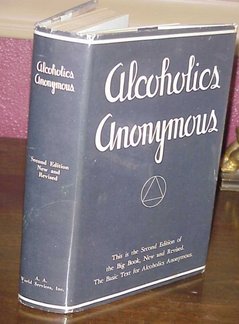
img058 alcoholics anonymous big blue book

Things We Never Said, a short story

She was beautiful, as all mothers are to their children, but it was far more than that. Total strangers told me how beautiful my mother was. She was particularly fine-boned and delicate. Her skin was the softest I’ve known, her arms and hands the most stubborn, the most lethal.

Mom was an alcoholic, of course, and the most gruesomely stubborn person I’ve ever known. She went past simple denial and created her own alternative universe. Once, some quack psychiatrist she was seeing told her she wasn’t a “true” alcoholic — that she only drank out of boredom. She clung to that unfortunate phrase of absolution, repeating it like a robot in a variety of situations, until the day she died at 44 from alcoholic pancreatitis.

The only way we ever got her into rehab was when we threatened to call the police about obtaining drugs by false pretenses. She’d call the drugstore and tell them it was Dr. So-and-so’s office, would they please fill a prescription for such-and-such, three refills, please.

She got stiff all over when she drank, not like a normal drinker who gets loose. Stiff, and with a duck-legged walk that made my flesh crawl. I can’t tell you how many times I just let her lay there on the floor where she’d stumbled in a drunken stupor. I couldn’t bring myself to touch her.

If only Mom could have been more like Charity Hope Valentine, the taxi dancer in “Sweet Charity” who, after being pinched, pawed at, fondled, ridiculed, robbed, tattooed, thrown from a bridge, trapped in an elevator, and deserted at the altar, rather meekly accepts the cheery and somehow redeeming gift of a single daisy from a group of 60s flower children, pulling herself out of her misery yet again, and living “hopefully” ever after.

My mother and I both said “I love you,” a lot, and to no avail. Neither of us believed in love. We believed only in self-preservation. Trust was unknown. I have never learned the reasons for staying with another. All I can think of, now that I’m married, is what I’m missing, giving up for the other. How short life is, and how unhappy.

I took a developmental psychology course once, while my mother was still alive. The teacher explained that no child ever actually dreams of killing the mother. Infantile rage exists, yes, murderous anger exists, yes, but the true desire to kill can never be resident in the child’s subconscious. “The instinct for preservation is too great,” she said.

When I told her, later and in private, how I’d dreamed that very act, how in my dreams I’d taken the great butcher knife out of the kitchen drawer and stabbed it viciously and repeatedly into my mother’s fine and delicately boned chest, she shook her head skeptically.

“You didn’t really dream that,” she insisted. “You only think you did.” I didn’t argue. I was still too afraid it might happen in reality to insist that it had happened in dreams.

She was never a very good mother. I was never a very good daughter. After she died, I went to confess my guilt over my record as a daughter once, to an Episcopal priest. “I let my mother down,” I told him.

“No, you didn’t,” he insisted. “You were the child. You had the right to go off and live your own life.” I was angry at him, and never went back.

I still feel guilty about the first time I knew I’d hurt her feelings. She made me a bunny rabbit salad – a scoop of cottage cheese for the bunny’s face, cut up vegetables for the bunny’s ears, eyes, nose, and whiskers. It was adorable. But I hated cottage cheese, and salad. I was four years old. “I don’t like cottage cheese,” I told her.

“Just try it,” she said.

“No.” I refused over and over again. Finally, she ran out of the kitchen, to the bathroom, and I knew she was crying. I sat in the kitchen, staring at the rabbit, not eating it. I didn’t follow her, I didn’t apologize, and I sat there until someone, probably my grandmother, covered the plate with a piece of plastic wrap and put it in the refrigerator. I knew I was never going to eat that bunny rabbit salad.

I mailed the invitations to my own daughter’s birthday party today. She’ll be four in sixteen days. Oddly enough, all I could think of as I wrote out the cards was how much my own mother would have enjoyed seeing my child, her first grandchild. I know exactly what my mother’s face would look like if she were at the party — lovely, tremulous, inevitably a little weepy. I also know half of my pleasure would come from seeing the tenderness in my mother’s wide brown eyes as together we would watch my little Katie blow out all her candles.


3 Comments

Filed under addiction, alcoholism, blood, child abuse, child neglect, childhood, children of alcoholics, compassion, daughters, death, development, fiction, forgiveness, girls, hope, life, logic, love, mama, matricide, mea culpa, mortality, mother, mothers, mourning, murder, parenting, personal responsibility, regret, relationships, short stories, soul, spirit, truth, woman, women, youth

Enlightenment, a very short story

illustration 5 enlightenment

Enlightenment, a very short story

He felt awake when he saw her sitting at the bar, as though all his previous life had been a slow, lazy dream.  She looked like a girl from one of those sex shops in Amsterdam, wholesome and perverted at the same time.  Her hair was perfectly straight and hung down her back to her waist. Her forehead was a smooth, wide dome of innocence.  Her flesh was abundant, stark white and glowing, spilling slightly over the waist of her leather skirt.  Baby fat.  He could tell she’d outgrow it.  Regeneration was her game.

She said, “I prefer to travel alone, no fluff or chatter.”   She spoke of the outer and inner journey.  She didn’t know which was the more important.  “I am my own  mysterious stranger,” she said.

When they got back to her room, he saw how her bed was opposite a huge fireplace, black; it felt like ghosts were everywhere, but especially in the fireplace, coming down the chimney. The wind made sounds around the eaves and windows, such a big wind, it was spring but the wind was fierce and strong. Her room scared him, he would rather have been anywhere else. But he couldn’t leave, the girl was already undressing on the bed.  She looked at him from under her fall of hair.  The now-naked girl lay back on the pillows and smiled.  He felt as awake as the Buddha under the bodhi tree.


1 Comment

Filed under beauty, compassion, enlightenment, fiction, identity, karma, love, man, men, mysterious, redhead, relationships, sex, short stories, soul, truth, universe, warmth, winter, woman, women, youth

Savior, a short story

illustration savior

Savior, a short story

The young man seemed so out-of-place in her mother’s living room. Maria stood in the doorway with her mother’s groceries, her purse on her shoulder, key ring dangling off one numb pinkie, clutching the heaviest bag propped on her hip, the bag that contained her mother’s supply of Diet Coke. Her mother and this man were sitting together on a Victorian loveseat on loan from Maria’s antique shop, their knees almost touching, the man’s arm draped across the ornate wooden back, his fingers curled behind her mother’s left shoulder. Her mother had a photo album spread out, one leaf resting on her lap, the other resting on his. Maria could see herself, at two, nude in the tub. Christ, she thought, what’s she showing him those for?

The young man leaped up after a few moments of uncomfortable silence, running his hand over his hair and smiling. Her mother folded the album closed, holding out her arm, and he helped her up, a gesture Maria herself had never mastered, helping old people up out of their seats. She tried too hard, using the wrong position and too much lift, until their sharp old elbows jutted out at alarming angles but their behinds hadn’t lifted an inch.

He had a medium build, wavy blonde hair, a deep tan — he was almost, but not quite, handsome. His eyes were too close together and his nose too long: as Maria met his direct gaze, she felt uneasy at his obvious affection for her mother, the implication of knowledge which came from his confident manner. He looked as though he was already sure he knew the older woman’s mind; already sure she must be lonely.

“I’d like to introduce you to my daughter, Maria,” her mother said. “Maria, this is David. He found my wallet over at the library and was kind enough to track me down. I couldn’t believe it when he called. I didn’t even know it was missing yet.”

“That is lucky,” Maria said. “Really lucky,” she continued, smiling in her mother’s direction, one eyebrow arched, whereupon her mother shook her head once, violently, and her daughter’s unspoken reprimand was expertly dismissed.

“Oh, it wasn’t luck,” said David, the sound of his voice causing the small hairs at the back of Maria’s neck to rise. “Nothing’s a matter of luck. Life is all planned for us, down to the last detail.” He nodded, smiling at Maria, his arms hanging relaxed at his sides, and the suspicion came to Maria that he was crazy. Crazy but safe, one of the harmless ones, the kind that made her want to go a little crazy too because they seemed so sure of themselves.

Most of Maria’s son Richard’s friends were the same type, that’s how she knew. Richard — she never thought of him as “Kurma-devi-dasi,” although she respected his desires and addressed him that way — was crazy but harmless too, although she knew she couldn’t see him as clearly in that way as she could a stranger. To this day she was able to discern the fuzzy cartoon of his infant features on his serene face when he smiled at her — the memory of his toothless gums clamped like a rhythmic vise on her breast would come to her, looking at his shaved head and his orange cotton robes as he chanted over his prayer beads, and she would be filled with a sorrowful rage that made her chest shrink into itself.

Not his grandmother, though — she had sat with her grandson over at the temple for hours when he first became a devotee, sitting in a rocking chair next to him as he said his prayers in front of the little richly clothed doll of Krishna. She told Maria it made her feel closer to her own idea of God just being in a place like that. In theory, Maria agreed, but the issue wasn’t whether the temple was a nice place to spend an afternoon, the issue was whether it was a good way for Richard to spend the rest of his life — sewing holy Hindu god and goddess doll clothes on an old black Singer?

“I don’t know about a plan,” Maria replied. “I’m lucky if I know where I am, half the time. If it’s Wednesday, this must be my mom’s apartment — you know?”

He said nothing at first, not seeming offended, not defensive, just staring at her with eyes so full of a giddy, knowing light — his face loomed toward her, and tension rolled through her stomach as his mouth moved into a drawn bow of compassion. It didn’t matter that he wasn’t handsome; he radiated an alarming level of charm. “Down to the last detail,” he repeated, arching his eyebrows and opening his eyes a bit wider, his pupils enlarging like a lover’s, and the sound of his voice vibrated within her ears, warm and solid like hands pressed against her temples.

“Then one of the details must be that I’ve got to put this bag down before my arms fall off,” she said, forcing a laugh. “Excuse me.” She turned away and walked up the hall to the kitchen. By the time she’d finished putting the groceries away — rearranging pantry and refrigerator shelves, purposely taking far longer than usual — he’d already gone. Great. Now their lives were stuck together like flood trash swirling down her mother’s raging river. David would be there for her mother — be there always and forever, overflowing with that sickening, confident love, and her mother would never be able to blame him, not for anything.

***

Maria was uncomfortable with the amount of time her mother was spending with David, but didn’t dare say too much. There was nothing overtly objectionable about him, other than his religious fervor — and how could she term that a fault? Her mother wouldn’t listen, anyway. Whenever Maria brought the subject up, her mother would groan, “Oh, boy, here we go again,” and she would frown, which consisted of one sharp, off-center line in the middle of her forehead. “You don’t have to like him, sweetie,” she’d say, “but I wish you did.”

Still, her mother’s interests seemed to be shifting. Odd books and papers came and went on the coffee table, crowding out the usual hodgepodge of half-finished crosswords and literary journals: treatises on wild herbs, population-density maps, computer programming manuals, military histories. Flipping through a ratty emergency-medicine textbook, Maria saw numerous large, yellow-highlighted portions and margin notes in both an unfamiliar, childish hand and her mother’s own neat back slant. “What is all this stuff?” she asked, holding the book out to her mother.

“I’m getting ready,” her mother said. She sat down opposite Maria and picked up a needlepoint pillow, arms crossed, mashing it to her tummy like a teddy bear.

“Ready for what?” asked Maria.

“The end of the world,” said her mother. “You know, Armageddon.”

***

At first, Maria’s son agreed with her concerns, not at all what she expected and a strangely intolerant position for him to take — considering his own lifestyle — his agreement only making her feel worse. They sat in the temple’s empty dining hall. “I’m with you, Mom,” Richard said. “The guy sounds like a real case.” He rubbed his hand over his prickly scalp and yawned, his left hand fumbling inside the peach-colored sack of meditation beads that hung from his neck. He scratched his nose, smearing the delicate yellow makeup lines drawn there that symbolically pointed up: up to God, up to heaven. “Have you checked Grandma’s bank accounts lately? He could be some kind of con artist.”

“No, no,” she said. “That’s not the kind of thing I’m worried about. He seems sincere enough. He’s no con artist. It’s just — your grandmother is really starting to believe what he says — how Armageddon is coming, all that stuff. You should see the books he’s got her reading.” Maria leaned on her elbows, cupping her chin. Richard closed his eyes for a moment, tilting his head to one side like a duck.

“Then again, I suppose the guy could be right on,” he said, his eyes still closed. He looked asleep, his skin pale and fragile. “Maybe that’s what bothers you. I’ve been trying to get through to you on that level for years. At least Grandma’s started thinking about her future.”

“Her future?” Maria asked, her voice louder than before, wanting to reach across the picnic table and shake him by his choke collar of tiny wooden beads. “At eighty-five? People that age should be beyond this kind of worry. It isn’t right. He’s getting her all stirred up — and for what? If all that biblical stuff happened, she’d never survive.”

“You’re just jealous,” he said. He opened his eyes and stared at her, his thick black lashes tangled and dusty-looking. His pupils were pinpricks inside the blotched hazel irises, and as he spoke he stood up too fast, banging his shins on the metal tubing of the cheap table. He grimaced and squatted for a moment, rubbing his leg. “You can’t stand it when someone believes in something you don’t. I thought you were worried this guy was some kind of sleazy fake, but now you’re telling me what freaks you out is that he’s the real thing. Make up your mind. You should be happy Grandma’s paying attention to what’s out there.” He turned and walked away, his robes ruffling out behind him, his rubber sandals slapping the bare wooden floor. “I’ve got devotions to attend to,” he said, not turning back to face her as he walked, his voice thin, echoing across the length of the long, barren room.

***

The earliest occasion Maria could remember wanting her mother’s opinion was in the seventh grade. Maria had just turned twelve, and had her first crush. She was stringy and awkward in those days, large-kneed and carrying a head of vigorous, curly hair she flattened down into a matted-looking cushion in desperation. Then the quiet boy started walking her home from the bus stop.

She remembered him still: pale blue eyes, so large and widely spaced that they gave him a somewhat doe-like expression. His jaw, however, was firm, angular, and thus saved his face from weakness. Warm hands lay against hers, trembling, stroking her fingers up and down in an hypnotic rhythm. “Do you want to go steady?” he’d asked her, unable to meet her eyes. That meant wearing a silver identification bracelet, his name engraved about her wrist for everyone to see; his property. She hoped his name was in block capitals, not that loopy script: it looked better.

“I don’t know,” she said, and went home to ask her mother’s opinion, a matter of form perhaps, but something she wanted; the camaraderie of womanhood revealed at last. This could be the common ground between them.

“Honey, I just don’t think going steady is a good idea at your age,” said her mother. They sat in the dining room, wallpapered with tiny brown pineapples. “You’re too young to get so deeply involved with a boy.”

“But lots of girls do it,” she said, knowing this was a flawed argument, but even as the shipwrecked are driven to drink seawater, her words carried a dreamlike hope.

“You asked for my opinion,” said her mother, “and I’ve given it to you. It’s up to you to make the decision. I’m not saying no, I’m just saying I wouldn’t if I were you.”

In the end, she told the boy no — and was informed that the going-steady offer had been withdrawn in the interim — and she realized by heeding her mother’s counsel she had been saved from a greater and more penetrating level of humiliation than she imagined even existed. But — that wasn’t the point. Maria knew her mother would never have said no to one of her own teenage boyfriends — that was a lie. Safe advice given as a — joke, as an experiment. Didn’t Maria have the right to be strong-willed? Didn’t she have the right to her own losses? She never stopped trying after that, but the drama was gone.

***

Then Maria found her mother in the bathtub. She entered the apartment, carrying her mother’s dry cleaning: a few sweaters, a wool suit, a pink blouse. She heard water running, a slight, far-off sound, as if from the next apartment. The bathroom door was closed. The only sound was a rolling and a swishing, as though a large fish reclining in the tub had shifted position. Alarmed, Maria opened the door. Her mother was sitting upright in the full tub, a small trickle of water dribbling from the faucet. The tub was full to overflowing. Her mother was wearing a purple shower cap embroidered with large seahorses.

“Go away,” she whispered, as Maria stood, confused. A bristling red pincushion sat on the edge of the tub, dangling a red cloth strawberry from a green cord into the water. The strawberry bobbed on the surface. In her mother’s hand was a large straight pin, on her wrist several thin scratches. She jabbed with the pearl-headed pin, her hands unsteady.

“What are you doing?” asked Maria, her voice shrill, terror coursing through her. “What in the hell are you doing?”

Her mother turned to her, her unfocused eyes shining and rolling up toward the ceiling as she spoke. “Trying to kill myself,” she said.

“With pins?” shrieked Maria. “Jesus, Mother!”

“I wanted to flush my head down the toilet,” her mother continued, “but it wouldn’t go down.”

***

On the third night of her mother’s emergency hospitalization, Maria dreamed she was sitting in her living room drinking tea with one of her college professors, a sloppy but verbally precise little man. In reality, she hadn’t liked him at first, but she had taken every course he taught because — unlike the majority of his students — she got A’s from him. She came to admire his sincere and stringent approach, forgiving him his greasy, untrimmed hair, his baggy, stained chinos and ancient, Filipino-style dress shirts.

And so, in the dream, her old professor, uncharacteristically neat, his hair washed and combed, his pants pressed, was explaining to her that he had theater tickets for tonight’s performance — would she like to join him for dinner and a show?

I’m sorry, she said, but I don’t think I can get a baby-sitter on such short notice. It’s already six o’clock.

He raised his eyebrows. I had no idea you were married with a child, he said. Well, that’s too bad, my dear. Perhaps we can arrange it some other time.

As he shuffled off down the sidewalk, Maria wanted to call after him: Wait… I don’t really have a husband… I don’t really have a child… it’s all a mistake. Come back. I want to go with you.

But she was silent, knowing it wouldn’t make any difference what she said. He was already too far away, and could not hear.

***

The next day, when Maria arrived at the hospital, her mother’s newest flowers were wilting in the heat. Her mother had turned the room’s thermostat up to 85 degrees and wore a sweater and cracked pink leather mules. Still, the new additions were beautiful: three dozen roses, white, yellow, and coral, stuffed into a too-small mayonnaise jar, the faded label turned to the wall. Maria stood in the doorway for a moment, holding a brown paper sack full of the day’s requested items — mostly cosmetics — looking at the bright splash of color. “Hi there,” she said to her mother, who sat hunched on the edge of her bed, flipping through a current TV Guide.

“Hi,” said her mother. “Is it cold out? You look chilly.”

“It’s cool, but the sun’s warm,” said Maria. “Who gave you these roses?” She leaned over to smell them, her nose brushing the petals.

“David,” said her mother. “He brought them by this morning on his way to work.” She squinted at Maria, her glasses speckled with bits of dust, so filthy Maria wondered if she could see anything at all. “He didn’t know I was here; he found out just this morning from my across-the-hall neighbor. He was taping a note to my front door.” She unrolled a package of breath mints and placed one on her tongue. “I thought you would have called him by now — it’s been three weeks, after all.”

“I didn’t think it was such a great idea for you to have a lot of visitors.”

“A lot?” Her mother raised her eyebrows, which were nearly invisible. She penciled them in most days, but today she’d left them defiantly natural. “Any, you mean. You’re the only one I’ve seen other than the doctor, until this morning.”

“What did he say about visitors?” Maria asked.

“It’s fine, as long as I feel up to it. They’re still fine-tuning the dosage on the blood thinner, other than that I could go home already.” She held out her arm, shoving the loose sweater back above the elbow. Small scabs dotted her forearm. “They’re sticking me every four hours, round the clock. They’ve got to balance it just right. So I won’t have another stroke but so I won’t bleed to death, either.”

She stared at Maria, her eyes shining. Her mother’s voice dropped low and fluid, almost a murmur; Maria remembered that voice from long-ago midnights, giving comfort to a distraught child. “I know you were scared when you found me all confused like that in the tub, sweetie.” Maria said nothing. Her mother raised her chin with a jerking nod, relapsed motherhood dropping away from her like a fragment of dry skin, her voice back to normal. “But really, I’m okay now. It was a very minor thing — you heard when the doctor told me I was one lucky lady.”

***

An hour later, on her way out, Maria saw David from across the hospital’s visitor parking lot as she stepped on the black mat that made the door swing open. He was dressed in jeans and a pink polo shirt, his hair still wet from the shower, combed flat across his head, just beginning to spring away in wisps where the blond curls regained tension as they dried. She stopped short, turning and walking back inside, toward the gift shop, where she stood in the farthest corner. She picked up a stuffed animal and pretended to scrutinize the price while she watched the door. When he passed, moving toward the elevators, she followed. He entered one and the doors closed. Maria waited and got the next one, her heart pounding.

She got off on her mother’s floor, going away from her mother’s room, back toward the nurse’s station and lounge on the north end. Settling in one of the low, soft chairs, she stared up at the wall-mounted television, the evening news in full swing, recounted events drifting over her, seeming important but incomprehensible, the words passing through the air like puffs of smoke. Muscles tense, palms clammy, she took out a pen and paper and began jotting notes of what she wanted to say.

She jumped, startled, as she heard David speak. She saw his back, visible from the doorway, over at the nurse’s station where he spoke to the charge nurse. “I think there’s something wrong with her call button,” he said. “She says she’s pressed it a bunch of times without hearing anything over the intercom.” The nurse, a thin, tired-looking woman wearing lavender scrubs, nodded.

“Okay, I’ll be there in a minute,” the nurse said.

David turned to leave, and then he saw Maria and stopped, his mouth forming an exaggerated O, his eyebrows lifting. Maria felt a clammy flush rise up over her neck, a dull enveloping embarrassment. He smiled like a placid baby, walking to her and holding his hand out. She clasped his hand for a moment, feeling the solid meat of it, the warmth and hardness of his callused palm. “You don’t know what to believe in,” he said, his voice calm and slow, “and that’s natural. It’s a process of evolution you’re going through. Think of your mother’s illness as the catalyst.” He opened his arms and bent at the waist, hugging her so hard she couldn’t inhale, then he removed himself and stood looking down at her, his head cocked, his blue eyes luminous and warm, a crinkly-eyed smile starting to show.

“You’re crazy,” she said, feeling her throat seize up as her heart beat shook her ribcage like a wild animal — she had difficulty speaking. She paused as her chest eased, then forged on. “A catalyst?” she repeated. “I know what to believe — I believe you’re causing all my mother’s problems. She doesn’t need your brand of stress right now. And I don’t need this kind of condescension. Telling me I’m OK. I don’t need you for that. You’re not any kind of expert.”

“No, I’m not,” he said, the smile gone from his mouth but his eyes still glowing with a trace of it like a madman’s. “And since when do you care about expert opinion?” He reached out and stroked her hair, saying her name in his gentle murmur, Maria, Maria, and she flashed — it’s finally happening to me, it’s finally here — a jolt of vertigo as if she’d been through all this before, a hundred, a thousand, no, ten thousand times…. “You don’t care about anyone’s opinion but your own,” he said.

Their lives were now joined – with force of will and love he’d plucked her up and tucked her into the golden cup of his heart as quickly and easily as he would rescue a fear-crazed puppy clinging to a torn-off tree limb, just before that puppy swirled away to her doom down a swift, swollen river. Maria wanted to run, to hide, to retrace her steps, but it was too late. David would be there for her — be there always and forever, surrounding her with this… curious compassion of his, and she would never be able to scare this one away, no matter what she tried.

3 Comments

Filed under compassion, daughters, death, development, eternal, faith, fiction, forgiveness, heart, hope, identity, karma, kindness, life, love, man, maturity, mother, mothers, mysterious, peace, personal responsibility, relationships, short stories, soul, spirit, woman

September 5, 1980, a letter to my Nana

img097

September 5, 1980

Dear Nana,

I am sorry I didn’t send you a birthday card on time. I didn’t forget, I bought a card and addressed it and put a stamp on it and everything, I just neglected to drop it in the mailbox. And since it was late anyway, I figured I would just save up some money and get you a present to go along with it. So just prepare yourself for an extra-special present. I won’t give you any hints, either. So just sweat it out.

Everything is going just fine. My job is going well, except the work is not all that interesting. But at least I have plenty to do. Mr. Perkins is in Canada right now, doing some work for the Canadian government, so that’s why I can write this letter at work. Because there’s not all that much to do.

Has Mom gotten me an application for the U. of Fla.? I’m going to apply to U.C.L.A. also. Then when the time comes I will have two options. But no matter what I decide I will be home for Christmas. So don’t worry about that. I wouldn’t miss another Christmas with all of you. I’ve already missed two. So no more.

I almost got a dog the other day. They keep dogs at work, two of them, and there was this other dog that started hanging around. He was a stray and he was really skinny. Then about two days ago he showed up limping. His hip was all out of joint, and he was scared of everybody. So I told Mr. Perkins about it and he said that if I could catch him and take him to the vet’s that he would pay the bill if it wasn’t too much. So I caught him by feeding him and then grabbing him. I took him to the vet’s and they X-rayed his hip but it was too badly crushed and it would cost over $300 to fix it. So we had him put to sleep. I felt so bad about that. I cried and cried. You know how I am about animals.

I have decided to major in prelaw. It’s a big decision but it’s something that I want to do. A lot of reasons persuaded me. And besides, lawyers run in our family. This is the fourth generation – your dad, mom’s dad, and my dad, and now me. I’m the first woman to do it. It’s about time the women in this family took advantage of their brains. Grandpa Geremia says that we’re smarter than all the men anyway.  Look at Mom!   She’s got a lot upstairs, and the only reason she didn’t get a chance to take advantage of it is because she’s a woman and women are the ones who get the short end of the stick always. I’ve really been getting interested in promoting women’s rights lately.

Throughout history, men have had all the power. And I’m tired of it. I heard on the radio that women comprise 53% of the population, yet in the Senate there are only two women. 2 out of 100. That’s certainly not even close to equal representation. Women don’t even get respect. At work here, I’m treated like some cute little girl who is just learning to tie my shoes. And I resent it. Of course, I don’t complain because I need to get along with these people, but I resent it all the same. I read in a book called The Women’s Room that “people may hate niggers and Puerto Ricans and Chinks, but at least they are afraid of them. Women don’t even get the respect of fear.” And it’s so true. Look at you, Nana. You have the makings of one hell of a politician in you. You’re a terrific leader. You have charisma. But you haven’t done it. Maybe because you didn’t want to, but maybe because you were afraid. Oh, I don’t know. Remember when they wanted you to run for City Council? You could have won easily. You could still win. I think you ought to do it. After all, Reagan’s over 68 years old and he’s running for public office.

By the way, do you know what I’ve heard about Reagan?

  1. He believes in astrology.
  2. He accused Carter of being in cahoots with the KKK when he himself refused to address the NAACP.
  3. When he was governor of California, he wanted to cut down the Sequoia trees in the parks because he thought that “once you’ve seen a tree, you’ve seen a tree.”
  4. He set troops out to quell student protest when the students had stated their pledge of nonviolent demonstration.
  5. He’s against abortion even in cases of rape. True, not many women who get raped conceive a child due to the trauma of it, but it does happen. And why should a woman give birth to a child of rape?

True, Carter is in many ways no better than Reagan. But I don’t want to vote for Carter, either. I want to vote for Barry Commoner. Barry Commoner believes in solar power, he wants to bring back the railroad system as a form of mass travel, he doesn’t believe in war and huge military budgets for no reason, and he believes in letting people come first in government. He believes in the nationalization of the energy industry. No one is perfect, though, and I realize that campaign promises are sometimes just that, but I feel that Barry Commoner is a better candidate than either Carter or Reagan. But he’s not perfect, either. I’m not being swayed by some Godlike figure or anything. He’s just an ordinary person.

Let’s talk about the nationalization of the energy industry for a moment. (Don’t I sound grown up, Nan?) Did you know that one of the reasons nuclear power plants are becoming more widespread even though they’re so dangerous is that the oil companies own all the uranium minds? The reason no one has developed solar power yet is because the oil companies can’t buy the sun.

Let’s face it, sooner or later we’re going to run out of everything – coal, natural gas, oil, even uranium. The only thing we will have for billions of years is the sun. Everything on this planet was created by the sun. The oil was made from algae deposits that were fueled by the sun. The sun is a clean, safe source of energy. So why don’t we use it? Because it’s also free. There’s no way to rent sunlight because it’s free. No one can own it. So the people who control this country, i.e., the huge conglomerate corporations, aren’t too thrilled over the prospect of unlimited amounts of free energy because they’ll go bankrupt.

Now, don’t get me wrong. I’m not against free enterprise or anything. What I am against, though, is when the profit margins of Exxon go up 200% in one year. That’s going too far. Profit is fine, but 200%, when the whole world is being squeezed dry because of the high prices of fuel? That’s un-humanitarian, and disgraceful.

Did you know that Nestles, the chocolate corporation, also manufactures infant formula? In third world countries like Nigeria and India and the like, they were telling uneducated mothers that infant formula was superior to mother’s milk. At precisely the same time, doctors in this country were finding out that mother’s milk was in fact the best thing for babies. That nothing was superior for infants. But did Nestles stop telling them that? No. Their profits in this country were going down because of the drop in sales, so they had to make it up somewhere else. By fooling poor, uneducated, starving people. That’s the kind of thing I’m against.

I guess I’m getting more political in my old age.  That’s why I have decided to major in prelaw. So I can do something about the things that I feel are unfair. Or at least I can try. Like I said, I’m not against free enterprise. What I am against is exploitation and un-humanitarianism.

7 Comments

Filed under ancient history, compassion, development, earth, enlightenment, eternity, faith, forgiveness, god, heart, history, hope, humanity, identity, justice, karma, kindness, law, legal system, life, logic, love, maturity, nature, peace, personal responsibility, science, soul, spirit, spiritual, truth, universe, woman, women, world, youth

Crocuses, a poem

illustration crocuses

Crocuses, a poem


I.  Signs of Spring

Suddenly, there they were by the front door,

and at my son’s preschool — purple and yellow

and green, poking through the snow

like small erections, out of the body of the earth,

the earth’s slumbering winter body.

My husband was always at work then,

they, the flowers, were my best companions.

“God is!” they said. “We’re God’s greatest effort,” they said,

“We’re God’s peeping blooms, despair must go to sleep,

and all creatures must go out of their lairs to frolic.”

My husband did not feel the urge.


II.  The Mole

Such loneliness I had battled all winter!

I made chicken, hot crescent rolls,

and buttered beans to make us happy,

but my husband was never hungry.

Lots of things took his appetite clean away.

I hadn’t scrubbed the toilet in two weeks,

this distressed him, he was a stern master.

The crocuses were so calm and forgiving,

purple and yellow like bruises;

my husband inflicted bruises without knowing.

He could not see, or did not want to.

His face lit up upon our child, that was all.

He was too important to sweep, or dust, or scrub.

I was the babysitter. I was happy with the crocuses,

and then one day, a dead mole; my son didn’t know

what dead meant, so I had to explain it.

He petted the soft fur, wanted to snuggle it

to his cheek. We paid homage to the mole.

We buried it under the snow, amid the crocuses.


III.   Troubling Questions

My husband didn’t know the bruises he left behind;

the flowers were my trusted companions.

His face lit up, gazing upon his son,

his finest possession; my husband would jerk him

away from me, hate in his eyes, when the crying boy

awoke in the night. The crocuses poked their heads out,

asking questions I couldn’t answer. My husband

didn’t want to see the bruises, or he was colorblind.

He was too important to notice the marks.

The crocuses asked, “Where is pleasure?”

“Not here,” I said. “Maybe next door?”


IV.  The Body’s Lament

The earth’s body was waking up,

but mine wasn’t, my husband was too important

to worry about my body. The head of his penis

was purple like the crocuses, but it asked no questions.

His body was warm, but not for me:

for the pure idea of sex, the attractive notion.

He wanted a thinner, more charming woman

with a better degree, one who would clean the house

more often, and with a smile.

Oh, he wanted a warm, dark place to set

himself, but one with no conversation.

As I put away the winter wools, the smell of mothballs,

white, crystalline like snow, inflamed my fears.

When the rest of spring arrived,

the warm air did not ease the tightness,

the block of ice around my heart.

2 Comments

Filed under beauty, compassion, earth, eternal, eternity, father, flowers, god, health, heart, identity, kindness, life, love, man, marriage, maturity, men, mother, mysterious, nature, relationships, sex, soul, spirit, spring, warmth, winter, woman, women

Handkerchief, a prose poem

illustration handkerchief

Handkerchief, a prose poem


Made of linen, wide band of tatted lace around the edge, now slightly torn.


The linen is white, tinted grayish-green, the lace silvery like sea foam, and that delicate.


In 1900, a bride carried this in her bodice, next to her heart, and when she saw her fiancé at the altar, she began to perspire. Her salts are in the fabric still.


How she loved him in that moment…. What isn’t here is the rest — six children, five boys and a girl, the farmhouse so cold in the mornings, before she lit the fire.


Her husband’s waxy handlebar moustache, his pleated ruby waistcoats, hand-sewn each night until her shoulders ached.


How many times had she tried to imagine their wedding night as she tatted her lace, each delicate loop like a caress?


1 Comment

Filed under beauty, eternal, eternity, heart, karma, kindness, life, love, man, marriage, men, mortality, mysterious, poetry, prose poetry, relationships, soul, spirit, spiritual, woman, women

Weightlifting, a short story

illustration weightlifting 2illustration weightlifting

Weightlifting, a short story

Laurel stood in the alley beside the entrance to the Flower of India’s outdoor patio, and the stifling, smoggy Burbank sun was so hot she could feel droplets of sweat rolling down her back and her ribcage and between her breasts, soaking her nurse’s costume. She was hemmed in by a dented maroon B210, a smelly green garbage dumpster, and by the presence of her spurned lover. Jason had drawn himself erect to his full 4-foot-9-inch height (a foot shorter than Laurel herself) and was trying not to tense his neck — specifically his sternomastoid muscles — because he knew how much that pissed her off.

“Jason,” she said. “It’s not worth this. We should both calm down, O.K.?”

“I am calm,” Jason said. “I’m completely calm. I’m just confused. You’re very confusing, Laurel. Maybe you could go over it one more time?”

“I’m late for work,” she said. “I told you I only had an hour for lunch. I don’t know anything I could add to make it clearer. How many times do you want me to say I don’t want to see you anymore?”

Jason stared up at her. Without realizing it, he tensed his sternomastoids, his neck vanishing in the thick round cords. Jesus, Laurel thought, there he goes again!

He blinked his eyes. “I’ll be home tonight. Could you please call? Please?”

“Oh, God,” she said. “All right. If it helps. I’ll call.”

Jason nodded. His neck relaxed. He looked more normal, but not completely normal, never completely normal. That was one of the problems. He looked like an an eleven-year-old in an inflatable Halloween “muscle” bodysuit. People stared at him everywhere he went; and stared at Laurel when she was with him.

In the beginning, she thought she’d be able to handle it. After all, his face was beautiful, startling eyes, neat brows, and strong chin. The proportions of his body were perfect, if you viewed him from a distance. And the physical side of the relationship was fantastic. He was a perfect little doll: an expensive toy, like from the Black Licorice Whip on Santa Monica and Sunset. But she was wrong. She couldn’t handle it.

“Bye, Jason,” she said.

She started to move, edging her body through the narrow space between him and the dumpster, but she didn’t do it fast enough. Jason reached out. He wanted to embrace her, sweep her back in his arms, and carry her off like Clark Gable with Vivien Leigh. But nine times out of ten he didn’t have the leverage; he had the strength but not the right angle of lift. If he’d tried, he would have toppled Laurel into the open dumpster.

So all he could do instead was hug her. His nose rested atop the shelf of her breasts; his breath caught a little in his chest and he inhaled deeply, almost a sob, and that was his big mistake. Through her costume — today she was a bit player on a soap — through the thin white material, he smelled her perfume, the heavy frangipani oil she got at Mrs. Gooch’s in Redondo, and when he smelled that oil he couldn’t help himself.

He plunged his face into her breasts, and though he felt absurd he couldn’t stop himself; it happened and he could do nothing, not even after he remembered that this was one of the things she really hated. His face snuggled into that frangipani scent, into the soft flesh of her bosom, and his head wiggled back and forth like a rooting newborn.

Laurel stood, her chin resting on his head, tangling his straight, silky blonde hair as his head moved back and forth at her breasts. She had an urge to rise up and smash him on the crown of his head with her chin. She had read somewhere that you could kill a person with your chin, supposedly it was one of the hardest bones in the body, but, no — maybe that was the elbow. Anyway, this was all her fault.

“I’ve got to go,” she said.

He untangled himself and stepped back. His eyes were red and his face was red and his thick hair was wild.

“Goodbye,” he said. And as soon as he saw her car drive off toward the studio, he attacked the wooden fence of the restaurant’s patio with his bare fists. Then he went home, and spent an hour peroxiding his hands and pulling splinters out with an eyebrow tweezers Laurel had left at his apartment, on one of the rare occasions he had persuaded her to spend the night.

***

Back at work, Laurel went to the makeup room. The hair lady pulled one of the hot curler sets over and started re-rolling Laurel’s hair. Laurel closed her eyes, and let the brushing and tugging lull her.

Jason was an actor, too, and in her heart Laurel had to admit he was much more talented than she. If he’d had maybe two or three inches more in height, he could have been cast in a slew of parts. But as it was, being 4-foot-9, he was shut out. Oh, he got a few far-out costume alien roles, and the occasional little person job, but the irony was that he was actually too tall for the best of those parts. Like when they were making that Star Wars sequel and they needed people for the little fuzzy things, the Ewoks, Jason wasn’t even called to audition. Too tall. Laurel had just met him then, and she never forgot how he reacted.

He got totally bombed — must have drunk at least three six-packs of beer. Being as small as he was, relatively speaking, that was probably enough to have killed him. He showed up at Laurel’s apartment, the third-floor place in West Hollywood with the center courtyard and pool. He danced around like a maniac in the open-air hallway outside her front door. Laurel literally peed in her pants when all of a sudden he vaulted over the railing. She ran to the edge, feeling the iron grillwork vibrating from his push off, but by the time she looked down she’d heard the blessed splash. She ran down to drag him out of the water.

This white-haired biddy on the first floor had screamed at her as she tried to half-carry, half-drag the semi-comatose, muttering Jason upstairs.

“Is that your son?” the crone yelled. “I’m going to report you to the welfare department. Letting a little boy jump off a third-story railing — he could have been killed. You should have been watching him better, lady!”

Laurel got him up to the apartment and put his head in the toilet and told him to throw up. Then she put him on the couch and covered him with a blanket.

The next morning, when she awoke, Jason was already gone, but there were flowers everywhere. He had gone around the corner to Lucky’s and bought their entire cut flower stock. Every pot and pan and glass she owned was stuffed, crammed, overflowing with flowers.

***

Laurel opened her eyes and saw Freddie standing over her, ready to touch up the makeup. She leaned her head back, he tilted the chair, and then she could feel him brushing her lids with fresh eye shadow.

Today was the fourth time in eight months she had tried to break it off with Jason. She had to make it clean, this time, otherwise it was going to take both of them right over the edge. Usually, Laurel was better at this sort of thing. With Jason, though, the relationship had lingered on her doorstep like a yowling, starving cat. She’d get to a certain point, then Jason would suck her in with his green eyes; her courage would fall away. She would backtrack; afraid she was making the wrong move. For a few weeks, she would be filled with hope. She would think, maybe Jason and I can make ourselves a place in the world.

“Open your peepers, darling,” Freddie said.

“You’ve given me eyes again! And lips. Too bad I can’t have you come over to my house every time I have a date.”

“You flatter me, honey,” Freddie said. “Nothing here that nature didn’t give you. Just me and Max Factor helping out a little.”

Laurel went off to her dressing room to look over the script. This morning she’d spoken two lines, this afternoon she had three. In this afternoon’s scene, she had to cut ski pants off the legs of the character of “Sue Roper,” after a tragic fall on the slopes. Her three lines were, “Hold her down while I remove her pants,” “There’s a lot of bleeding here,” and “We need to get this young woman to X-ray, pronto!” If the director tried to “direct” her today, with this garbage, she thought she might bite his hand off at the wrist.

***

After work, she went to dance class. She wasn’t with it; the teacher kept coming over and fussing with her arms, her legs, pushing her hips down, tucking her butt under. When it was her turn to do a solo, she almost forgot the routine. Snapping her head around for the turns, she nearly lost her balance.

Leaving class, she shivered as her tired rump touched the icy vinyl of the car’s upholstery. At Ralph’s, she bought one single-serving Chocolate Supreme frozen cupcake. As she opened her front door, she noticed the message light on her machine flashing. The light flashed one-two-three-four-five-six-seven. Seven calls! She hoped they weren’t all from Jason.

She kicked off her shoes and dropped her bags, pressing the Play button.

“Hi, Laurel. Oh, are you working? This is Katherine. If you want to eat, I’m meeting a bunch of people at El Coyote around eight, hope we see you?” Click. Beep.

“Uh, this is The Strand Bookstore. The book you ordered, uh, the poetry book, is in. Thanks.” Click. Beep.

“Laurel. I’m sorry about today at the restaurant. I’ve got to see you tonight. Please call.” Click. Beep.

“This is Dr. Petersen’s office, calling to confirm an appointment for Laurel Bragg on Wednesday, the eighth of December, at 3:30 p.m.” Click. Beep.

“Hi there. Remember me? I’m back from the Oregon festival, it was terrific. Give me a buzz; I’ve got a nice script sitting here with your name on it.” Click. Beep.

“Laurel. I’m sorry. I’m waiting for your call. I’ll sit by the phone all night.” Click. Beep.

“I know we can get through this. I have faith.” Click. Beep.

Faith. What a crock, Laurel thought. What did Jason have faith in? Did he look at everything in his life the way he looked at his weights? Did he think if he pushed hard enough, if he pushed enough times, that he could push them both into a happy ending?

She unwrapped the frozen cupcake. She nuked it, poured herself a glass of milk, and sat cross-legged in the middle of her living room. Three calls. She would have bet on all seven. Maybe this time, he knew. Maybe this time they’d both be smart enough to let it die with a little dignity.

She finished eating and lay down, staring out the window at the wispy gray clouds passing over the full moon. She pulled her knees up to her chest, feeling her aching spine crack. Then she heard a knock at the door.

“Who is it?” she said.

She could barely hear his voice; looked like he was in one of his whispering moods.

“It’s me,” Jason said.

She dragged herself up and looked out the peephole. The top of his head was just visible through the dirty lens.

She opened the door: he looked down at the ground, staring at his feet. He wore his leather jacket with the sheepskin collar, the one from the little boy’s dress department at Magnin’s. Wound tight around his neck was a red and black striped muffler with long black fringe, but the jacket was open all the way; he didn’t have any shirt on underneath. His lips were turning blue.

His eyes were bright, the whites clear, but the rims of his eyelids were deep red. “Can I come in?” he said.

A chest-bursting sigh heaved out of her; she clicked her teeth together in her jaw. He looked like he was going to crumple up in a heap on her doorstep.

“Sure,” she said. “I’m just tired. I had a depressing dance class. Come in. You must be freezing.”

She sat down on the couch. He closed the door, leaning against the wall with his hands in his pockets. Well, what’s it going to be tonight? she thought.

“Laurel,” he said. He sat down next to her. Reaching up, he pulled her head down to the center of his bare chest and held her like that, bent over, her face chilled by the leather and the cold zipper of his jacket. Her cheek was against his smooth chest — not a hair on it because he had it waxed, and she could smell the soap he used, Jesus, he was always so damned clean. Then she felt drops on her face, warmish drops, first one, then another, then drop-drop-drop-drop.

He let go and stood, pulling her to her feet; sometimes she forgot how strong he was. All he needed was the proper leverage and he could pick her up, carry her. Not the Gone With the Wind scene again, she thought — I don’t know if I can take it.

He picked her up and kissed her; his lips were pale and cold as he opened his mouth, pushing his tongue past her lips, over her teeth, moving it back and forth over their sharp edges. For a moment — as he held her without effort, as she felt his body through the thick leather and the canvas of his jeans — she imagined that things were different, that when they went out together nobody gave them funny looks, nobody gawked at her like she was a pervert or a dwarf-hag or a pedophile.

He lowered her legs and her feet touched the ground. She straightened her legs and stood. He craned his neck back to look her in the eye, and she saw that his eyes were dry, but the whites weren’t clear now, they were webbed in red, matching the inflamed edges of his eyelids.

“All I want is this, Laurel,” he said. “You don’t have to go anywhere with me. I won’t expect anything.”

She looked down at his face. “What are you saying? What have you come down to? There are ten thousand women in L.A. who would be good for you. Can’t you see it’s not worth it?”

“I don’t know,” he said. “I can’t see much of anything. I curse you all day under my breath, I bad-mouth you to my therapist, and I have a dart board with your picture on it. But at night, it’s not like that. Then, it’s like nothing bad has ever happened.”

He turned his face away and she stared at the top of his head. I can’t believe this groveling, she thought, this is really bad, sick, and pathetic. I can’t believe I have robbed another human being of so much dignity. It isn’t Jason who’s being weak here, it’s me, I’m the weak one who can’t do what has to be done.

“Jason, I’m sorry,” she said. “This isn’t any good. You don’t really want to slink in here after dark like some criminal.”

“Yes, I do,” he said.

“Well, forget it,” she said. “Believe what I am saying to you. This thing cannot work. This is the end of it.” His neck tensed, his sternomastoids swelling and rising until he looked like an alarmed turtle. There he goes again, she thought. Will he ever stop?

Jason’s eyes got shinier, water building up inside his lower eyelids, about to spill out, over the edge. Suddenly, his hand flew up; he leaned in towards her to follow through with the swing; his open palm connected with the center of her chest and her body bounced off it. The thud of the blow and the echo throbbed in her sternum, in her breasts, in her spine; her teeth snapped together and she bit her tongue, tasting blood, as her knees gave way, sending her to the floor.

“I never wanted to tell you this,” he said, “but as an actress, you stink.”

As she bucked and heaved on the rug, trying to force some air back into her lungs, he was moving out the door, slamming it as he ran; the wall of the apartment shook and the brass guard chain rattled back and forth; tick-tick, tick-tick. Jason was right — she’d chosen the wrong line of work; the wrong life. She went to sleep for the night where she had fallen, rolling atop her rumpled satchel, in her sweat-stained leotard, the remains of Freddie’s makeup job smeared over her face like the greasy ashes of a penitent, and though the next morning she couldn’t remember her dreams, she knew that they had been filled with a great heat and a great darkness, and most of all, the sensation of a relentless, unforgiving gravity.

1 Comment

Filed under beauty, boys, compassion, girls, good, heart, hypocrisy, justice, karma, kindness, life, love, man, manhood, maturity, men, personal responsibility, regret, relationships, sex, short stories, soul, truth, universe, warmth, woman, women, youth