Tag Archives: alcoholism

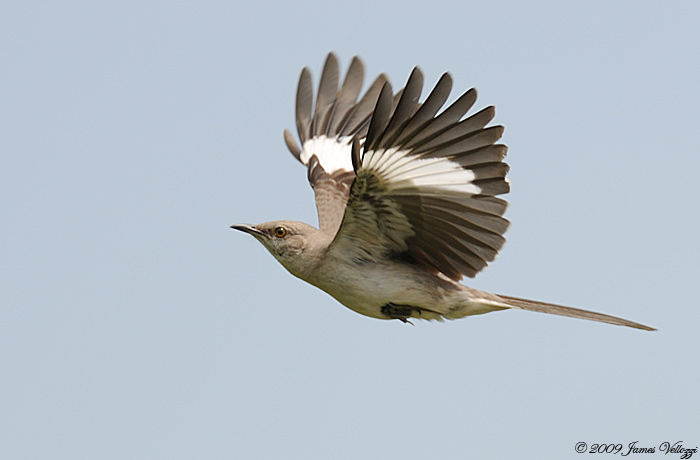
Mockingbird (Mimus Polyglottos), a poem

illustration mockingbird mimus polyglottos

Mockingbird (Mimus Polyglottos)

I had to draw you in third grade —
a report on Florida, my home state then.
Looked in books, didn’t like the flatness,
lack of color, so sought you in the yard,
rewarded by sudden vocal flourish,

clean as the sun’s flaming disc
in the tropical sky. No one can
trap your beauty on paper. Graceful twists,
curious angled head, feather flutter soft.
White stripe of wing. Sly copyist,

copycat, derivative virtuoso
elegantly arrayed in gray and white —
au fait like the nun who taught me,
her voice hung in the air like yours.
Secret messages from God.

I knew all birds once I knew you,
uberbird, condensed history of music,
your knowing lentil eye. You knew me.
Stared at me, saucy songster, head cocked,
more brilliant and beautiful than I would ever be.

A bird aptly chosen and laughing
for this land which also mocks us —
the sun’s burning rays, the leaden air,
the flood of migratory bodies from duller climes…
you are wiser, don’t have to travel

with your pearly gray and white, never
tiring slender leg and so
quick, quick on the wing.
Your song — who needs other birds,
you can do them all, I listen for you still.

Sing to me sister, brother, mother,
father, friend — you have my gratitude.
Take me away with you…
give me some of your wildness,
give me your voice, your bright eye.

You know what you like,
you can hear something once
and sing about it forever. Your music helped
when Mommy reeked of whiskey
and tried to snuggle in bed with me.

Where does an eight-year-old
learn to send that kind of love away?
I cried that night but you sang to me
in the morning. You watched me swing
from the holly tree, you were there

when everything happened,
you saw it all and sang your tunes,
gave me the comfort of lovely noise
to fill my head when all around was ugly.
You were nursemaid to my heart.

11 Comments

Filed under poetry

Ojai is the Chumash Word for Moon, a prose poem

illustration ojai is the chumash word for moon

Ojai Is the Chumash Word for Moon

1. When I See the Moon She Comes Back to Me

Everyone else has something good to tell. This is what I have. This is what she gave me. Even now I see my mother’s face, soft and drunk, pale and frightful, moving through the darkness, soaring over me as mysterious and unreachable as the moon. Her affection waxed and waned, never constant. When she’d had enough Scotch, she loved me, but the way she went about her mother-love, pulling at me with sorrowful, clumsy arms given unnatural strength by liquor, made my flesh wither under her touch.

2. Possessions

My mother and father lived in a solidly built house, outer walls nearly two feet thick, in the oldest and grandest neighborhood in their town. They lived where people like them had lived for hundreds of years. My father felt comfortable with his mahogany furniture, his linen upholstery, his hand-woven Orientals. He collected, among other things, antique, cut-crystal decanters. They were displayed in a case in the living room, unfilled, sparkling, sharply defined edges, here and there a tiny chip but that only added to their elderly charm. Things weren’t supposed to be new; he took satisfaction in the fact he’d inherited most of the contents of his house. His life, its outward details — wife, child, home, furniture, and car, standing in the community, salary, and immediate circle of peers — had functioned for many years like a brick wall, and he found himself hiding behind that wall even as it started getting chipped away.

3. Fathers and Mothers are Our First Lovers

My mother had skin like rose petals, eyes like a deer’s. Too needy for most men, she could not be promiscuous — she was not strong enough for that. There were times when she forgot to be sad, if only when some equally sad-eyed boy noticed her. If a boy loved her to the point of obsession, to the point of contemplating suicide, she imagined she might find the strength within herself to survive, but she eventually rejected all such suitors, only wanting those who were unattainable, as her father and later her husband, my own father, were. Remote, a source of funds and orders and criticism, the two closest men in her life approved of her external beauty but not her soul. They didn’t care what she wanted — they wanted her to be like all the other girls and women, to be beautiful and obedient and never talk to dead Indian spirits. They broke her will; she broke their hearts. Distance was how they both managed her. If she could have hardened herself on the inside, if she could have seen either one of them as just another man she could conquer with her flesh, it would have helped.

4. Intimacy

My father and my mother were having sex one night, and my mother was on top of him and she got that silly, dreamy-eyed look, like when she read a romance novel. “Remember when you were little?” she said, still sitting on top of him, him inside her.

“What do you mean?” he asked. He and my mother were aliens to each other anymore.

“Don’t you remember sitting on your mother’s lap, in her arms?”

“My mother?” he asked.

“Wasn’t it good to feel her arms around you, as a little boy?”

He was inside her still and he felt his penis start to shrivel. His mother! What had she got to do with anything? “What on earth are you talking about?” he asked.

“Your mother, holding you in her arms, when you were a tiny little boy. It must have felt so good.”

“You’re sick,” he said, pushing her off him.

“Sick?” she said. “What do you mean, sick?”

“Asking me about my mother at a time like that, it’s sick.”

She rolled over and was silent, and then he heard her start to cry.

“Oh, Christ,” he said. “I’m going to sleep downstairs.”

“No,” she said, bolting out of the bed. “I’ll sleep downstairs.”

“That’s it, after this I don’t owe you anything,” he said to the ceiling after she was gone.

5. The Coastal Mountains Cut Off the Sight of the Sea

My mother was sent away at 14 to boarding school in Ojai, where she refused to eat. She wanted to turn back the years already. The moon drew her, she felt herself drawn to its inaccessible height, its untouched opalescent skin. Looking back as if from a far distance, she mourned her own childhood while it was still happening. Her eyes rolled back in her skull, the whites looking like two small moons. She howled at the moon without making a sound. Though she began menstruating at age 9, for years she shaved her pubic hair off in secret with an old, dull razor because she did not want to become a woman. Dreaming of the ocean, hidden behind the coastal mountains, she wanted only to be clean. She felt how the spirit of a Chumash Indian warrior possessed her. As she grew thinner, harder against the world, she rejoiced that there would be less of her to feel pain, less of her to bury. The other girls at school were as mysterious to her as stars. They sparkled while she could only reflect sadness. Her clothes hung on her bones and she was sent to a psychiatrist — that very night the moon was full and blue. They don’t understand me at all, she thought. In her own way, she was a visionary, a trend-setter. Doctors didn’t have a name, then, for what was wrong with her.

6. Anger

Finally, after 15 years of marriage the wall between my mother and my father fell. Then my mother wanted to figure out who she was. She wanted her own personal growth; she wasn’t able to focus on anything else. She needed space and time. At first, it was only the beginning of the process, and then it became the end. She couldn’t suffer any more, so she killed those feelings that brought her pain. She didn’t want to try to sort them out just yet, maybe not ever. In the end my mother’s feelings for my father were dead, gone. She didn’t know where they went.

7. She Owed Me that Much, Didn’t She?

She and my father lost their virginity with each other. Much later, when I knew her, she was memorable for simple things: her rose garden and her Scotch & water, her menthol cigarettes and her Pucci nightgowns, her ladylike hands and her A-cup breasts, her bitterness, her resignation, her unending string of sentimental, alcoholic boyfriends. She taught me how not to be. How not to live. A psychic told me she was my soul-mate, that my heart had been broken on the day I was born, that first hazy time I looked into her eyes and saw nothing there for me. One normal thing I remember is hanging clothes out to dry with her in the backyard when the dryer was broken. Once, she even took me out to the movies. Darker engrams always swamp whatever happy little memory-boat I manage to stow away in — like when she drove drunk for the umpteenth time and hit a kid on a bicycle, breaking his arm. I remember protecting her from the police, making sure she wouldn’t end up in jail, but later coldly stealing money from her wallet, cigarettes from her purse, clothes from her closet. In the end, she drank too much, and that killed her.

8. Madness

Toward the end, my mother said she was on fire from the neck down. Her arms and legs felt like they were glowing, orange-red, molten. But her head felt like a block of ice. She was emotionally or spiritually paralyzed, and worried about whether the condition was permanent. She felt like the nerves from her head down to her body were cut, and she didn’t know if they would ever grow back.

Right before the end, she said she could not distinguish life from dreams — she slept little, ate even less. She didn’t feel mad, she felt terribly, irrevocably sane. Everywhere she walked the ground seemed on the verge of opening up into blackness, into fire. If only she could go mad, she said. When they found her cold and stiff on the living room floor, she wore nothing but blue nylon panties and a wristwatch.

Leave a comment

Filed under prose poetry

After the Shortcut, a short story

illustration after the short cut

After the Short Cut

I’m a pretty woman, at least so the men tell me. “Andrea, you are some woman,” they say. They say that, and then I don’t know if I ever want to see them again. Anybody who would think I’m something special must have a hole in his head. I’m spreading a little in the rear now, after two kids — I’ve got a bit of cellulite on my thighs. It’s all gravy, that’s what I say.

Since I was 14, my life’s been one big bowl of gravy. I’ve tried to learn a little bit about a lot of things — I’ve tried to learn about learning, about how it’s done. It doesn’t matter what fate dishes out to me to go with it, whether I get the tough meat or the tender, the fat or the lean, my life all tastes better because of that gravy. My mom will tell you I blame her for every mistake I’ve ever made, but I don’t, not really. I don’t blame her any more than I blame myself. I blame Katie. I remember Katie in her perfection, the last moment before she got hit, the smile on her lips, and the sparkle in her eyes. That’s how she’ll live forever in heaven. It was her idea, all of it, the boy, the interstate, everything. I blame her, but she paid for her mistake. Sometimes I think she got the easy way out.

I believe everybody’s religion is a way to get to God. I don’t get nervous about having the right one. Why would God shut people out that way? The notion of original sin seems like the most fundamental sort of self-hatred. How is a newborn human baby any more sinful than a kitten? I was in the hospital the morning after my daughter Barbara was born, watching her sleep in her clear plastic bassinet, and I felt like we were both innocent, both trying as hard as we could to do the right thing.

I don’t believe in sin, I believe only in foolishly going against God’s tide, but nobody can keep that up forever, God’s too strong. I try to think right — feelings are another thing, there are no such things as right feelings, or wrong ones. God won’t give up; He’ll pull you up to Heaven no matter how badly you think you want to stay out. Can salmon keep from getting called upstream? Do you think the salmon that get caught by bears along the way are failures? Of course not. Katie and I were like salmon going upstream, going to meet this boy at his house, this boy she had a crush on, the kind of boy that made her heart beat faster — I didn’t get there, neither did she, but she got to see God before I did. I’m waiting for my time. Will he look like my first lover? Is that what Katie saw first and last, the boy she loved, the boy with the brown eyes that made both of us dizzy but gave Katie the most specific intentions?

I sure as Hell didn’t want to cross the interstate on foot. It was Katie’s idea. Do you think that makes me feel any better about what actually happened? I wonder how I’d feel if it had been my idea. Would I feel better, or worse? I suffer when I think about how dumb it was. We acted foolishly, and we’ve both ended up paying. She was brave, I was a coward. I lived, though, I found uncertainty, never knowing which way to go after that moment — I found both cowardice and bravery while she found certainty and sudden death. After I saw her get hit, nothing much mattered until my daughter Barbara was born four years later.

Barbara’s ten now, and she’s got the same powers I have, she can see what’s wrong with people without even talking to them. She can feel where they suffer; she can feel the pins and needles in her own hand when she passes it over their sorest places. She can hear me in her head; I can hear her in mine, without either of us saying anything out loud. Everybody can speak without using their mouth, but very few of us can hear what they say. I run into a few, now and then.

Katie and I were crossing the interstate on foot. We wanted to go to this boy’s house from the mall, and it was a short cut. Without the crossing, it would take 45 minutes to walk there, with the crossing it would take 15 minutes. We wanted to get there faster. We didn’t know we would never make it. If we had known, we would have taken the long way around. We thought that long walk would be boring. We were so impatient, so full of life, giddy with the thought of kisses. We wanted to see that boy — rather, Katie wanted to see him and I wanted to watch them watching each other. But no one could come pick us up from the mall; everyone was too busy to give us a ride. It was wintertime, dark early. That night was so dark, even the sky was clouded over so you couldn’t see the stars. The pavement was like black velvet from the side of the road, an endless ribbon of black velvet and the cars going by were like jeweled bugs, busy on their secret business, their buggy errands.

I had on a jacket. As soon as I saw her get hit I tore it off my body, I used the jacket like a signal flag to wave over her body to try and stop the oncoming cars. I knew she was already dead, I felt her spirit go through me, entering the top of my head, leaving through the soles of my feet. I saw her draw her last breath — even with all the noise, all the cars zipping by on the other side of the road and around us, the wind and the fear and the hiss of burning tires and brake linings, I heard her last gasp, through her cracked ribs, I heard the air leaking through her perforated lungs, I heard the last breath bubbling through her blood. I saw her laying there, her black hair spread over the road like a wet curtain, and I knew.

I rode in the ambulance; they worked and worked on her body, probably just to comfort me. I knew she was dead, but they wouldn’t actually tell me until my mom got to the hospital. My mom, who was even at a moment like that more interested in her bottle of Scotch and her dying friend and her rising fever than in me. She wanted to know why we hadn’t called her. Did she forget we did? We did call, all we got, all we ever got was the machine, and she was in bed nursing her hangover, nursing her sorrows, nursing her case of the flu.

Mom wasn’t perfect, but wasn’t a total screw-up either. She’ll never forgive herself. Thank God we were supposed to be in the care of Katie’s mom. Katie was an only child then. Her mom had another child after Katie died, a boy — she didn’t want another daughter, that would have been too painful. That second child was an accident — just like my oldest — Katie’s mom was so grief stricken for a while she’d go out to bars and pick up strange men, and forget to wear her diaphragm. Or maybe it was the pills she forgot to take. Either way, we were both on the same train after Katie.

Does Katie see me now? Does she forgive me? Will she help me forgive myself? Katie was in love with that boy — she sat behind him in math class. She worshipped him from afar, she was obsessed. After my friend died, I slept with him, for her. He never knew why I came on to him or why I broke it off — I never told him. One time after we’d made love I asked him to tell me about her, he didn’t know anything. I felt sorrier for that than for anything. Katie died a virgin; I’ve made up for her in that way. The joy of knowing what is true can be dampened by the pain of knowing you’re not going to be able to live in the truth, yourself. I don’t care, it’s all gravy now.

Since I was 14, it’s been gravy. I’m not any better or worse than Katie. I say that to myself, but I don’t really believe it. She was good, she died. I lived. Clear enough? When I feel like I haven’t gotten what there was to get out of my life, when I feel how much I’ve missed from inattention or carelessness, Katie comes back to me with a still wind, rushing through my ears like she did the night she died. I’m waiting for my time to come.

Hope it’s not on the interstate. Not like that, not with my hair spread out on the wet pavement like a pretty, pretty fan. Not with my ribs sounding like popcorn when I breathe. The driver of the car cried for days. I suppose his situation might have been the worst of all. Thinking he could have stopped in time. But he couldn’t have. I wonder if it made him a better father to his own kids. I tell my own daughter, Barbara, honey, don’t ever be afraid to take the long, safe way to wherever it is you’re going. You’ll get there, even though you don’t think you will and you’ll see things you never would have seen otherwise. I don’t want her to miss out; I don’t want her to have to live off gravy for the rest of her life like me. Please, God, anything but that. Patience, I tell her when I kiss her goodnight, smelling the hair right in front of her ears, the place she can never manage to reach with the shampoo, the place that smells of sweat and tears and dreams, just like mine did. Patience, my beautiful girl — I tell her every chance I get — patience is a virtue.

4 Comments

Filed under short stories

Christmas Eve Next Door, a poem

841 oleander drive

CHRISTMAS EVE NEXT DOOR

Next door is a house painted peach,

roofed with thick white tiles, its mature

shrubbery pruned horribly precise.


The rumor is Eileen was the first woman

poor Larry ever slept with.  For thirty years

the two of them have kept to themselves,


now they understand why no one bothered

to butt in, and suddenly begin to argue.

Eileen sits alone in her room, maybe drunk,


maybe nuts, even she can’t tell.  She screams

once, then says nothing for days.  Late

on Christmas Eve, she emerges in her


quilted satin robe, only to assault the visiting

cars parked out front on her swale, pulling

antennas off, gouging paint with a screwdriver,


vicious, more vicious than she ever imagined

she could be.  Her high, shrill voice pierces

the hushed air.  Summoned peace officers


shrug their burly shoulders and offer Larry

boxes of soft, greasy pastries.  He feels almost

relieved when they finally take her


into custody, though he hates

to think of her in the same holding cell

with a bunch of sleazy streetwalkers.

1 Comment

Filed under poetry