Tag Archives: child

Heavenly Dances, Heavenly Intimacies, a short story

illustration heavenly dances heavenly intimacies

Heavenly Dances, Heavenly Intimacies, a short story

“Isn’t there any heaven where old beautiful dances, old beautiful intimacies prolong themselves?”

Ford Madox Ford, The Good Soldier

How can I be “dead” to any of the men I once loved?  They are not “dead” to me.  Not even H.  How can I be “dead” to H.?  They — even H. — are each as alive as when I was with them; as alive as the first time they touched me, whether tentatively or with confidence; whether softly or roughly; whether with passion or mere lust.  It is shocking and appalling how H. lurched so radically to the right after 9/11.  He began that journey to the Tea-Party-Mad-Hatter-Neocon-Bill-Buckley-Wall-Street-Apologist-Fringe-Brainless-Faux-News-Right when Ronald Reagan was shot; I was with him the very night it happened.  We had a short affair, right then, because we started thinking the end of the world had arrived and we decided, like the crazy college students we were, to get married to celebrate our courage in the face of chaos!  I realized very early on (but still way too late!) I was embarrassed to be seen in public with him.  Did you ever start seeing, and marry someone whom you later realized you were embarrassed to be seen with?  Perhaps the person in question was “dorky,” “geeky,” dressed “badly,” or had questionable “taste.”  H. readily admits he was a “dork” in high school.  He was on the debate team; need I say more?  When you can’t bear to be seen in your lover’s/spouse’s/significant other’s/partner’s company, things usually don’t work out.

Still, I put in ten dutiful years, trying to make amends for my mistake in marrying H.  The second he started making the big bucks, he dumped me.  He left me for my best friend!  I guess I deserved it, not taking control of my own life & filing for divorce two weeks after we married.  And I guess I deserved how my ex-best-friend S. ruined me, as she subsequently did.  She was in charge of the whole group we had socialized with:  dictating how everyone in our “circle” should think, speak, act, or react.  H. was dead wrong about most everything, but, to his credit, he was dead right about her.  At the time I thought him merely woman-hating, but I see now, even though he did hate women, there was something more than simply being a “woman” he hated about her.  He was covering up the fact he loved her by pretending to hate her.  Now, I have no desire to see her, not ever again.  She is definitely “dead” to me.  Yes, I understand intellectually, a living death (call it shunning) can happen to anyone.

The upshot of all this boring history?  I’ve been waiting for something a long time.  I can’t blame anyone but myself for my unhappiness, not anymore.  There is something dispirited inside me, something empty, drained, and beaten — something sick, something tired, something that has surrendered.  I gave up, when?  When my first ex-husband arbitrarily said no to children, breaking his solemn vow.  When I realized I couldn’t find happiness outside myself — not with an old love, not with a new love, not with any of my subsequent husbands, my friends, my eventual children, or my family.  Yes, to casual acquaintances and virtual strangers I am “happy, happier than I’ve ever been.”  And it’s true!  I’ve never been this happy, this contented, in my life.  Yes, there are still problems.  My oldest son is still half the world away, fighting an endless war on behalf of my “country.”  My youngest son still has an ignorant, racist, rabidly conservative father.  I am getting old.  My face is melting.  My neck is turning into a wattle.  I am drooping.

Still, I cannot imagine any of them, the men I have loved or made love to, being dead to me the way my former best friend, S., is dead to me.  Yet that is how they must feel about me, the way I feel about her.  Wanting her removed from my memories.  Wanting never to have met her.  Not missing anything about her.  She wants to see me, I heard from a mutual friend I still speak to.  I don’t want to see her, or even see the mutual friend.  I don’t even want to get as close as that!  Because of reasons.  Top secret, NSA, DOD, CIA, FBI, SEC, IRS, FDLE, GPD, ACSO reasons!  No further comment!

1 Comment

Filed under artistic failures, assholes, boys, con man, con men, criminal, criminal behavior, criminals, fathers, he, health, humor, hypocrisy, idiots, jerks, karma, love, mothers, mysterious, sex, short stories, tea party mad hatters, ultra right wing loons, users

Suffering Jets, Bowling Litionists, and Peace Knicks, a fable

illustration suffering jets bowling litionists peace knicks

Suffering Jets, Bowling Litionists, and Peace Knicks, a fable

My mom’s always trying to teach me History.  She says it’s important for us kids to know all the bad stuff that happened in the olden days so we won’t be as stupid as all those olden people were.  My mom seems really mad at those olden people.  She says human beings could have lived in a “paradise-on-earth” if it wasn’t for a whole bunch of bad ideas they thought up and then were stupid enough to get stuck on.  Just as if they were GOOD ideas!  My mom thinks good ideas are real important.  I’m not so sure because I can’t always tell the difference between one of her “good” ideas and one of the olden people’s “bad” ideas, but I’d never tell her that because if I did I think she’d go nutsy-futsy just like Nadine Houck’s dad did, and then I’d be pretty much alone except for that mean bunch of kids living on that hill up from the lake.  They’re not mean so much as they are just pissed because nobody’s really around to care for them and make them read their schoolbooks every morning.

Anyway, my mom’s always trying to teach me History, and so I try to learn it.  Like today, she got started on the “god-damned East-West mutual suicide pact.”  She says that back when there were lots of olden people, (she says there were BILLIONS, but that nutso-futso and I don’t believe her), everybody actually KNEW what would happen if there was “an all-scale nuclear confrontation.”  Like, they made TV shows and movies about it, and people wrote all kinds of books and stuff, and they had big “world conferences” and all, and lots of people even made stuff for people to buy so that when the “all-scale nuclear confrontation” came, they’d have water to drink and canned peas and tuna fish and EVERYTHING.

And like people even built bomb shelters in their yards and stuff.  My mom says this is “evidence of the world-group insanity” of the early twenty-hundreds and that I should mark it WELL in my soul.  So anyways, all the olden people actually KNEW what could happen and all.  Which is real hard for me to believe sometimes. Like if my Mom and me actually KNEW that the roof of our house was going to fall in, and so we bought big steel umbrellas and helmets and stuff, and kept living right in the SAME actual house but all the time acting real worried about the roof caving in and talking like MAD about how to prevent it and all, but really not doing anything to brace the ceiling.  And EVEN having some guy show us pictures of what our blood would look like spread all over the floor.  But then we’d just buy bigger steel umbrellas and harder helmets but we STILL wouldn’t leave the house.  Damn, isn’t it hard to believe that those dumb olden people could actually ACT like that?

So anyway, the whole of Earth really, really KNEW that they were in a big pile of trouble.  But people did ALL sorts of stuff to “distract their lunatic sensibilities,” my mom says, and they’d do stuff like jump out of big airplanes to feel what it was like while all the time they just kept stocking up on the god-damned steel umbrellas and helmets.

My mom said that one time in the middle of the twentieth century and towards the 70’s some olden people actually and truly came to their senses and try to yell loud at all the “sleeping fools,” my mom says.  She says that she read all about them in college and always wondered why they quit yelling.  She says that groups of good people would get together all down in history, but that as soon as they had “achieved their one objective goal,” they would trickle down and eventually dry up.  She talks about the Suffering Jets and the Bowling Litionists and the New York Peace Knicks and that they all lost their momentum in the end.

Anyway, my mom says that HER theory of what in HELL happened to people is they had plenty of guilt, but no feeling of responsibility to go along with it.  Like they felt bad about their “sins of omission” and all, and they hung their heads about it, but what it REALLY was, was just “crocodile tears.”  Like they would say, “Gee, I feel SO guilty, but gee, if I felt guilty about every bad thing in the world I wouldn’t be able to SLEEP at night and my face would break out and I wouldn’t be having FUN and stuff.”  Like they had a mental maturity age “of about three,” my mom says.

4 Comments

Filed under for children, humor, mysterious, notes, prose poetry, science, short stories

A Collection of Matchbooks, a short story

matchbooks.indd

A Collection of Matchbooks, a short story

1952, the Wayland Manor Hotel, Providence, Rhode Island.

The day is warm and humid, the yellow roses in the park across the street are in full bloom.  Eva tugs at the sleeves of her powder-blue silk suit.  She’s meeting Neal, the young lawyer she met at a Republican fundraiser last week.  Though Eva’s handsome, prep-schooled husband played tennis for Yale and still buys her wonderful presents, she’s lost her passion for him after five children.  Neal doesn’t have a dime, but he has smoldering dark eyes and soft, manicured hands.  He’s a good talker, very charming, the way he lights her cigarette seems so Continental.  Ever since the night Eva ran that girl over with her car after too many glasses of White Star, she’s been looking for a way out.  She knows her husband will never let her take the children, that’s what bothers her most.

1953, the Ambassador Hotel, Chicago.

Eva sits in the lobby waiting for Neal.  On the train back East from Los Angeles, Neal didn’t sleep more than two hours a night.  He’s frantic to make this business deal.  Eva’s money can only go so far, and though her mother contributes what she can, Neal’s ego is suffering.  Maybe if he didn’t spend so much time playing gin at the Club, he’d do better.  His wife really stung him in the divorce, he paid her a lump sum he could ill afford, but he felt so guilty.  He was only the second person in his family to divorce, the first was his older sister Nina.  She married the guy because her father told her to, so when he started getting weird in the head, she bolted.  Has her own dressmaking business back in Providence.  She dates the young boarder she took in.

1955, the Roosevelt Hotel, New Orleans.

Neal and Eva are stopping over for the night on their way to Savannah.  This trip was Eva’s idea, she wanted to revisit her childhood home, show him the house that survived the ’26 hurricane.  Her mother grew up there, raised by an aunt.  Eva remembers the switchings her nurse gave her for crossing the road by herself.  Lilly Mae had a gold tooth in front and wore the most outrageous wigs, red, blonde, honey chestnut.  Her bosom was soft, like feather pillows.  Eva is disappointed when the hotel can’t give them the Honeymoon Suite.  Neal shakes his head, smiles at Eva, pinches her fanny in the elevator on the way up to their room.

1956, annual convention of the California Polled Hereford Association, Berkeley, California.

Neal dances with his daughter, and Eva snipes at how clumsy the girl is.  Truth is, she’s gorgeous, and Eva’s feeling old.  They got both of Neal’s kids to live with them, Neal’s idea, Eva only wanted sweet little Patrick, not this sullen teenaged girl.  She misses her own children dreadfully.  Her ex-husband lets them visit in the summer.  Still, Eva manages to be kind to Neal’s daughter, she pays for Liza’s boarding school, the very best in the state.  Neal had this idea to raise prize Herefords, Eva’s mother thought it was a great idea, so they bought the ranch in Ojai.  The cattle women all look the same — brown cheeks, pale orange lipstick.  Eva doesn’t fit in, but she doesn’t care.  She orders another chilled vodka, downs it in three swallows.  Her throat burns, it feels cleansed.

1956, Diamond Jim Moran’s, New Orleans.

Liza’s in the ladies’ room, helping Eva to vomit.  Liza wipes Eva’s forehead with a damp towel.  The attendant turns away, afraid she’ll start laughing.  Eva’s hair flops over her forehead and Liza takes the comb and smoothes it back into her thick French twist.  Eva and Neal are on their way home after taking Liza and Patrick to visit their mother in Jacksonville.  It was the least Neal could do, considering his ex-wife’s frame of mind.  When the children left her, she lost 40 pounds in a month.  Liza misses her mother, but doesn’t want to move home.  Next summer, she’ll be a debutante.

1959, the Palace Hotel, San Francisco.

Liza’s on break from Mills College, meeting a boy, Ted, for drinks in the lobby.  She wanted to go to UCLA, but her father wanted her at a girls’ school.  It won’t help.  She’ll be pregnant within the year.  Ted, the baby’s father, fancies himself a Beatnik.  He grew a tiny goatee, sparse but bright red.  Liza is getting tired of the same old thing.  She sees a woman without legs being pushed in a wheelchair across the lobby.  Ted’s right behind, and Liza knows they’ll have sex in the car later.  She wonders what it would be like to have no legs to get in the way.

1959, the Luau, Beverly Hills.

Neal’s throwing a reception for Liza after she eloped to Las Vegas.  He put a good face on it, announced the wedding in the local paper, but he tried to talk her into an abortion.  Liza refused, and Neal thought about having her committed, but Ted talked him out of it.  Ted swears he’ll do the right thing, but Neal has a sick feeling.  The kid has dollar signs in his eyes, just like Neal at that age.  Neal should have listened to his heart, not Ted.  He envisions his daughter in a roach-infested apartment on Venice Beach, wearing nothing but black leotards, her enormous belly heaving as she dances to jazz records.  He wants to kill someone.

1960, Arnaud’s Restaurant, New Orleans.

Eva and her mother are on their way back out West after a shopping trip to New York.  Her mother bought a hat covered with white peacock feathers, and Eva hates it.  She wants to strangle her mother, wants her to hurry up and die so Eva can inherit the family money.  Eva’s ancestors made their money in shipping, sailing goods up and down the Eastern seaboard, and she is absolutely certain none of them owned slaves.  Eva’s mother is a spiritual nut, always falling for some Asian philosophy or another.  Next, she’ll run off with the little Mexican gardener, and Eva will have to concoct a suitable cover story.  They’ve never been close, not since her mother left for Mexico when Eva was two.

1961, the Redwood Room, Clift Hotel, San Francisco.

Ted and Liza are filing for divorce.  Neal is listening to his daughter sob.  She thinks Ted needs her, but Neal knows there’s nothing wrong with the kid that a good bank account won’t cure.  He had that illness himself.  Ted’s refused to work, has taken only art classes instead of working for his MBA like Neal wanted.  The baby lives on fried chicken and Pepsi.  Still, the little thing is cute — ten months and she walks, no, runs, already.  She’s got more of Neal in her than anyone else.  Ted’s parents pleaded with Neal not to interfere, but he can’t stand by and watch his daughter worry where her next meal is coming from.

1963, the Seven Seas Restaurant, Miami.

Neal sent the baby to live with his ex-wife, and sent Liza back to school.  Liza chose secretarial training, and works in a bank by day, looks for men at night.  Liza gets jealous sometimes at how happy her mother is with the baby, but Liza’s not very maternal to begin with.  This man she’s involved with is a sailor.  She’s never dated someone who didn’t go to college.  Even his hands are different.

Leave a comment

Filed under mysterious, short stories

easter bunny, a short story

illustration easter bunny short story 2

Easter Bunny

Jenny’s hair was beginning to fall out from the radiation treatments.  Last night, at a restaurant over on the beach, their waitress had worn a rhinestone-studded baseball cap, and Jenny had admired it.  Ellen wanted to buy one for her.  In truth, ever since Jenny’s diagnosis, Ellen had been shopping as though her life depended on it, buying all sorts of gifts for her mother, tossing them into her lap, unwrapped.

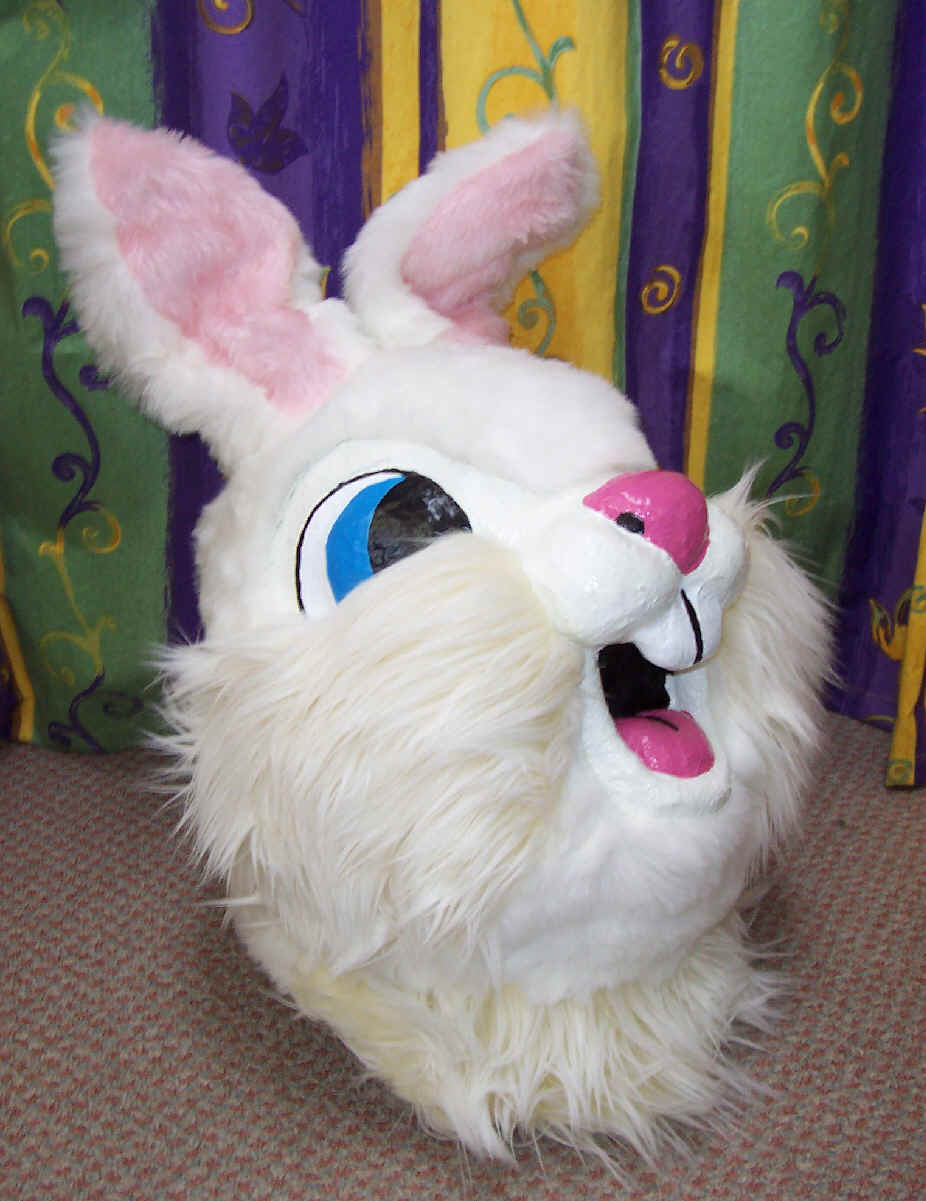
At the mall, Ellen’s two-year-old, Sarah, was fidgety in her stroller, until she spotted the Easter Bunny — on a raised platform with green shag carpet and an arrangement of painted wooden tulips and eggs.  The bunny sat in a white wicker queen’s chair.  “Mommy, it’s the Easter Bunny!” Sarah shouted, waving her hands over her head.

“I see him.  We’ll go see the bunny after we get Granny’s hat, okay?” Ellen said as they maneuvered around the long line of squealing toddlers, toward an accessory store she hoped would have the hat.

“Okay, Mommy,” Sarah said, craning her head to get another look.

Blocking their path around the long line of small children were a couple of teenage girls.  One of the girls was smoking, and as Ellen passed, the girl glanced at her with what Ellen recognized as contempt, flinging her long hair back — the cigarette dangling from her full lips — and prancing over to the mirrored window of the jewelry store across the way to inspect herself.  Her bangs were teased to a great height, sprayed so heavily into place they looked varnished, though the rest of her hair hung in a limp curtain over her shoulders.

It was odd how the teenager kept staring at Ellen even as she primped in the mirror — the girl’s eyes were large and black, her face unlined, uncomplicated.  Ellen stared back without blinking until both mirror and girl were out of sight.

There was one rhinestone cap left at the store, in the window display.  “Do you have any more of these?” Ellen asked, pointing.

“That’s the very last one,” the clerk said.  She and Ellen traded smiles.

“I’ll take it,” Ellen said, not bothering to check the price tag.

On the way back, the teen girls were still near the Easter Bunny display, only now they had been joined by a couple of boys.  The dark-eyed girl slouched back on the bench, sharing a cigarette with a pale blonde wearing too much makeup.

Ellen watched her giggling daughter run to the giant white bunny.  She paid seven dollars to have Sarah’s picture taken with the rabbit, but in the first Polaroid, Sarah’s eyes were closed.  “Sleeping Beauties, that’s what we call those,” the photographer told her.  Ellen wanted to keep it anyway.

“I want to kiss him,” Sarah said.

“Okay, honey,” Ellen said, squeezing her small squirming body in a fierce hug.  She tried to imagine Sarah in another ten years, all pouty lips and thrust-out chin.  Cans of hair spray, and unspeakable things like peppermint flavored lip gloss.

The second picture turned out beautifully.  Sarah held the bunny’s gloved hand, smiling, eyes open, rapt to the camera.  The rabbit got up and strolled down the ramp of his platform, Sarah following, reaching out like a pilgrim to stroke the fluffy white fur.

“I want to tell him I love him,” she whispered to Ellen.  “Pick me up.”

Ellen held Sarah up so she could whisper in the bunny’s ear.  “I love you,” Sarah whispered into the tattered pink plush.  She kissed the nose, patting the wire mesh covering the open mouth, inside which Ellen could see the blurred outline of someone’s face.  Ellen turned away, remembering this morning, before she’d left for the mall.

“Give Granny a hug,” she’d told Sarah.

“I don’t want to,” Sarah had whined.

Ellen’s anger had seemed reasonable in one sense, though completely out of proportion to Sarah’s predictable toddler whimsy.  How many times were left to bestow such affection.  How many times would Ellen be able to bring her mother a daft, pathetic gift from the mall.  Just then, the teenagers laughed their little ignorant heads off for the hundredth time in ten minutes, the air ringing with their simple, donkeylike braying, and Ellen stabbed at them reflexively with her gaze.  How dare they be so happy.  How dare they be so young.

“Why does that stupid bee keep staring at me?” said the dark-haired girl, glaring back at Ellen.  The group around her laughed, nodding at their compatriot’s clever wit.  Ellen stopped, Sarah heavy on her hip.  Bee — for bitch?

“I was wondering the exact same thing,” Ellen said.

The blonde moved several steps toward Ellen then, folding her spindly arms over her chest, shaking her head.  “Hey,” she said, squinting her eyes.  “Don’t you get fresh with my friend.”  She tossed her head back, her stiff bangs remaining frozen, like armor, despite the movement.

Ellen bent to strap Sarah into her stroller.  “I understand your type,” she said to the dark girl, her eyes drifting over the entire group.  “I used to be a snot-nosed adolescent, just like you.”

“Still need to wipe your nose, if you ask me,” said the dark-haired girl, thrust forward on one thin leg, her shoulder flung back.  She looked to her friends, as if for confirmation, and the two boys gave each other sloppy high-fives.

The entire group of teenagers was laughing now, holding their sides, tilting their heads and letting their mouths hang open, their glistening, foamy tongues quivering with hilarity.  In a flash, Ellen’s heart hammered so briskly she could feel her pulse inside her mouth, her tongue; her teeth were being jarred out of their gums.  Ellen wanted to crush them under her shoes like bugs.  “Fuck you,” she said.  She noticed, too late, the horror of the other grown-ups as they clapped their hands over the ears of their small children, the parents staring at Ellen, their eyes wide.

“And just what kind of example are you trying to set?” one woman asked.  Ellen walked at great speed away from the mob, pushing the balky stroller as fast as she could.  Sarah sat in the umbrella stroller, clutching the Easter Polaroids in her tiny hand, her small frame curved into a limp macaroni shape, her perfect, smooth elbows bouncing off her knees as the wheels vibrated over the rough brick floor of the mall.  Ellen walked so fast she began panting, her calves starting to cramp as she rounded the nearest curve, heading for the door she had entered, long ago, in another lifetime.

She saw a bank of pay phones.  She stopped, looking around and behind her.  Fishing in her purse, she found a quarter, then flipped through the telephone directory, looking for the mall’s security office.

“I thought you should know there’s a group of disruptive teenagers hanging out in front of the Easter Bunny,” she said to the voice on the line.  “They’re standing around smoking and making rude comments to the customers.”

“Can you describe them?” the voice asked.

She visualized the girls, their long hair, their cheap-looking teased bangs.  “They had ugly hair,” Ellen said.

“Could I have a little more detail?” the voice asked.  “What were they wearing?”

Ellen could not see anything but the scornful face of the dark-haired girl, the pinched, sour face of the blonde.  “I don’t know,” she answered.

“Well, how many of them were there?” the exasperated voice asked.

“Four,” Ellen said.  “Two girls and two boys.  In front of the Easter Bunny.  Smoking and laughing and being nasty to people.”

“We’ll send someone over there right away, ma’am,” the voice said.  “Would you like to come in and file a formal complaint?”

Ellen visualized herself in handcuffs, being led away.  “No, thank you, that’s not necessary,” she said, hanging the phone up with a bang.

As she tried to push the stroller away from the phone, she saw Sarah was tangled up somehow, her fingers twined through the cord holding the phone book.  “Let go,” she told Sarah, light-headed with the panic jigging through her in ragged bolts.

“But I want to call somebody,” Sarah whined, clutching at the metal cord with both hands.  “I want to call the Easter Bunny.”

“We don’t have time for that right now,” Ellen said.  “We have to take Granny her hat.”  She imagined the teenagers telling their side of the story to the security guards.  Ellen uncurled Sarah’s fingers and flew toward the exit, toward the safety of the parking lot.  No one, apparently, was after her.

Her hands trembled, her arms weak from adrenaline as she unlocked the car door and strapped Sarah into her car seat.  Heaving the stroller into the trunk, she got in and power-locked the doors, hearing the dull thunk inside, pressing the button three more times for good measure.  As they exited to the main road, she looked back at Sarah in the rear-view mirror, saw her little round face composed and serene, her eyes open but vacant-looking.  “Wasn’t that fun?” Ellen said, smiling.   “Getting to see the Easter Bunny?”

“No,” Sarah said, her eyes droopy, her head turning to nest against the padded wing of the carseat.  Lulled by the car’s rhythmic movement, the child’s lids fluttered closed.  Her cheeks were smooth, rosy with health, her lips parted, her pearly teeth visible.  One wispy curl of hair clung to her damp forehead.

Ellen’s face was benumbed; she drove home from the mall to deliver her gift to her mother, tears coming to rest in the corners of her mouth — her cheeks twitching from exhaustion as she forced her lips to stay drawn back, her teeth bared in a ghastly smile, a grimace of love.  She would deceive no one with such a face, most certainly not her dying mother — but of course she couldn’t allow herself to quit trying.

1 Comment

Filed under anger, apologia, cancer, daughters, death, easter, fiction, love, short stories

she’s leaving tomorrow for new zealand

my darling daughter, turning 25 in april, is leaving tomorrow to go back to new zealand.  it’s been the greatest thing ever having her home… many postings to come!

Leave a comment

Filed under Uncategorized

New Poem, a poem (for everyone i love — you know who you are)

leslie gaines CrazyViewIMG_0542

New Poem

Dearest, dearest God, my old teacher, my new teacher,
my classmate, my expedition, my mountain, my valley,

my sea, my river, my lake, my cloud, my tree, my rock,
my butterfly, my sweet love: Your new minister is a dear,

from New Orleans, young and trembling and with a pretty,
shy wife and two darling baby girls. Picture of earnestness

and kindness. Admirable. I felt my soul blossoming today,
I was moved, shaken, made warm and soft and open

by the children’s beauty. And part of all that was You
inside me. So much love for You, it hurts my damn chest.

I confessed my sins today and was absolved. Do I believe?
Well, partly. Enough that I don’t feel like a hypocrite.

Perhaps I should. I don’t know. I have no answers and
hardly any coherent questions. Mostly I am struck dumb

by all of this, all of this happening in my body and my mind
and my heart and my soul. It is profound. It is an opportunity.

I will not squander this precious gift, rest assured.
Simple things have become all the more profound and

complex things all the more understandable. Just heard
a strange noise coming from my daughter’s bathroom.

Both cats were on the counter with the goldfish bowl
up to their little catty elbows in same. Dripping wet,

they looked at me guiltily. I hissed, “Get your paws
out of there, ladies!” They fled, in haste and apprehension.

I did not follow to administer further lectures.
They’re cats, after all. Cats will fish, given the chance.

And absent lovers will pine. And awakened souls
will soar heavenward. Doesn’t life contain much

logically predictable inevitability which is nonetheless,
each time it presents itself, a mystery and a revelation?

I have gone mad with gratitude. Every thing
existing seems a gift. An opportunity. Priceless.

Even if I never get to live in Your arms again, know this:
I am Yours, forever. It is the first time I have felt this way

toward someone not my own child. I cannot imagine
the set of facts that would alter my feelings for You.

While watching Your last meteor shower, I thought of all our
souls — how we are all like meteors, our pinpoint of brilliance,

the variability of our paths — some meteors appear bright
but have no echoing trail — others are dimmer but leave

a long streak of fire in their wake — some travel in twos
or threes, others singly. I am dancing on the razor’s edge

between gratitude for this passion existing at all, and greed
for more of it, more of it, always more of it. No patience.

No patience with Your plan — wanting more knowledge,
even knowing how Cassandra received foreknowledge and

killed herself in the end, because it was too much for her.
So glad I don’t know but panicked that I don’t know

all at the same time. What Baby said: the sky
was gray and overcast, yet there was no rain,

borderline gloomy but also very pleasing in a way —
she said, “It’s a beautiful day today.” I agreed.

The sun was behind a layer of gray, you could still tell
it was there, you could see the disc behind the gray,

it had a translucent light, and though you couldn’t see,
exactly, the brightness, you knew it was there. Like You.

Today was a miracle, You were there with me
everywhere I went, except I couldn’t see You.

And neither could anyone else. I stood on the beach
between the surf and the dunes and listened to the waves

roar their white noise of love. There I met a cockatoo
named Pumpkin, she was gorgeous snowy white

with orange eyes, and I lulled her to sleep. “Pretty girl,”
I said to her, stroking her sweet feathers. “Pretty girl.”

She cocked her head and trilled at me. I think
her owner was surprised when she didn’t want to go

back to his arm from mine. Later, I bought a nightgown
printed with leaves, that makes me feel like a tree nymph.

I wish I could wear it for You. What I’ve learned:
the correct question is not, after all, could I/would I

kill Hitler. The question is, could I/would I love Hitler?
Thank You, God, my tutor, my scholar, my journey,

my height, my hollow, my ocean, my stream, my shore, my billow,
my standing timber, my paving stone, my mortar, my luscious beloved.

1 Comment

Filed under Uncategorized

(Love is like a) Chain of Possession, a prose poem

img245

(Love is like a) Chain of Possession

My black cat is a shadow — with yellow eyes.  She yawns, and the startling pink of her mouth lies exposed.  Fangs of unbelievable sharpness.  How is it she refrains from using them on me?  I feed her, I pet her, I clean up her waste.  She kneads my lap, sharp needles encased in velvet.  I, too, am a cat — fangs and claws hidden in softness.  The illusion of receptivity.  The startling pink of the vagina yawns with boredom.  We need more air, moving air, air to ruffle our fur and wake us from this somnolence.

Sweet sleepiness like honey — clear and amber and sticky.  I coat your penis in honey, taste the sweetness, but it isn’t enough.  I want something wilder, something dangerous.  the fascination with death, with destruction, with smoking cigarettes.  The power of the flame to obliterate.  My heart alternately rages fierce, then trembles, vibrates like a small bird, poised for flight.  I cannot be tamed.  Mama tamed herself with scotch whiskey — damped her needs with ice and amber fluid; put out the flame.  She gave me my first black cat, hoping I could fly her dreams for her.  She only hated me for my freedom, her gift.

I fished, as a child, like a woman possessed:  dragging flailing body after flailing body out of the murky canal water, trying to birth myself in a way mama had not.  I felt mingled pity and disdain for my prey — threw them all back, gasping, bleeding, yet they bolted for the depths in a flash, hurrying back toward the life I had interrupted.  I toyed with the puffers, watched them inflate soft white bellies, gleaming, pearly.  They squawked in protest.  sometimes, a spot of blood where i removed the hook.  They all went back to the water.  my canal, my lover — a cool finger of brackish life.

Later, I gave birth to a child, paid for my pleasure, all that fishing, all that lust.  The child’s father held my hand, blinking in the shadows, gazing in mute stillness at the bloody pink and white body, as she opened her tiny mouth to swallow us both.  Her gums, naked yet as hold-fast as iron bars.  She felt the air upon her skin and screamed her agony, her ecstasy, her freedom.  She stared into my eyes, then swallowed my heart.  She breathed and sucked and smiled sweetly in her sleep.  Her first cat will be black, and she will bolt from my life as quickly and painfully as she entered.

I will never stop wanting a lover.  The need satisfied will spin a chain, a golden chain rattling in the dark.  I am terrified by my own strength.  I sleep, I wake, I begin again.  twirling life, twirling death, dancing in my room like a madwoman.  My cat watches, crouched to spring, her eyes thin slits of light.  Someday, she will swallow me.  My lover’s eyes create of me a woman possessed.  Spirit of the feline.; needles waiting in black velvet.  Swollen flowers meet, and cannot part; he is mine.

Leave a comment

Filed under prose poetry

hungry baby, a short story

illustration hungry babyillustration hungry baby croton

(originally published in Cenotaph)

Hungry Baby

Whenever I’m feeling close to the edge, a hairsbreadth from lunacy, I like to shop for groceries. I go up and down all the aisles, methodically picking out food. I throw boxes and jars and bags and cans willy-nilly in my cart, always stocking up for the big one, the storm that’ll tear the roof off. It’s a habit, one I learned as a child. The women in my family were bony, starry-eyed drunks, with bad skin and lank hair, but by God, they knew how to grocery shop.

I’ve fallen into this twitchy, nervous state because my mother showed up again last night. I don’t know if it was a dream: I hope it was. I opened my eyes and saw her standing next to the bed, almost touching the mattress. She didn’t smile or speak but simply shook her head. She seemed angry; I could tell she wanted to hit me. She was jealous that I was still alive, driving her car, watching her TV, wearing her jewelry. I met her fierce gaze without moving, then closed my lids against her image like hurricane shutters.

The room was so dark, she was like a column of gray smoke, rising over me. Knowing death hasn’t changed her face one bit. How is it that I still miss her? That is an embarrassing, childish pain, an overgrown mouth sucking a rubber pacifier. There will never be a second chance for her and me; I sure wish I could believe in heaven like I believe in hell. If she’d loved herself, or me, even a little, maybe she’d have pulled through the dark waters. But she was so full of self-hate there was no room for anything else. Now I’m afraid her habits are coming after me.

I confess it; often I hated her too, while she lived. I even killed her once, in my sleep. I stabbed her many times with a kitchen knife, and it felt right, like it was the only graceful way out for both of us. There wasn’t as much blood as you’d expect, though there was still enough to soak her nightgown all the way through. When I woke, clammy and trembling, I hurried to her room to make sure she still breathed. I knelt at the side of her bed, watching her scrawny chest. At first, it didn’t stir, and I almost cried out. Then I saw movement, enough to know she lived. Forever after, I feared the terrible anger in me. It’s always waiting, a tiger with ivory teeth and steel claws — waiting for me to stumble, to lose my grasp on mercy, on forgiveness, and throw open its cage.

Wishing my mother was dead half the time didn’t keep me from breaking down her door in a panic when I thought she’d overdosed. After the first incident, I wasn’t all that worried, I knew her to be too much of a bumbler, she’d screw it up like everything else. The door became only an excuse to use my rage, to make my hatred tangible, give it life, a physical existence. I used a heavy folding chair, swinging it over and over again, watching first the splintered crack appear, then the bit of light, marveling at how the door-frame itself gave way all at once and the entire door fell cleanly into the room. She sprawled on her bed, half-clothed, her knobby knees the bulkiest part of her, her wet brown eyes looking puzzled. Even with all the noise, she couldn’t figure out how I’d gotten in the room. Later, sober, she realized she’d underestimated me, she hadn’t known what I was capable of. Much later, when I left home, after a hundred false starts, she managed to finish what she’d begun.

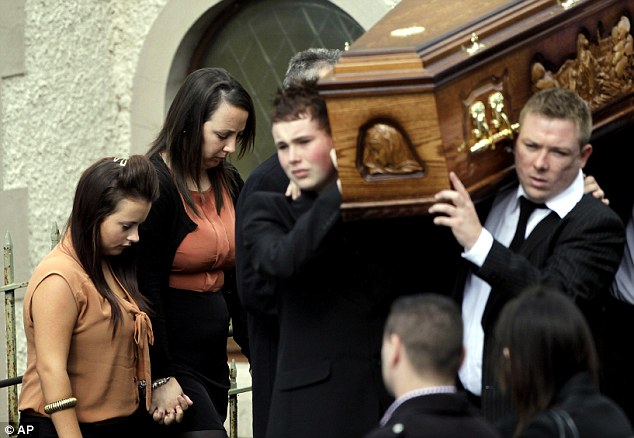
I shopped hours for the perfect funeral dress; pulled grimly through all the racks, looking at everything dark. No, not dark, black. Nobody wears mourning black anymore, the saleslady said, but for my own mother I insisted. In photographs, I appear the proper, bereaved daughter. I spent three days wearing the black dress, feeling grimy by the day of the burial and glad of it.

We buried her in front of a croton bush, God, how she hated those things, crotons. I stared at her shiny marble urn where it sat in the little hole, the tacky brass plaque glued to the top. I couldn’t object to the shrubbery, not with the priest standing there, tall and lean and handsome like some Marlboro Man, chanting and swinging his billowy canister of incense on its copper chain, the black robes clinging to him under the harsh weight of the sun, his hand so big and hard when I shook it my knees almost gave way.

That night, I left the house long after dark, walked in shaky high heels down the street and around the corner, ruining the delicate heel tips on the asphalt. I decided to keep walking until I dropped; to walk forever if no one came running after me. I stopped only a couple of miles away, limp from the humid August air. Crickets vibrated, frogs exhaled, stars flickered; the glowing yellow windows of strangers were my last comfort, my final safe haven. Nothing but love for those strangers kept me from leaving for good, nothing but fear of the tiger kept me from going any farther after my mother; I stood alone in the velvet grief of that hot summer night, calling her name over and over again like a stupid, hungry baby.

2 Comments

Filed under short stories