Tag Archives: daughter

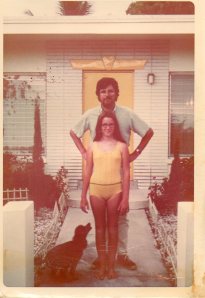
my oldest daughter wrote this in 2007

illustration for abigails 2007 note MOVED_by_Miccy

I have come to realize that I’m upset mostly because I’m trying to make my life something that it’s not. It once was, but it’s not anymore. The friends I used to have are not my friends now (not all of them, mind you), and the friends that left me when Mike did, were never my friends. I’m not meaning to be sappy, depressed, melancholy, or even trying to evoke some sympathetic reaction (pathetic being the operative word). I am merely acknowledging the fact that what I do have, the people who care about me and are still with me, I have been ignoring in favor of the things that rejected me. Why? Because I hate change. I hate change so much that I make myself pathetic by clinging to it, like a child would its mother’s leg on the first day of pre-school.

Mike was my connection to the world I was leaving. I wanted to hold onto him so that I could straddle that line between new and old, and never really have to face the new for what it was–my life. It was a security blanket that I was happy to carry around until there was nothing left but threads and a memory, and who knows how long it would take it to get there? 30 years? 40 years? 50 years? Was I going to spend my life reminiscing about “the good old days”, or was I going to take charge and and cherish what was infront of me instead of turning my back and mourning what was behind? I’m not an activist. I sit back and wait for things to happen, and I end up being left behind. I waited SO long to apply to SFCC that I was scared they weren’t accepting applications anymore. I took the SAT my senior year, and only once. Never the PSAT. I always want to do things “later” in hopes that somehow they will work themselves out and I’ll never have to deal with it.

But no more. I realized all this, and I realized EXACTLY what it was that I needed to do to raise my spirits.

I thank all of you who accept me, who care, and who love. I am so greatful to have you by my side, and marvel at how lucky I am to have so many people so close to my heart. And to all of you who I don’t really mean anything to: I truly am sorry that I wasted so much of my time trying to pull you back to me. None of you are bad people, in fact I like many of you, but you can’t be friends with everyone. And I realize that now. So to my friends: I love you. You have helped me in ways unimaginable, just by being my friend.

So, to conclude, I am a graduate of high school, I am going to college, and I will take charge and welcome change. Change can bring very good things. And if it doesn’t? Well, I’m sure that will change.

1 Comment

Filed under mysterious, notes, recommended reblogs

I was thirteen the first time I had to lie to the police to protect someone I loved, a short story

illustration mom hit the boy on the bike

I was Thirteen the First Time I Had to Lie to the Police to Protect Someone I Loved, a short story

I was thirteen, in my first year of high school, and one afternoon I was home watching TV by myself while my mother went to pick up my little brother from nursery school. The doorbell rang: a police officer stood outside, tall and broad and scary. He had gleaming handcuffs and an oily looking gun buckled to his belt; a long black stick with ominous scuffmarks hung at his side. “Your mother’s okay, but she’s been in an accident,” he said. Less than an hour ago I’d seen the way her whole body swayed as she went out the door. Her empty glass was sitting right behind me in the kitchen, unrinsed and still reeking of Scotch.

Even now I see my mother’s face, soft and drunk, pale and frightful, moving through the darkness, soaring over me as mysterious and unreachable as the moon. Her affection waxed and waned, never constant. When she’d had enough to drink, she loved me, but the way she went about her mother love, pulling at me with sorrowful, clumsy arms given unnatural strength by liquor, made my flesh wither under her touch.

“She hit a boy on a bicycle,” the policeman said. “Do you know if she’s been drinking?” he asked. He shifted his weight from one leg to both legs evenly, spread his feet wider on the cement walkway and moved his arms from his sides to his belly, holding his hands together down low at his belt.

“No,” I answered the policeman, looking unflinchingly into his eyes, which was excruciating but imperative, I knew, if I wanted him to believe me. “She hasn’t been drinking.”

My mother had skin like rose petals, eyes like a fawn’s. There were the rare times when she forgot to be sad, if only when some equally sad eyed man noticed her. If a man loved her to the point of obsession, to the point of contemplating suicide, she imagined she might find the strength within herself to survive, but she eventually rejected all such suitors, wanting only those who were hard nosed and cold blooded, as her father and, later, her husbands were. Remote, a source of funds and orders and criticism, the closest men in her life approved of her external beauty but not her soul. They didn’t care what she wanted: they wanted her to be like all the other girls and women, to be beautiful and obedient. They broke her will; she broke their hearts.

She was memorable for simple things: her rose garden and her Scotch and water, her menthol cigarettes and her Pucci nightgowns, her ladylike hands and her A cup breasts, her bitterness, her resignation, her unending string of sentimental, alcoholic boyfriends. She taught me how not to be. How not to live. A psychic once told me she was my one true soul mate in this life and that my heart had been broken the day I was born, that first hazy time I looked into her eyes and saw nothing there for me. One normal thing I remember is hanging clothes out to dry with her in the backyard when the dryer was broken. Once, she even took me out to the movies.

“Are you sure she’s not drunk?” the policeman said. His face was a smooth blank, revealing nothing, but then so was mine. “She’s acting pretty out of it.”

“She gets that way whenever she’s really upset,” I said.

“We need you to come take care of your brother,” he said. “While we decide what to do.”

The policeman herded me into his car, and we drove to the place Mom had the accident. They’d already taken the boy away in an ambulance; all that remained was his bright yellow bicycle, its frame horribly crooked, its front wheel bent almost in half, sprawled on the ground in front of my mother’s car, a powder blue Cutlass Supreme. I glanced offhand at the front of the car, afraid to look too long, afraid the policemen would be able to tell something from the way I acted, but I didn’t notice dents or blood or anything. Even without that, the bike, obviously brand new before the wreck, was as frightening as a dead body. Mom was sitting in the back of another patrol car, and her eyes were red, her face was wet.

My three year old brother sat beside her, and I could tell he hadn’t cried yet, but I could tell when he did it was going to last a very long time. Then I wanted to tell the police she was drunk, yes, she was drunk today and every single afternoon of my life, but the way she looked — her beautiful hands trembling as she smoked — temporarily severed the connection between my conscience and my voicebox. I couldn’t talk at all, because I knew I’d cry. I’d protect her from the police, make sure she wouldn’t end up in jail, but later, I would coldly steal money from her wallet, cigarettes from her purse, clothes from her closet. In the end, the boy on the bike died, and she died, too.

Toward the end, my mother said she was on fire from the neck down. Her arms and legs felt like they were glowing, orange red, molten. But her head felt like a block of ice. She was emotionally or spiritually paralyzed, she said, and worried about whether the condition was permanent. She felt like the nerves from her head down to her body were cut, and she didn’t know if they would ever grow back.

Right before the end, she said she could not distinguish life from dreams; she slept little, ate even less. She didn’t feel mad, she felt terribly, irrevocably sane. Everywhere she walked the ground seemed on the verge of opening up into blackness, into fire. If only she could go mad, she said. When I found her cold and stiff on the living room floor, she wore nothing but blue nylon panties and her white gold wristwatch, given to her by her own mother in 1958.

A watch which is in my jewelry box, upstairs, right this second, and which I wore to the Palm Sunday service, yesterday, at Holy Faith Catholic Church. I took Communion from Father John, even though I am not now, and have never been, and never will be, officially a Catholic. My friend Clyde, my dear friend, mentor, and fellow lawyer, told me that he thought I would still be eligible for Heaven, regardless of what the Catholic Church, as an institution, might determine.

Because of all this, and a couple of other things which I won’t bother to mention here, I had to hold myself very still, and open my eyes a bit wide, during the reading of Jesus’s betrayal in the Garden of Gethsemane in order not to allow the fucking tears to drop out of my eyes. Yes, I am a liar. So sue me. Good luck!

11 Comments

Filed under legal writing, mysterious, prose poetry, short stories

Beautiful Daughter, Handsome Father, a short story

rjp & ktp august 1971

Beautiful Daughter, Handsome Father

Marlene, her father’s lover, is down on the beach, sitting on the sand cross-legged, nursing the baby.  If Leah looks out the living room window she can see her there, sitting and facing the ocean.  Marlene’s thin cloak is rippling in the breeze, her head held high and tilted back, as though she is worshipping something — her own new status as a mother, perhaps?

Leah’s father met Marlene at the Venice Health Foods Supermarket, where she worked behind the purification supplements counter.  He had wandered to browse, got spellbound in front of the blue-green algae, and left carrying her phone number and a gallon of aloe pulp.  Marlene quit the supermarket a few months later, soon after they moved in together.

Her father has just shown her the videotape of that moment two weeks ago when the baby finally slid out of Marlene’s body.  It took eighteen hours to produce the head and that first shoulder, but then the rest of it — the dangling arms, the loosely curled fists, the puckered knees and feet that seemed sculpted from marzipan — swished free with one last interminable push, followed by a dribbling of translucent fluid tinted pale amber.

He cut the cord himself, took the sterile scissors in his trembling hand and, in between where they tied it off in two places with thick black surgical thread, he snipped.  On the video, he looks like he was ready for it to be difficult — preparing to hack away at it until he passed out — but it surprised him and parted smoothly, like a thick rope of licorice.

After shutting off the tape and pointing out the still figure of Marlene down on the strand, he shows Leah around his new apartment.  The entire layout is visible from the foyer, but it’s something to do to break the ice.  This is the first time she’s visited since high school, when he sold his house.  Before that, from the ages of two until twelve, she didn’t see him at all.

“This is the bedroom,” he says, gesturing to an open doorway off the square front hall.  There is a mattress lying on the floor, sheets and pillows and thick, Mexican-looking blankets tossed in an unmade rumple.  “The bathroom is through there.”  He points within, to a half-open door at the far corner of the bedroom.  “The kitchen,” he says, waving at another doorway with the other arm, his first arm still aloft at an oblique angle toward the bathroom.  For a moment he looks like a ballet dancer, muscles strung on wires.

In the kitchen are two wooden barstools and a commercial-sized juicer.  “This is where you’ll be sleeping,” he says, walking two steps in from the foyer.  “The living room.”  There is no furniture, nothing at all, merely the carpet, grubby beige shag.

Leah says nothing for a moment.  The apartment is cold and damp from the ocean.  It smells clean, though; a trace of peppermint soap drifts from the bathroom.  When she speaks, she tries to sound casual.  “Have you got something for me to sleep on?” she asks.  “A cot or something?”  He looks at her, arms folded.  She stands silently.  At his old house she had her own room and bath.

“Well,” he says, rubbing his chin.  “I thought we’d get a roll of three-inch foam-rubber for you.  A mattress.”

“Oh.”  She is embarrassed, and sorry she brought it up.  She moves to the window, touches the gauze curtains, faded Indian print with fluid girls twirling on their toes.

“I planned to get it today.  There’s an upholstery shop down the street.”

“Oh?” she says.  He has not prepared for her visit, is she that unimportant?

“I didn’t think you’d really come.  Not after the last time.”

“When is Marlene coming back up here?” Leah says.

“She’ll be down at the beach until we go to get her.  I wanted us to have some time alone first.”

“How much did the baby weigh?”

“Nine pounds,” he says.  He stands at the window, gazing at the beach.  Leah fidgets and stuffs her hands in her pockets.

“Were you going to name me Jedidiah, if I’d been a boy?”

“Who told you that?”

“Mom.”

“Well, she didn’t like the name in the first place.  I doubt she’d have let me give it to you.”  He sighs.  Leah looks down at the rug.  “Why do you ask?” he asks.

“Just curious.”

Her father takes a step toward Leah.  He touches her cheek and shakes his head.  Then he strokes his beard with both hands, smoothing his hair back.  “Well.  I’m going to make some juice.  Do you want some?”

“What kind?”

“I’m not sure.  Let’s go see.”  He opens the refrigerator and bends down, rooting through the shelves, opening bins.  The juice machine on the table is an old appliance, dull and scratched white with rounded corners and a big shiny metal “GE” logo on the center of the motor.  It goes with the rest of the place — his usual ceremonial shabbiness.

He crouches and Leah’s view of him is blocked by the open door.  “Hello, beautiful daughter,” he says, leaning his head around to smile at her.

“Hello, handsome father,” she says, and sticks out her tongue.

He laughs.  “There are beets, carrots, celery, some apples.  I think I’ll have beet-celery.”  He leans back against the counter, and scratches his head.  “Have you ever had fresh-squeezed juice before?”

“Not this kind,” she says.  “What is it like?”  Her idea of health food is banana yogurt.

“It’s a lot stronger-tasting than the bottled stuff.  We’d better start you off with some fruit, but I don’t think you’d like plain apple.  How about apple-carrot?”

“I guess so,” she says, rubbing her damp palms against her pants.

He stands at the sink, scrubbing the beets and the carrots with a brush.  Rinsing the apples and the celery, he does not peel, core, or seed anything, just cuts it into chunks and lays it on the counter next to the enormous juicing machine.  His off-white fisherman’s sweater is thick and luxurious, a jarring contrast to his dingy ripped jeans and his skinny, emaciated wrists.  She turns away from him and looks out the window at the pale blue, slow-rolling waves.

“I’ve been doing a lot of juice fasts,” he says.  He is much thinner than last time; she is skittish about touching him, feeling the sharp edges of his bones everywhere.  He seems in good enough shape, though:  who else his age can jog twelve miles in wet sand?

Because of his shoulder-length, strawberry blond hair — just a touch of silver running through it — and the leanness of his jawbone, her acquaintances from college flirted with him, sometimes just to measure her reaction, but sometimes not.  They all thought she was lucky.

“Surely you’re not trying to lose weight?” Leah says.

“No, I drink a hell of a lot of juice.  But it’s just that and water for twenty-four hours.  It really cleanses the system.”

“Don’t you get hungry?”

“No, not at all.  See, you have all the sugar in the juice to keep you going.  So you are eating, in a sense.”

“But you’re already so thin.”

“Juice fasting isn’t to lose weight,” he says.  “I don’t lose a pound.  It’s to give your system a rest.  To eliminate toxins.”  He starts feeding the chunks into the juicer.  The beet juice is blood-red, frothy, and then the celery goes through, diluting it to a muddy pink.  “Want a taste?”

“No, thanks,” she says.  “It looks gross.”

He takes a sip of the juice, the froth clinging to his mustache.  Then he feeds some carrots and apples through the grinding machine.  After tasting it, he hands her the glass.  Leah drinks.  The juice is pungent, the earthy sharpness of the carrots drowning out the sweetness of the apples.  As she tilts the glass, a heavy layer of sediment from the skins and peels falls out and settles to the bottom.

“I can’t drink this,” she says, her tongue coated with a cloying thickness, the taste in her mouth like liquid chalk.

He watches her as he drinks from his own glass, sucking the foam from his upper lip.  “Well, it’s something you’ve got to get used to.  An acquired taste.”

Leah puts her juice down on the counter.  Unsnapping her barrette, she tosses her head once to loosen her hair, and then puts the barrette into her jacket pocket.

“I’m hungry,” she says.

“We could go over to the Meatless Mess Hall.”

“Great,” Leah says.  She picks up the glass of juice again, and then puts it down without drinking.  “I’m sure it’s good for you,” she says.  All she can think about is getting out of his apartment.  Her mind races and she can’t even label what she’s feeling.  “Why don’t we go to the beach?” she says.  Her voice is high, her face hot.

“Okay.”

They walk downstairs.  The old hallways are dim, smelling of cooking grease, clove cigarettes, and Lysol.  The stuccoed walls are painted a glossy institutional green.  Following him down the creaking steps, she stares at his spindly buttocks — barely brushing the inside of the narrow seat of his jeans — as his legs propel him before her.  When she saw him again, after ten years, he couldn’t get enough of her sitting in his lap.  His thighs were lean, his hipbones sharp, and she herself felt too large, too awkward to be his daughter.

On the beach, Marlene’s face is stark and beautiful, the bones jutting and declining, transforming the clean ocean light of December into a solemn sculpture.

The baby is wrapped in several layers of flannel receiving blankets, striped pink and blue on white, the blanket corners fluttering in the chill breeze.  Leah peers over the edge of the blanket, seeing the baby’s cafe-au-lait forehead, his black, damp-looking corkscrew curls and his eyes, shut tight against the light and wind.

Leah and Marlene look at each other.  The wind slams into Leah’s body like a giant animal.  A few plump gulls glide over the waves.  Her father clears his throat.  “Marlene.  This is Leah.  Leah, Marlene.”  She nods to Leah, one slow, dignified sweep of her head.  Several heavy bracelets, open bangles with knobs like acorns molded at the ends, glow against her skin, the gold dulled by a dense network of minuscule scratches.  “And this is,” he says, holding his arms out and taking the wrapped bundle from Marlene’s arms, “Jedidiah.”  He snuggles the baby against his thick sweater, bending and brushing his lips against the silky fine fuzz on its head.

Leah bends and leans forward, her hair falling into her eyes so that she must twist it to one side, making a thick rope over her shoulder.  She squints up at Marlene, who nods at her like a queen again.  Marlene takes the baby back.  “I’ve got to get him inside,” she says.  “It’s getting cold.”  She turns away, her robe billowing up, punctuating the sweep of her long legs.

“Wait a minute,” her father calls, hurrying after her, leaving Leah alone.  “We were just on our way over to the Meatless.”

Marlene stares at the ground.  Leah’s father looks down, too.  “All right,” Marlene says, looking up and nodding, her face set harder around the mouth.

At the Meatless Mess Hall, they sit at a table in the back corner.  The vinyl tablecloth is stiff and slippery when Leah tries to lean on it with her elbows.  Her arms keep sliding, so she gives up, sits back on the wooden bench and hangs her arms down at her sides like a child in church.  Marlene folds her robe to one side over her shoulder and nurses the baby.  Though Leah doesn’t want to look, she manages to catch one sideways glimpse of the purplish-brown, swollen nipple.  Once the baby latches on, Marlene drapes the robe back into place, covering herself.

“I’ll have the millet casserole and a pot of herb tea,” Marlene says, when the waiter comes.  “And honey with the tea, please.”

“I want grilled tofu and a side order of steamed vegetables,” her father says.

“I’m not hungry,” Leah says.  The waiter has two tiny diamond studs in his nose, and from her seat, Leah can see up his nostrils to the backs of the earrings.

Taking her barrette out of her jacket, she puts it in her mouth and pulls her hair back with both hands.  She reaches behind her head with the barrette and hears the tiny snap of the clasp.  “Is this my half-brother?” she says, glancing over at Marlene with her arms still bent over her head.

Marlene’s forehead crinkles, and then relaxes.  “No,” she says, looking not back at Leah, but across at Leah’s father, her eyes twin chocolate stones.  “I was already pregnant when we met.”

“Why didn’t you tell me that?” Leah says, turning to face her father.  Her elbow slips off the table, accidentally jabbing the waiter.

“Excuse me,” the waiter says.  He sops up spilt tea with a dingy rag.

Marlene’s face doesn’t move at all.  It is smooth and dark, the kind of face where expressions leave no permanent mark, unlike her father’s thin Slavic skin, where a shadow of everything he’s ever done or said or thought still lurks.  He glances at Leah, then turns to look out the restaurant’s long row of windows.

“Why are you doing this, if it’s not your child?” Leah asks.

“Why not?” he says, smiling a small, thin-lipped smile.

She blinks at him.  “I see,” she says.  “Better late than never?”

Leah’s father reaches over and touches Leah’s hair, stroking the side of her head, something she is barely able to tolerate.  His hands, long and slender, feel tentative like a cat’s paws.  When he hugs her, his arms press in, then release, press in, and release — the movement comes like waves, it makes her seasick, but she can’t seem to draw away from him until he’s ready to let her go.

Her father and Marlene sit and eat.  When Marlene is finished, she stands up, drawing the baby out from under her cloak where it fell asleep after nursing.  She cradles it, murmurs to it, and readjusts its blankets.  There is something — a grain or two of millet — stuck to the corner of her mouth.  It looks like a beauty spot against her skin.  “I’m so tired,” she says.  “See you at home.”  As Marlene turns to leave, she puts her hand on Leah’s shoulder, patting her like a dog.

Her father pays the bill and he and Leah walk back to the strand.  She remembers years ago, the first time he brought her here, to see the roller-skaters and the old black man who played scratchy blues guitar.  Leah had picked up a piece of driftwood and scratched words in the sand.  “I love you, Daddy,” she had written.  The wind had been icy cold and what she mourns most of all from that time is the way he felt so big and warm and solid when he hugged her, shielding her from the wind, lifting her up off her feet.  They stood together like that for a long time.  He had smelled so clean, so pure, like the ocean, a sweet yet salty moistness that she’d found nowhere else but on the Pacific.

They turn to go back to his apartment.  “Dad,” she says.  “Would you mind if I stayed with Grandma tonight?  It’ll be easier.  You won’t have to bother with the mattress.”

He takes her wrist, his fingers encircling it like a heavy bracelet.  “You can’t stand being here?”

“No, I can’t” she says.  “I feel awkward.  A fifth wheel.”

“Well, I hope I haven’t done anything to make you feel that way,” he says.

“You haven’t,” she says.  She stares at him.  His palm against her wrist is cool and dry.  She bites the inside of her cheek.  “Didn’t you wonder how I was doing, all that time?”

“I thought about you every day,” he says, holding her wrist tighter.

They walk back to his apartment building.  Leah turns and tilts her head.  Putting his hands on her shoulders, he stands in front of her, leaning on her with most of his weight, pressing down a bit, causing her to bend at the knees, their old game.

When her father gets to the top of the steps, before entering the dark vestibule, he pauses and looks at her.  “Goodbye, beautiful daughter,” he calls.

“Goodbye, handsome father,” she answers.

7 Comments

Filed under short stories

she’s leaving tomorrow for new zealand

my darling daughter, turning 25 in april, is leaving tomorrow to go back to new zealand.  it’s been the greatest thing ever having her home… many postings to come!

Leave a comment

Filed under Uncategorized

he didn’t know he would die on december 19, 1979. a beautiful letter, regardless. my daddy. i loved him.

001

Thurs. 9-27 (1979)

Hello my beautiful daughter,

I haven’t checked my mail at Steve & Etta’s in a couple days, so I don’t know if you’ve written or not.  When I wrote you last and asked to hear whether you’d gotten it, that seemed important.  When I’ve thought about it since, it hasn’t.  That is, if you’re supposed to get my letters, you will; and if I’m supposed to/need to hear from you, I will.  I love you, and one of the things that means is that I enjoy expressing myself to you.  Don’t get me wrong:  I also really like hearing from you, hearing you/listening to you expressing yourself to me.  That’s what I want, and what I get will be what I need.

I hope you’re enjoying yourself and learning and growing.  I know you’re doing the latter two; the first is the only thing I’m unsure about.

Things are really interesting & exciting for me: seeing some patterns in my life, some big ones, for the first time ever.  They are really far out:  mostly they have to do with my history of relationships with women (including your mother & going back further than her) and how I use/have used those relationships to work out my feelings about my mother & her inability to give me love, affection, respect, hugs, kisses, TLC… that kind of stuff.  (I’m unclear about how much of this I “should” be sharing with you… when, if ever, should I relate to you like a peer?  Or:  when a father tells his child about his own emotional/psychological struggle/growth/insights/development, is that OK?  I guess I should go with my feelings and it feels OK to go this far; I’ll go as far as it feels OK to.  Part of my desire is for you to maybe learn a little something about your own psyche, and to know me as well as you can… given our… the way our relationship has gone (off the main point: I want you to know that I am not threatened or bothered at all, any more, by your relationship with your stepfather.  I accept that he was your father, is your father, in many ways.  And I think it’s beautiful that you have two of us.  How many young women have a straight dad and an unconventional dad?)  At any rate, the genesis of this recent big insight was George Oliver, from whose apartment I called you the other week.  I was talking to Geo. about my feelings of longing for Barbara & he told me that what I was saying sounded just like what I’d said & been feeling right after separating the last time from your mom.  That blew me away, because it was real true.  In essence, my largely unconscious/subconscious need/wanting to “get back at” my mother for what some part of me sees as her deliberate refusal to give me what I wanted, love, has led me over the years to play the game with women (who I’ve viewed as mother-surrogates) of “when I’ve got you, I don’t want you; when I haven’t got you, then I want you back.”

All this realization is so new I’m still trying to get my mind around it.  I’m pretty sure I want to stop playing it:  it sure doesn’t feel good for those involved, myself included.  (I realize that, at some level, it had to be satisfying some real deep need in me; otherwise why go on doing it for 30 plus years?)

Exciting and scary times.  The prospect of opting out of the game is exciting.  And scary:  the game-playing part of me says, “gee, what will I do if I don=t play that game?” or “But that’s all I know how to do!”

Incidentally, I have no regrets about having come down to Florida & having been there 3 & 1/2 months.  It all needed to happen, I’m sure of that.  And our time together was beautiful.

And something else that needs to happen is going to the first part of next week: I’m heading south again.  I’ll be driving in the van down Baja California to La Paz & taking the ferry across to mainland Mexico again.  I’m going to revisit some of the places I raced through (e.g. 3 hours in Oaxaca) and visit some of the places I chose not to make side trips to.  And drink in that delicious tropical sun & sea for a while.  I guess I’m feeling that I’d rather go to Europe in the spring, warmer weather.  (Sat.)  A feeling that’s really been reinforced by the last couple days in LA, real cool here, rainy & overcast on the beach today.

My current thinking about my travelling is that I’ll do Mexico again until Dec. or Jan. then go to the Caribbean.  I’d love to visit Jamaica, St. Martin, Puerto Rico, etc.  And then in summer go to Europe.  Rather than going to London now, then immediately to warm weather in Africa then going back to Europe next summer.  But, it’s real hard to stay definite..  I don’t know what this does to our talking about travelling together, but if we’re supposed to, we will.  And I would love to see the Caribbean with you.

I don’t know whether I’ve told you or not: when I came out here in Aug., my first stop was San Diego, where I talked to my Aunt Cecelia (who also was my godmother) & the lawyer that drew up my mother’s will.  Cecelia, after hearing that I felt humiliated, hurt and angry about Mom’s will, said that Mom had felt all those same things & ways about what I’d done in living my life.  Which is no doubt true.  And sad, that my efforts to live & be happy were taken so personally by her, and that she chose to be so upset about them.  There’s a lesson there, for sure.

I will write you from Mexico and I’ve decided to assume you will get my letters & stop worrying about whether Gail might intercept them.

My thoughts are with you a lot.  Know that I love you.  (The thunder outside seems to punctuate my writing with an exclamation point after that sentence!!)  Allow yourself to be who you are; remember that if you were supposed to be different, you would be.

Dad

Incidentally, I asked Sheila’s lawyer how long before I get my money from the estate & he said he couldn’t be definite (you know how lawyers are) but he thought it’s be sooner than 6 mos.!

(You can write me in Mexico if you want.  I’ll be stopping in La Paz, in the state of Baja Calif. Sur and mail will be held for me if you send it c/o Lista de Correos, for that city & state.  La Paz is 1000 miles or so south of San Diego so I shouldn’t be there until at least a week or so, more like 2 weeks, after you get this.)  I’ll let you know other cities later.  The next one after La Paz will be Puerto Vallarta, but I forget the state name, but you can just check an atlas.

3 Comments

Filed under notes

notes from september 18, 2001: richard

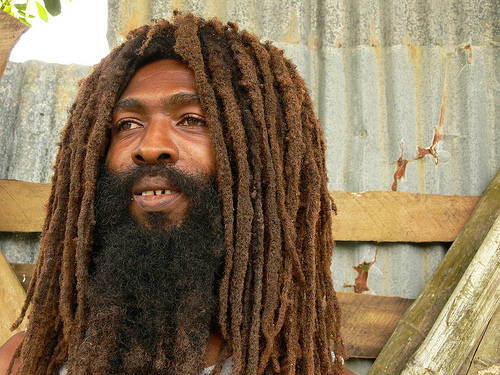
illustration rastafarian man

Notes from September 18, 2001: Richard

That morning, I heard my three-year-old daughter wake up and say with delight, “It’s not dark out anymore.” I went in and saw her already sitting up in bed — the brilliant sunlight streaming in through the pink, translucent curtain of her bedroom — and saw how her head was haloed, as usual, by what resembled the pale, disorderly golden floss some people put on their Christmas trees. Angel hair — she was a tousled, blinking pink-and-gold person, recently emerged from babyhood.

“That’s right,” I said. “It’s not dark out anymore. Good morning.” She flopped back down and remained lying in her bed, even after I folded her white net safety-rail down. “What a beautiful girl,” I said, smiling down at her.

“I can’t get up,” she said.

“Why not?” I asked.

“I can’t get up because I’m dead.”

My heart darted out of my chest, chirping and flapping and shedding feathers like a startled wren but somehow I managed to feign businesslike nonchalance and smile reassuringly. “You’re not dead.” The effects of the terrorist attacks one week ago had filtered all the way down to toddlers far away in Florida.

Well, later that morning, after dropping her at her baby-sitter’s, I stopped at a mini-market at S.E. 9th Street and University Avenue to get a bottle of water. As I pulled up, there was a guy tottering oddly across the sidewalk in front of the market, very tall and skinny, and his long, skinny pink tongue hung out like a dog’s, quivering with each stride. I hoped — no, prayed — that he would not speak to me. He stood in front of me at the counter to purchase a bottle of cheap wine with some very tattered, dirty money. His coins were coated with sand and dirt, and the clerk swept them into a pile then covered them with a napkin as he left the store. I paid for my water. Several middle-aged men stood talking energetically while their lottery tickets printed out.

After paying for the water, I walked to my car and there stood a tall, picturesque man, vibrant and attractive even though missing most of his teeth. He wore a black cap with stars embroidered along the front: three black stars, on a vivid yellow ribbon band. A paler yellow jumpsuit, a long beaded necklace — and long, luxuriant dreadlocks. He wore a couple of rings on his hands, a small silver nose-ring, and a gold earring in his left ear. He was quite handsome, though at the same time I could tell he’d recently been through some very hard times, and probably had been in those bad times for a quite a while.

For a second, I worried, because of the other man, and that man’s obvious level of dissociation with the world (I really had prayed to avoid him), but in a second of observing this man, I knew I was on much more solid ground. I wouldn’t be talking to a total lunatic. He held out to me a book — a Bible — and said he had just seen someone throw it in the trash, and God had told him to get it out and now pass it on to me. I took the book from him, bedraggled and slightly crusted on the cover with God-knows-what. I felt instantly ashamed for worrying what germs might be on the cover of the old, battered Bible, but I forced myself to disregard that, and act untroubled.

During our brief chat, he told me he was a Vietnam veteran. He pulled out a battered leather wallet and showed me his VA Hospital ID, which I knew to be genuine, as I have seen others: his picture was on it, and his name and date of birth. He was born Christmas Day, 1947.  I cannot remember his last name, only his first name, Richard, the same as my father’s.  I looked at the ID and then back at his face, and what I saw was an honorable man, intelligence shining out through his eyes, but also in his eyes a sadness that probably ran deeper than I could ever imagine. His radiance and his sorrow ran through me like a knife, because of my very-realistic fear we’ll now be in another war – one which will kill many young men and destroy the spirits of many more. I was suddenly and inexplicably paralyzed by grief for him, as a veteran, as a street person, as someone now obviously fairly troubled in life. I saw him as he must have been, all those years ago, young and strong and relatively unscarred, and the breath caught in my chest, seeing him both then and now in the very same instant.

After a few moments, he asked very gently and politely if I had any money I could give him to buy some coffee. I was so happy he asked for something, so I could give him something. Ordinarily, I would give someone in this situation a few dollars, but I gave him $20 — I just wanted to give him something. Nobody can give him back what he lost, and money is a poor substitute for what he lost, but it’s a substitute nonetheless. Money and kindness are all we can really give. He went inside, and I buckled my seatbelt, turned on the car, grabbed the steering wheel, but then sank down over it, clutching it, sobbing for the first time in a long time, not caring in the slightest who saw me or heard me. It felt like a release; I only wish it had gone on longer. He came out with his coffee, saw me hunched over sobbing, and got alarmed — he knocked on my window.

“Are you okay?” he asked. Genuine concern; sincere compassion. I can detect those things in other people from the slightest of nonverbal cues, unguarded genuineness and sincerity are so rare in this world. His sincerity made it better, but also worse at the same time.

“I’m okay,” I choked out between sobs. “It’s just this whole thing.” He didn’t have to ask what I meant, because of course he already knew. The power of these events to affect us has crossed every kind of barrier — sex, race, socioeconomic status, education level, sanity level — we’re all family right now. I rolled down the window and he embraced me. I was grateful for the human compassion, pure and simple. His smell was strong and complicated, some of the notes pleasant, some sour, but oh, so real and human and I drank it in, all of it, the bitter and the sweet, a primal metaphor for this crazy life itself. He asked, tentatively and graciously, could he sit with me a while.
“Yes,” I answered. “Please.”

He started to talk, and I listened, giving him my fullest attention. I bonded with him in a way I’ve never bonded with any stranger in such a short time. I guess we spent about an hour together. Richard, from West Virginia. He is a Vietnam veteran, former Marine, former POW. He talked generally about what he was trained to do in the Marines, but said he didn’t want to tell me anything too specific about his experiences during the war — he said women shouldn’t ever hear such things. We talked about everything there is for human beings to talk about and he read to me from the Psalms and Matthew. So devout, so earnest, he held my hand in his while he read Scripture, ministering to me like a Sister.

In fact, he had been in the past a minister, he said, and from his familiarity with the chapters of the Bible I knew he wasn’t exaggerating. He has two living daughters, now grown, and another daughter who died at age two, just two years ago, from a heart ailment. He has his deceased baby’s name tattooed on his shoulder, plus three scars from cigarette burns — two for each of her birthdays, and a third for the day she died. He cried twice with me, once while talking about her — Zaidyn — and a second time while talking about how his stepfather used to beat his mother, years ago. He told me he still calls his mother “Mommy” when he calls her on the phone.

“Do you think that’s stupid?” he asked. “For a grown man to say, Mommy?”

“Absolutely not,” I answered. “I think it’s wonderful. I think more grown men should.”

He has been barred from our local homeless shelter, St. Francis house, for two years for giving food he obtained there to someone else. It’s a rule there, you’re not supposed to do that, share your rations. What a dehumanizing policy. It’s our basic need, to share. Damn them for that. He lived in Jamaica at some point for five years, his grandfather was born there. One of his grandmothers was a full-blooded Cherokee. He had played conga drums with Bob Marley.

I felt, I think, something like the presence of what human beings call the Divine. Divine love. I comforted him, he comforted me. I gave him another $20, all I had left in my wallet. He blessed me, I blessed him back with all my heart.

He still played conga drums around town. He knew of Ajamu Mutima, another drummer. “Another tall, skinny dude with dreads,” he said, laughing. As Richard and I spoke, I thought often of my father, and my stepmother Dorothy (his African-American wife), and of the rich heritage from Africa we all need to embrace.

He spoke of his lost two-year-old saying to him “I love you, Dada.” As a fellow parent, I knew how precious those words were. His pain at her loss, I felt it palpably, physically.

He knew when to end the interaction, and for that too, I was grateful, as I was overwhelmed and needed to go off and write it all down so I would never forget. Though I didn’t want to break our contact, I somehow understood it had to be broken, because it had been so miraculous, we had gotten so much from each other, we didn’t want anything to detract from the miracle. We didn’t want to descend into ordinariness with each other. He didn’t want it to end, either, but he was gracious enough to know to end it. Restraint can be admirable; sometimes, less is indeed more. But we were both reluctant to leave each other, and when I started the car and put it in reverse, he approached the window one more time. And that, too, was perfect.

Because he asked me, at the end, the question that made it all even more clear, more passionate and more profound. The question that made it, well, I don’t use this word much, but there is no other word to use in English — perfect.

“Did you feel it, too?” he asked me. He looked at me, searching my face with his deep brown eyes, eyes that held the world in that moment. Eyes I wanted to fall into.

I knew precisely what he meant, and I had indeed felt it. He had asked a question I couldn’t even have begun to formulate, so overcome was I with my feelings. “Yes,” I answered. “Yes,” I repeated, nodding to him with absolute recognition, and with that he leaned in and embraced me with joyous intensity for one final moment. I returned his affection as I would return my own child’s, or my mother’s. I am profoundly grateful, and I will never forget him. It’s true, Mystery can manifest in the most unlikely ways. We fell together like long-lost twins, then slowly let each other go.  Without saying much of anything but “Did you feel it, too,” and “yes,” we both knew without doubt that he was a noble person with an eternal soul, and so was I, and we had finally found each other for all eternity in a single hour. The force resonating through our bodies was Divine.

6 Comments

Filed under 9/11, bible, daughters, fatherhood, memoir, notes, peace, rastafarian, veterans, war

Inside the Emerald, a short story


illustration inside the emerald

(originally published in Snake Nation Review)

Inside the Emerald

Brett sat on my kitchen counter — ancient, mottled pink and gray Formica — wearing tight corduroy jeans, cut off at mid-thigh. My eyes couldn’t stay away from his meaty, shaved bicyclist’s legs, hanging there, swaying, his feet clad in hiking boots. Brett’s bulk scared me, but on another level it seemed clownish. He was trying to seduce me, but it wasn’t working. He couldn’t get things moving: he seemed pendulous, awkward.

Besides which, I couldn’t stand his beard. It was one of those really long ones; it touched his chest. It made me think of old age, of death and decomposition and depressing black-and- white movies. He looked freakish, a cultural throwback; the medieval flagellant, the cold-weather mountain man.

“Let’s have a love affair,” he said. His voice was pinched, immobilized in the hairs of his nose, but also vibrating deep inside his chest, grumbly, as if emanating from some internal conjoined twin. He sounded like a crabby Yogi Bear — if it could ever be in Yogi’s nature to growl. Brett’s words issued as moist, cartoonish blips from his vulnerable, full-lipped mouth — crazily out of place — which he had tried, rightly but in vain, to shroud with the man-o-the- mountain facial hair. He paused, and I heard him inhale with dramatic volume. Even with my back turned, I felt him: the usual Bela Lugosi, eye-piercing stare. My father used to stare just like that.

I knew Brett was trying — as best he could, considering all he had to work with was my back — to gauge my response to the small bomb he had dropped, but I was better than he was at the Noel Coward pause-and-inhale stuff. I learned that kind of fencing with my dad, pinked and bloodied up one side and down the other over the years by the old man’s twisted paternal style. So I didn’t allow Brett the satisfaction of any reaction. Not yet. I stood there like a precision-cast-vinyl replica of a woman, my head and neck frozen. My hands continued to move in the soapy sink, washing the plates we had eaten our Chinese take-out lunch off of.

He went on with it, nonetheless. He tackled it the way he tackled most things: wielding his big mountain man shovel, putting his big hiking boot foot on it and wedging it down into the deep black dirt, getting ready to lever it up and begin digging the hole he would plant himself in. What he didn’t understand was that the dirt he sought, underneath a thin black velvet glaze of allure, was full of rocks, chock full of scattered rocks and broken glass and rusted out tin cans, no good for growing anything, let alone a love affair. He didn’t know me like he thought he did.

“Let’s read poetry to each other naked in bed,” he said. “What do you say? Maybe delve into the eighteenth century romantics?” He cocked his big head, drooping it to one side as if his neck was a weak green twig or something. He looked silly, a dancing bear. Only a parakeet would have looked good tilting its head coyly like that, for God’s sake.

But it didn’t matter, really, whether he looked silly or not. The truth is, I have never gone for that sort of thing, light romance. I need a much heavier diet. I only involve myself in relationships with guys who are doomed in some respect. And from fifty yards I could smell that Brett had no doom in him, no tragedy, no neurosis, nothing for me to sink my teeth into. Even with all the effort he had put into trying to look weird and funky, the poor guy couldn’t choke out his bland, middle-class roots.

I was trying to figure out how to tell him a part of all this in a delicate manner. God knows, I didn’t want to hurt Brett’s feelings. I was fresh out of subtlety, though, dried up like an old bean, so I thought, oh, fuck it. “I can’t do that,” I said. I paused for effect, while I studied the pentagram decal stuck to the window over the sink by the previous tenant. “It wouldn’t be good for me,” I said.

He slid off the counter. The corduroy seat of his shorts made a soft zipping sound as he moved. His thick, long-distance leg muscles lengthened and stretched and caught him. Then he was standing behind me, and in my narrow galley kitchen we were too close. Like a blind person, I could sense the shadow of his presence hovering behind me. Leaning further in over the sink, I stared out the dirty panes at the trunk of the old oak that towered over my apartment, imagining that the rough, pitted bark of the tree was a skin that could feel.

He moved closer. Putting one of his paws on my shoulder, he turned me around, using just enough tender force to overcome my stiff and melancholic resistance. I could smell him then, he smelled big and clean and boring, he smelled like a dresser drawer full of my grandfather’s plaid flannel pajamas. He hugged me to him. “A full body hug,” my father would have said. Tilting my chin up, he bent down and kissed me, covering my face with the cotton candy beard.

The beard folded in upon itself — a surprisingly buoyant cushion — and rustled against my face, scratchy but soft, like Mohair fleece. His lips were pliant and fleshy, damp with saliva. I had been keeping score — totting poor Brett up into columns, determining whether he was aligning with my positive or my negative energy states, (as my dad’s silly, overpaid psychotherapist would recommend), that would have been the second point against him: the wrong kiss. First point against him:  the wrong ego.

As he kissed me, he ground his crotch into me, gingerly at first but then heavily, as if his glands had jolted him with a blast of desire, hormonal lightning, deep in his gut. He swiveled his pelvis, back and forth, up and down, with a bearlike urgency. While this crotch action was not entirely unpleasant, and I felt something intriguing — like a hard length of garden hose — snug within his corduroys, I stood resolute and did not yield.

I had too much pride in my careful, cultivated reputation as a rough-and-tumble woman, however, not to allow my mouth to show some aspect of life. So, though all other parts of me were still and quiet, on hold, my mouth moved elastic to match his, stretching to keep up with the pace of the kiss. There is nothing worse than kissing a limp mouth. Unfortunately, he mistook that slight response, that mere politeness, as encouragement and I felt his tongue become a part of the embrace, tentative at first, and then defiant, presumptive, as if it were a separate entity.

“Come on,” he said, in a gruff but wheedling tone, when he had finished the sloppy kiss, and despite my lack of enthusiasm for it, despite the fact that my face felt like it was covered with a thin mucilage — the kind distilled from horses’ hooves that used to sit in my grandmother’s bottom desk drawer in a little glass bottle with a rubber slit nipple on the end — I was exhilarated. “Let’s have an old-fashioned love affair,” he said. “It would be great fun.”

He was trying to sound sophisticated; English, maybe? His eyes appeared tiny, almond shaped, a little slanted — evil but somehow Santa Claus-ish, glittering out from the reddish blonde Brillo-cloud of facial hair. He even had long, tangled eyebrow hairs that drooped down and tickled the skin of his eyelids. My fingers itched to get the scissors out and cut them clean off, prune those asinine hairs down and give him more controllable eyebrows.

“Would you like a glass of wine?” I said. My customary reaction to a sudden sexual advance — wanted or not — is to pretend I haven’t understood either a word or a gesture they’ve used, or maybe that I understood, but think it’s a joke, a protective coloration of innocence. This approach developed because I wasn’t beautiful or pretty or even cute as a teenager and therefore never developed the casual flirting ways with men that most girls use as a method of self-defense. So, at twenty-one, when I discovered myself with some good looks — in a long-legged, small-breasted, short-haired kind of way — I was unprepared.

Usually, with the average guy, my quaint, bashful, non-reaction to any overtures comes across as being polite, as being a “good girl” underneath my thin veneer of jean-jacket toughness, and most of the time they like it, it makes them feel secure and even benevolent. With Brett, though, with his vast I.Q. and his intellectual affectation, this method instead seemed rude. I felt as if I’d slapped him: but to be honest, I was glad. I got off on what I had unintentionally inflicted; I enjoyed seeing the great Brett backpedaling.

“Yes, wine would be nice,” he said, surprised but doing his best to cope. I could tell none of this was lining up with the way he had planned it. I poured him a glass of cheap jug red. I handed him the wine and moved away from him, away from his beard and his lips, backing out of the narrow slum kitchen.

I went across the tiny living room of my student-ghetto garage apartment — so pathetic, the very floor of the place was uneven, as if somebody was on a real bender sixty years ago when they poured the slab for the old place. It rose and fell, cracking the old brown and white linoleum tiles, hazardous for bare toes. I sat down on my sprung sofa. The coffee table was an old, square mirror and two plastic milk crates, weighted down with old magazines. I looked down at the mirror table and in its feeble silver glassiness I saw Brett looming, immense. It was like a Dali painting, the way his naked knees knobbed out in the foreshortened perspective I had, making him look more muscle-bound than he really was.

I knew he was debating whether or not to sit next to me on the couch: since I didn’t look up at him in invitation he decided to use the floor. He had to force his legs into a cross-legged position with both hands because in his various exertions, he’d sacrificed muscular limberness for strength.

“And why don’t you think a love affair would be good for you?” he said, jumping back a bit, his voice keyed in a different tone. It was much smoother, much gentler, and I saw the pupils of his eyes expanding, softening the pale blue irises. Whether it was a reaction to the change in light, or rather, true sympathy for my reference to emotional self-protectiveness, I couldn’t really tell.

“I think it would be very good for you,” he said — not waiting for me to answer. By that pronouncement, I didn’t know whether he meant good for me mentally, or physically, or — and I still don’t know whether this is possible for someone with my temperament — both. Whatever his intent, I realized his ego was even more threatening than I had first imagined. Did he think he could cure me so easily, with just a few swipes of the old garden hose, of the intricate, self-indulgent melancholy I had made a part of myself?

“Well, I don’t,” I said, a little cranky. His face became formal once more, his hurt pupils drawing back up into pinpricks, his eyes going blank, although I could still see the ghosts of what they had been a second ago. Now it was as if I’d slapped him twice. The guy had probably sixty, seventy pounds on me, but in our screwy emotional inverse I was the one who was the heavy. So I tried to soften it — after all, you never know when you might need something from somebody. “Don’t burn your bridges,” as my father used to say.

Mostly, I didn’t want Brett to think I was a bitch — even though that was perhaps true — because it has always seemed to me to be the worst possible thing a guy can think about a girl, even worse than thinking she’s a slut. “I mean, it’s just not what I’m looking for,” I said, my voice warmer. “I recently got out of a very hard relationship.”

In a flash, his face shifted once more. I couldn’t see exactly how, because of the beard, but by watching his eyes and his mouth I could tell he felt he had the upper hand again. “A ‘relationship’ is not what I’m talking about having,” he said, and I heard a crash of cymbals on our imaginary soundtrack. “I’m talking about a simple love affair. Something with no strings attached. Something we can have fond memories of when we’re eighty and in the nursing home, you know?” He eyed me, licking his lips. The top layers of his mustache hairs were swept around and slicked down by his rotating tongue, curling over the bottom edge of his upper lip, the ends of the hairs fastened between his lips when he closed them.

And then, when he started to speak again, opening his mouth once more in slow motion like an oracle, I saw the wet mustache hairs pop up, springing back out of his mouth as if they were alive. “Think of it as a recreational affair. Haven’t you ever had one of those?” he said. He was back to his Noel Coward script then, sophisticated, jaded; in his world-weariness he’d done it all: didn’t I know? I didn’t bother to tell him, but I did have one of those once, a light hearted recreational fling. I slept with this self-infatuated neo-Beatnik guy, for laughs. But when he said he was going to write dialogue for us to follow, that he wanted us to wear costumes and act out fantasy roles, I dropped him the same way I dropped this little white oval pebble I picked up once that in my hand turned out to be an ancient, petrified segment of dog turd. For me, sex has always been meaty and sweaty and risky enough without any overblown twists.

“Do you like Joni Mitchell?” I said. From the way his eyes widened, he must have thought he was in the door. She’s a sure thing, real girl music, right? But I hadn’t decided yet. I enjoyed the tension in the air, the dark mist of unconsummation: it’s never the same after I’ve gone through with it. The creeping imperfection syndrome comes on me in dribs and drabs. Like a series of photographs taken with a strobe-light flash, the pictures are crazy and disjointed at first, then, when I get a whole series of them laid out in a row, the pattern evolves.

The guy interrupts me with territorial pomposity during group conversations, for example. I find out he voted for a real egghead in the last election. Or I finally read his dissertation proposal and discover the thing is even more vacuous than I had expected. It’s like the old nightmare I used to have as a kid. In it, I’m always trying to make up this bed, but no matter how hard I pull and tug on the sheets, I can never smooth them out, they stay crumpled for all eternity.

And in the end, those little picky things, the flaws which all men carry, like the dirt specks inside an emerald — which one by one are only cosmetic nuisances, easily remedied by a little mental liposuction — get totted up and up and up, resonating in my wicked female mind. So, on some wan, hung-over morning, when I am forced at last to look at my momentary lover with a critical eye, I can’t believe I ever allowed actual physical contact to occur: I have to face the chore of getting rid of the lunk. But, in the beginning, it always seems that the newest one will be the sweetest yet.

Brett, the object of this balancing test, sat there staring down at the dull brown shag carpet, bought for nine-ninety-nine at the Salvation Army. I walked over to the stereo. Flipping through the discs, I got to the shadowy picture of Blue and pulled it out.

As a young teenager, when I went through the normal smoking-menthol-cigarettes- pilfered-from-your-mother-after-everyone-else-is-asleep-and-blowing-the-smoke-out-your- cracked-window-while-listening-to-The-Blue-Oyster-Cult-single-“Don’t-Fear-The-Reaper” stage, I knew that if I’d been born with prominent cheekbones and a voice like Joni’s, my life would have been a better and more poetic thing. Crazed, handsome geniuses in love with me forever and all that: what every thirteen-year-old girl wants. I pressed the button and her voice, in its honeyed, silvery sharpness circled around Brett and me. Like bio-feedback self-hypnosis, the electricity of my brain was altered by the sound. The music made him look more attractive — makeup for the mind. Isn’t that how girl music got its reputation? The beard, even the lips, started to make some dreamlike sense in the scheme of this day.

As I walked over and sat down on the floor next to Brett, he turned away, sulking, playing hurt, looking out through the French doors across the room. In one proprietary, music-playing motion I had turned the tables back again, somehow. My body was my own again, and I could tell he didn’t like it. But the only way I can allow myself to be taken is to imagine I’m the one behind the wheel — to keep in my heart and believe in my relative toughness, my outer shield of manipulation.

I saw then that Brett was a little confused; he was trying to remember how our conversation had started. I reached for his chin, at first finding only empty whiskers, groping through the soft stuff of his beard until his chin slid home between my fingers. I gripped it and turned his head, bringing his eyes to meet mine. “There’s no such thing as a simple love affair,” I said. “And I know I’ll never make it to eighty.” I leaned in.

Brushing his lids with my fingertips, I fluttered his eyes closed. My delicate touch would not have dislodged the pigments off a butterfly’s wing. He sat there, an impressive slab of alien chromosomes in his flannel shirt, the sleeves pushed up, revealing the golden, and wooly covering of his forearms. With his eyes closed, his face, even with all that hair, grew youthful, almost boyish. What harm could possibly befall me? The black chasm of a man’s secret heart beckoned, and I felt a quaint, mothering softness begin to take hold of my body. “Lotsa laughs,” crooned the recorded voice like a silk ribbon inside my head, as I started to unbutton his shirt, moving over him with all the gentleness, all the neediness, all the grace I could summon.

2 Comments

Filed under short stories