Tag Archives: god

doctor’s report: patient a, a short story

Kimberly Townsend Palmer's avatarKimberly Townsend Palmer

img244

(originally published in Burning Word)

Doctor’s Report: Patient A, a short story

Patient A is a living museum of femininity, and serves as transitory evidence of extensive neo-geo-psycho-socio-eco-political movement. Designed and built in the second half of the twentieth century, she first gained philanthropic prominence with a cynical, witty, overeducated man eight years her senior, Charles F. She stayed faithful to Charles F. for six months, but the intriguing tales of his former romantic partners, then numbering in the several hundred, irretrievably seized her imagination. She left, and never looked back. She shops for new men the way other women shop for new shoes.

She invariably rejects both the too-easy conquest and the too-stubborn resistance. Every season countless men flock near to witness her fleeting, hormonally-induced states of passion, and observe for themselves her classic “XX” architecture.

If it seems that everything has already been said about Patient…

View original post 800 more words

Leave a comment

Filed under acceptance, anthem, anthropology, appeals, art, art history, beauty, birth, blood, daughter, daughters, dream, dreams, eternal, eternity, evolution, faith, fiction, girls, history, identity, justice, karma, kindness, life, logic, loss, love, personal responsibility, prose poetry, relationships, sex, short stories, soul, spirit, spiritual, spirituality, transcendence, transitions, truth, universe, wish, woman, women, world

Evolve Or Die, an opening manifesto…

illustration evolve or die

Evolve Or Die, an opening manifesto…

I was thinking about stuff, in my weird way, which I often do, because I’m basically weird, stuff like religion and politics and war and peace and men and women and money and love and power and all that kind of stuff, the giant, sometimes-incomprehensible stuff that most people don’t appear to think about all that much, except in a purely academic way, and only if they can get some money or some fame or some power out of it.  So why aren’t we all thinking about things which, logically, are very, very important and create so much human suffering, much of it perfectly avoidable with reasonable effort?

The whole situation we find ourselves in right now really bothers me because, if the average human is THINKING about these problems, problems which appear to have been with us for the entire course of human history, problems which seem as though they are perfectly amenable to being SOLVED, then those average humans should be TALKING about them a lot more, and trying to be part of the solution! Because people are really stupid to be fighting all these goddamned, fucking, idiotic wars, wars that kill people and destroy stuff and hurt children and scar children and make sure children grow up to pass that war meme, that war memory, that war “tradition” along to the next generation, and so on and so on ad infinitum, ad nauseam.

Which makes my stomach hurt, sometimes BADLY.  And then I remember how people in the United States of America seem to have given up voting!  Talk about my stomach hurting!

And, all of my weird thinking seemed rather quietly and suddenly to coalesce, to interweave, to assemble itself into an idea bigger than me.  An inspired idea. An idea from the Muse; from the Universe; from God; from Spirit.  You know, that watcher, or presence, or soul, or place within yourself which is all-at-once creative… imaginative… passionate… compassionate… serene… silly… serious… sad… sublime… that place?  If you don’t know that place, at all, then I feel sad for you.  Not “sorry” for you – that word seems to me that it implies judgment and a consequent feeling of superiority or power which is unhealthy – but sad for you.  The simple sadness a two year old feels when seeing another two year old fall down, scrape a knee, and burst into tears.  That feeling.  Do you remember it?  If you cannot remember it, I feel sad for you again.  It is a feeling we should all remember.  It is the sadness you feel when your mother is ill; the sadness you feel when your dear pet is ill; when your child is ill; when you are ill; when the world is ill.

You know, history is important.  So is IMAGINATION.  Liberal/Conservative, Democrat/Republican, Progressive/Reactionary, Labor/Capital, Open-minded/Dogmatic… call the differences in human outlook whatever you like!  One side fears, or dislikes, or opposes change; the other side accepts, or likes, or promotes change.  That is the essence, the nut, the essential oil, which creates the varietal, sometimes minor, sometimes dangerous differences in our human culture/temperament/society/milieu.  We must start thinking as one planet, one species: not separated by physical characteristics… or wealth… or religion… or language… or country… or region… or clan… or tribe… or any of the myriad ways groups of human beings have managed to “quarantine” themselves from “infection” by other groups! We are not microbes!  We are not supposed to attack each other without mercy.  Survival of the fittest does not mean the survivors survive because they kill everything else; it means evolve, or die.

Human beings are on the doorstep of radical change.  No shit!  Look at our history: though an individual lifetime may, or may not, feel to that specific individual as being lived on the doorstep of radical change, remember, as a species, we have OFTEN been on the doorstep of radical change.  We are always living within – not at the end of – human history.  Which is why respecting the lessons of our past must ALWAYS go hand-in-hand with a thoughtful and imaginative look ahead, to our future!  We are in the process of evolving into another human species.  Don’t forget that!  We are on the continuous “ride” of evolution, of change, of metamorphosis into another species of “human being” – hopefully, this time, a more “humane” human being who is truly wiser than we are, who stops jeopardizing human survival by an unthinking disregard for physical, social, and cultural environments yet who remains flexible enough to survive the inexorable process of change in those environments!

How to evolve?  I’m not sure.  I can rattle off the first things I think of.  Read books.  A lot of them.  Spend some time outside, the more the better.  Spend some time thinking seriously about your life, and the life of every other human being.  Don’t hoard planetary resources which, by simple birthright, also belong to billions of other humans, your (admittedly distant, yet undeniably related) COUSINS through our common ancestors.  Relax, nobody’s asking you to give up the internet.  Simply treat others the way you would like to be treated.  Speak some encouraging words to those who need them.  Help some people in need.  Protect children from harm.  What do you think?  Feel free to edit the list!  We’re all in this TOGETHER.  But, for mercy’s sake… MAKE YOURSELF A LIST.

4 Comments

Filed under dream, essay, hope, manifesto, nonfiction, rant, wish

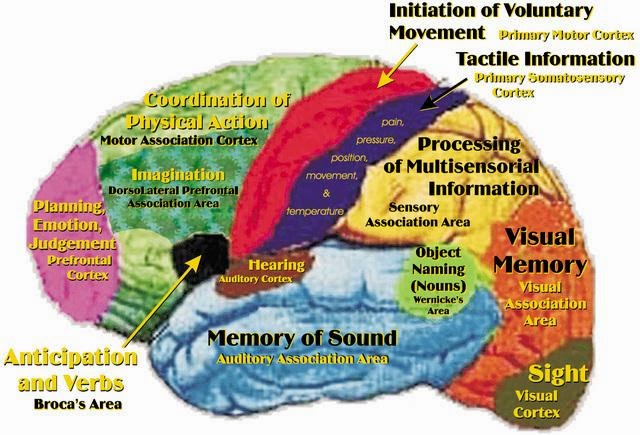
Temporal Lobe Epilepsy With Localized/Partial Seizures, a personal essay

illustration temporal lobe epilepsy

I couldn’t go to work today. COULD NOT go. Me. Me! Me!!! The Me I know as Miss Responsible (at least before), or Miss “Took Copious Notes and Asked Earnest Questions of Every Professor She Ever Had” (at least before), or Miss Order of the Coif & Law Review (at least before), Miss Top 5% (at least before)… I COULD NOT go. I could not go, as surely as if I had been very heavily & securely shackled and chained to my bedroom floor with no tools of any kind within reach.

Then, abruptly at 12:11 p.m. – perhaps because Miss Self-Blaming loves to make Miss Responsible feel horrible because she has not done anything productive on this (fucking difficult) day, I am suddenly ORDERED (by a part of myself I don’t know, and, frankly, do not ever want to know) to write about “temporal lobe epilepsy with localized/partial seizures.” This particular moment — Wednesday, August 12, 2015, 12:11 p.m., convinces me that my entire universe — the physical, the emotional, the intellectual, and the creative — has turned into one long, very long, seemingly endless, “temporal lobe epilepsy with localized/partial seizures” episode… at least for right now.

Helpless to help myself, mostly, except for a stubborn, almost instinctual, ability for self-care, feeding & watering. I’m conscious, but either (1) not able to speak aloud, or (2) uncontrollably babbling each & every random thought my storming brain generates. That’s how you can think of a seizure: an electrical storm in the brain. Complete, sometimes, with inner thunder & lightning & high winds. I sometimes wear earplugs, or I sometimes listen to the music I love — and there is a lot of music I love — loud enough to drown out all the sounds that go along with being in a room in a house in a city on planet Earth in the calendar year 2015. Block out the loud, the abrupt, the frightening; nurture the calm, the logical, the safe.

What has saved me thus far, mostly, is the fortunate fact that even in this fucked-up state I can still write — albeit with tons of spelling, punctuation, and grammar errors. At these moments, in particular, I thank God for the generations of computer whiz kids, who gave us things like word processing, complete with editing capabilities, and pretty good grammar & spellcheck. I thank them for these things because another aspect of these seizures is a barely functioning short term memory, and a dreamlike, almost hallucinatory perception of myself and my surroundings… very vivid while it’s happening, and very ass-kicking after it’s over. I do not recommend it as a way of life, or even as a temporary experiment.

I think, but do not yet know for sure, that my “temporal lobe epilepsy with localized/partial seizures” may be permanent, and treatable only with an alarming number of drugs, needing to be taken as many as four times a day. This entire state of affairs is due to the fact that I required brain surgery for a nonmalignant, though large, tumor, which was between, or around, or next to, my frontal and temporal lobes, and as a special bonus, was wrapped around the main aorta of my brain and my right optic nerve. The other permanent souvenir of my tumor and surgery is a 50% vision loss, more or less, in my right eye, and a funky-looking scar on my head that usually isn’t visible (thank god!) because I have very thick, coarse, wavy hair. Horsehair, I used to call it, and I am profoundly grateful for it now, for without it I would remind people of Frankenstein, and quite possibly frighten some children.

I’ve tried to write this without it sounding like a 30’s blues song… what comes to mind is “Down The Big Road Blues,” by Mattie Delaney (born 1905). When I am in this state I find myself missing my daughters… when they were children especially. I miss so many things about them! I miss listening to music or watching a movie or playing a game or just talking with them. They love music, and singing, and laughing, and playing Scrabble intensely. Aren’t the intimate connections, with our intimates & beloveds, what make life worth living? I am so humbly grateful for my beloved partner, my daughters, my dearest human & animal friends, my fellow creatives & nonconformists.

Without all of you, I would be lost. As part of a team — even if it’s only a team in my imagination — I am able to keep doing the next necessary thing, whatever that may be. Sometimes it’s cleaning the floor. Sometimes it’s snuggling my dog. Sometimes it’s work. Sometimes it’s reading. Sometimes it’s meditation. Sometimes it is putting my arms around a living, breathing, warm human. My daughters, as babies, taught me the value of plain old physical closeness to someone we love as we love ourselves. So, I say to myself… “Shoot The Loop,” just like the Acoustic Alchemy song my beloved partner introduced me to.

Thank you for your time and attention. May your day be blessed with clear thinking and right action and peace. May you, may I, and may all the human world keep on waking up from our “very long dream,” into a brilliant and fascinating future. Fascinating. Brilliant. All of us.

2 Comments

Filed under acceptance, beauty, compassion, courage, daughter, daughters, development, faith, fear, health, hope, kindness, logic, love, soul, spirit, spiritual, transcendence, universe

The Way of Tiny Swordfish, a prose poem

The Way of Tiny Swordfish, a prose poem

Sitting in the living room next to the indoor fish pond.  Watching the tiny swordfish jump up the miniature rock waterfall, knowing and empathizing with their drive to go somewhere farther along, somewhere even unknown, somewhere presently unattainable.

Sitting on the floor next to the black Naugahyde, Father-Knows-Best chair and matching ottoman, which no one actually ever sat in, as if knowing we were not worthy occupants.  Wanting a father badly, asking my stepfather if I could call him Daddy.  My mother made me ask him myself, but I wanted her to ask him for me!

They married when I was four, then went away to New York City – actually the Dick Van Dyke show suburb of New Rochelle – for a year, while I lived with my grandmother.  My mother worked as an “executive” secretary for Norelco, and every time I saw the commercial with Santa riding the Norelco razor down the snowbank I swelled with pride.

I started kindergarten at four, Catholic school.  Nursery school, kindergarten, and first grade with the Catholics.  They say if they have you until age seven, they have you for life.  Saint Teresa for Halloween!  I came home, told Mommy I couldn’t wait to die and go to Heaven, so I could be with Jesus; pictures of Jesus taped to the headboard of my four-poster bed.  Mommy said, “That’s enough Catholic school!”  So public school for second grade.

Loving the families shown in black-and-white on TV, where the biggest problem was fighting over your curfew, getting a bad grade on a test, not being allowed to go to some party where, in the end, father knew best because some kids got in a car wreck either on the way there, or after.

Having a kitchen where there were no roaches living in the toaster, or the silverware drawer.  Where I could ask my mother for advice, and not have it be wrong, not have it break my heart.  Dreaming of and longing for a life of being saved and shepherded by your parents, like on TV.  Trusting their wisdom.  I wanted to trust mine.

4 Comments

Filed under beauty, Catholic, childhood, daughter, daughters, dreams, faith, fathers, fish, god, jesus, Saint Teresa, stepfather

Divine Love, Divine Hate, an essay

illustration divine love divine hate

Divine Love, Divine Hate, an essay

Scientists have of late discovered that music stimulates the same areas of the brain as food and sex. That’s why listening to music can bring a chill, raise the small hairs on the back of the neck. That’s why music demands — and gets — our closest attention. You need me, the music calls, you need me to survive, to perpetuate your species. Without me, you will have less well-being, less pleasure and satisfaction. What a design! Food, sex and — music.

The pleasure centers of the brain — the reptilian, primitive intelligence — is not involved in abstract thought but entrusted with the very essence of staying alive. Yet the impulses and desires which originate there find means of expression in our higher intelligence. Food and sex are necessary for survival, so necessary that sometimes it seems as though the whole human world, all human society and culture, can be thought of as nothing more than an interesting mechanism to keep us supplied with food and sex.

The appreciation of music springs from that same primal area of the brain — could this possibly mean there must be a God, after all — a God who gave us another instinct, one for pleasure and beauty, in addition to our basic instincts to survive? Music, a divine invention with no practical purpose. No purpose at all other than to inspire in us joy, mystery, fear and abandon.

Think of all the emotions we can express with food, sex and music:   passion, joy, disinterest, experimentation, violence, anger, tenderness, wistfulness, meditation, transcendence. Food, sex and music can be used to communicate, even intensify, all these emotions, yet the trio can also be used to push us past all of these feelings to a region of Godlike rationality and knowledge. Yes, occasionally our existence becomes clear, understood fully until surface complexity falls away into the deeper simplicity of detached understanding. A strangely quiet joy — a joy beyond anything prosaic.

A poetic joy, able to recreate itself in the mind forever. Sometimes the memory of such enlightenment is what keeps us going when the enlightenment itself feels as far away as Uranus or Pluto — as cold, as unreachable. Remembering how once we held it in our bodies and it filled us so there was nothing empty, noting lacking, nothing to fear — not even death. It is a knowledge, a contentment, which infants possess without awareness. To possess this peace with awareness is the greatest achievement, but one which few people are able to sustain for long. We hold it and fall in love with it and in an instant it twists out of our hands and flashes off into the distance like an agile, silvery minnow. Enlightenment as God’s minnow. Look at it too closely, try to keep it too long, and you may never see it again.

I myself have only a rather wobbly faith in God’s existence, but I nonetheless feel pity for people who declare without hesitation that nothing divine exists. What a drab, ugly world their interior castles must be, with only themselves for company.

The divine cannot be ruled out. We cannot know what exists beyond our senses.   Certainly people have been enraptured by the idea of divinity — especially, most recently, the notions of divine anger, divine vengeance — modern terrorists have embraced these, but without embracing the corresponding ideas of divine love and divine compassion. Yes, people have fastened their wills on the idea of divine judgment, but they have ignored completely divine forgiveness.

The cockroach is as marvelous a creation as anything — see it scuttle away from the light, a most marvelous mechanism, see it copulate, see it reproduce itself, see it taste its food with pleasure twinkling in its delicate, wavelike feelers. No less miraculous than us. But we have an ability the cockroach does not have — to be self-aware of our divine impulses — our duty as human beings is to dive both below and above our own ordinary human consciousness. To bring all our unconscious knowledge and desires into to the conscious realm — both those desires labeled primitive and those labeled exalted.

Some elements of love are to be found in the roach. It loves its life: flees from danger, attempts to avoid harm, and tries to survive no matter what the odds. This is where the terrorists have failed. They have embraced only half the divine order — divine hate — the half that appeals to them more and suits their political purposes. They need to stretch themselves, accept all things God has created — even those they find distasteful or abhorrent — and leave the judging to God. They need to cultivate in themselves divine compassion and divine love. Terrorists profess they love God, but they do not love God’s creation — therefore that love is flawed, is not really love at all. Their love has turned inside out into hate.

They need to learn from the cockroach, as do we all. We possess vast potential for divine virtue, yet are so capable of falling into the abyss of pride. These terrorists have fallen, and they are trying to pull us down with them. We must not surrender to only part of the divine order. We must catch ourselves with the feelers of the insect before we tumble too far.

I cannot blame anyone who feels the need to destroy the terrorists. I feel that need myself, the blood lust of anger and retribution. But we must find a response pleasing to the divine. That is what prayer is — thinking about what a divinely perfect being might do, waiting for the small voice to tell us the right way to handle this new permutation of evil — without ourselves falling under its wicked spell.

This is what all religious searching has been aimed at. Whether we believe God exists or not — we can imagine God, as God might exist. Sometimes it is better to die than to kill the blameless. We can feel such things in our deepest selves, and these places are just as important to reach with the conscious mind as the highest levels of abstract thought.

We can imagine God, we can love God, we can honor God, and that is what matters most, not whether God truly exists. Good and evil, love and hate, right and wrong, call it whatever you like. It is our uniquely human gift, our uniquely human burden. Did we ask for this? Be careful what you wish for, goes the old admonition. Would I rather be my dog, or my cat? Sometimes I envy their peace of mind. They don’t know about world wars. But my most divine pleasures, feeling them and knowing that I am pleased, and knowing why — in this way I have my cake and eat it, too. The lure of that apple in the garden is a lovely allegory, whether it happened or not — we invented it. This is the quality of our humanity which we can never give back, no matter how much we might want to.

10 Comments

Filed under beauty, charity, compassion, enlightenment, essay, faith, forgiveness, god, hope, humanity, love, peace, world

The Message She Sent, a short story

illustration the message she sent

The Message She Sent, a short story

Geri and her little sister, Rachel, were both deaf. Geri was a year or two younger than I; Rachel was a year or two younger than Geri. I never met their parents, so I don’t know if they were deaf, too. The two deaf sisters latched onto me probably because I was the only kid in the neighborhood who could bear to look them in the eye and try, laboriously, to understand what it was they were trying to say. This was during the era when all deaf children with even a small degree of hearing were made to wear cumbersome, boxy hearing aids strapped to the body and were trained, with varying but always limited degrees of success, to speak. Some deaf children growing up at that time were forcibly kept from using sign language.

The hearing world wanted them to blend in, to not cause trouble. The philosophy was to treat them just like the hearing, well-nigh ignore their disability. The approach had worked only slightly for Geri. She could speak, in a flat, nasal voice, but she left out many of the necessary sounds of the words. Her lips moved correctly, her teeth and tongue worked properly together as she’d been shown, but a word like “hello” would be unrecognizable without great effort on the part of the listener. I had to read her lips, too, just as she read mine.

She taught me the alphabet in sign language, and tried to teach me signs for whole words, but I couldn’t seem to remember them no matter how much we worked together. Sometimes I had her write things down, but mostly, I understood what she wanted to tell me without much trouble. We communicated a lot without any language. In fact, the very best times with Geri were when there was nothing to say, no requirement for communication whatsoever, when all that was necessary was a simple co-appreciation of events, a shared glance and smile. Geri’s hearty, soundless laughter was infectious and could usually cause me to fall to my knees with mutual hilarity.

She was a beautiful girl, far more so than I. Her hair was sun-streaked blonde and fell to her waist — her arms and legs were so long she seemed like a young antelope. Her skin was a clear, delicate buff — her eyes stood out, big, round and blue, set in a long, fine and lively face. Her eyebrows were usually raised in attitudes of curiosity, delight, or occasionally, trepidation. The only thing less than perfect were her buck teeth, but even those were startling white, gleaming, and pushed her rosy, full lips into a charming pout of concern.

Her sister Rachel, on the other hand, was a little troll. Similar to Geri in certain respects, but short-limbed and stout, not fat but packaged with strong, barrel muscles. She could not speak at all, wore no hearing aid, and only grunted. Geri’s hands flew, talking to Rachel. But Rachel, when she came over to my house, was interested chiefly in food, and eventually didn’t wait for an offering but rummaged through our pantry and refrigerator on her own and ate anything she pleased.

The first time she did so, I was shocked and angry because ours was not a house of plenty and I knew I would be in trouble when my parents found out, but Rachel turned her face to me with such complete incomprehension and joy as she ate, that I knew there was nothing to be done. Geri scolded her with her fingers but Rachel wouldn’t turn her head out of the refrigerator to look. She loved sweets, cookies or candy, even fruit yogurt. We didn’t have much, but she ate whatever we had in its entirety. Geri, by contrast, would hold one cookie and make it last, nibbling tiny bites in neat order.

Our daily bike races — Geri’s hair flying out behind her — were evenly matched. Geri always seemed on the verge of flight; sometimes it seemed God’s cruelest trick that she had no wings to carry her about. Climbing trees could take an entire Saturday. So could sitting under the bushes watching an anthill or hunting for duck nests. Geri always seemed to know where to look to find something beautiful. Her favorite game, though, was to give chase or be chased. She’d tap my shoulder and take off. I’d do the same. But the other kids in the neighborhood would leave the area in a hurry whenever they saw Geri and her sister coming.

Slowly, Geri and Rachel began to be my only company. They were always there. First thing in the morning, last at night. Whenever the doorbell rang, it was them. I didn’t mind, exactly, until the kids at the bus stop started conspicuously falling silent as I approached. They’d move their lips and pretend to keep talking. I tried to ignore them, not very successfully.

One day, Geri wanted to brush my hair — her fingers were monkeylike on my scalp, and her touch provoked a tender shiver and the rising of small hairs on the back of my neck and shoulders. Her hands were gentle, even courtly, with the brush. Then she indicated to me she wanted to braid it. She did, but so terribly loose that afterward I was afraid to move my head too far in one direction or the other for fear of spoiling her work.

She was guileless, unsullied by the meanness or lasciviousness that was slowly engulfing the other neighborhood kids our age — yet late at night in my bed, when she inevitably appeared in my winding-down thoughts, I was startled to find myself imagining her dancing in the nude — turning her head this way and that, angling her arms and legs in slow Kabuki triangles. She was above the messiness of our lives, lofted into the thin blue stratosphere by an absence of one sense combined with a flowering of something else — a physical sensibility like that of a genius. I was stunned to worship many times by her careful placement of herself — her torso, arms and legs, arranged so gracefully.

I cannot tell you why, 30 years later, the thought and image of Geri renders me still and quiet, hushed and worshipful, feeling clumsy, insignificant and most profoundly inept. No — that’s a lie. I can. She was a beautiful deaf girl who loved me — this was the message she sent into the roots of my hair, lifting each section of braid like it was a rare, dissected, pulsing nerve. She made two careful braids, one behind each ear. The way she parted my hair with the comb was like zipping my head open and rearranging the numb contents. She was a beautiful creation. Her deafness had become to me not a defect, but a gift. She seemed like a butterfly perched on my finger. That delicate — but a butterfly who came back to me over and over.

Other friends grew distant; it took me weeks to notice. I lived in a world of chosen wordlessness. More than once, Geri put on the huge padded headphones from my father’s stereo — signaling me to turn the volume all the way up — and we danced, Geri with the headphones on, trailing the cord. I could hear the beat of the music, tinny, through the cups around Geri’s ears. Geri’s smile grew bigger than her face. Her buck teeth glowed as she tossed her long hair around, and I was happy, too.

Then one particular Saturday, Geri did not appear shortly after the dawn as was her habitual routine. Feeling odd, a bit adrift but also a bit scot-free, I rode my bike aimlessly down the road and ran into another bunch of kids, playing a more or less moronic game we called “TV Tag.” I hadn’t played it with them in a long time. The point of the game was to hide, to run for the base at a strategic moment, but then to call out the name of a television show if and when you were tagged, and if the TV show hadn’t yet been called by someone else, that meant you wouldn’t have to be “it” yet. We were in the thick of the game when someone spotted Geri and Rachel on foot headed toward us.

The sudden, unspoken agreement was for the group — yes, even me — to hide from the deaf girls, not to embrace them in our play, but to banish them utterly. Thus, I learned from the other children who’d been doing so for months how pitifully easy it was to hide from the deaf girls and to stay hidden, since we could call out their moving whereabouts freely to the others, and merely shifted farther and farther down the block away from them, running as fast as we could, shrieking as loudly as we pleased. That day, I learned a most horrible game of hide & seek. I have never forgotten the way Geri’s face looked, alarmed at first, then slowly sad, so very sad and lonely, pale and drawn — and from my ever-changing hiding places I saw her eyes, felt her gaze as she scanned the bushes for me, and heard her calling my name, that nasal and malformed sound I had grown to love. We didn’t stop hiding until she and Rachel had given up and, presumably, gone home.

Yes, I was a droll girl in those days — I hid from my deaf best friend and later the same day fed a morsel of prosciutto, Italian ham, to my Jewish best friend, Melinda. My misdeeds had to keep chop-chop with my brand-new knowledge of my own baseness. I knew it wasn’t a sin for her if she didn’t know it was ham — I told her it was Italian corned beef, and she, with misplaced faith, believed me. I understood I would be the one who went to Hell for it. Oddly enough, Melinda was the least deaf of anyone I knew. She could hear, it seemed, my thoughts. But only Geri knew my feelings.

If I could hold that girl and kiss her now, I would. With delight and affection, as if she were a sweet, melting jelly bean against my lips. I would tell her how I never forgot her, and never forgave myself. Because from that day — when I heard her call my name over and over and could not bring myself to answer — it was as if I was the one who was truly deaf, and she the one who could hear.


1 Comment

Filed under ancient history, apologia, apology, beauty, childhood, compassion, fiction, girls, ignorance, karma, life, love, mea culpa, mysterious, personal responsibility, regret, short stories, sisters, soul, spirit, teenagers, youth

Crocuses, a poem

illustration crocuses

Crocuses, a poem


I.  Signs of Spring

Suddenly, there they were by the front door,

and at my son’s preschool — purple and yellow

and green, poking through the snow

like small erections, out of the body of the earth,

the earth’s slumbering winter body.

My husband was always at work then,

they, the flowers, were my best companions.

“God is!” they said. “We’re God’s greatest effort,” they said,

“We’re God’s peeping blooms, despair must go to sleep,

and all creatures must go out of their lairs to frolic.”

My husband did not feel the urge.


II.  The Mole

Such loneliness I had battled all winter!

I made chicken, hot crescent rolls,

and buttered beans to make us happy,

but my husband was never hungry.

Lots of things took his appetite clean away.

I hadn’t scrubbed the toilet in two weeks,

this distressed him, he was a stern master.

The crocuses were so calm and forgiving,

purple and yellow like bruises;

my husband inflicted bruises without knowing.

He could not see, or did not want to.

His face lit up upon our child, that was all.

He was too important to sweep, or dust, or scrub.

I was the babysitter. I was happy with the crocuses,

and then one day, a dead mole; my son didn’t know

what dead meant, so I had to explain it.

He petted the soft fur, wanted to snuggle it

to his cheek. We paid homage to the mole.

We buried it under the snow, amid the crocuses.


III.   Troubling Questions

My husband didn’t know the bruises he left behind;

the flowers were my trusted companions.

His face lit up, gazing upon his son,

his finest possession; my husband would jerk him

away from me, hate in his eyes, when the crying boy

awoke in the night. The crocuses poked their heads out,

asking questions I couldn’t answer. My husband

didn’t want to see the bruises, or he was colorblind.

He was too important to notice the marks.

The crocuses asked, “Where is pleasure?”

“Not here,” I said. “Maybe next door?”


IV.  The Body’s Lament

The earth’s body was waking up,

but mine wasn’t, my husband was too important

to worry about my body. The head of his penis

was purple like the crocuses, but it asked no questions.

His body was warm, but not for me:

for the pure idea of sex, the attractive notion.

He wanted a thinner, more charming woman

with a better degree, one who would clean the house

more often, and with a smile.

Oh, he wanted a warm, dark place to set

himself, but one with no conversation.

As I put away the winter wools, the smell of mothballs,

white, crystalline like snow, inflamed my fears.

When the rest of spring arrived,

the warm air did not ease the tightness,

the block of ice around my heart.

2 Comments

Filed under beauty, compassion, earth, eternal, eternity, father, flowers, god, health, heart, identity, kindness, life, love, man, marriage, maturity, men, mother, mysterious, nature, relationships, sex, soul, spirit, spring, warmth, winter, woman, women

Violet Crown, a fable

illustration just me and god

Violet Crown, a fable

It took a long time for the dreams to come back.

(The dreams took a long time to come back.)

Her parrot knew before anyone.

The city of the violet crown.

No one escapes the labyrinth. Not even the dissolute rich.

The oracle sighed, and filled her pen with blue ink:

I know you intimately; I know the way your eyes move,
across the landscape. I realize how we live.  It’s not a sin;
you want the love you got in the beginning.  You want to
change your size, your shape, and your life. Where you
will be drawn, and in what order?  One woman you know
will stop at the color green, another woman dreams
of strangers as she sleeps next to her husband of fifty years.
That man will drink his coffee black, that one will slap
his daughter so hard she feels her cheekbones vibrating
for hours. Remember before you were born; remember
not having to breathe?  Imagine that stillness, that beauty
of the womb.  Let me remind you.  It was shielded
from the world, no sharp edges anywhere.  You and you
and you and you… your taut plum of a heart beat.
One day we will be there again, our blood will soar,
the sparkle sparkle sparkle of life.  The moonlight there
will be as pale and as reflective as new snow.
Your worry-lines will gradually fall away. To forget
your longing, you agonize daily, hourly: the beans
or the meatloaf?  The blue shirt or the yellow?  Toward the sea…
or the mountains?  Marry Paul or James?  As the crow flies,
or the long, winding road? We were together, you and I,
even when you thought no one could see — I watched
the way you lied, cooked the books, phoned for drugs,
delivered Chinese take-out.  You made yourself
important, taller, richer, more attractive.  Time for courage,
time for facts.  You have always been, are, will be loved.


Leave a comment

Filed under children of alcoholics, compassion, eternal, eternity, god, identity, love, mea culpa, mortality, mourning, mysterious, personal responsibility, prose poetry, regret, relationships, soul, spirit, spiritual, universe

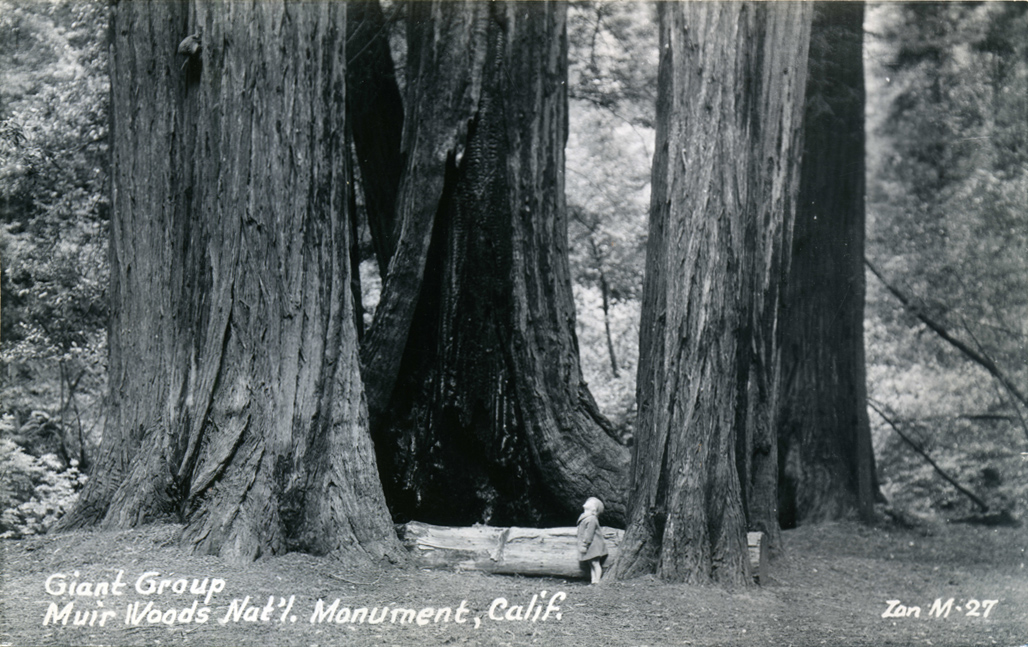
Muir Woods, a poem

illustration muir woods

Muir Woods, a poem


The eye is drawn, farther and farther

toward thin blue sky until the green feathery


tops of the trees are like the northern pole

on some dream planet. Your carsickness


from the ride up the mountain begins to fade,

leaving behind a breathless, weepy echo


not unlike your first religious fervor.

Then, you stared at Jesus’ sad face for hours,


wondering what it was that made him

love you. Here, it is the usual paralysis,


nerves made dumb by the unaccustomed

richness of perfect light. Vague, starry eyes


like yours feel at home. The air is weighty,

burdensome, solemn. Tall and slender, your guide


touches your wrist, and for a moment, you too

want to leave the surface of the earth


forever. Shyly, she picks up a tiny

pinecone, smaller than a toy. You laugh


when she tells you this is their seed:

all around, their ravaged, hollow


corpses litter the ground

like the bones of God.


In this place you feel helpless,

childlike, and you can understand a wish


to die here, never leave this hush.

They’re only trees, you tell yourself.


Yes, only trees, you think, standing still with

your neck bent back; wondering if they hear you.


2 Comments

Filed under beauty, earth, eternity, god, good, mortality, mysterious, nature, soul, spirit, spiritual, truth, universe, wood

The Nearness of Heroism, a short story

illustration the nearness of heroism cracker-jack-eversillustration the nearness of heroism

(Originally published in The Paumanok Review)

The Nearness of Heroism, a short story

They tell me he was the first man I ever saw nude; that when I asked him, pointing, in my high, three-year old’s simper, what “that thing” was, he didn’t even flinch. He stood in the big tiled shower stall, holding the door ajar with one hand, toweling himself off with the other.

“I’m a little teapot,” he sang, in his exuberant tenor. “Short and stout. This is my handle, this is my spout.”

They say I stared, and then frowned, running out to demand of my grandmother on the spot — I want to be a little teapot! Show me my spout! Where is it? Where is my spout?

Where, indeed? If only the gulf could have been reduced to those dimensions. Am I wrong to feel we would have been closer, had I been a boy? Would he have loved me more, or less?

***

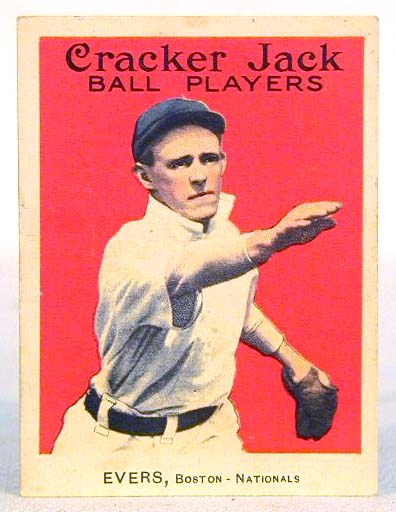
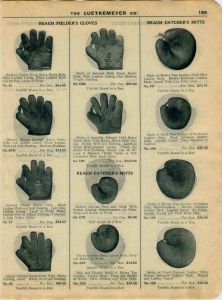
I liked to sneak up on him while he used his glove, just out of the shower, a white towel tight around his waist, his hair slicked back, parted precisely. Even from my earliest memories, the old baseball glove was missing one or two fingers, the ball deprived of whole sections of its leather wrapping, worn through to the string-mended core in several spots. Both glove and ball had darkened to the color of cured tobacco, carrying a sheen of sweat-polished grime that lent a gleam akin to the finest shellac. Arms moving, hands a blur, he would move in automatic rhythms of meditation, pounding gloved fist with clenched ball as his lips moved, the words inaudible, his gray eyes focusing up and out at an angle, viewing a corner of patterned plaster, seeing something I wanted to share but couldn’t.

Then he’d notice me. He’d stop in mid-pound, his mouth open for an abrupt chuckle, too embarrassed to be embarrassed. “Hey there, lady,” he’d say, the broad vowels of his Brookline childhood making his words seem exotic.

He kept the glove and ball on the highest shelf of his closet, a level I couldn’t reach, not even with a step-stool.

***

He was, in fact, the only male presence in my life, even after I started to dwell on the concept of boys, the one I ran to in the early morning — crawling into his bed, burrowing deep under the covers, where he sang the old songs he’d learned from his Irish mother and held me in his arms, my nose burrowing into his soft feather pillow, into his wrinkled cotton pajamas, seeking out his bitter-tea-with-lemon smell, seeking out his body’s distinctive shape and radiating warmth, which possessed a steely eloquence no less comforting than my grandmother’s padded torso. Since he was home with us every day, having retired years before I was born, I didn’t realize he was different from other men, other fathers, who were defined not by their presence but by their absence.

“Oh, you dirty little devil,” he’d sing, “Does your mother know you’re out? With your hands in your pockets and your shirttail out?”

I would hear my grandmother fuming from across the room, not speaking but moving the various brushes and trinkets around on the glass-topped surface of her dresser with snappish clinks and taps. At other times, whenever he knew she disapproved, he’d make disrespectful rubber-faces behind her back until my face couldn’t keep a secret any more, and, looking at me, she’d see some sign of what was going on, then wheel indignantly, catching him in some fish-lipped, pouting impersonation of her, their demeanor so ridiculous, so upside-down, that for a moment it seemed that he was a small boy again, no one’s husband, and she his strict governess, no one’s wife.

***

He was related to me by marriage, not by blood, something that seemed to bother him a lot more than it bothered me, especially near the end of his life. From the very beginning, I had pledged my allegiance to him, had given him that affirmative declaration of the heart, and for a short time, during childhood, it seemed that he had pledged the bond in return and accepted me as his own. Not even in dreams did I measure him any differently than I measured his wife, my grandmother. As I grew older, however, and he grew more and more frail, the absence of an actual cell between us appeared to chip away at his feelings. “I don’t have any family of my own, you know,” he’d say, gazing at me as if for sympathy, never knowing how caustic the mild-sounding words were to my ears.

“I’m your family, aren’t I?” I asked him, the first time he brought it up, but he shook his head, smiling at me with a thin-lipped yet dreamy smile.

“It’s not the same,” he answered.

***

On various occasions, as his health became less certain, I promised him one of my eyes, one of my ears, one of my kidneys, half my heart, half my liver, half my stomach: everything and anything he needed to survive, anything he might need to be comfortable, which I swore to give to him when he got “old.”

***

In my last year of college, I had a boyfriend who got physical with me on several occasions. Nothing serious, no marks: a thump on the head with one knuckle, a scuffle in the yard, pushing matches. One day I reacted badly, bolting my apartment door and calling home. He answered on the first ring, but, having expected my grandmother, I found I couldn’t stop the tears. His voice deepened, becoming rough around the edges as he interrogated me. An old man, on six kinds of heart medication, he swore he’d drive the four hundred miles and teach the boy a lesson.

“No, Grampa,” I said. “It’s all right. I’m breaking up with him. Don’t worry.”

“Call the police if he comes to the door again,” he said. “Have him arrested.”

This reaction, despite his often-repeated joke: “Never hit a woman,” he’d say, shaking his head, staring at my grandmother’s back. “Use an axe.”

***

His fourth heart attack came only days before my wedding. He managed to walk me down the aisle anyway, spiffy and broad-shouldered in his plain black dinner jacket, a single pink rosebud clipped to his lapel. Since both my parents were dead, he was “giving me away” to my fiancé, a practice I found offensive on feminist grounds, because it seemed to exclude my grandmother from the giving. So we compromised: when asked by the priest, “Who gives this woman?” he was to answer, “Her grandmother and I do.” Except, when the moment came, he said only “I do.” My grandmother, standing in the front row in her baby blue satin lace and picture hat, whacked the prayer rail with her wedding service programme in frustration. The sound echoed off the front wall of the small church and stayed with me for the rest of the day.

Later, at the reception, he was critical of the music we had selected without consulting him: a wandering string quartet. “All your guests are leaving,” he said, after his fourth or fifth glass of champagne took hold. “Why didn’t you have a real band? Some dancing. It’s like a funeral in here.” I trembled all over from the exertion of holding my tongue. Only if I had screamed at him, my face reddening under its halo of white silk flowers, would he have been happy.

***

I was home for a long-overdue visit when the last battle came. Semi-invalided, by then, Grampa moved only from the bed to his recliner, spending the day reading the paper in a slow, deliberate rustle. The television blared for hours each evening, his expensive hearing aids — the same kind Reagan used, he’d told me — plucked from his canals and discarded, tossed into a dainty porcelain ashtray: hand-painted with a rising, twisting phoenix, it was the only memento he had kept from his service in Germany during the war.

He didn’t like going to bed at night, waiting until two or three in the morning to call for my grandmother to help him to his room. Arising no earlier than noon the next day, he’d swear he hadn’t slept a wink. “He snored like a baby all morning,” my grandmother would whisper.

His appetite was slight too, and then one day, nonexistent. Supper waited out in the dining room: over my grandmother’s objections I took him in a bowl of ice cream. He lay against his pillows while I spooned it into his mouth, noticing how he lipped the spoon as I withdrew it, sucking it like a baby. The bowl finished, he thanked me, his voice hoarse with exhaustion. Turning to leave, I heard him start coughing, a deep cough that seemed to come from his gut, his eyes widening under the thick cataract glasses, his cheeks bulging, seemingly an imitation of his old comic fish-face. For a moment I laughed, thinking it a joke, but he put his hand over his mouth and made as if to hold his lips together with his fingers. He was trying to keep from throwing up all over the bed, I realized, running for a basin, almost too late.

After Gran and I cleaned him up, I felt his forehead. It was hot, dry, but the rest of him was clammy and covered with an oily sweat. As I took his temperature, Gran called the doctor, who told us to get him to the hospital right away. When we told Grampa where we were taking him, he shook his head. “Now what’d you go and do that for?” he said.

He looked so small and frail laying there it was a surprise to find I couldn’t carry him — what remained of him was deceptively heavy, as if his bones were filled with lead. It took both of us to get him out to the car. Each step seemed so difficult, so impossible — by the time he lowered himself clumsily into the front seat, he was glistening with a symmetric pattern of droplets, the sweat beading his skin like opalescent sequins.

***

At the hospital, an orderly dressed in green surgical scrubs helped Grampa from the car into a wheelchair. The orderly was tall and long-limbed, and moved with an ease, a lean fluidity born of professional indifference. His arms were the color of imported chocolate, warm coppery highlights underlying the pigment. His arms were like a god’s: so full of life and possibilities, I held my breath as he lifted the skeletal, ashen old body of my grandfather out of the car. I couldn’t say what the orderly’s face looked like other than that it was — like the motion of his limbs — devoid of both pity and scorn. His eyes remained downcast, looking only at Grampa in the chair — and I wanted to speak, but nothing came to mind, only regret at not being permitted to be similarly borne away, out of my own uncertainty and into a place defined by someone else’s ministrations.

The young man’s arms, in that moment, seemed to emit forensic signals, speaking without words to a pain I hadn’t realized was there, the arms themselves justifying birth, justifying suffering, justifying death: paying for perfection all over again — skin so smooth it looked hairless, poreless, as if it smelled of allspice and cinnamon and blood and salt. The arms were immaculately sculpted; the bones just long enough, granting a perfect inertia between muscularity and leanness. The miracle of such arms and skin held my attention like a time-release dose of whatever manna makes heaven heaven, and so it was that I found myself spiraling into an upward-rushing eddy of panic when the orderly left, forever, just seconds later, rolling my grandfather to the admitting desk like so much cargo, then vanishing into the angular whiteness and pulsing fluorescence of the hospital corridors.

***

We left Grampa there, in the midst of a cotillion of duly licensed strangers — what choice did we have, not knowing, not wanting to know, not capable of that knowledge? By not speaking, we maintained a positive attitude. His room seemed comfortable, his nurses kind. His glasses glinted, the reflection obscuring his eyes, as we waved goodbye from the doorway.

By the next morning, he had been moved to the intensive care unit. He was comatose, hooked up to a ventilator, stripped of his pajamas, gleaming plastic tubes invading his throat, his nose, his bladder, his veins — his heart had stopped in the night, from the pneumonia: the doctors speculated he might have had irreversible brain damage before they got it going again.

Machines everywhere, whirring, beeping — my grandmother and I couldn’t even touch him. His chest shook under the ventilator’s control, his whole body quivered. The vent itself hissed, clicking, coaxing his reluctant breath, forcing it when it hesitated. Pushing his lungs in and out without his body’s permission. The respirator had a device to allow him to breathe for himself, if he could, like training wheels on a child’s bicycle, and sometimes he did, but even that primitive desire for oxygen would vanish, and the machine would kick in to bring him the next breath.

We were there when the respiratory people had to change his breathing tube. With the most well-meaning, tender sort of violence, they ministered to the tubes, his whole body curling into a fetal position with the deep, gaglike coughing that resulted. They couldn’t say if he’d ever wake up, or whether he’d come off the ventilator. His arms were twisted, contorted, the hands grasping at nothing with a desperation that made my shoulders quiver in an involuntary spasm of sympathy. I bought him a tiny teddy bear, uncurling his stiff fingers to place the bear against the taut, unyielding palm. His other hand appeared to relax once the toy was in place, but perhaps it was only my imagination.

***

My grandmother and I, without speaking, understood our own feelings clearly enough. We wanted him gone; this kind of life was too painful to watch. We wanted it to come:   but at the same time felt wicked and evil. Who knew what he himself would have wanted? In the end, she signed the thick sheaf of papers authorizing no further “heroic measures.” Each place for her signature was marked with special red removable tabs.

***

In a sort of minor miracle, in several days he did awake, and they removed the intrusion of the ventilator. He was himself, more or less, and knew who we were, but underlying that surface was a terrible confusion. “How’s Jessie?” he asked me calmly, the name of my great-grandmother, dead long before I was born. His memories suffered no restraint; no contradictions existed in his inner flow of time. “Seeing you’s the best present I could have gotten,” he told us. “I’m going to take us all on a vacation when I get out of here.”

He seemed better than he had in years: I left for home, knowing it wouldn’t last; for the first time not wondering whether he would live or not. Later that day, I called him at the hospital from a thousand miles away and let him speak to my husband and my daughter. Say I love you, I told them. Say I love you, Grampa.

***

The next day he slipped back into unconsciousness, gently, easily, as a bar of soap floats downward in warm water. Notwithstanding the papers, the hospital wanted to put him back on the ventilator. No, Gran told them, no ventilator. No more.

***

I asked her what he had looked like, at the end. He lay on his side in the bed, she said, breathing shallowly. He didn’t seem to be in pain. He panted a little, she said, not moving, his face smooth.

I feared perhaps we had decided it the wrong way. Grampa’s doctor, without saying anything, seemed to look at us as if we were bad people, as if we cared more about ourselves than Grampa himself. As if we were selfish.

***

It wasn’t until a couple months after the funeral I thought to look for his glove and ball. I searched his closet first: most of his clothes and things were already gone, and the closet seemed a different space, altered by no longer containing him. When I couldn’t find them I didn’t panic — I knew Gran had put them away somewhere safe for me.

“Where’s Grampa’s glove and ball?” I asked her, not wanting to reveal how much I wanted to have them, now that he wasn’’t there to keep them away.

“What, those old things?” she asked, incredulous. “You wanted me to save those?”

I gaped at her then. The floor under my feet got soft; my knees turned into grating stone stubs lashed together by rusted wire. She was right, in a way, since at the last the glove hadn’t been a glove, just a thumb, the ball not a ball, either, but a roundish wad of wrapped string, its leather covering gone. That was all he’d had left, all I’d wanted: a piece of him I’d thought I was entitled to.

I would have kept them in a little box and looked at them every now and then, touched them with my finger. Maybe, if I was feeling daring, I would have taken the glove thumb and slipped it on, holding the ball in my hand, sliding the brittle thumb piece back and forth over the grimy string. I would have smelled them: a few tentative whiffs of the powdery leather.

***

I didn’t yell at her, there was no point. It was over. In spite of my outward act of forgiveness, I couldn’t help thinking that perhaps what Grampa had said all along was true — maybe people did reserve the deepest sort of caring for their own blood, maybe that kind of caring was inseparable from cells, inalienable from life. Gran hadn’t cared as much about his feelings about the glove as she had about mine, for example. Or was it just that she didn’t care as much about the archival, historical things as I did? Whatever the explanation, it was done: she had not even understood enough to realize the issue existed.

“Why didn’t you tell me not to throw them out?” she asked later. “Why didn’t you tell me you wanted them?”

It was simple: I thought she knew. “I just assumed you’d keep them,” I said. “They meant so much to him.”

“They were ratty old things,” she said. “Just pieces, really. They were unrecognizable.”

***

I told myself that perhaps it was a good thing that the glove thumb and string ball were gone. I’d wanted them for the wrong reasons. I’d wanted something I didn’t deserve. I felt hungry — empty — but without focus, without specific appetite. He — damn him! — was leaving me all over again, and for the third time: the person I’d wanted him to be; the person he’d been; the person I’d wanted him to remain.

I thought of all the other useless things I already had in my personal archives, from my father’s crocheted baby blanket to clothes worn by my mother in college. I thought of letters they’d written to each other before I was born, airmail letters on thin blue tissue, drawn in irregular strokes of faded ink. I thought of brittle brown paperbacks and the curling edges of photographs. We are naked in our mourning, we cannot speak, and we cannot touch.

Grampa was gone; the glove and ball were gone; I was still here. The hell with it — I didn’t want to know, I didn’t want to hear what the dead had to say anymore. Only in dreams would the dead be able to seek me out again.

The dead never say much, anyway, not even in dreams. They look into my eyes, mainly, their own abrim with a solitary sort of gentleness, hoping to inoculate me against what they know is unnecessary sorrow — unnecessary love? — hoping to protect me from whatever it is that only they can see: all the while, nodding their heads in a slow, assured rhythm, a rhythm nearly invisible to the unaided eye.

3 Comments

Filed under beauty, boys, childhood, compassion, death, development, eternal, eternity, fathers, fiction, funeral, god, good, health, heart, history, identity, justice, karma, kindness, life, logic, love, man, manhood, maturity, men, mortality, mourning, mysterious, parenting, personal responsibility, regret, relationships, short stories, soul, spirit, spiritual, truth, universe, warmth, youth