Tag Archives: life

Lilies of the Field, a short story

illustration lilies of the field

Lilies of the Field, a short story

Harry: Boy With Car

In the picture, Harry leaned back on his car, his arms crossed over his chest, tautly, the muscles bulging underneath his white T-shirt. He wore sunglasses and his hair was blown back off his forehead, as if from great speed. The car was a ‘57 Chevrolet, bright blue, brand new. He’d just left his mother’s house to live with a girlfriend, not Joanna — he didn’t meet Joanna for another 10 years. For a long time, he subsisted off a series of dead-end jobs and girlfriends while masquerading as a college student. The women he lived with all had a few things in common: uneducated but bright, a love of dogs, and perky telephone voices. They leaned against him in the front seat when he drove fast and their hair whipped his forehead. He was confident in those days, nothing had ever broken him. He had not yet been given the gift of suffering.

Joanna: The Queen of Grief

Joanna, in a state of grief and intoxication, returning from her grandmother’s funeral, sat in an automatic photo booth in Atlanta, eyes closed, lips pursed, head tilted back, her skin glowing white, her face blurred, too high to be captured on film. She met Harry in the local airport when she got home. He was intoxicated also, and was leaving to report to the Marines. She gave him her address and phone number and one of the blurry photos. He kept the picture in his wallet and called her every day, collect, from boot camp. She lay awake all night thinking about him, reciting romantic poetry into a tape recorder, then sent him the tape. She was disappointed in love before, but only by herself. She was cold and polite while others were warm and fumbling. How did one love another, anyway? She was, at heart, a hermit, but too much of a coward to live as one. It made for a tumultuous love life.

If Wishes Were Fishes

Harry sat in profile on the edge of a riverbank, his hair dripping forward over his forehead, his shoulders hunched, wearing red bathing trunks, and his black boots lying on his crumpled clothing. He refused to look at the camera. A pale straw hat had fallen off his head and lay directly behind him. The day was bright and clear. He was home from the Marines after 8 weeks, having been excused on medical grounds. He phoned Joanna upon his return. He lived in his car until he moved in with her. Harry said he despised her money and wished she were penniless. Secretly, he realized it didn’t hurt that all the bills were paid regardless of what else was happening. He took to collecting glass paperweights, and Joanna bought one for him everywhere she went. Gradually, Harry started to acquire her taste in champagne.

Woman with Drugs

Joanna stood on a wolf skin rug over a floral Persian carpet, in front of a lace curtain. Her dress reached the floor, white, with puffed sleeves, taken in at the waist by a narrow belt with a small bow. She held a sprig of marijuana in her left hand. Her hair was dark red, her lips painted scarlet. Her skin was only slightly darker than her dress and the curtain. Flowers were scattered in front of her feet on the wolf-fur. Harry was behind the lens, mocking the Impressionists. He admitted to himself for the first time that he was glad Joanna had money, though he would still love her if she were penniless.   He was the opposite of a snob — he made Joanna feel guilty that her family had taken advantage of his by accumulating more than they’d needed. The shadow of her money hung over them like a disused, rotting gallows.

Drawing the Line

Harry and Joanna were dancing. He had his arm tightly about her waist. She wore a red hat and looked away from him, over her right shoulder at the ground. He asked her to marry him, and she refused. He kept asking, and in a year she got pregnant and said yes. She didn’t believe in abortion. He began to ask her to put some part of her assets in his name, for the child’s sake. She refused. He accused her of frivolous spending and waste. She took an extended trip across the country with the baby, leaving Harry at home to care for the dogs. While she was gone, he brought a prostitute home and lived with her for a week. The prostitute wore all of Joanna’s lingerie and jewelry, but Harry didn’t let her sleep in their bed. When Joanna returned, Harry had drunk half a bottle of whiskey and vomited on the kitchen floor.

Acquisition

Joanna stood in the yard wearing a blue silk windbreaker. It was bitter cold and windy. Her hair obscured her eyes. Both she and Harry felt like he was taking her picture for a “wanted” poster. The baby screamed while Harry took the photos. In the beginning, Harry had wanted Joanna to make him feel real, rooted, and loved, to have all the accoutrements of material wealth without having to actually acquire them himself. To acquire material wealth, oneself, was such a tiresome prospect. After all, thought Harry, Joanna did not have to acquire it herself, she got it from her family. Now he’d be satisfied if she paid him with a bit of kind attention. She waited patiently for him to commit adultery, not knowing about last year’s whore. Meanwhile, their life in bed had dwindled down to almost nothing. Partly due to his drinking, partly due to her disinterest.

Disposition

Harry sat on a kitchen chair, elbows on his knees, and hands under his chin. He tried to look cute. Joanna pointed the camera at him and smiled, hoping to hide her inner revulsion. The problem was, they never fought about anything specific — they just fought. She wanted Harry to want her in a way better than the way in which she wanted him. A needier, nobler way of wanting — something that would take the whole heart, not just a sad, tacky corner of it, the way she felt wanting Harry occupied hers. Unfortunately, Harry didn’t seem capable of neediness and nobility, no more capable than she. How much money would Harry want, she wondered? She had an appointment with a lawyer in the morning. Joanna had been lonely when they met. If she expected comfort from Harry, she did not get it. It was too bad about the child, it was always too bad about that.

3 Comments

Filed under divorce, fiction, mama, marriage, relationships, short stories

Savior, a short story

illustration savior

Savior, a short story

The young man seemed so out-of-place in her mother’s living room. Maria stood in the doorway with her mother’s groceries, her purse on her shoulder, key ring dangling off one numb pinkie, clutching the heaviest bag propped on her hip, the bag that contained her mother’s supply of Diet Coke. Her mother and this man were sitting together on a Victorian loveseat on loan from Maria’s antique shop, their knees almost touching, the man’s arm draped across the ornate wooden back, his fingers curled behind her mother’s left shoulder. Her mother had a photo album spread out, one leaf resting on her lap, the other resting on his. Maria could see herself, at two, nude in the tub. Christ, she thought, what’s she showing him those for?

The young man leaped up after a few moments of uncomfortable silence, running his hand over his hair and smiling. Her mother folded the album closed, holding out her arm, and he helped her up, a gesture Maria herself had never mastered, helping old people up out of their seats. She tried too hard, using the wrong position and too much lift, until their sharp old elbows jutted out at alarming angles but their behinds hadn’t lifted an inch.

He had a medium build, wavy blonde hair, a deep tan — he was almost, but not quite, handsome. His eyes were too close together and his nose too long: as Maria met his direct gaze, she felt uneasy at his obvious affection for her mother, the implication of knowledge which came from his confident manner. He looked as though he was already sure he knew the older woman’s mind; already sure she must be lonely.

“I’d like to introduce you to my daughter, Maria,” her mother said. “Maria, this is David. He found my wallet over at the library and was kind enough to track me down. I couldn’t believe it when he called. I didn’t even know it was missing yet.”

“That is lucky,” Maria said. “Really lucky,” she continued, smiling in her mother’s direction, one eyebrow arched, whereupon her mother shook her head once, violently, and her daughter’s unspoken reprimand was expertly dismissed.

“Oh, it wasn’t luck,” said David, the sound of his voice causing the small hairs at the back of Maria’s neck to rise. “Nothing’s a matter of luck. Life is all planned for us, down to the last detail.” He nodded, smiling at Maria, his arms hanging relaxed at his sides, and the suspicion came to Maria that he was crazy. Crazy but safe, one of the harmless ones, the kind that made her want to go a little crazy too because they seemed so sure of themselves.

Most of Maria’s son Richard’s friends were the same type, that’s how she knew. Richard — she never thought of him as “Kurma-devi-dasi,” although she respected his desires and addressed him that way — was crazy but harmless too, although she knew she couldn’t see him as clearly in that way as she could a stranger. To this day she was able to discern the fuzzy cartoon of his infant features on his serene face when he smiled at her — the memory of his toothless gums clamped like a rhythmic vise on her breast would come to her, looking at his shaved head and his orange cotton robes as he chanted over his prayer beads, and she would be filled with a sorrowful rage that made her chest shrink into itself.

Not his grandmother, though — she had sat with her grandson over at the temple for hours when he first became a devotee, sitting in a rocking chair next to him as he said his prayers in front of the little richly clothed doll of Krishna. She told Maria it made her feel closer to her own idea of God just being in a place like that. In theory, Maria agreed, but the issue wasn’t whether the temple was a nice place to spend an afternoon, the issue was whether it was a good way for Richard to spend the rest of his life — sewing holy Hindu god and goddess doll clothes on an old black Singer?

“I don’t know about a plan,” Maria replied. “I’m lucky if I know where I am, half the time. If it’s Wednesday, this must be my mom’s apartment — you know?”

He said nothing at first, not seeming offended, not defensive, just staring at her with eyes so full of a giddy, knowing light — his face loomed toward her, and tension rolled through her stomach as his mouth moved into a drawn bow of compassion. It didn’t matter that he wasn’t handsome; he radiated an alarming level of charm. “Down to the last detail,” he repeated, arching his eyebrows and opening his eyes a bit wider, his pupils enlarging like a lover’s, and the sound of his voice vibrated within her ears, warm and solid like hands pressed against her temples.

“Then one of the details must be that I’ve got to put this bag down before my arms fall off,” she said, forcing a laugh. “Excuse me.” She turned away and walked up the hall to the kitchen. By the time she’d finished putting the groceries away — rearranging pantry and refrigerator shelves, purposely taking far longer than usual — he’d already gone. Great. Now their lives were stuck together like flood trash swirling down her mother’s raging river. David would be there for her mother — be there always and forever, overflowing with that sickening, confident love, and her mother would never be able to blame him, not for anything.

***

Maria was uncomfortable with the amount of time her mother was spending with David, but didn’t dare say too much. There was nothing overtly objectionable about him, other than his religious fervor — and how could she term that a fault? Her mother wouldn’t listen, anyway. Whenever Maria brought the subject up, her mother would groan, “Oh, boy, here we go again,” and she would frown, which consisted of one sharp, off-center line in the middle of her forehead. “You don’t have to like him, sweetie,” she’d say, “but I wish you did.”

Still, her mother’s interests seemed to be shifting. Odd books and papers came and went on the coffee table, crowding out the usual hodgepodge of half-finished crosswords and literary journals: treatises on wild herbs, population-density maps, computer programming manuals, military histories. Flipping through a ratty emergency-medicine textbook, Maria saw numerous large, yellow-highlighted portions and margin notes in both an unfamiliar, childish hand and her mother’s own neat back slant. “What is all this stuff?” she asked, holding the book out to her mother.

“I’m getting ready,” her mother said. She sat down opposite Maria and picked up a needlepoint pillow, arms crossed, mashing it to her tummy like a teddy bear.

“Ready for what?” asked Maria.

“The end of the world,” said her mother. “You know, Armageddon.”

***

At first, Maria’s son agreed with her concerns, not at all what she expected and a strangely intolerant position for him to take — considering his own lifestyle — his agreement only making her feel worse. They sat in the temple’s empty dining hall. “I’m with you, Mom,” Richard said. “The guy sounds like a real case.” He rubbed his hand over his prickly scalp and yawned, his left hand fumbling inside the peach-colored sack of meditation beads that hung from his neck. He scratched his nose, smearing the delicate yellow makeup lines drawn there that symbolically pointed up: up to God, up to heaven. “Have you checked Grandma’s bank accounts lately? He could be some kind of con artist.”

“No, no,” she said. “That’s not the kind of thing I’m worried about. He seems sincere enough. He’s no con artist. It’s just — your grandmother is really starting to believe what he says — how Armageddon is coming, all that stuff. You should see the books he’s got her reading.” Maria leaned on her elbows, cupping her chin. Richard closed his eyes for a moment, tilting his head to one side like a duck.

“Then again, I suppose the guy could be right on,” he said, his eyes still closed. He looked asleep, his skin pale and fragile. “Maybe that’s what bothers you. I’ve been trying to get through to you on that level for years. At least Grandma’s started thinking about her future.”

“Her future?” Maria asked, her voice louder than before, wanting to reach across the picnic table and shake him by his choke collar of tiny wooden beads. “At eighty-five? People that age should be beyond this kind of worry. It isn’t right. He’s getting her all stirred up — and for what? If all that biblical stuff happened, she’d never survive.”

“You’re just jealous,” he said. He opened his eyes and stared at her, his thick black lashes tangled and dusty-looking. His pupils were pinpricks inside the blotched hazel irises, and as he spoke he stood up too fast, banging his shins on the metal tubing of the cheap table. He grimaced and squatted for a moment, rubbing his leg. “You can’t stand it when someone believes in something you don’t. I thought you were worried this guy was some kind of sleazy fake, but now you’re telling me what freaks you out is that he’s the real thing. Make up your mind. You should be happy Grandma’s paying attention to what’s out there.” He turned and walked away, his robes ruffling out behind him, his rubber sandals slapping the bare wooden floor. “I’ve got devotions to attend to,” he said, not turning back to face her as he walked, his voice thin, echoing across the length of the long, barren room.

***

The earliest occasion Maria could remember wanting her mother’s opinion was in the seventh grade. Maria had just turned twelve, and had her first crush. She was stringy and awkward in those days, large-kneed and carrying a head of vigorous, curly hair she flattened down into a matted-looking cushion in desperation. Then the quiet boy started walking her home from the bus stop.

She remembered him still: pale blue eyes, so large and widely spaced that they gave him a somewhat doe-like expression. His jaw, however, was firm, angular, and thus saved his face from weakness. Warm hands lay against hers, trembling, stroking her fingers up and down in an hypnotic rhythm. “Do you want to go steady?” he’d asked her, unable to meet her eyes. That meant wearing a silver identification bracelet, his name engraved about her wrist for everyone to see; his property. She hoped his name was in block capitals, not that loopy script: it looked better.

“I don’t know,” she said, and went home to ask her mother’s opinion, a matter of form perhaps, but something she wanted; the camaraderie of womanhood revealed at last. This could be the common ground between them.

“Honey, I just don’t think going steady is a good idea at your age,” said her mother. They sat in the dining room, wallpapered with tiny brown pineapples. “You’re too young to get so deeply involved with a boy.”

“But lots of girls do it,” she said, knowing this was a flawed argument, but even as the shipwrecked are driven to drink seawater, her words carried a dreamlike hope.

“You asked for my opinion,” said her mother, “and I’ve given it to you. It’s up to you to make the decision. I’m not saying no, I’m just saying I wouldn’t if I were you.”

In the end, she told the boy no — and was informed that the going-steady offer had been withdrawn in the interim — and she realized by heeding her mother’s counsel she had been saved from a greater and more penetrating level of humiliation than she imagined even existed. But — that wasn’t the point. Maria knew her mother would never have said no to one of her own teenage boyfriends — that was a lie. Safe advice given as a — joke, as an experiment. Didn’t Maria have the right to be strong-willed? Didn’t she have the right to her own losses? She never stopped trying after that, but the drama was gone.

***

Then Maria found her mother in the bathtub. She entered the apartment, carrying her mother’s dry cleaning: a few sweaters, a wool suit, a pink blouse. She heard water running, a slight, far-off sound, as if from the next apartment. The bathroom door was closed. The only sound was a rolling and a swishing, as though a large fish reclining in the tub had shifted position. Alarmed, Maria opened the door. Her mother was sitting upright in the full tub, a small trickle of water dribbling from the faucet. The tub was full to overflowing. Her mother was wearing a purple shower cap embroidered with large seahorses.

“Go away,” she whispered, as Maria stood, confused. A bristling red pincushion sat on the edge of the tub, dangling a red cloth strawberry from a green cord into the water. The strawberry bobbed on the surface. In her mother’s hand was a large straight pin, on her wrist several thin scratches. She jabbed with the pearl-headed pin, her hands unsteady.

“What are you doing?” asked Maria, her voice shrill, terror coursing through her. “What in the hell are you doing?”

Her mother turned to her, her unfocused eyes shining and rolling up toward the ceiling as she spoke. “Trying to kill myself,” she said.

“With pins?” shrieked Maria. “Jesus, Mother!”

“I wanted to flush my head down the toilet,” her mother continued, “but it wouldn’t go down.”

***

On the third night of her mother’s emergency hospitalization, Maria dreamed she was sitting in her living room drinking tea with one of her college professors, a sloppy but verbally precise little man. In reality, she hadn’t liked him at first, but she had taken every course he taught because — unlike the majority of his students — she got A’s from him. She came to admire his sincere and stringent approach, forgiving him his greasy, untrimmed hair, his baggy, stained chinos and ancient, Filipino-style dress shirts.

And so, in the dream, her old professor, uncharacteristically neat, his hair washed and combed, his pants pressed, was explaining to her that he had theater tickets for tonight’s performance — would she like to join him for dinner and a show?

I’m sorry, she said, but I don’t think I can get a baby-sitter on such short notice. It’s already six o’clock.

He raised his eyebrows. I had no idea you were married with a child, he said. Well, that’s too bad, my dear. Perhaps we can arrange it some other time.

As he shuffled off down the sidewalk, Maria wanted to call after him: Wait… I don’t really have a husband… I don’t really have a child… it’s all a mistake. Come back. I want to go with you.

But she was silent, knowing it wouldn’t make any difference what she said. He was already too far away, and could not hear.

***

The next day, when Maria arrived at the hospital, her mother’s newest flowers were wilting in the heat. Her mother had turned the room’s thermostat up to 85 degrees and wore a sweater and cracked pink leather mules. Still, the new additions were beautiful: three dozen roses, white, yellow, and coral, stuffed into a too-small mayonnaise jar, the faded label turned to the wall. Maria stood in the doorway for a moment, holding a brown paper sack full of the day’s requested items — mostly cosmetics — looking at the bright splash of color. “Hi there,” she said to her mother, who sat hunched on the edge of her bed, flipping through a current TV Guide.

“Hi,” said her mother. “Is it cold out? You look chilly.”

“It’s cool, but the sun’s warm,” said Maria. “Who gave you these roses?” She leaned over to smell them, her nose brushing the petals.

“David,” said her mother. “He brought them by this morning on his way to work.” She squinted at Maria, her glasses speckled with bits of dust, so filthy Maria wondered if she could see anything at all. “He didn’t know I was here; he found out just this morning from my across-the-hall neighbor. He was taping a note to my front door.” She unrolled a package of breath mints and placed one on her tongue. “I thought you would have called him by now — it’s been three weeks, after all.”

“I didn’t think it was such a great idea for you to have a lot of visitors.”

“A lot?” Her mother raised her eyebrows, which were nearly invisible. She penciled them in most days, but today she’d left them defiantly natural. “Any, you mean. You’re the only one I’ve seen other than the doctor, until this morning.”

“What did he say about visitors?” Maria asked.

“It’s fine, as long as I feel up to it. They’re still fine-tuning the dosage on the blood thinner, other than that I could go home already.” She held out her arm, shoving the loose sweater back above the elbow. Small scabs dotted her forearm. “They’re sticking me every four hours, round the clock. They’ve got to balance it just right. So I won’t have another stroke but so I won’t bleed to death, either.”

She stared at Maria, her eyes shining. Her mother’s voice dropped low and fluid, almost a murmur; Maria remembered that voice from long-ago midnights, giving comfort to a distraught child. “I know you were scared when you found me all confused like that in the tub, sweetie.” Maria said nothing. Her mother raised her chin with a jerking nod, relapsed motherhood dropping away from her like a fragment of dry skin, her voice back to normal. “But really, I’m okay now. It was a very minor thing — you heard when the doctor told me I was one lucky lady.”

***

An hour later, on her way out, Maria saw David from across the hospital’s visitor parking lot as she stepped on the black mat that made the door swing open. He was dressed in jeans and a pink polo shirt, his hair still wet from the shower, combed flat across his head, just beginning to spring away in wisps where the blond curls regained tension as they dried. She stopped short, turning and walking back inside, toward the gift shop, where she stood in the farthest corner. She picked up a stuffed animal and pretended to scrutinize the price while she watched the door. When he passed, moving toward the elevators, she followed. He entered one and the doors closed. Maria waited and got the next one, her heart pounding.

She got off on her mother’s floor, going away from her mother’s room, back toward the nurse’s station and lounge on the north end. Settling in one of the low, soft chairs, she stared up at the wall-mounted television, the evening news in full swing, recounted events drifting over her, seeming important but incomprehensible, the words passing through the air like puffs of smoke. Muscles tense, palms clammy, she took out a pen and paper and began jotting notes of what she wanted to say.

She jumped, startled, as she heard David speak. She saw his back, visible from the doorway, over at the nurse’s station where he spoke to the charge nurse. “I think there’s something wrong with her call button,” he said. “She says she’s pressed it a bunch of times without hearing anything over the intercom.” The nurse, a thin, tired-looking woman wearing lavender scrubs, nodded.

“Okay, I’ll be there in a minute,” the nurse said.

David turned to leave, and then he saw Maria and stopped, his mouth forming an exaggerated O, his eyebrows lifting. Maria felt a clammy flush rise up over her neck, a dull enveloping embarrassment. He smiled like a placid baby, walking to her and holding his hand out. She clasped his hand for a moment, feeling the solid meat of it, the warmth and hardness of his callused palm. “You don’t know what to believe in,” he said, his voice calm and slow, “and that’s natural. It’s a process of evolution you’re going through. Think of your mother’s illness as the catalyst.” He opened his arms and bent at the waist, hugging her so hard she couldn’t inhale, then he removed himself and stood looking down at her, his head cocked, his blue eyes luminous and warm, a crinkly-eyed smile starting to show.

“You’re crazy,” she said, feeling her throat seize up as her heart beat shook her ribcage like a wild animal — she had difficulty speaking. She paused as her chest eased, then forged on. “A catalyst?” she repeated. “I know what to believe — I believe you’re causing all my mother’s problems. She doesn’t need your brand of stress right now. And I don’t need this kind of condescension. Telling me I’m OK. I don’t need you for that. You’re not any kind of expert.”

“No, I’m not,” he said, the smile gone from his mouth but his eyes still glowing with a trace of it like a madman’s. “And since when do you care about expert opinion?” He reached out and stroked her hair, saying her name in his gentle murmur, Maria, Maria, and she flashed — it’s finally happening to me, it’s finally here — a jolt of vertigo as if she’d been through all this before, a hundred, a thousand, no, ten thousand times…. “You don’t care about anyone’s opinion but your own,” he said.

Their lives were now joined – with force of will and love he’d plucked her up and tucked her into the golden cup of his heart as quickly and easily as he would rescue a fear-crazed puppy clinging to a torn-off tree limb, just before that puppy swirled away to her doom down a swift, swollen river. Maria wanted to run, to hide, to retrace her steps, but it was too late. David would be there for her — be there always and forever, surrounding her with this… curious compassion of his, and she would never be able to scare this one away, no matter what she tried.

3 Comments

Filed under compassion, daughters, death, development, eternal, faith, fiction, forgiveness, heart, hope, identity, karma, kindness, life, love, man, maturity, mother, mothers, mysterious, peace, personal responsibility, relationships, short stories, soul, spirit, woman

September 5, 1980, a letter to my Nana

img097

September 5, 1980

Dear Nana,

I am sorry I didn’t send you a birthday card on time. I didn’t forget, I bought a card and addressed it and put a stamp on it and everything, I just neglected to drop it in the mailbox. And since it was late anyway, I figured I would just save up some money and get you a present to go along with it. So just prepare yourself for an extra-special present. I won’t give you any hints, either. So just sweat it out.

Everything is going just fine. My job is going well, except the work is not all that interesting. But at least I have plenty to do. Mr. Perkins is in Canada right now, doing some work for the Canadian government, so that’s why I can write this letter at work. Because there’s not all that much to do.

Has Mom gotten me an application for the U. of Fla.? I’m going to apply to U.C.L.A. also. Then when the time comes I will have two options. But no matter what I decide I will be home for Christmas. So don’t worry about that. I wouldn’t miss another Christmas with all of you. I’ve already missed two. So no more.

I almost got a dog the other day. They keep dogs at work, two of them, and there was this other dog that started hanging around. He was a stray and he was really skinny. Then about two days ago he showed up limping. His hip was all out of joint, and he was scared of everybody. So I told Mr. Perkins about it and he said that if I could catch him and take him to the vet’s that he would pay the bill if it wasn’t too much. So I caught him by feeding him and then grabbing him. I took him to the vet’s and they X-rayed his hip but it was too badly crushed and it would cost over $300 to fix it. So we had him put to sleep. I felt so bad about that. I cried and cried. You know how I am about animals.

I have decided to major in prelaw. It’s a big decision but it’s something that I want to do. A lot of reasons persuaded me. And besides, lawyers run in our family. This is the fourth generation – your dad, mom’s dad, and my dad, and now me. I’m the first woman to do it. It’s about time the women in this family took advantage of their brains. Grandpa Geremia says that we’re smarter than all the men anyway.  Look at Mom!   She’s got a lot upstairs, and the only reason she didn’t get a chance to take advantage of it is because she’s a woman and women are the ones who get the short end of the stick always. I’ve really been getting interested in promoting women’s rights lately.

Throughout history, men have had all the power. And I’m tired of it. I heard on the radio that women comprise 53% of the population, yet in the Senate there are only two women. 2 out of 100. That’s certainly not even close to equal representation. Women don’t even get respect. At work here, I’m treated like some cute little girl who is just learning to tie my shoes. And I resent it. Of course, I don’t complain because I need to get along with these people, but I resent it all the same. I read in a book called The Women’s Room that “people may hate niggers and Puerto Ricans and Chinks, but at least they are afraid of them. Women don’t even get the respect of fear.” And it’s so true. Look at you, Nana. You have the makings of one hell of a politician in you. You’re a terrific leader. You have charisma. But you haven’t done it. Maybe because you didn’t want to, but maybe because you were afraid. Oh, I don’t know. Remember when they wanted you to run for City Council? You could have won easily. You could still win. I think you ought to do it. After all, Reagan’s over 68 years old and he’s running for public office.

By the way, do you know what I’ve heard about Reagan?

  1. He believes in astrology.
  2. He accused Carter of being in cahoots with the KKK when he himself refused to address the NAACP.
  3. When he was governor of California, he wanted to cut down the Sequoia trees in the parks because he thought that “once you’ve seen a tree, you’ve seen a tree.”
  4. He set troops out to quell student protest when the students had stated their pledge of nonviolent demonstration.
  5. He’s against abortion even in cases of rape. True, not many women who get raped conceive a child due to the trauma of it, but it does happen. And why should a woman give birth to a child of rape?

True, Carter is in many ways no better than Reagan. But I don’t want to vote for Carter, either. I want to vote for Barry Commoner. Barry Commoner believes in solar power, he wants to bring back the railroad system as a form of mass travel, he doesn’t believe in war and huge military budgets for no reason, and he believes in letting people come first in government. He believes in the nationalization of the energy industry. No one is perfect, though, and I realize that campaign promises are sometimes just that, but I feel that Barry Commoner is a better candidate than either Carter or Reagan. But he’s not perfect, either. I’m not being swayed by some Godlike figure or anything. He’s just an ordinary person.

Let’s talk about the nationalization of the energy industry for a moment. (Don’t I sound grown up, Nan?) Did you know that one of the reasons nuclear power plants are becoming more widespread even though they’re so dangerous is that the oil companies own all the uranium minds? The reason no one has developed solar power yet is because the oil companies can’t buy the sun.

Let’s face it, sooner or later we’re going to run out of everything – coal, natural gas, oil, even uranium. The only thing we will have for billions of years is the sun. Everything on this planet was created by the sun. The oil was made from algae deposits that were fueled by the sun. The sun is a clean, safe source of energy. So why don’t we use it? Because it’s also free. There’s no way to rent sunlight because it’s free. No one can own it. So the people who control this country, i.e., the huge conglomerate corporations, aren’t too thrilled over the prospect of unlimited amounts of free energy because they’ll go bankrupt.

Now, don’t get me wrong. I’m not against free enterprise or anything. What I am against, though, is when the profit margins of Exxon go up 200% in one year. That’s going too far. Profit is fine, but 200%, when the whole world is being squeezed dry because of the high prices of fuel? That’s un-humanitarian, and disgraceful.

Did you know that Nestles, the chocolate corporation, also manufactures infant formula? In third world countries like Nigeria and India and the like, they were telling uneducated mothers that infant formula was superior to mother’s milk. At precisely the same time, doctors in this country were finding out that mother’s milk was in fact the best thing for babies. That nothing was superior for infants. But did Nestles stop telling them that? No. Their profits in this country were going down because of the drop in sales, so they had to make it up somewhere else. By fooling poor, uneducated, starving people. That’s the kind of thing I’m against.

I guess I’m getting more political in my old age.  That’s why I have decided to major in prelaw. So I can do something about the things that I feel are unfair. Or at least I can try. Like I said, I’m not against free enterprise. What I am against is exploitation and un-humanitarianism.

7 Comments

Filed under ancient history, compassion, development, earth, enlightenment, eternity, faith, forgiveness, god, heart, history, hope, humanity, identity, justice, karma, kindness, law, legal system, life, logic, love, maturity, nature, peace, personal responsibility, science, soul, spirit, spiritual, truth, universe, woman, women, world, youth

Violet Crown, a fable

illustration just me and god

Violet Crown, a fable

It took a long time for the dreams to come back.

(The dreams took a long time to come back.)

Her parrot knew before anyone.

The city of the violet crown.

No one escapes the labyrinth. Not even the dissolute rich.

The oracle sighed, and filled her pen with blue ink:

I know you intimately; I know the way your eyes move,
across the landscape. I realize how we live.  It’s not a sin;
you want the love you got in the beginning.  You want to
change your size, your shape, and your life. Where you
will be drawn, and in what order?  One woman you know
will stop at the color green, another woman dreams
of strangers as she sleeps next to her husband of fifty years.
That man will drink his coffee black, that one will slap
his daughter so hard she feels her cheekbones vibrating
for hours. Remember before you were born; remember
not having to breathe?  Imagine that stillness, that beauty
of the womb.  Let me remind you.  It was shielded
from the world, no sharp edges anywhere.  You and you
and you and you… your taut plum of a heart beat.
One day we will be there again, our blood will soar,
the sparkle sparkle sparkle of life.  The moonlight there
will be as pale and as reflective as new snow.
Your worry-lines will gradually fall away. To forget
your longing, you agonize daily, hourly: the beans
or the meatloaf?  The blue shirt or the yellow?  Toward the sea…
or the mountains?  Marry Paul or James?  As the crow flies,
or the long, winding road? We were together, you and I,
even when you thought no one could see — I watched
the way you lied, cooked the books, phoned for drugs,
delivered Chinese take-out.  You made yourself
important, taller, richer, more attractive.  Time for courage,
time for facts.  You have always been, are, will be loved.


Leave a comment

Filed under children of alcoholics, compassion, eternal, eternity, god, identity, love, mea culpa, mortality, mourning, mysterious, personal responsibility, prose poetry, regret, relationships, soul, spirit, spiritual, universe

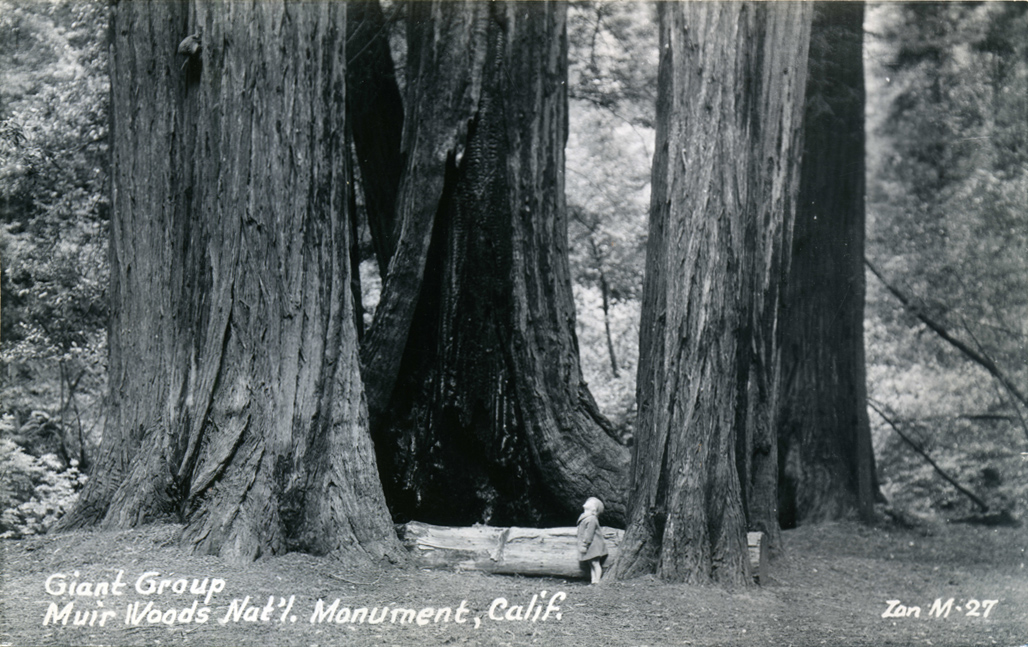
Muir Woods, a poem

illustration muir woods

Muir Woods, a poem


The eye is drawn, farther and farther

toward thin blue sky until the green feathery


tops of the trees are like the northern pole

on some dream planet. Your carsickness


from the ride up the mountain begins to fade,

leaving behind a breathless, weepy echo


not unlike your first religious fervor.

Then, you stared at Jesus’ sad face for hours,


wondering what it was that made him

love you. Here, it is the usual paralysis,


nerves made dumb by the unaccustomed

richness of perfect light. Vague, starry eyes


like yours feel at home. The air is weighty,

burdensome, solemn. Tall and slender, your guide


touches your wrist, and for a moment, you too

want to leave the surface of the earth


forever. Shyly, she picks up a tiny

pinecone, smaller than a toy. You laugh


when she tells you this is their seed:

all around, their ravaged, hollow


corpses litter the ground

like the bones of God.


In this place you feel helpless,

childlike, and you can understand a wish


to die here, never leave this hush.

They’re only trees, you tell yourself.


Yes, only trees, you think, standing still with

your neck bent back; wondering if they hear you.


2 Comments

Filed under beauty, earth, eternity, god, good, mortality, mysterious, nature, soul, spirit, spiritual, truth, universe, wood

The Nearness of Heroism, a short story

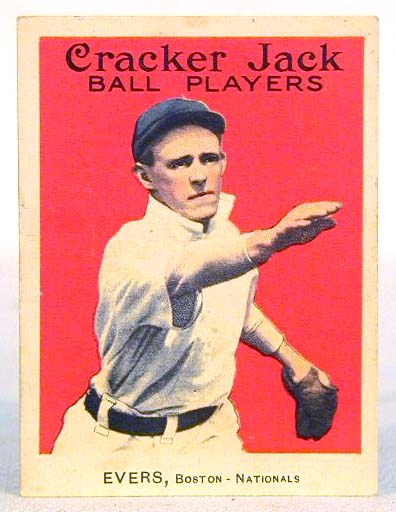
illustration the nearness of heroism cracker-jack-eversillustration the nearness of heroism

(Originally published in The Paumanok Review)

The Nearness of Heroism, a short story

They tell me he was the first man I ever saw nude; that when I asked him, pointing, in my high, three-year old’s simper, what “that thing” was, he didn’t even flinch. He stood in the big tiled shower stall, holding the door ajar with one hand, toweling himself off with the other.

“I’m a little teapot,” he sang, in his exuberant tenor. “Short and stout. This is my handle, this is my spout.”

They say I stared, and then frowned, running out to demand of my grandmother on the spot — I want to be a little teapot! Show me my spout! Where is it? Where is my spout?

Where, indeed? If only the gulf could have been reduced to those dimensions. Am I wrong to feel we would have been closer, had I been a boy? Would he have loved me more, or less?

***

I liked to sneak up on him while he used his glove, just out of the shower, a white towel tight around his waist, his hair slicked back, parted precisely. Even from my earliest memories, the old baseball glove was missing one or two fingers, the ball deprived of whole sections of its leather wrapping, worn through to the string-mended core in several spots. Both glove and ball had darkened to the color of cured tobacco, carrying a sheen of sweat-polished grime that lent a gleam akin to the finest shellac. Arms moving, hands a blur, he would move in automatic rhythms of meditation, pounding gloved fist with clenched ball as his lips moved, the words inaudible, his gray eyes focusing up and out at an angle, viewing a corner of patterned plaster, seeing something I wanted to share but couldn’t.

Then he’d notice me. He’d stop in mid-pound, his mouth open for an abrupt chuckle, too embarrassed to be embarrassed. “Hey there, lady,” he’d say, the broad vowels of his Brookline childhood making his words seem exotic.

He kept the glove and ball on the highest shelf of his closet, a level I couldn’t reach, not even with a step-stool.

***

He was, in fact, the only male presence in my life, even after I started to dwell on the concept of boys, the one I ran to in the early morning — crawling into his bed, burrowing deep under the covers, where he sang the old songs he’d learned from his Irish mother and held me in his arms, my nose burrowing into his soft feather pillow, into his wrinkled cotton pajamas, seeking out his bitter-tea-with-lemon smell, seeking out his body’s distinctive shape and radiating warmth, which possessed a steely eloquence no less comforting than my grandmother’s padded torso. Since he was home with us every day, having retired years before I was born, I didn’t realize he was different from other men, other fathers, who were defined not by their presence but by their absence.

“Oh, you dirty little devil,” he’d sing, “Does your mother know you’re out? With your hands in your pockets and your shirttail out?”

I would hear my grandmother fuming from across the room, not speaking but moving the various brushes and trinkets around on the glass-topped surface of her dresser with snappish clinks and taps. At other times, whenever he knew she disapproved, he’d make disrespectful rubber-faces behind her back until my face couldn’t keep a secret any more, and, looking at me, she’d see some sign of what was going on, then wheel indignantly, catching him in some fish-lipped, pouting impersonation of her, their demeanor so ridiculous, so upside-down, that for a moment it seemed that he was a small boy again, no one’s husband, and she his strict governess, no one’s wife.

***

He was related to me by marriage, not by blood, something that seemed to bother him a lot more than it bothered me, especially near the end of his life. From the very beginning, I had pledged my allegiance to him, had given him that affirmative declaration of the heart, and for a short time, during childhood, it seemed that he had pledged the bond in return and accepted me as his own. Not even in dreams did I measure him any differently than I measured his wife, my grandmother. As I grew older, however, and he grew more and more frail, the absence of an actual cell between us appeared to chip away at his feelings. “I don’t have any family of my own, you know,” he’d say, gazing at me as if for sympathy, never knowing how caustic the mild-sounding words were to my ears.

“I’m your family, aren’t I?” I asked him, the first time he brought it up, but he shook his head, smiling at me with a thin-lipped yet dreamy smile.

“It’s not the same,” he answered.

***

On various occasions, as his health became less certain, I promised him one of my eyes, one of my ears, one of my kidneys, half my heart, half my liver, half my stomach: everything and anything he needed to survive, anything he might need to be comfortable, which I swore to give to him when he got “old.”

***

In my last year of college, I had a boyfriend who got physical with me on several occasions. Nothing serious, no marks: a thump on the head with one knuckle, a scuffle in the yard, pushing matches. One day I reacted badly, bolting my apartment door and calling home. He answered on the first ring, but, having expected my grandmother, I found I couldn’t stop the tears. His voice deepened, becoming rough around the edges as he interrogated me. An old man, on six kinds of heart medication, he swore he’d drive the four hundred miles and teach the boy a lesson.

“No, Grampa,” I said. “It’s all right. I’m breaking up with him. Don’t worry.”

“Call the police if he comes to the door again,” he said. “Have him arrested.”

This reaction, despite his often-repeated joke: “Never hit a woman,” he’d say, shaking his head, staring at my grandmother’s back. “Use an axe.”

***

His fourth heart attack came only days before my wedding. He managed to walk me down the aisle anyway, spiffy and broad-shouldered in his plain black dinner jacket, a single pink rosebud clipped to his lapel. Since both my parents were dead, he was “giving me away” to my fiancé, a practice I found offensive on feminist grounds, because it seemed to exclude my grandmother from the giving. So we compromised: when asked by the priest, “Who gives this woman?” he was to answer, “Her grandmother and I do.” Except, when the moment came, he said only “I do.” My grandmother, standing in the front row in her baby blue satin lace and picture hat, whacked the prayer rail with her wedding service programme in frustration. The sound echoed off the front wall of the small church and stayed with me for the rest of the day.

Later, at the reception, he was critical of the music we had selected without consulting him: a wandering string quartet. “All your guests are leaving,” he said, after his fourth or fifth glass of champagne took hold. “Why didn’t you have a real band? Some dancing. It’s like a funeral in here.” I trembled all over from the exertion of holding my tongue. Only if I had screamed at him, my face reddening under its halo of white silk flowers, would he have been happy.

***

I was home for a long-overdue visit when the last battle came. Semi-invalided, by then, Grampa moved only from the bed to his recliner, spending the day reading the paper in a slow, deliberate rustle. The television blared for hours each evening, his expensive hearing aids — the same kind Reagan used, he’d told me — plucked from his canals and discarded, tossed into a dainty porcelain ashtray: hand-painted with a rising, twisting phoenix, it was the only memento he had kept from his service in Germany during the war.

He didn’t like going to bed at night, waiting until two or three in the morning to call for my grandmother to help him to his room. Arising no earlier than noon the next day, he’d swear he hadn’t slept a wink. “He snored like a baby all morning,” my grandmother would whisper.

His appetite was slight too, and then one day, nonexistent. Supper waited out in the dining room: over my grandmother’s objections I took him in a bowl of ice cream. He lay against his pillows while I spooned it into his mouth, noticing how he lipped the spoon as I withdrew it, sucking it like a baby. The bowl finished, he thanked me, his voice hoarse with exhaustion. Turning to leave, I heard him start coughing, a deep cough that seemed to come from his gut, his eyes widening under the thick cataract glasses, his cheeks bulging, seemingly an imitation of his old comic fish-face. For a moment I laughed, thinking it a joke, but he put his hand over his mouth and made as if to hold his lips together with his fingers. He was trying to keep from throwing up all over the bed, I realized, running for a basin, almost too late.

After Gran and I cleaned him up, I felt his forehead. It was hot, dry, but the rest of him was clammy and covered with an oily sweat. As I took his temperature, Gran called the doctor, who told us to get him to the hospital right away. When we told Grampa where we were taking him, he shook his head. “Now what’d you go and do that for?” he said.

He looked so small and frail laying there it was a surprise to find I couldn’t carry him — what remained of him was deceptively heavy, as if his bones were filled with lead. It took both of us to get him out to the car. Each step seemed so difficult, so impossible — by the time he lowered himself clumsily into the front seat, he was glistening with a symmetric pattern of droplets, the sweat beading his skin like opalescent sequins.

***

At the hospital, an orderly dressed in green surgical scrubs helped Grampa from the car into a wheelchair. The orderly was tall and long-limbed, and moved with an ease, a lean fluidity born of professional indifference. His arms were the color of imported chocolate, warm coppery highlights underlying the pigment. His arms were like a god’s: so full of life and possibilities, I held my breath as he lifted the skeletal, ashen old body of my grandfather out of the car. I couldn’t say what the orderly’s face looked like other than that it was — like the motion of his limbs — devoid of both pity and scorn. His eyes remained downcast, looking only at Grampa in the chair — and I wanted to speak, but nothing came to mind, only regret at not being permitted to be similarly borne away, out of my own uncertainty and into a place defined by someone else’s ministrations.

The young man’s arms, in that moment, seemed to emit forensic signals, speaking without words to a pain I hadn’t realized was there, the arms themselves justifying birth, justifying suffering, justifying death: paying for perfection all over again — skin so smooth it looked hairless, poreless, as if it smelled of allspice and cinnamon and blood and salt. The arms were immaculately sculpted; the bones just long enough, granting a perfect inertia between muscularity and leanness. The miracle of such arms and skin held my attention like a time-release dose of whatever manna makes heaven heaven, and so it was that I found myself spiraling into an upward-rushing eddy of panic when the orderly left, forever, just seconds later, rolling my grandfather to the admitting desk like so much cargo, then vanishing into the angular whiteness and pulsing fluorescence of the hospital corridors.

***

We left Grampa there, in the midst of a cotillion of duly licensed strangers — what choice did we have, not knowing, not wanting to know, not capable of that knowledge? By not speaking, we maintained a positive attitude. His room seemed comfortable, his nurses kind. His glasses glinted, the reflection obscuring his eyes, as we waved goodbye from the doorway.

By the next morning, he had been moved to the intensive care unit. He was comatose, hooked up to a ventilator, stripped of his pajamas, gleaming plastic tubes invading his throat, his nose, his bladder, his veins — his heart had stopped in the night, from the pneumonia: the doctors speculated he might have had irreversible brain damage before they got it going again.

Machines everywhere, whirring, beeping — my grandmother and I couldn’t even touch him. His chest shook under the ventilator’s control, his whole body quivered. The vent itself hissed, clicking, coaxing his reluctant breath, forcing it when it hesitated. Pushing his lungs in and out without his body’s permission. The respirator had a device to allow him to breathe for himself, if he could, like training wheels on a child’s bicycle, and sometimes he did, but even that primitive desire for oxygen would vanish, and the machine would kick in to bring him the next breath.

We were there when the respiratory people had to change his breathing tube. With the most well-meaning, tender sort of violence, they ministered to the tubes, his whole body curling into a fetal position with the deep, gaglike coughing that resulted. They couldn’t say if he’d ever wake up, or whether he’d come off the ventilator. His arms were twisted, contorted, the hands grasping at nothing with a desperation that made my shoulders quiver in an involuntary spasm of sympathy. I bought him a tiny teddy bear, uncurling his stiff fingers to place the bear against the taut, unyielding palm. His other hand appeared to relax once the toy was in place, but perhaps it was only my imagination.

***

My grandmother and I, without speaking, understood our own feelings clearly enough. We wanted him gone; this kind of life was too painful to watch. We wanted it to come:   but at the same time felt wicked and evil. Who knew what he himself would have wanted? In the end, she signed the thick sheaf of papers authorizing no further “heroic measures.” Each place for her signature was marked with special red removable tabs.

***

In a sort of minor miracle, in several days he did awake, and they removed the intrusion of the ventilator. He was himself, more or less, and knew who we were, but underlying that surface was a terrible confusion. “How’s Jessie?” he asked me calmly, the name of my great-grandmother, dead long before I was born. His memories suffered no restraint; no contradictions existed in his inner flow of time. “Seeing you’s the best present I could have gotten,” he told us. “I’m going to take us all on a vacation when I get out of here.”

He seemed better than he had in years: I left for home, knowing it wouldn’t last; for the first time not wondering whether he would live or not. Later that day, I called him at the hospital from a thousand miles away and let him speak to my husband and my daughter. Say I love you, I told them. Say I love you, Grampa.

***

The next day he slipped back into unconsciousness, gently, easily, as a bar of soap floats downward in warm water. Notwithstanding the papers, the hospital wanted to put him back on the ventilator. No, Gran told them, no ventilator. No more.

***

I asked her what he had looked like, at the end. He lay on his side in the bed, she said, breathing shallowly. He didn’t seem to be in pain. He panted a little, she said, not moving, his face smooth.

I feared perhaps we had decided it the wrong way. Grampa’s doctor, without saying anything, seemed to look at us as if we were bad people, as if we cared more about ourselves than Grampa himself. As if we were selfish.

***

It wasn’t until a couple months after the funeral I thought to look for his glove and ball. I searched his closet first: most of his clothes and things were already gone, and the closet seemed a different space, altered by no longer containing him. When I couldn’t find them I didn’t panic — I knew Gran had put them away somewhere safe for me.

“Where’s Grampa’s glove and ball?” I asked her, not wanting to reveal how much I wanted to have them, now that he wasn’’t there to keep them away.

“What, those old things?” she asked, incredulous. “You wanted me to save those?”

I gaped at her then. The floor under my feet got soft; my knees turned into grating stone stubs lashed together by rusted wire. She was right, in a way, since at the last the glove hadn’t been a glove, just a thumb, the ball not a ball, either, but a roundish wad of wrapped string, its leather covering gone. That was all he’d had left, all I’d wanted: a piece of him I’d thought I was entitled to.

I would have kept them in a little box and looked at them every now and then, touched them with my finger. Maybe, if I was feeling daring, I would have taken the glove thumb and slipped it on, holding the ball in my hand, sliding the brittle thumb piece back and forth over the grimy string. I would have smelled them: a few tentative whiffs of the powdery leather.

***

I didn’t yell at her, there was no point. It was over. In spite of my outward act of forgiveness, I couldn’t help thinking that perhaps what Grampa had said all along was true — maybe people did reserve the deepest sort of caring for their own blood, maybe that kind of caring was inseparable from cells, inalienable from life. Gran hadn’t cared as much about his feelings about the glove as she had about mine, for example. Or was it just that she didn’t care as much about the archival, historical things as I did? Whatever the explanation, it was done: she had not even understood enough to realize the issue existed.

“Why didn’t you tell me not to throw them out?” she asked later. “Why didn’t you tell me you wanted them?”

It was simple: I thought she knew. “I just assumed you’d keep them,” I said. “They meant so much to him.”

“They were ratty old things,” she said. “Just pieces, really. They were unrecognizable.”

***

I told myself that perhaps it was a good thing that the glove thumb and string ball were gone. I’d wanted them for the wrong reasons. I’d wanted something I didn’t deserve. I felt hungry — empty — but without focus, without specific appetite. He — damn him! — was leaving me all over again, and for the third time: the person I’d wanted him to be; the person he’d been; the person I’d wanted him to remain.

I thought of all the other useless things I already had in my personal archives, from my father’s crocheted baby blanket to clothes worn by my mother in college. I thought of letters they’d written to each other before I was born, airmail letters on thin blue tissue, drawn in irregular strokes of faded ink. I thought of brittle brown paperbacks and the curling edges of photographs. We are naked in our mourning, we cannot speak, and we cannot touch.

Grampa was gone; the glove and ball were gone; I was still here. The hell with it — I didn’t want to know, I didn’t want to hear what the dead had to say anymore. Only in dreams would the dead be able to seek me out again.

The dead never say much, anyway, not even in dreams. They look into my eyes, mainly, their own abrim with a solitary sort of gentleness, hoping to inoculate me against what they know is unnecessary sorrow — unnecessary love? — hoping to protect me from whatever it is that only they can see: all the while, nodding their heads in a slow, assured rhythm, a rhythm nearly invisible to the unaided eye.

3 Comments

Filed under beauty, boys, childhood, compassion, death, development, eternal, eternity, fathers, fiction, funeral, god, good, health, heart, history, identity, justice, karma, kindness, life, logic, love, man, manhood, maturity, men, mortality, mourning, mysterious, parenting, personal responsibility, regret, relationships, short stories, soul, spirit, spiritual, truth, universe, warmth, youth

Going To Sea, a poem

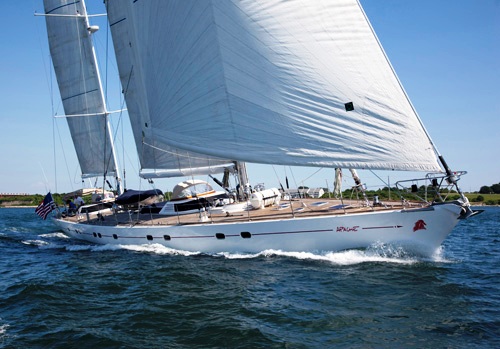
Apache, 105-foot D. Presles and J. Pierrejean charter yacht

illustration barry huplits high school photo


Going To Sea

(for Barry Huplits)


She is a great white boat, carved

of wood, lacquered to a blinding

sheen, her sails immense, floating


over my head like the wings

of a fearsome angel. I sit

on her prow, clinging to the slight


metal rail, and together we leap

over the waves like some illiterate,

dangerous god. I am a mermaid,


a brightly colored figurehead,

thrust into the salt spray to bring luck.

The power of the water flings me to and fro,


but I hold fast, panting, the rich smell

of the sea making me drunk. As we pass

the ragged rock walls of the inlet,


I see the towering dwellings of men,

though these quickly fall behind our path,

growing tiny, frail to the elements


I have momentarily harnessed. We brush

great clumps of weeds, then the color beneath

changes from murky green to depthless indigo,


the froth of the peaks suddenly

light, riddled airy like the childish,

gladdened heart inside my chest.


In my net are jerking glass shrimp,

Tiny, tassled fish that look like

bits of leaf, one lone needle-nosed


eel, sinuous even in his distress,

and when I have stared long enough,

I fling them back to their wet lives


without regret. Under the sharp

edges of the sun, skin grows heated,

reddened as if by love’s rough brush,


yet we keep on, moving into the horizon,

towards the vanished place of wildness,

full of an impeccable, golden light.


Leave a comment

Filed under ancient history, beauty, compassion, earth, eternal, eternity, god, good, history, identity, karma, kindness, life, love, mysterious, nature, poetry, soul, spirit, spiritual, truth, universe, warmth, wood, youth

Searching for Dreams in Little Havana, a short story/novel excerpt

illustration searching for dreams in little havana

Searching for Dreams in Little Havana, a short story

Karen knows it’s a bad sign when she sits wondering whether the man she’s crazy in love with is a liar, or a fool, or both. Fuck first, talk later, yes, that approach seems outdated, rather quaint. Impatience has always been her biggest problem. The way this one calls women bitches, it’s like a warning beacon, but she’s not listening because she already thinks she loves him.

Karen wants this man. Or rather, she wants something, and she is trying to figure out if it is him. She orders a latte made with chocolate milk, lights another cigarette. The waiter serving her is thin to the point of illness — his sharp elbows have worn holes in the sleeves of his chambray blouse. The waiter looks nothing like the man she thinks she wants. She wonders if the waiter wants anyone, right now.

“Can I get you anything else?” he, the waiter, asks.

“An audience with the Pope?” she says. “Eternal life, maybe?” She is only partly kidding. She has had her past lives examined under hypnosis. She remembers being locked in a tomb in France. She did not care for it.

The waiter laughs and shakes his head. He flees from her the way young waiters always flee from her — looking back over his shoulder, tossing his hair out of his eyes, knees trembling like a young mule deer’s.


Karen calls Edward, the man she thinks she wants, from her office. While the phone is ringing, her assistant comes to the doorway. She holds a sheaf of papers which Karen knows is the monthly billing.

“Go away,” Karen says to her, smiling. This is the way she talks to all her employees — imperious jokes, self-mocking but at the same time crushing and heavy with the power she refrains always from using.

“Hello,” says Edward.

“What are you doing?” Karen asks.

“Paying bills,” he says.

“Can I come over?”

“Right now?”

“I told you I was impatient. I’m tired of dictating.”

“I need to dust off,” he says. “Shower, change.”

“Twenty minutes?” she says.

“Make it forty,” he says.

Before she gets out of the office, her ex-husband calls. Donald is furious, he is always furious, it is the reason they are no longer married. Donald has forgotten how to have fun. Either he has forgotten, or he never knew. He is a very practical person, he runs a tidy house, a neat garden, a solid social life. Karen is no longer sure what drew her to him in the first place. She tries to remember, often when she lies down to sleep she thinks of what it was like to live with him — the predictable days, the fully planned weekends. He never kissed or bit her in the throes of passion, merely covered his face with his hands, as though trying to block her out. He never talks about religion, nor politics, nor his health.

“Where have you been?” her ex-husband says. “You missed Sara’s school open house. I tried calling you all day. Didn’t your secretary tell you?”

“I had an emergency to attend to,” she says. “One of my clients was stranded in Baltimore.”

“Well, there’s always a reason,” he says. “There’s always a reason for the way you neglect your personal life.”

“I guess that’s why you divorced me,” she says. Karen remembers the day she told him she didn’t want to stay married to him — he threw his shoes at her , but they landed in the kitchen sink, splattering her with soapy water. She can have no doubts.

She kept waiting for Donald to have an affair, so she wouldn’t have to. But he was lazy, he put aside passion and loveliness and focused only on money. He could make a lot of it, it was his best talent.


At thirty-five, Karen gets carded one last time for cigarettes, tells the clerk she’s really old, takes off her sunglasses to show him her crow’s feet. Later, her man Edward says with heat, oh, he wanted you. She laughs nervously. No man is able to endure her — it comes from how her father left, how he wanted to stab her when she was born, how her secret heart is looking for some man to make up for that, to endure every hateful thing she can say but never leave.

Most of her adult life has been spent sleeping, so when Karen develops insomnia, she assumes it’s her own fault, always having been a slugabed. She has the blues every day even before she gets up. Life is both too full and too empty to tolerate. Like a snake, she holds everything in fierce embrace, she has loved it all so much, it is dead. She has slept enough, she decides, she’ll make the best of these wakeful hours. She takes up needlepoint, cross-stitch, knitting and crochet, and soon her living room is filled with her creations. Still, she misses her dreams.

Karen goes to a shop in Little Havana, searching for some harmless herbal remedy, something almost, but not quite, a placebo. She’s a firm believer in the power of the mind over the body. Witchcraft is another thing entirely, so when the pale shop-woman draws back a beaded curtain and motions her in to the back room, which smells of burnt sugar, she hesitates. She takes in the woman’s hairy upper lip, her gold canine tooth, her precisely lined red lips, her sexy upper arms — decides it’s worth a try.

Hirsuteness notwithstanding, the pale woman is abnormally beautiful, the kind of beauty women admire and men find frightening — hard, pristine, with sharp angles everywhere. This lady’s nose is a work of art, of architecture, of poetry. All Karen wants is to close her eyes and dream of this moment, twist it into a candy fluff to sustain her through the miserable waking hours.

It’s her desperation, Karen guesses, which has aroused the shop-woman’s sixth sense, a sympathy so strong her pale hands shake as they hold the tangle of beads behind her. Karen blinks back tears, surprised. The bottle the woman chooses is purple, with a gold foil label. Imported from Cuba, it reads. Cuban witchcraft — Castro hasn’t killed every colonial superstition, evidently.

And the voice in Karen’s head says: do what you must, and break your heart down even farther, you haven’t touched the depths yet, of where I will take you. And you will weep for your own folly, and still not be satisfied. You ask for sleep. What can you live without most easily? What can you give up, forever?

2 Comments

Filed under beauty, divorce, evil, good, love, marriage, men, mysterious, relationships, sex, short stories, truth, women

Rosalia (Rosa multiflora), a poem

illustration rosalia

Rosalia (December 13, 1918 – December 6, 1920), was a child who died of pneumonia.  Her father was so grieved by her death, he hired a famous embalmer to preserve her body.  It is still nearly perfectly preserved, nearly 100 years later.  This poem was written after observing a  garden near her tomb, planted with the flower she was named for, Rosa multiflora, commonly called Rosalia, an especially fragrant and vigorous climbing rose.


Rosalia (Rosa multiflora)


The haughty snail rears up, large and indolent,

its creamy shell ponderous, though rakishly tilted.

The knowing eyes unfurl on stalks greyish-violet,

above tender undulate flesh, faintly quilted


as if by past misdeeds. Near a warm slate path

thrust through the damask-brown earth, a small bird

dips wings, cocks head, perches on the birdbath

shaped in the lithe innocence of a fair-haired


Roman cherub. The rose-heads swoon in the sun,

lazy petals curled inward to form delicate bowls

ravished by enormous bees, whose silvery finespun

wings vibrate, ceaseless keepers of love’s oversoul.

2 Comments

Filed under beauty, daughters, fathers, love, mourning, mysterious, nature, parenting, poetry, truth

Hungry Baby, a short story

hungry child

Hungry Baby

Whenever Ella was feeling close to the edge, a hair’s-breadth from lunacy, she liked to shop for groceries. She went up and down all the aisles, methodically picking out food. She threw boxes and jars and bags and cans willy-nilly in her cart, always stocking up for the big one, the storm that would tear the roof off. It’s a habit, one she learned as a child. The women in her family were bony, starry-eyed drunks, with bad skin and lank hair, but by God, they knew how to grocery shop.

She was in this twitchy, nervous state because her mother had showed up again last night. She would never know if it was just a dream: she hoped it was. Ella opened her eyes and saw her mother standing next to the bed, almost touching the mattress. She didn’t smile or speak, but simply shook her head. Mama seemed angry; Ella could tell her mother wanted to hit her. Mama was jealous that Ella was still alive, driving Mama’s car, watching her TV, wearing her jewelry. Ella met her fierce gaze without moving, then closed her lids against the image like hurricane shutters.

The room was so dark, and her mother was like a column of gray smoke, rising over Ella. Meeting death hadn’t changed Mama’s face one bit. How was it that Ella still missed her? That was an embarrassing, childish pain, an overgrown mouth sucking a rubber pacifier. There would never be a second chance for Mama and Ella; Ella wished she could believe in heaven like she believed in hell. If her mother had loved herself, or Ella, even a little, maybe she’d have pulled through the dark waters. But poor Mama was so full of self-hate there was no room for anything else. Now Ella was afraid her mother’s habits were coming after her.

Ella confessed it; often she had hated her mother too, while she lived. She even killed her mother once, in a dream. She stabbed Mama many times with a kitchen knife, and it felt right, like it was the only graceful way out for both of them. There wasn’t as much blood as Ella expected, though there was still enough to soak her mother’s nightgown all the way through. When she woke, clammy and trembling, Ella hurried to Mama’s room to make sure she still breathed. Ella knelt at the side of her bed, watching her mother’s scrawny chest. At first, it didn’t stir, and Ella almost cried out. Then she saw movement, enough to know her mother lived. Forever after, she feared the terrible anger in herself. It was always waiting, a tiger with ivory teeth and steel claws — waiting for her to stumble, to lose her grasp on mercy, on forgiveness, and throw open its cage.

Wishing her mother was dead half the time didn’t keep Ella from breaking down the door in a panic when she thought she’d overdosed. After the first incident, Ella wasn’t all that worried, she knew her mother to be too much of a bumbler, she would screw it up, or not finish, like she did everything else. The door became only an excuse for Ella to use her rage, to make her hatred tangible, give it life, a physical existence. She used a heavy folding chair, swinging it over and over again, watching first the splintered crack appear, then the bit of light, marveling at how the door-frame itself gave way all at once and the entire door fell cleanly into the room. Mama sprawled on her bed, half-clothed, her knobby knees the bulkiest part of her, her huge, brown, doe-like eyes looking puzzled. Even with all the noise, Mama was so out of it, she couldn’t figure out how Ella had gotten in the room. Later, sober, she realized she’d underestimated her daughter, she hadn’t known what Ella was capable of. Much later, a couple of years after Ella left home, after a hundred false starts, Mama managed to finish what she’d begun.

Ella shopped hours for the perfect funeral dress; pulled grimly through all the racks, looking at everything dark. No, not dark, black. “Nobody wears mourning black anymore,” the saleslady said, but for her own mother, Ella insisted. In photographs, she appeared the proper, bereaved daughter. She spent three days wearing the black dress, feeling grimy by the day of the burial, and glad of it.

They buried her mother in front of a croton bush, God, how Mama had hated those things, crotons. Ella stared at the shiny marble urn where it sat in the little hole, the tacky brass plaque glued to the top. She couldn’t object to the shrubbery, not with the priest standing there, tall and lean and handsome like some Marlboro Man, chanting and swinging his billowy canister of incense on its copper chain, the black robes clinging to him under the harsh weight of the sun, his hand so big and hard when she shook it, her knees almost gave way.

That night, Ella left the house long after dark, she walked in shaky high heels down the street and around the corner, ruining the delicate heel tips on the asphalt. She decided to keep walking until she dropped; to walk forever if no one came running after her. She stopped only a couple of miles away, limp from the humid August air. Crickets vibrated, frogs exhaled, stars flickered; the glowing, yellow windows of strangers were her last comfort, her final safe haven. Nothing but love for those strangers kept her from leaving for good, nothing but fear of the anger-tiger kept her from going any farther after her mother; Ella stood alone in the velvet grief of that hot summer night, calling her mother’s name over and over again like a stupid, hungry baby.

3 Comments

Filed under addiction, alcoholism, anger, apologia, black, child abuse, child neglect, daughters, ella, eve, evil, funeral, girls, god, good, health, ignorance, justice, karma, kindness, love, mama, matricide, mothers, mourning, murder, mysterious, parenting, regret, relationships, short stories, truth