Tag Archives: love

The Way of All Flesh, a short story

illustration the way of all flesh 4illustration the way of all flesh

The Way of All Flesh, a short story

Professor Rathlin was tall and skinny, with a beard and wild red hair. He wore sandals without socks, even in winter. During lectures, I stared at his feet, the toes in particular, the way the nails were so broad and smooth. But all that toe-worshiping was moot, because rumor was he had a girlfriend. Plus, I had Jacob. Despite, or maybe because of all that, I went regularly to Rathlin’s office hours. His office was even better than his toes, insulated with books, one whole wall covered with photographs of his family.

“Look at this one,” he said one day, pointing to a group black-and-white, maybe the third grade. From the clothes, I could tell he was at least as old as my mother, if not older. “You think you can pick me out?” he asked. He leaned back in his swivel chair, browsing through his chin whiskers. I looked hard, mentally shaving off facial hair, pulling his hairline forward, and erasing weather lines. Scanning the photo, row by row, I started to sweat.

I was almost ready to go back to the beginning, which was a disaster in a job like this — they all start to look alike. Then, I saw one boy’s eyes, his mouth, his forehead, a cowlick. I pressed my finger to the glass and said, “Here.”

He squinted to see which face I’d pointed to. He rolled his chair close, the chair-arm touching my leg just above the knee. “Right,” he said, as his chair pushed me, almost knocking me off-balance. “Sorry,” he said, swiveling back. “How about this one?” he asked. He pointed to a bigger photo, three little boys who looked like almost like triplets. They were dressed the same — plaid shorts with suspenders, white starched round-collar blouses, knee socks with saddle shoes. The tallest was missing his two front teeth and the middle one held the smallest — chubby in the face from babyhood — hugged on his lap. “Which one is me?”

“Oh, my God,” I said. I tried to camouflage, make out like I was amused. I knew I’d get an “A” in his class, this spotlight tutorial was about something else. He put his smile away and tried to look neutral. His eyes held anthropological glee.

I saw him in the toddler, the one with the dimpled knees, the brightest eyes. “The baby,” I said.

He laughed, throwing his head back for a moment. “Not many get that one,” he said, nodding his head. “Sit down,” he said, motioning to a chair behind boxes crammed with what looked like field diaries. I sat, and not knowing where to put my backpack, plunked it into my lap, clutching it like an old lady with a purse. Clutching it like my mother would have.

“Would you have breakfast with me next week?” he said, opening his desk drawer and fumbling inside it. He pulled out a ragged calendar.

“Sure,” I said.

***

“White people like to get the body in the ground within two or three days,” said Mr. Clements, our guest lecturer. “In black families, at least a week goes by before the burial. Black funerals draw more relatives — folks take longer coming by bus and so forth, so you allow the extra time.”

I thought of my first funeral, my great-grandfather, when I was six. Mom bought me a new navy-blue coat and hat for church, but as I was getting in the shiny black car at the funeral home, she decided I shouldn’t go to the church. Instead, I sat with the undertaker’s shy daughter in the waiting room, tapping my patent-leather heels.

***

The week after midterms, Jacob, Margot and I went out for a beer and some reggae. We sat up front, getting our sternums massaged by the bass. Margot and I drank too much beer and smoked too many cigarettes. She chuckled a lot, high up in her throat, and seemed half in the bag already, but she was tricky that way — in reality, just like my mother, she had a stable middle range of drunkenness that she could stay in for what seemed like forever. Jacob had nursed a warm Perrier for a couple of hours.

Margot leaned over and whispered in my ear. “He is cute, isn’t he?”

I laughed, leaning over and bumping shoulders with her as I spoke, a gesture I thought I’d gotten rid of in the seventh grade. “Isn’t he!” I said. I admired Margot — her well-placed laughter, her cynical, observant eye. When I saw her looking at Jacob in a way I’d seen before, I decided to let her have him.

I’ve never been the jealous, clinging type; I’ve always gotten out at the first hint of trouble. What kind of fool wants to be with someone who doesn’t want them? No, I view romance and love as Fated, unattainable unless bestowed on us by chemicals. There’s nothing gradual about that gut-wrenching attraction — it either springs up full blown or never exists at all. My mom and I proved this a million times over. I knew there was a certain risk. If it turned out against me — if she wanted him, if he wanted her — I’d have to be able to swallow that bitter pill and live.

“Would you mind if I asked him to dance?” she said. Asking permission, as if he were my property — not the way Margot usually acted. Jacob had been a virgin when we met. Margot knew, and the fact was tantalizing; even with the first sharp edge taken off, those boys can look so lovely.

“No, sure, go ahead.” As she leaned over to shout her invitation, her heavy breasts touched my arm.

I watched them on the dance floor. Jacob was long and lean — like a greyhound — dark hair just brushing his shoulders, and narrow, slanted brown eyes. Sometimes his eyes made him look dumb, sometimes a little fierce, but most of the time they made for a sort of refreshing blankness.

He danced with her, but he kept looking back at my table. I smoked and sucked on my bottle of beer, the carbonation stinging my upper lip.

I looked up and saw Jacob motioning, beckoning me to come out on the floor. He was sweating, there were dark spots scattered on his shirt and circles under his arms. When I got there, after wading through the hot bumping bodies, the three of us danced in a sort of conga line. For a couple of minutes I had this bizarre fantasy that somehow we’d all end up naked and in bed together.

Jacob snapped his fingers and swung his head, tossing his long hair, strands catching in his mouth like a girl’s. Margot had a funky Egyptian hand move she seemed stuck on. I concentrated on the looseness and fragility of my shoulders, letting my arms bounce wildly. We laughed, but the music was so loud we couldn’t hear the sound. We watched each other’s mouths gulp, like goldfish.

Jacob leaned close enough to speak. His hand grasped my hip bone. “Margot’s drunk,” he said.

“No, she’s not,” I said, closing my eyes, nodding my head with the music, brushing his ear as I spoke and picking up some of his sweat. “She’s just pretending. She can drink us all under the table.”

Margot screamed, opening her mouth wide, then gasped and laughed, fanning herself. I nodded and pinched her elbow — her arm plump, soft-looking, but hard with muscle underneath — and she minced off the dance floor.

“She felt me up while we were dancing,” Jacob said. “Put her hand on my ass.” His face looked glazed and hurt. I looked over at the band and kept moving and wondered which buttock she had touched and whether he still felt the warmth of her hand, glowing under his jeans.

“She just likes you,” I said. “The way I like you. The way everybody likes you.” I held my arms up and tilted my head back until I was dizzy, in the process almost falling into some other people. Jacob caught me before I fell into the tangle of mike stands and wires at the middle of the band’s stage. I felt my shoulder blade compress under his thumb.

“I thought you loved me,” he said, and I could smell his breath, sour just like his sweat. I wanted to shake him, make his head rattle. “Are you telling me you want me to fuck her?” he asked. A cold, hard, bitchiness drew down over my psyche in an instant, like a reptile’s third eyelid.

“Let go,” I said, shrugging my shoulder out of his hand, away from him — like when Mom would try to hold me down on the bed in one of her drunken vapors.

Jacob kept on dancing, expressionless, his eyes even more blank than usual. If I had been seeing him for the very first time, I might have thought he was insane. He touched my neck with his finger, tracing the angle of my chin.

As I walked away, I turned back to look. His eyes were closed; his face was smooth except for the silly little unshaved jazz bow under his lower lip, which until a couple of minutes ago I had liked. His body was turning and bobbing with the music, but his hands were drawn up into fists and his arms were down stiff at his sides.

“I’ve got to get home — my feet are killing me. Would you mind giving him a ride?” I stared down at Margot, sitting at our table, not meaning to but seeing anyway the cleavage where her full breasts pressed together. For a minute, she looked ridiculous, puffed up with air like some inflatable doll. I wondered what it would feel like to lay my head on that kind of cushion. I looked back at Jacob, dancing in front of the speakers.

“Sure, no problem,” Margot said.

“Talk to you later,” I said, and I left. I wasn’t mad at either of them, not really.

***

“This is a skull I was asked to identify for a murder trial last year,” said the medical examiner. He looked mild and well-groomed. Lying in a clump of tall grass, the skull was turned away from the camera, its curves a rusty brown except for some scattered patches of pale hair. “This was how it was found.” The slide projector whirred. “Here’s a better view,” he said, and the picture showed the skull head-on, the skull looking paler and the carved teeth glowing white against a formal background of black felt.

I thought of my second funeral, the one where I got to see a body — I was trotted right up to the shabby green kneeler in front of the casket. Great-Aunt Alice’s hair had been given a fresh apricot rinse, the curls prim and dull against the white satin pillow. The flesh of her crossed arms was flattened, as if she’d been pressed in a book. I feared her eyes and lips would somehow fly open and regard me with a blind and terrifying insolence. My remaining great-aunts stood in a cluster around me, weeping, kissing her, the dangling chains of their rosaries sliding, mussing her makeup, her lipstick, her hair.

“Give her a kiss goodbye.” I bent, lips pursed, brushing the well-powdered cheek that felt as cold and hard as my wooden desk at school. A sharp medicinal smell mixed with perfume and hairspray made me sneeze. I creased my forehead to mimic sorrow, all the while barely managing to contain the giddy, shameful laughter bubbling up inside me like silver air through black water.

***

“I think you should do this professor,” Margot said, when I told her about my date with Rathlin. Jacob and I had made up — sort of. He insisted Margot wasn’t his type, shaking his head and laughing — unkind laughter, I felt, not wanting to join him in his gaiety because it felt disloyal to her — at the same time wondering why on earth I held my laughter back. Nothing had happened between the two of them, Jacob added, and in that I believed him, because the one thing I felt certain of was he could not tell a lie.

After Margot and I hung up, after I’d sipped almost an entire bottle of wine, I sat at the kitchen table with one last glass and a cigarette, writing in my journal. “I think he likes me,” I wrote, meaning Rathlin, alcohol having made my loopy script even bigger than usual. After twelve more pages elaborating on that general theme, I don’t remember how I got from the table to my bed.

***

“This, of course, is my favorite holiday,” Rathlin said, grinning. He’d taken the video last summer in Mexico, documenting a rural celebration of “el Dia de los Muertos” — the Day of the Dead. Spindly-legged children cavorted in front of the camera, dancing brown and barefoot, wearing cartoonish papier-mâché skull masks and shaking small tin skeletons hanging from long sticks. The painted tin strips rattled against each other like wind chimes. It all seemed less gruesome than absurd.

After Aunt Alice, funerals got easier. My Uncle Frank looked better than anyone — or maybe it’s just easier to do a good job on a man. His hair wasn’t stiff or sprayed at all, just brushed back off his forehead. Even his glasses sat in the right position. I could see my reflection in the lenses as I leaned over the casket to rearrange the lay of his necktie.

***

“You’re not ready?” Rathlin asked, arriving almost an hour early for our breakfast date. Stiff and hung over, I hadn’t dressed or showered. I felt naked, though I was bundled inside sweatpants, a nightgown and a flannel robe. In the shower, I thought about what I’d say to him over breakfast. The only other professor I’d ever gotten this friendly with had been a Vietnam veteran, still a little strung out by that experience, which I found completely understandable. He’d taken me home to meet his mother. He said that when he looked at me, he saw “healthy children.” Feeling more panicked than flattered — I was eighteen to his thirty-five — and wanting to defuse the situation somehow, I said, “What is that, something like the Grateful Dead?”

After pulling my clothes on over damp skin, I went to tell him I was ready. I stuck my head out of the bathroom to see Rathlin searching through my dresser drawers. My eyes got big. “What are you doing?”

“Field observation,” he said, his lips drawn back and his teeth blazing white at me through the darkness of his beard. I saw he was in the drawer where I kept my vibrator.

I marched over and pushed the drawer shut. Then I propelled him out of my bedroom — laughing through my clenched teeth to keep the action on the level of buffoonery, pretending I had just caught him being naughty. His steps were tiny; he twisted his head around to catch my expression. I kept my face neutral, using the fake laugh as an excuse to look everywhere but his eyes.

I mumbled my order to the waitress and sat silent. It ruined the sight of him, being his measured subject. I knew our studies together would never be the same.

***

“The traditional color of mourning in Japan is white,” said the tall woman, an old graduate-school colleague of Rathlin’s visiting from Osaka University. “Whereas the normal color of celebration is black.” For the natural sterility of white and the corresponding fertility of black, she explained. I stared at Rathlin, chin on my hand, while she spoke, watching as faint color rose along the sides of his neck and he fiddled with his moustache. She drew a plain white kimono from her bag, holding it spread out against her body, an abstract design woven into the material itself, like a tapestry.

I had worn the traditional American black dress at my mother’s funeral. Up until then, everyone in my family — including her — had slopped around to those things wearing pastels, whatever stuff they seemed to have in the closet, but by then I knew it wasn’t right.

***

Home from afternoon classes, I was startled to find my front door unlocked and standing ajar. Then I heard Jacob’s voice. “Don’t worry, it’s only me,” he called, as I hesitated outside the door, my heart racing.

“Jesus, you scared me,” I said, dropping my backpack inside the door, clutching my chest and breathing hard as I walked into the room.

Jacob sat on the living room floor, five empty bottles from a six-pack of beer balanced around him, the sixth one half-empty in his hand. He didn’t look up when I came into the room, just tilted the bottle back and took a swig. His eyes were bloodshot from the beer. My journal was lying open on the couch.

“So, what’s going on between you and Dr. Rathlin?” I felt a draining sensation from head to toe, gravity pulling all my organs down, squeezing them into my feet. He wiped his mouth with his sleeve. For a second or two, I was afraid; that passed when I saw his eyes. They were petulant, sullen, and his mouth was puckered as if he might cry. I remembered a baby picture he had once shown me, and over all the sickness roiling inside me was a horrible urge to laugh.

“Dr. Rathlin?” I said. “Nothing. Absolutely nothing.” And of course it was true — there was nothing — that was the awful part. Even so, I sounded like some ridiculous soap-opera bad girl, and he the walking wounded Boy Scout.

“You’re not having an affair?” He stood up, struggling for his balance — I kept myself from reaching over to help him — and at last he got upright, teetering in the floor space between the empty beer bottles. It reminded me of the first night we’d slept together, the two of us standing next to my bed, the stark white of his jockey shorts gleaming in the darkness, like an angel’s wings against the deep brown of his skin — “Help me through this,” he had said, teetering just like he was now, clinging to me as if I were a pier protecting him from some onrushing wave, and I had been filled with respect for his proffered virginity.

Honestly?” Through his veil of drunkenness I could see a sort of relief. “I thought….” His chest hitched, a gassy hiccup. “I thought you two must be having an affair.”

He looked out the window, frowning with concentration, as if hoping to catch sight of someone he recognized. “Why?” I asked him, knowing as I asked there could never be enough of an answer.

“I’m sorry,” he said, his body sagging, and when he sagged I saw a glimpse of what he would look like as an old man, when gravity would have gotten the best of even his kind of body. He cleared his throat. “At first, I thought you were writing about us, about me. So I turned one page back, to read the rest.”

“Why on earth would you assume I was writing about you?” I asked, honing the vowels into bright knives of sarcasm, sounding exactly like my mother, riled up into a taut, glossy witchiness. I knew from experience how much blood that voice could draw.

His mouth twitched. He squinted in the slanted afternoon sun that filled the room, and his eyes were like a lizard’s. I realized from the very beginning he had thought of himself as being the smarter one.

***

After a huge bowl of Margot’s guacamole, which we slathered over corn chips, sucking our fingers pale between each bite, we ended up calling out to order pizza, and thus never got to the half-gallon of ice cream in the freezer. We flirted with the pizza delivery guy when he got there — I don’t remember exactly how, but it consisted of exchanging pseudo-knowing glances between ourselves and then looking back at him and laughing with what we thought was a bell-like, sophisticated tone, the speed of our laughter almost, but not quite, as fast as a giggle, and in retrospect I’m sure the guy pegged us for a couple of crazy, shitfaced sluts and got the hell out of there as fast as he could — and the last thing I remember with any kind of clarity is that first bite of pizza, eaten sitting cross legged on the floor in front of Margot’s coffee table. I know, too, that we kept on talking for hours, but I can’t recall what we said because each couplet of our sentences was so complete, so profound, so far beyond our sensibilities when sober, that the pearls of wisdom thus harvested could not be held, but floated away into the atmosphere, nacreous gems of the moment.

Eventually the conversation hit a lull. I lay down on Margot’s couch, kicking off my shoes, intending only to rest my eyes, and was instantly unconscious.

Sometime in the night I awoke. The only source of light was a single fat candle we had lit earlier, stuck on the iron spike of a gaudy, wrought-iron coach lantern she had gotten at some garage sale. As best I could make out, given the gluey condition of my eyes, Margot was floating above the floorboards; though her legs moved beneath her, approximating walking, she resembled the silent bouncing ball in a T.V. sing-along.

She was naked. Her breasts were large and round, pale glowing globes tipped in a deeper pink. Below the straight line of her spine followed buttocks so round and firm that, when linked with her bosom by way of her waspy middle, made her torso look fantastic. No cellulite, no jiggles marred her floatation, and upon that dreamlike observation I closed my eyes again. By the time she went back through the room, I must have been asleep, since the next thing I knew was the delicate light of dawn.

“Margot,” I called, standing at the door of her bedroom, a heaped lump of quilt in the center of her bed the only sign of occupancy. “It’s around six-thirty. I’m going to go home.”

No sound, then a rustling of the heavy quilt, and Margot’s pale face and bare shoulder poked out. She’d slept in her mascara, too. “Wait. Let me give you some coffee first,” she said, her mouth so dry I could hear the faint puckering of her lips as they moved over her teeth.

I sat down next to her on the bed. Margot’s arm moved against mine, her skin hairless, soft, radiating a feverish heat. I stared at the rounded curve of her bent elbow, remembering how I’d last seen my own mother’s body, dressed in her nicest, newest dress. Her features had been painted and molded, her nose and chin just a little too waxy, a little too pointed, for perfection.

I leaned over Margot and felt her breasts crush my own into pneumatic oblivion. She flinched as I laid my head on her shoulder, pressing into her living warmth, but I couldn’t help myself. I knew she wasn’t the cuddly type. My mother hadn’t been, either — she was so soft on the surface and so hard underneath. She was dead, and I missed her, but I didn’t really want her to come back from wherever it was she’d gone. My time to follow her would come soon enough, and maybe by that time she would have forgiven me for ruining her life with my pathetic neediness. I knew I was taking liberties with Margot, but I kept holding onto her anyway, waiting for her to gather up the nerve to push me away.

Leave a comment

Filed under anthropology, boys, college, death, fiction, friendship, girls, life, men, relationships, sex, short stories, women

This Road I Am Traveling, a prose poem

illustration this road i am traveling

This Road I Am Traveling, a prose poem

I used to think it was possible, even desirable to order the world into alphabetic categories, though I never dared cut someone open with such a blunt knife as you.  The most I ever tried was harvesting a few drops of blood — they oozed through the cleanly raked skin underneath my claw like rare jewels.

You do not offer help.  You are scientific, curious, high on espresso, perfumed with the thick odor of fatty, fruity soap.  You tempt me to weep on your flannel jacket, though you don’t for a minute pretend to love me — or anyone.  It is all part of your elaborate theory.

You ask me what it was like to watch her body go, you say you hesitate to dredge up old muck, yet you persist in an ignorant, wheedling way, pulling the raw edges of the wound farther in your fretful passion to get at the truth.  I can’t believe a word you say.

Death is foreign to you.  Open your eyes!  See mine, clouded with the desire to cause your enlightenment.  Yes, I recall a hundred details:  the way a hand is not any longer a hand after that last breath, just a heavy piece of meat.  I remember the stiffening of flesh, the way heat emanates in nearly visible waves from the stilled body.  Though as you observe, time has continued to flow, my thoughts have not yet moved on — you are deluding yourself to think they ever will.  Shut up!  Your sympathies are worth nothing.

There are a million out there who know what I know — until you have allowed the fleeting soul of the one you love to pass through you, risking the internal injuries, the scarring from radiation, you can forget trying to follow for your own amusement.

This road I am traveling is ice — I have been skating with my silvery feet for more than ten years, and though it grows ever wider, I can see no end.  I grow tired, but there is nowhere to stop.  Living is grieving — sooner or later, only grief survives.  Once you learn to skate down memory lane, it’s something you never forget.  Though my legs ache, I have to keep them pushing.  Still, the bare trees arch gracefully overhead.  This cold air burns, yet cleanses.

10 Comments

Filed under acceptance, courage, death, forgiveness, grief, life, loss, love, poetry, prose poetry, transcendence

The First Time I Met My Father, a very, very short story

illustration the first time i met my father

The First Time I Met My Father, a very, very short story.

The first time I saw him, I was not dazzled. He was too tall and wiry, and he had too much red hair, flying off his head like an unmown hayfield. His eyes were too chilly, a piercing blue that made me feel like an insect on a pin. He was brimful of himself, but at the same time tried to project a false humility. When he found out I was trying out for cheerleading, he tried to talk me out of it. He’d only met me for the first time and hadn’t even met my friends, but somehow he’d already found them incomplete, just because they weren’t political radicals. “Why do you want to be a cheerleader?” he asked, chewing on the straw of his soda while he squinted.

“Because it’s fun,” I said. I shook my head, throwing my bangs back out of my eyes to glare at him. “Because it’s good exercise.”

“Do you know that the players will feel like it’s their right to sleep with you?” he asked.

“I’m not sleeping with anybody,” I said.

“I hope not.”

“You think anybody’s going to be able to talk me into something I don’t want to do?”

“Maybe.”

The arrogance he displayed made me want to slap him, punch him, kick him, or at least knock a couple teeth out.

3 Comments

Filed under absent father, daughters, family, fathers, fiction

Living On The Moon, a poem

illustration living on the moon

Living On The Moon, a poem

I remember all she had, stockpiled
in a child’s Easter basket.  Necklaces
of ivory, turquoise and amber beads —
hopelessly broken and tangled.  Cheap

metal pins, plastic bracelets, a dozen
stilled watches.  Dried-out jars
of skin cream, mangled greeting cards,
portraits of her sisters.  Often,

I allowed her to caress my face with
her trembling, soiled hands.  On the pillow,
my head next to hers, pretending
I was a small child, and she my beloved

mother.  Afterward, I scrubbed myself pink
with harsh soap.  In a moment captured
years ago, Brandy, her tiny poodle,
dances on his hind legs, his pink toenails

scrabbling against her tanned,
scrawny calves, a rhinestone collar
tight around his limber ashen neck.
She tempts him to please her with a bit

of bacon — herself very plump around
the middle, silver hair teased and
sprayed, a perfect bouffant.  You
would never guess then she was fated

to end up living on the surface of the moon,
by herself, without shame, without desire.
I must restring the beads, drape them over
a mirror, say a few words to her picture.

She will appear in my dreams nightly, dancing
with a small white dog, twirling her brittle
bones around and around until they catch fire.
She will sparkle like cut glass; gulping for air.

5 Comments

Filed under compassion, daughters, poetry

The Evolution of the Orgasm, a poem

illustration the evolution of the orgasm

The Evolution of the Orgasm, a poem

Does the new-twinned cell, as it sorts out
one tangled rat’s nest of nucleus

from the other with its slow patient dance
of cytoplasm and membrane, somehow know

the sweet involuntary contraction and release
of its division?  An organism’s inner tension

promotes as well as restrains
total disintegration.  Is each duplicating

mitochondrion frozen fast in the stream
of its own powerful, mindless barrage

of electrons?  Life on a cellular level
is both straightforward and incomprehensible.

Could any physical laws possibly hold
resolute in the embrace of such rapture?

Was the orgasm the means of our worldly
creation, or the end?  Less can be more,

but not in this case.  Is what makes you
come so easily explained?  As usual, let us

personify:  she is rich-skinned, veiled
cool in a white ruffled nightshirt….

Well-muscled, each movement sure, swift,
with only one purpose.  Her hair is short

or long, pulled tight or draped loose,
but the look in her eyes is a steely

constant, it says, I know you. I have always
known you.  I will know you even after

your tired flesh has flown away singing
through the air like a frightened dove,

and your pale, forgetful bones have fallen
into fine dry grit.  In my relentless arms

you will learn to surrender all fears, all
your dark secrets.  Forever and ever

will I love you.  Is it any wonder we dream
of her so often, with such helpless longing?

1 Comment

Filed under compassion, courage, eternity, evolution, fear, human beings, love, man, mitochondria, mortality, nature, passion, personification, poetry, sex, woman

Things We Never Said, a short story

img058 alcoholics anonymous big blue book

Things We Never Said, a short story

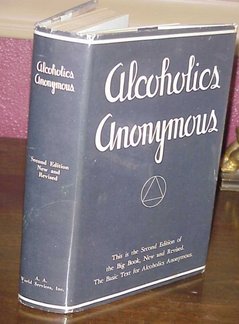
She was beautiful, as all mothers are to their children, but it was far more than that. Total strangers told me how beautiful my mother was. She was particularly fine-boned and delicate. Her skin was the softest I’ve known, her arms and hands the most stubborn, the most lethal.

Mom was an alcoholic, of course, and the most gruesomely stubborn person I’ve ever known. She went past simple denial and created her own alternative universe. Once, some quack psychiatrist she was seeing told her she wasn’t a “true” alcoholic — that she only drank out of boredom. She clung to that unfortunate phrase of absolution, repeating it like a robot in a variety of situations, until the day she died at 44 from alcoholic pancreatitis.

The only way we ever got her into rehab was when we threatened to call the police about obtaining drugs by false pretenses. She’d call the drugstore and tell them it was Dr. So-and-so’s office, would they please fill a prescription for such-and-such, three refills, please.

She got stiff all over when she drank, not like a normal drinker who gets loose. Stiff, and with a duck-legged walk that made my flesh crawl. I can’t tell you how many times I just let her lay there on the floor where she’d stumbled in a drunken stupor. I couldn’t bring myself to touch her.

If only Mom could have been more like Charity Hope Valentine, the taxi dancer in “Sweet Charity” who, after being pinched, pawed at, fondled, ridiculed, robbed, tattooed, thrown from a bridge, trapped in an elevator, and deserted at the altar, rather meekly accepts the cheery and somehow redeeming gift of a single daisy from a group of 60s flower children, pulling herself out of her misery yet again, and living “hopefully” ever after.

My mother and I both said “I love you,” a lot, and to no avail. Neither of us believed in love. We believed only in self-preservation. Trust was unknown. I have never learned the reasons for staying with another. All I can think of, now that I’m married, is what I’m missing, giving up for the other. How short life is, and how unhappy.

I took a developmental psychology course once, while my mother was still alive. The teacher explained that no child ever actually dreams of killing the mother. Infantile rage exists, yes, murderous anger exists, yes, but the true desire to kill can never be resident in the child’s subconscious. “The instinct for preservation is too great,” she said.

When I told her, later and in private, how I’d dreamed that very act, how in my dreams I’d taken the great butcher knife out of the kitchen drawer and stabbed it viciously and repeatedly into my mother’s fine and delicately boned chest, she shook her head skeptically.

“You didn’t really dream that,” she insisted. “You only think you did.” I didn’t argue. I was still too afraid it might happen in reality to insist that it had happened in dreams.

She was never a very good mother. I was never a very good daughter. After she died, I went to confess my guilt over my record as a daughter once, to an Episcopal priest. “I let my mother down,” I told him.

“No, you didn’t,” he insisted. “You were the child. You had the right to go off and live your own life.” I was angry at him, and never went back.

I still feel guilty about the first time I knew I’d hurt her feelings. She made me a bunny rabbit salad – a scoop of cottage cheese for the bunny’s face, cut up vegetables for the bunny’s ears, eyes, nose, and whiskers. It was adorable. But I hated cottage cheese, and salad. I was four years old. “I don’t like cottage cheese,” I told her.

“Just try it,” she said.

“No.” I refused over and over again. Finally, she ran out of the kitchen, to the bathroom, and I knew she was crying. I sat in the kitchen, staring at the rabbit, not eating it. I didn’t follow her, I didn’t apologize, and I sat there until someone, probably my grandmother, covered the plate with a piece of plastic wrap and put it in the refrigerator. I knew I was never going to eat that bunny rabbit salad.

I mailed the invitations to my own daughter’s birthday party today. She’ll be four in sixteen days. Oddly enough, all I could think of as I wrote out the cards was how much my own mother would have enjoyed seeing my child, her first grandchild. I know exactly what my mother’s face would look like if she were at the party — lovely, tremulous, inevitably a little weepy. I also know half of my pleasure would come from seeing the tenderness in my mother’s wide brown eyes as together we would watch my little Katie blow out all her candles.


3 Comments

Filed under addiction, alcoholism, blood, child abuse, child neglect, childhood, children of alcoholics, compassion, daughters, death, development, fiction, forgiveness, girls, hope, life, logic, love, mama, matricide, mea culpa, mortality, mother, mothers, mourning, murder, parenting, personal responsibility, regret, relationships, short stories, soul, spirit, truth, woman, women, youth

hearts

When our heart breaks, it opens like an eggshell, and if we let it emerge, out comes a bigger, stronger, more forgiving heart… we awaken to Spirit, and understand that love is the only reality.  The rest is illusion.  Only love matters.

2 Comments

Filed under beauty, blood, compassion, development, enlightenment, eternal, eternity, faith, forgiveness, god, good, health, heart, hope, humanity, karma, kindness, life, logic, love, mysterious, nature, peace, personal responsibility, relationships, soul, spirit, spiritual, truth, Uncategorized, warmth, world

Lilies of the Field, a short story

illustration lilies of the field

Lilies of the Field, a short story

Harry: Boy With Car

In the picture, Harry leaned back on his car, his arms crossed over his chest, tautly, the muscles bulging underneath his white T-shirt. He wore sunglasses and his hair was blown back off his forehead, as if from great speed. The car was a ‘57 Chevrolet, bright blue, brand new. He’d just left his mother’s house to live with a girlfriend, not Joanna — he didn’t meet Joanna for another 10 years. For a long time, he subsisted off a series of dead-end jobs and girlfriends while masquerading as a college student. The women he lived with all had a few things in common: uneducated but bright, a love of dogs, and perky telephone voices. They leaned against him in the front seat when he drove fast and their hair whipped his forehead. He was confident in those days, nothing had ever broken him. He had not yet been given the gift of suffering.

Joanna: The Queen of Grief

Joanna, in a state of grief and intoxication, returning from her grandmother’s funeral, sat in an automatic photo booth in Atlanta, eyes closed, lips pursed, head tilted back, her skin glowing white, her face blurred, too high to be captured on film. She met Harry in the local airport when she got home. He was intoxicated also, and was leaving to report to the Marines. She gave him her address and phone number and one of the blurry photos. He kept the picture in his wallet and called her every day, collect, from boot camp. She lay awake all night thinking about him, reciting romantic poetry into a tape recorder, then sent him the tape. She was disappointed in love before, but only by herself. She was cold and polite while others were warm and fumbling. How did one love another, anyway? She was, at heart, a hermit, but too much of a coward to live as one. It made for a tumultuous love life.

If Wishes Were Fishes

Harry sat in profile on the edge of a riverbank, his hair dripping forward over his forehead, his shoulders hunched, wearing red bathing trunks, and his black boots lying on his crumpled clothing. He refused to look at the camera. A pale straw hat had fallen off his head and lay directly behind him. The day was bright and clear. He was home from the Marines after 8 weeks, having been excused on medical grounds. He phoned Joanna upon his return. He lived in his car until he moved in with her. Harry said he despised her money and wished she were penniless. Secretly, he realized it didn’t hurt that all the bills were paid regardless of what else was happening. He took to collecting glass paperweights, and Joanna bought one for him everywhere she went. Gradually, Harry started to acquire her taste in champagne.

Woman with Drugs

Joanna stood on a wolf skin rug over a floral Persian carpet, in front of a lace curtain. Her dress reached the floor, white, with puffed sleeves, taken in at the waist by a narrow belt with a small bow. She held a sprig of marijuana in her left hand. Her hair was dark red, her lips painted scarlet. Her skin was only slightly darker than her dress and the curtain. Flowers were scattered in front of her feet on the wolf-fur. Harry was behind the lens, mocking the Impressionists. He admitted to himself for the first time that he was glad Joanna had money, though he would still love her if she were penniless.   He was the opposite of a snob — he made Joanna feel guilty that her family had taken advantage of his by accumulating more than they’d needed. The shadow of her money hung over them like a disused, rotting gallows.

Drawing the Line

Harry and Joanna were dancing. He had his arm tightly about her waist. She wore a red hat and looked away from him, over her right shoulder at the ground. He asked her to marry him, and she refused. He kept asking, and in a year she got pregnant and said yes. She didn’t believe in abortion. He began to ask her to put some part of her assets in his name, for the child’s sake. She refused. He accused her of frivolous spending and waste. She took an extended trip across the country with the baby, leaving Harry at home to care for the dogs. While she was gone, he brought a prostitute home and lived with her for a week. The prostitute wore all of Joanna’s lingerie and jewelry, but Harry didn’t let her sleep in their bed. When Joanna returned, Harry had drunk half a bottle of whiskey and vomited on the kitchen floor.

Acquisition

Joanna stood in the yard wearing a blue silk windbreaker. It was bitter cold and windy. Her hair obscured her eyes. Both she and Harry felt like he was taking her picture for a “wanted” poster. The baby screamed while Harry took the photos. In the beginning, Harry had wanted Joanna to make him feel real, rooted, and loved, to have all the accoutrements of material wealth without having to actually acquire them himself. To acquire material wealth, oneself, was such a tiresome prospect. After all, thought Harry, Joanna did not have to acquire it herself, she got it from her family. Now he’d be satisfied if she paid him with a bit of kind attention. She waited patiently for him to commit adultery, not knowing about last year’s whore. Meanwhile, their life in bed had dwindled down to almost nothing. Partly due to his drinking, partly due to her disinterest.

Disposition

Harry sat on a kitchen chair, elbows on his knees, and hands under his chin. He tried to look cute. Joanna pointed the camera at him and smiled, hoping to hide her inner revulsion. The problem was, they never fought about anything specific — they just fought. She wanted Harry to want her in a way better than the way in which she wanted him. A needier, nobler way of wanting — something that would take the whole heart, not just a sad, tacky corner of it, the way she felt wanting Harry occupied hers. Unfortunately, Harry didn’t seem capable of neediness and nobility, no more capable than she. How much money would Harry want, she wondered? She had an appointment with a lawyer in the morning. Joanna had been lonely when they met. If she expected comfort from Harry, she did not get it. It was too bad about the child, it was always too bad about that.

3 Comments

Filed under divorce, fiction, mama, marriage, relationships, short stories

Enlightenment, a very short story

illustration 5 enlightenment

Enlightenment, a very short story

He felt awake when he saw her sitting at the bar, as though all his previous life had been a slow, lazy dream.  She looked like a girl from one of those sex shops in Amsterdam, wholesome and perverted at the same time.  Her hair was perfectly straight and hung down her back to her waist. Her forehead was a smooth, wide dome of innocence.  Her flesh was abundant, stark white and glowing, spilling slightly over the waist of her leather skirt.  Baby fat.  He could tell she’d outgrow it.  Regeneration was her game.

She said, “I prefer to travel alone, no fluff or chatter.”   She spoke of the outer and inner journey.  She didn’t know which was the more important.  “I am my own  mysterious stranger,” she said.

When they got back to her room, he saw how her bed was opposite a huge fireplace, black; it felt like ghosts were everywhere, but especially in the fireplace, coming down the chimney. The wind made sounds around the eaves and windows, such a big wind, it was spring but the wind was fierce and strong. Her room scared him, he would rather have been anywhere else. But he couldn’t leave, the girl was already undressing on the bed.  She looked at him from under her fall of hair.  The now-naked girl lay back on the pillows and smiled.  He felt as awake as the Buddha under the bodhi tree.


1 Comment

Filed under beauty, compassion, enlightenment, fiction, identity, karma, love, man, men, mysterious, redhead, relationships, sex, short stories, soul, truth, universe, warmth, winter, woman, women, youth

Savior, a short story

illustration savior

Savior, a short story

The young man seemed so out-of-place in her mother’s living room. Maria stood in the doorway with her mother’s groceries, her purse on her shoulder, key ring dangling off one numb pinkie, clutching the heaviest bag propped on her hip, the bag that contained her mother’s supply of Diet Coke. Her mother and this man were sitting together on a Victorian loveseat on loan from Maria’s antique shop, their knees almost touching, the man’s arm draped across the ornate wooden back, his fingers curled behind her mother’s left shoulder. Her mother had a photo album spread out, one leaf resting on her lap, the other resting on his. Maria could see herself, at two, nude in the tub. Christ, she thought, what’s she showing him those for?

The young man leaped up after a few moments of uncomfortable silence, running his hand over his hair and smiling. Her mother folded the album closed, holding out her arm, and he helped her up, a gesture Maria herself had never mastered, helping old people up out of their seats. She tried too hard, using the wrong position and too much lift, until their sharp old elbows jutted out at alarming angles but their behinds hadn’t lifted an inch.

He had a medium build, wavy blonde hair, a deep tan — he was almost, but not quite, handsome. His eyes were too close together and his nose too long: as Maria met his direct gaze, she felt uneasy at his obvious affection for her mother, the implication of knowledge which came from his confident manner. He looked as though he was already sure he knew the older woman’s mind; already sure she must be lonely.

“I’d like to introduce you to my daughter, Maria,” her mother said. “Maria, this is David. He found my wallet over at the library and was kind enough to track me down. I couldn’t believe it when he called. I didn’t even know it was missing yet.”

“That is lucky,” Maria said. “Really lucky,” she continued, smiling in her mother’s direction, one eyebrow arched, whereupon her mother shook her head once, violently, and her daughter’s unspoken reprimand was expertly dismissed.

“Oh, it wasn’t luck,” said David, the sound of his voice causing the small hairs at the back of Maria’s neck to rise. “Nothing’s a matter of luck. Life is all planned for us, down to the last detail.” He nodded, smiling at Maria, his arms hanging relaxed at his sides, and the suspicion came to Maria that he was crazy. Crazy but safe, one of the harmless ones, the kind that made her want to go a little crazy too because they seemed so sure of themselves.

Most of Maria’s son Richard’s friends were the same type, that’s how she knew. Richard — she never thought of him as “Kurma-devi-dasi,” although she respected his desires and addressed him that way — was crazy but harmless too, although she knew she couldn’t see him as clearly in that way as she could a stranger. To this day she was able to discern the fuzzy cartoon of his infant features on his serene face when he smiled at her — the memory of his toothless gums clamped like a rhythmic vise on her breast would come to her, looking at his shaved head and his orange cotton robes as he chanted over his prayer beads, and she would be filled with a sorrowful rage that made her chest shrink into itself.

Not his grandmother, though — she had sat with her grandson over at the temple for hours when he first became a devotee, sitting in a rocking chair next to him as he said his prayers in front of the little richly clothed doll of Krishna. She told Maria it made her feel closer to her own idea of God just being in a place like that. In theory, Maria agreed, but the issue wasn’t whether the temple was a nice place to spend an afternoon, the issue was whether it was a good way for Richard to spend the rest of his life — sewing holy Hindu god and goddess doll clothes on an old black Singer?

“I don’t know about a plan,” Maria replied. “I’m lucky if I know where I am, half the time. If it’s Wednesday, this must be my mom’s apartment — you know?”

He said nothing at first, not seeming offended, not defensive, just staring at her with eyes so full of a giddy, knowing light — his face loomed toward her, and tension rolled through her stomach as his mouth moved into a drawn bow of compassion. It didn’t matter that he wasn’t handsome; he radiated an alarming level of charm. “Down to the last detail,” he repeated, arching his eyebrows and opening his eyes a bit wider, his pupils enlarging like a lover’s, and the sound of his voice vibrated within her ears, warm and solid like hands pressed against her temples.

“Then one of the details must be that I’ve got to put this bag down before my arms fall off,” she said, forcing a laugh. “Excuse me.” She turned away and walked up the hall to the kitchen. By the time she’d finished putting the groceries away — rearranging pantry and refrigerator shelves, purposely taking far longer than usual — he’d already gone. Great. Now their lives were stuck together like flood trash swirling down her mother’s raging river. David would be there for her mother — be there always and forever, overflowing with that sickening, confident love, and her mother would never be able to blame him, not for anything.

***

Maria was uncomfortable with the amount of time her mother was spending with David, but didn’t dare say too much. There was nothing overtly objectionable about him, other than his religious fervor — and how could she term that a fault? Her mother wouldn’t listen, anyway. Whenever Maria brought the subject up, her mother would groan, “Oh, boy, here we go again,” and she would frown, which consisted of one sharp, off-center line in the middle of her forehead. “You don’t have to like him, sweetie,” she’d say, “but I wish you did.”

Still, her mother’s interests seemed to be shifting. Odd books and papers came and went on the coffee table, crowding out the usual hodgepodge of half-finished crosswords and literary journals: treatises on wild herbs, population-density maps, computer programming manuals, military histories. Flipping through a ratty emergency-medicine textbook, Maria saw numerous large, yellow-highlighted portions and margin notes in both an unfamiliar, childish hand and her mother’s own neat back slant. “What is all this stuff?” she asked, holding the book out to her mother.

“I’m getting ready,” her mother said. She sat down opposite Maria and picked up a needlepoint pillow, arms crossed, mashing it to her tummy like a teddy bear.

“Ready for what?” asked Maria.

“The end of the world,” said her mother. “You know, Armageddon.”

***

At first, Maria’s son agreed with her concerns, not at all what she expected and a strangely intolerant position for him to take — considering his own lifestyle — his agreement only making her feel worse. They sat in the temple’s empty dining hall. “I’m with you, Mom,” Richard said. “The guy sounds like a real case.” He rubbed his hand over his prickly scalp and yawned, his left hand fumbling inside the peach-colored sack of meditation beads that hung from his neck. He scratched his nose, smearing the delicate yellow makeup lines drawn there that symbolically pointed up: up to God, up to heaven. “Have you checked Grandma’s bank accounts lately? He could be some kind of con artist.”

“No, no,” she said. “That’s not the kind of thing I’m worried about. He seems sincere enough. He’s no con artist. It’s just — your grandmother is really starting to believe what he says — how Armageddon is coming, all that stuff. You should see the books he’s got her reading.” Maria leaned on her elbows, cupping her chin. Richard closed his eyes for a moment, tilting his head to one side like a duck.

“Then again, I suppose the guy could be right on,” he said, his eyes still closed. He looked asleep, his skin pale and fragile. “Maybe that’s what bothers you. I’ve been trying to get through to you on that level for years. At least Grandma’s started thinking about her future.”

“Her future?” Maria asked, her voice louder than before, wanting to reach across the picnic table and shake him by his choke collar of tiny wooden beads. “At eighty-five? People that age should be beyond this kind of worry. It isn’t right. He’s getting her all stirred up — and for what? If all that biblical stuff happened, she’d never survive.”

“You’re just jealous,” he said. He opened his eyes and stared at her, his thick black lashes tangled and dusty-looking. His pupils were pinpricks inside the blotched hazel irises, and as he spoke he stood up too fast, banging his shins on the metal tubing of the cheap table. He grimaced and squatted for a moment, rubbing his leg. “You can’t stand it when someone believes in something you don’t. I thought you were worried this guy was some kind of sleazy fake, but now you’re telling me what freaks you out is that he’s the real thing. Make up your mind. You should be happy Grandma’s paying attention to what’s out there.” He turned and walked away, his robes ruffling out behind him, his rubber sandals slapping the bare wooden floor. “I’ve got devotions to attend to,” he said, not turning back to face her as he walked, his voice thin, echoing across the length of the long, barren room.

***

The earliest occasion Maria could remember wanting her mother’s opinion was in the seventh grade. Maria had just turned twelve, and had her first crush. She was stringy and awkward in those days, large-kneed and carrying a head of vigorous, curly hair she flattened down into a matted-looking cushion in desperation. Then the quiet boy started walking her home from the bus stop.

She remembered him still: pale blue eyes, so large and widely spaced that they gave him a somewhat doe-like expression. His jaw, however, was firm, angular, and thus saved his face from weakness. Warm hands lay against hers, trembling, stroking her fingers up and down in an hypnotic rhythm. “Do you want to go steady?” he’d asked her, unable to meet her eyes. That meant wearing a silver identification bracelet, his name engraved about her wrist for everyone to see; his property. She hoped his name was in block capitals, not that loopy script: it looked better.

“I don’t know,” she said, and went home to ask her mother’s opinion, a matter of form perhaps, but something she wanted; the camaraderie of womanhood revealed at last. This could be the common ground between them.

“Honey, I just don’t think going steady is a good idea at your age,” said her mother. They sat in the dining room, wallpapered with tiny brown pineapples. “You’re too young to get so deeply involved with a boy.”

“But lots of girls do it,” she said, knowing this was a flawed argument, but even as the shipwrecked are driven to drink seawater, her words carried a dreamlike hope.

“You asked for my opinion,” said her mother, “and I’ve given it to you. It’s up to you to make the decision. I’m not saying no, I’m just saying I wouldn’t if I were you.”

In the end, she told the boy no — and was informed that the going-steady offer had been withdrawn in the interim — and she realized by heeding her mother’s counsel she had been saved from a greater and more penetrating level of humiliation than she imagined even existed. But — that wasn’t the point. Maria knew her mother would never have said no to one of her own teenage boyfriends — that was a lie. Safe advice given as a — joke, as an experiment. Didn’t Maria have the right to be strong-willed? Didn’t she have the right to her own losses? She never stopped trying after that, but the drama was gone.

***

Then Maria found her mother in the bathtub. She entered the apartment, carrying her mother’s dry cleaning: a few sweaters, a wool suit, a pink blouse. She heard water running, a slight, far-off sound, as if from the next apartment. The bathroom door was closed. The only sound was a rolling and a swishing, as though a large fish reclining in the tub had shifted position. Alarmed, Maria opened the door. Her mother was sitting upright in the full tub, a small trickle of water dribbling from the faucet. The tub was full to overflowing. Her mother was wearing a purple shower cap embroidered with large seahorses.

“Go away,” she whispered, as Maria stood, confused. A bristling red pincushion sat on the edge of the tub, dangling a red cloth strawberry from a green cord into the water. The strawberry bobbed on the surface. In her mother’s hand was a large straight pin, on her wrist several thin scratches. She jabbed with the pearl-headed pin, her hands unsteady.

“What are you doing?” asked Maria, her voice shrill, terror coursing through her. “What in the hell are you doing?”

Her mother turned to her, her unfocused eyes shining and rolling up toward the ceiling as she spoke. “Trying to kill myself,” she said.

“With pins?” shrieked Maria. “Jesus, Mother!”

“I wanted to flush my head down the toilet,” her mother continued, “but it wouldn’t go down.”

***

On the third night of her mother’s emergency hospitalization, Maria dreamed she was sitting in her living room drinking tea with one of her college professors, a sloppy but verbally precise little man. In reality, she hadn’t liked him at first, but she had taken every course he taught because — unlike the majority of his students — she got A’s from him. She came to admire his sincere and stringent approach, forgiving him his greasy, untrimmed hair, his baggy, stained chinos and ancient, Filipino-style dress shirts.

And so, in the dream, her old professor, uncharacteristically neat, his hair washed and combed, his pants pressed, was explaining to her that he had theater tickets for tonight’s performance — would she like to join him for dinner and a show?

I’m sorry, she said, but I don’t think I can get a baby-sitter on such short notice. It’s already six o’clock.

He raised his eyebrows. I had no idea you were married with a child, he said. Well, that’s too bad, my dear. Perhaps we can arrange it some other time.

As he shuffled off down the sidewalk, Maria wanted to call after him: Wait… I don’t really have a husband… I don’t really have a child… it’s all a mistake. Come back. I want to go with you.

But she was silent, knowing it wouldn’t make any difference what she said. He was already too far away, and could not hear.

***

The next day, when Maria arrived at the hospital, her mother’s newest flowers were wilting in the heat. Her mother had turned the room’s thermostat up to 85 degrees and wore a sweater and cracked pink leather mules. Still, the new additions were beautiful: three dozen roses, white, yellow, and coral, stuffed into a too-small mayonnaise jar, the faded label turned to the wall. Maria stood in the doorway for a moment, holding a brown paper sack full of the day’s requested items — mostly cosmetics — looking at the bright splash of color. “Hi there,” she said to her mother, who sat hunched on the edge of her bed, flipping through a current TV Guide.

“Hi,” said her mother. “Is it cold out? You look chilly.”

“It’s cool, but the sun’s warm,” said Maria. “Who gave you these roses?” She leaned over to smell them, her nose brushing the petals.

“David,” said her mother. “He brought them by this morning on his way to work.” She squinted at Maria, her glasses speckled with bits of dust, so filthy Maria wondered if she could see anything at all. “He didn’t know I was here; he found out just this morning from my across-the-hall neighbor. He was taping a note to my front door.” She unrolled a package of breath mints and placed one on her tongue. “I thought you would have called him by now — it’s been three weeks, after all.”

“I didn’t think it was such a great idea for you to have a lot of visitors.”

“A lot?” Her mother raised her eyebrows, which were nearly invisible. She penciled them in most days, but today she’d left them defiantly natural. “Any, you mean. You’re the only one I’ve seen other than the doctor, until this morning.”

“What did he say about visitors?” Maria asked.

“It’s fine, as long as I feel up to it. They’re still fine-tuning the dosage on the blood thinner, other than that I could go home already.” She held out her arm, shoving the loose sweater back above the elbow. Small scabs dotted her forearm. “They’re sticking me every four hours, round the clock. They’ve got to balance it just right. So I won’t have another stroke but so I won’t bleed to death, either.”

She stared at Maria, her eyes shining. Her mother’s voice dropped low and fluid, almost a murmur; Maria remembered that voice from long-ago midnights, giving comfort to a distraught child. “I know you were scared when you found me all confused like that in the tub, sweetie.” Maria said nothing. Her mother raised her chin with a jerking nod, relapsed motherhood dropping away from her like a fragment of dry skin, her voice back to normal. “But really, I’m okay now. It was a very minor thing — you heard when the doctor told me I was one lucky lady.”

***

An hour later, on her way out, Maria saw David from across the hospital’s visitor parking lot as she stepped on the black mat that made the door swing open. He was dressed in jeans and a pink polo shirt, his hair still wet from the shower, combed flat across his head, just beginning to spring away in wisps where the blond curls regained tension as they dried. She stopped short, turning and walking back inside, toward the gift shop, where she stood in the farthest corner. She picked up a stuffed animal and pretended to scrutinize the price while she watched the door. When he passed, moving toward the elevators, she followed. He entered one and the doors closed. Maria waited and got the next one, her heart pounding.

She got off on her mother’s floor, going away from her mother’s room, back toward the nurse’s station and lounge on the north end. Settling in one of the low, soft chairs, she stared up at the wall-mounted television, the evening news in full swing, recounted events drifting over her, seeming important but incomprehensible, the words passing through the air like puffs of smoke. Muscles tense, palms clammy, she took out a pen and paper and began jotting notes of what she wanted to say.

She jumped, startled, as she heard David speak. She saw his back, visible from the doorway, over at the nurse’s station where he spoke to the charge nurse. “I think there’s something wrong with her call button,” he said. “She says she’s pressed it a bunch of times without hearing anything over the intercom.” The nurse, a thin, tired-looking woman wearing lavender scrubs, nodded.

“Okay, I’ll be there in a minute,” the nurse said.

David turned to leave, and then he saw Maria and stopped, his mouth forming an exaggerated O, his eyebrows lifting. Maria felt a clammy flush rise up over her neck, a dull enveloping embarrassment. He smiled like a placid baby, walking to her and holding his hand out. She clasped his hand for a moment, feeling the solid meat of it, the warmth and hardness of his callused palm. “You don’t know what to believe in,” he said, his voice calm and slow, “and that’s natural. It’s a process of evolution you’re going through. Think of your mother’s illness as the catalyst.” He opened his arms and bent at the waist, hugging her so hard she couldn’t inhale, then he removed himself and stood looking down at her, his head cocked, his blue eyes luminous and warm, a crinkly-eyed smile starting to show.

“You’re crazy,” she said, feeling her throat seize up as her heart beat shook her ribcage like a wild animal — she had difficulty speaking. She paused as her chest eased, then forged on. “A catalyst?” she repeated. “I know what to believe — I believe you’re causing all my mother’s problems. She doesn’t need your brand of stress right now. And I don’t need this kind of condescension. Telling me I’m OK. I don’t need you for that. You’re not any kind of expert.”

“No, I’m not,” he said, the smile gone from his mouth but his eyes still glowing with a trace of it like a madman’s. “And since when do you care about expert opinion?” He reached out and stroked her hair, saying her name in his gentle murmur, Maria, Maria, and she flashed — it’s finally happening to me, it’s finally here — a jolt of vertigo as if she’d been through all this before, a hundred, a thousand, no, ten thousand times…. “You don’t care about anyone’s opinion but your own,” he said.

Their lives were now joined – with force of will and love he’d plucked her up and tucked her into the golden cup of his heart as quickly and easily as he would rescue a fear-crazed puppy clinging to a torn-off tree limb, just before that puppy swirled away to her doom down a swift, swollen river. Maria wanted to run, to hide, to retrace her steps, but it was too late. David would be there for her — be there always and forever, surrounding her with this… curious compassion of his, and she would never be able to scare this one away, no matter what she tried.

3 Comments

Filed under compassion, daughters, death, development, eternal, faith, fiction, forgiveness, heart, hope, identity, karma, kindness, life, love, man, maturity, mother, mothers, mysterious, peace, personal responsibility, relationships, short stories, soul, spirit, woman