Tag Archives: women

The Latest Fashion: New Toilettes, a poem

illustration new toilettesThe Latest Fashion:  New Toilettes, a poem

(title and subtitles from an essay by Mallarmé)

 I.  An At-Home Gown in Garnet Velvet.

I receive you at my front door, formally, immaculately dressed, delicately arrayed, impeccably scented.  You think of me as I last appeared at the beach, tousled, salt-encrusted, and burned by the sun, dusted from scalp to toe with golden sand.  You see underneath my gown a double exposure — the natural, the cultivated — which rises up so that my two brown eyes turn to four, eyes within eyes, nudity within garnet velvet.

You think of wine, the vintner’s trembling hands caressing grapes, silently pleading with them to reveal when they will give up their most perfect secrets.  We live for moments such as those, we live to take up our wine in a crystal goblet and put it to our lips and breathe the scent of rain, sun, earth and sweetness.  Sweetness which has by virtue of aging embraced its opposite — sweetness which has given birth to tart recognition.

We are both innocent as three-year-olds and jaded as madams.  You touch the supple velvet, but what you are feeling is the smoothness of my insides.  I remember the sound you made, long ago, an explosive sound which you tried so valiantly to muffle.  The report of your exhalation was echoed in each cell of my body.  Garnet velvet becomes a skin I will shed.  Nothing before was unskinned.  I will turn myself inside out, only for you.

II.  A Hostess Gown in Gray Russian Satin.

 Together, we receive cadres of admirers — come to look upon our glowing faces, hear the way we laugh, breathe in the air of passion which surrounds us.  We understand this loveliness we display is not ours, rather on loan merely, a magnification of the same electric forces which keep every atom together, proton and electron and neutron dancing their way in a wild mazurka.  Those atomic particles, those rapscallions.

My gray dress hugs my body tightly, exposing each curve, revealing my body but keeping it a magnificent secret at the same time.  When your fingertips slide across my shoulders, the fabric moans, and the assembly gasps.  I can take no credit for my beauty, only for the courage to allow it free rein.  And I count every electron of your body, I feel the whirling clouds as they circle your atomic nuclei, endlessly proclaiming not beauty, not usefulness, but truth.

Please be advised you are in the presence of ananda.  Or at the very least, maple syrup.  Even the trees know.  How the sparks flew when first we met!  We confused the friction with dislike, at least until you saw me lick my lips.  Gray satin reminds us of the cries of mourning doves, the way they’d scatter as your car pulled into my driveway.  Such murmurings as felt like satin threads, pulled through my heart.  You came to me.  I will stay found.

III.  A Frock for Paying Calls in Plum-colored Faille.

We deign to visit the world, after a twenty-three year sabbatical, and everywhere we go the air matches my dress.  The moon becomes a large opal, the sky an onyx abyss into which I fall upward, tethered only by your voice.  When you laugh, I hear my father.  I hear the way he held me, our skin where it touched on fire with longing only for more bare skin.  He died too soon, and so did I.

My skirt is cut on the bias — when I walk it moves as the tops of the Australian pines moved that day you first kissed me, at the beginning of hurricane season.  You and I ask our hosts if they are prepared, but they don’t understand.  Once, you lusted for books — 27,000 of them — 19 cartons fit into your truck, each trip.  The hardwood shelves groaned under the beautiful weight of your hope.  Please, don’t read too much into the facts.  What do the pages tell you?  Do you remember when you hated me?

It is so difficult to construct a garment on the bias, I must consult experts in the field.  I show them the dress I wear, ask, can you make me the same dress, in the same fabric, over and over.  I want nothing varied, because in this dress is all the world.  My father has been dead now for longer than I knew him.  I still see his hair, iridescent red-gold feathers, under my fingertips, my nails painted purple.  I asked for you.  I found your succulent eyes.

4 Comments

Filed under dream, dreams, love, men, mysterious, nature, passion, poetry, prose poetry, relationships, sex, woman, women

You’re So Beautiful, a short story

illustration you're so beautiful

You’re So Beautiful, a short story

I met Lainey in seventh grade. That was the year the School Board made everybody, boys and girls, take both Shop and Home Economics. In Shop, we learned to make a bookshelf, a cutting board, and a surfboard key ring out of thick, acrylic, plastic sheets laminated together, making stripes in a sort of mixed up rainbow. The shop smelled good from all the sawdust. The saws were loud, sometimes deafening. The plastic smelled like plastic.

In Home Ec., we learned to make corn fritters out of Bisquick and canned creamed corn, and how to cut out a pattern and sew it together. Other than Lainey, the biggest news of the year was when our Home Ec. teacher came in second in the Miss Nude World contest. Most kids were blasé about that, most teachers were shocked. It wasn’t any big surprise to me — you’d have to be blind not to see how she looked in her clingy knit minidresses, no lingerie lines showing. She was naked under that dress, and radiated something I would realize later was sex.

The first words my friend Lainey ever said to me were, “I love you.” Standing there in shop next to the jigsaw, I felt my lungs seize up. I prayed that nobody had heard. Little alarm bells were going off in my head. “I love you,” echoed through my ears. It was such a new feeling that in seconds my self-consciousness shriveled up and melted away like some bad witch; my lungs unfroze and I breathed. I greedily said, “What?”

Lainey said it again, and reached over and took my hand in hers. Her hand was sturdy, well-formed, warm and dry, her skin a glowing, lightly freckled, golden honey, her nails broad and dark pink. Although she wasn’t implying what I’d thought at first, I was bound to her forever in the innocent, momentary flash of what could have been, and how it might have made me feel. She had been to drug rehab for kids, at a place called The Sprout. Her parents — the usual yacht club, duplicate bridge, reading for the blind types — had found her pot stash, which she kept in an empty Sucrets box. So they sent her to The Sprout, where the counselors taught her to love Jesus — to love everybody — and to renounce drugs. Loving people stuck with Lainey, but Jesus and renouncing drugs fell by the wayside.

What Lainey’s parents couldn’t see was that drugs weren’t the real problem, they were only a reflection of something deeper — some desperate need of hers they didn’t even want to know about. They wrote large checks and prayed for a miracle. To them, Lainey and her siblings were the ultimate accessories, something to complement their house, their car, their memberships and dress-for-success wardrobes.

By high school, junior year, Lainey and I went out to lunch together every day — she refused to take no for an answer. She’d jostle me in the hall outside Trig class, the skin of her arm warm, velvety, against mine. We’d bump-walk our way down the rows of lockers, the other kids staring, open-mouthed, not knowing if we were extreme dorks, or just so cool we didn’t care what they thought. It was the first one for me, the second for Lainey. Why she took such a liking to me, I don’t know. I’m grateful.

“C’mon, let’s go,” she’d say, smiling, opening her lips wide, baring teeth so big and white I almost wanted them to nibble me, just to feel it.

Lainey’s body spoke to anyone, or anything, who’d listen. Animal, vegetable, or mineral, it didn’t matter what she was near: the electrons couldn’t help being stirred on one level or another. Rocks altered their geochemical structure when she sat on them. Grown men wished they could towel the sweat off her skin; maybe just take her just-worn jeans home and sleep with them folded under their pillow. There was a little brown mole next to her mouth, a few golden freckles scattered across her nose, and that jumble of curly red hair. Her skin was darker than her hair, burnished sleek by the hours she spent in the sun.

“What do you want to do?” I asked, my mouth dry.

“What do you think?” she said.

“Going to lunch” consisted of getting in her ‘68 Mustang and driving a long, pre-arranged loop — the “smoking trail” — me with a rolling tray and Sucrets box in my lap, putting together clumsy joints which, when dragged on with the fierceness of Lainey’s inhalations, once in a while fell apart, burning her thighs, or mine.

I knew we’d get back late, and be in trouble. We were in American History, together, right after lunch. The class was taught by a slight, lean woman with a face which seemed to be almost desiccated. American History in those days included a vile, nine-week, shameless, capitalist propaganda presentation called “Americanism versus Communism” which came at the beginning of the school year. The teacher had moved Lainey as far away from me as she could during the second week of school because Lainey and I came back from lunch stoned every single day and we could not stop laughing at the whole farce – I had to literally put my face down on my desk to break eye contact with Lainey in order to stop.

A certain type of girl looked at both of us with frozen marble faces: they hated Lainey on principle. They knew — if she wanted to — she could have any one of their boyfriends in a second. They hated me, too, but only because of Lainey’s aura. It was a time when girls and women were a bit more harshly judged when they were too naturally sexy. Lainey was decades ahead of her time; she knew her body and owned it.

“Okay,” I said. Her eyes, large and brown and thick-lashed, must have been how she’d gotten away with her life so far. One minute they hid everything — the next, nothing — but I knew the truth was somewhere in between. “Tomorrow I absolutely can’t, though,” I said. “I have a quiz in English and I need lunch period to study.”

Lainey rolled her eyes and I frowned and squinted at her, tilting my head to one side. She laughed, I laughed, we linked arms, and stopped off at her locker, stowing our books in the clutter of her grungy ring binders, crumpled term papers and loose lipsticks.

We were idling at a stoplight on 26th Avenue, about to turn onto Bayview Drive, the smoking trail proper, when Lainey looked at me oddly, out of the sides of her eyes, her head tilted to one side.

“So, are you still a virgin?” she said — her tone someplace between medical and

Confessional. Right away I was considering the possible answers. Virginity, for me, was a gray area. I supposed I was, technically. Embarrassing — especially admitting it to her. But I had to be truthful: she’d have known in a second if I lied.

“Yeah,” I said. I was looking out the window, trying to keep my body relaxed. I wondered what was next: she wasn’t the type for random chatter. Then the cigarette lighter popped out, making me jump, and Lainey laughed.

“Grab the wheel,” she said, using one hand for joint smoking and the other for the stick shift. I steered the car from the passenger seat. I got to be pretty damned good at it. Do people even do that anymore?

“Well, whatever you do,” she said, inhaling as she spoke, her voice husky, “don’t have another virgin for your first time. It would be a nightmare.”

She’d already picked somebody out for me, somebody she deemed suitable, somebody she’d trained, even — her thoughtful idea of being a chaperon in reverse.

“You know Roy Stahn?” she asked. “I want to tell you he is one damn good lover. And I know he isn’t going out with anybody since we broke up.”

I was stunned by the Roy Stahn revelation. He was short, 5’3″ or 5’4″, which would have been enough of a problem, except that he also probably weighed 97 pounds to my 130.

The attraction for her was his brain. Lainey was so good-looking she tended to ignore looks in other people. But she was heavily into smarts. That was why, after the initial shock, I started getting a little intrigued. Roy Stahn was probably the smartest guy in the entire school. Total genius, but the real quiet type, smoldering embers and all that. Maybe I could get to his heart the way Lainey’d gotten to his body, I thought, teach him about true love: like Mr. Spock on that Star Trek episode when he inhales the spores, and for once in his life, lets go and really enjoys himself!

I was still pondering what Roy might look like nude, when Lainey told me he had been a total virgin with her, she deflowered him.

“All last summer I’d go over to his house. He told his parents we were playing chess. We did it right in his room while they were home. A couple of times we even did it when his mom was having bridge parties.”

I got queasy just listening. “You’ve got to learn to get what you want,” she said. The warm skin of her arm brushed mine, seeming an unspoken reproach as she took back the steering wheel.

We got back ten minutes after the tardy bell, and I could tell our American History teacher not only thought we were filthy rodents but wanted to cut off our tails with a carving knife. Lainey did all the talking — I sat through the rest of the class with my head bobbing up and down, stifling the bullet-like giggles that she could trigger simply by catching my eye.

The next day, Lainey got a dozen red roses delivered during class. When the delivery guy poked his head in the door, the teacher shit a brick, but what could she do — she had to let Lainey have the flowers. Eddie, the guy who sent the roses, was much older than she, and rich.

The day after that, instead of the regular smoking trail, Lainey decided to show me Eddie’s apartment.

We stood in his entryway and Lainey flipped through the mail piled on the hall table. She pulled out a copy of some Communist magazine and threw it at me.

“See this?” she said. “You could get on the government’s list just by coming over here.”

I wasn’t even high yet, but for a minute I believed her. Was I going to ruin my life? My college career? My parents would disown me.

She saw my face then, my stricken eyes, and laughed. “Relax, will you? It’s a joke. You want something to drink?” By this she meant alcohol. She led the way into the kitchen.

Of course we ended up skipping school the rest of the day. The apartment was great, with a black leather, comfy as clouds conversation pit, huge sliding glass doors all the way around the back, and a private pool on the water. Time slowed down as we got more and more stoned; I moved through suddenly thick and visible air, everything so cloudy I could barely see.

Lainey sat on one of the leather sections, leaning back with her eyes closed and her bare feet resting on the glass coffee table. Her lips were full but chapped, tiny bits of skin flaking off that made her mouth look even redder. There was a halo of fine condensation around her feet where they’d heated up the cold glass.

“What a buzz,” she said.

“Really?” I said. My mouth felt like somebody had given me a wad of toilet paper to chew on. My teeth were growing hair.

All of a sudden, my heart took a leap. One big thump inside my ribcage, and my bones felt soft, squishy. I sat bolt upright on the couch and laid a hand across my chest like I was getting ready for the Pledge of Allegiance.

“Lainey,” I said, but she was too far away, which in the tiny remnant of my mind that had stayed calm, seemed fortunate. “I feel sick.”

She opened her eyes. Her eyelids were heavy, and when she blinked it was slow. The brown of her irises was scary: so dark, so deep. I had to concentrate hard just to see her through all the silvery glimmers in the air that were whisking by almost like static on a TV.

“Sick how?” she asked, but I knew I couldn’t explain. “Here, let me get you some juice,” she said. She came out of the kitchen with a big glass of juice. She touched my hand, and the contact was like a slap. “Jesus, you’re an ice cube. Let’s go outside.”

I was feeling like a real basket case, but I knew Lainey didn’t mind, she didn’t mind anything I said or did — that was the beauty of her. We went outside by the pool. It was like stepping into a warm blanket and in a few minutes I started to sweat.

“Let’s go swimming,” Lainey said.

I looked at her, then at the pool, turning my head back and forth, back and forth like I was watching tennis. “Swimming?” I said. “I don’t have a suit.”

Lainey smiled. “You don’t need a suit,” she said. “This is a completely private back yard. Nobody can see us.”

“What about those people in that boat over there?” I said. I gestured towards something that looked kind of like a boat, out on the water, where the canal glistened in the hot sun with little rippling waves.

“They can’t see us” Lainey said. “Besides, who cares?” She pulled off all her clothes and dove. Now I had to follow. I took off my clothes, stacking them on the lounge chair, then jumped into the pool after her and went below the surface of the water for what seemed like an hour.

“Are you sure I’m not going to drown without realizing it?” I asked when I surfaced. I’d read the horror stories: “Girl On Drugs Hallucinates — Drowns Self. Parents Say They Don’t Know Where They Failed.” All this physical activity seemed like asking for trouble. “I mean, it seems like I’m holding my breath too long.”

“Jesus,” she said. “I’ll save you, okay? I’ve got my Red Cross certification.” This I knew to be true, because I’d thumbed through her wallet in search of the rolling papers. She preferred ZigZag.

Bubbles of my exhaled breath drifted up in the water, the bright sun turning everything into pure sparkling, wavery glass. I felt curiouser and curiouser, just like Alice, from head to toe more full of emotion than I’d ever imagined I could have all at once. I couldn’t label it: there was a bit of everything, joy and grief and love and fear mixed so smoothly they went down in one easy swallow, and it was as though nothing could ever frighten or confuse me again.

When the sun got too glaring, we went inside. Our fingers and toes were pale and shriveled; Lainey got out some huge, thick towels and we swaddled ourselves, squeaky-clean from the chlorine. She took me into the bathroom and got out her hair dryer and all her makeup and did my face and hair. “You’re so beautiful,” she told me, “don’t you know that?” “So beautiful,” she said again, and she stroked the side of my face with one finger, like a child. No one had ever said that to me before. The shock was physical. I wanted to grab her and hug her and cry, but instead I just sat there, trembling.

It was a couple of weeks later, as we were sitting in her Mustang parked in the school lot, gathering ourselves up to go in and face American History, that she told me she was getting married and wouldn’t be coming back for our senior year in the fall.

“Not coming back?” I said. “What do you mean?”

“I’m going to apply for early admission and skip next year — go from a junior right to a college freshman. That way I can have my bachelor’s in three years.”

What’s the god-damned rush? I thought.

“What are you going to major in?” I asked.

“Oh, I don’t know, something in liberal arts.” she said. I fiddled with the door-handle, not knowing what to say except that I thought she was making a mistake.

In the fall, even though I knew Lainey was married and gone, I kept looking for her. When I actually saw her in the hall one day, for a split instant I was afraid I was hallucinating, but she walked up and smiled.

“Ready for lunch?” she said.

We ran out to the visitor’s parking lot, giggling and poking each other in the ribs. She was driving a red 450SL: Eddie must have had a good year.

She gave me a present: three black lacquer and coral bracelets from Hong Kong, where they went on their honeymoon. And she handed me one of her old Sucrets boxes packed full. “Your survival kit,” she said. I still have one of the bracelets – the coral is so delicate I broke the other two, and I keep the last one in a safe place. It’s beautiful, just like Lainey; just like she said I was.

I got involved with the rituals of being a senior: football games, the prom, college acceptance anxiety. Someone taller than me finally asked me out! He’d lived across the street from me forever but had only gotten interested in girls this year. It wasn’t as bad as I had imagined; I was surviving. It was close to graduation when I realized I hadn’t heard from Lainey, not in a long time.

My heart was pounding when she answered the phone. “Hey, stranger,” she said, and I wondered — had she missed me, too? I drove over to her house. Her hair was long, and curlier than before. Her face floated, haloed in the darkness of the entryway. At first I thought it was a joke, she’d taped a beach ball to her midriff. It was just like her not to have told me this over the phone.

“Wow,” I said. I was a million miles past trying to act casual, somehow this was just wrong, this was the wrong script or something. It just didn’t figure, this.

“Yeah,” she said, and she glanced down at herself — then her eyes moved back up, pressed on mine with a new glimmer of grown womanhood. “Isn’t it great?” she said. “We’re so excited about this. Eddie wants a little girl who looks just like me.” Who wouldn’t? I thought.

She’d been ironing: the board was still set up in the living room. The TV was on, and the thick drapes were all pulled — it was high summer — so hot — but their apartment was cool and dark and sealed off like a hotel suite. I was trying not to stare, but curiosity grabbed hold and I asked if I could touch her stomach.

“Sure,” she said, and, following the nod of her head in one easy movement, she pulled her billowy flowered dress off; she was just wearing just underwear. She didn’t shave her legs — I’d forgotten. There were tiny golden hairs on her calves and knees and thighs and there was her blinding white underwear, and then there was her watermelon-covered-with-skin belly. I touched it with one finger, softly at first, then, discovering it was as hard and firm as a basketball, pushed on its surface with my whole hand. It didn’t yield at all: I couldn’t imagine a soft, arms-and-legs kind of baby in there.

The baby was a girl, red-haired and brown-eyed just like her mother. Lainey and I met, some months after the baby was born, to go shopping in the mall. She was lying in her stroller, asleep. Her legs were plump and there was a dried-Pablum-crust around her mouth. She looked too messy to be a cherub.

Then, I saw Lainey again right after her rather sudden divorce. I was home for Easter break, and playing pool in the rec room at my mother’s condo with some friends. She walked up behind me as I was getting ready to shoot and jiggled my cue.

“I love you,” she said, real grim and serious, then, after a minute, burst out laughing.

She was there with some new boyfriend, a brawny surfer guy, all frazzled bright blonde hair and huge brown thighs, and she seemed happy enough. She was heavier than I remembered, but more beautiful than ever.

When our ten-year reunion rolled around, I showed up in a fancy silk dress with my hair permed, and stood around chatting awkwardly. I had thought our student-body president was going to conquer the world, but he turned out to be an accountant. I was making small talk, waiting for Lainey. I hoped any minute she would walk into the room in a sleeveless black cocktail dress, her hair pinned up, bright lipstick, high heels with sheer black stockings.

Instead, she’d sent two pictures to the reunion committee. One was a studio portrait of Lainey and her daughter. The kid was a redhead, but she hadn’t really developed her mother’s looks and probably never would. She looked a little sad, a little thin.

The other picture was a grainy, blown-up snapshot. Lainey was outdoors, in front of a windblown group of palm trees, next to a tall, thin man I didn’t recognize, holding a newborn baby wrapped in a blanket. She had the soft, waterlogged look of a recently post-partum woman. Her red hair was cropped, short-short, and she wore big tortoiseshell glasses, wrinkled shorts and a baggy T-shirt. Her smile was blissful, serene, and even prettier than I’d remembered.

Staring down at the pictures, I couldn’t breathe right, my heart pounding like a panicked antelope’s. All this time, I had carried her friendship within me like a talisman, giving me courage. What had I hoped for? Hadn’t Lainey loved me before anyone else? Wasn’t she the first to tell me I was beautiful? I reached out to touch her — I’d finally learned to take what I wanted — my fingertips marring the shiny photographic paper, fumbling against the image of her smooth, glowing skin, the skin I’d always meant to touch; the skin I’d always wanted next to my own.

2 Comments

Filed under adolescence, fiction, friendship, high school, love, short stories, women

The Way of All Flesh, a short story

illustration the way of all flesh 4illustration the way of all flesh

The Way of All Flesh, a short story

Professor Rathlin was tall and skinny, with a beard and wild red hair. He wore sandals without socks, even in winter. During lectures, I stared at his feet, the toes in particular, the way the nails were so broad and smooth. But all that toe-worshiping was moot, because rumor was he had a girlfriend. Plus, I had Jacob. Despite, or maybe because of all that, I went regularly to Rathlin’s office hours. His office was even better than his toes, insulated with books, one whole wall covered with photographs of his family.

“Look at this one,” he said one day, pointing to a group black-and-white, maybe the third grade. From the clothes, I could tell he was at least as old as my mother, if not older. “You think you can pick me out?” he asked. He leaned back in his swivel chair, browsing through his chin whiskers. I looked hard, mentally shaving off facial hair, pulling his hairline forward, and erasing weather lines. Scanning the photo, row by row, I started to sweat.

I was almost ready to go back to the beginning, which was a disaster in a job like this — they all start to look alike. Then, I saw one boy’s eyes, his mouth, his forehead, a cowlick. I pressed my finger to the glass and said, “Here.”

He squinted to see which face I’d pointed to. He rolled his chair close, the chair-arm touching my leg just above the knee. “Right,” he said, as his chair pushed me, almost knocking me off-balance. “Sorry,” he said, swiveling back. “How about this one?” he asked. He pointed to a bigger photo, three little boys who looked like almost like triplets. They were dressed the same — plaid shorts with suspenders, white starched round-collar blouses, knee socks with saddle shoes. The tallest was missing his two front teeth and the middle one held the smallest — chubby in the face from babyhood — hugged on his lap. “Which one is me?”

“Oh, my God,” I said. I tried to camouflage, make out like I was amused. I knew I’d get an “A” in his class, this spotlight tutorial was about something else. He put his smile away and tried to look neutral. His eyes held anthropological glee.

I saw him in the toddler, the one with the dimpled knees, the brightest eyes. “The baby,” I said.

He laughed, throwing his head back for a moment. “Not many get that one,” he said, nodding his head. “Sit down,” he said, motioning to a chair behind boxes crammed with what looked like field diaries. I sat, and not knowing where to put my backpack, plunked it into my lap, clutching it like an old lady with a purse. Clutching it like my mother would have.

“Would you have breakfast with me next week?” he said, opening his desk drawer and fumbling inside it. He pulled out a ragged calendar.

“Sure,” I said.

***

“White people like to get the body in the ground within two or three days,” said Mr. Clements, our guest lecturer. “In black families, at least a week goes by before the burial. Black funerals draw more relatives — folks take longer coming by bus and so forth, so you allow the extra time.”

I thought of my first funeral, my great-grandfather, when I was six. Mom bought me a new navy-blue coat and hat for church, but as I was getting in the shiny black car at the funeral home, she decided I shouldn’t go to the church. Instead, I sat with the undertaker’s shy daughter in the waiting room, tapping my patent-leather heels.

***

The week after midterms, Jacob, Margot and I went out for a beer and some reggae. We sat up front, getting our sternums massaged by the bass. Margot and I drank too much beer and smoked too many cigarettes. She chuckled a lot, high up in her throat, and seemed half in the bag already, but she was tricky that way — in reality, just like my mother, she had a stable middle range of drunkenness that she could stay in for what seemed like forever. Jacob had nursed a warm Perrier for a couple of hours.

Margot leaned over and whispered in my ear. “He is cute, isn’t he?”

I laughed, leaning over and bumping shoulders with her as I spoke, a gesture I thought I’d gotten rid of in the seventh grade. “Isn’t he!” I said. I admired Margot — her well-placed laughter, her cynical, observant eye. When I saw her looking at Jacob in a way I’d seen before, I decided to let her have him.

I’ve never been the jealous, clinging type; I’ve always gotten out at the first hint of trouble. What kind of fool wants to be with someone who doesn’t want them? No, I view romance and love as Fated, unattainable unless bestowed on us by chemicals. There’s nothing gradual about that gut-wrenching attraction — it either springs up full blown or never exists at all. My mom and I proved this a million times over. I knew there was a certain risk. If it turned out against me — if she wanted him, if he wanted her — I’d have to be able to swallow that bitter pill and live.

“Would you mind if I asked him to dance?” she said. Asking permission, as if he were my property — not the way Margot usually acted. Jacob had been a virgin when we met. Margot knew, and the fact was tantalizing; even with the first sharp edge taken off, those boys can look so lovely.

“No, sure, go ahead.” As she leaned over to shout her invitation, her heavy breasts touched my arm.

I watched them on the dance floor. Jacob was long and lean — like a greyhound — dark hair just brushing his shoulders, and narrow, slanted brown eyes. Sometimes his eyes made him look dumb, sometimes a little fierce, but most of the time they made for a sort of refreshing blankness.

He danced with her, but he kept looking back at my table. I smoked and sucked on my bottle of beer, the carbonation stinging my upper lip.

I looked up and saw Jacob motioning, beckoning me to come out on the floor. He was sweating, there were dark spots scattered on his shirt and circles under his arms. When I got there, after wading through the hot bumping bodies, the three of us danced in a sort of conga line. For a couple of minutes I had this bizarre fantasy that somehow we’d all end up naked and in bed together.

Jacob snapped his fingers and swung his head, tossing his long hair, strands catching in his mouth like a girl’s. Margot had a funky Egyptian hand move she seemed stuck on. I concentrated on the looseness and fragility of my shoulders, letting my arms bounce wildly. We laughed, but the music was so loud we couldn’t hear the sound. We watched each other’s mouths gulp, like goldfish.

Jacob leaned close enough to speak. His hand grasped my hip bone. “Margot’s drunk,” he said.

“No, she’s not,” I said, closing my eyes, nodding my head with the music, brushing his ear as I spoke and picking up some of his sweat. “She’s just pretending. She can drink us all under the table.”

Margot screamed, opening her mouth wide, then gasped and laughed, fanning herself. I nodded and pinched her elbow — her arm plump, soft-looking, but hard with muscle underneath — and she minced off the dance floor.

“She felt me up while we were dancing,” Jacob said. “Put her hand on my ass.” His face looked glazed and hurt. I looked over at the band and kept moving and wondered which buttock she had touched and whether he still felt the warmth of her hand, glowing under his jeans.

“She just likes you,” I said. “The way I like you. The way everybody likes you.” I held my arms up and tilted my head back until I was dizzy, in the process almost falling into some other people. Jacob caught me before I fell into the tangle of mike stands and wires at the middle of the band’s stage. I felt my shoulder blade compress under his thumb.

“I thought you loved me,” he said, and I could smell his breath, sour just like his sweat. I wanted to shake him, make his head rattle. “Are you telling me you want me to fuck her?” he asked. A cold, hard, bitchiness drew down over my psyche in an instant, like a reptile’s third eyelid.

“Let go,” I said, shrugging my shoulder out of his hand, away from him — like when Mom would try to hold me down on the bed in one of her drunken vapors.

Jacob kept on dancing, expressionless, his eyes even more blank than usual. If I had been seeing him for the very first time, I might have thought he was insane. He touched my neck with his finger, tracing the angle of my chin.

As I walked away, I turned back to look. His eyes were closed; his face was smooth except for the silly little unshaved jazz bow under his lower lip, which until a couple of minutes ago I had liked. His body was turning and bobbing with the music, but his hands were drawn up into fists and his arms were down stiff at his sides.

“I’ve got to get home — my feet are killing me. Would you mind giving him a ride?” I stared down at Margot, sitting at our table, not meaning to but seeing anyway the cleavage where her full breasts pressed together. For a minute, she looked ridiculous, puffed up with air like some inflatable doll. I wondered what it would feel like to lay my head on that kind of cushion. I looked back at Jacob, dancing in front of the speakers.

“Sure, no problem,” Margot said.

“Talk to you later,” I said, and I left. I wasn’t mad at either of them, not really.

***

“This is a skull I was asked to identify for a murder trial last year,” said the medical examiner. He looked mild and well-groomed. Lying in a clump of tall grass, the skull was turned away from the camera, its curves a rusty brown except for some scattered patches of pale hair. “This was how it was found.” The slide projector whirred. “Here’s a better view,” he said, and the picture showed the skull head-on, the skull looking paler and the carved teeth glowing white against a formal background of black felt.

I thought of my second funeral, the one where I got to see a body — I was trotted right up to the shabby green kneeler in front of the casket. Great-Aunt Alice’s hair had been given a fresh apricot rinse, the curls prim and dull against the white satin pillow. The flesh of her crossed arms was flattened, as if she’d been pressed in a book. I feared her eyes and lips would somehow fly open and regard me with a blind and terrifying insolence. My remaining great-aunts stood in a cluster around me, weeping, kissing her, the dangling chains of their rosaries sliding, mussing her makeup, her lipstick, her hair.

“Give her a kiss goodbye.” I bent, lips pursed, brushing the well-powdered cheek that felt as cold and hard as my wooden desk at school. A sharp medicinal smell mixed with perfume and hairspray made me sneeze. I creased my forehead to mimic sorrow, all the while barely managing to contain the giddy, shameful laughter bubbling up inside me like silver air through black water.

***

“I think you should do this professor,” Margot said, when I told her about my date with Rathlin. Jacob and I had made up — sort of. He insisted Margot wasn’t his type, shaking his head and laughing — unkind laughter, I felt, not wanting to join him in his gaiety because it felt disloyal to her — at the same time wondering why on earth I held my laughter back. Nothing had happened between the two of them, Jacob added, and in that I believed him, because the one thing I felt certain of was he could not tell a lie.

After Margot and I hung up, after I’d sipped almost an entire bottle of wine, I sat at the kitchen table with one last glass and a cigarette, writing in my journal. “I think he likes me,” I wrote, meaning Rathlin, alcohol having made my loopy script even bigger than usual. After twelve more pages elaborating on that general theme, I don’t remember how I got from the table to my bed.

***

“This, of course, is my favorite holiday,” Rathlin said, grinning. He’d taken the video last summer in Mexico, documenting a rural celebration of “el Dia de los Muertos” — the Day of the Dead. Spindly-legged children cavorted in front of the camera, dancing brown and barefoot, wearing cartoonish papier-mâché skull masks and shaking small tin skeletons hanging from long sticks. The painted tin strips rattled against each other like wind chimes. It all seemed less gruesome than absurd.

After Aunt Alice, funerals got easier. My Uncle Frank looked better than anyone — or maybe it’s just easier to do a good job on a man. His hair wasn’t stiff or sprayed at all, just brushed back off his forehead. Even his glasses sat in the right position. I could see my reflection in the lenses as I leaned over the casket to rearrange the lay of his necktie.

***

“You’re not ready?” Rathlin asked, arriving almost an hour early for our breakfast date. Stiff and hung over, I hadn’t dressed or showered. I felt naked, though I was bundled inside sweatpants, a nightgown and a flannel robe. In the shower, I thought about what I’d say to him over breakfast. The only other professor I’d ever gotten this friendly with had been a Vietnam veteran, still a little strung out by that experience, which I found completely understandable. He’d taken me home to meet his mother. He said that when he looked at me, he saw “healthy children.” Feeling more panicked than flattered — I was eighteen to his thirty-five — and wanting to defuse the situation somehow, I said, “What is that, something like the Grateful Dead?”

After pulling my clothes on over damp skin, I went to tell him I was ready. I stuck my head out of the bathroom to see Rathlin searching through my dresser drawers. My eyes got big. “What are you doing?”

“Field observation,” he said, his lips drawn back and his teeth blazing white at me through the darkness of his beard. I saw he was in the drawer where I kept my vibrator.

I marched over and pushed the drawer shut. Then I propelled him out of my bedroom — laughing through my clenched teeth to keep the action on the level of buffoonery, pretending I had just caught him being naughty. His steps were tiny; he twisted his head around to catch my expression. I kept my face neutral, using the fake laugh as an excuse to look everywhere but his eyes.

I mumbled my order to the waitress and sat silent. It ruined the sight of him, being his measured subject. I knew our studies together would never be the same.

***

“The traditional color of mourning in Japan is white,” said the tall woman, an old graduate-school colleague of Rathlin’s visiting from Osaka University. “Whereas the normal color of celebration is black.” For the natural sterility of white and the corresponding fertility of black, she explained. I stared at Rathlin, chin on my hand, while she spoke, watching as faint color rose along the sides of his neck and he fiddled with his moustache. She drew a plain white kimono from her bag, holding it spread out against her body, an abstract design woven into the material itself, like a tapestry.

I had worn the traditional American black dress at my mother’s funeral. Up until then, everyone in my family — including her — had slopped around to those things wearing pastels, whatever stuff they seemed to have in the closet, but by then I knew it wasn’t right.

***

Home from afternoon classes, I was startled to find my front door unlocked and standing ajar. Then I heard Jacob’s voice. “Don’t worry, it’s only me,” he called, as I hesitated outside the door, my heart racing.

“Jesus, you scared me,” I said, dropping my backpack inside the door, clutching my chest and breathing hard as I walked into the room.

Jacob sat on the living room floor, five empty bottles from a six-pack of beer balanced around him, the sixth one half-empty in his hand. He didn’t look up when I came into the room, just tilted the bottle back and took a swig. His eyes were bloodshot from the beer. My journal was lying open on the couch.

“So, what’s going on between you and Dr. Rathlin?” I felt a draining sensation from head to toe, gravity pulling all my organs down, squeezing them into my feet. He wiped his mouth with his sleeve. For a second or two, I was afraid; that passed when I saw his eyes. They were petulant, sullen, and his mouth was puckered as if he might cry. I remembered a baby picture he had once shown me, and over all the sickness roiling inside me was a horrible urge to laugh.

“Dr. Rathlin?” I said. “Nothing. Absolutely nothing.” And of course it was true — there was nothing — that was the awful part. Even so, I sounded like some ridiculous soap-opera bad girl, and he the walking wounded Boy Scout.

“You’re not having an affair?” He stood up, struggling for his balance — I kept myself from reaching over to help him — and at last he got upright, teetering in the floor space between the empty beer bottles. It reminded me of the first night we’d slept together, the two of us standing next to my bed, the stark white of his jockey shorts gleaming in the darkness, like an angel’s wings against the deep brown of his skin — “Help me through this,” he had said, teetering just like he was now, clinging to me as if I were a pier protecting him from some onrushing wave, and I had been filled with respect for his proffered virginity.

Honestly?” Through his veil of drunkenness I could see a sort of relief. “I thought….” His chest hitched, a gassy hiccup. “I thought you two must be having an affair.”

He looked out the window, frowning with concentration, as if hoping to catch sight of someone he recognized. “Why?” I asked him, knowing as I asked there could never be enough of an answer.

“I’m sorry,” he said, his body sagging, and when he sagged I saw a glimpse of what he would look like as an old man, when gravity would have gotten the best of even his kind of body. He cleared his throat. “At first, I thought you were writing about us, about me. So I turned one page back, to read the rest.”

“Why on earth would you assume I was writing about you?” I asked, honing the vowels into bright knives of sarcasm, sounding exactly like my mother, riled up into a taut, glossy witchiness. I knew from experience how much blood that voice could draw.

His mouth twitched. He squinted in the slanted afternoon sun that filled the room, and his eyes were like a lizard’s. I realized from the very beginning he had thought of himself as being the smarter one.

***

After a huge bowl of Margot’s guacamole, which we slathered over corn chips, sucking our fingers pale between each bite, we ended up calling out to order pizza, and thus never got to the half-gallon of ice cream in the freezer. We flirted with the pizza delivery guy when he got there — I don’t remember exactly how, but it consisted of exchanging pseudo-knowing glances between ourselves and then looking back at him and laughing with what we thought was a bell-like, sophisticated tone, the speed of our laughter almost, but not quite, as fast as a giggle, and in retrospect I’m sure the guy pegged us for a couple of crazy, shitfaced sluts and got the hell out of there as fast as he could — and the last thing I remember with any kind of clarity is that first bite of pizza, eaten sitting cross legged on the floor in front of Margot’s coffee table. I know, too, that we kept on talking for hours, but I can’t recall what we said because each couplet of our sentences was so complete, so profound, so far beyond our sensibilities when sober, that the pearls of wisdom thus harvested could not be held, but floated away into the atmosphere, nacreous gems of the moment.

Eventually the conversation hit a lull. I lay down on Margot’s couch, kicking off my shoes, intending only to rest my eyes, and was instantly unconscious.

Sometime in the night I awoke. The only source of light was a single fat candle we had lit earlier, stuck on the iron spike of a gaudy, wrought-iron coach lantern she had gotten at some garage sale. As best I could make out, given the gluey condition of my eyes, Margot was floating above the floorboards; though her legs moved beneath her, approximating walking, she resembled the silent bouncing ball in a T.V. sing-along.

She was naked. Her breasts were large and round, pale glowing globes tipped in a deeper pink. Below the straight line of her spine followed buttocks so round and firm that, when linked with her bosom by way of her waspy middle, made her torso look fantastic. No cellulite, no jiggles marred her floatation, and upon that dreamlike observation I closed my eyes again. By the time she went back through the room, I must have been asleep, since the next thing I knew was the delicate light of dawn.

“Margot,” I called, standing at the door of her bedroom, a heaped lump of quilt in the center of her bed the only sign of occupancy. “It’s around six-thirty. I’m going to go home.”

No sound, then a rustling of the heavy quilt, and Margot’s pale face and bare shoulder poked out. She’d slept in her mascara, too. “Wait. Let me give you some coffee first,” she said, her mouth so dry I could hear the faint puckering of her lips as they moved over her teeth.

I sat down next to her on the bed. Margot’s arm moved against mine, her skin hairless, soft, radiating a feverish heat. I stared at the rounded curve of her bent elbow, remembering how I’d last seen my own mother’s body, dressed in her nicest, newest dress. Her features had been painted and molded, her nose and chin just a little too waxy, a little too pointed, for perfection.

I leaned over Margot and felt her breasts crush my own into pneumatic oblivion. She flinched as I laid my head on her shoulder, pressing into her living warmth, but I couldn’t help myself. I knew she wasn’t the cuddly type. My mother hadn’t been, either — she was so soft on the surface and so hard underneath. She was dead, and I missed her, but I didn’t really want her to come back from wherever it was she’d gone. My time to follow her would come soon enough, and maybe by that time she would have forgiven me for ruining her life with my pathetic neediness. I knew I was taking liberties with Margot, but I kept holding onto her anyway, waiting for her to gather up the nerve to push me away.

Leave a comment

Filed under anthropology, boys, college, death, fiction, friendship, girls, life, men, relationships, sex, short stories, women

Pregnancy, a poem

illustration pregnancy

Pregnancy, a poem

(after Alice Neel’s painting, Margaret Evans Pregnant)

Puffy hands clutch the seat
of the ruffled boudoir stool
to keep the woman from tumbling
to the floor, injuring
more than dignity;

her cumbersome belly bulges
taut, looms over the
bewildered thighs
like a great question mark.
Around her delicate knees

are small white dimples;
the pulse in the blue vein
revealed within a pale breast’s
transparent skin
taps in dreamy rhythm and

though her hair is unkempt,
her eyes gleam with gentle
confidence, patient sureness
that she will pass through
the coming ordeal of body

unharmed, spirit intact; that
everything in the world,
all the movement both inside and
outside her flesh, will emerge
from its hiding place at last….

2 Comments

Filed under alice neel, art, baby, beauty, birth, childbirth, poetry, pregnancy, women

Things We Never Said, a short story

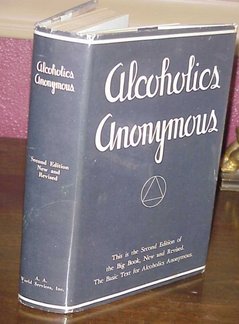
img058 alcoholics anonymous big blue book

Things We Never Said, a short story

She was beautiful, as all mothers are to their children, but it was far more than that. Total strangers told me how beautiful my mother was. She was particularly fine-boned and delicate. Her skin was the softest I’ve known, her arms and hands the most stubborn, the most lethal.

Mom was an alcoholic, of course, and the most gruesomely stubborn person I’ve ever known. She went past simple denial and created her own alternative universe. Once, some quack psychiatrist she was seeing told her she wasn’t a “true” alcoholic — that she only drank out of boredom. She clung to that unfortunate phrase of absolution, repeating it like a robot in a variety of situations, until the day she died at 44 from alcoholic pancreatitis.

The only way we ever got her into rehab was when we threatened to call the police about obtaining drugs by false pretenses. She’d call the drugstore and tell them it was Dr. So-and-so’s office, would they please fill a prescription for such-and-such, three refills, please.

She got stiff all over when she drank, not like a normal drinker who gets loose. Stiff, and with a duck-legged walk that made my flesh crawl. I can’t tell you how many times I just let her lay there on the floor where she’d stumbled in a drunken stupor. I couldn’t bring myself to touch her.

If only Mom could have been more like Charity Hope Valentine, the taxi dancer in “Sweet Charity” who, after being pinched, pawed at, fondled, ridiculed, robbed, tattooed, thrown from a bridge, trapped in an elevator, and deserted at the altar, rather meekly accepts the cheery and somehow redeeming gift of a single daisy from a group of 60s flower children, pulling herself out of her misery yet again, and living “hopefully” ever after.

My mother and I both said “I love you,” a lot, and to no avail. Neither of us believed in love. We believed only in self-preservation. Trust was unknown. I have never learned the reasons for staying with another. All I can think of, now that I’m married, is what I’m missing, giving up for the other. How short life is, and how unhappy.

I took a developmental psychology course once, while my mother was still alive. The teacher explained that no child ever actually dreams of killing the mother. Infantile rage exists, yes, murderous anger exists, yes, but the true desire to kill can never be resident in the child’s subconscious. “The instinct for preservation is too great,” she said.

When I told her, later and in private, how I’d dreamed that very act, how in my dreams I’d taken the great butcher knife out of the kitchen drawer and stabbed it viciously and repeatedly into my mother’s fine and delicately boned chest, she shook her head skeptically.

“You didn’t really dream that,” she insisted. “You only think you did.” I didn’t argue. I was still too afraid it might happen in reality to insist that it had happened in dreams.

She was never a very good mother. I was never a very good daughter. After she died, I went to confess my guilt over my record as a daughter once, to an Episcopal priest. “I let my mother down,” I told him.

“No, you didn’t,” he insisted. “You were the child. You had the right to go off and live your own life.” I was angry at him, and never went back.

I still feel guilty about the first time I knew I’d hurt her feelings. She made me a bunny rabbit salad – a scoop of cottage cheese for the bunny’s face, cut up vegetables for the bunny’s ears, eyes, nose, and whiskers. It was adorable. But I hated cottage cheese, and salad. I was four years old. “I don’t like cottage cheese,” I told her.

“Just try it,” she said.

“No.” I refused over and over again. Finally, she ran out of the kitchen, to the bathroom, and I knew she was crying. I sat in the kitchen, staring at the rabbit, not eating it. I didn’t follow her, I didn’t apologize, and I sat there until someone, probably my grandmother, covered the plate with a piece of plastic wrap and put it in the refrigerator. I knew I was never going to eat that bunny rabbit salad.

I mailed the invitations to my own daughter’s birthday party today. She’ll be four in sixteen days. Oddly enough, all I could think of as I wrote out the cards was how much my own mother would have enjoyed seeing my child, her first grandchild. I know exactly what my mother’s face would look like if she were at the party — lovely, tremulous, inevitably a little weepy. I also know half of my pleasure would come from seeing the tenderness in my mother’s wide brown eyes as together we would watch my little Katie blow out all her candles.


3 Comments

Filed under addiction, alcoholism, blood, child abuse, child neglect, childhood, children of alcoholics, compassion, daughters, death, development, fiction, forgiveness, girls, hope, life, logic, love, mama, matricide, mea culpa, mortality, mother, mothers, mourning, murder, parenting, personal responsibility, regret, relationships, short stories, soul, spirit, truth, woman, women, youth

Enlightenment, a very short story

illustration 5 enlightenment

Enlightenment, a very short story

He felt awake when he saw her sitting at the bar, as though all his previous life had been a slow, lazy dream.  She looked like a girl from one of those sex shops in Amsterdam, wholesome and perverted at the same time.  Her hair was perfectly straight and hung down her back to her waist. Her forehead was a smooth, wide dome of innocence.  Her flesh was abundant, stark white and glowing, spilling slightly over the waist of her leather skirt.  Baby fat.  He could tell she’d outgrow it.  Regeneration was her game.

She said, “I prefer to travel alone, no fluff or chatter.”   She spoke of the outer and inner journey.  She didn’t know which was the more important.  “I am my own  mysterious stranger,” she said.

When they got back to her room, he saw how her bed was opposite a huge fireplace, black; it felt like ghosts were everywhere, but especially in the fireplace, coming down the chimney. The wind made sounds around the eaves and windows, such a big wind, it was spring but the wind was fierce and strong. Her room scared him, he would rather have been anywhere else. But he couldn’t leave, the girl was already undressing on the bed.  She looked at him from under her fall of hair.  The now-naked girl lay back on the pillows and smiled.  He felt as awake as the Buddha under the bodhi tree.


1 Comment

Filed under beauty, compassion, enlightenment, fiction, identity, karma, love, man, men, mysterious, redhead, relationships, sex, short stories, soul, truth, universe, warmth, winter, woman, women, youth

Savior, a short story

illustration savior

Savior, a short story

The young man seemed so out-of-place in her mother’s living room. Maria stood in the doorway with her mother’s groceries, her purse on her shoulder, key ring dangling off one numb pinkie, clutching the heaviest bag propped on her hip, the bag that contained her mother’s supply of Diet Coke. Her mother and this man were sitting together on a Victorian loveseat on loan from Maria’s antique shop, their knees almost touching, the man’s arm draped across the ornate wooden back, his fingers curled behind her mother’s left shoulder. Her mother had a photo album spread out, one leaf resting on her lap, the other resting on his. Maria could see herself, at two, nude in the tub. Christ, she thought, what’s she showing him those for?

The young man leaped up after a few moments of uncomfortable silence, running his hand over his hair and smiling. Her mother folded the album closed, holding out her arm, and he helped her up, a gesture Maria herself had never mastered, helping old people up out of their seats. She tried too hard, using the wrong position and too much lift, until their sharp old elbows jutted out at alarming angles but their behinds hadn’t lifted an inch.

He had a medium build, wavy blonde hair, a deep tan — he was almost, but not quite, handsome. His eyes were too close together and his nose too long: as Maria met his direct gaze, she felt uneasy at his obvious affection for her mother, the implication of knowledge which came from his confident manner. He looked as though he was already sure he knew the older woman’s mind; already sure she must be lonely.

“I’d like to introduce you to my daughter, Maria,” her mother said. “Maria, this is David. He found my wallet over at the library and was kind enough to track me down. I couldn’t believe it when he called. I didn’t even know it was missing yet.”

“That is lucky,” Maria said. “Really lucky,” she continued, smiling in her mother’s direction, one eyebrow arched, whereupon her mother shook her head once, violently, and her daughter’s unspoken reprimand was expertly dismissed.

“Oh, it wasn’t luck,” said David, the sound of his voice causing the small hairs at the back of Maria’s neck to rise. “Nothing’s a matter of luck. Life is all planned for us, down to the last detail.” He nodded, smiling at Maria, his arms hanging relaxed at his sides, and the suspicion came to Maria that he was crazy. Crazy but safe, one of the harmless ones, the kind that made her want to go a little crazy too because they seemed so sure of themselves.

Most of Maria’s son Richard’s friends were the same type, that’s how she knew. Richard — she never thought of him as “Kurma-devi-dasi,” although she respected his desires and addressed him that way — was crazy but harmless too, although she knew she couldn’t see him as clearly in that way as she could a stranger. To this day she was able to discern the fuzzy cartoon of his infant features on his serene face when he smiled at her — the memory of his toothless gums clamped like a rhythmic vise on her breast would come to her, looking at his shaved head and his orange cotton robes as he chanted over his prayer beads, and she would be filled with a sorrowful rage that made her chest shrink into itself.

Not his grandmother, though — she had sat with her grandson over at the temple for hours when he first became a devotee, sitting in a rocking chair next to him as he said his prayers in front of the little richly clothed doll of Krishna. She told Maria it made her feel closer to her own idea of God just being in a place like that. In theory, Maria agreed, but the issue wasn’t whether the temple was a nice place to spend an afternoon, the issue was whether it was a good way for Richard to spend the rest of his life — sewing holy Hindu god and goddess doll clothes on an old black Singer?

“I don’t know about a plan,” Maria replied. “I’m lucky if I know where I am, half the time. If it’s Wednesday, this must be my mom’s apartment — you know?”

He said nothing at first, not seeming offended, not defensive, just staring at her with eyes so full of a giddy, knowing light — his face loomed toward her, and tension rolled through her stomach as his mouth moved into a drawn bow of compassion. It didn’t matter that he wasn’t handsome; he radiated an alarming level of charm. “Down to the last detail,” he repeated, arching his eyebrows and opening his eyes a bit wider, his pupils enlarging like a lover’s, and the sound of his voice vibrated within her ears, warm and solid like hands pressed against her temples.

“Then one of the details must be that I’ve got to put this bag down before my arms fall off,” she said, forcing a laugh. “Excuse me.” She turned away and walked up the hall to the kitchen. By the time she’d finished putting the groceries away — rearranging pantry and refrigerator shelves, purposely taking far longer than usual — he’d already gone. Great. Now their lives were stuck together like flood trash swirling down her mother’s raging river. David would be there for her mother — be there always and forever, overflowing with that sickening, confident love, and her mother would never be able to blame him, not for anything.

***

Maria was uncomfortable with the amount of time her mother was spending with David, but didn’t dare say too much. There was nothing overtly objectionable about him, other than his religious fervor — and how could she term that a fault? Her mother wouldn’t listen, anyway. Whenever Maria brought the subject up, her mother would groan, “Oh, boy, here we go again,” and she would frown, which consisted of one sharp, off-center line in the middle of her forehead. “You don’t have to like him, sweetie,” she’d say, “but I wish you did.”

Still, her mother’s interests seemed to be shifting. Odd books and papers came and went on the coffee table, crowding out the usual hodgepodge of half-finished crosswords and literary journals: treatises on wild herbs, population-density maps, computer programming manuals, military histories. Flipping through a ratty emergency-medicine textbook, Maria saw numerous large, yellow-highlighted portions and margin notes in both an unfamiliar, childish hand and her mother’s own neat back slant. “What is all this stuff?” she asked, holding the book out to her mother.

“I’m getting ready,” her mother said. She sat down opposite Maria and picked up a needlepoint pillow, arms crossed, mashing it to her tummy like a teddy bear.

“Ready for what?” asked Maria.

“The end of the world,” said her mother. “You know, Armageddon.”

***

At first, Maria’s son agreed with her concerns, not at all what she expected and a strangely intolerant position for him to take — considering his own lifestyle — his agreement only making her feel worse. They sat in the temple’s empty dining hall. “I’m with you, Mom,” Richard said. “The guy sounds like a real case.” He rubbed his hand over his prickly scalp and yawned, his left hand fumbling inside the peach-colored sack of meditation beads that hung from his neck. He scratched his nose, smearing the delicate yellow makeup lines drawn there that symbolically pointed up: up to God, up to heaven. “Have you checked Grandma’s bank accounts lately? He could be some kind of con artist.”

“No, no,” she said. “That’s not the kind of thing I’m worried about. He seems sincere enough. He’s no con artist. It’s just — your grandmother is really starting to believe what he says — how Armageddon is coming, all that stuff. You should see the books he’s got her reading.” Maria leaned on her elbows, cupping her chin. Richard closed his eyes for a moment, tilting his head to one side like a duck.

“Then again, I suppose the guy could be right on,” he said, his eyes still closed. He looked asleep, his skin pale and fragile. “Maybe that’s what bothers you. I’ve been trying to get through to you on that level for years. At least Grandma’s started thinking about her future.”

“Her future?” Maria asked, her voice louder than before, wanting to reach across the picnic table and shake him by his choke collar of tiny wooden beads. “At eighty-five? People that age should be beyond this kind of worry. It isn’t right. He’s getting her all stirred up — and for what? If all that biblical stuff happened, she’d never survive.”

“You’re just jealous,” he said. He opened his eyes and stared at her, his thick black lashes tangled and dusty-looking. His pupils were pinpricks inside the blotched hazel irises, and as he spoke he stood up too fast, banging his shins on the metal tubing of the cheap table. He grimaced and squatted for a moment, rubbing his leg. “You can’t stand it when someone believes in something you don’t. I thought you were worried this guy was some kind of sleazy fake, but now you’re telling me what freaks you out is that he’s the real thing. Make up your mind. You should be happy Grandma’s paying attention to what’s out there.” He turned and walked away, his robes ruffling out behind him, his rubber sandals slapping the bare wooden floor. “I’ve got devotions to attend to,” he said, not turning back to face her as he walked, his voice thin, echoing across the length of the long, barren room.

***

The earliest occasion Maria could remember wanting her mother’s opinion was in the seventh grade. Maria had just turned twelve, and had her first crush. She was stringy and awkward in those days, large-kneed and carrying a head of vigorous, curly hair she flattened down into a matted-looking cushion in desperation. Then the quiet boy started walking her home from the bus stop.

She remembered him still: pale blue eyes, so large and widely spaced that they gave him a somewhat doe-like expression. His jaw, however, was firm, angular, and thus saved his face from weakness. Warm hands lay against hers, trembling, stroking her fingers up and down in an hypnotic rhythm. “Do you want to go steady?” he’d asked her, unable to meet her eyes. That meant wearing a silver identification bracelet, his name engraved about her wrist for everyone to see; his property. She hoped his name was in block capitals, not that loopy script: it looked better.

“I don’t know,” she said, and went home to ask her mother’s opinion, a matter of form perhaps, but something she wanted; the camaraderie of womanhood revealed at last. This could be the common ground between them.

“Honey, I just don’t think going steady is a good idea at your age,” said her mother. They sat in the dining room, wallpapered with tiny brown pineapples. “You’re too young to get so deeply involved with a boy.”

“But lots of girls do it,” she said, knowing this was a flawed argument, but even as the shipwrecked are driven to drink seawater, her words carried a dreamlike hope.

“You asked for my opinion,” said her mother, “and I’ve given it to you. It’s up to you to make the decision. I’m not saying no, I’m just saying I wouldn’t if I were you.”

In the end, she told the boy no — and was informed that the going-steady offer had been withdrawn in the interim — and she realized by heeding her mother’s counsel she had been saved from a greater and more penetrating level of humiliation than she imagined even existed. But — that wasn’t the point. Maria knew her mother would never have said no to one of her own teenage boyfriends — that was a lie. Safe advice given as a — joke, as an experiment. Didn’t Maria have the right to be strong-willed? Didn’t she have the right to her own losses? She never stopped trying after that, but the drama was gone.

***

Then Maria found her mother in the bathtub. She entered the apartment, carrying her mother’s dry cleaning: a few sweaters, a wool suit, a pink blouse. She heard water running, a slight, far-off sound, as if from the next apartment. The bathroom door was closed. The only sound was a rolling and a swishing, as though a large fish reclining in the tub had shifted position. Alarmed, Maria opened the door. Her mother was sitting upright in the full tub, a small trickle of water dribbling from the faucet. The tub was full to overflowing. Her mother was wearing a purple shower cap embroidered with large seahorses.

“Go away,” she whispered, as Maria stood, confused. A bristling red pincushion sat on the edge of the tub, dangling a red cloth strawberry from a green cord into the water. The strawberry bobbed on the surface. In her mother’s hand was a large straight pin, on her wrist several thin scratches. She jabbed with the pearl-headed pin, her hands unsteady.

“What are you doing?” asked Maria, her voice shrill, terror coursing through her. “What in the hell are you doing?”

Her mother turned to her, her unfocused eyes shining and rolling up toward the ceiling as she spoke. “Trying to kill myself,” she said.

“With pins?” shrieked Maria. “Jesus, Mother!”

“I wanted to flush my head down the toilet,” her mother continued, “but it wouldn’t go down.”

***

On the third night of her mother’s emergency hospitalization, Maria dreamed she was sitting in her living room drinking tea with one of her college professors, a sloppy but verbally precise little man. In reality, she hadn’t liked him at first, but she had taken every course he taught because — unlike the majority of his students — she got A’s from him. She came to admire his sincere and stringent approach, forgiving him his greasy, untrimmed hair, his baggy, stained chinos and ancient, Filipino-style dress shirts.

And so, in the dream, her old professor, uncharacteristically neat, his hair washed and combed, his pants pressed, was explaining to her that he had theater tickets for tonight’s performance — would she like to join him for dinner and a show?

I’m sorry, she said, but I don’t think I can get a baby-sitter on such short notice. It’s already six o’clock.

He raised his eyebrows. I had no idea you were married with a child, he said. Well, that’s too bad, my dear. Perhaps we can arrange it some other time.

As he shuffled off down the sidewalk, Maria wanted to call after him: Wait… I don’t really have a husband… I don’t really have a child… it’s all a mistake. Come back. I want to go with you.

But she was silent, knowing it wouldn’t make any difference what she said. He was already too far away, and could not hear.

***

The next day, when Maria arrived at the hospital, her mother’s newest flowers were wilting in the heat. Her mother had turned the room’s thermostat up to 85 degrees and wore a sweater and cracked pink leather mules. Still, the new additions were beautiful: three dozen roses, white, yellow, and coral, stuffed into a too-small mayonnaise jar, the faded label turned to the wall. Maria stood in the doorway for a moment, holding a brown paper sack full of the day’s requested items — mostly cosmetics — looking at the bright splash of color. “Hi there,” she said to her mother, who sat hunched on the edge of her bed, flipping through a current TV Guide.

“Hi,” said her mother. “Is it cold out? You look chilly.”

“It’s cool, but the sun’s warm,” said Maria. “Who gave you these roses?” She leaned over to smell them, her nose brushing the petals.

“David,” said her mother. “He brought them by this morning on his way to work.” She squinted at Maria, her glasses speckled with bits of dust, so filthy Maria wondered if she could see anything at all. “He didn’t know I was here; he found out just this morning from my across-the-hall neighbor. He was taping a note to my front door.” She unrolled a package of breath mints and placed one on her tongue. “I thought you would have called him by now — it’s been three weeks, after all.”

“I didn’t think it was such a great idea for you to have a lot of visitors.”

“A lot?” Her mother raised her eyebrows, which were nearly invisible. She penciled them in most days, but today she’d left them defiantly natural. “Any, you mean. You’re the only one I’ve seen other than the doctor, until this morning.”

“What did he say about visitors?” Maria asked.

“It’s fine, as long as I feel up to it. They’re still fine-tuning the dosage on the blood thinner, other than that I could go home already.” She held out her arm, shoving the loose sweater back above the elbow. Small scabs dotted her forearm. “They’re sticking me every four hours, round the clock. They’ve got to balance it just right. So I won’t have another stroke but so I won’t bleed to death, either.”

She stared at Maria, her eyes shining. Her mother’s voice dropped low and fluid, almost a murmur; Maria remembered that voice from long-ago midnights, giving comfort to a distraught child. “I know you were scared when you found me all confused like that in the tub, sweetie.” Maria said nothing. Her mother raised her chin with a jerking nod, relapsed motherhood dropping away from her like a fragment of dry skin, her voice back to normal. “But really, I’m okay now. It was a very minor thing — you heard when the doctor told me I was one lucky lady.”

***

An hour later, on her way out, Maria saw David from across the hospital’s visitor parking lot as she stepped on the black mat that made the door swing open. He was dressed in jeans and a pink polo shirt, his hair still wet from the shower, combed flat across his head, just beginning to spring away in wisps where the blond curls regained tension as they dried. She stopped short, turning and walking back inside, toward the gift shop, where she stood in the farthest corner. She picked up a stuffed animal and pretended to scrutinize the price while she watched the door. When he passed, moving toward the elevators, she followed. He entered one and the doors closed. Maria waited and got the next one, her heart pounding.

She got off on her mother’s floor, going away from her mother’s room, back toward the nurse’s station and lounge on the north end. Settling in one of the low, soft chairs, she stared up at the wall-mounted television, the evening news in full swing, recounted events drifting over her, seeming important but incomprehensible, the words passing through the air like puffs of smoke. Muscles tense, palms clammy, she took out a pen and paper and began jotting notes of what she wanted to say.

She jumped, startled, as she heard David speak. She saw his back, visible from the doorway, over at the nurse’s station where he spoke to the charge nurse. “I think there’s something wrong with her call button,” he said. “She says she’s pressed it a bunch of times without hearing anything over the intercom.” The nurse, a thin, tired-looking woman wearing lavender scrubs, nodded.

“Okay, I’ll be there in a minute,” the nurse said.

David turned to leave, and then he saw Maria and stopped, his mouth forming an exaggerated O, his eyebrows lifting. Maria felt a clammy flush rise up over her neck, a dull enveloping embarrassment. He smiled like a placid baby, walking to her and holding his hand out. She clasped his hand for a moment, feeling the solid meat of it, the warmth and hardness of his callused palm. “You don’t know what to believe in,” he said, his voice calm and slow, “and that’s natural. It’s a process of evolution you’re going through. Think of your mother’s illness as the catalyst.” He opened his arms and bent at the waist, hugging her so hard she couldn’t inhale, then he removed himself and stood looking down at her, his head cocked, his blue eyes luminous and warm, a crinkly-eyed smile starting to show.

“You’re crazy,” she said, feeling her throat seize up as her heart beat shook her ribcage like a wild animal — she had difficulty speaking. She paused as her chest eased, then forged on. “A catalyst?” she repeated. “I know what to believe — I believe you’re causing all my mother’s problems. She doesn’t need your brand of stress right now. And I don’t need this kind of condescension. Telling me I’m OK. I don’t need you for that. You’re not any kind of expert.”

“No, I’m not,” he said, the smile gone from his mouth but his eyes still glowing with a trace of it like a madman’s. “And since when do you care about expert opinion?” He reached out and stroked her hair, saying her name in his gentle murmur, Maria, Maria, and she flashed — it’s finally happening to me, it’s finally here — a jolt of vertigo as if she’d been through all this before, a hundred, a thousand, no, ten thousand times…. “You don’t care about anyone’s opinion but your own,” he said.

Their lives were now joined – with force of will and love he’d plucked her up and tucked her into the golden cup of his heart as quickly and easily as he would rescue a fear-crazed puppy clinging to a torn-off tree limb, just before that puppy swirled away to her doom down a swift, swollen river. Maria wanted to run, to hide, to retrace her steps, but it was too late. David would be there for her — be there always and forever, surrounding her with this… curious compassion of his, and she would never be able to scare this one away, no matter what she tried.

3 Comments

Filed under compassion, daughters, death, development, eternal, faith, fiction, forgiveness, heart, hope, identity, karma, kindness, life, love, man, maturity, mother, mothers, mysterious, peace, personal responsibility, relationships, short stories, soul, spirit, woman

Inside A Red Heart, a short story

illustration inside a red heart

Inside A Red Heart, a short story

Ella’s life hadn’t always been like this. It was hurricane season, always the worst part of the year, but especially so this time. The cheap, post-divorce apartment Ella had moved to had flimsy sprayed-Styrofoam interior walls so thin she felt she could easily stick a pencil through them. The doors felt like balsa-wood, so hollow and weightless she couldn’t even slam them when she got mad, only sweep air currents through the frames. The rooms were carpeted wall-to-wall in a sticky celery-green shag which she could not bring herself to walk on barefoot. Hurricane preparations were meaningless in such a place, like diamond jewelry on a dying prostitute.

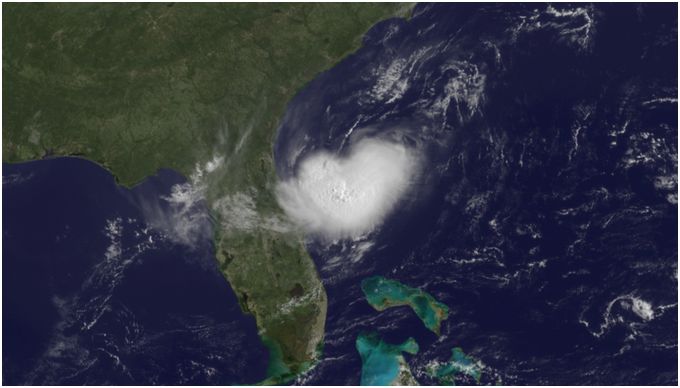
But today, Hurricane Naomi was 52 miles offshore, moving steadily along a stubborn, eerily direct path toward Ella’s apartment, when her father decided they’d better start getting ready, taping the windows. “They say this doesn’t help in the slightest,” she told him after finishing the first window, her arms already trembling and aching from reaching high over her head. She wanted to be an eagle, aloft without moving. “Even in a solidly built building,” she added spitefully.

“I don’t care what they say,” he said. “At least it’ll keep the broken glass from taking our eyes out.”

They finished taping over the second set of windows. She looked up at the sky; the brittle palm-fronds rattled and shook like frantic spiders. The bamboo rustled, probably full of rats. Tiny ants raced back and forth over the side of the house in some sort of military maneuver. Dropping hibiscus blossoms had stained the sidewalk red. A crushed bug was what captivated her attention. A sudden gust of cool air rushed over her neck, then after a moment everything stilled and the sun came out from behind the clouds. Against the dirty gray sky it looked abnormally bright.

“You look good in sleeveless tops,” her father said. “You should wear them more often.”

“Since when do you care how I look?” she asked.

“Is that how you usually take a compliment? No wonder you’re single. Forget I said anything,” he said. “Go inside and get the rest of the tape, please.”


Ella was mad about everything. Men especially, all the men she’d tried to get along with to no avail. Now, even strange men spitting on the sidewalk made her gag and retch. The phone rang — it was another man trying to sell her something. Listening to his voice on the machine, she decided she didn’t want any more goods or services, ever. She was fully capable of ignoring the outside world for weeks at a time. Finally, when her mailbox was stuffed so full nothing else would fit inside, she’d empty it and burn the contents.

After her divorce, she had refused to bring any of the old furniture from the house, not a stick. Granted, none of it was in such great shape, but she certainly couldn’t afford to buy new. Instead, she slept on a clammy air mattress for months, kept her clothes in cardboard boxes. Friends told her she was an idiot for not taking everything she could get from that tiresome lying hypocrite she’d married, but she just glared and shook her head, pressing her stubborn mouth against her teeth so hard her lips bleached white. Nobody knew how she managed to pay the rent or bring home groceries on what she made. Flying bullets couldn’t have been any more stressful than this, she thought.

There was a vague analogy between Ella and the rest of the world, that was all. She tried to understand men, but couldn’t quite manage it: they spoke, their lips moved, and sound issued forth, untranslatable. How was it they rose out of bed every morning so chipper? She was missing something they had. She navigated through her day like a ballerina dancing on broken glass.

When they’d finished taping the windows, her father poured a second cup of coffee for both of them. Breakfast consisted of coffee with plenty of cream. There was the long day to get through, then they were going fishing that night off the pier. They would stop at the bait shop for a bucket of shrimp and they would get ice cream cones — mint chocolate chip — and they would sit with their poles and wait for a nibble. Every now and then, without intending to, they’d sideswipe the truth.

He was visiting Ella for a week. He lived down in the Keys now, where he had always wanted to live; he loved to fish. Her mother had died three years ago, totally unexpected. No cancer for her, just a heart attack, plain and simple. Her parents had been happily married, but as soon as her mother died her father sold the house and went as far away from his past as he could get. Illness, for Ella, was something she would not allow time for, in that way she was exactly like her mother — though Ella wanted a good, solid tomb as a memorial when her time came to be one of the dead.

Her dog growled at her father as he moved his feet under the table. Ella’s crazy dog — he growled at everybody but he didn’t mean anything by it. He had long white whiskers and a moth-eaten coat.

“That damn dog,” her father said.

“I know, Pop,” she said.

“I don’t know why you put up with that,” he said.

“He’s harmless,” she said.

“I suppose he’s a good watchdog,” her father said.

“Not really,” she said. “He only growls when it’s someone he knows.”

“You mean he doesn’t growl at strangers?”

“No.” She laughed. Was he going to find a moral in this somewhere?

“Should I be flattered that he growls at me, then?”

“Sometimes he even growls at me.”

“I wouldn’t keep a dog like that.”


Since childhood, she’d loved to watch her father bait fishhooks. His long hands were careful and slow and the deliberateness of his touch delighted her. Not like her — she’d been falling over herself since puberty. Invariably she felt like a nuisance underfoot. She missed the neat quick grace of childhood. Whatever synthesis produced her from her mother’s and her father’s body, she couldn’t now imagine. Her father’s laughter was musical — her mother’s and her own like the braying of an ass. She secretly decided her mother had been cheating on him with someone else when she was conceived.

Until adolescence she’d been a precious little thing — then a hostile barrage of hormones turned her into somebody she didn’t even recognize: braces, knobby knees, confused skin, rebellious hair. To call her a girl was a misnomer of the highest magnitude. Something dark had entered the world along with her own blood the first time she got her period.

Once, in high school, her father had walked in her room without knocking and caught her masturbating; what a shame, he said, if you didn’t have so many pimples you might be able to get a boy to do that for you. His mind, like his body — like his heart — was angular; without softness; without love — he wouldn’t give her a second chance. The walls had zoomed in and out like they were breathing. She remembered the dress she wore, white with red and blue sailboats. Just like a ship being launched, only she kept running aground.

To this day, she wore only plain pearls, believing her skin too pasty to carry color. The only exotic thing about her was the color of her hair. Her hair was the color of rust; decaying iron. Growing up, her father never told her how pretty she was. But one night after a bad dream he took her back to her bed and rubbed her back.

Woken in the middle of the night like that, he was a different person, wordless and gentle. He’d held her so tight she couldn’t inhale. His silent, bulky warmth radiated through her and she wasn’t scared of anything. Everything in her room was painted either blue or green — how was painting any different than telling a story? He started rubbing her arm below the elbow; she was his. She wanted him to touch her underneath her nightgown but he didn’t. It made her feel awful to remember that now.


The TV was on with the volume turned down, and she was tracking Naomi on a grocery bag chart. She perched stiff on the couch, uncomfortable in her ragged cutoff shorts. Her father took a chair from the dining table and sat on it turned backwards, leaning toward her, his big perfect hands hanging over the chair’s back, his legs spread out like a cowboy’s. The dog growled from under the table.

“If you died right now,” he said, “you would go straight to Hell because you haven’t accepted Jesus Christ as your personal savior.” Pop loved his simple theories. He loved his cut-and-dried formulas. From the time her mother had died, her father had become born again and worried far too much about the condition of Ella’s immortal soul.

“How do you know?” she asked. “Isn’t God the only one who can judge a person?”

“It’s very simple,” he said. “Right now you’re a Nonbeliever. Nonbelievers go straight to Hell.”

“Says you,” she said.

“Says God,” he said.

“So according to you I could break every single one of the Ten Commandments, but as long as I accepted Jesus one second before I died, I wouldn’t go to Hell?”

“God’s grace,” he said. “His gift to us. Ask, and you shall be forgiven.”

Her father was telling her to ask for forgiveness! Selling all the gifts he’d ever given her and frittering the money away with nothing to show for it appealed to her. The flowers he sent for her birthday always wilted immediately, anyway.

“So God will forgive me for whatever I’ve done,” she said. “But will you?”

“First, you have to ask,” he said.


Hurricane Naomi wouldn’t arrive until tomorrow or the next day. Though at first Ella had looked forward to fishing off the pier, dusk arrived too soon; the coming darkness was like a funeral shroud. Her father drove his old rattletrap pickup truck towards the beach like it was a priceless antique. At the bait shop, they stood in line behind a girl, about 10 or 11, and her mother, also buying bait. The girl got into a silly argument with her mother about what they should buy, what sort of bait. “Shut up,” the girl said to her mother. Ella recoiled. Was there ever a place to be, truly, anonymous?

She remembered a time she’d told her own mother to shut up. Upon hearing, her father had slapped her across the face and broken her glasses. Her skull buzzed for a long time afterward, her jaw aching where the heel of his hand connected. She didn’t believe she’d been the same person at all back then.

She almost never cried in front of him, and especially not then, not about being slapped: she flat-out refused her tear ducts the indulgence. Nothing physical he did could get her crying — he had to use his voice, his drawling sarcasm, to knock her senseless enough for tears. She’d be so ashamed to cry in front of him like a big, blubbering idiot.

But then, getting her fishing pole ready over on the pier, a hook jabbed her finger. She’d been stabbed with hooks before; she didn’t remember it hurting so much. Was the air pressure from the coming hurricane making her stupid? She sucked blood out of the puncture. Her eyes started to sting, her throat to burn. She froze, her body paralyzed by embarrassment. She couldn’t help it, she started to cry, the convulsions shaking her.

“What’s the matter?” he asked. “Is your finger that bad? Let me see.”

“It’s not my finger,” she said, still in the grip of the horrible tears. He took her hand and held it close to his face, peering.

“Doesn’t look that deep,” he said.

“It’s not,” she said. Her nerves were strung out, yes, aptly put — as if her spine had been stretched, her entire body hanging off it in tiny sections which at any moment might start whirling away in terror.

She grabbed his shoulders and stood on tiptoe, leaning into him with all her weight. She kissed him full on the lips, pressing the whole length of her body against him the way she had when she was still too young to know any better, and for once he actually let her. She kissed him as though her life depended on being kissed back. And it did. And he did.


He had never told her she was pretty until after her mother died. Family tradition was for the parents to wait, remote icebergs, for warm currents of love to reach them from their children. She didn’t see the harm in that. The truth was, she had always wanted him as much as he wanted her. Tall and silvery-blond, his pool-water blue eyes fringed with gold lashes, he was still handsome for his age. He only smoked those awful cigars when he fished. Since her mother died, he hadn’t so much as looked at another woman, romantically speaking.

Even her ex-husband had been jealous of her father. He, her husband, was smaller than her father in every way measurable, emotionally as well as physically. Her ex-husband was such a small man. He had mewled incessantly about his boundaries, his boundaries — which didn’t keep him from stalking her and her post-marital lovers whenever his feelings were hurt. But if she read his journal, she was guilty of a great crime. What were boundaries, anyway? Even her ex-husband’s new wife was commiserating with Ella now about his smallness.

Too late, Ella had figured out she only got excited by what was forbidden, by a body’s unfamiliarity to her. Anybody like her who chose to marry was making a mistake. Once a thing became familiar, that took all the life out of her desire. She and her string of relative-stranger lovers ate Chinese takeout in bed, soy sauce dripping on their skin, which added another flavor to their mouth play. Fried rice, hot and greasy.

What neither Ella nor her father talked about that night on the fishing pier or any other night was how, way back when, she had left the back door unlocked one day and the baby, Ella’s little brother, had gotten into the backyard unsupervised and drowned in the canal. The water had seemed too shallow for anyone to die in. She was eleven — the next day she bled on her underpants for the first time. She wondered which was the bigger reason her father never looked at her the same way again.

Just now her father’s lips had tasted like his cigars, sour and sweet all at once, when she kissed him. Ella removed herself from his arms only after her skin against his grew slick with perspiration. The two of them finished up their bucket of shrimp after that, but they spoke little and caught nothing worth keeping. Back at her apartment with its ridiculous taped windows, her father began packing his small suitcase. The bellicose dog lay on the armchair across the room, for once not growling. “Damn hurricane,” he said. “Maybe I can get all the way home before they evacuate the island.”

“Are you crazy?” she asked. “You’ll have to leave again as soon as you get there.”

“I don’t think I can stay here tonight,” he said.

“You’re blaming me, aren’t you?” she asked. “Like you always do.”

“It’s not that, Ella,” he answered. “It’s got nothing to do with that.”

She touched his arm, and he flinched, then caught himself. “It was all my fault,” she said.

“No, it wasn’t,” he said. “If you’re asking, I’m answering.” He looked up from his suitcase, and for the first time all day his eyes looked old and tired. “Please don’t ask me to stay,” he said.


At midnight she sat awake, wondering what would happen next. Nothing good, she imagined. She didn’t know how she’d become such a curiosity. She was looking for what had gone wrong with a vengeance. Rooting through out-of-date phone books, through cards and letters she’d kept packed away since college. Excavating her past life, like an archeologist, was a great haven of sanity; as soon as she opened the first box, she felt safe from the present, it was suspended from happening, nothing more would ever happen to her until she straightened out all the previous mistakes. A pale blue chiffon scarf of her mother’s was folded underneath a stack of them. She was perennially accused of wanting to rehash the past. But it hadn’t been properly hashed over the first time, couldn’t any of these dolts see that?

A spider laid in the bottom of the box, its legs curled tightly. Though clearly dead, she worried lest it should somehow jump on her. A handmade Valentine’s Day card stuck out of the jumble like a sore thumb. The card was unsigned, but she recognized the handwriting. It was hers. She’d drawn a picture of a naked man inside a red heart. Her first boyfriend, a creative type, had insisted they make each other cards. How had she ended up with all this stuff? Ella flung herself back onto the bed so hard her teeth snapped together and she bit her tongue. Her bones ached. Her desire was killing her; she didn’t even know what it was she desired. She had to get out of the house for a bit, hurricane or no hurricane, or she’d go nuts.

She dragged her quivering dog — not so crazy after all — out to the car and drove over to her parent’s old house through Naomi’s outer fringes. Thunder rolled above her along with heavy sheets of rain like pronouncements from God. The dog cowered in her lap. She turned the car engine off and got out, the dog in her arms, hiding his head in her armpit. She stood searching the horizon, letting the rain wash over her face. It was the same whenever she made love to a man, she made sure to shower afterward.

Behind the house she’d grown up in, behind the canal her baby brother had drowned in, sat the northern edge of the Everglades. A flat, wet landscape — one she never tired looking at. Dun-colored saw grass, rippling under the steady currents of wind, stretched as far as she could see. Her mother’s chiffon scarf, monogrammed with her maiden initials, was her new good-luck charm. There was, as usual, no witness to her actions.

At least I’m brave enough to come back here, she thought. Her hair blew into her eyes and she held the dog tighter. She was startled when from behind her headlights moved over the undulating saw grass; she turned to see who it was. Squinting against the light, she saw her father’s tall figure get out and stand next to the car, calling and waving — she couldn’t hear much of what he was saying over the wind but she could tell he was crying. Like a flag on a pole, her mother’s scarf whipped in the wind around her neck, causing her to lift her chin and stand taller and straighter than she had for a long time. She could feel it. Her life was going to change.

5 Comments

Filed under childhood, compassion, daughters, death, development, divorce, ella, eternal, father, fathers, fiction, forgiveness, girls, health, heart, hope, justice, karma, kindness, life, love, marriage, men, mortality, mourning, mysterious, personal responsibility, regret, relationships, short stories, soul, spirit, women

Crocuses, a poem

illustration crocuses

Crocuses, a poem


I.  Signs of Spring

Suddenly, there they were by the front door,

and at my son’s preschool — purple and yellow

and green, poking through the snow

like small erections, out of the body of the earth,

the earth’s slumbering winter body.

My husband was always at work then,

they, the flowers, were my best companions.

“God is!” they said. “We’re God’s greatest effort,” they said,

“We’re God’s peeping blooms, despair must go to sleep,

and all creatures must go out of their lairs to frolic.”

My husband did not feel the urge.


II.  The Mole

Such loneliness I had battled all winter!

I made chicken, hot crescent rolls,

and buttered beans to make us happy,

but my husband was never hungry.

Lots of things took his appetite clean away.

I hadn’t scrubbed the toilet in two weeks,

this distressed him, he was a stern master.

The crocuses were so calm and forgiving,

purple and yellow like bruises;

my husband inflicted bruises without knowing.

He could not see, or did not want to.

His face lit up upon our child, that was all.

He was too important to sweep, or dust, or scrub.

I was the babysitter. I was happy with the crocuses,

and then one day, a dead mole; my son didn’t know

what dead meant, so I had to explain it.

He petted the soft fur, wanted to snuggle it

to his cheek. We paid homage to the mole.

We buried it under the snow, amid the crocuses.


III.   Troubling Questions

My husband didn’t know the bruises he left behind;

the flowers were my trusted companions.

His face lit up, gazing upon his son,

his finest possession; my husband would jerk him

away from me, hate in his eyes, when the crying boy

awoke in the night. The crocuses poked their heads out,

asking questions I couldn’t answer. My husband

didn’t want to see the bruises, or he was colorblind.

He was too important to notice the marks.

The crocuses asked, “Where is pleasure?”

“Not here,” I said. “Maybe next door?”


IV.  The Body’s Lament

The earth’s body was waking up,

but mine wasn’t, my husband was too important

to worry about my body. The head of his penis

was purple like the crocuses, but it asked no questions.

His body was warm, but not for me:

for the pure idea of sex, the attractive notion.

He wanted a thinner, more charming woman

with a better degree, one who would clean the house

more often, and with a smile.

Oh, he wanted a warm, dark place to set

himself, but one with no conversation.

As I put away the winter wools, the smell of mothballs,

white, crystalline like snow, inflamed my fears.

When the rest of spring arrived,

the warm air did not ease the tightness,

the block of ice around my heart.

2 Comments

Filed under beauty, compassion, earth, eternal, eternity, father, flowers, god, health, heart, identity, kindness, life, love, man, marriage, maturity, men, mother, mysterious, nature, relationships, sex, soul, spirit, spring, warmth, winter, woman, women

Eat Or Be Eaten, a short story

illustration dog alligator suit

Eat Or Be Eaten, a short story

Annemarie often sat within the bright sobriety of the campus coffee shop down the street from her and Roy’s house. The air there was filled with academic fulmination and the evaporating mists of senseless arguments, much like the state of her marriage. She was acknowledged by the college students as one of those bizarre, florid creatures from the 80’s, and they let her go about her pursuits, unfettered but slow.

“I can’t stand that place,” Roy said. “I don’t see how you can sit there day after day.” His comment, for her, aptly illustrated how unaware he was that her main occupation while there was mulling over whether or not to file for divorce.

“It makes me feel wired,” Annemarie said.

“You can say that again,” Roy said.

“Why don’t you meet me there for coffee sometime?” she said.

“Things are too crazy at the office right now,” he said.

One such crazy evening, after dinner, the air was busy gossiping with itself — Annemarie could feel it fluttering along her cheeks inquisitively, and the moon rose early, bouncing light off the red tiled roof. She put on her ratty ski jacket and then poured herself a tiny refreshment of Scotch, which she imbibed cautiously. Her small thick hands, gripping a kitchen chair like death, were chalky at the edges. The clanking emptiness of the room — of her life — created a milky haze over her sight. For what seemed like the hundredth night in a row, she invited Roy over to the lake on campus to see the alligators. For the first time, he said yes.

They rambled along the verdant avenue and before them flitted two zebra butterflies, as if teasing Annemarie to fly. Her husband, his blank, uncomprehending eyes, was at once her soul and her shame. It was horrible to have people such as him think ill of you, think you were wrong. It was small and ugly and soul-shaking. You felt as if you were coming apart like a cheap paperback, pages from your head fluttering to the floor every time somebody breathed on you. She wasn’t much for men herself — she never learned how to tell a sweet one from a poisonous one and besides, she’d never been convinced there was much difference. But a truly radiant woman never hustles off through life unaccompanied.

A small crowd was gathered on the boardwalk over the water — a leather-skinned old German couple, a tall skinny man with a pot-belly holding a toddler, three young college women with lush clouds of permed hair and tight little asses. A little girl came up with coral roses in a bucket balanced on her hip. The German people spoke softly to each other in German.

“We saw a wild boar on the highway back in the mountains in Kentucky,” said the man with the blond baby. “I thought it was a dog lying on the side of the road. Then I saw its tusks.”

Annemarie’s future, single life would be simple like this, among unpretentious people like these — she’d come see the alligators every night before dark with the out-of-towners. She would hear the gators’ mating calls, the deep bellows in the late spring. She’d appreciate the real elegance of nature. Roy appreciated only his new $60,000 car and his tax-free municipal bonds.

The alligator for this evening was a good seven-footer. It floated perfectly still on the surface of the water, the scales on its back pushing through like a miniature mountain range. Its fat front paws hung limp in the clear lake water. It seemed only a little threatening in the smooth summer light. The gator had a large sly grin.

Roy was from the North – he’d never been around alligators before. Florida was alien territory to him. People from the North always freaked out about the gators. Annemarie wanted to give Roy a thrill. She wanted to overwhelm him with her earthy, sensible, swampy ways. She rubbed his hand humbly and forgot to play the grouch.

“They like marshmallows the best,” the tall, chatty man holding the toddler said. The boy wore a short jumpsuit appliquéd with giraffes. The German couple nodded, the old man pushing his fluorescent yellow golf cap back on his forehead. “Let’s see what I’ve got in the truck,” the man said.

“That?” the little boy said, pointing.

“Alligator,” Annemarie told him. The boy nodded and bit his forefinger.

“Teeth,” he said.

“Yes,” she said. “The alligator has lots of teeth.”

It was strong, it would eat her if it could. That was the way to be, she thought. That was the new simple way she would live, with or without a husband. Eat or be eaten. Roy hadn’t the slightest affinity for animals. Annemarie wanted to live a simple life. She didn’t want to be angry, ever again. Mostly, that was it. She could not afford any more to be bored with living — she didn’t have that kind of time. Her husband had become accustomed to disagreeing with her almost all of the time, as a method of entertainment.

The man with the baby came back with a vending-machine package of peanut butter cheese crackers. Annemarie shivered. Suddenly, she wasn’t so sure about feeding the thing. What if it came up on the bank? She had read how alligators could run 40 miles an hour over short distances. The man threw a cracker in the water near the alligator’s head. The animal whipped its head sideways and took a big gulp of water, inhaling the cracker. They all got a nice view of its teeth. The gator pumped its jaws, as if savoring the peanut butter, and the water clouded with dissolving cracker. Roy stood apart from the group, his face dark and tense. Annemarie leaned on her elbows, hanging over the railing of the boardwalk.

“Did you know it’s against the law to feed the alligators?” one of the young women with big hair asked. Her sharp voice made Annemarie jump.

“Really?” Annemarie said.

“Is that so?” the tall man said.

“It’s a felony,” the young woman said. “And there’s a fine.”

“How much is the fine?” asked Annemarie.

“A thousand dollars,” the young woman said.

“Really?” Annemarie might be afraid of the alligator but she wasn’t afraid of this young woman, with her elaborate hairdo and her half-pound of gold jewelry. This was the kind of woman Roy would marry next, she was sure. This kind would give him a lot less trouble. This kind would have no desire to feed reptiles of any sort. She directed herself to see marriage for what it was, not its tedious demonstration. The pretty young woman flipped her perfect locks over her shoulders and glared at the man with the peanut butter crackers. He threw another cracker to the alligator and laughed. His baby laughed too, throwing his head back so his fine pale hair waved in the breeze.

“The alligators get tame and that’s when they start eating dogs,” the young woman said. “And small children.” She was businesslike, her voice chilly with authority. The mystery of feeding the dangerous beast was lost on her, thought Annemarie. It was exactly the sort of thing Roy would say. Annemarie’s neck began to tingle, blood fury gathering in her cheeks. The tall man grinned at the snotty college girl and slowly pushed his glasses up with his middle finger.

“Then they have to shoot them,” the girl added. “So it’s really not a good thing to feed these animals.” The young woman had her nose up. Literally had her nose up; her voice resonated with indignation and righteous anger.

Annemarie pushed her arm against Roy.

“Maybe she’s right,” Roy whispered. He sounded reasonable, the way he always did.

“Oh, Christ, what’s the harm?” Annemarie said. She was still leery of the alligator, floating, for the moment seeming as harmless as a large rotting log, but she was enraged nonetheless. The hell with all of them, Annemarie thought. What do they know about right and wrong? What do they know about anger? What do they know about eating or being eaten?

“Great attitude,” the young woman said to Annemarie, shaking her head. “Come on, let’s get out of here.” The three lithe girls walked off, whispering to each other in disgust.

“Throw one of the crackers up on the bank,” Annemarie told the man, now her partner in crime, her body trembling. They were all standing on the wooden boardwalk over the water. She decided this animal was a deserving gator, nothing to be afraid of. She would bring it whole chickens, she decided. It would be her personal ritual. Her wants and needs had boiled down to nothing. It was amazing what she could do without, now she had decided to end her marriage. She would take one pot, a frying pan, and a wooden spatula when she left. That was all she needed. That was all anybody needed. Let him have the expensive cookware she was always cleaning improperly.

The man with the little boy threw a cracker onto the muddy bank. The alligator turned its head sideways and tried to pick up the cracker. Its teeth grazed the mud, making deep tracks. The cracker wouldn’t budge. The animal hauled itself onto the bank and took a mouthful of mud with the cracker. The man threw another cracker on the bank, and the gator swallowed it down. In the fading light, its teeth glowed pure and white. It did slow pushups on its meaty little forearms. Mud clotted its elbows, and the man threw more crackers. The German people oohed and aahed.

“I’m not putting you down,” the man said to his baby. The baby writhed in his arms.

“Teeth,” the baby yelled. “That!”

“Don’t put him down,” Annemarie told the man.

“No kidding,” the man said.

I could do this every night, Annemarie thought. Hang with the simple folk and feed dangerous wild animals like a crazy woman. She imagined the alligator getting angry, running toward her at forty miles an hour. She’d leap onto the railing of the boardwalk. She’d grab hold of the gator’s jaws and hold them closed with one hand, like the Seminole gator wrestlers at the orange groves she’d visited as a child. Reptilian rage was what she’d become practiced at. She had Roy to thank.

She remembered how all the muscles in an alligator’s jaws were for closing the mouth, not opening it. You could hold a gator’s mouth closed and flip it over on its back, and it would black out. The great beast would lie there, paws twitching, flabby white belly quivering. She still remembered one particular Seminole wrestler’s shiny black hair, slicked back off his forehead. He was lean and brown and his stomach muscles cast shadows upon one another. Her family had always watched the gator wrestling and bought rough sacks of tangelos and navel oranges. Annemarie had liked to squeeze the fruit and strain the juice, and think of the man’s bronze skin against the harsh concrete of the wrestling pit while she drank.

Now, Roy had never seen a gator wrestler in his life. He thought life was all harmless monkey jungles and parrot gardens and butterfly habitats. Annemarie knew better. She wanted to live on the edge, she wanted things out in the open. She didn’t want her problems hiding in the shadows anymore.

Annemarie stood against the wooden railing of the boardwalk and watched the alligator scraping the mud of the bank with its handsome teeth, trying for one last cracker. “Throw some more,” she told the man. Reflected light shone out of the gator’s dark eyes.

“Are you sure this is safe?” Roy asked. “That thing is huge. Didn’t you say a dog got eaten here last week?”

“Of course it’s not safe. That’s the point.”

“What’s got into you tonight?” Roy said. “Are you coming up on your period?”

“What kind of question is that?” She went rigid with black demented wrath.

Roy shoved his hands in his pockets and stared at the ground. “Sorry.”

A black-and-white pulled off the main road, crunching over the loose gravel. “Police,” the German couple murmured. The two old people scuttled to the benches at the end of the boardwalk and sat down, removing their hats. The tall man stuffed the half-empty package of crackers into the pocket of his shorts. Car headlights flashed over the surface of the lake, then Annemarie was blinded by police flashlights.

“They’ll have to search me,” the tall man whispered.

“We got a complaint about someone feeding the gators,” said the first cop. He was short, and plump, with a dark bristly mustache. His partner was tall and black and stood several feet behind him. He held the flashlight while the white guy spoke. “People, this is a third-degree felony. You’ll go to jail.”

“Crackers,” the baby said. “Crackers!”

“Did they shoot that gator that ate the dog?” the tall man said.

“No,” said the white cop. “That might be it right there.” His partner shone the flashlight on the alligator. Its pupils contracted in the glare. It raised its chin above the water and smacked the surface. Annemarie felt water splash her legs. “It’s breeding season,” said the officer. “They’ll come at you at the drop of a hat.”

“Who was feeding the gators?” said the black cop.

“None of us,” said the tall man. The little boy grabbed his nose, and his father pushed his hand away. “There’ve been people coming and going for half an hour.”

Annemarie said nothing, leaning over the railing, her arms cradling her breasts, droplets of sweat rolling down her back. Roy stood at the other end of the boardwalk, his cigarette glowing.

She remembered the first time he had ever touched her. Roy’s fingertips had moved slowly back and forth over her forearm, the same way the gator’s paws now rocked in the water. His fingers had brushed against the side of her breasts, that was all. She had wanted his touch on her, back then. Where had it all gone?

“We could call the Florida Game and Freshwater Fish Commission right now and they’d come down and cuff you,” said the white cop.

“I’m sure they would,” said the tall man.

“Teeth!” his baby boy shouted. “That,” the child said, one small finger pointing into the darkness of the swampy bank. “Hungry!” the boy squealed. His father shifted his weight from one foot to the other and back again. The police officers feigned disinterest and strode nonchalantly down the boardwalk, toward the German couple. She couldn’t hear what they said, but she saw how they shone their light into the old man’s eyes.

“Well, I’m going to get this little guy home to bed,” said the tall man, looking at Annemarie and smiling.

Annemarie nodded. “Let’s go,” she said to Roy. They walked toward the parking lot.

The policemen waited for them at the entrance to the boardwalk. “We have two witnesses who said they saw you feeding the gator,” the white one said. The old German couple huddled together on the bench nearby.

“Then you’ve got two liars,” Roy said. The German man patted his chest and looked at the ground.

“They both said it was a white male with a blue shirt.”

Roy’s shirt was blue, long-sleeved, covered with little paisleys. Annemarie had given it to him for Christmas. The man with the baby had on a blue T-shirt saying, “Eat Oysters, Live Longer.”

“There’ve been a lot of guys here with blue shirts,” Roy said, shrugging. The policemen took a few steps toward him, shining the flashlight in his face. Roy held his cigarette to his lips but didn’t inhale.

“I don’t like it when people lie to me,” said the cop. He touched the grip of his nightstick. Annemarie moved closer to Roy.

“Shit,” Roy said under his breath.

Back on the bench, the old German woman coughed, both hands over her mouth.

“I’ve been with my husband the whole time,” Annemarie told the officers. “He wasn’t feeding the alligators.”

“Care to sign a statement?” asked the black cop.

“Why can’t you just leave us alone?” Annemarie said.

“This is our job, lady.”

“Pretty messed-up job. Hassling people.”

“Is that right? Would you care to empty your pockets?”

“I told you, we weren’t feeding the alligator.”

“Maybe we think you were. Maybe we’re getting ready to arrest you and your husband here.”

“You do that and you’ll get slapped with a lawsuit.”

“So sue me. You’re under arrest.”

“What?”

Roy held his hand out. “Now, wait a minute,” he said.

Annemarie heard a rustling in the reeds behind her. She felt something slither over her shoes. At her feet was a tiny alligator, six inches long. Nobody else seemed to notice.

“You’re under arrest,” the officer repeated, his words to Annemarie slow and drawn out as though he were talking to a foreigner.

“What for?” Annemarie asked.

“For feeding the alligators.”

The big gator on the bank bellowed, its pale throat pumping like a frog’s. The German couple shrieked and ran down the path toward the parking lot. The cop pointed his flashlight toward the noise. Out of the reeds swarmed dozens of baby gators.

“I told you people it was breeding season,” said the white cop. The reeds rustled again and this time Annemarie heard a loud croaking sound. The big gator stood there, raised up on its forelegs, its jaws hanging open. The pink fleshy gullet pulsed in the flashlight’s beam. The teeth were dull yellow at the roots, gleaming pale ivory at the points.

“Holy shit,” the black cop said, grabbing Annemarie’s arm.

“Get the hell out of here,” shouted the white cop.

“I am,” the other cop said. He started toward the car, yanking hard on Annemarie’s shoulder.

“Leave me alone,” Annemarie said. She watched the animal while the officer struggled to pull her away. She went limp, buckling at the knees and kneeling on the ground. “Just leave me alone.” She wasn’t angry anymore, not at anyone or anything, especially not at her soon to be ex-husband. The spirit of her rage had gone into the animal. Pure reptile.

“Are you crazy?” screamed the cop.

The big gator sucked air and croaked again. It raised and lowered its head. The babies scuttled back toward it, milling under its body and peeping loudly like baby chicks. The alligator’s thick tail whipped back and forth through the reeds, and finally the cop ran off, leaving Annemarie in the mud. Why had she been trying so hard? Who had she been trying to fool? This was how it was. Eat or be eaten — the end of one angry life marked only the beginning of another. She closed her eyes as she heard the roar of the gator coming closer.

Roy knelt beside her. “You don’t want to do this,” he said.

“Do what?” Annemarie said.

“Get this alligator shot,” he said. “It’s not going to help.”

He was right. The alligator had never done anything to her. She looked at Roy. He had not been shattered by any of it. His eyes begged, but for once he wasn’t judging her. For once, maybe for the first time, it seemed like he understood her. Life could be so simple, once you got rid of all that confusion. She realized that there was no telling what would happen after today.

“Come on,” Roy yelled, grabbing her arm and pulling her to her feet, and his hand against her skin felt better than she remembered. She ran behind him, her feet sliding over the muddy gravel, not afraid, but laughing like a madwoman. Let everyone see me for what I am, she thought. Let them observe my fiery trail from a safe distance, and weep for their own. Roy glanced back at her as they ran, but Annemarie’s lips did not move — she ran honestly, tripping across her own feet. She could feel the sea moving around inside her head, and she laughed.

2 Comments

Filed under anger, criminal, criminal behavior, criminals, divorce, fiction, justice, law, life, love, marriage, mysterious, nature, personal responsibility, regret, relationships, satire, short stories, soul, truth