Category Archives: daughters

Alabaster, Briefly, a short story

illustration alabaster briefly

Alabaster, Briefly

After the hurricane, but before the power came back on, Ella went out walking with her daughter, Katie, to survey the damage.  The huge old ficus tree in front of the library had toppled over, its immense grove of roots lying naked, withering now in the sun.  “Nana’s tree gots broken,” the three-year-old said.  Humidity bore down on everything like a weighted fishing net.  The tree had been a twig thirty-five years ago, when Ella was a kindergartner.  She remembered the planting ceremony — her mother, president of Friends of the Library, in a blue linen sheath and white gloves, stepping on the edge of a shiny new shovel.

Now the tree, too, was dying.  The shelter it had provided was still dark and cool — the web of roots from each branch created a division of rooms like a house.  Ella pitied that sodden, gigantic mass, torn from the soil, not dead yet, but no hope, terminal.  How long did it take a tree to die?  Uprooted for half a day, the leaves were still supple and green.  It would take days for them to wilt, weeks for a crew to cut the tree into logs and load the logs into a wood chipper.  Her mother would be long-buried by then.

It was late August, and Sophia’s diagnosis had come in January, just after New Year’s.  Ella was far away when it happened, stuck in New Jersey with a new job.  Now her mother needed her and she was marooned.  She had turned into one of those people she hated, one of the ones who moved away from their family to chase money, thoughtless and selfish, leaving their sick, their aged in the hands of underpaid nurses.  “She’s in good hands,” Sophia’s friends told her over the phone, meaning the hospital.

Ella flew down after her mother’s surgery.  The decision to operate and the actual sawing open of her mother’s skull had happened faster than Ella could get there.  When she arrived, her mother was in the Surgical Intensive Care unit, bed number three.  Sophia couldn’t talk yet.  Her head was wrapped in a helmet of gauze, and over that, someone had placed a flowered disposable surgical cap.  She looked like a confused scrubwoman.

Ella’s reaction when, at first, Sophia didn’t know her was not heroism but, rather, numb acquiescence, a slow nod to absolutes.  Ella performed the worst sort of cowardice:  cutting the lines free before it was over.  In that first hour, Ella could feel the passage beginning, away from her mother — the slow casting off from love, the mournful horns, departing from a foggy land of illness.  Her mother had a ruddy stubbornness Ella was shocked to see.  Over Sophia’s lunch tray — each food sealed in a separate dish — her hands danced above a nonexistent teacup, squeezing a lemon primly into thin air.  She had gone another way, in her soft hat, her skin hot, glossy as if with fever, the surface papery-soft but no longer familiar.

After that, Sophia’s pale and knowing return to her usual self was anticlimactic.  Ella had expected to cry more, to feel something else, not this.  Nothing was how Ella had imagined it, not Sophia’s furtive, over-the-shoulder glances of fear, not the way Ella’s stomach dropped as she stepped into the room, not the aching bones, not the past no longer claimed.  Her mother seemed glued, as never before, to the newspaper and the television news shows.  Finally, Sophia confessed to Ella how, for a couple of weeks after the operation, she had been under the brain-surgery-induced delusion that she’d murdered somebody, by stuffing them full of shoe trees, and had been waiting for it to be on the news, in the paper.  How she’d kept waiting for the police to march in and cuff her, drag her off to jail.  Sophia and Ella laughed, and the way the humor was mixed with horror was something entirely new to them both.  Brain tumor jokes — a new genre, previously unexplored.  How do you get a woman to stop shopping?  Remove part of her brain.

The social worker at the hospital sent Ella out to look for nursing homes.  In one of them, a man, or rather, a man’s body — with no visible, communicable cognitive function — was being fed through a gastric tube, through his abdomen.  Ella took in the odor of urine, other bodily smells and functions.  The man was an ideal nursing home patient, permanently hooked to his nourishment line like a freakish, prize-winning, squash.  The nurses rolled him side to side in stages, every two hours, to prevent bedsores.  He never opened his eyes or moaned.  His family seldom, if ever, visited, the nurse said.  Ella stood at his open door until the nurse drew her away.  Ella wondered if she was seeing Sophia’s future.  Is that what her mother’s life — everybody’s life — would boil down to?  The specter of death winked at Ella through perfect cat’s eyes.  What was past the curtain?

There are far worse things than dying young, dying suddenly.  And so Ella said no to the nursing home.  She calculated how much money her mother had and decided to spend it to make Sophia’s remaining life as comfortable as it could be, considering the fact that inside Sophia’s skull was a bomb, gathering energy to explode.  Ella hired someone to nurse her mother twenty-four hours a day, seven days a week.  Someone with the right hands, the right smell.  She interviewed them over the phone, scheduled in-person interviews.

Lillie had a gold tooth in front and wore outrageous wigs:  red, blonde, honey chestnut.  Her bosom was soft, like feather pillows.  Ella knew Lillie was right for the job from the first second.  How was that possible?  All Lillie’s Bible-thumping was okay by Ella.  She knew Sophia would be well cared for.  She knew Lillie wouldn’t steal anything.  She knew Lillie wasn’t, in any way, a spoiler.

Lillie believed in Hell.  She described it one night, a pit filled with fire and snakes.  Lillie’s eyes widened and Ella could see the white all around the dark iris, merged with the pupil in fear.   Lillie believed in speaking in tongues, in visions, but she hadn’t made the commitment to become a Christian because, she confessed, she knew she wasn’t strong enough yet to keep all the Commandments.  Lillie had borne a six-year-old son, father unmentioned, who lived back home with family.  He was her shame but also her delight.  She named him Christophe and had him baptized the same day he was born.  She might not be saved, but her son was.

She was from Jamaica and already spoke in two tongues — one, a lilting version of Standard English, the other, a speedy patois she used to converse with family and friends.  Ella wondered if Lillie had secrets — when Lillie spoke like that, Ella tried but couldn’t understand.  She had inklings she, herself, was being talked about.

Lillie was good to Sophia and Katie.  Katie loved to snuggle with Lillie in her bed, rolling against her enormous bosom, watching cartoons.  Katie sought out Lillie’s bed even when Lillie was not in it.  Lillie cooked chicken and rice dishes with a lot of saffron.  Her hair oils and hygiene products covered the bathroom counter and the windowsill in the shower.  She had feminine cleansing wash, feminine cleansing wipes, feminine deodorant spray and coconut-scented douche.  Ella wondered what Lillie was trying to wash away with all that stuff.

Ella and Lillie met frequently in the night, checking on Sophia.  Ella usually slept in a T-shirt, Lillie in a long, shiny pastel gown with lace about the neck.  She glided softly on her plump bare feet and suffered from insomnia.  When Ella couldn’t sleep, she’d listen at Lillie’s door and if the television was on, she’d knock.  Together, they passed hours watching twenty-year-old British slapstick on PBS.  Lillie never laughed, but most of the time Ella couldn’t stop until she suddenly remembered why the two of them were there.

You never know enough about a particular cancer until after the patient, in this case, your mother, is dying, Ella thought.  Then you know, you get the whole picture.  Then you’re suddenly an expert on the ugliness of the tumor’s tentacles laying waste to the brain, pushing aside healthy cells, strangling them in the search for nutrients, a vigorous weed nothing can kill.  Healthier than normal brain tissue, hardy as a kudzu vine.  The operation had removed a clump from inside Sophia’s head — mixed normal brain and cancer.  What part of Sophia’s personality had been stored in those cells, then disposed of and lost to the hospital’s furnace?  These neurons and those neurons, together, perhaps held the memory of Ella’s birth — Sophia couldn’t remember what she couldn’t remember.  Ella didn’t want to know for sure what was gone.

An area of brain, diseased, removed, yet the surgeon explained how the microscopic roots fanned out — to remove Sophia’s entire tumor would be to remove her entire brain.  The surgery would provide some extra time on earth, a substantial number of better days, but would not stave the weed off for long.  Eight months almost to the day.  The radiation treatments barely slowed the growth.  The terrible vitality of the cancer equaled the slow deflation of Sophia’s life.  Ella was useless to help in that regard, but took care of all the practical details, made it possible for Sophia to die in her own room, her own bed, on her own sheets and pillows.

Time moved forward but memory moved in many directions.  Sophia’s oncologist said, “The cancer appears to be in remission.”  Ella, an intelligent woman, a scientific woman, found herself pleading for divine intervention, for the laser beam of God to drill into Sophia’s head and burn out the tumor.  Appearances of remission, external, controlled for a time.  Sophia walked, talked, and played bridge again.  But for eight months lived in the shadow of death.  Ella was buoyed by the mercy of not knowing; crushed by the agony of not knowing.  Sophia lived on the edge of the river, where each tussock of cool grass might be the last.

Sophia became confused, just as she had before they opened her head.  She started taking pain pills for the growing headaches.  “I don’t know if they think they’re fooling me,” Sophia said.

Ella caught her mother looking through her 19th-century medical dictionary, the same one Ella had pored over as a child, staring endlessly at the pictures of congenital birth defects.  Hydrocephalus, and the like.  You never know what cancer will do until it’s already done it, Ella thought.  She wanted to transcend her awkwardness in speaking to her mother about her own death, but wasn’t able to.  She held her breath until she felt faint, but no words came to her.  Sophia knew she was dying; Ella pretended she, herself, didn’t.  It felt like Sophia knew Ella was merely pretending, and spared her anyway, one last act of maternal grace.  Apparently, Ella was good for only the simplest things, things like comforting her mother with voice and touch as she became more and more childlike.

But really, Ella wasn’t good even for that.  One afternoon when Sophia was knocked flat with pain, Ella tried to lie down in bed with her, stroke her back, the way her mother had done for her all her life.  “No, don’t, it hurts,” Sophia said.

Ella, feeling helpless anywhere but at her mother’s side, stared for hours at old photographs.  In one was the three-year-old Sophia, sitting on her father’s knee, dressed in white, a huge bow on the top of her head, a mass of dark curls, her small legs unexpectedly spindly, her feet surprisingly bare.  The sole of her foot held the whorls of this day, this moment.  Ella tried but couldn’t decipher the expression in her grandfather’s eyes.  What would he say, that circumspect ghost?  How to explain to him, how to excuse the futility of all Ella’s lavish preparations?

That night, Ella dreamed Sophia gave her old Bible to Lillie instead of her.  And in the dream Ella was terribly hurt by that, but since her mother was dying, tried not to show it, and wondered, with the agony of a child, why her mother hated her so much.  Lillie’s eyes, round and widened, with either alarm or fear, darted hawk-like around each room, and those eyes, surrounded by her smooth features and her gleaming, dark-brown skin, those quick eyes seemed to hold all feelings, all knowledge.

It was Lillie, Ella had to admit, who did the most work for Sophia.  In the days that followed, Ella could only watch as the bond between the two became stronger.  The next week, Ella was back in New Jersey, resigning from her job and packing the contents of her office.

“Take as much time as you need,” her boss said kindly, but she knew he didn’t really mean it.

“I need more time than you can possibly imagine,” she said, and he nodded and tried to look sad.

On the phone later that morning, Lillie told Ella how Sophia seemed so much more cheerful since Ella had departed.  “She’s perked up so much,” Lillie said.  Ella wasn’t surprised.

Back in Florida for good, Ella grew angrier by the day.  She lay awake nights fuming about the receptionists in the oncologist’s office who made her feel like an obnoxious pest for calling.  Their crisp, girlish voices made plain there was nothing more they could do other than prescribe painkillers.  Why didn’t Ella realize that and leave them alone?  Then she chided herself for being enraged by their callousness.  Rational thought had vanished.  Ella’s remaining thoughts and feelings flew around like feathers and fur and sometimes, like lazy dust balls.

Katie, at bedtime:  “I’m scared of monsters.  A tiger is in here.”  When asked to cease and desist:  “I’m just being quiet.  Don’t talk, Mommy.”  Ella watched her breathe after she fell asleep — both her daughter and her mother were flying along far, far above her, and she couldn’t seem to rise.

The day before the hurricane Sophia said, “Hi, sweetie,” and smiled when she saw Ella.  Sophia was close to dying but Ella felt her mother still knew her.  Sophia held Ella’s hand and kissed it.  She rubbed Ella’s arm.  Her mother’s head, as Ella adjusted it on the pillow, felt so warm, so heavy, and so sweet.  Her hair — smoothed flat behind her ears.  Her nails painted red by Lillie, she lay on pink embroidered sheets, sporting pale shamrocks on her homely nightdress.  The steel bed-rail gleamed, chilling against Ella’s thighs as she leaned in to try to glean some intricate, fine-grained meaning from the hour.  The charging ceramic horse she had hung over her mother’s bed, the one which had driven bad dreams away in childhood, his mane still wild and golden against the gloom, would be only a minor talisman in the end.

A urine catheter and bag hung on the hospital bed’s side-rail.  “Is that juice?” Katie asked the first time she saw it, and Sophia and Ella both laughed.  The tubes were transparent at first, then, growing clouded and organic with use, became less a fixture than anything.

It was too hard for Ella to bear.  Every time she went in the room her mother grabbed her hand, gripping with all her strength.  The way she looked at Ella — she wanted to tell her something, but what?  Ella wished she could stay away.  She wished it wasn’t like this.  She wished they could just sit in the living room together, watching TV and Sophia could needlepoint.

Ella waited for the hurricane.  Last week had been her mother’s birthday — the storm would be her penultimate gift.  But Ella didn’t know that until afterward.  Memory back-filtered such telling details — pictures of the dying mother were snapped, then parts of the view faded but parts brightened.  Life as journey, as vision, as caress.  Each thing became smaller at first, then loomed larger.  Her mother’s eyes, teeth, hair.  Perception was flawed.  The hopeless interpretation of the mind.  Where was her guardian angel?

Suddenly, Ella was in love with hurricanes as never before — yes, there was the threat of death, nothing new, especially these days, but there was also the stupefying power of the wind, the pelting rain.  Ella longed to be in awe, in supplication, flattened, watching the storm roll over her body like a man would, naked, trembling with powerful need of her, shouting with passion as she lay under him.  She was overwhelmed by the feeling that this was the way things needed to be.  For so long, a storm had been raging inside her — it was a relief to have it visible, a relief to simply be reduced to holding on.

In the past, when Ella’s mother wasn’t dying, she always drank to excess when a hurricane was approaching.  Sophia had always seemed terrified by the darkening sky, the strengthening gusts of wind, and the first huge, cold, solitary raindrops that pelted heads at random.  When hurricanes were on the horizon, she cooked elaborate cream sauces, and served lemon-and-honey tea shot with brandy in crystal cups.  When a hurricane arrived, Sophia was always more or less unconscious.

But this time, Sophia wasn’t afraid at all, instead, comforting Katie from her deathbed — the three-year-old crawled in with her, not Ella, in the middle of the hurricane.  Ella was too tired to have any more hurt feelings.  “There, there, nothing’s wrong, baby,” Sophia crooned.  Ella pretended it was herself in her mother’s grasp.

Sophia wasn’t afraid, and then Katie wasn’t, either.  Sophia, in the middle of that hurricane night, showed Katie it was just the wind… showed her the trees, whispered into her ear, in the midst of baby curls.  Ella knew how that felt, her mother’s velvet skin between the ear and the shoulder, all of it perfumed silk.  Ella closed her eyes and slept.

Later that night, just before dawn, while the wind ravaged the trees and tugged on the roof of the house, Ella woke to hear Sophia speak for the last time, the sleeping Katie draped across her chest.  “Ella, Ella,” her mother breathed over and over, quietly, so as not to wake the child she held.  “Ella, Ella.”  Sophia smoothed hair she believed was Ella’s as she whispered.  Ella watched from her mattress on the floor, afraid to move.

Sophia’s death waited while the wind roared, her death staring with great golden leopard eyes, unblinking.  The mercy of the teeth sunk into the throat.  To stay, to leave — it became the tiniest of steps.  The tears in her eyes.  The death dance, the death rattle.  The odd, rhythmic, hitching respiration, the sticky sweat, the clock wound up by Sophia’s parents’ lovemaking finally unwound.  Sophia died late on the morning after the hurricane.  Ella was there, holding Sophia, as she drew her final breath.  And then exhaled.  Tick-tock — then nothing.

In truth, she lost track of her mother’s breathing as it stuttered and missed — her own heartbeat seeming to slow down — had that really been the last, the last?  Waiting for the next inhalation, straining to hear.  Ella just missed it, missed it.  Then it dawned on her, too late, Sophia wasn’t breathing any more.  Or was she?

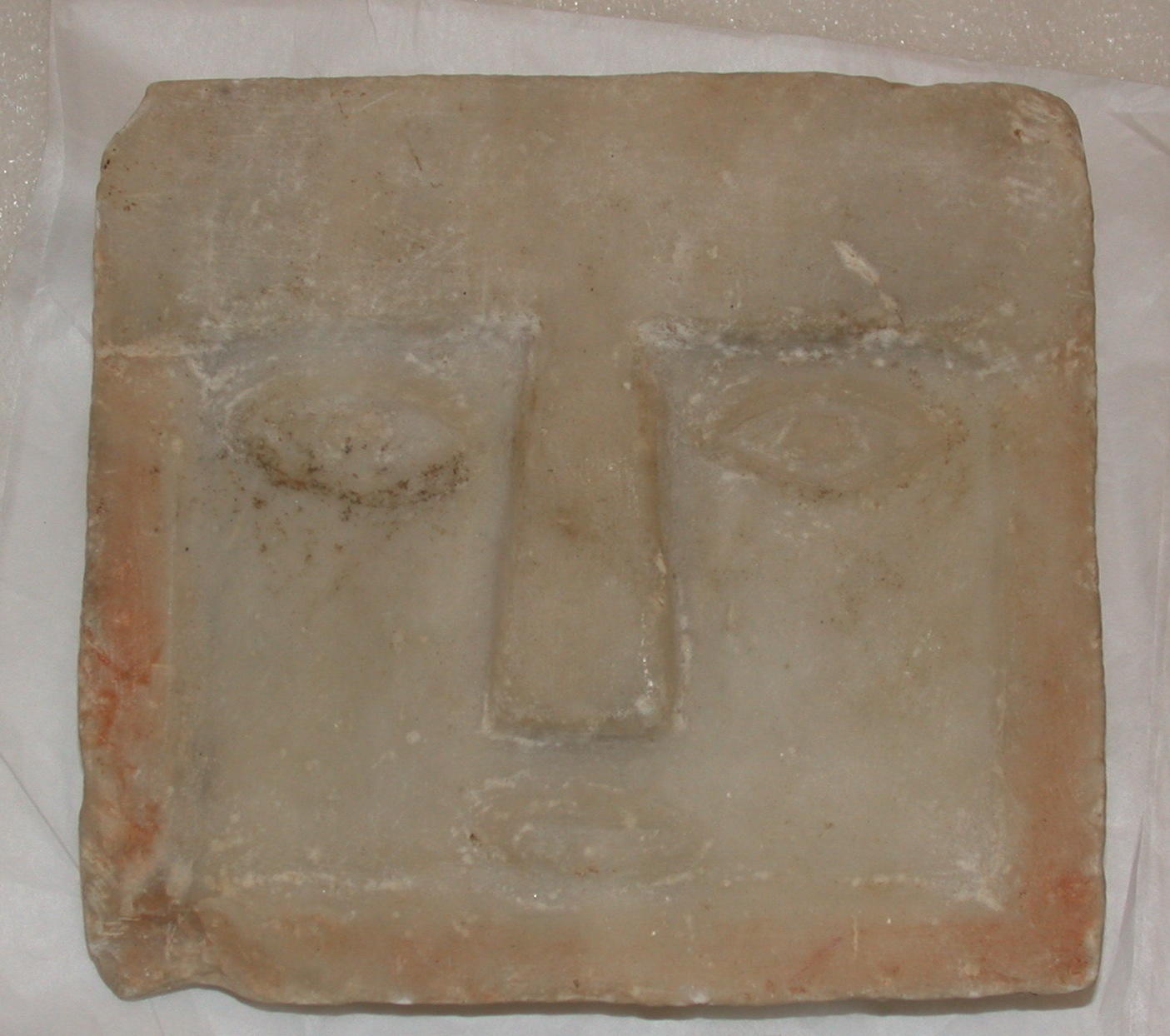
“I think I saw her chest move,” Lillie said, panting hard.  She ran to Sophia’s dresser and grabbed a mirror, holding it in over Sophia’s face, peering for signs of breath.  Lillie’s eyes were dazed, her hands trembling, humid, as she passed the mirror to Ella.  At first Sophia’s hand felt the same as always, but in a few minutes her color had completely gone.  Her skin was whiter than Ella had ever seen it.  White, translucent, her dead mother became alabaster, briefly — a warm, heavy sculpture.  The funeral home people didn’t let Ella watch her mother stiffen, cool.  They hustled her out of the room, didn’t let the daughter see them zipping her mother’s body into a bag.  Had they forgotten that zippers made noise?

Lillie hovered over Ella as if she were spun glass, falling toward the floor.  Lillie’s hands were once again warm, strong and capable, but in the end had not been enough to keep Sophia alive.  She stripped the rented hospital deathbed and sponged the plastic-covered mattress with lilac-scented disinfectant.  Ella crept into the bathroom and locked the door, listening to the sounds outside with great weariness.  She eyed the bathroom window, wondered if she could fit through.

The water Ella drank to wash down her first tranquilizer was terribly cold.  On her tongue it was like an immaculate knife.  When Ella told Katie that Sophia was up in heaven now, with God and the angels, Katie’s voice grew soft and sad:  “I wanted her to stay the way she was.”  Me, too, Ella thought.  Me, too.

Ella stood in the driveway and watched the black hearse move off down the road.  Lillie was soon engrossed in cooking — gigantic pots of black beans and yellow rice.  The smells filled the house, harmonizing with the soapy lilac already there.  Ella’s first post-hurricane, post-mother walk with Katie was a mixture of familiarity and revelation — she was used to seeing that kind of wreckage.  She was prepared for the smell – the ocean things, dead and rotting washed-up things.

That night, Lillie snored through it all, her mouth hanging open, trusting, defenseless, still waiting to be strong enough to get saved.  She had not heard Sophia’s last words, and for that Ella was glad. Ella, Ella, Sophia sang out in the night like a chant, the repetition of the name apparently bringing her ease when might otherwise have been terrified.  Ella realized, as she had not before, how much she loved wind and rain, how much she loved how the world was made disheveled and clean by a hurricane.  She clutched her daughter’s small, hot hand, wondering how the child would remember this day; remember her when it came to that.  “Nana’s tree gots broken,” Katie said again.  The child lifted her arms, asking to be held, and Ella obeyed.  She buried her nose in the curve of Katie’s neck and breathed.

3 Comments

Filed under acceptance, anthem, baby, beauty, bible, birth, childbirth, childhood, compassion, courage, daughter, daughters, death, development, dream, dreams, ella, eternal, eternity, evolution, faith, family, health, love, mothers, mysterious, science, short stories

Elf Therapists I Have Known, a short story

illustration reichian elf therapists i have known

Elf Therapists I Have Known, a short story

I went to a Reichian therapist (a disciple of Wilhelm Reich, who was a student of Sigmund Freud) once, and it was some experience. She was this neat little lady named Lila. She had these big flashing eyes and she looked like an elf except she didn’t have pointed ears. Well, actually, maybe she did. I’m not sure. Wow, I think they really were pointed ears! So, like, dude, I think she actually was an elf! How spooky is that? The elf Reichian therapist/analyst/spiritual counselor? Who just happened to be counseling my dad? In group therapy? With my Aunt, his baby sister, who was ten years younger than him? Like I was ten years older than my baby brother? My two daughters that I have now, thirty something years later, are ten years apart. How many times do we have to repeat this generational pattern thing to get it right? To infinity, and beyond, it would seem.

***

So, the reason I went to see her, Lila the elf therapist, is that I was in California visiting my father the Communist criminal defense lawyer. He was really tall and thin with wild, curly hair. He was what I call now an “interesting” person. Which my older daughter will tell you really means “eccentric,” which is supposedly good, and which my younger daughter will tell you means “weird,” which is not so good, in fact, is bad in a major way, that is, any way which embarrasses her in front of her friends, which may be perfect strangers, but, you can never be too careful. Someone might turn out, in the end, to be a friend. Or they might turn out to be your worst enemy, so don’t give them any ammo they might be able to use against you in future.

Well, anyway, I was out visiting him, my Commie criminal defense lawyer father whom I didn’t see from the ages of four to twelve, over Easter break when I am fifteen going on sixteen, the exact same age my younger daughter is now, and he had an appointment for group therapy while I was there, and for some unknown reason, he invited me to go along with him. Because I guess he thought exposing a vulnerable adolescent to some of the wackiest, mid-1970s-counterculture, radical German existentialist-inspired group therapy that ever existed was a great idea to heal our battered and bruised father/daughter relationship! Which is exactly the sort of thing my father would think! Which is one of the things I most love about him now, but let me tell you, then was a completely different story!

***

I didn’t love this characteristic of Popsy at all when I was fifteen. No, that characteristic made my stomach hurt. In fact, the entire time I was with him, mostly, I was always on the verge of passing out, throwing up, breaking into a horrible sweat, having diarrhea, or all of those things simultaneously! Not that I was tense, mind you, just that he made me ever the teensiest bit nervous because of his unpredictable-ness. Excuse me while I wipe the tears from my eyes from writing that last couple of sentences! Tears of laughter! Now! Tears of sickness, then. See what a difference 36 years can make to a person? From one of your most horrible experiences to one of your most cherished, a few dozen deaths and a few divorces and a couple of children later! I’m laughing so hard I have abdominal cramps right this second! Whew!

4 Comments

Filed under boys, daughters, fathers, girls, health, humor, love, mothers, mysterious, short stories

Sisterlove, a short story

illustration sisterlove

Sisterlove, a short story

            I was teaching my sister to drive that year.  We had bought a weird old ’66 Barracuda, silvery-mauve color, and we’d spent weekends compounding the surface, getting ready to give it a coat of wax that would make it really shine.  Vickie and I used the car to cruise the strip and troll for boys.  My sister loved the boys.  The boys loved my sister.

            She had long hair, golden brown, with blonde ends.  It turned green when she went swimming, then we’d cut the green parts off with nail scissors, her sitting on the toilet, me catching the hair in an ancient orange beach bucket.  We’d leave the hair on the compost pile for the birds to line their nests with.

            Vickie had gone crazy about this guy Michel she’d met over spring break, and all she could talk about was getting up to Canada to visit him.  It might as well have been China.  She was still a virgin, but crazy over the idea of sex.  I pretended I didn’t care about boys in the slightest, but I did, maybe more than she did.  I’d never had a real boyfriend, just a few short flings.  Vickie was always falling in love, which made me sick to my stomach.

            I was two years older.  I was named Edna for my great-grandmother, but everyone called me Jessie, because for some reason that had been her nickname, too.  I always wondered how they got Jessie out of Edna, but I was glad they had.  Mom got really crabby whenever I asked her about the family history, she never showed old pictures, though we knew where they were, stuffed on the highest shelf of her closet, over the old college dresses she’d kept. 

            My mother was completely hippied out — she didn’t shave her legs or under her arms, and the compost pile was her altar.  She didn’t pay much attention to us unless we were sick and then she was the most wonderful nurse in the world — even though she was a strict vegetarian she’d make us chicken broth with little stars, mostly stars so that it was more of a chicken pudding, a glob of butter oozing on the top.  She’d spoon it into our open mouths like a mother bird.

            Vickie and I liked to sneak into Mom’s room while she was at work, and dress up in her old clothes and look at her old pictures.  She’d been married before she married our dad, straight out of college, and so we always tried to guess who he was from the pictures.  Our favorite was the one of her going into a dance, frothy skirt and strapless bodice, her sharp collarbones like exclamation points underneath her satiny, satiny skin.  She wouldn’t say, but we figured she’d had a pretty wild career, before we were born.

            Neither of us were as pretty as Mom, though.  We’d play all day with her makeup, trying and trying to get her look.  It was no good — Vickie had her chin, I had her eyebrows, but there was too much of our dad in both of us, and this was unfortunate, because he was homely.  Since Mom was drop-dead gorgeous, we came out average-looking. 

            Not that we didn’t get plenty of attention in our own way.  We’d get in the Barracuda and drive up and down the beach road, honking at cute boys.  Once in a while they’d motion us over, and we’d park, take our sandals off and hop across the burning sand to find out where they were from.  Most were from Boston, a few from New York.  We liked the Canadians best, they loved the sun so much they’d fry themselves, joyous to turn red and peel — they thought it looked so healthy.  Sunscreen hadn’t been invented, we mixed iodine with baby oil and slathered it on.

            Vickie and I had good skin, the kind that never burned, so we looked like Indians, and I’m not talking the American kind but the Hindus.  Our brown legs shone — they were our best feature by far, all the boys said so.  We learned to kiss from those sunburned Canucks.  The ones from French Canada were the best, but they’d never write to you once they left.  The other Canadian boys were all earnest and geeky and would write us millions of letters, which eventually we stopped even opening.  Instead, we’d take them to the beach, put them in empty juice bottles, then cap them and throw them in the surf.

            So, Vickie went more than a little nuts this time, started calling Michel in Montreal every night after Mom was asleep, and when the phone bill came she was put on restriction for a month.  Mom yanked our bedroom phone out of the wall.  I laughed, but Vickie cried, she was really serious about him.  “Love isn’t real,” I told her.  “Do you think this guy would ever, ever cry over you?”

            “Michel loves me,” she said.  “But now he’ll think I don’t love him and he’ll go back to his girlfriend.”

            What had caught her eye first about Michel were the brilliant red scars on his back, streaky and painful-looking.  We thought he’d been wounded playing hockey or something.  His English was so bad, at first we thought he was kidding when we pointed to his back and asked what happened.

            “My girlfriend,” he said, shrugging his shoulders and smiling.  We were so dense, we didn’t know what he was talking about for days, until Vickie came across this ratty copy of the Joy of Sex while she was babysitting for our best client, a lady who danced Polynesian-style at a big tourist restaurant downtown.

            “Scratches are given during the throes of passion,” she whispered over the phone.

            “Bring the book home,” I said.  Later that night, we snuck out of the bedroom window and went driving.  I let her drive and held the book on my lap, reading it to her while we went up and down A-1-A, bending down and swigging our beer at the stoplights.

            “His girlfriend scratched hell out of his back, and he let her do it,” I said.  “He seemed happy about it, even.”

            “He was,” she said.  “Let’s drive to Canada.”  She put her foot down hard on the gas and passed a couple of cars.

            “No way,” I said.  “We’d get caught before we got out of Florida.”

            “I’m going,” she said.  “I want to see him again.  You can come if you want to.”

            “This is insane,” I said.  “You don’t even have your license.”

            “There’s only one first time,” she said.  “I want mine to be with Michel.”

            “You’ve been loony over a dozen boys this past year,” I said.  “How is this different?  What makes you think this’ll last more than a week?”

            “So what if it doesn’t?” she said, and the look in her eyes was fierce.  “You’re missing the point.”

            “The point is, we’ll be in jail,” I said.

            “Where do you want me to let you out?” she said.  She swerved over to the side of the road and slowed way down.  Her hair rippled over her face like a million tiny whips.  I knew I couldn’t let her go alone.

            “God damn you,” I said, and she threw her head back and laughed.

            “Hijacked by your baby sister,” she said.

            “Hijacked by a victim of raging hormones,” I said.

            “Damn right,” she said.  “And deep down, you’re not any different.”

            “Oh, yes I am,” I said.  “I’d never drive to fucking Canada to lose my virginity.”

            “I feel sorry for you, then,” she said.

            “Shut up and drive,” I said.  “The farther we get tonight, the better.”

            “Mom is going to be so pissed,” she said.

            I felt my stomach twirling with fear and excitement.  “I would say Mom is the least of your problems.”


1 Comment

Filed under boys, daughters, girls, health, humor, love, mothers, mysterious, science, sex, short stories, sisters

The Conundrum: Splitting The Baby) for Kimberly Mays Twigg

kimberly mays infant photo Switched At Birth, www.silverimagephotoagency.com

I.

Sometimes, I ask myself why I didn’t give her back sooner.  Would it have been easier then, before I knew her personality, the sweet meaning of her every sound, every movement?  Already I loved her smell, the weight of her small head on my chest, already I’d soothed and fed and washed her forty days running.  That other mother gave life, I gave only touch, warmth, comfort.  I couldn’t help it; I fell in love, it happens like that, quickly, without thought.  I didn’t know how it felt to be someone’s mother.  When I couldn’t become pregnant, I cried for days.  My insides felt soft and hollow, like an empty purse.  This little girl loves me, I know she does.  She reflects a rainbow back to my eyes, in her smallest toe resides a perfect universe.  I lie next to her at night, breathing the rich, salty fragrance of her hair, feeling her body growing, expanding to meet mine, and over our private nest flows time, but for as long as we can we rest outside death’s pull, allowing all that to pass by, content with this lovely darkness, this small sliver of heaven.

II.

Sometimes I ask myself why I gave her up in the first place.  It wasn’t easy, not even then; I haven’t held her since the day she was born, but I know her, like she’ll know me, without thinking.  I began her life, I walked with her body in mine for nine months, we were never apart, not for a second.  I called her my daughter.  That woman has taken care of my poor baby for years, but in her heart it’s only me she’ll call Mama.  Any fool knows this, anybody with a brain will tell you adoption can be a mistake.  It was a crisis of self-esteem, more than anything.  A momentary weakness, where I thought maybe I wasn’t strong enough to keep her safe.  Once, during all this trouble, I almost gave up.  All I had in my hands was a pink plastic bracelet, but I couldn’t forget holding her, I couldn’t forget how her toes curled against her foot, so small, so much like mine.  Now she’ll never have to wonder whether I loved her, she’ll never have to discover where I live.  The time we spent apart will soon be forgotten; she’s young and there’s plenty of time for our life to weave itself back together, to re-create our lost paradise.

III.

Sometimes I ask myself why I couldn’t have had them both, forever.  Is love so smart that it can tell the difference between one drop of blood and another?  Being born was harder the second time, though life at home smells just as sweet; the weight of this new mother, her reassuring size, pressed against me like a sheaf of autumn grain, harvest of all dreams.  Dimness is where part of me lives now, the part that slept near the warm shadow-woman of my first days, hands that held fast, then let go.  Dimness, and a lifelong vocation to tell people — remember, I have no patience for fools, none at all — nothing is as simple as it seems.  A child’s soul can fill even the most tortured shape imaginable.  God knows, when I have my own daughter, she’ll ask how it was to be torn apart for love, and I’ll have to tell her:  it was a beauty and a terror and a fiery cross, and gaining the knowledge of good and evil has a price… and those of us who’ve paid it don’t for a minute regret our sacrifices.  Yes, it hurts, yes, it left scars, and yes, now and again I have trouble sleeping — don’t we all?

88 Comments

Filed under acceptance, adolescence, apologia, apology, baby, birth, childbirth, childhood, compassion, daughter, daughters, dream, dreams, family, girls, grief, human beings, humanity, justice, law, legal system, loss, love, mama, mother, mothers, mourning, poetry, pregnancy, soul, transcendence, tribute, woman, women

easter bunny, a short story

illustration easter bunny short story 2

Easter Bunny

Jenny’s hair was beginning to fall out from the radiation treatments.  Last night, at a restaurant over on the beach, their waitress had worn a rhinestone-studded baseball cap, and Jenny had admired it.  Ellen wanted to buy one for her.  In truth, ever since Jenny’s diagnosis, Ellen had been shopping as though her life depended on it, buying all sorts of gifts for her mother, tossing them into her lap, unwrapped.

At the mall, Ellen’s two-year-old, Sarah, was fidgety in her stroller, until she spotted the Easter Bunny — on a raised platform with green shag carpet and an arrangement of painted wooden tulips and eggs.  The bunny sat in a white wicker queen’s chair.  “Mommy, it’s the Easter Bunny!” Sarah shouted, waving her hands over her head.

“I see him.  We’ll go see the bunny after we get Granny’s hat, okay?” Ellen said as they maneuvered around the long line of squealing toddlers, toward an accessory store she hoped would have the hat.

“Okay, Mommy,” Sarah said, craning her head to get another look.

Blocking their path around the long line of small children were a couple of teenage girls.  One of the girls was smoking, and as Ellen passed, the girl glanced at her with what Ellen recognized as contempt, flinging her long hair back — the cigarette dangling from her full lips — and prancing over to the mirrored window of the jewelry store across the way to inspect herself.  Her bangs were teased to a great height, sprayed so heavily into place they looked varnished, though the rest of her hair hung in a limp curtain over her shoulders.

It was odd how the teenager kept staring at Ellen even as she primped in the mirror — the girl’s eyes were large and black, her face unlined, uncomplicated.  Ellen stared back without blinking until both mirror and girl were out of sight.

There was one rhinestone cap left at the store, in the window display.  “Do you have any more of these?” Ellen asked, pointing.

“That’s the very last one,” the clerk said.  She and Ellen traded smiles.

“I’ll take it,” Ellen said, not bothering to check the price tag.

On the way back, the teen girls were still near the Easter Bunny display, only now they had been joined by a couple of boys.  The dark-eyed girl slouched back on the bench, sharing a cigarette with a pale blonde wearing too much makeup.

Ellen watched her giggling daughter run to the giant white bunny.  She paid seven dollars to have Sarah’s picture taken with the rabbit, but in the first Polaroid, Sarah’s eyes were closed.  “Sleeping Beauties, that’s what we call those,” the photographer told her.  Ellen wanted to keep it anyway.

“I want to kiss him,” Sarah said.

“Okay, honey,” Ellen said, squeezing her small squirming body in a fierce hug.  She tried to imagine Sarah in another ten years, all pouty lips and thrust-out chin.  Cans of hair spray, and unspeakable things like peppermint flavored lip gloss.

The second picture turned out beautifully.  Sarah held the bunny’s gloved hand, smiling, eyes open, rapt to the camera.  The rabbit got up and strolled down the ramp of his platform, Sarah following, reaching out like a pilgrim to stroke the fluffy white fur.

“I want to tell him I love him,” she whispered to Ellen.  “Pick me up.”

Ellen held Sarah up so she could whisper in the bunny’s ear.  “I love you,” Sarah whispered into the tattered pink plush.  She kissed the nose, patting the wire mesh covering the open mouth, inside which Ellen could see the blurred outline of someone’s face.  Ellen turned away, remembering this morning, before she’d left for the mall.

“Give Granny a hug,” she’d told Sarah.

“I don’t want to,” Sarah had whined.

Ellen’s anger had seemed reasonable in one sense, though completely out of proportion to Sarah’s predictable toddler whimsy.  How many times were left to bestow such affection.  How many times would Ellen be able to bring her mother a daft, pathetic gift from the mall.  Just then, the teenagers laughed their little ignorant heads off for the hundredth time in ten minutes, the air ringing with their simple, donkeylike braying, and Ellen stabbed at them reflexively with her gaze.  How dare they be so happy.  How dare they be so young.

“Why does that stupid bee keep staring at me?” said the dark-haired girl, glaring back at Ellen.  The group around her laughed, nodding at their compatriot’s clever wit.  Ellen stopped, Sarah heavy on her hip.  Bee — for bitch?

“I was wondering the exact same thing,” Ellen said.

The blonde moved several steps toward Ellen then, folding her spindly arms over her chest, shaking her head.  “Hey,” she said, squinting her eyes.  “Don’t you get fresh with my friend.”  She tossed her head back, her stiff bangs remaining frozen, like armor, despite the movement.

Ellen bent to strap Sarah into her stroller.  “I understand your type,” she said to the dark girl, her eyes drifting over the entire group.  “I used to be a snot-nosed adolescent, just like you.”

“Still need to wipe your nose, if you ask me,” said the dark-haired girl, thrust forward on one thin leg, her shoulder flung back.  She looked to her friends, as if for confirmation, and the two boys gave each other sloppy high-fives.

The entire group of teenagers was laughing now, holding their sides, tilting their heads and letting their mouths hang open, their glistening, foamy tongues quivering with hilarity.  In a flash, Ellen’s heart hammered so briskly she could feel her pulse inside her mouth, her tongue; her teeth were being jarred out of their gums.  Ellen wanted to crush them under her shoes like bugs.  “Fuck you,” she said.  She noticed, too late, the horror of the other grown-ups as they clapped their hands over the ears of their small children, the parents staring at Ellen, their eyes wide.

“And just what kind of example are you trying to set?” one woman asked.  Ellen walked at great speed away from the mob, pushing the balky stroller as fast as she could.  Sarah sat in the umbrella stroller, clutching the Easter Polaroids in her tiny hand, her small frame curved into a limp macaroni shape, her perfect, smooth elbows bouncing off her knees as the wheels vibrated over the rough brick floor of the mall.  Ellen walked so fast she began panting, her calves starting to cramp as she rounded the nearest curve, heading for the door she had entered, long ago, in another lifetime.

She saw a bank of pay phones.  She stopped, looking around and behind her.  Fishing in her purse, she found a quarter, then flipped through the telephone directory, looking for the mall’s security office.

“I thought you should know there’s a group of disruptive teenagers hanging out in front of the Easter Bunny,” she said to the voice on the line.  “They’re standing around smoking and making rude comments to the customers.”

“Can you describe them?” the voice asked.

She visualized the girls, their long hair, their cheap-looking teased bangs.  “They had ugly hair,” Ellen said.

“Could I have a little more detail?” the voice asked.  “What were they wearing?”

Ellen could not see anything but the scornful face of the dark-haired girl, the pinched, sour face of the blonde.  “I don’t know,” she answered.

“Well, how many of them were there?” the exasperated voice asked.

“Four,” Ellen said.  “Two girls and two boys.  In front of the Easter Bunny.  Smoking and laughing and being nasty to people.”

“We’ll send someone over there right away, ma’am,” the voice said.  “Would you like to come in and file a formal complaint?”

Ellen visualized herself in handcuffs, being led away.  “No, thank you, that’s not necessary,” she said, hanging the phone up with a bang.

As she tried to push the stroller away from the phone, she saw Sarah was tangled up somehow, her fingers twined through the cord holding the phone book.  “Let go,” she told Sarah, light-headed with the panic jigging through her in ragged bolts.

“But I want to call somebody,” Sarah whined, clutching at the metal cord with both hands.  “I want to call the Easter Bunny.”

“We don’t have time for that right now,” Ellen said.  “We have to take Granny her hat.”  She imagined the teenagers telling their side of the story to the security guards.  Ellen uncurled Sarah’s fingers and flew toward the exit, toward the safety of the parking lot.  No one, apparently, was after her.

Her hands trembled, her arms weak from adrenaline as she unlocked the car door and strapped Sarah into her car seat.  Heaving the stroller into the trunk, she got in and power-locked the doors, hearing the dull thunk inside, pressing the button three more times for good measure.  As they exited to the main road, she looked back at Sarah in the rear-view mirror, saw her little round face composed and serene, her eyes open but vacant-looking.  “Wasn’t that fun?” Ellen said, smiling.   “Getting to see the Easter Bunny?”

“No,” Sarah said, her eyes droopy, her head turning to nest against the padded wing of the carseat.  Lulled by the car’s rhythmic movement, the child’s lids fluttered closed.  Her cheeks were smooth, rosy with health, her lips parted, her pearly teeth visible.  One wispy curl of hair clung to her damp forehead.

Ellen’s face was benumbed; she drove home from the mall to deliver her gift to her mother, tears coming to rest in the corners of her mouth — her cheeks twitching from exhaustion as she forced her lips to stay drawn back, her teeth bared in a ghastly smile, a grimace of love.  She would deceive no one with such a face, most certainly not her dying mother — but of course she couldn’t allow herself to quit trying.

1 Comment

Filed under anger, apologia, cancer, daughters, death, easter, fiction, love, short stories

notes from september 18, 2001: richard

illustration rastafarian man

Notes from September 18, 2001: Richard

That morning, I heard my three-year-old daughter wake up and say with delight, “It’s not dark out anymore.” I went in and saw her already sitting up in bed — the brilliant sunlight streaming in through the pink, translucent curtain of her bedroom — and saw how her head was haloed, as usual, by what resembled the pale, disorderly golden floss some people put on their Christmas trees. Angel hair — she was a tousled, blinking pink-and-gold person, recently emerged from babyhood.

“That’s right,” I said. “It’s not dark out anymore. Good morning.” She flopped back down and remained lying in her bed, even after I folded her white net safety-rail down. “What a beautiful girl,” I said, smiling down at her.

“I can’t get up,” she said.

“Why not?” I asked.

“I can’t get up because I’m dead.”

My heart darted out of my chest, chirping and flapping and shedding feathers like a startled wren but somehow I managed to feign businesslike nonchalance and smile reassuringly. “You’re not dead.” The effects of the terrorist attacks one week ago had filtered all the way down to toddlers far away in Florida.

Well, later that morning, after dropping her at her baby-sitter’s, I stopped at a mini-market at S.E. 9th Street and University Avenue to get a bottle of water. As I pulled up, there was a guy tottering oddly across the sidewalk in front of the market, very tall and skinny, and his long, skinny pink tongue hung out like a dog’s, quivering with each stride. I hoped — no, prayed — that he would not speak to me. He stood in front of me at the counter to purchase a bottle of cheap wine with some very tattered, dirty money. His coins were coated with sand and dirt, and the clerk swept them into a pile then covered them with a napkin as he left the store. I paid for my water. Several middle-aged men stood talking energetically while their lottery tickets printed out.

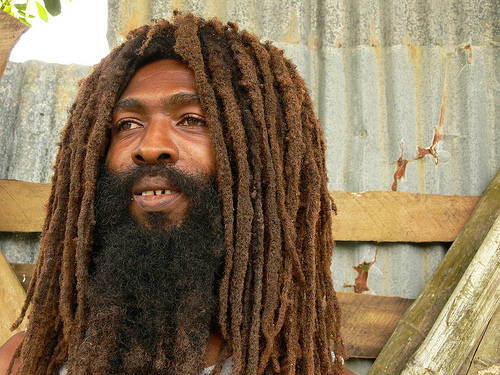
After paying for the water, I walked to my car and there stood a tall, picturesque man, vibrant and attractive even though missing most of his teeth. He wore a black cap with stars embroidered along the front: three black stars, on a vivid yellow ribbon band. A paler yellow jumpsuit, a long beaded necklace — and long, luxuriant dreadlocks. He wore a couple of rings on his hands, a small silver nose-ring, and a gold earring in his left ear. He was quite handsome, though at the same time I could tell he’d recently been through some very hard times, and probably had been in those bad times for a quite a while.

For a second, I worried, because of the other man, and that man’s obvious level of dissociation with the world (I really had prayed to avoid him), but in a second of observing this man, I knew I was on much more solid ground. I wouldn’t be talking to a total lunatic. He held out to me a book — a Bible — and said he had just seen someone throw it in the trash, and God had told him to get it out and now pass it on to me. I took the book from him, bedraggled and slightly crusted on the cover with God-knows-what. I felt instantly ashamed for worrying what germs might be on the cover of the old, battered Bible, but I forced myself to disregard that, and act untroubled.

During our brief chat, he told me he was a Vietnam veteran. He pulled out a battered leather wallet and showed me his VA Hospital ID, which I knew to be genuine, as I have seen others: his picture was on it, and his name and date of birth. He was born Christmas Day, 1947.  I cannot remember his last name, only his first name, Richard, the same as my father’s.  I looked at the ID and then back at his face, and what I saw was an honorable man, intelligence shining out through his eyes, but also in his eyes a sadness that probably ran deeper than I could ever imagine. His radiance and his sorrow ran through me like a knife, because of my very-realistic fear we’ll now be in another war – one which will kill many young men and destroy the spirits of many more. I was suddenly and inexplicably paralyzed by grief for him, as a veteran, as a street person, as someone now obviously fairly troubled in life. I saw him as he must have been, all those years ago, young and strong and relatively unscarred, and the breath caught in my chest, seeing him both then and now in the very same instant.

After a few moments, he asked very gently and politely if I had any money I could give him to buy some coffee. I was so happy he asked for something, so I could give him something. Ordinarily, I would give someone in this situation a few dollars, but I gave him $20 — I just wanted to give him something. Nobody can give him back what he lost, and money is a poor substitute for what he lost, but it’s a substitute nonetheless. Money and kindness are all we can really give. He went inside, and I buckled my seatbelt, turned on the car, grabbed the steering wheel, but then sank down over it, clutching it, sobbing for the first time in a long time, not caring in the slightest who saw me or heard me. It felt like a release; I only wish it had gone on longer. He came out with his coffee, saw me hunched over sobbing, and got alarmed — he knocked on my window.

“Are you okay?” he asked. Genuine concern; sincere compassion. I can detect those things in other people from the slightest of nonverbal cues, unguarded genuineness and sincerity are so rare in this world. His sincerity made it better, but also worse at the same time.

“I’m okay,” I choked out between sobs. “It’s just this whole thing.” He didn’t have to ask what I meant, because of course he already knew. The power of these events to affect us has crossed every kind of barrier — sex, race, socioeconomic status, education level, sanity level — we’re all family right now. I rolled down the window and he embraced me. I was grateful for the human compassion, pure and simple. His smell was strong and complicated, some of the notes pleasant, some sour, but oh, so real and human and I drank it in, all of it, the bitter and the sweet, a primal metaphor for this crazy life itself. He asked, tentatively and graciously, could he sit with me a while.
“Yes,” I answered. “Please.”

He started to talk, and I listened, giving him my fullest attention. I bonded with him in a way I’ve never bonded with any stranger in such a short time. I guess we spent about an hour together. Richard, from West Virginia. He is a Vietnam veteran, former Marine, former POW. He talked generally about what he was trained to do in the Marines, but said he didn’t want to tell me anything too specific about his experiences during the war — he said women shouldn’t ever hear such things. We talked about everything there is for human beings to talk about and he read to me from the Psalms and Matthew. So devout, so earnest, he held my hand in his while he read Scripture, ministering to me like a Sister.

In fact, he had been in the past a minister, he said, and from his familiarity with the chapters of the Bible I knew he wasn’t exaggerating. He has two living daughters, now grown, and another daughter who died at age two, just two years ago, from a heart ailment. He has his deceased baby’s name tattooed on his shoulder, plus three scars from cigarette burns — two for each of her birthdays, and a third for the day she died. He cried twice with me, once while talking about her — Zaidyn — and a second time while talking about how his stepfather used to beat his mother, years ago. He told me he still calls his mother “Mommy” when he calls her on the phone.

“Do you think that’s stupid?” he asked. “For a grown man to say, Mommy?”

“Absolutely not,” I answered. “I think it’s wonderful. I think more grown men should.”

He has been barred from our local homeless shelter, St. Francis house, for two years for giving food he obtained there to someone else. It’s a rule there, you’re not supposed to do that, share your rations. What a dehumanizing policy. It’s our basic need, to share. Damn them for that. He lived in Jamaica at some point for five years, his grandfather was born there. One of his grandmothers was a full-blooded Cherokee. He had played conga drums with Bob Marley.

I felt, I think, something like the presence of what human beings call the Divine. Divine love. I comforted him, he comforted me. I gave him another $20, all I had left in my wallet. He blessed me, I blessed him back with all my heart.

He still played conga drums around town. He knew of Ajamu Mutima, another drummer. “Another tall, skinny dude with dreads,” he said, laughing. As Richard and I spoke, I thought often of my father, and my stepmother Dorothy (his African-American wife), and of the rich heritage from Africa we all need to embrace.

He spoke of his lost two-year-old saying to him “I love you, Dada.” As a fellow parent, I knew how precious those words were. His pain at her loss, I felt it palpably, physically.

He knew when to end the interaction, and for that too, I was grateful, as I was overwhelmed and needed to go off and write it all down so I would never forget. Though I didn’t want to break our contact, I somehow understood it had to be broken, because it had been so miraculous, we had gotten so much from each other, we didn’t want anything to detract from the miracle. We didn’t want to descend into ordinariness with each other. He didn’t want it to end, either, but he was gracious enough to know to end it. Restraint can be admirable; sometimes, less is indeed more. But we were both reluctant to leave each other, and when I started the car and put it in reverse, he approached the window one more time. And that, too, was perfect.

Because he asked me, at the end, the question that made it all even more clear, more passionate and more profound. The question that made it, well, I don’t use this word much, but there is no other word to use in English — perfect.

“Did you feel it, too?” he asked me. He looked at me, searching my face with his deep brown eyes, eyes that held the world in that moment. Eyes I wanted to fall into.

I knew precisely what he meant, and I had indeed felt it. He had asked a question I couldn’t even have begun to formulate, so overcome was I with my feelings. “Yes,” I answered. “Yes,” I repeated, nodding to him with absolute recognition, and with that he leaned in and embraced me with joyous intensity for one final moment. I returned his affection as I would return my own child’s, or my mother’s. I am profoundly grateful, and I will never forget him. It’s true, Mystery can manifest in the most unlikely ways. We fell together like long-lost twins, then slowly let each other go.  Without saying much of anything but “Did you feel it, too,” and “yes,” we both knew without doubt that he was a noble person with an eternal soul, and so was I, and we had finally found each other for all eternity in a single hour. The force resonating through our bodies was Divine.

6 Comments

Filed under 9/11, bible, daughters, fatherhood, memoir, notes, peace, rastafarian, veterans, war