Category Archives: god

Crocuses, a poem

illustration crocuses

Crocuses, a poem


I.  Signs of Spring

Suddenly, there they were by the front door,

and at my son’s preschool — purple and yellow

and green, poking through the snow

like small erections, out of the body of the earth,

the earth’s slumbering winter body.

My husband was always at work then,

they, the flowers, were my best companions.

“God is!” they said. “We’re God’s greatest effort,” they said,

“We’re God’s peeping blooms, despair must go to sleep,

and all creatures must go out of their lairs to frolic.”

My husband did not feel the urge.


II.  The Mole

Such loneliness I had battled all winter!

I made chicken, hot crescent rolls,

and buttered beans to make us happy,

but my husband was never hungry.

Lots of things took his appetite clean away.

I hadn’t scrubbed the toilet in two weeks,

this distressed him, he was a stern master.

The crocuses were so calm and forgiving,

purple and yellow like bruises;

my husband inflicted bruises without knowing.

He could not see, or did not want to.

His face lit up upon our child, that was all.

He was too important to sweep, or dust, or scrub.

I was the babysitter. I was happy with the crocuses,

and then one day, a dead mole; my son didn’t know

what dead meant, so I had to explain it.

He petted the soft fur, wanted to snuggle it

to his cheek. We paid homage to the mole.

We buried it under the snow, amid the crocuses.


III.   Troubling Questions

My husband didn’t know the bruises he left behind;

the flowers were my trusted companions.

His face lit up, gazing upon his son,

his finest possession; my husband would jerk him

away from me, hate in his eyes, when the crying boy

awoke in the night. The crocuses poked their heads out,

asking questions I couldn’t answer. My husband

didn’t want to see the bruises, or he was colorblind.

He was too important to notice the marks.

The crocuses asked, “Where is pleasure?”

“Not here,” I said. “Maybe next door?”


IV.  The Body’s Lament

The earth’s body was waking up,

but mine wasn’t, my husband was too important

to worry about my body. The head of his penis

was purple like the crocuses, but it asked no questions.

His body was warm, but not for me:

for the pure idea of sex, the attractive notion.

He wanted a thinner, more charming woman

with a better degree, one who would clean the house

more often, and with a smile.

Oh, he wanted a warm, dark place to set

himself, but one with no conversation.

As I put away the winter wools, the smell of mothballs,

white, crystalline like snow, inflamed my fears.

When the rest of spring arrived,

the warm air did not ease the tightness,

the block of ice around my heart.

2 Comments

Filed under beauty, compassion, earth, eternal, eternity, father, flowers, god, health, heart, identity, kindness, life, love, man, marriage, maturity, men, mother, mysterious, nature, relationships, sex, soul, spirit, spring, warmth, winter, woman, women

Violet Crown, a fable

illustration just me and god

Violet Crown, a fable

It took a long time for the dreams to come back.

(The dreams took a long time to come back.)

Her parrot knew before anyone.

The city of the violet crown.

No one escapes the labyrinth. Not even the dissolute rich.

The oracle sighed, and filled her pen with blue ink:

I know you intimately; I know the way your eyes move,
across the landscape. I realize how we live.  It’s not a sin;
you want the love you got in the beginning.  You want to
change your size, your shape, and your life. Where you
will be drawn, and in what order?  One woman you know
will stop at the color green, another woman dreams
of strangers as she sleeps next to her husband of fifty years.
That man will drink his coffee black, that one will slap
his daughter so hard she feels her cheekbones vibrating
for hours. Remember before you were born; remember
not having to breathe?  Imagine that stillness, that beauty
of the womb.  Let me remind you.  It was shielded
from the world, no sharp edges anywhere.  You and you
and you and you… your taut plum of a heart beat.
One day we will be there again, our blood will soar,
the sparkle sparkle sparkle of life.  The moonlight there
will be as pale and as reflective as new snow.
Your worry-lines will gradually fall away. To forget
your longing, you agonize daily, hourly: the beans
or the meatloaf?  The blue shirt or the yellow?  Toward the sea…
or the mountains?  Marry Paul or James?  As the crow flies,
or the long, winding road? We were together, you and I,
even when you thought no one could see — I watched
the way you lied, cooked the books, phoned for drugs,
delivered Chinese take-out.  You made yourself
important, taller, richer, more attractive.  Time for courage,
time for facts.  You have always been, are, will be loved.


Leave a comment

Filed under children of alcoholics, compassion, eternal, eternity, god, identity, love, mea culpa, mortality, mourning, mysterious, personal responsibility, prose poetry, regret, relationships, soul, spirit, spiritual, universe

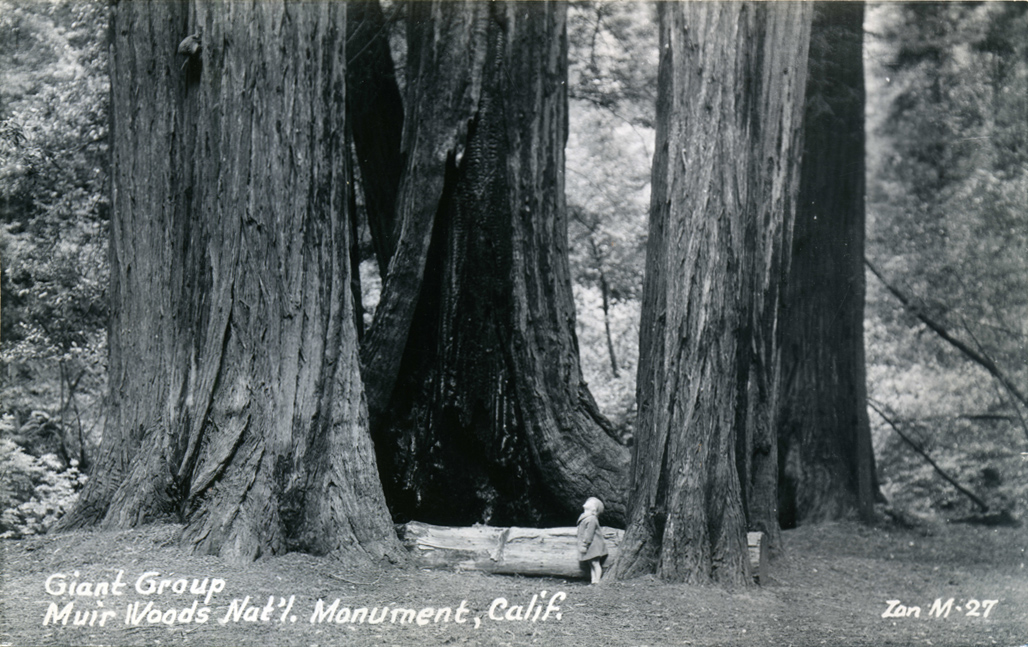
Muir Woods, a poem

illustration muir woods

Muir Woods, a poem


The eye is drawn, farther and farther

toward thin blue sky until the green feathery


tops of the trees are like the northern pole

on some dream planet. Your carsickness


from the ride up the mountain begins to fade,

leaving behind a breathless, weepy echo


not unlike your first religious fervor.

Then, you stared at Jesus’ sad face for hours,


wondering what it was that made him

love you. Here, it is the usual paralysis,


nerves made dumb by the unaccustomed

richness of perfect light. Vague, starry eyes


like yours feel at home. The air is weighty,

burdensome, solemn. Tall and slender, your guide


touches your wrist, and for a moment, you too

want to leave the surface of the earth


forever. Shyly, she picks up a tiny

pinecone, smaller than a toy. You laugh


when she tells you this is their seed:

all around, their ravaged, hollow


corpses litter the ground

like the bones of God.


In this place you feel helpless,

childlike, and you can understand a wish


to die here, never leave this hush.

They’re only trees, you tell yourself.


Yes, only trees, you think, standing still with

your neck bent back; wondering if they hear you.


2 Comments

Filed under beauty, earth, eternity, god, good, mortality, mysterious, nature, soul, spirit, spiritual, truth, universe, wood

The Nearness of Heroism, a short story

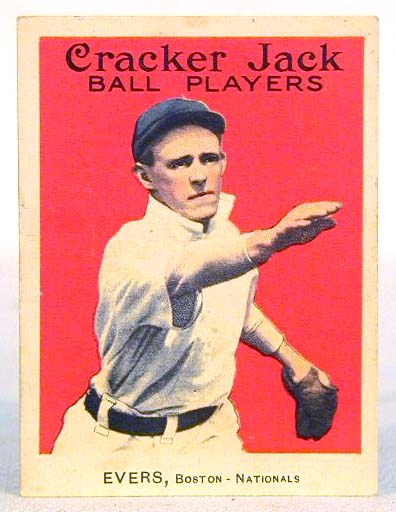
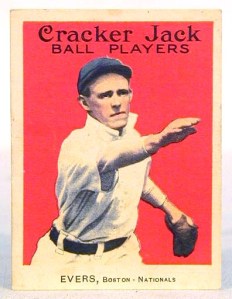
illustration the nearness of heroism cracker-jack-eversillustration the nearness of heroism

(Originally published in The Paumanok Review)

The Nearness of Heroism, a short story

They tell me he was the first man I ever saw nude; that when I asked him, pointing, in my high, three-year old’s simper, what “that thing” was, he didn’t even flinch. He stood in the big tiled shower stall, holding the door ajar with one hand, toweling himself off with the other.

“I’m a little teapot,” he sang, in his exuberant tenor. “Short and stout. This is my handle, this is my spout.”

They say I stared, and then frowned, running out to demand of my grandmother on the spot — I want to be a little teapot! Show me my spout! Where is it? Where is my spout?

Where, indeed? If only the gulf could have been reduced to those dimensions. Am I wrong to feel we would have been closer, had I been a boy? Would he have loved me more, or less?

***

I liked to sneak up on him while he used his glove, just out of the shower, a white towel tight around his waist, his hair slicked back, parted precisely. Even from my earliest memories, the old baseball glove was missing one or two fingers, the ball deprived of whole sections of its leather wrapping, worn through to the string-mended core in several spots. Both glove and ball had darkened to the color of cured tobacco, carrying a sheen of sweat-polished grime that lent a gleam akin to the finest shellac. Arms moving, hands a blur, he would move in automatic rhythms of meditation, pounding gloved fist with clenched ball as his lips moved, the words inaudible, his gray eyes focusing up and out at an angle, viewing a corner of patterned plaster, seeing something I wanted to share but couldn’t.

Then he’d notice me. He’d stop in mid-pound, his mouth open for an abrupt chuckle, too embarrassed to be embarrassed. “Hey there, lady,” he’d say, the broad vowels of his Brookline childhood making his words seem exotic.

He kept the glove and ball on the highest shelf of his closet, a level I couldn’t reach, not even with a step-stool.

***

He was, in fact, the only male presence in my life, even after I started to dwell on the concept of boys, the one I ran to in the early morning — crawling into his bed, burrowing deep under the covers, where he sang the old songs he’d learned from his Irish mother and held me in his arms, my nose burrowing into his soft feather pillow, into his wrinkled cotton pajamas, seeking out his bitter-tea-with-lemon smell, seeking out his body’s distinctive shape and radiating warmth, which possessed a steely eloquence no less comforting than my grandmother’s padded torso. Since he was home with us every day, having retired years before I was born, I didn’t realize he was different from other men, other fathers, who were defined not by their presence but by their absence.

“Oh, you dirty little devil,” he’d sing, “Does your mother know you’re out? With your hands in your pockets and your shirttail out?”

I would hear my grandmother fuming from across the room, not speaking but moving the various brushes and trinkets around on the glass-topped surface of her dresser with snappish clinks and taps. At other times, whenever he knew she disapproved, he’d make disrespectful rubber-faces behind her back until my face couldn’t keep a secret any more, and, looking at me, she’d see some sign of what was going on, then wheel indignantly, catching him in some fish-lipped, pouting impersonation of her, their demeanor so ridiculous, so upside-down, that for a moment it seemed that he was a small boy again, no one’s husband, and she his strict governess, no one’s wife.

***

He was related to me by marriage, not by blood, something that seemed to bother him a lot more than it bothered me, especially near the end of his life. From the very beginning, I had pledged my allegiance to him, had given him that affirmative declaration of the heart, and for a short time, during childhood, it seemed that he had pledged the bond in return and accepted me as his own. Not even in dreams did I measure him any differently than I measured his wife, my grandmother. As I grew older, however, and he grew more and more frail, the absence of an actual cell between us appeared to chip away at his feelings. “I don’t have any family of my own, you know,” he’d say, gazing at me as if for sympathy, never knowing how caustic the mild-sounding words were to my ears.

“I’m your family, aren’t I?” I asked him, the first time he brought it up, but he shook his head, smiling at me with a thin-lipped yet dreamy smile.

“It’s not the same,” he answered.

***

On various occasions, as his health became less certain, I promised him one of my eyes, one of my ears, one of my kidneys, half my heart, half my liver, half my stomach: everything and anything he needed to survive, anything he might need to be comfortable, which I swore to give to him when he got “old.”

***

In my last year of college, I had a boyfriend who got physical with me on several occasions. Nothing serious, no marks: a thump on the head with one knuckle, a scuffle in the yard, pushing matches. One day I reacted badly, bolting my apartment door and calling home. He answered on the first ring, but, having expected my grandmother, I found I couldn’t stop the tears. His voice deepened, becoming rough around the edges as he interrogated me. An old man, on six kinds of heart medication, he swore he’d drive the four hundred miles and teach the boy a lesson.

“No, Grampa,” I said. “It’s all right. I’m breaking up with him. Don’t worry.”

“Call the police if he comes to the door again,” he said. “Have him arrested.”

This reaction, despite his often-repeated joke: “Never hit a woman,” he’d say, shaking his head, staring at my grandmother’s back. “Use an axe.”

***

His fourth heart attack came only days before my wedding. He managed to walk me down the aisle anyway, spiffy and broad-shouldered in his plain black dinner jacket, a single pink rosebud clipped to his lapel. Since both my parents were dead, he was “giving me away” to my fiancé, a practice I found offensive on feminist grounds, because it seemed to exclude my grandmother from the giving. So we compromised: when asked by the priest, “Who gives this woman?” he was to answer, “Her grandmother and I do.” Except, when the moment came, he said only “I do.” My grandmother, standing in the front row in her baby blue satin lace and picture hat, whacked the prayer rail with her wedding service programme in frustration. The sound echoed off the front wall of the small church and stayed with me for the rest of the day.

Later, at the reception, he was critical of the music we had selected without consulting him: a wandering string quartet. “All your guests are leaving,” he said, after his fourth or fifth glass of champagne took hold. “Why didn’t you have a real band? Some dancing. It’s like a funeral in here.” I trembled all over from the exertion of holding my tongue. Only if I had screamed at him, my face reddening under its halo of white silk flowers, would he have been happy.

***

I was home for a long-overdue visit when the last battle came. Semi-invalided, by then, Grampa moved only from the bed to his recliner, spending the day reading the paper in a slow, deliberate rustle. The television blared for hours each evening, his expensive hearing aids — the same kind Reagan used, he’d told me — plucked from his canals and discarded, tossed into a dainty porcelain ashtray: hand-painted with a rising, twisting phoenix, it was the only memento he had kept from his service in Germany during the war.

He didn’t like going to bed at night, waiting until two or three in the morning to call for my grandmother to help him to his room. Arising no earlier than noon the next day, he’d swear he hadn’t slept a wink. “He snored like a baby all morning,” my grandmother would whisper.

His appetite was slight too, and then one day, nonexistent. Supper waited out in the dining room: over my grandmother’s objections I took him in a bowl of ice cream. He lay against his pillows while I spooned it into his mouth, noticing how he lipped the spoon as I withdrew it, sucking it like a baby. The bowl finished, he thanked me, his voice hoarse with exhaustion. Turning to leave, I heard him start coughing, a deep cough that seemed to come from his gut, his eyes widening under the thick cataract glasses, his cheeks bulging, seemingly an imitation of his old comic fish-face. For a moment I laughed, thinking it a joke, but he put his hand over his mouth and made as if to hold his lips together with his fingers. He was trying to keep from throwing up all over the bed, I realized, running for a basin, almost too late.

After Gran and I cleaned him up, I felt his forehead. It was hot, dry, but the rest of him was clammy and covered with an oily sweat. As I took his temperature, Gran called the doctor, who told us to get him to the hospital right away. When we told Grampa where we were taking him, he shook his head. “Now what’d you go and do that for?” he said.

He looked so small and frail laying there it was a surprise to find I couldn’t carry him — what remained of him was deceptively heavy, as if his bones were filled with lead. It took both of us to get him out to the car. Each step seemed so difficult, so impossible — by the time he lowered himself clumsily into the front seat, he was glistening with a symmetric pattern of droplets, the sweat beading his skin like opalescent sequins.

***

At the hospital, an orderly dressed in green surgical scrubs helped Grampa from the car into a wheelchair. The orderly was tall and long-limbed, and moved with an ease, a lean fluidity born of professional indifference. His arms were the color of imported chocolate, warm coppery highlights underlying the pigment. His arms were like a god’s: so full of life and possibilities, I held my breath as he lifted the skeletal, ashen old body of my grandfather out of the car. I couldn’t say what the orderly’s face looked like other than that it was — like the motion of his limbs — devoid of both pity and scorn. His eyes remained downcast, looking only at Grampa in the chair — and I wanted to speak, but nothing came to mind, only regret at not being permitted to be similarly borne away, out of my own uncertainty and into a place defined by someone else’s ministrations.

The young man’s arms, in that moment, seemed to emit forensic signals, speaking without words to a pain I hadn’t realized was there, the arms themselves justifying birth, justifying suffering, justifying death: paying for perfection all over again — skin so smooth it looked hairless, poreless, as if it smelled of allspice and cinnamon and blood and salt. The arms were immaculately sculpted; the bones just long enough, granting a perfect inertia between muscularity and leanness. The miracle of such arms and skin held my attention like a time-release dose of whatever manna makes heaven heaven, and so it was that I found myself spiraling into an upward-rushing eddy of panic when the orderly left, forever, just seconds later, rolling my grandfather to the admitting desk like so much cargo, then vanishing into the angular whiteness and pulsing fluorescence of the hospital corridors.

***

We left Grampa there, in the midst of a cotillion of duly licensed strangers — what choice did we have, not knowing, not wanting to know, not capable of that knowledge? By not speaking, we maintained a positive attitude. His room seemed comfortable, his nurses kind. His glasses glinted, the reflection obscuring his eyes, as we waved goodbye from the doorway.

By the next morning, he had been moved to the intensive care unit. He was comatose, hooked up to a ventilator, stripped of his pajamas, gleaming plastic tubes invading his throat, his nose, his bladder, his veins — his heart had stopped in the night, from the pneumonia: the doctors speculated he might have had irreversible brain damage before they got it going again.

Machines everywhere, whirring, beeping — my grandmother and I couldn’t even touch him. His chest shook under the ventilator’s control, his whole body quivered. The vent itself hissed, clicking, coaxing his reluctant breath, forcing it when it hesitated. Pushing his lungs in and out without his body’s permission. The respirator had a device to allow him to breathe for himself, if he could, like training wheels on a child’s bicycle, and sometimes he did, but even that primitive desire for oxygen would vanish, and the machine would kick in to bring him the next breath.

We were there when the respiratory people had to change his breathing tube. With the most well-meaning, tender sort of violence, they ministered to the tubes, his whole body curling into a fetal position with the deep, gaglike coughing that resulted. They couldn’t say if he’d ever wake up, or whether he’d come off the ventilator. His arms were twisted, contorted, the hands grasping at nothing with a desperation that made my shoulders quiver in an involuntary spasm of sympathy. I bought him a tiny teddy bear, uncurling his stiff fingers to place the bear against the taut, unyielding palm. His other hand appeared to relax once the toy was in place, but perhaps it was only my imagination.

***

My grandmother and I, without speaking, understood our own feelings clearly enough. We wanted him gone; this kind of life was too painful to watch. We wanted it to come:   but at the same time felt wicked and evil. Who knew what he himself would have wanted? In the end, she signed the thick sheaf of papers authorizing no further “heroic measures.” Each place for her signature was marked with special red removable tabs.

***

In a sort of minor miracle, in several days he did awake, and they removed the intrusion of the ventilator. He was himself, more or less, and knew who we were, but underlying that surface was a terrible confusion. “How’s Jessie?” he asked me calmly, the name of my great-grandmother, dead long before I was born. His memories suffered no restraint; no contradictions existed in his inner flow of time. “Seeing you’s the best present I could have gotten,” he told us. “I’m going to take us all on a vacation when I get out of here.”

He seemed better than he had in years: I left for home, knowing it wouldn’t last; for the first time not wondering whether he would live or not. Later that day, I called him at the hospital from a thousand miles away and let him speak to my husband and my daughter. Say I love you, I told them. Say I love you, Grampa.

***

The next day he slipped back into unconsciousness, gently, easily, as a bar of soap floats downward in warm water. Notwithstanding the papers, the hospital wanted to put him back on the ventilator. No, Gran told them, no ventilator. No more.

***

I asked her what he had looked like, at the end. He lay on his side in the bed, she said, breathing shallowly. He didn’t seem to be in pain. He panted a little, she said, not moving, his face smooth.

I feared perhaps we had decided it the wrong way. Grampa’s doctor, without saying anything, seemed to look at us as if we were bad people, as if we cared more about ourselves than Grampa himself. As if we were selfish.

***

It wasn’t until a couple months after the funeral I thought to look for his glove and ball. I searched his closet first: most of his clothes and things were already gone, and the closet seemed a different space, altered by no longer containing him. When I couldn’t find them I didn’t panic — I knew Gran had put them away somewhere safe for me.

“Where’s Grampa’s glove and ball?” I asked her, not wanting to reveal how much I wanted to have them, now that he wasn’’t there to keep them away.

“What, those old things?” she asked, incredulous. “You wanted me to save those?”

I gaped at her then. The floor under my feet got soft; my knees turned into grating stone stubs lashed together by rusted wire. She was right, in a way, since at the last the glove hadn’t been a glove, just a thumb, the ball not a ball, either, but a roundish wad of wrapped string, its leather covering gone. That was all he’d had left, all I’d wanted: a piece of him I’d thought I was entitled to.

I would have kept them in a little box and looked at them every now and then, touched them with my finger. Maybe, if I was feeling daring, I would have taken the glove thumb and slipped it on, holding the ball in my hand, sliding the brittle thumb piece back and forth over the grimy string. I would have smelled them: a few tentative whiffs of the powdery leather.

***

I didn’t yell at her, there was no point. It was over. In spite of my outward act of forgiveness, I couldn’t help thinking that perhaps what Grampa had said all along was true — maybe people did reserve the deepest sort of caring for their own blood, maybe that kind of caring was inseparable from cells, inalienable from life. Gran hadn’t cared as much about his feelings about the glove as she had about mine, for example. Or was it just that she didn’t care as much about the archival, historical things as I did? Whatever the explanation, it was done: she had not even understood enough to realize the issue existed.

“Why didn’t you tell me not to throw them out?” she asked later. “Why didn’t you tell me you wanted them?”

It was simple: I thought she knew. “I just assumed you’d keep them,” I said. “They meant so much to him.”

“They were ratty old things,” she said. “Just pieces, really. They were unrecognizable.”

***

I told myself that perhaps it was a good thing that the glove thumb and string ball were gone. I’d wanted them for the wrong reasons. I’d wanted something I didn’t deserve. I felt hungry — empty — but without focus, without specific appetite. He — damn him! — was leaving me all over again, and for the third time: the person I’d wanted him to be; the person he’d been; the person I’d wanted him to remain.

I thought of all the other useless things I already had in my personal archives, from my father’s crocheted baby blanket to clothes worn by my mother in college. I thought of letters they’d written to each other before I was born, airmail letters on thin blue tissue, drawn in irregular strokes of faded ink. I thought of brittle brown paperbacks and the curling edges of photographs. We are naked in our mourning, we cannot speak, and we cannot touch.

Grampa was gone; the glove and ball were gone; I was still here. The hell with it — I didn’t want to know, I didn’t want to hear what the dead had to say anymore. Only in dreams would the dead be able to seek me out again.

The dead never say much, anyway, not even in dreams. They look into my eyes, mainly, their own abrim with a solitary sort of gentleness, hoping to inoculate me against what they know is unnecessary sorrow — unnecessary love? — hoping to protect me from whatever it is that only they can see: all the while, nodding their heads in a slow, assured rhythm, a rhythm nearly invisible to the unaided eye.

3 Comments

Filed under beauty, boys, childhood, compassion, death, development, eternal, eternity, fathers, fiction, funeral, god, good, health, heart, history, identity, justice, karma, kindness, life, logic, love, man, manhood, maturity, men, mortality, mourning, mysterious, parenting, personal responsibility, regret, relationships, short stories, soul, spirit, spiritual, truth, universe, warmth, youth

Going To Sea, a poem

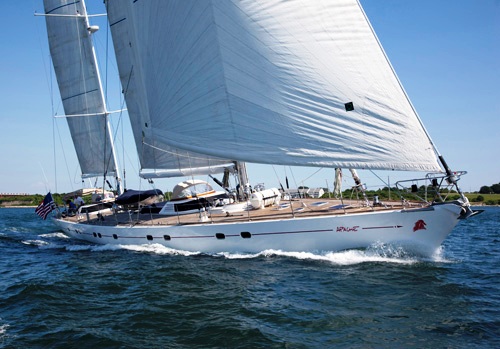
Apache, 105-foot D. Presles and J. Pierrejean charter yacht

illustration barry huplits high school photo


Going To Sea

(for Barry Huplits)


She is a great white boat, carved

of wood, lacquered to a blinding

sheen, her sails immense, floating


over my head like the wings

of a fearsome angel. I sit

on her prow, clinging to the slight


metal rail, and together we leap

over the waves like some illiterate,

dangerous god. I am a mermaid,


a brightly colored figurehead,

thrust into the salt spray to bring luck.

The power of the water flings me to and fro,


but I hold fast, panting, the rich smell

of the sea making me drunk. As we pass

the ragged rock walls of the inlet,


I see the towering dwellings of men,

though these quickly fall behind our path,

growing tiny, frail to the elements


I have momentarily harnessed. We brush

great clumps of weeds, then the color beneath

changes from murky green to depthless indigo,


the froth of the peaks suddenly

light, riddled airy like the childish,

gladdened heart inside my chest.


In my net are jerking glass shrimp,

Tiny, tassled fish that look like

bits of leaf, one lone needle-nosed


eel, sinuous even in his distress,

and when I have stared long enough,

I fling them back to their wet lives


without regret. Under the sharp

edges of the sun, skin grows heated,

reddened as if by love’s rough brush,


yet we keep on, moving into the horizon,

towards the vanished place of wildness,

full of an impeccable, golden light.


Leave a comment

Filed under ancient history, beauty, compassion, earth, eternal, eternity, god, good, history, identity, karma, kindness, life, love, mysterious, nature, poetry, soul, spirit, spiritual, truth, universe, warmth, wood, youth

Hungry Baby, a short story

hungry child

Hungry Baby

Whenever Ella was feeling close to the edge, a hair’s-breadth from lunacy, she liked to shop for groceries. She went up and down all the aisles, methodically picking out food. She threw boxes and jars and bags and cans willy-nilly in her cart, always stocking up for the big one, the storm that would tear the roof off. It’s a habit, one she learned as a child. The women in her family were bony, starry-eyed drunks, with bad skin and lank hair, but by God, they knew how to grocery shop.

She was in this twitchy, nervous state because her mother had showed up again last night. She would never know if it was just a dream: she hoped it was. Ella opened her eyes and saw her mother standing next to the bed, almost touching the mattress. She didn’t smile or speak, but simply shook her head. Mama seemed angry; Ella could tell her mother wanted to hit her. Mama was jealous that Ella was still alive, driving Mama’s car, watching her TV, wearing her jewelry. Ella met her fierce gaze without moving, then closed her lids against the image like hurricane shutters.

The room was so dark, and her mother was like a column of gray smoke, rising over Ella. Meeting death hadn’t changed Mama’s face one bit. How was it that Ella still missed her? That was an embarrassing, childish pain, an overgrown mouth sucking a rubber pacifier. There would never be a second chance for Mama and Ella; Ella wished she could believe in heaven like she believed in hell. If her mother had loved herself, or Ella, even a little, maybe she’d have pulled through the dark waters. But poor Mama was so full of self-hate there was no room for anything else. Now Ella was afraid her mother’s habits were coming after her.

Ella confessed it; often she had hated her mother too, while she lived. She even killed her mother once, in a dream. She stabbed Mama many times with a kitchen knife, and it felt right, like it was the only graceful way out for both of them. There wasn’t as much blood as Ella expected, though there was still enough to soak her mother’s nightgown all the way through. When she woke, clammy and trembling, Ella hurried to Mama’s room to make sure she still breathed. Ella knelt at the side of her bed, watching her mother’s scrawny chest. At first, it didn’t stir, and Ella almost cried out. Then she saw movement, enough to know her mother lived. Forever after, she feared the terrible anger in herself. It was always waiting, a tiger with ivory teeth and steel claws — waiting for her to stumble, to lose her grasp on mercy, on forgiveness, and throw open its cage.

Wishing her mother was dead half the time didn’t keep Ella from breaking down the door in a panic when she thought she’d overdosed. After the first incident, Ella wasn’t all that worried, she knew her mother to be too much of a bumbler, she would screw it up, or not finish, like she did everything else. The door became only an excuse for Ella to use her rage, to make her hatred tangible, give it life, a physical existence. She used a heavy folding chair, swinging it over and over again, watching first the splintered crack appear, then the bit of light, marveling at how the door-frame itself gave way all at once and the entire door fell cleanly into the room. Mama sprawled on her bed, half-clothed, her knobby knees the bulkiest part of her, her huge, brown, doe-like eyes looking puzzled. Even with all the noise, Mama was so out of it, she couldn’t figure out how Ella had gotten in the room. Later, sober, she realized she’d underestimated her daughter, she hadn’t known what Ella was capable of. Much later, a couple of years after Ella left home, after a hundred false starts, Mama managed to finish what she’d begun.

Ella shopped hours for the perfect funeral dress; pulled grimly through all the racks, looking at everything dark. No, not dark, black. “Nobody wears mourning black anymore,” the saleslady said, but for her own mother, Ella insisted. In photographs, she appeared the proper, bereaved daughter. She spent three days wearing the black dress, feeling grimy by the day of the burial, and glad of it.

They buried her mother in front of a croton bush, God, how Mama had hated those things, crotons. Ella stared at the shiny marble urn where it sat in the little hole, the tacky brass plaque glued to the top. She couldn’t object to the shrubbery, not with the priest standing there, tall and lean and handsome like some Marlboro Man, chanting and swinging his billowy canister of incense on its copper chain, the black robes clinging to him under the harsh weight of the sun, his hand so big and hard when she shook it, her knees almost gave way.

That night, Ella left the house long after dark, she walked in shaky high heels down the street and around the corner, ruining the delicate heel tips on the asphalt. She decided to keep walking until she dropped; to walk forever if no one came running after her. She stopped only a couple of miles away, limp from the humid August air. Crickets vibrated, frogs exhaled, stars flickered; the glowing, yellow windows of strangers were her last comfort, her final safe haven. Nothing but love for those strangers kept her from leaving for good, nothing but fear of the anger-tiger kept her from going any farther after her mother; Ella stood alone in the velvet grief of that hot summer night, calling her mother’s name over and over again like a stupid, hungry baby.

3 Comments

Filed under addiction, alcoholism, anger, apologia, black, child abuse, child neglect, daughters, ella, eve, evil, funeral, girls, god, good, health, ignorance, justice, karma, kindness, love, mama, matricide, mothers, mourning, murder, mysterious, parenting, regret, relationships, short stories, truth

The Way Love Is Supposed To Be, a very, very short story

illustration the way love is supposed to be

I wanted to run upon the moors with tears streaming down my face.

She treated him as if he were a rajah, wearing a satin robe and slippers.

Don’t ever marry an accountant.

You’ll laugh, but I cried.

Her radar had failed her over and over again.

Men were tricky.

She danced the samba, then the tango, in the arms of a smelly Russian with piercing blue eyes who fancied himself a ladies’ man.

I would never marry someone who ogles women right in front of me. At least, not until I’ve started ogling them, too.

My Mama loved mohair; I loved angora. We were opposites.

Move your ass and don’t take a year.

I felt at sea for most of my thirties. The forties couldn’t be any worse, I thought. Wrong, wrong, and wrong!

I plodded, envying the agility of those around me with obviously higher serotonin levels. When I studied those brain chemicals in college, I didn’t know they’d turn out to be so important.

Redial that oily odor; a ray of water consoles the jilted; all beds of roses rot eventually; be brave and rest; the noose leads to the abyss; don’t gouge the luge, egad! Lazy seared meat; too addled to ladle. Baba rhum; Joanne Arel/Aral; raison d’etre; brave agar; the smell of water; conic Eros; seed the boo-boo, Sergeant. I came, I saw, I conquered; day-O, me say day-ay-ay-O; I say, Merv, that canary sure can sing!

Canary Conn? Transsexual on Merv Griffin. Breathtakingly beautiful, not a man in drag.

At this rate, we’ll never get there. Or perhaps, we are already there and are too stupid to know it! Dogs vs. cats… different, not better or worse. Different is GOOD.

No one’s a fool.  At least, not forever.

2 Comments

Filed under evil, god, good, justice, karma, love, mysterious, short stories

Opening editorial message for Truth, the magazine, 1st draft

illustration truth the magazine opening editorial statement

Opening editorial message for Truth, the magazine, 1st draft:

First off, my name is not really Kimberly Townsend Palmer. It is, or rather, should be, Kimberly Townsend Pomikala. Pomikala is a Bohemian name, which my father was born with but which was changed by his family not too long after he started school in Arcadia, California. It was changed because one fine, sunny day he came home in tears after being called a “dirty Bohunk” by the other children. It was 1943, and the world, and finally the United States, had long been at war. The biggest battles were not being fought on battlefields but being fought inside the human heart. Many families lost their entire physical existence, multiple generations snuffed out in less time than it takes to inhale, exhale — mine lost only its identity. A small price to pay for being safe in southern California, in a town named for the residence of the Greek gods. So my father grew up as a camouflaged ethnic. The name was changed, but the inside could not be changed. He never felt at home anywhere he went. He might well have been a war refugee of a metaphysical battle — a battle, the fundamental struggle humanity has been waging since its inception, the inexorable war between truth and ignorance. Factual accuracy is not always the truth — truth goes to the essence of a thing. Not the surface, but what is deep within.

The story is told how Eve caused the fall of humanity from the garden of Eden by eating from the tree of the knowledge of good and evil. What is the remedy for this? What is the essential nugget of truth we may take away from that crucial moment? My answer is: there is no absolute good, there is no absolute evil — there is but truth and ignorance. Eating the apple and gaining the surface knowledge of good and evil was a trap humanity fell into, a trap we have been struggling to release ourselves from ever since. Love exists. Hate exists. Both can serve the truth. Both can serve ignorance. We must harness ourselves to the wagon of truth and pull our heavy burden to wherever the driver leads us. The driver is God, the driver is love, the driver is peace, serenity and acceptance of the way things are on this planet. Many things we label good and many things we label evil are in fact neither. They are simply in the service of truth or in the service of ignorance. Satan, in the guise of the serpent, led Eve and Adam into a terrible, incomprehensible trap and God is now and has always been guiding humanity out of that trap. The reason God forbade eating of that fruit was it was not yet the right time for humanity to have that knowledge.

Plainly put, we are not yet advanced enough to receive the knowledge of good and evil. God is the only entity qualified to eat of that tree. We have taken a small, superficial bite of knowledge and used our imperfect bodies, minds and hearts to inflict merciless cruelty and oppression on others. Our biggest enemy is pride — believing we, as fragile, physical and temporal beings, can ever know enough to accurately judge another’s worth before God. How dare judges and juries impose the death penalty! It is not our role to take life, which is bestowed by God. It is our role to live it and seek the truth and banish ignorance. We are entitled to keep ourselves safe, we can ensure our physical and emotional safety from injustice and repression — but we cannot ever presume to know the will of God.

2 Comments

Filed under adam, bible, eve, evil, god, good, health, ignorance, justice, karma, legal writing, love, mysterious, notes, science