
A great interview, an interesting dialogue, a thought provoking interviewer! Hallelujah!
Category Archives: history
Meet Nana Awere Damoah: The Ghanaian Voice of Objectivity and Reason
Filed under anthem, beauty, black, courage, development, dream, dreams, earth, enlightenment, eternal, everything, faith, family, friendship, god, good, heart, history, hope, human beings, humanity, identity, justice, life, logic, love, maturity, nonfiction, passion, peace, recommended reblogs, sisters, soul, spirit, spiritual, spirituality, transcendence, transitions, travel, tribute, truth, universe, warmth, wish, world
Judy Garland and The Banana Tree, an essay


A banana tree is a metaphor for life, really… it dies after it bears fruit. It gives its life to produce the next generation. Banana leaves are so useful. Useful when they’re green, and useful when they’re brown. Generation upon generation. That really is a sacred word, generation. WE generate ideas, too. So can’t WE generate more peace, rather than more war? Can’t OUR fuel be love, not hate? Yes, just like the banana tree, sometimes destruction is necessary to create new life… recycling? Reincarnation?
One way of looking at things is to take a leap of faith – decide that when WE die, nothing will be lost; everything will be gained. WE leave behind US a legacy, all of US, shaping the reality of the UNIVERSE. The UNIVERSE is alive through US! The UNIVERSE writes songs and stories and mathematics and music through US! WE are engines! WE are alive! WE are organic! WE, human beings, are evolving right this second! LIFE doesn’t stand still! LIFE adapts, or ceases! LIFE IS EVOLUTION. Trying to cling too desperately to the past is to entomb the SELF in stone, alone, buried alive, dying. WE’RE alive until WE’RE dead.
Value this opportunity. Don’t throw it away. Take care of OUR home, planet Earth. Take care of OUR fellow travelers. Send not a sword, but an olive branch to OUR enemies as well as OUR friends. OUR bitterest enemy may turn out to be OUR best companion. Only time will tell. WE live within moments, WE exist within history, and WE are passionate within the spirit. Train that energy! Use passion to create, not to destroy! Destructive passion, combined with weapons of all kinds, might kill US all. Respond to life with logic AND emotion. Let US use OUR brains and OUR gut. Instead of the falling abyss of dread, the rising flutter of joy… and at the end of life, may WE all have truly, truly, truly found PEACE.
Cue Judy Garland, “Somewhere Over The Rainbow.”
Filed under acceptance, anthem, appeals, baha'i, beauty, born again, buddhist, charity, christian, civil rights, compassion, courage, death, dream, dreams, earth, enlightenment, essay, eternal, eternity, everything, evolution, faith, family, fish, flowers, forgiveness, friendship, god, good, heart, hindu, history, hope, human beings, humanity, jewish, justice, karma, kindness, life, logic, love, manifesto, marriage, maturity, muslim, mysterious, nature, passion, peace, personal responsibility, rastafarian, relationships, soul, spirit, spiritual, spirituality, transcendence, transitions, travel, tribute, truth, universe, warmth, wish, world, zoroastrian
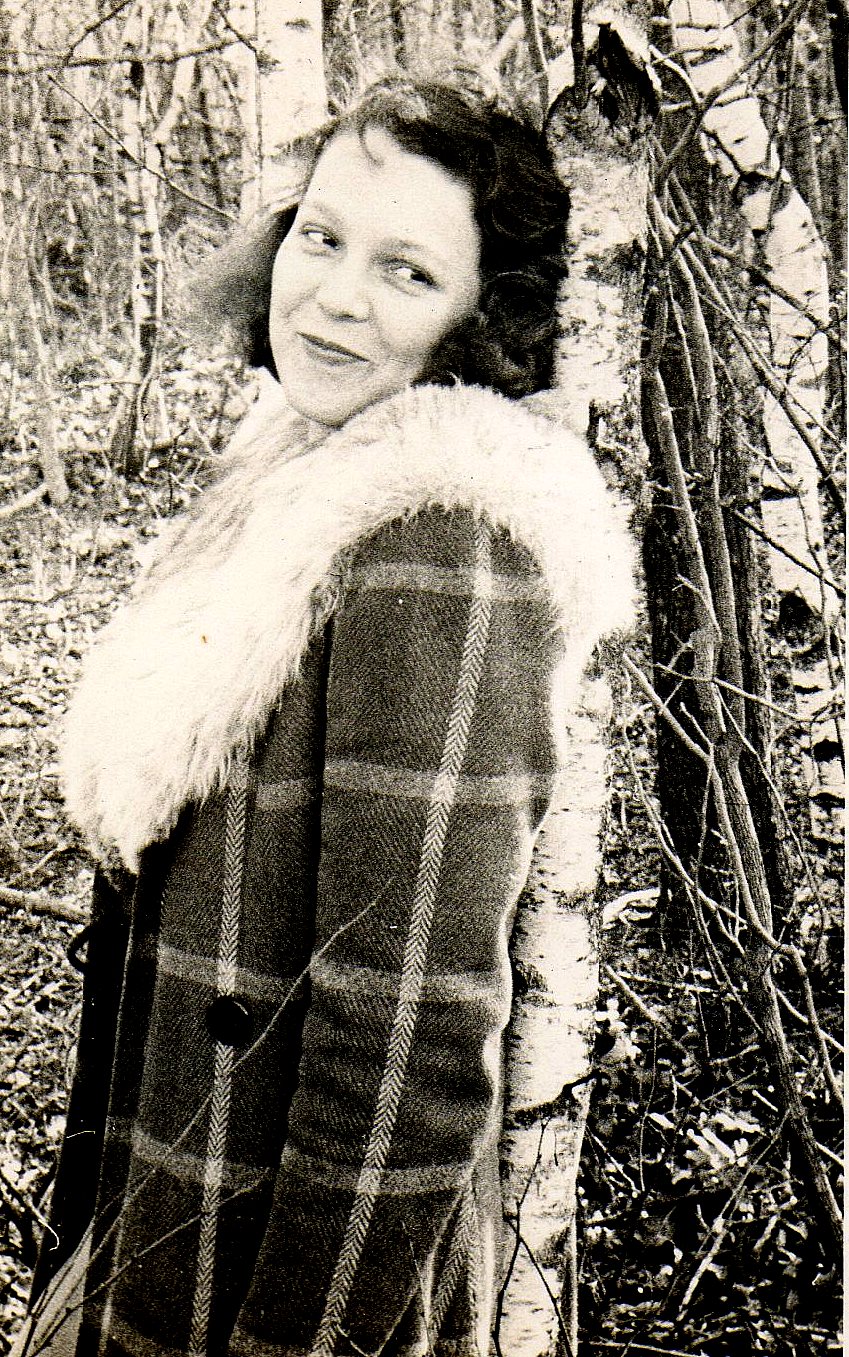
September 5, 1980, a letter to my Nana
September 5, 1980
Dear Nana,
I am sorry I didn’t send you a birthday card on time. I didn’t forget, I bought a card and addressed it and put a stamp on it and everything, I just neglected to drop it in the mailbox. And since it was late anyway, I figured I would just save up some money and get you a present to go along with it. So just prepare yourself for an extra-special present. I won’t give you any hints, either. So just sweat it out.
Everything is going just fine. My job is going well, except the work is not all that interesting. But at least I have plenty to do. Mr. Perkins is in Canada right now, doing some work for the Canadian government, so that’s why I can write this letter at work. Because there’s not all that much to do.
Has Mom gotten me an application for the U. of Fla.? I’m going to apply to U.C.L.A. also. Then when the time comes I will have two options. But no matter what I decide I will be home for Christmas. So don’t worry about that. I wouldn’t miss another Christmas with all of you. I’ve already missed two. So no more.
I almost got a dog the other day. They keep dogs at work, two of them, and there was this other dog that started hanging around. He was a stray and he was really skinny. Then about two days ago he showed up limping. His hip was all out of joint, and he was scared of everybody. So I told Mr. Perkins about it and he said that if I could catch him and take him to the vet’s that he would pay the bill if it wasn’t too much. So I caught him by feeding him and then grabbing him. I took him to the vet’s and they X-rayed his hip but it was too badly crushed and it would cost over $300 to fix it. So we had him put to sleep. I felt so bad about that. I cried and cried. You know how I am about animals.
I have decided to major in prelaw. It’s a big decision but it’s something that I want to do. A lot of reasons persuaded me. And besides, lawyers run in our family. This is the fourth generation – your dad, mom’s dad, and my dad, and now me. I’m the first woman to do it. It’s about time the women in this family took advantage of their brains. Grandpa Geremia says that we’re smarter than all the men anyway. Look at Mom! She’s got a lot upstairs, and the only reason she didn’t get a chance to take advantage of it is because she’s a woman and women are the ones who get the short end of the stick always. I’ve really been getting interested in promoting women’s rights lately.
Throughout history, men have had all the power. And I’m tired of it. I heard on the radio that women comprise 53% of the population, yet in the Senate there are only two women. 2 out of 100. That’s certainly not even close to equal representation. Women don’t even get respect. At work here, I’m treated like some cute little girl who is just learning to tie my shoes. And I resent it. Of course, I don’t complain because I need to get along with these people, but I resent it all the same. I read in a book called The Women’s Room that “people may hate niggers and Puerto Ricans and Chinks, but at least they are afraid of them. Women don’t even get the respect of fear.” And it’s so true. Look at you, Nana. You have the makings of one hell of a politician in you. You’re a terrific leader. You have charisma. But you haven’t done it. Maybe because you didn’t want to, but maybe because you were afraid. Oh, I don’t know. Remember when they wanted you to run for City Council? You could have won easily. You could still win. I think you ought to do it. After all, Reagan’s over 68 years old and he’s running for public office.
By the way, do you know what I’ve heard about Reagan?
- He believes in astrology.
- He accused Carter of being in cahoots with the KKK when he himself refused to address the NAACP.
- When he was governor of California, he wanted to cut down the Sequoia trees in the parks because he thought that “once you’ve seen a tree, you’ve seen a tree.”
- He set troops out to quell student protest when the students had stated their pledge of nonviolent demonstration.
- He’s against abortion even in cases of rape. True, not many women who get raped conceive a child due to the trauma of it, but it does happen. And why should a woman give birth to a child of rape?
True, Carter is in many ways no better than Reagan. But I don’t want to vote for Carter, either. I want to vote for Barry Commoner. Barry Commoner believes in solar power, he wants to bring back the railroad system as a form of mass travel, he doesn’t believe in war and huge military budgets for no reason, and he believes in letting people come first in government. He believes in the nationalization of the energy industry. No one is perfect, though, and I realize that campaign promises are sometimes just that, but I feel that Barry Commoner is a better candidate than either Carter or Reagan. But he’s not perfect, either. I’m not being swayed by some Godlike figure or anything. He’s just an ordinary person.
Let’s talk about the nationalization of the energy industry for a moment. (Don’t I sound grown up, Nan?) Did you know that one of the reasons nuclear power plants are becoming more widespread even though they’re so dangerous is that the oil companies own all the uranium minds? The reason no one has developed solar power yet is because the oil companies can’t buy the sun.
Let’s face it, sooner or later we’re going to run out of everything – coal, natural gas, oil, even uranium. The only thing we will have for billions of years is the sun. Everything on this planet was created by the sun. The oil was made from algae deposits that were fueled by the sun. The sun is a clean, safe source of energy. So why don’t we use it? Because it’s also free. There’s no way to rent sunlight because it’s free. No one can own it. So the people who control this country, i.e., the huge conglomerate corporations, aren’t too thrilled over the prospect of unlimited amounts of free energy because they’ll go bankrupt.
Now, don’t get me wrong. I’m not against free enterprise or anything. What I am against, though, is when the profit margins of Exxon go up 200% in one year. That’s going too far. Profit is fine, but 200%, when the whole world is being squeezed dry because of the high prices of fuel? That’s un-humanitarian, and disgraceful.
Did you know that Nestles, the chocolate corporation, also manufactures infant formula? In third world countries like Nigeria and India and the like, they were telling uneducated mothers that infant formula was superior to mother’s milk. At precisely the same time, doctors in this country were finding out that mother’s milk was in fact the best thing for babies. That nothing was superior for infants. But did Nestles stop telling them that? No. Their profits in this country were going down because of the drop in sales, so they had to make it up somewhere else. By fooling poor, uneducated, starving people. That’s the kind of thing I’m against.
I guess I’m getting more political in my old age. That’s why I have decided to major in prelaw. So I can do something about the things that I feel are unfair. Or at least I can try. Like I said, I’m not against free enterprise. What I am against is exploitation and un-humanitarianism.
Filed under ancient history, compassion, development, earth, enlightenment, eternity, faith, forgiveness, god, heart, history, hope, humanity, identity, justice, karma, kindness, law, legal system, life, logic, love, maturity, nature, peace, personal responsibility, science, soul, spirit, spiritual, truth, universe, woman, women, world, youth
Summer Evening, Beaumont, a poem

Summer Evening, Beaumont, a poem
I was not there. I am only an observer.
The four-year old on his tricycle is
dressed for the heat in loose shorts
and nothing else. His hair appears
disarrayed as he stares at the ground.
The back of his bare skull is as finely
carved as a newborn’s, the delicate
shadows of his shoulder bones ask for
touch. The clumsy chalk lines on the
pavement are from a murder and he
knows it — the blood came out last
night as the torpid sun was going down.
This boy has to make stories up in
his head, but the shy universe he
creates is a notion he’ll never share.
I was not there. I am only an observer.
The dead man was 300 pounds and didn’t
talk much, as he, too, was waiting for a
miracle. Gang members used five or six
bullets, then ran away without taking his
wallet, the item they wanted most of all.
I was not there. I am only an observer.
Hours earlier, the victim had left his
rented home in all-white Vidor; he told
how the folks there threatened to hang him,
he told how lonely it was to wake up every
day and remember where he was. He wasn’t
afraid, he said, just tired of fighting.
The Nearness of Heroism, a short story

(Originally published in The Paumanok Review)
The Nearness of Heroism, a short story
They tell me he was the first man I ever saw nude; that when I asked him, pointing, in my high, three-year old’s simper, what “that thing” was, he didn’t even flinch. He stood in the big tiled shower stall, holding the door ajar with one hand, toweling himself off with the other.
“I’m a little teapot,” he sang, in his exuberant tenor. “Short and stout. This is my handle, this is my spout.”
They say I stared, and then frowned, running out to demand of my grandmother on the spot — I want to be a little teapot! Show me my spout! Where is it? Where is my spout?
Where, indeed? If only the gulf could have been reduced to those dimensions. Am I wrong to feel we would have been closer, had I been a boy? Would he have loved me more, or less?
***
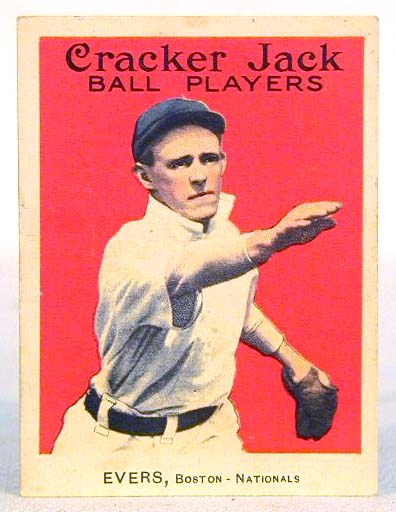
I liked to sneak up on him while he used his glove, just out of the shower, a white towel tight around his waist, his hair slicked back, parted precisely. Even from my earliest memories, the old baseball glove was missing one or two fingers, the ball deprived of whole sections of its leather wrapping, worn through to the string-mended core in several spots. Both glove and ball had darkened to the color of cured tobacco, carrying a sheen of sweat-polished grime that lent a gleam akin to the finest shellac. Arms moving, hands a blur, he would move in automatic rhythms of meditation, pounding gloved fist with clenched ball as his lips moved, the words inaudible, his gray eyes focusing up and out at an angle, viewing a corner of patterned plaster, seeing something I wanted to share but couldn’t.
Then he’d notice me. He’d stop in mid-pound, his mouth open for an abrupt chuckle, too embarrassed to be embarrassed. “Hey there, lady,” he’d say, the broad vowels of his Brookline childhood making his words seem exotic.
He kept the glove and ball on the highest shelf of his closet, a level I couldn’t reach, not even with a step-stool.
***
He was, in fact, the only male presence in my life, even after I started to dwell on the concept of boys, the one I ran to in the early morning — crawling into his bed, burrowing deep under the covers, where he sang the old songs he’d learned from his Irish mother and held me in his arms, my nose burrowing into his soft feather pillow, into his wrinkled cotton pajamas, seeking out his bitter-tea-with-lemon smell, seeking out his body’s distinctive shape and radiating warmth, which possessed a steely eloquence no less comforting than my grandmother’s padded torso. Since he was home with us every day, having retired years before I was born, I didn’t realize he was different from other men, other fathers, who were defined not by their presence but by their absence.
“Oh, you dirty little devil,” he’d sing, “Does your mother know you’re out? With your hands in your pockets and your shirttail out?”
I would hear my grandmother fuming from across the room, not speaking but moving the various brushes and trinkets around on the glass-topped surface of her dresser with snappish clinks and taps. At other times, whenever he knew she disapproved, he’d make disrespectful rubber-faces behind her back until my face couldn’t keep a secret any more, and, looking at me, she’d see some sign of what was going on, then wheel indignantly, catching him in some fish-lipped, pouting impersonation of her, their demeanor so ridiculous, so upside-down, that for a moment it seemed that he was a small boy again, no one’s husband, and she his strict governess, no one’s wife.
***
He was related to me by marriage, not by blood, something that seemed to bother him a lot more than it bothered me, especially near the end of his life. From the very beginning, I had pledged my allegiance to him, had given him that affirmative declaration of the heart, and for a short time, during childhood, it seemed that he had pledged the bond in return and accepted me as his own. Not even in dreams did I measure him any differently than I measured his wife, my grandmother. As I grew older, however, and he grew more and more frail, the absence of an actual cell between us appeared to chip away at his feelings. “I don’t have any family of my own, you know,” he’d say, gazing at me as if for sympathy, never knowing how caustic the mild-sounding words were to my ears.
“I’m your family, aren’t I?” I asked him, the first time he brought it up, but he shook his head, smiling at me with a thin-lipped yet dreamy smile.
“It’s not the same,” he answered.
***
On various occasions, as his health became less certain, I promised him one of my eyes, one of my ears, one of my kidneys, half my heart, half my liver, half my stomach: everything and anything he needed to survive, anything he might need to be comfortable, which I swore to give to him when he got “old.”
***
In my last year of college, I had a boyfriend who got physical with me on several occasions. Nothing serious, no marks: a thump on the head with one knuckle, a scuffle in the yard, pushing matches. One day I reacted badly, bolting my apartment door and calling home. He answered on the first ring, but, having expected my grandmother, I found I couldn’t stop the tears. His voice deepened, becoming rough around the edges as he interrogated me. An old man, on six kinds of heart medication, he swore he’d drive the four hundred miles and teach the boy a lesson.
“No, Grampa,” I said. “It’s all right. I’m breaking up with him. Don’t worry.”
“Call the police if he comes to the door again,” he said. “Have him arrested.”
This reaction, despite his often-repeated joke: “Never hit a woman,” he’d say, shaking his head, staring at my grandmother’s back. “Use an axe.”
***
His fourth heart attack came only days before my wedding. He managed to walk me down the aisle anyway, spiffy and broad-shouldered in his plain black dinner jacket, a single pink rosebud clipped to his lapel. Since both my parents were dead, he was “giving me away” to my fiancé, a practice I found offensive on feminist grounds, because it seemed to exclude my grandmother from the giving. So we compromised: when asked by the priest, “Who gives this woman?” he was to answer, “Her grandmother and I do.” Except, when the moment came, he said only “I do.” My grandmother, standing in the front row in her baby blue satin lace and picture hat, whacked the prayer rail with her wedding service programme in frustration. The sound echoed off the front wall of the small church and stayed with me for the rest of the day.
Later, at the reception, he was critical of the music we had selected without consulting him: a wandering string quartet. “All your guests are leaving,” he said, after his fourth or fifth glass of champagne took hold. “Why didn’t you have a real band? Some dancing. It’s like a funeral in here.” I trembled all over from the exertion of holding my tongue. Only if I had screamed at him, my face reddening under its halo of white silk flowers, would he have been happy.
***
I was home for a long-overdue visit when the last battle came. Semi-invalided, by then, Grampa moved only from the bed to his recliner, spending the day reading the paper in a slow, deliberate rustle. The television blared for hours each evening, his expensive hearing aids — the same kind Reagan used, he’d told me — plucked from his canals and discarded, tossed into a dainty porcelain ashtray: hand-painted with a rising, twisting phoenix, it was the only memento he had kept from his service in Germany during the war.
He didn’t like going to bed at night, waiting until two or three in the morning to call for my grandmother to help him to his room. Arising no earlier than noon the next day, he’d swear he hadn’t slept a wink. “He snored like a baby all morning,” my grandmother would whisper.
His appetite was slight too, and then one day, nonexistent. Supper waited out in the dining room: over my grandmother’s objections I took him in a bowl of ice cream. He lay against his pillows while I spooned it into his mouth, noticing how he lipped the spoon as I withdrew it, sucking it like a baby. The bowl finished, he thanked me, his voice hoarse with exhaustion. Turning to leave, I heard him start coughing, a deep cough that seemed to come from his gut, his eyes widening under the thick cataract glasses, his cheeks bulging, seemingly an imitation of his old comic fish-face. For a moment I laughed, thinking it a joke, but he put his hand over his mouth and made as if to hold his lips together with his fingers. He was trying to keep from throwing up all over the bed, I realized, running for a basin, almost too late.
After Gran and I cleaned him up, I felt his forehead. It was hot, dry, but the rest of him was clammy and covered with an oily sweat. As I took his temperature, Gran called the doctor, who told us to get him to the hospital right away. When we told Grampa where we were taking him, he shook his head. “Now what’d you go and do that for?” he said.
He looked so small and frail laying there it was a surprise to find I couldn’t carry him — what remained of him was deceptively heavy, as if his bones were filled with lead. It took both of us to get him out to the car. Each step seemed so difficult, so impossible — by the time he lowered himself clumsily into the front seat, he was glistening with a symmetric pattern of droplets, the sweat beading his skin like opalescent sequins.
***
At the hospital, an orderly dressed in green surgical scrubs helped Grampa from the car into a wheelchair. The orderly was tall and long-limbed, and moved with an ease, a lean fluidity born of professional indifference. His arms were the color of imported chocolate, warm coppery highlights underlying the pigment. His arms were like a god’s: so full of life and possibilities, I held my breath as he lifted the skeletal, ashen old body of my grandfather out of the car. I couldn’t say what the orderly’s face looked like other than that it was — like the motion of his limbs — devoid of both pity and scorn. His eyes remained downcast, looking only at Grampa in the chair — and I wanted to speak, but nothing came to mind, only regret at not being permitted to be similarly borne away, out of my own uncertainty and into a place defined by someone else’s ministrations.
The young man’s arms, in that moment, seemed to emit forensic signals, speaking without words to a pain I hadn’t realized was there, the arms themselves justifying birth, justifying suffering, justifying death: paying for perfection all over again — skin so smooth it looked hairless, poreless, as if it smelled of allspice and cinnamon and blood and salt. The arms were immaculately sculpted; the bones just long enough, granting a perfect inertia between muscularity and leanness. The miracle of such arms and skin held my attention like a time-release dose of whatever manna makes heaven heaven, and so it was that I found myself spiraling into an upward-rushing eddy of panic when the orderly left, forever, just seconds later, rolling my grandfather to the admitting desk like so much cargo, then vanishing into the angular whiteness and pulsing fluorescence of the hospital corridors.
***
We left Grampa there, in the midst of a cotillion of duly licensed strangers — what choice did we have, not knowing, not wanting to know, not capable of that knowledge? By not speaking, we maintained a positive attitude. His room seemed comfortable, his nurses kind. His glasses glinted, the reflection obscuring his eyes, as we waved goodbye from the doorway.
By the next morning, he had been moved to the intensive care unit. He was comatose, hooked up to a ventilator, stripped of his pajamas, gleaming plastic tubes invading his throat, his nose, his bladder, his veins — his heart had stopped in the night, from the pneumonia: the doctors speculated he might have had irreversible brain damage before they got it going again.
Machines everywhere, whirring, beeping — my grandmother and I couldn’t even touch him. His chest shook under the ventilator’s control, his whole body quivered. The vent itself hissed, clicking, coaxing his reluctant breath, forcing it when it hesitated. Pushing his lungs in and out without his body’s permission. The respirator had a device to allow him to breathe for himself, if he could, like training wheels on a child’s bicycle, and sometimes he did, but even that primitive desire for oxygen would vanish, and the machine would kick in to bring him the next breath.
We were there when the respiratory people had to change his breathing tube. With the most well-meaning, tender sort of violence, they ministered to the tubes, his whole body curling into a fetal position with the deep, gaglike coughing that resulted. They couldn’t say if he’d ever wake up, or whether he’d come off the ventilator. His arms were twisted, contorted, the hands grasping at nothing with a desperation that made my shoulders quiver in an involuntary spasm of sympathy. I bought him a tiny teddy bear, uncurling his stiff fingers to place the bear against the taut, unyielding palm. His other hand appeared to relax once the toy was in place, but perhaps it was only my imagination.
***
My grandmother and I, without speaking, understood our own feelings clearly enough. We wanted him gone; this kind of life was too painful to watch. We wanted it to come: but at the same time felt wicked and evil. Who knew what he himself would have wanted? In the end, she signed the thick sheaf of papers authorizing no further “heroic measures.” Each place for her signature was marked with special red removable tabs.
***
In a sort of minor miracle, in several days he did awake, and they removed the intrusion of the ventilator. He was himself, more or less, and knew who we were, but underlying that surface was a terrible confusion. “How’s Jessie?” he asked me calmly, the name of my great-grandmother, dead long before I was born. His memories suffered no restraint; no contradictions existed in his inner flow of time. “Seeing you’s the best present I could have gotten,” he told us. “I’m going to take us all on a vacation when I get out of here.”
He seemed better than he had in years: I left for home, knowing it wouldn’t last; for the first time not wondering whether he would live or not. Later that day, I called him at the hospital from a thousand miles away and let him speak to my husband and my daughter. Say I love you, I told them. Say I love you, Grampa.
***
The next day he slipped back into unconsciousness, gently, easily, as a bar of soap floats downward in warm water. Notwithstanding the papers, the hospital wanted to put him back on the ventilator. No, Gran told them, no ventilator. No more.
***
I asked her what he had looked like, at the end. He lay on his side in the bed, she said, breathing shallowly. He didn’t seem to be in pain. He panted a little, she said, not moving, his face smooth.
I feared perhaps we had decided it the wrong way. Grampa’s doctor, without saying anything, seemed to look at us as if we were bad people, as if we cared more about ourselves than Grampa himself. As if we were selfish.
***
It wasn’t until a couple months after the funeral I thought to look for his glove and ball. I searched his closet first: most of his clothes and things were already gone, and the closet seemed a different space, altered by no longer containing him. When I couldn’t find them I didn’t panic — I knew Gran had put them away somewhere safe for me.
“Where’s Grampa’s glove and ball?” I asked her, not wanting to reveal how much I wanted to have them, now that he wasn’’t there to keep them away.
“What, those old things?” she asked, incredulous. “You wanted me to save those?”
I gaped at her then. The floor under my feet got soft; my knees turned into grating stone stubs lashed together by rusted wire. She was right, in a way, since at the last the glove hadn’t been a glove, just a thumb, the ball not a ball, either, but a roundish wad of wrapped string, its leather covering gone. That was all he’d had left, all I’d wanted: a piece of him I’d thought I was entitled to.
I would have kept them in a little box and looked at them every now and then, touched them with my finger. Maybe, if I was feeling daring, I would have taken the glove thumb and slipped it on, holding the ball in my hand, sliding the brittle thumb piece back and forth over the grimy string. I would have smelled them: a few tentative whiffs of the powdery leather.
***
I didn’t yell at her, there was no point. It was over. In spite of my outward act of forgiveness, I couldn’t help thinking that perhaps what Grampa had said all along was true — maybe people did reserve the deepest sort of caring for their own blood, maybe that kind of caring was inseparable from cells, inalienable from life. Gran hadn’t cared as much about his feelings about the glove as she had about mine, for example. Or was it just that she didn’t care as much about the archival, historical things as I did? Whatever the explanation, it was done: she had not even understood enough to realize the issue existed.
“Why didn’t you tell me not to throw them out?” she asked later. “Why didn’t you tell me you wanted them?”
It was simple: I thought she knew. “I just assumed you’d keep them,” I said. “They meant so much to him.”
“They were ratty old things,” she said. “Just pieces, really. They were unrecognizable.”
***
I told myself that perhaps it was a good thing that the glove thumb and string ball were gone. I’d wanted them for the wrong reasons. I’d wanted something I didn’t deserve. I felt hungry — empty — but without focus, without specific appetite. He — damn him! — was leaving me all over again, and for the third time: the person I’d wanted him to be; the person he’d been; the person I’d wanted him to remain.
I thought of all the other useless things I already had in my personal archives, from my father’s crocheted baby blanket to clothes worn by my mother in college. I thought of letters they’d written to each other before I was born, airmail letters on thin blue tissue, drawn in irregular strokes of faded ink. I thought of brittle brown paperbacks and the curling edges of photographs. We are naked in our mourning, we cannot speak, and we cannot touch.
Grampa was gone; the glove and ball were gone; I was still here. The hell with it — I didn’t want to know, I didn’t want to hear what the dead had to say anymore. Only in dreams would the dead be able to seek me out again.
The dead never say much, anyway, not even in dreams. They look into my eyes, mainly, their own abrim with a solitary sort of gentleness, hoping to inoculate me against what they know is unnecessary sorrow — unnecessary love? — hoping to protect me from whatever it is that only they can see: all the while, nodding their heads in a slow, assured rhythm, a rhythm nearly invisible to the unaided eye.
Filed under beauty, boys, childhood, compassion, death, development, eternal, eternity, fathers, fiction, funeral, god, good, health, heart, history, identity, justice, karma, kindness, life, logic, love, man, manhood, maturity, men, mortality, mourning, mysterious, parenting, personal responsibility, regret, relationships, short stories, soul, spirit, spiritual, truth, universe, warmth, youth
Going To Sea, a poem

Going To Sea
(for Barry Huplits)
She is a great white boat, carved
of wood, lacquered to a blinding
sheen, her sails immense, floating
over my head like the wings
of a fearsome angel. I sit
on her prow, clinging to the slight
metal rail, and together we leap
over the waves like some illiterate,
dangerous god. I am a mermaid,
a brightly colored figurehead,
thrust into the salt spray to bring luck.
The power of the water flings me to and fro,
but I hold fast, panting, the rich smell
of the sea making me drunk. As we pass
the ragged rock walls of the inlet,
I see the towering dwellings of men,
though these quickly fall behind our path,
growing tiny, frail to the elements
I have momentarily harnessed. We brush
great clumps of weeds, then the color beneath
changes from murky green to depthless indigo,
the froth of the peaks suddenly
light, riddled airy like the childish,
gladdened heart inside my chest.
In my net are jerking glass shrimp,
Tiny, tassled fish that look like
bits of leaf, one lone needle-nosed
eel, sinuous even in his distress,
and when I have stared long enough,
I fling them back to their wet lives
without regret. Under the sharp
edges of the sun, skin grows heated,
reddened as if by love’s rough brush,
yet we keep on, moving into the horizon,
towards the vanished place of wildness,
full of an impeccable, golden light.
The Elephant In The Room, an essay

The Elephant In The Room, an essay
The American “Tea Party” is a radical, far-right organization which stands for nothing less than rolling the evolution of contemporary civilization back by one, or two, or even three or four hundred years – back to a time when only rich, white, men governed society, and, preferably, rich, white, men governing that society in as “selective” a group as possible. Monarchy – in extreme cases, even Feudalism — is, to Tea Partiers, the “good old days,” which they would like to see “restored.” A potent ingredient to the Tea Party hallucination is “private enterprise,” a Holy Grail represented by entities like General Electric. The United States of America is home to 13 of the 20 largest “transnational” corporations on the globe. Multinational corporations are far more powerful than any prior tyrannical force in history.
Thus, the Tea Party explains, poor people are poor because they are stupid and/or lazy, and therefore “deserve” to be poor. Rich people are rich because they are smart and/or hardworking, and therefore “deserve” to be rich. The passage of inherited wealth from the elite class to its offspring must be protected because it is “deserved” by the offspring of such smart and/or hardworking people. There is, of course, the mythology that every so often, one of the poor will find their way into the ranks of the rich, and one of the rich will find themselves thrown down into the ranks of the poor.
The history of the present multinational corporation is — much like the history of King George III of Great Britain (as observed by Thomas Jefferson) — “a history of repeated injuries and usurpations, all having, in direct object, the establishment of an absolute tyranny[.]” This is precisely the moment the United States of America has reached; will we, as a people, do the work of rebuilding our troubled, restless, suffering nation? Will we stop our own decades-long moral, structural, and economic demolition at the hands of a regressive, elitist, antidemocratic, power elite? Will we abdicate our own social responsibility and continue to allow “too big to fail” multinational corporations to do irrevocable harm to us and the rest of the human beings on this planet? Will we become, in reality, merely the Corporate States of Amerka?
Mass cultural hypnosis and mass public disinformation is essential to root out the harmful weeds of “equality,” “democracy,” “fairness,” and “justice.” Dumbing down the population by a few decades of underfunding public schools is a prerequisite to the suitability of hypnosis and disinformation; as is a very carefully planned, gradual, economic destruction of the unpredictable, possibly dangerous, middle classes (who often demand treatment inconvenient to the ruling elite, and unlike the lower “wage slave” classes, actually have some power with which to back up their demands). It is important to deprive the middle classes of adequate education and economic security with such a gradual, gentle, patient hand that the tightening of that “hangman’s noose” goes unnoticed until it is secure and inescapable.
Most important, however, is the control of the one branch of American government which is practically impervious to democratic principles or controls: the federal judiciary. Since federal jurists are appointed for life, popular opinion and social movements have little to no effect on the judicial branch, unlike the executive and legislative branches, where at least the fiction of “responsibility to the electorate” must be maintained in order to perpetuate the critically important elements of mass cultural hypnosis and disinformation.
Filed under ancient history, anger, compassion, con man, con men, criminal, criminal behavior, criminals, development, earth, empire, evil, federal judge, good, health, history, hypocrisy, idiots, ignorance, judicial branch, judiciary, justice, karma, law, legal system, louvre, personal responsibility, spirit, tea party mad hatters, truth, ultra right wing loons, universe
Heads of Caracalla, a poem


Heads of Caracalla, a poem
There are three of the ancient busts on display
in the Louvre. Poor soul: he only controlled
his great empire for six years. I’ve been married
for seven, and though it isn’t like ruling Rome,
it’s hard enough. Thus, I can’t imagine how
he managed, even if he could imprison or execute
at will. Maybe stress did him in at twenty-nine.
True enough, during the heated third century
after Christ, the common man was too often dead
by thirty, teeth rotted away to stumps,
complexion scarred and worn, creased deep
like pegged and scraped hides drying in the sun.
Surely Caracalla’s own hands were soft,
languorous and pudgy, with those meticulous
shiny nails? Perhaps he was afflicted
with diabetes, or simply poisoned by his lovely
but illiterate wife. Will anyone wonder
what carried me off after a thousand years —
or even ten? During three decades on earth,
sculptors recorded all his secrets: first the pretty
baby, innocent and round-cheeked as any three-year-old,
blunt-cut curls springing away from his tender forehead
like the petals of an iris. Around the time
of his ascension, he had become sullen, his eyes
impenetrable, glassy, his torso clumsy, thick-necked,
his full, full lips bowed with palpable cruelty.
I must admit, by the year of his death, he’d grown
into his flesh — he looks wise, even kind,
and his drilled marble eyes are lively, holding
a gleam of curiosity for something outside his own
imperial body. I place my finger against the hard marble
cheek, hearing my own frail life tapping its brisk heels.


 Kimberly Townsend Palmer