Category Archives: love

Weightlifting, a short story

illustration weightlifting 2illustration weightlifting

Weightlifting, a short story

Laurel stood in the alley beside the entrance to the Flower of India’s outdoor patio, and the stifling, smoggy Burbank sun was so hot she could feel droplets of sweat rolling down her back and her ribcage and between her breasts, soaking her nurse’s costume. She was hemmed in by a dented maroon B210, a smelly green garbage dumpster, and by the presence of her spurned lover. Jason had drawn himself erect to his full 4-foot-9-inch height (a foot shorter than Laurel herself) and was trying not to tense his neck — specifically his sternomastoid muscles — because he knew how much that pissed her off.

“Jason,” she said. “It’s not worth this. We should both calm down, O.K.?”

“I am calm,” Jason said. “I’m completely calm. I’m just confused. You’re very confusing, Laurel. Maybe you could go over it one more time?”

“I’m late for work,” she said. “I told you I only had an hour for lunch. I don’t know anything I could add to make it clearer. How many times do you want me to say I don’t want to see you anymore?”

Jason stared up at her. Without realizing it, he tensed his sternomastoids, his neck vanishing in the thick round cords. Jesus, Laurel thought, there he goes again!

He blinked his eyes. “I’ll be home tonight. Could you please call? Please?”

“Oh, God,” she said. “All right. If it helps. I’ll call.”

Jason nodded. His neck relaxed. He looked more normal, but not completely normal, never completely normal. That was one of the problems. He looked like an an eleven-year-old in an inflatable Halloween “muscle” bodysuit. People stared at him everywhere he went; and stared at Laurel when she was with him.

In the beginning, she thought she’d be able to handle it. After all, his face was beautiful, startling eyes, neat brows, and strong chin. The proportions of his body were perfect, if you viewed him from a distance. And the physical side of the relationship was fantastic. He was a perfect little doll: an expensive toy, like from the Black Licorice Whip on Santa Monica and Sunset. But she was wrong. She couldn’t handle it.

“Bye, Jason,” she said.

She started to move, edging her body through the narrow space between him and the dumpster, but she didn’t do it fast enough. Jason reached out. He wanted to embrace her, sweep her back in his arms, and carry her off like Clark Gable with Vivien Leigh. But nine times out of ten he didn’t have the leverage; he had the strength but not the right angle of lift. If he’d tried, he would have toppled Laurel into the open dumpster.

So all he could do instead was hug her. His nose rested atop the shelf of her breasts; his breath caught a little in his chest and he inhaled deeply, almost a sob, and that was his big mistake. Through her costume — today she was a bit player on a soap — through the thin white material, he smelled her perfume, the heavy frangipani oil she got at Mrs. Gooch’s in Redondo, and when he smelled that oil he couldn’t help himself.

He plunged his face into her breasts, and though he felt absurd he couldn’t stop himself; it happened and he could do nothing, not even after he remembered that this was one of the things she really hated. His face snuggled into that frangipani scent, into the soft flesh of her bosom, and his head wiggled back and forth like a rooting newborn.

Laurel stood, her chin resting on his head, tangling his straight, silky blonde hair as his head moved back and forth at her breasts. She had an urge to rise up and smash him on the crown of his head with her chin. She had read somewhere that you could kill a person with your chin, supposedly it was one of the hardest bones in the body, but, no — maybe that was the elbow. Anyway, this was all her fault.

“I’ve got to go,” she said.

He untangled himself and stepped back. His eyes were red and his face was red and his thick hair was wild.

“Goodbye,” he said. And as soon as he saw her car drive off toward the studio, he attacked the wooden fence of the restaurant’s patio with his bare fists. Then he went home, and spent an hour peroxiding his hands and pulling splinters out with an eyebrow tweezers Laurel had left at his apartment, on one of the rare occasions he had persuaded her to spend the night.

***

Back at work, Laurel went to the makeup room. The hair lady pulled one of the hot curler sets over and started re-rolling Laurel’s hair. Laurel closed her eyes, and let the brushing and tugging lull her.

Jason was an actor, too, and in her heart Laurel had to admit he was much more talented than she. If he’d had maybe two or three inches more in height, he could have been cast in a slew of parts. But as it was, being 4-foot-9, he was shut out. Oh, he got a few far-out costume alien roles, and the occasional little person job, but the irony was that he was actually too tall for the best of those parts. Like when they were making that Star Wars sequel and they needed people for the little fuzzy things, the Ewoks, Jason wasn’t even called to audition. Too tall. Laurel had just met him then, and she never forgot how he reacted.

He got totally bombed — must have drunk at least three six-packs of beer. Being as small as he was, relatively speaking, that was probably enough to have killed him. He showed up at Laurel’s apartment, the third-floor place in West Hollywood with the center courtyard and pool. He danced around like a maniac in the open-air hallway outside her front door. Laurel literally peed in her pants when all of a sudden he vaulted over the railing. She ran to the edge, feeling the iron grillwork vibrating from his push off, but by the time she looked down she’d heard the blessed splash. She ran down to drag him out of the water.

This white-haired biddy on the first floor had screamed at her as she tried to half-carry, half-drag the semi-comatose, muttering Jason upstairs.

“Is that your son?” the crone yelled. “I’m going to report you to the welfare department. Letting a little boy jump off a third-story railing — he could have been killed. You should have been watching him better, lady!”

Laurel got him up to the apartment and put his head in the toilet and told him to throw up. Then she put him on the couch and covered him with a blanket.

The next morning, when she awoke, Jason was already gone, but there were flowers everywhere. He had gone around the corner to Lucky’s and bought their entire cut flower stock. Every pot and pan and glass she owned was stuffed, crammed, overflowing with flowers.

***

Laurel opened her eyes and saw Freddie standing over her, ready to touch up the makeup. She leaned her head back, he tilted the chair, and then she could feel him brushing her lids with fresh eye shadow.

Today was the fourth time in eight months she had tried to break it off with Jason. She had to make it clean, this time, otherwise it was going to take both of them right over the edge. Usually, Laurel was better at this sort of thing. With Jason, though, the relationship had lingered on her doorstep like a yowling, starving cat. She’d get to a certain point, then Jason would suck her in with his green eyes; her courage would fall away. She would backtrack; afraid she was making the wrong move. For a few weeks, she would be filled with hope. She would think, maybe Jason and I can make ourselves a place in the world.

“Open your peepers, darling,” Freddie said.

“You’ve given me eyes again! And lips. Too bad I can’t have you come over to my house every time I have a date.”

“You flatter me, honey,” Freddie said. “Nothing here that nature didn’t give you. Just me and Max Factor helping out a little.”

Laurel went off to her dressing room to look over the script. This morning she’d spoken two lines, this afternoon she had three. In this afternoon’s scene, she had to cut ski pants off the legs of the character of “Sue Roper,” after a tragic fall on the slopes. Her three lines were, “Hold her down while I remove her pants,” “There’s a lot of bleeding here,” and “We need to get this young woman to X-ray, pronto!” If the director tried to “direct” her today, with this garbage, she thought she might bite his hand off at the wrist.

***

After work, she went to dance class. She wasn’t with it; the teacher kept coming over and fussing with her arms, her legs, pushing her hips down, tucking her butt under. When it was her turn to do a solo, she almost forgot the routine. Snapping her head around for the turns, she nearly lost her balance.

Leaving class, she shivered as her tired rump touched the icy vinyl of the car’s upholstery. At Ralph’s, she bought one single-serving Chocolate Supreme frozen cupcake. As she opened her front door, she noticed the message light on her machine flashing. The light flashed one-two-three-four-five-six-seven. Seven calls! She hoped they weren’t all from Jason.

She kicked off her shoes and dropped her bags, pressing the Play button.

“Hi, Laurel. Oh, are you working? This is Katherine. If you want to eat, I’m meeting a bunch of people at El Coyote around eight, hope we see you?” Click. Beep.

“Uh, this is The Strand Bookstore. The book you ordered, uh, the poetry book, is in. Thanks.” Click. Beep.

“Laurel. I’m sorry about today at the restaurant. I’ve got to see you tonight. Please call.” Click. Beep.

“This is Dr. Petersen’s office, calling to confirm an appointment for Laurel Bragg on Wednesday, the eighth of December, at 3:30 p.m.” Click. Beep.

“Hi there. Remember me? I’m back from the Oregon festival, it was terrific. Give me a buzz; I’ve got a nice script sitting here with your name on it.” Click. Beep.

“Laurel. I’m sorry. I’m waiting for your call. I’ll sit by the phone all night.” Click. Beep.

“I know we can get through this. I have faith.” Click. Beep.

Faith. What a crock, Laurel thought. What did Jason have faith in? Did he look at everything in his life the way he looked at his weights? Did he think if he pushed hard enough, if he pushed enough times, that he could push them both into a happy ending?

She unwrapped the frozen cupcake. She nuked it, poured herself a glass of milk, and sat cross-legged in the middle of her living room. Three calls. She would have bet on all seven. Maybe this time, he knew. Maybe this time they’d both be smart enough to let it die with a little dignity.

She finished eating and lay down, staring out the window at the wispy gray clouds passing over the full moon. She pulled her knees up to her chest, feeling her aching spine crack. Then she heard a knock at the door.

“Who is it?” she said.

She could barely hear his voice; looked like he was in one of his whispering moods.

“It’s me,” Jason said.

She dragged herself up and looked out the peephole. The top of his head was just visible through the dirty lens.

She opened the door: he looked down at the ground, staring at his feet. He wore his leather jacket with the sheepskin collar, the one from the little boy’s dress department at Magnin’s. Wound tight around his neck was a red and black striped muffler with long black fringe, but the jacket was open all the way; he didn’t have any shirt on underneath. His lips were turning blue.

His eyes were bright, the whites clear, but the rims of his eyelids were deep red. “Can I come in?” he said.

A chest-bursting sigh heaved out of her; she clicked her teeth together in her jaw. He looked like he was going to crumple up in a heap on her doorstep.

“Sure,” she said. “I’m just tired. I had a depressing dance class. Come in. You must be freezing.”

She sat down on the couch. He closed the door, leaning against the wall with his hands in his pockets. Well, what’s it going to be tonight? she thought.

“Laurel,” he said. He sat down next to her. Reaching up, he pulled her head down to the center of his bare chest and held her like that, bent over, her face chilled by the leather and the cold zipper of his jacket. Her cheek was against his smooth chest — not a hair on it because he had it waxed, and she could smell the soap he used, Jesus, he was always so damned clean. Then she felt drops on her face, warmish drops, first one, then another, then drop-drop-drop-drop.

He let go and stood, pulling her to her feet; sometimes she forgot how strong he was. All he needed was the proper leverage and he could pick her up, carry her. Not the Gone With the Wind scene again, she thought — I don’t know if I can take it.

He picked her up and kissed her; his lips were pale and cold as he opened his mouth, pushing his tongue past her lips, over her teeth, moving it back and forth over their sharp edges. For a moment — as he held her without effort, as she felt his body through the thick leather and the canvas of his jeans — she imagined that things were different, that when they went out together nobody gave them funny looks, nobody gawked at her like she was a pervert or a dwarf-hag or a pedophile.

He lowered her legs and her feet touched the ground. She straightened her legs and stood. He craned his neck back to look her in the eye, and she saw that his eyes were dry, but the whites weren’t clear now, they were webbed in red, matching the inflamed edges of his eyelids.

“All I want is this, Laurel,” he said. “You don’t have to go anywhere with me. I won’t expect anything.”

She looked down at his face. “What are you saying? What have you come down to? There are ten thousand women in L.A. who would be good for you. Can’t you see it’s not worth it?”

“I don’t know,” he said. “I can’t see much of anything. I curse you all day under my breath, I bad-mouth you to my therapist, and I have a dart board with your picture on it. But at night, it’s not like that. Then, it’s like nothing bad has ever happened.”

He turned his face away and she stared at the top of his head. I can’t believe this groveling, she thought, this is really bad, sick, and pathetic. I can’t believe I have robbed another human being of so much dignity. It isn’t Jason who’s being weak here, it’s me, I’m the weak one who can’t do what has to be done.

“Jason, I’m sorry,” she said. “This isn’t any good. You don’t really want to slink in here after dark like some criminal.”

“Yes, I do,” he said.

“Well, forget it,” she said. “Believe what I am saying to you. This thing cannot work. This is the end of it.” His neck tensed, his sternomastoids swelling and rising until he looked like an alarmed turtle. There he goes again, she thought. Will he ever stop?

Jason’s eyes got shinier, water building up inside his lower eyelids, about to spill out, over the edge. Suddenly, his hand flew up; he leaned in towards her to follow through with the swing; his open palm connected with the center of her chest and her body bounced off it. The thud of the blow and the echo throbbed in her sternum, in her breasts, in her spine; her teeth snapped together and she bit her tongue, tasting blood, as her knees gave way, sending her to the floor.

“I never wanted to tell you this,” he said, “but as an actress, you stink.”

As she bucked and heaved on the rug, trying to force some air back into her lungs, he was moving out the door, slamming it as he ran; the wall of the apartment shook and the brass guard chain rattled back and forth; tick-tick, tick-tick. Jason was right — she’d chosen the wrong line of work; the wrong life. She went to sleep for the night where she had fallen, rolling atop her rumpled satchel, in her sweat-stained leotard, the remains of Freddie’s makeup job smeared over her face like the greasy ashes of a penitent, and though the next morning she couldn’t remember her dreams, she knew that they had been filled with a great heat and a great darkness, and most of all, the sensation of a relentless, unforgiving gravity.

1 Comment

Filed under beauty, boys, compassion, girls, good, heart, hypocrisy, justice, karma, kindness, life, love, man, manhood, maturity, men, personal responsibility, regret, relationships, sex, short stories, soul, truth, universe, warmth, woman, women, youth

Blood Mother, a poem (sculpture in the Orsay Museum, Paris)

illustration blood mother
Blood Mother, a poem (sculpture in the Orsay Museum, Paris)

She is made of wood, a silken hardness that begs touching.
Should anyone reach, trail a fingertip across her flesh,
the man in straps would speak, his mumbled words rasping
through the stopped air, turning beating cells boorish,

piercing desire’s heart, killing a love so old, so pure,
it has no real name. Such is obvious from the way she stands,
lifting her heavy hair, each hand the careful cynosure
of being — she drapes the primal fiber like garlands,

letting it flow free only to capture the thickness of trees.
Her eyes are closed. Under abraded lids resides the look
everyone knows: pupils enlarged by pain; simple refugees
from knowledge received of the body, woman’s final textbook.

The belly asks first. It says come, reside here within me,
neither cold, nor afraid, nor desirous — twirl and dream
of nothing but this spare salt universe, wear only veins, silky
wisps of hair, discreet, pale limbs enfolded by soft cream.

Her feet nourish the ground, her head becomes the forest.
Walk where her shadow falls, seek the margin of her arms,
soothe your tired neck in mother’s lucid heat, hedonist
entity you have become, set in blind motion under charms

worked by no laboratory scientist in a trim white robe.
Rather, you emerged redly from a thousand other deaths,
one messy cauldron holding shapes; the patient, springy web
of chosen elements drawn together, joined by many faiths.

The breasts want, too. Child, they sing in unison, nourish your
body with our thin white blood — suckle, cradle the nipple deep
against the palate, pull the flow from a dozen small pores, gnaw
strong like a velveted vise, drink true until you swallow sleep.

The need to believe is more than skin. Need is the whole glossy
image on this lonely wall; what it means to be such a mechanism!
She never schemed for her fey power — nor does she expect mercy.
You exist, mere fragile accident, in perfect jeweled synchronism.

Not as simple as punishment, nor as complex as grace, her skills
for life reside at a place men cannot enter, no fault of their
own. They build instead the world, of brick, stone; shy stabiles
meant to appease longing, courageous memorials to light, to air.

2 Comments

Filed under art, art history, beauty, blood, compassion, earth, eternal, eternity, heart, love, man, mother, mothers, nature, orsay museum, paris, poetry, sculpture, soul, spirit, spiritual, warmth, woman, wood

Searching for Dreams in Little Havana, a short story/novel excerpt

illustration searching for dreams in little havana

Searching for Dreams in Little Havana, a short story

Karen knows it’s a bad sign when she sits wondering whether the man she’s crazy in love with is a liar, or a fool, or both. Fuck first, talk later, yes, that approach seems outdated, rather quaint. Impatience has always been her biggest problem. The way this one calls women bitches, it’s like a warning beacon, but she’s not listening because she already thinks she loves him.

Karen wants this man. Or rather, she wants something, and she is trying to figure out if it is him. She orders a latte made with chocolate milk, lights another cigarette. The waiter serving her is thin to the point of illness — his sharp elbows have worn holes in the sleeves of his chambray blouse. The waiter looks nothing like the man she thinks she wants. She wonders if the waiter wants anyone, right now.

“Can I get you anything else?” he, the waiter, asks.

“An audience with the Pope?” she says. “Eternal life, maybe?” She is only partly kidding. She has had her past lives examined under hypnosis. She remembers being locked in a tomb in France. She did not care for it.

The waiter laughs and shakes his head. He flees from her the way young waiters always flee from her — looking back over his shoulder, tossing his hair out of his eyes, knees trembling like a young mule deer’s.


Karen calls Edward, the man she thinks she wants, from her office. While the phone is ringing, her assistant comes to the doorway. She holds a sheaf of papers which Karen knows is the monthly billing.

“Go away,” Karen says to her, smiling. This is the way she talks to all her employees — imperious jokes, self-mocking but at the same time crushing and heavy with the power she refrains always from using.

“Hello,” says Edward.

“What are you doing?” Karen asks.

“Paying bills,” he says.

“Can I come over?”

“Right now?”

“I told you I was impatient. I’m tired of dictating.”

“I need to dust off,” he says. “Shower, change.”

“Twenty minutes?” she says.

“Make it forty,” he says.

Before she gets out of the office, her ex-husband calls. Donald is furious, he is always furious, it is the reason they are no longer married. Donald has forgotten how to have fun. Either he has forgotten, or he never knew. He is a very practical person, he runs a tidy house, a neat garden, a solid social life. Karen is no longer sure what drew her to him in the first place. She tries to remember, often when she lies down to sleep she thinks of what it was like to live with him — the predictable days, the fully planned weekends. He never kissed or bit her in the throes of passion, merely covered his face with his hands, as though trying to block her out. He never talks about religion, nor politics, nor his health.

“Where have you been?” her ex-husband says. “You missed Sara’s school open house. I tried calling you all day. Didn’t your secretary tell you?”

“I had an emergency to attend to,” she says. “One of my clients was stranded in Baltimore.”

“Well, there’s always a reason,” he says. “There’s always a reason for the way you neglect your personal life.”

“I guess that’s why you divorced me,” she says. Karen remembers the day she told him she didn’t want to stay married to him — he threw his shoes at her , but they landed in the kitchen sink, splattering her with soapy water. She can have no doubts.

She kept waiting for Donald to have an affair, so she wouldn’t have to. But he was lazy, he put aside passion and loveliness and focused only on money. He could make a lot of it, it was his best talent.


At thirty-five, Karen gets carded one last time for cigarettes, tells the clerk she’s really old, takes off her sunglasses to show him her crow’s feet. Later, her man Edward says with heat, oh, he wanted you. She laughs nervously. No man is able to endure her — it comes from how her father left, how he wanted to stab her when she was born, how her secret heart is looking for some man to make up for that, to endure every hateful thing she can say but never leave.

Most of her adult life has been spent sleeping, so when Karen develops insomnia, she assumes it’s her own fault, always having been a slugabed. She has the blues every day even before she gets up. Life is both too full and too empty to tolerate. Like a snake, she holds everything in fierce embrace, she has loved it all so much, it is dead. She has slept enough, she decides, she’ll make the best of these wakeful hours. She takes up needlepoint, cross-stitch, knitting and crochet, and soon her living room is filled with her creations. Still, she misses her dreams.

Karen goes to a shop in Little Havana, searching for some harmless herbal remedy, something almost, but not quite, a placebo. She’s a firm believer in the power of the mind over the body. Witchcraft is another thing entirely, so when the pale shop-woman draws back a beaded curtain and motions her in to the back room, which smells of burnt sugar, she hesitates. She takes in the woman’s hairy upper lip, her gold canine tooth, her precisely lined red lips, her sexy upper arms — decides it’s worth a try.

Hirsuteness notwithstanding, the pale woman is abnormally beautiful, the kind of beauty women admire and men find frightening — hard, pristine, with sharp angles everywhere. This lady’s nose is a work of art, of architecture, of poetry. All Karen wants is to close her eyes and dream of this moment, twist it into a candy fluff to sustain her through the miserable waking hours.

It’s her desperation, Karen guesses, which has aroused the shop-woman’s sixth sense, a sympathy so strong her pale hands shake as they hold the tangle of beads behind her. Karen blinks back tears, surprised. The bottle the woman chooses is purple, with a gold foil label. Imported from Cuba, it reads. Cuban witchcraft — Castro hasn’t killed every colonial superstition, evidently.

And the voice in Karen’s head says: do what you must, and break your heart down even farther, you haven’t touched the depths yet, of where I will take you. And you will weep for your own folly, and still not be satisfied. You ask for sleep. What can you live without most easily? What can you give up, forever?

2 Comments

Filed under beauty, divorce, evil, good, love, marriage, men, mysterious, relationships, sex, short stories, truth, women

Rosalia (Rosa multiflora), a poem

illustration rosalia

Rosalia (December 13, 1918 – December 6, 1920), was a child who died of pneumonia.  Her father was so grieved by her death, he hired a famous embalmer to preserve her body.  It is still nearly perfectly preserved, nearly 100 years later.  This poem was written after observing a  garden near her tomb, planted with the flower she was named for, Rosa multiflora, commonly called Rosalia, an especially fragrant and vigorous climbing rose.


Rosalia (Rosa multiflora)


The haughty snail rears up, large and indolent,

its creamy shell ponderous, though rakishly tilted.

The knowing eyes unfurl on stalks greyish-violet,

above tender undulate flesh, faintly quilted


as if by past misdeeds. Near a warm slate path

thrust through the damask-brown earth, a small bird

dips wings, cocks head, perches on the birdbath

shaped in the lithe innocence of a fair-haired


Roman cherub. The rose-heads swoon in the sun,

lazy petals curled inward to form delicate bowls

ravished by enormous bees, whose silvery finespun

wings vibrate, ceaseless keepers of love’s oversoul.

2 Comments

Filed under beauty, daughters, fathers, love, mourning, mysterious, nature, parenting, poetry, truth

Hungry Baby, a short story

hungry child

Hungry Baby

Whenever Ella was feeling close to the edge, a hair’s-breadth from lunacy, she liked to shop for groceries. She went up and down all the aisles, methodically picking out food. She threw boxes and jars and bags and cans willy-nilly in her cart, always stocking up for the big one, the storm that would tear the roof off. It’s a habit, one she learned as a child. The women in her family were bony, starry-eyed drunks, with bad skin and lank hair, but by God, they knew how to grocery shop.

She was in this twitchy, nervous state because her mother had showed up again last night. She would never know if it was just a dream: she hoped it was. Ella opened her eyes and saw her mother standing next to the bed, almost touching the mattress. She didn’t smile or speak, but simply shook her head. Mama seemed angry; Ella could tell her mother wanted to hit her. Mama was jealous that Ella was still alive, driving Mama’s car, watching her TV, wearing her jewelry. Ella met her fierce gaze without moving, then closed her lids against the image like hurricane shutters.

The room was so dark, and her mother was like a column of gray smoke, rising over Ella. Meeting death hadn’t changed Mama’s face one bit. How was it that Ella still missed her? That was an embarrassing, childish pain, an overgrown mouth sucking a rubber pacifier. There would never be a second chance for Mama and Ella; Ella wished she could believe in heaven like she believed in hell. If her mother had loved herself, or Ella, even a little, maybe she’d have pulled through the dark waters. But poor Mama was so full of self-hate there was no room for anything else. Now Ella was afraid her mother’s habits were coming after her.

Ella confessed it; often she had hated her mother too, while she lived. She even killed her mother once, in a dream. She stabbed Mama many times with a kitchen knife, and it felt right, like it was the only graceful way out for both of them. There wasn’t as much blood as Ella expected, though there was still enough to soak her mother’s nightgown all the way through. When she woke, clammy and trembling, Ella hurried to Mama’s room to make sure she still breathed. Ella knelt at the side of her bed, watching her mother’s scrawny chest. At first, it didn’t stir, and Ella almost cried out. Then she saw movement, enough to know her mother lived. Forever after, she feared the terrible anger in herself. It was always waiting, a tiger with ivory teeth and steel claws — waiting for her to stumble, to lose her grasp on mercy, on forgiveness, and throw open its cage.

Wishing her mother was dead half the time didn’t keep Ella from breaking down the door in a panic when she thought she’d overdosed. After the first incident, Ella wasn’t all that worried, she knew her mother to be too much of a bumbler, she would screw it up, or not finish, like she did everything else. The door became only an excuse for Ella to use her rage, to make her hatred tangible, give it life, a physical existence. She used a heavy folding chair, swinging it over and over again, watching first the splintered crack appear, then the bit of light, marveling at how the door-frame itself gave way all at once and the entire door fell cleanly into the room. Mama sprawled on her bed, half-clothed, her knobby knees the bulkiest part of her, her huge, brown, doe-like eyes looking puzzled. Even with all the noise, Mama was so out of it, she couldn’t figure out how Ella had gotten in the room. Later, sober, she realized she’d underestimated her daughter, she hadn’t known what Ella was capable of. Much later, a couple of years after Ella left home, after a hundred false starts, Mama managed to finish what she’d begun.

Ella shopped hours for the perfect funeral dress; pulled grimly through all the racks, looking at everything dark. No, not dark, black. “Nobody wears mourning black anymore,” the saleslady said, but for her own mother, Ella insisted. In photographs, she appeared the proper, bereaved daughter. She spent three days wearing the black dress, feeling grimy by the day of the burial, and glad of it.

They buried her mother in front of a croton bush, God, how Mama had hated those things, crotons. Ella stared at the shiny marble urn where it sat in the little hole, the tacky brass plaque glued to the top. She couldn’t object to the shrubbery, not with the priest standing there, tall and lean and handsome like some Marlboro Man, chanting and swinging his billowy canister of incense on its copper chain, the black robes clinging to him under the harsh weight of the sun, his hand so big and hard when she shook it, her knees almost gave way.

That night, Ella left the house long after dark, she walked in shaky high heels down the street and around the corner, ruining the delicate heel tips on the asphalt. She decided to keep walking until she dropped; to walk forever if no one came running after her. She stopped only a couple of miles away, limp from the humid August air. Crickets vibrated, frogs exhaled, stars flickered; the glowing, yellow windows of strangers were her last comfort, her final safe haven. Nothing but love for those strangers kept her from leaving for good, nothing but fear of the anger-tiger kept her from going any farther after her mother; Ella stood alone in the velvet grief of that hot summer night, calling her mother’s name over and over again like a stupid, hungry baby.

3 Comments

Filed under addiction, alcoholism, anger, apologia, black, child abuse, child neglect, daughters, ella, eve, evil, funeral, girls, god, good, health, ignorance, justice, karma, kindness, love, mama, matricide, mothers, mourning, murder, mysterious, parenting, regret, relationships, short stories, truth

Fast Food, poem

illustration fast food

Fast Food


Even a trip to the local burger joint

is a fright show these days. I observe


with alarm a flock of silvery shriveled

biddies: granted, every one of them’s


probably some kind of genius right down

to her to gnarled toetips, but as we all


know, the quality most admired in women

is not wisdom but rather, blank-eyed youth.


I myself am sliding down that gentle curving

slope to total invisibility, and worse;


in their gentle faces I read the pounded

knowledge of tasks left undone, words not


spoken, tricks never learned. One woman’s

eyes, set deep in bluish sockets, slide over


my small daughter’s body like guilty, halting

fingers. I know she remembers watching her own daughter


sleep night after night, I know exactly how she used to stand

over the child’s bed listening to the sweet


melody of inhale, exhale, sigh, feeling

against her wrist the exhilarating rhythm


of the flying hummingbird heart of her sleeping child.  Now, she smiles

to herself, clutching her cup of steaming coffee,


and nods.  Near her, at a different table,  is a young man, his hair

a glowing honey-blonde, drawn back tight


into a long, curling ponytail, and from his earlobe

dangles a dull silver cross.  His narrow hips barely


support his work pants, and in profile his perfect, cruel,

unshaven features promise every solemn gawker,


male or female, an expensive though unique mistake.

And I realize we are all here for the same thing: to fill up our


insides with this cheap, warm sustenance, to travel

homeward bearing an approximation of what we really


long for, which is to keep scrambling for the same

small favors tomorrow, the next day, and the next.


I find myself crying (for all of us) and stage-cough, pretending allergies,

wiping my eyes under my sunglasses and blowing my nose into my paper napkin.


1 Comment

Filed under boys, evil, fathers, girls, good, health, ignorance, karma, kindness, love, men, mothers, mysterious, personal responsibility, poetry, regret, women

Eleven Random Questions, and please submit your own answers as replies!

DSC01247

ELEVEN RANDOM QUESTIONS

What do you think of keeping a journal?

The real issue here is not that of how journal writing affects all the other forms of writing.  There is much to be said about journal writing, both positively and negatively, and probably all of it is true at one time or another for all writers who face changing circumstances over the course of their writing lives.  Sometimes journals can help our other projects, sometimes they can’t.  Each person’s situation is best handled by themselves.  The real issue here, the issue that has people so stirred up, and rightly so, is the fundamental arrogance displayed in both the “writer” Jimmy V.’s original essay condemning journaling out of hand, and his later condemning replies to any and all responses proffered to him.  Arrogance of the intensity he displays has always been a substitute for actual wisdom.  This truth is one of the fundamental truths of human nature, and I am not the only person to realize it.  “The whole problem with the world is that fools and fanatics are always so certain of themselves, but wiser people so full of doubts.”  (Bertrand Russell)  That, little Jimmy V., spoiled rotten “writer,” is the central issue you should concern yourself with.


Which celebrity would you like to bitch slap?

Dr. Laura wins by a light-year.  I only slap those who’ve been guilty of slapping others.  She’s angry and cruel and gives just plain bad advice to her callers.  I listen to her all the time to remind myself how wise and kind I am by comparison.  King Solomon, she isn’t.  She’s a one-note piano with a bent wire.  She sounds like she needs heavy meds, and pronto!  Wouldn’t we all just leap at the chance to come back as her husband or son?  I’d rather be eaten alive by a swarm of rats.


Do you remember your dreams?

I remember my dreams often, but not every single night.  My dreams run the gamut of emotional response — from terror to euphoria.  I write down most of the dreams I remember.  They are usually very long & complicated & sometimes make perfect sense but sometimes don’t contain the slightest thread of logic.  My favorite dreams are the ones I call “therapy dreams.”  Often, when I’m upset or angry with someone, I’ll dream about that person & act out my feelings in the dream & achieve some sort of resolution which flows over into waking life & is vastly superior to any traditional therapy I’ve tried.  I’ve done everything in my dreams — flown without mechanical aids, been wonderfully fluent in foreign languages, had phenomenal sex with friends & strangers & celebrities, lived as a member of the opposite sex, written best sellers, killed people… my dreams are in many ways the best part of my life because they’re absolutely limitless in scope & action & intensity.  Sometimes dreams are a lot more “real” than real life & more enjoyable.  Surrealist dreams are the most interesting — upon waking I always try to puzzle out what was the link between seemingly unrelated events or objects.  I’ve even accurately prophesied the future in dreams.  I tend to think it’s because the subconscious is free to express itself rather than any supernatural explanation.  We’re just that smart when we’re not weighed down with all our conscious baggage.  Thanks for asking about dreams!


What’s your Wu-Tang name?

Contagious Specialist


What’s the deal with long hair?

You’re right, it is 40.  Not 30.  Sometimes long hair can make the face look thin & drawn, but that’s also true for teenagers.  Some of them shouldn’t have long hair.  On the other hand, I’ve seen old ladies in wheelchairs with long fluffy white hair & it can be quite charming.  I think if you look good with it, who cares what the rules are?


What are five good things about springtime?

1.  Getting the taxes filed & out of the way

2. Wanderlust & regular lust & spring fever

3. Plants waking up & showing off & intoxicated

4. Putting the hand lotion away till next year

5. Birds, bees, butterflies & bikini underwear


What are your irrational annoyances?

Noise, noise & noise.  Ungrateful children who view me as their maid.  Children who, rather than empty the trash, stuff the can so full you can’t get the bag out.  Children who leave dirty dishes & empty snack containers scattered around the house.  Children who are, currently either at the movies or sleeping.  Thank you, God.


Does springtime make you horny?

Nope.  For me the season of lust is definitely winter.  But then, I live in Florida.


Why do you love your pets?

I love my pets because they’re far less demanding than my children.


What do you think of the name game?

I have a former sister-in-law who collects unusual names.  A couple of her favorites are Shithead (pronounced Shi-THEED) and Lemonjello (pronounced Le-MON-jello). Also PsalmCIV (pronounced PIZUM-siv).  These are actual legal names, no joke.


What do you think of magazines with articles titled “Ten Steps to a Killer Orgasm!”?

I used to read Seventeen as a child… then read Glamour as a young woman… then read Mirabella as a grown-up.  It figures Mirabella went bust, it was the most intelligent in a sea of dreck.  Redbook was pretty good until they quit publishing short fiction. Jane’s okay, but too young for me.  I hate Martha Stewart but her magazine’s got the best art direction, I think.  And I like when she runs those articles about 27 varieties of tomatoes, or whatever, with a poster illustration.  Gourmet is an old classic, still living up to its past.  Vanity Fair has great writing & an eclectic subject matter.  Rolling Stone & Sports Illustrated also win for good writing that crosses subject lines.  I find I don’t have enough time to read all the magazines I subscribe to — they languish in piles.  W is nice just for the outsized format but their writing is negligible.

Leave a comment

Filed under health, humor, justice, karma, kindness, love, men, mysterious, notes, personal responsibility, relationships, science, sex, short stories, women

Please Speak Well of Me When I’m Gone, a 397 word short story

illustration please speak well of me when i'm gone

Please Speak Well of Me When I’m Gone, a 397 word short story

October 11, 2012

5:00 a.m.

I had the strangest dream, where I was back together with K!!! We were together in this hotel room, packing our stuff, which was a lot, and getting ready to ride on a plane somewhere (what else does he do these days, but ride on planes!). It was as though we were back together, after all these years, something had happened; our subsequent, real-life remarriages were never mentioned. Clearly, we knew it was awkward that we hadn’t been together in so long — but there it was, we were going to try it. We didn’t have sex in the dream, although it was clear both of us were sort of thinking about the concept. But we weren’t anywhere near ready for that! And when I awoke, I started thinking about how sometimes I get confused about my life, about the sharp turns, the complete disconnections from my entire past life, etc., and how sometimes I don’t recognize the current terrain.

And why have I been thinking so much about K. these days, like that song by the Weepies, “Speak Well of Me When I’m Gone?” The one that has made me cry so many times? “I’ve been away, a year and a day….” That’s true of so many people in my life, isn’t it? Only they’ve been gone far longer than that: some have been gone for 35 years. How young, and blind, and ignorant, and how many horrendous mistakes it’s possible to make, etc.

“Looking back now, I only wish I had been kinder.” It’s the truth — some part of me has never stopped loving K. “And when I’m gone, please speak well of me.” Some part of me wishes we had worked out, because he was the first truly committed relationship I had, the first husband, the father to my first child, so many firsts. I met him when I was 22. He was 27.

Wouldn’t it have been sweet, had it worked out? Almost like high school sweethearts. Young — I was so young, so inexperienced. God! And I would apologize to him on my knees, if it would do any good. He wouldn’t, I don’t think, be able to hear me. The way I would want it to be heard. Still, I could try, couldn’t I?

4 Comments

Filed under apologia, apology, divorce, justice, karma, kindness, love, marriage, mea culpa, men, mysterious, personal responsibility, regret, relationships, short stories, women

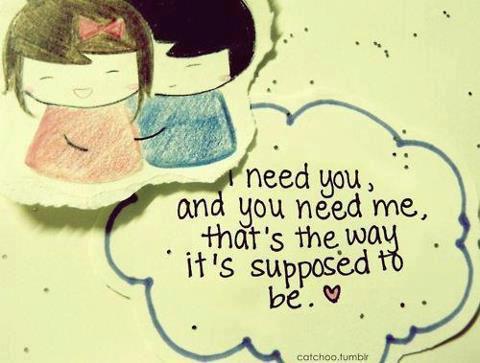
The Way Love Is Supposed To Be, a very, very short story

illustration the way love is supposed to be

I wanted to run upon the moors with tears streaming down my face.

She treated him as if he were a rajah, wearing a satin robe and slippers.

Don’t ever marry an accountant.

You’ll laugh, but I cried.

Her radar had failed her over and over again.

Men were tricky.

She danced the samba, then the tango, in the arms of a smelly Russian with piercing blue eyes who fancied himself a ladies’ man.

I would never marry someone who ogles women right in front of me. At least, not until I’ve started ogling them, too.

My Mama loved mohair; I loved angora. We were opposites.

Move your ass and don’t take a year.

I felt at sea for most of my thirties. The forties couldn’t be any worse, I thought. Wrong, wrong, and wrong!

I plodded, envying the agility of those around me with obviously higher serotonin levels. When I studied those brain chemicals in college, I didn’t know they’d turn out to be so important.

Redial that oily odor; a ray of water consoles the jilted; all beds of roses rot eventually; be brave and rest; the noose leads to the abyss; don’t gouge the luge, egad! Lazy seared meat; too addled to ladle. Baba rhum; Joanne Arel/Aral; raison d’etre; brave agar; the smell of water; conic Eros; seed the boo-boo, Sergeant. I came, I saw, I conquered; day-O, me say day-ay-ay-O; I say, Merv, that canary sure can sing!

Canary Conn? Transsexual on Merv Griffin. Breathtakingly beautiful, not a man in drag.

At this rate, we’ll never get there. Or perhaps, we are already there and are too stupid to know it! Dogs vs. cats… different, not better or worse. Different is GOOD.

No one’s a fool.  At least, not forever.

2 Comments

Filed under evil, god, good, justice, karma, love, mysterious, short stories

Opening editorial message for Truth, the magazine, 1st draft

illustration truth the magazine opening editorial statement

Opening editorial message for Truth, the magazine, 1st draft:

First off, my name is not really Kimberly Townsend Palmer. It is, or rather, should be, Kimberly Townsend Pomikala. Pomikala is a Bohemian name, which my father was born with but which was changed by his family not too long after he started school in Arcadia, California. It was changed because one fine, sunny day he came home in tears after being called a “dirty Bohunk” by the other children. It was 1943, and the world, and finally the United States, had long been at war. The biggest battles were not being fought on battlefields but being fought inside the human heart. Many families lost their entire physical existence, multiple generations snuffed out in less time than it takes to inhale, exhale — mine lost only its identity. A small price to pay for being safe in southern California, in a town named for the residence of the Greek gods. So my father grew up as a camouflaged ethnic. The name was changed, but the inside could not be changed. He never felt at home anywhere he went. He might well have been a war refugee of a metaphysical battle — a battle, the fundamental struggle humanity has been waging since its inception, the inexorable war between truth and ignorance. Factual accuracy is not always the truth — truth goes to the essence of a thing. Not the surface, but what is deep within.

The story is told how Eve caused the fall of humanity from the garden of Eden by eating from the tree of the knowledge of good and evil. What is the remedy for this? What is the essential nugget of truth we may take away from that crucial moment? My answer is: there is no absolute good, there is no absolute evil — there is but truth and ignorance. Eating the apple and gaining the surface knowledge of good and evil was a trap humanity fell into, a trap we have been struggling to release ourselves from ever since. Love exists. Hate exists. Both can serve the truth. Both can serve ignorance. We must harness ourselves to the wagon of truth and pull our heavy burden to wherever the driver leads us. The driver is God, the driver is love, the driver is peace, serenity and acceptance of the way things are on this planet. Many things we label good and many things we label evil are in fact neither. They are simply in the service of truth or in the service of ignorance. Satan, in the guise of the serpent, led Eve and Adam into a terrible, incomprehensible trap and God is now and has always been guiding humanity out of that trap. The reason God forbade eating of that fruit was it was not yet the right time for humanity to have that knowledge.

Plainly put, we are not yet advanced enough to receive the knowledge of good and evil. God is the only entity qualified to eat of that tree. We have taken a small, superficial bite of knowledge and used our imperfect bodies, minds and hearts to inflict merciless cruelty and oppression on others. Our biggest enemy is pride — believing we, as fragile, physical and temporal beings, can ever know enough to accurately judge another’s worth before God. How dare judges and juries impose the death penalty! It is not our role to take life, which is bestowed by God. It is our role to live it and seek the truth and banish ignorance. We are entitled to keep ourselves safe, we can ensure our physical and emotional safety from injustice and repression — but we cannot ever presume to know the will of God.

2 Comments

Filed under adam, bible, eve, evil, god, good, health, ignorance, justice, karma, legal writing, love, mysterious, notes, science