Category Archives: mortality

Things We Never Said, a short story

img058 alcoholics anonymous big blue book

Things We Never Said, a short story

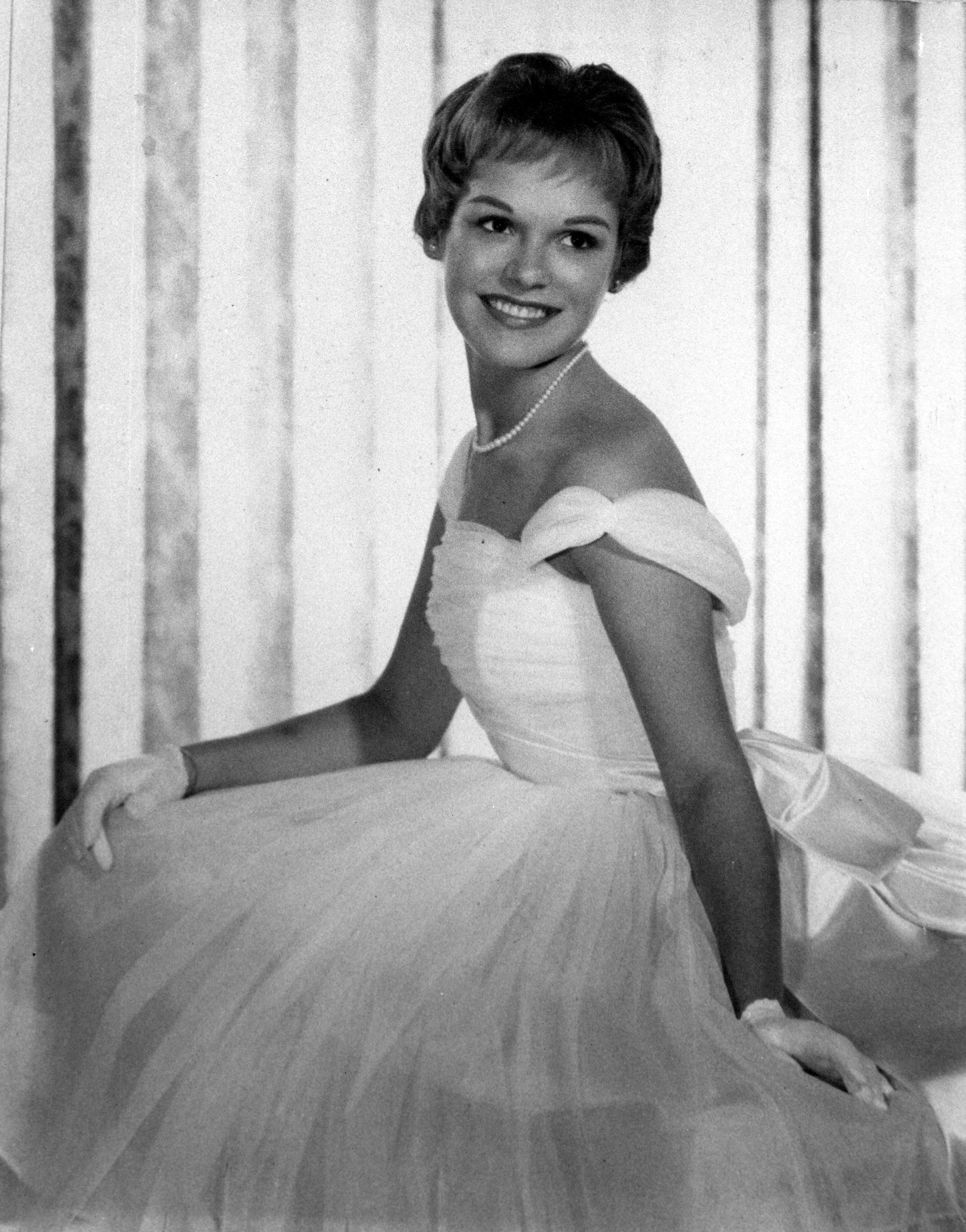
She was beautiful, as all mothers are to their children, but it was far more than that. Total strangers told me how beautiful my mother was. She was particularly fine-boned and delicate. Her skin was the softest I’ve known, her arms and hands the most stubborn, the most lethal.

Mom was an alcoholic, of course, and the most gruesomely stubborn person I’ve ever known. She went past simple denial and created her own alternative universe. Once, some quack psychiatrist she was seeing told her she wasn’t a “true” alcoholic — that she only drank out of boredom. She clung to that unfortunate phrase of absolution, repeating it like a robot in a variety of situations, until the day she died at 44 from alcoholic pancreatitis.

The only way we ever got her into rehab was when we threatened to call the police about obtaining drugs by false pretenses. She’d call the drugstore and tell them it was Dr. So-and-so’s office, would they please fill a prescription for such-and-such, three refills, please.

She got stiff all over when she drank, not like a normal drinker who gets loose. Stiff, and with a duck-legged walk that made my flesh crawl. I can’t tell you how many times I just let her lay there on the floor where she’d stumbled in a drunken stupor. I couldn’t bring myself to touch her.

If only Mom could have been more like Charity Hope Valentine, the taxi dancer in “Sweet Charity” who, after being pinched, pawed at, fondled, ridiculed, robbed, tattooed, thrown from a bridge, trapped in an elevator, and deserted at the altar, rather meekly accepts the cheery and somehow redeeming gift of a single daisy from a group of 60s flower children, pulling herself out of her misery yet again, and living “hopefully” ever after.

My mother and I both said “I love you,” a lot, and to no avail. Neither of us believed in love. We believed only in self-preservation. Trust was unknown. I have never learned the reasons for staying with another. All I can think of, now that I’m married, is what I’m missing, giving up for the other. How short life is, and how unhappy.

I took a developmental psychology course once, while my mother was still alive. The teacher explained that no child ever actually dreams of killing the mother. Infantile rage exists, yes, murderous anger exists, yes, but the true desire to kill can never be resident in the child’s subconscious. “The instinct for preservation is too great,” she said.

When I told her, later and in private, how I’d dreamed that very act, how in my dreams I’d taken the great butcher knife out of the kitchen drawer and stabbed it viciously and repeatedly into my mother’s fine and delicately boned chest, she shook her head skeptically.

“You didn’t really dream that,” she insisted. “You only think you did.” I didn’t argue. I was still too afraid it might happen in reality to insist that it had happened in dreams.

She was never a very good mother. I was never a very good daughter. After she died, I went to confess my guilt over my record as a daughter once, to an Episcopal priest. “I let my mother down,” I told him.

“No, you didn’t,” he insisted. “You were the child. You had the right to go off and live your own life.” I was angry at him, and never went back.

I still feel guilty about the first time I knew I’d hurt her feelings. She made me a bunny rabbit salad – a scoop of cottage cheese for the bunny’s face, cut up vegetables for the bunny’s ears, eyes, nose, and whiskers. It was adorable. But I hated cottage cheese, and salad. I was four years old. “I don’t like cottage cheese,” I told her.

“Just try it,” she said.

“No.” I refused over and over again. Finally, she ran out of the kitchen, to the bathroom, and I knew she was crying. I sat in the kitchen, staring at the rabbit, not eating it. I didn’t follow her, I didn’t apologize, and I sat there until someone, probably my grandmother, covered the plate with a piece of plastic wrap and put it in the refrigerator. I knew I was never going to eat that bunny rabbit salad.

I mailed the invitations to my own daughter’s birthday party today. She’ll be four in sixteen days. Oddly enough, all I could think of as I wrote out the cards was how much my own mother would have enjoyed seeing my child, her first grandchild. I know exactly what my mother’s face would look like if she were at the party — lovely, tremulous, inevitably a little weepy. I also know half of my pleasure would come from seeing the tenderness in my mother’s wide brown eyes as together we would watch my little Katie blow out all her candles.


3 Comments

Filed under addiction, alcoholism, blood, child abuse, child neglect, childhood, children of alcoholics, compassion, daughters, death, development, fiction, forgiveness, girls, hope, life, logic, love, mama, matricide, mea culpa, mortality, mother, mothers, mourning, murder, parenting, personal responsibility, regret, relationships, short stories, soul, spirit, truth, woman, women, youth

Inside A Red Heart, a short story

illustration inside a red heart

Inside A Red Heart, a short story

Ella’s life hadn’t always been like this. It was hurricane season, always the worst part of the year, but especially so this time. The cheap, post-divorce apartment Ella had moved to had flimsy sprayed-Styrofoam interior walls so thin she felt she could easily stick a pencil through them. The doors felt like balsa-wood, so hollow and weightless she couldn’t even slam them when she got mad, only sweep air currents through the frames. The rooms were carpeted wall-to-wall in a sticky celery-green shag which she could not bring herself to walk on barefoot. Hurricane preparations were meaningless in such a place, like diamond jewelry on a dying prostitute.

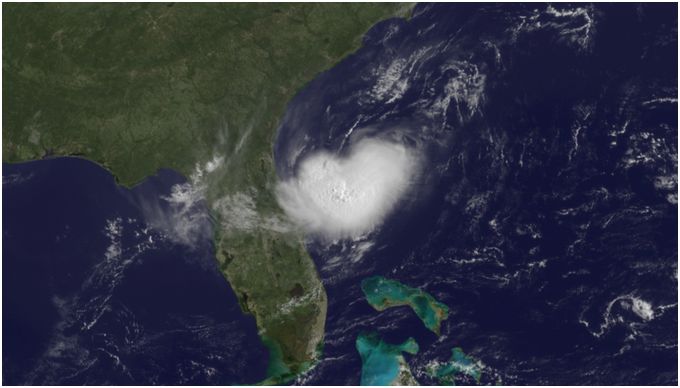
But today, Hurricane Naomi was 52 miles offshore, moving steadily along a stubborn, eerily direct path toward Ella’s apartment, when her father decided they’d better start getting ready, taping the windows. “They say this doesn’t help in the slightest,” she told him after finishing the first window, her arms already trembling and aching from reaching high over her head. She wanted to be an eagle, aloft without moving. “Even in a solidly built building,” she added spitefully.

“I don’t care what they say,” he said. “At least it’ll keep the broken glass from taking our eyes out.”

They finished taping over the second set of windows. She looked up at the sky; the brittle palm-fronds rattled and shook like frantic spiders. The bamboo rustled, probably full of rats. Tiny ants raced back and forth over the side of the house in some sort of military maneuver. Dropping hibiscus blossoms had stained the sidewalk red. A crushed bug was what captivated her attention. A sudden gust of cool air rushed over her neck, then after a moment everything stilled and the sun came out from behind the clouds. Against the dirty gray sky it looked abnormally bright.

“You look good in sleeveless tops,” her father said. “You should wear them more often.”

“Since when do you care how I look?” she asked.

“Is that how you usually take a compliment? No wonder you’re single. Forget I said anything,” he said. “Go inside and get the rest of the tape, please.”


Ella was mad about everything. Men especially, all the men she’d tried to get along with to no avail. Now, even strange men spitting on the sidewalk made her gag and retch. The phone rang — it was another man trying to sell her something. Listening to his voice on the machine, she decided she didn’t want any more goods or services, ever. She was fully capable of ignoring the outside world for weeks at a time. Finally, when her mailbox was stuffed so full nothing else would fit inside, she’d empty it and burn the contents.

After her divorce, she had refused to bring any of the old furniture from the house, not a stick. Granted, none of it was in such great shape, but she certainly couldn’t afford to buy new. Instead, she slept on a clammy air mattress for months, kept her clothes in cardboard boxes. Friends told her she was an idiot for not taking everything she could get from that tiresome lying hypocrite she’d married, but she just glared and shook her head, pressing her stubborn mouth against her teeth so hard her lips bleached white. Nobody knew how she managed to pay the rent or bring home groceries on what she made. Flying bullets couldn’t have been any more stressful than this, she thought.

There was a vague analogy between Ella and the rest of the world, that was all. She tried to understand men, but couldn’t quite manage it: they spoke, their lips moved, and sound issued forth, untranslatable. How was it they rose out of bed every morning so chipper? She was missing something they had. She navigated through her day like a ballerina dancing on broken glass.

When they’d finished taping the windows, her father poured a second cup of coffee for both of them. Breakfast consisted of coffee with plenty of cream. There was the long day to get through, then they were going fishing that night off the pier. They would stop at the bait shop for a bucket of shrimp and they would get ice cream cones — mint chocolate chip — and they would sit with their poles and wait for a nibble. Every now and then, without intending to, they’d sideswipe the truth.

He was visiting Ella for a week. He lived down in the Keys now, where he had always wanted to live; he loved to fish. Her mother had died three years ago, totally unexpected. No cancer for her, just a heart attack, plain and simple. Her parents had been happily married, but as soon as her mother died her father sold the house and went as far away from his past as he could get. Illness, for Ella, was something she would not allow time for, in that way she was exactly like her mother — though Ella wanted a good, solid tomb as a memorial when her time came to be one of the dead.

Her dog growled at her father as he moved his feet under the table. Ella’s crazy dog — he growled at everybody but he didn’t mean anything by it. He had long white whiskers and a moth-eaten coat.

“That damn dog,” her father said.

“I know, Pop,” she said.

“I don’t know why you put up with that,” he said.

“He’s harmless,” she said.

“I suppose he’s a good watchdog,” her father said.

“Not really,” she said. “He only growls when it’s someone he knows.”

“You mean he doesn’t growl at strangers?”

“No.” She laughed. Was he going to find a moral in this somewhere?

“Should I be flattered that he growls at me, then?”

“Sometimes he even growls at me.”

“I wouldn’t keep a dog like that.”


Since childhood, she’d loved to watch her father bait fishhooks. His long hands were careful and slow and the deliberateness of his touch delighted her. Not like her — she’d been falling over herself since puberty. Invariably she felt like a nuisance underfoot. She missed the neat quick grace of childhood. Whatever synthesis produced her from her mother’s and her father’s body, she couldn’t now imagine. Her father’s laughter was musical — her mother’s and her own like the braying of an ass. She secretly decided her mother had been cheating on him with someone else when she was conceived.

Until adolescence she’d been a precious little thing — then a hostile barrage of hormones turned her into somebody she didn’t even recognize: braces, knobby knees, confused skin, rebellious hair. To call her a girl was a misnomer of the highest magnitude. Something dark had entered the world along with her own blood the first time she got her period.

Once, in high school, her father had walked in her room without knocking and caught her masturbating; what a shame, he said, if you didn’t have so many pimples you might be able to get a boy to do that for you. His mind, like his body — like his heart — was angular; without softness; without love — he wouldn’t give her a second chance. The walls had zoomed in and out like they were breathing. She remembered the dress she wore, white with red and blue sailboats. Just like a ship being launched, only she kept running aground.

To this day, she wore only plain pearls, believing her skin too pasty to carry color. The only exotic thing about her was the color of her hair. Her hair was the color of rust; decaying iron. Growing up, her father never told her how pretty she was. But one night after a bad dream he took her back to her bed and rubbed her back.

Woken in the middle of the night like that, he was a different person, wordless and gentle. He’d held her so tight she couldn’t inhale. His silent, bulky warmth radiated through her and she wasn’t scared of anything. Everything in her room was painted either blue or green — how was painting any different than telling a story? He started rubbing her arm below the elbow; she was his. She wanted him to touch her underneath her nightgown but he didn’t. It made her feel awful to remember that now.


The TV was on with the volume turned down, and she was tracking Naomi on a grocery bag chart. She perched stiff on the couch, uncomfortable in her ragged cutoff shorts. Her father took a chair from the dining table and sat on it turned backwards, leaning toward her, his big perfect hands hanging over the chair’s back, his legs spread out like a cowboy’s. The dog growled from under the table.

“If you died right now,” he said, “you would go straight to Hell because you haven’t accepted Jesus Christ as your personal savior.” Pop loved his simple theories. He loved his cut-and-dried formulas. From the time her mother had died, her father had become born again and worried far too much about the condition of Ella’s immortal soul.

“How do you know?” she asked. “Isn’t God the only one who can judge a person?”

“It’s very simple,” he said. “Right now you’re a Nonbeliever. Nonbelievers go straight to Hell.”

“Says you,” she said.

“Says God,” he said.

“So according to you I could break every single one of the Ten Commandments, but as long as I accepted Jesus one second before I died, I wouldn’t go to Hell?”

“God’s grace,” he said. “His gift to us. Ask, and you shall be forgiven.”

Her father was telling her to ask for forgiveness! Selling all the gifts he’d ever given her and frittering the money away with nothing to show for it appealed to her. The flowers he sent for her birthday always wilted immediately, anyway.

“So God will forgive me for whatever I’ve done,” she said. “But will you?”

“First, you have to ask,” he said.


Hurricane Naomi wouldn’t arrive until tomorrow or the next day. Though at first Ella had looked forward to fishing off the pier, dusk arrived too soon; the coming darkness was like a funeral shroud. Her father drove his old rattletrap pickup truck towards the beach like it was a priceless antique. At the bait shop, they stood in line behind a girl, about 10 or 11, and her mother, also buying bait. The girl got into a silly argument with her mother about what they should buy, what sort of bait. “Shut up,” the girl said to her mother. Ella recoiled. Was there ever a place to be, truly, anonymous?

She remembered a time she’d told her own mother to shut up. Upon hearing, her father had slapped her across the face and broken her glasses. Her skull buzzed for a long time afterward, her jaw aching where the heel of his hand connected. She didn’t believe she’d been the same person at all back then.

She almost never cried in front of him, and especially not then, not about being slapped: she flat-out refused her tear ducts the indulgence. Nothing physical he did could get her crying — he had to use his voice, his drawling sarcasm, to knock her senseless enough for tears. She’d be so ashamed to cry in front of him like a big, blubbering idiot.

But then, getting her fishing pole ready over on the pier, a hook jabbed her finger. She’d been stabbed with hooks before; she didn’t remember it hurting so much. Was the air pressure from the coming hurricane making her stupid? She sucked blood out of the puncture. Her eyes started to sting, her throat to burn. She froze, her body paralyzed by embarrassment. She couldn’t help it, she started to cry, the convulsions shaking her.

“What’s the matter?” he asked. “Is your finger that bad? Let me see.”

“It’s not my finger,” she said, still in the grip of the horrible tears. He took her hand and held it close to his face, peering.

“Doesn’t look that deep,” he said.

“It’s not,” she said. Her nerves were strung out, yes, aptly put — as if her spine had been stretched, her entire body hanging off it in tiny sections which at any moment might start whirling away in terror.

She grabbed his shoulders and stood on tiptoe, leaning into him with all her weight. She kissed him full on the lips, pressing the whole length of her body against him the way she had when she was still too young to know any better, and for once he actually let her. She kissed him as though her life depended on being kissed back. And it did. And he did.


He had never told her she was pretty until after her mother died. Family tradition was for the parents to wait, remote icebergs, for warm currents of love to reach them from their children. She didn’t see the harm in that. The truth was, she had always wanted him as much as he wanted her. Tall and silvery-blond, his pool-water blue eyes fringed with gold lashes, he was still handsome for his age. He only smoked those awful cigars when he fished. Since her mother died, he hadn’t so much as looked at another woman, romantically speaking.

Even her ex-husband had been jealous of her father. He, her husband, was smaller than her father in every way measurable, emotionally as well as physically. Her ex-husband was such a small man. He had mewled incessantly about his boundaries, his boundaries — which didn’t keep him from stalking her and her post-marital lovers whenever his feelings were hurt. But if she read his journal, she was guilty of a great crime. What were boundaries, anyway? Even her ex-husband’s new wife was commiserating with Ella now about his smallness.

Too late, Ella had figured out she only got excited by what was forbidden, by a body’s unfamiliarity to her. Anybody like her who chose to marry was making a mistake. Once a thing became familiar, that took all the life out of her desire. She and her string of relative-stranger lovers ate Chinese takeout in bed, soy sauce dripping on their skin, which added another flavor to their mouth play. Fried rice, hot and greasy.

What neither Ella nor her father talked about that night on the fishing pier or any other night was how, way back when, she had left the back door unlocked one day and the baby, Ella’s little brother, had gotten into the backyard unsupervised and drowned in the canal. The water had seemed too shallow for anyone to die in. She was eleven — the next day she bled on her underpants for the first time. She wondered which was the bigger reason her father never looked at her the same way again.

Just now her father’s lips had tasted like his cigars, sour and sweet all at once, when she kissed him. Ella removed herself from his arms only after her skin against his grew slick with perspiration. The two of them finished up their bucket of shrimp after that, but they spoke little and caught nothing worth keeping. Back at her apartment with its ridiculous taped windows, her father began packing his small suitcase. The bellicose dog lay on the armchair across the room, for once not growling. “Damn hurricane,” he said. “Maybe I can get all the way home before they evacuate the island.”

“Are you crazy?” she asked. “You’ll have to leave again as soon as you get there.”

“I don’t think I can stay here tonight,” he said.

“You’re blaming me, aren’t you?” she asked. “Like you always do.”

“It’s not that, Ella,” he answered. “It’s got nothing to do with that.”

She touched his arm, and he flinched, then caught himself. “It was all my fault,” she said.

“No, it wasn’t,” he said. “If you’re asking, I’m answering.” He looked up from his suitcase, and for the first time all day his eyes looked old and tired. “Please don’t ask me to stay,” he said.


At midnight she sat awake, wondering what would happen next. Nothing good, she imagined. She didn’t know how she’d become such a curiosity. She was looking for what had gone wrong with a vengeance. Rooting through out-of-date phone books, through cards and letters she’d kept packed away since college. Excavating her past life, like an archeologist, was a great haven of sanity; as soon as she opened the first box, she felt safe from the present, it was suspended from happening, nothing more would ever happen to her until she straightened out all the previous mistakes. A pale blue chiffon scarf of her mother’s was folded underneath a stack of them. She was perennially accused of wanting to rehash the past. But it hadn’t been properly hashed over the first time, couldn’t any of these dolts see that?

A spider laid in the bottom of the box, its legs curled tightly. Though clearly dead, she worried lest it should somehow jump on her. A handmade Valentine’s Day card stuck out of the jumble like a sore thumb. The card was unsigned, but she recognized the handwriting. It was hers. She’d drawn a picture of a naked man inside a red heart. Her first boyfriend, a creative type, had insisted they make each other cards. How had she ended up with all this stuff? Ella flung herself back onto the bed so hard her teeth snapped together and she bit her tongue. Her bones ached. Her desire was killing her; she didn’t even know what it was she desired. She had to get out of the house for a bit, hurricane or no hurricane, or she’d go nuts.

She dragged her quivering dog — not so crazy after all — out to the car and drove over to her parent’s old house through Naomi’s outer fringes. Thunder rolled above her along with heavy sheets of rain like pronouncements from God. The dog cowered in her lap. She turned the car engine off and got out, the dog in her arms, hiding his head in her armpit. She stood searching the horizon, letting the rain wash over her face. It was the same whenever she made love to a man, she made sure to shower afterward.

Behind the house she’d grown up in, behind the canal her baby brother had drowned in, sat the northern edge of the Everglades. A flat, wet landscape — one she never tired looking at. Dun-colored saw grass, rippling under the steady currents of wind, stretched as far as she could see. Her mother’s chiffon scarf, monogrammed with her maiden initials, was her new good-luck charm. There was, as usual, no witness to her actions.

At least I’m brave enough to come back here, she thought. Her hair blew into her eyes and she held the dog tighter. She was startled when from behind her headlights moved over the undulating saw grass; she turned to see who it was. Squinting against the light, she saw her father’s tall figure get out and stand next to the car, calling and waving — she couldn’t hear much of what he was saying over the wind but she could tell he was crying. Like a flag on a pole, her mother’s scarf whipped in the wind around her neck, causing her to lift her chin and stand taller and straighter than she had for a long time. She could feel it. Her life was going to change.

5 Comments

Filed under childhood, compassion, daughters, death, development, divorce, ella, eternal, father, fathers, fiction, forgiveness, girls, health, heart, hope, justice, karma, kindness, life, love, marriage, men, mortality, mourning, mysterious, personal responsibility, regret, relationships, short stories, soul, spirit, women

Summer Evening, Beaumont, a poem

illustration murder in beaumont

Summer Evening, Beaumont, a poem


I was not there. I am only an observer.

The four-year old on his tricycle is

dressed for the heat in loose shorts

and nothing else. His hair appears


disarrayed as he stares at the ground.

The back of his bare skull is as finely

carved as a newborn’s, the delicate

shadows of his shoulder bones ask for


touch. The clumsy chalk lines on the

pavement are from a murder and he

knows it — the blood came out last

night as the torpid sun was going down.


This boy has to make stories up in

his head, but the shy universe he

creates is a notion he’ll never share.

I was not there. I am only an observer.


The dead man was 300 pounds and didn’t

talk much, as he, too, was waiting for a

miracle. Gang members used five or six

bullets, then ran away without taking his


wallet, the item they wanted most of all.

I was not there. I am only an observer.

Hours earlier, the victim had left his

rented home in all-white Vidor; he told


how the folks there threatened to hang him,

he told how lonely it was to wake up every

day and remember where he was. He wasn’t

afraid, he said, just tired of fighting.


2 Comments

Filed under anger, blood, compassion, criminal, criminal behavior, criminals, death, evil, funeral, history, ignorance, karma, mortality, murder, poetry

Violet Crown, a fable

illustration just me and god

Violet Crown, a fable

It took a long time for the dreams to come back.

(The dreams took a long time to come back.)

Her parrot knew before anyone.

The city of the violet crown.

No one escapes the labyrinth. Not even the dissolute rich.

The oracle sighed, and filled her pen with blue ink:

I know you intimately; I know the way your eyes move,
across the landscape. I realize how we live.  It’s not a sin;
you want the love you got in the beginning.  You want to
change your size, your shape, and your life. Where you
will be drawn, and in what order?  One woman you know
will stop at the color green, another woman dreams
of strangers as she sleeps next to her husband of fifty years.
That man will drink his coffee black, that one will slap
his daughter so hard she feels her cheekbones vibrating
for hours. Remember before you were born; remember
not having to breathe?  Imagine that stillness, that beauty
of the womb.  Let me remind you.  It was shielded
from the world, no sharp edges anywhere.  You and you
and you and you… your taut plum of a heart beat.
One day we will be there again, our blood will soar,
the sparkle sparkle sparkle of life.  The moonlight there
will be as pale and as reflective as new snow.
Your worry-lines will gradually fall away. To forget
your longing, you agonize daily, hourly: the beans
or the meatloaf?  The blue shirt or the yellow?  Toward the sea…
or the mountains?  Marry Paul or James?  As the crow flies,
or the long, winding road? We were together, you and I,
even when you thought no one could see — I watched
the way you lied, cooked the books, phoned for drugs,
delivered Chinese take-out.  You made yourself
important, taller, richer, more attractive.  Time for courage,
time for facts.  You have always been, are, will be loved.


Leave a comment

Filed under children of alcoholics, compassion, eternal, eternity, god, identity, love, mea culpa, mortality, mourning, mysterious, personal responsibility, prose poetry, regret, relationships, soul, spirit, spiritual, universe

Handkerchief, a prose poem

illustration handkerchief

Handkerchief, a prose poem


Made of linen, wide band of tatted lace around the edge, now slightly torn.


The linen is white, tinted grayish-green, the lace silvery like sea foam, and that delicate.


In 1900, a bride carried this in her bodice, next to her heart, and when she saw her fiancé at the altar, she began to perspire. Her salts are in the fabric still.


How she loved him in that moment…. What isn’t here is the rest — six children, five boys and a girl, the farmhouse so cold in the mornings, before she lit the fire.


Her husband’s waxy handlebar moustache, his pleated ruby waistcoats, hand-sewn each night until her shoulders ached.


How many times had she tried to imagine their wedding night as she tatted her lace, each delicate loop like a caress?


1 Comment

Filed under beauty, eternal, eternity, heart, karma, kindness, life, love, man, marriage, men, mortality, mysterious, poetry, prose poetry, relationships, soul, spirit, spiritual, woman, women

Muir Woods, a poem

illustration muir woods

Muir Woods, a poem


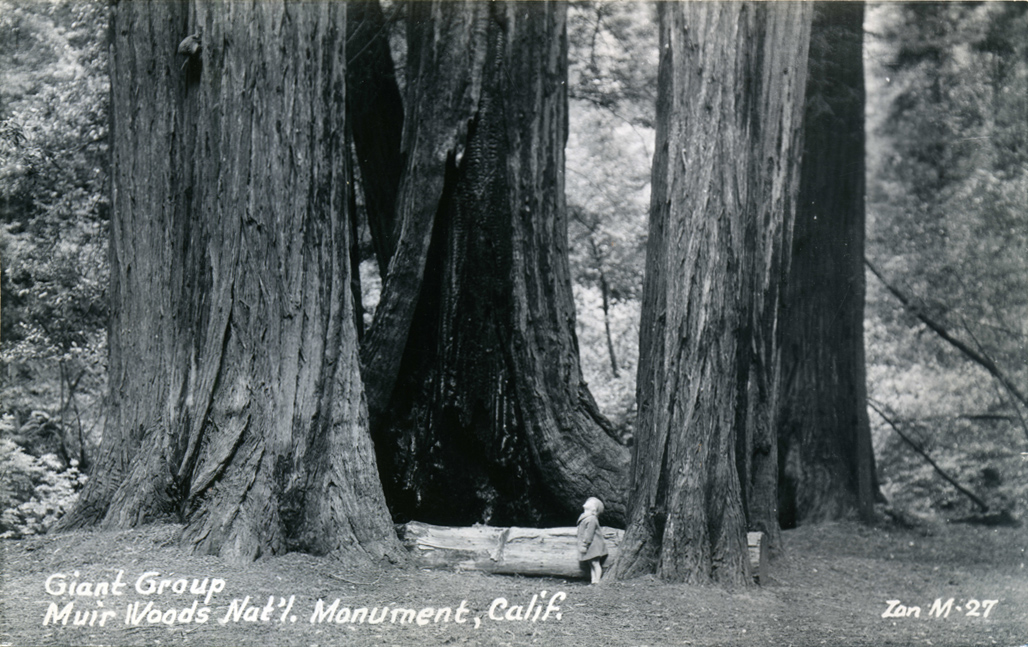
The eye is drawn, farther and farther

toward thin blue sky until the green feathery


tops of the trees are like the northern pole

on some dream planet. Your carsickness


from the ride up the mountain begins to fade,

leaving behind a breathless, weepy echo


not unlike your first religious fervor.

Then, you stared at Jesus’ sad face for hours,


wondering what it was that made him

love you. Here, it is the usual paralysis,


nerves made dumb by the unaccustomed

richness of perfect light. Vague, starry eyes


like yours feel at home. The air is weighty,

burdensome, solemn. Tall and slender, your guide


touches your wrist, and for a moment, you too

want to leave the surface of the earth


forever. Shyly, she picks up a tiny

pinecone, smaller than a toy. You laugh


when she tells you this is their seed:

all around, their ravaged, hollow


corpses litter the ground

like the bones of God.


In this place you feel helpless,

childlike, and you can understand a wish


to die here, never leave this hush.

They’re only trees, you tell yourself.


Yes, only trees, you think, standing still with

your neck bent back; wondering if they hear you.


2 Comments

Filed under beauty, earth, eternity, god, good, mortality, mysterious, nature, soul, spirit, spiritual, truth, universe, wood

The Nearness of Heroism, a short story

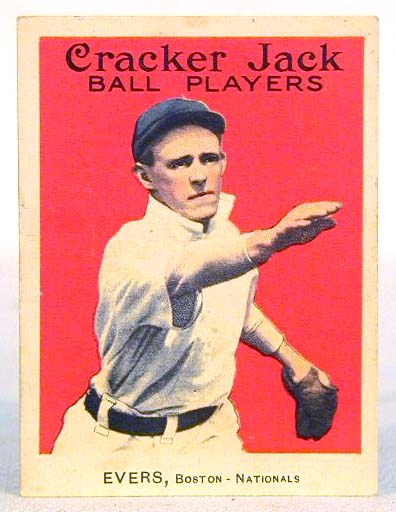
illustration the nearness of heroism cracker-jack-eversillustration the nearness of heroism

(Originally published in The Paumanok Review)

The Nearness of Heroism, a short story

They tell me he was the first man I ever saw nude; that when I asked him, pointing, in my high, three-year old’s simper, what “that thing” was, he didn’t even flinch. He stood in the big tiled shower stall, holding the door ajar with one hand, toweling himself off with the other.

“I’m a little teapot,” he sang, in his exuberant tenor. “Short and stout. This is my handle, this is my spout.”

They say I stared, and then frowned, running out to demand of my grandmother on the spot — I want to be a little teapot! Show me my spout! Where is it? Where is my spout?

Where, indeed? If only the gulf could have been reduced to those dimensions. Am I wrong to feel we would have been closer, had I been a boy? Would he have loved me more, or less?

***

I liked to sneak up on him while he used his glove, just out of the shower, a white towel tight around his waist, his hair slicked back, parted precisely. Even from my earliest memories, the old baseball glove was missing one or two fingers, the ball deprived of whole sections of its leather wrapping, worn through to the string-mended core in several spots. Both glove and ball had darkened to the color of cured tobacco, carrying a sheen of sweat-polished grime that lent a gleam akin to the finest shellac. Arms moving, hands a blur, he would move in automatic rhythms of meditation, pounding gloved fist with clenched ball as his lips moved, the words inaudible, his gray eyes focusing up and out at an angle, viewing a corner of patterned plaster, seeing something I wanted to share but couldn’t.

Then he’d notice me. He’d stop in mid-pound, his mouth open for an abrupt chuckle, too embarrassed to be embarrassed. “Hey there, lady,” he’d say, the broad vowels of his Brookline childhood making his words seem exotic.

He kept the glove and ball on the highest shelf of his closet, a level I couldn’t reach, not even with a step-stool.

***

He was, in fact, the only male presence in my life, even after I started to dwell on the concept of boys, the one I ran to in the early morning — crawling into his bed, burrowing deep under the covers, where he sang the old songs he’d learned from his Irish mother and held me in his arms, my nose burrowing into his soft feather pillow, into his wrinkled cotton pajamas, seeking out his bitter-tea-with-lemon smell, seeking out his body’s distinctive shape and radiating warmth, which possessed a steely eloquence no less comforting than my grandmother’s padded torso. Since he was home with us every day, having retired years before I was born, I didn’t realize he was different from other men, other fathers, who were defined not by their presence but by their absence.

“Oh, you dirty little devil,” he’d sing, “Does your mother know you’re out? With your hands in your pockets and your shirttail out?”

I would hear my grandmother fuming from across the room, not speaking but moving the various brushes and trinkets around on the glass-topped surface of her dresser with snappish clinks and taps. At other times, whenever he knew she disapproved, he’d make disrespectful rubber-faces behind her back until my face couldn’t keep a secret any more, and, looking at me, she’d see some sign of what was going on, then wheel indignantly, catching him in some fish-lipped, pouting impersonation of her, their demeanor so ridiculous, so upside-down, that for a moment it seemed that he was a small boy again, no one’s husband, and she his strict governess, no one’s wife.

***

He was related to me by marriage, not by blood, something that seemed to bother him a lot more than it bothered me, especially near the end of his life. From the very beginning, I had pledged my allegiance to him, had given him that affirmative declaration of the heart, and for a short time, during childhood, it seemed that he had pledged the bond in return and accepted me as his own. Not even in dreams did I measure him any differently than I measured his wife, my grandmother. As I grew older, however, and he grew more and more frail, the absence of an actual cell between us appeared to chip away at his feelings. “I don’t have any family of my own, you know,” he’d say, gazing at me as if for sympathy, never knowing how caustic the mild-sounding words were to my ears.

“I’m your family, aren’t I?” I asked him, the first time he brought it up, but he shook his head, smiling at me with a thin-lipped yet dreamy smile.

“It’s not the same,” he answered.

***

On various occasions, as his health became less certain, I promised him one of my eyes, one of my ears, one of my kidneys, half my heart, half my liver, half my stomach: everything and anything he needed to survive, anything he might need to be comfortable, which I swore to give to him when he got “old.”

***

In my last year of college, I had a boyfriend who got physical with me on several occasions. Nothing serious, no marks: a thump on the head with one knuckle, a scuffle in the yard, pushing matches. One day I reacted badly, bolting my apartment door and calling home. He answered on the first ring, but, having expected my grandmother, I found I couldn’t stop the tears. His voice deepened, becoming rough around the edges as he interrogated me. An old man, on six kinds of heart medication, he swore he’d drive the four hundred miles and teach the boy a lesson.

“No, Grampa,” I said. “It’s all right. I’m breaking up with him. Don’t worry.”

“Call the police if he comes to the door again,” he said. “Have him arrested.”

This reaction, despite his often-repeated joke: “Never hit a woman,” he’d say, shaking his head, staring at my grandmother’s back. “Use an axe.”

***

His fourth heart attack came only days before my wedding. He managed to walk me down the aisle anyway, spiffy and broad-shouldered in his plain black dinner jacket, a single pink rosebud clipped to his lapel. Since both my parents were dead, he was “giving me away” to my fiancé, a practice I found offensive on feminist grounds, because it seemed to exclude my grandmother from the giving. So we compromised: when asked by the priest, “Who gives this woman?” he was to answer, “Her grandmother and I do.” Except, when the moment came, he said only “I do.” My grandmother, standing in the front row in her baby blue satin lace and picture hat, whacked the prayer rail with her wedding service programme in frustration. The sound echoed off the front wall of the small church and stayed with me for the rest of the day.

Later, at the reception, he was critical of the music we had selected without consulting him: a wandering string quartet. “All your guests are leaving,” he said, after his fourth or fifth glass of champagne took hold. “Why didn’t you have a real band? Some dancing. It’s like a funeral in here.” I trembled all over from the exertion of holding my tongue. Only if I had screamed at him, my face reddening under its halo of white silk flowers, would he have been happy.

***

I was home for a long-overdue visit when the last battle came. Semi-invalided, by then, Grampa moved only from the bed to his recliner, spending the day reading the paper in a slow, deliberate rustle. The television blared for hours each evening, his expensive hearing aids — the same kind Reagan used, he’d told me — plucked from his canals and discarded, tossed into a dainty porcelain ashtray: hand-painted with a rising, twisting phoenix, it was the only memento he had kept from his service in Germany during the war.

He didn’t like going to bed at night, waiting until two or three in the morning to call for my grandmother to help him to his room. Arising no earlier than noon the next day, he’d swear he hadn’t slept a wink. “He snored like a baby all morning,” my grandmother would whisper.

His appetite was slight too, and then one day, nonexistent. Supper waited out in the dining room: over my grandmother’s objections I took him in a bowl of ice cream. He lay against his pillows while I spooned it into his mouth, noticing how he lipped the spoon as I withdrew it, sucking it like a baby. The bowl finished, he thanked me, his voice hoarse with exhaustion. Turning to leave, I heard him start coughing, a deep cough that seemed to come from his gut, his eyes widening under the thick cataract glasses, his cheeks bulging, seemingly an imitation of his old comic fish-face. For a moment I laughed, thinking it a joke, but he put his hand over his mouth and made as if to hold his lips together with his fingers. He was trying to keep from throwing up all over the bed, I realized, running for a basin, almost too late.

After Gran and I cleaned him up, I felt his forehead. It was hot, dry, but the rest of him was clammy and covered with an oily sweat. As I took his temperature, Gran called the doctor, who told us to get him to the hospital right away. When we told Grampa where we were taking him, he shook his head. “Now what’d you go and do that for?” he said.

He looked so small and frail laying there it was a surprise to find I couldn’t carry him — what remained of him was deceptively heavy, as if his bones were filled with lead. It took both of us to get him out to the car. Each step seemed so difficult, so impossible — by the time he lowered himself clumsily into the front seat, he was glistening with a symmetric pattern of droplets, the sweat beading his skin like opalescent sequins.

***

At the hospital, an orderly dressed in green surgical scrubs helped Grampa from the car into a wheelchair. The orderly was tall and long-limbed, and moved with an ease, a lean fluidity born of professional indifference. His arms were the color of imported chocolate, warm coppery highlights underlying the pigment. His arms were like a god’s: so full of life and possibilities, I held my breath as he lifted the skeletal, ashen old body of my grandfather out of the car. I couldn’t say what the orderly’s face looked like other than that it was — like the motion of his limbs — devoid of both pity and scorn. His eyes remained downcast, looking only at Grampa in the chair — and I wanted to speak, but nothing came to mind, only regret at not being permitted to be similarly borne away, out of my own uncertainty and into a place defined by someone else’s ministrations.

The young man’s arms, in that moment, seemed to emit forensic signals, speaking without words to a pain I hadn’t realized was there, the arms themselves justifying birth, justifying suffering, justifying death: paying for perfection all over again — skin so smooth it looked hairless, poreless, as if it smelled of allspice and cinnamon and blood and salt. The arms were immaculately sculpted; the bones just long enough, granting a perfect inertia between muscularity and leanness. The miracle of such arms and skin held my attention like a time-release dose of whatever manna makes heaven heaven, and so it was that I found myself spiraling into an upward-rushing eddy of panic when the orderly left, forever, just seconds later, rolling my grandfather to the admitting desk like so much cargo, then vanishing into the angular whiteness and pulsing fluorescence of the hospital corridors.

***

We left Grampa there, in the midst of a cotillion of duly licensed strangers — what choice did we have, not knowing, not wanting to know, not capable of that knowledge? By not speaking, we maintained a positive attitude. His room seemed comfortable, his nurses kind. His glasses glinted, the reflection obscuring his eyes, as we waved goodbye from the doorway.

By the next morning, he had been moved to the intensive care unit. He was comatose, hooked up to a ventilator, stripped of his pajamas, gleaming plastic tubes invading his throat, his nose, his bladder, his veins — his heart had stopped in the night, from the pneumonia: the doctors speculated he might have had irreversible brain damage before they got it going again.

Machines everywhere, whirring, beeping — my grandmother and I couldn’t even touch him. His chest shook under the ventilator’s control, his whole body quivered. The vent itself hissed, clicking, coaxing his reluctant breath, forcing it when it hesitated. Pushing his lungs in and out without his body’s permission. The respirator had a device to allow him to breathe for himself, if he could, like training wheels on a child’s bicycle, and sometimes he did, but even that primitive desire for oxygen would vanish, and the machine would kick in to bring him the next breath.

We were there when the respiratory people had to change his breathing tube. With the most well-meaning, tender sort of violence, they ministered to the tubes, his whole body curling into a fetal position with the deep, gaglike coughing that resulted. They couldn’t say if he’d ever wake up, or whether he’d come off the ventilator. His arms were twisted, contorted, the hands grasping at nothing with a desperation that made my shoulders quiver in an involuntary spasm of sympathy. I bought him a tiny teddy bear, uncurling his stiff fingers to place the bear against the taut, unyielding palm. His other hand appeared to relax once the toy was in place, but perhaps it was only my imagination.

***

My grandmother and I, without speaking, understood our own feelings clearly enough. We wanted him gone; this kind of life was too painful to watch. We wanted it to come:   but at the same time felt wicked and evil. Who knew what he himself would have wanted? In the end, she signed the thick sheaf of papers authorizing no further “heroic measures.” Each place for her signature was marked with special red removable tabs.

***

In a sort of minor miracle, in several days he did awake, and they removed the intrusion of the ventilator. He was himself, more or less, and knew who we were, but underlying that surface was a terrible confusion. “How’s Jessie?” he asked me calmly, the name of my great-grandmother, dead long before I was born. His memories suffered no restraint; no contradictions existed in his inner flow of time. “Seeing you’s the best present I could have gotten,” he told us. “I’m going to take us all on a vacation when I get out of here.”

He seemed better than he had in years: I left for home, knowing it wouldn’t last; for the first time not wondering whether he would live or not. Later that day, I called him at the hospital from a thousand miles away and let him speak to my husband and my daughter. Say I love you, I told them. Say I love you, Grampa.

***

The next day he slipped back into unconsciousness, gently, easily, as a bar of soap floats downward in warm water. Notwithstanding the papers, the hospital wanted to put him back on the ventilator. No, Gran told them, no ventilator. No more.

***

I asked her what he had looked like, at the end. He lay on his side in the bed, she said, breathing shallowly. He didn’t seem to be in pain. He panted a little, she said, not moving, his face smooth.

I feared perhaps we had decided it the wrong way. Grampa’s doctor, without saying anything, seemed to look at us as if we were bad people, as if we cared more about ourselves than Grampa himself. As if we were selfish.

***

It wasn’t until a couple months after the funeral I thought to look for his glove and ball. I searched his closet first: most of his clothes and things were already gone, and the closet seemed a different space, altered by no longer containing him. When I couldn’t find them I didn’t panic — I knew Gran had put them away somewhere safe for me.

“Where’s Grampa’s glove and ball?” I asked her, not wanting to reveal how much I wanted to have them, now that he wasn’’t there to keep them away.

“What, those old things?” she asked, incredulous. “You wanted me to save those?”

I gaped at her then. The floor under my feet got soft; my knees turned into grating stone stubs lashed together by rusted wire. She was right, in a way, since at the last the glove hadn’t been a glove, just a thumb, the ball not a ball, either, but a roundish wad of wrapped string, its leather covering gone. That was all he’d had left, all I’d wanted: a piece of him I’d thought I was entitled to.

I would have kept them in a little box and looked at them every now and then, touched them with my finger. Maybe, if I was feeling daring, I would have taken the glove thumb and slipped it on, holding the ball in my hand, sliding the brittle thumb piece back and forth over the grimy string. I would have smelled them: a few tentative whiffs of the powdery leather.

***

I didn’t yell at her, there was no point. It was over. In spite of my outward act of forgiveness, I couldn’t help thinking that perhaps what Grampa had said all along was true — maybe people did reserve the deepest sort of caring for their own blood, maybe that kind of caring was inseparable from cells, inalienable from life. Gran hadn’t cared as much about his feelings about the glove as she had about mine, for example. Or was it just that she didn’t care as much about the archival, historical things as I did? Whatever the explanation, it was done: she had not even understood enough to realize the issue existed.

“Why didn’t you tell me not to throw them out?” she asked later. “Why didn’t you tell me you wanted them?”

It was simple: I thought she knew. “I just assumed you’d keep them,” I said. “They meant so much to him.”

“They were ratty old things,” she said. “Just pieces, really. They were unrecognizable.”

***

I told myself that perhaps it was a good thing that the glove thumb and string ball were gone. I’d wanted them for the wrong reasons. I’d wanted something I didn’t deserve. I felt hungry — empty — but without focus, without specific appetite. He — damn him! — was leaving me all over again, and for the third time: the person I’d wanted him to be; the person he’d been; the person I’d wanted him to remain.

I thought of all the other useless things I already had in my personal archives, from my father’s crocheted baby blanket to clothes worn by my mother in college. I thought of letters they’d written to each other before I was born, airmail letters on thin blue tissue, drawn in irregular strokes of faded ink. I thought of brittle brown paperbacks and the curling edges of photographs. We are naked in our mourning, we cannot speak, and we cannot touch.

Grampa was gone; the glove and ball were gone; I was still here. The hell with it — I didn’t want to know, I didn’t want to hear what the dead had to say anymore. Only in dreams would the dead be able to seek me out again.

The dead never say much, anyway, not even in dreams. They look into my eyes, mainly, their own abrim with a solitary sort of gentleness, hoping to inoculate me against what they know is unnecessary sorrow — unnecessary love? — hoping to protect me from whatever it is that only they can see: all the while, nodding their heads in a slow, assured rhythm, a rhythm nearly invisible to the unaided eye.

3 Comments

Filed under beauty, boys, childhood, compassion, death, development, eternal, eternity, fathers, fiction, funeral, god, good, health, heart, history, identity, justice, karma, kindness, life, logic, love, man, manhood, maturity, men, mortality, mourning, mysterious, parenting, personal responsibility, regret, relationships, short stories, soul, spirit, spiritual, truth, universe, warmth, youth

Heads of Caracalla, a poem

illustration 1 heads of Caracalla

illustration 2 heads of caracalla

MC 0464

Heads of Caracalla, a poem

There are three of the ancient busts on display
in the Louvre.  Poor soul:  he only controlled
his great empire for six years.  I’ve been married
for seven, and though it isn’t like ruling Rome,

it’s hard enough.  Thus, I can’t imagine how
he managed, even if he could imprison or execute
at will.  Maybe stress did him in at twenty-nine.
True enough, during the heated third century

after Christ, the common man was too often dead
by thirty, teeth rotted away to stumps,
complexion scarred and worn, creased deep
like pegged and scraped hides drying in the sun.

Surely Caracalla’s own hands were soft,
languorous and pudgy, with those meticulous
shiny nails?  Perhaps he was afflicted
with diabetes, or simply poisoned by his lovely

but illiterate wife.  Will anyone wonder
what carried me off after a thousand years —
or even ten?  During three decades on earth,
sculptors recorded all his secrets:  first the pretty

baby, innocent and round-cheeked as any three-year-old,
blunt-cut curls springing away from his tender forehead
like the petals of an iris.  Around the time
of his ascension, he had become sullen, his eyes

impenetrable, glassy, his torso clumsy, thick-necked,
his full, full lips bowed with palpable cruelty.
I must admit, by the year of his death, he’d grown
into his flesh — he looks wise, even kind,

and his drilled marble eyes are lively, holding
a gleam of curiosity for something outside his own
imperial body.  I place my finger against the hard marble
cheek, hearing my own frail life tapping its brisk heels.

Leave a comment

Filed under ancient history, art, art history, beauty, bust, childhood, death, emperor, empire, everything, history, life, louvre, manhood, marble, maturity, mortality, museums, paris, poetry, rome, sculpture, travel, universe, youth