Category Archives: mysterious

Ode to Ex #3, a poem

Ode to Ex #3

You were no Gautama Buddha;
turns out, you were a barracuda!

Or a rat, old hat, who scat with a blat,
up the creek, with a squeak — imagine that!

Just an ender, an offender, a greedy over-spender —
your destructive feud, was horribly rude,

and my tongue has been in-cheek
during this opera comique, you pipsqueak!

But your latest is your “greatest,” so now I exclude
your ineptitude, dude! Myself, I won’t delude.

You’re unproductive, so you go splat!
I’m not destructive, but thoroughly instructive!

You can’t handle my words?
I know, you prefer turds.

Have a nice life;
thank god I’m not your wife.

Kimberly Townsend Palmer

7 Comments

Filed under health, humor, mysterious, notes, poetry

Suffering Jets, Bowling Litionists, and Peace Knicks, a fable

illustration suffering jets bowling litionists peace knicks

Suffering Jets, Bowling Litionists, and Peace Knicks, a fable

My mom’s always trying to teach me History.  She says it’s important for us kids to know all the bad stuff that happened in the olden days so we won’t be as stupid as all those olden people were.  My mom seems really mad at those olden people.  She says human beings could have lived in a “paradise-on-earth” if it wasn’t for a whole bunch of bad ideas they thought up and then were stupid enough to get stuck on.  Just as if they were GOOD ideas!  My mom thinks good ideas are real important.  I’m not so sure because I can’t always tell the difference between one of her “good” ideas and one of the olden people’s “bad” ideas, but I’d never tell her that because if I did I think she’d go nutsy-futsy just like Nadine Houck’s dad did, and then I’d be pretty much alone except for that mean bunch of kids living on that hill up from the lake.  They’re not mean so much as they are just pissed because nobody’s really around to care for them and make them read their schoolbooks every morning.

Anyway, my mom’s always trying to teach me History, and so I try to learn it.  Like today, she got started on the “god-damned East-West mutual suicide pact.”  She says that back when there were lots of olden people, (she says there were BILLIONS, but that nutso-futso and I don’t believe her), everybody actually KNEW what would happen if there was “an all-scale nuclear confrontation.”  Like, they made TV shows and movies about it, and people wrote all kinds of books and stuff, and they had big “world conferences” and all, and lots of people even made stuff for people to buy so that when the “all-scale nuclear confrontation” came, they’d have water to drink and canned peas and tuna fish and EVERYTHING.

And like people even built bomb shelters in their yards and stuff.  My mom says this is “evidence of the world-group insanity” of the early twenty-hundreds and that I should mark it WELL in my soul.  So anyways, all the olden people actually KNEW what could happen and all.  Which is real hard for me to believe sometimes. Like if my Mom and me actually KNEW that the roof of our house was going to fall in, and so we bought big steel umbrellas and helmets and stuff, and kept living right in the SAME actual house but all the time acting real worried about the roof caving in and talking like MAD about how to prevent it and all, but really not doing anything to brace the ceiling.  And EVEN having some guy show us pictures of what our blood would look like spread all over the floor.  But then we’d just buy bigger steel umbrellas and harder helmets but we STILL wouldn’t leave the house.  Damn, isn’t it hard to believe that those dumb olden people could actually ACT like that?

So anyway, the whole of Earth really, really KNEW that they were in a big pile of trouble.  But people did ALL sorts of stuff to “distract their lunatic sensibilities,” my mom says, and they’d do stuff like jump out of big airplanes to feel what it was like while all the time they just kept stocking up on the god-damned steel umbrellas and helmets.

My mom said that one time in the middle of the twentieth century and towards the 70’s some olden people actually and truly came to their senses and try to yell loud at all the “sleeping fools,” my mom says.  She says that she read all about them in college and always wondered why they quit yelling.  She says that groups of good people would get together all down in history, but that as soon as they had “achieved their one objective goal,” they would trickle down and eventually dry up.  She talks about the Suffering Jets and the Bowling Litionists and the New York Peace Knicks and that they all lost their momentum in the end.

Anyway, my mom says that HER theory of what in HELL happened to people is they had plenty of guilt, but no feeling of responsibility to go along with it.  Like they felt bad about their “sins of omission” and all, and they hung their heads about it, but what it REALLY was, was just “crocodile tears.”  Like they would say, “Gee, I feel SO guilty, but gee, if I felt guilty about every bad thing in the world I wouldn’t be able to SLEEP at night and my face would break out and I wouldn’t be having FUN and stuff.”  Like they had a mental maturity age “of about three,” my mom says.

4 Comments

Filed under for children, humor, mysterious, notes, prose poetry, science, short stories

sand mandala (agnostic’s prayer), a poem

illustration sand mandala agnostics prayer

Sand Mandala (Agnostic’s Prayer)


I. Candles, Burning


The world is not important. The world is an illusion.

My daughter’s shoulder blades, ivory carvings under

the warm, silken blanket of her skin, might as well be

made of wax. Her hair, its smell of cherry-almond


shampoo, is no more than a flame, consuming tissue

paper. She will be gone before the universe notices her.

Today I saw Tibetan Buddhist monks creating a sand

mandala, a round picture made from layering different


colors of sand. Shimmering, resplendent and complicated,

a yard in diameter, it took three unbroken days to make it.

Tomorrow at 11 a.m. they’re going to sweep it away.

This creation of beauty then its eradication is symbolic.


II. Lessons, Learned


My tears are irrelevant. My suffering is insignificant.

The monks believe our material existence is transitory,

well-nigh unimportant. They were relatively young

though it was hard to tell because of their shaved heads.


They all wore plain maroon pants, sleeveless maroon

tunics. I walked by them, entering the building, shied

away, tried not to look. But they seemed to radiate

serene alertness, a lack of angst. They didn’t flinch


but gazed at me, through me, beyond me, plainly,

readily. As a little girl, I wanted to be a nun.

Discipline of the flesh is holy. To contradict desire

is sacred. The world is a sickening dream we long


to wake from. I dressed one year as St. Theresa

for Halloween. I was in Catholic school for kindergarten

and first grade, and came home one day to tell my mother

I couldn’t wait to die and go to heaven so I could be


with Jesus. She put me in public school the next day.

She was dismayed. I had seen dead animals

in the kitchen, plenty. One time I saw a chicken

roasting in the oven, asked what it was. “A chicken,”


she said. The earth is not significant. The earth

is an hallucination. I got hysterical, pleading with her

to take it out of the oven. She fibbed, told me

there were two kinds of chickens, one with feathers,


for running around outside, the other for eating.

It relieved my frenzy, then. What about now?

My life is an illusion, my life is empty. I shovel food

into the mouths of other unfulfilled beings. Ceaselessly,


I’m on the horns of a dilemma. Doesn’t every suburban

housewife secretly, in her heart of hearts, want to run off

on spiritual pilgrimage, at least each and every time

the dog vomits on the rug? Yes, I live like a spy.


III. Emptiness, Filled


I feel like an undercover agent most of the time.

I just don’t get the whole show. Something’s not been

explained fully to me. I’m waiting for my operating instructions,

but my contact is nowhere to be found. I don’t know


if I’m religious. I never have the strength to decide

if I believe. From that first plump, naked chicken in the oven

I cried for, at five — chickens have their own heaven,

my mother lied, bright with love — from that first dark


lamentation over the insolence of death I wanted only

to understand the enigma of creation, to fathom the depth

of my intimate source. Fitted out as Saint Theresa

it felt sinful to accept candy, I wanted more than anything


to sanctify those hands moving with meek generosity

toward my outstretched pillowcase. Yes, I saw myself

with bright blue skin, leading pale cows to drink.

Or robed in red, a fluffy hat atop my head; a hesitant crown.


I could easily put fragrant powdered saffron in my hair,

eat nothing but fruit picked off the ground, sweep the earth

bare before my steps with a handmade straw broom.

All creeds appeal to me inside the inquisitive casement


of my brain: a fickle twitch of nerves, chemicals, proud

of its weak pulses of electricity. The difficulty dwells

deeper, amid blood, bone, sinew: a sad hollow space,

never filling up. Afraid to give over to a thing I can’t control —


or at least charm. I want to dance in green meadows,

wrap ribbons around a pole, follow the golden ring.

I imagine flinging myself into cool grass, crying from joy.

The world is unimportant. The world is an illusion.


IV. Waiting, But Not Endlessly


Everything will be all right, the melancholy quietness says,

as I lie solid on the ground. I feel resigned to my fate,

steeled to endure the torments ahead — that one last breath,

that one ultimate moment of longing. Have I received


the divine gift of faith? I still sit for hours, eyes closed,

waiting for that voice, those words, to lift the roof

of my skull and cleanse my fears away like silvery water.

I will, after all, be gone before the universe notices me.


1 Comment

Filed under mysterious, poetry, science

the divided self, a poem

illustration the divided self

The Divided Self


That lonely man and that sad woman

are dead now, but I still can’t

get away from their lawful claims.


They possess my hands, my feet,

my face. I have only been loaned

these things: possessions assembled


for me out of unseen molecules

I believe in by faith, with thanksgiving.

Blind, jerking passion such as this


nurtures the kind of organized madness

I learned to live with a long time ago.

Short and sweet, to the point:


I hate them bringing me into the world!

What on earth were they thinking,

warm lust pressed against the cold metal


of a postwar kitchen table?

Or did they simply writhe on the linoleum?

Alone, I existed weightless, unknowing, free.


I never approved the intrusion of his

sperm, wriggling madly for oblivion;

tiny kamikaze. No wonder men feel


like clumsy, oafish gods half the time.

As for Mother, she arched dizzily beneath him

half-clothed: strapless formal, silk stockings,


shiny pumps with spike heels,

and though she opened her flesh,

how she longed to kill him with her shoe.


Such war made me. Secret wishes

do a body in. I am that frail universe

mindlessly created, allowed to run wild.


3 Comments

Filed under legal writing, mysterious, poetry

creative notes, 9/24/03

illustration creative notes 9 27 03

Creative notes… 9/24/03

“We also often add to our pain and suffering by being overly sensitive, over‑reacting to minor things, and sometimes taking things too personally.”

His Holiness the Dalai Lama

Boy, is that what I do. I am overly sensitive, I overreact to minor things, and I almost always take things too personally.

“If we both still believed in marriage as an institution, would you marry me?” Ella asked.

“Not right now. You’ve been dating another guy for six months. But maybe later,” Ratboy said. His plan was working!

“Fair enough,” she said. Right then, she should have RUN.

1 Comment

Filed under health, humor, legal writing, mysterious, notes, prose poetry, science, short stories

Rose, Honey, or Strawberry Moon

illustration rose honey strawberry moon

Rose, Honey, or Strawberry Moon (June)

Roses

We dug up the bushes, moving gifts from my mother’s friends, transported them to our tiny backyard, planted them in rows, a fine garden. Suddenly they took over, bursting into frenzied blooms, the metal tags dangling, all hybrids, expensive, my mother’s friends were rich, we weren’t. Tropicana, Peace, Mister Lincoln — but over the next few years they all gave up the ghost, dwindled away to one or two sticks bearing black-spotted leaves, an occasional bud. My mother & stepfather forgot the roses, neglected them the way they neglected their and my mental health. Cases of beer and gallons of wine were lugged home instead. We sold the house when my mother & stepfather divorced, the new owners didn’t care for roses, I haven’t seen the backyard in decades. I used to swing there, under a Florida holly, on a splintery board, watching the roses in their sweet decline. Remnants of a more splendid time, not mine. My dog and cat were buried in that yard, my girlhood surrendered to a more ominous time, a time of sneaking out the bedroom window. I had a purple and blue room, painted furniture, a globe of the world, matching curtains & bedspread. I lost the room when I lost my cobbled-together family. But the absence of family was no great loss, not the same as losing the roses. It wasn’t my family anyway, though people were always telling me how much I looked like my “dad.” We hardly ever had the heart to tell them we weren’t related. For a while, he liked me, but not when I started showing signs of womanhood. Then he despised me, the way he despised my mother.

I was an ugly, awkward girl. My glasses hid my eyes, my hair hid my face, the only things revealed were arms & legs like jointed sticks, bare feet with black soles, a pair of bright yellow & white plaid shorts & a white cotton shirt. My hair bleached at the ends, stiff like straw from the sun & pool water. My smile was alarming, my sullen face more of a comfort. I met my “real” father that year. He was frightening, a reminder of myself yet a complete stranger. I suffered from vertigo in his presence, the room grew long and thin, the sounds bounced off the walls like rubber, and I was covered with cold sweat. I didn’t want to touch him. After he left, I went to swing next to the roses. That rope and board swing saved my mind over & over. I could carry on after that soothing motion.

Honey

The neighbor across the street decided to keep bees. The two hives were square wooden boxes, painted white, and he kept them in the side yard, past the driveway, against the chain link fence. They buzzed in and out all day, and I was always afraid of being stung. His orange blossom honey was sweet & bright & bland. I was desperately in love with his oldest son, and the man himself hated me. The mother was slightly less hostile. His son was tall & long-limbed & had chestnut hair & dark hazel eyes. His hands were beautifully shaped, the hands of a pianist, but he was not a musician, he was not an artist, not an intellectual. He should have been, he looked the part. Instead he was an athlete, always running or riding or throwing or hitting. I played basketball with him in the driveway, always humiliated, always losing, but it was the only way to be with him. I humbled myself, and years later when I became beautiful, he loved me back, but it was too late. He wouldn’t speak, and I couldn’t stand the silence. I foresaw years of painful silence broken only by my own shouting. I gave him up, my first love. And lived to regret it. I wonder if the silence would have endured. His nervous, awkward kisses were sweeter than his father’s honey. We lay together on my bed and necked for hours. He was so shy. I was willing to let him be that way. The first time we had real sex wasn’t as good as all the times spent in preparation. We were both too young to know what we had. Everything seems possible in June. Everything seems as though it will last forever. I still have a jar with a petrified sugar-crust, remnants of his daddy’s honey.

Strawberries

One year, my grandfather planted a field of strawberries behind his house, my little brother and I wandered up and down the rows, picking the ripe ones and eating them on the spot. We didn’t care that they weren’t washed. They were so warm & sweet & soft & our lips turned red, my brother’s face smeared pinkish, like a lover’s blush. I was madly in love with everyone that summer. I just wanted to be held. Men were foreign to me, I couldn’t understand them at all. My brother and I ate as many as we wanted, then picked buckets full for later. Washed & cut up, they weren’t the same, still good, but the wildness was off them. My grandfather’s hands as he cut them up were beautiful & careful & solid, I wanted to look at his hands forever. They were not delicate, but not rough — a man’s good hands, they looked loving & trustworthy, and even though he never really touched me, I could tell they could transmit all varieties of tenderness & passion. I loved my grandfather for being that kind of man — I wished I could have been a stranger, so that he could have loved me too. All summer long, I ate sweet strawberries & dreamed of love, a man to love me like a piece of perfect, ripe fruit. I was only 14, still gangly & shy, and no one came along for several years, yet still the dream carried me along like a fast ship, driven by a cool wind.

4 Comments

Filed under mysterious, notes, poetry, prose poetry

Honey Upon My Tongue, a poem

illustration honey upon my tongue
Honey Upon My Tongue, a poem

Purple silk, soft against my skin, phone pressed to my ear like a shell,
I’m listening for the sounds of you, the sounds of the sea in your veins,
I want to hear your voice, sweet, low, soft as the silk against my skin.

I imagine you in your bed, stretched out, as comfortable against the mattress
as you would be against my body… you’re talking, and I’m listening like
it’s the first time… oh, but it is the first time. After you, nothing will be

the same, nothing will ever taste or smell or sound the way it used to.
There was the world before you, and now it feels flat and dead and dull,
as if I can hardly see how I moved through all the endless days, waiting…

waiting to hear this, your good voice, your sweet words, the sound of your
breath, the shape of your mouth… and your lips call to me like a wolf
howls at the moon, pulling my soul out of my body, stopping the clock,

making my whole self nothing but this overwhelming hunger. It is dark,
the middle of the night, the hour when the blackness turns to velvet,
when the stars shine like diamond chips in the dark blanket of the sky.

You are far away, but your voice is gentle in my bed with me. The image
of your body glows in my head, everything is in my head, everything is
possible, I may live forever. I want to please you. By pleasing you, I please

myself. Your joy is mine, I am greedy for it. And oh, the hunger. Inside me
is a magnet, collapsing the space between us. I am sucking you through wires…
and if I were there – do you wish I were there? I’d press my own shaking electric

fingers, my palms, upon your skin, first this place, then that place, searching,
reaching, touching each square inch of you, tracing your limbs with my
tongue’s thoughtless purpose; touching, rubbing, pushing, pulling, mouth open,

warm, mouth wet, soft, lips fiery, trembling, my head intoxicated with charting
and caressing the unknown territory of your sweet flesh. First, your wise,
funny mouth; your strong, stubborn teeth; your mischievous, wanton tongue.

I draw the good scent of your skin into my body for nourishment, breathing
you again and again, my chest rising, then falling, over and over, air drawn fast,
then faster; for you; because of you; simply to delight you. Then comes

the time of your neck, shoulders, arms, hands, fingers; my face an open
flower kissing you all over; my arms anchoring your warm, solid body;
my hair touching your chest, trailing slowly down your torso, your waist,

your hips, your loins, covering you like a loosely woven silk curtain.
For you; because of you; simply to delight you. All the while I caress you
with my lips, my tongue, my fingers, I tug your body closer to mine.

We feel each other’s weight, heat, firmness. As I move over you, your back
arches like a drawn bow; my lips are sweet arrows stinging; I caress your thighs,
your belly, your ass; I am greedy; I am hungry; I want this, simply to delight you.

I will say honey upon my tongue is like ashes after tasting you;
I will say I have lost myself and do not ever want to find my way home;
will say I have well-pleased the gods who created me, for this moment

and forever. I have a fire deep inside my body and will burn through
everything between us, mountains, walls, tables, chairs, clothes; just
to reach you; simply to delight you. Someday, I would like your bedroom

to be ringed with heaps of fragrant white flowers — frangipani, gardenia,
honeysuckle, hyacinth, jasmine, lily of the valley, magnolia, narcissus, rose.
The thick, sweet scent will make you relaxed, sleepy, and perhaps then

you will know how easy it is to surrender….

1 Comment

Filed under health, mysterious, poetry

Possessing My Daughter, section one of a short story

Possessing My Daughter, section one of a short story

illustration possessing my daughter section one

I think the human race somehow needs to evolve beyond children.  Beyond parenthood.  I certainly didn’t want to be a mama.  I resented it and I still do.  Even from the land of the dead, I still begrudge her all my time and effort.  She took so much, so much from me.  She was never grateful, never.  That’s why I’m making her write this now.

I almost had an abortion, but her father talked me out of it.  He could talk a dog off a meat wagon.  He carried me off across the desert to Las Vegas to get married.  My own father was so angry when he found out.  There I was, suddenly, on my own at 19, out of my father’s house.  My new husband and I took a small apartment in Venice Beach.

David had this asinine idea of being an artist.  He had this notion that my father should pay the bills indefinitely.  I had dropped out of college halfway through sophomore year.  I was seeing a psychiatrist.  It was 1959 – need I say more?  Freud was God.  My doctor said I hadn’t resolved my Electra complex.  That, he said, was what was making me so tired.  I slept more than 12 hours a day.  When I wasn’t sleeping, I shopped and went to parties.  The only bad part was knowing that eventually I’d have to make a decision and do something with the rest of my life.  It appeared that being deb of the year in my hometown wasn’t going to cut it much longer.

The first boy I loved broke my heart.  I vowed that it would never happen again.  So I did nothing to repair that broken heart.  I let it stay broken.  It was the only way I could think of to protect myself.  It’s been so long….

Since I’m already dead, I suppose you’re wondering what the point of all this is.  The point is this:  I don’t want anyone else to suffer what I suffered while I was alive, and especially  not what I’m suffering now that I’m dead.  Passing from life to death was supposed to bring me some sort of enlightenment, wasn’t that the fairytale?  I was supposed to experience an end to all my worldly cares – joy, peace, rest, or just plain oblivion.  Well, I didn’t get any of those things.  I’m not surprised:  why should my death be any different from my life?  I got the exact opposite of oblivion.  I got awareness and clarity of vision, a vision so merciless and sharp it would make my head hurt, if I still had a head.  Yes, I see everything  clearly, for the first time, and let me tell you, I’d settle for oblivion any day of the week.  All I want to do with my death is shake all of you by the scruff of the nectk until you get clarity of vision, too.  Then maybe, since you people are still lucky enough to be alive, you’ll do something with that vision while you still can.  Maybe you won’t end up like me.

My poor daughter, even after I died I wouldn’t let her alone.  I visited her over and over again in her dreams until she couldn’t stop thinking about me.  I took control of her heart and her mind – actually, now I see I did that the day she was born – and I never let go.  Now I can see how I really wanted her to tell my story all along – that’s why I raised her the way I did, to give her the necessary skills.  It was like heating iron in a forge and pounding it into a useful shape.  She’s writing it all down, every last bit.  I won’t let her stop until she’s done, and I’m satisfied.

Oh, she’s so much like her father.  What a mistake I made.  I’ve told so many lies since then that I’m not really sure what happened between us.  I think he could sniff out the complications I carried and wanted nothing to do with them.  He didn’t want to hear about how I’d suffered during my parents’ divorce and their custody battle over me.  He didn’t want to hear how I’d stopped eating after the judge sent me to  live with my father.  He didn’t want to hear how much I’d hated boarding school.  But I do remember wanting to have sex with him and him turning me down.  He was too fastidious to have sex with a girl he thought would make for a Problem Breakup.  That would only make the problems more problematic.  The excuse he used was that he still had a lot of schooling to get through – a year or two of college, then law school – and he couldn’t afford to get serious with anyone.  Not, he said, that I wasn’t beautiful and desirable.  The issue was I was too beautiful, too desirable, and getting serious with me was apt to derail his train, headed for success.  He’d lose sight of his goal, and so we had to stop seeing each other.

5 Comments

Filed under mysterious, short stories

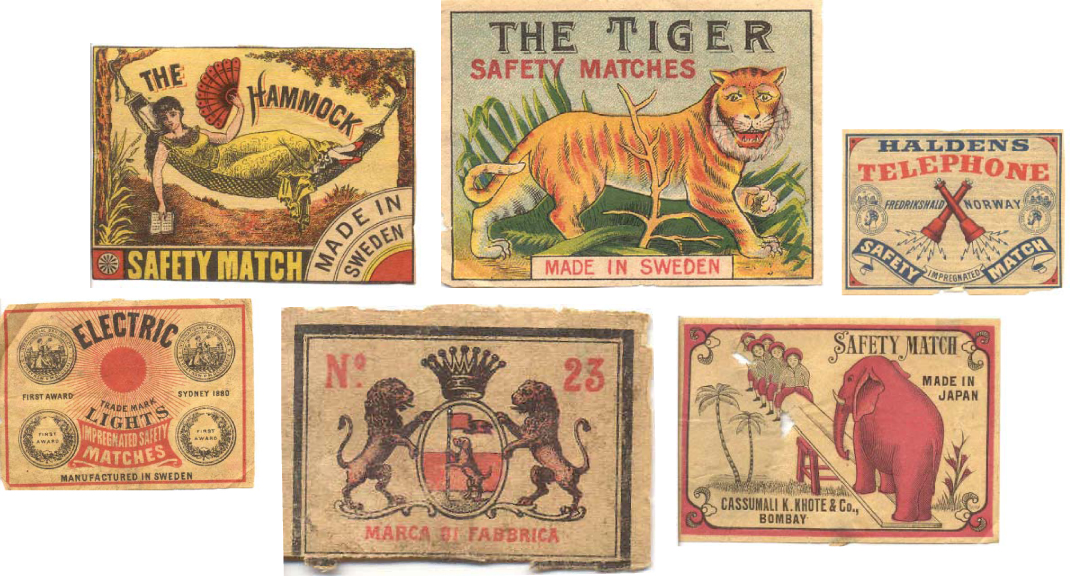
A Collection of Matchbooks, a short story

matchbooks.indd

A Collection of Matchbooks, a short story

1952, the Wayland Manor Hotel, Providence, Rhode Island.

The day is warm and humid, the yellow roses in the park across the street are in full bloom.  Eva tugs at the sleeves of her powder-blue silk suit.  She’s meeting Neal, the young lawyer she met at a Republican fundraiser last week.  Though Eva’s handsome, prep-schooled husband played tennis for Yale and still buys her wonderful presents, she’s lost her passion for him after five children.  Neal doesn’t have a dime, but he has smoldering dark eyes and soft, manicured hands.  He’s a good talker, very charming, the way he lights her cigarette seems so Continental.  Ever since the night Eva ran that girl over with her car after too many glasses of White Star, she’s been looking for a way out.  She knows her husband will never let her take the children, that’s what bothers her most.

1953, the Ambassador Hotel, Chicago.

Eva sits in the lobby waiting for Neal.  On the train back East from Los Angeles, Neal didn’t sleep more than two hours a night.  He’s frantic to make this business deal.  Eva’s money can only go so far, and though her mother contributes what she can, Neal’s ego is suffering.  Maybe if he didn’t spend so much time playing gin at the Club, he’d do better.  His wife really stung him in the divorce, he paid her a lump sum he could ill afford, but he felt so guilty.  He was only the second person in his family to divorce, the first was his older sister Nina.  She married the guy because her father told her to, so when he started getting weird in the head, she bolted.  Has her own dressmaking business back in Providence.  She dates the young boarder she took in.

1955, the Roosevelt Hotel, New Orleans.

Neal and Eva are stopping over for the night on their way to Savannah.  This trip was Eva’s idea, she wanted to revisit her childhood home, show him the house that survived the ’26 hurricane.  Her mother grew up there, raised by an aunt.  Eva remembers the switchings her nurse gave her for crossing the road by herself.  Lilly Mae had a gold tooth in front and wore the most outrageous wigs, red, blonde, honey chestnut.  Her bosom was soft, like feather pillows.  Eva is disappointed when the hotel can’t give them the Honeymoon Suite.  Neal shakes his head, smiles at Eva, pinches her fanny in the elevator on the way up to their room.

1956, annual convention of the California Polled Hereford Association, Berkeley, California.

Neal dances with his daughter, and Eva snipes at how clumsy the girl is.  Truth is, she’s gorgeous, and Eva’s feeling old.  They got both of Neal’s kids to live with them, Neal’s idea, Eva only wanted sweet little Patrick, not this sullen teenaged girl.  She misses her own children dreadfully.  Her ex-husband lets them visit in the summer.  Still, Eva manages to be kind to Neal’s daughter, she pays for Liza’s boarding school, the very best in the state.  Neal had this idea to raise prize Herefords, Eva’s mother thought it was a great idea, so they bought the ranch in Ojai.  The cattle women all look the same — brown cheeks, pale orange lipstick.  Eva doesn’t fit in, but she doesn’t care.  She orders another chilled vodka, downs it in three swallows.  Her throat burns, it feels cleansed.

1956, Diamond Jim Moran’s, New Orleans.

Liza’s in the ladies’ room, helping Eva to vomit.  Liza wipes Eva’s forehead with a damp towel.  The attendant turns away, afraid she’ll start laughing.  Eva’s hair flops over her forehead and Liza takes the comb and smoothes it back into her thick French twist.  Eva and Neal are on their way home after taking Liza and Patrick to visit their mother in Jacksonville.  It was the least Neal could do, considering his ex-wife’s frame of mind.  When the children left her, she lost 40 pounds in a month.  Liza misses her mother, but doesn’t want to move home.  Next summer, she’ll be a debutante.

1959, the Palace Hotel, San Francisco.

Liza’s on break from Mills College, meeting a boy, Ted, for drinks in the lobby.  She wanted to go to UCLA, but her father wanted her at a girls’ school.  It won’t help.  She’ll be pregnant within the year.  Ted, the baby’s father, fancies himself a Beatnik.  He grew a tiny goatee, sparse but bright red.  Liza is getting tired of the same old thing.  She sees a woman without legs being pushed in a wheelchair across the lobby.  Ted’s right behind, and Liza knows they’ll have sex in the car later.  She wonders what it would be like to have no legs to get in the way.

1959, the Luau, Beverly Hills.

Neal’s throwing a reception for Liza after she eloped to Las Vegas.  He put a good face on it, announced the wedding in the local paper, but he tried to talk her into an abortion.  Liza refused, and Neal thought about having her committed, but Ted talked him out of it.  Ted swears he’ll do the right thing, but Neal has a sick feeling.  The kid has dollar signs in his eyes, just like Neal at that age.  Neal should have listened to his heart, not Ted.  He envisions his daughter in a roach-infested apartment on Venice Beach, wearing nothing but black leotards, her enormous belly heaving as she dances to jazz records.  He wants to kill someone.

1960, Arnaud’s Restaurant, New Orleans.

Eva and her mother are on their way back out West after a shopping trip to New York.  Her mother bought a hat covered with white peacock feathers, and Eva hates it.  She wants to strangle her mother, wants her to hurry up and die so Eva can inherit the family money.  Eva’s ancestors made their money in shipping, sailing goods up and down the Eastern seaboard, and she is absolutely certain none of them owned slaves.  Eva’s mother is a spiritual nut, always falling for some Asian philosophy or another.  Next, she’ll run off with the little Mexican gardener, and Eva will have to concoct a suitable cover story.  They’ve never been close, not since her mother left for Mexico when Eva was two.

1961, the Redwood Room, Clift Hotel, San Francisco.

Ted and Liza are filing for divorce.  Neal is listening to his daughter sob.  She thinks Ted needs her, but Neal knows there’s nothing wrong with the kid that a good bank account won’t cure.  He had that illness himself.  Ted’s refused to work, has taken only art classes instead of working for his MBA like Neal wanted.  The baby lives on fried chicken and Pepsi.  Still, the little thing is cute — ten months and she walks, no, runs, already.  She’s got more of Neal in her than anyone else.  Ted’s parents pleaded with Neal not to interfere, but he can’t stand by and watch his daughter worry where her next meal is coming from.

1963, the Seven Seas Restaurant, Miami.

Neal sent the baby to live with his ex-wife, and sent Liza back to school.  Liza chose secretarial training, and works in a bank by day, looks for men at night.  Liza gets jealous sometimes at how happy her mother is with the baby, but Liza’s not very maternal to begin with.  This man she’s involved with is a sailor.  She’s never dated someone who didn’t go to college.  Even his hands are different.

Leave a comment

Filed under mysterious, short stories

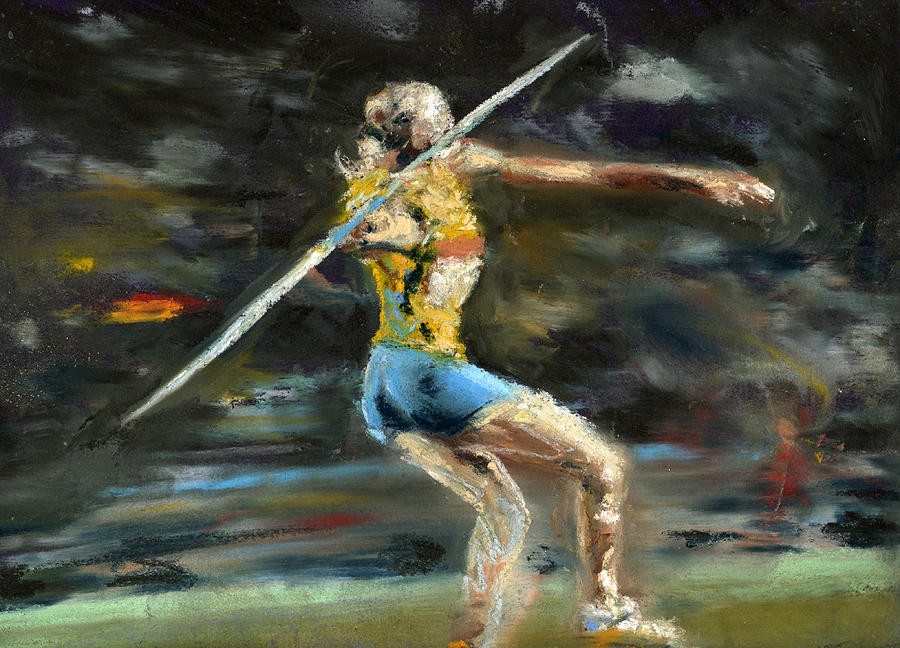
The Art of the Javelin, a short story

illustration the art of the javelin

The Art of the Javelin

There were certain lovers who never let you go, not even when it was over, officially over ‑‑ the kind of officially over where you both married other people.  It’s not anyone’s fault.  It’s something about chemistry, the chemistry of their skin on yours, your skin won’t ever stop wanting theirs and this is a really, really bad thing.  Marriages have been wrecked because of that skin, engagements broken, the valuables pawned.  The skin fling always started well, of course, the mad passion, so heated you never thought about the consequences.  And there were always consequences:  huge, nasty ones.  Perhaps those terrible consequences were what doomed the love affair from the very beginning.  Nothing so lovely and delicate could survive the stamping black boot of your own despair.

You loved him, but it was never enough.  Being with him was not enough.  Being without him was not enough.  Maybe your children, both dead, would have been enough.  You saw the first child, sleeping, its head tilted back, its eyes closed.  You do not know what color its eyes were.  You never saw its eyes.  It saw, and in seeing, died.  Suffice it to say the child would have been a master of language.  It would have been love, a fountain of it.  You left, not taking your child home.  You let someone else take it away.  Psyche never saw Cupid, and you cannot see him anymore.  Psyche is and was whatever Love loved.  You were loved by Love.  You died with the child.  You were crushed like a butterfly hovering in front of a fast-moving truck.  You were a crushed soul.

The land was flat, barren ‑‑ the horizon stretched like a satiated woman ‑‑ supine, theatrical, unconscious.  You missed the children, and you missed him.  Was it a garden you were in?  Was it a prison cell?  There was never enough air, anywhere.

Who wanted, as a woman wanted, simply to be loved?  All the boys wanted something else.  Girls, on occasion – and more than once — want abstract worship, admiration from afar, poems, flowers, sweet nothings in the ear.  Is that what the boys wanted, too?  With that divining rod in front of them it must have been difficult to remain abstract.  There was something embarrassing about need rendered visible.  They could not hide it from the world.  Did boys say, “No?”  As often as girls?  The urge was outward, not inward – the desire to pierce, rather than contain.  The needle ‑‑ the eye of the needle ‑‑ threaded with what, exactly?  The female soul?  Your feet were so cold in the water, wading for freshwater mussels, that your toenails turned stark white.  The mussels were brown and slippery, and the empty shells painted with pale, pearly rainbows in the light.  The little girls around you murmured with delight, squealing when they found a really big one.  Their little hands were sandy and damp on your arm.  Their voices piped so impossibly high.  You saw them at age 35, still hunting for the perfect shell.

You were tired of living your life.  It was satisfactory only in the material sense.  The lights were never turned off for lack of payment.  Your husband went to bed hours before you did; you sat doing needlepoint in the den and watching obscure re‑runs.  You resented your husband’s bulk upstairs in the king‑sized bed, you resented him sleeping turned towards you, resented the warmth of his breath wafting across the hump in the middle of the mattress that had arisen over the years between the depressions your bodies made on either side.  Once or twice you tried to get her husband to talk to you about God; he declined to do so, saying it was “too personal” a topic.  What is the use of a husband, you thought, without conversations about God?

So you wondered whether to leave him.  Suddenly, a young man, black‑haired, black‑eyed, entered your life, with a piercing gaze, but shy, downturned head.  He was marrying his girlfriend:  you thought they were both too young and naive to know what they were getting into.  You tried to talk him out of marriage, saying not that yours was terrible, just that marriage itself was really hard and bound not to live up to anyone’s expectations for it.

He married the girl, anyway, and in about a year was desperately unhappy.  His wife left him, run away several times, stole his money and his car and told him he was worthless both in bed, and out.  In another moment, you found yourself in bed with him, never once considering how you would get out again.  You were not ready to be called an adulteress, but he persuaded you that since you had already committed adultery in your heart, what did it matter in the flesh?  Oh, it mattered, it mattered plenty.  Only in a purely theoretical sense did it not matter.  It certainly mattered to your husband.  He wanted the child, all the money, the house, and your head on a platter.  Everyone told you not to be honest, not to tell him, but you couldn’t deceive him that way ‑‑ it would kill you to be so deceived by someone else.

It first happened on a rainy afternoon, the kind of afternoon that made sitting on a park bench impossible.  All you really wanted to do was talk.  You were lonely, you wanted to be alone with him in a comfortable place where you could take your shoes off and lie down flat and tell him your life story.  He was so kind and understanding.  You wanted everything to happen slowly.  Both he and you were married to other people at the time and you had a broken ankle so you couldn’t walk through the woods or the park, even if it weren’t raining.  You weren’t planning on committing adultery.  You wanted an affair of the heart, of the mind.  You were either hopelessly naive or lying to yourself.

When you were feeling bitter, you wore red clothes, covered with lint, and did not bother to go over them with sticky tape.  You slept only on goose down pillows, and drank only water bottled in France.  When hurricanes were coming, you cooked elaborate cream sauces, and served lemon and honey tea shot with brandy in a crystal cup.  Your rage gave you a sore throat, the tears and tissues a sore nose.  Anger was only depression turned outward.  Always, you received presents in the wrong size, but consoled yourself afterward with icy lime sherbet.  You slept a bitter sleep, on sticky sheets, dreaming of French noses, and purebred geese, white with pink feet.  On Halloween, you changed your name for good.

You took bitter medicine, while he slept through the hurricane.  He gave you red clothes, always the wrong size.  You fed the geese cracked corn with your bleeding hands.  The brandy shattered the crystal glass.  Cream sauces were poured over ice.  You strapped the pillows to the bed with sticky tape.  You cried while he was bleeding.  You whimpered after giving birth.  A deep, abiding melancholy.  Our Lady of Perpetual Melancholy.  The symbolism of the golden arches.  An icon for the ages.  Our Lady of Perpetual Cholesterol.  Our Lady of Sodium.  Our Lady of the Mall.  Where is food for the spirit?  Charge it on your MasterCard.  Ring it up on your Visa.  A deep melancholy, not easily abated or debated.

It happened on a day when you’d been fasting for religious reasons even though you weren’t religious.  A friend called that morning before you’d eaten breakfast and happened to mention it was Yom Kippur.  You felt ready to atone for everything you’d ever done regardless of whether you’d actually caused anybody to suffer.  Your husband, for example.  Your husband was suffering although he didn’t realize it.  He thought he was content, but he was wrong.  You knew that having sex with a woman for 12 years without her having a single orgasm constituted suffering.  You wanted his suffering to cease, quickly and permanently.  And it seemed you were the cause of all suffering, everywhere.  You had daydreams about running away and never coming back, living in a small rented room, anonymous.

So the fasting and the marital woes had taken their toll on your common sense, and the broken ankle had taken its toll on your ability for locomotion.  You were faint from low blood sugar and hobbled wearily into the motel room, collapsing on the lumpy mattress.  Being called a neurotic bitch by your husband had long lost its appeal.  You needed somebody to love you, not somebody to fuck.  But, as your soon‑to‑be lover undressed you, he told you it didn’t even matter whether you actually had sex with him because you’d already committed adultery in your heart.  At the time, you took your lover’s reasoning for spiritual altruism.  You snapped at it like a starving bass would snap at a rubber worm.  Hook, line and sinker, you purchased your fate.  It was silly to think you could ever keep a secret.  You obtained a divorce, slinking away from the ruins of your marriage guilty, nearly suicidal, your ex‑husband spitting contempt and moral integrity even as he made plans to marry his own recently‑acquired lover.

Then over and over again, between your ex‑lover and yourself, things exploded, imploded, burdened by your guilt and remorse and terror.  All this ruined mess wasn’t what you had in mind, you were just lonely and wanted to talk.  He thought everything was conquerable, everything, by the human will and true love.  Slowly, unmet needs that at first seemed unimportant loomed enormous and unsolvable.  He didn’t feel safe with you, nor you with him, albeit for completely different reasons.  You were nastily divorced, and suddenly a major skeptic when it comes to love.  Between your dead marriage and your dead alcoholic mother, you finally learned to cut your losses, and quickly.  What started with a bang ended with a bang?  First the relationship was a misery to you, and then it was a misery to him.

The copper gleam of your helmet hair was blinding.  Ivory soap floated in the tub, pale and fatty.  Hard gray metal breathed like a ghost.  The stains of divorce could not be removed with bleach, no matter how hard you tried.  Women in bikinis reminded you of how you used to feel in summer, naked, nearly free.  You decided to be laid out in a salt pine coffin from Jerusalem, your wake illuminated by jeweled lamps fueled by liquid chicken fat.  Stone gargoyles copied from Paris originals would be worked into bench seats.  For refreshments, cold meats with baked garlic.

You loved him even though you knew it was doomed, and that love kept pulling you back to the maybe‑I‑didn’t‑really‑give‑it‑the‑old‑college‑try sort of mistake.  So you got involved with him all over again, and it was a disaster, again, but to him the fact that you came back only proved the point that you two should never have broken up to begin with.  In the end, he never understood why you kept breaking it off, and each time it got over somehow you couldn’t understand exactly why you ended it, either.  It was the same kind of destructive amnesia that keeps a woman having babies after that first one.  She forgets how hard it was, how much it hurt, how much it broke her spirit.  This entire sad sequence repeated until you finally had enough.

That night, you dreamed your mother was unpacking long‑forgotten boxes ‑‑ animals carved out of brightly colored stone, gold‑glass paperweights, things you loved, and your mother was getting rid of it all.

Six months later you got a bill from the library for $173.00.  You remembered your lover checked out a bunch of library books on your card.  So you called him, asked him to return them so you don’t have to pay.  Time goes by, and you wondered.  You called his house for days, but the line was always busy.  You decided to drop in.

You knocked.  It took a long time, but finally he came to the door, disheveled but looking good, except around the ears.  His house smelled strongly like man.  You were startled by the smell.  Vanilla, cinnamon, and a touch of dirt, of mushrooms.  The rooms of women smelled like yourself.  You have been in other men‑only houses, and it was always the same.  There was a strength to their smell, a lasting power, an earthiness under the scent of the body that made you want to burrow into the bed-sheets.  This time, you did not.  He was growing a beard and wore jeans with holes in the knees which made him look as sexy as the third time you slept with him, the time in his father’s falling‑down barn ‑‑ you couldn’t wait one minute longer so you did it right there on top of some mildewed couches.  You broke up for the last time almost a year ago.  It was shocking, the physical part you’d thought was long gone.

You wanted him again, though you’d never let yourself have him, and he sensed it – that made him really angry, angrier than you had ever seen him.  For once, you ignored the physical passion.  You didn’t touch him, though you wanted to, badly.  He sensed it, and that sensing is what drove him mad.  He screamed.  He accused you of being shallow, insensitive, a manipulative bitch with the emotional capacity of a rock.  You were meant to be his, you did everything wrong, you shouldn’t have broken up with him, because it was meant to be, him and you, forever.  He forgot how you cried all the time, and how you couldn’t quite put your finger on the reason.  He forgot what it cost you to be with him:  half your daughter’s life.  He had no children himself, yet, then:  he couldn’t know how guilt had you in its death‑grip.

He screamed, he let you do things, “get away with things,” he shouldn’t have.  He didn’t want those things to occur, but he didn’t object at the time because it seemed like what you needed to do.  You told him maybe he should have given you his true opinion, back then.  Maybe, if he had given his opinion when it was so desperately needed, you’d have chosen to be with him.  Maybe it was his essential passivity that caused those late‑night crying jags.  Maybe you were crying because you felt like his parent, his dorm mother, his baby‑sitter.  You, too, sometimes wanted to be cared for, nurtured, sometimes you wanted to feel safe, to be warm in your own bed on your own pillows, not scurrying around in the corners playing catch‑up with the dust-balls.

But he did not, could not, and would not hear anything you had to say.  You were supposed to be with him forever — he believed this and never let go of it:  his personal Holy Grail.  He wrote you love letters up until the week you got married for the second time, after that, came only hate letters.  There would never be a remedy for his hurt.  There was no way to make amends.  The wounds between you never healed, because he never stopped being angry with you.  He was, is, and will always be angry with you.  For this reason, your affair with him will never be over.

Will he be angry, forever?  Yes.  Will his jealous wrath burn like fire?  Yes.  Blessed is the man whom God chastens, and God will chasten him in time.  Yes.  His entry into vagina, and your life, was like someone throwing the couch over, slitting all the cushions, smashing the picture glass, sawing the bookshelves into firewood.

Someone knelt.  Someone asked to be blessed, forgiven, and made whole.  Two people danced, and at the same time drew blood from one another.  The man you loved stood remote, erect, unbending.  You died, to him.  You murdered him, years ago — it was an accident, a terrible wreck of the heart and body.  You wanted only to find your true home.  They why did your heart feel like cold‑rolled steel?  It clanged shut — you were alone, again.  And, again, no one could reach you.

While his plane took off, you did jumping jacks next to the runway fence.  The chain link made you feel like you had a vision problem.  The vessel making up your love for each other was glass ‑‑ white but somehow full of colors, opalescent, and its inner lip was scarlet ‑‑ caressing the outside of the vessel were golden-brown, radiating leaves, quivering with life.  Nothing could hold that vessel down ‑‑ it rose of its own accord.  Once shattered, it could never be restored.  Your fault, you never knew how to live in this world.  You always desired things which could not be possessed ‑‑ could be kept, could not be domesticated.  Your own heart was not domestic, but, rather, wild, savage, and cruel.  It was the opposite of serene.  It held mother‑love and murder, sometimes in the same instant.  You were the living damned.  The only answer seemed to be to keep moving.  That is why you decided to entomb your legs in rock, solid and immovable.  That is why you always tied yourself to the ground.  The caged butterfly smashed itself over and over again, beating impossibly against prison bars of cold‑rolled steel.  Finally, its wings shredded, and the butterfly could only remember flying.  It knew only that something had gone terribly, terribly, terribly wrong.

3 Comments

Filed under health, legal writing, mysterious, prose poetry, short stories