Category Archives: notes

Disgusting “Dynasty Trust”

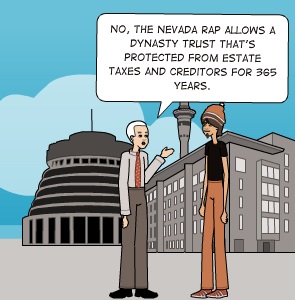
Dynasty trust

DISGUSTING!!!!!  Why do people think this way?  I condemn this trust to HELL!!!  In a handbasket!!!

“The Dynasty Trust is an excellent tax planning vehicle as it permanently removes significant assets and the future appreciation on those assets from the transfer tax system. If no one “owns” these assets in the future, they will not be part of anyone’s taxable estate. In addition, the Dynasty Trust is an excellent asset protection vehicle. With no owner’s of the assets, creditors cannot make successful claims against the assets in these trusts, allowing them to be preserved, even against liability claims against the trust’s beneficiaries.

The trust is initially created for “primary beneficiaries” who are the Grantor’s children. They are given a limited power of appointment over the trust property in favor of their descendants. If this power is not exercised, the trust property passes to the descendants of the Grantor’s children, and so on. The trustee has discretion to pay a beneficiary income and principal from the trust, but is under no obligation to distribute any property at any time.

The trust is sensitive to the possible generation-skipping tax issues that can arise in this type of trust. (Section 3.1B). The trustee is given broad investment discretion. (Sections 3.1A and 3.3)

Since the trust is intended to last a very long time, the initial trustee is not likely to outlive the trust. Circumstances unforeseen at the inception of the trust may very well occur. For these reasons, the trust (section 4.5) appoints a “trust protector” – a person or institution to serve as the trust’s “watchdog” over what may need to be changed, amended, removed, etc. as time goes on.

Article 10 is also worth noting. The Grantor should consider how he/she may want to define such basic terms as “spouse” and “child”, given the potential long-term of the trust and evolving issues of social change, genetic engineering, etc. One can consider a “traditional” definition here, or allowance of either present or possible future definitions to be included in the trust.


1 Comment

Filed under legal writing, notes

Rose, Honey, or Strawberry Moon

illustration rose honey strawberry moon

Rose, Honey, or Strawberry Moon (June)

Roses

We dug up the bushes, moving gifts from my mother’s friends, transported them to our tiny backyard, planted them in rows, a fine garden. Suddenly they took over, bursting into frenzied blooms, the metal tags dangling, all hybrids, expensive, my mother’s friends were rich, we weren’t. Tropicana, Peace, Mister Lincoln — but over the next few years they all gave up the ghost, dwindled away to one or two sticks bearing black-spotted leaves, an occasional bud. My mother & stepfather forgot the roses, neglected them the way they neglected their and my mental health. Cases of beer and gallons of wine were lugged home instead. We sold the house when my mother & stepfather divorced, the new owners didn’t care for roses, I haven’t seen the backyard in decades. I used to swing there, under a Florida holly, on a splintery board, watching the roses in their sweet decline. Remnants of a more splendid time, not mine. My dog and cat were buried in that yard, my girlhood surrendered to a more ominous time, a time of sneaking out the bedroom window. I had a purple and blue room, painted furniture, a globe of the world, matching curtains & bedspread. I lost the room when I lost my cobbled-together family. But the absence of family was no great loss, not the same as losing the roses. It wasn’t my family anyway, though people were always telling me how much I looked like my “dad.” We hardly ever had the heart to tell them we weren’t related. For a while, he liked me, but not when I started showing signs of womanhood. Then he despised me, the way he despised my mother.

I was an ugly, awkward girl. My glasses hid my eyes, my hair hid my face, the only things revealed were arms & legs like jointed sticks, bare feet with black soles, a pair of bright yellow & white plaid shorts & a white cotton shirt. My hair bleached at the ends, stiff like straw from the sun & pool water. My smile was alarming, my sullen face more of a comfort. I met my “real” father that year. He was frightening, a reminder of myself yet a complete stranger. I suffered from vertigo in his presence, the room grew long and thin, the sounds bounced off the walls like rubber, and I was covered with cold sweat. I didn’t want to touch him. After he left, I went to swing next to the roses. That rope and board swing saved my mind over & over. I could carry on after that soothing motion.

Honey

The neighbor across the street decided to keep bees. The two hives were square wooden boxes, painted white, and he kept them in the side yard, past the driveway, against the chain link fence. They buzzed in and out all day, and I was always afraid of being stung. His orange blossom honey was sweet & bright & bland. I was desperately in love with his oldest son, and the man himself hated me. The mother was slightly less hostile. His son was tall & long-limbed & had chestnut hair & dark hazel eyes. His hands were beautifully shaped, the hands of a pianist, but he was not a musician, he was not an artist, not an intellectual. He should have been, he looked the part. Instead he was an athlete, always running or riding or throwing or hitting. I played basketball with him in the driveway, always humiliated, always losing, but it was the only way to be with him. I humbled myself, and years later when I became beautiful, he loved me back, but it was too late. He wouldn’t speak, and I couldn’t stand the silence. I foresaw years of painful silence broken only by my own shouting. I gave him up, my first love. And lived to regret it. I wonder if the silence would have endured. His nervous, awkward kisses were sweeter than his father’s honey. We lay together on my bed and necked for hours. He was so shy. I was willing to let him be that way. The first time we had real sex wasn’t as good as all the times spent in preparation. We were both too young to know what we had. Everything seems possible in June. Everything seems as though it will last forever. I still have a jar with a petrified sugar-crust, remnants of his daddy’s honey.

Strawberries

One year, my grandfather planted a field of strawberries behind his house, my little brother and I wandered up and down the rows, picking the ripe ones and eating them on the spot. We didn’t care that they weren’t washed. They were so warm & sweet & soft & our lips turned red, my brother’s face smeared pinkish, like a lover’s blush. I was madly in love with everyone that summer. I just wanted to be held. Men were foreign to me, I couldn’t understand them at all. My brother and I ate as many as we wanted, then picked buckets full for later. Washed & cut up, they weren’t the same, still good, but the wildness was off them. My grandfather’s hands as he cut them up were beautiful & careful & solid, I wanted to look at his hands forever. They were not delicate, but not rough — a man’s good hands, they looked loving & trustworthy, and even though he never really touched me, I could tell they could transmit all varieties of tenderness & passion. I loved my grandfather for being that kind of man — I wished I could have been a stranger, so that he could have loved me too. All summer long, I ate sweet strawberries & dreamed of love, a man to love me like a piece of perfect, ripe fruit. I was only 14, still gangly & shy, and no one came along for several years, yet still the dream carried me along like a fast ship, driven by a cool wind.

4 Comments

Filed under mysterious, notes, poetry, prose poetry

a critical review of equatorial rhythms, “written” by rak, former coast guard seaman

Image

a critical review of equatorial rhythms, “written” by rak, former coast guard seaman

Equatorial Rhythms, “typed” by RAK, is the pathetic, badly written “story” of a young coast guard seaman (who enlisted in the United States Coast Guard because he knew his lack of basic survival skills, and in fact, life skills in general, wouldn’t enable him to survive being drafted to Vietnam for even one full day, nay, not even one full hour during the Vietnam War), crossing the equator south for the first time.  This self-absorbed, narcissistic young man’s self-pitying past and dismal present intersect with the foreknowledge of his bleak, frightening, and boring future, which he will spend lying on his wife’s couch, letting her pay the bills for ten years, then suddenly dumping her after she survives devastating brain surgery, because suddenly she isn’t content to pay all the bills and be a quiet, crocheting robot anymore.  This dull, depressing “story” examines life aboard a coast guard ship, with all its gray-tinted, salty, and decaying “friendships,” petty complaints about stuff that should be barely worth mention by normal humans, the author’s unique, sadly unfunny, bathetic humor and what the narrator incorrectly terms “violence,” a couch-potato-wannabe life, clumsily contrasted with the power of the impossibly vast, eternally wild open sea:  a power and majesty the narrator will never, ever, ever understand, or even appreciate with the respect it, the open sea, is due.

66 Comments

Filed under health, humor, legal writing, notes, science, short stories

a big fat A-hole

a big fat A-hole

leslie moreland gaines, “documentary filmmaker,” con man, artistic failure, hypocrite, and all around evil son of a bitch

7 Comments

April 24, 2014 · 11:16 am

Leslie Gaines, purported “filmmaker”

leslie the asshole

Leslie Gaines is a criminal, a con man and an artistic failure.  He stole business assets from me personally, to the tune of six figures.  Yes:  $$$,$$$  He has left a bloody trail of many other duped & broken former “partners” behind him.  I pity anyone who trusts him with their priceless time, credit rating, camera equipment, or vehicles.  In addition to those crimes, he invaded my home and physically assaulted me.  He is currently hiding out in Montana, plotting his next big con job.  Warning:  do not ever, under any circumstances, believe one word this man utters.

He is a pathological liar.  He never speaks truth.  He sheds crocodile tears.  He is a bad actor.  He is a bad “filmmaker.”  He is a hypocrite, a racist, and a descendant of General Gaines, one of the foremost murderers of native Americans in this country’s history.  He, himself, is quite literally cursed by the Seminole and the Miccosuccee tribes — they have judgments against him for millions:  $,$$$,$$$, and he will never be able to own property in his own name as long as he lives. I believe he is suffering from early onset Alzheimer’s, or some other form of dementia.  Or, just as likely, he has just rotted his brain with too much drinking & drugging.

He abuses women, uses & emotionally abuses everyone he meets, and continues to steal & abuse me emotionally by using my deceased brother’s name as a credit on his illegally obtained footage!  I pray that he doesn’t harm anyone else.  Look at his face and run from it, should you see him.  Forewarned is forearmed.  I owe the world this warning, both as a human being and a fourth generation attorney.

21 Comments

Filed under legal writing, notes, science

my oldest daughter wrote this in 2007

illustration for abigails 2007 note MOVED_by_Miccy

I have come to realize that I’m upset mostly because I’m trying to make my life something that it’s not. It once was, but it’s not anymore. The friends I used to have are not my friends now (not all of them, mind you), and the friends that left me when Mike did, were never my friends. I’m not meaning to be sappy, depressed, melancholy, or even trying to evoke some sympathetic reaction (pathetic being the operative word). I am merely acknowledging the fact that what I do have, the people who care about me and are still with me, I have been ignoring in favor of the things that rejected me. Why? Because I hate change. I hate change so much that I make myself pathetic by clinging to it, like a child would its mother’s leg on the first day of pre-school.

Mike was my connection to the world I was leaving. I wanted to hold onto him so that I could straddle that line between new and old, and never really have to face the new for what it was–my life. It was a security blanket that I was happy to carry around until there was nothing left but threads and a memory, and who knows how long it would take it to get there? 30 years? 40 years? 50 years? Was I going to spend my life reminiscing about “the good old days”, or was I going to take charge and and cherish what was infront of me instead of turning my back and mourning what was behind? I’m not an activist. I sit back and wait for things to happen, and I end up being left behind. I waited SO long to apply to SFCC that I was scared they weren’t accepting applications anymore. I took the SAT my senior year, and only once. Never the PSAT. I always want to do things “later” in hopes that somehow they will work themselves out and I’ll never have to deal with it.

But no more. I realized all this, and I realized EXACTLY what it was that I needed to do to raise my spirits.

I thank all of you who accept me, who care, and who love. I am so greatful to have you by my side, and marvel at how lucky I am to have so many people so close to my heart. And to all of you who I don’t really mean anything to: I truly am sorry that I wasted so much of my time trying to pull you back to me. None of you are bad people, in fact I like many of you, but you can’t be friends with everyone. And I realize that now. So to my friends: I love you. You have helped me in ways unimaginable, just by being my friend.

So, to conclude, I am a graduate of high school, I am going to college, and I will take charge and welcome change. Change can bring very good things. And if it doesn’t? Well, I’m sure that will change.

1 Comment

Filed under mysterious, notes, recommended reblogs

I was thirteen the first time I had to lie to the police to protect someone I loved, a short story

I was thirteen the first time I had to lie to the police to protect someone I loved, a short story.

Leave a comment

Filed under health, legal writing, mysterious, notes, prose poetry, science, short stories

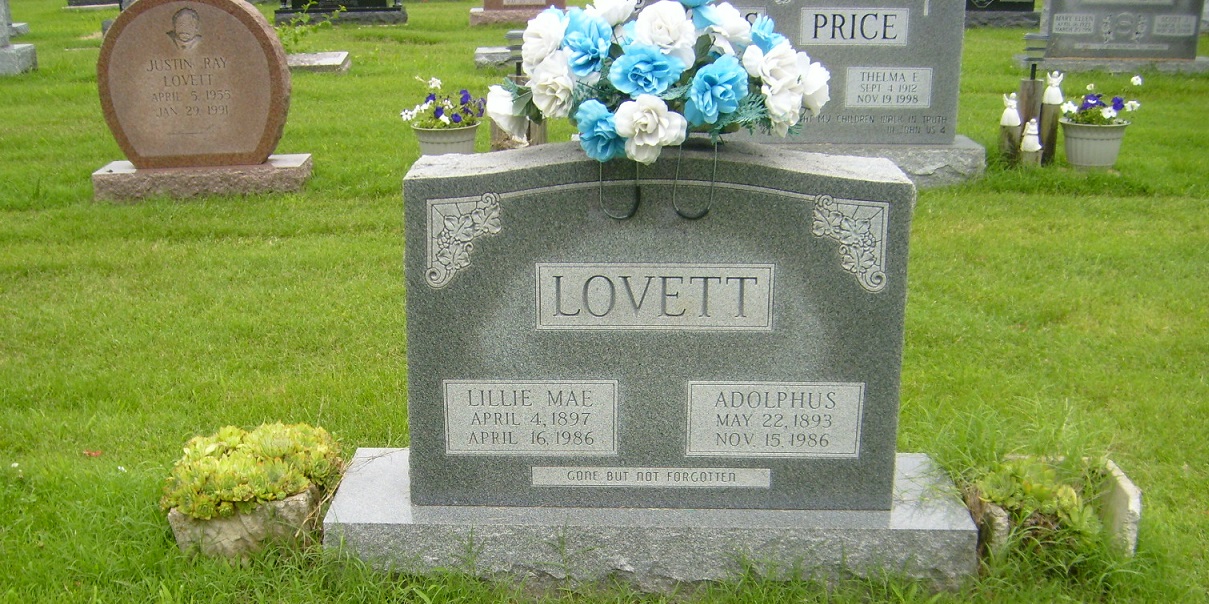
Lillie Mae Lovett, a prose poem

Image

Lillie Mae was the first person, other than her mother, Ella remembered being in love with.  She — Lillie Mae — chewed gum, had a gold front tooth, wore long, dark auburn wigs, bright and warm against her dark brown skin.  She — Ella — buried her nose in Lillie Mae’s neck, held up high in her arms.  Heard the muted snapping of the gum in Lillie Mae’s mouth.  Lillie Mae could get Ella, a picky eater, to eat when no one else could.  For Lillie Mae, Ella would open her jaws for the spoon.

Leave a comment

Filed under for children, health, mysterious, notes, prose poetry, short stories

from my folder: defense lawyer’s greed: my lawyer made me do it, by steven lubet

Image

MY LAWYER MADE ME DO IT

Steven Lubet

05‑01‑2003

Sooner or later, nearly every lawyer has to confront some variant on the dilemma of zealous representation. How do we justify representing clients whose goals are morally questionable or even flatly offensive? The standard answer is that lawyers serve society by facilitating client autonomy, allowing individuals and corporations to make informed decisions about their legal rights. As Samuel Johnson explained nearly 250 years ago, “A lawyer is to do for his client all that his client might fairly do for himself.” Thus, corporate counsel (following each new accounting fraud) and public defenders (in almost every case) deliver the same ready reply to a relentlessly familiar question: How can you defend those people? Well, it isn’t always easy, but we are just doing our job.

Lawyers have come to expect skepticism, if not outright scorn, when representing, say, polluters or criminals. But until recently, it was a safe bet that no one had to be embarrassed about a client like the Catholic Archdiocese of Boston. In recent months, however, the litigation over clergy abuse has become so acrimonious that many parishioners are openly questioning the basic decency of the church’s legal strategy, going so far as to accuse the defense of inflicting new trauma on the abuse victims. Representatives of the archdiocese responded by blaming it all on their counsel ‑‑ “Our lawyers made us do it” ‑‑ as though the church has no control over the tactics employed in its name.

 More than 500 civil cases have been filed against the Boston archdiocese, alleging sexual abuse by priests and a decades‑long cover‑up by the local hierarchy. Last December, amid charges of stonewalling and complicity, Cardinal Bernard Law was forced to resign, replaced temporarily by an apostolic administrator, Bishop Richard Lennon. From the beginning, Bishop Lennon promised a new tone of reconciliation and healing. He announced his intention to settle the outstanding litigation, and promised to make therapy available to every victim who comes forward.

In the meantime, however, the church continued to mount a forceful defense in court, engaging in a level of trench warfare that would make Johnnie Cochran proud. For example, defense lawyers filed a breathtaking motion to dismiss all 500 cases on First Amendment grounds, arguing that the civil authorities could not interfere with the “bishop‑priest relationship.” It was claimed that the constant reassignment of known child molesters was beyond the reach of the law, because the supervision of priests was exclusively an ecclesiastical matter.

Predictably, the motion was denied, but not before Bishop Lennon explained that his attorneys had insisted on the hardball tactic because “failure to do this could very well result in the insurance companies walking away from us, saying that we have not exercised all of our avenues of defense.”

It was barely noticed at the time, but Bishop Lennon had actually adopted the classic lawyer’s excuse. Absolving himself of any moral responsibility for the maneuver ‑‑ much less the cost and anxiety it imposed on the injured plaintiffs ‑‑ he invoked the nature of the legal process as justification for an outrageous ploy. Attorneys routinely seek to escape the consequences of their actions by deferring to their clients’ instructions, but this was an entirely new twist on an old theme. The apostolic administrator washed his hands of his own decision, blaming the insurers and lawyers instead.

It gets much worse.

In January 2003 the church’s defense team began serving deposition subpoenas on plaintiffs’ psychotherapists, including some who had actually been hired by the archdiocese itself to provide treatment to abuse survivors. From a legal perspective, of course, this was not particularly out of the ordinary. The psychotherapist privilege is waived when a plaintiff claims damages for emotional trauma.

From a moral perspective, however, it was a disaster. The church had encouraged victims to come forward and had even set up a special Office of Healing and Assistance to facilitate therapy, as part of Bishop Lennon’s announced preference for settlement over litigation. Then the archdiocese turned around and insisted on invading the patient‑therapist relationship in a way that many victims regarded as jeopardizing their recovery.

The reaction was furious. A coalition of psychologists and victims’ rights activists denounced the depositions as “revictimization” and “reabuse” of patients who were “already broken members” of the church’s flock. Without disputing the church’s legal right to take the depositions, the group complained that the tactic was inconsistent with Lennon’s professed commitment to justice and healing. The victims’ therapy, they said, would be “permanently harmed by the intrusion of the legal system.”

One prominent psychotherapist, who had previously been invited to address the United States Conference of Catholic Bishops, put it even more bluntly: “I think that this is very despicable and deceitful. To say [that] ‘the church loves you’ and ‘we want to help you’ and then to invade your treatment is really just wrong. It may be legally okay, but it’s wrong.”

In response, an archdiocesan spokeswoman declared that the depositions were lawful and necessary: “If the victims choose to sue … we feel that we’re obligated to defend ourselves.”

Maintaining that the archdiocese still supported therapy for survivors, she insisted that the support stood “separate and distinct from the litigation process.” And lest there be any mistake, another church official remarked, “It’s a very tragic set of circumstances, but when you get to the litigation stage, there are certain things lawyers insist on doing to protect their clients.”

Thus, the Boston archdiocese inverted the very premise of the attorney‑client relationship, relying on the purported demands of counsel to justify its own moral blundering. Lawyers naturally recommend strategies that enhance the likelihood of success in litigation. To those who see themselves as legal technicians, the human toll is irrelevant so long as the tactic is lawful. The autonomous client is entitled to zealous representation, and the attorney is helpless to refuse.

But that same stricture never applies to the clients themselves. There is no conception of litigation in which a client can decline to be an independent moral actor. In fact, the American Bar Association’s Model Rules of Professional Conduct specifically call upon lawyers to “defer to the client” in regard to other “persons who might be adversely affected” by litigation. While any good lawyer would urge the archdiocese to authorize the depositions of victims’ therapists, no lawyer could compel it. That is why we call it “advice of counsel.”

The basic purpose of taking a therapist’s deposition, after all, is to undermine the plaintiff’s monetary claim for emotional distress. A good transcript ‑‑ filled with artfully extracted admissions and potential impeachment ‑‑ becomes a useful weapon in negotiation or at trial. An early deposition in the midst of settlement talks is an unmistakably aggressive move, especially in the case of a vulnerable plaintiff who has suffered clergy abuse. (In several hundred cases, all discovery has been stayed for 90 days pursuant to a “stand‑down” order intended to facilitate settlement; in other cases, however, the contentious litigation continues unabated, as the archdiocese recently moved for the entry of a gag order against a lead attorney for plaintiffs.)

The leaders of the Boston archdiocese may opt for compromise and settlement, or they may choose to litigate to the bitter end. As an outsider, I would defend their legal right to make either choice. But no client has the moral right to raise the flag of reconciliation while instructing counsel to scorch the earth.

Steven Lubet is a professor of law at Northwestern University. His most recent book is “Nothing but the Truth: Why Trial Lawyers Don’t, Can’t and Shouldn’t Have to Tell the Whole Truth.” E‑mail: slubet@law.northwestern.edu.

Leave a comment

Filed under health, legal writing, mysterious, notes, recommended reblogs

MY ONE YEAR ANNIVERSARY

MY ONE YEAR ANNIVERSARY.

Leave a comment

Filed under health, mysterious, notes, science