
This Road I Am Traveling, a prose poem
This Road I Am Traveling, a prose poem
I used to think it was possible, even desirable to order the world into alphabetic categories, though I never dared cut someone open with such a blunt knife as you. The most I ever tried was harvesting a few drops of blood — they oozed through the cleanly raked skin underneath my claw like rare jewels.
You do not offer help. You are scientific, curious, high on espresso, perfumed with the thick odor of fatty, fruity soap. You tempt me to weep on your flannel jacket, though you don’t for a minute pretend to love me — or anyone. It is all part of your elaborate theory.
You ask me what it was like to watch her body go, you say you hesitate to dredge up old muck, yet you persist in an ignorant, wheedling way, pulling the raw edges of the wound farther in your fretful passion to get at the truth. I can’t believe a word you say.
Death is foreign to you. Open your eyes! See mine, clouded with the desire to cause your enlightenment. Yes, I recall a hundred details: the way a hand is not any longer a hand after that last breath, just a heavy piece of meat. I remember the stiffening of flesh, the way heat emanates in nearly visible waves from the stilled body. Though as you observe, time has continued to flow, my thoughts have not yet moved on — you are deluding yourself to think they ever will. Shut up! Your sympathies are worth nothing.
There are a million out there who know what I know — until you have allowed the fleeting soul of the one you love to pass through you, risking the internal injuries, the scarring from radiation, you can forget trying to follow for your own amusement.
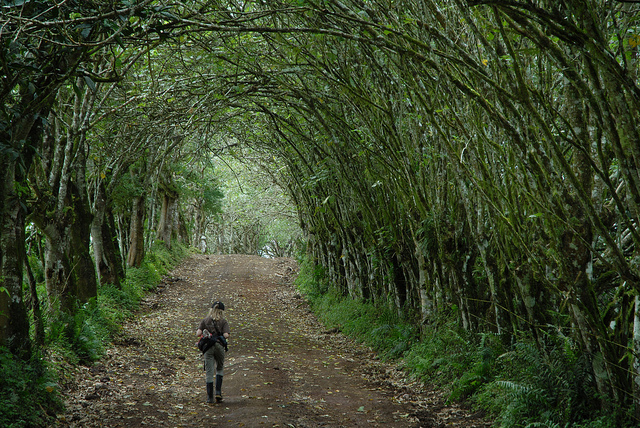
This road I am traveling is ice — I have been skating with my silvery feet for more than ten years, and though it grows ever wider, I can see no end. I grow tired, but there is nowhere to stop. Living is grieving — sooner or later, only grief survives. Once you learn to skate down memory lane, it’s something you never forget. Though my legs ache, I have to keep them pushing. Still, the bare trees arch gracefully overhead. This cold air burns, yet cleanses.
Filed under acceptance, courage, death, forgiveness, grief, life, loss, love, poetry, prose poetry, transcendence
Ode to Citizen’s United (The Corruption-Spangled Banner)

Ode to Citizen’s United (The Corruption-Spangled Banner)
Oh, say can you see by the sunset’s late light…
What so proudly we hailed at morning’s first gleaming?
Whose broad stripes and bright stars now doom us to fight,
O’er the ramparts, we watch, so miserably screaming?
See the money’s gold glare, FOX lies bursting in air?
Solid proof through this night that the hate is out there.
Oh, say does that corporate-stained banner now bleed…
O’er this fat land of ignorance, this sad home of greed?
On the shore, dimly seen through the mists of vast wealth,
Where the haughty one percent in dread silence repose,
What is that which the breeze, o’er slumbering stealth,
As it fitfully blows, FOX used to conceal, to disclose?
Now it catches the gleam of the twilight’s last beam,
Its full shame reflected now, blood-red in the stream:
‘Tis the corporate-stained banner! Oh long may it bleed…
O’er this land of ignorance and this new home of greed!
And whence the greedy who so lightly engage…
Wreaking havoc thru war and battle’s “solution,”
Leaving our home and ourselves forever in rage?!
Our blood has been sucked for foul lies & pollution.
No refuge can save us, now mere hireling & slave,
From the terror of flight, or the gloom of the grave:
And the star-spangled banner in despair doth bleed…
O’er the land of ignorance and the home of greed!
Oh! Thus be it ever, when sleeping citizens don’t stand…
Between their beloved homes and war’s desolation!
Cursed with intolerance and pain, will our troubled land…
Bitch-slap the one percent that birthed this abomination?
And bitch-slap we must, when our cause it is just,
And this will be our motto: “In gold is not our trust.”
Lest the corruption-spangled banner forever bleed…
O’er the land of ignorance and the home of greed!
The First Time I Met My Father, a very, very short story

The First Time I Met My Father, a very, very short story.
The first time I saw him, I was not dazzled. He was too tall and wiry, and he had too much red hair, flying off his head like an unmown hayfield. His eyes were too chilly, a piercing blue that made me feel like an insect on a pin. He was brimful of himself, but at the same time tried to project a false humility. When he found out I was trying out for cheerleading, he tried to talk me out of it. He’d only met me for the first time and hadn’t even met my friends, but somehow he’d already found them incomplete, just because they weren’t political radicals. “Why do you want to be a cheerleader?” he asked, chewing on the straw of his soda while he squinted.
“Because it’s fun,” I said. I shook my head, throwing my bangs back out of my eyes to glare at him. “Because it’s good exercise.”
“Do you know that the players will feel like it’s their right to sleep with you?” he asked.
“I’m not sleeping with anybody,” I said.
“I hope not.”
“You think anybody’s going to be able to talk me into something I don’t want to do?”
“Maybe.”
The arrogance he displayed made me want to slap him, punch him, kick him, or at least knock a couple teeth out.
Filed under absent father, daughters, family, fathers, fiction
Pregnancy, a poem

Pregnancy, a poem
(after Alice Neel’s painting, Margaret Evans Pregnant)
Puffy hands clutch the seat
of the ruffled boudoir stool
to keep the woman from tumbling
to the floor, injuring
more than dignity;
her cumbersome belly bulges
taut, looms over the
bewildered thighs
like a great question mark.
Around her delicate knees
are small white dimples;
the pulse in the blue vein
revealed within a pale breast’s
transparent skin
taps in dreamy rhythm and
though her hair is unkempt,
her eyes gleam with gentle
confidence, patient sureness
that she will pass through
the coming ordeal of body
unharmed, spirit intact; that
everything in the world,
all the movement both inside and
outside her flesh, will emerge
from its hiding place at last….
Filed under alice neel, art, baby, beauty, birth, childbirth, poetry, pregnancy, women
Living On The Moon, a poem

Living On The Moon, a poem
I remember all she had, stockpiled
in a child’s Easter basket. Necklaces
of ivory, turquoise and amber beads —
hopelessly broken and tangled. Cheap
metal pins, plastic bracelets, a dozen
stilled watches. Dried-out jars
of skin cream, mangled greeting cards,
portraits of her sisters. Often,
I allowed her to caress my face with
her trembling, soiled hands. On the pillow,
my head next to hers, pretending
I was a small child, and she my beloved
mother. Afterward, I scrubbed myself pink
with harsh soap. In a moment captured
years ago, Brandy, her tiny poodle,
dances on his hind legs, his pink toenails
scrabbling against her tanned,
scrawny calves, a rhinestone collar
tight around his limber ashen neck.
She tempts him to please her with a bit
of bacon — herself very plump around
the middle, silver hair teased and
sprayed, a perfect bouffant. You
would never guess then she was fated
to end up living on the surface of the moon,
by herself, without shame, without desire.
I must restring the beads, drape them over
a mirror, say a few words to her picture.
She will appear in my dreams nightly, dancing
with a small white dog, twirling her brittle
bones around and around until they catch fire.
She will sparkle like cut glass; gulping for air.
Filed under compassion, daughters, poetry
The Evolution of the Orgasm, a poem
The Evolution of the Orgasm, a poem
Does the new-twinned cell, as it sorts out
one tangled rat’s nest of nucleus
from the other with its slow patient dance
of cytoplasm and membrane, somehow know
the sweet involuntary contraction and release
of its division? An organism’s inner tension
promotes as well as restrains
total disintegration. Is each duplicating
mitochondrion frozen fast in the stream
of its own powerful, mindless barrage
of electrons? Life on a cellular level
is both straightforward and incomprehensible.
Could any physical laws possibly hold
resolute in the embrace of such rapture?
Was the orgasm the means of our worldly
creation, or the end? Less can be more,
but not in this case. Is what makes you
come so easily explained? As usual, let us
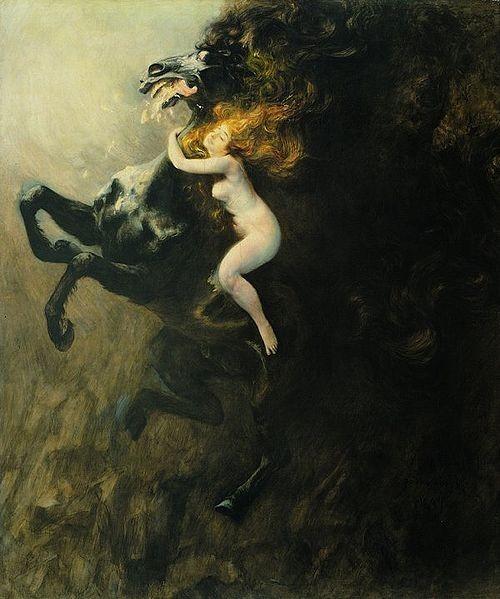
personify: she is rich-skinned, veiled
cool in a white ruffled nightshirt….
Well-muscled, each movement sure, swift,
with only one purpose. Her hair is short
or long, pulled tight or draped loose,
but the look in her eyes is a steely
constant, it says, I know you. I have always
known you. I will know you even after
your tired flesh has flown away singing
through the air like a frightened dove,
and your pale, forgetful bones have fallen
into fine dry grit. In my relentless arms
you will learn to surrender all fears, all
your dark secrets. Forever and ever
will I love you. Is it any wonder we dream
of her so often, with such helpless longing?
Filed under compassion, courage, eternity, evolution, fear, human beings, love, man, mitochondria, mortality, nature, passion, personification, poetry, sex, woman
Things We Never Said, a short story
Things We Never Said, a short story
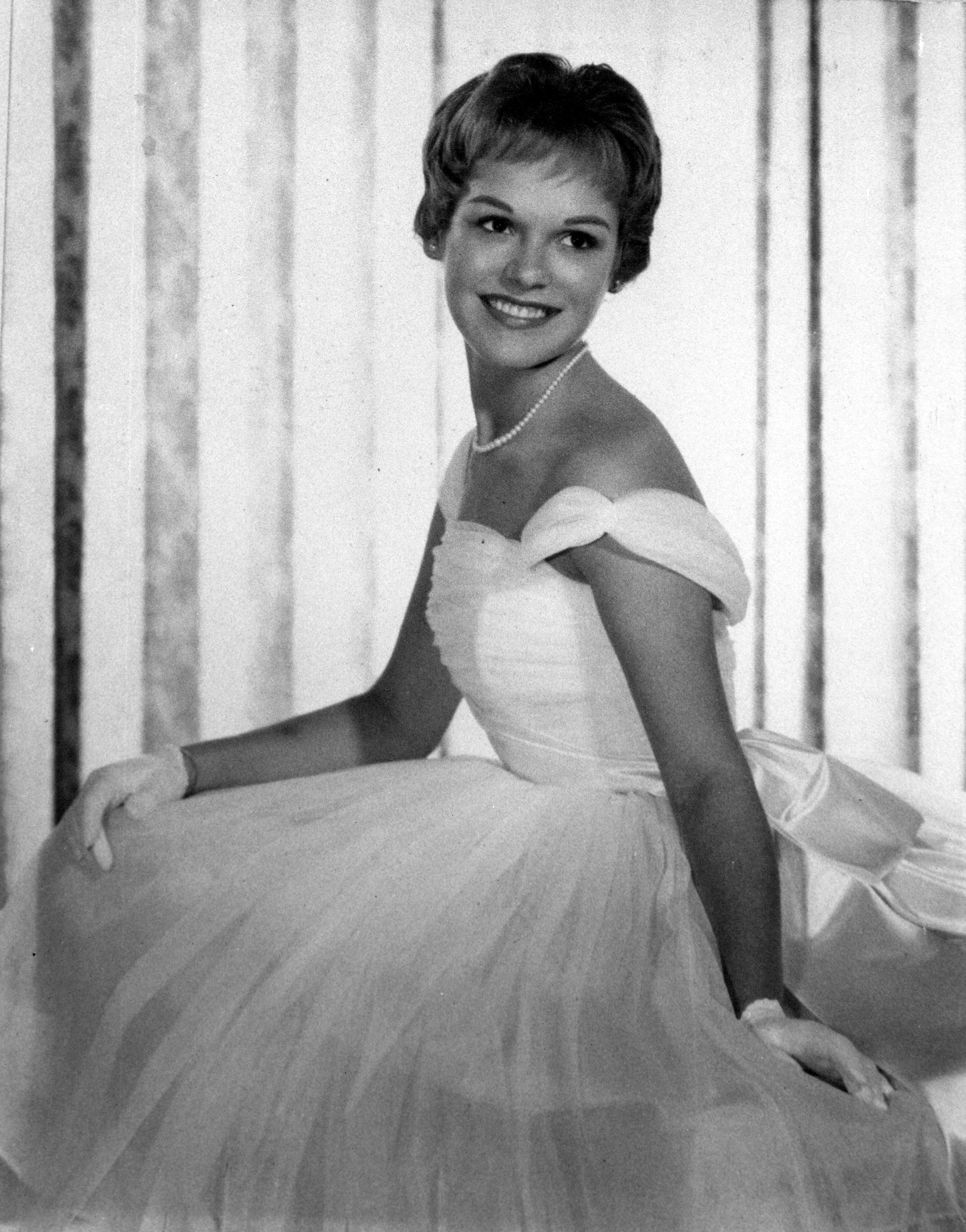
She was beautiful, as all mothers are to their children, but it was far more than that. Total strangers told me how beautiful my mother was. She was particularly fine-boned and delicate. Her skin was the softest I’ve known, her arms and hands the most stubborn, the most lethal.
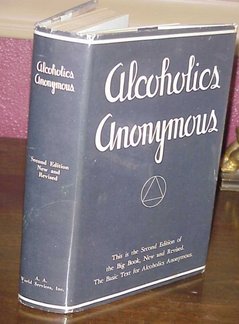
Mom was an alcoholic, of course, and the most gruesomely stubborn person I’ve ever known. She went past simple denial and created her own alternative universe. Once, some quack psychiatrist she was seeing told her she wasn’t a “true” alcoholic — that she only drank out of boredom. She clung to that unfortunate phrase of absolution, repeating it like a robot in a variety of situations, until the day she died at 44 from alcoholic pancreatitis.
The only way we ever got her into rehab was when we threatened to call the police about obtaining drugs by false pretenses. She’d call the drugstore and tell them it was Dr. So-and-so’s office, would they please fill a prescription for such-and-such, three refills, please.
She got stiff all over when she drank, not like a normal drinker who gets loose. Stiff, and with a duck-legged walk that made my flesh crawl. I can’t tell you how many times I just let her lay there on the floor where she’d stumbled in a drunken stupor. I couldn’t bring myself to touch her.
If only Mom could have been more like Charity Hope Valentine, the taxi dancer in “Sweet Charity” who, after being pinched, pawed at, fondled, ridiculed, robbed, tattooed, thrown from a bridge, trapped in an elevator, and deserted at the altar, rather meekly accepts the cheery and somehow redeeming gift of a single daisy from a group of 60s flower children, pulling herself out of her misery yet again, and living “hopefully” ever after.
My mother and I both said “I love you,” a lot, and to no avail. Neither of us believed in love. We believed only in self-preservation. Trust was unknown. I have never learned the reasons for staying with another. All I can think of, now that I’m married, is what I’m missing, giving up for the other. How short life is, and how unhappy.
I took a developmental psychology course once, while my mother was still alive. The teacher explained that no child ever actually dreams of killing the mother. Infantile rage exists, yes, murderous anger exists, yes, but the true desire to kill can never be resident in the child’s subconscious. “The instinct for preservation is too great,” she said.
When I told her, later and in private, how I’d dreamed that very act, how in my dreams I’d taken the great butcher knife out of the kitchen drawer and stabbed it viciously and repeatedly into my mother’s fine and delicately boned chest, she shook her head skeptically.
“You didn’t really dream that,” she insisted. “You only think you did.” I didn’t argue. I was still too afraid it might happen in reality to insist that it had happened in dreams.
She was never a very good mother. I was never a very good daughter. After she died, I went to confess my guilt over my record as a daughter once, to an Episcopal priest. “I let my mother down,” I told him.
“No, you didn’t,” he insisted. “You were the child. You had the right to go off and live your own life.” I was angry at him, and never went back.
I still feel guilty about the first time I knew I’d hurt her feelings. She made me a bunny rabbit salad – a scoop of cottage cheese for the bunny’s face, cut up vegetables for the bunny’s ears, eyes, nose, and whiskers. It was adorable. But I hated cottage cheese, and salad. I was four years old. “I don’t like cottage cheese,” I told her.
“Just try it,” she said.
“No.” I refused over and over again. Finally, she ran out of the kitchen, to the bathroom, and I knew she was crying. I sat in the kitchen, staring at the rabbit, not eating it. I didn’t follow her, I didn’t apologize, and I sat there until someone, probably my grandmother, covered the plate with a piece of plastic wrap and put it in the refrigerator. I knew I was never going to eat that bunny rabbit salad.
I mailed the invitations to my own daughter’s birthday party today. She’ll be four in sixteen days. Oddly enough, all I could think of as I wrote out the cards was how much my own mother would have enjoyed seeing my child, her first grandchild. I know exactly what my mother’s face would look like if she were at the party — lovely, tremulous, inevitably a little weepy. I also know half of my pleasure would come from seeing the tenderness in my mother’s wide brown eyes as together we would watch my little Katie blow out all her candles.
Filed under addiction, alcoholism, blood, child abuse, child neglect, childhood, children of alcoholics, compassion, daughters, death, development, fiction, forgiveness, girls, hope, life, logic, love, mama, matricide, mea culpa, mortality, mother, mothers, mourning, murder, parenting, personal responsibility, regret, relationships, short stories, soul, spirit, truth, woman, women, youth
When Things Got Too Weird for Ripley, a poem


When Things Got Too Weird for Ripley
Notwithstanding the fact that he still received
more letters every year than anyone on earth,
including Santa Claus — Believe It Or Not —
his sinking fits of despair started to occur
with frightening regularity after the war;
on his way to the far East for the first time
since Pearl Harbor Day, he stood on the plucked
turkey-breast hull of a sunken battleship,
the Arizona, looking down at his well-shod feet
as though the rolled steel were transparent,
as if he could see the innocently disarrayed
skeletons of the young men still entombed within —
Believe It Or Not — his full, delicate lips stretched
over his protruding teeth, speechless for
the first time in fifty-odd years. Oddly, he
couldn’t take his mind off the Tibetan skull-bowl
at home, he felt the hinged roof of the bowl
under his cold, stiff fingers…
View original post 679 more words
Filed under Uncategorized


 Kimberly Townsend Palmer