Tag Archives: death

Monster to Monster, a poem

illustration monster to monster

Monster to Monster

I did you a favor
to let you go, to push you away,

to release you. You were too conscious
to be my mate. I need someone

who doesn’t think so much,
who is impervious to my suffering.

Even with someone like that,
I feel I am too painful to be borne.

It is a bigger thing than both of us
being monsters. The words I write

are my gift to you, the only thing
I can possibly give now. I took

so much, I have to give something
back. Even if I am a monster,

do you think that means I don’t
suffer when contemplating

my monstrosity? You think because
I did not stay, I did not love.

I loved as much as any wounded
creature can. I loved as much

as a woman without a whole heart
can love. I loved you in my way,

the only way I have.

1 Comment

Filed under mysterious, poetry

MY ONE YEAR ANNIVERSARY

of, like, not dying!  from a nonmalignant brain tumor!  in my frontal lobe, 35 cms. in diameter, had been there for between 17 & 34 years, they said.  donated the tissue to UF’s mcknight brain institute thingie, took a month to cry, woke up, started asking for stuff i’d forgotten i enjoyed because i just thought i was tired all the time, my husband dumped me, that’s okay, he needed dumping his own damned self!  so, here i am, 53, alive, happy, energetic, writing TONS, making new friends, etc. etc. etc.  and, like getting my ENTIRE FUCKING LIFE back in order, which hubby darling had let slide during his ten years of freeloading off me!  like, everything he wanted got done, and basically nothing i wanted got done.  so, there was that little tidbit.  but, to get back to the point, like, dude, i am totally alive & enjoying myself!  for the first time in probably 20 to 25 years!!!!!  or whenever that frontal lobe thingie started affecting me.  how big does something in the most sensitive, the most HUMAN part of the brain have to be to affect you?  probably not all that big.  so, you can see how by the end of that little “episode” i was SORT OF TIRED.  not tired now.  and single!  and happy!  and, i have a really super hot boyfriend!  who is NICE TO ME!  who wants me to succeed at what I THINK IS IMPORTANT.  so, like, damn!  things are looking up!!!!!!

5 Comments

Filed under health, humor, mysterious, notes, science

martha’s china, a short story

illustration martha's china

Martha’s China

“I’ve met a nice girl,” Martha’s divorced son, Paul, had announced one Sunday. “Her name’s Lidia. I want you to meet her sometime.”

“Well, why don’t you bring her to dinner with you next week?” she said. As she put her coffee cup down into the saucer, her wrist twisted suddenly and she nearly dropped it, making a terrible chipping sound. Holding her breath, she ran her hand over the bottom of the cup but found it unharmed. She smiled at Paul and touched her necklace. “Call me by Wednesday to let me know for sure.” Then she decided she’d sit and sip coffee and smile at her son; she was entitled. Paul looked just like his father only better, his shoulders wider, his hair thicker, his teeth larger, his eyes a purer blue.

***

This year, in honor of Thanksgiving, Martha’s second daughter-in-law, Lidia, wore a white jumpsuit, gold belt and shoes, and a great deal of white plastic jewelry. A long bead necklace was wrapped twice and knotted around her neck, bangle bracelets in random widths jangled everywhere, too-heavy earrings sagged the little holes in her lobes. There was a brooch too, some sort of spidery circle with a gold anchor dangling in its center.

Unfortunately, the white Thanksgiving jumpsuit was tight everywhere that Lidia wasn’t. Martha breathed deep and smiled anyway, gripping the hot solid hand firmly, glad to be helped up the front stoop even by a woman like this. Well, at least she’s got him going to church again, Martha thought — we’ll just see how long that lasts. Before his and Lidia’s wedding day, Paul hadn’t set foot in a church of any kind for twenty-five years, not since the last day he hung up his altar boy outfit. He’d had a civil ceremony with his first wife. Maybe that was her fault too — hell, everything seemed to be the mother’s fault, these days.

Martha should have known from the beginning how this second marriage would turn out. Lidia had no hesitation in her voice. Brassy. From the very beginning, she just blared right out with everything. “Hello, Mom,” she’d say to Martha, her cheeks round and orange with too much makeup, front teeth stretching her upper lip, keeping it from ever completely closing, making the words come out slippery-sounding: too loud, too bright. Not a lisp, but damned close. All she needed was a fluffy tail to snap behind her, Martha thought — it would go right with the rest of her chittering.

Not like Neal’s mother, Paul’s first wife, Joanne. Martha sighed, remembering Joanne as she sat down on the too-soft living room sofa, some rattan thing covered with the kind of material she would have expected to see worn by a belly dancer. Why, for all her problems, Joanne had been a lady. Martha had told her son that when he’d brought Joanne home for dinner for the very first time. “This girl’s too good for you,” she had said, right at the table in front of everybody. Damned if her conscience wasn’t clear on that one. Poor Joanne hadn’t known what she was getting into — none of them had. Not that Paul was a monster, just lazy. Almost spineless except when it came to his expensive toys. Those damned boats. Martha couldn’t stand it, but what could she do?

“Happy Thanksgiving, Mom,” Lidia said, plopping herself down next to Martha. “I hope you brought your appetite.”

Martha smiled. “Thank you, dear,” she said, patting her daughter-in-law’s hand lightly.

***

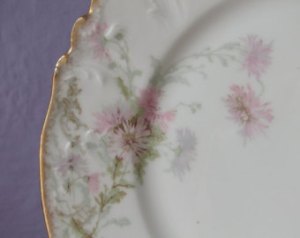
Martha’s china was Limoges. There was a border of tiny flowers, handpainted pink and green and a broad line of gold around the edges, the coffee and demitasse cups so thin you could see through them when you held them up to the light, like eggshells. Martha had inherited it from her mother and father when she was eight.

The accident that killed them had involved electricity. Whether it had been lightning or wiring, she never knew. In any case, she tried to imagine their final moments based on what she knew of electricity from watching movies and reading the encyclopedia. Waking early in the mornings, she would throw off the covers and lie there in the pearly dark, stretching her arms and legs out, stiff, at right angles. She would open her mouth until she heard her jaw pop. Her body would tremble, her lips sting. When she finally let herself go limp it was a relief to be back.

Martha was sent away to boarding school the following year; her parents’ money was managed by some cousins of her father’s. During her senior year, she was called in to the headmistress’ office and informed: fiduciary malfeasance. Of course she would receive her degree with the rest of her class. The words “charity case” were never used. Much later, memory and resentment molded the set of her mouth, pinching her lips with sharp lines: by the time she was fifty, no one guessed she had once been smoothly, delicately beautiful, the kind of looker other women couldn’t even bring themselves to dislike, although their first impulse was always to try.

***

“Where’s Paul?” Martha asked.

“Oh, he had to run out to the store,” Lidia said. “I forgot the cranberry sauce.” She chuckled, shaking her head. A small fleck of saliva flew from her lips as her teeth drew back. “Brain like a sieve sometimes. He’ll be back any minute now.” She stood up and walked over to the door leading to the T.V. room. “Neal! Eddie! Get off that Nintendo and come say hello to Grandma Bergen.”

Their boys had been five when Lidia and Paul married. It hadn’t bothered Martha at the time that they wanted Lidia’s boy, Eddie, to call her Grandma, too.

“Hi Grandma,” said Neal. “Happy Thanksgiving.” He bent and kissed her shyly and she felt a slight prickling fuzz tickle her face with the kiss. He was so white-blonde it wasn’t something she would have noticed from a distance. He was growing up, that was clear. He had a small pimple on his chin.

“Grandma, how’s it going?” Eddie said, and he stuck out his hand. She shook it, his hand warm and heavy like Lidia’s.

“Very well, Eddie,” she said. “Thank you.”

***

In the end, “fiduciary malfeasance” notwithstanding, young Martha had been able to keep the china and the silver, and her father’s monogrammed, twelve-piece dresser set. There was a little cash left over. She managed to graduate from Boston University by wearing the same dresses all four years and waitressing at Woolworth’s, not precisely what she would have chosen, but good enough for a Massachusetts teaching certificate. She interviewed at high schools all over but ended up teaching back in Brookline, where she had been born. Wanting to keep her figure, she joined the municipal tennis league. They played tournaments once a month. It seemed like a good way to meet people, better than church, which is what the other teachers did. Using God as a dating service was hardly a ticket to heaven.

***

“Can I get you anything, Mom?” Lidia asked her. “Some iced tea or a Coke?” Paul and Lidia were born-again Baptists now: no alcohol, even on holidays.

Martha smiled slightly as she remembered the old joke: What’s a Methodist? A Baptist who can read. “Iced tea sounds nice,” Martha said. She heard the gravel in the driveway crunching and the dogs started to bark. “That must be Paul. Go tell him his mother’s here.”

“Oh, he probably saw your car already,” Lidia said. “I’ll be right back with the tea.”

***

Martha’s ex-husband, Fred Bergen, had been a handsome young man, five years older than Martha. He was well over six feet, blue-eyed and blonde, with smooth Scandinavian skin that turned a dark, clear brown every summer. Martha was dark, eyes and hair, except for her skin, which was thin and light, looking almost transparent in the sun, a raised mole in the inside crook of her elbow the only mark on her. Next to him she looked like a foreigner, but her ancestry was English on both sides. He had gone off to Dartmouth to study Engineering but came home to Brookline to be a gentleman.

He was an ace tennis player; she was ready to get married. Her china saw frequent use. The teaching certificate moved into her scarf drawer. They had one child, a boy, named Paul, after her father.

The first few years after Paul was born, they lived just outside Concord, on the farm her husband Fred had inherited from his family. The three of them rode through the woods almost every Sunday, Paul on his Shetland pony, the reins tied to the side loop of her saddle. She especially loved the fall woods, the bare trees making everything look so clean. Everything was gray, but there were no real shadows.

***

“Well, hello there!” Paul said, pulling his satin baseball jacket off as he stood in the living room doorway. Throwing it over a chair, he sat down across from her. His smile was broad, his square white teeth perfect. The skin around his eyes wrinkled heavily as he smiled, pulled up into bags thrown into even harsher relief by the lenses of his glasses, something that still surprised her. If her son was getting old, she wondered, what was she?

“Hello there, yourself,” she said. She held one arm out to him, summoning. Heaving himself up out of the chair, he bent for a kiss. She smelled shaving lotion and dandruff shampoo; he fumbled at her cheek. She took one of his hands in hers, feeling the hard, dry skin of his fingers, squeezing it twice. Sitting down next to her this time, his breath whooshed out as if he had been holding it.

“How’s your father?” she asked. Their divorce had come years ago, when, of course, she was considered too old for it. Separated for a long time already, she nonetheless wanted the formality of the piece of paper. She took her own Social Security, not Fred’s, so it didn’t really change anything in a practical sense. It had been the kind of case the judge laughed at right in court. That irked her more than any of the rest.

Family holidays, of course, nothing had to change.

***

Martha had blamed herself the second time the money went. Not as much as she blamed Fred, of course. But she, of all people, should have seen it coming. The gin games at the country club were no surprise, but as for the horse races — she had had no idea. They sold the farm to pay off his gambling debts, land that had been owned by the Bergens for three hundred years. Neither of them had ever lived anywhere but Massachusetts. It was Fred who promoted Florida. He’d heard there were still bargains to be had in Miami.

They bought three lots with the money they had left, building an apartment building on the water in Coral Gables. Fred’s tan became year-round. He had started to put on weight, but it came off now that he was busy with the yard work and repairs around the building — five units — wearing swim trunks and sandals, beachcomber style. Martha packed her wool suits away in a trunk under the stairs. They both looked ten years younger, so maybe it was for the best.

Paul started first grade, then second, then third. When she found him rummaging through the old trunk full of woolens for a Halloween costume, she realized it was finally time to clean house. She got rid of all that heavy winter clothing, except for one pair of jodhpurs, sort of a souvenir, not having any use for them anymore but afraid she’d be sorry later.

She used the Limoges every Thanksgiving and Christmas, but then the company finally discontinued the old pattern, and she was afraid of ruining the set. Counting the different pieces, she wrote the numbers down on a 3×5 card taped to the inside of the china closet’s door. She’d dust the outside of the closet, telling Paul — someday, when you get married, this will be yours. Okay, he’d say, nodding. Is it all right if I go fishing with Gary this afternoon after school? She’d tell him yes, then watch him run out the door, worrying he’d never know what he had really come from.

But had knowing where she, herself, “came from” ever done her any good, she wondered?

***

“Oh, Dad’s the same as ever,” Paul said to Martha, rolling his eyes. “He ought to be here soon. I called Yellow Cab this morning. They were supposed to pick him up at one-thirty.”

Fred’s eyes were shot, but it was really the drinking that kept him from behind the wheel: the way his hands shook.

“Now, why did you go and do that?” Martha said. “I could have picked him up on my way.”

“I knew you’d say that,” Paul said. Then he chuckled. “I figured the cab deal was easier for everybody. If you really want to, you could drive him home, I guess.”

“I was only married to the man for forty-five years,” Martha said. “I can put up with him for one more hour in the car. Besides, then he won’t be able to stop and get loaded.”

Paul snorted, a half-laugh. “I don’t worry about it. I’ve already told him if he wants to kill himself he should go ahead.”

***

When Paul flunked out of the University of Miami his junior year, he had two options: the Coast Guard or Vietnam. It wasn’t really much of a choice. He spent the first eighteen months in Greece, working on Radio Free Europe. His letters home were short. The girls are beautiful here, he wrote. Martha was relieved when he was sent back to the States and stationed in Key West — no Greek wife, and that was fine. Every week or so he’d drive up for dinner.

She loosened up a little about the china. What’s the point in having something you don’t use? She would ask herself. She felt relatively safe using it for coffee and dessert since there were fourteen each of the small plates, cups and saucers. She could break two and still have a set of twelve.

***

Paul pressed his lips together and twisted them to one side. “Besides, as long as it’s not in my house, I really don’t care how much he drinks. It’s not my problem anymore.” He shook his head as if trying to convince himself.

Lidia came back in, holding a glass of tea in one hand and a magazine in the other. The ice tinkled as she walked. “Mom,” she said, “this is something we’re really proud of.” She handed the magazine to Martha, putting the tea on the coffee table. “It’s on the last page,” she said.

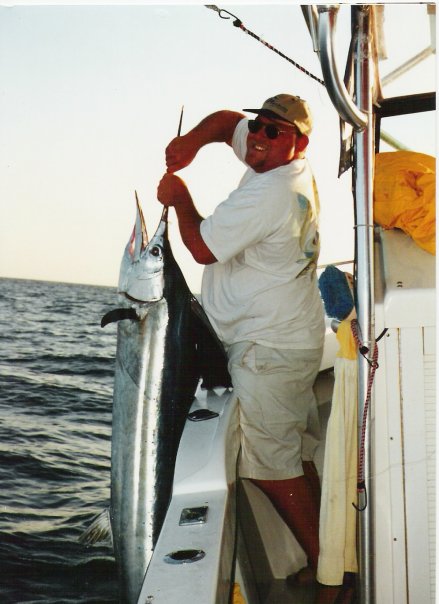
Martha opened her purse for her reading glasses: frosted blue frames with half lenses, on a silver chain. She held them to her nose, the chain rattling against her string of amber beads as she fiddled with the magazine. It was last month’s copy of Florida Sportsman — on the last page was a photograph of Paul on the deck of his boat, holding up a very large and very dead bull dolphin, his fingers hooked in the poor creature’s gill covers. “My, my,” she said, looking up from the magazine and raising her eyebrows. “Isn’t that something!”

“The fish was forty-nine pounds, even,” Paul said. “Half a pound over the local record.”

Martha smiled, peering at her son over her glasses. He wasn’t a outright gambler, that was true, but in a hundred other ways he was exactly like his father. This fishing obsession: did he really think it was enough? A person she raised from a baby — living his adult life primarily through jerkings and spinnings felt from the end of a pole.

“Congratulations,” Martha said, removing her glasses and folding them carefully, setting them on the coffee table in front of her. “I hope you’re having the fish mounted.”

“Of course,” Lidia said, leaning over the back of Paul’s chair, her solid brown arms wrapped around his neck and her chin resting lightly on the top of his head. “The boys and I are giving it to him for an early Christmas present.” Paul twisted his head and smiled up at her.

The dogs barked again. A cab pulled into the driveway. The noise of the idling engine echoed against the stuccoed concrete block of the house. Fred climbed awkwardly out of the back seat, wearing an old plaid patchwork sport-coat and thin wire-rimmed glasses, his wispy gray hair blowing crazily in the breeze. Martha heard him call toward the open living room windows.

“Hello!” he said, his voice strained. His hand trembled as he futilely tried to smooth his hair. Finally he put both hands to the sides of his head, cupped behind his ears, calling again. “Somebody come out here and help me, would you? I’ve got some pies to bring in.”

Paul looked at Lidia and then back over at Martha, rolling his eyes. “The mincemeat,” he said. “I told him we already had dessert this year. Oh, well.” He got up and went out to help his father.

***

Martha had cooked a leg of lamb in honor of meeting Joanne. Putting real butter out for the mashed potatoes, she even brought out the big serving platter and the covered vegetable dishes from the Limoges. The dessert plates and coffee cups were on the table too, as usual.

Joanne was a nice girl, Martha saw that immediately. She wore a green linen suit and matching pumps; her hair was long, just past her shoulders, with square bangs, a white headband holding it back neatly. Her hand was small and cool in Martha’s own as she said hello. “It’s so nice to meet you, Mrs. Bergen,” she said.

“Oh, please call me Martha.”

“All right,” Joanne said, smiling. Her teeth were as glossy and prettily shaped as kernels of white corn. “Your home is lovely. It seems so nice and cool on the water.”

“Yes, we enjoy it,” Martha said. “Are you a native of Miami?”

“Not quite,” said Joanne. “I was born in Delaware. But we moved here when I was three, so I really have no memory of the cold.”

“We moved down from Boston when Paul was just a little older than that,” Martha said. “I don’t think I could survive a New England winter now.”

Joanne admired the table. “It’s so beautiful!” She touched the covered tureen in front of her. “Is this Rosenthal?”

“No, Limoges,” said Martha. “It belonged to my parents. The pattern is discontinued, you know, so I don’t use it very often. But this is a special occasion.” She looked over at Paul and smiled.

She gave Joanne and Paul the Limoges as a wedding gift.

***

“Fred’s always loved mincemeat pie,” Martha said. “It’s the only thing he ever learned how to cook himself. The man eats out of a can, breakfast, lunch, and dinner.”

“It’s cute,” Lidia said. “My father couldn’t boil water without instructions. I like a man who cooks, even if it’s only one thing.”

Martha stared at her. “Pie crust is quite an accomplishment, when you think about it that way,” she said, nodding her head and smiling. “I suppose I could break down and have a piece this year. The heck with watching my weight on Thanksgiving.”

Fred puffed his way into the living room, wiping his glasses. His eyes looked small and defenseless, his face flushed even more than usual. “Well, that was a rare event,” he said. “An American cabdriver, white to boot. I asked the guy what he was doing driving a cab.” Shaking his head, he put his glasses back on, then took out a hard rubber comb and swiped at his hair. “He must be a real loser.” He lowered himself into the armchair next to the sofa. She caught a whiff of him: dry, musty. His pants were creased smartly but there was a faded grease stain on the knee. Turning to Martha, he held out his hand to her, which trembled although she knew he strained to hold it firm, and she felt a piercing of loss for him. I suppose in his own way, he pities me too, she thought. She must appear just as sad to him, even without a tremble.

“Hello, my dear,” he said, and he kissed her hand, his lips warm and slightly moist.

***

Poor Joanne hadn’t wanted to quit her job at the bank, but Paul insisted after Neal was born. “No son of mine is going to be raised by a babysitter,” he said. Martha felt he had a point — but what good was it if Joanne was miserable at home? She herself had missed teaching, although she’d never seriously considered going back to work until Paul was in high school. But she certainly wasn’t going to come between husband and wife. Her two cents, she kept to herself. Then Paul told her Joanne was having a problem with her drinking. He’d seen enough of that with his own father, he said, to last a lifetime. After he filed for divorce and custody of Neal, she didn’t mention anything to anybody, just decided to reclaim all she had left of her barely-remembered parents.

“Well, hi,” Paul said, when he opened the door and saw her, unannounced. His eyebrows were raised, but he didn’t ask. “Joanne’s with Neal down the street at the Gallagher’s. Kids’ birthday party.”

“That’s no problem. I’m here to get the china,” she said. Paul stared at her. He didn’t seem to understand. “The Limoges.”

“Oh, that,” he said, moving back out of her way as if he were afraid, and an odd memory of him at two years old flew by her, making her weak, making her want to squeeze him. They hadn’t hugged in years: they weren’t the huggy type, like some. Still, she had some idea what she was missing.

“Let me think a minute where we keep it,” he continued, taking his glasses off and rubbing one eye slowly. It reddened and he put his glasses back on. “That cabinet over there, maybe?” he said. “Underneath?”

“I know where it is,” she said. Joanne would never forgive her, but it couldn’t be helped. She packed the china in the special boxes she’d bought on her way over; Paul carried the boxes to the car for her.

Before the divorce was final, she called Joanne to explain. She realized Joanne knew her history, but still, she was ready to apologize — but Joanne hung up on her in the middle of it.

***

“Well, it’s about time we sat down at the table,” said Lidia. “Neal! Eddie! Turkey time!”

Martha hauled herself up, out of the overstuffed sofa. She held her arm out to Fred, still struggling in his armchair like a snail trying to flip its shell. “Let me help you,” she said.

“It’s a nice chair, but it’s hell to get out of,” Fred said. His touch was strangely comforting, and she held his hand firmly even after he was up out of the chair. They had the past in common if not the future. At my age, that’s about all you can ask for, she thought.

She led Fred into the dining room and they sat down opposite the boys. “What a beautiful turkey!” Martha said. And what an ugly serving platter, she thought.

She had given the old Limoges set back to Paul on his and Linda’s fifth anniversary, hoping to see it on the table on holidays, hoping Paul knew what t meant to her. But this platter was a cheap ceramic. I don’t know why I ever imagined Lidia would appreciate my Limoges, she thought. It looks like she picked this piece of junk up for a buck ninety-eight at K-mart — worse yet, at a church rummage sale. You’d think Paul would say something, though.

“This is an interesting platter,” Martha said to no one in particular after she sat down, putting her fingers out and stroking the edge. The feel of it was clumsy, the overglaze too shiny, far too thick: like somebody brushed it on with a pair of old socks. “Such bright colors.”

“Do you like it?” Lidia asked, smiling. “Paul picked that out just last week. It’s from Italy. Really perks up the bird, doesn’t it?”

“Yes,” Martha said. She looked around the table. Surely there was something? But it was all the same. Thick peasant pottery — vegetable dishes, gravy boat. It was everywhere. “I suppose it is nice to have a change of scene at the table once in a while.” She unrolled her silverware and placed her napkin in her lap, smoothing it down over her knees.

They were slicing the mincemeat pie when she asked for coffee. “Mom, I’m sorry, I didn’t brew any,” Lidia said, frowning. “We’ve gotten out of the habit now that you’re the only person who drinks it. I’ve got some instant, is that all right?”

“Of course,” Martha said. “As long as you’re going out to the kitchen for it, would you mind putting it in one of the old cups for me? They’re so nice and thin it makes the coffee wonderful.”

Lidia turned and looked at Paul, although it seemed she still spoke to Martha. “The old cups?” she said. “You mean from the set you gave us?”

“Yes,” Martha said, nodding, adjusting her plate of mincemeat with two fingers. She turned to Paul expectantly as well.

“Paul,” Lidia said finally, when he said nothing. “Didn’t you talk to her about that?”

He looked up at the ceiling and forced air out of his closed lips, a burbling inter-spousal sigh. “Oh, boy,” he said. “Here we go again. I told you it was okay to donate it. We’ve used that stuff maybe five times in five years.” Looking back down from the ceiling, he turned to face Lidia. His face wavered, an uncertainty seeped in around the corners. “Actually, I don’t think I did mention it to her.” Turning to his mother, his head moved slowly, as if he had slept on his neck wrong and had a terrible crick. “You didn’t want it back again, did you, Mom? I don’t think they’ve had the sale yet. All the stuff is just sitting in the vestry meeting room.”

Martha sat perfectly still, taking in the light as it reflected off his face, which suddenly seemed ten, no twenty, years younger. Her breath held fast, but not trusting herself to let it out, she drew her napkin from her lap. Stalling, she used the napkin to clean her glasses, now hanging around her neck on their beaded chain. The thick polyester was wrinkle-proof but hardly absorbent, so all she managed to do with it was smear the lenses, making them worse than before. Dust and grease wouldn’t leave. “What sale?”

Lidia answered. “The annual white elephant sale. We sent over the china as a donation.”

“Oh,” Martha said. She picked up her fork and nipped the point off her piece of pie, scraping the tines harshly along the pottery surface as she scooped up the mincemeat. “If it’s not too much trouble I would like you to get the china back.” She looked across the table at Paul as if they were the only two in the room. “Don’t you think you should have asked me first?”

“I didn’t realize it was still your property,” Paul said, his face reddening. “It seems to me when you give somebody something that ought to be the end of it.” He stood up and leaned over the table, balanced on his fingertips. “I’ll get the china back, don’t worry. And then I never want to see it again.”

“I’m sorry,” Martha said. What’s wrong with me that I didn’t see this coming? she wondered. C-plus motherhood, is that what I’m left with?

“She’s been nuts over that china since I met her,” Fred said, shaking his head. “I’ve tried to tell her she shouldn’t let something like that get such a hold over her. It’s not healthy.”

Martha grabbed his arm, hard, and Fred turned to her, his eyes wide with surprise. She shook his arm a little as she spoke. “You keep out of it. It’s nothing to do with you.”

“You see what I mean?” he said, winking in Lidia’s direction.

“I’ll go get your coffee, Mom,” Lidia said.

***

After finishing her pie and a cup of microwaved instant, she had Neal walk her out to the car. Paul would have to call Fred a cab after all. “My back’s bothering me,” she explained. “I want to get home and right into a hot tub.”

“Grandma,” Neal said, holding her arm as she walked slowly down the slippery gravel drive. “Don’t take it personal. The china, I mean. They don’t have anything old in the house. They aren’t into antique stuff.”

She felt as lightheaded as when she awoke in the middle of the night, fighting to remember some crazy dream. There’s no panic like the panic of an old woman, she thought — though we’re supposed to have wisdom. The panic ebbed a little as she exhaled, and she sighed. “I wanted them to save it for you, Neal. For when you get married.”

Neal shook his head. “That’s a long way off, Grandma.” He laughed shortly, running his fingers through his long bangs. “Maybe never, who knows? Anyway, it’s better if you keep the china at your house. It takes up so much room.”

“Is that what Lidia says?” she asked him, but he only shrugged. The boy had learned something she hadn’t, she realized. “Oh, never mind,” she said, suddenly limp. She opened the car door and sat down heavily. “Bend down and let me give you a kiss.”

“Goodbye, Grandma,” Neal said. “Happy Thanksgiving.”

As she looked in her rear view mirror, driving off, she could see him standing out in the middle of the street, waving to her. Well, what did I expect, anyway? she thought bitterly. A memory pricked her suddenly, making her eyes water, partly from tears gathering but partly from the glare off the road and the way her thoughts shifted her eyes’ focus from the road itself to something impossibly far-off — a forced gaze she found difficult to wrench out of. She idled for a long time at the first stop sign out of sight of Paul and Lidia’s. Years ago — her mother’s hand, stroking her hair, leaning over the edge of the bed in the darkness. A firm touch, though it tickled and made her shiver just a little. For the life of her, though, she couldn’t recall the sound of her mother’s voice. Just one word, she thought. Just one. She waited to hear.

A horn sounded behind her and she jumped, startled so brilliantly it hurt to breathe for a moment. “All right, all right, what’s the rush, buddy?” she said, jerking her gaze back to business, blinking as her eyes finally overflowed, fat round drops. But the fabric of her black skirt instantly absorbed the tears, and so, looking down at her lap for confirmation, before she pressed the gas pedal, she saw only the faintest of shadows staining the darkness of the fine wool.

Leave a comment

Filed under short stories

Jack, the Triple War Veteran, a nonfiction

illustration triple war veteran

Jack, the Triple War Veteran, a nonfiction

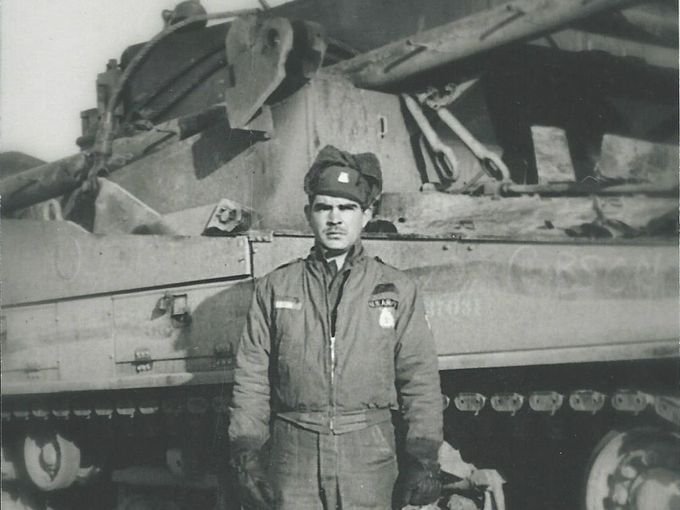
I met Jack, the 91-year-old, 52-years-of-service-including-3-wars, Army veteran on May 31st, 2013, approximately two months after I “woke up” from what was [then] my life, when I went to go fill my mom-mobile (white minivan) with mid-grade gasoline products (it may be only a mom-mobile, but i have a NEED FOR SPEED) at the Gate convenience store/gas station two blocks or so from my house.  I saw him sitting over by the vacuum/air/water station, on the round, concrete base of a streetlamp, his sleek, black, wheeled walker/chair thingie so piled up with odds and ends of clothes, shoes, and bags of snacks that it looked more like a shopping cart from across the parking lot.  His hair and beard were striking:  long, silvery white, shiny and silky and clean.  He looked like a very trim, fit Santa Claus, and when I first saw him, I would never have guessed he was 91 years old.  I approached him because I am what some people call a “bleeding heart liberal,” that is, my heart sort of sags and melts when I am confronted with people having needs that, to them, loom insolvable, and in actuality can be solved with a couple of $5 or $10 bills.

“Sir,” I said, “I don’t want to offend you in any way, but do you need anything?  Can I do anything for you?  Anything at all?  Do you need a few bucks, maybe?”

“Honey,” he said.  “I’ve been saving my money all my life!”  He took his wallet out, showed me a bunch of folded bills, and pulled a big stack of quarters out of his shorts’ pocket.  Jack was born in West Virgina, called himself a good, old hillbilly.

“Jack’s a great name,” I said.  “One of my grandpas was named Jack.”

“They named me after the dog!” he said.

“Well, they must have loved that dog,” I said.  “It must have been a terrific dog!”

“They still named me after the dog,” he said.  I have named pets after people, and wanted to do the reverse, just never had the actual opportunity.  (Wait for it!)

“I went to West Virginia once,” I said.  “I was in Morgantown.”

“The University of West Virginia!” he said.

“I know, it’s a beautiful town,” I said.  “And the state is beautiful, all those green hills.”

Turns out, he’s hanging out at the convenience store to get away from his daughter.  “She wants me to be the child, and her to be the parent, now,” he said.  “I’m too old for that!”

“I hear you,” I said.  “Does she know where you are?”

“I don’t really want her to,” he said.  “She lives right down the street, in a house I bought her back in 1972.”

He named his first rifle Miss Betty….

He was with Patton in N. Africa, at just 18 yrs. old, he was for a brief time Patton’s assistant?  Patton’s army was chasing Rommel, he and Jack started arguing over which way Rommel should to go; they disagreed (he & Patton) but Jack turned out to be right.  In a rage, Patton grabbed his (Jack’s) rifle once & shot into the air with it.  Yes, I could see General Patton doing such a thing.  Hahaha.

His daughter, whom he is on the lam from, is nicknamed BooBoo:  she got that nickname because as a baby she’d hide behind cabinets, furniture, poke her head out & say Boo, Daddy, Boo!

He is not married now, he likes it that way, nobody telling him what to do.

When I told him how nice he looked, how he didn’t look 91 at all:  “I take care of myself!  I’ve got to!  People say I’m a loner, but it’s three of us:  me, myself and I.”

God’s on his right shoulder, sometimes God tells him things, what to do or not to do:  sometimes he doesn’t listen, does what he wants, not what God says.  Later, he hears God saying, I told you so.  God has blessed him.  Every time we shook hands, me trying to exit stage right because my own 15 year old BooBoo was at home waiting for me to get back, he said, “God bless you,” and I said, thank you so much.  His eyes, the pale clear blue of a child’s, the twinkle of a child’s, the mischievous, rascally soul shining out of them.  But a good, good man.  Stationed all over the world and the United States of America.  The state of Florida was the site of his last posting.  He got misty-eyed thinking about one of his predeceased children, another daughter, however, he did not mention her name, and because of aforementioned misty-eyed-ness, I did not ask.

They once had a terrible episode of anthrax on the farm, when he was a child?  The cow had to get shots from the vet, they couldn’t use the cow’s milk for 6 weeks, then it was OK.  That cow gave so much milk, she had to be milked three times a day, not just two.

He wore dog tags, wouldn’t let me look at them:  “the last person that sees these is the one who’s supposed to bury me.”

“Well, I certainly don’t want to be the last to see them, then,” I said.

A student buying beer stopped & handed him a tall cold water bottle.  Jack thanked the boy warmly, saying “God bless you,” then after the boy walked off, he handed me the bottle.

“Aren’t you going to need this?” I asked him, concerned.

“I’ve got everything I need right here,” he said, pointing to his loaded “sulky,” a plastic grocery bag hanging:  was that the water?  “Besides,” he said, “that’s too cold.  And besides, I really like beer.”

“But you might need this water later,” I protested.

“Look,” said Jack, “he gave it to me, I’m giving it to you.  I’m just in the middle.”  I had to accept, gracefully, so I did, but I still felt a bit guilty.  The gift was Jack’s, but he wouldn’t keep it, he had to pass it along to me.

The store clerk, a young African American lad, came out to check on us; I think he wanted to make sure I wasn’t endangering Jack.  Jack handed him a huge pile of quarters, asked if he’d bring him out some beer.

“What kind?” the young man asked.

“O.P.,” Jack answered.

The clerk was confused.  “What’s that?” he said?

“Other people’s,” laughed Jack.

“I think he means it really doesn’t matter what kind of beer you bring him,” I said to the young man.  So he went inside with the money, came back out with a boxed six-pack & Jack’s excess change.

A woman, with a hard-lived look, came over to talk to us.  She knew Jack already, addressed him by name.  She was also a veteran, Operation Desert Storm.  She asked me if I could spare some gas money.  “It’s the end of the month,” she explained, “and I’m coming up short.  I just have to make it a few more days.”

“Sure,” I said, relieved that I could at least give her something, fulfill the impulse that had brought me over to Jack.  I went to my purse, grabbed a ten dollar bill.  While I was doing that, I saw Jack getting his money out to give her some, too.  He brought out a fiver.  Jack and I handed her the money, she shook my hand & thanked us both, and went to pump her gas.

Jack was dressed like a cool surfer guy; shorts with a nice braided belt, no shirt, his dog tag necklace, a pinky ring carved out of some sort of jade on his right hand, a couple of funky/hipster/hippy bracelets on his left wrist.  Quite fashionable looking, and I couldn’t get over the condition of his hair; silky & clean & shiny & sparkling silver, and the same with the beard, it grew to a natural point just below his breastbone.  The only long beard I’ve ever seen that looked beautiful!  His skin was amazingly smooth & healthy looking, considering the amount of sun exposure he must’ve seen!  I mean, he was 91 and he had very little sun damage, not many wrinkles, though of course a bit of sagging around the jowls.  No frown lines!  His only physical flaw was some missing teeth; it was apparent he could have had dentures or a bridge if he’d wanted them, but I think he was more comfortable without.

When I was leaving, I blew him a kiss.

“I’d rather have the real thing,” he chuckled.

“I can’t,” I said, “I’m married.”  We both laughed then.  If I had known that day, May 31st, that my husband was going to dump me, unceremoniously, in front of the yard man, in the side driveway, I certainly would have kissed him (Jack!), full on the lips!  Like, a billion times!

[If he’d had all his own teeth, not only might I have given him a closed-mouth smooch, but I probably would have tried somehow to fix him up with my former mother-in-law who live[d] in my attached guest house (that I built for her & her husband, who died 3 years ago, but who would be 91 now) (who was the only decent person in THAT entire FUCKING FAMILY).  Said former “mother in law”
was, and is still, an ignorant idiot and would have been put off by Jack’s missing teeth.  Plus, she is, as we used to say in middle school, “mental.”]  *ahem*  NO FURTHER COMMENT PERMITTED, BY LAW.  Did you know, that for IRS purposes, you can NEVER GET RID OF AN IN-LAW?  Once an “in law” for tax purposes, always an “in law.”  The law presupposes that divorced persons might still have attachments to one another’s family members.  Hahahahaha.  Isn’t that FUNNY?????

Oh, P.S.  I, myself, now have a dog named… wait for it… JACK, a rescue from the Dixie County, Florida animal rescue organization, a sweet one-year-old weimaraner/yellow lab mix!  Jack the dog’s eyes are yellow/green & deep….

Oh, and P.P.S.  And you’re not going to believe this!  On the way to present this piece at an “open mic” at Coffee Culture on 13th Street in Gainesville, Florida, the fabulous Tristan Harvey, emcee & manager of the joint, in any case, ON THE WAY TO THE FUCKING OPEN MIC, i ran in to jack, on the way!  it was raining, i pulled over & asked him if he needed a ride.  he said no, i said, isn’t your name jack, and HE LIED BECAUSE HE THOUGHT I WAS THERE CAPTURING HIM to take him back to his daughter!!!!!!

GODDAMNED TRUE STORY.  BELIEVE IT, OR NOT.

um, but if you know what’s good for you, you’ll take my written words as GOSPEL TRUTH.

5 Comments

Filed under health, humor, legal writing, mysterious, notes, poetry, prose poetry, science, short stories

After the Shortcut, a short story

illustration after the short cut

After the Short Cut

I’m a pretty woman, at least so the men tell me. “Andrea, you are some woman,” they say. They say that, and then I don’t know if I ever want to see them again. Anybody who would think I’m something special must have a hole in his head. I’m spreading a little in the rear now, after two kids — I’ve got a bit of cellulite on my thighs. It’s all gravy, that’s what I say.

Since I was 14, my life’s been one big bowl of gravy. I’ve tried to learn a little bit about a lot of things — I’ve tried to learn about learning, about how it’s done. It doesn’t matter what fate dishes out to me to go with it, whether I get the tough meat or the tender, the fat or the lean, my life all tastes better because of that gravy. My mom will tell you I blame her for every mistake I’ve ever made, but I don’t, not really. I don’t blame her any more than I blame myself. I blame Katie. I remember Katie in her perfection, the last moment before she got hit, the smile on her lips, and the sparkle in her eyes. That’s how she’ll live forever in heaven. It was her idea, all of it, the boy, the interstate, everything. I blame her, but she paid for her mistake. Sometimes I think she got the easy way out.

I believe everybody’s religion is a way to get to God. I don’t get nervous about having the right one. Why would God shut people out that way? The notion of original sin seems like the most fundamental sort of self-hatred. How is a newborn human baby any more sinful than a kitten? I was in the hospital the morning after my daughter Barbara was born, watching her sleep in her clear plastic bassinet, and I felt like we were both innocent, both trying as hard as we could to do the right thing.

I don’t believe in sin, I believe only in foolishly going against God’s tide, but nobody can keep that up forever, God’s too strong. I try to think right — feelings are another thing, there are no such things as right feelings, or wrong ones. God won’t give up; He’ll pull you up to Heaven no matter how badly you think you want to stay out. Can salmon keep from getting called upstream? Do you think the salmon that get caught by bears along the way are failures? Of course not. Katie and I were like salmon going upstream, going to meet this boy at his house, this boy she had a crush on, the kind of boy that made her heart beat faster — I didn’t get there, neither did she, but she got to see God before I did. I’m waiting for my time. Will he look like my first lover? Is that what Katie saw first and last, the boy she loved, the boy with the brown eyes that made both of us dizzy but gave Katie the most specific intentions?

I sure as Hell didn’t want to cross the interstate on foot. It was Katie’s idea. Do you think that makes me feel any better about what actually happened? I wonder how I’d feel if it had been my idea. Would I feel better, or worse? I suffer when I think about how dumb it was. We acted foolishly, and we’ve both ended up paying. She was brave, I was a coward. I lived, though, I found uncertainty, never knowing which way to go after that moment — I found both cowardice and bravery while she found certainty and sudden death. After I saw her get hit, nothing much mattered until my daughter Barbara was born four years later.

Barbara’s ten now, and she’s got the same powers I have, she can see what’s wrong with people without even talking to them. She can feel where they suffer; she can feel the pins and needles in her own hand when she passes it over their sorest places. She can hear me in her head; I can hear her in mine, without either of us saying anything out loud. Everybody can speak without using their mouth, but very few of us can hear what they say. I run into a few, now and then.

Katie and I were crossing the interstate on foot. We wanted to go to this boy’s house from the mall, and it was a short cut. Without the crossing, it would take 45 minutes to walk there, with the crossing it would take 15 minutes. We wanted to get there faster. We didn’t know we would never make it. If we had known, we would have taken the long way around. We thought that long walk would be boring. We were so impatient, so full of life, giddy with the thought of kisses. We wanted to see that boy — rather, Katie wanted to see him and I wanted to watch them watching each other. But no one could come pick us up from the mall; everyone was too busy to give us a ride. It was wintertime, dark early. That night was so dark, even the sky was clouded over so you couldn’t see the stars. The pavement was like black velvet from the side of the road, an endless ribbon of black velvet and the cars going by were like jeweled bugs, busy on their secret business, their buggy errands.

I had on a jacket. As soon as I saw her get hit I tore it off my body, I used the jacket like a signal flag to wave over her body to try and stop the oncoming cars. I knew she was already dead, I felt her spirit go through me, entering the top of my head, leaving through the soles of my feet. I saw her draw her last breath — even with all the noise, all the cars zipping by on the other side of the road and around us, the wind and the fear and the hiss of burning tires and brake linings, I heard her last gasp, through her cracked ribs, I heard the air leaking through her perforated lungs, I heard the last breath bubbling through her blood. I saw her laying there, her black hair spread over the road like a wet curtain, and I knew.

I rode in the ambulance; they worked and worked on her body, probably just to comfort me. I knew she was dead, but they wouldn’t actually tell me until my mom got to the hospital. My mom, who was even at a moment like that more interested in her bottle of Scotch and her dying friend and her rising fever than in me. She wanted to know why we hadn’t called her. Did she forget we did? We did call, all we got, all we ever got was the machine, and she was in bed nursing her hangover, nursing her sorrows, nursing her case of the flu.

Mom wasn’t perfect, but wasn’t a total screw-up either. She’ll never forgive herself. Thank God we were supposed to be in the care of Katie’s mom. Katie was an only child then. Her mom had another child after Katie died, a boy — she didn’t want another daughter, that would have been too painful. That second child was an accident — just like my oldest — Katie’s mom was so grief stricken for a while she’d go out to bars and pick up strange men, and forget to wear her diaphragm. Or maybe it was the pills she forgot to take. Either way, we were both on the same train after Katie.

Does Katie see me now? Does she forgive me? Will she help me forgive myself? Katie was in love with that boy — she sat behind him in math class. She worshipped him from afar, she was obsessed. After my friend died, I slept with him, for her. He never knew why I came on to him or why I broke it off — I never told him. One time after we’d made love I asked him to tell me about her, he didn’t know anything. I felt sorrier for that than for anything. Katie died a virgin; I’ve made up for her in that way. The joy of knowing what is true can be dampened by the pain of knowing you’re not going to be able to live in the truth, yourself. I don’t care, it’s all gravy now.

Since I was 14, it’s been gravy. I’m not any better or worse than Katie. I say that to myself, but I don’t really believe it. She was good, she died. I lived. Clear enough? When I feel like I haven’t gotten what there was to get out of my life, when I feel how much I’ve missed from inattention or carelessness, Katie comes back to me with a still wind, rushing through my ears like she did the night she died. I’m waiting for my time to come.

Hope it’s not on the interstate. Not like that, not with my hair spread out on the wet pavement like a pretty, pretty fan. Not with my ribs sounding like popcorn when I breathe. The driver of the car cried for days. I suppose his situation might have been the worst of all. Thinking he could have stopped in time. But he couldn’t have. I wonder if it made him a better father to his own kids. I tell my own daughter, Barbara, honey, don’t ever be afraid to take the long, safe way to wherever it is you’re going. You’ll get there, even though you don’t think you will and you’ll see things you never would have seen otherwise. I don’t want her to miss out; I don’t want her to have to live off gravy for the rest of her life like me. Please, God, anything but that. Patience, I tell her when I kiss her goodnight, smelling the hair right in front of her ears, the place she can never manage to reach with the shampoo, the place that smells of sweat and tears and dreams, just like mine did. Patience, my beautiful girl — I tell her every chance I get — patience is a virtue.

4 Comments

Filed under short stories

he didn’t know he would die on december 19, 1979. a beautiful letter, regardless. my daddy. i loved him.

001

Thurs. 9-27 (1979)

Hello my beautiful daughter,

I haven’t checked my mail at Steve & Etta’s in a couple days, so I don’t know if you’ve written or not.  When I wrote you last and asked to hear whether you’d gotten it, that seemed important.  When I’ve thought about it since, it hasn’t.  That is, if you’re supposed to get my letters, you will; and if I’m supposed to/need to hear from you, I will.  I love you, and one of the things that means is that I enjoy expressing myself to you.  Don’t get me wrong:  I also really like hearing from you, hearing you/listening to you expressing yourself to me.  That’s what I want, and what I get will be what I need.

I hope you’re enjoying yourself and learning and growing.  I know you’re doing the latter two; the first is the only thing I’m unsure about.

Things are really interesting & exciting for me: seeing some patterns in my life, some big ones, for the first time ever.  They are really far out:  mostly they have to do with my history of relationships with women (including your mother & going back further than her) and how I use/have used those relationships to work out my feelings about my mother & her inability to give me love, affection, respect, hugs, kisses, TLC… that kind of stuff.  (I’m unclear about how much of this I “should” be sharing with you… when, if ever, should I relate to you like a peer?  Or:  when a father tells his child about his own emotional/psychological struggle/growth/insights/development, is that OK?  I guess I should go with my feelings and it feels OK to go this far; I’ll go as far as it feels OK to.  Part of my desire is for you to maybe learn a little something about your own psyche, and to know me as well as you can… given our… the way our relationship has gone (off the main point: I want you to know that I am not threatened or bothered at all, any more, by your relationship with your stepfather.  I accept that he was your father, is your father, in many ways.  And I think it’s beautiful that you have two of us.  How many young women have a straight dad and an unconventional dad?)  At any rate, the genesis of this recent big insight was George Oliver, from whose apartment I called you the other week.  I was talking to Geo. about my feelings of longing for Barbara & he told me that what I was saying sounded just like what I’d said & been feeling right after separating the last time from your mom.  That blew me away, because it was real true.  In essence, my largely unconscious/subconscious need/wanting to “get back at” my mother for what some part of me sees as her deliberate refusal to give me what I wanted, love, has led me over the years to play the game with women (who I’ve viewed as mother-surrogates) of “when I’ve got you, I don’t want you; when I haven’t got you, then I want you back.”

All this realization is so new I’m still trying to get my mind around it.  I’m pretty sure I want to stop playing it:  it sure doesn’t feel good for those involved, myself included.  (I realize that, at some level, it had to be satisfying some real deep need in me; otherwise why go on doing it for 30 plus years?)

Exciting and scary times.  The prospect of opting out of the game is exciting.  And scary:  the game-playing part of me says, “gee, what will I do if I don=t play that game?” or “But that’s all I know how to do!”

Incidentally, I have no regrets about having come down to Florida & having been there 3 & 1/2 months.  It all needed to happen, I’m sure of that.  And our time together was beautiful.

And something else that needs to happen is going to the first part of next week: I’m heading south again.  I’ll be driving in the van down Baja California to La Paz & taking the ferry across to mainland Mexico again.  I’m going to revisit some of the places I raced through (e.g. 3 hours in Oaxaca) and visit some of the places I chose not to make side trips to.  And drink in that delicious tropical sun & sea for a while.  I guess I’m feeling that I’d rather go to Europe in the spring, warmer weather.  (Sat.)  A feeling that’s really been reinforced by the last couple days in LA, real cool here, rainy & overcast on the beach today.

My current thinking about my travelling is that I’ll do Mexico again until Dec. or Jan. then go to the Caribbean.  I’d love to visit Jamaica, St. Martin, Puerto Rico, etc.  And then in summer go to Europe.  Rather than going to London now, then immediately to warm weather in Africa then going back to Europe next summer.  But, it’s real hard to stay definite..  I don’t know what this does to our talking about travelling together, but if we’re supposed to, we will.  And I would love to see the Caribbean with you.

I don’t know whether I’ve told you or not: when I came out here in Aug., my first stop was San Diego, where I talked to my Aunt Cecelia (who also was my godmother) & the lawyer that drew up my mother’s will.  Cecelia, after hearing that I felt humiliated, hurt and angry about Mom’s will, said that Mom had felt all those same things & ways about what I’d done in living my life.  Which is no doubt true.  And sad, that my efforts to live & be happy were taken so personally by her, and that she chose to be so upset about them.  There’s a lesson there, for sure.

I will write you from Mexico and I’ve decided to assume you will get my letters & stop worrying about whether Gail might intercept them.

My thoughts are with you a lot.  Know that I love you.  (The thunder outside seems to punctuate my writing with an exclamation point after that sentence!!)  Allow yourself to be who you are; remember that if you were supposed to be different, you would be.

Dad

Incidentally, I asked Sheila’s lawyer how long before I get my money from the estate & he said he couldn’t be definite (you know how lawyers are) but he thought it’s be sooner than 6 mos.!

(You can write me in Mexico if you want.  I’ll be stopping in La Paz, in the state of Baja Calif. Sur and mail will be held for me if you send it c/o Lista de Correos, for that city & state.  La Paz is 1000 miles or so south of San Diego so I shouldn’t be there until at least a week or so, more like 2 weeks, after you get this.)  I’ll let you know other cities later.  The next one after La Paz will be Puerto Vallarta, but I forget the state name, but you can just check an atlas.

3 Comments

Filed under notes

the eternal conversation, a poem

IMG_1265

The Eternal Conversation

Hard wood portends on my truth, I long to burn every tree,

I long to sift the gray ash of discontent

for the few teeth and bits that remain.

My body is full of small holes,

the better to let you pass through me.

You old vagabond, the sun is you,

the sun is your heart, the sun is your eyes.

Look at me, I will blind you, you will remember nothing.

You will remember only how it felt to come inside me.

I melt men like sugar cubes.

Give me fountains of blue wine to drown myself in.

Let me swill from your fountains.

Let me piss in your bed and make you love it.

Only give me glory and work,

and I will tell you all I know, gladly.

This is what I know.

This.

Pretend you’re my father:  your one spurt of joy

caused me to begin ticking in your pocket.

Pretend you know my name.

Pretend you have always been with me.

Don’t forget me, don’t forget to wind me up,

don’t break the thin gold chain attaching me to your heart.

I am not a cat, I don’t have a plaintive past,

I can’t meow for attention.  I could try to scratch you,

but you would only fling me away in hatred, off to the floor.

Yet away you go, with soap to pass your outrage,

cleansing your sins like so much dry grit.

You boil your soup of amnesia,

burn your tongue with it,

lose the ability to taste anything, ever.

You are like a tourniquet of the breast,

keeping me tied to the earth.  I never let myself float,

I was always afraid I would never return to sanity.

I am an old vagabond, I will die without you.

But that is nothing new.  You abandoned me

on my first day.  You didn’t care what time it was then.

All you cared about was yourself.  You couldn’t live

your promises.  You are nothing.

You have no heart, you have only your tired words.

Taunt the people who are less fortunate than you.

Make them suffer even more, that is your duty and function.

Speak nothing without hunger and death

being always in your mind — these are

the only real problems.  This love, this is an illusion.

There is no love.  There has never been love.

There is only madness, heat and passion.

The game is to force myself out of myself,

into the bigger picture.  I want to be everyone,

all at once.  To rid myself of these cramps.

To stretch the labored muscles, to tear them,

to rend them from the bone, to flay the entire beast

and let it dry in the sun until it is harmless meat.

Dance with fossils without ceasing life.  The past haunts

but it does not weigh down our joy.  We can weep

and laugh simultaneously.  We do not need drugs for this.

I am finished viewing sickness at last.

I have no more patience for dying.  I will bury the dead,

but I will not visit their graves.  I will plant flowers

to bloom in perpetuity, then I will take my filmy scarves

and fly away toward joy.  I will sprout wings,

they will carry me to my own heart.

Those who have passed under my hand won’t suffer,

I am a slim ivory blade, sharper than a razor’s edge.

I am skillful at dispatching those who love me.

I am the merciful murderess, the killer who weeps

as she cuts the veins, sorrow for the blood but joy for the heat.

The others I have jettisoned are always sad,

they think of me with mingled regret and malice,

but they shouldn’t mourn, they’re better off without me,

this I know for I know where I have buried all the dead.

Courage for life, alleys are for the party afterwards,

the wake for the soul.  The body remains upright.

We live without life, we breathe without air.

We fuck without coming.  We give birth

without understanding the process.

The hospital where I will say my last good-byes

to everyone who harmed me, everyone who tried

to caress me.  I built the building, I know its every corridor.

May we all have a plain dance upon dying.

May we go stately to our blessed rot.

May we laugh as the teeth fall from our jaws.

I hope to see my destination, at least from a distance.

Will it be like a train through the mountains?

Will the air rush in to meet me?  Will the air

be like a baby’s kisses?

I see an old vagabond, moronic or just born,

and it is a mirror I stare at.  I have studied all the books,

but can remember only one thing.

Despair is a waste of time.

With artists, we dance my young age and love,

but white hair and rigor mortis are just around the corner.

I can get through anything in one minute segments.

I can breathe the pain through myself,

I can detach it from my body.

I am told when I was sleeping I was at my best.

That is when I hurt no one but myself.

In dreams, I am kind, I am eternal.

Respond to me, you seller of happiness.

Money can buy everything, didn’t you know?

They are only lying to you to keep you down.

The raw chicken sits on the board, weeping juice,

and it is cold under my hands.  To lift the carcass

takes more than I have.  How did my mother,

my grandmother, manage it?

I have been a good feaster of pain —

I have made the banquet from whatever bones were left.

I have seasoned the food until it does not remember

from whence it came.

Riches, I have dispossessed. I work hard

for tomorrow’s bread.  Someone will take care of me.

The poor are patriots, the poor can pass through the gates

into nothing special.  I am nothing special.

I am a very special nothing.

I have been asleep until I heard your voice.

I thought you despised me.  I tried to touch you,

but you were far away, and could not sleep.

You lost the paper with my name on it.

You forgot everything I taught you.

You old vagabond, you are maudlin and past.

I am the future.  I am the young blood,

the hawker, the fresh pain.

I hear what you say, I am only a poor man

but I will live to bury you.  I will live

until my energy is spent.  Then I will

tender my resignation.  Where is my combat pay?

The only true war is the war to be true.

Sharpen your teeth on my bones.

I have undressed the apple that moored me

to the board of my clothing.  There is no nakedness left

beneath this flesh.  I have fucked a thousand like you.

1 Comment

Filed under poetry

made in heaven, a short story (originally published in exquisite corpse)

illustration made in heaven sheet

Made in Heaven

(originally published in Exquisite Corpse)


The Test

He believes in eugenics — his line was bred for sad brown eyes turned down on the outer corners.  He feels his Self slipping away, somehow.  The Self he was creating — he did it, he was tied to a woman, a woman who didn’t really want him, a woman who flailed at being tied to men like an unbroken yearling colt flails at the lead chain.  He fell in love with her watching her walk in the grass at the side of the road — bare arms, long brown dress, square brown handbag, pale white skin, waist-length brown hair.  He’d had ten cups of coffee pulling an all-nighter to teach his first medieval history class.  His role:  the nervous young professor.  He stopped to give her a ride — his first day on the job, he didn’t want to fail some test, by not stopping, and then she was just like some wild horse, he knew he had to marry her to keep the other predators at bay, they’d have chewed through her throat in a heartbeat.  He’d never seen eyes like hers.  Unattainable.  One morning, he woke up, he was married.

The Question

Sometimes he thought the way his wife acted in public was like doing a strip-tease inside the Dome of the Rock — asking for it; bad stuff going down out there, he said in his mind over and over whenever she started up, giving people looks of… what was it, exactly? Then one day, driving to work, dawn breaking, coffee clutched in hand, he watched a flock of birds pass by, bits of black looking like a school of fish coursing through the sky.  Landing on a new-mown field, the birds hopped among the grain stubble, picking up leavings.  His wife with her unsatisfiable longings was like that, a ballet too graceful to be endured.  How was he going to stay?  How was he going to leave?  He goes to the office and tries not to think about it, but it’s there every second, floating in the air in front of everything he tries to focus on, like text on an invisible TelePrompTer.  It wouldn’t matter — his wife could run off with the car, all the money, his heart — still he’d never stop asking her to come back.

The Wish

His newly-adopted hometown was full of squares and smiles:  people walking by, talking and laughing to the air.  For years, his wife had this best friend who always thought she, the friend, was dying.  Sometimes his wife got irritated with her best friend’s fear and wished the woman would get it over with already.  She’d been dying for over 10 years now.  Except one time, after his wife hung up on her friend disgusted by her seeming hypochondria, the friend actually ended up in the hospital with a heart attack.  His wife told him God was teaching her not to make wishes.  That night, she sat nude in front of the closet-door mirror bawling like she’d just gotten a bad haircut.  Which she had, at her own hand.  Hacked her hair off with kitchen shears like an insane nun taking her final vows.

The Need

Long ago, his wife says, she lived in a warmer climate.  Her first love was a coconut palm, phallic and bristly.  Round brown fruits.  She scaled the tree again and again, could never make it all the way to the top.  She got a crush on every boy that talked to her that year.  She quit reading the Bible when she got to Job — after her own father lost his two sons in separate car accidents, he just lay down on the couch and died, for which she never forgave him.  Maybe it was the fact her father willed himself to die, left her on her own too young — maybe that, and the two dead brothers, made her feel like any man was better than none.

The Surprise

A spade is a spade.  Death and time are as big as the universe.  Even your wife’s dying friend can be deceptively spry, hale and affectionate; she can give bear hugs.  The dying friend can move to Lulu, Florida, after she gets out of the hospital for what she doesn’t know will be the last time.  The sky over her can be blood blue with thin white clouds like cobwebs.  A dying woman’s dentures can deteriorate — first a missing eyetooth, then going brown in front in weird streaks.  Evidence of her inner corruption.  Even a dying woman can be financially abusive.  His wife always handed over his money like Kleenex to people with pathetic sob stories; whether they were dying or not, she’d have bankrupted him if he allowed it.  Surprise!  His wife’s so-called dying friend can actually die.  His wife cried and cried, even though she told him only yesterday she was afraid her friend only wanted her money.

The Rule

Yet, that impulsive woman he married, she got pregnant the first night, the condom slipped off and was found wadded up next to her cervix — she baked and baked, after she lost that baby.  Even the day of the miscarriage, her favorite Dixie Lily flour was soft and cool and white on the table, her nimble hands unevenly pigmented, strong and capable, dusted with the white powder, holding a green-handled rolling pin.  She was like a horse trainer, she’d never hit you with her hands, only with something held in them, usually a hairbrush, the bristly side.  She wanted you to obey, but not to fear.

The Nudity

Die, black smile — his wife was like any ordinary woman you fall in love with on the side of the road, touching her own lips, feeling her own breath.  She was not comfortable with him.  She was not comfortable belonging to any man.  She lost another man’s baby the year before she married.  Now she is fighting depression off with a big stick.  In his favorite picture of her, his wife’s flesh looks so soft as to be eminently pierceable by the polar bear tusks in the head she’s leaning on.  Sometimes she’d cry hard and couldn’t get out of bed, other times she was just plain hard and he couldn’t get through to her heart — like she was compensating for the too-naked times, by not allowing touch.

The Drug

They vacationed incessantly — Omega at the desert — she wore a backless sundress, and all her spinal knobs were visible to the casual observer.  She was verging on plump when he met her, then she became lean, tireless and angular.  He doesn’t care either way — he knows she’s no good for him but he can’t give her up.  Maybe it’s that he’s never had lovemaking that good with anybody but her.  An hour in bed makes up for the days of misery trying to live with the rest of her.  He understands now how addicts can keep shooting up, even when they know it’s killing them.

The Problem

At a frown from him, at the slightest disappointment seen or unseen, she’d bolt; he wouldn’t see her for days.  Then he felt as hollow as an abandoned house, weathered gray clapboard siding, rusty tin roof, part of the roof gone so you see the rafters underneath.  He took long walks early in the morning trying not to think about her; he saw a rising flock of birds, confetti against gray-blue.  He was walking through flatness, brown plains, splashes of green, a dull sky, murky at the horizon.  A grain elevator through the mist, far-off, looks small like a toy.  Is he a toy, for her?  He buys a cup of coffee at Love’s Truck Stop on Fountain Rd.

The Fear

Her name, he sees it written everywhere — on a metal tower with guy wires, the upper half of the tower obscured by clouds.  He sees her name on maps, even at City Hall on a quick stop in Broken Arrow, Oklahoma, for coffee and smokes.  Diana, the huntress — but she can’t bring herself to butcher her kills.  She leaves them to rot.  Or maybe she stores the carcasses in some psychic smokehouse, preserving them within herself for some imaginary future famine.  As if she’ll ever be alone, as if she’ll ever lose her gift for making others feel sorry for her, sorry enough that they pick her up hitchhiking and end up married.

The Disease

Heat and a white smile — he visited another sick friend, imagining making love to Diana in a hospital bed.  What would it be like, to care for her until death?  Would it make him forgive her at last?  Would she be able to forgive herself?  Diamond logic cuts through psychological scar tissue, removing old growths, old infections, but then comes pain, bleeding, and the collapse of drained and emptied dreams.  When he aches for her, but in the same moment rejoices in her absence, assault-eating seems like his only option.  He sits in front of the sports games on TV, bags of snacks next to him.  The cat sleeps on his feet.  It doesn’t matter who is playing, he always roots for the underdog.

The Conundrum

Before she came back after their first separation, he decided that the flat glare of the sun loved him more than any woman he’d ever known — he wasn’t even surprised when he read in the newspaper how two thugs beat a gay college student, tied him to a fence and left him for dead.  She is ill, mentally, spiritually; he knows this but something equally twisted in him needs to be around that illness, in order to feel himself healthy.  Who, then, is the worse off?

The Return

She came back to him over and over, and every time she was hard at her music again, trying to get perfect that rhythm only she could hear; practicing, pure mindless female energy — dressing up in fur and spangles, frothy material, fancy.  When she got like that, you could tell she wanted to persuade some mysterious Somebody to do a secret Something for her.  She wanted to tempt, to bewitch.  He let her practice her music on him, he took it into himself, her beauty, her nature, her vengeance.

The Desire

He had pity — she was piteous — her legs moving like a deer’s, then wrapped around his waist — thin, delicate, poised for fleeing.  Once she told him she loved to feel womanly, but the only way she could achieve that was to see herself as physically, mentally and spiritually complementary to whatever man she was with.  She could then mold herself to accommodate his subtle shape the way the space between her legs accommodated him, and the womanly experience came to her through that forming, that clinging.  Yin/yang, two halves of a sphere, with herself having structure only when against the man’s half.  And sooner or later, she always stopped assuming that complementary shape, as soon as she started seeing things in a man’s shape she didn’t want to cling to — what man doesn’t have weaknesses — and that left her feeling like a neutered being, not male, not female.  Barely alive.

The Change

A spade is to be pitied for having to bury a woman like her, he thought upon waking early one morning to stare at her sleeping face, drained of pain and fear, sweet as a baby’s — but the light was all wrong for this time of morning, damn that daylight savings time.  Change, he hated any kind of change.  She should stay in one place; there can be no love without commitment and full knowledge.  Yet even regarding her deep within the throes of her struggle, primed with the proper amount of pity, he felt their beauty together, as a couple, was almost equal to infinity — but then again, mating cockroaches could fly toward the light too.

The Ultimatum

One day when she said, “Let me out of the damned car, now,” he stopped, let her go — thought “finis.”  She ran toward an idle hay baler & mountains of mown hay in a field; after that, she ran through a field of milo.  Then came a sheet of rain.  While he waited for her to return, he picked handfuls of yellow flowers beside the brown stubble.  She was his ultimate fantasy — her hooded eyes, high cheekbones, firm jaw, and full lips.  Gleaming brown hair.  He said to her the next morning, grinning like a chimp, “I live for simple things now:  coffee and a cigarette in the morning, beer and a cigarette at night.  That’s my life.”

The Petition

Scent-paths are the most primal in the brain — one day he read about how, in the next state, a cyanide suicide’s body gave off fumes and made nine others ill.  His wife’s baby breath slowly turned into dragon breath.  A crazy tarot card reader told him seven was the optimal number for a point of view, whatever that meant — then during the month of July, his own mother walked the Great Wall of China, worrying about his pending divorce.

The Secret

Money could always make her come back — who was it that wrote, “Wealth is power?”  King Cotton.  After all, his family had bales of cotton the size of railroad cars, covered with blue or yellow plastic.  Chicken houses the size of football fields.  Tractor-trailer cars stacked with white chickens, still alive.  Numerous Arkansas mountain shanties.  On one particular tract of farmland, there was pampas grass and a rotting tin-roofed general store.  Not to mention abandoned buildings, too numerous to count.

The Charade

He felt his smiles turning into complex equations, numbers, letters, factors squared.  Also that July, his wife fell madly in love with Puerto Rican twins.  She sat in the college Spanish lab for hours, trying to acquire the accent of a native speaker.  Later, she asked him to take her in for an abortion.  Him, a male, like a wide column of stationary air before her warm front, her hurricane eye — she left him wishing he were a virile but tender auto mechanic instead of a college history teacher.

The Truth

Dig up the heart that was properly buried and leave it defenseless again — in a dream the next night, baby fists flailed against him, their full force like the blow of colliding with large bumblebees.  Heavy but miniature.  His wife, woozy with painkillers, crawled into bed beside him, woke him up, told him how in college a virgin boyfriend of hers, frustrated because she wouldn’t sleep with him, punched a brick wall, injuring his fist.  Crooked paths lead to God — his wife then told him how it was with the elder Puerto Rican twin, Emilio, that she first stayed awake all night long, so hungry, but then he pissed her off with his blond boyfriend:  using her as a cover so nobody would know he went both ways.

The Aftermath

The sun’s light always reminded him of diamonds — his favorite teacher once told him, “Don’t waste your gifts.”  He was too much in love with the teacher to ask what gifts she meant.  Now he thought he knew.  The sun ate his heart anyway, it didn’t care about his promises — he was bereft beyond bereft when his wife left him for the last time.  All his friends and acquaintances told him how he’d be better off.  He was, and yet he wasn’t.  Everything he has dreamt since then, since she was gone, was in black and white — he wanted to hear the white noises of the wind, he wanted to fly down the tunnels of green, he wanted the warm salt water to gently burn his eyes clean, he wanted all his enemies dead, he wanted the memories removed.

The Legacy

His wife loved white sheets — they made love that last time in a bed so white it looked like barely repressed violence.  In the center of all that pain, something brought them both rising smiles — together, they were convulsed by spasms of laughter, uncontrollable as an orgasm.  It seemed like laughing at a funeral — insane but maybe the sanest response of all.  She gave him one lasting gift, his black smile at infinity… infectious.  Even as he walked around, zombie-like, memories of the failed marriage ringing in his skull like aftershock of a car crash, total strangers started propositioning him out of the blue.  Male and female.

The Effort

The heart, it seems, can expand, then collapse, both to an infinite factor.  He noticed, one day at lunch downtown, lots of little people he’d never seen before.  Or maybe he saw before, but he didn’t notice.  Had she left him that ability as well?  Fat, strangely shaped people, people who looked mentally disabled, odd angles of eyebrow, odd expressions of puzzlement.  Then, he noticed a very pretty woman in a garden-print shift & orange straw hat, no makeup on except blood-red lipstick.  She could be his wife’s twin.  She ordered grilled turkey & Havarti with cucumbers.  Unlike his departed wife, she was apparently an effortless mother; her child was immaculate, dressed in hand-sewn clothes.  If she ever left her husband, the world outside might swallow her whole — but he’d do his best to convince her she had to — for both of them — at least try.

4 Comments

Filed under short stories

the day before closing, a poem (for nana)

ktp 1964 nightgown841 oleander drive three sisters yellow doorktp 1964 backyard tree

The Day Before Closing (for nana)

Out in the yard there is the tree
you planted when I was born.
It’s tropical, fast-growing, but

even so — I can’t circle my arms
around the trunk! The thing
towers above the house, thick

branches like beams, supporting
my sky of childhood. Tomorrow this
place will belong to someone else:

the old gardenias, the dense hedge
of bamboo out by the laundry line,
the bent but still perfectly good mailbox.

Please let them leave a few things
the same. I’ve gone through closets,
cabinets, a dozen times but I keep

finding more old letters, more
scraps of paper bearing your quick,
vivid writing. There, amid

the dustballs glimmers one more
strand of your hair, catching
the wan light, curled and silvery

against the bare floor.
I slip it into my pocket,
then remember how you used to

put on your hose, sitting
on the edge of the bed, sighing
softly as you pulled the rolls

of nylon up your lovely legs.
Just as abrupt comes one last vision
of myself, at five, dancing wildly

in your filmy yellow nightgown,
whirling around the cleared
living room to your applause.

3 Comments

Filed under poetry

my little brother was born on june 12, 1971, in fort lauderdale, florida, at holy cross hospital

100_0793chris with billfishchris and me 2724 uncle worthy slide from judi

so, my little brother’s birthday is today. he would be turning 42, if he hadn’t passed away from me & this world at just 37. i miss him every single day. every. single. day. but even more on sundays & holidays, anniversaries & birthdays. he always made time for me; he actually & literally saved my life after i got divorced for the second time & he moved in with me, coming up to gainesville from the keys. he loved the sea, yet for me he moved inland, as he had once before when he gave everything he had of himself to his wife and she wanted to move to from fort lauderdale to atlanta (unfortunately they divorced years before he passed away). he was one of the sweetest, kindest, most compassionate people i have ever known. he was an angel child & i learned a lot about parenting from him, being his big sister by 10 & 1/2 years. i hope everyone who ever knew or loved him thinks kindly of him today. he was so scared of getting his hair washed; that was my job, bathing him at night. we developed a method of rinsing the shampoo out that worked, and he was the cutest little frogman playing in that tub of suds! what a person he was! how much he taught me about love, and living! and, somewhere where i cannot yet completely see or hear him, i know he still IS. my baby brother was a real, genuine MAN.

10 Comments

Filed under notes