Tag Archives: divorce

Fourteenth Summer

One late spring, my mother had a fit of nostalgia for her long-lost New England girlhood.  As soon as school got out, Granny drove, my mother co-piloted, and I navigated, which meant flipping the pages over on the AAA Triptik.  Each page brought us closer to an alternate universe.  As soon as we crossed the Florida state line, even the pumps at gas stations along the way were exotic — brands with colorful logos I’d never seen.  The morning air smelled rich and foreign and intoxicating.  We were in another universe, the language spoken altering with each state line, vowels swelling then contracting like metamorphic rock.

The last day was excruciating.  I felt that I would shrivel, grow old and die before we got there.  It didn’t help that the night before, at the motel, I’d watched a horror movie where the villain speed-flakes down into ashes and dust because his youth potion — obtained by murdering people and boiling parts of them down into reddish concentrate — spills just before he’s supposed to take it.  Method-acting, I too pulled hairs out of my scalp, one by one, and let them fly into the wild unknown out the back window of the car until my mother turned, glaring at me, her mouth half-open in a pinched V.

“Will you please stop it!” she hissed.  “I’m sorry I let you watch that movie.”  I fell into a sweaty doze and awoke as we left the highway for a series of turns through town.  Deanie and Everett’s house was three centuries old, situated on top of a hill.  A long driveway meandered around to the back of the house, and just behind that, across the top of the drive, was the barn.  A swing hung from the center of the barn door, an soft and ancient rope so thick you had to grip it with both hands, the seat an epic knot at the end.  There were milling dogs yapping, nosing my bare legs, as we got out of the car.

***

My uncle owned a large piece of land, and from the back of the house was a view of open meadow and beyond that, an endless grouping of thick green trees that to a sand-and-twigs girl was the forest primeval.  The pony that had been mentioned in Katherine’s letters was gone — hoof problems — but that wasn’t enough to mar the promise of the summer.

“Where’s your tan?” asked Katherine’s friend, Betsy.  “I thought everybody in Florida had a tan.”  She inspected my arms, holding her own next to mine.  Her skin was smooth and hot.  “You’re whiter than I am.”  I laughed.

“I don’t get a tan, even when I go outside,” I said.  “It just turns red and peels.”

“You’ve got plenty of freckles, though,” Betsy said, squinting.

“She lives on a canal and they have a boat in their backyard,” Katherine said.  “They can ride all the way to the ocean from there.”

I took on a role:  sheltered innocent.  Things had a way of filtering down.  With eight kids, the youngest knew as much as the oldest — maybe more.  We were left to run amok.  Evenings, the adults played bridge.  As a gang, we rode bikes everywhere.  One evening, Katherine invited me out after dinner.  “We’re going to the graveyard,” she said, with eyes that gleamed the unknown.

“The graveyard?” I asked.  I figured she was pulling my leg.  “What do you do there?”

“You’ll see,” she said.  “Wear long pants.”

I scurried up the steep back stairway to the room I was sharing with Katherine and her youngest sister.  When I entered, they broke apart, whispers interrupted.  Laughter burst out of Melinda, at six already bored with the goings-on of seven older siblings.

I huffed up the hill behind Katherine.  We passed the village crossroads and turned into a small paved driveway.  “Hide your bike over here,” she said, pointing to a clump of bushes.  “We’re not supposed to be in here after the sun goes down.  They lock the gates.”

We walked through the dim woods, the air cool, the moist smell of fallen leaves and forest dirt fragile like perfume.  We passed iron gates and what looked like an earthen dugout with a wooden door and sod roof.  “What’s that thing?” I asked.

Katherine turned to me, blonde curls stuck to her forehead with perspiration.  Her jawbone was delicate but determined.  “That’s where they put people who die in the winter when the ground is frozen.  They can’t dig the graves until it melts.”  I’d never seen snow, except on TV.

“Oh,” I said.  We rounded the curve of the gravel road and saw the tombstones.  Some were so old you couldn’t read the lettering anymore, the marble smoothing itself out over centuries like embossed paper in the rain.  Kat took me to the far end of the graveyard:  four kids were in a circle on the ground behind a big mausoleum.  A small pyramid with chipped edges sat near them, pudgy and squat like something amphibious.

“Don’t step on the actual graves,” she told me.  “Follow where I walk.”  She threaded a narrow path from the road to the mausoleum.  I saw their bottles, wrapped in brown bags.  We sat down and Katherine reached for one.  She peeled wet paper and I read:  Cold Duck.  Pried off with her thumbs, the plastic cork flew over the stone markers, into the woods, landing with a faint thump and rustle in the dry leaves.

We passed the bottles around and I listened as the others told ghost stories.  The light was gone and the moon only an anorectic sliver.  With our faces dark, voices became harder to hear, as if the sun had been an aid to comprehension; as if we were losing touch with the world itself.

One of the boys, large, slow-moving, looked at me more often than the rest.  I was listening to the story about the hook-handed psycho who escapes from prison, when I felt his arm settle across my shoulders.  Its weight was astonishing; warmth flowed up my neck and out across my jaw as I tried to pretend the arm wasn’t there, freezing into position and continuing to stare out over the black canopy of trees.  His hand moved like a soft, moist crab as he clasped my shoulder, one finger tracing an oval over my bones.

I wasn’t sure what came next but wondered:  if I shrugged his hand away, would there be another chance?  The critical moment lengthened, drawing itself out with a tense futility, until the decision had been made by default.  I said nothing, only widening my eyes the merest bit as I gazed into his.  My face moved into an expression of helpless innocence; one of incomprehension and a soft invisible yielding.  Awareness dwindled to one compact fiery point behind my left ear.  If he moved to kiss me, I would implode with a velvety gray heat.

Perhaps he thought me uninterested, despite my valiant attempt at mental telepathy; perhaps he thought me merely ill.  In any case, he carefully removed himself from my flesh:  my breathing slowed, though I felt my heart race with a new kind of desperation.  

The ghost stories droned on and the last bottle was empty when we heard the whining of an engine, the crunch of gravel.  Headlights swung around the curve, sweeping the granite and marble tablets.  “The cops,” somebody hissed.  “Get into the bushes.”  Katherine took off and I followed her heels.  We crashed through blackness, twigs scraping and breaking as we flew.  We huddled behind the broad trunk of some tree — her hand gripping my elbow like pincers — as the police car drove through the place.  When the car was gone, the air was thicker and quieter than before.  I could barely see my own feet.

“All clear,” Katherine called, her voice high, wavering, and I smelled her breath, sweet with a bitter under-note of alcohol.  I heard snapping and cracking as the others crept through the thick brush back to the grass but we didn’t move.  “Wait,” she said as I began to turn away, squeezing my arm even tighter.  “I’ve got to pee,” she whispered.

“Me too,” I whispered back.  We turned our backs to each other and two solid streams hit leaf mulch.  Done, we ran out of the woods, forcing laughter, breathless.  The boy who’d fondled me looked blankly in my direction.  After a quick series of good-byes, we left.

I stuck close to Katherine’s tail on the way home.  We dumped the bikes in the barn and went inside.  Everett, Deanie, Granny and the oldest of the cousins, Maryanne, sat in the living room playing bridge around a card table covered with fringed green felt.  Some of the others were in the playroom with the doors closed, playing the stereo.  

“Want to play pool?” Katherine asked, as we rummaged around the kitchen for snacks.

“Sure,” I said.  Avoiding the living room, we circled around by way of the back hall.  As we slid open the big creaking pocket doors of the playroom, Granny’s voice rang out.

“Jamie,” she called.  “Come in here a minute.”   Katherine lifted her shoulders, shrugged, tilting her head.  Go on, she motioned.

The bridge table was a patch of bright in the gloom.  The wide floorboards creaked under my feet, small snaps and pops as I moved.  “Hi, Granny,” I said.

“I was just starting to worry,” she said.  “Did you and Katherine have a good time?”

“Yeah,” I said, nodding and smiling with a forced hothouse energy.  I held my head at an angle, hoping I looked pert and attentive, while my feet gripped the floor, my calves tight against swaying.

“Come over here and give me a kiss goodnight,” she said.  “I’m going up to bed after this hand.”  I held my breath as I bent down and brushed her powdery cheek with my lips.  When I spoke, my voice was small because I was trying not to exhale.

“Goodnight, Granny,” I said.  She reached up, plucking a dead leaf off my fuzzy pullover, then took my hand, squeezing it tightly.

“Good night,” she said.  I turned and walked into the other room.  Katherine was racking the balls.

“Did they say anything?” she asked, her firm little jaw stiff.

“Nope,” I said.  We burst out laughing, doubling over with a weak hilarity that spread through our bodies, magnifying the effects of the Cold Duck, and making us feel as though we were queens of the world.

I was on my way upstairs with a huge stacked handful of oatmeal cookies when I noticed Uncle Everett sitting out on the back porch swing.  “Jamie,” he said, his head turning to face me, the light from the kitchen reflecting off his glasses; making his eyes invisible.  “Come here.”

I put the cookies down on the counter.  He rose as the screen door thumped behind me, impossibly tall, impossibly strong.  “Would you like to take a walk?” he asked.  His speech was slow, deliberate, and his limbs moved like a dancer’s.

“Sure,” I said.  He took my hand in his.  He smiled, a gentle, droopy-eyed smile.

***

Everett was everybody’s favorite.  He was a good dancer, and he smelled good — hair oil and talcum and aftershave.  He had a taste for practical jokes, though not the mean kind.  And he was a magician with cards.  Once, he showed me how to shuffle fancy, pulling cards from behind my ears and rippling the deck back and forth, taking it over the back of his hand like a baton twirler.

His hands didn’t look fast.  They were huge, and he had thick sausage fingers, the kind you’d find on some peasant farmer, except his were smooth and white, the nails not manicured but looking that way because he bit them off precise and even.

We walked down the hill behind the barn.  The thin moon reflected off a small spring-fed pond, showing the tangle of blueberry bushes lodging innumerable hard pale berries.

Uncle Everett stopped at the edge of the berry thicket, still holding my hand.  He knelt in the soft, downy grass, balanced on one knee, then — losing his balance slightly — planting the second.  I saw his face in the light, and the two trails that swept down from his eyes, gleaming.  “You know, your mom is so beautiful,” he said; I knew he was weeping not for her, but for me.  He reached out and touched my chin with his hand.  “Do you miss your father, Jamie?” he asked.  I said nothing.  He took his hand away.  “I’m sorry,” he said, wiping his eyes with his fingers.  “Your mother would kill me.”

He smiled and a few leftover tears plopped out, rolling past his jawbone.  He stood up, leaning on my shoulder and brushing at his pants legs with one hand, but it was too late — the dew on the grass had seeped all the way into the fabric of his chinos.  I could see dark spots where his knees had touched the ground in front of me.  “You won’t tell her any of this, will you?” he asked.

***

Next morning, I was breaking out with blisters and so was Katherine.  Poison ivy, in the bushes where we’d hidden from the police.  We tried to keep covered with long pants and sleeves, but the rub of cloth and the increased perspiration made us more miserable.  Aunt Deanie was a safer bet than Granny or my mom.  We huddled in her sewing room with the door closed while she phoned the doctor.

She hung up, turning to face us.  “I’ll have Everett pick up the medicine.”  We made to leave, but Deanie reached out and tapped my shoulder.  “Jamie, could I speak to you for a minute, please?”

I looked at the knitting machine and skeins of wool — some new, still wrapped in paper, some rolled into balls, reclaimed from children’s outgrown sweaters to be recycled into new ones.  I reached out to touch the wool; Deanie picked up the skein I fondled and smiled.  “This one is for your Granny’s Christmas present,” she said.  “Isn’t it pretty?”

“Yes,” I answered.

“Would you like me to show you how to knit sometime?” she asked.  The down above her upper lip was turning darker as she approached menopause — small, round beads of sweat dotted her skin there, clinging gemlike between the tiny hairs.  I never sweated like that.  My sweat dripped like my father’s — though I resembled my mother and her high Yankee family on the outside, his Bohemian blood in this way stayed true to itself; undiluted.

“I could never do that,” I said.  “My mom tried to teach me to crochet and that was bad enough.”

“Anyone can do it,” she said, laughing.  She started putting stray knitting needles in a maroon satin roll-case, arranging them by size.  “How did you and Katherine get into that poison ivy?” she asked.

“We had to pee in the bushes,” I said.  “It was dark.”  Deanie didn’t look up from her needle-case.  “Not that I would know poison ivy even in the daytime,” I added.  There wasn’t a whole lot of unspoiled nature in Fort Lauderdale.

“Uncle Everett called your father yesterday to tell him you were here,” Deanie said, still not looking up from her sorting.  “I don’t know why Everett got himself in the middle of this,” she continued.  “I know your mother will be angry.”

“Maybe he thought I should see my father,” I said.  My face got hot and tingly.

“Everett told him it was up to you,” she said.  “I’ve got your father’s number here, if you want it.”  She held out a yellow pad covered with doodling — stacks of heavy triangles.  Her eyes were blank as she stared over the top of the half-glasses she used for handwork.

The phone was bright orange; over the place for the number somebody had taped a card reading Deanie’s Nip and Tucker Shop.  My hands were damp and the receiver nearly jumped out of my hand as I pressed it to my ear.

“Dad?  It’s me, Jamie,” I said when he answered.

We agreed to meet — Everett would drive me.  The drug store downtown had a sandwich shop where my father and I could have lunch.  On the way down the long driveway, Uncle Everett began to sing One Hundred Bottles of Beer on the Wall, poking me with his elbow after every chorus until I couldn’t help but laugh.  There were still forty-five bottles left when we pulled into the parking lot.  Even though I was expecting it, seeing my dad’s beat-up, rusty VW van made my breath come faster.

“I’ll wait here,” said Uncle Everett.  He put his arm around me, compressing my shoulders with its weight.  His eyes shone with an earnest glaze; I almost wished he wasn’t being so understanding.  He had no inner core; every current in him swirled right up to his skin.  He didn’t realize that made me want to hide myself deeper still.

I didn’t remember my dad being so bald.  The last time, he’d still had a thin fisherman’s ponytail, tied with a piece of leather.  Now, there was only one thick, tiny clump left on top, right in front, down low over his forehead, where his hairline had been.  I knew at a glance he had done the best he could with it.

He ordered a root beer float.  I got a double butterscotch sundae.  I dug the spoon in, twirling it into the whipped cream and nuts, syrup strings like melted cheese, snapping into gossamer threads as I lifted the spoon and swiveled the bowl with my other hand.  He reached out and tapped my wrist three times, an interrogatory tempo.

“How would you feel about seeing each other more often?” he asked.  The root beer bubbled in the thick soda glass; the scoop of vanilla was melting, spreading a pale creamy brown lake.  His straw lay on the counter, paper half torn off.  A set of curved scabs on the back of his hand looked ready to come loose.

“What’d you do to your hand?” I asked, crunching nuts between my teeth.

“Burned it on the boat engine.  Answer me, Jamie.”

He turned on the creaky stool to face me; I looked straight ahead, too intent on my sundae.  I wondered if they had ever really been married — where was the documentation?  I hadn’t found one photo, one letter, one Valentine card from him, while rifling my mother’s drawers.  She’d saved everybody else’s love letters — even nerdy stuff from the eighth grade.  Your mother sure liked the boys, Uncle Everett would say in front of us, teasing her.

“Mom’s afraid you’ll try to kidnap me,” I said.  I spooned another glob, then turned to him.  “I told her even if you did, you couldn’t keep me, not against my will.  I know how to use a phone.”

He waited, staring at me, his eyes cold, the pupils contracted, leaving behind such a uniform and piercing blue that I felt sure he could tell what I was thinking.

“I’d rather try to talk to her myself, first,” I said.  “Then, if that doesn’t work….”  I shrugged.

“Don’t you think we’ve waited long enough?” he said.  He picked up his straw and blew on it, the paper shooting out, dropping behind the counter, the waitress giving him an irritated look.  He looked down at his float, stabbing what was left of the ice cream with the straw.  “Guess I like it melted.”

“I know, Dad,” I said.  “Let me try.”

“Okay,” he said, and he twirled his straw in the soupy float, bent over swallowing, his lips pursed, as if he were smoking a cigarette.

We browsed the magazine and souvenir section.  Hanging on a circular rack were plastic-wrapped packages of T-shirts.  Dad picked one that said Save The Whales.

“Is this your size?” he said.  I knew he wanted to give me something.  I thought the T-shirt ugly, but I nodded.

“Call me collect, anytime,” he said, as I stood near the electric exit door.  I stepped on the black mat and the door jerked open, the air outside a hot bath after the ice cream and air conditioning.  I turned my head to look at him again as the door began to close and he stepped back on the mat, holding the door open with his foot, wrapping his arms around me and kissing the top of my head.  “One month,” he said, and then he moved away, off the mat and back into the drugstore:  the glass door swept closed behind him.

At dinner, my mother stared at my whale T-shirt, one eyebrow raised.  I was wearing the shirt not because I liked it, but because I knew — even without having discussed the topic of whales with her before — that she wouldn’t.  “I didn’t know you were into that environmental stuff,” she said.  She laughed and looked over at Everett at the other end of the table.  “And how much did that charming garment cost you, dear brother?”

Before I could open my mouth, Everett spoke.  “Not a cent.  Her father bought it for her today.”  He grinned at my mother, knowing she’d back down for him.  Mother glanced down at her plate, her lips pressed together; a small sound came from her nose — a quivering kind of snort, something she usually uttered after heavy drinking.  She brushed her hair behind one ear and fiddled with a length, twirling it until she let go and it snapped away, spiraling back to normal.  She started to say something; Granny interrupted.

“I think it’s a nice shirt,” Granny said.  She smiled over at Everett and patted my shoulder.

“Thanks, Mom,” said Everett, and, leaning his head to one side, he sneaked a wink to me.

“Well, I guess now that you’ve ganged up on me, I might as well surrender!” Mom said, shrugging her shoulders.  She stood, pulling her long legs out from behind the farm-style bench we sat on.  She flapped her napkin over her head as if she were waving to a departing ship.  “Save the goddamned whales!” she shouted.  We all raised our napkins, drumming the wooden floor with our heels, bleachers-style, until the silverware lying on the table rattled with the floor’s vibration.

Everett leaped out of his chair, grabbing my mom from behind and twirling her to face him — as if she were a doll — sweeping her around the table in an oddly timed silent waltz and shouting above the din, “What a heart, oh, what a heart!”  My mother’s hair flew back off her face, and a light veil of perspiration shone on her forehead.  She dragged behind him clumsily, weak-kneed from anger.

As I watched her face, the walls of the room seemed to move outward, her twirling figure becoming more and more distant until the light itself turned bluish and semi-opaque, as if I were underwater.  For the thousandth time I strained imagination to picture them together:  my father, my mother, clinging in delicate lushness, some kind of slow-motion rolling under bedclothes, a mouth brushing a mouth, fingers trailing a web of pleasure over bare skin; the moment of beginning.  It nearly came, then turned as preposterous as always; instead, all I could envision was the face of the boy in the graveyard, his cruel lips, and his blank eyes.

“I surrender,” my mother kept gasping, as she continued to dance with her handsome brother, her head bouncing forward against his chest as he swept her around in dizzy circles, like a man intoxicated — her voice choked and hoarse, so that I could barely hear her over Uncle Everett’s own rounded laughter.  “I surrender, I surrender.”

Leave a comment

Filed under Uncategorized

Pretty Young Women, Playing A Game, a very short story

Pretty Young Women, Playing A Game

The stupid party game I suggested that night was called “the worst moment of your life.” A half-dozen of us were playing, sitting cross-legged in a circle on the floor. The prettiest, Kelly, resembled a long-past period of fashion, with her trembling dusty-yellow curls, her sharp little chin — her eyes were bright blue, her frame delicate. We had been up all night; the sun was close to rising, but the birds hadn’t started their relentless cheerful, spell-breaking noise.

Kelly didn’t want to play at first, but the rest of us insisted, figuring what? That not making head cheerleader was her life’s worst tragedy? That’s what happens again and again to women like her, they try to explain why they don’t want to talk about it… but no one listens.

The second prettiest one, Vicki, was pale and fleshy, moving with a clumsy, yet charming, slowness that made the rest of us wonder if it was an act… or could she really be that dumb? Across the undersides of her velvety forearms gleamed a network of thin white scars… the baby she’d left at her mother’s that night was not her husband’s. Mistakes get made; the child’s father was never heard from again.

Oh, but now Vicki wanted to get remarried so badly it made every other woman in the room flush with embarrassment just hearing her mention her latest lover’s name. We knew because of the kid that wasn’t his he would never agree to marry her; but she was so beautiful… scars, sad eyes and all… that he couldn’t say no to what she offered up nightly.

So, after being pushed & pushed & pushed & pushed & pushed into participating, Kelly narrated the worst moment of her life. Her twin sister was in the middle of a divorce. We never knew she HAD a sister. A few days before Christmas, the estranged husband called — he had lots of presents for the kids. She agreed to meet him at a gas station down the street. The only thing he gave her was three bullets — one in the spleen, one in the right lung, one in the throat.

“At least he had the decency to shoot himself too,” Kelly says sobbing. “How does marriage turn into murder?” The rest of us watched tears plop out of her eyes like clear glass pearls; we heard the birds finally, blessedly, began to chatter, bringing relentless life back into the world.

2 Comments

Filed under blood, compassion, courage, criminal, criminal behavior, criminals, death, development, dreams, enlightenment, eternal, eternity, evil, faith, fiction, friendship, grief, human beings, loss, love, marriage, mortality, mourning, murder, relationships, short stories, universe

Pretzels & Chocolate, a poem

jim-valvis

PRETZELS & CHOCOLATE

(rented room, cigarettes)

I am eating pretzels
and they are hard
but splinter into salty crumbs

with the merest bite
they only satisfy
part of my tongue

(rented room, cigarettes)

so I pick up the chocolate
greedy for it to melt
against my palate

sucking the firm square
feeling it mold to me
the way I imagine

my body molds to yours

(rented room, cigarettes)

retaining the character of sweetness
to complement the salt
to balance my mouth

I am eating chocolate
thinking of us
together

(rented room, cigarettes)

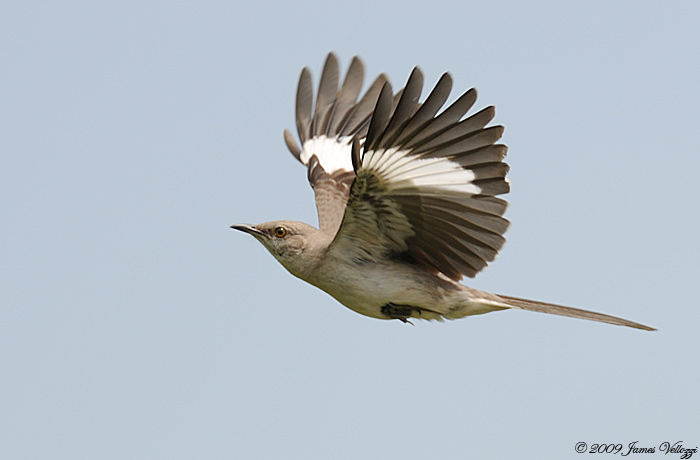
illustration mockingbird mimus polyglottos

1 Comment

Filed under acceptance, adolescence, adult children of alcoholics, ancient history, apology, appeals, artistic failures, assholes, beauty, birth, black, blood, Catholic, child abuse, child neglect, childbirth, childhood, children of alcoholics, christian, compassion, con man, daughter, death, development, divorce, dream, dreams, enlightenment, eternal, eternity, faith, family, father, fatherhood, fathers, fear, fiction, for children, forgiveness, friendship, funeral, gay marriage, god, grief, he, health, Uncategorized

Night-Blooming Jasmine, a poem

illustration night blooming jasmine

Night Blooming Jasmine, a poem

After dark, anything could happen – each

moment was disconnected from the last.

There was no logical progression to our lives:

most events had the dramatic essence of a car

accident. One evening, my mother decided

to sneak out my bedroom window when my

stepfather cut her off. He was drunk himself,

but for some reason decided she shouldn’t have

more Scotch. I remember her butt, in white

nylon undies, decorating the center of my open

window. I both fretted and hoped that she might

fall and hurt herself. Another night, my stepfather

decided it was time to throw all the pillows away,

including mine, because to him they smelled like

“horse piss.” My mother followed, protesting

loudly, wrestling him for the pillows. She lost:

the pillows went into the garbage cart. This

happened in our front yard, on a warm night scented

with night-blooming jasmine. I watched the two

drunken grown-ups, distancing myself from the scene.

I watched it like a T.V. show or a movie. When

I try to tell people about these things now, I can’t

keep a straight face. The laughter chokes me,

renders me unable to speak. I am silenced.

They’re both long dead now… but I’m still here.

10 Comments

Filed under addiction, adult children of alcoholics, ancient history, anger, child abuse, child neglect, childhood, divorce, poetry

The First Time I Met My Father, a very, very short story

illustration the first time i met my father

The First Time I Met My Father, a very, very short story.

The first time I saw him, I was not dazzled. He was too tall and wiry, and he had too much red hair, flying off his head like an unmown hayfield. His eyes were too chilly, a piercing blue that made me feel like an insect on a pin. He was brimful of himself, but at the same time tried to project a false humility. When he found out I was trying out for cheerleading, he tried to talk me out of it. He’d only met me for the first time and hadn’t even met my friends, but somehow he’d already found them incomplete, just because they weren’t political radicals. “Why do you want to be a cheerleader?” he asked, chewing on the straw of his soda while he squinted.

“Because it’s fun,” I said. I shook my head, throwing my bangs back out of my eyes to glare at him. “Because it’s good exercise.”

“Do you know that the players will feel like it’s their right to sleep with you?” he asked.

“I’m not sleeping with anybody,” I said.

“I hope not.”

“You think anybody’s going to be able to talk me into something I don’t want to do?”

“Maybe.”

The arrogance he displayed made me want to slap him, punch him, kick him, or at least knock a couple teeth out.

3 Comments

Filed under absent father, daughters, family, fathers, fiction

Lilies of the Field, a short story

illustration lilies of the field

Lilies of the Field, a short story

Harry: Boy With Car

In the picture, Harry leaned back on his car, his arms crossed over his chest, tautly, the muscles bulging underneath his white T-shirt. He wore sunglasses and his hair was blown back off his forehead, as if from great speed. The car was a ‘57 Chevrolet, bright blue, brand new. He’d just left his mother’s house to live with a girlfriend, not Joanna — he didn’t meet Joanna for another 10 years. For a long time, he subsisted off a series of dead-end jobs and girlfriends while masquerading as a college student. The women he lived with all had a few things in common: uneducated but bright, a love of dogs, and perky telephone voices. They leaned against him in the front seat when he drove fast and their hair whipped his forehead. He was confident in those days, nothing had ever broken him. He had not yet been given the gift of suffering.

Joanna: The Queen of Grief

Joanna, in a state of grief and intoxication, returning from her grandmother’s funeral, sat in an automatic photo booth in Atlanta, eyes closed, lips pursed, head tilted back, her skin glowing white, her face blurred, too high to be captured on film. She met Harry in the local airport when she got home. He was intoxicated also, and was leaving to report to the Marines. She gave him her address and phone number and one of the blurry photos. He kept the picture in his wallet and called her every day, collect, from boot camp. She lay awake all night thinking about him, reciting romantic poetry into a tape recorder, then sent him the tape. She was disappointed in love before, but only by herself. She was cold and polite while others were warm and fumbling. How did one love another, anyway? She was, at heart, a hermit, but too much of a coward to live as one. It made for a tumultuous love life.

If Wishes Were Fishes

Harry sat in profile on the edge of a riverbank, his hair dripping forward over his forehead, his shoulders hunched, wearing red bathing trunks, and his black boots lying on his crumpled clothing. He refused to look at the camera. A pale straw hat had fallen off his head and lay directly behind him. The day was bright and clear. He was home from the Marines after 8 weeks, having been excused on medical grounds. He phoned Joanna upon his return. He lived in his car until he moved in with her. Harry said he despised her money and wished she were penniless. Secretly, he realized it didn’t hurt that all the bills were paid regardless of what else was happening. He took to collecting glass paperweights, and Joanna bought one for him everywhere she went. Gradually, Harry started to acquire her taste in champagne.

Woman with Drugs

Joanna stood on a wolf skin rug over a floral Persian carpet, in front of a lace curtain. Her dress reached the floor, white, with puffed sleeves, taken in at the waist by a narrow belt with a small bow. She held a sprig of marijuana in her left hand. Her hair was dark red, her lips painted scarlet. Her skin was only slightly darker than her dress and the curtain. Flowers were scattered in front of her feet on the wolf-fur. Harry was behind the lens, mocking the Impressionists. He admitted to himself for the first time that he was glad Joanna had money, though he would still love her if she were penniless.   He was the opposite of a snob — he made Joanna feel guilty that her family had taken advantage of his by accumulating more than they’d needed. The shadow of her money hung over them like a disused, rotting gallows.

Drawing the Line

Harry and Joanna were dancing. He had his arm tightly about her waist. She wore a red hat and looked away from him, over her right shoulder at the ground. He asked her to marry him, and she refused. He kept asking, and in a year she got pregnant and said yes. She didn’t believe in abortion. He began to ask her to put some part of her assets in his name, for the child’s sake. She refused. He accused her of frivolous spending and waste. She took an extended trip across the country with the baby, leaving Harry at home to care for the dogs. While she was gone, he brought a prostitute home and lived with her for a week. The prostitute wore all of Joanna’s lingerie and jewelry, but Harry didn’t let her sleep in their bed. When Joanna returned, Harry had drunk half a bottle of whiskey and vomited on the kitchen floor.

Acquisition

Joanna stood in the yard wearing a blue silk windbreaker. It was bitter cold and windy. Her hair obscured her eyes. Both she and Harry felt like he was taking her picture for a “wanted” poster. The baby screamed while Harry took the photos. In the beginning, Harry had wanted Joanna to make him feel real, rooted, and loved, to have all the accoutrements of material wealth without having to actually acquire them himself. To acquire material wealth, oneself, was such a tiresome prospect. After all, thought Harry, Joanna did not have to acquire it herself, she got it from her family. Now he’d be satisfied if she paid him with a bit of kind attention. She waited patiently for him to commit adultery, not knowing about last year’s whore. Meanwhile, their life in bed had dwindled down to almost nothing. Partly due to his drinking, partly due to her disinterest.

Disposition

Harry sat on a kitchen chair, elbows on his knees, and hands under his chin. He tried to look cute. Joanna pointed the camera at him and smiled, hoping to hide her inner revulsion. The problem was, they never fought about anything specific — they just fought. She wanted Harry to want her in a way better than the way in which she wanted him. A needier, nobler way of wanting — something that would take the whole heart, not just a sad, tacky corner of it, the way she felt wanting Harry occupied hers. Unfortunately, Harry didn’t seem capable of neediness and nobility, no more capable than she. How much money would Harry want, she wondered? She had an appointment with a lawyer in the morning. Joanna had been lonely when they met. If she expected comfort from Harry, she did not get it. It was too bad about the child, it was always too bad about that.

3 Comments

Filed under divorce, fiction, mama, marriage, relationships, short stories

Inside A Red Heart, a short story

illustration inside a red heart

Inside A Red Heart, a short story

Ella’s life hadn’t always been like this. It was hurricane season, always the worst part of the year, but especially so this time. The cheap, post-divorce apartment Ella had moved to had flimsy sprayed-Styrofoam interior walls so thin she felt she could easily stick a pencil through them. The doors felt like balsa-wood, so hollow and weightless she couldn’t even slam them when she got mad, only sweep air currents through the frames. The rooms were carpeted wall-to-wall in a sticky celery-green shag which she could not bring herself to walk on barefoot. Hurricane preparations were meaningless in such a place, like diamond jewelry on a dying prostitute.

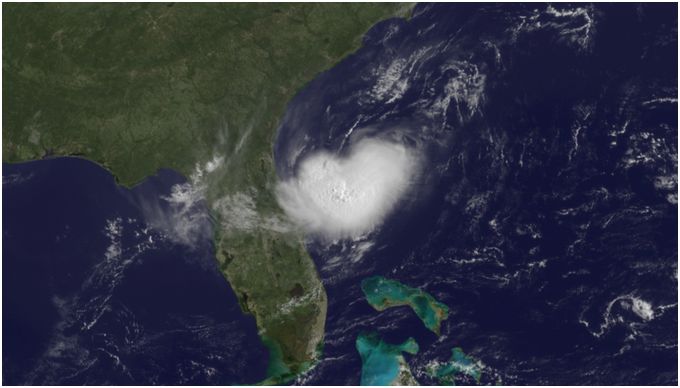
But today, Hurricane Naomi was 52 miles offshore, moving steadily along a stubborn, eerily direct path toward Ella’s apartment, when her father decided they’d better start getting ready, taping the windows. “They say this doesn’t help in the slightest,” she told him after finishing the first window, her arms already trembling and aching from reaching high over her head. She wanted to be an eagle, aloft without moving. “Even in a solidly built building,” she added spitefully.

“I don’t care what they say,” he said. “At least it’ll keep the broken glass from taking our eyes out.”

They finished taping over the second set of windows. She looked up at the sky; the brittle palm-fronds rattled and shook like frantic spiders. The bamboo rustled, probably full of rats. Tiny ants raced back and forth over the side of the house in some sort of military maneuver. Dropping hibiscus blossoms had stained the sidewalk red. A crushed bug was what captivated her attention. A sudden gust of cool air rushed over her neck, then after a moment everything stilled and the sun came out from behind the clouds. Against the dirty gray sky it looked abnormally bright.

“You look good in sleeveless tops,” her father said. “You should wear them more often.”

“Since when do you care how I look?” she asked.

“Is that how you usually take a compliment? No wonder you’re single. Forget I said anything,” he said. “Go inside and get the rest of the tape, please.”


Ella was mad about everything. Men especially, all the men she’d tried to get along with to no avail. Now, even strange men spitting on the sidewalk made her gag and retch. The phone rang — it was another man trying to sell her something. Listening to his voice on the machine, she decided she didn’t want any more goods or services, ever. She was fully capable of ignoring the outside world for weeks at a time. Finally, when her mailbox was stuffed so full nothing else would fit inside, she’d empty it and burn the contents.

After her divorce, she had refused to bring any of the old furniture from the house, not a stick. Granted, none of it was in such great shape, but she certainly couldn’t afford to buy new. Instead, she slept on a clammy air mattress for months, kept her clothes in cardboard boxes. Friends told her she was an idiot for not taking everything she could get from that tiresome lying hypocrite she’d married, but she just glared and shook her head, pressing her stubborn mouth against her teeth so hard her lips bleached white. Nobody knew how she managed to pay the rent or bring home groceries on what she made. Flying bullets couldn’t have been any more stressful than this, she thought.

There was a vague analogy between Ella and the rest of the world, that was all. She tried to understand men, but couldn’t quite manage it: they spoke, their lips moved, and sound issued forth, untranslatable. How was it they rose out of bed every morning so chipper? She was missing something they had. She navigated through her day like a ballerina dancing on broken glass.

When they’d finished taping the windows, her father poured a second cup of coffee for both of them. Breakfast consisted of coffee with plenty of cream. There was the long day to get through, then they were going fishing that night off the pier. They would stop at the bait shop for a bucket of shrimp and they would get ice cream cones — mint chocolate chip — and they would sit with their poles and wait for a nibble. Every now and then, without intending to, they’d sideswipe the truth.

He was visiting Ella for a week. He lived down in the Keys now, where he had always wanted to live; he loved to fish. Her mother had died three years ago, totally unexpected. No cancer for her, just a heart attack, plain and simple. Her parents had been happily married, but as soon as her mother died her father sold the house and went as far away from his past as he could get. Illness, for Ella, was something she would not allow time for, in that way she was exactly like her mother — though Ella wanted a good, solid tomb as a memorial when her time came to be one of the dead.

Her dog growled at her father as he moved his feet under the table. Ella’s crazy dog — he growled at everybody but he didn’t mean anything by it. He had long white whiskers and a moth-eaten coat.

“That damn dog,” her father said.

“I know, Pop,” she said.

“I don’t know why you put up with that,” he said.

“He’s harmless,” she said.

“I suppose he’s a good watchdog,” her father said.

“Not really,” she said. “He only growls when it’s someone he knows.”

“You mean he doesn’t growl at strangers?”

“No.” She laughed. Was he going to find a moral in this somewhere?

“Should I be flattered that he growls at me, then?”

“Sometimes he even growls at me.”

“I wouldn’t keep a dog like that.”


Since childhood, she’d loved to watch her father bait fishhooks. His long hands were careful and slow and the deliberateness of his touch delighted her. Not like her — she’d been falling over herself since puberty. Invariably she felt like a nuisance underfoot. She missed the neat quick grace of childhood. Whatever synthesis produced her from her mother’s and her father’s body, she couldn’t now imagine. Her father’s laughter was musical — her mother’s and her own like the braying of an ass. She secretly decided her mother had been cheating on him with someone else when she was conceived.

Until adolescence she’d been a precious little thing — then a hostile barrage of hormones turned her into somebody she didn’t even recognize: braces, knobby knees, confused skin, rebellious hair. To call her a girl was a misnomer of the highest magnitude. Something dark had entered the world along with her own blood the first time she got her period.

Once, in high school, her father had walked in her room without knocking and caught her masturbating; what a shame, he said, if you didn’t have so many pimples you might be able to get a boy to do that for you. His mind, like his body — like his heart — was angular; without softness; without love — he wouldn’t give her a second chance. The walls had zoomed in and out like they were breathing. She remembered the dress she wore, white with red and blue sailboats. Just like a ship being launched, only she kept running aground.

To this day, she wore only plain pearls, believing her skin too pasty to carry color. The only exotic thing about her was the color of her hair. Her hair was the color of rust; decaying iron. Growing up, her father never told her how pretty she was. But one night after a bad dream he took her back to her bed and rubbed her back.

Woken in the middle of the night like that, he was a different person, wordless and gentle. He’d held her so tight she couldn’t inhale. His silent, bulky warmth radiated through her and she wasn’t scared of anything. Everything in her room was painted either blue or green — how was painting any different than telling a story? He started rubbing her arm below the elbow; she was his. She wanted him to touch her underneath her nightgown but he didn’t. It made her feel awful to remember that now.


The TV was on with the volume turned down, and she was tracking Naomi on a grocery bag chart. She perched stiff on the couch, uncomfortable in her ragged cutoff shorts. Her father took a chair from the dining table and sat on it turned backwards, leaning toward her, his big perfect hands hanging over the chair’s back, his legs spread out like a cowboy’s. The dog growled from under the table.

“If you died right now,” he said, “you would go straight to Hell because you haven’t accepted Jesus Christ as your personal savior.” Pop loved his simple theories. He loved his cut-and-dried formulas. From the time her mother had died, her father had become born again and worried far too much about the condition of Ella’s immortal soul.

“How do you know?” she asked. “Isn’t God the only one who can judge a person?”

“It’s very simple,” he said. “Right now you’re a Nonbeliever. Nonbelievers go straight to Hell.”

“Says you,” she said.

“Says God,” he said.

“So according to you I could break every single one of the Ten Commandments, but as long as I accepted Jesus one second before I died, I wouldn’t go to Hell?”

“God’s grace,” he said. “His gift to us. Ask, and you shall be forgiven.”

Her father was telling her to ask for forgiveness! Selling all the gifts he’d ever given her and frittering the money away with nothing to show for it appealed to her. The flowers he sent for her birthday always wilted immediately, anyway.

“So God will forgive me for whatever I’ve done,” she said. “But will you?”

“First, you have to ask,” he said.


Hurricane Naomi wouldn’t arrive until tomorrow or the next day. Though at first Ella had looked forward to fishing off the pier, dusk arrived too soon; the coming darkness was like a funeral shroud. Her father drove his old rattletrap pickup truck towards the beach like it was a priceless antique. At the bait shop, they stood in line behind a girl, about 10 or 11, and her mother, also buying bait. The girl got into a silly argument with her mother about what they should buy, what sort of bait. “Shut up,” the girl said to her mother. Ella recoiled. Was there ever a place to be, truly, anonymous?

She remembered a time she’d told her own mother to shut up. Upon hearing, her father had slapped her across the face and broken her glasses. Her skull buzzed for a long time afterward, her jaw aching where the heel of his hand connected. She didn’t believe she’d been the same person at all back then.

She almost never cried in front of him, and especially not then, not about being slapped: she flat-out refused her tear ducts the indulgence. Nothing physical he did could get her crying — he had to use his voice, his drawling sarcasm, to knock her senseless enough for tears. She’d be so ashamed to cry in front of him like a big, blubbering idiot.

But then, getting her fishing pole ready over on the pier, a hook jabbed her finger. She’d been stabbed with hooks before; she didn’t remember it hurting so much. Was the air pressure from the coming hurricane making her stupid? She sucked blood out of the puncture. Her eyes started to sting, her throat to burn. She froze, her body paralyzed by embarrassment. She couldn’t help it, she started to cry, the convulsions shaking her.

“What’s the matter?” he asked. “Is your finger that bad? Let me see.”

“It’s not my finger,” she said, still in the grip of the horrible tears. He took her hand and held it close to his face, peering.

“Doesn’t look that deep,” he said.

“It’s not,” she said. Her nerves were strung out, yes, aptly put — as if her spine had been stretched, her entire body hanging off it in tiny sections which at any moment might start whirling away in terror.

She grabbed his shoulders and stood on tiptoe, leaning into him with all her weight. She kissed him full on the lips, pressing the whole length of her body against him the way she had when she was still too young to know any better, and for once he actually let her. She kissed him as though her life depended on being kissed back. And it did. And he did.


He had never told her she was pretty until after her mother died. Family tradition was for the parents to wait, remote icebergs, for warm currents of love to reach them from their children. She didn’t see the harm in that. The truth was, she had always wanted him as much as he wanted her. Tall and silvery-blond, his pool-water blue eyes fringed with gold lashes, he was still handsome for his age. He only smoked those awful cigars when he fished. Since her mother died, he hadn’t so much as looked at another woman, romantically speaking.

Even her ex-husband had been jealous of her father. He, her husband, was smaller than her father in every way measurable, emotionally as well as physically. Her ex-husband was such a small man. He had mewled incessantly about his boundaries, his boundaries — which didn’t keep him from stalking her and her post-marital lovers whenever his feelings were hurt. But if she read his journal, she was guilty of a great crime. What were boundaries, anyway? Even her ex-husband’s new wife was commiserating with Ella now about his smallness.

Too late, Ella had figured out she only got excited by what was forbidden, by a body’s unfamiliarity to her. Anybody like her who chose to marry was making a mistake. Once a thing became familiar, that took all the life out of her desire. She and her string of relative-stranger lovers ate Chinese takeout in bed, soy sauce dripping on their skin, which added another flavor to their mouth play. Fried rice, hot and greasy.

What neither Ella nor her father talked about that night on the fishing pier or any other night was how, way back when, she had left the back door unlocked one day and the baby, Ella’s little brother, had gotten into the backyard unsupervised and drowned in the canal. The water had seemed too shallow for anyone to die in. She was eleven — the next day she bled on her underpants for the first time. She wondered which was the bigger reason her father never looked at her the same way again.

Just now her father’s lips had tasted like his cigars, sour and sweet all at once, when she kissed him. Ella removed herself from his arms only after her skin against his grew slick with perspiration. The two of them finished up their bucket of shrimp after that, but they spoke little and caught nothing worth keeping. Back at her apartment with its ridiculous taped windows, her father began packing his small suitcase. The bellicose dog lay on the armchair across the room, for once not growling. “Damn hurricane,” he said. “Maybe I can get all the way home before they evacuate the island.”

“Are you crazy?” she asked. “You’ll have to leave again as soon as you get there.”

“I don’t think I can stay here tonight,” he said.

“You’re blaming me, aren’t you?” she asked. “Like you always do.”

“It’s not that, Ella,” he answered. “It’s got nothing to do with that.”

She touched his arm, and he flinched, then caught himself. “It was all my fault,” she said.

“No, it wasn’t,” he said. “If you’re asking, I’m answering.” He looked up from his suitcase, and for the first time all day his eyes looked old and tired. “Please don’t ask me to stay,” he said.


At midnight she sat awake, wondering what would happen next. Nothing good, she imagined. She didn’t know how she’d become such a curiosity. She was looking for what had gone wrong with a vengeance. Rooting through out-of-date phone books, through cards and letters she’d kept packed away since college. Excavating her past life, like an archeologist, was a great haven of sanity; as soon as she opened the first box, she felt safe from the present, it was suspended from happening, nothing more would ever happen to her until she straightened out all the previous mistakes. A pale blue chiffon scarf of her mother’s was folded underneath a stack of them. She was perennially accused of wanting to rehash the past. But it hadn’t been properly hashed over the first time, couldn’t any of these dolts see that?

A spider laid in the bottom of the box, its legs curled tightly. Though clearly dead, she worried lest it should somehow jump on her. A handmade Valentine’s Day card stuck out of the jumble like a sore thumb. The card was unsigned, but she recognized the handwriting. It was hers. She’d drawn a picture of a naked man inside a red heart. Her first boyfriend, a creative type, had insisted they make each other cards. How had she ended up with all this stuff? Ella flung herself back onto the bed so hard her teeth snapped together and she bit her tongue. Her bones ached. Her desire was killing her; she didn’t even know what it was she desired. She had to get out of the house for a bit, hurricane or no hurricane, or she’d go nuts.

She dragged her quivering dog — not so crazy after all — out to the car and drove over to her parent’s old house through Naomi’s outer fringes. Thunder rolled above her along with heavy sheets of rain like pronouncements from God. The dog cowered in her lap. She turned the car engine off and got out, the dog in her arms, hiding his head in her armpit. She stood searching the horizon, letting the rain wash over her face. It was the same whenever she made love to a man, she made sure to shower afterward.

Behind the house she’d grown up in, behind the canal her baby brother had drowned in, sat the northern edge of the Everglades. A flat, wet landscape — one she never tired looking at. Dun-colored saw grass, rippling under the steady currents of wind, stretched as far as she could see. Her mother’s chiffon scarf, monogrammed with her maiden initials, was her new good-luck charm. There was, as usual, no witness to her actions.

At least I’m brave enough to come back here, she thought. Her hair blew into her eyes and she held the dog tighter. She was startled when from behind her headlights moved over the undulating saw grass; she turned to see who it was. Squinting against the light, she saw her father’s tall figure get out and stand next to the car, calling and waving — she couldn’t hear much of what he was saying over the wind but she could tell he was crying. Like a flag on a pole, her mother’s scarf whipped in the wind around her neck, causing her to lift her chin and stand taller and straighter than she had for a long time. She could feel it. Her life was going to change.

5 Comments

Filed under childhood, compassion, daughters, death, development, divorce, ella, eternal, father, fathers, fiction, forgiveness, girls, health, heart, hope, justice, karma, kindness, life, love, marriage, men, mortality, mourning, mysterious, personal responsibility, regret, relationships, short stories, soul, spirit, women

Catalyst to a Potato, a poem

illustration catalyst to a potato 3

Catalyst to a Potato, a poem


Can I perform the miracles of earth, sun, water?

Can I be the warmth that gently pries open

eyes, that coaxes forth pale shoots, that causes


hardness to soften to green? If I throw the potato

against the wall again and again, will I ever cause

the potato to change? For so long, I tried to form


myself in the potato’s image. I tried to become

round, dense and heavy with stability, I tried

to protect myself. It did not work, it failed.


Now all there is left is her, one small girl alone

in the world. Her lips are redder than mine ever

were. Her shoulders are strong, she is not fragile.


You were the potato, the one I could never change.

Lobbing you again and again brought no result,

no visible difference. Yet in your eyes I am


the one who remained indifferent. I am not

ashamed, yet I am the one who needs to change.

You want only to rebuild. Take stock of your


small garden, not everything there is sound.

There is no such thing as healing. There is only

covering over, sweeping under, tamping down.


You know we will never love each other again,

yet you do not weep. This time I will not do it

for you. I am finished with praying for miracles.

3 Comments

Filed under ancient history, anger, apologia, compassion, development, divorce, earth, heart, justice, karma, logic, love, marriage, maturity, mea culpa, mourning, mysterious, nature, personal responsibility, poetry, regret, relationships, soul, spirit, spiritual, truth

Eat Or Be Eaten, a short story

illustration dog alligator suit

Eat Or Be Eaten, a short story

Annemarie often sat within the bright sobriety of the campus coffee shop down the street from her and Roy’s house. The air there was filled with academic fulmination and the evaporating mists of senseless arguments, much like the state of her marriage. She was acknowledged by the college students as one of those bizarre, florid creatures from the 80’s, and they let her go about her pursuits, unfettered but slow.

“I can’t stand that place,” Roy said. “I don’t see how you can sit there day after day.” His comment, for her, aptly illustrated how unaware he was that her main occupation while there was mulling over whether or not to file for divorce.

“It makes me feel wired,” Annemarie said.

“You can say that again,” Roy said.

“Why don’t you meet me there for coffee sometime?” she said.

“Things are too crazy at the office right now,” he said.

One such crazy evening, after dinner, the air was busy gossiping with itself — Annemarie could feel it fluttering along her cheeks inquisitively, and the moon rose early, bouncing light off the red tiled roof. She put on her ratty ski jacket and then poured herself a tiny refreshment of Scotch, which she imbibed cautiously. Her small thick hands, gripping a kitchen chair like death, were chalky at the edges. The clanking emptiness of the room — of her life — created a milky haze over her sight. For what seemed like the hundredth night in a row, she invited Roy over to the lake on campus to see the alligators. For the first time, he said yes.

They rambled along the verdant avenue and before them flitted two zebra butterflies, as if teasing Annemarie to fly. Her husband, his blank, uncomprehending eyes, was at once her soul and her shame. It was horrible to have people such as him think ill of you, think you were wrong. It was small and ugly and soul-shaking. You felt as if you were coming apart like a cheap paperback, pages from your head fluttering to the floor every time somebody breathed on you. She wasn’t much for men herself — she never learned how to tell a sweet one from a poisonous one and besides, she’d never been convinced there was much difference. But a truly radiant woman never hustles off through life unaccompanied.

A small crowd was gathered on the boardwalk over the water — a leather-skinned old German couple, a tall skinny man with a pot-belly holding a toddler, three young college women with lush clouds of permed hair and tight little asses. A little girl came up with coral roses in a bucket balanced on her hip. The German people spoke softly to each other in German.

“We saw a wild boar on the highway back in the mountains in Kentucky,” said the man with the blond baby. “I thought it was a dog lying on the side of the road. Then I saw its tusks.”

Annemarie’s future, single life would be simple like this, among unpretentious people like these — she’d come see the alligators every night before dark with the out-of-towners. She would hear the gators’ mating calls, the deep bellows in the late spring. She’d appreciate the real elegance of nature. Roy appreciated only his new $60,000 car and his tax-free municipal bonds.

The alligator for this evening was a good seven-footer. It floated perfectly still on the surface of the water, the scales on its back pushing through like a miniature mountain range. Its fat front paws hung limp in the clear lake water. It seemed only a little threatening in the smooth summer light. The gator had a large sly grin.

Roy was from the North – he’d never been around alligators before. Florida was alien territory to him. People from the North always freaked out about the gators. Annemarie wanted to give Roy a thrill. She wanted to overwhelm him with her earthy, sensible, swampy ways. She rubbed his hand humbly and forgot to play the grouch.

“They like marshmallows the best,” the tall, chatty man holding the toddler said. The boy wore a short jumpsuit appliquéd with giraffes. The German couple nodded, the old man pushing his fluorescent yellow golf cap back on his forehead. “Let’s see what I’ve got in the truck,” the man said.

“That?” the little boy said, pointing.

“Alligator,” Annemarie told him. The boy nodded and bit his forefinger.

“Teeth,” he said.

“Yes,” she said. “The alligator has lots of teeth.”

It was strong, it would eat her if it could. That was the way to be, she thought. That was the new simple way she would live, with or without a husband. Eat or be eaten. Roy hadn’t the slightest affinity for animals. Annemarie wanted to live a simple life. She didn’t want to be angry, ever again. Mostly, that was it. She could not afford any more to be bored with living — she didn’t have that kind of time. Her husband had become accustomed to disagreeing with her almost all of the time, as a method of entertainment.

The man with the baby came back with a vending-machine package of peanut butter cheese crackers. Annemarie shivered. Suddenly, she wasn’t so sure about feeding the thing. What if it came up on the bank? She had read how alligators could run 40 miles an hour over short distances. The man threw a cracker in the water near the alligator’s head. The animal whipped its head sideways and took a big gulp of water, inhaling the cracker. They all got a nice view of its teeth. The gator pumped its jaws, as if savoring the peanut butter, and the water clouded with dissolving cracker. Roy stood apart from the group, his face dark and tense. Annemarie leaned on her elbows, hanging over the railing of the boardwalk.

“Did you know it’s against the law to feed the alligators?” one of the young women with big hair asked. Her sharp voice made Annemarie jump.

“Really?” Annemarie said.

“Is that so?” the tall man said.

“It’s a felony,” the young woman said. “And there’s a fine.”

“How much is the fine?” asked Annemarie.

“A thousand dollars,” the young woman said.

“Really?” Annemarie might be afraid of the alligator but she wasn’t afraid of this young woman, with her elaborate hairdo and her half-pound of gold jewelry. This was the kind of woman Roy would marry next, she was sure. This kind would give him a lot less trouble. This kind would have no desire to feed reptiles of any sort. She directed herself to see marriage for what it was, not its tedious demonstration. The pretty young woman flipped her perfect locks over her shoulders and glared at the man with the peanut butter crackers. He threw another cracker to the alligator and laughed. His baby laughed too, throwing his head back so his fine pale hair waved in the breeze.

“The alligators get tame and that’s when they start eating dogs,” the young woman said. “And small children.” She was businesslike, her voice chilly with authority. The mystery of feeding the dangerous beast was lost on her, thought Annemarie. It was exactly the sort of thing Roy would say. Annemarie’s neck began to tingle, blood fury gathering in her cheeks. The tall man grinned at the snotty college girl and slowly pushed his glasses up with his middle finger.

“Then they have to shoot them,” the girl added. “So it’s really not a good thing to feed these animals.” The young woman had her nose up. Literally had her nose up; her voice resonated with indignation and righteous anger.

Annemarie pushed her arm against Roy.

“Maybe she’s right,” Roy whispered. He sounded reasonable, the way he always did.

“Oh, Christ, what’s the harm?” Annemarie said. She was still leery of the alligator, floating, for the moment seeming as harmless as a large rotting log, but she was enraged nonetheless. The hell with all of them, Annemarie thought. What do they know about right and wrong? What do they know about anger? What do they know about eating or being eaten?

“Great attitude,” the young woman said to Annemarie, shaking her head. “Come on, let’s get out of here.” The three lithe girls walked off, whispering to each other in disgust.

“Throw one of the crackers up on the bank,” Annemarie told the man, now her partner in crime, her body trembling. They were all standing on the wooden boardwalk over the water. She decided this animal was a deserving gator, nothing to be afraid of. She would bring it whole chickens, she decided. It would be her personal ritual. Her wants and needs had boiled down to nothing. It was amazing what she could do without, now she had decided to end her marriage. She would take one pot, a frying pan, and a wooden spatula when she left. That was all she needed. That was all anybody needed. Let him have the expensive cookware she was always cleaning improperly.

The man with the little boy threw a cracker onto the muddy bank. The alligator turned its head sideways and tried to pick up the cracker. Its teeth grazed the mud, making deep tracks. The cracker wouldn’t budge. The animal hauled itself onto the bank and took a mouthful of mud with the cracker. The man threw another cracker on the bank, and the gator swallowed it down. In the fading light, its teeth glowed pure and white. It did slow pushups on its meaty little forearms. Mud clotted its elbows, and the man threw more crackers. The German people oohed and aahed.

“I’m not putting you down,” the man said to his baby. The baby writhed in his arms.

“Teeth,” the baby yelled. “That!”

“Don’t put him down,” Annemarie told the man.

“No kidding,” the man said.

I could do this every night, Annemarie thought. Hang with the simple folk and feed dangerous wild animals like a crazy woman. She imagined the alligator getting angry, running toward her at forty miles an hour. She’d leap onto the railing of the boardwalk. She’d grab hold of the gator’s jaws and hold them closed with one hand, like the Seminole gator wrestlers at the orange groves she’d visited as a child. Reptilian rage was what she’d become practiced at. She had Roy to thank.

She remembered how all the muscles in an alligator’s jaws were for closing the mouth, not opening it. You could hold a gator’s mouth closed and flip it over on its back, and it would black out. The great beast would lie there, paws twitching, flabby white belly quivering. She still remembered one particular Seminole wrestler’s shiny black hair, slicked back off his forehead. He was lean and brown and his stomach muscles cast shadows upon one another. Her family had always watched the gator wrestling and bought rough sacks of tangelos and navel oranges. Annemarie had liked to squeeze the fruit and strain the juice, and think of the man’s bronze skin against the harsh concrete of the wrestling pit while she drank.

Now, Roy had never seen a gator wrestler in his life. He thought life was all harmless monkey jungles and parrot gardens and butterfly habitats. Annemarie knew better. She wanted to live on the edge, she wanted things out in the open. She didn’t want her problems hiding in the shadows anymore.

Annemarie stood against the wooden railing of the boardwalk and watched the alligator scraping the mud of the bank with its handsome teeth, trying for one last cracker. “Throw some more,” she told the man. Reflected light shone out of the gator’s dark eyes.

“Are you sure this is safe?” Roy asked. “That thing is huge. Didn’t you say a dog got eaten here last week?”

“Of course it’s not safe. That’s the point.”

“What’s got into you tonight?” Roy said. “Are you coming up on your period?”

“What kind of question is that?” She went rigid with black demented wrath.

Roy shoved his hands in his pockets and stared at the ground. “Sorry.”

A black-and-white pulled off the main road, crunching over the loose gravel. “Police,” the German couple murmured. The two old people scuttled to the benches at the end of the boardwalk and sat down, removing their hats. The tall man stuffed the half-empty package of crackers into the pocket of his shorts. Car headlights flashed over the surface of the lake, then Annemarie was blinded by police flashlights.

“They’ll have to search me,” the tall man whispered.

“We got a complaint about someone feeding the gators,” said the first cop. He was short, and plump, with a dark bristly mustache. His partner was tall and black and stood several feet behind him. He held the flashlight while the white guy spoke. “People, this is a third-degree felony. You’ll go to jail.”

“Crackers,” the baby said. “Crackers!”

“Did they shoot that gator that ate the dog?” the tall man said.

“No,” said the white cop. “That might be it right there.” His partner shone the flashlight on the alligator. Its pupils contracted in the glare. It raised its chin above the water and smacked the surface. Annemarie felt water splash her legs. “It’s breeding season,” said the officer. “They’ll come at you at the drop of a hat.”

“Who was feeding the gators?” said the black cop.

“None of us,” said the tall man. The little boy grabbed his nose, and his father pushed his hand away. “There’ve been people coming and going for half an hour.”

Annemarie said nothing, leaning over the railing, her arms cradling her breasts, droplets of sweat rolling down her back. Roy stood at the other end of the boardwalk, his cigarette glowing.

She remembered the first time he had ever touched her. Roy’s fingertips had moved slowly back and forth over her forearm, the same way the gator’s paws now rocked in the water. His fingers had brushed against the side of her breasts, that was all. She had wanted his touch on her, back then. Where had it all gone?

“We could call the Florida Game and Freshwater Fish Commission right now and they’d come down and cuff you,” said the white cop.

“I’m sure they would,” said the tall man.

“Teeth!” his baby boy shouted. “That,” the child said, one small finger pointing into the darkness of the swampy bank. “Hungry!” the boy squealed. His father shifted his weight from one foot to the other and back again. The police officers feigned disinterest and strode nonchalantly down the boardwalk, toward the German couple. She couldn’t hear what they said, but she saw how they shone their light into the old man’s eyes.

“Well, I’m going to get this little guy home to bed,” said the tall man, looking at Annemarie and smiling.

Annemarie nodded. “Let’s go,” she said to Roy. They walked toward the parking lot.

The policemen waited for them at the entrance to the boardwalk. “We have two witnesses who said they saw you feeding the gator,” the white one said. The old German couple huddled together on the bench nearby.

“Then you’ve got two liars,” Roy said. The German man patted his chest and looked at the ground.

“They both said it was a white male with a blue shirt.”

Roy’s shirt was blue, long-sleeved, covered with little paisleys. Annemarie had given it to him for Christmas. The man with the baby had on a blue T-shirt saying, “Eat Oysters, Live Longer.”

“There’ve been a lot of guys here with blue shirts,” Roy said, shrugging. The policemen took a few steps toward him, shining the flashlight in his face. Roy held his cigarette to his lips but didn’t inhale.

“I don’t like it when people lie to me,” said the cop. He touched the grip of his nightstick. Annemarie moved closer to Roy.

“Shit,” Roy said under his breath.

Back on the bench, the old German woman coughed, both hands over her mouth.

“I’ve been with my husband the whole time,” Annemarie told the officers. “He wasn’t feeding the alligators.”

“Care to sign a statement?” asked the black cop.

“Why can’t you just leave us alone?” Annemarie said.

“This is our job, lady.”

“Pretty messed-up job. Hassling people.”

“Is that right? Would you care to empty your pockets?”

“I told you, we weren’t feeding the alligator.”

“Maybe we think you were. Maybe we’re getting ready to arrest you and your husband here.”

“You do that and you’ll get slapped with a lawsuit.”

“So sue me. You’re under arrest.”

“What?”

Roy held his hand out. “Now, wait a minute,” he said.

Annemarie heard a rustling in the reeds behind her. She felt something slither over her shoes. At her feet was a tiny alligator, six inches long. Nobody else seemed to notice.

“You’re under arrest,” the officer repeated, his words to Annemarie slow and drawn out as though he were talking to a foreigner.

“What for?” Annemarie asked.

“For feeding the alligators.”

The big gator on the bank bellowed, its pale throat pumping like a frog’s. The German couple shrieked and ran down the path toward the parking lot. The cop pointed his flashlight toward the noise. Out of the reeds swarmed dozens of baby gators.

“I told you people it was breeding season,” said the white cop. The reeds rustled again and this time Annemarie heard a loud croaking sound. The big gator stood there, raised up on its forelegs, its jaws hanging open. The pink fleshy gullet pulsed in the flashlight’s beam. The teeth were dull yellow at the roots, gleaming pale ivory at the points.

“Holy shit,” the black cop said, grabbing Annemarie’s arm.

“Get the hell out of here,” shouted the white cop.

“I am,” the other cop said. He started toward the car, yanking hard on Annemarie’s shoulder.

“Leave me alone,” Annemarie said. She watched the animal while the officer struggled to pull her away. She went limp, buckling at the knees and kneeling on the ground. “Just leave me alone.” She wasn’t angry anymore, not at anyone or anything, especially not at her soon to be ex-husband. The spirit of her rage had gone into the animal. Pure reptile.

“Are you crazy?” screamed the cop.

The big gator sucked air and croaked again. It raised and lowered its head. The babies scuttled back toward it, milling under its body and peeping loudly like baby chicks. The alligator’s thick tail whipped back and forth through the reeds, and finally the cop ran off, leaving Annemarie in the mud. Why had she been trying so hard? Who had she been trying to fool? This was how it was. Eat or be eaten — the end of one angry life marked only the beginning of another. She closed her eyes as she heard the roar of the gator coming closer.

Roy knelt beside her. “You don’t want to do this,” he said.

“Do what?” Annemarie said.

“Get this alligator shot,” he said. “It’s not going to help.”

He was right. The alligator had never done anything to her. She looked at Roy. He had not been shattered by any of it. His eyes begged, but for once he wasn’t judging her. For once, maybe for the first time, it seemed like he understood her. Life could be so simple, once you got rid of all that confusion. She realized that there was no telling what would happen after today.

“Come on,” Roy yelled, grabbing her arm and pulling her to her feet, and his hand against her skin felt better than she remembered. She ran behind him, her feet sliding over the muddy gravel, not afraid, but laughing like a madwoman. Let everyone see me for what I am, she thought. Let them observe my fiery trail from a safe distance, and weep for their own. Roy glanced back at her as they ran, but Annemarie’s lips did not move — she ran honestly, tripping across her own feet. She could feel the sea moving around inside her head, and she laughed.

2 Comments

Filed under anger, criminal, criminal behavior, criminals, divorce, fiction, justice, law, life, love, marriage, mysterious, nature, personal responsibility, regret, relationships, satire, short stories, soul, truth

Lovely Girl, a short-short story

illustration lovely girl
Lovely Girl, a short-short story

Jan. 11, 1979

Kenneth got into a big fight with his father last night. His Dad said that he follows me around like a puppet, and that he’s being bought. Then his Dad told him he was a lazy little bastard for not fixing his car & going somewhere with his mother. Then Kenneth said something back and his Dad tried to choke him and Kenneth left & went to the library.

I have a feeling Kenneth’s Dad hates me, or at least dislikes me. He would probably be a lot happier if I wasn’t going out with Kenneth. I would like to go up to his Dad and say that if he would prefer Kenneth not go out with me — because he thinks Kenneth would be better able to concentrate on sports & school — I will comply.

All I know for sure is that I don’t know anything anymore. Sometimes, I want to go far away – to Europe, maybe – and meet strange people and find out how to live. But then I get scared and I am suddenly glad to be in my safe room with all my possessions that tell me who I am supposed to be. I don’t know who I am – I used to, but things have changed so much, I’m not sure anymore.

Ever since Mom and my stepdad got divorced, it’s been harder and harder to just live. Mom is getting worse with the booze and sometimes I get so angry that I scream at her. Then I feel awful and try to hug her and tell her I’m sorry, but she’s so out of it she just stands there, swaying a little with her eyes half-crossed, and I end up stomping into my room and slamming the door and locking it. Then I lie on my bed and stare at the ceiling and sigh.

It’s the best just after I get home from classes at community college. Mom isn’t here, and I am alone. No one can bother me, and if the phone rings I don’t answer it. It gives me a sense of power – listening to that phone ring and ring and ring until whoever is calling hangs up, frustrated. I close all the curtains and put on records and smoke cigarettes. In my cool, dark cave I find peace for a few hours.

At six o’clock, though, I hear that fucking bitch, my mother, put her key in the lock, and I jump up and run down the hall to my room to get away. If Mom says something to me, I try to be nice, but it’s usually only a few minutes before our voices become sharp and anger is in the air again. Until she’s blotto, that is. Then, wobbling and bleary-eyed, she’s all lovey-dovey, but also by then all I want to do is shake her until her head falls off!

The only positive things in my life are Amy and Kenneth. Amy is my best friend and Kenneth is my lover. They know, and once in a while I can talk to them about it, but I know that friends can only take so much before they are tired of hearing it. The only person that would listen to everything you said and be interested was a psychologist or psychiatrist, and I’ve thought about going to one, but it’s really too expensive. So I just don’t let myself think about things most of the time.

I keep this journal and write my thoughts down, and that helps a little. Most of the time I’m fine, but it’s always there, hanging over me. Actually, I function very well. I graduated in the top five percent of my high school class, and after a year at junior college I have a 3.8 average. And I’ve never gotten into any serious trouble at all. I’m what grandmothers like to call a “lovely girl.” On the outside. Happy? What did happiness ever have to do with any of my fucking life choices?

3 Comments

Filed under addiction, alcoholism, child abuse, child neglect, childhood, children of alcoholics, college, compassion, daughters, development, fiction, identity, insecurity, mothers, relationships, short stories, teenagers, youth