Tag Archives: divorce

Under the Stars, a poem

illustration under the stars

Under the Stars

My daughter and I are in a tent. We’re sweaty and tired, trying to sleep. Her father & I divorced two years back. This is my daughter’s second camping trip without him. The first, last year, was a disaster… pelting rain & wet dogs, and the fiancé I ended up hating.

All this afternoon, other parents kept joking, Is it time to turn in yet? A lot of times I feel I’ve ruined her life. It’s been a long, long day — hiking, cooking, comforting children.  They are so excited to be in the woods until the sun goes down. Married or single, my misery remains about the same.

My stomach hurts, my beautiful daughter says. My head hurts. I can’t get comfy. Was it a bad idea to come here? Was it a bad idea to marry her father? A screech owl calls, breaking the quiet with startling beauty. Of course not. I have my daughter.  I just don’t ever want to be that miserable & that alone again.

What’s that? she says, scared. Her fears appear and disappear just like that owl’s voice.

Just an owl, I tell her. I’m not a good mother. She’s eight, she can’t stay awake forever.

That wasn’t so bad after all, my beautiful little girl says in the morning. I am the opposite.  I dream of peace but wake to fear.

5 Comments

Filed under poetry

Beautiful Daughter, Handsome Father, a short story

rjp & ktp august 1971

Beautiful Daughter, Handsome Father

Marlene, her father’s lover, is down on the beach, sitting on the sand cross-legged, nursing the baby.  If Leah looks out the living room window she can see her there, sitting and facing the ocean.  Marlene’s thin cloak is rippling in the breeze, her head held high and tilted back, as though she is worshipping something — her own new status as a mother, perhaps?

Leah’s father met Marlene at the Venice Health Foods Supermarket, where she worked behind the purification supplements counter.  He had wandered to browse, got spellbound in front of the blue-green algae, and left carrying her phone number and a gallon of aloe pulp.  Marlene quit the supermarket a few months later, soon after they moved in together.

Her father has just shown her the videotape of that moment two weeks ago when the baby finally slid out of Marlene’s body.  It took eighteen hours to produce the head and that first shoulder, but then the rest of it — the dangling arms, the loosely curled fists, the puckered knees and feet that seemed sculpted from marzipan — swished free with one last interminable push, followed by a dribbling of translucent fluid tinted pale amber.

He cut the cord himself, took the sterile scissors in his trembling hand and, in between where they tied it off in two places with thick black surgical thread, he snipped.  On the video, he looks like he was ready for it to be difficult — preparing to hack away at it until he passed out — but it surprised him and parted smoothly, like a thick rope of licorice.

After shutting off the tape and pointing out the still figure of Marlene down on the strand, he shows Leah around his new apartment.  The entire layout is visible from the foyer, but it’s something to do to break the ice.  This is the first time she’s visited since high school, when he sold his house.  Before that, from the ages of two until twelve, she didn’t see him at all.

“This is the bedroom,” he says, gesturing to an open doorway off the square front hall.  There is a mattress lying on the floor, sheets and pillows and thick, Mexican-looking blankets tossed in an unmade rumple.  “The bathroom is through there.”  He points within, to a half-open door at the far corner of the bedroom.  “The kitchen,” he says, waving at another doorway with the other arm, his first arm still aloft at an oblique angle toward the bathroom.  For a moment he looks like a ballet dancer, muscles strung on wires.

In the kitchen are two wooden barstools and a commercial-sized juicer.  “This is where you’ll be sleeping,” he says, walking two steps in from the foyer.  “The living room.”  There is no furniture, nothing at all, merely the carpet, grubby beige shag.

Leah says nothing for a moment.  The apartment is cold and damp from the ocean.  It smells clean, though; a trace of peppermint soap drifts from the bathroom.  When she speaks, she tries to sound casual.  “Have you got something for me to sleep on?” she asks.  “A cot or something?”  He looks at her, arms folded.  She stands silently.  At his old house she had her own room and bath.

“Well,” he says, rubbing his chin.  “I thought we’d get a roll of three-inch foam-rubber for you.  A mattress.”

“Oh.”  She is embarrassed, and sorry she brought it up.  She moves to the window, touches the gauze curtains, faded Indian print with fluid girls twirling on their toes.

“I planned to get it today.  There’s an upholstery shop down the street.”

“Oh?” she says.  He has not prepared for her visit, is she that unimportant?

“I didn’t think you’d really come.  Not after the last time.”

“When is Marlene coming back up here?” Leah says.

“She’ll be down at the beach until we go to get her.  I wanted us to have some time alone first.”

“How much did the baby weigh?”

“Nine pounds,” he says.  He stands at the window, gazing at the beach.  Leah fidgets and stuffs her hands in her pockets.

“Were you going to name me Jedidiah, if I’d been a boy?”

“Who told you that?”

“Mom.”

“Well, she didn’t like the name in the first place.  I doubt she’d have let me give it to you.”  He sighs.  Leah looks down at the rug.  “Why do you ask?” he asks.

“Just curious.”

Her father takes a step toward Leah.  He touches her cheek and shakes his head.  Then he strokes his beard with both hands, smoothing his hair back.  “Well.  I’m going to make some juice.  Do you want some?”

“What kind?”

“I’m not sure.  Let’s go see.”  He opens the refrigerator and bends down, rooting through the shelves, opening bins.  The juice machine on the table is an old appliance, dull and scratched white with rounded corners and a big shiny metal “GE” logo on the center of the motor.  It goes with the rest of the place — his usual ceremonial shabbiness.

He crouches and Leah’s view of him is blocked by the open door.  “Hello, beautiful daughter,” he says, leaning his head around to smile at her.

“Hello, handsome father,” she says, and sticks out her tongue.

He laughs.  “There are beets, carrots, celery, some apples.  I think I’ll have beet-celery.”  He leans back against the counter, and scratches his head.  “Have you ever had fresh-squeezed juice before?”

“Not this kind,” she says.  “What is it like?”  Her idea of health food is banana yogurt.

“It’s a lot stronger-tasting than the bottled stuff.  We’d better start you off with some fruit, but I don’t think you’d like plain apple.  How about apple-carrot?”

“I guess so,” she says, rubbing her damp palms against her pants.

He stands at the sink, scrubbing the beets and the carrots with a brush.  Rinsing the apples and the celery, he does not peel, core, or seed anything, just cuts it into chunks and lays it on the counter next to the enormous juicing machine.  His off-white fisherman’s sweater is thick and luxurious, a jarring contrast to his dingy ripped jeans and his skinny, emaciated wrists.  She turns away from him and looks out the window at the pale blue, slow-rolling waves.

“I’ve been doing a lot of juice fasts,” he says.  He is much thinner than last time; she is skittish about touching him, feeling the sharp edges of his bones everywhere.  He seems in good enough shape, though:  who else his age can jog twelve miles in wet sand?

Because of his shoulder-length, strawberry blond hair — just a touch of silver running through it — and the leanness of his jawbone, her acquaintances from college flirted with him, sometimes just to measure her reaction, but sometimes not.  They all thought she was lucky.

“Surely you’re not trying to lose weight?” Leah says.

“No, I drink a hell of a lot of juice.  But it’s just that and water for twenty-four hours.  It really cleanses the system.”

“Don’t you get hungry?”

“No, not at all.  See, you have all the sugar in the juice to keep you going.  So you are eating, in a sense.”

“But you’re already so thin.”

“Juice fasting isn’t to lose weight,” he says.  “I don’t lose a pound.  It’s to give your system a rest.  To eliminate toxins.”  He starts feeding the chunks into the juicer.  The beet juice is blood-red, frothy, and then the celery goes through, diluting it to a muddy pink.  “Want a taste?”

“No, thanks,” she says.  “It looks gross.”

He takes a sip of the juice, the froth clinging to his mustache.  Then he feeds some carrots and apples through the grinding machine.  After tasting it, he hands her the glass.  Leah drinks.  The juice is pungent, the earthy sharpness of the carrots drowning out the sweetness of the apples.  As she tilts the glass, a heavy layer of sediment from the skins and peels falls out and settles to the bottom.

“I can’t drink this,” she says, her tongue coated with a cloying thickness, the taste in her mouth like liquid chalk.

He watches her as he drinks from his own glass, sucking the foam from his upper lip.  “Well, it’s something you’ve got to get used to.  An acquired taste.”

Leah puts her juice down on the counter.  Unsnapping her barrette, she tosses her head once to loosen her hair, and then puts the barrette into her jacket pocket.

“I’m hungry,” she says.

“We could go over to the Meatless Mess Hall.”

“Great,” Leah says.  She picks up the glass of juice again, and then puts it down without drinking.  “I’m sure it’s good for you,” she says.  All she can think about is getting out of his apartment.  Her mind races and she can’t even label what she’s feeling.  “Why don’t we go to the beach?” she says.  Her voice is high, her face hot.

“Okay.”

They walk downstairs.  The old hallways are dim, smelling of cooking grease, clove cigarettes, and Lysol.  The stuccoed walls are painted a glossy institutional green.  Following him down the creaking steps, she stares at his spindly buttocks — barely brushing the inside of the narrow seat of his jeans — as his legs propel him before her.  When she saw him again, after ten years, he couldn’t get enough of her sitting in his lap.  His thighs were lean, his hipbones sharp, and she herself felt too large, too awkward to be his daughter.

On the beach, Marlene’s face is stark and beautiful, the bones jutting and declining, transforming the clean ocean light of December into a solemn sculpture.

The baby is wrapped in several layers of flannel receiving blankets, striped pink and blue on white, the blanket corners fluttering in the chill breeze.  Leah peers over the edge of the blanket, seeing the baby’s cafe-au-lait forehead, his black, damp-looking corkscrew curls and his eyes, shut tight against the light and wind.

Leah and Marlene look at each other.  The wind slams into Leah’s body like a giant animal.  A few plump gulls glide over the waves.  Her father clears his throat.  “Marlene.  This is Leah.  Leah, Marlene.”  She nods to Leah, one slow, dignified sweep of her head.  Several heavy bracelets, open bangles with knobs like acorns molded at the ends, glow against her skin, the gold dulled by a dense network of minuscule scratches.  “And this is,” he says, holding his arms out and taking the wrapped bundle from Marlene’s arms, “Jedidiah.”  He snuggles the baby against his thick sweater, bending and brushing his lips against the silky fine fuzz on its head.

Leah bends and leans forward, her hair falling into her eyes so that she must twist it to one side, making a thick rope over her shoulder.  She squints up at Marlene, who nods at her like a queen again.  Marlene takes the baby back.  “I’ve got to get him inside,” she says.  “It’s getting cold.”  She turns away, her robe billowing up, punctuating the sweep of her long legs.

“Wait a minute,” her father calls, hurrying after her, leaving Leah alone.  “We were just on our way over to the Meatless.”

Marlene stares at the ground.  Leah’s father looks down, too.  “All right,” Marlene says, looking up and nodding, her face set harder around the mouth.

At the Meatless Mess Hall, they sit at a table in the back corner.  The vinyl tablecloth is stiff and slippery when Leah tries to lean on it with her elbows.  Her arms keep sliding, so she gives up, sits back on the wooden bench and hangs her arms down at her sides like a child in church.  Marlene folds her robe to one side over her shoulder and nurses the baby.  Though Leah doesn’t want to look, she manages to catch one sideways glimpse of the purplish-brown, swollen nipple.  Once the baby latches on, Marlene drapes the robe back into place, covering herself.

“I’ll have the millet casserole and a pot of herb tea,” Marlene says, when the waiter comes.  “And honey with the tea, please.”

“I want grilled tofu and a side order of steamed vegetables,” her father says.

“I’m not hungry,” Leah says.  The waiter has two tiny diamond studs in his nose, and from her seat, Leah can see up his nostrils to the backs of the earrings.

Taking her barrette out of her jacket, she puts it in her mouth and pulls her hair back with both hands.  She reaches behind her head with the barrette and hears the tiny snap of the clasp.  “Is this my half-brother?” she says, glancing over at Marlene with her arms still bent over her head.

Marlene’s forehead crinkles, and then relaxes.  “No,” she says, looking not back at Leah, but across at Leah’s father, her eyes twin chocolate stones.  “I was already pregnant when we met.”

“Why didn’t you tell me that?” Leah says, turning to face her father.  Her elbow slips off the table, accidentally jabbing the waiter.

“Excuse me,” the waiter says.  He sops up spilt tea with a dingy rag.

Marlene’s face doesn’t move at all.  It is smooth and dark, the kind of face where expressions leave no permanent mark, unlike her father’s thin Slavic skin, where a shadow of everything he’s ever done or said or thought still lurks.  He glances at Leah, then turns to look out the restaurant’s long row of windows.

“Why are you doing this, if it’s not your child?” Leah asks.

“Why not?” he says, smiling a small, thin-lipped smile.

She blinks at him.  “I see,” she says.  “Better late than never?”

Leah’s father reaches over and touches Leah’s hair, stroking the side of her head, something she is barely able to tolerate.  His hands, long and slender, feel tentative like a cat’s paws.  When he hugs her, his arms press in, then release, press in, and release — the movement comes like waves, it makes her seasick, but she can’t seem to draw away from him until he’s ready to let her go.

Her father and Marlene sit and eat.  When Marlene is finished, she stands up, drawing the baby out from under her cloak where it fell asleep after nursing.  She cradles it, murmurs to it, and readjusts its blankets.  There is something — a grain or two of millet — stuck to the corner of her mouth.  It looks like a beauty spot against her skin.  “I’m so tired,” she says.  “See you at home.”  As Marlene turns to leave, she puts her hand on Leah’s shoulder, patting her like a dog.

Her father pays the bill and he and Leah walk back to the strand.  She remembers years ago, the first time he brought her here, to see the roller-skaters and the old black man who played scratchy blues guitar.  Leah had picked up a piece of driftwood and scratched words in the sand.  “I love you, Daddy,” she had written.  The wind had been icy cold and what she mourns most of all from that time is the way he felt so big and warm and solid when he hugged her, shielding her from the wind, lifting her up off her feet.  They stood together like that for a long time.  He had smelled so clean, so pure, like the ocean, a sweet yet salty moistness that she’d found nowhere else but on the Pacific.

They turn to go back to his apartment.  “Dad,” she says.  “Would you mind if I stayed with Grandma tonight?  It’ll be easier.  You won’t have to bother with the mattress.”

He takes her wrist, his fingers encircling it like a heavy bracelet.  “You can’t stand being here?”

“No, I can’t” she says.  “I feel awkward.  A fifth wheel.”

“Well, I hope I haven’t done anything to make you feel that way,” he says.

“You haven’t,” she says.  She stares at him.  His palm against her wrist is cool and dry.  She bites the inside of her cheek.  “Didn’t you wonder how I was doing, all that time?”

“I thought about you every day,” he says, holding her wrist tighter.

They walk back to his apartment building.  Leah turns and tilts her head.  Putting his hands on her shoulders, he stands in front of her, leaning on her with most of his weight, pressing down a bit, causing her to bend at the knees, their old game.

When her father gets to the top of the steps, before entering the dark vestibule, he pauses and looks at her.  “Goodbye, beautiful daughter,” he calls.

“Goodbye, handsome father,” she answers.

7 Comments

Filed under short stories

Blind Man’s Bluff, a poem

illustration blind mans bluff

Blind Man’s Bluff

What is this game?  I am thirty-three,

and my eyes are covered up for play.

The world is solid black, my movements


slow & clumsy with fear.  All around

my floating head, voices chatter & laugh.

Tree roots line the ground, dangerous


protuberances, desiring my blood.

At a distance, I hear water falling,

it sounds uncommonly happy, it sounds


like someone peeing.  I could stay

this way forever, or at least

for a few minutes.  My own daughter


giggles when I stumble, and I wave

my hands to catch her hair:  sweet web,

tying my heart to my body


so it dares not take flight.

I don’t know anymore

if the grass is green here; mostly I sense


bare, flaccid soil, decaying leaves.

What chemicals created this relentless

natural discontent?  Is there a cure?


Old desires for wandering flood upward,

through jagged white bone, never coming

to fruition.  This tender moment


of blindness is welcome relief.

Certainly if I were to break an arm,

a leg, I would be taken out


of this awful inertia.  The laws of physics

are absolute, giving no small comfort

to a homeless spirit like mine.


There is nothing like the delight

of a very young child — to fracture

such a short-lived spell


would bring the greatest weariness of all.

Yet, if despair is the only real sin,

I am surely damned.  In the darkness, I reach.


As I grope her small round face, she speaks,

and I feel the soft lips move

under my fingertips:  you found me, Mommy.

66 Comments

Filed under short stories

made in heaven, a short story (originally published in exquisite corpse)

illustration made in heaven sheet

Made in Heaven

(originally published in Exquisite Corpse)


The Test

He believes in eugenics — his line was bred for sad brown eyes turned down on the outer corners.  He feels his Self slipping away, somehow.  The Self he was creating — he did it, he was tied to a woman, a woman who didn’t really want him, a woman who flailed at being tied to men like an unbroken yearling colt flails at the lead chain.  He fell in love with her watching her walk in the grass at the side of the road — bare arms, long brown dress, square brown handbag, pale white skin, waist-length brown hair.  He’d had ten cups of coffee pulling an all-nighter to teach his first medieval history class.  His role:  the nervous young professor.  He stopped to give her a ride — his first day on the job, he didn’t want to fail some test, by not stopping, and then she was just like some wild horse, he knew he had to marry her to keep the other predators at bay, they’d have chewed through her throat in a heartbeat.  He’d never seen eyes like hers.  Unattainable.  One morning, he woke up, he was married.

The Question

Sometimes he thought the way his wife acted in public was like doing a strip-tease inside the Dome of the Rock — asking for it; bad stuff going down out there, he said in his mind over and over whenever she started up, giving people looks of… what was it, exactly? Then one day, driving to work, dawn breaking, coffee clutched in hand, he watched a flock of birds pass by, bits of black looking like a school of fish coursing through the sky.  Landing on a new-mown field, the birds hopped among the grain stubble, picking up leavings.  His wife with her unsatisfiable longings was like that, a ballet too graceful to be endured.  How was he going to stay?  How was he going to leave?  He goes to the office and tries not to think about it, but it’s there every second, floating in the air in front of everything he tries to focus on, like text on an invisible TelePrompTer.  It wouldn’t matter — his wife could run off with the car, all the money, his heart — still he’d never stop asking her to come back.

The Wish

His newly-adopted hometown was full of squares and smiles:  people walking by, talking and laughing to the air.  For years, his wife had this best friend who always thought she, the friend, was dying.  Sometimes his wife got irritated with her best friend’s fear and wished the woman would get it over with already.  She’d been dying for over 10 years now.  Except one time, after his wife hung up on her friend disgusted by her seeming hypochondria, the friend actually ended up in the hospital with a heart attack.  His wife told him God was teaching her not to make wishes.  That night, she sat nude in front of the closet-door mirror bawling like she’d just gotten a bad haircut.  Which she had, at her own hand.  Hacked her hair off with kitchen shears like an insane nun taking her final vows.

The Need

Long ago, his wife says, she lived in a warmer climate.  Her first love was a coconut palm, phallic and bristly.  Round brown fruits.  She scaled the tree again and again, could never make it all the way to the top.  She got a crush on every boy that talked to her that year.  She quit reading the Bible when she got to Job — after her own father lost his two sons in separate car accidents, he just lay down on the couch and died, for which she never forgave him.  Maybe it was the fact her father willed himself to die, left her on her own too young — maybe that, and the two dead brothers, made her feel like any man was better than none.

The Surprise

A spade is a spade.  Death and time are as big as the universe.  Even your wife’s dying friend can be deceptively spry, hale and affectionate; she can give bear hugs.  The dying friend can move to Lulu, Florida, after she gets out of the hospital for what she doesn’t know will be the last time.  The sky over her can be blood blue with thin white clouds like cobwebs.  A dying woman’s dentures can deteriorate — first a missing eyetooth, then going brown in front in weird streaks.  Evidence of her inner corruption.  Even a dying woman can be financially abusive.  His wife always handed over his money like Kleenex to people with pathetic sob stories; whether they were dying or not, she’d have bankrupted him if he allowed it.  Surprise!  His wife’s so-called dying friend can actually die.  His wife cried and cried, even though she told him only yesterday she was afraid her friend only wanted her money.

The Rule

Yet, that impulsive woman he married, she got pregnant the first night, the condom slipped off and was found wadded up next to her cervix — she baked and baked, after she lost that baby.  Even the day of the miscarriage, her favorite Dixie Lily flour was soft and cool and white on the table, her nimble hands unevenly pigmented, strong and capable, dusted with the white powder, holding a green-handled rolling pin.  She was like a horse trainer, she’d never hit you with her hands, only with something held in them, usually a hairbrush, the bristly side.  She wanted you to obey, but not to fear.

The Nudity

Die, black smile — his wife was like any ordinary woman you fall in love with on the side of the road, touching her own lips, feeling her own breath.  She was not comfortable with him.  She was not comfortable belonging to any man.  She lost another man’s baby the year before she married.  Now she is fighting depression off with a big stick.  In his favorite picture of her, his wife’s flesh looks so soft as to be eminently pierceable by the polar bear tusks in the head she’s leaning on.  Sometimes she’d cry hard and couldn’t get out of bed, other times she was just plain hard and he couldn’t get through to her heart — like she was compensating for the too-naked times, by not allowing touch.

The Drug

They vacationed incessantly — Omega at the desert — she wore a backless sundress, and all her spinal knobs were visible to the casual observer.  She was verging on plump when he met her, then she became lean, tireless and angular.  He doesn’t care either way — he knows she’s no good for him but he can’t give her up.  Maybe it’s that he’s never had lovemaking that good with anybody but her.  An hour in bed makes up for the days of misery trying to live with the rest of her.  He understands now how addicts can keep shooting up, even when they know it’s killing them.

The Problem

At a frown from him, at the slightest disappointment seen or unseen, she’d bolt; he wouldn’t see her for days.  Then he felt as hollow as an abandoned house, weathered gray clapboard siding, rusty tin roof, part of the roof gone so you see the rafters underneath.  He took long walks early in the morning trying not to think about her; he saw a rising flock of birds, confetti against gray-blue.  He was walking through flatness, brown plains, splashes of green, a dull sky, murky at the horizon.  A grain elevator through the mist, far-off, looks small like a toy.  Is he a toy, for her?  He buys a cup of coffee at Love’s Truck Stop on Fountain Rd.

The Fear

Her name, he sees it written everywhere — on a metal tower with guy wires, the upper half of the tower obscured by clouds.  He sees her name on maps, even at City Hall on a quick stop in Broken Arrow, Oklahoma, for coffee and smokes.  Diana, the huntress — but she can’t bring herself to butcher her kills.  She leaves them to rot.  Or maybe she stores the carcasses in some psychic smokehouse, preserving them within herself for some imaginary future famine.  As if she’ll ever be alone, as if she’ll ever lose her gift for making others feel sorry for her, sorry enough that they pick her up hitchhiking and end up married.

The Disease

Heat and a white smile — he visited another sick friend, imagining making love to Diana in a hospital bed.  What would it be like, to care for her until death?  Would it make him forgive her at last?  Would she be able to forgive herself?  Diamond logic cuts through psychological scar tissue, removing old growths, old infections, but then comes pain, bleeding, and the collapse of drained and emptied dreams.  When he aches for her, but in the same moment rejoices in her absence, assault-eating seems like his only option.  He sits in front of the sports games on TV, bags of snacks next to him.  The cat sleeps on his feet.  It doesn’t matter who is playing, he always roots for the underdog.

The Conundrum

Before she came back after their first separation, he decided that the flat glare of the sun loved him more than any woman he’d ever known — he wasn’t even surprised when he read in the newspaper how two thugs beat a gay college student, tied him to a fence and left him for dead.  She is ill, mentally, spiritually; he knows this but something equally twisted in him needs to be around that illness, in order to feel himself healthy.  Who, then, is the worse off?

The Return

She came back to him over and over, and every time she was hard at her music again, trying to get perfect that rhythm only she could hear; practicing, pure mindless female energy — dressing up in fur and spangles, frothy material, fancy.  When she got like that, you could tell she wanted to persuade some mysterious Somebody to do a secret Something for her.  She wanted to tempt, to bewitch.  He let her practice her music on him, he took it into himself, her beauty, her nature, her vengeance.

The Desire

He had pity — she was piteous — her legs moving like a deer’s, then wrapped around his waist — thin, delicate, poised for fleeing.  Once she told him she loved to feel womanly, but the only way she could achieve that was to see herself as physically, mentally and spiritually complementary to whatever man she was with.  She could then mold herself to accommodate his subtle shape the way the space between her legs accommodated him, and the womanly experience came to her through that forming, that clinging.  Yin/yang, two halves of a sphere, with herself having structure only when against the man’s half.  And sooner or later, she always stopped assuming that complementary shape, as soon as she started seeing things in a man’s shape she didn’t want to cling to — what man doesn’t have weaknesses — and that left her feeling like a neutered being, not male, not female.  Barely alive.

The Change

A spade is to be pitied for having to bury a woman like her, he thought upon waking early one morning to stare at her sleeping face, drained of pain and fear, sweet as a baby’s — but the light was all wrong for this time of morning, damn that daylight savings time.  Change, he hated any kind of change.  She should stay in one place; there can be no love without commitment and full knowledge.  Yet even regarding her deep within the throes of her struggle, primed with the proper amount of pity, he felt their beauty together, as a couple, was almost equal to infinity — but then again, mating cockroaches could fly toward the light too.

The Ultimatum

One day when she said, “Let me out of the damned car, now,” he stopped, let her go — thought “finis.”  She ran toward an idle hay baler & mountains of mown hay in a field; after that, she ran through a field of milo.  Then came a sheet of rain.  While he waited for her to return, he picked handfuls of yellow flowers beside the brown stubble.  She was his ultimate fantasy — her hooded eyes, high cheekbones, firm jaw, and full lips.  Gleaming brown hair.  He said to her the next morning, grinning like a chimp, “I live for simple things now:  coffee and a cigarette in the morning, beer and a cigarette at night.  That’s my life.”

The Petition

Scent-paths are the most primal in the brain — one day he read about how, in the next state, a cyanide suicide’s body gave off fumes and made nine others ill.  His wife’s baby breath slowly turned into dragon breath.  A crazy tarot card reader told him seven was the optimal number for a point of view, whatever that meant — then during the month of July, his own mother walked the Great Wall of China, worrying about his pending divorce.

The Secret

Money could always make her come back — who was it that wrote, “Wealth is power?”  King Cotton.  After all, his family had bales of cotton the size of railroad cars, covered with blue or yellow plastic.  Chicken houses the size of football fields.  Tractor-trailer cars stacked with white chickens, still alive.  Numerous Arkansas mountain shanties.  On one particular tract of farmland, there was pampas grass and a rotting tin-roofed general store.  Not to mention abandoned buildings, too numerous to count.

The Charade

He felt his smiles turning into complex equations, numbers, letters, factors squared.  Also that July, his wife fell madly in love with Puerto Rican twins.  She sat in the college Spanish lab for hours, trying to acquire the accent of a native speaker.  Later, she asked him to take her in for an abortion.  Him, a male, like a wide column of stationary air before her warm front, her hurricane eye — she left him wishing he were a virile but tender auto mechanic instead of a college history teacher.

The Truth

Dig up the heart that was properly buried and leave it defenseless again — in a dream the next night, baby fists flailed against him, their full force like the blow of colliding with large bumblebees.  Heavy but miniature.  His wife, woozy with painkillers, crawled into bed beside him, woke him up, told him how in college a virgin boyfriend of hers, frustrated because she wouldn’t sleep with him, punched a brick wall, injuring his fist.  Crooked paths lead to God — his wife then told him how it was with the elder Puerto Rican twin, Emilio, that she first stayed awake all night long, so hungry, but then he pissed her off with his blond boyfriend:  using her as a cover so nobody would know he went both ways.

The Aftermath

The sun’s light always reminded him of diamonds — his favorite teacher once told him, “Don’t waste your gifts.”  He was too much in love with the teacher to ask what gifts she meant.  Now he thought he knew.  The sun ate his heart anyway, it didn’t care about his promises — he was bereft beyond bereft when his wife left him for the last time.  All his friends and acquaintances told him how he’d be better off.  He was, and yet he wasn’t.  Everything he has dreamt since then, since she was gone, was in black and white — he wanted to hear the white noises of the wind, he wanted to fly down the tunnels of green, he wanted the warm salt water to gently burn his eyes clean, he wanted all his enemies dead, he wanted the memories removed.

The Legacy

His wife loved white sheets — they made love that last time in a bed so white it looked like barely repressed violence.  In the center of all that pain, something brought them both rising smiles — together, they were convulsed by spasms of laughter, uncontrollable as an orgasm.  It seemed like laughing at a funeral — insane but maybe the sanest response of all.  She gave him one lasting gift, his black smile at infinity… infectious.  Even as he walked around, zombie-like, memories of the failed marriage ringing in his skull like aftershock of a car crash, total strangers started propositioning him out of the blue.  Male and female.

The Effort

The heart, it seems, can expand, then collapse, both to an infinite factor.  He noticed, one day at lunch downtown, lots of little people he’d never seen before.  Or maybe he saw before, but he didn’t notice.  Had she left him that ability as well?  Fat, strangely shaped people, people who looked mentally disabled, odd angles of eyebrow, odd expressions of puzzlement.  Then, he noticed a very pretty woman in a garden-print shift & orange straw hat, no makeup on except blood-red lipstick.  She could be his wife’s twin.  She ordered grilled turkey & Havarti with cucumbers.  Unlike his departed wife, she was apparently an effortless mother; her child was immaculate, dressed in hand-sewn clothes.  If she ever left her husband, the world outside might swallow her whole — but he’d do his best to convince her she had to — for both of them — at least try.

4 Comments

Filed under short stories

my little brother was born on june 12, 1971, in fort lauderdale, florida, at holy cross hospital

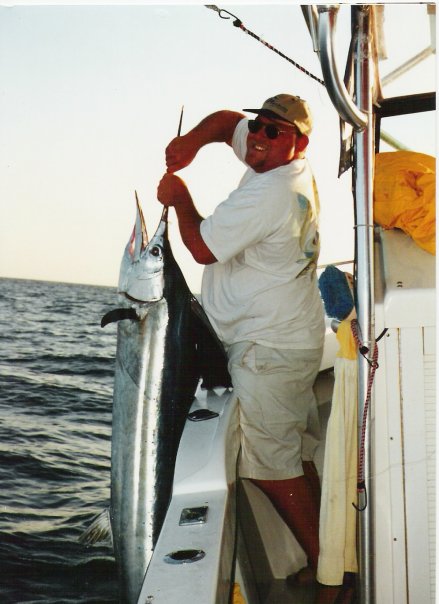
100_0793chris with billfishchris and me 2724 uncle worthy slide from judi

so, my little brother’s birthday is today. he would be turning 42, if he hadn’t passed away from me & this world at just 37. i miss him every single day. every. single. day. but even more on sundays & holidays, anniversaries & birthdays. he always made time for me; he actually & literally saved my life after i got divorced for the second time & he moved in with me, coming up to gainesville from the keys. he loved the sea, yet for me he moved inland, as he had once before when he gave everything he had of himself to his wife and she wanted to move to from fort lauderdale to atlanta (unfortunately they divorced years before he passed away). he was one of the sweetest, kindest, most compassionate people i have ever known. he was an angel child & i learned a lot about parenting from him, being his big sister by 10 & 1/2 years. i hope everyone who ever knew or loved him thinks kindly of him today. he was so scared of getting his hair washed; that was my job, bathing him at night. we developed a method of rinsing the shampoo out that worked, and he was the cutest little frogman playing in that tub of suds! what a person he was! how much he taught me about love, and living! and, somewhere where i cannot yet completely see or hear him, i know he still IS. my baby brother was a real, genuine MAN.

10 Comments

Filed under notes

doctor’s report: patient a, a short story

img244

(originally published in Burning Word)

Doctor’s Report: Patient A, a short story

Patient A is a living museum of femininity, and serves as transitory evidence of extensive neo-geo-psycho-socio-eco-political movement. Designed and built in the second half of the twentieth century, she first gained philanthropic prominence with a cynical, witty, overeducated man eight years her senior, Charles F. She stayed faithful to Charles F. for six months, but the intriguing tales of his former romantic partners, then numbering in the several hundred, irretrievably seized her imagination. She left, and never looked back. She shops for new men the way other women shop for new shoes.

She invariably rejects both the too-easy conquest and the too-stubborn resistance. Every season countless men flock near to witness her fleeting, hormonally-induced states of passion, and observe for themselves her classic “XX” architecture.

If it seems that everything has already been said about Patient A, then it is up to the curious investigator to discover her for themselves, for she offers infinite variety. She is a woman for night-owls, early-birds, strollers, culture-vultures, devotees of high fashion, low-lifers, luxury-seekers, ascetics, flower-givers, wine-drinkers, the avant-garde, the old guard, fans of high times, fans of art, or just plain fans. Spend your time walking with her through parks, along leaf-lined boulevards, window-shopping, drinking coffee in sidewalk cafes, or overdosing on her sweet, flowery smell. Patient A is the sum of all the men who have loved her, described her, and taught her. She combines the unique with the humdrum — note her fine, trembling sensitivity, her bullheaded obstinacy, her spurts of unbounded energy, her fits of restlessness, irrational generosity, contemptible stinginess, as well as her innate proclivity for sleeping all day on the couch, unwashed dishes piled high in the sink.

In her twenties, following several remarkably disastrous affairs with high-strung youths, she gradually assumed supremacy over William B., an older, stolid man with a government job. Beautiful buildings sprang up around her person, the arts flourished within her living room, and she gained renown as the creative capital of the household.

She was kind and good and true to William B. for longer than she had ever been with any man. She wanted to settle down with her mate and raise a herd of children. Justice was what she had in mind. As you sow, so shall you reap. She had a set of rules in her head, and she did not break them until she had no choice left but to live or die. Everything unkind her husband said was made even heavier by something kind he left unsaid, and the weight of his personality dragged on her like a universe. Omissions are not accidents — in this belief she is said by many to be unreasonable. It’s so unrefined to object to a fleeing wife. He could have tried to even things out. She held the cosmos on her inadequate neck, and how it ached at night!

For a long time after she finally left him, she was afraid of love and all things human. There was no one left to speak to, and the fact that she never made anyone other than herself smile didn’t help. She realizes now every woman fights her own private war, and what seemed like losing was really winning. Every good thing is for such a very short time — bring forth roses in haste from the rocky ground, the growing season will not come again. She longs to drink honey from the honey-flower. She is free of barbed wire, yet cannot erase the blood of the sacrificed. How can she love again, ever?

She must do the best she can. Her last romantic partner told her to find a good husband. He, himself, was too much of an adventurer and would not fit the bill he imposed. Patient A believes everything will be all right, if only she can find the right man. He must be rich, not in money but in spirit. He must allow her to travel the world in safety. He must be like the father and mother she never had. He must both take care of her and let himself be taken care of — the balance herein is extremely delicate and can sometimes even be spoiled merely by improper breathing. This is an order impossible to fill.

Patient A has developed self-induced amnesia as an art form. Patient A hardly remembers her Mother and Father’s arms, their hearts and minds — where are they, why did they leave, what did they expect of her, anyway? Even so, she prays to their memory, which resembles nothing more than a pair of white herons dressed up as guardian angels — she prays — please deliver to me wisdom, please deliver strength, on your snowy wings bring me goodness and bravery. She sleeps, and in her dreams never speaks. Footsteps must be paced to meet an obstacle at every stride. Stillness is hard, so much harder than words.

Beached whales keep on breathing, trembling as their skin dries and cracks. Unaffected people gather pine cones for adornment. It is human nature to stand in the center of a thing. The most faithful feeling always shows itself by restraint. A match, not a marriage, was made between Patient A and her husband, William B. It was an unfortunate incident, fortunately ended. To define grace with any degree of eloquence requires an inquisitive hand. The only stronghold powerful enough to trust to is love. In the end, Patient A will be as ordinary and egotistical and hard-hearted as anybody else. If you nevertheless choose to pursue her, she will not be gracious, she will not absolve you.

3 Comments

Filed under short stories

two summers after the divorce, a poem

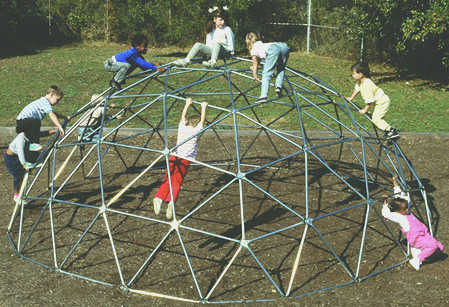
illustration merry-go-round illustration playground climber_superdome
Two Summers After the Divorce
(originally published in Snakeskin)

I. Children

The greenness, and the cars whizzing faintly by
like Central Park. Drops of water plopping
from the trees above me, cooling.
Children squeaking on the swings.
Soothing noises. A ginger-haired dog
with beautiful green eyes. A ginger-haired little girl
with yellow socks. In a blue flowered dress,
she runs past, smiling. My ex-husband
already has a new baby.

II. Privacy

My daughter’s bangs fall into her eyes,
so I ask if she wants a trim. No, she says,
her hair over her eyes gives her privacy
and makes her feel like she’s never alone.
I exchange glances with a blonde curly-headed toddler
in a black stroller with leopard print cushions,
sucking on a pacifier. She blinks knowingly.
She’s seen her own future, but will forget it
by the time she can talk. She sees colors around
people’s heads, her eyes glaze over at the beauty.

III. Expectations

Berry juice drips on my paper — a hazard of writing
outside under trees, birds and squirrels.
A granny says to her grandson,
“That’s a big spider you’re climbing on.
See his eyeballs?” They argue about letting him have his toy cars —
she wants him to climb and run and swing.
Granny has a long red braid on one side,
fading to gray at the scalp. Did she quit dyeing it abruptly
six months ago? Just gave it up, it looks like.
She’s learned exactly what you can expect from men.

IV. Desires

A young man passing is shirtless, jeans and hair wet
from riding around on his bicycle in the gentle rain.
Barefoot. Almost a man, but not there yet. He looks
furtively at women’s bodies, wanting something
but not knowing what it is. I don’t know any more, myself.
The girls on the merry-go-round scream, “Faster, faster!”
Heads tilted full back, faces to the sky, yelling.
My baby says, “This is the twisty-turny insane asylum.”
She calls to me and waves. I wave back, nod and smile.

V. Hope

A black teenager dressed in shorts and a muscle shirt,
with his baggy football jersey tucked into the waist,
draped over his thighs like an apron.
He is lean and muscular, hanging out with two fat boys.
I wonder how many times he will attempt marriage.

VI. Rational Thinking

The sky is multiple shades of grey, the breeze puffy
in medium bursts. Some little girls climb on the spider-gym
and mine says, “We’re mites. And we sit on his eyeballs.”
Redheaded lady in blue jeans and a red gingham blouse,
white wrist brace with day-glo pink straps.
The ex-husband calling me a harlot is like blaming
the broken capillaries for the bruise.

VII. The Upper Middle Classes

One impeccably dressed woman who looks just like
his new wife walks by, with two-carat stud earrings
and three small children but at least four babysitters
at all times. I’ve seen her around town for years.
She’s always pregnant or nursing.
Her feet in black sandals with bright red toenails,
professionally painted, her gray tweed suit with trousers
and her dime-store fuzzy hair-tie.

VIII. Beauty

I can smell the fragrant candy-striped amaryllis
out in the grassy circle from 20 feet away.
Fog in the hills and over the river,
branching off, banks lined with thick green trees.
Hills of crumbling shale, flowers by the road, pink,
purple, white. Plaster bunnies and fawns on lawns.
Lavender stained glass windows in the church.
Queen Anne’s lace, orange-red daylilies.
Grasshoppers flinging themselves at me,
banana spiders wait in their enormous webs.

IX. Truth

I run through the park, getting scraped by tree branches
but laughing as I run. The smell of cut grass and weeds.
Huge, opalescent night crawlers burying themselves
in leaf mulch. Character is not made in a crisis,
dear ex-husband: it is revealed.


1 Comment

Filed under poetry