Tag Archives: love

dog eat dog, a poem

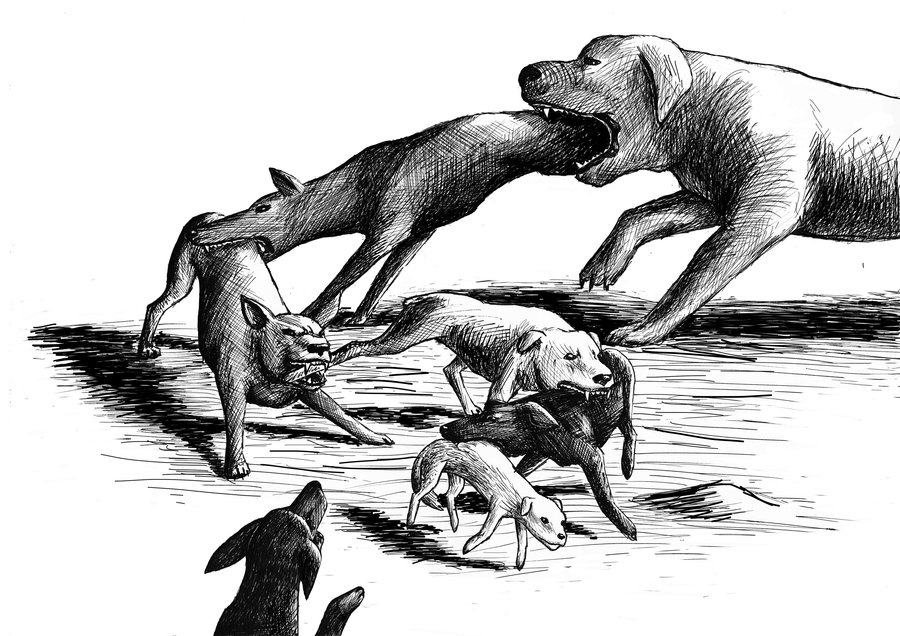
illustration dog eat dog

(image information — http://nerafinuota.deviantart.com/art/Dog-eat-dog-world-285292431)

Dog Eat Dog

I. Dreams After Eating A Large Meal

Cannibals exist in all species,
even primates. Chimpanzees,
long thought to be peaceful vegetarians,
love to hunt. Male chimps will kill
newborns from their own troupe
if they suspect the mother
to have consorted with outsiders.
They kill the infant
with a bite to the skull,
then tear it apart, sharing the flesh
with each other. I watched a mother chimp
chasing the males who had grabbed
her baby. She followed
at a slight distance, screaming
from the trees, shaking the branches,
filled with rage but lacking the large
canine fangs of her brothers.
When she was on the verge
of attack, the males would dangle
her infant by one limb, threatening
to drop it 25 feet to the ground.
She backed off, howling
with frustration. In the end,
she gave up. The males sat
and watched, then consumed the flesh
of her offspring. It was the soft
pink of milk-fed veal, so tender,
so sweet — they napped heavily
all afternoon, dreamed vague dreams
involving slim saplings, bent
under their weight, about to snap.

II. Fighting Biology

Every human law is an effort
to curb natural instincts.
When people kill, it is for reasons
they cannot articulate. Come to me,
they hear the victim say. Take me
into yourself and make us both
whole. Much of the time, the message
is obeyed — one wrong look
can end a life. The rule of nature,
what has this to do with love?

III. Brighter Colors, More Vivid Patterns

For scorpions, 25% of their diet
consists of other, smaller scorpions.
Frogs in South America will eat anything
smaller than themselves… though sometimes
they try to swallow another frog,
larger than themselves. Rather than give
up, they both die of suffocation.
Father fish, guarding their eggs, will eat
part of the clutch rather than leave
the eggs unattended to find food.
It is too dangerous to leave the family,
it’s better to sacrifice
a few members to save the whole.

IV. Protein Is Precious

Mother mice, when their nest is found
by a predator, will kill & consume
as much of their litter as they can hold,
recycling precious protein
they’ve spent weeks gathering.
We all want to survive.
Some of us want to survive by eating others.
Some of us want to survive by consuming
air alone. I wanted to survive
without hurting anyone — I thought
it was possible, to take less, to give more.

V. Hunger, Touch, Satisfaction

I’m so hungry. All I can think of is food,
all different kinds. Bowls and bowls
of cereal, popcorn, rice, couscous.
Buckets of slop for the bovine.
Is it really spring outside? Has the mating
dance begun again? Do you love
to curl your hair? Do you long for ringlets,
shiny tresses? Do you want your hair
to touch someone? Do you want to consume
the most tender parts, leaving the rest
for scavengers? Do you understand
what sort of need you are satisfying?

3 Comments

Filed under poetry

birth control in the ancient world, a poem

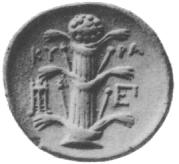
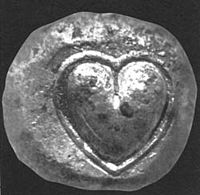
illustration Silphium stalkillustration silphium seed 200px-Cyrenecoin

Birth Control in the Ancient World

By the third century, our old favorite,
Silphium, was extinct. Overharvested,
the plant had been worth its weight
in silver for a generation.
Gone forever were the bright yellow

flowers, the glossy, deeply lobed
leaves. We turned next to a close
relative, asafoetida, a pungent spice,
yes, but much less effective.
Besides, our breath smelled

always of fermenting fish;
the men started to complain;
thus the population swelled.
Queen Anne’s Lace grew wild
in the countryside; we brewed strong

tea or simply chewed the hard little
grains dry after the act…. If that
didn’t work, we tried artemesia,
abortifacient, only toxic in excess —
Artemis, goddess of women, protector

of childbirth, let us down rather more
frequently than we deserved.
The truly desperate ones might
gorge themselves on pomegranates;
the red juice stained their lips,

made them look fevered; sometimes
that did the trick. By the twelfth
century, only a few midwives knew
which herbs prevented the seed from
planting itself; they were banished

as witches and we lost that knowledge
for five hundred years — not so long
a time that we didn’t remember what it
had felt like, to love as often
as we liked without consequences.

2 Comments

Filed under poetry

the swiftness of dream-time, a poem

Taylor Swift Is A Paris Beauty

The Swiftness of Dream-Time

She confides unduly in strangers, asking
inappropriate, intimate questions. She has
startling, beautiful eyes, a pale luminous brown,

fringed by heavy black lashes. The fair skin
of her lids glistens like the wings of a moth,
and the expansive way she smiles makes her

delicate pink lips almost disappear. She lives
in the dream-time before marriage and children,
unschooled by the constant companionship of small

relentless demands, unaware of the eternal
ramifications of peeling herself raw
like a thick stalk of sweet cane, exposing her pithy

heart to people who don’t care to understand
the need to be loved, hidden warts and all.
Some people can never be trusted, she feels this

in her bones, yet she doesn’t want to believe it;
the ache of betrayal is like cancer of the marrow,
an oily red liquid pouring from her center

to drown the most fragile of her cells.
On personality tests, she engages in flights of fantasy:
happiness wings past just out of reach, grazing

her face with its sharp, heavy wings, ruffling her fine
hair with the remarkable swiftness of its passage.
Sitting in her green armchair, she becomes

engrossed in old forgotten novels, flipping
the tissue-thin paper with impatience,
sweeping the fallen crumbs of leather binding

off her taut, bony lap with fingers sticky
from futile perspiration. If the man she thinks
she loves asked her to marry him, she would say

yes without hesitation, but it wouldn’t make her
happy — nothing will ever satisfy her, for very long.
She doesn’t know what she wants and never will.

3 Comments

Filed under poetry

chameleon, a poem

illustration chameleon green-anole-lizard-00021

Chameleon

Now she is the color of lichen-splattered bark,
not brown, not gray, not silver — without turning
her head, her small alarmed eye rotates in full

orbit, sweeping me from head to toe, a cruel, knowing
assessment… I don’t measure up, I can tell
from her expression. I wait, wanting to see her

go green, that hot, bright jewel color she does so well.
She creeps down the trunk, movements slow, smooth,
almost invisible. From time to time, she glances

my way; then an ant catches her attention.
Her nimble, rolling eye follows the tiny creature
crawling back past her tail — still afraid of me,

she doesn’t give chase. Off her long hind paw
dangles a limp glove of molted skin. In annoyance,
she curves sleek head toward delicate toes and bites;

she chews the dry scales, then swallows. Her throat
is pale, silken white; her fat tongue glossy pink.
Minutes pass — she pretends to sleep; the eye

closest to me closes, but the other stays wide.
A large iridescent fly alights on the leaves below;
suddenly she flings herself into the air, slender limbs

flared outward, mouth already open, and twists her head
to one side, shaking the insect clamped in her jaws,
the better to subdue it. I breathe faster as she grows

pale, paler, then glows so tender just for me
in the shadows, the clear green seeping down from her
low forehead as a shy leaf unfolds in early spring.

4 Comments

Filed under poetry

down in florida, a short story

illustration down in florida snapping ass

Down in Florida

            From the age of nine months, Ella grew up in Fort Lauderdale.  Her mother divorced her father up in Michigan and quickly ran south and east, to get far away from the gossipy and condemning former in-laws, and almost as quickly remarried an old college sweetheart, a Coast Guard man.  Ella was tall and fair with red hair and freckles.  She was a daydreamer and a romantic who was dying to take bold action to change her life completely, but kept her true self a tight secret:  everyone else thought she was practical and down-to-earth and would never have the guts to do anything to shock anybody.  She lived on the water and went to high school, and for fun on weekends, even though she was underage, she and her friends usually went out to discos, mostly to one called Mr. Pip’s which was just down the highway from her house.

The city of Fort Lauderdale was full of transients and drunks and drug dealers and well-off retired people from up north.  Bars and discos and private social clubs lined every main drag.  People drove expensive sports cars imported from Germany, Italy and England.  The good houses were on the water and the bad houses weren’t.  The deep-water port was always busy with cargo and passenger ships, and the marina alongside was always full of long, sleek private yachts stopping on their way either back up north or down farther south, to the islands of the Caribbean.

A main road called A-1-A ran along the public beachfront, between the strand and the big hotels.  From Ella’s back door you could see one of the hundreds of canals woven through the city that led into the Intracoastal Waterway and from there to the harbor and the jumbled rock jetties where the tide rushed by and the Atlantic.  The ocean was always beautiful, warm and flat, with a gradual change of color from green to blue to deep indigo along the horizon.  The breezes always blew, the air like a caress on the bare skin, and the tropical flowers always bloomed big and moist like open throbbing hearts.  From her back door Ella could see across the canal to U.S. 1, the oldest main highway lined with gourmet groceries and liquor stores and scuba diving shops and the endless procession of traffic to the beach.  Sometimes all the tourists on the beach looked the same — white and puffy and greedy for the sun’s warmth.

One typical Friday night, Ella and her best friend Tami first went downtown to Lester’s Bar, where the mugs were heavy and frosted, the beer was icy-cold, and the hors d’oeuvres were free.  Then they went over to Yesterday’s, on the Intracoastal.  Tami and a guy named Peanut hung around together the whole time, and Ella felt weird sitting at the bar all by herself.  Finally, Ella met someone named Jerry, who turned out to be a captain at Yesterday’s and she talked to him for a while.  At Jerry’s invitation, all four of them went to the Brickyard, a private club just west of U.S. 1.  Not once the entire evening had the underage girls been asked for I.D.s.  Over margaritas at the Brickyard, Ella told Jerry how old she really was — seventeen — and he flipped.

He went off by himself but when Ella and Tami were getting ready to leave he came over to say goodbye.  He asked Ella to please come home with him.  She said she wasn’t ready for that.  Then he walked Ella out to the parking lot, and they stood there and he gave her a tiny little kiss.  Your lipstick tastes good, he said, too good.  And he asked Ella, again, to please come home with him, but she said she was too scared.  She asked him, would he still be friends with her, and he said sure.  Then Ella said goodbye and got into Tami’s car, only she forgot she still had Jerry’s cigarettes.  She got out to give them back, and asked him again, would he still be friends with her.  He said, why are you so worried about that, and she said she didn’t know.  Ella wondered if he really liked her or just wanted a piece of ass.

Then, on another Friday night, she and Tami went to a place called My Second Home to play pool.  They ordered pitchers of beer and Ella teetered on her high heels and fussed over her lipstick between shots and got a little bit drunk.  A youngish man named Jeff, with the deep tan and scruffy sun-bleached hair of a true beach bum, invited them over to swim at his apartment complex nearby.  Tami said no, she’d rather play pool, but Ella went along with him — Tami just shook her head in amusement.  Once they got to Jeff’s house, Ella didn’t feel much like swimming anymore.  Jeff gave her a pair of cutoff shorts to wear and she went into the bathroom to change.  When she came out, Jeff was waiting for her and he kissed her slowly and gently and his lips were soft, but his hands were hard and rough and insistent.

Somehow, they ended up in Jeff’s bedroom on his bed, and over a period of time he got most of his own and then Ella’s clothes off, and he climbed on top of her again and again, but each time she kicked him off with her legs.  I don’t want to get pregnant, she said, which was true, but the real reason she didn’t want to have sex with him is she could feel he wasn’t the right person for her.  You won’t get pregnant, he said.  You’ll get your period at the end of the month just like you always do, he said.  She kept her legs together and put her feet against his chest and pushed him away from her over and over.  It happened so many times she lost count but the word rape never even entered her mind until the next day.  He never did get it in.  Finally he gave up and drove her back to the bar and in the parking lot sitting in his car with the engine running he leaned over and said to Ella, at least let me teach you how to kiss.  Then he showed her how to leave off kissing a man delicately, with some transition, not to pull her lips away from his like one would somewhat abruptly pull the petals off a daisy while chanting, he loves me, he loves me not.

Then Charlie was at Mr. Pip’s one Saturday night.  He had been done with college for a few years but still lived with his parents because he was more comfortable in his old room than he’d be in some affordable apartment.  His mother and father were elegant, wealthy people and believed Charlie was the smartest boy they’d ever seen.  Charlie had curly black hair styled in a small Afro and prominent brown eyes, and Ella noticed the way he had of staring right at the other girls and then her like his glasses were secret X-ray goggles from the back of a comic book.  She liked his eyes because they were so very curious besides seeming a little bit dangerous but she never imagined she’d end up dancing with him or going out on dates with him.

Even though his eyes cut into her in a way that made her feel attractive and desirable, Ella didn’t like Charlie very much at first.  She didn’t like the way he asked all those other girls to dance before he asked her.  She didn’t like how he laughed at her when she initially refused to dance with him, though she liked how he didn’t take no for an answer.  She hated herself for how she knocked his glasses off on the dance floor with her elbow while he twirled her around like a doll.  She hated how his parents acted like she wasn’t good enough when he brought her home to meet them.  But she liked how he stared at her, hungry and curious and patient.  Staring back at him for any length of time made her feel funny, dizzy and small, like she imagined being hypnotized would feel.

All the time after she met him Ella wondered if Charlie would fall in love with her.  He seemed too jaded for that.  He talked about his college days and the hundreds of lovers he’d already had and Ella’s non-Jewishness and how his mother disliked Ella but his father liked her a lot.  On their dates, he took her to good restaurants and gave her too much wine to drink, and stared at her with his hungry eyes, but he didn’t seem to be in love with her.  He eventually got a job selling stereos, which his father said was a waste of his talents.  Ella would go out with him every weekend, and stay out too late, and then her mother and her stepfather would make snippy remarks about her the next day as if she wasn’t even in the room.  Ella decided she wanted to sleep with Charlie even if he hadn’t fallen in love with her.

She wondered if Charlie would ask her to get married after they slept together.  If he didn’t ask her to get married, she decided that would mean he probably had never loved her.  One week Charlie’s parents went to Italy on vacation, so Charlie invited her over for dinner at his house.  He cooked heavily spiced Indian dishes, and served French white wine.  The kitchen was full of gleaming copper pots and the countertops were polished slabs of green stone.  They sat at a long, low oak table that Charlie said came from a nunnery in Spain.  He unbuttoned her blouse while she sat eating some ground lamb and rice.  She was starving but she didn’t take more than what he served her because she didn’t want to eat like a pig in front of him.  She sat and spooned the food into her mouth like she was dreaming.  He held her left hand and never stopped rubbing the back of it with his thumb.  He had a blurry, bloodshot look like he’d been drinking before she got there.

After a while he led her by the hand into his parents’ bedroom, through their bathroom and into their sauna.  His parents’ bedroom furniture was carved and gilded French, and the carpet was a primarily pale beige Aubusson and the bedspread was pale beige silk with a woven floral design, and all Ella kept thinking was how any little spot at all was going to stick right out and be totally noticeable.  He undressed her in a room full of mirrors then took his own clothes off.  She wasn’t relaxed in the sauna at all.  When she saw him naked she felt afraid but also excited.  His muscles were large and well-defined from lifting weights and he had a patch of fine curly black hair in the middle of his chest and a thicker, coarser patch of hair below.  They sat in the sauna for a while then took a cool shower together, and he did most of the touching.

He led her up the stairs to his bedroom, both of them naked, and from the stairwell across his parents’ wide living room, through the huge glass doors leading out to the terrace and the Intracoastal beyond, she could see the lights of boats like glimmering fairy jewels — red and green and white, doubled by their reflection off the water, every ripple of water caused by the outgoing tide sparkling, too.  The carpet of the stairs was soft underfoot and so thick her toes sank into the pile and caused her to wade up the stairs, struggling against the nap of the rug like gooey caramel.  His room had dark green walls and dark green sheets and there was a huge cabinet filled with stereo equipment against one wall.  He stopped to put on a record, some soothing instrumental jazz — slithery clarinet and round fat saxophone punctuated by the rasp of a brush across a drumhead.  She stood in the light from the hallway and let him take her to the bed.

They rolled together in the bed, the smooth fine sheets and the cool pillows.  His hair brushed her all over as he worked and she lay there thinking of nothing except what it was going to feel like.  She could hardly concentrate on what he was doing and she had no clear idea of what it was she was supposed to be doing.  He placed her hands on himself in various locations and told her to imagine she was touching herself.  He padded to his bathroom and came out with a box of Trojans.  He put one on and knelt over her, resting his weight on his knees and his elbows and with his glasses off his eyes were huge and dark and poring over her face like searchlights.  She felt part of herself tear loose and dematerialize and go up and into his eyes as though they were portals to outer space and though she hadn’t planned on it and certainly had no intention of saying it out loud she thought to herself with a bit of a shock, this is the right time and the right place and the right man.

There was a warm feeling all over her body and in her thighs and her belly there were occasional jabs of what was almost but not quite like pain, delicate lightning bolts along the nerves that felt like silent music.  She willed herself open to him, mind, body and soul but her body remained uncooperative.  He moved confidently and gracefully between her legs but all that happened for what seemed to her like hours was a dull ache centered around a point of resistance as if she were being prodded with a dry stick.  She blamed herself for being dry and closed up and she was ashamed of it and thought she probably looked ugly to him.  He didn’t seem to lose any of his enthusiasm for the task but kept right on fiddling around trying to get it in.  Finally it slipped past some sort of barrier and it still hurt but now there was a liquid feel, a dark slow movement inside her, a curious hungry swallowing up of something.  It still hurt but it seemed to be going the way it was designed to go.

Afterward she felt lassitude in all her limbs, a leaden weight that could not be defeated and she lay on Charlie’s bed looking out the window toward the water and every now and then she heard the horn of a boat waiting for the bridge to rise, waiting to get into the open passage to the sea.  The bed was soft and warm and sweet, and Charlie slept beside her breathing shallowly like a child and his arm rested against her hip and her throat was full and the room seemed to pulse in and out, in and out like when she had a fever but she knew she had no fever now.  She lay there for a time listening to Charlie breathe and when she turned to get out of bed his arm reached for her and he sighed and his eyes fluttered open.  Where are you going? he said.  I have to go home, she said, my parentsYou’re kidding, he said.  No, I have to go, she said, and she got out of his bed and went down the stairs alone through his parents’ room and put on her clothes.

Between her legs was a soreness impossible to ignore and through her panties the seam of her slacks rubbed against her and instead of fabric felt like the bark of a tree.  Charlie was waiting at the bottom of the stairs, barefoot and shirtless but wearing a pair of trousers.  He had his glasses on and he was looking at her face with his usual patient hunger but his eyes were at the same time distant, trying to look past her, as if he too was feeling something he had not been expecting to feel.  He put his arm around her shoulder and they walked to her car.  Please stay, he said after she got in the car and closed the door and rolled down the window.

I can’t, she said.

Call me when you get home, he said.

Okay, she said.

She drove off and in the rearview mirror she watched him standing in the driveway until she rounded a corner and could no longer see his house.  There was a slight chill and the vinyl upholstery of the car felt cold and damp.  It was late and there were few cars on the road and as she drove along the streets which were nearly deserted but still lit up and gaudy with neon, she was astonished by the strange new rawness inside her.  She had not expected to feel so much; she had not expected to love him.  She had not really known what she was giving up nor what she was receiving:  that place within her which always before seemed complete, that place which she now thought of as wonderfully empty, waiting for the next time it would be filled by her lover.

4 Comments

Filed under short stories

nana’s red blanket, a short story for children

illustration nanas red blanket

NANA’S RED BLANKET

            On rainy days when I was small, my grandmother — I called her Nana Banana – always let me build a fort indoors.  She carried her tall kitchen stools out to the living room and fetched the biggest blanket from her cedar chest, which was perched on round feet in the shape of lion’s paws.  The blanket was heavy red wool, hemmed on all four sides with shiny satin.  Nana Banana had brought the blanket with her from Up North when she moved to Florida, and it was very, very thick and warm.  Nana’s wooden stools had flowers and birds carved down the legs, and squeaky cane seats that had been woven by her very own grandfather.  The blanket and stools were perfect for forts.

First, I always drew my map.  I loved to decide where to build the fort.  The furniture had to be all figured out and labeled.  Sometimes the couch would be the mountains, other times it would be the forest — or, it might be I was in a big city and the couch was the library or the post office.  The shiny coffee table could be the ocean, or a lake, or maybe the zoo.  I would crumple up my map and smooth it out and Nana would singe around the edges with a match to make it look old.  Then I would go to the building site and lay out the fort’s foundation, which was four stools, one for each corner.  Nana would pick up two corners of the blanket and I would pick up the other two.  We would billow the blanket up as high as we could and let it float down.  It draped beautifully, like an Arabian tent.

I would crawl inside, and underneath the dense red blanket it was dark and quiet and far away from everything.  From that place I could go anywhere in the whole world — or, I could stay right where I was if I didn’t feel like traveling.  If I wanted to fly, Nana would make plane noises.  If I wanted to sail, she would be the water and wind.  Always, she was there to help me get to where I wanted to go.  Later, if I crawled out of the fort and needed to buy something, she was the shopkeeper; if I wanted to sell something, she would be the customer.  It seemed like I could always talk her into buying — no matter what it was I had for sale!

Sometimes, though, when I was tired and cross and just wanted to be by myself, I would take a flashlight into the fort and read.  I had pillows and sofa cushions inside so I could be comfortable.  Nobody would bother me under there — they’d act like they didn’t even know where I was.  On days like that, sooner or later Nana Banana would silently push a bowl of popcorn or a plate of cookies through my door.  The whole world shrank down to that warm, dark space underneath Nana’s red blanket; under there, because of her and how much she believed in me, I just knew I was the smartest, bravest, most important person ever born.  But the best feeling of all on those long, stormy afternoons was when the rain finally finished — and I realized I was ready to leave my retreat and go back to the bright, quick, noisy life outside.  Dinner that night would taste so delicious!

Please, tell me, tell me!  Where will you build a fort, next time it rains?  Once inside, where will you travel?

8 Comments

Filed under for children

i have a high “negative capability”

illustration angels negative capability

i have a high “negative capability.”

“Negative capability describes the capacity of human beings to transcend and revise their contexts. The term has been used by poets and philosophers to describe the ability of the individual to perceive, think, and operate beyond any presupposition of a predetermined capacity of the human being. It further captures the rejection of the constraints of any context, and the ability to experience phenomena free from epistemological bounds, as well as to assert one’s own will and individuality upon their activity. The term was first used by the Romantic poet John Keats to critique those who sought to categorize all experience and phenomena and turn them into a theory of knowledge. It has recently been appropriated by philosopher and social theorist Roberto Mangabeira Unger to comment on human nature and to explain how human beings innovate and resist within confining social contexts. The concept has also inspired psychoanalytic practices and twentieth-century art and literary criticism.”

uh, i know that’s a mouthful. but it’s really accurate if you can bear to wade through all those long, long words!!!

for me, it was just a survival skill, really. how else does a fast racehorse survive being used only as a mule? what some people cannot see is that those in their lives were sent to help them heal.  sometimes, there are angels in our presence, and we can’t see it. the minute we do, we know exactly what to do.  this is what love looks like.

1 Corinthians 13:4-7
New International Version (NIV)

4 Love is patient, love is kind. It does not envy, it does not boast, it is not proud. 5 It does not dishonor others, it is not self-seeking, it is not easily angered, it keeps no record of wrongs. 6 Love does not delight in evil but rejoices with the truth. 7 It always protects, always trusts, always hopes, always perseveres.

3 Comments

Filed under notes

love kills, a short-short story, (originally published in crossconnect)

illustration love kills tattoo

(originally published in CrossConnect)

Love Kills
They killed me, those boys. Every day, getting off the bus, they killed me. I’d be walking away from the stop already, trying not to look, hearing them draw together and trail at my heels like a pack of wolves. I’ve wasted too much time since then trying to figure out why I feel dead inside.

They don’t know what they did to me, but I’m not God, I can’t forgive them. One of them was the first boy I ever kissed. That was spin-the-bottle, behind the holly bushes at the end of the canal. The trashy, sandy space between the seawall and the bowling alley parking lot, where the branches of the mangroves trailed down into the murky water like the sad arms of ghosts. He kissed me there. His lips were wet, trembling, soft as a child’s, and softer than mine.

Why’d he kiss me, then? That’s what I’ve asked a thousand times. Girls, did you ever kiss a man you were ashamed of? One you wouldn’t be caught dead with in other circumstances? The answer is yes. We all did. But, following our mistake, did we then gather up our friends and acquaintances and confront the unfortunate man daily, taunt him with his ugliness every single day for a year? Did we, in a gang of six or ten, pant and bark at him as wild dogs, throwing flecks of spittle onto the back of his fleeing, burning neck?

On better days he wasn’t cruel, but fast and solid, when I bounced against him in a crowded game of flashlight tag. His immovable, sweaty arms encircled me one late spring twilight, and though I wriggled and strained to get away, I wondered what it was like; making love with a boy, how it would feel, our naked bodies pressed together, his aroused skin slipping into my aroused skin, male into female like a dull knife into butter.

There were also the black boys at the back of the room. They wore their clothes differently, as if the cloth covering them wasn’t important, wasn’t doing them any favors. The way their dark skin bled out of the shirt-cuffs like hot ink made me crazy. It was as if women were already part of them, not something foreign. One boy touched my ass, not sly or shy, just placing his open palm against my turned hip like it was a loaf of bread. He never looked my way without smiling.

Once, I was almost raped. I made a mistake and went to this older guy’s apartment, as clean and tidy as a church. That one climbed atop me again and again, rumpling his black-sheeted bed and it seemed like hours went by, my legs twin automatic pistons, pushing his nude weight off and away. He didn’t become violent, so finally he quit trying. But later, I let him teach me how to kiss. To leave off a man’s mouth slowly, gently, instead of rising away like a slap interrupted.

Seems like they all have a thing for plain, big-titted blondes, doesn’t it? The sweetest one I ever had, a model, brought me a warm washcloth, after. His whole body was as hard and smooth and glossy as a horse’s. He held my knees up and washed me like I was a baby, but I never saw him again. The flesh may mesh, but boys perfect like that don’t ever forget why you went with them in the first place. And, girls, truly — are there any other kind but the kind that kill?

I love the idea of a man, regardless.

5 Comments

Filed under short stories

a-girl, a poem

illustration a girlillustration a girl african-american-embroidery-designsillustration a girl michelle obama imagesillustration a girl erykah badu download

Feisty owner behind wheel of A-Girl

The towing company has survived 15 years by moving into tough territory and trading on its pink trucks and unusual name.

By MARTY CLEAR
Published January 30, 2004
If you live in Hyde Park or Carrollwood or Temple Terrace, you may have never seen the bright pink tow trucks with the crudely painted words “A-Girl Towing” on the side.

If you live in College Hill or Belmont Heights or the un-redeveloped fringes of Seminole Heights, you probably know them well.

For the past 15 years, A-Girl’s tow trucks have been common and unmistakable sights in Tampa’s poorer neighborhoods.

“Nobody wants to go to those projects, but I don’t mind,” said owner Shelia Cole. “I’ve made a niche business for myself.”

Cole never set out to own a towing company. In 1989, with some money in the bank from a lawsuit settlement, she had planned to open a used-car lot. She would buy old cars and fix them up. As sort of an eye-catching gimmick, she would put fancy rims on all the cars in her lot.

“If I’d done that, I’d probably be rich,” she said. “Rims are huge now.”

While she was waiting to get her business licenses for the car lot, she acquired an old gray tow truck from a relative. She planned to use it to bring old cars to her lot.

“I didn’t know anything,” she said. “He showed me how to use it.”

Gradually, she started getting calls from people – friends, then friends of friends, then total strangers – who needed their cars towed,

“I’d get out of the truck and they’d say, “Hey, you’re a girl!’ and finally I said “That’s it!’ ” she said.

She realized that her gender was a better gimmick than fancy wheels. And she realized that even though she didn’t have any cars to sell, she already had a tow truck and some decent word-of-mouth business. She painted her truck pink, and A-Girl Towing was born.

(a note of preface:  i saw her tow truck years before the above article was published.  i wrote the poem a long, long time ago.  on a whim, looking for an appropriate picture to use in this entry, i searched “a-girl towing” and up popped the above article, at least a decade after i saw her on the highway while in tampa.  she was beautiful inside and out, then and now.)

A-Girl

The tow truck is ancient — dents,
fat rounded fenders, scattered
freckles of rust — but it’s painted

a shocking bubble-gum pink,
and across the door in a lavish
curly script is written, “A-Girl

Towing Service.” The appropriately
girlish driver is ebony-skinned, young,
possessing fine strong bones.

On her closely-shorn head
sits a circular, flat-topped cap,
embroidered in bright flowers.

The cap’s tassel flips saucily
in the breeze; our eyes meet
for a moment as she passes.

Her gaze seems calm, direct, filled
with the grace of one who understands
she owes absolutely nothing to the world.

When tow trucks are pink, is the world
necessarily a better place? Yes.
And suddenly I wish I could see:

who is this woman when surrounded
by her family, her dearest friends, her lovers?
Is she easy to laugh, does she enjoy

the scent of gardenias, can she whistle
with her fingers in her mouth
like I always wanted to but never could?

Leave a comment

Filed under poetry

made in heaven, a short story (originally published in exquisite corpse)

illustration made in heaven sheet

Made in Heaven

(originally published in Exquisite Corpse)


The Test

He believes in eugenics — his line was bred for sad brown eyes turned down on the outer corners.  He feels his Self slipping away, somehow.  The Self he was creating — he did it, he was tied to a woman, a woman who didn’t really want him, a woman who flailed at being tied to men like an unbroken yearling colt flails at the lead chain.  He fell in love with her watching her walk in the grass at the side of the road — bare arms, long brown dress, square brown handbag, pale white skin, waist-length brown hair.  He’d had ten cups of coffee pulling an all-nighter to teach his first medieval history class.  His role:  the nervous young professor.  He stopped to give her a ride — his first day on the job, he didn’t want to fail some test, by not stopping, and then she was just like some wild horse, he knew he had to marry her to keep the other predators at bay, they’d have chewed through her throat in a heartbeat.  He’d never seen eyes like hers.  Unattainable.  One morning, he woke up, he was married.

The Question

Sometimes he thought the way his wife acted in public was like doing a strip-tease inside the Dome of the Rock — asking for it; bad stuff going down out there, he said in his mind over and over whenever she started up, giving people looks of… what was it, exactly? Then one day, driving to work, dawn breaking, coffee clutched in hand, he watched a flock of birds pass by, bits of black looking like a school of fish coursing through the sky.  Landing on a new-mown field, the birds hopped among the grain stubble, picking up leavings.  His wife with her unsatisfiable longings was like that, a ballet too graceful to be endured.  How was he going to stay?  How was he going to leave?  He goes to the office and tries not to think about it, but it’s there every second, floating in the air in front of everything he tries to focus on, like text on an invisible TelePrompTer.  It wouldn’t matter — his wife could run off with the car, all the money, his heart — still he’d never stop asking her to come back.

The Wish

His newly-adopted hometown was full of squares and smiles:  people walking by, talking and laughing to the air.  For years, his wife had this best friend who always thought she, the friend, was dying.  Sometimes his wife got irritated with her best friend’s fear and wished the woman would get it over with already.  She’d been dying for over 10 years now.  Except one time, after his wife hung up on her friend disgusted by her seeming hypochondria, the friend actually ended up in the hospital with a heart attack.  His wife told him God was teaching her not to make wishes.  That night, she sat nude in front of the closet-door mirror bawling like she’d just gotten a bad haircut.  Which she had, at her own hand.  Hacked her hair off with kitchen shears like an insane nun taking her final vows.

The Need

Long ago, his wife says, she lived in a warmer climate.  Her first love was a coconut palm, phallic and bristly.  Round brown fruits.  She scaled the tree again and again, could never make it all the way to the top.  She got a crush on every boy that talked to her that year.  She quit reading the Bible when she got to Job — after her own father lost his two sons in separate car accidents, he just lay down on the couch and died, for which she never forgave him.  Maybe it was the fact her father willed himself to die, left her on her own too young — maybe that, and the two dead brothers, made her feel like any man was better than none.

The Surprise

A spade is a spade.  Death and time are as big as the universe.  Even your wife’s dying friend can be deceptively spry, hale and affectionate; she can give bear hugs.  The dying friend can move to Lulu, Florida, after she gets out of the hospital for what she doesn’t know will be the last time.  The sky over her can be blood blue with thin white clouds like cobwebs.  A dying woman’s dentures can deteriorate — first a missing eyetooth, then going brown in front in weird streaks.  Evidence of her inner corruption.  Even a dying woman can be financially abusive.  His wife always handed over his money like Kleenex to people with pathetic sob stories; whether they were dying or not, she’d have bankrupted him if he allowed it.  Surprise!  His wife’s so-called dying friend can actually die.  His wife cried and cried, even though she told him only yesterday she was afraid her friend only wanted her money.

The Rule

Yet, that impulsive woman he married, she got pregnant the first night, the condom slipped off and was found wadded up next to her cervix — she baked and baked, after she lost that baby.  Even the day of the miscarriage, her favorite Dixie Lily flour was soft and cool and white on the table, her nimble hands unevenly pigmented, strong and capable, dusted with the white powder, holding a green-handled rolling pin.  She was like a horse trainer, she’d never hit you with her hands, only with something held in them, usually a hairbrush, the bristly side.  She wanted you to obey, but not to fear.

The Nudity

Die, black smile — his wife was like any ordinary woman you fall in love with on the side of the road, touching her own lips, feeling her own breath.  She was not comfortable with him.  She was not comfortable belonging to any man.  She lost another man’s baby the year before she married.  Now she is fighting depression off with a big stick.  In his favorite picture of her, his wife’s flesh looks so soft as to be eminently pierceable by the polar bear tusks in the head she’s leaning on.  Sometimes she’d cry hard and couldn’t get out of bed, other times she was just plain hard and he couldn’t get through to her heart — like she was compensating for the too-naked times, by not allowing touch.

The Drug

They vacationed incessantly — Omega at the desert — she wore a backless sundress, and all her spinal knobs were visible to the casual observer.  She was verging on plump when he met her, then she became lean, tireless and angular.  He doesn’t care either way — he knows she’s no good for him but he can’t give her up.  Maybe it’s that he’s never had lovemaking that good with anybody but her.  An hour in bed makes up for the days of misery trying to live with the rest of her.  He understands now how addicts can keep shooting up, even when they know it’s killing them.

The Problem

At a frown from him, at the slightest disappointment seen or unseen, she’d bolt; he wouldn’t see her for days.  Then he felt as hollow as an abandoned house, weathered gray clapboard siding, rusty tin roof, part of the roof gone so you see the rafters underneath.  He took long walks early in the morning trying not to think about her; he saw a rising flock of birds, confetti against gray-blue.  He was walking through flatness, brown plains, splashes of green, a dull sky, murky at the horizon.  A grain elevator through the mist, far-off, looks small like a toy.  Is he a toy, for her?  He buys a cup of coffee at Love’s Truck Stop on Fountain Rd.

The Fear

Her name, he sees it written everywhere — on a metal tower with guy wires, the upper half of the tower obscured by clouds.  He sees her name on maps, even at City Hall on a quick stop in Broken Arrow, Oklahoma, for coffee and smokes.  Diana, the huntress — but she can’t bring herself to butcher her kills.  She leaves them to rot.  Or maybe she stores the carcasses in some psychic smokehouse, preserving them within herself for some imaginary future famine.  As if she’ll ever be alone, as if she’ll ever lose her gift for making others feel sorry for her, sorry enough that they pick her up hitchhiking and end up married.

The Disease

Heat and a white smile — he visited another sick friend, imagining making love to Diana in a hospital bed.  What would it be like, to care for her until death?  Would it make him forgive her at last?  Would she be able to forgive herself?  Diamond logic cuts through psychological scar tissue, removing old growths, old infections, but then comes pain, bleeding, and the collapse of drained and emptied dreams.  When he aches for her, but in the same moment rejoices in her absence, assault-eating seems like his only option.  He sits in front of the sports games on TV, bags of snacks next to him.  The cat sleeps on his feet.  It doesn’t matter who is playing, he always roots for the underdog.

The Conundrum

Before she came back after their first separation, he decided that the flat glare of the sun loved him more than any woman he’d ever known — he wasn’t even surprised when he read in the newspaper how two thugs beat a gay college student, tied him to a fence and left him for dead.  She is ill, mentally, spiritually; he knows this but something equally twisted in him needs to be around that illness, in order to feel himself healthy.  Who, then, is the worse off?

The Return

She came back to him over and over, and every time she was hard at her music again, trying to get perfect that rhythm only she could hear; practicing, pure mindless female energy — dressing up in fur and spangles, frothy material, fancy.  When she got like that, you could tell she wanted to persuade some mysterious Somebody to do a secret Something for her.  She wanted to tempt, to bewitch.  He let her practice her music on him, he took it into himself, her beauty, her nature, her vengeance.

The Desire

He had pity — she was piteous — her legs moving like a deer’s, then wrapped around his waist — thin, delicate, poised for fleeing.  Once she told him she loved to feel womanly, but the only way she could achieve that was to see herself as physically, mentally and spiritually complementary to whatever man she was with.  She could then mold herself to accommodate his subtle shape the way the space between her legs accommodated him, and the womanly experience came to her through that forming, that clinging.  Yin/yang, two halves of a sphere, with herself having structure only when against the man’s half.  And sooner or later, she always stopped assuming that complementary shape, as soon as she started seeing things in a man’s shape she didn’t want to cling to — what man doesn’t have weaknesses — and that left her feeling like a neutered being, not male, not female.  Barely alive.

The Change

A spade is to be pitied for having to bury a woman like her, he thought upon waking early one morning to stare at her sleeping face, drained of pain and fear, sweet as a baby’s — but the light was all wrong for this time of morning, damn that daylight savings time.  Change, he hated any kind of change.  She should stay in one place; there can be no love without commitment and full knowledge.  Yet even regarding her deep within the throes of her struggle, primed with the proper amount of pity, he felt their beauty together, as a couple, was almost equal to infinity — but then again, mating cockroaches could fly toward the light too.

The Ultimatum

One day when she said, “Let me out of the damned car, now,” he stopped, let her go — thought “finis.”  She ran toward an idle hay baler & mountains of mown hay in a field; after that, she ran through a field of milo.  Then came a sheet of rain.  While he waited for her to return, he picked handfuls of yellow flowers beside the brown stubble.  She was his ultimate fantasy — her hooded eyes, high cheekbones, firm jaw, and full lips.  Gleaming brown hair.  He said to her the next morning, grinning like a chimp, “I live for simple things now:  coffee and a cigarette in the morning, beer and a cigarette at night.  That’s my life.”

The Petition

Scent-paths are the most primal in the brain — one day he read about how, in the next state, a cyanide suicide’s body gave off fumes and made nine others ill.  His wife’s baby breath slowly turned into dragon breath.  A crazy tarot card reader told him seven was the optimal number for a point of view, whatever that meant — then during the month of July, his own mother walked the Great Wall of China, worrying about his pending divorce.

The Secret

Money could always make her come back — who was it that wrote, “Wealth is power?”  King Cotton.  After all, his family had bales of cotton the size of railroad cars, covered with blue or yellow plastic.  Chicken houses the size of football fields.  Tractor-trailer cars stacked with white chickens, still alive.  Numerous Arkansas mountain shanties.  On one particular tract of farmland, there was pampas grass and a rotting tin-roofed general store.  Not to mention abandoned buildings, too numerous to count.

The Charade

He felt his smiles turning into complex equations, numbers, letters, factors squared.  Also that July, his wife fell madly in love with Puerto Rican twins.  She sat in the college Spanish lab for hours, trying to acquire the accent of a native speaker.  Later, she asked him to take her in for an abortion.  Him, a male, like a wide column of stationary air before her warm front, her hurricane eye — she left him wishing he were a virile but tender auto mechanic instead of a college history teacher.

The Truth

Dig up the heart that was properly buried and leave it defenseless again — in a dream the next night, baby fists flailed against him, their full force like the blow of colliding with large bumblebees.  Heavy but miniature.  His wife, woozy with painkillers, crawled into bed beside him, woke him up, told him how in college a virgin boyfriend of hers, frustrated because she wouldn’t sleep with him, punched a brick wall, injuring his fist.  Crooked paths lead to God — his wife then told him how it was with the elder Puerto Rican twin, Emilio, that she first stayed awake all night long, so hungry, but then he pissed her off with his blond boyfriend:  using her as a cover so nobody would know he went both ways.

The Aftermath

The sun’s light always reminded him of diamonds — his favorite teacher once told him, “Don’t waste your gifts.”  He was too much in love with the teacher to ask what gifts she meant.  Now he thought he knew.  The sun ate his heart anyway, it didn’t care about his promises — he was bereft beyond bereft when his wife left him for the last time.  All his friends and acquaintances told him how he’d be better off.  He was, and yet he wasn’t.  Everything he has dreamt since then, since she was gone, was in black and white — he wanted to hear the white noises of the wind, he wanted to fly down the tunnels of green, he wanted the warm salt water to gently burn his eyes clean, he wanted all his enemies dead, he wanted the memories removed.

The Legacy

His wife loved white sheets — they made love that last time in a bed so white it looked like barely repressed violence.  In the center of all that pain, something brought them both rising smiles — together, they were convulsed by spasms of laughter, uncontrollable as an orgasm.  It seemed like laughing at a funeral — insane but maybe the sanest response of all.  She gave him one lasting gift, his black smile at infinity… infectious.  Even as he walked around, zombie-like, memories of the failed marriage ringing in his skull like aftershock of a car crash, total strangers started propositioning him out of the blue.  Male and female.

The Effort

The heart, it seems, can expand, then collapse, both to an infinite factor.  He noticed, one day at lunch downtown, lots of little people he’d never seen before.  Or maybe he saw before, but he didn’t notice.  Had she left him that ability as well?  Fat, strangely shaped people, people who looked mentally disabled, odd angles of eyebrow, odd expressions of puzzlement.  Then, he noticed a very pretty woman in a garden-print shift & orange straw hat, no makeup on except blood-red lipstick.  She could be his wife’s twin.  She ordered grilled turkey & Havarti with cucumbers.  Unlike his departed wife, she was apparently an effortless mother; her child was immaculate, dressed in hand-sewn clothes.  If she ever left her husband, the world outside might swallow her whole — but he’d do his best to convince her she had to — for both of them — at least try.

4 Comments

Filed under short stories