Tag Archives: nature

Eat Or Be Eaten, a short story

illustration dog alligator suit

Eat Or Be Eaten, a short story

Annemarie often sat within the bright sobriety of the campus coffee shop down the street from her and Roy’s house. The air there was filled with academic fulmination and the evaporating mists of senseless arguments, much like the state of her marriage. She was acknowledged by the college students as one of those bizarre, florid creatures from the 80’s, and they let her go about her pursuits, unfettered but slow.

“I can’t stand that place,” Roy said. “I don’t see how you can sit there day after day.” His comment, for her, aptly illustrated how unaware he was that her main occupation while there was mulling over whether or not to file for divorce.

“It makes me feel wired,” Annemarie said.

“You can say that again,” Roy said.

“Why don’t you meet me there for coffee sometime?” she said.

“Things are too crazy at the office right now,” he said.

One such crazy evening, after dinner, the air was busy gossiping with itself — Annemarie could feel it fluttering along her cheeks inquisitively, and the moon rose early, bouncing light off the red tiled roof. She put on her ratty ski jacket and then poured herself a tiny refreshment of Scotch, which she imbibed cautiously. Her small thick hands, gripping a kitchen chair like death, were chalky at the edges. The clanking emptiness of the room — of her life — created a milky haze over her sight. For what seemed like the hundredth night in a row, she invited Roy over to the lake on campus to see the alligators. For the first time, he said yes.

They rambled along the verdant avenue and before them flitted two zebra butterflies, as if teasing Annemarie to fly. Her husband, his blank, uncomprehending eyes, was at once her soul and her shame. It was horrible to have people such as him think ill of you, think you were wrong. It was small and ugly and soul-shaking. You felt as if you were coming apart like a cheap paperback, pages from your head fluttering to the floor every time somebody breathed on you. She wasn’t much for men herself — she never learned how to tell a sweet one from a poisonous one and besides, she’d never been convinced there was much difference. But a truly radiant woman never hustles off through life unaccompanied.

A small crowd was gathered on the boardwalk over the water — a leather-skinned old German couple, a tall skinny man with a pot-belly holding a toddler, three young college women with lush clouds of permed hair and tight little asses. A little girl came up with coral roses in a bucket balanced on her hip. The German people spoke softly to each other in German.

“We saw a wild boar on the highway back in the mountains in Kentucky,” said the man with the blond baby. “I thought it was a dog lying on the side of the road. Then I saw its tusks.”

Annemarie’s future, single life would be simple like this, among unpretentious people like these — she’d come see the alligators every night before dark with the out-of-towners. She would hear the gators’ mating calls, the deep bellows in the late spring. She’d appreciate the real elegance of nature. Roy appreciated only his new $60,000 car and his tax-free municipal bonds.

The alligator for this evening was a good seven-footer. It floated perfectly still on the surface of the water, the scales on its back pushing through like a miniature mountain range. Its fat front paws hung limp in the clear lake water. It seemed only a little threatening in the smooth summer light. The gator had a large sly grin.

Roy was from the North – he’d never been around alligators before. Florida was alien territory to him. People from the North always freaked out about the gators. Annemarie wanted to give Roy a thrill. She wanted to overwhelm him with her earthy, sensible, swampy ways. She rubbed his hand humbly and forgot to play the grouch.

“They like marshmallows the best,” the tall, chatty man holding the toddler said. The boy wore a short jumpsuit appliquéd with giraffes. The German couple nodded, the old man pushing his fluorescent yellow golf cap back on his forehead. “Let’s see what I’ve got in the truck,” the man said.

“That?” the little boy said, pointing.

“Alligator,” Annemarie told him. The boy nodded and bit his forefinger.

“Teeth,” he said.

“Yes,” she said. “The alligator has lots of teeth.”

It was strong, it would eat her if it could. That was the way to be, she thought. That was the new simple way she would live, with or without a husband. Eat or be eaten. Roy hadn’t the slightest affinity for animals. Annemarie wanted to live a simple life. She didn’t want to be angry, ever again. Mostly, that was it. She could not afford any more to be bored with living — she didn’t have that kind of time. Her husband had become accustomed to disagreeing with her almost all of the time, as a method of entertainment.

The man with the baby came back with a vending-machine package of peanut butter cheese crackers. Annemarie shivered. Suddenly, she wasn’t so sure about feeding the thing. What if it came up on the bank? She had read how alligators could run 40 miles an hour over short distances. The man threw a cracker in the water near the alligator’s head. The animal whipped its head sideways and took a big gulp of water, inhaling the cracker. They all got a nice view of its teeth. The gator pumped its jaws, as if savoring the peanut butter, and the water clouded with dissolving cracker. Roy stood apart from the group, his face dark and tense. Annemarie leaned on her elbows, hanging over the railing of the boardwalk.

“Did you know it’s against the law to feed the alligators?” one of the young women with big hair asked. Her sharp voice made Annemarie jump.

“Really?” Annemarie said.

“Is that so?” the tall man said.

“It’s a felony,” the young woman said. “And there’s a fine.”

“How much is the fine?” asked Annemarie.

“A thousand dollars,” the young woman said.

“Really?” Annemarie might be afraid of the alligator but she wasn’t afraid of this young woman, with her elaborate hairdo and her half-pound of gold jewelry. This was the kind of woman Roy would marry next, she was sure. This kind would give him a lot less trouble. This kind would have no desire to feed reptiles of any sort. She directed herself to see marriage for what it was, not its tedious demonstration. The pretty young woman flipped her perfect locks over her shoulders and glared at the man with the peanut butter crackers. He threw another cracker to the alligator and laughed. His baby laughed too, throwing his head back so his fine pale hair waved in the breeze.

“The alligators get tame and that’s when they start eating dogs,” the young woman said. “And small children.” She was businesslike, her voice chilly with authority. The mystery of feeding the dangerous beast was lost on her, thought Annemarie. It was exactly the sort of thing Roy would say. Annemarie’s neck began to tingle, blood fury gathering in her cheeks. The tall man grinned at the snotty college girl and slowly pushed his glasses up with his middle finger.

“Then they have to shoot them,” the girl added. “So it’s really not a good thing to feed these animals.” The young woman had her nose up. Literally had her nose up; her voice resonated with indignation and righteous anger.

Annemarie pushed her arm against Roy.

“Maybe she’s right,” Roy whispered. He sounded reasonable, the way he always did.

“Oh, Christ, what’s the harm?” Annemarie said. She was still leery of the alligator, floating, for the moment seeming as harmless as a large rotting log, but she was enraged nonetheless. The hell with all of them, Annemarie thought. What do they know about right and wrong? What do they know about anger? What do they know about eating or being eaten?

“Great attitude,” the young woman said to Annemarie, shaking her head. “Come on, let’s get out of here.” The three lithe girls walked off, whispering to each other in disgust.

“Throw one of the crackers up on the bank,” Annemarie told the man, now her partner in crime, her body trembling. They were all standing on the wooden boardwalk over the water. She decided this animal was a deserving gator, nothing to be afraid of. She would bring it whole chickens, she decided. It would be her personal ritual. Her wants and needs had boiled down to nothing. It was amazing what she could do without, now she had decided to end her marriage. She would take one pot, a frying pan, and a wooden spatula when she left. That was all she needed. That was all anybody needed. Let him have the expensive cookware she was always cleaning improperly.

The man with the little boy threw a cracker onto the muddy bank. The alligator turned its head sideways and tried to pick up the cracker. Its teeth grazed the mud, making deep tracks. The cracker wouldn’t budge. The animal hauled itself onto the bank and took a mouthful of mud with the cracker. The man threw another cracker on the bank, and the gator swallowed it down. In the fading light, its teeth glowed pure and white. It did slow pushups on its meaty little forearms. Mud clotted its elbows, and the man threw more crackers. The German people oohed and aahed.

“I’m not putting you down,” the man said to his baby. The baby writhed in his arms.

“Teeth,” the baby yelled. “That!”

“Don’t put him down,” Annemarie told the man.

“No kidding,” the man said.

I could do this every night, Annemarie thought. Hang with the simple folk and feed dangerous wild animals like a crazy woman. She imagined the alligator getting angry, running toward her at forty miles an hour. She’d leap onto the railing of the boardwalk. She’d grab hold of the gator’s jaws and hold them closed with one hand, like the Seminole gator wrestlers at the orange groves she’d visited as a child. Reptilian rage was what she’d become practiced at. She had Roy to thank.

She remembered how all the muscles in an alligator’s jaws were for closing the mouth, not opening it. You could hold a gator’s mouth closed and flip it over on its back, and it would black out. The great beast would lie there, paws twitching, flabby white belly quivering. She still remembered one particular Seminole wrestler’s shiny black hair, slicked back off his forehead. He was lean and brown and his stomach muscles cast shadows upon one another. Her family had always watched the gator wrestling and bought rough sacks of tangelos and navel oranges. Annemarie had liked to squeeze the fruit and strain the juice, and think of the man’s bronze skin against the harsh concrete of the wrestling pit while she drank.

Now, Roy had never seen a gator wrestler in his life. He thought life was all harmless monkey jungles and parrot gardens and butterfly habitats. Annemarie knew better. She wanted to live on the edge, she wanted things out in the open. She didn’t want her problems hiding in the shadows anymore.

Annemarie stood against the wooden railing of the boardwalk and watched the alligator scraping the mud of the bank with its handsome teeth, trying for one last cracker. “Throw some more,” she told the man. Reflected light shone out of the gator’s dark eyes.

“Are you sure this is safe?” Roy asked. “That thing is huge. Didn’t you say a dog got eaten here last week?”

“Of course it’s not safe. That’s the point.”

“What’s got into you tonight?” Roy said. “Are you coming up on your period?”

“What kind of question is that?” She went rigid with black demented wrath.

Roy shoved his hands in his pockets and stared at the ground. “Sorry.”

A black-and-white pulled off the main road, crunching over the loose gravel. “Police,” the German couple murmured. The two old people scuttled to the benches at the end of the boardwalk and sat down, removing their hats. The tall man stuffed the half-empty package of crackers into the pocket of his shorts. Car headlights flashed over the surface of the lake, then Annemarie was blinded by police flashlights.

“They’ll have to search me,” the tall man whispered.

“We got a complaint about someone feeding the gators,” said the first cop. He was short, and plump, with a dark bristly mustache. His partner was tall and black and stood several feet behind him. He held the flashlight while the white guy spoke. “People, this is a third-degree felony. You’ll go to jail.”

“Crackers,” the baby said. “Crackers!”

“Did they shoot that gator that ate the dog?” the tall man said.

“No,” said the white cop. “That might be it right there.” His partner shone the flashlight on the alligator. Its pupils contracted in the glare. It raised its chin above the water and smacked the surface. Annemarie felt water splash her legs. “It’s breeding season,” said the officer. “They’ll come at you at the drop of a hat.”

“Who was feeding the gators?” said the black cop.

“None of us,” said the tall man. The little boy grabbed his nose, and his father pushed his hand away. “There’ve been people coming and going for half an hour.”

Annemarie said nothing, leaning over the railing, her arms cradling her breasts, droplets of sweat rolling down her back. Roy stood at the other end of the boardwalk, his cigarette glowing.

She remembered the first time he had ever touched her. Roy’s fingertips had moved slowly back and forth over her forearm, the same way the gator’s paws now rocked in the water. His fingers had brushed against the side of her breasts, that was all. She had wanted his touch on her, back then. Where had it all gone?

“We could call the Florida Game and Freshwater Fish Commission right now and they’d come down and cuff you,” said the white cop.

“I’m sure they would,” said the tall man.

“Teeth!” his baby boy shouted. “That,” the child said, one small finger pointing into the darkness of the swampy bank. “Hungry!” the boy squealed. His father shifted his weight from one foot to the other and back again. The police officers feigned disinterest and strode nonchalantly down the boardwalk, toward the German couple. She couldn’t hear what they said, but she saw how they shone their light into the old man’s eyes.

“Well, I’m going to get this little guy home to bed,” said the tall man, looking at Annemarie and smiling.

Annemarie nodded. “Let’s go,” she said to Roy. They walked toward the parking lot.

The policemen waited for them at the entrance to the boardwalk. “We have two witnesses who said they saw you feeding the gator,” the white one said. The old German couple huddled together on the bench nearby.

“Then you’ve got two liars,” Roy said. The German man patted his chest and looked at the ground.

“They both said it was a white male with a blue shirt.”

Roy’s shirt was blue, long-sleeved, covered with little paisleys. Annemarie had given it to him for Christmas. The man with the baby had on a blue T-shirt saying, “Eat Oysters, Live Longer.”

“There’ve been a lot of guys here with blue shirts,” Roy said, shrugging. The policemen took a few steps toward him, shining the flashlight in his face. Roy held his cigarette to his lips but didn’t inhale.

“I don’t like it when people lie to me,” said the cop. He touched the grip of his nightstick. Annemarie moved closer to Roy.

“Shit,” Roy said under his breath.

Back on the bench, the old German woman coughed, both hands over her mouth.

“I’ve been with my husband the whole time,” Annemarie told the officers. “He wasn’t feeding the alligators.”

“Care to sign a statement?” asked the black cop.

“Why can’t you just leave us alone?” Annemarie said.

“This is our job, lady.”

“Pretty messed-up job. Hassling people.”

“Is that right? Would you care to empty your pockets?”

“I told you, we weren’t feeding the alligator.”

“Maybe we think you were. Maybe we’re getting ready to arrest you and your husband here.”

“You do that and you’ll get slapped with a lawsuit.”

“So sue me. You’re under arrest.”

“What?”

Roy held his hand out. “Now, wait a minute,” he said.

Annemarie heard a rustling in the reeds behind her. She felt something slither over her shoes. At her feet was a tiny alligator, six inches long. Nobody else seemed to notice.

“You’re under arrest,” the officer repeated, his words to Annemarie slow and drawn out as though he were talking to a foreigner.

“What for?” Annemarie asked.

“For feeding the alligators.”

The big gator on the bank bellowed, its pale throat pumping like a frog’s. The German couple shrieked and ran down the path toward the parking lot. The cop pointed his flashlight toward the noise. Out of the reeds swarmed dozens of baby gators.

“I told you people it was breeding season,” said the white cop. The reeds rustled again and this time Annemarie heard a loud croaking sound. The big gator stood there, raised up on its forelegs, its jaws hanging open. The pink fleshy gullet pulsed in the flashlight’s beam. The teeth were dull yellow at the roots, gleaming pale ivory at the points.

“Holy shit,” the black cop said, grabbing Annemarie’s arm.

“Get the hell out of here,” shouted the white cop.

“I am,” the other cop said. He started toward the car, yanking hard on Annemarie’s shoulder.

“Leave me alone,” Annemarie said. She watched the animal while the officer struggled to pull her away. She went limp, buckling at the knees and kneeling on the ground. “Just leave me alone.” She wasn’t angry anymore, not at anyone or anything, especially not at her soon to be ex-husband. The spirit of her rage had gone into the animal. Pure reptile.

“Are you crazy?” screamed the cop.

The big gator sucked air and croaked again. It raised and lowered its head. The babies scuttled back toward it, milling under its body and peeping loudly like baby chicks. The alligator’s thick tail whipped back and forth through the reeds, and finally the cop ran off, leaving Annemarie in the mud. Why had she been trying so hard? Who had she been trying to fool? This was how it was. Eat or be eaten — the end of one angry life marked only the beginning of another. She closed her eyes as she heard the roar of the gator coming closer.

Roy knelt beside her. “You don’t want to do this,” he said.

“Do what?” Annemarie said.

“Get this alligator shot,” he said. “It’s not going to help.”

He was right. The alligator had never done anything to her. She looked at Roy. He had not been shattered by any of it. His eyes begged, but for once he wasn’t judging her. For once, maybe for the first time, it seemed like he understood her. Life could be so simple, once you got rid of all that confusion. She realized that there was no telling what would happen after today.

“Come on,” Roy yelled, grabbing her arm and pulling her to her feet, and his hand against her skin felt better than she remembered. She ran behind him, her feet sliding over the muddy gravel, not afraid, but laughing like a madwoman. Let everyone see me for what I am, she thought. Let them observe my fiery trail from a safe distance, and weep for their own. Roy glanced back at her as they ran, but Annemarie’s lips did not move — she ran honestly, tripping across her own feet. She could feel the sea moving around inside her head, and she laughed.

2 Comments

Filed under anger, criminal, criminal behavior, criminals, divorce, fiction, justice, law, life, love, marriage, mysterious, nature, personal responsibility, regret, relationships, satire, short stories, soul, truth

Going To Sea, a poem

Apache, 105-foot D. Presles and J. Pierrejean charter yacht

illustration barry huplits high school photo


Going To Sea

(for Barry Huplits)


She is a great white boat, carved

of wood, lacquered to a blinding

sheen, her sails immense, floating


over my head like the wings

of a fearsome angel. I sit

on her prow, clinging to the slight


metal rail, and together we leap

over the waves like some illiterate,

dangerous god. I am a mermaid,


a brightly colored figurehead,

thrust into the salt spray to bring luck.

The power of the water flings me to and fro,


but I hold fast, panting, the rich smell

of the sea making me drunk. As we pass

the ragged rock walls of the inlet,


I see the towering dwellings of men,

though these quickly fall behind our path,

growing tiny, frail to the elements


I have momentarily harnessed. We brush

great clumps of weeds, then the color beneath

changes from murky green to depthless indigo,


the froth of the peaks suddenly

light, riddled airy like the childish,

gladdened heart inside my chest.


In my net are jerking glass shrimp,

Tiny, tassled fish that look like

bits of leaf, one lone needle-nosed


eel, sinuous even in his distress,

and when I have stared long enough,

I fling them back to their wet lives


without regret. Under the sharp

edges of the sun, skin grows heated,

reddened as if by love’s rough brush,


yet we keep on, moving into the horizon,

towards the vanished place of wildness,

full of an impeccable, golden light.


Leave a comment

Filed under ancient history, beauty, compassion, earth, eternal, eternity, god, good, history, identity, karma, kindness, life, love, mysterious, nature, poetry, soul, spirit, spiritual, truth, universe, warmth, wood, youth

Blood Mother, a poem (sculpture in the Orsay Museum, Paris)

illustration blood mother
Blood Mother, a poem (sculpture in the Orsay Museum, Paris)

She is made of wood, a silken hardness that begs touching.
Should anyone reach, trail a fingertip across her flesh,
the man in straps would speak, his mumbled words rasping
through the stopped air, turning beating cells boorish,

piercing desire’s heart, killing a love so old, so pure,
it has no real name. Such is obvious from the way she stands,
lifting her heavy hair, each hand the careful cynosure
of being — she drapes the primal fiber like garlands,

letting it flow free only to capture the thickness of trees.
Her eyes are closed. Under abraded lids resides the look
everyone knows: pupils enlarged by pain; simple refugees
from knowledge received of the body, woman’s final textbook.

The belly asks first. It says come, reside here within me,
neither cold, nor afraid, nor desirous — twirl and dream
of nothing but this spare salt universe, wear only veins, silky
wisps of hair, discreet, pale limbs enfolded by soft cream.

Her feet nourish the ground, her head becomes the forest.
Walk where her shadow falls, seek the margin of her arms,
soothe your tired neck in mother’s lucid heat, hedonist
entity you have become, set in blind motion under charms

worked by no laboratory scientist in a trim white robe.
Rather, you emerged redly from a thousand other deaths,
one messy cauldron holding shapes; the patient, springy web
of chosen elements drawn together, joined by many faiths.

The breasts want, too. Child, they sing in unison, nourish your
body with our thin white blood — suckle, cradle the nipple deep
against the palate, pull the flow from a dozen small pores, gnaw
strong like a velveted vise, drink true until you swallow sleep.

The need to believe is more than skin. Need is the whole glossy
image on this lonely wall; what it means to be such a mechanism!
She never schemed for her fey power — nor does she expect mercy.
You exist, mere fragile accident, in perfect jeweled synchronism.

Not as simple as punishment, nor as complex as grace, her skills
for life reside at a place men cannot enter, no fault of their
own. They build instead the world, of brick, stone; shy stabiles
meant to appease longing, courageous memorials to light, to air.

2 Comments

Filed under art, art history, beauty, blood, compassion, earth, eternal, eternity, heart, love, man, mother, mothers, nature, orsay museum, paris, poetry, sculpture, soul, spirit, spiritual, warmth, woman, wood

The Way Love Is Supposed To Be, a very, very short story

illustration the way love is supposed to be

I wanted to run upon the moors with tears streaming down my face.

She treated him as if he were a rajah, wearing a satin robe and slippers.

Don’t ever marry an accountant.

You’ll laugh, but I cried.

Her radar had failed her over and over again.

Men were tricky.

She danced the samba, then the tango, in the arms of a smelly Russian with piercing blue eyes who fancied himself a ladies’ man.

I would never marry someone who ogles women right in front of me. At least, not until I’ve started ogling them, too.

My Mama loved mohair; I loved angora. We were opposites.

Move your ass and don’t take a year.

I felt at sea for most of my thirties. The forties couldn’t be any worse, I thought. Wrong, wrong, and wrong!

I plodded, envying the agility of those around me with obviously higher serotonin levels. When I studied those brain chemicals in college, I didn’t know they’d turn out to be so important.

Redial that oily odor; a ray of water consoles the jilted; all beds of roses rot eventually; be brave and rest; the noose leads to the abyss; don’t gouge the luge, egad! Lazy seared meat; too addled to ladle. Baba rhum; Joanne Arel/Aral; raison d’etre; brave agar; the smell of water; conic Eros; seed the boo-boo, Sergeant. I came, I saw, I conquered; day-O, me say day-ay-ay-O; I say, Merv, that canary sure can sing!

Canary Conn? Transsexual on Merv Griffin. Breathtakingly beautiful, not a man in drag.

At this rate, we’ll never get there. Or perhaps, we are already there and are too stupid to know it! Dogs vs. cats… different, not better or worse. Different is GOOD.

No one’s a fool.  At least, not forever.

2 Comments

Filed under evil, god, good, justice, karma, love, mysterious, short stories

The Art of the Javelin, a short story

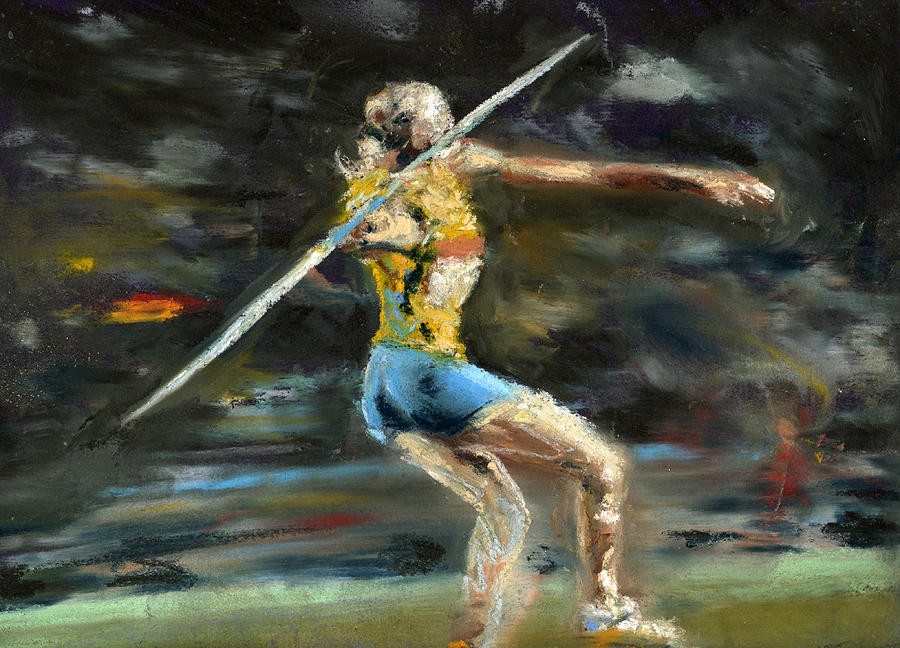
illustration the art of the javelin

The Art of the Javelin

There were certain lovers who never let you go, not even when it was over, officially over ‑‑ the kind of officially over where you both married other people.  It’s not anyone’s fault.  It’s something about chemistry, the chemistry of their skin on yours, your skin won’t ever stop wanting theirs and this is a really, really bad thing.  Marriages have been wrecked because of that skin, engagements broken, the valuables pawned.  The skin fling always started well, of course, the mad passion, so heated you never thought about the consequences.  And there were always consequences:  huge, nasty ones.  Perhaps those terrible consequences were what doomed the love affair from the very beginning.  Nothing so lovely and delicate could survive the stamping black boot of your own despair.

You loved him, but it was never enough.  Being with him was not enough.  Being without him was not enough.  Maybe your children, both dead, would have been enough.  You saw the first child, sleeping, its head tilted back, its eyes closed.  You do not know what color its eyes were.  You never saw its eyes.  It saw, and in seeing, died.  Suffice it to say the child would have been a master of language.  It would have been love, a fountain of it.  You left, not taking your child home.  You let someone else take it away.  Psyche never saw Cupid, and you cannot see him anymore.  Psyche is and was whatever Love loved.  You were loved by Love.  You died with the child.  You were crushed like a butterfly hovering in front of a fast-moving truck.  You were a crushed soul.

The land was flat, barren ‑‑ the horizon stretched like a satiated woman ‑‑ supine, theatrical, unconscious.  You missed the children, and you missed him.  Was it a garden you were in?  Was it a prison cell?  There was never enough air, anywhere.

Who wanted, as a woman wanted, simply to be loved?  All the boys wanted something else.  Girls, on occasion – and more than once — want abstract worship, admiration from afar, poems, flowers, sweet nothings in the ear.  Is that what the boys wanted, too?  With that divining rod in front of them it must have been difficult to remain abstract.  There was something embarrassing about need rendered visible.  They could not hide it from the world.  Did boys say, “No?”  As often as girls?  The urge was outward, not inward – the desire to pierce, rather than contain.  The needle ‑‑ the eye of the needle ‑‑ threaded with what, exactly?  The female soul?  Your feet were so cold in the water, wading for freshwater mussels, that your toenails turned stark white.  The mussels were brown and slippery, and the empty shells painted with pale, pearly rainbows in the light.  The little girls around you murmured with delight, squealing when they found a really big one.  Their little hands were sandy and damp on your arm.  Their voices piped so impossibly high.  You saw them at age 35, still hunting for the perfect shell.

You were tired of living your life.  It was satisfactory only in the material sense.  The lights were never turned off for lack of payment.  Your husband went to bed hours before you did; you sat doing needlepoint in the den and watching obscure re‑runs.  You resented your husband’s bulk upstairs in the king‑sized bed, you resented him sleeping turned towards you, resented the warmth of his breath wafting across the hump in the middle of the mattress that had arisen over the years between the depressions your bodies made on either side.  Once or twice you tried to get her husband to talk to you about God; he declined to do so, saying it was “too personal” a topic.  What is the use of a husband, you thought, without conversations about God?

So you wondered whether to leave him.  Suddenly, a young man, black‑haired, black‑eyed, entered your life, with a piercing gaze, but shy, downturned head.  He was marrying his girlfriend:  you thought they were both too young and naive to know what they were getting into.  You tried to talk him out of marriage, saying not that yours was terrible, just that marriage itself was really hard and bound not to live up to anyone’s expectations for it.

He married the girl, anyway, and in about a year was desperately unhappy.  His wife left him, run away several times, stole his money and his car and told him he was worthless both in bed, and out.  In another moment, you found yourself in bed with him, never once considering how you would get out again.  You were not ready to be called an adulteress, but he persuaded you that since you had already committed adultery in your heart, what did it matter in the flesh?  Oh, it mattered, it mattered plenty.  Only in a purely theoretical sense did it not matter.  It certainly mattered to your husband.  He wanted the child, all the money, the house, and your head on a platter.  Everyone told you not to be honest, not to tell him, but you couldn’t deceive him that way ‑‑ it would kill you to be so deceived by someone else.

It first happened on a rainy afternoon, the kind of afternoon that made sitting on a park bench impossible.  All you really wanted to do was talk.  You were lonely, you wanted to be alone with him in a comfortable place where you could take your shoes off and lie down flat and tell him your life story.  He was so kind and understanding.  You wanted everything to happen slowly.  Both he and you were married to other people at the time and you had a broken ankle so you couldn’t walk through the woods or the park, even if it weren’t raining.  You weren’t planning on committing adultery.  You wanted an affair of the heart, of the mind.  You were either hopelessly naive or lying to yourself.

When you were feeling bitter, you wore red clothes, covered with lint, and did not bother to go over them with sticky tape.  You slept only on goose down pillows, and drank only water bottled in France.  When hurricanes were coming, you cooked elaborate cream sauces, and served lemon and honey tea shot with brandy in a crystal cup.  Your rage gave you a sore throat, the tears and tissues a sore nose.  Anger was only depression turned outward.  Always, you received presents in the wrong size, but consoled yourself afterward with icy lime sherbet.  You slept a bitter sleep, on sticky sheets, dreaming of French noses, and purebred geese, white with pink feet.  On Halloween, you changed your name for good.

You took bitter medicine, while he slept through the hurricane.  He gave you red clothes, always the wrong size.  You fed the geese cracked corn with your bleeding hands.  The brandy shattered the crystal glass.  Cream sauces were poured over ice.  You strapped the pillows to the bed with sticky tape.  You cried while he was bleeding.  You whimpered after giving birth.  A deep, abiding melancholy.  Our Lady of Perpetual Melancholy.  The symbolism of the golden arches.  An icon for the ages.  Our Lady of Perpetual Cholesterol.  Our Lady of Sodium.  Our Lady of the Mall.  Where is food for the spirit?  Charge it on your MasterCard.  Ring it up on your Visa.  A deep melancholy, not easily abated or debated.

It happened on a day when you’d been fasting for religious reasons even though you weren’t religious.  A friend called that morning before you’d eaten breakfast and happened to mention it was Yom Kippur.  You felt ready to atone for everything you’d ever done regardless of whether you’d actually caused anybody to suffer.  Your husband, for example.  Your husband was suffering although he didn’t realize it.  He thought he was content, but he was wrong.  You knew that having sex with a woman for 12 years without her having a single orgasm constituted suffering.  You wanted his suffering to cease, quickly and permanently.  And it seemed you were the cause of all suffering, everywhere.  You had daydreams about running away and never coming back, living in a small rented room, anonymous.

So the fasting and the marital woes had taken their toll on your common sense, and the broken ankle had taken its toll on your ability for locomotion.  You were faint from low blood sugar and hobbled wearily into the motel room, collapsing on the lumpy mattress.  Being called a neurotic bitch by your husband had long lost its appeal.  You needed somebody to love you, not somebody to fuck.  But, as your soon‑to‑be lover undressed you, he told you it didn’t even matter whether you actually had sex with him because you’d already committed adultery in your heart.  At the time, you took your lover’s reasoning for spiritual altruism.  You snapped at it like a starving bass would snap at a rubber worm.  Hook, line and sinker, you purchased your fate.  It was silly to think you could ever keep a secret.  You obtained a divorce, slinking away from the ruins of your marriage guilty, nearly suicidal, your ex‑husband spitting contempt and moral integrity even as he made plans to marry his own recently‑acquired lover.

Then over and over again, between your ex‑lover and yourself, things exploded, imploded, burdened by your guilt and remorse and terror.  All this ruined mess wasn’t what you had in mind, you were just lonely and wanted to talk.  He thought everything was conquerable, everything, by the human will and true love.  Slowly, unmet needs that at first seemed unimportant loomed enormous and unsolvable.  He didn’t feel safe with you, nor you with him, albeit for completely different reasons.  You were nastily divorced, and suddenly a major skeptic when it comes to love.  Between your dead marriage and your dead alcoholic mother, you finally learned to cut your losses, and quickly.  What started with a bang ended with a bang?  First the relationship was a misery to you, and then it was a misery to him.

The copper gleam of your helmet hair was blinding.  Ivory soap floated in the tub, pale and fatty.  Hard gray metal breathed like a ghost.  The stains of divorce could not be removed with bleach, no matter how hard you tried.  Women in bikinis reminded you of how you used to feel in summer, naked, nearly free.  You decided to be laid out in a salt pine coffin from Jerusalem, your wake illuminated by jeweled lamps fueled by liquid chicken fat.  Stone gargoyles copied from Paris originals would be worked into bench seats.  For refreshments, cold meats with baked garlic.

You loved him even though you knew it was doomed, and that love kept pulling you back to the maybe‑I‑didn’t‑really‑give‑it‑the‑old‑college‑try sort of mistake.  So you got involved with him all over again, and it was a disaster, again, but to him the fact that you came back only proved the point that you two should never have broken up to begin with.  In the end, he never understood why you kept breaking it off, and each time it got over somehow you couldn’t understand exactly why you ended it, either.  It was the same kind of destructive amnesia that keeps a woman having babies after that first one.  She forgets how hard it was, how much it hurt, how much it broke her spirit.  This entire sad sequence repeated until you finally had enough.

That night, you dreamed your mother was unpacking long‑forgotten boxes ‑‑ animals carved out of brightly colored stone, gold‑glass paperweights, things you loved, and your mother was getting rid of it all.

Six months later you got a bill from the library for $173.00.  You remembered your lover checked out a bunch of library books on your card.  So you called him, asked him to return them so you don’t have to pay.  Time goes by, and you wondered.  You called his house for days, but the line was always busy.  You decided to drop in.

You knocked.  It took a long time, but finally he came to the door, disheveled but looking good, except around the ears.  His house smelled strongly like man.  You were startled by the smell.  Vanilla, cinnamon, and a touch of dirt, of mushrooms.  The rooms of women smelled like yourself.  You have been in other men‑only houses, and it was always the same.  There was a strength to their smell, a lasting power, an earthiness under the scent of the body that made you want to burrow into the bed-sheets.  This time, you did not.  He was growing a beard and wore jeans with holes in the knees which made him look as sexy as the third time you slept with him, the time in his father’s falling‑down barn ‑‑ you couldn’t wait one minute longer so you did it right there on top of some mildewed couches.  You broke up for the last time almost a year ago.  It was shocking, the physical part you’d thought was long gone.

You wanted him again, though you’d never let yourself have him, and he sensed it – that made him really angry, angrier than you had ever seen him.  For once, you ignored the physical passion.  You didn’t touch him, though you wanted to, badly.  He sensed it, and that sensing is what drove him mad.  He screamed.  He accused you of being shallow, insensitive, a manipulative bitch with the emotional capacity of a rock.  You were meant to be his, you did everything wrong, you shouldn’t have broken up with him, because it was meant to be, him and you, forever.  He forgot how you cried all the time, and how you couldn’t quite put your finger on the reason.  He forgot what it cost you to be with him:  half your daughter’s life.  He had no children himself, yet, then:  he couldn’t know how guilt had you in its death‑grip.

He screamed, he let you do things, “get away with things,” he shouldn’t have.  He didn’t want those things to occur, but he didn’t object at the time because it seemed like what you needed to do.  You told him maybe he should have given you his true opinion, back then.  Maybe, if he had given his opinion when it was so desperately needed, you’d have chosen to be with him.  Maybe it was his essential passivity that caused those late‑night crying jags.  Maybe you were crying because you felt like his parent, his dorm mother, his baby‑sitter.  You, too, sometimes wanted to be cared for, nurtured, sometimes you wanted to feel safe, to be warm in your own bed on your own pillows, not scurrying around in the corners playing catch‑up with the dust-balls.

But he did not, could not, and would not hear anything you had to say.  You were supposed to be with him forever — he believed this and never let go of it:  his personal Holy Grail.  He wrote you love letters up until the week you got married for the second time, after that, came only hate letters.  There would never be a remedy for his hurt.  There was no way to make amends.  The wounds between you never healed, because he never stopped being angry with you.  He was, is, and will always be angry with you.  For this reason, your affair with him will never be over.

Will he be angry, forever?  Yes.  Will his jealous wrath burn like fire?  Yes.  Blessed is the man whom God chastens, and God will chasten him in time.  Yes.  His entry into vagina, and your life, was like someone throwing the couch over, slitting all the cushions, smashing the picture glass, sawing the bookshelves into firewood.

Someone knelt.  Someone asked to be blessed, forgiven, and made whole.  Two people danced, and at the same time drew blood from one another.  The man you loved stood remote, erect, unbending.  You died, to him.  You murdered him, years ago — it was an accident, a terrible wreck of the heart and body.  You wanted only to find your true home.  They why did your heart feel like cold‑rolled steel?  It clanged shut — you were alone, again.  And, again, no one could reach you.

While his plane took off, you did jumping jacks next to the runway fence.  The chain link made you feel like you had a vision problem.  The vessel making up your love for each other was glass ‑‑ white but somehow full of colors, opalescent, and its inner lip was scarlet ‑‑ caressing the outside of the vessel were golden-brown, radiating leaves, quivering with life.  Nothing could hold that vessel down ‑‑ it rose of its own accord.  Once shattered, it could never be restored.  Your fault, you never knew how to live in this world.  You always desired things which could not be possessed ‑‑ could be kept, could not be domesticated.  Your own heart was not domestic, but, rather, wild, savage, and cruel.  It was the opposite of serene.  It held mother‑love and murder, sometimes in the same instant.  You were the living damned.  The only answer seemed to be to keep moving.  That is why you decided to entomb your legs in rock, solid and immovable.  That is why you always tied yourself to the ground.  The caged butterfly smashed itself over and over again, beating impossibly against prison bars of cold‑rolled steel.  Finally, its wings shredded, and the butterfly could only remember flying.  It knew only that something had gone terribly, terribly, terribly wrong.

3 Comments

Filed under health, legal writing, mysterious, prose poetry, short stories

Mockingbird (Mimus Polyglottos), a poem

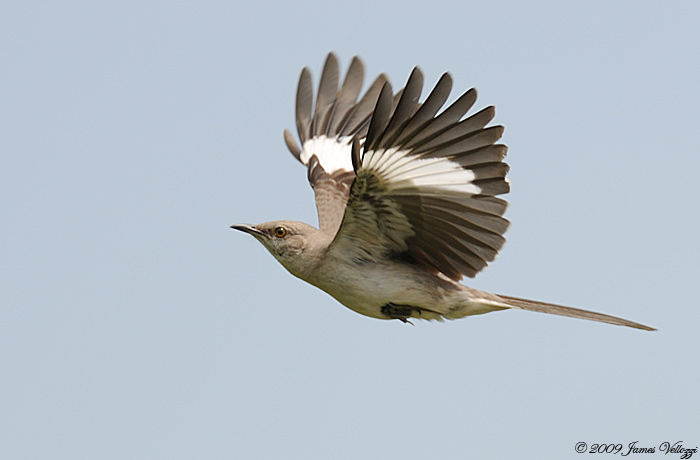
illustration mockingbird mimus polyglottos

Mockingbird (Mimus Polyglottos)

I had to draw you in third grade —
a report on Florida, my home state then.
Looked in books, didn’t like the flatness,
lack of color, so sought you in the yard,
rewarded by sudden vocal flourish,

clean as the sun’s flaming disc
in the tropical sky. No one can
trap your beauty on paper. Graceful twists,
curious angled head, feather flutter soft.
White stripe of wing. Sly copyist,

copycat, derivative virtuoso
elegantly arrayed in gray and white —
au fait like the nun who taught me,
her voice hung in the air like yours.
Secret messages from God.

I knew all birds once I knew you,
uberbird, condensed history of music,
your knowing lentil eye. You knew me.
Stared at me, saucy songster, head cocked,
more brilliant and beautiful than I would ever be.

A bird aptly chosen and laughing
for this land which also mocks us —
the sun’s burning rays, the leaden air,
the flood of migratory bodies from duller climes…
you are wiser, don’t have to travel

with your pearly gray and white, never
tiring slender leg and so
quick, quick on the wing.
Your song — who needs other birds,
you can do them all, I listen for you still.

Sing to me sister, brother, mother,
father, friend — you have my gratitude.
Take me away with you…
give me some of your wildness,
give me your voice, your bright eye.

You know what you like,
you can hear something once
and sing about it forever. Your music helped
when Mommy reeked of whiskey
and tried to snuggle in bed with me.

Where does an eight-year-old
learn to send that kind of love away?
I cried that night but you sang to me
in the morning. You watched me swing
from the holly tree, you were there

when everything happened,
you saw it all and sang your tunes,
gave me the comfort of lovely noise
to fill my head when all around was ugly.
You were nursemaid to my heart.

11 Comments

Filed under poetry

cockroaches, firelogs, and personal archives: my personal, award-winning horror movie for today

american cockroach life stages

okay, i should first tell you three things:  i have never liked “firelogs” OR cockroaches; i have always LOVED old photographs, sentimental papers, family archives & stuff like that.  firelogs being those fake things that people who don’t know how to build a REAL fire use to build a fire.  it’s a wimpy, no-good shortcut & my first husband, who knew his firebuilding stuff, wouldn’t have used a “firelog” for all the wealth in china, which is to say he would have rather gone to his death kicking & screaming.  he was, after all, an indian guide with his father, used to build models of warships to have REAL WARS with his youthful, boyhood friends in the creek, and would gladly set his hours-of-work-invested masterpieces on fire just to have the satisfaction of winning!!  get my position on firelogs?  and see how i can see noble virtues even in people whom i couldn’t manage to stay married to?  my judgment is, in other words, EXTREMELY RELIABLE & TRUSTWORTHY.  i don’t say that to toot my own horn.  ask anyone who has really loved me & been the recipient of my love.  ANYONE, i dare you.

on to cockroaches.  i would rather deal with the deadliest poisonous snake on the planet than a cockroach.  poisonous snakes at least exhibit LOGICAL behavior.  cockroaches are entirely unpredictable.  they will fly toward you, away from you, straight up, straight down, they will hide, attack, scuttle into the woodwork, fly into the light — and they will do all these things SIMULTANEOUSLY.  you leave a poisonous snake alone, you creep quietly and smoothly at the highest speed possible in the opposite direction from said snake — with respect in your heart and self-preservation in your mind — that admittedly lethal snake will leave you alone.  all that being said, there are still a few people whom make cockroaches look GOOD.  their names are unavailable to the public, or in fact, anyone but me.  as a poet & an attorney, i keep secrets for two separate livings/careers/vocations/callings/professions.  so don’t bother to ask.

next we must discuss the third topic:  my family & personal archives.  i am very careful & protective of these.  i don’t have a fireproof safe like my dear grandfather the tax attorney/professional trustee, but i am careful enough for my purposes.  today, however, makes me question that prior assumption.  i was in the process of posting to this “blog” a poem about my darling eldest daughter, and i wanted to add to the post the first picture ever taken of her, the picture that inspired the poem (well, actually SHE inspired the poem, but the picture would have helped people understand exactly HOW she managed that inspiration).  so, i opened the built-in brick and cypress floor cabinet the builders of my danish modern home (1953, and they were in fact from denmark) added to store their firewood, right next to the fireplace itself, and incorporated beautifully into the design of the room.  a lovely piece of work, in other words.  yes, i opened this cabinet.  do you want to know what i found?  do you really? i don’t know that you want the grisly details.  suffice it to say, roaches cannot chew through the thick plastic of the bins i have my archives contained in, the contents sorted by type, author, & era.  carefully packed.  tightly sealed.  so don’t panic, the contents of those bins are perfectly fine.  let’s just say, it is obvious where the roach problem i have experienced this season so far has been coming from (the large, american cockroach/”palmetto bug” kind, not the little horrible german cockroach kind which is easily controlled just by cleaning up ones kitchen & having a pest control service)!

roaches CAN, however, chew right through the wrappers of the case of “firelogs” i had also stored in the aforementioned fireside cabinet  to keep them away from my darling kitty maynard.  he smelled them once, the day they came home from the store, and tore a “firelog” bag open himself & proceeded to gorge on this “firelog” because it smelled of molasses, thick rich molasses that made anyone, animal or human, who smelled it crave molasses cake or cookies, or anything prepared with molasses, or even just a big, gnarly spoonful of it, placed in the mouth with reverence.  when maynard did this, he shortly thereafter vomited the stinkiest vomit & shat the stinkiest diarrhea  i have ever personally observed, and let me just say right here that i have experienced vomit, bloody vomit, diarrhea, bloody diarrhea, and every other possible combination of horrifying personal body fluids & excretions you can imagine, and had to clean them up unaided except by a steam cleaner.  get my drift?  of course the animal poison control hotline, which costs almost $100 just to consult, but is worth every penny, explained to me that while producing unpleasant effects, the “firelogs” were not toxic and that my darling kitty would be ok.  still, after this incident, just to be safe, i thence stored the case of “firelogs” inside my solid, unbreachable (or so i thought) cabinet so that we would not have to be subject to any more foul, stinking bodily excretions, nor have to clean up same.

it took me quite a while (a few hours, anyway) to get into the right headspace to clean up this debacle.  luckily, my bug man placed baits inside the chimney (which was their conduit in & out of the house to get food & water), AND closed the flue, which my ex husband & i mistakenly thought we had closed at the beginning of last winter.  oops!  big, big, big mistake when you are dealing with cockroaches.  you must think like a tiny, flexible, numberless, resourceful invading army.  you must think small, which isn’t always easy!!!!!!!!!!  my grudging respect for these creatures (which god, after all, thought should be here for some reason which i will press him for, when & if we meet in person), has had to be adjusted even farther upward.  it is not mythology alone which says they will be the last surviving creatures on this earth should we experience some lethal global tragedy.  damn!

3 Comments

Filed under humor, notes

dog eat dog, a poem

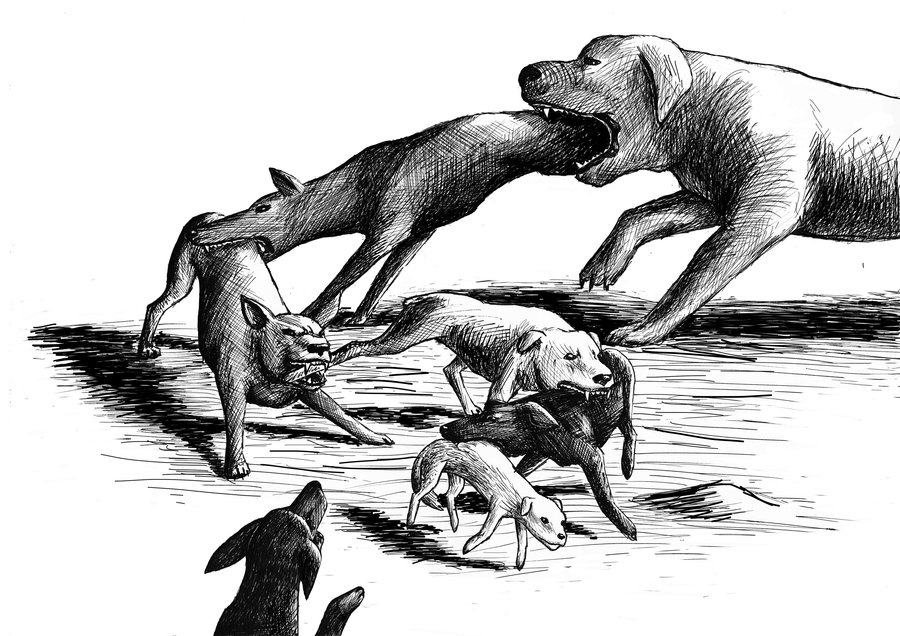
illustration dog eat dog

(image information — http://nerafinuota.deviantart.com/art/Dog-eat-dog-world-285292431)

Dog Eat Dog

I. Dreams After Eating A Large Meal

Cannibals exist in all species,
even primates. Chimpanzees,
long thought to be peaceful vegetarians,
love to hunt. Male chimps will kill
newborns from their own troupe
if they suspect the mother
to have consorted with outsiders.
They kill the infant
with a bite to the skull,
then tear it apart, sharing the flesh
with each other. I watched a mother chimp
chasing the males who had grabbed
her baby. She followed
at a slight distance, screaming
from the trees, shaking the branches,
filled with rage but lacking the large
canine fangs of her brothers.
When she was on the verge
of attack, the males would dangle
her infant by one limb, threatening
to drop it 25 feet to the ground.
She backed off, howling
with frustration. In the end,
she gave up. The males sat
and watched, then consumed the flesh
of her offspring. It was the soft
pink of milk-fed veal, so tender,
so sweet — they napped heavily
all afternoon, dreamed vague dreams
involving slim saplings, bent
under their weight, about to snap.

II. Fighting Biology

Every human law is an effort
to curb natural instincts.
When people kill, it is for reasons
they cannot articulate. Come to me,
they hear the victim say. Take me
into yourself and make us both
whole. Much of the time, the message
is obeyed — one wrong look
can end a life. The rule of nature,
what has this to do with love?

III. Brighter Colors, More Vivid Patterns

For scorpions, 25% of their diet
consists of other, smaller scorpions.
Frogs in South America will eat anything
smaller than themselves… though sometimes
they try to swallow another frog,
larger than themselves. Rather than give
up, they both die of suffocation.
Father fish, guarding their eggs, will eat
part of the clutch rather than leave
the eggs unattended to find food.
It is too dangerous to leave the family,
it’s better to sacrifice
a few members to save the whole.

IV. Protein Is Precious

Mother mice, when their nest is found
by a predator, will kill & consume
as much of their litter as they can hold,
recycling precious protein
they’ve spent weeks gathering.
We all want to survive.
Some of us want to survive by eating others.
Some of us want to survive by consuming
air alone. I wanted to survive
without hurting anyone — I thought
it was possible, to take less, to give more.

V. Hunger, Touch, Satisfaction

I’m so hungry. All I can think of is food,
all different kinds. Bowls and bowls
of cereal, popcorn, rice, couscous.
Buckets of slop for the bovine.
Is it really spring outside? Has the mating
dance begun again? Do you love
to curl your hair? Do you long for ringlets,
shiny tresses? Do you want your hair
to touch someone? Do you want to consume
the most tender parts, leaving the rest
for scavengers? Do you understand
what sort of need you are satisfying?

3 Comments

Filed under poetry

chameleon, a poem

illustration chameleon green-anole-lizard-00021

Chameleon

Now she is the color of lichen-splattered bark,
not brown, not gray, not silver — without turning
her head, her small alarmed eye rotates in full

orbit, sweeping me from head to toe, a cruel, knowing
assessment… I don’t measure up, I can tell
from her expression. I wait, wanting to see her

go green, that hot, bright jewel color she does so well.
She creeps down the trunk, movements slow, smooth,
almost invisible. From time to time, she glances

my way; then an ant catches her attention.
Her nimble, rolling eye follows the tiny creature
crawling back past her tail — still afraid of me,

she doesn’t give chase. Off her long hind paw
dangles a limp glove of molted skin. In annoyance,
she curves sleek head toward delicate toes and bites;

she chews the dry scales, then swallows. Her throat
is pale, silken white; her fat tongue glossy pink.
Minutes pass — she pretends to sleep; the eye

closest to me closes, but the other stays wide.
A large iridescent fly alights on the leaves below;
suddenly she flings herself into the air, slender limbs

flared outward, mouth already open, and twists her head
to one side, shaking the insect clamped in her jaws,
the better to subdue it. I breathe faster as she grows

pale, paler, then glows so tender just for me
in the shadows, the clear green seeping down from her
low forehead as a shy leaf unfolds in early spring.

4 Comments

Filed under poetry

where does it begin?, a poem

illustration where does it begin mossy backed florida cooters illustration where does it begin hands on shoulders

Where Does It Begin?
(originally published in The Charlotte Poetry Review)

Possibly with well-steeped tea,
gooseberry jam on raisin bread,
lots and lots of idle chatter;
later, he could try daily walks

through the woods — though she
has resolved she is finished with
nature — still he persists
in pointing out the log in the creek

holding five mossy-backed turtles;
if all else fails he could try
brushing her hair in the rough manner
of a mother, offhand, impatient fussing

to decipher knots. He could place her
in a room filled with the images
of budding spring trees, on a wide,
comfortable sofa, her stockinged feet

perched lightly upon the armrest
as she reads. The sight
of the frail new leaves will work
upon her, surely? Better yet,

he could fill a bowl with fruit,
three kinds of berries,
layering green upon yellow
upon blue upon red, teasing her

with a few squares of chocolate,
protesting all the while
that he always says the opposite
of what he means. Who lived my life

until this day? she will say. I could
ask myself the same question, he will
say by way of answer, placing his hands
lightly, lightly upon her shoulders.

Leave a comment

Filed under poetry