
Tag Archives: poetry
Surveyor in New England, a prose poem

Surveyor in New England, a prose poem
And so, since there were no detailed official maps, he named small lakes after himself, solitary hills, even shy, dusty lanes marked only by the great thumping hooves of his horse — a patient, taciturn beast, dun-colored, remarkable mainly for the seven white spots on its flank, arranged like the constellation Ursa Major.
Back then, a hundred years ago, electrical-survey men like him sweated gracefully during summer, their cheeks burnt into dark Scotch grain, their hairlines preserved white as milk under the dimpled felt of U.S.-issue hats. Though he was the youngest of the crew, his moustache grew enviably broad and full, waxed close at the tips, bowed under his classical nose like the extended wings of a pigeon.
Reining to a stop, as he slid down, he pulled from the saddle-bags yet another wooden stake flagged with a length of wrinkled red muslin, kneeling to pound it into the rocky Vermont ground, leaving it there for eternity.
As he rode on farther north — past the tall flowering weeds around Lovell Pond, the drunken bees bouncing off his boots — continuing along the route he’d laid out for the electric poles to follow, he thought of his mother: the way her fierce blue eyes glittered on foggy mornings, the way his father caressed her wrist at the dinner table, and, above all, how skillfully she ironed, gripping the rag-wrapped handle, fluttering the heavy, blunt-nosed tool over the damp white cotton of his shirts in rhythms as comforting and certain and lovely as the slow tick of a butterfly’s wings as it feeds from the bright center of a blossom.
Pretzels & Chocolate, a poem
PRETZELS & CHOCOLATE
(rented room, cigarettes)
I am eating pretzels
and they are hard
but splinter into salty crumbs
with the merest bite
they only satisfy
part of my tongue
(rented room, cigarettes)
so I pick up the chocolate
greedy for it to melt
against my palate
sucking the firm square
feeling it mold to me
the way I imagine
my body molds to yours
(rented room, cigarettes)
retaining the character of sweetness
to complement the salt
to balance my mouth
I am eating chocolate
thinking of us
together
(rented room, cigarettes)

Filed under acceptance, adolescence, adult children of alcoholics, ancient history, apology, appeals, artistic failures, assholes, beauty, birth, black, blood, Catholic, child abuse, child neglect, childbirth, childhood, children of alcoholics, christian, compassion, con man, daughter, death, development, divorce, dream, dreams, enlightenment, eternal, eternity, faith, family, father, fatherhood, fathers, fear, fiction, for children, forgiveness, friendship, funeral, gay marriage, god, grief, he, health, Uncategorized
Love Is A Wound In The Body

Gain without gladness
Is in the bargain I have struck
–Liadan (7th century A.D.)

But he who hides his sickness
can hardly be brought back to health;
love is a wound in the body,
and yet nothing appears on the outside.
–Erasmus, Paraphrase on the Gospel of John (pub. 1523)

What would become of her finer qualities
if she didn’t nourish them by a secret love?
–Marie de France (1160 – 1215?)
A free woman. At last free!
Free from slavery in the kitchen
where I walked back and forth
stained and squalid among cooking pots.
–Mother of Sumangala (3rd – 1st century B.C.)
Filed under ancient history, anthropology, art, beauty, compassion, courage, development, dream, dreams, enlightenment, eternal, eternity, everything, evolution, faith, forgiveness, god, good, heart, history, hope, human beings, humanity, identity, justice, karma, kindness, life, logic, love, mysterious, peace, personal responsibility, poetry, recommended reblogs, relationships, soul, spirit, spiritual, spirituality, transcendence, truth, universe, warmth, wish, world
The Latest Fashion: New Toilettes, a poem
 The Latest Fashion: New Toilettes, a poem
(title and subtitles from an essay by Mallarmé)
I. An At-Home Gown in Garnet Velvet.
I receive you at my front door, formally, immaculately dressed, delicately arrayed, impeccably scented. You think of me as I last appeared at the beach, tousled, salt-encrusted, and burned by the sun, dusted from scalp to toe with golden sand. You see underneath my gown a double exposure — the natural, the cultivated — which rises up so that my two brown eyes turn to four, eyes within eyes, nudity within garnet velvet.
You think of wine, the vintner’s trembling hands caressing grapes, silently pleading with them to reveal when they will give up their most perfect secrets. We live for moments such as those, we live to take up our wine in a crystal goblet and put it to our lips and breathe the scent of rain, sun, earth and sweetness. Sweetness which has by virtue of aging embraced its opposite — sweetness which has given birth to tart recognition.
We are both innocent as three-year-olds and jaded as madams. You touch the supple velvet, but what you are feeling is the smoothness of my insides. I remember the sound you made, long ago, an explosive sound which you tried so valiantly to muffle. The report of your exhalation was echoed in each cell of my body. Garnet velvet becomes a skin I will shed. Nothing before was unskinned. I will turn myself inside out, only for you.
II. A Hostess Gown in Gray Russian Satin.
Together, we receive cadres of admirers — come to look upon our glowing faces, hear the way we laugh, breathe in the air of passion which surrounds us. We understand this loveliness we display is not ours, rather on loan merely, a magnification of the same electric forces which keep every atom together, proton and electron and neutron dancing their way in a wild mazurka. Those atomic particles, those rapscallions.
My gray dress hugs my body tightly, exposing each curve, revealing my body but keeping it a magnificent secret at the same time. When your fingertips slide across my shoulders, the fabric moans, and the assembly gasps. I can take no credit for my beauty, only for the courage to allow it free rein. And I count every electron of your body, I feel the whirling clouds as they circle your atomic nuclei, endlessly proclaiming not beauty, not usefulness, but truth.
Please be advised you are in the presence of ananda. Or at the very least, maple syrup. Even the trees know. How the sparks flew when first we met! We confused the friction with dislike, at least until you saw me lick my lips. Gray satin reminds us of the cries of mourning doves, the way they’d scatter as your car pulled into my driveway. Such murmurings as felt like satin threads, pulled through my heart. You came to me. I will stay found.
III. A Frock for Paying Calls in Plum-colored Faille.
We deign to visit the world, after a twenty-three year sabbatical, and everywhere we go the air matches my dress. The moon becomes a large opal, the sky an onyx abyss into which I fall upward, tethered only by your voice. When you laugh, I hear my father. I hear the way he held me, our skin where it touched on fire with longing only for more bare skin. He died too soon, and so did I.
My skirt is cut on the bias — when I walk it moves as the tops of the Australian pines moved that day you first kissed me, at the beginning of hurricane season. You and I ask our hosts if they are prepared, but they don’t understand. Once, you lusted for books — 27,000 of them — 19 cartons fit into your truck, each trip. The hardwood shelves groaned under the beautiful weight of your hope. Please, don’t read too much into the facts. What do the pages tell you? Do you remember when you hated me?
It is so difficult to construct a garment on the bias, I must consult experts in the field. I show them the dress I wear, ask, can you make me the same dress, in the same fabric, over and over. I want nothing varied, because in this dress is all the world. My father has been dead now for longer than I knew him. I still see his hair, iridescent red-gold feathers, under my fingertips, my nails painted purple. I asked for you. I found your succulent eyes.
Filed under dream, dreams, love, men, mysterious, nature, passion, poetry, prose poetry, relationships, sex, woman, women
This Road I Am Traveling, a prose poem
This Road I Am Traveling, a prose poem
I used to think it was possible, even desirable to order the world into alphabetic categories, though I never dared cut someone open with such a blunt knife as you. The most I ever tried was harvesting a few drops of blood — they oozed through the cleanly raked skin underneath my claw like rare jewels.
You do not offer help. You are scientific, curious, high on espresso, perfumed with the thick odor of fatty, fruity soap. You tempt me to weep on your flannel jacket, though you don’t for a minute pretend to love me — or anyone. It is all part of your elaborate theory.
You ask me what it was like to watch her body go, you say you hesitate to dredge up old muck, yet you persist in an ignorant, wheedling way, pulling the raw edges of the wound farther in your fretful passion to get at the truth. I can’t believe a word you say.
Death is foreign to you. Open your eyes! See mine, clouded with the desire to cause your enlightenment. Yes, I recall a hundred details: the way a hand is not any longer a hand after that last breath, just a heavy piece of meat. I remember the stiffening of flesh, the way heat emanates in nearly visible waves from the stilled body. Though as you observe, time has continued to flow, my thoughts have not yet moved on — you are deluding yourself to think they ever will. Shut up! Your sympathies are worth nothing.
There are a million out there who know what I know — until you have allowed the fleeting soul of the one you love to pass through you, risking the internal injuries, the scarring from radiation, you can forget trying to follow for your own amusement.
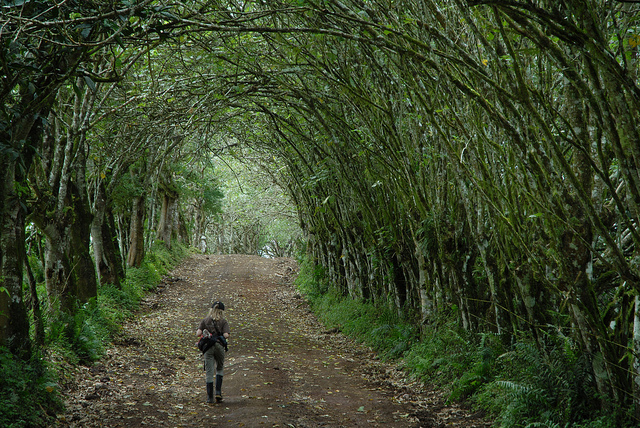
This road I am traveling is ice — I have been skating with my silvery feet for more than ten years, and though it grows ever wider, I can see no end. I grow tired, but there is nowhere to stop. Living is grieving — sooner or later, only grief survives. Once you learn to skate down memory lane, it’s something you never forget. Though my legs ache, I have to keep them pushing. Still, the bare trees arch gracefully overhead. This cold air burns, yet cleanses.
Filed under acceptance, courage, death, forgiveness, grief, life, loss, love, poetry, prose poetry, transcendence
Pregnancy, a poem

Pregnancy, a poem
(after Alice Neel’s painting, Margaret Evans Pregnant)
Puffy hands clutch the seat
of the ruffled boudoir stool
to keep the woman from tumbling
to the floor, injuring
more than dignity;
her cumbersome belly bulges
taut, looms over the
bewildered thighs
like a great question mark.
Around her delicate knees
are small white dimples;
the pulse in the blue vein
revealed within a pale breast’s
transparent skin
taps in dreamy rhythm and
though her hair is unkempt,
her eyes gleam with gentle
confidence, patient sureness
that she will pass through
the coming ordeal of body
unharmed, spirit intact; that
everything in the world,
all the movement both inside and
outside her flesh, will emerge
from its hiding place at last….
Filed under alice neel, art, baby, beauty, birth, childbirth, poetry, pregnancy, women
Living On The Moon, a poem

Living On The Moon, a poem
I remember all she had, stockpiled
in a child’s Easter basket. Necklaces
of ivory, turquoise and amber beads —
hopelessly broken and tangled. Cheap
metal pins, plastic bracelets, a dozen
stilled watches. Dried-out jars
of skin cream, mangled greeting cards,
portraits of her sisters. Often,
I allowed her to caress my face with
her trembling, soiled hands. On the pillow,
my head next to hers, pretending
I was a small child, and she my beloved
mother. Afterward, I scrubbed myself pink
with harsh soap. In a moment captured
years ago, Brandy, her tiny poodle,
dances on his hind legs, his pink toenails
scrabbling against her tanned,
scrawny calves, a rhinestone collar
tight around his limber ashen neck.
She tempts him to please her with a bit
of bacon — herself very plump around
the middle, silver hair teased and
sprayed, a perfect bouffant. You
would never guess then she was fated
to end up living on the surface of the moon,
by herself, without shame, without desire.
I must restring the beads, drape them over
a mirror, say a few words to her picture.
She will appear in my dreams nightly, dancing
with a small white dog, twirling her brittle
bones around and around until they catch fire.
She will sparkle like cut glass; gulping for air.
Filed under compassion, daughters, poetry
The Evolution of the Orgasm, a poem
The Evolution of the Orgasm, a poem
Does the new-twinned cell, as it sorts out
one tangled rat’s nest of nucleus
from the other with its slow patient dance
of cytoplasm and membrane, somehow know
the sweet involuntary contraction and release
of its division? An organism’s inner tension
promotes as well as restrains
total disintegration. Is each duplicating
mitochondrion frozen fast in the stream
of its own powerful, mindless barrage
of electrons? Life on a cellular level
is both straightforward and incomprehensible.
Could any physical laws possibly hold
resolute in the embrace of such rapture?
Was the orgasm the means of our worldly
creation, or the end? Less can be more,
but not in this case. Is what makes you
come so easily explained? As usual, let us
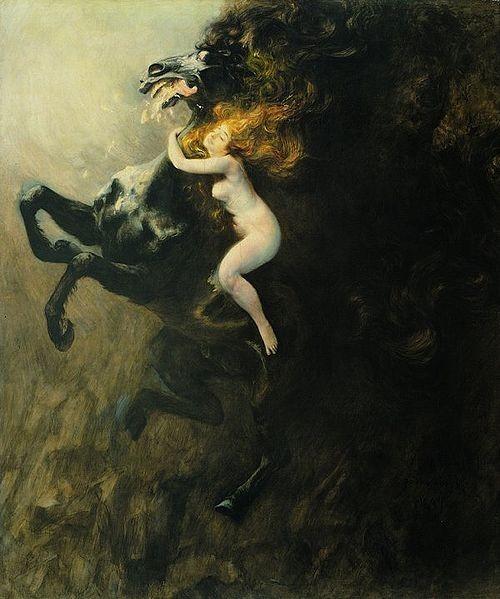
personify: she is rich-skinned, veiled
cool in a white ruffled nightshirt….
Well-muscled, each movement sure, swift,
with only one purpose. Her hair is short
or long, pulled tight or draped loose,
but the look in her eyes is a steely
constant, it says, I know you. I have always
known you. I will know you even after
your tired flesh has flown away singing
through the air like a frightened dove,
and your pale, forgetful bones have fallen
into fine dry grit. In my relentless arms
you will learn to surrender all fears, all
your dark secrets. Forever and ever
will I love you. Is it any wonder we dream
of her so often, with such helpless longing?
Filed under compassion, courage, eternity, evolution, fear, human beings, love, man, mitochondria, mortality, nature, passion, personification, poetry, sex, woman
Summer Evening, Beaumont, a poem

Summer Evening, Beaumont, a poem
I was not there. I am only an observer.
The four-year old on his tricycle is
dressed for the heat in loose shorts
and nothing else. His hair appears
disarrayed as he stares at the ground.
The back of his bare skull is as finely
carved as a newborn’s, the delicate
shadows of his shoulder bones ask for
touch. The clumsy chalk lines on the
pavement are from a murder and he
knows it — the blood came out last
night as the torpid sun was going down.
This boy has to make stories up in
his head, but the shy universe he
creates is a notion he’ll never share.
I was not there. I am only an observer.
The dead man was 300 pounds and didn’t
talk much, as he, too, was waiting for a
miracle. Gang members used five or six
bullets, then ran away without taking his
wallet, the item they wanted most of all.
I was not there. I am only an observer.
Hours earlier, the victim had left his
rented home in all-white Vidor; he told
how the folks there threatened to hang him,
he told how lonely it was to wake up every
day and remember where he was. He wasn’t
afraid, he said, just tired of fighting.


 Kimberly Townsend Palmer