Category Archives: evil

TRUMP is an informative guide on Donald Trump presented in a comics format by Ted Rall, published by Seven Stories Press. It is not a satire, nor is it a bombastic attack on Mr. Trump. In fact, if you were only to read a brief passage here or there, you might even warm up a […]

via Review: TRUMP by Ted Rall — Comics Grinder

Leave a comment

Filed under assholes, con man, con men, corporate states of amerka, criminal, criminal behavior, criminals, emperor, empire, evil, fear, hypocrisy, idiots, ignorance, insecurity, jerks, karma, personal responsibility, politics, satire, star spangled banner, tea party mad hatters, truth, ultra right wing loons, united states of america, users

How Art Thou Received? (a prayer for refugees)

How Art Thou Received? (a prayer for refugees)

Imagine: suddenly, without warning (because that is how war arrives) you are a war refugee! Simply running away from being murdered. And how are you received when you can finally stop running, when you are out of range of the guns, the bombs, the blood? No countries to take you. No one to feed you. You are a skeletal pawn in a skeletal game.

Embalmed corpses declare war on the living and fight for their “territory” against other embalmed corpses using armies of young people; embalmed corpses feeding on fresh, young blood.

I know something is very wrong, somewhere. It must be addressed, and addressed properly. Our prayer, our incantation, our spell to heal, must be more powerfully crafted, more distilled, more essential, than was the horrid spell we are trying to break: a tradition of might over right, strong but wrong, a spell of ignorance which has caused so much harm, and is trying to do more… powered by the love of power, the love of control over people.

The scarred parts of the heart can be replenished; the broken parts, glued; the weak parts, strengthened; the fear assuaged, the pain relieved. But the desire to change, to truly alchemize oneself, spin that straw into gold… the gold of the sun… the silver of the stars… the red planet… the North Star… primal navigation by looking not at the ground, but by looking up, to the sky… that kind of desire doesn’t visit often.

If you want to know where you are going, be sure your map is accurate, or at least doesn’t kill you. Migrating birds know this. Power & Liberation. Slave & free. Joy & Suffering. High & low.

Craving slaves, some are trying to roll us back to serfdom, only they can use our own science & technology to rape us! Serfdom: tied by birth to land. You are a pawn, a source of income; in thrall to your Lord and Master. Freeing serfs is always a struggle. Brute force arm-wrestles the human race, and brute force often pins people to the mat, but… you cannot keep people down for long. The oppressed will continue to spring up and defend their inalienable human rights. All people are created equal: including our ancestors, who existed long before the self-anointed first “private property” owners. Human beings are endowed by their creator with certain inalienable rights, yes? The earth cannot belong to any one of us. Period. We own this planet. All of us.


2 Comments

Filed under acceptance, amerka, ancient history, anger, anthem, anthropology, apologia, apology, appeals, assholes, baha'i, beauty, bible, birth, black, blood, born again, buddhist, Catholic, charity, child abuse, child neglect, christian, civil rights, compassion, con man, con men, corporate states of amerka, courage, criminal, criminal behavior, criminals, daughter, daughters, death, development, dream, dreams, earth, easter, emperor, empire, enlightenment, eternal, eternity, eve, everything, evil, evolution, faith, family, father, fatherhood, fathers, fear, fish, flowers, for children, forgiveness, friendship, funeral, gay marriage, girls, god, good, grief, health, heart, hindu, history, hope, human beings, humanity, hypocrisy, identity, idiots, ignorance, jesus, jewish, judiciary, justice, karma, kindness, law, legal system, legal writing, letters, lgbt, life, logic, loss, love, mama, man, manhood, manifesto, marble, marriage, matricide, maturity, mea culpa, men, mitochondria, mortality, mother, mothers, mourning, murder, muslim, mysterious, nature, notes, parenting, passion, peace, personal responsibility, pope francis, pregnancy, rant, rastafarian, regret, relationships, religion, rome, Saint Teresa, science, sex, sisters, soul, spirit, spiritual, spirituality, spring, star spangled banner, tea party mad hatters, teenagers, transcendence, transitions, travel, tribute, truth, ultra right wing loons, Uncategorized, united states of america, universe, users, veterans, war, warmth, wish, woman, women, wood, world, youth, zoroastrian

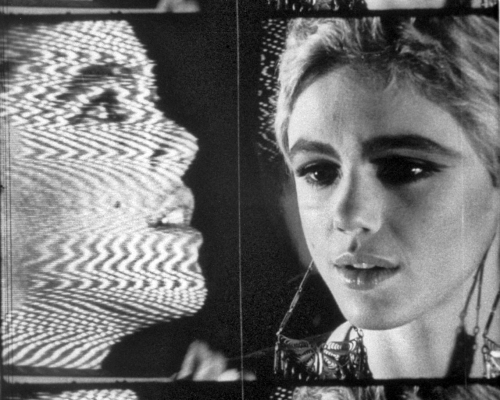
Edie Sedgwick Discusses Her Early Years, a Monologue/Poem/Story/Lyric.

illustration edie sedgwickI felt I was Gloria, some angel living in her own hallucination of time. We were angels on LSD, on LPS. I was cheesecake, chocolate-dribbled, sexy & asexual, pop-rocks eye candy. Wrapped in a wealthy, yet tragic, past. DEEP BREATH. With my dreamy tones; those slow, hypnotic lyrics, my subliminal heavenly chorus of all that is female, the goddess inside us. Hypnotic, larger than life.

And so were the commercials. We really were all famous for about 15 minutes, but we couldn’t see that, all we could see was right now, right then. The atom bomb age, the Cold War, suicides, the Third World starving to death… children dropping like flies in Africa from famine. India, hit by an earthquake. Viet Nam cranking up, with war profits for the conglomerating corporations; divvying up the spoils of war. Kennedy, dead in Texas.

Be the girl all the bad boys want. DEEP BREATH. Sex turned into a Technicolor rock show, pure fantasy; turned into reality. People started living according to their own fantasies of what the world was like. The awakening grew harder; grew easer; grew harder; again & again.

Material wealth. An intoxicant. A drug. Addictive behavior. Spread it around. Moderation in everything. Reasonable assumptions? No? DEEP BREATH. Spell it the fuck out. Rules-based understanding. It takes me a long, long, long time to learn all the rules, all the techniques, all the subtleties. But when I figure something out, I have fucking figured the fuck out of it! DEEP BREATH.

I’m a dreamer; I’m a practical schemer. I’m a dreamer with a BMW; I’m a bad-ass schemer; I’m a waterlogged dreamer; I give up when there is trouble; I run like a rabbit. I dig in like a lion at bay.

Falling in love is wonderful. Once you fall in, take care never to fall out. Find something to keep your love alive… anything! Fasten on & fasten hard. In every way, so they say. Rumors fly. Determining actual facts is hard. All the shit I ever believed about myself came true. DEEP BREATH.

So, my body believes, at least. Next, to make my logical mind decipher the hieroglyphs. DEEP BREATH. Then my heart shall feel; then my soul shall live. DEEP BREATH.

It’s what Andy always used to say: artists are artists, no matter their profession or occupation or job or outward circumstances, and artists are the commodities of the very wealthy. DEEP BREATH. We’re all falling prey.

4 Comments

Filed under acceptance, addiction, adolescence, adult children of alcoholics, alcoholism, ancient history, anthem, anthropology, apologia, art, art history, baby, beauty, birth, blood, child abuse, childhood, compassion, courage, development, dreams, earth, enlightenment, eternal, eternity, eve, everything, evil, evolution, faith, fear, fiction, forgiveness, friendship, god, grief, hope, identity, justice, karma, kindness, life, logic, loss, love, manifesto, maturity, mortality, mysterious, passion, poetry, prose poetry, regret, relationships, sex, short stories, soul, spirit, spiritual, spirituality, transcendence, transitions, tribute, truth, united states of america, universe, war, woman, women, world, youth

Summer Evening, Beaumont, a poem

illustration murder in beaumont

Summer Evening, Beaumont, a poem


I was not there. I am only an observer.

The four-year old on his tricycle is

dressed for the heat in loose shorts

and nothing else. His hair appears


disarrayed as he stares at the ground.

The back of his bare skull is as finely

carved as a newborn’s, the delicate

shadows of his shoulder bones ask for


touch. The clumsy chalk lines on the

pavement are from a murder and he

knows it — the blood came out last

night as the torpid sun was going down.


This boy has to make stories up in

his head, but the shy universe he

creates is a notion he’ll never share.

I was not there. I am only an observer.


The dead man was 300 pounds and didn’t

talk much, as he, too, was waiting for a

miracle. Gang members used five or six

bullets, then ran away without taking his


wallet, the item they wanted most of all.

I was not there. I am only an observer.

Hours earlier, the victim had left his

rented home in all-white Vidor; he told


how the folks there threatened to hang him,

he told how lonely it was to wake up every

day and remember where he was. He wasn’t

afraid, he said, just tired of fighting.


2 Comments

Filed under anger, blood, compassion, criminal, criminal behavior, criminals, death, evil, funeral, history, ignorance, karma, mortality, murder, poetry

The Elephant In The Room, an essay

illustration the elephant in the room

The Elephant In The Room, an essay

The American “Tea Party” is a radical, far-right organization which stands for nothing less than  rolling the evolution of contemporary civilization back by one, or two, or even three or four hundred years – back to a time when only rich, white, men governed society, and, preferably, rich, white, men governing that society in as “selective” a group as possible.  Monarchy – in extreme cases, even Feudalism — is, to Tea Partiers, the “good old days,” which they would like to see “restored.”  A potent ingredient to the Tea Party hallucination is “private enterprise,” a Holy Grail represented by entities like General Electric.  The United States of America is home to 13 of the 20 largest “transnational” corporations on the globe.  Multinational corporations are far more powerful than any prior tyrannical force in history.

Thus, the Tea Party explains, poor people are poor because they are stupid and/or lazy, and therefore “deserve” to be poor.  Rich people are rich because they are smart and/or hardworking, and therefore “deserve” to be rich.  The passage of inherited wealth from the elite class to its offspring must be protected because it is “deserved” by the offspring of such smart and/or hardworking people.  There is, of course, the mythology that every so often, one of the poor will find their way into the ranks of the rich, and one of the rich will find themselves thrown down into the ranks of the poor.

The history of the present multinational corporation is — much like the history of King George III of Great Britain (as observed by Thomas Jefferson) — “a history of repeated injuries and usurpations, all having, in direct object, the establishment of an absolute tyranny[.]”  This is precisely the moment the United States of America has reached; will we, as a people, do the work of rebuilding our troubled, restless, suffering nation?  Will we stop our own decades-long moral, structural, and economic demolition at the hands of a regressive, elitist, antidemocratic, power elite?   Will we abdicate our own social responsibility and continue to allow “too big to fail” multinational corporations to do irrevocable harm to us and the rest of the human beings on this planet?  Will we become, in reality, merely the Corporate States of Amerka?

Mass cultural hypnosis and mass public disinformation is essential to root out the harmful weeds of “equality,” “democracy,” “fairness,” and “justice.”  Dumbing down the population by a few decades of underfunding public schools is a prerequisite to the suitability of hypnosis and disinformation; as is a very carefully planned, gradual, economic destruction of the unpredictable, possibly dangerous, middle classes (who often demand treatment inconvenient to the ruling elite, and unlike the lower “wage slave” classes, actually have some power with which to back up their demands).  It is important to deprive the middle classes of adequate education and economic security with such a gradual, gentle, patient hand that the tightening of that “hangman’s noose” goes unnoticed until it is secure and inescapable.

Most important, however, is the control of the one branch of American government which is practically impervious to democratic principles or controls:  the federal judiciary.  Since federal jurists are appointed for life, popular opinion and social movements have little to no effect on the judicial branch, unlike the executive and legislative branches, where at least the fiction of “responsibility to the electorate” must be maintained in order to perpetuate the critically important elements of mass cultural hypnosis and disinformation.

Leave a comment

Filed under ancient history, anger, compassion, con man, con men, criminal, criminal behavior, criminals, development, earth, empire, evil, federal judge, good, health, history, hypocrisy, idiots, ignorance, judicial branch, judiciary, justice, karma, law, legal system, louvre, personal responsibility, spirit, tea party mad hatters, truth, ultra right wing loons, universe

Searching for Dreams in Little Havana, a short story/novel excerpt

illustration searching for dreams in little havana

Searching for Dreams in Little Havana, a short story

Karen knows it’s a bad sign when she sits wondering whether the man she’s crazy in love with is a liar, or a fool, or both. Fuck first, talk later, yes, that approach seems outdated, rather quaint. Impatience has always been her biggest problem. The way this one calls women bitches, it’s like a warning beacon, but she’s not listening because she already thinks she loves him.

Karen wants this man. Or rather, she wants something, and she is trying to figure out if it is him. She orders a latte made with chocolate milk, lights another cigarette. The waiter serving her is thin to the point of illness — his sharp elbows have worn holes in the sleeves of his chambray blouse. The waiter looks nothing like the man she thinks she wants. She wonders if the waiter wants anyone, right now.

“Can I get you anything else?” he, the waiter, asks.

“An audience with the Pope?” she says. “Eternal life, maybe?” She is only partly kidding. She has had her past lives examined under hypnosis. She remembers being locked in a tomb in France. She did not care for it.

The waiter laughs and shakes his head. He flees from her the way young waiters always flee from her — looking back over his shoulder, tossing his hair out of his eyes, knees trembling like a young mule deer’s.


Karen calls Edward, the man she thinks she wants, from her office. While the phone is ringing, her assistant comes to the doorway. She holds a sheaf of papers which Karen knows is the monthly billing.

“Go away,” Karen says to her, smiling. This is the way she talks to all her employees — imperious jokes, self-mocking but at the same time crushing and heavy with the power she refrains always from using.

“Hello,” says Edward.

“What are you doing?” Karen asks.

“Paying bills,” he says.

“Can I come over?”

“Right now?”

“I told you I was impatient. I’m tired of dictating.”

“I need to dust off,” he says. “Shower, change.”

“Twenty minutes?” she says.

“Make it forty,” he says.

Before she gets out of the office, her ex-husband calls. Donald is furious, he is always furious, it is the reason they are no longer married. Donald has forgotten how to have fun. Either he has forgotten, or he never knew. He is a very practical person, he runs a tidy house, a neat garden, a solid social life. Karen is no longer sure what drew her to him in the first place. She tries to remember, often when she lies down to sleep she thinks of what it was like to live with him — the predictable days, the fully planned weekends. He never kissed or bit her in the throes of passion, merely covered his face with his hands, as though trying to block her out. He never talks about religion, nor politics, nor his health.

“Where have you been?” her ex-husband says. “You missed Sara’s school open house. I tried calling you all day. Didn’t your secretary tell you?”

“I had an emergency to attend to,” she says. “One of my clients was stranded in Baltimore.”

“Well, there’s always a reason,” he says. “There’s always a reason for the way you neglect your personal life.”

“I guess that’s why you divorced me,” she says. Karen remembers the day she told him she didn’t want to stay married to him — he threw his shoes at her , but they landed in the kitchen sink, splattering her with soapy water. She can have no doubts.

She kept waiting for Donald to have an affair, so she wouldn’t have to. But he was lazy, he put aside passion and loveliness and focused only on money. He could make a lot of it, it was his best talent.


At thirty-five, Karen gets carded one last time for cigarettes, tells the clerk she’s really old, takes off her sunglasses to show him her crow’s feet. Later, her man Edward says with heat, oh, he wanted you. She laughs nervously. No man is able to endure her — it comes from how her father left, how he wanted to stab her when she was born, how her secret heart is looking for some man to make up for that, to endure every hateful thing she can say but never leave.

Most of her adult life has been spent sleeping, so when Karen develops insomnia, she assumes it’s her own fault, always having been a slugabed. She has the blues every day even before she gets up. Life is both too full and too empty to tolerate. Like a snake, she holds everything in fierce embrace, she has loved it all so much, it is dead. She has slept enough, she decides, she’ll make the best of these wakeful hours. She takes up needlepoint, cross-stitch, knitting and crochet, and soon her living room is filled with her creations. Still, she misses her dreams.

Karen goes to a shop in Little Havana, searching for some harmless herbal remedy, something almost, but not quite, a placebo. She’s a firm believer in the power of the mind over the body. Witchcraft is another thing entirely, so when the pale shop-woman draws back a beaded curtain and motions her in to the back room, which smells of burnt sugar, she hesitates. She takes in the woman’s hairy upper lip, her gold canine tooth, her precisely lined red lips, her sexy upper arms — decides it’s worth a try.

Hirsuteness notwithstanding, the pale woman is abnormally beautiful, the kind of beauty women admire and men find frightening — hard, pristine, with sharp angles everywhere. This lady’s nose is a work of art, of architecture, of poetry. All Karen wants is to close her eyes and dream of this moment, twist it into a candy fluff to sustain her through the miserable waking hours.

It’s her desperation, Karen guesses, which has aroused the shop-woman’s sixth sense, a sympathy so strong her pale hands shake as they hold the tangle of beads behind her. Karen blinks back tears, surprised. The bottle the woman chooses is purple, with a gold foil label. Imported from Cuba, it reads. Cuban witchcraft — Castro hasn’t killed every colonial superstition, evidently.

And the voice in Karen’s head says: do what you must, and break your heart down even farther, you haven’t touched the depths yet, of where I will take you. And you will weep for your own folly, and still not be satisfied. You ask for sleep. What can you live without most easily? What can you give up, forever?

2 Comments

Filed under beauty, divorce, evil, good, love, marriage, men, mysterious, relationships, sex, short stories, truth, women

Hungry Baby, a short story

hungry child

Hungry Baby

Whenever Ella was feeling close to the edge, a hair’s-breadth from lunacy, she liked to shop for groceries. She went up and down all the aisles, methodically picking out food. She threw boxes and jars and bags and cans willy-nilly in her cart, always stocking up for the big one, the storm that would tear the roof off. It’s a habit, one she learned as a child. The women in her family were bony, starry-eyed drunks, with bad skin and lank hair, but by God, they knew how to grocery shop.

She was in this twitchy, nervous state because her mother had showed up again last night. She would never know if it was just a dream: she hoped it was. Ella opened her eyes and saw her mother standing next to the bed, almost touching the mattress. She didn’t smile or speak, but simply shook her head. Mama seemed angry; Ella could tell her mother wanted to hit her. Mama was jealous that Ella was still alive, driving Mama’s car, watching her TV, wearing her jewelry. Ella met her fierce gaze without moving, then closed her lids against the image like hurricane shutters.

The room was so dark, and her mother was like a column of gray smoke, rising over Ella. Meeting death hadn’t changed Mama’s face one bit. How was it that Ella still missed her? That was an embarrassing, childish pain, an overgrown mouth sucking a rubber pacifier. There would never be a second chance for Mama and Ella; Ella wished she could believe in heaven like she believed in hell. If her mother had loved herself, or Ella, even a little, maybe she’d have pulled through the dark waters. But poor Mama was so full of self-hate there was no room for anything else. Now Ella was afraid her mother’s habits were coming after her.

Ella confessed it; often she had hated her mother too, while she lived. She even killed her mother once, in a dream. She stabbed Mama many times with a kitchen knife, and it felt right, like it was the only graceful way out for both of them. There wasn’t as much blood as Ella expected, though there was still enough to soak her mother’s nightgown all the way through. When she woke, clammy and trembling, Ella hurried to Mama’s room to make sure she still breathed. Ella knelt at the side of her bed, watching her mother’s scrawny chest. At first, it didn’t stir, and Ella almost cried out. Then she saw movement, enough to know her mother lived. Forever after, she feared the terrible anger in herself. It was always waiting, a tiger with ivory teeth and steel claws — waiting for her to stumble, to lose her grasp on mercy, on forgiveness, and throw open its cage.

Wishing her mother was dead half the time didn’t keep Ella from breaking down the door in a panic when she thought she’d overdosed. After the first incident, Ella wasn’t all that worried, she knew her mother to be too much of a bumbler, she would screw it up, or not finish, like she did everything else. The door became only an excuse for Ella to use her rage, to make her hatred tangible, give it life, a physical existence. She used a heavy folding chair, swinging it over and over again, watching first the splintered crack appear, then the bit of light, marveling at how the door-frame itself gave way all at once and the entire door fell cleanly into the room. Mama sprawled on her bed, half-clothed, her knobby knees the bulkiest part of her, her huge, brown, doe-like eyes looking puzzled. Even with all the noise, Mama was so out of it, she couldn’t figure out how Ella had gotten in the room. Later, sober, she realized she’d underestimated her daughter, she hadn’t known what Ella was capable of. Much later, a couple of years after Ella left home, after a hundred false starts, Mama managed to finish what she’d begun.

Ella shopped hours for the perfect funeral dress; pulled grimly through all the racks, looking at everything dark. No, not dark, black. “Nobody wears mourning black anymore,” the saleslady said, but for her own mother, Ella insisted. In photographs, she appeared the proper, bereaved daughter. She spent three days wearing the black dress, feeling grimy by the day of the burial, and glad of it.

They buried her mother in front of a croton bush, God, how Mama had hated those things, crotons. Ella stared at the shiny marble urn where it sat in the little hole, the tacky brass plaque glued to the top. She couldn’t object to the shrubbery, not with the priest standing there, tall and lean and handsome like some Marlboro Man, chanting and swinging his billowy canister of incense on its copper chain, the black robes clinging to him under the harsh weight of the sun, his hand so big and hard when she shook it, her knees almost gave way.

That night, Ella left the house long after dark, she walked in shaky high heels down the street and around the corner, ruining the delicate heel tips on the asphalt. She decided to keep walking until she dropped; to walk forever if no one came running after her. She stopped only a couple of miles away, limp from the humid August air. Crickets vibrated, frogs exhaled, stars flickered; the glowing, yellow windows of strangers were her last comfort, her final safe haven. Nothing but love for those strangers kept her from leaving for good, nothing but fear of the anger-tiger kept her from going any farther after her mother; Ella stood alone in the velvet grief of that hot summer night, calling her mother’s name over and over again like a stupid, hungry baby.

3 Comments

Filed under addiction, alcoholism, anger, apologia, black, child abuse, child neglect, daughters, ella, eve, evil, funeral, girls, god, good, health, ignorance, justice, karma, kindness, love, mama, matricide, mothers, mourning, murder, mysterious, parenting, regret, relationships, short stories, truth

Fast Food, poem

illustration fast food

Fast Food


Even a trip to the local burger joint

is a fright show these days. I observe


with alarm a flock of silvery shriveled

biddies: granted, every one of them’s


probably some kind of genius right down

to her to gnarled toetips, but as we all


know, the quality most admired in women

is not wisdom but rather, blank-eyed youth.


I myself am sliding down that gentle curving

slope to total invisibility, and worse;


in their gentle faces I read the pounded

knowledge of tasks left undone, words not


spoken, tricks never learned. One woman’s

eyes, set deep in bluish sockets, slide over


my small daughter’s body like guilty, halting

fingers. I know she remembers watching her own daughter


sleep night after night, I know exactly how she used to stand

over the child’s bed listening to the sweet


melody of inhale, exhale, sigh, feeling

against her wrist the exhilarating rhythm


of the flying hummingbird heart of her sleeping child.  Now, she smiles

to herself, clutching her cup of steaming coffee,


and nods.  Near her, at a different table,  is a young man, his hair

a glowing honey-blonde, drawn back tight


into a long, curling ponytail, and from his earlobe

dangles a dull silver cross.  His narrow hips barely


support his work pants, and in profile his perfect, cruel,

unshaven features promise every solemn gawker,


male or female, an expensive though unique mistake.

And I realize we are all here for the same thing: to fill up our


insides with this cheap, warm sustenance, to travel

homeward bearing an approximation of what we really


long for, which is to keep scrambling for the same

small favors tomorrow, the next day, and the next.


I find myself crying (for all of us) and stage-cough, pretending allergies,

wiping my eyes under my sunglasses and blowing my nose into my paper napkin.


1 Comment

Filed under boys, evil, fathers, girls, good, health, ignorance, karma, kindness, love, men, mothers, mysterious, personal responsibility, poetry, regret, women

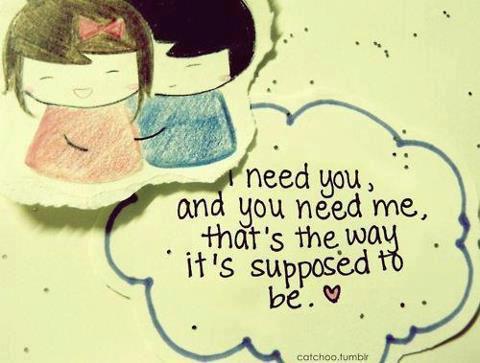
The Way Love Is Supposed To Be, a very, very short story

illustration the way love is supposed to be

I wanted to run upon the moors with tears streaming down my face.

She treated him as if he were a rajah, wearing a satin robe and slippers.

Don’t ever marry an accountant.

You’ll laugh, but I cried.

Her radar had failed her over and over again.

Men were tricky.

She danced the samba, then the tango, in the arms of a smelly Russian with piercing blue eyes who fancied himself a ladies’ man.

I would never marry someone who ogles women right in front of me. At least, not until I’ve started ogling them, too.

My Mama loved mohair; I loved angora. We were opposites.

Move your ass and don’t take a year.

I felt at sea for most of my thirties. The forties couldn’t be any worse, I thought. Wrong, wrong, and wrong!

I plodded, envying the agility of those around me with obviously higher serotonin levels. When I studied those brain chemicals in college, I didn’t know they’d turn out to be so important.

Redial that oily odor; a ray of water consoles the jilted; all beds of roses rot eventually; be brave and rest; the noose leads to the abyss; don’t gouge the luge, egad! Lazy seared meat; too addled to ladle. Baba rhum; Joanne Arel/Aral; raison d’etre; brave agar; the smell of water; conic Eros; seed the boo-boo, Sergeant. I came, I saw, I conquered; day-O, me say day-ay-ay-O; I say, Merv, that canary sure can sing!

Canary Conn? Transsexual on Merv Griffin. Breathtakingly beautiful, not a man in drag.

At this rate, we’ll never get there. Or perhaps, we are already there and are too stupid to know it! Dogs vs. cats… different, not better or worse. Different is GOOD.

No one’s a fool.  At least, not forever.

2 Comments

Filed under evil, god, good, justice, karma, love, mysterious, short stories

Opening editorial message for Truth, the magazine, 1st draft

illustration truth the magazine opening editorial statement

Opening editorial message for Truth, the magazine, 1st draft:

First off, my name is not really Kimberly Townsend Palmer. It is, or rather, should be, Kimberly Townsend Pomikala. Pomikala is a Bohemian name, which my father was born with but which was changed by his family not too long after he started school in Arcadia, California. It was changed because one fine, sunny day he came home in tears after being called a “dirty Bohunk” by the other children. It was 1943, and the world, and finally the United States, had long been at war. The biggest battles were not being fought on battlefields but being fought inside the human heart. Many families lost their entire physical existence, multiple generations snuffed out in less time than it takes to inhale, exhale — mine lost only its identity. A small price to pay for being safe in southern California, in a town named for the residence of the Greek gods. So my father grew up as a camouflaged ethnic. The name was changed, but the inside could not be changed. He never felt at home anywhere he went. He might well have been a war refugee of a metaphysical battle — a battle, the fundamental struggle humanity has been waging since its inception, the inexorable war between truth and ignorance. Factual accuracy is not always the truth — truth goes to the essence of a thing. Not the surface, but what is deep within.

The story is told how Eve caused the fall of humanity from the garden of Eden by eating from the tree of the knowledge of good and evil. What is the remedy for this? What is the essential nugget of truth we may take away from that crucial moment? My answer is: there is no absolute good, there is no absolute evil — there is but truth and ignorance. Eating the apple and gaining the surface knowledge of good and evil was a trap humanity fell into, a trap we have been struggling to release ourselves from ever since. Love exists. Hate exists. Both can serve the truth. Both can serve ignorance. We must harness ourselves to the wagon of truth and pull our heavy burden to wherever the driver leads us. The driver is God, the driver is love, the driver is peace, serenity and acceptance of the way things are on this planet. Many things we label good and many things we label evil are in fact neither. They are simply in the service of truth or in the service of ignorance. Satan, in the guise of the serpent, led Eve and Adam into a terrible, incomprehensible trap and God is now and has always been guiding humanity out of that trap. The reason God forbade eating of that fruit was it was not yet the right time for humanity to have that knowledge.

Plainly put, we are not yet advanced enough to receive the knowledge of good and evil. God is the only entity qualified to eat of that tree. We have taken a small, superficial bite of knowledge and used our imperfect bodies, minds and hearts to inflict merciless cruelty and oppression on others. Our biggest enemy is pride — believing we, as fragile, physical and temporal beings, can ever know enough to accurately judge another’s worth before God. How dare judges and juries impose the death penalty! It is not our role to take life, which is bestowed by God. It is our role to live it and seek the truth and banish ignorance. We are entitled to keep ourselves safe, we can ensure our physical and emotional safety from injustice and repression — but we cannot ever presume to know the will of God.

2 Comments

Filed under adam, bible, eve, evil, god, good, health, ignorance, justice, karma, legal writing, love, mysterious, notes, science