Category Archives: fathers

The Nearness of Heroism, a short story

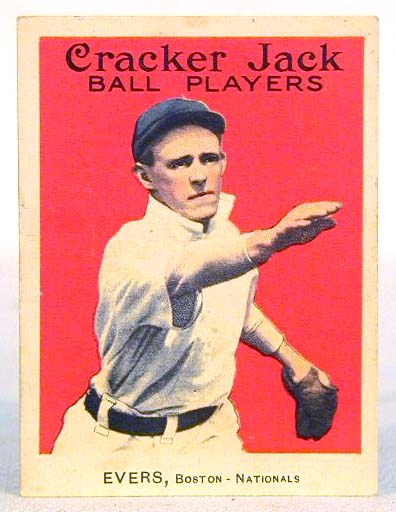
illustration the nearness of heroism cracker-jack-eversillustration the nearness of heroism

(Originally published in The Paumanok Review)

The Nearness of Heroism, a short story

They tell me he was the first man I ever saw nude; that when I asked him, pointing, in my high, three-year old’s simper, what “that thing” was, he didn’t even flinch. He stood in the big tiled shower stall, holding the door ajar with one hand, toweling himself off with the other.

“I’m a little teapot,” he sang, in his exuberant tenor. “Short and stout. This is my handle, this is my spout.”

They say I stared, and then frowned, running out to demand of my grandmother on the spot — I want to be a little teapot! Show me my spout! Where is it? Where is my spout?

Where, indeed? If only the gulf could have been reduced to those dimensions. Am I wrong to feel we would have been closer, had I been a boy? Would he have loved me more, or less?

***

I liked to sneak up on him while he used his glove, just out of the shower, a white towel tight around his waist, his hair slicked back, parted precisely. Even from my earliest memories, the old baseball glove was missing one or two fingers, the ball deprived of whole sections of its leather wrapping, worn through to the string-mended core in several spots. Both glove and ball had darkened to the color of cured tobacco, carrying a sheen of sweat-polished grime that lent a gleam akin to the finest shellac. Arms moving, hands a blur, he would move in automatic rhythms of meditation, pounding gloved fist with clenched ball as his lips moved, the words inaudible, his gray eyes focusing up and out at an angle, viewing a corner of patterned plaster, seeing something I wanted to share but couldn’t.

Then he’d notice me. He’d stop in mid-pound, his mouth open for an abrupt chuckle, too embarrassed to be embarrassed. “Hey there, lady,” he’d say, the broad vowels of his Brookline childhood making his words seem exotic.

He kept the glove and ball on the highest shelf of his closet, a level I couldn’t reach, not even with a step-stool.

***

He was, in fact, the only male presence in my life, even after I started to dwell on the concept of boys, the one I ran to in the early morning — crawling into his bed, burrowing deep under the covers, where he sang the old songs he’d learned from his Irish mother and held me in his arms, my nose burrowing into his soft feather pillow, into his wrinkled cotton pajamas, seeking out his bitter-tea-with-lemon smell, seeking out his body’s distinctive shape and radiating warmth, which possessed a steely eloquence no less comforting than my grandmother’s padded torso. Since he was home with us every day, having retired years before I was born, I didn’t realize he was different from other men, other fathers, who were defined not by their presence but by their absence.

“Oh, you dirty little devil,” he’d sing, “Does your mother know you’re out? With your hands in your pockets and your shirttail out?”

I would hear my grandmother fuming from across the room, not speaking but moving the various brushes and trinkets around on the glass-topped surface of her dresser with snappish clinks and taps. At other times, whenever he knew she disapproved, he’d make disrespectful rubber-faces behind her back until my face couldn’t keep a secret any more, and, looking at me, she’d see some sign of what was going on, then wheel indignantly, catching him in some fish-lipped, pouting impersonation of her, their demeanor so ridiculous, so upside-down, that for a moment it seemed that he was a small boy again, no one’s husband, and she his strict governess, no one’s wife.

***

He was related to me by marriage, not by blood, something that seemed to bother him a lot more than it bothered me, especially near the end of his life. From the very beginning, I had pledged my allegiance to him, had given him that affirmative declaration of the heart, and for a short time, during childhood, it seemed that he had pledged the bond in return and accepted me as his own. Not even in dreams did I measure him any differently than I measured his wife, my grandmother. As I grew older, however, and he grew more and more frail, the absence of an actual cell between us appeared to chip away at his feelings. “I don’t have any family of my own, you know,” he’d say, gazing at me as if for sympathy, never knowing how caustic the mild-sounding words were to my ears.

“I’m your family, aren’t I?” I asked him, the first time he brought it up, but he shook his head, smiling at me with a thin-lipped yet dreamy smile.

“It’s not the same,” he answered.

***

On various occasions, as his health became less certain, I promised him one of my eyes, one of my ears, one of my kidneys, half my heart, half my liver, half my stomach: everything and anything he needed to survive, anything he might need to be comfortable, which I swore to give to him when he got “old.”

***

In my last year of college, I had a boyfriend who got physical with me on several occasions. Nothing serious, no marks: a thump on the head with one knuckle, a scuffle in the yard, pushing matches. One day I reacted badly, bolting my apartment door and calling home. He answered on the first ring, but, having expected my grandmother, I found I couldn’t stop the tears. His voice deepened, becoming rough around the edges as he interrogated me. An old man, on six kinds of heart medication, he swore he’d drive the four hundred miles and teach the boy a lesson.

“No, Grampa,” I said. “It’s all right. I’m breaking up with him. Don’t worry.”

“Call the police if he comes to the door again,” he said. “Have him arrested.”

This reaction, despite his often-repeated joke: “Never hit a woman,” he’d say, shaking his head, staring at my grandmother’s back. “Use an axe.”

***

His fourth heart attack came only days before my wedding. He managed to walk me down the aisle anyway, spiffy and broad-shouldered in his plain black dinner jacket, a single pink rosebud clipped to his lapel. Since both my parents were dead, he was “giving me away” to my fiancé, a practice I found offensive on feminist grounds, because it seemed to exclude my grandmother from the giving. So we compromised: when asked by the priest, “Who gives this woman?” he was to answer, “Her grandmother and I do.” Except, when the moment came, he said only “I do.” My grandmother, standing in the front row in her baby blue satin lace and picture hat, whacked the prayer rail with her wedding service programme in frustration. The sound echoed off the front wall of the small church and stayed with me for the rest of the day.

Later, at the reception, he was critical of the music we had selected without consulting him: a wandering string quartet. “All your guests are leaving,” he said, after his fourth or fifth glass of champagne took hold. “Why didn’t you have a real band? Some dancing. It’s like a funeral in here.” I trembled all over from the exertion of holding my tongue. Only if I had screamed at him, my face reddening under its halo of white silk flowers, would he have been happy.

***

I was home for a long-overdue visit when the last battle came. Semi-invalided, by then, Grampa moved only from the bed to his recliner, spending the day reading the paper in a slow, deliberate rustle. The television blared for hours each evening, his expensive hearing aids — the same kind Reagan used, he’d told me — plucked from his canals and discarded, tossed into a dainty porcelain ashtray: hand-painted with a rising, twisting phoenix, it was the only memento he had kept from his service in Germany during the war.

He didn’t like going to bed at night, waiting until two or three in the morning to call for my grandmother to help him to his room. Arising no earlier than noon the next day, he’d swear he hadn’t slept a wink. “He snored like a baby all morning,” my grandmother would whisper.

His appetite was slight too, and then one day, nonexistent. Supper waited out in the dining room: over my grandmother’s objections I took him in a bowl of ice cream. He lay against his pillows while I spooned it into his mouth, noticing how he lipped the spoon as I withdrew it, sucking it like a baby. The bowl finished, he thanked me, his voice hoarse with exhaustion. Turning to leave, I heard him start coughing, a deep cough that seemed to come from his gut, his eyes widening under the thick cataract glasses, his cheeks bulging, seemingly an imitation of his old comic fish-face. For a moment I laughed, thinking it a joke, but he put his hand over his mouth and made as if to hold his lips together with his fingers. He was trying to keep from throwing up all over the bed, I realized, running for a basin, almost too late.

After Gran and I cleaned him up, I felt his forehead. It was hot, dry, but the rest of him was clammy and covered with an oily sweat. As I took his temperature, Gran called the doctor, who told us to get him to the hospital right away. When we told Grampa where we were taking him, he shook his head. “Now what’d you go and do that for?” he said.

He looked so small and frail laying there it was a surprise to find I couldn’t carry him — what remained of him was deceptively heavy, as if his bones were filled with lead. It took both of us to get him out to the car. Each step seemed so difficult, so impossible — by the time he lowered himself clumsily into the front seat, he was glistening with a symmetric pattern of droplets, the sweat beading his skin like opalescent sequins.

***

At the hospital, an orderly dressed in green surgical scrubs helped Grampa from the car into a wheelchair. The orderly was tall and long-limbed, and moved with an ease, a lean fluidity born of professional indifference. His arms were the color of imported chocolate, warm coppery highlights underlying the pigment. His arms were like a god’s: so full of life and possibilities, I held my breath as he lifted the skeletal, ashen old body of my grandfather out of the car. I couldn’t say what the orderly’s face looked like other than that it was — like the motion of his limbs — devoid of both pity and scorn. His eyes remained downcast, looking only at Grampa in the chair — and I wanted to speak, but nothing came to mind, only regret at not being permitted to be similarly borne away, out of my own uncertainty and into a place defined by someone else’s ministrations.

The young man’s arms, in that moment, seemed to emit forensic signals, speaking without words to a pain I hadn’t realized was there, the arms themselves justifying birth, justifying suffering, justifying death: paying for perfection all over again — skin so smooth it looked hairless, poreless, as if it smelled of allspice and cinnamon and blood and salt. The arms were immaculately sculpted; the bones just long enough, granting a perfect inertia between muscularity and leanness. The miracle of such arms and skin held my attention like a time-release dose of whatever manna makes heaven heaven, and so it was that I found myself spiraling into an upward-rushing eddy of panic when the orderly left, forever, just seconds later, rolling my grandfather to the admitting desk like so much cargo, then vanishing into the angular whiteness and pulsing fluorescence of the hospital corridors.

***

We left Grampa there, in the midst of a cotillion of duly licensed strangers — what choice did we have, not knowing, not wanting to know, not capable of that knowledge? By not speaking, we maintained a positive attitude. His room seemed comfortable, his nurses kind. His glasses glinted, the reflection obscuring his eyes, as we waved goodbye from the doorway.

By the next morning, he had been moved to the intensive care unit. He was comatose, hooked up to a ventilator, stripped of his pajamas, gleaming plastic tubes invading his throat, his nose, his bladder, his veins — his heart had stopped in the night, from the pneumonia: the doctors speculated he might have had irreversible brain damage before they got it going again.

Machines everywhere, whirring, beeping — my grandmother and I couldn’t even touch him. His chest shook under the ventilator’s control, his whole body quivered. The vent itself hissed, clicking, coaxing his reluctant breath, forcing it when it hesitated. Pushing his lungs in and out without his body’s permission. The respirator had a device to allow him to breathe for himself, if he could, like training wheels on a child’s bicycle, and sometimes he did, but even that primitive desire for oxygen would vanish, and the machine would kick in to bring him the next breath.

We were there when the respiratory people had to change his breathing tube. With the most well-meaning, tender sort of violence, they ministered to the tubes, his whole body curling into a fetal position with the deep, gaglike coughing that resulted. They couldn’t say if he’d ever wake up, or whether he’d come off the ventilator. His arms were twisted, contorted, the hands grasping at nothing with a desperation that made my shoulders quiver in an involuntary spasm of sympathy. I bought him a tiny teddy bear, uncurling his stiff fingers to place the bear against the taut, unyielding palm. His other hand appeared to relax once the toy was in place, but perhaps it was only my imagination.

***

My grandmother and I, without speaking, understood our own feelings clearly enough. We wanted him gone; this kind of life was too painful to watch. We wanted it to come:   but at the same time felt wicked and evil. Who knew what he himself would have wanted? In the end, she signed the thick sheaf of papers authorizing no further “heroic measures.” Each place for her signature was marked with special red removable tabs.

***

In a sort of minor miracle, in several days he did awake, and they removed the intrusion of the ventilator. He was himself, more or less, and knew who we were, but underlying that surface was a terrible confusion. “How’s Jessie?” he asked me calmly, the name of my great-grandmother, dead long before I was born. His memories suffered no restraint; no contradictions existed in his inner flow of time. “Seeing you’s the best present I could have gotten,” he told us. “I’m going to take us all on a vacation when I get out of here.”

He seemed better than he had in years: I left for home, knowing it wouldn’t last; for the first time not wondering whether he would live or not. Later that day, I called him at the hospital from a thousand miles away and let him speak to my husband and my daughter. Say I love you, I told them. Say I love you, Grampa.

***

The next day he slipped back into unconsciousness, gently, easily, as a bar of soap floats downward in warm water. Notwithstanding the papers, the hospital wanted to put him back on the ventilator. No, Gran told them, no ventilator. No more.

***

I asked her what he had looked like, at the end. He lay on his side in the bed, she said, breathing shallowly. He didn’t seem to be in pain. He panted a little, she said, not moving, his face smooth.

I feared perhaps we had decided it the wrong way. Grampa’s doctor, without saying anything, seemed to look at us as if we were bad people, as if we cared more about ourselves than Grampa himself. As if we were selfish.

***

It wasn’t until a couple months after the funeral I thought to look for his glove and ball. I searched his closet first: most of his clothes and things were already gone, and the closet seemed a different space, altered by no longer containing him. When I couldn’t find them I didn’t panic — I knew Gran had put them away somewhere safe for me.

“Where’s Grampa’s glove and ball?” I asked her, not wanting to reveal how much I wanted to have them, now that he wasn’’t there to keep them away.

“What, those old things?” she asked, incredulous. “You wanted me to save those?”

I gaped at her then. The floor under my feet got soft; my knees turned into grating stone stubs lashed together by rusted wire. She was right, in a way, since at the last the glove hadn’t been a glove, just a thumb, the ball not a ball, either, but a roundish wad of wrapped string, its leather covering gone. That was all he’d had left, all I’d wanted: a piece of him I’d thought I was entitled to.

I would have kept them in a little box and looked at them every now and then, touched them with my finger. Maybe, if I was feeling daring, I would have taken the glove thumb and slipped it on, holding the ball in my hand, sliding the brittle thumb piece back and forth over the grimy string. I would have smelled them: a few tentative whiffs of the powdery leather.

***

I didn’t yell at her, there was no point. It was over. In spite of my outward act of forgiveness, I couldn’t help thinking that perhaps what Grampa had said all along was true — maybe people did reserve the deepest sort of caring for their own blood, maybe that kind of caring was inseparable from cells, inalienable from life. Gran hadn’t cared as much about his feelings about the glove as she had about mine, for example. Or was it just that she didn’t care as much about the archival, historical things as I did? Whatever the explanation, it was done: she had not even understood enough to realize the issue existed.

“Why didn’t you tell me not to throw them out?” she asked later. “Why didn’t you tell me you wanted them?”

It was simple: I thought she knew. “I just assumed you’d keep them,” I said. “They meant so much to him.”

“They were ratty old things,” she said. “Just pieces, really. They were unrecognizable.”

***

I told myself that perhaps it was a good thing that the glove thumb and string ball were gone. I’d wanted them for the wrong reasons. I’d wanted something I didn’t deserve. I felt hungry — empty — but without focus, without specific appetite. He — damn him! — was leaving me all over again, and for the third time: the person I’d wanted him to be; the person he’d been; the person I’d wanted him to remain.

I thought of all the other useless things I already had in my personal archives, from my father’s crocheted baby blanket to clothes worn by my mother in college. I thought of letters they’d written to each other before I was born, airmail letters on thin blue tissue, drawn in irregular strokes of faded ink. I thought of brittle brown paperbacks and the curling edges of photographs. We are naked in our mourning, we cannot speak, and we cannot touch.

Grampa was gone; the glove and ball were gone; I was still here. The hell with it — I didn’t want to know, I didn’t want to hear what the dead had to say anymore. Only in dreams would the dead be able to seek me out again.

The dead never say much, anyway, not even in dreams. They look into my eyes, mainly, their own abrim with a solitary sort of gentleness, hoping to inoculate me against what they know is unnecessary sorrow — unnecessary love? — hoping to protect me from whatever it is that only they can see: all the while, nodding their heads in a slow, assured rhythm, a rhythm nearly invisible to the unaided eye.

3 Comments

Filed under beauty, boys, childhood, compassion, death, development, eternal, eternity, fathers, fiction, funeral, god, good, health, heart, history, identity, justice, karma, kindness, life, logic, love, man, manhood, maturity, men, mortality, mourning, mysterious, parenting, personal responsibility, regret, relationships, short stories, soul, spirit, spiritual, truth, universe, warmth, youth

Rosalia (Rosa multiflora), a poem

illustration rosalia

Rosalia (December 13, 1918 – December 6, 1920), was a child who died of pneumonia.  Her father was so grieved by her death, he hired a famous embalmer to preserve her body.  It is still nearly perfectly preserved, nearly 100 years later.  This poem was written after observing a  garden near her tomb, planted with the flower she was named for, Rosa multiflora, commonly called Rosalia, an especially fragrant and vigorous climbing rose.


Rosalia (Rosa multiflora)


The haughty snail rears up, large and indolent,

its creamy shell ponderous, though rakishly tilted.

The knowing eyes unfurl on stalks greyish-violet,

above tender undulate flesh, faintly quilted


as if by past misdeeds. Near a warm slate path

thrust through the damask-brown earth, a small bird

dips wings, cocks head, perches on the birdbath

shaped in the lithe innocence of a fair-haired


Roman cherub. The rose-heads swoon in the sun,

lazy petals curled inward to form delicate bowls

ravished by enormous bees, whose silvery finespun

wings vibrate, ceaseless keepers of love’s oversoul.

2 Comments

Filed under beauty, daughters, fathers, love, mourning, mysterious, nature, parenting, poetry, truth

Fast Food, poem

illustration fast food

Fast Food


Even a trip to the local burger joint

is a fright show these days. I observe


with alarm a flock of silvery shriveled

biddies: granted, every one of them’s


probably some kind of genius right down

to her to gnarled toetips, but as we all


know, the quality most admired in women

is not wisdom but rather, blank-eyed youth.


I myself am sliding down that gentle curving

slope to total invisibility, and worse;


in their gentle faces I read the pounded

knowledge of tasks left undone, words not


spoken, tricks never learned. One woman’s

eyes, set deep in bluish sockets, slide over


my small daughter’s body like guilty, halting

fingers. I know she remembers watching her own daughter


sleep night after night, I know exactly how she used to stand

over the child’s bed listening to the sweet


melody of inhale, exhale, sigh, feeling

against her wrist the exhilarating rhythm


of the flying hummingbird heart of her sleeping child.  Now, she smiles

to herself, clutching her cup of steaming coffee,


and nods.  Near her, at a different table,  is a young man, his hair

a glowing honey-blonde, drawn back tight


into a long, curling ponytail, and from his earlobe

dangles a dull silver cross.  His narrow hips barely


support his work pants, and in profile his perfect, cruel,

unshaven features promise every solemn gawker,


male or female, an expensive though unique mistake.

And I realize we are all here for the same thing: to fill up our


insides with this cheap, warm sustenance, to travel

homeward bearing an approximation of what we really


long for, which is to keep scrambling for the same

small favors tomorrow, the next day, and the next.


I find myself crying (for all of us) and stage-cough, pretending allergies,

wiping my eyes under my sunglasses and blowing my nose into my paper napkin.


1 Comment

Filed under boys, evil, fathers, girls, good, health, ignorance, karma, kindness, love, men, mothers, mysterious, personal responsibility, poetry, regret, women

Heavenly Dances, Heavenly Intimacies, a short story

illustration heavenly dances heavenly intimacies

Heavenly Dances, Heavenly Intimacies, a short story

“Isn’t there any heaven where old beautiful dances, old beautiful intimacies prolong themselves?”

Ford Madox Ford, The Good Soldier

How can I be “dead” to any of the men I once loved?  They are not “dead” to me.  Not even H.  How can I be “dead” to H.?  They — even H. — are each as alive as when I was with them; as alive as the first time they touched me, whether tentatively or with confidence; whether softly or roughly; whether with passion or mere lust.  It is shocking and appalling how H. lurched so radically to the right after 9/11.  He began that journey to the Tea-Party-Mad-Hatter-Neocon-Bill-Buckley-Wall-Street-Apologist-Fringe-Brainless-Faux-News-Right when Ronald Reagan was shot; I was with him the very night it happened.  We had a short affair, right then, because we started thinking the end of the world had arrived and we decided, like the crazy college students we were, to get married to celebrate our courage in the face of chaos!  I realized very early on (but still way too late!) I was embarrassed to be seen in public with him.  Did you ever start seeing, and marry someone whom you later realized you were embarrassed to be seen with?  Perhaps the person in question was “dorky,” “geeky,” dressed “badly,” or had questionable “taste.”  H. readily admits he was a “dork” in high school.  He was on the debate team; need I say more?  When you can’t bear to be seen in your lover’s/spouse’s/significant other’s/partner’s company, things usually don’t work out.

Still, I put in ten dutiful years, trying to make amends for my mistake in marrying H.  The second he started making the big bucks, he dumped me.  He left me for my best friend!  I guess I deserved it, not taking control of my own life & filing for divorce two weeks after we married.  And I guess I deserved how my ex-best-friend S. ruined me, as she subsequently did.  She was in charge of the whole group we had socialized with:  dictating how everyone in our “circle” should think, speak, act, or react.  H. was dead wrong about most everything, but, to his credit, he was dead right about her.  At the time I thought him merely woman-hating, but I see now, even though he did hate women, there was something more than simply being a “woman” he hated about her.  He was covering up the fact he loved her by pretending to hate her.  Now, I have no desire to see her, not ever again.  She is definitely “dead” to me.  Yes, I understand intellectually, a living death (call it shunning) can happen to anyone.

The upshot of all this boring history?  I’ve been waiting for something a long time.  I can’t blame anyone but myself for my unhappiness, not anymore.  There is something dispirited inside me, something empty, drained, and beaten — something sick, something tired, something that has surrendered.  I gave up, when?  When my first ex-husband arbitrarily said no to children, breaking his solemn vow.  When I realized I couldn’t find happiness outside myself — not with an old love, not with a new love, not with any of my subsequent husbands, my friends, my eventual children, or my family.  Yes, to casual acquaintances and virtual strangers I am “happy, happier than I’ve ever been.”  And it’s true!  I’ve never been this happy, this contented, in my life.  Yes, there are still problems.  My oldest son is still half the world away, fighting an endless war on behalf of my “country.”  My youngest son still has an ignorant, racist, rabidly conservative father.  I am getting old.  My face is melting.  My neck is turning into a wattle.  I am drooping.

Still, I cannot imagine any of them, the men I have loved or made love to, being dead to me the way my former best friend, S., is dead to me.  Yet that is how they must feel about me, the way I feel about her.  Wanting her removed from my memories.  Wanting never to have met her.  Not missing anything about her.  She wants to see me, I heard from a mutual friend I still speak to.  I don’t want to see her, or even see the mutual friend.  I don’t even want to get as close as that!  Because of reasons.  Top secret, NSA, DOD, CIA, FBI, SEC, IRS, FDLE, GPD, ACSO reasons!  No further comment!

1 Comment

Filed under artistic failures, assholes, boys, con man, con men, criminal, criminal behavior, criminals, fathers, he, health, humor, hypocrisy, idiots, jerks, karma, love, mothers, mysterious, sex, short stories, tea party mad hatters, ultra right wing loons, users

what makes a good dominatrix, a short story

illustration what makes a good dominatrix

What Makes A Good Dominatrix

 1.  Married Men

I’ve had men, married men, fall in love with me and offer to leave their wives, just because I told them I had red hair all over. Years ago, I used to think I would never get involved with a married man. That was before my own marriage broke up and I realized just how bad it can be, trapped in that dry, crumbling life, that intimate desert. You’ll do anything for a sip of water. Anything. I’ve had married men tell me, before I met you, I hated to get out of bed in the morning. Yes, I’ve done things I swore I’d never do. Life carries certain traps for the unwary.

When my mother’s marriages broke up, she always took to the bottle. I haven’t done that yet, though the other night I did drink a whole bottle of wine by myself. Felt like shit the next day. Drinking kills two days, the day of the binge and the day after. When I got married, I thought it was forever. So did he. He was five years older. I only go with younger men now. Helps give me an edge, being female. Younger men are grateful to older women. One old boyfriend warned me that as I got into my thirties it would be harder and harder for me to find men. It hasn’t, though. Seems they pop up when I least expect them.

My soon-to-be-ex-husband, he’s even dating an older woman now. I call her the feel-good woman, because that’s what she does for him — makes him feel good about himself. I only remind him of everything he did wrong, all the mistakes he made that he plans never to make again. He thinks he won’t make the same errors in the future because he’ll be with a different person, and there will be a whole different load of emotional baggage to contend with. Do I sound bitter?

I should explain, the reason he has a girlfriend is because I have a boyfriend. It was unfortunate the way it happened — I did things out of order. I should have moved out before I got a boyfriend. I wasn’t thinking clearly. Was it my fault that after 17 years of not coming I went a little nuts?   Now, my husband admits he treated me in ways that make him ashamed of himself, but he’s not willing to make it up. He’s past all that, he’s healed, and he’s going to start rebuilding his life in a positive way. Wish I could. I’m not as quick on the uptake as he is. I had no idea how much my heart was woven into his coldness.

When he called me a slut in public the first time, we were out in front of our daughter’s gymnastics studio. You know the crowd that hangs out there — typical suburban moms — fashion coordinates, nice shoes, lipstick, sweet little clutch bags — I was inside a swarm of those when he laid that one on me. I tried to pretend no one was watching. I didn’t look at any of them, not even the one with the spangled t-shirt tied into a knot over her skinny hips. I stared at the sidewalk, counted to ten, inhaled, exhaled, and felt the moments wash over me like cool water. I thought about the endless waves of orgasms I planned on having that night with my lover, the way their magic would lift me up on their purple foamy crest and wipe all this ugliness clean out of my head.

2.  Love

In her early thirties, my mom’s sister was involved with a married man. He wouldn’t leave his wife because of the children. Aunt Frieda put up with his unannounced, late night visits for years. It’s all about men loving us. We love them without thinking, that’s the way our hormones take us. We’ve got to persuade them to love us in spite of theirs. I used to be so mad at Aunt Frieda for her lack of morals — I’ve since learned my moral desert is even more profound than hers. I was the first love of her life, she tells me now. She took care of me every weekend until I was almost two, used to chase me down the long dark hallways of my grandparent’s house, which I loved. I still love being chased down hallways, as long as it’s with a friendly intent. Everybody wants to be chased by someone who loves them, caught in their arms and held tight….

A couple days ago, I watched this documentary, about a lesbian sado-masochist. She seemed so calm, so together, so gentle and caring, and I’m not any of those things, so I paid her close attention. She said she gets put into bondage whenever she’s depressed — it makes her feel safe. I thought about all the ordinary power games people play out in the real world, and to twine it into sex seems perfectly natural. I can definitely understand why a person might want to dominate another, or be dominated by another.   The world is too scary; people have to put up with too many kinds of shit. They want to control when they get hurt.

This married guy I met in a bar, John, wants me to dominate him. His wife won’t, so he’s asked me. She thinks those sorts of people are weirdoes. Well, she’s right — but what’s wrong with being a weirdo? I mean, they’re not criminals. I think she’s just afraid she won’t be able to handle him. I love submissive men, the larger the better. That’s why you tie them up, see….

John was sitting there, looking perfectly normal, and a big beefy ex-football player. He bought me a drink, seemed harmless. We talked about his medical practice — he’s a chiropractor, the guys who crack your back. Big, strong hands; the way he held his drink at the bar was so graceful. He talked about his wife a lot at first. She’s perfect, he said. I mean, they’re soul-mates and everything. She just won’t dominate him. Isn’t it funny what people want? They want a little of everything, all at different times. Sometimes I really love to dominate a man. Other times, I don’t have anything but softness and submission in my whole body.

My soon-to-be-ex-husband will tell you how bitchy I am. My boyfriend says my husband didn’t know what kind of woman I was, but he did. My husband knew me to the core. He knew what was there, and decided one day he didn’t want any more of it. Talk about high maintenance! Some men will tell you they’ve never met a woman who wasn’t — but let my husband have his dreams. The bright, successful, completely self-sufficient woman. Like, what would she be doing looking for somebody like him then? For that matter, why would she want a man at all?

I’ve tried to do without men. I love women, I think they’re beautiful, I get along with them better than men — I just miss that crazy anatomical difference. Anatomy being destiny, and all.

3.  Loneliness

So John said, dominate me, please, Mistress. I said, how? But he can’t tell me, he doesn’t have enough words. I’m on my own to figure it out. He wants to be my slave. I guess I could pretend he’s my ex-husband, and go from there. John needs me to wear a leather jumpsuit, preferably red. He wants me to ride him like a big dog, make him crawl; lick the bottom of my shoes and stuff. He wants me to tie him to the bed and almost burn him with a cigarette.

He said the woman he used to do this with almost killed him. She sat on his face, started coming, and forgot to let him breathe. He had to bite her to get some air, and he explained what had happened, and she apologized for almost killing him, but then of course she had to whip him again for being bad. He said his dick springs into life when women are mean to him. He’s 6′ 3″, 235 pounds, and he wants to be powerless. He wants to surrender control. He wants the woman to have it all. It’s not whips and chains, it’s pure power.

I found this book called “What Makes a Great Dominatrix.” Full of practical pointers. For example, you have to be mysterious to the submissive person. You have to maintain a certain dignity and distance. If you’re too familiar, too chatty, evidently it ruins the illusion. Because it’s really the submissive who’s in control. A good dominant doesn’t do anything the submissive doesn’t really want. That torture thing is a myth. Nope, the submissives have to beg you for it. You’re doing them a big huge favor when you give them what they want. It’s so nice to be needed by someone. John needs me. Lots of loneliness out there in the world.

I don’t know whether I’m just afraid to be alone or whether I’m really loony over men just like my mother. She let it affect her mind, though — for her, it went way beyond the level of harmless hobby. Consequently, she lost a lot of things. One day, she even lost me. That’s when I knew it had to end badly. I knew she’d end up on somebody’s floor, naked to the waist, watch stopped.

I was crazy about horses — and boys — during my formative sexual years. Horses were all I drew, in the margins of my class notes, on the back of my class folders — the teacher’s voice would fade away, and all I’d hear was the clopping of hoofs, the whinnying of the great beast that could carry me away from all the pain. I wanted to run away every night, but didn’t because I didn’t know how I’d make my way in the world. I should have run away, it would have turned out better. All the things I would have missed, sure I think of those; but I would have been blissfully ignorant of many things. Such as the way my mother looked, dead on the floor, naked to the waist, watch stopped. Think of not knowing that, think of being spared that agony. Replaying in memory the nightly scenes, the gaunt body flung against my door, pleading for admission. Unlike me, she didn’t have what it takes to dominate anyone or anything. I think I’ve got what it takes. And yes, I still pray for amnesia every morning.

2 Comments

Filed under boys, daughters, fathers, girls, health, love, mothers, mysterious, science, sex, short stories

Baby Chicks and Free Speech, a short story

illustration baby chicks and free speech free_speech

Baby Chicks and Free Speech, a short story

Here I am, sitting on the long, narrow side patio of “Ye Olde Neighborhood Coffee Parlor” listening to yet another, tiresome & self-aggrandizing, homeless guy tell some adoring young female his “war stories.” So this one night, under this bridge… they usually begin, as does this one.

And then they arrive as quickly as possible (as does this one) at the “no one dares to call the police on me anymore,” stage, or is it no one dares call the state troopers, or the FBI, or the CIA, or the NSA? Whatever. Boils down to the fact that some dangerous, or just plain, old, drug-addled sociopath, is trying to pick up a drunk, defenseless-seeming chick (and I do mean chick – even her hair is fluffy like a newly hatched & dried chicken’s) on the side porch at “Ye Olde Neighborhood Coffee Parlor.” Then I hear the magic words: crazy bitch! Bingo!

So, to cut a long, boring, pointless ordeal short, I let him have it in the face with both barrels. Told him from where I sat, not even lifting my head to look, or my pencil from page of the blank composition book I was writing in, that if he could call someone a “crazy bitch” loud enough for me to hear him all the way at the opposite end of the uncovered concrete patio, then I could call him a “stupid, fucking sociopathic, prick asshole” as loud as I wanted to, from my end of the patio.

“Yes,” he said, “that’s your right of free speech.” And then he went inside to have the management call the cops on me. Ooh, he just trotted back out to tell me he works at the College of Law — he’s real important!

The poor, homeless chick I was afraid was going to end up as a body dumped by him somewhere along the nearest exit of the nearest interstate is not going with him now, she’s clutching her head and moaning how she was “just on my way to the lake, man!” She sounds like Janis Joplin after a shot of heroin and half a bottle of whiskey. I just kept telling her I loved her, over and over and over. And that he most definitely did NOT love her. Or have her best interests at heart.

I gave him a fucking piece of my mind. Maybe I didn’t save her life, but I definitely saved her poor, little, skinny ass from a predatory, muscle-bound hunk of steroidal ego-maniac-ism. With a tanning booth tan, or maybe it’s a spray tan, who gives a fuck. I think the other patrons inside this place just told him to get the hell out of here. We’re all here, some of us twice a day, almost like clockwork – since this is the first time I’ve ever seen him, I doubt he is a “regular.”

Oh, but the poor, unjustly accused, wee man-child protests plaintively he was “just trying to do somebody a favor, buying a homeless person a cup of coffee.” The “crazy bitch” he referred to outside on the patio was, drum roll please… his mother! Wow, there’s a shocker. What sociopath/serial killer/manipulator/user/con man/misogynist/racist/violent/physically or emotionally or financially abusive A-hole doesn’t blame their “crazy bitch” of a mother for everything they’ve brought on to themselves!

I told him she must really love him, his mom, especially when he calls her “crazy bitch” to her face on Mother’s Day! I thought his head would explode right there, all over the rusty, rickety, nasty tables the owner is too cheap to replace. Why I keep coming back here, I’ll never know. My nephew says it’s haunted… maybe the spirits are trying to get me here so they can tell me something I desperately need to know. What if I don’t want to listen to them? And I don’t! Not the bad ones, anyway. So I generally try to ignore them all, altogether, because trying to sort the good spirits from the bad spirits seems like tempting fate.

Miss “Chicken Little/Little Chicken/My Little Chickadee” would have paid handsomely for that “free” iced coffee drink with a priceless piece of her tiny, bony ass. Look on the bright side: maybe she would have left him with a little something infectious and/or potentially itchy to remember her by. Of course, if she had gotten pregnant, he would have denied everything, including ever having met her. And pity the poor child born of such a freak-o-zoid union!

Now the musclebound sociopath is gone, back on his expensive racing bike, continuing on his way to the neighborhood weightlifting “meat market” joint three blocks down the road, where he can peacock his spray-tanned asshole-ry around for all the other macho/macha bodybuilders. College of Law employee? We’ll just see about that. Yeah, that’s what I thought… nobody on the staff possesses his distinctive face. How considerate of the College of Law to have its own mini-facebook thing! Legal Sociopath Dude vacated the premises, and quickly. Thank you, all good spirits haunting “Ye Olde Neighborhood Coffee Parlor!”

5 Comments

Filed under boys, fathers, girls, health, humor, legal writing, love, mothers, mysterious, prose poetry, science, sex, short stories

Elf Therapists I Have Known, a short story

illustration reichian elf therapists i have known

Elf Therapists I Have Known, a short story

I went to a Reichian therapist (a disciple of Wilhelm Reich, who was a student of Sigmund Freud) once, and it was some experience. She was this neat little lady named Lila. She had these big flashing eyes and she looked like an elf except she didn’t have pointed ears. Well, actually, maybe she did. I’m not sure. Wow, I think they really were pointed ears! So, like, dude, I think she actually was an elf! How spooky is that? The elf Reichian therapist/analyst/spiritual counselor? Who just happened to be counseling my dad? In group therapy? With my Aunt, his baby sister, who was ten years younger than him? Like I was ten years older than my baby brother? My two daughters that I have now, thirty something years later, are ten years apart. How many times do we have to repeat this generational pattern thing to get it right? To infinity, and beyond, it would seem.

***

So, the reason I went to see her, Lila the elf therapist, is that I was in California visiting my father the Communist criminal defense lawyer. He was really tall and thin with wild, curly hair. He was what I call now an “interesting” person. Which my older daughter will tell you really means “eccentric,” which is supposedly good, and which my younger daughter will tell you means “weird,” which is not so good, in fact, is bad in a major way, that is, any way which embarrasses her in front of her friends, which may be perfect strangers, but, you can never be too careful. Someone might turn out, in the end, to be a friend. Or they might turn out to be your worst enemy, so don’t give them any ammo they might be able to use against you in future.

Well, anyway, I was out visiting him, my Commie criminal defense lawyer father whom I didn’t see from the ages of four to twelve, over Easter break when I am fifteen going on sixteen, the exact same age my younger daughter is now, and he had an appointment for group therapy while I was there, and for some unknown reason, he invited me to go along with him. Because I guess he thought exposing a vulnerable adolescent to some of the wackiest, mid-1970s-counterculture, radical German existentialist-inspired group therapy that ever existed was a great idea to heal our battered and bruised father/daughter relationship! Which is exactly the sort of thing my father would think! Which is one of the things I most love about him now, but let me tell you, then was a completely different story!

***

I didn’t love this characteristic of Popsy at all when I was fifteen. No, that characteristic made my stomach hurt. In fact, the entire time I was with him, mostly, I was always on the verge of passing out, throwing up, breaking into a horrible sweat, having diarrhea, or all of those things simultaneously! Not that I was tense, mind you, just that he made me ever the teensiest bit nervous because of his unpredictable-ness. Excuse me while I wipe the tears from my eyes from writing that last couple of sentences! Tears of laughter! Now! Tears of sickness, then. See what a difference 36 years can make to a person? From one of your most horrible experiences to one of your most cherished, a few dozen deaths and a few divorces and a couple of children later! I’m laughing so hard I have abdominal cramps right this second! Whew!

4 Comments

Filed under boys, daughters, fathers, girls, health, humor, love, mothers, mysterious, short stories