Category Archives: poetry

song of the hunted, a poem

Deer Runillustration song of the hunted
Song of the Hunted

(originally published in Stark Raving Sanity)

No, birds don’t worry where their next meal
comes from. Their food is everywhere, waiting
to be grabbed, devoured. Animals never fell

from the grace of simple equations, their wants
and desires are never tortured. Antelope hesitate
for a moment at the river, moist tender nostrils

sniffing the wind, but the decision to drink
is a snap compared with my dilemma. Lately,
I have gotten phone calls where the caller

hangs up without speaking. I feel fear, anger,
amusement. I know who wants my voice so badly.
He is one who won’t ever look you in the eye,

though he’ll eagerly brush against you;
a dog scenting for trouble. He is small,
high-voiced, chin delicate and unshaven.

I suppose I’ll try to keep a sense of humor
when he comes at me with the knife. Out walking
this morning, I saw him, and I almost let go

of self-protection — we approached one another
over the death-rumbling of heavy freight trucks;
long, thin sidewalk like an assembly line

pulling us together for completion, diesel exhaust
wafting through the damp air, making me dizzy
and ill. His face was immobile, stony,

looking through and past me at some ragged old image
of satisfaction I shall never discover.
As we passed side by side, I had the urge

to place my wrists together, hand over hand
in an oblique position of surrender. My ankles
had the impulse too, I wanted to dance the graceful

steps of guilty prey, I wanted to be bound
limb to limb with bloody rawhide, hung
from a thick green sapling, carried to the altar

of his mysterious desires. I imagined twirling
my limp, curving body through the air, falling,
falling at his feet in a posture of immaculate

serenity. I wanted ask: do you hate me
or do you love me? If he had answered
yes, twice, who on earth could blame him?


Leave a comment

Filed under poetry

signs from god, a poem

illustration signs from god seagull
SIGNS FROM GOD

(originally published in the Xavier Review)

My eyes in the mirror have become
creatures unto themselves.
Still I look for some sign,

some indication, some forecasting
of the sorrow. Who could have predicted
within your final coronet of silver wisps,

you would hold an old halo of copper
rings to your pale, pale skin,
and that you would possess, too,

a luscious pair of purpled shadows
under your dying eyes: all of which
led, ultimately, to this prayer.

Adrift this way, it’s getting easier
to interpret things as signs
from God; the heavens always moan

best just before dawn… this trembling
world is more bizarre than even I,
the temporary visitor

from another planet, had imagined.
Blood-drained corpses line the path,
lightning scorches the road.

Things I once took
for granted, being lucky, vanish.
I wanted to be with you

when your soul left. The rest
without you will be forever
a near miss. On the way

to the funeral home, a seagull
sank like a stone in the ocean
of air, through the flat broad sky —

the whiteness of the feathers
(so white!) — how they blew
in the wind after it landed,

like tender fingers praying, praying.
Let me pretend one last time
you’re my mother, or my lover.


Leave a comment

Filed under poetry

the piano player, a poem

illustration the piano player

THE PIANO PLAYER

(originally published in the New Laurel Review)

She is small and curved:
like a dry snake, or a memory.
She lives in a house for unwanted ones.
This is the place of knowledge.

As her mouth opens toward me, it is like a babe’s;
tongue stuck out to be fierce —
provoking merely pity.
This is the time of changing.

The light against her skin reveals too much use;
her gown is blue and white.
She pats my arm, adjusts her jade rosary.
This is the look of eternity.

They all hated her, before —
they thought her shameless, a malingerer.
Slowly, she revealed her innocence.
This is the path to forgiveness.

She danced, she danced, she danced lightly:
on feet made of dust.
Countless boys adored her, gave her flawless jewels.
This is how she remembers.

The house, three stories, the carpet in the grand library,
now, moth-eaten, rolled to save space in the attic.
She sings row, row, row your boat, her feeble arms rotating.
This is the way of all possessions.

She sat with her sisters on the dark mahogany furniture,
waiting for the sun to cure them.
They fled — too hasty — their heritage in barrels, drowned.
This is what is meant by family.

Chocolates, bacon, a stuffed rabbit,
are all in the world she desires.
When she is happy, the dead live again.
This is the blessing of forgetfulness.

And as I rise, she purses lips,
rattles beads, plucks knitted blanket,
asks for the next interlude, hushed.
This is the harvest of love.

1 Comment

Filed under poetry

on contemplating your death, a poem

illustration on contemplating your death illustration on contemplating your death brain image

ON CONTEMPLATING YOUR DEATH


(originally published in the Panhandler Magazine)


This is not heroism, this slow

nod to absolutes, numb acquiescence

to facts.  I perform the worst


sort of cowardice: cutting the lines

free before it’s over. I can feel

the steps away from you, the slow


casting off from love, the mournful

horns, departing from this foggy

land of illness.  When you didn’t


know me, when your hands danced

above the forgotten teacup, squeezing

a lemon primly into thin air,


you had a kind of ruddy stubbornness

I was shocked to see.  After that,

your pale and knowing return was


anticlimax.  You had gone another

way, in your blue cap, your skin hot,

glossy as if with fever, the surface


papery-soft but no longer familiar.

I hoped you were angry once more,

even as you slept.  I expected to


cry more, to feel something else,

to be more like you.  Nothing here

is how I imagined it, not this slow


nod to absolutes, not this languid

overflow of salt water — aching

bones, a past no longer claimed.


5 Comments

Filed under poetry

frog sex, a poem

Mating Emerald glass frogs

Frog Sex

(originally published in the Red River Review)


We heard the air, blowing in and out of the throats

of the bullfrogs.  It made a noise like cool flesh,

like slapping, like the sounds you make when you’re

wallowing in the tub.  The croaking kept us awake

all night, and in the morning we saw the happy


pairs, hundreds and hundreds of squat pebbly bodies,

each one on top hugging the one below, bulging

jeweled eyes staring at nothing.  The mating continued

all day and night, never stopping.  The gelatin chains

draped the water-weed, black dots like peppercorns,


seasoning the salad.  The frogs seemed to love

each other, as much as we do when we hug.

They couldn’t read or write, but their eyes held blame.

We were blamed for having failed at our lives,

for having fled the scene, for not caring enough


to stand up and force air from our throats,

and make our few needs known to the world.

A few days later the tadpoles followed, squiggling

through the water, fat, helpless, smooth the way

your skin is smooth where it touches mine.


Still their mothers and fathers kept at it.  The pairs,

each holding another, staring at me from the dark pond,

webbed feet flailing to keep each body steady for as long

as the feeling lasts.  It may last forever, they don’t seem

to care whether they’re hungry or thirsty and neither do we.

2 Comments

Filed under poetry

ex. ossibus, a poem

starburst reliquary gittern


Ex. Ossibus


(originally published in the Absinthe Literary Review)


Centuries after I die,

my skeleton will be dug up and

displayed in a museum,

the most beautiful bones

in the world — how their perfect

forms will inspire the sensitive,

the artistic, the overwrought —

though while I lived

you couldn’t tell from outside

how much beauty lay within.

My bones will be stored

in reliquaries made of silver, gold

and rock crystal, starburst shaped,

laid carefully inside glass cases

on gray velvet.  I will be placed

next to a 16th-century illuminated

treatise on falconry,

down the hall from a pearwood gittern,

once stroked by Elizabeth the First.

Only the devout, the reverent,

will be allowed to dust me.

Young girls and boys

will be driven mad by my perfection.


Leave a comment

Filed under poetry

 dreams & wishes & the plain truth, a poem

Image

Dreams & Wishes & the Plain Truth

(originally published in Eclectica)

The man you dreamed up

was like an animal, a confused,

restless animal that didn’t know

what it was.  From one angle,

it looked graceful.  Other times,

it bobbled and bumped in the night

like a blind cow.  It had to be fed, and often.

You never knew what it would fancy–

sometimes plain mash, once in a while

something with a burnt sugar crust,

and lots of whipped cream.  It made noise

constantly.  Whistling, burring, keening,

but never in the same way twice.

You found yourself wishing

it would run away of its own accord–

since it was so unusual no one would take it

off your hands.  It would look at you

out of eyes so swollen and pale

you’d think it was dying,

then it would kick back its head

and bray and bray, music, ringing

through your ears like jittery strips of tin.

After a while, you wanted to kill it. 

Go play in traffic, you screamed,

don’t speak in metaphor, don’t scratch

until you make scars.  The shabby quilts

where it nested called out for mercy.

Still, you hissed, Do something with your life!

Leave a comment

June 1, 2013 · 4:19 am

the defenestration of prague, a poem

illustration of defenestration of prague 

The Defenestration of Prague

(originally published in Snakeskin)

When my father was six, the other children teased him,

calling him a dirty Bohunk. My grandfather promptly

changed the family name. By this he collaborated


with the enemy, he repudiated the family tradition.

Thus you don’t know how resistant we have been.

You have no idea of the damage we can cause.


Sure, we look like anybody else, but those children

sensed something amiss. I myself want to throw

people out the window all the time, even after I know


they don’t deserve it. I come from a long line

of defenestrators. We take our frustrations seriously,

we live for the dark moments of the soul, we are the truly


evil people, we upset the apple cart time and time again.

Our closest neighbors have always hated us. Thanks to

Grandpapa, I can pass for educated, empowered, lucky.


I have respect for the less fortunate because they have

respect for me. However misguided, they know precisely

when to ask for favors, they never ask too much.


Back home in Prague, 17th century, only the priests were

allowed to drink the blood of Christ. The children never knew

why the grownups were so upset. The children didn’t care


about the bread and the wine, they didn’t know how

they were being insulted, they didn’t know they were being

treated like children, all they wanted was to be talked to,


played with, tickled under the chin. They only wanted to eat

bread and chocolate, get nuts and oranges every Christmas.

But my ancestor Greguska Pomikala threw two Habsburg


representatives out a third story window, unwittingly setting

off the Thirty Years’ War. He was frustrated when he threw

them over the wide marble sill — so cold as his fingers


pried their fingers off. He took nothing with a grain of salt.

I am familiar with how he felt at the victims’ moment of takeoff.

Sometimes I wish I’d followed in his footsteps. He felt


as if he’d married the most beautiful woman in the world

only to be told, You can’t touch her. Greguska wanted to drink

the wine, too. He wasn’t happy being given bread alone.


Neither am I. I am taking back the family name, the family

traditions. Don’t ever cross me and expect to stand

alone, with me, in a room with windows.

9 Comments

Filed under poetry

chin pu (mimetic consumption), a poem

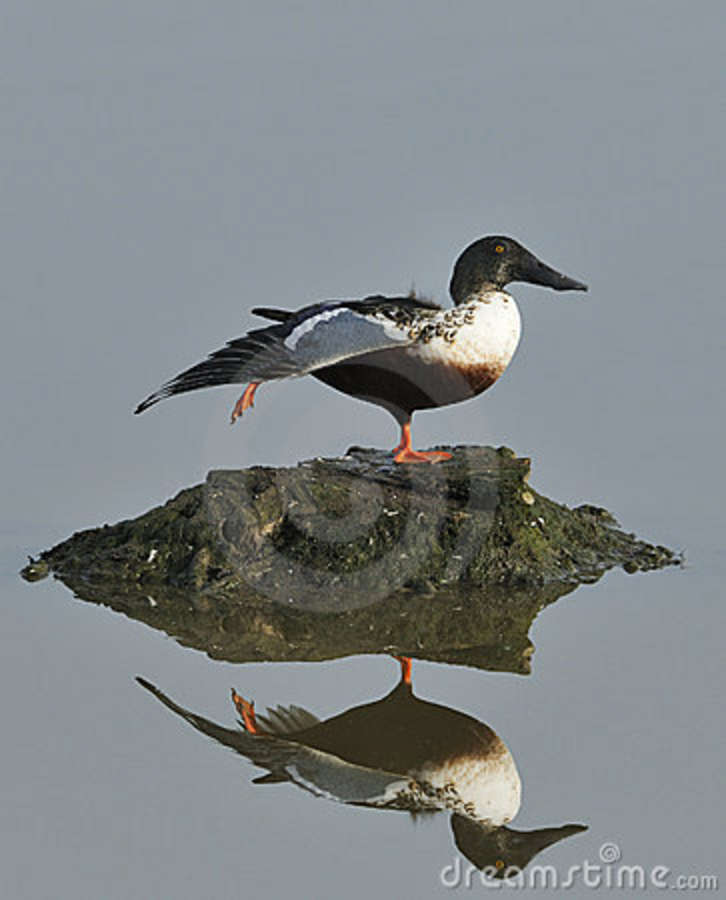
chin pu mimetic consumption duck stretching on rock

Chin Pu  (Mimetic Consumption)
 
(originally published in Blue Fifth Review)
 
The duck on her rock performs a slow dance,
stretching leg and wing she could be flying
but her eyes are steady upon mine.  If I eat

her will I possess her grace?  If I dry her bones,
pound them to powder will I ever be able to fly?
China being the oldest civilization, wouldn’t you think

there is truth in this idea?  Snake blood is the cheapest
aphrodisiac — the glossy firmness of the snake around
my arm makes me remember every time I’ve been

touched.  Panicked by my lust, the snake twists
and defecates, a runny yellow soup emerging
from a shocking red anus which for a moment

seems like blood.  Yet the snake’s eyes never
flinch from mine.  If I roast this body on a wood fire,
will I too be able to penetrate the entire world

with my stare?  Emotions come from an older place
than thoughts — the duck, the snake and I share
more than breath, more than mere life.  We feel,

therefore we are.  It’s not so easy with people.
Even if it weren’t forbidden, could I process
your body for consumption? Could I use all your parts,

not waste a drop?  Aren’t we all waiting to be eaten?
Somewhere, those I love would season me with care,
value my flesh for the qualities they’ve learned to see —

not grace, not smooth strength, but constant
restless longing, the mind completely open,
forever curious.  Don’t hesitate — swallow me whole.

4 Comments

Filed under poetry

the boy i never kissed, a poem

the boy i never kissed italian renaissance painting

The Boy I Never Kissed

(originally published in Images Inscript)

Michael’s hands are callused, rough and hard;
their worshiping touch is tender as a mother’s.
His voice is quiet, alto, his eyes dewy, downcast

in shy admiration. A forelock of wavy brown
Italian hair cascades over his high forehead
like a Renaissance crown, but his way of approach

is simply too respectful, too frightening.
I know nothing will come of this attraction,
though we sit talking for endless hours

in his old silver Barracuda after midnight,
the smothering summer darkness pressing
against my skin, raising beads of sweat

which I do not brush away, but allow to roll
slowly down between my breasts, turning my nerves
into taut straining wires. My skin is made of glass,

it will crack any second. He tells me sadly
of his foolish sister, Cherie, how she allows
boys she does not love to touch her. He has tried

to protect her, like the mythical big brother
I always craved. Under the golden streetlights,
in his greasy fry-cook’s uniform, his skin turns dusky,

going beyond olive into the baroque region
of infinite mystery. Then he was too good for me;
too noble to kiss. I made him love me from afar,

pushing the moment past, distancing my heart
from damage, keeping forever safe the memory
of such fragile, old-fashioned courtliness.

Where is the man now? Does he remember me, too,
as something far greater than any realized pleasure;
as a delicate, indelible dream of lost love?

5 Comments

Filed under poetry