Waiting for God at

A fine poet & writer, Heath Muchena….

Heath Muchena's avatarOn The Heath

you’ll love

you’ll lose

and let go

then love again

and sometimes even better than before

if along the way you somehow managed to grow

but taking into account the odds

you’re bound to lose once more

however, by this time, it shouldn’t be as difficult for you to move on

but if so, then a kind of sorrow soon follows

still, as long as man lives, man hopes

and so you’ll go on

waiting for your god to grant the mate your soul longs for

© Heath Muchena, 2014

View original post

2 Comments

Filed under Uncategorized

Waiting…

3 Comments

Filed under Uncategorized

Inside A Red Heart, a short story

illustration inside a red heart

Inside A Red Heart, a short story

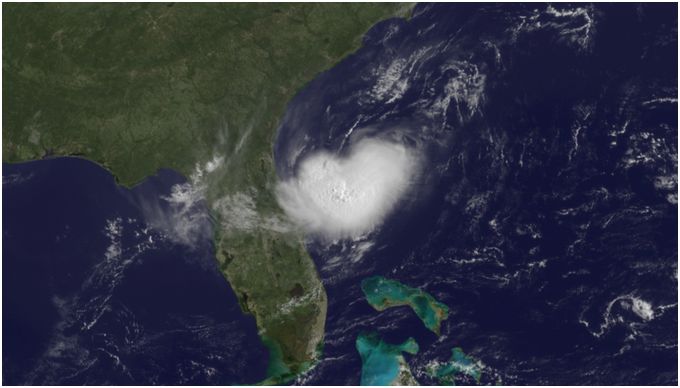
Ella’s life hadn’t always been like this. It was hurricane season, always the worst part of the year, but especially so this time. The cheap, post-divorce apartment Ella had moved to had flimsy sprayed-Styrofoam interior walls so thin she felt she could easily stick a pencil through them. The doors felt like balsa-wood, so hollow and weightless she couldn’t even slam them when she got mad, only sweep air currents through the frames. The rooms were carpeted wall-to-wall in a sticky celery-green shag which she could not bring herself to walk on barefoot. Hurricane preparations were meaningless in such a place, like diamond jewelry on a dying prostitute.

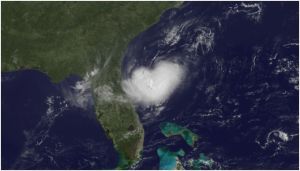
But today, Hurricane Naomi was 52 miles offshore, moving steadily along a stubborn, eerily direct path toward Ella’s apartment, when her father decided they’d better start getting ready, taping the windows. “They say this doesn’t help in the slightest,” she told him after finishing the first window, her arms already trembling and aching from reaching high over her head. She wanted to be an eagle, aloft without moving. “Even in a solidly built building,” she added spitefully.

“I don’t care what they say,” he said. “At least it’ll keep the broken glass from taking our eyes out.”

They finished taping over the second set of windows. She looked up at the sky; the brittle palm-fronds rattled and shook like frantic spiders. The bamboo rustled, probably full of rats. Tiny ants raced back and forth over the side of the house in some sort of military maneuver. Dropping hibiscus blossoms had stained the sidewalk red. A crushed bug was what captivated her attention. A sudden gust of cool air rushed over her neck, then after a moment everything stilled and the sun came out from behind the clouds. Against the dirty gray sky it looked abnormally bright.

“You look good in sleeveless tops,” her father said. “You should wear them more often.”

“Since when do you care how I look?” she asked.

“Is that how you usually take a compliment? No wonder you’re single. Forget I said anything,” he said. “Go inside and get the rest of the tape, please.”


Ella was mad about everything. Men especially, all the men she’d tried to get along with to no avail. Now, even strange men spitting on the sidewalk made her gag and retch. The phone rang — it was another man trying to sell her something. Listening to his voice on the machine, she decided she didn’t want any more goods or services, ever. She was fully capable of ignoring the outside world for weeks at a time. Finally, when her mailbox was stuffed so full nothing else would fit inside, she’d empty it and burn the contents.

After her divorce, she had refused to bring any of the old furniture from the house, not a stick. Granted, none of it was in such great shape, but she certainly couldn’t afford to buy new. Instead, she slept on a clammy air mattress for months, kept her clothes in cardboard boxes. Friends told her she was an idiot for not taking everything she could get from that tiresome lying hypocrite she’d married, but she just glared and shook her head, pressing her stubborn mouth against her teeth so hard her lips bleached white. Nobody knew how she managed to pay the rent or bring home groceries on what she made. Flying bullets couldn’t have been any more stressful than this, she thought.

There was a vague analogy between Ella and the rest of the world, that was all. She tried to understand men, but couldn’t quite manage it: they spoke, their lips moved, and sound issued forth, untranslatable. How was it they rose out of bed every morning so chipper? She was missing something they had. She navigated through her day like a ballerina dancing on broken glass.

When they’d finished taping the windows, her father poured a second cup of coffee for both of them. Breakfast consisted of coffee with plenty of cream. There was the long day to get through, then they were going fishing that night off the pier. They would stop at the bait shop for a bucket of shrimp and they would get ice cream cones — mint chocolate chip — and they would sit with their poles and wait for a nibble. Every now and then, without intending to, they’d sideswipe the truth.

He was visiting Ella for a week. He lived down in the Keys now, where he had always wanted to live; he loved to fish. Her mother had died three years ago, totally unexpected. No cancer for her, just a heart attack, plain and simple. Her parents had been happily married, but as soon as her mother died her father sold the house and went as far away from his past as he could get. Illness, for Ella, was something she would not allow time for, in that way she was exactly like her mother — though Ella wanted a good, solid tomb as a memorial when her time came to be one of the dead.

Her dog growled at her father as he moved his feet under the table. Ella’s crazy dog — he growled at everybody but he didn’t mean anything by it. He had long white whiskers and a moth-eaten coat.

“That damn dog,” her father said.

“I know, Pop,” she said.

“I don’t know why you put up with that,” he said.

“He’s harmless,” she said.

“I suppose he’s a good watchdog,” her father said.

“Not really,” she said. “He only growls when it’s someone he knows.”

“You mean he doesn’t growl at strangers?”

“No.” She laughed. Was he going to find a moral in this somewhere?

“Should I be flattered that he growls at me, then?”

“Sometimes he even growls at me.”

“I wouldn’t keep a dog like that.”


Since childhood, she’d loved to watch her father bait fishhooks. His long hands were careful and slow and the deliberateness of his touch delighted her. Not like her — she’d been falling over herself since puberty. Invariably she felt like a nuisance underfoot. She missed the neat quick grace of childhood. Whatever synthesis produced her from her mother’s and her father’s body, she couldn’t now imagine. Her father’s laughter was musical — her mother’s and her own like the braying of an ass. She secretly decided her mother had been cheating on him with someone else when she was conceived.

Until adolescence she’d been a precious little thing — then a hostile barrage of hormones turned her into somebody she didn’t even recognize: braces, knobby knees, confused skin, rebellious hair. To call her a girl was a misnomer of the highest magnitude. Something dark had entered the world along with her own blood the first time she got her period.

Once, in high school, her father had walked in her room without knocking and caught her masturbating; what a shame, he said, if you didn’t have so many pimples you might be able to get a boy to do that for you. His mind, like his body — like his heart — was angular; without softness; without love — he wouldn’t give her a second chance. The walls had zoomed in and out like they were breathing. She remembered the dress she wore, white with red and blue sailboats. Just like a ship being launched, only she kept running aground.

To this day, she wore only plain pearls, believing her skin too pasty to carry color. The only exotic thing about her was the color of her hair. Her hair was the color of rust; decaying iron. Growing up, her father never told her how pretty she was. But one night after a bad dream he took her back to her bed and rubbed her back.

Woken in the middle of the night like that, he was a different person, wordless and gentle. He’d held her so tight she couldn’t inhale. His silent, bulky warmth radiated through her and she wasn’t scared of anything. Everything in her room was painted either blue or green — how was painting any different than telling a story? He started rubbing her arm below the elbow; she was his. She wanted him to touch her underneath her nightgown but he didn’t. It made her feel awful to remember that now.


The TV was on with the volume turned down, and she was tracking Naomi on a grocery bag chart. She perched stiff on the couch, uncomfortable in her ragged cutoff shorts. Her father took a chair from the dining table and sat on it turned backwards, leaning toward her, his big perfect hands hanging over the chair’s back, his legs spread out like a cowboy’s. The dog growled from under the table.

“If you died right now,” he said, “you would go straight to Hell because you haven’t accepted Jesus Christ as your personal savior.” Pop loved his simple theories. He loved his cut-and-dried formulas. From the time her mother had died, her father had become born again and worried far too much about the condition of Ella’s immortal soul.

“How do you know?” she asked. “Isn’t God the only one who can judge a person?”

“It’s very simple,” he said. “Right now you’re a Nonbeliever. Nonbelievers go straight to Hell.”

“Says you,” she said.

“Says God,” he said.

“So according to you I could break every single one of the Ten Commandments, but as long as I accepted Jesus one second before I died, I wouldn’t go to Hell?”

“God’s grace,” he said. “His gift to us. Ask, and you shall be forgiven.”

Her father was telling her to ask for forgiveness! Selling all the gifts he’d ever given her and frittering the money away with nothing to show for it appealed to her. The flowers he sent for her birthday always wilted immediately, anyway.

“So God will forgive me for whatever I’ve done,” she said. “But will you?”

“First, you have to ask,” he said.


Hurricane Naomi wouldn’t arrive until tomorrow or the next day. Though at first Ella had looked forward to fishing off the pier, dusk arrived too soon; the coming darkness was like a funeral shroud. Her father drove his old rattletrap pickup truck towards the beach like it was a priceless antique. At the bait shop, they stood in line behind a girl, about 10 or 11, and her mother, also buying bait. The girl got into a silly argument with her mother about what they should buy, what sort of bait. “Shut up,” the girl said to her mother. Ella recoiled. Was there ever a place to be, truly, anonymous?

She remembered a time she’d told her own mother to shut up. Upon hearing, her father had slapped her across the face and broken her glasses. Her skull buzzed for a long time afterward, her jaw aching where the heel of his hand connected. She didn’t believe she’d been the same person at all back then.

She almost never cried in front of him, and especially not then, not about being slapped: she flat-out refused her tear ducts the indulgence. Nothing physical he did could get her crying — he had to use his voice, his drawling sarcasm, to knock her senseless enough for tears. She’d be so ashamed to cry in front of him like a big, blubbering idiot.

But then, getting her fishing pole ready over on the pier, a hook jabbed her finger. She’d been stabbed with hooks before; she didn’t remember it hurting so much. Was the air pressure from the coming hurricane making her stupid? She sucked blood out of the puncture. Her eyes started to sting, her throat to burn. She froze, her body paralyzed by embarrassment. She couldn’t help it, she started to cry, the convulsions shaking her.

“What’s the matter?” he asked. “Is your finger that bad? Let me see.”

“It’s not my finger,” she said, still in the grip of the horrible tears. He took her hand and held it close to his face, peering.

“Doesn’t look that deep,” he said.

“It’s not,” she said. Her nerves were strung out, yes, aptly put — as if her spine had been stretched, her entire body hanging off it in tiny sections which at any moment might start whirling away in terror.

She grabbed his shoulders and stood on tiptoe, leaning into him with all her weight. She kissed him full on the lips, pressing the whole length of her body against him the way she had when she was still too young to know any better, and for once he actually let her. She kissed him as though her life depended on being kissed back. And it did. And he did.


He had never told her she was pretty until after her mother died. Family tradition was for the parents to wait, remote icebergs, for warm currents of love to reach them from their children. She didn’t see the harm in that. The truth was, she had always wanted him as much as he wanted her. Tall and silvery-blond, his pool-water blue eyes fringed with gold lashes, he was still handsome for his age. He only smoked those awful cigars when he fished. Since her mother died, he hadn’t so much as looked at another woman, romantically speaking.

Even her ex-husband had been jealous of her father. He, her husband, was smaller than her father in every way measurable, emotionally as well as physically. Her ex-husband was such a small man. He had mewled incessantly about his boundaries, his boundaries — which didn’t keep him from stalking her and her post-marital lovers whenever his feelings were hurt. But if she read his journal, she was guilty of a great crime. What were boundaries, anyway? Even her ex-husband’s new wife was commiserating with Ella now about his smallness.

Too late, Ella had figured out she only got excited by what was forbidden, by a body’s unfamiliarity to her. Anybody like her who chose to marry was making a mistake. Once a thing became familiar, that took all the life out of her desire. She and her string of relative-stranger lovers ate Chinese takeout in bed, soy sauce dripping on their skin, which added another flavor to their mouth play. Fried rice, hot and greasy.

What neither Ella nor her father talked about that night on the fishing pier or any other night was how, way back when, she had left the back door unlocked one day and the baby, Ella’s little brother, had gotten into the backyard unsupervised and drowned in the canal. The water had seemed too shallow for anyone to die in. She was eleven — the next day she bled on her underpants for the first time. She wondered which was the bigger reason her father never looked at her the same way again.

Just now her father’s lips had tasted like his cigars, sour and sweet all at once, when she kissed him. Ella removed herself from his arms only after her skin against his grew slick with perspiration. The two of them finished up their bucket of shrimp after that, but they spoke little and caught nothing worth keeping. Back at her apartment with its ridiculous taped windows, her father began packing his small suitcase. The bellicose dog lay on the armchair across the room, for once not growling. “Damn hurricane,” he said. “Maybe I can get all the way home before they evacuate the island.”

“Are you crazy?” she asked. “You’ll have to leave again as soon as you get there.”

“I don’t think I can stay here tonight,” he said.

“You’re blaming me, aren’t you?” she asked. “Like you always do.”

“It’s not that, Ella,” he answered. “It’s got nothing to do with that.”

She touched his arm, and he flinched, then caught himself. “It was all my fault,” she said.

“No, it wasn’t,” he said. “If you’re asking, I’m answering.” He looked up from his suitcase, and for the first time all day his eyes looked old and tired. “Please don’t ask me to stay,” he said.


At midnight she sat awake, wondering what would happen next. Nothing good, she imagined. She didn’t know how she’d become such a curiosity. She was looking for what had gone wrong with a vengeance. Rooting through out-of-date phone books, through cards and letters she’d kept packed away since college. Excavating her past life, like an archeologist, was a great haven of sanity; as soon as she opened the first box, she felt safe from the present, it was suspended from happening, nothing more would ever happen to her until she straightened out all the previous mistakes. A pale blue chiffon scarf of her mother’s was folded underneath a stack of them. She was perennially accused of wanting to rehash the past. But it hadn’t been properly hashed over the first time, couldn’t any of these dolts see that?

A spider laid in the bottom of the box, its legs curled tightly. Though clearly dead, she worried lest it should somehow jump on her. A handmade Valentine’s Day card stuck out of the jumble like a sore thumb. The card was unsigned, but she recognized the handwriting. It was hers. She’d drawn a picture of a naked man inside a red heart. Her first boyfriend, a creative type, had insisted they make each other cards. How had she ended up with all this stuff? Ella flung herself back onto the bed so hard her teeth snapped together and she bit her tongue. Her bones ached. Her desire was killing her; she didn’t even know what it was she desired. She had to get out of the house for a bit, hurricane or no hurricane, or she’d go nuts.

She dragged her quivering dog — not so crazy after all — out to the car and drove over to her parent’s old house through Naomi’s outer fringes. Thunder rolled above her along with heavy sheets of rain like pronouncements from God. The dog cowered in her lap. She turned the car engine off and got out, the dog in her arms, hiding his head in her armpit. She stood searching the horizon, letting the rain wash over her face. It was the same whenever she made love to a man, she made sure to shower afterward.

Behind the house she’d grown up in, behind the canal her baby brother had drowned in, sat the northern edge of the Everglades. A flat, wet landscape — one she never tired looking at. Dun-colored saw grass, rippling under the steady currents of wind, stretched as far as she could see. Her mother’s chiffon scarf, monogrammed with her maiden initials, was her new good-luck charm. There was, as usual, no witness to her actions.

At least I’m brave enough to come back here, she thought. Her hair blew into her eyes and she held the dog tighter. She was startled when from behind her headlights moved over the undulating saw grass; she turned to see who it was. Squinting against the light, she saw her father’s tall figure get out and stand next to the car, calling and waving — she couldn’t hear much of what he was saying over the wind but she could tell he was crying. Like a flag on a pole, her mother’s scarf whipped in the wind around her neck, causing her to lift her chin and stand taller and straighter than she had for a long time. She could feel it. Her life was going to change.

5 Comments

Filed under childhood, compassion, daughters, death, development, divorce, ella, eternal, father, fathers, fiction, forgiveness, girls, health, heart, hope, justice, karma, kindness, life, love, marriage, men, mortality, mourning, mysterious, personal responsibility, regret, relationships, short stories, soul, spirit, women

September 5, 1980, a letter to my Nana

img097

September 5, 1980

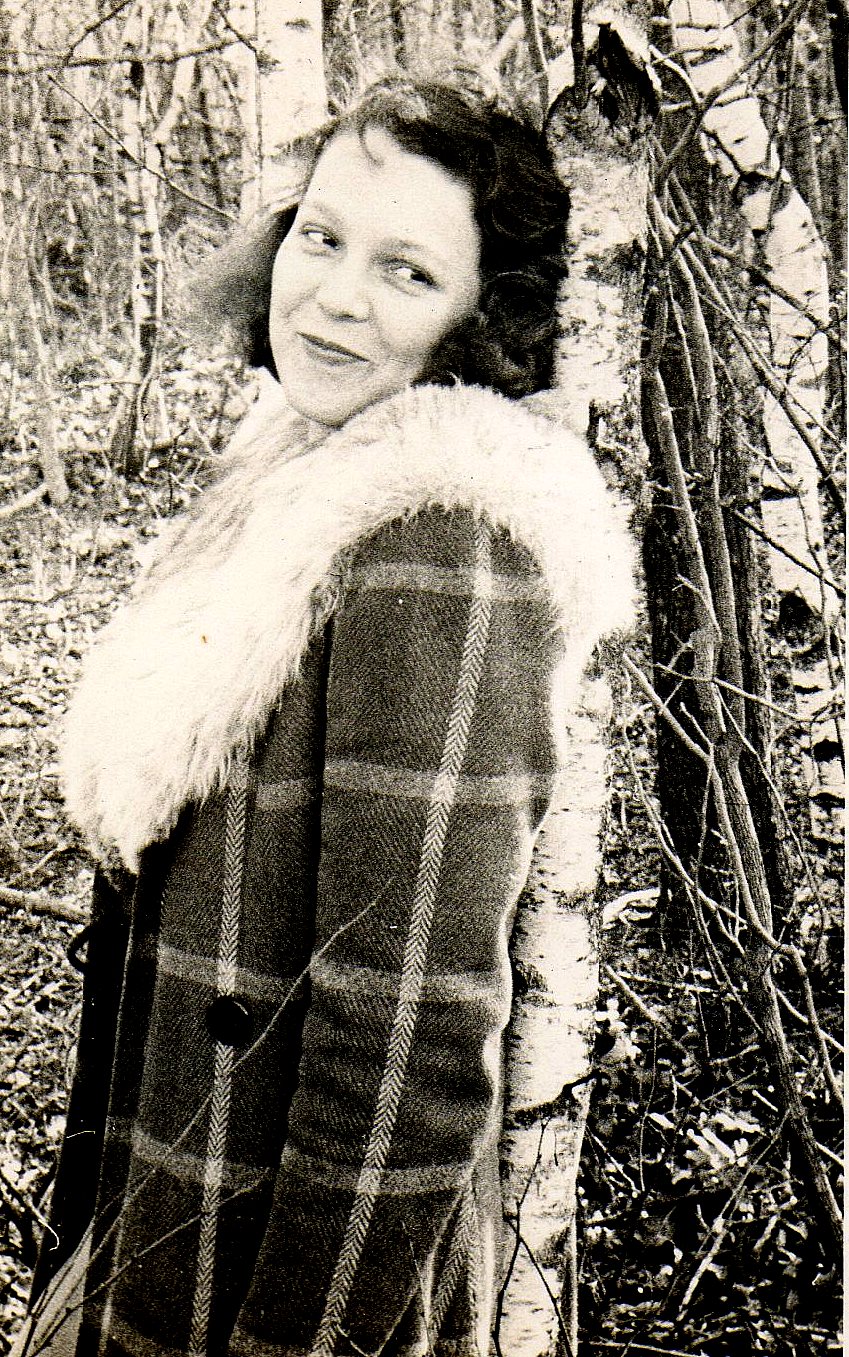
Dear Nana,

I am sorry I didn’t send you a birthday card on time. I didn’t forget, I bought a card and addressed it and put a stamp on it and everything, I just neglected to drop it in the mailbox. And since it was late anyway, I figured I would just save up some money and get you a present to go along with it. So just prepare yourself for an extra-special present. I won’t give you any hints, either. So just sweat it out.

Everything is going just fine. My job is going well, except the work is not all that interesting. But at least I have plenty to do. Mr. Perkins is in Canada right now, doing some work for the Canadian government, so that’s why I can write this letter at work. Because there’s not all that much to do.

Has Mom gotten me an application for the U. of Fla.? I’m going to apply to U.C.L.A. also. Then when the time comes I will have two options. But no matter what I decide I will be home for Christmas. So don’t worry about that. I wouldn’t miss another Christmas with all of you. I’ve already missed two. So no more.

I almost got a dog the other day. They keep dogs at work, two of them, and there was this other dog that started hanging around. He was a stray and he was really skinny. Then about two days ago he showed up limping. His hip was all out of joint, and he was scared of everybody. So I told Mr. Perkins about it and he said that if I could catch him and take him to the vet’s that he would pay the bill if it wasn’t too much. So I caught him by feeding him and then grabbing him. I took him to the vet’s and they X-rayed his hip but it was too badly crushed and it would cost over $300 to fix it. So we had him put to sleep. I felt so bad about that. I cried and cried. You know how I am about animals.

I have decided to major in prelaw. It’s a big decision but it’s something that I want to do. A lot of reasons persuaded me. And besides, lawyers run in our family. This is the fourth generation – your dad, mom’s dad, and my dad, and now me. I’m the first woman to do it. It’s about time the women in this family took advantage of their brains. Grandpa Geremia says that we’re smarter than all the men anyway.  Look at Mom!   She’s got a lot upstairs, and the only reason she didn’t get a chance to take advantage of it is because she’s a woman and women are the ones who get the short end of the stick always. I’ve really been getting interested in promoting women’s rights lately.

Throughout history, men have had all the power. And I’m tired of it. I heard on the radio that women comprise 53% of the population, yet in the Senate there are only two women. 2 out of 100. That’s certainly not even close to equal representation. Women don’t even get respect. At work here, I’m treated like some cute little girl who is just learning to tie my shoes. And I resent it. Of course, I don’t complain because I need to get along with these people, but I resent it all the same. I read in a book called The Women’s Room that “people may hate niggers and Puerto Ricans and Chinks, but at least they are afraid of them. Women don’t even get the respect of fear.” And it’s so true. Look at you, Nana. You have the makings of one hell of a politician in you. You’re a terrific leader. You have charisma. But you haven’t done it. Maybe because you didn’t want to, but maybe because you were afraid. Oh, I don’t know. Remember when they wanted you to run for City Council? You could have won easily. You could still win. I think you ought to do it. After all, Reagan’s over 68 years old and he’s running for public office.

By the way, do you know what I’ve heard about Reagan?

  1. He believes in astrology.
  2. He accused Carter of being in cahoots with the KKK when he himself refused to address the NAACP.
  3. When he was governor of California, he wanted to cut down the Sequoia trees in the parks because he thought that “once you’ve seen a tree, you’ve seen a tree.”
  4. He set troops out to quell student protest when the students had stated their pledge of nonviolent demonstration.
  5. He’s against abortion even in cases of rape. True, not many women who get raped conceive a child due to the trauma of it, but it does happen. And why should a woman give birth to a child of rape?

True, Carter is in many ways no better than Reagan. But I don’t want to vote for Carter, either. I want to vote for Barry Commoner. Barry Commoner believes in solar power, he wants to bring back the railroad system as a form of mass travel, he doesn’t believe in war and huge military budgets for no reason, and he believes in letting people come first in government. He believes in the nationalization of the energy industry. No one is perfect, though, and I realize that campaign promises are sometimes just that, but I feel that Barry Commoner is a better candidate than either Carter or Reagan. But he’s not perfect, either. I’m not being swayed by some Godlike figure or anything. He’s just an ordinary person.

Let’s talk about the nationalization of the energy industry for a moment. (Don’t I sound grown up, Nan?) Did you know that one of the reasons nuclear power plants are becoming more widespread even though they’re so dangerous is that the oil companies own all the uranium minds? The reason no one has developed solar power yet is because the oil companies can’t buy the sun.

Let’s face it, sooner or later we’re going to run out of everything – coal, natural gas, oil, even uranium. The only thing we will have for billions of years is the sun. Everything on this planet was created by the sun. The oil was made from algae deposits that were fueled by the sun. The sun is a clean, safe source of energy. So why don’t we use it? Because it’s also free. There’s no way to rent sunlight because it’s free. No one can own it. So the people who control this country, i.e., the huge conglomerate corporations, aren’t too thrilled over the prospect of unlimited amounts of free energy because they’ll go bankrupt.

Now, don’t get me wrong. I’m not against free enterprise or anything. What I am against, though, is when the profit margins of Exxon go up 200% in one year. That’s going too far. Profit is fine, but 200%, when the whole world is being squeezed dry because of the high prices of fuel? That’s un-humanitarian, and disgraceful.

Did you know that Nestles, the chocolate corporation, also manufactures infant formula? In third world countries like Nigeria and India and the like, they were telling uneducated mothers that infant formula was superior to mother’s milk. At precisely the same time, doctors in this country were finding out that mother’s milk was in fact the best thing for babies. That nothing was superior for infants. But did Nestles stop telling them that? No. Their profits in this country were going down because of the drop in sales, so they had to make it up somewhere else. By fooling poor, uneducated, starving people. That’s the kind of thing I’m against.

I guess I’m getting more political in my old age.  That’s why I have decided to major in prelaw. So I can do something about the things that I feel are unfair. Or at least I can try. Like I said, I’m not against free enterprise. What I am against is exploitation and un-humanitarianism.

7 Comments

Filed under ancient history, compassion, development, earth, enlightenment, eternity, faith, forgiveness, god, heart, history, hope, humanity, identity, justice, karma, kindness, law, legal system, life, logic, love, maturity, nature, peace, personal responsibility, science, soul, spirit, spiritual, truth, universe, woman, women, world, youth

the defenestration of prague, a poem

Kimberly Townsend Palmer's avatarKimberly Townsend Palmer

illustration of defenestration of prague 

The Defenestration of Prague

(originally published in Snakeskin)

When my father was six, the other children teased him,

calling him a dirty Bohunk. My grandfather promptly

changed the family name. By this he collaborated

with the enemy, he repudiated the family tradition.

Thus you don’t know how resistant we have been.

You have no idea of the damage we can cause.

Sure, we look like anybody else, but those children

sensed something amiss. I myself want to throw

people out the window all the time, even after I know

they don’t deserve it. I come from a long line

of defenestrators. We take our frustrations seriously,

we live for the dark moments of the soul, we are the truly

evil people, we upset the apple cart time and time again.

Our closest neighbors have always hated us. Thanks to

Grandpapa, I can pass for educated, empowered, lucky.

I have…

View original post 244 more words

Leave a comment

Filed under Uncategorized

Human

Anna Waldherr's avatarA Lawyer's Prayers

Then Miriam and Aaron spoke against Moses because of the Ethiopian [African] woman whom he had married…So the anger of the Lord was aroused against them and…Miriam became leprous, as white as snow” (Numbers 12: 1, 9-10).

It is Black History Month again, a reminder to the world and black children, in particular, of the many accomplishments by African Americans.  This is entirely appropriate.

I though am foolish enough to believe that color – black, white, red, yellow, brown, or green – should not matter. It is only skin deep, after all, less than a quarter of an inch thick.

There is history and heritage, suffering and achievement associated with skin in all colors. But underneath that fragile covering, we we are the same, whether we choose to believe it or not.  Underneath the skin, we are nothing more or less than human.

If you or I needed…

View original post 155 more words

2 Comments

Filed under Uncategorized

Judge Not

1 Comment

Filed under Uncategorized

Divine Love, Divine Hate, an essay

illustration divine love divine hate

Divine Love, Divine Hate, an essay

Scientists have of late discovered that music stimulates the same areas of the brain as food and sex. That’s why listening to music can bring a chill, raise the small hairs on the back of the neck. That’s why music demands — and gets — our closest attention. You need me, the music calls, you need me to survive, to perpetuate your species. Without me, you will have less well-being, less pleasure and satisfaction. What a design! Food, sex and — music.

The pleasure centers of the brain — the reptilian, primitive intelligence — is not involved in abstract thought but entrusted with the very essence of staying alive. Yet the impulses and desires which originate there find means of expression in our higher intelligence. Food and sex are necessary for survival, so necessary that sometimes it seems as though the whole human world, all human society and culture, can be thought of as nothing more than an interesting mechanism to keep us supplied with food and sex.

The appreciation of music springs from that same primal area of the brain — could this possibly mean there must be a God, after all — a God who gave us another instinct, one for pleasure and beauty, in addition to our basic instincts to survive? Music, a divine invention with no practical purpose. No purpose at all other than to inspire in us joy, mystery, fear and abandon.

Think of all the emotions we can express with food, sex and music:   passion, joy, disinterest, experimentation, violence, anger, tenderness, wistfulness, meditation, transcendence. Food, sex and music can be used to communicate, even intensify, all these emotions, yet the trio can also be used to push us past all of these feelings to a region of Godlike rationality and knowledge. Yes, occasionally our existence becomes clear, understood fully until surface complexity falls away into the deeper simplicity of detached understanding. A strangely quiet joy — a joy beyond anything prosaic.

A poetic joy, able to recreate itself in the mind forever. Sometimes the memory of such enlightenment is what keeps us going when the enlightenment itself feels as far away as Uranus or Pluto — as cold, as unreachable. Remembering how once we held it in our bodies and it filled us so there was nothing empty, noting lacking, nothing to fear — not even death. It is a knowledge, a contentment, which infants possess without awareness. To possess this peace with awareness is the greatest achievement, but one which few people are able to sustain for long. We hold it and fall in love with it and in an instant it twists out of our hands and flashes off into the distance like an agile, silvery minnow. Enlightenment as God’s minnow. Look at it too closely, try to keep it too long, and you may never see it again.

I myself have only a rather wobbly faith in God’s existence, but I nonetheless feel pity for people who declare without hesitation that nothing divine exists. What a drab, ugly world their interior castles must be, with only themselves for company.

The divine cannot be ruled out. We cannot know what exists beyond our senses.   Certainly people have been enraptured by the idea of divinity — especially, most recently, the notions of divine anger, divine vengeance — modern terrorists have embraced these, but without embracing the corresponding ideas of divine love and divine compassion. Yes, people have fastened their wills on the idea of divine judgment, but they have ignored completely divine forgiveness.

The cockroach is as marvelous a creation as anything — see it scuttle away from the light, a most marvelous mechanism, see it copulate, see it reproduce itself, see it taste its food with pleasure twinkling in its delicate, wavelike feelers. No less miraculous than us. But we have an ability the cockroach does not have — to be self-aware of our divine impulses — our duty as human beings is to dive both below and above our own ordinary human consciousness. To bring all our unconscious knowledge and desires into to the conscious realm — both those desires labeled primitive and those labeled exalted.

Some elements of love are to be found in the roach. It loves its life: flees from danger, attempts to avoid harm, and tries to survive no matter what the odds. This is where the terrorists have failed. They have embraced only half the divine order — divine hate — the half that appeals to them more and suits their political purposes. They need to stretch themselves, accept all things God has created — even those they find distasteful or abhorrent — and leave the judging to God. They need to cultivate in themselves divine compassion and divine love. Terrorists profess they love God, but they do not love God’s creation — therefore that love is flawed, is not really love at all. Their love has turned inside out into hate.

They need to learn from the cockroach, as do we all. We possess vast potential for divine virtue, yet are so capable of falling into the abyss of pride. These terrorists have fallen, and they are trying to pull us down with them. We must not surrender to only part of the divine order. We must catch ourselves with the feelers of the insect before we tumble too far.

I cannot blame anyone who feels the need to destroy the terrorists. I feel that need myself, the blood lust of anger and retribution. But we must find a response pleasing to the divine. That is what prayer is — thinking about what a divinely perfect being might do, waiting for the small voice to tell us the right way to handle this new permutation of evil — without ourselves falling under its wicked spell.

This is what all religious searching has been aimed at. Whether we believe God exists or not — we can imagine God, as God might exist. Sometimes it is better to die than to kill the blameless. We can feel such things in our deepest selves, and these places are just as important to reach with the conscious mind as the highest levels of abstract thought.

We can imagine God, we can love God, we can honor God, and that is what matters most, not whether God truly exists. Good and evil, love and hate, right and wrong, call it whatever you like. It is our uniquely human gift, our uniquely human burden. Did we ask for this? Be careful what you wish for, goes the old admonition. Would I rather be my dog, or my cat? Sometimes I envy their peace of mind. They don’t know about world wars. But my most divine pleasures, feeling them and knowing that I am pleased, and knowing why — in this way I have my cake and eat it, too. The lure of that apple in the garden is a lovely allegory, whether it happened or not — we invented it. This is the quality of our humanity which we can never give back, no matter how much we might want to.

10 Comments

Filed under beauty, charity, compassion, enlightenment, essay, faith, forgiveness, god, hope, humanity, love, peace, world

Project Drawdown – substantiative solutions to Climate Change

~ Laura's avatar~ L to the Aura ~

In a moment of sincere disappointment and loss of hope, I was blessed to have the rare gift of speaking to an incredible human being, a golden soul that has inspired me for many years: Paul Hawken. His words, compassion, and optimism continue to resonate:

Is climate change happening to you or for you? If it is happening to you – you are a victim, you are an object, you are dis-empowered. But if you embrace it, it is your ally. We need to embrace climate change as a guide to a far better world than we know now. Avoidance of despair is an essential condition in order for humanity to creatively respond to the future we face. The public’s willingness to respond to climate change can shift, if they can see opportunity instead of dread, that a transformation can benefit them individually and collectively.

It is not game over…it is game…

View original post 183 more words

1 Comment

Filed under Uncategorized

Would you like to write for BBC Radio 4?

leedslibraries's avatarLeeds Reads

Opening LinesThe BBC Radio Drama Readings Unit is looking for submissions from writers new to radio for their annual series, Opening Lines which is broadcast on BBC Radio 4. The closing date is 13th February 2015.

Three successful writers will have their stories broadcast on BBC Radio 4 and be invited to the BBC in London to see their stories being recorded. As well as broadcasting the three strongest stories, the BBC publish transcripts of the best stories submitted within this period on the Opening Lines website. (You can read previously published stories), A longlist is published on the BBC Drama Readings website by 15th May.

Stories should be between 1,900 – 2000 words and can cover a broad range of subject-matter (nothing too dark, harrowing  etc. as the programme is aimed at a wide audience). Submissions should be one story per writer. You can read all the terms and conditions and more detail about what is…

View original post 2 more words

Leave a comment

Filed under Uncategorized