Tag Archives: daughter

Inside A Red Heart, a short story

illustration inside a red heart

Inside A Red Heart, a short story

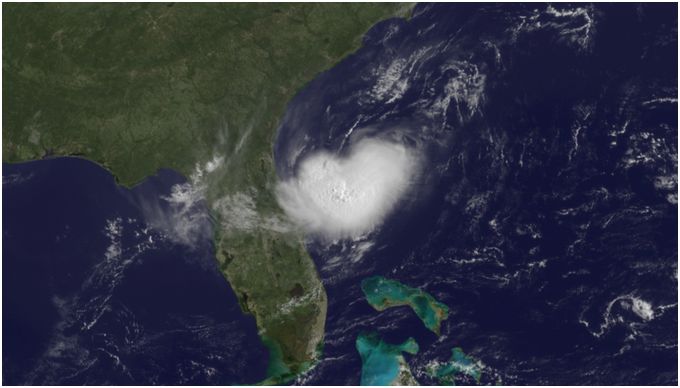
Ella’s life hadn’t always been like this. It was hurricane season, always the worst part of the year, but especially so this time. The cheap, post-divorce apartment Ella had moved to had flimsy sprayed-Styrofoam interior walls so thin she felt she could easily stick a pencil through them. The doors felt like balsa-wood, so hollow and weightless she couldn’t even slam them when she got mad, only sweep air currents through the frames. The rooms were carpeted wall-to-wall in a sticky celery-green shag which she could not bring herself to walk on barefoot. Hurricane preparations were meaningless in such a place, like diamond jewelry on a dying prostitute.

But today, Hurricane Naomi was 52 miles offshore, moving steadily along a stubborn, eerily direct path toward Ella’s apartment, when her father decided they’d better start getting ready, taping the windows. “They say this doesn’t help in the slightest,” she told him after finishing the first window, her arms already trembling and aching from reaching high over her head. She wanted to be an eagle, aloft without moving. “Even in a solidly built building,” she added spitefully.

“I don’t care what they say,” he said. “At least it’ll keep the broken glass from taking our eyes out.”

They finished taping over the second set of windows. She looked up at the sky; the brittle palm-fronds rattled and shook like frantic spiders. The bamboo rustled, probably full of rats. Tiny ants raced back and forth over the side of the house in some sort of military maneuver. Dropping hibiscus blossoms had stained the sidewalk red. A crushed bug was what captivated her attention. A sudden gust of cool air rushed over her neck, then after a moment everything stilled and the sun came out from behind the clouds. Against the dirty gray sky it looked abnormally bright.

“You look good in sleeveless tops,” her father said. “You should wear them more often.”

“Since when do you care how I look?” she asked.

“Is that how you usually take a compliment? No wonder you’re single. Forget I said anything,” he said. “Go inside and get the rest of the tape, please.”


Ella was mad about everything. Men especially, all the men she’d tried to get along with to no avail. Now, even strange men spitting on the sidewalk made her gag and retch. The phone rang — it was another man trying to sell her something. Listening to his voice on the machine, she decided she didn’t want any more goods or services, ever. She was fully capable of ignoring the outside world for weeks at a time. Finally, when her mailbox was stuffed so full nothing else would fit inside, she’d empty it and burn the contents.

After her divorce, she had refused to bring any of the old furniture from the house, not a stick. Granted, none of it was in such great shape, but she certainly couldn’t afford to buy new. Instead, she slept on a clammy air mattress for months, kept her clothes in cardboard boxes. Friends told her she was an idiot for not taking everything she could get from that tiresome lying hypocrite she’d married, but she just glared and shook her head, pressing her stubborn mouth against her teeth so hard her lips bleached white. Nobody knew how she managed to pay the rent or bring home groceries on what she made. Flying bullets couldn’t have been any more stressful than this, she thought.

There was a vague analogy between Ella and the rest of the world, that was all. She tried to understand men, but couldn’t quite manage it: they spoke, their lips moved, and sound issued forth, untranslatable. How was it they rose out of bed every morning so chipper? She was missing something they had. She navigated through her day like a ballerina dancing on broken glass.

When they’d finished taping the windows, her father poured a second cup of coffee for both of them. Breakfast consisted of coffee with plenty of cream. There was the long day to get through, then they were going fishing that night off the pier. They would stop at the bait shop for a bucket of shrimp and they would get ice cream cones — mint chocolate chip — and they would sit with their poles and wait for a nibble. Every now and then, without intending to, they’d sideswipe the truth.

He was visiting Ella for a week. He lived down in the Keys now, where he had always wanted to live; he loved to fish. Her mother had died three years ago, totally unexpected. No cancer for her, just a heart attack, plain and simple. Her parents had been happily married, but as soon as her mother died her father sold the house and went as far away from his past as he could get. Illness, for Ella, was something she would not allow time for, in that way she was exactly like her mother — though Ella wanted a good, solid tomb as a memorial when her time came to be one of the dead.

Her dog growled at her father as he moved his feet under the table. Ella’s crazy dog — he growled at everybody but he didn’t mean anything by it. He had long white whiskers and a moth-eaten coat.

“That damn dog,” her father said.

“I know, Pop,” she said.

“I don’t know why you put up with that,” he said.

“He’s harmless,” she said.

“I suppose he’s a good watchdog,” her father said.

“Not really,” she said. “He only growls when it’s someone he knows.”

“You mean he doesn’t growl at strangers?”

“No.” She laughed. Was he going to find a moral in this somewhere?

“Should I be flattered that he growls at me, then?”

“Sometimes he even growls at me.”

“I wouldn’t keep a dog like that.”


Since childhood, she’d loved to watch her father bait fishhooks. His long hands were careful and slow and the deliberateness of his touch delighted her. Not like her — she’d been falling over herself since puberty. Invariably she felt like a nuisance underfoot. She missed the neat quick grace of childhood. Whatever synthesis produced her from her mother’s and her father’s body, she couldn’t now imagine. Her father’s laughter was musical — her mother’s and her own like the braying of an ass. She secretly decided her mother had been cheating on him with someone else when she was conceived.

Until adolescence she’d been a precious little thing — then a hostile barrage of hormones turned her into somebody she didn’t even recognize: braces, knobby knees, confused skin, rebellious hair. To call her a girl was a misnomer of the highest magnitude. Something dark had entered the world along with her own blood the first time she got her period.

Once, in high school, her father had walked in her room without knocking and caught her masturbating; what a shame, he said, if you didn’t have so many pimples you might be able to get a boy to do that for you. His mind, like his body — like his heart — was angular; without softness; without love — he wouldn’t give her a second chance. The walls had zoomed in and out like they were breathing. She remembered the dress she wore, white with red and blue sailboats. Just like a ship being launched, only she kept running aground.

To this day, she wore only plain pearls, believing her skin too pasty to carry color. The only exotic thing about her was the color of her hair. Her hair was the color of rust; decaying iron. Growing up, her father never told her how pretty she was. But one night after a bad dream he took her back to her bed and rubbed her back.

Woken in the middle of the night like that, he was a different person, wordless and gentle. He’d held her so tight she couldn’t inhale. His silent, bulky warmth radiated through her and she wasn’t scared of anything. Everything in her room was painted either blue or green — how was painting any different than telling a story? He started rubbing her arm below the elbow; she was his. She wanted him to touch her underneath her nightgown but he didn’t. It made her feel awful to remember that now.


The TV was on with the volume turned down, and she was tracking Naomi on a grocery bag chart. She perched stiff on the couch, uncomfortable in her ragged cutoff shorts. Her father took a chair from the dining table and sat on it turned backwards, leaning toward her, his big perfect hands hanging over the chair’s back, his legs spread out like a cowboy’s. The dog growled from under the table.

“If you died right now,” he said, “you would go straight to Hell because you haven’t accepted Jesus Christ as your personal savior.” Pop loved his simple theories. He loved his cut-and-dried formulas. From the time her mother had died, her father had become born again and worried far too much about the condition of Ella’s immortal soul.

“How do you know?” she asked. “Isn’t God the only one who can judge a person?”

“It’s very simple,” he said. “Right now you’re a Nonbeliever. Nonbelievers go straight to Hell.”

“Says you,” she said.

“Says God,” he said.

“So according to you I could break every single one of the Ten Commandments, but as long as I accepted Jesus one second before I died, I wouldn’t go to Hell?”

“God’s grace,” he said. “His gift to us. Ask, and you shall be forgiven.”

Her father was telling her to ask for forgiveness! Selling all the gifts he’d ever given her and frittering the money away with nothing to show for it appealed to her. The flowers he sent for her birthday always wilted immediately, anyway.

“So God will forgive me for whatever I’ve done,” she said. “But will you?”

“First, you have to ask,” he said.


Hurricane Naomi wouldn’t arrive until tomorrow or the next day. Though at first Ella had looked forward to fishing off the pier, dusk arrived too soon; the coming darkness was like a funeral shroud. Her father drove his old rattletrap pickup truck towards the beach like it was a priceless antique. At the bait shop, they stood in line behind a girl, about 10 or 11, and her mother, also buying bait. The girl got into a silly argument with her mother about what they should buy, what sort of bait. “Shut up,” the girl said to her mother. Ella recoiled. Was there ever a place to be, truly, anonymous?

She remembered a time she’d told her own mother to shut up. Upon hearing, her father had slapped her across the face and broken her glasses. Her skull buzzed for a long time afterward, her jaw aching where the heel of his hand connected. She didn’t believe she’d been the same person at all back then.

She almost never cried in front of him, and especially not then, not about being slapped: she flat-out refused her tear ducts the indulgence. Nothing physical he did could get her crying — he had to use his voice, his drawling sarcasm, to knock her senseless enough for tears. She’d be so ashamed to cry in front of him like a big, blubbering idiot.

But then, getting her fishing pole ready over on the pier, a hook jabbed her finger. She’d been stabbed with hooks before; she didn’t remember it hurting so much. Was the air pressure from the coming hurricane making her stupid? She sucked blood out of the puncture. Her eyes started to sting, her throat to burn. She froze, her body paralyzed by embarrassment. She couldn’t help it, she started to cry, the convulsions shaking her.

“What’s the matter?” he asked. “Is your finger that bad? Let me see.”

“It’s not my finger,” she said, still in the grip of the horrible tears. He took her hand and held it close to his face, peering.

“Doesn’t look that deep,” he said.

“It’s not,” she said. Her nerves were strung out, yes, aptly put — as if her spine had been stretched, her entire body hanging off it in tiny sections which at any moment might start whirling away in terror.

She grabbed his shoulders and stood on tiptoe, leaning into him with all her weight. She kissed him full on the lips, pressing the whole length of her body against him the way she had when she was still too young to know any better, and for once he actually let her. She kissed him as though her life depended on being kissed back. And it did. And he did.


He had never told her she was pretty until after her mother died. Family tradition was for the parents to wait, remote icebergs, for warm currents of love to reach them from their children. She didn’t see the harm in that. The truth was, she had always wanted him as much as he wanted her. Tall and silvery-blond, his pool-water blue eyes fringed with gold lashes, he was still handsome for his age. He only smoked those awful cigars when he fished. Since her mother died, he hadn’t so much as looked at another woman, romantically speaking.

Even her ex-husband had been jealous of her father. He, her husband, was smaller than her father in every way measurable, emotionally as well as physically. Her ex-husband was such a small man. He had mewled incessantly about his boundaries, his boundaries — which didn’t keep him from stalking her and her post-marital lovers whenever his feelings were hurt. But if she read his journal, she was guilty of a great crime. What were boundaries, anyway? Even her ex-husband’s new wife was commiserating with Ella now about his smallness.

Too late, Ella had figured out she only got excited by what was forbidden, by a body’s unfamiliarity to her. Anybody like her who chose to marry was making a mistake. Once a thing became familiar, that took all the life out of her desire. She and her string of relative-stranger lovers ate Chinese takeout in bed, soy sauce dripping on their skin, which added another flavor to their mouth play. Fried rice, hot and greasy.

What neither Ella nor her father talked about that night on the fishing pier or any other night was how, way back when, she had left the back door unlocked one day and the baby, Ella’s little brother, had gotten into the backyard unsupervised and drowned in the canal. The water had seemed too shallow for anyone to die in. She was eleven — the next day she bled on her underpants for the first time. She wondered which was the bigger reason her father never looked at her the same way again.

Just now her father’s lips had tasted like his cigars, sour and sweet all at once, when she kissed him. Ella removed herself from his arms only after her skin against his grew slick with perspiration. The two of them finished up their bucket of shrimp after that, but they spoke little and caught nothing worth keeping. Back at her apartment with its ridiculous taped windows, her father began packing his small suitcase. The bellicose dog lay on the armchair across the room, for once not growling. “Damn hurricane,” he said. “Maybe I can get all the way home before they evacuate the island.”

“Are you crazy?” she asked. “You’ll have to leave again as soon as you get there.”

“I don’t think I can stay here tonight,” he said.

“You’re blaming me, aren’t you?” she asked. “Like you always do.”

“It’s not that, Ella,” he answered. “It’s got nothing to do with that.”

She touched his arm, and he flinched, then caught himself. “It was all my fault,” she said.

“No, it wasn’t,” he said. “If you’re asking, I’m answering.” He looked up from his suitcase, and for the first time all day his eyes looked old and tired. “Please don’t ask me to stay,” he said.


At midnight she sat awake, wondering what would happen next. Nothing good, she imagined. She didn’t know how she’d become such a curiosity. She was looking for what had gone wrong with a vengeance. Rooting through out-of-date phone books, through cards and letters she’d kept packed away since college. Excavating her past life, like an archeologist, was a great haven of sanity; as soon as she opened the first box, she felt safe from the present, it was suspended from happening, nothing more would ever happen to her until she straightened out all the previous mistakes. A pale blue chiffon scarf of her mother’s was folded underneath a stack of them. She was perennially accused of wanting to rehash the past. But it hadn’t been properly hashed over the first time, couldn’t any of these dolts see that?

A spider laid in the bottom of the box, its legs curled tightly. Though clearly dead, she worried lest it should somehow jump on her. A handmade Valentine’s Day card stuck out of the jumble like a sore thumb. The card was unsigned, but she recognized the handwriting. It was hers. She’d drawn a picture of a naked man inside a red heart. Her first boyfriend, a creative type, had insisted they make each other cards. How had she ended up with all this stuff? Ella flung herself back onto the bed so hard her teeth snapped together and she bit her tongue. Her bones ached. Her desire was killing her; she didn’t even know what it was she desired. She had to get out of the house for a bit, hurricane or no hurricane, or she’d go nuts.

She dragged her quivering dog — not so crazy after all — out to the car and drove over to her parent’s old house through Naomi’s outer fringes. Thunder rolled above her along with heavy sheets of rain like pronouncements from God. The dog cowered in her lap. She turned the car engine off and got out, the dog in her arms, hiding his head in her armpit. She stood searching the horizon, letting the rain wash over her face. It was the same whenever she made love to a man, she made sure to shower afterward.

Behind the house she’d grown up in, behind the canal her baby brother had drowned in, sat the northern edge of the Everglades. A flat, wet landscape — one she never tired looking at. Dun-colored saw grass, rippling under the steady currents of wind, stretched as far as she could see. Her mother’s chiffon scarf, monogrammed with her maiden initials, was her new good-luck charm. There was, as usual, no witness to her actions.

At least I’m brave enough to come back here, she thought. Her hair blew into her eyes and she held the dog tighter. She was startled when from behind her headlights moved over the undulating saw grass; she turned to see who it was. Squinting against the light, she saw her father’s tall figure get out and stand next to the car, calling and waving — she couldn’t hear much of what he was saying over the wind but she could tell he was crying. Like a flag on a pole, her mother’s scarf whipped in the wind around her neck, causing her to lift her chin and stand taller and straighter than she had for a long time. She could feel it. Her life was going to change.

5 Comments

Filed under childhood, compassion, daughters, death, development, divorce, ella, eternal, father, fathers, fiction, forgiveness, girls, health, heart, hope, justice, karma, kindness, life, love, marriage, men, mortality, mourning, mysterious, personal responsibility, regret, relationships, short stories, soul, spirit, women

Catalyst to a Potato, a poem

illustration catalyst to a potato 3

Catalyst to a Potato, a poem


Can I perform the miracles of earth, sun, water?

Can I be the warmth that gently pries open

eyes, that coaxes forth pale shoots, that causes


hardness to soften to green? If I throw the potato

against the wall again and again, will I ever cause

the potato to change? For so long, I tried to form


myself in the potato’s image. I tried to become

round, dense and heavy with stability, I tried

to protect myself. It did not work, it failed.


Now all there is left is her, one small girl alone

in the world. Her lips are redder than mine ever

were. Her shoulders are strong, she is not fragile.


You were the potato, the one I could never change.

Lobbing you again and again brought no result,

no visible difference. Yet in your eyes I am


the one who remained indifferent. I am not

ashamed, yet I am the one who needs to change.

You want only to rebuild. Take stock of your


small garden, not everything there is sound.

There is no such thing as healing. There is only

covering over, sweeping under, tamping down.


You know we will never love each other again,

yet you do not weep. This time I will not do it

for you. I am finished with praying for miracles.

3 Comments

Filed under ancient history, anger, apologia, compassion, development, divorce, earth, heart, justice, karma, logic, love, marriage, maturity, mea culpa, mourning, mysterious, nature, personal responsibility, poetry, regret, relationships, soul, spirit, spiritual, truth

Lovely Girl, a short-short story

illustration lovely girl
Lovely Girl, a short-short story

Jan. 11, 1979

Kenneth got into a big fight with his father last night. His Dad said that he follows me around like a puppet, and that he’s being bought. Then his Dad told him he was a lazy little bastard for not fixing his car & going somewhere with his mother. Then Kenneth said something back and his Dad tried to choke him and Kenneth left & went to the library.

I have a feeling Kenneth’s Dad hates me, or at least dislikes me. He would probably be a lot happier if I wasn’t going out with Kenneth. I would like to go up to his Dad and say that if he would prefer Kenneth not go out with me — because he thinks Kenneth would be better able to concentrate on sports & school — I will comply.

All I know for sure is that I don’t know anything anymore. Sometimes, I want to go far away – to Europe, maybe – and meet strange people and find out how to live. But then I get scared and I am suddenly glad to be in my safe room with all my possessions that tell me who I am supposed to be. I don’t know who I am – I used to, but things have changed so much, I’m not sure anymore.

Ever since Mom and my stepdad got divorced, it’s been harder and harder to just live. Mom is getting worse with the booze and sometimes I get so angry that I scream at her. Then I feel awful and try to hug her and tell her I’m sorry, but she’s so out of it she just stands there, swaying a little with her eyes half-crossed, and I end up stomping into my room and slamming the door and locking it. Then I lie on my bed and stare at the ceiling and sigh.

It’s the best just after I get home from classes at community college. Mom isn’t here, and I am alone. No one can bother me, and if the phone rings I don’t answer it. It gives me a sense of power – listening to that phone ring and ring and ring until whoever is calling hangs up, frustrated. I close all the curtains and put on records and smoke cigarettes. In my cool, dark cave I find peace for a few hours.

At six o’clock, though, I hear that fucking bitch, my mother, put her key in the lock, and I jump up and run down the hall to my room to get away. If Mom says something to me, I try to be nice, but it’s usually only a few minutes before our voices become sharp and anger is in the air again. Until she’s blotto, that is. Then, wobbling and bleary-eyed, she’s all lovey-dovey, but also by then all I want to do is shake her until her head falls off!

The only positive things in my life are Amy and Kenneth. Amy is my best friend and Kenneth is my lover. They know, and once in a while I can talk to them about it, but I know that friends can only take so much before they are tired of hearing it. The only person that would listen to everything you said and be interested was a psychologist or psychiatrist, and I’ve thought about going to one, but it’s really too expensive. So I just don’t let myself think about things most of the time.

I keep this journal and write my thoughts down, and that helps a little. Most of the time I’m fine, but it’s always there, hanging over me. Actually, I function very well. I graduated in the top five percent of my high school class, and after a year at junior college I have a 3.8 average. And I’ve never gotten into any serious trouble at all. I’m what grandmothers like to call a “lovely girl.” On the outside. Happy? What did happiness ever have to do with any of my fucking life choices?

3 Comments

Filed under addiction, alcoholism, child abuse, child neglect, childhood, children of alcoholics, college, compassion, daughters, development, fiction, identity, insecurity, mothers, relationships, short stories, teenagers, youth

Hungry Baby, a short story

hungry child

Hungry Baby

Whenever Ella was feeling close to the edge, a hair’s-breadth from lunacy, she liked to shop for groceries. She went up and down all the aisles, methodically picking out food. She threw boxes and jars and bags and cans willy-nilly in her cart, always stocking up for the big one, the storm that would tear the roof off. It’s a habit, one she learned as a child. The women in her family were bony, starry-eyed drunks, with bad skin and lank hair, but by God, they knew how to grocery shop.

She was in this twitchy, nervous state because her mother had showed up again last night. She would never know if it was just a dream: she hoped it was. Ella opened her eyes and saw her mother standing next to the bed, almost touching the mattress. She didn’t smile or speak, but simply shook her head. Mama seemed angry; Ella could tell her mother wanted to hit her. Mama was jealous that Ella was still alive, driving Mama’s car, watching her TV, wearing her jewelry. Ella met her fierce gaze without moving, then closed her lids against the image like hurricane shutters.

The room was so dark, and her mother was like a column of gray smoke, rising over Ella. Meeting death hadn’t changed Mama’s face one bit. How was it that Ella still missed her? That was an embarrassing, childish pain, an overgrown mouth sucking a rubber pacifier. There would never be a second chance for Mama and Ella; Ella wished she could believe in heaven like she believed in hell. If her mother had loved herself, or Ella, even a little, maybe she’d have pulled through the dark waters. But poor Mama was so full of self-hate there was no room for anything else. Now Ella was afraid her mother’s habits were coming after her.

Ella confessed it; often she had hated her mother too, while she lived. She even killed her mother once, in a dream. She stabbed Mama many times with a kitchen knife, and it felt right, like it was the only graceful way out for both of them. There wasn’t as much blood as Ella expected, though there was still enough to soak her mother’s nightgown all the way through. When she woke, clammy and trembling, Ella hurried to Mama’s room to make sure she still breathed. Ella knelt at the side of her bed, watching her mother’s scrawny chest. At first, it didn’t stir, and Ella almost cried out. Then she saw movement, enough to know her mother lived. Forever after, she feared the terrible anger in herself. It was always waiting, a tiger with ivory teeth and steel claws — waiting for her to stumble, to lose her grasp on mercy, on forgiveness, and throw open its cage.

Wishing her mother was dead half the time didn’t keep Ella from breaking down the door in a panic when she thought she’d overdosed. After the first incident, Ella wasn’t all that worried, she knew her mother to be too much of a bumbler, she would screw it up, or not finish, like she did everything else. The door became only an excuse for Ella to use her rage, to make her hatred tangible, give it life, a physical existence. She used a heavy folding chair, swinging it over and over again, watching first the splintered crack appear, then the bit of light, marveling at how the door-frame itself gave way all at once and the entire door fell cleanly into the room. Mama sprawled on her bed, half-clothed, her knobby knees the bulkiest part of her, her huge, brown, doe-like eyes looking puzzled. Even with all the noise, Mama was so out of it, she couldn’t figure out how Ella had gotten in the room. Later, sober, she realized she’d underestimated her daughter, she hadn’t known what Ella was capable of. Much later, a couple of years after Ella left home, after a hundred false starts, Mama managed to finish what she’d begun.

Ella shopped hours for the perfect funeral dress; pulled grimly through all the racks, looking at everything dark. No, not dark, black. “Nobody wears mourning black anymore,” the saleslady said, but for her own mother, Ella insisted. In photographs, she appeared the proper, bereaved daughter. She spent three days wearing the black dress, feeling grimy by the day of the burial, and glad of it.

They buried her mother in front of a croton bush, God, how Mama had hated those things, crotons. Ella stared at the shiny marble urn where it sat in the little hole, the tacky brass plaque glued to the top. She couldn’t object to the shrubbery, not with the priest standing there, tall and lean and handsome like some Marlboro Man, chanting and swinging his billowy canister of incense on its copper chain, the black robes clinging to him under the harsh weight of the sun, his hand so big and hard when she shook it, her knees almost gave way.

That night, Ella left the house long after dark, she walked in shaky high heels down the street and around the corner, ruining the delicate heel tips on the asphalt. She decided to keep walking until she dropped; to walk forever if no one came running after her. She stopped only a couple of miles away, limp from the humid August air. Crickets vibrated, frogs exhaled, stars flickered; the glowing, yellow windows of strangers were her last comfort, her final safe haven. Nothing but love for those strangers kept her from leaving for good, nothing but fear of the anger-tiger kept her from going any farther after her mother; Ella stood alone in the velvet grief of that hot summer night, calling her mother’s name over and over again like a stupid, hungry baby.

3 Comments

Filed under addiction, alcoholism, anger, apologia, black, child abuse, child neglect, daughters, ella, eve, evil, funeral, girls, god, good, health, ignorance, justice, karma, kindness, love, mama, matricide, mothers, mourning, murder, mysterious, parenting, regret, relationships, short stories, truth

Alabaster, Briefly, a short story

illustration alabaster briefly

Alabaster, Briefly

After the hurricane, but before the power came back on, Ella went out walking with her daughter, Katie, to survey the damage.  The huge old ficus tree in front of the library had toppled over, its immense grove of roots lying naked, withering now in the sun.  “Nana’s tree gots broken,” the three-year-old said.  Humidity bore down on everything like a weighted fishing net.  The tree had been a twig thirty-five years ago, when Ella was a kindergartner.  She remembered the planting ceremony — her mother, president of Friends of the Library, in a blue linen sheath and white gloves, stepping on the edge of a shiny new shovel.

Now the tree, too, was dying.  The shelter it had provided was still dark and cool — the web of roots from each branch created a division of rooms like a house.  Ella pitied that sodden, gigantic mass, torn from the soil, not dead yet, but no hope, terminal.  How long did it take a tree to die?  Uprooted for half a day, the leaves were still supple and green.  It would take days for them to wilt, weeks for a crew to cut the tree into logs and load the logs into a wood chipper.  Her mother would be long-buried by then.

It was late August, and Sophia’s diagnosis had come in January, just after New Year’s.  Ella was far away when it happened, stuck in New Jersey with a new job.  Now her mother needed her and she was marooned.  She had turned into one of those people she hated, one of the ones who moved away from their family to chase money, thoughtless and selfish, leaving their sick, their aged in the hands of underpaid nurses.  “She’s in good hands,” Sophia’s friends told her over the phone, meaning the hospital.

Ella flew down after her mother’s surgery.  The decision to operate and the actual sawing open of her mother’s skull had happened faster than Ella could get there.  When she arrived, her mother was in the Surgical Intensive Care unit, bed number three.  Sophia couldn’t talk yet.  Her head was wrapped in a helmet of gauze, and over that, someone had placed a flowered disposable surgical cap.  She looked like a confused scrubwoman.

Ella’s reaction when, at first, Sophia didn’t know her was not heroism but, rather, numb acquiescence, a slow nod to absolutes.  Ella performed the worst sort of cowardice:  cutting the lines free before it was over.  In that first hour, Ella could feel the passage beginning, away from her mother — the slow casting off from love, the mournful horns, departing from a foggy land of illness.  Her mother had a ruddy stubbornness Ella was shocked to see.  Over Sophia’s lunch tray — each food sealed in a separate dish — her hands danced above a nonexistent teacup, squeezing a lemon primly into thin air.  She had gone another way, in her soft hat, her skin hot, glossy as if with fever, the surface papery-soft but no longer familiar.

After that, Sophia’s pale and knowing return to her usual self was anticlimactic.  Ella had expected to cry more, to feel something else, not this.  Nothing was how Ella had imagined it, not Sophia’s furtive, over-the-shoulder glances of fear, not the way Ella’s stomach dropped as she stepped into the room, not the aching bones, not the past no longer claimed.  Her mother seemed glued, as never before, to the newspaper and the television news shows.  Finally, Sophia confessed to Ella how, for a couple of weeks after the operation, she had been under the brain-surgery-induced delusion that she’d murdered somebody, by stuffing them full of shoe trees, and had been waiting for it to be on the news, in the paper.  How she’d kept waiting for the police to march in and cuff her, drag her off to jail.  Sophia and Ella laughed, and the way the humor was mixed with horror was something entirely new to them both.  Brain tumor jokes — a new genre, previously unexplored.  How do you get a woman to stop shopping?  Remove part of her brain.

The social worker at the hospital sent Ella out to look for nursing homes.  In one of them, a man, or rather, a man’s body — with no visible, communicable cognitive function — was being fed through a gastric tube, through his abdomen.  Ella took in the odor of urine, other bodily smells and functions.  The man was an ideal nursing home patient, permanently hooked to his nourishment line like a freakish, prize-winning, squash.  The nurses rolled him side to side in stages, every two hours, to prevent bedsores.  He never opened his eyes or moaned.  His family seldom, if ever, visited, the nurse said.  Ella stood at his open door until the nurse drew her away.  Ella wondered if she was seeing Sophia’s future.  Is that what her mother’s life — everybody’s life — would boil down to?  The specter of death winked at Ella through perfect cat’s eyes.  What was past the curtain?

There are far worse things than dying young, dying suddenly.  And so Ella said no to the nursing home.  She calculated how much money her mother had and decided to spend it to make Sophia’s remaining life as comfortable as it could be, considering the fact that inside Sophia’s skull was a bomb, gathering energy to explode.  Ella hired someone to nurse her mother twenty-four hours a day, seven days a week.  Someone with the right hands, the right smell.  She interviewed them over the phone, scheduled in-person interviews.

Lillie had a gold tooth in front and wore outrageous wigs:  red, blonde, honey chestnut.  Her bosom was soft, like feather pillows.  Ella knew Lillie was right for the job from the first second.  How was that possible?  All Lillie’s Bible-thumping was okay by Ella.  She knew Sophia would be well cared for.  She knew Lillie wouldn’t steal anything.  She knew Lillie wasn’t, in any way, a spoiler.

Lillie believed in Hell.  She described it one night, a pit filled with fire and snakes.  Lillie’s eyes widened and Ella could see the white all around the dark iris, merged with the pupil in fear.   Lillie believed in speaking in tongues, in visions, but she hadn’t made the commitment to become a Christian because, she confessed, she knew she wasn’t strong enough yet to keep all the Commandments.  Lillie had borne a six-year-old son, father unmentioned, who lived back home with family.  He was her shame but also her delight.  She named him Christophe and had him baptized the same day he was born.  She might not be saved, but her son was.

She was from Jamaica and already spoke in two tongues — one, a lilting version of Standard English, the other, a speedy patois she used to converse with family and friends.  Ella wondered if Lillie had secrets — when Lillie spoke like that, Ella tried but couldn’t understand.  She had inklings she, herself, was being talked about.

Lillie was good to Sophia and Katie.  Katie loved to snuggle with Lillie in her bed, rolling against her enormous bosom, watching cartoons.  Katie sought out Lillie’s bed even when Lillie was not in it.  Lillie cooked chicken and rice dishes with a lot of saffron.  Her hair oils and hygiene products covered the bathroom counter and the windowsill in the shower.  She had feminine cleansing wash, feminine cleansing wipes, feminine deodorant spray and coconut-scented douche.  Ella wondered what Lillie was trying to wash away with all that stuff.

Ella and Lillie met frequently in the night, checking on Sophia.  Ella usually slept in a T-shirt, Lillie in a long, shiny pastel gown with lace about the neck.  She glided softly on her plump bare feet and suffered from insomnia.  When Ella couldn’t sleep, she’d listen at Lillie’s door and if the television was on, she’d knock.  Together, they passed hours watching twenty-year-old British slapstick on PBS.  Lillie never laughed, but most of the time Ella couldn’t stop until she suddenly remembered why the two of them were there.

You never know enough about a particular cancer until after the patient, in this case, your mother, is dying, Ella thought.  Then you know, you get the whole picture.  Then you’re suddenly an expert on the ugliness of the tumor’s tentacles laying waste to the brain, pushing aside healthy cells, strangling them in the search for nutrients, a vigorous weed nothing can kill.  Healthier than normal brain tissue, hardy as a kudzu vine.  The operation had removed a clump from inside Sophia’s head — mixed normal brain and cancer.  What part of Sophia’s personality had been stored in those cells, then disposed of and lost to the hospital’s furnace?  These neurons and those neurons, together, perhaps held the memory of Ella’s birth — Sophia couldn’t remember what she couldn’t remember.  Ella didn’t want to know for sure what was gone.

An area of brain, diseased, removed, yet the surgeon explained how the microscopic roots fanned out — to remove Sophia’s entire tumor would be to remove her entire brain.  The surgery would provide some extra time on earth, a substantial number of better days, but would not stave the weed off for long.  Eight months almost to the day.  The radiation treatments barely slowed the growth.  The terrible vitality of the cancer equaled the slow deflation of Sophia’s life.  Ella was useless to help in that regard, but took care of all the practical details, made it possible for Sophia to die in her own room, her own bed, on her own sheets and pillows.

Time moved forward but memory moved in many directions.  Sophia’s oncologist said, “The cancer appears to be in remission.”  Ella, an intelligent woman, a scientific woman, found herself pleading for divine intervention, for the laser beam of God to drill into Sophia’s head and burn out the tumor.  Appearances of remission, external, controlled for a time.  Sophia walked, talked, and played bridge again.  But for eight months lived in the shadow of death.  Ella was buoyed by the mercy of not knowing; crushed by the agony of not knowing.  Sophia lived on the edge of the river, where each tussock of cool grass might be the last.

Sophia became confused, just as she had before they opened her head.  She started taking pain pills for the growing headaches.  “I don’t know if they think they’re fooling me,” Sophia said.

Ella caught her mother looking through her 19th-century medical dictionary, the same one Ella had pored over as a child, staring endlessly at the pictures of congenital birth defects.  Hydrocephalus, and the like.  You never know what cancer will do until it’s already done it, Ella thought.  She wanted to transcend her awkwardness in speaking to her mother about her own death, but wasn’t able to.  She held her breath until she felt faint, but no words came to her.  Sophia knew she was dying; Ella pretended she, herself, didn’t.  It felt like Sophia knew Ella was merely pretending, and spared her anyway, one last act of maternal grace.  Apparently, Ella was good for only the simplest things, things like comforting her mother with voice and touch as she became more and more childlike.

But really, Ella wasn’t good even for that.  One afternoon when Sophia was knocked flat with pain, Ella tried to lie down in bed with her, stroke her back, the way her mother had done for her all her life.  “No, don’t, it hurts,” Sophia said.

Ella, feeling helpless anywhere but at her mother’s side, stared for hours at old photographs.  In one was the three-year-old Sophia, sitting on her father’s knee, dressed in white, a huge bow on the top of her head, a mass of dark curls, her small legs unexpectedly spindly, her feet surprisingly bare.  The sole of her foot held the whorls of this day, this moment.  Ella tried but couldn’t decipher the expression in her grandfather’s eyes.  What would he say, that circumspect ghost?  How to explain to him, how to excuse the futility of all Ella’s lavish preparations?

That night, Ella dreamed Sophia gave her old Bible to Lillie instead of her.  And in the dream Ella was terribly hurt by that, but since her mother was dying, tried not to show it, and wondered, with the agony of a child, why her mother hated her so much.  Lillie’s eyes, round and widened, with either alarm or fear, darted hawk-like around each room, and those eyes, surrounded by her smooth features and her gleaming, dark-brown skin, those quick eyes seemed to hold all feelings, all knowledge.

It was Lillie, Ella had to admit, who did the most work for Sophia.  In the days that followed, Ella could only watch as the bond between the two became stronger.  The next week, Ella was back in New Jersey, resigning from her job and packing the contents of her office.

“Take as much time as you need,” her boss said kindly, but she knew he didn’t really mean it.

“I need more time than you can possibly imagine,” she said, and he nodded and tried to look sad.

On the phone later that morning, Lillie told Ella how Sophia seemed so much more cheerful since Ella had departed.  “She’s perked up so much,” Lillie said.  Ella wasn’t surprised.

Back in Florida for good, Ella grew angrier by the day.  She lay awake nights fuming about the receptionists in the oncologist’s office who made her feel like an obnoxious pest for calling.  Their crisp, girlish voices made plain there was nothing more they could do other than prescribe painkillers.  Why didn’t Ella realize that and leave them alone?  Then she chided herself for being enraged by their callousness.  Rational thought had vanished.  Ella’s remaining thoughts and feelings flew around like feathers and fur and sometimes, like lazy dust balls.

Katie, at bedtime:  “I’m scared of monsters.  A tiger is in here.”  When asked to cease and desist:  “I’m just being quiet.  Don’t talk, Mommy.”  Ella watched her breathe after she fell asleep — both her daughter and her mother were flying along far, far above her, and she couldn’t seem to rise.

The day before the hurricane Sophia said, “Hi, sweetie,” and smiled when she saw Ella.  Sophia was close to dying but Ella felt her mother still knew her.  Sophia held Ella’s hand and kissed it.  She rubbed Ella’s arm.  Her mother’s head, as Ella adjusted it on the pillow, felt so warm, so heavy, and so sweet.  Her hair — smoothed flat behind her ears.  Her nails painted red by Lillie, she lay on pink embroidered sheets, sporting pale shamrocks on her homely nightdress.  The steel bed-rail gleamed, chilling against Ella’s thighs as she leaned in to try to glean some intricate, fine-grained meaning from the hour.  The charging ceramic horse she had hung over her mother’s bed, the one which had driven bad dreams away in childhood, his mane still wild and golden against the gloom, would be only a minor talisman in the end.

A urine catheter and bag hung on the hospital bed’s side-rail.  “Is that juice?” Katie asked the first time she saw it, and Sophia and Ella both laughed.  The tubes were transparent at first, then, growing clouded and organic with use, became less a fixture than anything.

It was too hard for Ella to bear.  Every time she went in the room her mother grabbed her hand, gripping with all her strength.  The way she looked at Ella — she wanted to tell her something, but what?  Ella wished she could stay away.  She wished it wasn’t like this.  She wished they could just sit in the living room together, watching TV and Sophia could needlepoint.

Ella waited for the hurricane.  Last week had been her mother’s birthday — the storm would be her penultimate gift.  But Ella didn’t know that until afterward.  Memory back-filtered such telling details — pictures of the dying mother were snapped, then parts of the view faded but parts brightened.  Life as journey, as vision, as caress.  Each thing became smaller at first, then loomed larger.  Her mother’s eyes, teeth, hair.  Perception was flawed.  The hopeless interpretation of the mind.  Where was her guardian angel?

Suddenly, Ella was in love with hurricanes as never before — yes, there was the threat of death, nothing new, especially these days, but there was also the stupefying power of the wind, the pelting rain.  Ella longed to be in awe, in supplication, flattened, watching the storm roll over her body like a man would, naked, trembling with powerful need of her, shouting with passion as she lay under him.  She was overwhelmed by the feeling that this was the way things needed to be.  For so long, a storm had been raging inside her — it was a relief to have it visible, a relief to simply be reduced to holding on.

In the past, when Ella’s mother wasn’t dying, she always drank to excess when a hurricane was approaching.  Sophia had always seemed terrified by the darkening sky, the strengthening gusts of wind, and the first huge, cold, solitary raindrops that pelted heads at random.  When hurricanes were on the horizon, she cooked elaborate cream sauces, and served lemon-and-honey tea shot with brandy in crystal cups.  When a hurricane arrived, Sophia was always more or less unconscious.

But this time, Sophia wasn’t afraid at all, instead, comforting Katie from her deathbed — the three-year-old crawled in with her, not Ella, in the middle of the hurricane.  Ella was too tired to have any more hurt feelings.  “There, there, nothing’s wrong, baby,” Sophia crooned.  Ella pretended it was herself in her mother’s grasp.

Sophia wasn’t afraid, and then Katie wasn’t, either.  Sophia, in the middle of that hurricane night, showed Katie it was just the wind… showed her the trees, whispered into her ear, in the midst of baby curls.  Ella knew how that felt, her mother’s velvet skin between the ear and the shoulder, all of it perfumed silk.  Ella closed her eyes and slept.

Later that night, just before dawn, while the wind ravaged the trees and tugged on the roof of the house, Ella woke to hear Sophia speak for the last time, the sleeping Katie draped across her chest.  “Ella, Ella,” her mother breathed over and over, quietly, so as not to wake the child she held.  “Ella, Ella.”  Sophia smoothed hair she believed was Ella’s as she whispered.  Ella watched from her mattress on the floor, afraid to move.

Sophia’s death waited while the wind roared, her death staring with great golden leopard eyes, unblinking.  The mercy of the teeth sunk into the throat.  To stay, to leave — it became the tiniest of steps.  The tears in her eyes.  The death dance, the death rattle.  The odd, rhythmic, hitching respiration, the sticky sweat, the clock wound up by Sophia’s parents’ lovemaking finally unwound.  Sophia died late on the morning after the hurricane.  Ella was there, holding Sophia, as she drew her final breath.  And then exhaled.  Tick-tock — then nothing.

In truth, she lost track of her mother’s breathing as it stuttered and missed — her own heartbeat seeming to slow down — had that really been the last, the last?  Waiting for the next inhalation, straining to hear.  Ella just missed it, missed it.  Then it dawned on her, too late, Sophia wasn’t breathing any more.  Or was she?

“I think I saw her chest move,” Lillie said, panting hard.  She ran to Sophia’s dresser and grabbed a mirror, holding it in over Sophia’s face, peering for signs of breath.  Lillie’s eyes were dazed, her hands trembling, humid, as she passed the mirror to Ella.  At first Sophia’s hand felt the same as always, but in a few minutes her color had completely gone.  Her skin was whiter than Ella had ever seen it.  White, translucent, her dead mother became alabaster, briefly — a warm, heavy sculpture.  The funeral home people didn’t let Ella watch her mother stiffen, cool.  They hustled her out of the room, didn’t let the daughter see them zipping her mother’s body into a bag.  Had they forgotten that zippers made noise?

Lillie hovered over Ella as if she were spun glass, falling toward the floor.  Lillie’s hands were once again warm, strong and capable, but in the end had not been enough to keep Sophia alive.  She stripped the rented hospital deathbed and sponged the plastic-covered mattress with lilac-scented disinfectant.  Ella crept into the bathroom and locked the door, listening to the sounds outside with great weariness.  She eyed the bathroom window, wondered if she could fit through.

The water Ella drank to wash down her first tranquilizer was terribly cold.  On her tongue it was like an immaculate knife.  When Ella told Katie that Sophia was up in heaven now, with God and the angels, Katie’s voice grew soft and sad:  “I wanted her to stay the way she was.”  Me, too, Ella thought.  Me, too.

Ella stood in the driveway and watched the black hearse move off down the road.  Lillie was soon engrossed in cooking — gigantic pots of black beans and yellow rice.  The smells filled the house, harmonizing with the soapy lilac already there.  Ella’s first post-hurricane, post-mother walk with Katie was a mixture of familiarity and revelation — she was used to seeing that kind of wreckage.  She was prepared for the smell – the ocean things, dead and rotting washed-up things.

That night, Lillie snored through it all, her mouth hanging open, trusting, defenseless, still waiting to be strong enough to get saved.  She had not heard Sophia’s last words, and for that Ella was glad. Ella, Ella, Sophia sang out in the night like a chant, the repetition of the name apparently bringing her ease when might otherwise have been terrified.  Ella realized, as she had not before, how much she loved wind and rain, how much she loved how the world was made disheveled and clean by a hurricane.  She clutched her daughter’s small, hot hand, wondering how the child would remember this day; remember her when it came to that.  “Nana’s tree gots broken,” Katie said again.  The child lifted her arms, asking to be held, and Ella obeyed.  She buried her nose in the curve of Katie’s neck and breathed.

3 Comments

Filed under acceptance, anthem, baby, beauty, bible, birth, childbirth, childhood, compassion, courage, daughter, daughters, death, development, dream, dreams, ella, eternal, eternity, evolution, faith, family, health, love, mothers, mysterious, science, short stories

Elf Therapists I Have Known, a short story

illustration reichian elf therapists i have known

Elf Therapists I Have Known, a short story

I went to a Reichian therapist (a disciple of Wilhelm Reich, who was a student of Sigmund Freud) once, and it was some experience. She was this neat little lady named Lila. She had these big flashing eyes and she looked like an elf except she didn’t have pointed ears. Well, actually, maybe she did. I’m not sure. Wow, I think they really were pointed ears! So, like, dude, I think she actually was an elf! How spooky is that? The elf Reichian therapist/analyst/spiritual counselor? Who just happened to be counseling my dad? In group therapy? With my Aunt, his baby sister, who was ten years younger than him? Like I was ten years older than my baby brother? My two daughters that I have now, thirty something years later, are ten years apart. How many times do we have to repeat this generational pattern thing to get it right? To infinity, and beyond, it would seem.

***

So, the reason I went to see her, Lila the elf therapist, is that I was in California visiting my father the Communist criminal defense lawyer. He was really tall and thin with wild, curly hair. He was what I call now an “interesting” person. Which my older daughter will tell you really means “eccentric,” which is supposedly good, and which my younger daughter will tell you means “weird,” which is not so good, in fact, is bad in a major way, that is, any way which embarrasses her in front of her friends, which may be perfect strangers, but, you can never be too careful. Someone might turn out, in the end, to be a friend. Or they might turn out to be your worst enemy, so don’t give them any ammo they might be able to use against you in future.

Well, anyway, I was out visiting him, my Commie criminal defense lawyer father whom I didn’t see from the ages of four to twelve, over Easter break when I am fifteen going on sixteen, the exact same age my younger daughter is now, and he had an appointment for group therapy while I was there, and for some unknown reason, he invited me to go along with him. Because I guess he thought exposing a vulnerable adolescent to some of the wackiest, mid-1970s-counterculture, radical German existentialist-inspired group therapy that ever existed was a great idea to heal our battered and bruised father/daughter relationship! Which is exactly the sort of thing my father would think! Which is one of the things I most love about him now, but let me tell you, then was a completely different story!

***

I didn’t love this characteristic of Popsy at all when I was fifteen. No, that characteristic made my stomach hurt. In fact, the entire time I was with him, mostly, I was always on the verge of passing out, throwing up, breaking into a horrible sweat, having diarrhea, or all of those things simultaneously! Not that I was tense, mind you, just that he made me ever the teensiest bit nervous because of his unpredictable-ness. Excuse me while I wipe the tears from my eyes from writing that last couple of sentences! Tears of laughter! Now! Tears of sickness, then. See what a difference 36 years can make to a person? From one of your most horrible experiences to one of your most cherished, a few dozen deaths and a few divorces and a couple of children later! I’m laughing so hard I have abdominal cramps right this second! Whew!

4 Comments

Filed under boys, daughters, fathers, girls, health, humor, love, mothers, mysterious, short stories

Sisterlove, a short story

illustration sisterlove

Sisterlove, a short story

            I was teaching my sister to drive that year.  We had bought a weird old ’66 Barracuda, silvery-mauve color, and we’d spent weekends compounding the surface, getting ready to give it a coat of wax that would make it really shine.  Vickie and I used the car to cruise the strip and troll for boys.  My sister loved the boys.  The boys loved my sister.

            She had long hair, golden brown, with blonde ends.  It turned green when she went swimming, then we’d cut the green parts off with nail scissors, her sitting on the toilet, me catching the hair in an ancient orange beach bucket.  We’d leave the hair on the compost pile for the birds to line their nests with.

            Vickie had gone crazy about this guy Michel she’d met over spring break, and all she could talk about was getting up to Canada to visit him.  It might as well have been China.  She was still a virgin, but crazy over the idea of sex.  I pretended I didn’t care about boys in the slightest, but I did, maybe more than she did.  I’d never had a real boyfriend, just a few short flings.  Vickie was always falling in love, which made me sick to my stomach.

            I was two years older.  I was named Edna for my great-grandmother, but everyone called me Jessie, because for some reason that had been her nickname, too.  I always wondered how they got Jessie out of Edna, but I was glad they had.  Mom got really crabby whenever I asked her about the family history, she never showed old pictures, though we knew where they were, stuffed on the highest shelf of her closet, over the old college dresses she’d kept. 

            My mother was completely hippied out — she didn’t shave her legs or under her arms, and the compost pile was her altar.  She didn’t pay much attention to us unless we were sick and then she was the most wonderful nurse in the world — even though she was a strict vegetarian she’d make us chicken broth with little stars, mostly stars so that it was more of a chicken pudding, a glob of butter oozing on the top.  She’d spoon it into our open mouths like a mother bird.

            Vickie and I liked to sneak into Mom’s room while she was at work, and dress up in her old clothes and look at her old pictures.  She’d been married before she married our dad, straight out of college, and so we always tried to guess who he was from the pictures.  Our favorite was the one of her going into a dance, frothy skirt and strapless bodice, her sharp collarbones like exclamation points underneath her satiny, satiny skin.  She wouldn’t say, but we figured she’d had a pretty wild career, before we were born.

            Neither of us were as pretty as Mom, though.  We’d play all day with her makeup, trying and trying to get her look.  It was no good — Vickie had her chin, I had her eyebrows, but there was too much of our dad in both of us, and this was unfortunate, because he was homely.  Since Mom was drop-dead gorgeous, we came out average-looking. 

            Not that we didn’t get plenty of attention in our own way.  We’d get in the Barracuda and drive up and down the beach road, honking at cute boys.  Once in a while they’d motion us over, and we’d park, take our sandals off and hop across the burning sand to find out where they were from.  Most were from Boston, a few from New York.  We liked the Canadians best, they loved the sun so much they’d fry themselves, joyous to turn red and peel — they thought it looked so healthy.  Sunscreen hadn’t been invented, we mixed iodine with baby oil and slathered it on.

            Vickie and I had good skin, the kind that never burned, so we looked like Indians, and I’m not talking the American kind but the Hindus.  Our brown legs shone — they were our best feature by far, all the boys said so.  We learned to kiss from those sunburned Canucks.  The ones from French Canada were the best, but they’d never write to you once they left.  The other Canadian boys were all earnest and geeky and would write us millions of letters, which eventually we stopped even opening.  Instead, we’d take them to the beach, put them in empty juice bottles, then cap them and throw them in the surf.

            So, Vickie went more than a little nuts this time, started calling Michel in Montreal every night after Mom was asleep, and when the phone bill came she was put on restriction for a month.  Mom yanked our bedroom phone out of the wall.  I laughed, but Vickie cried, she was really serious about him.  “Love isn’t real,” I told her.  “Do you think this guy would ever, ever cry over you?”

            “Michel loves me,” she said.  “But now he’ll think I don’t love him and he’ll go back to his girlfriend.”

            What had caught her eye first about Michel were the brilliant red scars on his back, streaky and painful-looking.  We thought he’d been wounded playing hockey or something.  His English was so bad, at first we thought he was kidding when we pointed to his back and asked what happened.

            “My girlfriend,” he said, shrugging his shoulders and smiling.  We were so dense, we didn’t know what he was talking about for days, until Vickie came across this ratty copy of the Joy of Sex while she was babysitting for our best client, a lady who danced Polynesian-style at a big tourist restaurant downtown.

            “Scratches are given during the throes of passion,” she whispered over the phone.

            “Bring the book home,” I said.  Later that night, we snuck out of the bedroom window and went driving.  I let her drive and held the book on my lap, reading it to her while we went up and down A-1-A, bending down and swigging our beer at the stoplights.

            “His girlfriend scratched hell out of his back, and he let her do it,” I said.  “He seemed happy about it, even.”

            “He was,” she said.  “Let’s drive to Canada.”  She put her foot down hard on the gas and passed a couple of cars.

            “No way,” I said.  “We’d get caught before we got out of Florida.”

            “I’m going,” she said.  “I want to see him again.  You can come if you want to.”

            “This is insane,” I said.  “You don’t even have your license.”

            “There’s only one first time,” she said.  “I want mine to be with Michel.”

            “You’ve been loony over a dozen boys this past year,” I said.  “How is this different?  What makes you think this’ll last more than a week?”

            “So what if it doesn’t?” she said, and the look in her eyes was fierce.  “You’re missing the point.”

            “The point is, we’ll be in jail,” I said.

            “Where do you want me to let you out?” she said.  She swerved over to the side of the road and slowed way down.  Her hair rippled over her face like a million tiny whips.  I knew I couldn’t let her go alone.

            “God damn you,” I said, and she threw her head back and laughed.

            “Hijacked by your baby sister,” she said.

            “Hijacked by a victim of raging hormones,” I said.

            “Damn right,” she said.  “And deep down, you’re not any different.”

            “Oh, yes I am,” I said.  “I’d never drive to fucking Canada to lose my virginity.”

            “I feel sorry for you, then,” she said.

            “Shut up and drive,” I said.  “The farther we get tonight, the better.”

            “Mom is going to be so pissed,” she said.

            I felt my stomach twirling with fear and excitement.  “I would say Mom is the least of your problems.”


1 Comment

Filed under boys, daughters, girls, health, humor, love, mothers, mysterious, science, sex, short stories, sisters

Possessing My Daughter, section one of a short story

Possessing My Daughter, section one of a short story

illustration possessing my daughter section one

I think the human race somehow needs to evolve beyond children.  Beyond parenthood.  I certainly didn’t want to be a mama.  I resented it and I still do.  Even from the land of the dead, I still begrudge her all my time and effort.  She took so much, so much from me.  She was never grateful, never.  That’s why I’m making her write this now.

I almost had an abortion, but her father talked me out of it.  He could talk a dog off a meat wagon.  He carried me off across the desert to Las Vegas to get married.  My own father was so angry when he found out.  There I was, suddenly, on my own at 19, out of my father’s house.  My new husband and I took a small apartment in Venice Beach.

David had this asinine idea of being an artist.  He had this notion that my father should pay the bills indefinitely.  I had dropped out of college halfway through sophomore year.  I was seeing a psychiatrist.  It was 1959 – need I say more?  Freud was God.  My doctor said I hadn’t resolved my Electra complex.  That, he said, was what was making me so tired.  I slept more than 12 hours a day.  When I wasn’t sleeping, I shopped and went to parties.  The only bad part was knowing that eventually I’d have to make a decision and do something with the rest of my life.  It appeared that being deb of the year in my hometown wasn’t going to cut it much longer.

The first boy I loved broke my heart.  I vowed that it would never happen again.  So I did nothing to repair that broken heart.  I let it stay broken.  It was the only way I could think of to protect myself.  It’s been so long….

Since I’m already dead, I suppose you’re wondering what the point of all this is.  The point is this:  I don’t want anyone else to suffer what I suffered while I was alive, and especially  not what I’m suffering now that I’m dead.  Passing from life to death was supposed to bring me some sort of enlightenment, wasn’t that the fairytale?  I was supposed to experience an end to all my worldly cares – joy, peace, rest, or just plain oblivion.  Well, I didn’t get any of those things.  I’m not surprised:  why should my death be any different from my life?  I got the exact opposite of oblivion.  I got awareness and clarity of vision, a vision so merciless and sharp it would make my head hurt, if I still had a head.  Yes, I see everything  clearly, for the first time, and let me tell you, I’d settle for oblivion any day of the week.  All I want to do with my death is shake all of you by the scruff of the nectk until you get clarity of vision, too.  Then maybe, since you people are still lucky enough to be alive, you’ll do something with that vision while you still can.  Maybe you won’t end up like me.

My poor daughter, even after I died I wouldn’t let her alone.  I visited her over and over again in her dreams until she couldn’t stop thinking about me.  I took control of her heart and her mind – actually, now I see I did that the day she was born – and I never let go.  Now I can see how I really wanted her to tell my story all along – that’s why I raised her the way I did, to give her the necessary skills.  It was like heating iron in a forge and pounding it into a useful shape.  She’s writing it all down, every last bit.  I won’t let her stop until she’s done, and I’m satisfied.

Oh, she’s so much like her father.  What a mistake I made.  I’ve told so many lies since then that I’m not really sure what happened between us.  I think he could sniff out the complications I carried and wanted nothing to do with them.  He didn’t want to hear about how I’d suffered during my parents’ divorce and their custody battle over me.  He didn’t want to hear how I’d stopped eating after the judge sent me to  live with my father.  He didn’t want to hear how much I’d hated boarding school.  But I do remember wanting to have sex with him and him turning me down.  He was too fastidious to have sex with a girl he thought would make for a Problem Breakup.  That would only make the problems more problematic.  The excuse he used was that he still had a lot of schooling to get through – a year or two of college, then law school – and he couldn’t afford to get serious with anyone.  Not, he said, that I wasn’t beautiful and desirable.  The issue was I was too beautiful, too desirable, and getting serious with me was apt to derail his train, headed for success.  He’d lose sight of his goal, and so we had to stop seeing each other.

5 Comments

Filed under mysterious, short stories

A Collection of Matchbooks, a short story

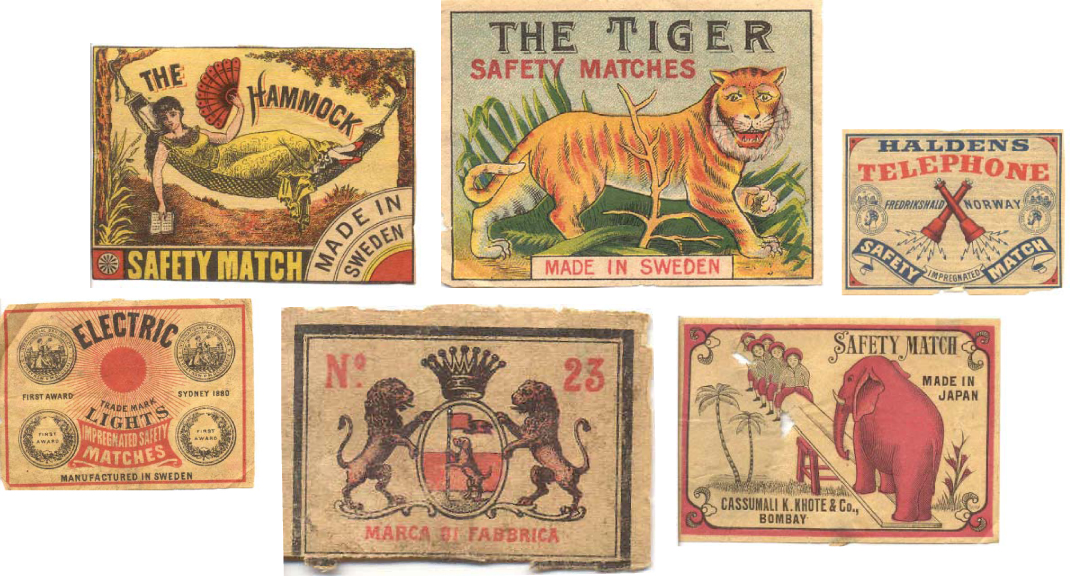
matchbooks.indd

A Collection of Matchbooks, a short story

1952, the Wayland Manor Hotel, Providence, Rhode Island.

The day is warm and humid, the yellow roses in the park across the street are in full bloom.  Eva tugs at the sleeves of her powder-blue silk suit.  She’s meeting Neal, the young lawyer she met at a Republican fundraiser last week.  Though Eva’s handsome, prep-schooled husband played tennis for Yale and still buys her wonderful presents, she’s lost her passion for him after five children.  Neal doesn’t have a dime, but he has smoldering dark eyes and soft, manicured hands.  He’s a good talker, very charming, the way he lights her cigarette seems so Continental.  Ever since the night Eva ran that girl over with her car after too many glasses of White Star, she’s been looking for a way out.  She knows her husband will never let her take the children, that’s what bothers her most.

1953, the Ambassador Hotel, Chicago.

Eva sits in the lobby waiting for Neal.  On the train back East from Los Angeles, Neal didn’t sleep more than two hours a night.  He’s frantic to make this business deal.  Eva’s money can only go so far, and though her mother contributes what she can, Neal’s ego is suffering.  Maybe if he didn’t spend so much time playing gin at the Club, he’d do better.  His wife really stung him in the divorce, he paid her a lump sum he could ill afford, but he felt so guilty.  He was only the second person in his family to divorce, the first was his older sister Nina.  She married the guy because her father told her to, so when he started getting weird in the head, she bolted.  Has her own dressmaking business back in Providence.  She dates the young boarder she took in.

1955, the Roosevelt Hotel, New Orleans.

Neal and Eva are stopping over for the night on their way to Savannah.  This trip was Eva’s idea, she wanted to revisit her childhood home, show him the house that survived the ’26 hurricane.  Her mother grew up there, raised by an aunt.  Eva remembers the switchings her nurse gave her for crossing the road by herself.  Lilly Mae had a gold tooth in front and wore the most outrageous wigs, red, blonde, honey chestnut.  Her bosom was soft, like feather pillows.  Eva is disappointed when the hotel can’t give them the Honeymoon Suite.  Neal shakes his head, smiles at Eva, pinches her fanny in the elevator on the way up to their room.

1956, annual convention of the California Polled Hereford Association, Berkeley, California.

Neal dances with his daughter, and Eva snipes at how clumsy the girl is.  Truth is, she’s gorgeous, and Eva’s feeling old.  They got both of Neal’s kids to live with them, Neal’s idea, Eva only wanted sweet little Patrick, not this sullen teenaged girl.  She misses her own children dreadfully.  Her ex-husband lets them visit in the summer.  Still, Eva manages to be kind to Neal’s daughter, she pays for Liza’s boarding school, the very best in the state.  Neal had this idea to raise prize Herefords, Eva’s mother thought it was a great idea, so they bought the ranch in Ojai.  The cattle women all look the same — brown cheeks, pale orange lipstick.  Eva doesn’t fit in, but she doesn’t care.  She orders another chilled vodka, downs it in three swallows.  Her throat burns, it feels cleansed.

1956, Diamond Jim Moran’s, New Orleans.

Liza’s in the ladies’ room, helping Eva to vomit.  Liza wipes Eva’s forehead with a damp towel.  The attendant turns away, afraid she’ll start laughing.  Eva’s hair flops over her forehead and Liza takes the comb and smoothes it back into her thick French twist.  Eva and Neal are on their way home after taking Liza and Patrick to visit their mother in Jacksonville.  It was the least Neal could do, considering his ex-wife’s frame of mind.  When the children left her, she lost 40 pounds in a month.  Liza misses her mother, but doesn’t want to move home.  Next summer, she’ll be a debutante.

1959, the Palace Hotel, San Francisco.

Liza’s on break from Mills College, meeting a boy, Ted, for drinks in the lobby.  She wanted to go to UCLA, but her father wanted her at a girls’ school.  It won’t help.  She’ll be pregnant within the year.  Ted, the baby’s father, fancies himself a Beatnik.  He grew a tiny goatee, sparse but bright red.  Liza is getting tired of the same old thing.  She sees a woman without legs being pushed in a wheelchair across the lobby.  Ted’s right behind, and Liza knows they’ll have sex in the car later.  She wonders what it would be like to have no legs to get in the way.

1959, the Luau, Beverly Hills.

Neal’s throwing a reception for Liza after she eloped to Las Vegas.  He put a good face on it, announced the wedding in the local paper, but he tried to talk her into an abortion.  Liza refused, and Neal thought about having her committed, but Ted talked him out of it.  Ted swears he’ll do the right thing, but Neal has a sick feeling.  The kid has dollar signs in his eyes, just like Neal at that age.  Neal should have listened to his heart, not Ted.  He envisions his daughter in a roach-infested apartment on Venice Beach, wearing nothing but black leotards, her enormous belly heaving as she dances to jazz records.  He wants to kill someone.

1960, Arnaud’s Restaurant, New Orleans.

Eva and her mother are on their way back out West after a shopping trip to New York.  Her mother bought a hat covered with white peacock feathers, and Eva hates it.  She wants to strangle her mother, wants her to hurry up and die so Eva can inherit the family money.  Eva’s ancestors made their money in shipping, sailing goods up and down the Eastern seaboard, and she is absolutely certain none of them owned slaves.  Eva’s mother is a spiritual nut, always falling for some Asian philosophy or another.  Next, she’ll run off with the little Mexican gardener, and Eva will have to concoct a suitable cover story.  They’ve never been close, not since her mother left for Mexico when Eva was two.

1961, the Redwood Room, Clift Hotel, San Francisco.

Ted and Liza are filing for divorce.  Neal is listening to his daughter sob.  She thinks Ted needs her, but Neal knows there’s nothing wrong with the kid that a good bank account won’t cure.  He had that illness himself.  Ted’s refused to work, has taken only art classes instead of working for his MBA like Neal wanted.  The baby lives on fried chicken and Pepsi.  Still, the little thing is cute — ten months and she walks, no, runs, already.  She’s got more of Neal in her than anyone else.  Ted’s parents pleaded with Neal not to interfere, but he can’t stand by and watch his daughter worry where her next meal is coming from.

1963, the Seven Seas Restaurant, Miami.

Neal sent the baby to live with his ex-wife, and sent Liza back to school.  Liza chose secretarial training, and works in a bank by day, looks for men at night.  Liza gets jealous sometimes at how happy her mother is with the baby, but Liza’s not very maternal to begin with.  This man she’s involved with is a sailor.  She’s never dated someone who didn’t go to college.  Even his hands are different.

Leave a comment

Filed under mysterious, short stories

A Lot of Men That Year, a novel fragment

illustration a lot of men that year

A Lot of Men That Year, a novel fragment

I was going through a lot of men that year.  All men seemed like works of art to me, like sculpture.  With body hair, without ‑‑ the buttocks, the thighs, the chests.  They were all quite lovely to look at.  Their emotional content was something else completely.  They seemed cruel, without love ‑‑ not that it mattered that much to me; I kept myself armored against hurt pretty well.  It was all casual dalliance, a form of gymnastic exercise, no permanence intended.  That was how I was protected.

Francisco was the handsomest man I’d ever dared let myself be attracted to.  We were cast in the same play, that’s how it started.  His friend, Vincent, was also quite handsome, though not my type ‑‑ blonde, blue‑eyed.

During this same time, my father and I were trying to get to know each other, 20 years too late.  He wanted instant fatherhood:  I was just confused by it all.

His VW van ‑‑ his hippie ways.  He thought I was so conservative.  When he told me he was attracted to me physically, sexually, I was only half‑shocked, because I suppose I had felt it too.  I almost wished he would act on it, just to see what it felt like.  It wasn’t like I really saw him as a father figure.

Meanwhile, I slept with every guy who interested me, except the ones who had love in their eyes.  Lust, intellectual curiosity, and admiration for my body ‑‑ these were all OK.  But love?  It gave me the willies.  Long‑term commitments were the last thing on my mind.

My father was living in his van ‑‑ I didn’t want to see him all that much, and that hurt his feelings.  I don’t know what, exactly, was going through my mind.  Attraction and repulsion, like magnetic phenomena.

Then there was the boy who punched the wall and broke his hand.  The short boy, musclebound.  He had sort of, kind of, almost-but-not-quite fallen in love with me.  He wanted to sleep with me, but I refused him.  He didn’t understand why.  I was sleeping with everybody else.  I sensed that a sleeping relationship with him would get too messy.  He would be jealous, passionate, moody, and neurotic.  I only wanted men who were vaguely indifferent?

I loved my film as literature class teacher from afar.  He was balding, blonde, and wore thick glasses.  I mean Coke-bottle thick.  I wanted everybody to make passes at me.  I was almost offended if they showed no overt interest in taking my clothes off.  My only excuse?  I was nineteen years old.

Leave a comment

Filed under mysterious, science, short stories