Tag Archives: death

Alabaster, Briefly, a short story

illustration alabaster briefly

Alabaster, Briefly

After the hurricane, but before the power came back on, Ella went out walking with her daughter, Katie, to survey the damage.  The huge old ficus tree in front of the library had toppled over, its immense grove of roots lying naked, withering now in the sun.  “Nana’s tree gots broken,” the three-year-old said.  Humidity bore down on everything like a weighted fishing net.  The tree had been a twig thirty-five years ago, when Ella was a kindergartner.  She remembered the planting ceremony — her mother, president of Friends of the Library, in a blue linen sheath and white gloves, stepping on the edge of a shiny new shovel.

Now the tree, too, was dying.  The shelter it had provided was still dark and cool — the web of roots from each branch created a division of rooms like a house.  Ella pitied that sodden, gigantic mass, torn from the soil, not dead yet, but no hope, terminal.  How long did it take a tree to die?  Uprooted for half a day, the leaves were still supple and green.  It would take days for them to wilt, weeks for a crew to cut the tree into logs and load the logs into a wood chipper.  Her mother would be long-buried by then.

It was late August, and Sophia’s diagnosis had come in January, just after New Year’s.  Ella was far away when it happened, stuck in New Jersey with a new job.  Now her mother needed her and she was marooned.  She had turned into one of those people she hated, one of the ones who moved away from their family to chase money, thoughtless and selfish, leaving their sick, their aged in the hands of underpaid nurses.  “She’s in good hands,” Sophia’s friends told her over the phone, meaning the hospital.

Ella flew down after her mother’s surgery.  The decision to operate and the actual sawing open of her mother’s skull had happened faster than Ella could get there.  When she arrived, her mother was in the Surgical Intensive Care unit, bed number three.  Sophia couldn’t talk yet.  Her head was wrapped in a helmet of gauze, and over that, someone had placed a flowered disposable surgical cap.  She looked like a confused scrubwoman.

Ella’s reaction when, at first, Sophia didn’t know her was not heroism but, rather, numb acquiescence, a slow nod to absolutes.  Ella performed the worst sort of cowardice:  cutting the lines free before it was over.  In that first hour, Ella could feel the passage beginning, away from her mother — the slow casting off from love, the mournful horns, departing from a foggy land of illness.  Her mother had a ruddy stubbornness Ella was shocked to see.  Over Sophia’s lunch tray — each food sealed in a separate dish — her hands danced above a nonexistent teacup, squeezing a lemon primly into thin air.  She had gone another way, in her soft hat, her skin hot, glossy as if with fever, the surface papery-soft but no longer familiar.

After that, Sophia’s pale and knowing return to her usual self was anticlimactic.  Ella had expected to cry more, to feel something else, not this.  Nothing was how Ella had imagined it, not Sophia’s furtive, over-the-shoulder glances of fear, not the way Ella’s stomach dropped as she stepped into the room, not the aching bones, not the past no longer claimed.  Her mother seemed glued, as never before, to the newspaper and the television news shows.  Finally, Sophia confessed to Ella how, for a couple of weeks after the operation, she had been under the brain-surgery-induced delusion that she’d murdered somebody, by stuffing them full of shoe trees, and had been waiting for it to be on the news, in the paper.  How she’d kept waiting for the police to march in and cuff her, drag her off to jail.  Sophia and Ella laughed, and the way the humor was mixed with horror was something entirely new to them both.  Brain tumor jokes — a new genre, previously unexplored.  How do you get a woman to stop shopping?  Remove part of her brain.

The social worker at the hospital sent Ella out to look for nursing homes.  In one of them, a man, or rather, a man’s body — with no visible, communicable cognitive function — was being fed through a gastric tube, through his abdomen.  Ella took in the odor of urine, other bodily smells and functions.  The man was an ideal nursing home patient, permanently hooked to his nourishment line like a freakish, prize-winning, squash.  The nurses rolled him side to side in stages, every two hours, to prevent bedsores.  He never opened his eyes or moaned.  His family seldom, if ever, visited, the nurse said.  Ella stood at his open door until the nurse drew her away.  Ella wondered if she was seeing Sophia’s future.  Is that what her mother’s life — everybody’s life — would boil down to?  The specter of death winked at Ella through perfect cat’s eyes.  What was past the curtain?

There are far worse things than dying young, dying suddenly.  And so Ella said no to the nursing home.  She calculated how much money her mother had and decided to spend it to make Sophia’s remaining life as comfortable as it could be, considering the fact that inside Sophia’s skull was a bomb, gathering energy to explode.  Ella hired someone to nurse her mother twenty-four hours a day, seven days a week.  Someone with the right hands, the right smell.  She interviewed them over the phone, scheduled in-person interviews.

Lillie had a gold tooth in front and wore outrageous wigs:  red, blonde, honey chestnut.  Her bosom was soft, like feather pillows.  Ella knew Lillie was right for the job from the first second.  How was that possible?  All Lillie’s Bible-thumping was okay by Ella.  She knew Sophia would be well cared for.  She knew Lillie wouldn’t steal anything.  She knew Lillie wasn’t, in any way, a spoiler.

Lillie believed in Hell.  She described it one night, a pit filled with fire and snakes.  Lillie’s eyes widened and Ella could see the white all around the dark iris, merged with the pupil in fear.   Lillie believed in speaking in tongues, in visions, but she hadn’t made the commitment to become a Christian because, she confessed, she knew she wasn’t strong enough yet to keep all the Commandments.  Lillie had borne a six-year-old son, father unmentioned, who lived back home with family.  He was her shame but also her delight.  She named him Christophe and had him baptized the same day he was born.  She might not be saved, but her son was.

She was from Jamaica and already spoke in two tongues — one, a lilting version of Standard English, the other, a speedy patois she used to converse with family and friends.  Ella wondered if Lillie had secrets — when Lillie spoke like that, Ella tried but couldn’t understand.  She had inklings she, herself, was being talked about.

Lillie was good to Sophia and Katie.  Katie loved to snuggle with Lillie in her bed, rolling against her enormous bosom, watching cartoons.  Katie sought out Lillie’s bed even when Lillie was not in it.  Lillie cooked chicken and rice dishes with a lot of saffron.  Her hair oils and hygiene products covered the bathroom counter and the windowsill in the shower.  She had feminine cleansing wash, feminine cleansing wipes, feminine deodorant spray and coconut-scented douche.  Ella wondered what Lillie was trying to wash away with all that stuff.

Ella and Lillie met frequently in the night, checking on Sophia.  Ella usually slept in a T-shirt, Lillie in a long, shiny pastel gown with lace about the neck.  She glided softly on her plump bare feet and suffered from insomnia.  When Ella couldn’t sleep, she’d listen at Lillie’s door and if the television was on, she’d knock.  Together, they passed hours watching twenty-year-old British slapstick on PBS.  Lillie never laughed, but most of the time Ella couldn’t stop until she suddenly remembered why the two of them were there.

You never know enough about a particular cancer until after the patient, in this case, your mother, is dying, Ella thought.  Then you know, you get the whole picture.  Then you’re suddenly an expert on the ugliness of the tumor’s tentacles laying waste to the brain, pushing aside healthy cells, strangling them in the search for nutrients, a vigorous weed nothing can kill.  Healthier than normal brain tissue, hardy as a kudzu vine.  The operation had removed a clump from inside Sophia’s head — mixed normal brain and cancer.  What part of Sophia’s personality had been stored in those cells, then disposed of and lost to the hospital’s furnace?  These neurons and those neurons, together, perhaps held the memory of Ella’s birth — Sophia couldn’t remember what she couldn’t remember.  Ella didn’t want to know for sure what was gone.

An area of brain, diseased, removed, yet the surgeon explained how the microscopic roots fanned out — to remove Sophia’s entire tumor would be to remove her entire brain.  The surgery would provide some extra time on earth, a substantial number of better days, but would not stave the weed off for long.  Eight months almost to the day.  The radiation treatments barely slowed the growth.  The terrible vitality of the cancer equaled the slow deflation of Sophia’s life.  Ella was useless to help in that regard, but took care of all the practical details, made it possible for Sophia to die in her own room, her own bed, on her own sheets and pillows.

Time moved forward but memory moved in many directions.  Sophia’s oncologist said, “The cancer appears to be in remission.”  Ella, an intelligent woman, a scientific woman, found herself pleading for divine intervention, for the laser beam of God to drill into Sophia’s head and burn out the tumor.  Appearances of remission, external, controlled for a time.  Sophia walked, talked, and played bridge again.  But for eight months lived in the shadow of death.  Ella was buoyed by the mercy of not knowing; crushed by the agony of not knowing.  Sophia lived on the edge of the river, where each tussock of cool grass might be the last.

Sophia became confused, just as she had before they opened her head.  She started taking pain pills for the growing headaches.  “I don’t know if they think they’re fooling me,” Sophia said.

Ella caught her mother looking through her 19th-century medical dictionary, the same one Ella had pored over as a child, staring endlessly at the pictures of congenital birth defects.  Hydrocephalus, and the like.  You never know what cancer will do until it’s already done it, Ella thought.  She wanted to transcend her awkwardness in speaking to her mother about her own death, but wasn’t able to.  She held her breath until she felt faint, but no words came to her.  Sophia knew she was dying; Ella pretended she, herself, didn’t.  It felt like Sophia knew Ella was merely pretending, and spared her anyway, one last act of maternal grace.  Apparently, Ella was good for only the simplest things, things like comforting her mother with voice and touch as she became more and more childlike.

But really, Ella wasn’t good even for that.  One afternoon when Sophia was knocked flat with pain, Ella tried to lie down in bed with her, stroke her back, the way her mother had done for her all her life.  “No, don’t, it hurts,” Sophia said.

Ella, feeling helpless anywhere but at her mother’s side, stared for hours at old photographs.  In one was the three-year-old Sophia, sitting on her father’s knee, dressed in white, a huge bow on the top of her head, a mass of dark curls, her small legs unexpectedly spindly, her feet surprisingly bare.  The sole of her foot held the whorls of this day, this moment.  Ella tried but couldn’t decipher the expression in her grandfather’s eyes.  What would he say, that circumspect ghost?  How to explain to him, how to excuse the futility of all Ella’s lavish preparations?

That night, Ella dreamed Sophia gave her old Bible to Lillie instead of her.  And in the dream Ella was terribly hurt by that, but since her mother was dying, tried not to show it, and wondered, with the agony of a child, why her mother hated her so much.  Lillie’s eyes, round and widened, with either alarm or fear, darted hawk-like around each room, and those eyes, surrounded by her smooth features and her gleaming, dark-brown skin, those quick eyes seemed to hold all feelings, all knowledge.

It was Lillie, Ella had to admit, who did the most work for Sophia.  In the days that followed, Ella could only watch as the bond between the two became stronger.  The next week, Ella was back in New Jersey, resigning from her job and packing the contents of her office.

“Take as much time as you need,” her boss said kindly, but she knew he didn’t really mean it.

“I need more time than you can possibly imagine,” she said, and he nodded and tried to look sad.

On the phone later that morning, Lillie told Ella how Sophia seemed so much more cheerful since Ella had departed.  “She’s perked up so much,” Lillie said.  Ella wasn’t surprised.

Back in Florida for good, Ella grew angrier by the day.  She lay awake nights fuming about the receptionists in the oncologist’s office who made her feel like an obnoxious pest for calling.  Their crisp, girlish voices made plain there was nothing more they could do other than prescribe painkillers.  Why didn’t Ella realize that and leave them alone?  Then she chided herself for being enraged by their callousness.  Rational thought had vanished.  Ella’s remaining thoughts and feelings flew around like feathers and fur and sometimes, like lazy dust balls.

Katie, at bedtime:  “I’m scared of monsters.  A tiger is in here.”  When asked to cease and desist:  “I’m just being quiet.  Don’t talk, Mommy.”  Ella watched her breathe after she fell asleep — both her daughter and her mother were flying along far, far above her, and she couldn’t seem to rise.

The day before the hurricane Sophia said, “Hi, sweetie,” and smiled when she saw Ella.  Sophia was close to dying but Ella felt her mother still knew her.  Sophia held Ella’s hand and kissed it.  She rubbed Ella’s arm.  Her mother’s head, as Ella adjusted it on the pillow, felt so warm, so heavy, and so sweet.  Her hair — smoothed flat behind her ears.  Her nails painted red by Lillie, she lay on pink embroidered sheets, sporting pale shamrocks on her homely nightdress.  The steel bed-rail gleamed, chilling against Ella’s thighs as she leaned in to try to glean some intricate, fine-grained meaning from the hour.  The charging ceramic horse she had hung over her mother’s bed, the one which had driven bad dreams away in childhood, his mane still wild and golden against the gloom, would be only a minor talisman in the end.

A urine catheter and bag hung on the hospital bed’s side-rail.  “Is that juice?” Katie asked the first time she saw it, and Sophia and Ella both laughed.  The tubes were transparent at first, then, growing clouded and organic with use, became less a fixture than anything.

It was too hard for Ella to bear.  Every time she went in the room her mother grabbed her hand, gripping with all her strength.  The way she looked at Ella — she wanted to tell her something, but what?  Ella wished she could stay away.  She wished it wasn’t like this.  She wished they could just sit in the living room together, watching TV and Sophia could needlepoint.

Ella waited for the hurricane.  Last week had been her mother’s birthday — the storm would be her penultimate gift.  But Ella didn’t know that until afterward.  Memory back-filtered such telling details — pictures of the dying mother were snapped, then parts of the view faded but parts brightened.  Life as journey, as vision, as caress.  Each thing became smaller at first, then loomed larger.  Her mother’s eyes, teeth, hair.  Perception was flawed.  The hopeless interpretation of the mind.  Where was her guardian angel?

Suddenly, Ella was in love with hurricanes as never before — yes, there was the threat of death, nothing new, especially these days, but there was also the stupefying power of the wind, the pelting rain.  Ella longed to be in awe, in supplication, flattened, watching the storm roll over her body like a man would, naked, trembling with powerful need of her, shouting with passion as she lay under him.  She was overwhelmed by the feeling that this was the way things needed to be.  For so long, a storm had been raging inside her — it was a relief to have it visible, a relief to simply be reduced to holding on.

In the past, when Ella’s mother wasn’t dying, she always drank to excess when a hurricane was approaching.  Sophia had always seemed terrified by the darkening sky, the strengthening gusts of wind, and the first huge, cold, solitary raindrops that pelted heads at random.  When hurricanes were on the horizon, she cooked elaborate cream sauces, and served lemon-and-honey tea shot with brandy in crystal cups.  When a hurricane arrived, Sophia was always more or less unconscious.

But this time, Sophia wasn’t afraid at all, instead, comforting Katie from her deathbed — the three-year-old crawled in with her, not Ella, in the middle of the hurricane.  Ella was too tired to have any more hurt feelings.  “There, there, nothing’s wrong, baby,” Sophia crooned.  Ella pretended it was herself in her mother’s grasp.

Sophia wasn’t afraid, and then Katie wasn’t, either.  Sophia, in the middle of that hurricane night, showed Katie it was just the wind… showed her the trees, whispered into her ear, in the midst of baby curls.  Ella knew how that felt, her mother’s velvet skin between the ear and the shoulder, all of it perfumed silk.  Ella closed her eyes and slept.

Later that night, just before dawn, while the wind ravaged the trees and tugged on the roof of the house, Ella woke to hear Sophia speak for the last time, the sleeping Katie draped across her chest.  “Ella, Ella,” her mother breathed over and over, quietly, so as not to wake the child she held.  “Ella, Ella.”  Sophia smoothed hair she believed was Ella’s as she whispered.  Ella watched from her mattress on the floor, afraid to move.

Sophia’s death waited while the wind roared, her death staring with great golden leopard eyes, unblinking.  The mercy of the teeth sunk into the throat.  To stay, to leave — it became the tiniest of steps.  The tears in her eyes.  The death dance, the death rattle.  The odd, rhythmic, hitching respiration, the sticky sweat, the clock wound up by Sophia’s parents’ lovemaking finally unwound.  Sophia died late on the morning after the hurricane.  Ella was there, holding Sophia, as she drew her final breath.  And then exhaled.  Tick-tock — then nothing.

In truth, she lost track of her mother’s breathing as it stuttered and missed — her own heartbeat seeming to slow down — had that really been the last, the last?  Waiting for the next inhalation, straining to hear.  Ella just missed it, missed it.  Then it dawned on her, too late, Sophia wasn’t breathing any more.  Or was she?

“I think I saw her chest move,” Lillie said, panting hard.  She ran to Sophia’s dresser and grabbed a mirror, holding it in over Sophia’s face, peering for signs of breath.  Lillie’s eyes were dazed, her hands trembling, humid, as she passed the mirror to Ella.  At first Sophia’s hand felt the same as always, but in a few minutes her color had completely gone.  Her skin was whiter than Ella had ever seen it.  White, translucent, her dead mother became alabaster, briefly — a warm, heavy sculpture.  The funeral home people didn’t let Ella watch her mother stiffen, cool.  They hustled her out of the room, didn’t let the daughter see them zipping her mother’s body into a bag.  Had they forgotten that zippers made noise?

Lillie hovered over Ella as if she were spun glass, falling toward the floor.  Lillie’s hands were once again warm, strong and capable, but in the end had not been enough to keep Sophia alive.  She stripped the rented hospital deathbed and sponged the plastic-covered mattress with lilac-scented disinfectant.  Ella crept into the bathroom and locked the door, listening to the sounds outside with great weariness.  She eyed the bathroom window, wondered if she could fit through.

The water Ella drank to wash down her first tranquilizer was terribly cold.  On her tongue it was like an immaculate knife.  When Ella told Katie that Sophia was up in heaven now, with God and the angels, Katie’s voice grew soft and sad:  “I wanted her to stay the way she was.”  Me, too, Ella thought.  Me, too.

Ella stood in the driveway and watched the black hearse move off down the road.  Lillie was soon engrossed in cooking — gigantic pots of black beans and yellow rice.  The smells filled the house, harmonizing with the soapy lilac already there.  Ella’s first post-hurricane, post-mother walk with Katie was a mixture of familiarity and revelation — she was used to seeing that kind of wreckage.  She was prepared for the smell – the ocean things, dead and rotting washed-up things.

That night, Lillie snored through it all, her mouth hanging open, trusting, defenseless, still waiting to be strong enough to get saved.  She had not heard Sophia’s last words, and for that Ella was glad. Ella, Ella, Sophia sang out in the night like a chant, the repetition of the name apparently bringing her ease when might otherwise have been terrified.  Ella realized, as she had not before, how much she loved wind and rain, how much she loved how the world was made disheveled and clean by a hurricane.  She clutched her daughter’s small, hot hand, wondering how the child would remember this day; remember her when it came to that.  “Nana’s tree gots broken,” Katie said again.  The child lifted her arms, asking to be held, and Ella obeyed.  She buried her nose in the curve of Katie’s neck and breathed.

3 Comments

Filed under acceptance, anthem, baby, beauty, bible, birth, childbirth, childhood, compassion, courage, daughter, daughters, death, development, dream, dreams, ella, eternal, eternity, evolution, faith, family, health, love, mothers, mysterious, science, short stories

Elf Therapists I Have Known, a short story

illustration reichian elf therapists i have known

Elf Therapists I Have Known, a short story

I went to a Reichian therapist (a disciple of Wilhelm Reich, who was a student of Sigmund Freud) once, and it was some experience. She was this neat little lady named Lila. She had these big flashing eyes and she looked like an elf except she didn’t have pointed ears. Well, actually, maybe she did. I’m not sure. Wow, I think they really were pointed ears! So, like, dude, I think she actually was an elf! How spooky is that? The elf Reichian therapist/analyst/spiritual counselor? Who just happened to be counseling my dad? In group therapy? With my Aunt, his baby sister, who was ten years younger than him? Like I was ten years older than my baby brother? My two daughters that I have now, thirty something years later, are ten years apart. How many times do we have to repeat this generational pattern thing to get it right? To infinity, and beyond, it would seem.

***

So, the reason I went to see her, Lila the elf therapist, is that I was in California visiting my father the Communist criminal defense lawyer. He was really tall and thin with wild, curly hair. He was what I call now an “interesting” person. Which my older daughter will tell you really means “eccentric,” which is supposedly good, and which my younger daughter will tell you means “weird,” which is not so good, in fact, is bad in a major way, that is, any way which embarrasses her in front of her friends, which may be perfect strangers, but, you can never be too careful. Someone might turn out, in the end, to be a friend. Or they might turn out to be your worst enemy, so don’t give them any ammo they might be able to use against you in future.

Well, anyway, I was out visiting him, my Commie criminal defense lawyer father whom I didn’t see from the ages of four to twelve, over Easter break when I am fifteen going on sixteen, the exact same age my younger daughter is now, and he had an appointment for group therapy while I was there, and for some unknown reason, he invited me to go along with him. Because I guess he thought exposing a vulnerable adolescent to some of the wackiest, mid-1970s-counterculture, radical German existentialist-inspired group therapy that ever existed was a great idea to heal our battered and bruised father/daughter relationship! Which is exactly the sort of thing my father would think! Which is one of the things I most love about him now, but let me tell you, then was a completely different story!

***

I didn’t love this characteristic of Popsy at all when I was fifteen. No, that characteristic made my stomach hurt. In fact, the entire time I was with him, mostly, I was always on the verge of passing out, throwing up, breaking into a horrible sweat, having diarrhea, or all of those things simultaneously! Not that I was tense, mind you, just that he made me ever the teensiest bit nervous because of his unpredictable-ness. Excuse me while I wipe the tears from my eyes from writing that last couple of sentences! Tears of laughter! Now! Tears of sickness, then. See what a difference 36 years can make to a person? From one of your most horrible experiences to one of your most cherished, a few dozen deaths and a few divorces and a couple of children later! I’m laughing so hard I have abdominal cramps right this second! Whew!

4 Comments

Filed under boys, daughters, fathers, girls, health, humor, love, mothers, mysterious, short stories

Suffering Jets, Bowling Litionists, and Peace Knicks, a fable

illustration suffering jets bowling litionists peace knicks

Suffering Jets, Bowling Litionists, and Peace Knicks, a fable

My mom’s always trying to teach me History.  She says it’s important for us kids to know all the bad stuff that happened in the olden days so we won’t be as stupid as all those olden people were.  My mom seems really mad at those olden people.  She says human beings could have lived in a “paradise-on-earth” if it wasn’t for a whole bunch of bad ideas they thought up and then were stupid enough to get stuck on.  Just as if they were GOOD ideas!  My mom thinks good ideas are real important.  I’m not so sure because I can’t always tell the difference between one of her “good” ideas and one of the olden people’s “bad” ideas, but I’d never tell her that because if I did I think she’d go nutsy-futsy just like Nadine Houck’s dad did, and then I’d be pretty much alone except for that mean bunch of kids living on that hill up from the lake.  They’re not mean so much as they are just pissed because nobody’s really around to care for them and make them read their schoolbooks every morning.

Anyway, my mom’s always trying to teach me History, and so I try to learn it.  Like today, she got started on the “god-damned East-West mutual suicide pact.”  She says that back when there were lots of olden people, (she says there were BILLIONS, but that nutso-futso and I don’t believe her), everybody actually KNEW what would happen if there was “an all-scale nuclear confrontation.”  Like, they made TV shows and movies about it, and people wrote all kinds of books and stuff, and they had big “world conferences” and all, and lots of people even made stuff for people to buy so that when the “all-scale nuclear confrontation” came, they’d have water to drink and canned peas and tuna fish and EVERYTHING.

And like people even built bomb shelters in their yards and stuff.  My mom says this is “evidence of the world-group insanity” of the early twenty-hundreds and that I should mark it WELL in my soul.  So anyways, all the olden people actually KNEW what could happen and all.  Which is real hard for me to believe sometimes. Like if my Mom and me actually KNEW that the roof of our house was going to fall in, and so we bought big steel umbrellas and helmets and stuff, and kept living right in the SAME actual house but all the time acting real worried about the roof caving in and talking like MAD about how to prevent it and all, but really not doing anything to brace the ceiling.  And EVEN having some guy show us pictures of what our blood would look like spread all over the floor.  But then we’d just buy bigger steel umbrellas and harder helmets but we STILL wouldn’t leave the house.  Damn, isn’t it hard to believe that those dumb olden people could actually ACT like that?

So anyway, the whole of Earth really, really KNEW that they were in a big pile of trouble.  But people did ALL sorts of stuff to “distract their lunatic sensibilities,” my mom says, and they’d do stuff like jump out of big airplanes to feel what it was like while all the time they just kept stocking up on the god-damned steel umbrellas and helmets.

My mom said that one time in the middle of the twentieth century and towards the 70’s some olden people actually and truly came to their senses and try to yell loud at all the “sleeping fools,” my mom says.  She says that she read all about them in college and always wondered why they quit yelling.  She says that groups of good people would get together all down in history, but that as soon as they had “achieved their one objective goal,” they would trickle down and eventually dry up.  She talks about the Suffering Jets and the Bowling Litionists and the New York Peace Knicks and that they all lost their momentum in the end.

Anyway, my mom says that HER theory of what in HELL happened to people is they had plenty of guilt, but no feeling of responsibility to go along with it.  Like they felt bad about their “sins of omission” and all, and they hung their heads about it, but what it REALLY was, was just “crocodile tears.”  Like they would say, “Gee, I feel SO guilty, but gee, if I felt guilty about every bad thing in the world I wouldn’t be able to SLEEP at night and my face would break out and I wouldn’t be having FUN and stuff.”  Like they had a mental maturity age “of about three,” my mom says.

4 Comments

Filed under for children, humor, mysterious, notes, prose poetry, science, short stories

the divided self, a poem

illustration the divided self

The Divided Self


That lonely man and that sad woman

are dead now, but I still can’t

get away from their lawful claims.


They possess my hands, my feet,

my face. I have only been loaned

these things: possessions assembled


for me out of unseen molecules

I believe in by faith, with thanksgiving.

Blind, jerking passion such as this


nurtures the kind of organized madness

I learned to live with a long time ago.

Short and sweet, to the point:


I hate them bringing me into the world!

What on earth were they thinking,

warm lust pressed against the cold metal


of a postwar kitchen table?

Or did they simply writhe on the linoleum?

Alone, I existed weightless, unknowing, free.


I never approved the intrusion of his

sperm, wriggling madly for oblivion;

tiny kamikaze. No wonder men feel


like clumsy, oafish gods half the time.

As for Mother, she arched dizzily beneath him

half-clothed: strapless formal, silk stockings,


shiny pumps with spike heels,

and though she opened her flesh,

how she longed to kill him with her shoe.


Such war made me. Secret wishes

do a body in. I am that frail universe

mindlessly created, allowed to run wild.


3 Comments

Filed under legal writing, mysterious, poetry

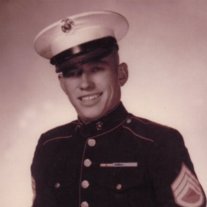
billy charles cantrell, may 5, 1998

bill-cantrell-obituary

May 5, 1998

Billy Charles Cantrell died on April 28th. I hardly knew him, but I had known of him for a long time. He had a waxed handlebar moustache & worked at the downtown post office. I trusted him with many, many packages & important letters & documents over the years. He stood out in a crowd. He made customers feel safe, you knew something you put into Mr. Cantrell’s hands was definitely going to arrive at its’ destination.

Someone I hardly knew died the other day, but I sat & stared at his obituary for a long time. I had always wondered about him, I had always wondered what he was like during his off hours. He worked at the downtown post office in Gainesville, where I have lived since 1981. He worked for the post office for 40 years. I hadn’t known he was retired. I think he died of cancer. He was 69 years old. He had college degrees in anthropology & archaeology, which I never knew. He’d been in the Army, he’d lived in Gainesville 44 years. He must have retired pretty recently. They’ve remodeled the lobby of the downtown post office now, so when I walk in there’s no trace of the old feeling, the old feeling that Mr. Cantrell gave us, the postal customers. He was handsome, and had sharp, penetrating eyes, but a good-natured smile & manner. He was unfailingly polite, unfailingly efficient. You could tell he was smart. I wish I’d known him better, I wish I’d met him for coffee or something. He had no children.

I wonder how long he’d been sick. Maybe he retired at 65? Should I call his widow? Tell her what he meant to me? His picture was in the obituary, otherwise I’d never have known who it was. I’m so glad she included his picture. So very glad. I’ll bet Shelley knew him, or at least knew who he was. Oh, I hope he didn’t die of a brain tumor.

Dear Mr. Cantrell, we hardly knew ye. But thanks anyway, thanks for working 40 years in that post office, thanks for taking the envelopes and boxes so very gently and firmly and wonderfully. Thanks for your sensitive looking hands and your brisk manner, your occasional smile, that glint in your eye of humor. You were always thinking a lot of things, that was clear. You were very much alive from the neck up.

1 Comment

Filed under Uncategorized

Possessing My Daughter, section one of a short story

Possessing My Daughter, section one of a short story

illustration possessing my daughter section one

I think the human race somehow needs to evolve beyond children.  Beyond parenthood.  I certainly didn’t want to be a mama.  I resented it and I still do.  Even from the land of the dead, I still begrudge her all my time and effort.  She took so much, so much from me.  She was never grateful, never.  That’s why I’m making her write this now.

I almost had an abortion, but her father talked me out of it.  He could talk a dog off a meat wagon.  He carried me off across the desert to Las Vegas to get married.  My own father was so angry when he found out.  There I was, suddenly, on my own at 19, out of my father’s house.  My new husband and I took a small apartment in Venice Beach.

David had this asinine idea of being an artist.  He had this notion that my father should pay the bills indefinitely.  I had dropped out of college halfway through sophomore year.  I was seeing a psychiatrist.  It was 1959 – need I say more?  Freud was God.  My doctor said I hadn’t resolved my Electra complex.  That, he said, was what was making me so tired.  I slept more than 12 hours a day.  When I wasn’t sleeping, I shopped and went to parties.  The only bad part was knowing that eventually I’d have to make a decision and do something with the rest of my life.  It appeared that being deb of the year in my hometown wasn’t going to cut it much longer.

The first boy I loved broke my heart.  I vowed that it would never happen again.  So I did nothing to repair that broken heart.  I let it stay broken.  It was the only way I could think of to protect myself.  It’s been so long….

Since I’m already dead, I suppose you’re wondering what the point of all this is.  The point is this:  I don’t want anyone else to suffer what I suffered while I was alive, and especially  not what I’m suffering now that I’m dead.  Passing from life to death was supposed to bring me some sort of enlightenment, wasn’t that the fairytale?  I was supposed to experience an end to all my worldly cares – joy, peace, rest, or just plain oblivion.  Well, I didn’t get any of those things.  I’m not surprised:  why should my death be any different from my life?  I got the exact opposite of oblivion.  I got awareness and clarity of vision, a vision so merciless and sharp it would make my head hurt, if I still had a head.  Yes, I see everything  clearly, for the first time, and let me tell you, I’d settle for oblivion any day of the week.  All I want to do with my death is shake all of you by the scruff of the nectk until you get clarity of vision, too.  Then maybe, since you people are still lucky enough to be alive, you’ll do something with that vision while you still can.  Maybe you won’t end up like me.

My poor daughter, even after I died I wouldn’t let her alone.  I visited her over and over again in her dreams until she couldn’t stop thinking about me.  I took control of her heart and her mind – actually, now I see I did that the day she was born – and I never let go.  Now I can see how I really wanted her to tell my story all along – that’s why I raised her the way I did, to give her the necessary skills.  It was like heating iron in a forge and pounding it into a useful shape.  She’s writing it all down, every last bit.  I won’t let her stop until she’s done, and I’m satisfied.

Oh, she’s so much like her father.  What a mistake I made.  I’ve told so many lies since then that I’m not really sure what happened between us.  I think he could sniff out the complications I carried and wanted nothing to do with them.  He didn’t want to hear about how I’d suffered during my parents’ divorce and their custody battle over me.  He didn’t want to hear how I’d stopped eating after the judge sent me to  live with my father.  He didn’t want to hear how much I’d hated boarding school.  But I do remember wanting to have sex with him and him turning me down.  He was too fastidious to have sex with a girl he thought would make for a Problem Breakup.  That would only make the problems more problematic.  The excuse he used was that he still had a lot of schooling to get through – a year or two of college, then law school – and he couldn’t afford to get serious with anyone.  Not, he said, that I wasn’t beautiful and desirable.  The issue was I was too beautiful, too desirable, and getting serious with me was apt to derail his train, headed for success.  He’d lose sight of his goal, and so we had to stop seeing each other.

5 Comments

Filed under mysterious, short stories

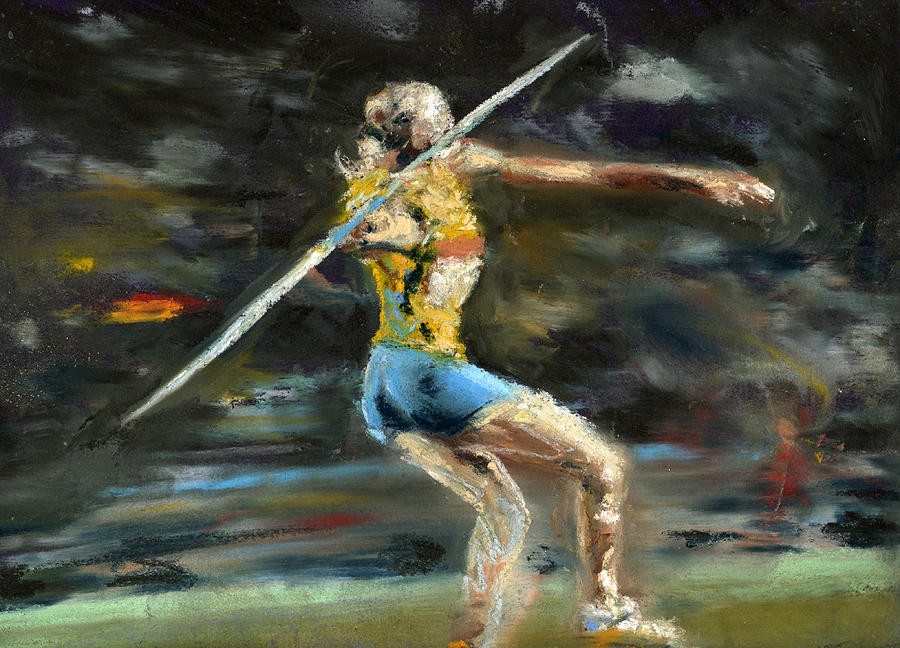
The Art of the Javelin, a short story

illustration the art of the javelin

The Art of the Javelin

There were certain lovers who never let you go, not even when it was over, officially over ‑‑ the kind of officially over where you both married other people.  It’s not anyone’s fault.  It’s something about chemistry, the chemistry of their skin on yours, your skin won’t ever stop wanting theirs and this is a really, really bad thing.  Marriages have been wrecked because of that skin, engagements broken, the valuables pawned.  The skin fling always started well, of course, the mad passion, so heated you never thought about the consequences.  And there were always consequences:  huge, nasty ones.  Perhaps those terrible consequences were what doomed the love affair from the very beginning.  Nothing so lovely and delicate could survive the stamping black boot of your own despair.

You loved him, but it was never enough.  Being with him was not enough.  Being without him was not enough.  Maybe your children, both dead, would have been enough.  You saw the first child, sleeping, its head tilted back, its eyes closed.  You do not know what color its eyes were.  You never saw its eyes.  It saw, and in seeing, died.  Suffice it to say the child would have been a master of language.  It would have been love, a fountain of it.  You left, not taking your child home.  You let someone else take it away.  Psyche never saw Cupid, and you cannot see him anymore.  Psyche is and was whatever Love loved.  You were loved by Love.  You died with the child.  You were crushed like a butterfly hovering in front of a fast-moving truck.  You were a crushed soul.

The land was flat, barren ‑‑ the horizon stretched like a satiated woman ‑‑ supine, theatrical, unconscious.  You missed the children, and you missed him.  Was it a garden you were in?  Was it a prison cell?  There was never enough air, anywhere.

Who wanted, as a woman wanted, simply to be loved?  All the boys wanted something else.  Girls, on occasion – and more than once — want abstract worship, admiration from afar, poems, flowers, sweet nothings in the ear.  Is that what the boys wanted, too?  With that divining rod in front of them it must have been difficult to remain abstract.  There was something embarrassing about need rendered visible.  They could not hide it from the world.  Did boys say, “No?”  As often as girls?  The urge was outward, not inward – the desire to pierce, rather than contain.  The needle ‑‑ the eye of the needle ‑‑ threaded with what, exactly?  The female soul?  Your feet were so cold in the water, wading for freshwater mussels, that your toenails turned stark white.  The mussels were brown and slippery, and the empty shells painted with pale, pearly rainbows in the light.  The little girls around you murmured with delight, squealing when they found a really big one.  Their little hands were sandy and damp on your arm.  Their voices piped so impossibly high.  You saw them at age 35, still hunting for the perfect shell.

You were tired of living your life.  It was satisfactory only in the material sense.  The lights were never turned off for lack of payment.  Your husband went to bed hours before you did; you sat doing needlepoint in the den and watching obscure re‑runs.  You resented your husband’s bulk upstairs in the king‑sized bed, you resented him sleeping turned towards you, resented the warmth of his breath wafting across the hump in the middle of the mattress that had arisen over the years between the depressions your bodies made on either side.  Once or twice you tried to get her husband to talk to you about God; he declined to do so, saying it was “too personal” a topic.  What is the use of a husband, you thought, without conversations about God?

So you wondered whether to leave him.  Suddenly, a young man, black‑haired, black‑eyed, entered your life, with a piercing gaze, but shy, downturned head.  He was marrying his girlfriend:  you thought they were both too young and naive to know what they were getting into.  You tried to talk him out of marriage, saying not that yours was terrible, just that marriage itself was really hard and bound not to live up to anyone’s expectations for it.

He married the girl, anyway, and in about a year was desperately unhappy.  His wife left him, run away several times, stole his money and his car and told him he was worthless both in bed, and out.  In another moment, you found yourself in bed with him, never once considering how you would get out again.  You were not ready to be called an adulteress, but he persuaded you that since you had already committed adultery in your heart, what did it matter in the flesh?  Oh, it mattered, it mattered plenty.  Only in a purely theoretical sense did it not matter.  It certainly mattered to your husband.  He wanted the child, all the money, the house, and your head on a platter.  Everyone told you not to be honest, not to tell him, but you couldn’t deceive him that way ‑‑ it would kill you to be so deceived by someone else.

It first happened on a rainy afternoon, the kind of afternoon that made sitting on a park bench impossible.  All you really wanted to do was talk.  You were lonely, you wanted to be alone with him in a comfortable place where you could take your shoes off and lie down flat and tell him your life story.  He was so kind and understanding.  You wanted everything to happen slowly.  Both he and you were married to other people at the time and you had a broken ankle so you couldn’t walk through the woods or the park, even if it weren’t raining.  You weren’t planning on committing adultery.  You wanted an affair of the heart, of the mind.  You were either hopelessly naive or lying to yourself.

When you were feeling bitter, you wore red clothes, covered with lint, and did not bother to go over them with sticky tape.  You slept only on goose down pillows, and drank only water bottled in France.  When hurricanes were coming, you cooked elaborate cream sauces, and served lemon and honey tea shot with brandy in a crystal cup.  Your rage gave you a sore throat, the tears and tissues a sore nose.  Anger was only depression turned outward.  Always, you received presents in the wrong size, but consoled yourself afterward with icy lime sherbet.  You slept a bitter sleep, on sticky sheets, dreaming of French noses, and purebred geese, white with pink feet.  On Halloween, you changed your name for good.

You took bitter medicine, while he slept through the hurricane.  He gave you red clothes, always the wrong size.  You fed the geese cracked corn with your bleeding hands.  The brandy shattered the crystal glass.  Cream sauces were poured over ice.  You strapped the pillows to the bed with sticky tape.  You cried while he was bleeding.  You whimpered after giving birth.  A deep, abiding melancholy.  Our Lady of Perpetual Melancholy.  The symbolism of the golden arches.  An icon for the ages.  Our Lady of Perpetual Cholesterol.  Our Lady of Sodium.  Our Lady of the Mall.  Where is food for the spirit?  Charge it on your MasterCard.  Ring it up on your Visa.  A deep melancholy, not easily abated or debated.

It happened on a day when you’d been fasting for religious reasons even though you weren’t religious.  A friend called that morning before you’d eaten breakfast and happened to mention it was Yom Kippur.  You felt ready to atone for everything you’d ever done regardless of whether you’d actually caused anybody to suffer.  Your husband, for example.  Your husband was suffering although he didn’t realize it.  He thought he was content, but he was wrong.  You knew that having sex with a woman for 12 years without her having a single orgasm constituted suffering.  You wanted his suffering to cease, quickly and permanently.  And it seemed you were the cause of all suffering, everywhere.  You had daydreams about running away and never coming back, living in a small rented room, anonymous.

So the fasting and the marital woes had taken their toll on your common sense, and the broken ankle had taken its toll on your ability for locomotion.  You were faint from low blood sugar and hobbled wearily into the motel room, collapsing on the lumpy mattress.  Being called a neurotic bitch by your husband had long lost its appeal.  You needed somebody to love you, not somebody to fuck.  But, as your soon‑to‑be lover undressed you, he told you it didn’t even matter whether you actually had sex with him because you’d already committed adultery in your heart.  At the time, you took your lover’s reasoning for spiritual altruism.  You snapped at it like a starving bass would snap at a rubber worm.  Hook, line and sinker, you purchased your fate.  It was silly to think you could ever keep a secret.  You obtained a divorce, slinking away from the ruins of your marriage guilty, nearly suicidal, your ex‑husband spitting contempt and moral integrity even as he made plans to marry his own recently‑acquired lover.

Then over and over again, between your ex‑lover and yourself, things exploded, imploded, burdened by your guilt and remorse and terror.  All this ruined mess wasn’t what you had in mind, you were just lonely and wanted to talk.  He thought everything was conquerable, everything, by the human will and true love.  Slowly, unmet needs that at first seemed unimportant loomed enormous and unsolvable.  He didn’t feel safe with you, nor you with him, albeit for completely different reasons.  You were nastily divorced, and suddenly a major skeptic when it comes to love.  Between your dead marriage and your dead alcoholic mother, you finally learned to cut your losses, and quickly.  What started with a bang ended with a bang?  First the relationship was a misery to you, and then it was a misery to him.

The copper gleam of your helmet hair was blinding.  Ivory soap floated in the tub, pale and fatty.  Hard gray metal breathed like a ghost.  The stains of divorce could not be removed with bleach, no matter how hard you tried.  Women in bikinis reminded you of how you used to feel in summer, naked, nearly free.  You decided to be laid out in a salt pine coffin from Jerusalem, your wake illuminated by jeweled lamps fueled by liquid chicken fat.  Stone gargoyles copied from Paris originals would be worked into bench seats.  For refreshments, cold meats with baked garlic.

You loved him even though you knew it was doomed, and that love kept pulling you back to the maybe‑I‑didn’t‑really‑give‑it‑the‑old‑college‑try sort of mistake.  So you got involved with him all over again, and it was a disaster, again, but to him the fact that you came back only proved the point that you two should never have broken up to begin with.  In the end, he never understood why you kept breaking it off, and each time it got over somehow you couldn’t understand exactly why you ended it, either.  It was the same kind of destructive amnesia that keeps a woman having babies after that first one.  She forgets how hard it was, how much it hurt, how much it broke her spirit.  This entire sad sequence repeated until you finally had enough.

That night, you dreamed your mother was unpacking long‑forgotten boxes ‑‑ animals carved out of brightly colored stone, gold‑glass paperweights, things you loved, and your mother was getting rid of it all.

Six months later you got a bill from the library for $173.00.  You remembered your lover checked out a bunch of library books on your card.  So you called him, asked him to return them so you don’t have to pay.  Time goes by, and you wondered.  You called his house for days, but the line was always busy.  You decided to drop in.

You knocked.  It took a long time, but finally he came to the door, disheveled but looking good, except around the ears.  His house smelled strongly like man.  You were startled by the smell.  Vanilla, cinnamon, and a touch of dirt, of mushrooms.  The rooms of women smelled like yourself.  You have been in other men‑only houses, and it was always the same.  There was a strength to their smell, a lasting power, an earthiness under the scent of the body that made you want to burrow into the bed-sheets.  This time, you did not.  He was growing a beard and wore jeans with holes in the knees which made him look as sexy as the third time you slept with him, the time in his father’s falling‑down barn ‑‑ you couldn’t wait one minute longer so you did it right there on top of some mildewed couches.  You broke up for the last time almost a year ago.  It was shocking, the physical part you’d thought was long gone.

You wanted him again, though you’d never let yourself have him, and he sensed it – that made him really angry, angrier than you had ever seen him.  For once, you ignored the physical passion.  You didn’t touch him, though you wanted to, badly.  He sensed it, and that sensing is what drove him mad.  He screamed.  He accused you of being shallow, insensitive, a manipulative bitch with the emotional capacity of a rock.  You were meant to be his, you did everything wrong, you shouldn’t have broken up with him, because it was meant to be, him and you, forever.  He forgot how you cried all the time, and how you couldn’t quite put your finger on the reason.  He forgot what it cost you to be with him:  half your daughter’s life.  He had no children himself, yet, then:  he couldn’t know how guilt had you in its death‑grip.

He screamed, he let you do things, “get away with things,” he shouldn’t have.  He didn’t want those things to occur, but he didn’t object at the time because it seemed like what you needed to do.  You told him maybe he should have given you his true opinion, back then.  Maybe, if he had given his opinion when it was so desperately needed, you’d have chosen to be with him.  Maybe it was his essential passivity that caused those late‑night crying jags.  Maybe you were crying because you felt like his parent, his dorm mother, his baby‑sitter.  You, too, sometimes wanted to be cared for, nurtured, sometimes you wanted to feel safe, to be warm in your own bed on your own pillows, not scurrying around in the corners playing catch‑up with the dust-balls.

But he did not, could not, and would not hear anything you had to say.  You were supposed to be with him forever — he believed this and never let go of it:  his personal Holy Grail.  He wrote you love letters up until the week you got married for the second time, after that, came only hate letters.  There would never be a remedy for his hurt.  There was no way to make amends.  The wounds between you never healed, because he never stopped being angry with you.  He was, is, and will always be angry with you.  For this reason, your affair with him will never be over.

Will he be angry, forever?  Yes.  Will his jealous wrath burn like fire?  Yes.  Blessed is the man whom God chastens, and God will chasten him in time.  Yes.  His entry into vagina, and your life, was like someone throwing the couch over, slitting all the cushions, smashing the picture glass, sawing the bookshelves into firewood.

Someone knelt.  Someone asked to be blessed, forgiven, and made whole.  Two people danced, and at the same time drew blood from one another.  The man you loved stood remote, erect, unbending.  You died, to him.  You murdered him, years ago — it was an accident, a terrible wreck of the heart and body.  You wanted only to find your true home.  They why did your heart feel like cold‑rolled steel?  It clanged shut — you were alone, again.  And, again, no one could reach you.

While his plane took off, you did jumping jacks next to the runway fence.  The chain link made you feel like you had a vision problem.  The vessel making up your love for each other was glass ‑‑ white but somehow full of colors, opalescent, and its inner lip was scarlet ‑‑ caressing the outside of the vessel were golden-brown, radiating leaves, quivering with life.  Nothing could hold that vessel down ‑‑ it rose of its own accord.  Once shattered, it could never be restored.  Your fault, you never knew how to live in this world.  You always desired things which could not be possessed ‑‑ could be kept, could not be domesticated.  Your own heart was not domestic, but, rather, wild, savage, and cruel.  It was the opposite of serene.  It held mother‑love and murder, sometimes in the same instant.  You were the living damned.  The only answer seemed to be to keep moving.  That is why you decided to entomb your legs in rock, solid and immovable.  That is why you always tied yourself to the ground.  The caged butterfly smashed itself over and over again, beating impossibly against prison bars of cold‑rolled steel.  Finally, its wings shredded, and the butterfly could only remember flying.  It knew only that something had gone terribly, terribly, terribly wrong.

3 Comments

Filed under health, legal writing, mysterious, prose poetry, short stories

a big fat A-hole

a big fat A-hole

leslie moreland gaines, “documentary filmmaker,” con man, artistic failure, hypocrite, and all around evil son of a bitch

7 Comments

April 24, 2014 · 11:16 am

I was thirteen the first time I had to lie to the police to protect someone I loved, a short story

illustration mom hit the boy on the bike

I was Thirteen the First Time I Had to Lie to the Police to Protect Someone I Loved, a short story

I was thirteen, in my first year of high school, and one afternoon I was home watching TV by myself while my mother went to pick up my little brother from nursery school. The doorbell rang: a police officer stood outside, tall and broad and scary. He had gleaming handcuffs and an oily looking gun buckled to his belt; a long black stick with ominous scuffmarks hung at his side. “Your mother’s okay, but she’s been in an accident,” he said. Less than an hour ago I’d seen the way her whole body swayed as she went out the door. Her empty glass was sitting right behind me in the kitchen, unrinsed and still reeking of Scotch.

Even now I see my mother’s face, soft and drunk, pale and frightful, moving through the darkness, soaring over me as mysterious and unreachable as the moon. Her affection waxed and waned, never constant. When she’d had enough to drink, she loved me, but the way she went about her mother love, pulling at me with sorrowful, clumsy arms given unnatural strength by liquor, made my flesh wither under her touch.

“She hit a boy on a bicycle,” the policeman said. “Do you know if she’s been drinking?” he asked. He shifted his weight from one leg to both legs evenly, spread his feet wider on the cement walkway and moved his arms from his sides to his belly, holding his hands together down low at his belt.

“No,” I answered the policeman, looking unflinchingly into his eyes, which was excruciating but imperative, I knew, if I wanted him to believe me. “She hasn’t been drinking.”

My mother had skin like rose petals, eyes like a fawn’s. There were the rare times when she forgot to be sad, if only when some equally sad eyed man noticed her. If a man loved her to the point of obsession, to the point of contemplating suicide, she imagined she might find the strength within herself to survive, but she eventually rejected all such suitors, wanting only those who were hard nosed and cold blooded, as her father and, later, her husbands were. Remote, a source of funds and orders and criticism, the closest men in her life approved of her external beauty but not her soul. They didn’t care what she wanted: they wanted her to be like all the other girls and women, to be beautiful and obedient. They broke her will; she broke their hearts.

She was memorable for simple things: her rose garden and her Scotch and water, her menthol cigarettes and her Pucci nightgowns, her ladylike hands and her A cup breasts, her bitterness, her resignation, her unending string of sentimental, alcoholic boyfriends. She taught me how not to be. How not to live. A psychic once told me she was my one true soul mate in this life and that my heart had been broken the day I was born, that first hazy time I looked into her eyes and saw nothing there for me. One normal thing I remember is hanging clothes out to dry with her in the backyard when the dryer was broken. Once, she even took me out to the movies.

“Are you sure she’s not drunk?” the policeman said. His face was a smooth blank, revealing nothing, but then so was mine. “She’s acting pretty out of it.”

“She gets that way whenever she’s really upset,” I said.

“We need you to come take care of your brother,” he said. “While we decide what to do.”

The policeman herded me into his car, and we drove to the place Mom had the accident. They’d already taken the boy away in an ambulance; all that remained was his bright yellow bicycle, its frame horribly crooked, its front wheel bent almost in half, sprawled on the ground in front of my mother’s car, a powder blue Cutlass Supreme. I glanced offhand at the front of the car, afraid to look too long, afraid the policemen would be able to tell something from the way I acted, but I didn’t notice dents or blood or anything. Even without that, the bike, obviously brand new before the wreck, was as frightening as a dead body. Mom was sitting in the back of another patrol car, and her eyes were red, her face was wet.

My three year old brother sat beside her, and I could tell he hadn’t cried yet, but I could tell when he did it was going to last a very long time. Then I wanted to tell the police she was drunk, yes, she was drunk today and every single afternoon of my life, but the way she looked — her beautiful hands trembling as she smoked — temporarily severed the connection between my conscience and my voicebox. I couldn’t talk at all, because I knew I’d cry. I’d protect her from the police, make sure she wouldn’t end up in jail, but later, I would coldly steal money from her wallet, cigarettes from her purse, clothes from her closet. In the end, the boy on the bike died, and she died, too.

Toward the end, my mother said she was on fire from the neck down. Her arms and legs felt like they were glowing, orange red, molten. But her head felt like a block of ice. She was emotionally or spiritually paralyzed, she said, and worried about whether the condition was permanent. She felt like the nerves from her head down to her body were cut, and she didn’t know if they would ever grow back.

Right before the end, she said she could not distinguish life from dreams; she slept little, ate even less. She didn’t feel mad, she felt terribly, irrevocably sane. Everywhere she walked the ground seemed on the verge of opening up into blackness, into fire. If only she could go mad, she said. When I found her cold and stiff on the living room floor, she wore nothing but blue nylon panties and her white gold wristwatch, given to her by her own mother in 1958.

A watch which is in my jewelry box, upstairs, right this second, and which I wore to the Palm Sunday service, yesterday, at Holy Faith Catholic Church. I took Communion from Father John, even though I am not now, and have never been, and never will be, officially a Catholic. My friend Clyde, my dear friend, mentor, and fellow lawyer, told me that he thought I would still be eligible for Heaven, regardless of what the Catholic Church, as an institution, might determine.

Because of all this, and a couple of other things which I won’t bother to mention here, I had to hold myself very still, and open my eyes a bit wide, during the reading of Jesus’s betrayal in the Garden of Gethsemane in order not to allow the fucking tears to drop out of my eyes. Yes, I am a liar. So sue me. Good luck!

11 Comments

Filed under legal writing, mysterious, prose poetry, short stories

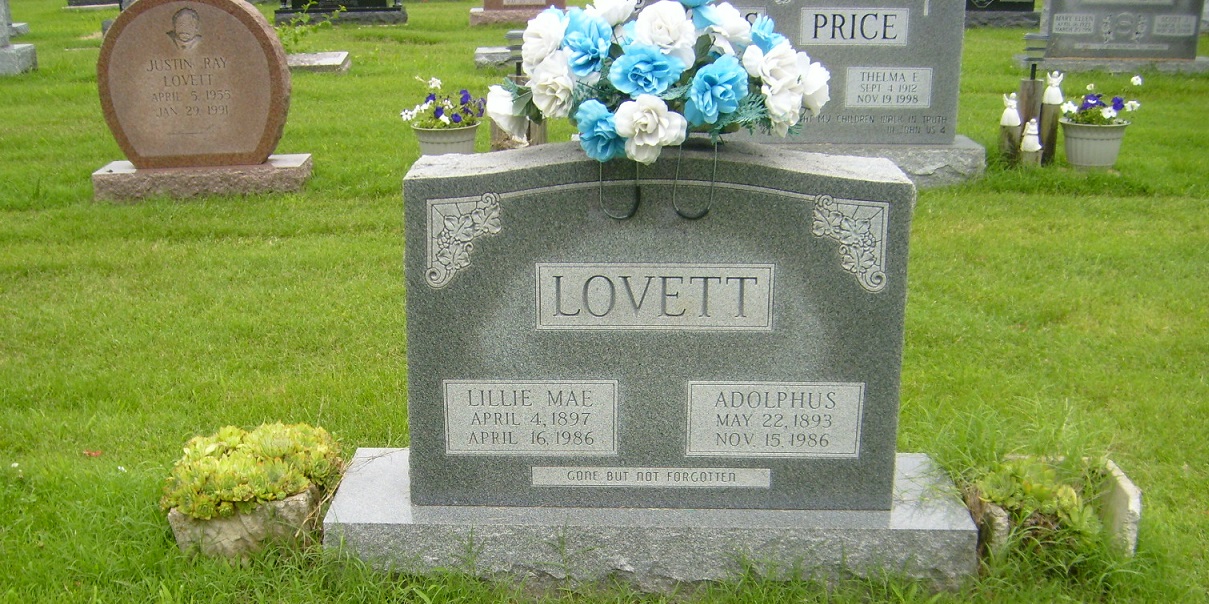
Lillie Mae Lovett, a prose poem

Image

Lillie Mae was the first person, other than her mother, Ella remembered being in love with.  She — Lillie Mae — chewed gum, had a gold front tooth, wore long, dark auburn wigs, bright and warm against her dark brown skin.  She — Ella — buried her nose in Lillie Mae’s neck, held up high in her arms.  Heard the muted snapping of the gum in Lillie Mae’s mouth.  Lillie Mae could get Ella, a picky eater, to eat when no one else could.  For Lillie Mae, Ella would open her jaws for the spoon.

Leave a comment

Filed under for children, health, mysterious, notes, prose poetry, short stories