
Tag Archives: divorce
The lawyer said.
Filed under health, humor, legal writing, notes, recommended reblogs
Possessing My Daughter, section one of a short story
Possessing My Daughter, section one of a short story

I think the human race somehow needs to evolve beyond children. Beyond parenthood. I certainly didn’t want to be a mama. I resented it and I still do. Even from the land of the dead, I still begrudge her all my time and effort. She took so much, so much from me. She was never grateful, never. That’s why I’m making her write this now.
I almost had an abortion, but her father talked me out of it. He could talk a dog off a meat wagon. He carried me off across the desert to Las Vegas to get married. My own father was so angry when he found out. There I was, suddenly, on my own at 19, out of my father’s house. My new husband and I took a small apartment in Venice Beach.
David had this asinine idea of being an artist. He had this notion that my father should pay the bills indefinitely. I had dropped out of college halfway through sophomore year. I was seeing a psychiatrist. It was 1959 – need I say more? Freud was God. My doctor said I hadn’t resolved my Electra complex. That, he said, was what was making me so tired. I slept more than 12 hours a day. When I wasn’t sleeping, I shopped and went to parties. The only bad part was knowing that eventually I’d have to make a decision and do something with the rest of my life. It appeared that being deb of the year in my hometown wasn’t going to cut it much longer.
The first boy I loved broke my heart. I vowed that it would never happen again. So I did nothing to repair that broken heart. I let it stay broken. It was the only way I could think of to protect myself. It’s been so long….
Since I’m already dead, I suppose you’re wondering what the point of all this is. The point is this: I don’t want anyone else to suffer what I suffered while I was alive, and especially not what I’m suffering now that I’m dead. Passing from life to death was supposed to bring me some sort of enlightenment, wasn’t that the fairytale? I was supposed to experience an end to all my worldly cares – joy, peace, rest, or just plain oblivion. Well, I didn’t get any of those things. I’m not surprised: why should my death be any different from my life? I got the exact opposite of oblivion. I got awareness and clarity of vision, a vision so merciless and sharp it would make my head hurt, if I still had a head. Yes, I see everything clearly, for the first time, and let me tell you, I’d settle for oblivion any day of the week. All I want to do with my death is shake all of you by the scruff of the nectk until you get clarity of vision, too. Then maybe, since you people are still lucky enough to be alive, you’ll do something with that vision while you still can. Maybe you won’t end up like me.
My poor daughter, even after I died I wouldn’t let her alone. I visited her over and over again in her dreams until she couldn’t stop thinking about me. I took control of her heart and her mind – actually, now I see I did that the day she was born – and I never let go. Now I can see how I really wanted her to tell my story all along – that’s why I raised her the way I did, to give her the necessary skills. It was like heating iron in a forge and pounding it into a useful shape. She’s writing it all down, every last bit. I won’t let her stop until she’s done, and I’m satisfied.
Oh, she’s so much like her father. What a mistake I made. I’ve told so many lies since then that I’m not really sure what happened between us. I think he could sniff out the complications I carried and wanted nothing to do with them. He didn’t want to hear about how I’d suffered during my parents’ divorce and their custody battle over me. He didn’t want to hear how I’d stopped eating after the judge sent me to live with my father. He didn’t want to hear how much I’d hated boarding school. But I do remember wanting to have sex with him and him turning me down. He was too fastidious to have sex with a girl he thought would make for a Problem Breakup. That would only make the problems more problematic. The excuse he used was that he still had a lot of schooling to get through – a year or two of college, then law school – and he couldn’t afford to get serious with anyone. Not, he said, that I wasn’t beautiful and desirable. The issue was I was too beautiful, too desirable, and getting serious with me was apt to derail his train, headed for success. He’d lose sight of his goal, and so we had to stop seeing each other.
Filed under mysterious, short stories
A Collection of Matchbooks, a short story
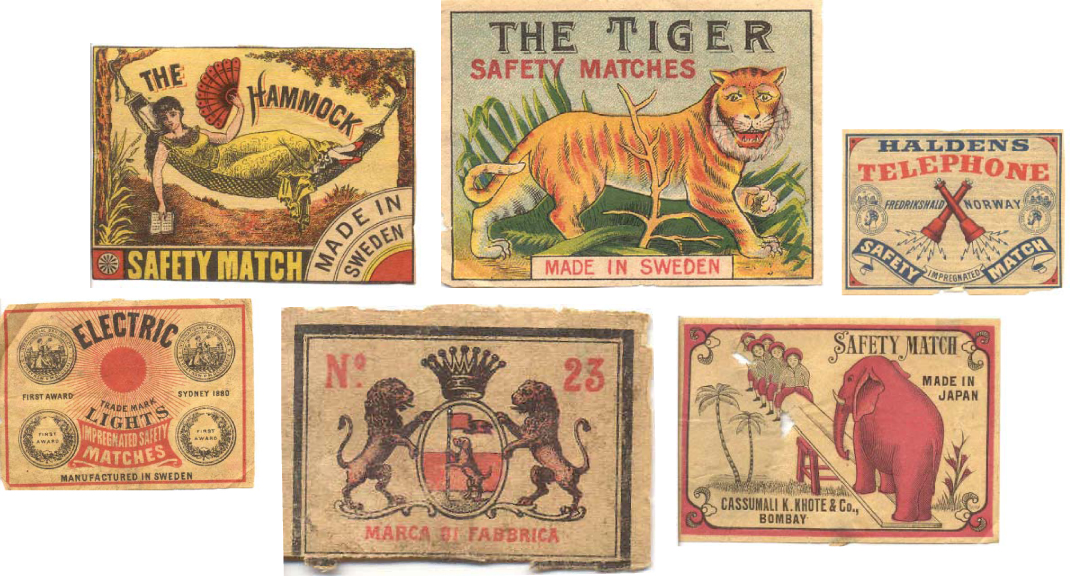
A Collection of Matchbooks, a short story
1952, the Wayland Manor Hotel, Providence, Rhode Island.
The day is warm and humid, the yellow roses in the park across the street are in full bloom. Eva tugs at the sleeves of her powder-blue silk suit. She’s meeting Neal, the young lawyer she met at a Republican fundraiser last week. Though Eva’s handsome, prep-schooled husband played tennis for Yale and still buys her wonderful presents, she’s lost her passion for him after five children. Neal doesn’t have a dime, but he has smoldering dark eyes and soft, manicured hands. He’s a good talker, very charming, the way he lights her cigarette seems so Continental. Ever since the night Eva ran that girl over with her car after too many glasses of White Star, she’s been looking for a way out. She knows her husband will never let her take the children, that’s what bothers her most.
1953, the Ambassador Hotel, Chicago.
Eva sits in the lobby waiting for Neal. On the train back East from Los Angeles, Neal didn’t sleep more than two hours a night. He’s frantic to make this business deal. Eva’s money can only go so far, and though her mother contributes what she can, Neal’s ego is suffering. Maybe if he didn’t spend so much time playing gin at the Club, he’d do better. His wife really stung him in the divorce, he paid her a lump sum he could ill afford, but he felt so guilty. He was only the second person in his family to divorce, the first was his older sister Nina. She married the guy because her father told her to, so when he started getting weird in the head, she bolted. Has her own dressmaking business back in Providence. She dates the young boarder she took in.
1955, the Roosevelt Hotel, New Orleans.
Neal and Eva are stopping over for the night on their way to Savannah. This trip was Eva’s idea, she wanted to revisit her childhood home, show him the house that survived the ’26 hurricane. Her mother grew up there, raised by an aunt. Eva remembers the switchings her nurse gave her for crossing the road by herself. Lilly Mae had a gold tooth in front and wore the most outrageous wigs, red, blonde, honey chestnut. Her bosom was soft, like feather pillows. Eva is disappointed when the hotel can’t give them the Honeymoon Suite. Neal shakes his head, smiles at Eva, pinches her fanny in the elevator on the way up to their room.
1956, annual convention of the California Polled Hereford Association, Berkeley, California.
Neal dances with his daughter, and Eva snipes at how clumsy the girl is. Truth is, she’s gorgeous, and Eva’s feeling old. They got both of Neal’s kids to live with them, Neal’s idea, Eva only wanted sweet little Patrick, not this sullen teenaged girl. She misses her own children dreadfully. Her ex-husband lets them visit in the summer. Still, Eva manages to be kind to Neal’s daughter, she pays for Liza’s boarding school, the very best in the state. Neal had this idea to raise prize Herefords, Eva’s mother thought it was a great idea, so they bought the ranch in Ojai. The cattle women all look the same — brown cheeks, pale orange lipstick. Eva doesn’t fit in, but she doesn’t care. She orders another chilled vodka, downs it in three swallows. Her throat burns, it feels cleansed.
1956, Diamond Jim Moran’s, New Orleans.
Liza’s in the ladies’ room, helping Eva to vomit. Liza wipes Eva’s forehead with a damp towel. The attendant turns away, afraid she’ll start laughing. Eva’s hair flops over her forehead and Liza takes the comb and smoothes it back into her thick French twist. Eva and Neal are on their way home after taking Liza and Patrick to visit their mother in Jacksonville. It was the least Neal could do, considering his ex-wife’s frame of mind. When the children left her, she lost 40 pounds in a month. Liza misses her mother, but doesn’t want to move home. Next summer, she’ll be a debutante.
1959, the Palace Hotel, San Francisco.
Liza’s on break from Mills College, meeting a boy, Ted, for drinks in the lobby. She wanted to go to UCLA, but her father wanted her at a girls’ school. It won’t help. She’ll be pregnant within the year. Ted, the baby’s father, fancies himself a Beatnik. He grew a tiny goatee, sparse but bright red. Liza is getting tired of the same old thing. She sees a woman without legs being pushed in a wheelchair across the lobby. Ted’s right behind, and Liza knows they’ll have sex in the car later. She wonders what it would be like to have no legs to get in the way.
1959, the Luau, Beverly Hills.
Neal’s throwing a reception for Liza after she eloped to Las Vegas. He put a good face on it, announced the wedding in the local paper, but he tried to talk her into an abortion. Liza refused, and Neal thought about having her committed, but Ted talked him out of it. Ted swears he’ll do the right thing, but Neal has a sick feeling. The kid has dollar signs in his eyes, just like Neal at that age. Neal should have listened to his heart, not Ted. He envisions his daughter in a roach-infested apartment on Venice Beach, wearing nothing but black leotards, her enormous belly heaving as she dances to jazz records. He wants to kill someone.
1960, Arnaud’s Restaurant, New Orleans.
Eva and her mother are on their way back out West after a shopping trip to New York. Her mother bought a hat covered with white peacock feathers, and Eva hates it. She wants to strangle her mother, wants her to hurry up and die so Eva can inherit the family money. Eva’s ancestors made their money in shipping, sailing goods up and down the Eastern seaboard, and she is absolutely certain none of them owned slaves. Eva’s mother is a spiritual nut, always falling for some Asian philosophy or another. Next, she’ll run off with the little Mexican gardener, and Eva will have to concoct a suitable cover story. They’ve never been close, not since her mother left for Mexico when Eva was two.
1961, the Redwood Room, Clift Hotel, San Francisco.
Ted and Liza are filing for divorce. Neal is listening to his daughter sob. She thinks Ted needs her, but Neal knows there’s nothing wrong with the kid that a good bank account won’t cure. He had that illness himself. Ted’s refused to work, has taken only art classes instead of working for his MBA like Neal wanted. The baby lives on fried chicken and Pepsi. Still, the little thing is cute — ten months and she walks, no, runs, already. She’s got more of Neal in her than anyone else. Ted’s parents pleaded with Neal not to interfere, but he can’t stand by and watch his daughter worry where her next meal is coming from.
1963, the Seven Seas Restaurant, Miami.
Neal sent the baby to live with his ex-wife, and sent Liza back to school. Liza chose secretarial training, and works in a bank by day, looks for men at night. Liza gets jealous sometimes at how happy her mother is with the baby, but Liza’s not very maternal to begin with. This man she’s involved with is a sailor. She’s never dated someone who didn’t go to college. Even his hands are different.
Filed under mysterious, short stories
a critical review of equatorial rhythms, “written” by rak, former coast guard seaman

a critical review of equatorial rhythms, “written” by rak, former coast guard seaman
Equatorial Rhythms, “typed” by RAK, is the pathetic, badly written “story” of a young coast guard seaman (who enlisted in the United States Coast Guard because he knew his lack of basic survival skills, and in fact, life skills in general, wouldn’t enable him to survive being drafted to Vietnam for even one full day, nay, not even one full hour during the Vietnam War), crossing the equator south for the first time. This self-absorbed, narcissistic young man’s self-pitying past and dismal present intersect with the foreknowledge of his bleak, frightening, and boring future, which he will spend lying on his wife’s couch, letting her pay the bills for ten years, then suddenly dumping her after she survives devastating brain surgery, because suddenly she isn’t content to pay all the bills and be a quiet, crocheting robot anymore. This dull, depressing “story” examines life aboard a coast guard ship, with all its gray-tinted, salty, and decaying “friendships,” petty complaints about stuff that should be barely worth mention by normal humans, the author’s unique, sadly unfunny, bathetic humor and what the narrator incorrectly terms “violence,” a couch-potato-wannabe life, clumsily contrasted with the power of the impossibly vast, eternally wild open sea: a power and majesty the narrator will never, ever, ever understand, or even appreciate with the respect it, the open sea, is due.
Filed under health, humor, legal writing, notes, science, short stories
The Art of the Javelin, a short story
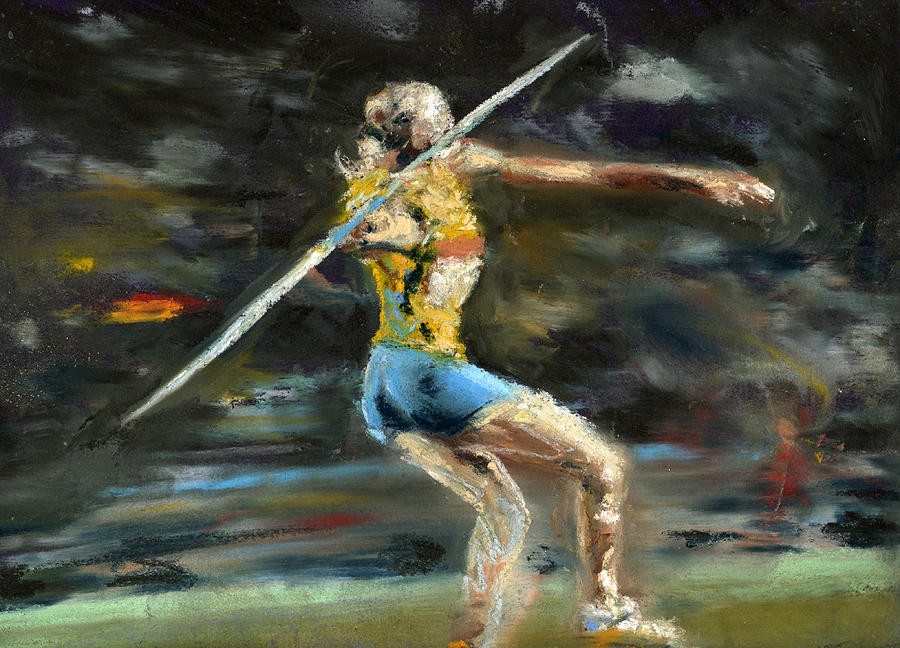
The Art of the Javelin
There were certain lovers who never let you go, not even when it was over, officially over ‑‑ the kind of officially over where you both married other people. It’s not anyone’s fault. It’s something about chemistry, the chemistry of their skin on yours, your skin won’t ever stop wanting theirs and this is a really, really bad thing. Marriages have been wrecked because of that skin, engagements broken, the valuables pawned. The skin fling always started well, of course, the mad passion, so heated you never thought about the consequences. And there were always consequences: huge, nasty ones. Perhaps those terrible consequences were what doomed the love affair from the very beginning. Nothing so lovely and delicate could survive the stamping black boot of your own despair.
You loved him, but it was never enough. Being with him was not enough. Being without him was not enough. Maybe your children, both dead, would have been enough. You saw the first child, sleeping, its head tilted back, its eyes closed. You do not know what color its eyes were. You never saw its eyes. It saw, and in seeing, died. Suffice it to say the child would have been a master of language. It would have been love, a fountain of it. You left, not taking your child home. You let someone else take it away. Psyche never saw Cupid, and you cannot see him anymore. Psyche is and was whatever Love loved. You were loved by Love. You died with the child. You were crushed like a butterfly hovering in front of a fast-moving truck. You were a crushed soul.
The land was flat, barren ‑‑ the horizon stretched like a satiated woman ‑‑ supine, theatrical, unconscious. You missed the children, and you missed him. Was it a garden you were in? Was it a prison cell? There was never enough air, anywhere.
Who wanted, as a woman wanted, simply to be loved? All the boys wanted something else. Girls, on occasion – and more than once — want abstract worship, admiration from afar, poems, flowers, sweet nothings in the ear. Is that what the boys wanted, too? With that divining rod in front of them it must have been difficult to remain abstract. There was something embarrassing about need rendered visible. They could not hide it from the world. Did boys say, “No?” As often as girls? The urge was outward, not inward – the desire to pierce, rather than contain. The needle ‑‑ the eye of the needle ‑‑ threaded with what, exactly? The female soul? Your feet were so cold in the water, wading for freshwater mussels, that your toenails turned stark white. The mussels were brown and slippery, and the empty shells painted with pale, pearly rainbows in the light. The little girls around you murmured with delight, squealing when they found a really big one. Their little hands were sandy and damp on your arm. Their voices piped so impossibly high. You saw them at age 35, still hunting for the perfect shell.
You were tired of living your life. It was satisfactory only in the material sense. The lights were never turned off for lack of payment. Your husband went to bed hours before you did; you sat doing needlepoint in the den and watching obscure re‑runs. You resented your husband’s bulk upstairs in the king‑sized bed, you resented him sleeping turned towards you, resented the warmth of his breath wafting across the hump in the middle of the mattress that had arisen over the years between the depressions your bodies made on either side. Once or twice you tried to get her husband to talk to you about God; he declined to do so, saying it was “too personal” a topic. What is the use of a husband, you thought, without conversations about God?
So you wondered whether to leave him. Suddenly, a young man, black‑haired, black‑eyed, entered your life, with a piercing gaze, but shy, downturned head. He was marrying his girlfriend: you thought they were both too young and naive to know what they were getting into. You tried to talk him out of marriage, saying not that yours was terrible, just that marriage itself was really hard and bound not to live up to anyone’s expectations for it.
He married the girl, anyway, and in about a year was desperately unhappy. His wife left him, run away several times, stole his money and his car and told him he was worthless both in bed, and out. In another moment, you found yourself in bed with him, never once considering how you would get out again. You were not ready to be called an adulteress, but he persuaded you that since you had already committed adultery in your heart, what did it matter in the flesh? Oh, it mattered, it mattered plenty. Only in a purely theoretical sense did it not matter. It certainly mattered to your husband. He wanted the child, all the money, the house, and your head on a platter. Everyone told you not to be honest, not to tell him, but you couldn’t deceive him that way ‑‑ it would kill you to be so deceived by someone else.
It first happened on a rainy afternoon, the kind of afternoon that made sitting on a park bench impossible. All you really wanted to do was talk. You were lonely, you wanted to be alone with him in a comfortable place where you could take your shoes off and lie down flat and tell him your life story. He was so kind and understanding. You wanted everything to happen slowly. Both he and you were married to other people at the time and you had a broken ankle so you couldn’t walk through the woods or the park, even if it weren’t raining. You weren’t planning on committing adultery. You wanted an affair of the heart, of the mind. You were either hopelessly naive or lying to yourself.
When you were feeling bitter, you wore red clothes, covered with lint, and did not bother to go over them with sticky tape. You slept only on goose down pillows, and drank only water bottled in France. When hurricanes were coming, you cooked elaborate cream sauces, and served lemon and honey tea shot with brandy in a crystal cup. Your rage gave you a sore throat, the tears and tissues a sore nose. Anger was only depression turned outward. Always, you received presents in the wrong size, but consoled yourself afterward with icy lime sherbet. You slept a bitter sleep, on sticky sheets, dreaming of French noses, and purebred geese, white with pink feet. On Halloween, you changed your name for good.
You took bitter medicine, while he slept through the hurricane. He gave you red clothes, always the wrong size. You fed the geese cracked corn with your bleeding hands. The brandy shattered the crystal glass. Cream sauces were poured over ice. You strapped the pillows to the bed with sticky tape. You cried while he was bleeding. You whimpered after giving birth. A deep, abiding melancholy. Our Lady of Perpetual Melancholy. The symbolism of the golden arches. An icon for the ages. Our Lady of Perpetual Cholesterol. Our Lady of Sodium. Our Lady of the Mall. Where is food for the spirit? Charge it on your MasterCard. Ring it up on your Visa. A deep melancholy, not easily abated or debated.
It happened on a day when you’d been fasting for religious reasons even though you weren’t religious. A friend called that morning before you’d eaten breakfast and happened to mention it was Yom Kippur. You felt ready to atone for everything you’d ever done regardless of whether you’d actually caused anybody to suffer. Your husband, for example. Your husband was suffering although he didn’t realize it. He thought he was content, but he was wrong. You knew that having sex with a woman for 12 years without her having a single orgasm constituted suffering. You wanted his suffering to cease, quickly and permanently. And it seemed you were the cause of all suffering, everywhere. You had daydreams about running away and never coming back, living in a small rented room, anonymous.
So the fasting and the marital woes had taken their toll on your common sense, and the broken ankle had taken its toll on your ability for locomotion. You were faint from low blood sugar and hobbled wearily into the motel room, collapsing on the lumpy mattress. Being called a neurotic bitch by your husband had long lost its appeal. You needed somebody to love you, not somebody to fuck. But, as your soon‑to‑be lover undressed you, he told you it didn’t even matter whether you actually had sex with him because you’d already committed adultery in your heart. At the time, you took your lover’s reasoning for spiritual altruism. You snapped at it like a starving bass would snap at a rubber worm. Hook, line and sinker, you purchased your fate. It was silly to think you could ever keep a secret. You obtained a divorce, slinking away from the ruins of your marriage guilty, nearly suicidal, your ex‑husband spitting contempt and moral integrity even as he made plans to marry his own recently‑acquired lover.
Then over and over again, between your ex‑lover and yourself, things exploded, imploded, burdened by your guilt and remorse and terror. All this ruined mess wasn’t what you had in mind, you were just lonely and wanted to talk. He thought everything was conquerable, everything, by the human will and true love. Slowly, unmet needs that at first seemed unimportant loomed enormous and unsolvable. He didn’t feel safe with you, nor you with him, albeit for completely different reasons. You were nastily divorced, and suddenly a major skeptic when it comes to love. Between your dead marriage and your dead alcoholic mother, you finally learned to cut your losses, and quickly. What started with a bang ended with a bang? First the relationship was a misery to you, and then it was a misery to him.
The copper gleam of your helmet hair was blinding. Ivory soap floated in the tub, pale and fatty. Hard gray metal breathed like a ghost. The stains of divorce could not be removed with bleach, no matter how hard you tried. Women in bikinis reminded you of how you used to feel in summer, naked, nearly free. You decided to be laid out in a salt pine coffin from Jerusalem, your wake illuminated by jeweled lamps fueled by liquid chicken fat. Stone gargoyles copied from Paris originals would be worked into bench seats. For refreshments, cold meats with baked garlic.
You loved him even though you knew it was doomed, and that love kept pulling you back to the maybe‑I‑didn’t‑really‑give‑it‑the‑old‑college‑try sort of mistake. So you got involved with him all over again, and it was a disaster, again, but to him the fact that you came back only proved the point that you two should never have broken up to begin with. In the end, he never understood why you kept breaking it off, and each time it got over somehow you couldn’t understand exactly why you ended it, either. It was the same kind of destructive amnesia that keeps a woman having babies after that first one. She forgets how hard it was, how much it hurt, how much it broke her spirit. This entire sad sequence repeated until you finally had enough.
That night, you dreamed your mother was unpacking long‑forgotten boxes ‑‑ animals carved out of brightly colored stone, gold‑glass paperweights, things you loved, and your mother was getting rid of it all.
Six months later you got a bill from the library for $173.00. You remembered your lover checked out a bunch of library books on your card. So you called him, asked him to return them so you don’t have to pay. Time goes by, and you wondered. You called his house for days, but the line was always busy. You decided to drop in.
You knocked. It took a long time, but finally he came to the door, disheveled but looking good, except around the ears. His house smelled strongly like man. You were startled by the smell. Vanilla, cinnamon, and a touch of dirt, of mushrooms. The rooms of women smelled like yourself. You have been in other men‑only houses, and it was always the same. There was a strength to their smell, a lasting power, an earthiness under the scent of the body that made you want to burrow into the bed-sheets. This time, you did not. He was growing a beard and wore jeans with holes in the knees which made him look as sexy as the third time you slept with him, the time in his father’s falling‑down barn ‑‑ you couldn’t wait one minute longer so you did it right there on top of some mildewed couches. You broke up for the last time almost a year ago. It was shocking, the physical part you’d thought was long gone.
You wanted him again, though you’d never let yourself have him, and he sensed it – that made him really angry, angrier than you had ever seen him. For once, you ignored the physical passion. You didn’t touch him, though you wanted to, badly. He sensed it, and that sensing is what drove him mad. He screamed. He accused you of being shallow, insensitive, a manipulative bitch with the emotional capacity of a rock. You were meant to be his, you did everything wrong, you shouldn’t have broken up with him, because it was meant to be, him and you, forever. He forgot how you cried all the time, and how you couldn’t quite put your finger on the reason. He forgot what it cost you to be with him: half your daughter’s life. He had no children himself, yet, then: he couldn’t know how guilt had you in its death‑grip.
He screamed, he let you do things, “get away with things,” he shouldn’t have. He didn’t want those things to occur, but he didn’t object at the time because it seemed like what you needed to do. You told him maybe he should have given you his true opinion, back then. Maybe, if he had given his opinion when it was so desperately needed, you’d have chosen to be with him. Maybe it was his essential passivity that caused those late‑night crying jags. Maybe you were crying because you felt like his parent, his dorm mother, his baby‑sitter. You, too, sometimes wanted to be cared for, nurtured, sometimes you wanted to feel safe, to be warm in your own bed on your own pillows, not scurrying around in the corners playing catch‑up with the dust-balls.
But he did not, could not, and would not hear anything you had to say. You were supposed to be with him forever — he believed this and never let go of it: his personal Holy Grail. He wrote you love letters up until the week you got married for the second time, after that, came only hate letters. There would never be a remedy for his hurt. There was no way to make amends. The wounds between you never healed, because he never stopped being angry with you. He was, is, and will always be angry with you. For this reason, your affair with him will never be over.
Will he be angry, forever? Yes. Will his jealous wrath burn like fire? Yes. Blessed is the man whom God chastens, and God will chasten him in time. Yes. His entry into vagina, and your life, was like someone throwing the couch over, slitting all the cushions, smashing the picture glass, sawing the bookshelves into firewood.
Someone knelt. Someone asked to be blessed, forgiven, and made whole. Two people danced, and at the same time drew blood from one another. The man you loved stood remote, erect, unbending. You died, to him. You murdered him, years ago — it was an accident, a terrible wreck of the heart and body. You wanted only to find your true home. They why did your heart feel like cold‑rolled steel? It clanged shut — you were alone, again. And, again, no one could reach you.
While his plane took off, you did jumping jacks next to the runway fence. The chain link made you feel like you had a vision problem. The vessel making up your love for each other was glass ‑‑ white but somehow full of colors, opalescent, and its inner lip was scarlet ‑‑ caressing the outside of the vessel were golden-brown, radiating leaves, quivering with life. Nothing could hold that vessel down ‑‑ it rose of its own accord. Once shattered, it could never be restored. Your fault, you never knew how to live in this world. You always desired things which could not be possessed ‑‑ could be kept, could not be domesticated. Your own heart was not domestic, but, rather, wild, savage, and cruel. It was the opposite of serene. It held mother‑love and murder, sometimes in the same instant. You were the living damned. The only answer seemed to be to keep moving. That is why you decided to entomb your legs in rock, solid and immovable. That is why you always tied yourself to the ground. The caged butterfly smashed itself over and over again, beating impossibly against prison bars of cold‑rolled steel. Finally, its wings shredded, and the butterfly could only remember flying. It knew only that something had gone terribly, terribly, terribly wrong.
Filed under health, legal writing, mysterious, prose poetry, short stories
Monster to Monster, a poem

Monster to Monster
I did you a favor
to let you go, to push you away,
to release you. You were too conscious
to be my mate. I need someone
who doesn’t think so much,
who is impervious to my suffering.
Even with someone like that,
I feel I am too painful to be borne.
It is a bigger thing than both of us
being monsters. The words I write
are my gift to you, the only thing
I can possibly give now. I took
so much, I have to give something
back. Even if I am a monster,
do you think that means I don’t
suffer when contemplating
my monstrosity? You think because
I did not stay, I did not love.
I loved as much as any wounded
creature can. I loved as much
as a woman without a whole heart
can love. I loved you in my way,
the only way I have.
Filed under mysterious, poetry
MY ONE YEAR ANNIVERSARY
of, like, not dying! from a nonmalignant brain tumor! in my frontal lobe, 35 cms. in diameter, had been there for between 17 & 34 years, they said. donated the tissue to UF’s mcknight brain institute thingie, took a month to cry, woke up, started asking for stuff i’d forgotten i enjoyed because i just thought i was tired all the time, my husband dumped me, that’s okay, he needed dumping his own damned self! so, here i am, 53, alive, happy, energetic, writing TONS, making new friends, etc. etc. etc. and, like getting my ENTIRE FUCKING LIFE back in order, which hubby darling had let slide during his ten years of freeloading off me! like, everything he wanted got done, and basically nothing i wanted got done. so, there was that little tidbit. but, to get back to the point, like, dude, i am totally alive & enjoying myself! for the first time in probably 20 to 25 years!!!!! or whenever that frontal lobe thingie started affecting me. how big does something in the most sensitive, the most HUMAN part of the brain have to be to affect you? probably not all that big. so, you can see how by the end of that little “episode” i was SORT OF TIRED. not tired now. and single! and happy! and, i have a really super hot boyfriend! who is NICE TO ME! who wants me to succeed at what I THINK IS IMPORTANT. so, like, damn! things are looking up!!!!!!
Filed under health, humor, mysterious, notes, science
martha’s china, a short story

Martha’s China
“I’ve met a nice girl,” Martha’s divorced son, Paul, had announced one Sunday. “Her name’s Lidia. I want you to meet her sometime.”
“Well, why don’t you bring her to dinner with you next week?” she said. As she put her coffee cup down into the saucer, her wrist twisted suddenly and she nearly dropped it, making a terrible chipping sound. Holding her breath, she ran her hand over the bottom of the cup but found it unharmed. She smiled at Paul and touched her necklace. “Call me by Wednesday to let me know for sure.” Then she decided she’d sit and sip coffee and smile at her son; she was entitled. Paul looked just like his father only better, his shoulders wider, his hair thicker, his teeth larger, his eyes a purer blue.
***
This year, in honor of Thanksgiving, Martha’s second daughter-in-law, Lidia, wore a white jumpsuit, gold belt and shoes, and a great deal of white plastic jewelry. A long bead necklace was wrapped twice and knotted around her neck, bangle bracelets in random widths jangled everywhere, too-heavy earrings sagged the little holes in her lobes. There was a brooch too, some sort of spidery circle with a gold anchor dangling in its center.
Unfortunately, the white Thanksgiving jumpsuit was tight everywhere that Lidia wasn’t. Martha breathed deep and smiled anyway, gripping the hot solid hand firmly, glad to be helped up the front stoop even by a woman like this. Well, at least she’s got him going to church again, Martha thought — we’ll just see how long that lasts. Before his and Lidia’s wedding day, Paul hadn’t set foot in a church of any kind for twenty-five years, not since the last day he hung up his altar boy outfit. He’d had a civil ceremony with his first wife. Maybe that was her fault too — hell, everything seemed to be the mother’s fault, these days.
Martha should have known from the beginning how this second marriage would turn out. Lidia had no hesitation in her voice. Brassy. From the very beginning, she just blared right out with everything. “Hello, Mom,” she’d say to Martha, her cheeks round and orange with too much makeup, front teeth stretching her upper lip, keeping it from ever completely closing, making the words come out slippery-sounding: too loud, too bright. Not a lisp, but damned close. All she needed was a fluffy tail to snap behind her, Martha thought — it would go right with the rest of her chittering.
Not like Neal’s mother, Paul’s first wife, Joanne. Martha sighed, remembering Joanne as she sat down on the too-soft living room sofa, some rattan thing covered with the kind of material she would have expected to see worn by a belly dancer. Why, for all her problems, Joanne had been a lady. Martha had told her son that when he’d brought Joanne home for dinner for the very first time. “This girl’s too good for you,” she had said, right at the table in front of everybody. Damned if her conscience wasn’t clear on that one. Poor Joanne hadn’t known what she was getting into — none of them had. Not that Paul was a monster, just lazy. Almost spineless except when it came to his expensive toys. Those damned boats. Martha couldn’t stand it, but what could she do?
“Happy Thanksgiving, Mom,” Lidia said, plopping herself down next to Martha. “I hope you brought your appetite.”
Martha smiled. “Thank you, dear,” she said, patting her daughter-in-law’s hand lightly.
***
Martha’s china was Limoges. There was a border of tiny flowers, handpainted pink and green and a broad line of gold around the edges, the coffee and demitasse cups so thin you could see through them when you held them up to the light, like eggshells. Martha had inherited it from her mother and father when she was eight.
The accident that killed them had involved electricity. Whether it had been lightning or wiring, she never knew. In any case, she tried to imagine their final moments based on what she knew of electricity from watching movies and reading the encyclopedia. Waking early in the mornings, she would throw off the covers and lie there in the pearly dark, stretching her arms and legs out, stiff, at right angles. She would open her mouth until she heard her jaw pop. Her body would tremble, her lips sting. When she finally let herself go limp it was a relief to be back.
Martha was sent away to boarding school the following year; her parents’ money was managed by some cousins of her father’s. During her senior year, she was called in to the headmistress’ office and informed: fiduciary malfeasance. Of course she would receive her degree with the rest of her class. The words “charity case” were never used. Much later, memory and resentment molded the set of her mouth, pinching her lips with sharp lines: by the time she was fifty, no one guessed she had once been smoothly, delicately beautiful, the kind of looker other women couldn’t even bring themselves to dislike, although their first impulse was always to try.
***
“Where’s Paul?” Martha asked.
“Oh, he had to run out to the store,” Lidia said. “I forgot the cranberry sauce.” She chuckled, shaking her head. A small fleck of saliva flew from her lips as her teeth drew back. “Brain like a sieve sometimes. He’ll be back any minute now.” She stood up and walked over to the door leading to the T.V. room. “Neal! Eddie! Get off that Nintendo and come say hello to Grandma Bergen.”
Their boys had been five when Lidia and Paul married. It hadn’t bothered Martha at the time that they wanted Lidia’s boy, Eddie, to call her Grandma, too.
“Hi Grandma,” said Neal. “Happy Thanksgiving.” He bent and kissed her shyly and she felt a slight prickling fuzz tickle her face with the kiss. He was so white-blonde it wasn’t something she would have noticed from a distance. He was growing up, that was clear. He had a small pimple on his chin.
“Grandma, how’s it going?” Eddie said, and he stuck out his hand. She shook it, his hand warm and heavy like Lidia’s.
“Very well, Eddie,” she said. “Thank you.”
***
In the end, “fiduciary malfeasance” notwithstanding, young Martha had been able to keep the china and the silver, and her father’s monogrammed, twelve-piece dresser set. There was a little cash left over. She managed to graduate from Boston University by wearing the same dresses all four years and waitressing at Woolworth’s, not precisely what she would have chosen, but good enough for a Massachusetts teaching certificate. She interviewed at high schools all over but ended up teaching back in Brookline, where she had been born. Wanting to keep her figure, she joined the municipal tennis league. They played tournaments once a month. It seemed like a good way to meet people, better than church, which is what the other teachers did. Using God as a dating service was hardly a ticket to heaven.
***
“Can I get you anything, Mom?” Lidia asked her. “Some iced tea or a Coke?” Paul and Lidia were born-again Baptists now: no alcohol, even on holidays.
Martha smiled slightly as she remembered the old joke: What’s a Methodist? A Baptist who can read. “Iced tea sounds nice,” Martha said. She heard the gravel in the driveway crunching and the dogs started to bark. “That must be Paul. Go tell him his mother’s here.”
“Oh, he probably saw your car already,” Lidia said. “I’ll be right back with the tea.”
***
Martha’s ex-husband, Fred Bergen, had been a handsome young man, five years older than Martha. He was well over six feet, blue-eyed and blonde, with smooth Scandinavian skin that turned a dark, clear brown every summer. Martha was dark, eyes and hair, except for her skin, which was thin and light, looking almost transparent in the sun, a raised mole in the inside crook of her elbow the only mark on her. Next to him she looked like a foreigner, but her ancestry was English on both sides. He had gone off to Dartmouth to study Engineering but came home to Brookline to be a gentleman.
He was an ace tennis player; she was ready to get married. Her china saw frequent use. The teaching certificate moved into her scarf drawer. They had one child, a boy, named Paul, after her father.
The first few years after Paul was born, they lived just outside Concord, on the farm her husband Fred had inherited from his family. The three of them rode through the woods almost every Sunday, Paul on his Shetland pony, the reins tied to the side loop of her saddle. She especially loved the fall woods, the bare trees making everything look so clean. Everything was gray, but there were no real shadows.
***
“Well, hello there!” Paul said, pulling his satin baseball jacket off as he stood in the living room doorway. Throwing it over a chair, he sat down across from her. His smile was broad, his square white teeth perfect. The skin around his eyes wrinkled heavily as he smiled, pulled up into bags thrown into even harsher relief by the lenses of his glasses, something that still surprised her. If her son was getting old, she wondered, what was she?
“Hello there, yourself,” she said. She held one arm out to him, summoning. Heaving himself up out of the chair, he bent for a kiss. She smelled shaving lotion and dandruff shampoo; he fumbled at her cheek. She took one of his hands in hers, feeling the hard, dry skin of his fingers, squeezing it twice. Sitting down next to her this time, his breath whooshed out as if he had been holding it.
“How’s your father?” she asked. Their divorce had come years ago, when, of course, she was considered too old for it. Separated for a long time already, she nonetheless wanted the formality of the piece of paper. She took her own Social Security, not Fred’s, so it didn’t really change anything in a practical sense. It had been the kind of case the judge laughed at right in court. That irked her more than any of the rest.
Family holidays, of course, nothing had to change.
***
Martha had blamed herself the second time the money went. Not as much as she blamed Fred, of course. But she, of all people, should have seen it coming. The gin games at the country club were no surprise, but as for the horse races — she had had no idea. They sold the farm to pay off his gambling debts, land that had been owned by the Bergens for three hundred years. Neither of them had ever lived anywhere but Massachusetts. It was Fred who promoted Florida. He’d heard there were still bargains to be had in Miami.
They bought three lots with the money they had left, building an apartment building on the water in Coral Gables. Fred’s tan became year-round. He had started to put on weight, but it came off now that he was busy with the yard work and repairs around the building — five units — wearing swim trunks and sandals, beachcomber style. Martha packed her wool suits away in a trunk under the stairs. They both looked ten years younger, so maybe it was for the best.
Paul started first grade, then second, then third. When she found him rummaging through the old trunk full of woolens for a Halloween costume, she realized it was finally time to clean house. She got rid of all that heavy winter clothing, except for one pair of jodhpurs, sort of a souvenir, not having any use for them anymore but afraid she’d be sorry later.
She used the Limoges every Thanksgiving and Christmas, but then the company finally discontinued the old pattern, and she was afraid of ruining the set. Counting the different pieces, she wrote the numbers down on a 3×5 card taped to the inside of the china closet’s door. She’d dust the outside of the closet, telling Paul — someday, when you get married, this will be yours. Okay, he’d say, nodding. Is it all right if I go fishing with Gary this afternoon after school? She’d tell him yes, then watch him run out the door, worrying he’d never know what he had really come from.
But had knowing where she, herself, “came from” ever done her any good, she wondered?
***
“Oh, Dad’s the same as ever,” Paul said to Martha, rolling his eyes. “He ought to be here soon. I called Yellow Cab this morning. They were supposed to pick him up at one-thirty.”
Fred’s eyes were shot, but it was really the drinking that kept him from behind the wheel: the way his hands shook.
“Now, why did you go and do that?” Martha said. “I could have picked him up on my way.”
“I knew you’d say that,” Paul said. Then he chuckled. “I figured the cab deal was easier for everybody. If you really want to, you could drive him home, I guess.”
“I was only married to the man for forty-five years,” Martha said. “I can put up with him for one more hour in the car. Besides, then he won’t be able to stop and get loaded.”
Paul snorted, a half-laugh. “I don’t worry about it. I’ve already told him if he wants to kill himself he should go ahead.”
***
When Paul flunked out of the University of Miami his junior year, he had two options: the Coast Guard or Vietnam. It wasn’t really much of a choice. He spent the first eighteen months in Greece, working on Radio Free Europe. His letters home were short. The girls are beautiful here, he wrote. Martha was relieved when he was sent back to the States and stationed in Key West — no Greek wife, and that was fine. Every week or so he’d drive up for dinner.
She loosened up a little about the china. What’s the point in having something you don’t use? She would ask herself. She felt relatively safe using it for coffee and dessert since there were fourteen each of the small plates, cups and saucers. She could break two and still have a set of twelve.
***
Paul pressed his lips together and twisted them to one side. “Besides, as long as it’s not in my house, I really don’t care how much he drinks. It’s not my problem anymore.” He shook his head as if trying to convince himself.
Lidia came back in, holding a glass of tea in one hand and a magazine in the other. The ice tinkled as she walked. “Mom,” she said, “this is something we’re really proud of.” She handed the magazine to Martha, putting the tea on the coffee table. “It’s on the last page,” she said.
Martha opened her purse for her reading glasses: frosted blue frames with half lenses, on a silver chain. She held them to her nose, the chain rattling against her string of amber beads as she fiddled with the magazine. It was last month’s copy of Florida Sportsman — on the last page was a photograph of Paul on the deck of his boat, holding up a very large and very dead bull dolphin, his fingers hooked in the poor creature’s gill covers. “My, my,” she said, looking up from the magazine and raising her eyebrows. “Isn’t that something!”
“The fish was forty-nine pounds, even,” Paul said. “Half a pound over the local record.”
Martha smiled, peering at her son over her glasses. He wasn’t a outright gambler, that was true, but in a hundred other ways he was exactly like his father. This fishing obsession: did he really think it was enough? A person she raised from a baby — living his adult life primarily through jerkings and spinnings felt from the end of a pole.
“Congratulations,” Martha said, removing her glasses and folding them carefully, setting them on the coffee table in front of her. “I hope you’re having the fish mounted.”
“Of course,” Lidia said, leaning over the back of Paul’s chair, her solid brown arms wrapped around his neck and her chin resting lightly on the top of his head. “The boys and I are giving it to him for an early Christmas present.” Paul twisted his head and smiled up at her.
The dogs barked again. A cab pulled into the driveway. The noise of the idling engine echoed against the stuccoed concrete block of the house. Fred climbed awkwardly out of the back seat, wearing an old plaid patchwork sport-coat and thin wire-rimmed glasses, his wispy gray hair blowing crazily in the breeze. Martha heard him call toward the open living room windows.
“Hello!” he said, his voice strained. His hand trembled as he futilely tried to smooth his hair. Finally he put both hands to the sides of his head, cupped behind his ears, calling again. “Somebody come out here and help me, would you? I’ve got some pies to bring in.”
Paul looked at Lidia and then back over at Martha, rolling his eyes. “The mincemeat,” he said. “I told him we already had dessert this year. Oh, well.” He got up and went out to help his father.
***
Martha had cooked a leg of lamb in honor of meeting Joanne. Putting real butter out for the mashed potatoes, she even brought out the big serving platter and the covered vegetable dishes from the Limoges. The dessert plates and coffee cups were on the table too, as usual.
Joanne was a nice girl, Martha saw that immediately. She wore a green linen suit and matching pumps; her hair was long, just past her shoulders, with square bangs, a white headband holding it back neatly. Her hand was small and cool in Martha’s own as she said hello. “It’s so nice to meet you, Mrs. Bergen,” she said.
“Oh, please call me Martha.”
“All right,” Joanne said, smiling. Her teeth were as glossy and prettily shaped as kernels of white corn. “Your home is lovely. It seems so nice and cool on the water.”
“Yes, we enjoy it,” Martha said. “Are you a native of Miami?”
“Not quite,” said Joanne. “I was born in Delaware. But we moved here when I was three, so I really have no memory of the cold.”
“We moved down from Boston when Paul was just a little older than that,” Martha said. “I don’t think I could survive a New England winter now.”
Joanne admired the table. “It’s so beautiful!” She touched the covered tureen in front of her. “Is this Rosenthal?”
“No, Limoges,” said Martha. “It belonged to my parents. The pattern is discontinued, you know, so I don’t use it very often. But this is a special occasion.” She looked over at Paul and smiled.
She gave Joanne and Paul the Limoges as a wedding gift.
***
“Fred’s always loved mincemeat pie,” Martha said. “It’s the only thing he ever learned how to cook himself. The man eats out of a can, breakfast, lunch, and dinner.”
“It’s cute,” Lidia said. “My father couldn’t boil water without instructions. I like a man who cooks, even if it’s only one thing.”
Martha stared at her. “Pie crust is quite an accomplishment, when you think about it that way,” she said, nodding her head and smiling. “I suppose I could break down and have a piece this year. The heck with watching my weight on Thanksgiving.”
Fred puffed his way into the living room, wiping his glasses. His eyes looked small and defenseless, his face flushed even more than usual. “Well, that was a rare event,” he said. “An American cabdriver, white to boot. I asked the guy what he was doing driving a cab.” Shaking his head, he put his glasses back on, then took out a hard rubber comb and swiped at his hair. “He must be a real loser.” He lowered himself into the armchair next to the sofa. She caught a whiff of him: dry, musty. His pants were creased smartly but there was a faded grease stain on the knee. Turning to Martha, he held out his hand to her, which trembled although she knew he strained to hold it firm, and she felt a piercing of loss for him. I suppose in his own way, he pities me too, she thought. She must appear just as sad to him, even without a tremble.
“Hello, my dear,” he said, and he kissed her hand, his lips warm and slightly moist.
***
Poor Joanne hadn’t wanted to quit her job at the bank, but Paul insisted after Neal was born. “No son of mine is going to be raised by a babysitter,” he said. Martha felt he had a point — but what good was it if Joanne was miserable at home? She herself had missed teaching, although she’d never seriously considered going back to work until Paul was in high school. But she certainly wasn’t going to come between husband and wife. Her two cents, she kept to herself. Then Paul told her Joanne was having a problem with her drinking. He’d seen enough of that with his own father, he said, to last a lifetime. After he filed for divorce and custody of Neal, she didn’t mention anything to anybody, just decided to reclaim all she had left of her barely-remembered parents.
“Well, hi,” Paul said, when he opened the door and saw her, unannounced. His eyebrows were raised, but he didn’t ask. “Joanne’s with Neal down the street at the Gallagher’s. Kids’ birthday party.”
“That’s no problem. I’m here to get the china,” she said. Paul stared at her. He didn’t seem to understand. “The Limoges.”
“Oh, that,” he said, moving back out of her way as if he were afraid, and an odd memory of him at two years old flew by her, making her weak, making her want to squeeze him. They hadn’t hugged in years: they weren’t the huggy type, like some. Still, she had some idea what she was missing.
“Let me think a minute where we keep it,” he continued, taking his glasses off and rubbing one eye slowly. It reddened and he put his glasses back on. “That cabinet over there, maybe?” he said. “Underneath?”
“I know where it is,” she said. Joanne would never forgive her, but it couldn’t be helped. She packed the china in the special boxes she’d bought on her way over; Paul carried the boxes to the car for her.
Before the divorce was final, she called Joanne to explain. She realized Joanne knew her history, but still, she was ready to apologize — but Joanne hung up on her in the middle of it.
***
“Well, it’s about time we sat down at the table,” said Lidia. “Neal! Eddie! Turkey time!”
Martha hauled herself up, out of the overstuffed sofa. She held her arm out to Fred, still struggling in his armchair like a snail trying to flip its shell. “Let me help you,” she said.
“It’s a nice chair, but it’s hell to get out of,” Fred said. His touch was strangely comforting, and she held his hand firmly even after he was up out of the chair. They had the past in common if not the future. At my age, that’s about all you can ask for, she thought.
She led Fred into the dining room and they sat down opposite the boys. “What a beautiful turkey!” Martha said. And what an ugly serving platter, she thought.
She had given the old Limoges set back to Paul on his and Linda’s fifth anniversary, hoping to see it on the table on holidays, hoping Paul knew what t meant to her. But this platter was a cheap ceramic. I don’t know why I ever imagined Lidia would appreciate my Limoges, she thought. It looks like she picked this piece of junk up for a buck ninety-eight at K-mart — worse yet, at a church rummage sale. You’d think Paul would say something, though.
“This is an interesting platter,” Martha said to no one in particular after she sat down, putting her fingers out and stroking the edge. The feel of it was clumsy, the overglaze too shiny, far too thick: like somebody brushed it on with a pair of old socks. “Such bright colors.”
“Do you like it?” Lidia asked, smiling. “Paul picked that out just last week. It’s from Italy. Really perks up the bird, doesn’t it?”
“Yes,” Martha said. She looked around the table. Surely there was something? But it was all the same. Thick peasant pottery — vegetable dishes, gravy boat. It was everywhere. “I suppose it is nice to have a change of scene at the table once in a while.” She unrolled her silverware and placed her napkin in her lap, smoothing it down over her knees.
They were slicing the mincemeat pie when she asked for coffee. “Mom, I’m sorry, I didn’t brew any,” Lidia said, frowning. “We’ve gotten out of the habit now that you’re the only person who drinks it. I’ve got some instant, is that all right?”
“Of course,” Martha said. “As long as you’re going out to the kitchen for it, would you mind putting it in one of the old cups for me? They’re so nice and thin it makes the coffee wonderful.”
Lidia turned and looked at Paul, although it seemed she still spoke to Martha. “The old cups?” she said. “You mean from the set you gave us?”
“Yes,” Martha said, nodding, adjusting her plate of mincemeat with two fingers. She turned to Paul expectantly as well.
“Paul,” Lidia said finally, when he said nothing. “Didn’t you talk to her about that?”
He looked up at the ceiling and forced air out of his closed lips, a burbling inter-spousal sigh. “Oh, boy,” he said. “Here we go again. I told you it was okay to donate it. We’ve used that stuff maybe five times in five years.” Looking back down from the ceiling, he turned to face Lidia. His face wavered, an uncertainty seeped in around the corners. “Actually, I don’t think I did mention it to her.” Turning to his mother, his head moved slowly, as if he had slept on his neck wrong and had a terrible crick. “You didn’t want it back again, did you, Mom? I don’t think they’ve had the sale yet. All the stuff is just sitting in the vestry meeting room.”
Martha sat perfectly still, taking in the light as it reflected off his face, which suddenly seemed ten, no twenty, years younger. Her breath held fast, but not trusting herself to let it out, she drew her napkin from her lap. Stalling, she used the napkin to clean her glasses, now hanging around her neck on their beaded chain. The thick polyester was wrinkle-proof but hardly absorbent, so all she managed to do with it was smear the lenses, making them worse than before. Dust and grease wouldn’t leave. “What sale?”
Lidia answered. “The annual white elephant sale. We sent over the china as a donation.”
“Oh,” Martha said. She picked up her fork and nipped the point off her piece of pie, scraping the tines harshly along the pottery surface as she scooped up the mincemeat. “If it’s not too much trouble I would like you to get the china back.” She looked across the table at Paul as if they were the only two in the room. “Don’t you think you should have asked me first?”
“I didn’t realize it was still your property,” Paul said, his face reddening. “It seems to me when you give somebody something that ought to be the end of it.” He stood up and leaned over the table, balanced on his fingertips. “I’ll get the china back, don’t worry. And then I never want to see it again.”
“I’m sorry,” Martha said. What’s wrong with me that I didn’t see this coming? she wondered. C-plus motherhood, is that what I’m left with?
“She’s been nuts over that china since I met her,” Fred said, shaking his head. “I’ve tried to tell her she shouldn’t let something like that get such a hold over her. It’s not healthy.”
Martha grabbed his arm, hard, and Fred turned to her, his eyes wide with surprise. She shook his arm a little as she spoke. “You keep out of it. It’s nothing to do with you.”
“You see what I mean?” he said, winking in Lidia’s direction.
“I’ll go get your coffee, Mom,” Lidia said.
***
After finishing her pie and a cup of microwaved instant, she had Neal walk her out to the car. Paul would have to call Fred a cab after all. “My back’s bothering me,” she explained. “I want to get home and right into a hot tub.”
“Grandma,” Neal said, holding her arm as she walked slowly down the slippery gravel drive. “Don’t take it personal. The china, I mean. They don’t have anything old in the house. They aren’t into antique stuff.”
She felt as lightheaded as when she awoke in the middle of the night, fighting to remember some crazy dream. There’s no panic like the panic of an old woman, she thought — though we’re supposed to have wisdom. The panic ebbed a little as she exhaled, and she sighed. “I wanted them to save it for you, Neal. For when you get married.”
Neal shook his head. “That’s a long way off, Grandma.” He laughed shortly, running his fingers through his long bangs. “Maybe never, who knows? Anyway, it’s better if you keep the china at your house. It takes up so much room.”
“Is that what Lidia says?” she asked him, but he only shrugged. The boy had learned something she hadn’t, she realized. “Oh, never mind,” she said, suddenly limp. She opened the car door and sat down heavily. “Bend down and let me give you a kiss.”
“Goodbye, Grandma,” Neal said. “Happy Thanksgiving.”
As she looked in her rear view mirror, driving off, she could see him standing out in the middle of the street, waving to her. Well, what did I expect, anyway? she thought bitterly. A memory pricked her suddenly, making her eyes water, partly from tears gathering but partly from the glare off the road and the way her thoughts shifted her eyes’ focus from the road itself to something impossibly far-off — a forced gaze she found difficult to wrench out of. She idled for a long time at the first stop sign out of sight of Paul and Lidia’s. Years ago — her mother’s hand, stroking her hair, leaning over the edge of the bed in the darkness. A firm touch, though it tickled and made her shiver just a little. For the life of her, though, she couldn’t recall the sound of her mother’s voice. Just one word, she thought. Just one. She waited to hear.
A horn sounded behind her and she jumped, startled so brilliantly it hurt to breathe for a moment. “All right, all right, what’s the rush, buddy?” she said, jerking her gaze back to business, blinking as her eyes finally overflowed, fat round drops. But the fabric of her black skirt instantly absorbed the tears, and so, looking down at her lap for confirmation, before she pressed the gas pedal, she saw only the faintest of shadows staining the darkness of the fine wool.
Filed under short stories
my tete a tete with officer charles owens, a nonfiction note
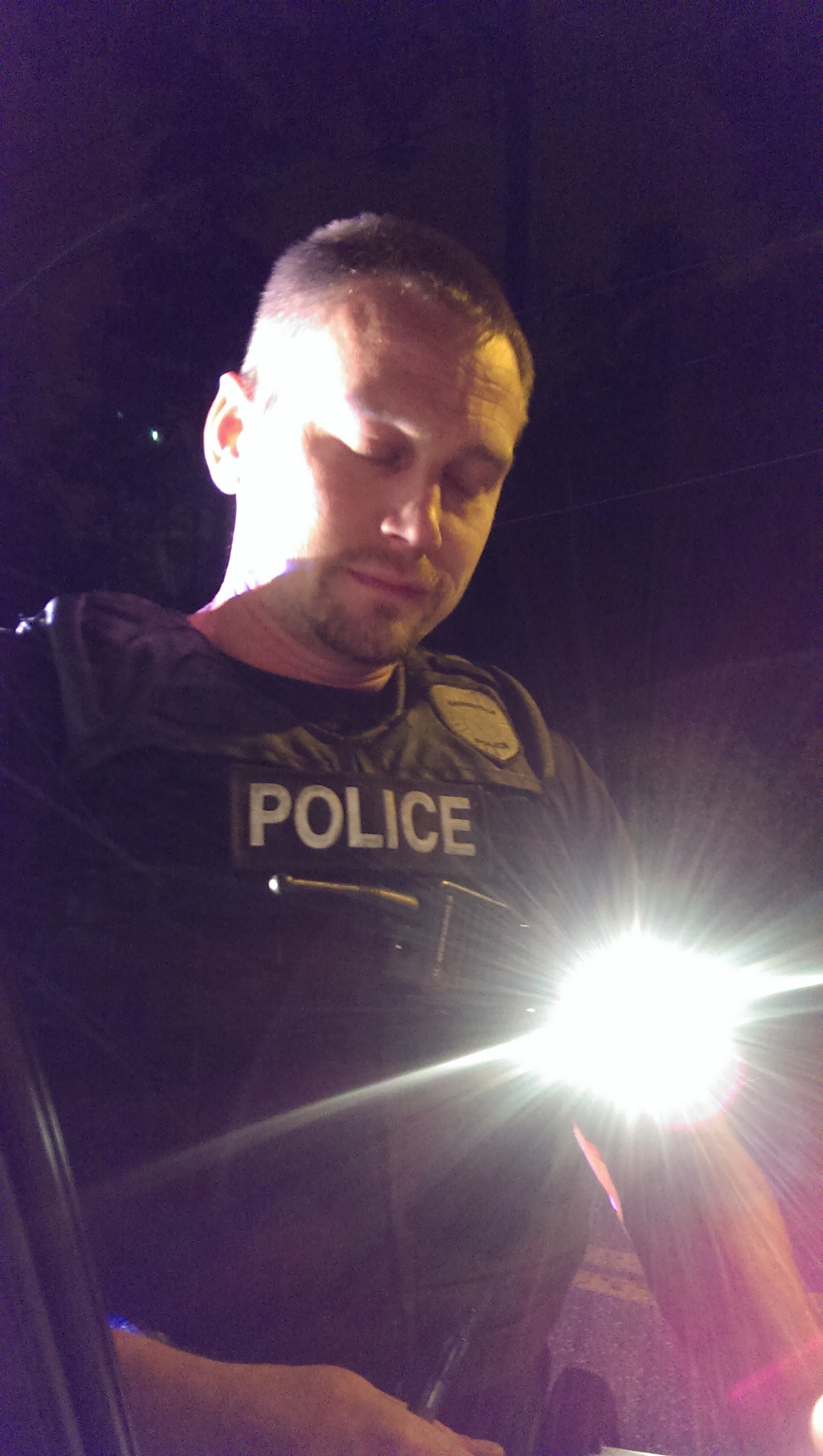
“What can I do for you, officer?”
“Why are you so hostile?”
He asked for my license and registration and proof of insurance, which I gave him. He walked back to his vehicle and did whatever police officers do, I suppose run my driver’s license number to make sure I wasn’t wanted for some crime or something. And to make sure the vehicle wasn’t stolen, I suppose. And to make sure I had insurance, because that was something else he could have given me a ticket for. I do give Ofc. Owens points for being thorough. Just not any points for being correct.
“I’m giving you a ticket for careless driving.”
“How was my driving careless?”
“I heard your tires squeal.”
“But the road is wet, it has been misting for at least the past hour, maybe two.”
“The road is perfectly dry.” The mist swirled around his head as he spoke those words. I thought to myself, doesn’t he notice it?
“Is this the best use of your valuable law enforcement time? Giving a woman driving home alone at one a.m. in a white Toyota minivan a ticket because you heard her tires squeal on the damp pavement?”
“I smell beer on your breath.”
“Well, I did have one with dinner, about four hours ago, I haven’t brushed my teeth yet. I suppose that’s it. Would you like to perform a field sobriety test?”
“No.”
“Would you like to do a breathalyzer?”
“I’d have to call the van. Do you want me to call the van?”
“Sure, let’s have a party! No, that’s okay, you don’t have to call the van.”
Further discussion, about the ramifications of the ticket, etc., how to contest it, etc.
“Oh, you have a dog? What’s his name?”
“Justice.”
“Can I meet him?”
“No.”
“Can I take your photograph?”
“Yes.” I did so. It wasn’t the greatest, as his eyes were closed, but under the circumstances I did not think it wise to ask to take another. Ofc. Owens was clearly having a bad night.
When I first saw Officer Charles Owens, he was sitting inside his police vehicle, parked in the Lloyd Clarke’s parking lot, apparently conferring with another officer in another police vehicle. They were both inside their vehicles, each with the driver’s window rolled down, the vehicles thus facing in opposite directions. I am not certain, but the other officer may have been a female, as it seems I remember seeing a ponytail.
When Ofc. Owens first noticed me, I was turning left on to 13th Street from 16th Avenue. I had been hauling heavy vanloads of farm equipment earlier in the day, from Gainesville to Micanopy, and now my van was empty, and much lighter. After all the farm transportation, I had taken a friend to dinner and then dropped him off at his home and stood in his carport talking with him for half an hour or so, and the entire time I watched mist coming down.
I was very tired, and traveling by myself, back to an empty house, a situation I had not found myself in, in decades. Due to the mist, when I pressed on the accelerator, the wet road caused a slight squeal from my tires. I did not veer from my carefully steered path, I did not speed, nor was there any other car in the intersection, or even anywhere near the intersection. At that hour on a Wednesday, the roads were practically empty.
Officer Owens’ car was the one pointed with its nose facing south, the direction in which I was traveling, so he immediately pulled out of the parking lot and followed me, his lights flashing. I pulled over as soon as I realized it was me he was following, and turned right, on to 10th Avenue.
I was then two blocks or so from home. I rolled down the window of my car after he approached my vehicle, and asked him, in what I thought was my nicest and most cooperative voice, what I could do for him. I was exhausted and getting divorced in two days, but I did my best to be polite.
The first thing he said to me was why was I so “hostile.” I told him I wasn’t feeling hostile in the slightest, but that I was very, very tired and just wanted to get home, and being a female driving across town, alone at 1 a.m., was not something I enjoyed. I was, however, annoyed, because I thought his stopping me was entirely unnecessary and a waste of valuable taxpayer resources.
I started to tell Ofc. Owens a couple of pertinent facts that might have affected his decision-making processes, such as the fact that I was being divorced in two days, by my husband of ten years, after almost dying from a brain tumor the previous April, a tumor which had been wrapped around my optic nerve and the major aorta in my brain and had been in that site for between 17 to 34 years, and had made me feel horrible for at least the prior 5 years. I was getting divorced, as far as I could tell, because my husband preferred me half-dead and didn’t like the fact that I was not in that state anymore, and actually wanted him to get off the couch once in a while.
“I don’t want to hear any of your personal information,” he said as soon as I said my first word on those topics. I complied, and did not insist to be heard.
I live at the corner of 8th Avenue and 15th Street, and I am well aware of the driving skills usually displayed on 13th Street. Careless driving is not what I do. I am an excellent driver, and the only accident on my record was one in which my then-teenaged daughter’s car was parked in the driveway of my home, and a drunken college student plowed into it, and into the tree next to the driveway, and sped off with such haste that the smell of burning rubber could be smelt for hours afterwards.
The insurance company told me that even though my car was unoccupied and parked, I was being charged with an at fault accident because the vehicle was in my name. I was told there was nothing I could do about it. I live in an extremely loud, noisy and “party” neighborhood, which I nonetheless love and tolerate because I like to be in the middle of town. Needless to say, I know the value of the police force and respect what they do highly. However, Ofc. Owens made a bad call. It happens. Everyone makes mistakes. One was made here. I was not driving carelessly. End of story.
Filed under humor, legal writing, mysterious, notes, science
Ojai is the Chumash Word for Moon, a prose poem

Ojai Is the Chumash Word for Moon
1. When I See the Moon She Comes Back to Me
Everyone else has something good to tell. This is what I have. This is what she gave me. Even now I see my mother’s face, soft and drunk, pale and frightful, moving through the darkness, soaring over me as mysterious and unreachable as the moon. Her affection waxed and waned, never constant. When she’d had enough Scotch, she loved me, but the way she went about her mother-love, pulling at me with sorrowful, clumsy arms given unnatural strength by liquor, made my flesh wither under her touch.
2. Possessions
My mother and father lived in a solidly built house, outer walls nearly two feet thick, in the oldest and grandest neighborhood in their town. They lived where people like them had lived for hundreds of years. My father felt comfortable with his mahogany furniture, his linen upholstery, his hand-woven Orientals. He collected, among other things, antique, cut-crystal decanters. They were displayed in a case in the living room, unfilled, sparkling, sharply defined edges, here and there a tiny chip but that only added to their elderly charm. Things weren’t supposed to be new; he took satisfaction in the fact he’d inherited most of the contents of his house. His life, its outward details — wife, child, home, furniture, and car, standing in the community, salary, and immediate circle of peers — had functioned for many years like a brick wall, and he found himself hiding behind that wall even as it started getting chipped away.
3. Fathers and Mothers are Our First Lovers
My mother had skin like rose petals, eyes like a deer’s. Too needy for most men, she could not be promiscuous — she was not strong enough for that. There were times when she forgot to be sad, if only when some equally sad-eyed boy noticed her. If a boy loved her to the point of obsession, to the point of contemplating suicide, she imagined she might find the strength within herself to survive, but she eventually rejected all such suitors, only wanting those who were unattainable, as her father and later her husband, my own father, were. Remote, a source of funds and orders and criticism, the two closest men in her life approved of her external beauty but not her soul. They didn’t care what she wanted — they wanted her to be like all the other girls and women, to be beautiful and obedient and never talk to dead Indian spirits. They broke her will; she broke their hearts. Distance was how they both managed her. If she could have hardened herself on the inside, if she could have seen either one of them as just another man she could conquer with her flesh, it would have helped.
4. Intimacy
My father and my mother were having sex one night, and my mother was on top of him and she got that silly, dreamy-eyed look, like when she read a romance novel. “Remember when you were little?” she said, still sitting on top of him, him inside her.
“What do you mean?” he asked. He and my mother were aliens to each other anymore.
“Don’t you remember sitting on your mother’s lap, in her arms?”
“My mother?” he asked.
“Wasn’t it good to feel her arms around you, as a little boy?”
He was inside her still and he felt his penis start to shrivel. His mother! What had she got to do with anything? “What on earth are you talking about?” he asked.
“Your mother, holding you in her arms, when you were a tiny little boy. It must have felt so good.”
“You’re sick,” he said, pushing her off him.
“Sick?” she said. “What do you mean, sick?”
“Asking me about my mother at a time like that, it’s sick.”
She rolled over and was silent, and then he heard her start to cry.
“Oh, Christ,” he said. “I’m going to sleep downstairs.”
“No,” she said, bolting out of the bed. “I’ll sleep downstairs.”
“That’s it, after this I don’t owe you anything,” he said to the ceiling after she was gone.
5. The Coastal Mountains Cut Off the Sight of the Sea
My mother was sent away at 14 to boarding school in Ojai, where she refused to eat. She wanted to turn back the years already. The moon drew her, she felt herself drawn to its inaccessible height, its untouched opalescent skin. Looking back as if from a far distance, she mourned her own childhood while it was still happening. Her eyes rolled back in her skull, the whites looking like two small moons. She howled at the moon without making a sound. Though she began menstruating at age 9, for years she shaved her pubic hair off in secret with an old, dull razor because she did not want to become a woman. Dreaming of the ocean, hidden behind the coastal mountains, she wanted only to be clean. She felt how the spirit of a Chumash Indian warrior possessed her. As she grew thinner, harder against the world, she rejoiced that there would be less of her to feel pain, less of her to bury. The other girls at school were as mysterious to her as stars. They sparkled while she could only reflect sadness. Her clothes hung on her bones and she was sent to a psychiatrist — that very night the moon was full and blue. They don’t understand me at all, she thought. In her own way, she was a visionary, a trend-setter. Doctors didn’t have a name, then, for what was wrong with her.
6. Anger
Finally, after 15 years of marriage the wall between my mother and my father fell. Then my mother wanted to figure out who she was. She wanted her own personal growth; she wasn’t able to focus on anything else. She needed space and time. At first, it was only the beginning of the process, and then it became the end. She couldn’t suffer any more, so she killed those feelings that brought her pain. She didn’t want to try to sort them out just yet, maybe not ever. In the end my mother’s feelings for my father were dead, gone. She didn’t know where they went.
7. She Owed Me that Much, Didn’t She?
She and my father lost their virginity with each other. Much later, when I knew her, she was memorable for simple things: her rose garden and her Scotch & water, her menthol cigarettes and her Pucci nightgowns, her ladylike hands and her A-cup breasts, her bitterness, her resignation, her unending string of sentimental, alcoholic boyfriends. She taught me how not to be. How not to live. A psychic told me she was my soul-mate, that my heart had been broken on the day I was born, that first hazy time I looked into her eyes and saw nothing there for me. One normal thing I remember is hanging clothes out to dry with her in the backyard when the dryer was broken. Once, she even took me out to the movies. Darker engrams always swamp whatever happy little memory-boat I manage to stow away in — like when she drove drunk for the umpteenth time and hit a kid on a bicycle, breaking his arm. I remember protecting her from the police, making sure she wouldn’t end up in jail, but later coldly stealing money from her wallet, cigarettes from her purse, clothes from her closet. In the end, she drank too much, and that killed her.
8. Madness
Toward the end, my mother said she was on fire from the neck down. Her arms and legs felt like they were glowing, orange-red, molten. But her head felt like a block of ice. She was emotionally or spiritually paralyzed, and worried about whether the condition was permanent. She felt like the nerves from her head down to her body were cut, and she didn’t know if they would ever grow back.
Right before the end, she said she could not distinguish life from dreams — she slept little, ate even less. She didn’t feel mad, she felt terribly, irrevocably sane. Everywhere she walked the ground seemed on the verge of opening up into blackness, into fire. If only she could go mad, she said. When they found her cold and stiff on the living room floor, she wore nothing but blue nylon panties and a wristwatch.
Filed under prose poetry


 Kimberly Townsend Palmer