Tag Archives: grief

Heavenly Dances, Heavenly Intimacies, a short story

illustration heavenly dances heavenly intimacies

Heavenly Dances, Heavenly Intimacies, a short story

“Isn’t there any heaven where old beautiful dances, old beautiful intimacies prolong themselves?”

Ford Madox Ford, The Good Soldier

How can I be “dead” to any of the men I once loved?  They are not “dead” to me.  Not even H.  How can I be “dead” to H.?  They — even H. — are each as alive as when I was with them; as alive as the first time they touched me, whether tentatively or with confidence; whether softly or roughly; whether with passion or mere lust.  It is shocking and appalling how H. lurched so radically to the right after 9/11.  He began that journey to the Tea-Party-Mad-Hatter-Neocon-Bill-Buckley-Wall-Street-Apologist-Fringe-Brainless-Faux-News-Right when Ronald Reagan was shot; I was with him the very night it happened.  We had a short affair, right then, because we started thinking the end of the world had arrived and we decided, like the crazy college students we were, to get married to celebrate our courage in the face of chaos!  I realized very early on (but still way too late!) I was embarrassed to be seen in public with him.  Did you ever start seeing, and marry someone whom you later realized you were embarrassed to be seen with?  Perhaps the person in question was “dorky,” “geeky,” dressed “badly,” or had questionable “taste.”  H. readily admits he was a “dork” in high school.  He was on the debate team; need I say more?  When you can’t bear to be seen in your lover’s/spouse’s/significant other’s/partner’s company, things usually don’t work out.

Still, I put in ten dutiful years, trying to make amends for my mistake in marrying H.  The second he started making the big bucks, he dumped me.  He left me for my best friend!  I guess I deserved it, not taking control of my own life & filing for divorce two weeks after we married.  And I guess I deserved how my ex-best-friend S. ruined me, as she subsequently did.  She was in charge of the whole group we had socialized with:  dictating how everyone in our “circle” should think, speak, act, or react.  H. was dead wrong about most everything, but, to his credit, he was dead right about her.  At the time I thought him merely woman-hating, but I see now, even though he did hate women, there was something more than simply being a “woman” he hated about her.  He was covering up the fact he loved her by pretending to hate her.  Now, I have no desire to see her, not ever again.  She is definitely “dead” to me.  Yes, I understand intellectually, a living death (call it shunning) can happen to anyone.

The upshot of all this boring history?  I’ve been waiting for something a long time.  I can’t blame anyone but myself for my unhappiness, not anymore.  There is something dispirited inside me, something empty, drained, and beaten — something sick, something tired, something that has surrendered.  I gave up, when?  When my first ex-husband arbitrarily said no to children, breaking his solemn vow.  When I realized I couldn’t find happiness outside myself — not with an old love, not with a new love, not with any of my subsequent husbands, my friends, my eventual children, or my family.  Yes, to casual acquaintances and virtual strangers I am “happy, happier than I’ve ever been.”  And it’s true!  I’ve never been this happy, this contented, in my life.  Yes, there are still problems.  My oldest son is still half the world away, fighting an endless war on behalf of my “country.”  My youngest son still has an ignorant, racist, rabidly conservative father.  I am getting old.  My face is melting.  My neck is turning into a wattle.  I am drooping.

Still, I cannot imagine any of them, the men I have loved or made love to, being dead to me the way my former best friend, S., is dead to me.  Yet that is how they must feel about me, the way I feel about her.  Wanting her removed from my memories.  Wanting never to have met her.  Not missing anything about her.  She wants to see me, I heard from a mutual friend I still speak to.  I don’t want to see her, or even see the mutual friend.  I don’t even want to get as close as that!  Because of reasons.  Top secret, NSA, DOD, CIA, FBI, SEC, IRS, FDLE, GPD, ACSO reasons!  No further comment!

1 Comment

Filed under artistic failures, assholes, boys, con man, con men, criminal, criminal behavior, criminals, fathers, he, health, humor, hypocrisy, idiots, jerks, karma, love, mothers, mysterious, sex, short stories, tea party mad hatters, ultra right wing loons, users

The Conundrum: Splitting The Baby) for Kimberly Mays Twigg

kimberly mays infant photo Switched At Birth, www.silverimagephotoagency.com

I.

Sometimes, I ask myself why I didn’t give her back sooner.  Would it have been easier then, before I knew her personality, the sweet meaning of her every sound, every movement?  Already I loved her smell, the weight of her small head on my chest, already I’d soothed and fed and washed her forty days running.  That other mother gave life, I gave only touch, warmth, comfort.  I couldn’t help it; I fell in love, it happens like that, quickly, without thought.  I didn’t know how it felt to be someone’s mother.  When I couldn’t become pregnant, I cried for days.  My insides felt soft and hollow, like an empty purse.  This little girl loves me, I know she does.  She reflects a rainbow back to my eyes, in her smallest toe resides a perfect universe.  I lie next to her at night, breathing the rich, salty fragrance of her hair, feeling her body growing, expanding to meet mine, and over our private nest flows time, but for as long as we can we rest outside death’s pull, allowing all that to pass by, content with this lovely darkness, this small sliver of heaven.

II.

Sometimes I ask myself why I gave her up in the first place.  It wasn’t easy, not even then; I haven’t held her since the day she was born, but I know her, like she’ll know me, without thinking.  I began her life, I walked with her body in mine for nine months, we were never apart, not for a second.  I called her my daughter.  That woman has taken care of my poor baby for years, but in her heart it’s only me she’ll call Mama.  Any fool knows this, anybody with a brain will tell you adoption can be a mistake.  It was a crisis of self-esteem, more than anything.  A momentary weakness, where I thought maybe I wasn’t strong enough to keep her safe.  Once, during all this trouble, I almost gave up.  All I had in my hands was a pink plastic bracelet, but I couldn’t forget holding her, I couldn’t forget how her toes curled against her foot, so small, so much like mine.  Now she’ll never have to wonder whether I loved her, she’ll never have to discover where I live.  The time we spent apart will soon be forgotten; she’s young and there’s plenty of time for our life to weave itself back together, to re-create our lost paradise.

III.

Sometimes I ask myself why I couldn’t have had them both, forever.  Is love so smart that it can tell the difference between one drop of blood and another?  Being born was harder the second time, though life at home smells just as sweet; the weight of this new mother, her reassuring size, pressed against me like a sheaf of autumn grain, harvest of all dreams.  Dimness is where part of me lives now, the part that slept near the warm shadow-woman of my first days, hands that held fast, then let go.  Dimness, and a lifelong vocation to tell people — remember, I have no patience for fools, none at all — nothing is as simple as it seems.  A child’s soul can fill even the most tortured shape imaginable.  God knows, when I have my own daughter, she’ll ask how it was to be torn apart for love, and I’ll have to tell her:  it was a beauty and a terror and a fiery cross, and gaining the knowledge of good and evil has a price… and those of us who’ve paid it don’t for a minute regret our sacrifices.  Yes, it hurts, yes, it left scars, and yes, now and again I have trouble sleeping — don’t we all?

88 Comments

Filed under acceptance, adolescence, apologia, apology, baby, birth, childbirth, childhood, compassion, daughter, daughters, dream, dreams, family, girls, grief, human beings, humanity, justice, law, legal system, loss, love, mama, mother, mothers, mourning, poetry, pregnancy, soul, transcendence, tribute, woman, women

the divided self, a poem

illustration the divided self

The Divided Self


That lonely man and that sad woman

are dead now, but I still can’t

get away from their lawful claims.


They possess my hands, my feet,

my face. I have only been loaned

these things: possessions assembled


for me out of unseen molecules

I believe in by faith, with thanksgiving.

Blind, jerking passion such as this


nurtures the kind of organized madness

I learned to live with a long time ago.

Short and sweet, to the point:


I hate them bringing me into the world!

What on earth were they thinking,

warm lust pressed against the cold metal


of a postwar kitchen table?

Or did they simply writhe on the linoleum?

Alone, I existed weightless, unknowing, free.


I never approved the intrusion of his

sperm, wriggling madly for oblivion;

tiny kamikaze. No wonder men feel


like clumsy, oafish gods half the time.

As for Mother, she arched dizzily beneath him

half-clothed: strapless formal, silk stockings,


shiny pumps with spike heels,

and though she opened her flesh,

how she longed to kill him with her shoe.


Such war made me. Secret wishes

do a body in. I am that frail universe

mindlessly created, allowed to run wild.


3 Comments

Filed under legal writing, mysterious, poetry

Disgusting “Dynasty Trust”

Dynasty trust

DISGUSTING!!!!!  Why do people think this way?  I condemn this trust to HELL!!!  In a handbasket!!!

“The Dynasty Trust is an excellent tax planning vehicle as it permanently removes significant assets and the future appreciation on those assets from the transfer tax system. If no one “owns” these assets in the future, they will not be part of anyone’s taxable estate. In addition, the Dynasty Trust is an excellent asset protection vehicle. With no owner’s of the assets, creditors cannot make successful claims against the assets in these trusts, allowing them to be preserved, even against liability claims against the trust’s beneficiaries.

The trust is initially created for “primary beneficiaries” who are the Grantor’s children. They are given a limited power of appointment over the trust property in favor of their descendants. If this power is not exercised, the trust property passes to the descendants of the Grantor’s children, and so on. The trustee has discretion to pay a beneficiary income and principal from the trust, but is under no obligation to distribute any property at any time.

The trust is sensitive to the possible generation-skipping tax issues that can arise in this type of trust. (Section 3.1B). The trustee is given broad investment discretion. (Sections 3.1A and 3.3)

Since the trust is intended to last a very long time, the initial trustee is not likely to outlive the trust. Circumstances unforeseen at the inception of the trust may very well occur. For these reasons, the trust (section 4.5) appoints a “trust protector” – a person or institution to serve as the trust’s “watchdog” over what may need to be changed, amended, removed, etc. as time goes on.

Article 10 is also worth noting. The Grantor should consider how he/she may want to define such basic terms as “spouse” and “child”, given the potential long-term of the trust and evolving issues of social change, genetic engineering, etc. One can consider a “traditional” definition here, or allowance of either present or possible future definitions to be included in the trust.


1 Comment

Filed under legal writing, notes

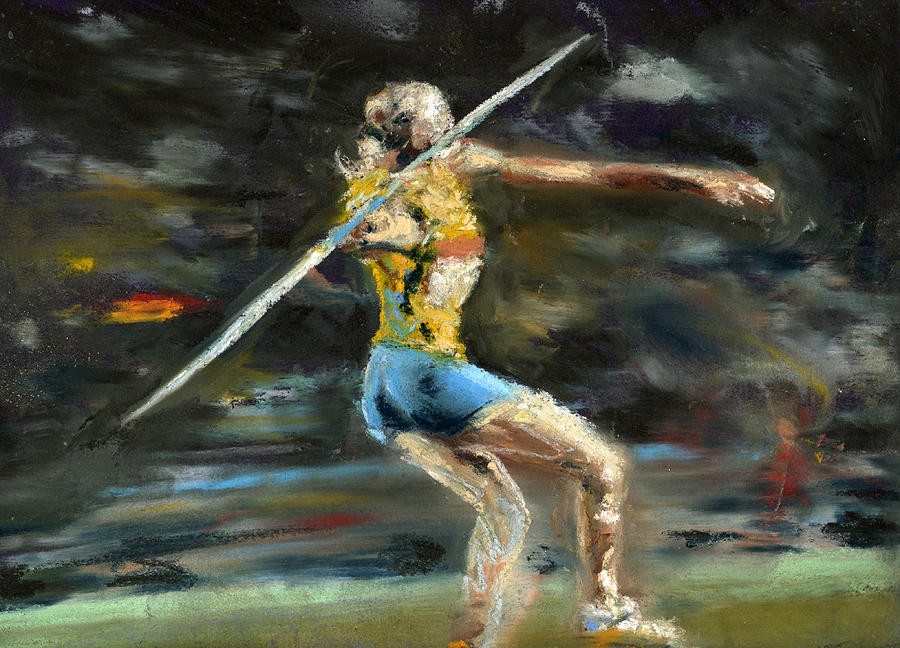
The Art of the Javelin, a short story

illustration the art of the javelin

The Art of the Javelin

There were certain lovers who never let you go, not even when it was over, officially over ‑‑ the kind of officially over where you both married other people.  It’s not anyone’s fault.  It’s something about chemistry, the chemistry of their skin on yours, your skin won’t ever stop wanting theirs and this is a really, really bad thing.  Marriages have been wrecked because of that skin, engagements broken, the valuables pawned.  The skin fling always started well, of course, the mad passion, so heated you never thought about the consequences.  And there were always consequences:  huge, nasty ones.  Perhaps those terrible consequences were what doomed the love affair from the very beginning.  Nothing so lovely and delicate could survive the stamping black boot of your own despair.

You loved him, but it was never enough.  Being with him was not enough.  Being without him was not enough.  Maybe your children, both dead, would have been enough.  You saw the first child, sleeping, its head tilted back, its eyes closed.  You do not know what color its eyes were.  You never saw its eyes.  It saw, and in seeing, died.  Suffice it to say the child would have been a master of language.  It would have been love, a fountain of it.  You left, not taking your child home.  You let someone else take it away.  Psyche never saw Cupid, and you cannot see him anymore.  Psyche is and was whatever Love loved.  You were loved by Love.  You died with the child.  You were crushed like a butterfly hovering in front of a fast-moving truck.  You were a crushed soul.

The land was flat, barren ‑‑ the horizon stretched like a satiated woman ‑‑ supine, theatrical, unconscious.  You missed the children, and you missed him.  Was it a garden you were in?  Was it a prison cell?  There was never enough air, anywhere.

Who wanted, as a woman wanted, simply to be loved?  All the boys wanted something else.  Girls, on occasion – and more than once — want abstract worship, admiration from afar, poems, flowers, sweet nothings in the ear.  Is that what the boys wanted, too?  With that divining rod in front of them it must have been difficult to remain abstract.  There was something embarrassing about need rendered visible.  They could not hide it from the world.  Did boys say, “No?”  As often as girls?  The urge was outward, not inward – the desire to pierce, rather than contain.  The needle ‑‑ the eye of the needle ‑‑ threaded with what, exactly?  The female soul?  Your feet were so cold in the water, wading for freshwater mussels, that your toenails turned stark white.  The mussels were brown and slippery, and the empty shells painted with pale, pearly rainbows in the light.  The little girls around you murmured with delight, squealing when they found a really big one.  Their little hands were sandy and damp on your arm.  Their voices piped so impossibly high.  You saw them at age 35, still hunting for the perfect shell.

You were tired of living your life.  It was satisfactory only in the material sense.  The lights were never turned off for lack of payment.  Your husband went to bed hours before you did; you sat doing needlepoint in the den and watching obscure re‑runs.  You resented your husband’s bulk upstairs in the king‑sized bed, you resented him sleeping turned towards you, resented the warmth of his breath wafting across the hump in the middle of the mattress that had arisen over the years between the depressions your bodies made on either side.  Once or twice you tried to get her husband to talk to you about God; he declined to do so, saying it was “too personal” a topic.  What is the use of a husband, you thought, without conversations about God?

So you wondered whether to leave him.  Suddenly, a young man, black‑haired, black‑eyed, entered your life, with a piercing gaze, but shy, downturned head.  He was marrying his girlfriend:  you thought they were both too young and naive to know what they were getting into.  You tried to talk him out of marriage, saying not that yours was terrible, just that marriage itself was really hard and bound not to live up to anyone’s expectations for it.

He married the girl, anyway, and in about a year was desperately unhappy.  His wife left him, run away several times, stole his money and his car and told him he was worthless both in bed, and out.  In another moment, you found yourself in bed with him, never once considering how you would get out again.  You were not ready to be called an adulteress, but he persuaded you that since you had already committed adultery in your heart, what did it matter in the flesh?  Oh, it mattered, it mattered plenty.  Only in a purely theoretical sense did it not matter.  It certainly mattered to your husband.  He wanted the child, all the money, the house, and your head on a platter.  Everyone told you not to be honest, not to tell him, but you couldn’t deceive him that way ‑‑ it would kill you to be so deceived by someone else.

It first happened on a rainy afternoon, the kind of afternoon that made sitting on a park bench impossible.  All you really wanted to do was talk.  You were lonely, you wanted to be alone with him in a comfortable place where you could take your shoes off and lie down flat and tell him your life story.  He was so kind and understanding.  You wanted everything to happen slowly.  Both he and you were married to other people at the time and you had a broken ankle so you couldn’t walk through the woods or the park, even if it weren’t raining.  You weren’t planning on committing adultery.  You wanted an affair of the heart, of the mind.  You were either hopelessly naive or lying to yourself.

When you were feeling bitter, you wore red clothes, covered with lint, and did not bother to go over them with sticky tape.  You slept only on goose down pillows, and drank only water bottled in France.  When hurricanes were coming, you cooked elaborate cream sauces, and served lemon and honey tea shot with brandy in a crystal cup.  Your rage gave you a sore throat, the tears and tissues a sore nose.  Anger was only depression turned outward.  Always, you received presents in the wrong size, but consoled yourself afterward with icy lime sherbet.  You slept a bitter sleep, on sticky sheets, dreaming of French noses, and purebred geese, white with pink feet.  On Halloween, you changed your name for good.

You took bitter medicine, while he slept through the hurricane.  He gave you red clothes, always the wrong size.  You fed the geese cracked corn with your bleeding hands.  The brandy shattered the crystal glass.  Cream sauces were poured over ice.  You strapped the pillows to the bed with sticky tape.  You cried while he was bleeding.  You whimpered after giving birth.  A deep, abiding melancholy.  Our Lady of Perpetual Melancholy.  The symbolism of the golden arches.  An icon for the ages.  Our Lady of Perpetual Cholesterol.  Our Lady of Sodium.  Our Lady of the Mall.  Where is food for the spirit?  Charge it on your MasterCard.  Ring it up on your Visa.  A deep melancholy, not easily abated or debated.

It happened on a day when you’d been fasting for religious reasons even though you weren’t religious.  A friend called that morning before you’d eaten breakfast and happened to mention it was Yom Kippur.  You felt ready to atone for everything you’d ever done regardless of whether you’d actually caused anybody to suffer.  Your husband, for example.  Your husband was suffering although he didn’t realize it.  He thought he was content, but he was wrong.  You knew that having sex with a woman for 12 years without her having a single orgasm constituted suffering.  You wanted his suffering to cease, quickly and permanently.  And it seemed you were the cause of all suffering, everywhere.  You had daydreams about running away and never coming back, living in a small rented room, anonymous.

So the fasting and the marital woes had taken their toll on your common sense, and the broken ankle had taken its toll on your ability for locomotion.  You were faint from low blood sugar and hobbled wearily into the motel room, collapsing on the lumpy mattress.  Being called a neurotic bitch by your husband had long lost its appeal.  You needed somebody to love you, not somebody to fuck.  But, as your soon‑to‑be lover undressed you, he told you it didn’t even matter whether you actually had sex with him because you’d already committed adultery in your heart.  At the time, you took your lover’s reasoning for spiritual altruism.  You snapped at it like a starving bass would snap at a rubber worm.  Hook, line and sinker, you purchased your fate.  It was silly to think you could ever keep a secret.  You obtained a divorce, slinking away from the ruins of your marriage guilty, nearly suicidal, your ex‑husband spitting contempt and moral integrity even as he made plans to marry his own recently‑acquired lover.

Then over and over again, between your ex‑lover and yourself, things exploded, imploded, burdened by your guilt and remorse and terror.  All this ruined mess wasn’t what you had in mind, you were just lonely and wanted to talk.  He thought everything was conquerable, everything, by the human will and true love.  Slowly, unmet needs that at first seemed unimportant loomed enormous and unsolvable.  He didn’t feel safe with you, nor you with him, albeit for completely different reasons.  You were nastily divorced, and suddenly a major skeptic when it comes to love.  Between your dead marriage and your dead alcoholic mother, you finally learned to cut your losses, and quickly.  What started with a bang ended with a bang?  First the relationship was a misery to you, and then it was a misery to him.

The copper gleam of your helmet hair was blinding.  Ivory soap floated in the tub, pale and fatty.  Hard gray metal breathed like a ghost.  The stains of divorce could not be removed with bleach, no matter how hard you tried.  Women in bikinis reminded you of how you used to feel in summer, naked, nearly free.  You decided to be laid out in a salt pine coffin from Jerusalem, your wake illuminated by jeweled lamps fueled by liquid chicken fat.  Stone gargoyles copied from Paris originals would be worked into bench seats.  For refreshments, cold meats with baked garlic.

You loved him even though you knew it was doomed, and that love kept pulling you back to the maybe‑I‑didn’t‑really‑give‑it‑the‑old‑college‑try sort of mistake.  So you got involved with him all over again, and it was a disaster, again, but to him the fact that you came back only proved the point that you two should never have broken up to begin with.  In the end, he never understood why you kept breaking it off, and each time it got over somehow you couldn’t understand exactly why you ended it, either.  It was the same kind of destructive amnesia that keeps a woman having babies after that first one.  She forgets how hard it was, how much it hurt, how much it broke her spirit.  This entire sad sequence repeated until you finally had enough.

That night, you dreamed your mother was unpacking long‑forgotten boxes ‑‑ animals carved out of brightly colored stone, gold‑glass paperweights, things you loved, and your mother was getting rid of it all.

Six months later you got a bill from the library for $173.00.  You remembered your lover checked out a bunch of library books on your card.  So you called him, asked him to return them so you don’t have to pay.  Time goes by, and you wondered.  You called his house for days, but the line was always busy.  You decided to drop in.

You knocked.  It took a long time, but finally he came to the door, disheveled but looking good, except around the ears.  His house smelled strongly like man.  You were startled by the smell.  Vanilla, cinnamon, and a touch of dirt, of mushrooms.  The rooms of women smelled like yourself.  You have been in other men‑only houses, and it was always the same.  There was a strength to their smell, a lasting power, an earthiness under the scent of the body that made you want to burrow into the bed-sheets.  This time, you did not.  He was growing a beard and wore jeans with holes in the knees which made him look as sexy as the third time you slept with him, the time in his father’s falling‑down barn ‑‑ you couldn’t wait one minute longer so you did it right there on top of some mildewed couches.  You broke up for the last time almost a year ago.  It was shocking, the physical part you’d thought was long gone.

You wanted him again, though you’d never let yourself have him, and he sensed it – that made him really angry, angrier than you had ever seen him.  For once, you ignored the physical passion.  You didn’t touch him, though you wanted to, badly.  He sensed it, and that sensing is what drove him mad.  He screamed.  He accused you of being shallow, insensitive, a manipulative bitch with the emotional capacity of a rock.  You were meant to be his, you did everything wrong, you shouldn’t have broken up with him, because it was meant to be, him and you, forever.  He forgot how you cried all the time, and how you couldn’t quite put your finger on the reason.  He forgot what it cost you to be with him:  half your daughter’s life.  He had no children himself, yet, then:  he couldn’t know how guilt had you in its death‑grip.

He screamed, he let you do things, “get away with things,” he shouldn’t have.  He didn’t want those things to occur, but he didn’t object at the time because it seemed like what you needed to do.  You told him maybe he should have given you his true opinion, back then.  Maybe, if he had given his opinion when it was so desperately needed, you’d have chosen to be with him.  Maybe it was his essential passivity that caused those late‑night crying jags.  Maybe you were crying because you felt like his parent, his dorm mother, his baby‑sitter.  You, too, sometimes wanted to be cared for, nurtured, sometimes you wanted to feel safe, to be warm in your own bed on your own pillows, not scurrying around in the corners playing catch‑up with the dust-balls.

But he did not, could not, and would not hear anything you had to say.  You were supposed to be with him forever — he believed this and never let go of it:  his personal Holy Grail.  He wrote you love letters up until the week you got married for the second time, after that, came only hate letters.  There would never be a remedy for his hurt.  There was no way to make amends.  The wounds between you never healed, because he never stopped being angry with you.  He was, is, and will always be angry with you.  For this reason, your affair with him will never be over.

Will he be angry, forever?  Yes.  Will his jealous wrath burn like fire?  Yes.  Blessed is the man whom God chastens, and God will chasten him in time.  Yes.  His entry into vagina, and your life, was like someone throwing the couch over, slitting all the cushions, smashing the picture glass, sawing the bookshelves into firewood.

Someone knelt.  Someone asked to be blessed, forgiven, and made whole.  Two people danced, and at the same time drew blood from one another.  The man you loved stood remote, erect, unbending.  You died, to him.  You murdered him, years ago — it was an accident, a terrible wreck of the heart and body.  You wanted only to find your true home.  They why did your heart feel like cold‑rolled steel?  It clanged shut — you were alone, again.  And, again, no one could reach you.

While his plane took off, you did jumping jacks next to the runway fence.  The chain link made you feel like you had a vision problem.  The vessel making up your love for each other was glass ‑‑ white but somehow full of colors, opalescent, and its inner lip was scarlet ‑‑ caressing the outside of the vessel were golden-brown, radiating leaves, quivering with life.  Nothing could hold that vessel down ‑‑ it rose of its own accord.  Once shattered, it could never be restored.  Your fault, you never knew how to live in this world.  You always desired things which could not be possessed ‑‑ could be kept, could not be domesticated.  Your own heart was not domestic, but, rather, wild, savage, and cruel.  It was the opposite of serene.  It held mother‑love and murder, sometimes in the same instant.  You were the living damned.  The only answer seemed to be to keep moving.  That is why you decided to entomb your legs in rock, solid and immovable.  That is why you always tied yourself to the ground.  The caged butterfly smashed itself over and over again, beating impossibly against prison bars of cold‑rolled steel.  Finally, its wings shredded, and the butterfly could only remember flying.  It knew only that something had gone terribly, terribly, terribly wrong.

3 Comments

Filed under health, legal writing, mysterious, prose poetry, short stories

from my folder: defense lawyer’s greed: my lawyer made me do it, by steven lubet

Image

MY LAWYER MADE ME DO IT

Steven Lubet

05‑01‑2003

Sooner or later, nearly every lawyer has to confront some variant on the dilemma of zealous representation. How do we justify representing clients whose goals are morally questionable or even flatly offensive? The standard answer is that lawyers serve society by facilitating client autonomy, allowing individuals and corporations to make informed decisions about their legal rights. As Samuel Johnson explained nearly 250 years ago, “A lawyer is to do for his client all that his client might fairly do for himself.” Thus, corporate counsel (following each new accounting fraud) and public defenders (in almost every case) deliver the same ready reply to a relentlessly familiar question: How can you defend those people? Well, it isn’t always easy, but we are just doing our job.

Lawyers have come to expect skepticism, if not outright scorn, when representing, say, polluters or criminals. But until recently, it was a safe bet that no one had to be embarrassed about a client like the Catholic Archdiocese of Boston. In recent months, however, the litigation over clergy abuse has become so acrimonious that many parishioners are openly questioning the basic decency of the church’s legal strategy, going so far as to accuse the defense of inflicting new trauma on the abuse victims. Representatives of the archdiocese responded by blaming it all on their counsel ‑‑ “Our lawyers made us do it” ‑‑ as though the church has no control over the tactics employed in its name.

 More than 500 civil cases have been filed against the Boston archdiocese, alleging sexual abuse by priests and a decades‑long cover‑up by the local hierarchy. Last December, amid charges of stonewalling and complicity, Cardinal Bernard Law was forced to resign, replaced temporarily by an apostolic administrator, Bishop Richard Lennon. From the beginning, Bishop Lennon promised a new tone of reconciliation and healing. He announced his intention to settle the outstanding litigation, and promised to make therapy available to every victim who comes forward.

In the meantime, however, the church continued to mount a forceful defense in court, engaging in a level of trench warfare that would make Johnnie Cochran proud. For example, defense lawyers filed a breathtaking motion to dismiss all 500 cases on First Amendment grounds, arguing that the civil authorities could not interfere with the “bishop‑priest relationship.” It was claimed that the constant reassignment of known child molesters was beyond the reach of the law, because the supervision of priests was exclusively an ecclesiastical matter.

Predictably, the motion was denied, but not before Bishop Lennon explained that his attorneys had insisted on the hardball tactic because “failure to do this could very well result in the insurance companies walking away from us, saying that we have not exercised all of our avenues of defense.”

It was barely noticed at the time, but Bishop Lennon had actually adopted the classic lawyer’s excuse. Absolving himself of any moral responsibility for the maneuver ‑‑ much less the cost and anxiety it imposed on the injured plaintiffs ‑‑ he invoked the nature of the legal process as justification for an outrageous ploy. Attorneys routinely seek to escape the consequences of their actions by deferring to their clients’ instructions, but this was an entirely new twist on an old theme. The apostolic administrator washed his hands of his own decision, blaming the insurers and lawyers instead.

It gets much worse.

In January 2003 the church’s defense team began serving deposition subpoenas on plaintiffs’ psychotherapists, including some who had actually been hired by the archdiocese itself to provide treatment to abuse survivors. From a legal perspective, of course, this was not particularly out of the ordinary. The psychotherapist privilege is waived when a plaintiff claims damages for emotional trauma.

From a moral perspective, however, it was a disaster. The church had encouraged victims to come forward and had even set up a special Office of Healing and Assistance to facilitate therapy, as part of Bishop Lennon’s announced preference for settlement over litigation. Then the archdiocese turned around and insisted on invading the patient‑therapist relationship in a way that many victims regarded as jeopardizing their recovery.

The reaction was furious. A coalition of psychologists and victims’ rights activists denounced the depositions as “revictimization” and “reabuse” of patients who were “already broken members” of the church’s flock. Without disputing the church’s legal right to take the depositions, the group complained that the tactic was inconsistent with Lennon’s professed commitment to justice and healing. The victims’ therapy, they said, would be “permanently harmed by the intrusion of the legal system.”

One prominent psychotherapist, who had previously been invited to address the United States Conference of Catholic Bishops, put it even more bluntly: “I think that this is very despicable and deceitful. To say [that] ‘the church loves you’ and ‘we want to help you’ and then to invade your treatment is really just wrong. It may be legally okay, but it’s wrong.”

In response, an archdiocesan spokeswoman declared that the depositions were lawful and necessary: “If the victims choose to sue … we feel that we’re obligated to defend ourselves.”

Maintaining that the archdiocese still supported therapy for survivors, she insisted that the support stood “separate and distinct from the litigation process.” And lest there be any mistake, another church official remarked, “It’s a very tragic set of circumstances, but when you get to the litigation stage, there are certain things lawyers insist on doing to protect their clients.”

Thus, the Boston archdiocese inverted the very premise of the attorney‑client relationship, relying on the purported demands of counsel to justify its own moral blundering. Lawyers naturally recommend strategies that enhance the likelihood of success in litigation. To those who see themselves as legal technicians, the human toll is irrelevant so long as the tactic is lawful. The autonomous client is entitled to zealous representation, and the attorney is helpless to refuse.

But that same stricture never applies to the clients themselves. There is no conception of litigation in which a client can decline to be an independent moral actor. In fact, the American Bar Association’s Model Rules of Professional Conduct specifically call upon lawyers to “defer to the client” in regard to other “persons who might be adversely affected” by litigation. While any good lawyer would urge the archdiocese to authorize the depositions of victims’ therapists, no lawyer could compel it. That is why we call it “advice of counsel.”

The basic purpose of taking a therapist’s deposition, after all, is to undermine the plaintiff’s monetary claim for emotional distress. A good transcript ‑‑ filled with artfully extracted admissions and potential impeachment ‑‑ becomes a useful weapon in negotiation or at trial. An early deposition in the midst of settlement talks is an unmistakably aggressive move, especially in the case of a vulnerable plaintiff who has suffered clergy abuse. (In several hundred cases, all discovery has been stayed for 90 days pursuant to a “stand‑down” order intended to facilitate settlement; in other cases, however, the contentious litigation continues unabated, as the archdiocese recently moved for the entry of a gag order against a lead attorney for plaintiffs.)

The leaders of the Boston archdiocese may opt for compromise and settlement, or they may choose to litigate to the bitter end. As an outsider, I would defend their legal right to make either choice. But no client has the moral right to raise the flag of reconciliation while instructing counsel to scorch the earth.

Steven Lubet is a professor of law at Northwestern University. His most recent book is “Nothing but the Truth: Why Trial Lawyers Don’t, Can’t and Shouldn’t Have to Tell the Whole Truth.” E‑mail: slubet@law.northwestern.edu.

Leave a comment

Filed under health, legal writing, mysterious, notes, recommended reblogs

martha’s china, a short story

illustration martha's china

Martha’s China

“I’ve met a nice girl,” Martha’s divorced son, Paul, had announced one Sunday. “Her name’s Lidia. I want you to meet her sometime.”

“Well, why don’t you bring her to dinner with you next week?” she said. As she put her coffee cup down into the saucer, her wrist twisted suddenly and she nearly dropped it, making a terrible chipping sound. Holding her breath, she ran her hand over the bottom of the cup but found it unharmed. She smiled at Paul and touched her necklace. “Call me by Wednesday to let me know for sure.” Then she decided she’d sit and sip coffee and smile at her son; she was entitled. Paul looked just like his father only better, his shoulders wider, his hair thicker, his teeth larger, his eyes a purer blue.

***

This year, in honor of Thanksgiving, Martha’s second daughter-in-law, Lidia, wore a white jumpsuit, gold belt and shoes, and a great deal of white plastic jewelry. A long bead necklace was wrapped twice and knotted around her neck, bangle bracelets in random widths jangled everywhere, too-heavy earrings sagged the little holes in her lobes. There was a brooch too, some sort of spidery circle with a gold anchor dangling in its center.

Unfortunately, the white Thanksgiving jumpsuit was tight everywhere that Lidia wasn’t. Martha breathed deep and smiled anyway, gripping the hot solid hand firmly, glad to be helped up the front stoop even by a woman like this. Well, at least she’s got him going to church again, Martha thought — we’ll just see how long that lasts. Before his and Lidia’s wedding day, Paul hadn’t set foot in a church of any kind for twenty-five years, not since the last day he hung up his altar boy outfit. He’d had a civil ceremony with his first wife. Maybe that was her fault too — hell, everything seemed to be the mother’s fault, these days.

Martha should have known from the beginning how this second marriage would turn out. Lidia had no hesitation in her voice. Brassy. From the very beginning, she just blared right out with everything. “Hello, Mom,” she’d say to Martha, her cheeks round and orange with too much makeup, front teeth stretching her upper lip, keeping it from ever completely closing, making the words come out slippery-sounding: too loud, too bright. Not a lisp, but damned close. All she needed was a fluffy tail to snap behind her, Martha thought — it would go right with the rest of her chittering.

Not like Neal’s mother, Paul’s first wife, Joanne. Martha sighed, remembering Joanne as she sat down on the too-soft living room sofa, some rattan thing covered with the kind of material she would have expected to see worn by a belly dancer. Why, for all her problems, Joanne had been a lady. Martha had told her son that when he’d brought Joanne home for dinner for the very first time. “This girl’s too good for you,” she had said, right at the table in front of everybody. Damned if her conscience wasn’t clear on that one. Poor Joanne hadn’t known what she was getting into — none of them had. Not that Paul was a monster, just lazy. Almost spineless except when it came to his expensive toys. Those damned boats. Martha couldn’t stand it, but what could she do?

“Happy Thanksgiving, Mom,” Lidia said, plopping herself down next to Martha. “I hope you brought your appetite.”

Martha smiled. “Thank you, dear,” she said, patting her daughter-in-law’s hand lightly.

***

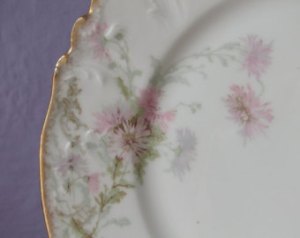
Martha’s china was Limoges. There was a border of tiny flowers, handpainted pink and green and a broad line of gold around the edges, the coffee and demitasse cups so thin you could see through them when you held them up to the light, like eggshells. Martha had inherited it from her mother and father when she was eight.

The accident that killed them had involved electricity. Whether it had been lightning or wiring, she never knew. In any case, she tried to imagine their final moments based on what she knew of electricity from watching movies and reading the encyclopedia. Waking early in the mornings, she would throw off the covers and lie there in the pearly dark, stretching her arms and legs out, stiff, at right angles. She would open her mouth until she heard her jaw pop. Her body would tremble, her lips sting. When she finally let herself go limp it was a relief to be back.

Martha was sent away to boarding school the following year; her parents’ money was managed by some cousins of her father’s. During her senior year, she was called in to the headmistress’ office and informed: fiduciary malfeasance. Of course she would receive her degree with the rest of her class. The words “charity case” were never used. Much later, memory and resentment molded the set of her mouth, pinching her lips with sharp lines: by the time she was fifty, no one guessed she had once been smoothly, delicately beautiful, the kind of looker other women couldn’t even bring themselves to dislike, although their first impulse was always to try.

***

“Where’s Paul?” Martha asked.

“Oh, he had to run out to the store,” Lidia said. “I forgot the cranberry sauce.” She chuckled, shaking her head. A small fleck of saliva flew from her lips as her teeth drew back. “Brain like a sieve sometimes. He’ll be back any minute now.” She stood up and walked over to the door leading to the T.V. room. “Neal! Eddie! Get off that Nintendo and come say hello to Grandma Bergen.”

Their boys had been five when Lidia and Paul married. It hadn’t bothered Martha at the time that they wanted Lidia’s boy, Eddie, to call her Grandma, too.

“Hi Grandma,” said Neal. “Happy Thanksgiving.” He bent and kissed her shyly and she felt a slight prickling fuzz tickle her face with the kiss. He was so white-blonde it wasn’t something she would have noticed from a distance. He was growing up, that was clear. He had a small pimple on his chin.

“Grandma, how’s it going?” Eddie said, and he stuck out his hand. She shook it, his hand warm and heavy like Lidia’s.

“Very well, Eddie,” she said. “Thank you.”

***

In the end, “fiduciary malfeasance” notwithstanding, young Martha had been able to keep the china and the silver, and her father’s monogrammed, twelve-piece dresser set. There was a little cash left over. She managed to graduate from Boston University by wearing the same dresses all four years and waitressing at Woolworth’s, not precisely what she would have chosen, but good enough for a Massachusetts teaching certificate. She interviewed at high schools all over but ended up teaching back in Brookline, where she had been born. Wanting to keep her figure, she joined the municipal tennis league. They played tournaments once a month. It seemed like a good way to meet people, better than church, which is what the other teachers did. Using God as a dating service was hardly a ticket to heaven.

***

“Can I get you anything, Mom?” Lidia asked her. “Some iced tea or a Coke?” Paul and Lidia were born-again Baptists now: no alcohol, even on holidays.

Martha smiled slightly as she remembered the old joke: What’s a Methodist? A Baptist who can read. “Iced tea sounds nice,” Martha said. She heard the gravel in the driveway crunching and the dogs started to bark. “That must be Paul. Go tell him his mother’s here.”

“Oh, he probably saw your car already,” Lidia said. “I’ll be right back with the tea.”

***

Martha’s ex-husband, Fred Bergen, had been a handsome young man, five years older than Martha. He was well over six feet, blue-eyed and blonde, with smooth Scandinavian skin that turned a dark, clear brown every summer. Martha was dark, eyes and hair, except for her skin, which was thin and light, looking almost transparent in the sun, a raised mole in the inside crook of her elbow the only mark on her. Next to him she looked like a foreigner, but her ancestry was English on both sides. He had gone off to Dartmouth to study Engineering but came home to Brookline to be a gentleman.

He was an ace tennis player; she was ready to get married. Her china saw frequent use. The teaching certificate moved into her scarf drawer. They had one child, a boy, named Paul, after her father.

The first few years after Paul was born, they lived just outside Concord, on the farm her husband Fred had inherited from his family. The three of them rode through the woods almost every Sunday, Paul on his Shetland pony, the reins tied to the side loop of her saddle. She especially loved the fall woods, the bare trees making everything look so clean. Everything was gray, but there were no real shadows.

***

“Well, hello there!” Paul said, pulling his satin baseball jacket off as he stood in the living room doorway. Throwing it over a chair, he sat down across from her. His smile was broad, his square white teeth perfect. The skin around his eyes wrinkled heavily as he smiled, pulled up into bags thrown into even harsher relief by the lenses of his glasses, something that still surprised her. If her son was getting old, she wondered, what was she?

“Hello there, yourself,” she said. She held one arm out to him, summoning. Heaving himself up out of the chair, he bent for a kiss. She smelled shaving lotion and dandruff shampoo; he fumbled at her cheek. She took one of his hands in hers, feeling the hard, dry skin of his fingers, squeezing it twice. Sitting down next to her this time, his breath whooshed out as if he had been holding it.

“How’s your father?” she asked. Their divorce had come years ago, when, of course, she was considered too old for it. Separated for a long time already, she nonetheless wanted the formality of the piece of paper. She took her own Social Security, not Fred’s, so it didn’t really change anything in a practical sense. It had been the kind of case the judge laughed at right in court. That irked her more than any of the rest.

Family holidays, of course, nothing had to change.

***

Martha had blamed herself the second time the money went. Not as much as she blamed Fred, of course. But she, of all people, should have seen it coming. The gin games at the country club were no surprise, but as for the horse races — she had had no idea. They sold the farm to pay off his gambling debts, land that had been owned by the Bergens for three hundred years. Neither of them had ever lived anywhere but Massachusetts. It was Fred who promoted Florida. He’d heard there were still bargains to be had in Miami.

They bought three lots with the money they had left, building an apartment building on the water in Coral Gables. Fred’s tan became year-round. He had started to put on weight, but it came off now that he was busy with the yard work and repairs around the building — five units — wearing swim trunks and sandals, beachcomber style. Martha packed her wool suits away in a trunk under the stairs. They both looked ten years younger, so maybe it was for the best.

Paul started first grade, then second, then third. When she found him rummaging through the old trunk full of woolens for a Halloween costume, she realized it was finally time to clean house. She got rid of all that heavy winter clothing, except for one pair of jodhpurs, sort of a souvenir, not having any use for them anymore but afraid she’d be sorry later.

She used the Limoges every Thanksgiving and Christmas, but then the company finally discontinued the old pattern, and she was afraid of ruining the set. Counting the different pieces, she wrote the numbers down on a 3×5 card taped to the inside of the china closet’s door. She’d dust the outside of the closet, telling Paul — someday, when you get married, this will be yours. Okay, he’d say, nodding. Is it all right if I go fishing with Gary this afternoon after school? She’d tell him yes, then watch him run out the door, worrying he’d never know what he had really come from.

But had knowing where she, herself, “came from” ever done her any good, she wondered?

***

“Oh, Dad’s the same as ever,” Paul said to Martha, rolling his eyes. “He ought to be here soon. I called Yellow Cab this morning. They were supposed to pick him up at one-thirty.”

Fred’s eyes were shot, but it was really the drinking that kept him from behind the wheel: the way his hands shook.

“Now, why did you go and do that?” Martha said. “I could have picked him up on my way.”

“I knew you’d say that,” Paul said. Then he chuckled. “I figured the cab deal was easier for everybody. If you really want to, you could drive him home, I guess.”

“I was only married to the man for forty-five years,” Martha said. “I can put up with him for one more hour in the car. Besides, then he won’t be able to stop and get loaded.”

Paul snorted, a half-laugh. “I don’t worry about it. I’ve already told him if he wants to kill himself he should go ahead.”

***

When Paul flunked out of the University of Miami his junior year, he had two options: the Coast Guard or Vietnam. It wasn’t really much of a choice. He spent the first eighteen months in Greece, working on Radio Free Europe. His letters home were short. The girls are beautiful here, he wrote. Martha was relieved when he was sent back to the States and stationed in Key West — no Greek wife, and that was fine. Every week or so he’d drive up for dinner.

She loosened up a little about the china. What’s the point in having something you don’t use? She would ask herself. She felt relatively safe using it for coffee and dessert since there were fourteen each of the small plates, cups and saucers. She could break two and still have a set of twelve.

***

Paul pressed his lips together and twisted them to one side. “Besides, as long as it’s not in my house, I really don’t care how much he drinks. It’s not my problem anymore.” He shook his head as if trying to convince himself.

Lidia came back in, holding a glass of tea in one hand and a magazine in the other. The ice tinkled as she walked. “Mom,” she said, “this is something we’re really proud of.” She handed the magazine to Martha, putting the tea on the coffee table. “It’s on the last page,” she said.

Martha opened her purse for her reading glasses: frosted blue frames with half lenses, on a silver chain. She held them to her nose, the chain rattling against her string of amber beads as she fiddled with the magazine. It was last month’s copy of Florida Sportsman — on the last page was a photograph of Paul on the deck of his boat, holding up a very large and very dead bull dolphin, his fingers hooked in the poor creature’s gill covers. “My, my,” she said, looking up from the magazine and raising her eyebrows. “Isn’t that something!”

“The fish was forty-nine pounds, even,” Paul said. “Half a pound over the local record.”

Martha smiled, peering at her son over her glasses. He wasn’t a outright gambler, that was true, but in a hundred other ways he was exactly like his father. This fishing obsession: did he really think it was enough? A person she raised from a baby — living his adult life primarily through jerkings and spinnings felt from the end of a pole.

“Congratulations,” Martha said, removing her glasses and folding them carefully, setting them on the coffee table in front of her. “I hope you’re having the fish mounted.”

“Of course,” Lidia said, leaning over the back of Paul’s chair, her solid brown arms wrapped around his neck and her chin resting lightly on the top of his head. “The boys and I are giving it to him for an early Christmas present.” Paul twisted his head and smiled up at her.

The dogs barked again. A cab pulled into the driveway. The noise of the idling engine echoed against the stuccoed concrete block of the house. Fred climbed awkwardly out of the back seat, wearing an old plaid patchwork sport-coat and thin wire-rimmed glasses, his wispy gray hair blowing crazily in the breeze. Martha heard him call toward the open living room windows.

“Hello!” he said, his voice strained. His hand trembled as he futilely tried to smooth his hair. Finally he put both hands to the sides of his head, cupped behind his ears, calling again. “Somebody come out here and help me, would you? I’ve got some pies to bring in.”

Paul looked at Lidia and then back over at Martha, rolling his eyes. “The mincemeat,” he said. “I told him we already had dessert this year. Oh, well.” He got up and went out to help his father.

***

Martha had cooked a leg of lamb in honor of meeting Joanne. Putting real butter out for the mashed potatoes, she even brought out the big serving platter and the covered vegetable dishes from the Limoges. The dessert plates and coffee cups were on the table too, as usual.

Joanne was a nice girl, Martha saw that immediately. She wore a green linen suit and matching pumps; her hair was long, just past her shoulders, with square bangs, a white headband holding it back neatly. Her hand was small and cool in Martha’s own as she said hello. “It’s so nice to meet you, Mrs. Bergen,” she said.

“Oh, please call me Martha.”

“All right,” Joanne said, smiling. Her teeth were as glossy and prettily shaped as kernels of white corn. “Your home is lovely. It seems so nice and cool on the water.”

“Yes, we enjoy it,” Martha said. “Are you a native of Miami?”

“Not quite,” said Joanne. “I was born in Delaware. But we moved here when I was three, so I really have no memory of the cold.”

“We moved down from Boston when Paul was just a little older than that,” Martha said. “I don’t think I could survive a New England winter now.”

Joanne admired the table. “It’s so beautiful!” She touched the covered tureen in front of her. “Is this Rosenthal?”

“No, Limoges,” said Martha. “It belonged to my parents. The pattern is discontinued, you know, so I don’t use it very often. But this is a special occasion.” She looked over at Paul and smiled.

She gave Joanne and Paul the Limoges as a wedding gift.

***

“Fred’s always loved mincemeat pie,” Martha said. “It’s the only thing he ever learned how to cook himself. The man eats out of a can, breakfast, lunch, and dinner.”

“It’s cute,” Lidia said. “My father couldn’t boil water without instructions. I like a man who cooks, even if it’s only one thing.”

Martha stared at her. “Pie crust is quite an accomplishment, when you think about it that way,” she said, nodding her head and smiling. “I suppose I could break down and have a piece this year. The heck with watching my weight on Thanksgiving.”

Fred puffed his way into the living room, wiping his glasses. His eyes looked small and defenseless, his face flushed even more than usual. “Well, that was a rare event,” he said. “An American cabdriver, white to boot. I asked the guy what he was doing driving a cab.” Shaking his head, he put his glasses back on, then took out a hard rubber comb and swiped at his hair. “He must be a real loser.” He lowered himself into the armchair next to the sofa. She caught a whiff of him: dry, musty. His pants were creased smartly but there was a faded grease stain on the knee. Turning to Martha, he held out his hand to her, which trembled although she knew he strained to hold it firm, and she felt a piercing of loss for him. I suppose in his own way, he pities me too, she thought. She must appear just as sad to him, even without a tremble.

“Hello, my dear,” he said, and he kissed her hand, his lips warm and slightly moist.

***

Poor Joanne hadn’t wanted to quit her job at the bank, but Paul insisted after Neal was born. “No son of mine is going to be raised by a babysitter,” he said. Martha felt he had a point — but what good was it if Joanne was miserable at home? She herself had missed teaching, although she’d never seriously considered going back to work until Paul was in high school. But she certainly wasn’t going to come between husband and wife. Her two cents, she kept to herself. Then Paul told her Joanne was having a problem with her drinking. He’d seen enough of that with his own father, he said, to last a lifetime. After he filed for divorce and custody of Neal, she didn’t mention anything to anybody, just decided to reclaim all she had left of her barely-remembered parents.

“Well, hi,” Paul said, when he opened the door and saw her, unannounced. His eyebrows were raised, but he didn’t ask. “Joanne’s with Neal down the street at the Gallagher’s. Kids’ birthday party.”

“That’s no problem. I’m here to get the china,” she said. Paul stared at her. He didn’t seem to understand. “The Limoges.”

“Oh, that,” he said, moving back out of her way as if he were afraid, and an odd memory of him at two years old flew by her, making her weak, making her want to squeeze him. They hadn’t hugged in years: they weren’t the huggy type, like some. Still, she had some idea what she was missing.

“Let me think a minute where we keep it,” he continued, taking his glasses off and rubbing one eye slowly. It reddened and he put his glasses back on. “That cabinet over there, maybe?” he said. “Underneath?”

“I know where it is,” she said. Joanne would never forgive her, but it couldn’t be helped. She packed the china in the special boxes she’d bought on her way over; Paul carried the boxes to the car for her.

Before the divorce was final, she called Joanne to explain. She realized Joanne knew her history, but still, she was ready to apologize — but Joanne hung up on her in the middle of it.

***

“Well, it’s about time we sat down at the table,” said Lidia. “Neal! Eddie! Turkey time!”

Martha hauled herself up, out of the overstuffed sofa. She held her arm out to Fred, still struggling in his armchair like a snail trying to flip its shell. “Let me help you,” she said.

“It’s a nice chair, but it’s hell to get out of,” Fred said. His touch was strangely comforting, and she held his hand firmly even after he was up out of the chair. They had the past in common if not the future. At my age, that’s about all you can ask for, she thought.

She led Fred into the dining room and they sat down opposite the boys. “What a beautiful turkey!” Martha said. And what an ugly serving platter, she thought.

She had given the old Limoges set back to Paul on his and Linda’s fifth anniversary, hoping to see it on the table on holidays, hoping Paul knew what t meant to her. But this platter was a cheap ceramic. I don’t know why I ever imagined Lidia would appreciate my Limoges, she thought. It looks like she picked this piece of junk up for a buck ninety-eight at K-mart — worse yet, at a church rummage sale. You’d think Paul would say something, though.

“This is an interesting platter,” Martha said to no one in particular after she sat down, putting her fingers out and stroking the edge. The feel of it was clumsy, the overglaze too shiny, far too thick: like somebody brushed it on with a pair of old socks. “Such bright colors.”

“Do you like it?” Lidia asked, smiling. “Paul picked that out just last week. It’s from Italy. Really perks up the bird, doesn’t it?”

“Yes,” Martha said. She looked around the table. Surely there was something? But it was all the same. Thick peasant pottery — vegetable dishes, gravy boat. It was everywhere. “I suppose it is nice to have a change of scene at the table once in a while.” She unrolled her silverware and placed her napkin in her lap, smoothing it down over her knees.

They were slicing the mincemeat pie when she asked for coffee. “Mom, I’m sorry, I didn’t brew any,” Lidia said, frowning. “We’ve gotten out of the habit now that you’re the only person who drinks it. I’ve got some instant, is that all right?”

“Of course,” Martha said. “As long as you’re going out to the kitchen for it, would you mind putting it in one of the old cups for me? They’re so nice and thin it makes the coffee wonderful.”

Lidia turned and looked at Paul, although it seemed she still spoke to Martha. “The old cups?” she said. “You mean from the set you gave us?”

“Yes,” Martha said, nodding, adjusting her plate of mincemeat with two fingers. She turned to Paul expectantly as well.

“Paul,” Lidia said finally, when he said nothing. “Didn’t you talk to her about that?”

He looked up at the ceiling and forced air out of his closed lips, a burbling inter-spousal sigh. “Oh, boy,” he said. “Here we go again. I told you it was okay to donate it. We’ve used that stuff maybe five times in five years.” Looking back down from the ceiling, he turned to face Lidia. His face wavered, an uncertainty seeped in around the corners. “Actually, I don’t think I did mention it to her.” Turning to his mother, his head moved slowly, as if he had slept on his neck wrong and had a terrible crick. “You didn’t want it back again, did you, Mom? I don’t think they’ve had the sale yet. All the stuff is just sitting in the vestry meeting room.”

Martha sat perfectly still, taking in the light as it reflected off his face, which suddenly seemed ten, no twenty, years younger. Her breath held fast, but not trusting herself to let it out, she drew her napkin from her lap. Stalling, she used the napkin to clean her glasses, now hanging around her neck on their beaded chain. The thick polyester was wrinkle-proof but hardly absorbent, so all she managed to do with it was smear the lenses, making them worse than before. Dust and grease wouldn’t leave. “What sale?”

Lidia answered. “The annual white elephant sale. We sent over the china as a donation.”

“Oh,” Martha said. She picked up her fork and nipped the point off her piece of pie, scraping the tines harshly along the pottery surface as she scooped up the mincemeat. “If it’s not too much trouble I would like you to get the china back.” She looked across the table at Paul as if they were the only two in the room. “Don’t you think you should have asked me first?”

“I didn’t realize it was still your property,” Paul said, his face reddening. “It seems to me when you give somebody something that ought to be the end of it.” He stood up and leaned over the table, balanced on his fingertips. “I’ll get the china back, don’t worry. And then I never want to see it again.”

“I’m sorry,” Martha said. What’s wrong with me that I didn’t see this coming? she wondered. C-plus motherhood, is that what I’m left with?

“She’s been nuts over that china since I met her,” Fred said, shaking his head. “I’ve tried to tell her she shouldn’t let something like that get such a hold over her. It’s not healthy.”

Martha grabbed his arm, hard, and Fred turned to her, his eyes wide with surprise. She shook his arm a little as she spoke. “You keep out of it. It’s nothing to do with you.”

“You see what I mean?” he said, winking in Lidia’s direction.

“I’ll go get your coffee, Mom,” Lidia said.

***

After finishing her pie and a cup of microwaved instant, she had Neal walk her out to the car. Paul would have to call Fred a cab after all. “My back’s bothering me,” she explained. “I want to get home and right into a hot tub.”

“Grandma,” Neal said, holding her arm as she walked slowly down the slippery gravel drive. “Don’t take it personal. The china, I mean. They don’t have anything old in the house. They aren’t into antique stuff.”

She felt as lightheaded as when she awoke in the middle of the night, fighting to remember some crazy dream. There’s no panic like the panic of an old woman, she thought — though we’re supposed to have wisdom. The panic ebbed a little as she exhaled, and she sighed. “I wanted them to save it for you, Neal. For when you get married.”

Neal shook his head. “That’s a long way off, Grandma.” He laughed shortly, running his fingers through his long bangs. “Maybe never, who knows? Anyway, it’s better if you keep the china at your house. It takes up so much room.”

“Is that what Lidia says?” she asked him, but he only shrugged. The boy had learned something she hadn’t, she realized. “Oh, never mind,” she said, suddenly limp. She opened the car door and sat down heavily. “Bend down and let me give you a kiss.”

“Goodbye, Grandma,” Neal said. “Happy Thanksgiving.”

As she looked in her rear view mirror, driving off, she could see him standing out in the middle of the street, waving to her. Well, what did I expect, anyway? she thought bitterly. A memory pricked her suddenly, making her eyes water, partly from tears gathering but partly from the glare off the road and the way her thoughts shifted her eyes’ focus from the road itself to something impossibly far-off — a forced gaze she found difficult to wrench out of. She idled for a long time at the first stop sign out of sight of Paul and Lidia’s. Years ago — her mother’s hand, stroking her hair, leaning over the edge of the bed in the darkness. A firm touch, though it tickled and made her shiver just a little. For the life of her, though, she couldn’t recall the sound of her mother’s voice. Just one word, she thought. Just one. She waited to hear.

A horn sounded behind her and she jumped, startled so brilliantly it hurt to breathe for a moment. “All right, all right, what’s the rush, buddy?” she said, jerking her gaze back to business, blinking as her eyes finally overflowed, fat round drops. But the fabric of her black skirt instantly absorbed the tears, and so, looking down at her lap for confirmation, before she pressed the gas pedal, she saw only the faintest of shadows staining the darkness of the fine wool.

Leave a comment

Filed under short stories

For Celibate Lovers Everywhere, a poem

for celibate lovers everywhere

For Celibate Lovers Everywhere

Leo was almost seven feet tall; his skin, dusty
brown as baker’s chocolate, his fawnlike eyes liquid,
shining, his manner shy and delicate.  I fell in love

with his polite voice that first night he came calling,
carrying his stack of Hindu texts in a wicker basket —
we were eating pizza, loaded with greasy sausage;

he looked down at us in my small dark room, polite, curious.
He spoke with a strange hesitation, his tone oval and clear
as the notes of a heavy iron bell.  He had been a monk

for years, wearing spotless but wrinkled saffron robes,
his head shaved except for one small tattered tuft
on the high, vulnerable peak of bone at the back of his scalp.

His hand was leathery, dry, smooth, like an expensive saddle.
It was embarrassing how I always wondered about his desires
for sex, wondering does he lie awake at night, thinking

about the bodies of women?  If so, what an awful shame,
for the way Leo moves, bowing his tall, elegant frame
through every narrow doorway, bespeaks a gentleness

with flesh, a respect for the gift of skin, the clarity
of nerves.  What a waste, I always think, but he’s given
his life over completely to his god.  His father was

disappointed when Leo gave up basketball; his long,
long palms still curve around in the air when he speaks,
as if reminding his body of what it once loved to do.

One day, I could tell he wanted me too, though only for an hour.
We walked the temple farm’s hot green fields, inspecting sacred cattle
together.  The dirt path circled around a lake, then wandered away

from the main house; next to a thicket of velvety cattails the same color
as Leo’s skin, we sat together on a stone bench, the surface gritty,
cold against the back of my knees.  I couldn’t look in his eyes.

I smelled the thick, wet breeze off the lake, and the wind ruffled
his gauzy robes.  I heard the snap of cloth against his lean calves;
his toes long and spidery, the nails thickened, blunt in his

canvas sandals.  His hand brushed mine on the bench – no accident.
But he had been celibate for nearly twenty years, and I would not
willingly be the cause of his release on that sad day, or any other.

2 Comments

Filed under poetry

chameleon, a poem

illustration chameleon green-anole-lizard-00021

Chameleon

Now she is the color of lichen-splattered bark,
not brown, not gray, not silver — without turning
her head, her small alarmed eye rotates in full

orbit, sweeping me from head to toe, a cruel, knowing
assessment… I don’t measure up, I can tell
from her expression. I wait, wanting to see her

go green, that hot, bright jewel color she does so well.
She creeps down the trunk, movements slow, smooth,
almost invisible. From time to time, she glances

my way; then an ant catches her attention.
Her nimble, rolling eye follows the tiny creature
crawling back past her tail — still afraid of me,

she doesn’t give chase. Off her long hind paw
dangles a limp glove of molted skin. In annoyance,
she curves sleek head toward delicate toes and bites;

she chews the dry scales, then swallows. Her throat
is pale, silken white; her fat tongue glossy pink.
Minutes pass — she pretends to sleep; the eye

closest to me closes, but the other stays wide.
A large iridescent fly alights on the leaves below;
suddenly she flings herself into the air, slender limbs

flared outward, mouth already open, and twists her head
to one side, shaking the insect clamped in her jaws,
the better to subdue it. I breathe faster as she grows

pale, paler, then glows so tender just for me
in the shadows, the clear green seeping down from her
low forehead as a shy leaf unfolds in early spring.

4 Comments

Filed under poetry

the day before closing, a poem (for nana)

ktp 1964 nightgown841 oleander drive three sisters yellow doorktp 1964 backyard tree

The Day Before Closing (for nana)

Out in the yard there is the tree
you planted when I was born.
It’s tropical, fast-growing, but

even so — I can’t circle my arms
around the trunk! The thing
towers above the house, thick

branches like beams, supporting
my sky of childhood. Tomorrow this
place will belong to someone else:

the old gardenias, the dense hedge
of bamboo out by the laundry line,
the bent but still perfectly good mailbox.

Please let them leave a few things
the same. I’ve gone through closets,
cabinets, a dozen times but I keep

finding more old letters, more
scraps of paper bearing your quick,
vivid writing. There, amid

the dustballs glimmers one more
strand of your hair, catching
the wan light, curled and silvery

against the bare floor.
I slip it into my pocket,
then remember how you used to

put on your hose, sitting
on the edge of the bed, sighing
softly as you pulled the rolls

of nylon up your lovely legs.
Just as abrupt comes one last vision
of myself, at five, dancing wildly

in your filmy yellow nightgown,
whirling around the cleared
living room to your applause.

3 Comments

Filed under poetry