Tag Archives: love

Life: It’s all about finding your Tribe

*love*

Amy's avatarYours Truly, Amy

Life, when it’s boiled down, it comes to one ultimate goal…to fit in, to BELONG!

From the playpen to playground and beyond in the big, wide grown-up world we strive to find that group, however big or small, that makes us feel accepted, loved, understood, appreciated and that we matter: Our Tribe.

For most of us our tribe starts with family, who else really can make you laugh like them, I for one, haven’t come across many who can make me laugh til I make no sound quite like my nearest and dearest.

They know your story and you know theirs. They have your back (most of the time) and when life throws you a curb ball they pick you back up, dust you off and smack you on the bottom to play another day.

Some of us, however, do not care to be members of their family’s tribe and…

View original post 752 more words

Leave a comment

Filed under recommended reblogs

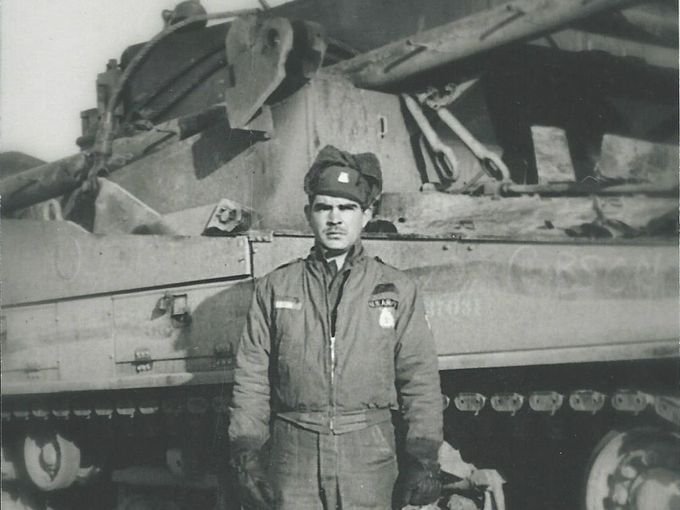
Jack, the Triple War Veteran, a nonfiction

illustration triple war veteran

Jack, the Triple War Veteran, a nonfiction

I met Jack, the 91-year-old, 52-years-of-service-including-3-wars, Army veteran on May 31st, 2013, approximately two months after I “woke up” from what was [then] my life, when I went to go fill my mom-mobile (white minivan) with mid-grade gasoline products (it may be only a mom-mobile, but i have a NEED FOR SPEED) at the Gate convenience store/gas station two blocks or so from my house.  I saw him sitting over by the vacuum/air/water station, on the round, concrete base of a streetlamp, his sleek, black, wheeled walker/chair thingie so piled up with odds and ends of clothes, shoes, and bags of snacks that it looked more like a shopping cart from across the parking lot.  His hair and beard were striking:  long, silvery white, shiny and silky and clean.  He looked like a very trim, fit Santa Claus, and when I first saw him, I would never have guessed he was 91 years old.  I approached him because I am what some people call a “bleeding heart liberal,” that is, my heart sort of sags and melts when I am confronted with people having needs that, to them, loom insolvable, and in actuality can be solved with a couple of $5 or $10 bills.

“Sir,” I said, “I don’t want to offend you in any way, but do you need anything?  Can I do anything for you?  Anything at all?  Do you need a few bucks, maybe?”

“Honey,” he said.  “I’ve been saving my money all my life!”  He took his wallet out, showed me a bunch of folded bills, and pulled a big stack of quarters out of his shorts’ pocket.  Jack was born in West Virgina, called himself a good, old hillbilly.

“Jack’s a great name,” I said.  “One of my grandpas was named Jack.”

“They named me after the dog!” he said.

“Well, they must have loved that dog,” I said.  “It must have been a terrific dog!”

“They still named me after the dog,” he said.  I have named pets after people, and wanted to do the reverse, just never had the actual opportunity.  (Wait for it!)

“I went to West Virginia once,” I said.  “I was in Morgantown.”

“The University of West Virginia!” he said.

“I know, it’s a beautiful town,” I said.  “And the state is beautiful, all those green hills.”

Turns out, he’s hanging out at the convenience store to get away from his daughter.  “She wants me to be the child, and her to be the parent, now,” he said.  “I’m too old for that!”

“I hear you,” I said.  “Does she know where you are?”

“I don’t really want her to,” he said.  “She lives right down the street, in a house I bought her back in 1972.”

He named his first rifle Miss Betty….

He was with Patton in N. Africa, at just 18 yrs. old, he was for a brief time Patton’s assistant?  Patton’s army was chasing Rommel, he and Jack started arguing over which way Rommel should to go; they disagreed (he & Patton) but Jack turned out to be right.  In a rage, Patton grabbed his (Jack’s) rifle once & shot into the air with it.  Yes, I could see General Patton doing such a thing.  Hahaha.

His daughter, whom he is on the lam from, is nicknamed BooBoo:  she got that nickname because as a baby she’d hide behind cabinets, furniture, poke her head out & say Boo, Daddy, Boo!

He is not married now, he likes it that way, nobody telling him what to do.

When I told him how nice he looked, how he didn’t look 91 at all:  “I take care of myself!  I’ve got to!  People say I’m a loner, but it’s three of us:  me, myself and I.”

God’s on his right shoulder, sometimes God tells him things, what to do or not to do:  sometimes he doesn’t listen, does what he wants, not what God says.  Later, he hears God saying, I told you so.  God has blessed him.  Every time we shook hands, me trying to exit stage right because my own 15 year old BooBoo was at home waiting for me to get back, he said, “God bless you,” and I said, thank you so much.  His eyes, the pale clear blue of a child’s, the twinkle of a child’s, the mischievous, rascally soul shining out of them.  But a good, good man.  Stationed all over the world and the United States of America.  The state of Florida was the site of his last posting.  He got misty-eyed thinking about one of his predeceased children, another daughter, however, he did not mention her name, and because of aforementioned misty-eyed-ness, I did not ask.

They once had a terrible episode of anthrax on the farm, when he was a child?  The cow had to get shots from the vet, they couldn’t use the cow’s milk for 6 weeks, then it was OK.  That cow gave so much milk, she had to be milked three times a day, not just two.

He wore dog tags, wouldn’t let me look at them:  “the last person that sees these is the one who’s supposed to bury me.”

“Well, I certainly don’t want to be the last to see them, then,” I said.

A student buying beer stopped & handed him a tall cold water bottle.  Jack thanked the boy warmly, saying “God bless you,” then after the boy walked off, he handed me the bottle.

“Aren’t you going to need this?” I asked him, concerned.

“I’ve got everything I need right here,” he said, pointing to his loaded “sulky,” a plastic grocery bag hanging:  was that the water?  “Besides,” he said, “that’s too cold.  And besides, I really like beer.”

“But you might need this water later,” I protested.

“Look,” said Jack, “he gave it to me, I’m giving it to you.  I’m just in the middle.”  I had to accept, gracefully, so I did, but I still felt a bit guilty.  The gift was Jack’s, but he wouldn’t keep it, he had to pass it along to me.

The store clerk, a young African American lad, came out to check on us; I think he wanted to make sure I wasn’t endangering Jack.  Jack handed him a huge pile of quarters, asked if he’d bring him out some beer.

“What kind?” the young man asked.

“O.P.,” Jack answered.

The clerk was confused.  “What’s that?” he said?

“Other people’s,” laughed Jack.

“I think he means it really doesn’t matter what kind of beer you bring him,” I said to the young man.  So he went inside with the money, came back out with a boxed six-pack & Jack’s excess change.

A woman, with a hard-lived look, came over to talk to us.  She knew Jack already, addressed him by name.  She was also a veteran, Operation Desert Storm.  She asked me if I could spare some gas money.  “It’s the end of the month,” she explained, “and I’m coming up short.  I just have to make it a few more days.”

“Sure,” I said, relieved that I could at least give her something, fulfill the impulse that had brought me over to Jack.  I went to my purse, grabbed a ten dollar bill.  While I was doing that, I saw Jack getting his money out to give her some, too.  He brought out a fiver.  Jack and I handed her the money, she shook my hand & thanked us both, and went to pump her gas.

Jack was dressed like a cool surfer guy; shorts with a nice braided belt, no shirt, his dog tag necklace, a pinky ring carved out of some sort of jade on his right hand, a couple of funky/hipster/hippy bracelets on his left wrist.  Quite fashionable looking, and I couldn’t get over the condition of his hair; silky & clean & shiny & sparkling silver, and the same with the beard, it grew to a natural point just below his breastbone.  The only long beard I’ve ever seen that looked beautiful!  His skin was amazingly smooth & healthy looking, considering the amount of sun exposure he must’ve seen!  I mean, he was 91 and he had very little sun damage, not many wrinkles, though of course a bit of sagging around the jowls.  No frown lines!  His only physical flaw was some missing teeth; it was apparent he could have had dentures or a bridge if he’d wanted them, but I think he was more comfortable without.

When I was leaving, I blew him a kiss.

“I’d rather have the real thing,” he chuckled.

“I can’t,” I said, “I’m married.”  We both laughed then.  If I had known that day, May 31st, that my husband was going to dump me, unceremoniously, in front of the yard man, in the side driveway, I certainly would have kissed him (Jack!), full on the lips!  Like, a billion times!

[If he’d had all his own teeth, not only might I have given him a closed-mouth smooch, but I probably would have tried somehow to fix him up with my former mother-in-law who live[d] in my attached guest house (that I built for her & her husband, who died 3 years ago, but who would be 91 now) (who was the only decent person in THAT entire FUCKING FAMILY).  Said former “mother in law”
was, and is still, an ignorant idiot and would have been put off by Jack’s missing teeth.  Plus, she is, as we used to say in middle school, “mental.”]  *ahem*  NO FURTHER COMMENT PERMITTED, BY LAW.  Did you know, that for IRS purposes, you can NEVER GET RID OF AN IN-LAW?  Once an “in law” for tax purposes, always an “in law.”  The law presupposes that divorced persons might still have attachments to one another’s family members.  Hahahahaha.  Isn’t that FUNNY?????

Oh, P.S.  I, myself, now have a dog named… wait for it… JACK, a rescue from the Dixie County, Florida animal rescue organization, a sweet one-year-old weimaraner/yellow lab mix!  Jack the dog’s eyes are yellow/green & deep….

Oh, and P.P.S.  And you’re not going to believe this!  On the way to present this piece at an “open mic” at Coffee Culture on 13th Street in Gainesville, Florida, the fabulous Tristan Harvey, emcee & manager of the joint, in any case, ON THE WAY TO THE FUCKING OPEN MIC, i ran in to jack, on the way!  it was raining, i pulled over & asked him if he needed a ride.  he said no, i said, isn’t your name jack, and HE LIED BECAUSE HE THOUGHT I WAS THERE CAPTURING HIM to take him back to his daughter!!!!!!

GODDAMNED TRUE STORY.  BELIEVE IT, OR NOT.

um, but if you know what’s good for you, you’ll take my written words as GOSPEL TRUTH.

5 Comments

Filed under health, humor, legal writing, mysterious, notes, poetry, prose poetry, science, short stories

People Like You, a poem

illustration people like you

People Like You

I’ve known a lot of people over the years, hundreds

in fact, and I’ve made it my serious business to know them

extremely well, both inside and out; it’s what I do,

it’s what I like to do, quite possibly it’s what I do best —

but in all this time, I’ve only stumbled across two people

like you in my entire life, there’s just you and him,

two truly dangerous human beings, two walking disasters,

two men obviously wounded so deep inside

that even after it was over, even after

examining all the mixed-up feelings I’d coaxed

out of us both; shoveling and pouring them

into the leaky jar formed from all our human needs;

even after the feelings had settled into pretty layers

of sand and sediment organized by density;

even after I poured over that the shimmering crystal

water of my tears, (not just the real ones I cried,

but the ghost ones you always wished you were able to shed)

I did not hold you responsible for your actions.

Not a bit.  I had my eyes open from the very first

moment I heard your voice.  I freely allowed you

to hurt me, I asked for the pain to be given to me,

then I made excuses, I made allowances, I forgave you,

and I am not very often a forgiving person.

Ask anyone who knows me well.  Rather, I hold a grudge;

it is how women are as a race, I am told;

and I am told I am a woman.  Do you think I am a woman?

Do I look like one?  The private physics of our bodies

differs — does that create a real disparity in power

or just a real disparity in perception?  You point always

to the internal risk of damage women carry within them.

You say, men do not have to fear women the same way

women have to fear men.  With good reason, you have helped me

to learn this — now there is nothing left to do but file

your memory away forever, attach the bright red warning

stickers that proclaim for all to see: hey, wake up,

look twice, look close, look long, we all know

people like this exist, they exist for a reason.

Do you mind if I ask again, if I pry one last time

where I am not wanted?  Oh, dear heart, what is your reason,

your sweet reason, your sweet reason for existing?

1 Comment

Filed under mysterious, poetry

Our Villain, a short story

illustration our villain

Our Villain

Back when these events transpired, we consisted of three lawyers representing two plaintiffs against one defendant.  We were, then as now, made up of two males and a female, the female of medium height, one male taller than average, one male shorter.  Both the male lawyers were older than the female lawyer by in one case, seven, and in the other case, ten years.  Only one of us, however, had blue eyes.  And only one of us was in love with the other two simultaneously, to her great consternation and guilt, as all three of us were married, but none to the other.  Hence, once possible source of difficulty for her.

The case was ponderous and slow-moving though not terribly complicated, legally speaking.  The theory of liability was straightforward; even a child could comprehend it, and in actuality two children already had.  No, in our case it was not the law that was causing our increasingly troubling reliance on several rounds of stiff drinks in the early evening and several rounds of antacids later on.  It was rather, the facts.  In the end, had any one of us been asked if we felt we had done the right thing, the answer would have been not yes, but a glare of outrage that the question had even been asked, and perhaps a violent cuff or two to the side of the questioner’s head.  On our way this morning to the small, cold and windowless room we now sat in, we had driven together, singing long-memorized childhood standards to relieve the tension we all felt.  We had, by way of example, upon arrival at the designated meeting place, arm in arm, skipped across the underground parking lot while whistling “We’re Off to See the Wizard.”

Thus fortified by silly notions of camaraderie and invincibility, we sat across from the villain, whom we only in public termed “the defendant.”  We were there on that heartbreakingly beautiful late spring morning — the kind of morning when even had we been working on a less distasteful set of facts, we would rather have been anywhere else — to ask him questions about what he’d done to two little girls, our clients, aged 9 and 12 when he started, aged 11 and 14 now.  The natural beauty outside — redbuds and Japanese magnolias, falling camellias — was to us that morning like a knife in the chest.  We had just the night before come back from a visit to the girls’ current home, a grim apartment in Little Havana, furnished with a couch and chairs upholstered in bright gold plastic, molded to resemble brocade and velvet.  The girls’ mother sat out in the kitchen while we talked to them, then the girls went to the bedroom they shared with their mother while we talked to her.  Our talk was intended to help them feel that what they were going through now, the legal system, was not as bad as what the villain had taken them through.  But the villain’s lawyers, also three in number, were trying to convince both girls and their mother that what the villain had taken them through was, in fact, the best of all possible worlds, and that the uncertain future they now faced was simply a result of their own stupidity and greed.

After the psychic shoring-up session at our clients’ sad, ill-lit lodgings, we had departed hastily for the bar at our hotel.  One of us, as it turned out, was unable to handle her drink as well as the other two — though all three of us drank more than the AMA preaches, though not, perhaps, more than the AMA actually practices when faced with the sort of evening we had just experienced and were trying to bury in the way a dog buries a nasty, rotting piece of meat that said dog knows will be needed the following day for its very sustenance.  Indeed, one of us was so incompetent at the art of self-medication by drinking she made inappropriate remarks to the other two of us, remarks involving her shameful, growing adulterous sentiments toward the other two, and though the eyes of the second two softened and grew misty and mutually receptive to the first’s silly, childish emotional exuberance — and one laid a tender hand on her wrist while the other stroked her cheek — they nonetheless raised to her as gently as they could the issue of how negatively our spouses might react to such sentiments, fully realized in all their permutations.  Besides, the possible effects on our case loomed, immeasurable and frightening.

From the beginning we’d agreed that if we’d been casting directors for a Hollywood movie, we couldn’t have found a better physical type to play our villain.  He was tall, well over 6 feet, and hulking, with a belly that strained the buttons on his shirt and spilled over the waist of his trousers.  His skin was pale and so were his eyes, a faint blue behind thick lenses.  Even his hair helped us — thinning, the color of burnt toast, combed greasily back off his forehead and swirled neatly behind his ears, but curled up in the back as if it couldn’t bear to be a part of him and would have jumped off at the first chance.

He’d met the girls’ mother when she was on the verge of becoming homeless.  He discovered later, to his satisfaction, that she was always perched on that edge, that he could forever hold her in his hand as long as that hand was gentle and lined with cash.  He moved them into his fine house, a low-slung, four-bedroom ranch in the suburbs of Miami.  His family home was far, far north, and he’d long ago fled the harsh winters for our near-tropical climate.  The brief, almost nonexistent winters we enjoyed led to the closets of young girls such as he favored being full of short-shorts and tank tops, and in, say, February, when his mother and his brother and sister (his father was dead) shivered inside their wools and furs, and drove haltingly along just-plowed, still-icy roads, he could climb into his Corvette convertible, top down, his thin, lank hair fluttering gaily as he drove, usually humming, to find his favorite sights at any city park.  For free.  He could look as long as he liked, newspaper over his lap, and no one had any idea what he was really thinking.

As lawyers, we thought we were familiar with how most people, even people not as far off the beaten path of normal human desire as our villain, are nonetheless filled with bizarre, inappropriate, even disgusting impulses.  We believed we understood how everyone is, underneath the legally complex bounds of civilized adulthood, in many respects still the naked, screaming, bloody baby ejected suddenly and not altogether politely from mama’s throbbing womb.  As lawyers, we possessed staid, naïve notions that because we had already experienced myriad cool, appraising looks in boardrooms and courtrooms, (in combination with startling internal questions of our own, seemingly unrelated, sudden pulsing engorgement), nothing could truly touch us, make us feel, by mere legal contact, soiled.  How wrong we were.

The day he met our girls and their mother, he’d spent the afternoon pursuing one of his favorite hobbies.  Top down, cruising in his car, trolling for the bright yellow buses that never failed to stir his loins.  He’d follow behind one, fly unzipped, smiling at the young faces gesturing frantically to him behind the glass windows marked “Emergency Exit.”  The kids loved his car.  He loved the kids, and that was what nobody else seemed to understand.  He loved them more than anything.  Their clear eyes and bright, uncomplicated peals of laughter were what drew him to wake up each morning, were what made life not a chore but a gift from God.

The day we sat across from the villain, what appeared to offend him most was the nervous gaze of the court reporter.  Maybe dressing the way he always did, in an open-throated shirt, his neck, wrists and fingers hung with heavy, 18-carat gold ornaments, had been a mistake in judgment.  He met our eyes shyly — trying to use his best manners.  Had he used that shy, hesitant gaze the first time he approached our girls?  Had he, by reason of blushes and stutters, brought out their still-developing maternal instincts?  Had they seen him as nothing more than a big, rubbery doll of a man?  Had he clasped his wrists the way he hung on to himself now?  For dear life?  What part of his life was dearest at this moment?

We, in our turn, met his eyes with blankness, hiding our feelings, our ultimate goal — we wanted to inspire in him only trust.  We were, for the next few hours, dedicated to convincing him we had no malice toward him, no, simply the same heartfelt weight of concern for his girls — our girls now — that he’d always maintained.  We differed only in how we wished him to express his deepest feelings toward his beloveds.  We simply wanted to redirect his fingers from the clasp of his own member to the clasp of an ink pen.  All he had to do, to satisfy us, was sign a check representing a sum equivalent to all he now possessed.  It was no more or less than the great love he’d always felt for them, for all of them, all the dear children who’d brought such golden light into his otherwise empty days.  He was worth millions.

Our girls had been shocked when he first made his desires known to them.  Shocked not in the sense one is shocked by a car accident, but shocked in the way one is shocked the first time it is made plain that one will be required to someday provide food, clothing and shelter for oneself.  His desires for them quickly brought material comfort to their mother and to them.  At first, the knowledge of their importance to him brought them a sort of heady pride, a child’s pride at having found in the soil a shiny gold coin.  For a while, there was no great weariness at his requests.  For a while, our girls still felt it was worthwhile to each day shower, brush their teeth, and comb their hair.  It was, at its best, a game, a stage play, a dream.  They would feel something click over in their heads, and suddenly the hands on their bodies would be outside the real.  What happened against the skin of their bodies in the villain’s king-sized bed atop his black sheets happened in another country; a parallel universe.

We knew their seduction had been a gradual procession from blushes, hesitations and startlement to coy fumblings undertaken first under cover of a cheerily false, overgrown childish abandon, then beneath a camouflage of compliments and toys, shopping expeditions to the nearest air-conditioned mall wherein nothing was refused, nothing.  If our villain refused them nothing, how weakened became their own ability to refuse!  He had become quite skilled at fulfilling the ache that seemed to start in his toes and rise up to his scalp.  His entire body loved those girls — his kisses covered them like a fine mist of semi-tropical rain.

When the teachers at school sent home notes advising the girls’ mother to assist in ensuring their personal hygiene, how delighted he was to purchase fine soaps and bathing salts, sponges and silken wash mitts.  Neither he nor their mother, busy in front of her TV, saw the circles under the girls’ eyes, the listlessness which every day crept deeper into their skins, as symptomatic of anything other than transient sleep deprivation or chronic growing pains.  The girls were, despite the recent flimsiness of their appetites, growing like kudzu vines after a good hard rain.  All was well in the quiet house.

The villain and our girls’ mother were, as a result, quite alarmed when the child welfare worker showed up one afternoon unannounced. Our villain was napping in his dark, cool cave of a bedroom, covered only from the knees down by the sheet which yet retained a certain pleasant odor and stiffness from the previous night’s adventure.  Mother was engrossed in a particularly compelling news broadcast of the Pope’s South American tour when the doorbell rang.  She was stout and somewhat put out at having to leave her seat as she huffed her way to the door.  Those Jehovah’s Witnesses could be such an annoyance.

The social worker stood on the doorstep in the bright afternoon sunlight, mopping her forehead with her bare hand, and then drying her hand on the side of her slacks.  As soon as the girls’ mother answered the door, the social worker felt something hard to describe, something which she would, with great reluctance when pressed later by the district attorney, label nausea.  She felt nausea as she stood looking at the girls’ overweight, unkempt mother, but she could not be sure if it was due to the heat, the greasy chicken sandwich she’d wolfed on her way to this visit, or the physical presence of the mother herself, a short, stocky, large-breasted, flat-footed creature with no discernible joie de vivre.

Now, in our tiny deposition room, our villain began to perspire as we questioned him.  He remained of good cheer, evidenced by an easy, toothy smile and an absence of muscle tremors.  We asked many things which in ordinary onlookers might have produced discomfort.  We asked hundreds of detailed questions involving the breasts, buttocks, mouths, hands and genitals of both the villain and our girls.  Every possible mathematical combination of the body parts mentioned had to be imagined, catalogued, and inquired into.

But our villain’s lawyers, though he had already been criminally prosecuted and sentenced under a plea-bargain, instructed him after the very first question to invoke his rights against self-incrimination under the Fifth Amendment, using those simple, nearly poetic words we had studied in school and grown to love — but would never love again — hiding behind those words as behind a hideous, absolute shield.  His lawyers stared at the table, unable to meet our eyes.  Surely their job was worse than ours, at that moment.  Because the villain wanted so badly to tell us, he wanted to explain that he had never, ever done anything to harm those beautiful children.  He only wanted to tell us how much he had, and would always, love them.  His body trembled as his lawyers touched his arms to keep him in his seat.  Our bodies trembled as we continued our litany of questions, preserving for the record his only defense.

We couldn’t, as we had imagined, pierce the villain upon our lance of questions like knights on chargers, and thus protect our girls from exposure to cross-examinations by his white-glove law firm’s most skillful roster of evil, carrion-eating dragons.  We could not keep him — by virtue of the Constitution — from further harming the children we sought only to recompense for the harm he’d already inflicted.  We might now be forced, if he would not voluntarily settle the case, to put his victims upon the witness stand only to be reminded in excruciating detail once more of the very things we wanted them most to forget.  What we didn’t know, at that moment, was he would the following week agree to settle the case, not, unfortunately, for every cent he possessed, but for enough of his funds to cut short his career as lethal sugar-daddy.  What we heard, we heard only from our girls.  In private.

Please, he had said, the first time, when he made “love” to them both within a half-hour.  Please.  His words flayed the girls open like a rawhide bullwhip across their chests.  I need to, he had said, curled up on the bed next to them like a baby.  His hands reached, grasped, fumbled, and then grasped again.  He unbuttoned their shirts, unzipped their pants.  The sensation was at once terrifying, sickening and pleasurable.  Our girls turned their eyes away, looking out the windows, down the hall.  Their dread and revulsion butted up against his sickness, his addiction.  He left the door open, the curtains flung wide.  It was a beautiful spring day outdoors that day — full-blown white camellias fell off their perches with heavy, helpless plops at short intervals just on the other side of the window-screen next to the bed.  The flowers had to bloom, had to engorge each formerly folded petal, to force themselves open toward the light, the slow-moving caressing wind.  The girls tried to see him as a bee forcing its way into a closed flower, a male bee burdened by his own desire, his own weakness, and his own ignorance.

After the villain’s deposition was over that day, he somehow made it to the door before any of us did.  He stood in the doorway waiting, his hand out, as if a greeter in a department store.  His palm was soft-looking, glistening with perspiration and as we glanced at it we saw not a hand, but a weapon carrying the stain of everything we already knew he’d done with it.  Ladies first, the villain said with a smile.  Then, while that unfortunate member of our trio shook hands with the villain, the other two slipped by him with relief and gratitude toward the first.  His flesh turned out to be hotly moist, unpleasantly springy, and what we found out later, as the three of us walked arm in arm to the bar on the corner — the two who hadn’t shaken the villain’s hand supporting the weight of the one in the middle who had — it seemed his touch (no matter how much scrubbing with soap and water so hot it seared the flesh had taken place immediately afterward in the washroom of the courthouse) his touch had made all of us feel irrevocably soiled.  Like we’d shaken hands with the Devil.

3 Comments

Filed under legal writing, short stories

After the Shortcut, a short story

illustration after the short cut

After the Short Cut

I’m a pretty woman, at least so the men tell me. “Andrea, you are some woman,” they say. They say that, and then I don’t know if I ever want to see them again. Anybody who would think I’m something special must have a hole in his head. I’m spreading a little in the rear now, after two kids — I’ve got a bit of cellulite on my thighs. It’s all gravy, that’s what I say.

Since I was 14, my life’s been one big bowl of gravy. I’ve tried to learn a little bit about a lot of things — I’ve tried to learn about learning, about how it’s done. It doesn’t matter what fate dishes out to me to go with it, whether I get the tough meat or the tender, the fat or the lean, my life all tastes better because of that gravy. My mom will tell you I blame her for every mistake I’ve ever made, but I don’t, not really. I don’t blame her any more than I blame myself. I blame Katie. I remember Katie in her perfection, the last moment before she got hit, the smile on her lips, and the sparkle in her eyes. That’s how she’ll live forever in heaven. It was her idea, all of it, the boy, the interstate, everything. I blame her, but she paid for her mistake. Sometimes I think she got the easy way out.

I believe everybody’s religion is a way to get to God. I don’t get nervous about having the right one. Why would God shut people out that way? The notion of original sin seems like the most fundamental sort of self-hatred. How is a newborn human baby any more sinful than a kitten? I was in the hospital the morning after my daughter Barbara was born, watching her sleep in her clear plastic bassinet, and I felt like we were both innocent, both trying as hard as we could to do the right thing.

I don’t believe in sin, I believe only in foolishly going against God’s tide, but nobody can keep that up forever, God’s too strong. I try to think right — feelings are another thing, there are no such things as right feelings, or wrong ones. God won’t give up; He’ll pull you up to Heaven no matter how badly you think you want to stay out. Can salmon keep from getting called upstream? Do you think the salmon that get caught by bears along the way are failures? Of course not. Katie and I were like salmon going upstream, going to meet this boy at his house, this boy she had a crush on, the kind of boy that made her heart beat faster — I didn’t get there, neither did she, but she got to see God before I did. I’m waiting for my time. Will he look like my first lover? Is that what Katie saw first and last, the boy she loved, the boy with the brown eyes that made both of us dizzy but gave Katie the most specific intentions?

I sure as Hell didn’t want to cross the interstate on foot. It was Katie’s idea. Do you think that makes me feel any better about what actually happened? I wonder how I’d feel if it had been my idea. Would I feel better, or worse? I suffer when I think about how dumb it was. We acted foolishly, and we’ve both ended up paying. She was brave, I was a coward. I lived, though, I found uncertainty, never knowing which way to go after that moment — I found both cowardice and bravery while she found certainty and sudden death. After I saw her get hit, nothing much mattered until my daughter Barbara was born four years later.

Barbara’s ten now, and she’s got the same powers I have, she can see what’s wrong with people without even talking to them. She can feel where they suffer; she can feel the pins and needles in her own hand when she passes it over their sorest places. She can hear me in her head; I can hear her in mine, without either of us saying anything out loud. Everybody can speak without using their mouth, but very few of us can hear what they say. I run into a few, now and then.

Katie and I were crossing the interstate on foot. We wanted to go to this boy’s house from the mall, and it was a short cut. Without the crossing, it would take 45 minutes to walk there, with the crossing it would take 15 minutes. We wanted to get there faster. We didn’t know we would never make it. If we had known, we would have taken the long way around. We thought that long walk would be boring. We were so impatient, so full of life, giddy with the thought of kisses. We wanted to see that boy — rather, Katie wanted to see him and I wanted to watch them watching each other. But no one could come pick us up from the mall; everyone was too busy to give us a ride. It was wintertime, dark early. That night was so dark, even the sky was clouded over so you couldn’t see the stars. The pavement was like black velvet from the side of the road, an endless ribbon of black velvet and the cars going by were like jeweled bugs, busy on their secret business, their buggy errands.

I had on a jacket. As soon as I saw her get hit I tore it off my body, I used the jacket like a signal flag to wave over her body to try and stop the oncoming cars. I knew she was already dead, I felt her spirit go through me, entering the top of my head, leaving through the soles of my feet. I saw her draw her last breath — even with all the noise, all the cars zipping by on the other side of the road and around us, the wind and the fear and the hiss of burning tires and brake linings, I heard her last gasp, through her cracked ribs, I heard the air leaking through her perforated lungs, I heard the last breath bubbling through her blood. I saw her laying there, her black hair spread over the road like a wet curtain, and I knew.

I rode in the ambulance; they worked and worked on her body, probably just to comfort me. I knew she was dead, but they wouldn’t actually tell me until my mom got to the hospital. My mom, who was even at a moment like that more interested in her bottle of Scotch and her dying friend and her rising fever than in me. She wanted to know why we hadn’t called her. Did she forget we did? We did call, all we got, all we ever got was the machine, and she was in bed nursing her hangover, nursing her sorrows, nursing her case of the flu.

Mom wasn’t perfect, but wasn’t a total screw-up either. She’ll never forgive herself. Thank God we were supposed to be in the care of Katie’s mom. Katie was an only child then. Her mom had another child after Katie died, a boy — she didn’t want another daughter, that would have been too painful. That second child was an accident — just like my oldest — Katie’s mom was so grief stricken for a while she’d go out to bars and pick up strange men, and forget to wear her diaphragm. Or maybe it was the pills she forgot to take. Either way, we were both on the same train after Katie.

Does Katie see me now? Does she forgive me? Will she help me forgive myself? Katie was in love with that boy — she sat behind him in math class. She worshipped him from afar, she was obsessed. After my friend died, I slept with him, for her. He never knew why I came on to him or why I broke it off — I never told him. One time after we’d made love I asked him to tell me about her, he didn’t know anything. I felt sorrier for that than for anything. Katie died a virgin; I’ve made up for her in that way. The joy of knowing what is true can be dampened by the pain of knowing you’re not going to be able to live in the truth, yourself. I don’t care, it’s all gravy now.

Since I was 14, it’s been gravy. I’m not any better or worse than Katie. I say that to myself, but I don’t really believe it. She was good, she died. I lived. Clear enough? When I feel like I haven’t gotten what there was to get out of my life, when I feel how much I’ve missed from inattention or carelessness, Katie comes back to me with a still wind, rushing through my ears like she did the night she died. I’m waiting for my time to come.

Hope it’s not on the interstate. Not like that, not with my hair spread out on the wet pavement like a pretty, pretty fan. Not with my ribs sounding like popcorn when I breathe. The driver of the car cried for days. I suppose his situation might have been the worst of all. Thinking he could have stopped in time. But he couldn’t have. I wonder if it made him a better father to his own kids. I tell my own daughter, Barbara, honey, don’t ever be afraid to take the long, safe way to wherever it is you’re going. You’ll get there, even though you don’t think you will and you’ll see things you never would have seen otherwise. I don’t want her to miss out; I don’t want her to have to live off gravy for the rest of her life like me. Please, God, anything but that. Patience, I tell her when I kiss her goodnight, smelling the hair right in front of her ears, the place she can never manage to reach with the shampoo, the place that smells of sweat and tears and dreams, just like mine did. Patience, my beautiful girl — I tell her every chance I get — patience is a virtue.

4 Comments

Filed under short stories

Do Something

1 Comment

Filed under recommended reblogs

Friday, ‎June ‎14, ‎2013, ‏‎3:24:22 AM

illustration wholeness reblog

http://doingisbeing.com/category/conscious-health-care/

“we are all the universe manifested through a human nervous system and becoming self-aware; going beyond your ego-encapsulated identity; the secret of healing is the secret of enlightenment; healing is the return of the memory of wholeness; when you’re holy, you’re healed; when you’re healed you lose the fear of death; the best way to reach enlightenment is through the yoga of meditation; cosmic ideas; when you hear them over & over again, at first you may not understand them; but they cause a shift in your consciousness & everything changes.”

4 Comments

Filed under health, mysterious, notes, recommended reblogs, science

A Few of My Ghosts Comment on My Recent Behavior, a poem

illustration a few of my ghosts comment on my recent behavior

A Few of My Ghosts Comment on My Recent Behavior

Bravo! says Father. It’s about time! he says.  I was beginning to

            think you’d forgotten everything I shared with you.

How could you? says Grandmother.  How could you betray me that

            way?  Everything I believed in, taught you, gone!

This is just like you, says Mother.  I knew something like this

            would happen eventually.  I knew it was just a matter of

            time.

Grandfather just looks me in the eye and shakes his head.  He

            knows exactly how such a thing can happen.

I never thought you’d have the nerve, says Father.  I thought I’d

            lost you forever, missed my chance.

I never thought you’d do such a thing, says Grandmother.  I

            thought I’d taught you better manners.

I always knew you’d do something like this, says Mother.  You’re

            so damned stubborn.

I was just hoping you’d have more sense, says Grandfather.  He

            still loves me, he always will.

Live as I would have, says Father.  Live for me.

No, live as I would have, says Grandmother.  Live for me.

Nothing I say will make any difference with you, says Mother.

            You never would agree to live for me.  I only gave birth to

            you.  I’m not someone really important, God knows.

Please be careful, says Grandfather.  Long ago, he charted the

            dangerous waters, entirely alone, no one to guide him.

You must always tell the absolute truth, says Father.  It is the

            only thing that will save you.

You must never tell the truth, says Grandmother.  It is what will

            destroy you.

You always were a liar, says Mother.  You told the truth only

            when it suited you.

Tell only the necessary elements of the story, and then only to

            the necessary people, says Grandfather.  He is secretive by

            nature, and full of legal advice.

Don’t think about things too much, says Father.  Follow your

            heart.  You know, that ugly chunk of muscle in the center of

            your chest?  It keeps you going, but for what purpose?

            Don’t ever stop listening to it, the way I did.

I want you to stop and think before you do anything else crazy,

            says Grandmother.

I know you’ve already made up your mind, says Mother.  You never

            listen to a word I say.  It’s pointless for me to try.

There’s no need for haste, for immediate action, says Grandfather. 

            Is there?  He wants only to protect me, I am

            his dear flesh and blood.  In all the family, I am the most   

            like him.

You loved me more than you ever let on, says Father.  I really

            meant something to you.  Even though you’re suffering for it

            now, I’m glad of it.

You didn’t really love me at all, says Grandmother.  Perhaps you

            didn’t understand what I meant when I spoke of love.

You only love yourself, says Mother.  You’re selfish, you’ve

            always been selfish.  You’ll never change.

Love is not always the most practical idea, says Grandfather.

            Let’s think instead in terms of happiness.  He himself was

            moderately unhappy for years — though so graceful, so

            appealing, so charming in his distress, and every inch a

            gentleman.

So, what will you do now? asks Father.  He tilts his head and

            smiles, and the knowing look in his bright blue eyes give me

            the shivers.

I don’t even want to know what you’ll do next, says Grandmother.

            Her eyes are red, and I feel myself wanting to cry with her,

            cry for her, but I can’t, and this hurts her more than

            anything.

I know exactly what’s coming, says Mother.  I’ve always known.

Whatever you decide, nothing will ever make you feel any worse

            than you feel right now, says Grandfather, and then he puts

            his arms around me and kisses me with all the feelings he

            never, ever would have permitted me to see while he was

            alive.

2 Comments

Filed under poetry

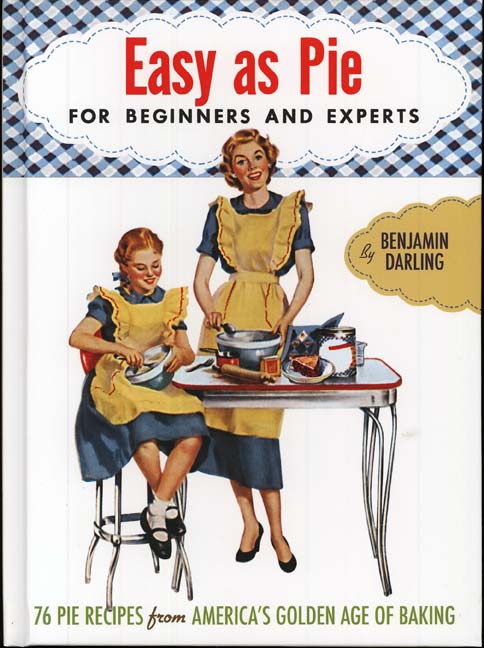
easy as pie, a short story

illustration easy as pie
Easy as Pie

Jonathan is still a virgin at twenty-eight — or so he says. From the look of his underwear, I’m tempted to believe him. His blinding white jockey shorts are far too big, hiked up to his ribcage like an old man. We’ve been friends for a long time. I’m between relationships at the moment, and on impulse, really, I’ve gotten him stripped down this far, but now he’s balking. His underwear acts as a kind of psychological barrier, I guess. We’re on my couch having an intense heart-to-heart.

Part of the problem is this woman he’s in love with. Even though she’s been living as a lesbian for two years, he keeps hoping she’ll come to her senses and marry him. It’s true, they still go to Temple together every once in a while; he even cooked her a seder last year. He and I talk about religion all the time; I’m a curious Episcopalian and I ask him everything about Judaism. I have this wild notion of converting someday — but he says it’s difficult, and I believe him.

I’m interested in having sex tonight, though I’m not going to push him too hard. With hindsight, my own virginity was surrendered far too casually. My first lover was a lot older than I was, a lot more confident, and I just let him do it because he was so persistent. It’s not that I don’t recognize the attraction, the magnetic purity of someone like Jonathan. No worries about disease, and he’ll most likely fall in love with me. A flattering situation, sure, but also a burden — one I’m not sure I want to take on. Jonathan’s an appealing but complicated case.

“It’s not that I don’t find you attractive,” he says, reaching out to take my warm hand in his clammy one. The flickering candlelight throws his cheekbones into sharp relief, hoods his eyes and makes him look exotic, mysterious. I want to see him in a yarmulke and prayer shawl, those little leather boxes strapped to his head and arm. “You’re very attractive,” he adds.

I move my hand up and down his bare thigh, feeling the few downy hairs there rustle back and forth over his smooth skin. He’s a lawyer for an environmental-protection group, and he runs eight miles every other day. Compared to him, I feel like a moral slug: a vegetarian since high school, he’s never even driven an automobile. “So are you,” I say. I play with the little opening in his shorts with one finger, teasing him like I would my cat.

He closes his eyes, leans his head back against the wall and draws his breath in. “Please don’t,” he says, his voice a little strained, his Adam’s apple bobbing. I take my hand away like something bit it.

“I just can’t do this,” he says, opening his eyes wide and staring at me. “Not tonight. Not this way.”

“Okay,” I say, getting up off the couch. Why did he think I was taking his pants off? Intellectual curiosity? Science experiment? Bending, I pick up his shirt and jeans and shoes. “Here’s your clothes. There’s the door.”

He sits there, his face frozen in a squint-eyed wince that makes him look like a chastened dog. He reaches up to touch his forehead with a forefinger. “I’ll probably regret this in the morning,” he says.

“You probably will,” I say, tilting my head and smiling.

***

Over time, according to his rules, I discover Jonathan isn’t only virginal, but also an old-fashioned romantic. He doesn’t like to think of himself that way, however. A reformed atheist, he talks about “significance.” “I want everything to be perfect between us,” he says to me. We’re lying in bed together at this fancy bed-and-breakfast he’s brought me to for the weekend.

“Perfect?” I ask. “Perfect?” My stomach is so taut with lust you could bounce a five-pound slab of beef off it. “What does that mean to you?” He’s been lifting weights every day for the past few months, and from what I can feel of him tonight through his thin knit shirt, he’s big and carved-looking and hairless like a god.

“A serious commitment,” he says. He turns to look at me in the moonlight. His eyes glisten, and he strokes my hair. “That’s what I’m looking for, after the fiasco with Melissa.”

Melissa’s the lesbian he’s finally given up on. I don’t say anything at first. It all used to be so easy, so effortless. Everybody’s clothes came off as easy as pie. “God,” I say, the word arcing out of my throat like a wet watermelon seed. I lie there feeling my heart pound. He reaches over, tracing the lines of my eyebrows with one finger. “Give me strength,” I sigh.

Jonathan gets up on his elbow, his brilliant pectorals bulging, the mattress squeaking under him like a baby bird. “And what is so wrong with wanting to build a relationship first?” he asks.
“Jesus, you sound just like my mother,” I say.

***

After all this, I’m astonished when, a few weeks later, after dinner out and a cryptic Brazilian movie, he announces he’s ready for us to “move forward.” He leans down to kiss me, and I can tell he’s nervous. I’ve decided his full, red mouth is his best feature — on him it’s almost larger than life, contrasted with the rest of his austere person. He tells me his father’s mother was Native American, though when I ask him what tribe she belonged to he can’t say — but he does give me a real flint arrowhead to commemorate the evening. “I found this in a field out back of my parent’s house a long time ago,” he says. It’s small and gray and minutely chiseled, still warm from his hand.

“It’s beautiful,” I say.

We walk back to my apartment holding hands, hearing an odd blend of reggae and big-band music through the open windows of the neighborhood. In my bedroom, he turns quieter and quieter, seriouser and seriouser, as each piece of clothing comes off. As expected, I find him enthusiastic but unschooled. His hands are like roving mice, ticklish and prickly all at once. “Help me through this,” he says at one point, gazing up over my head at the O’Keefe poster in the far corner. Afterward, he doesn’t talk at all, just lies there with his arms crossed behind his neck. “I love you,” he says, groping for his glasses on the bed beside the table.

It’s like he punched me in the stomach with something soft. I turn over and put my face into the nape of his neck; he smells bland and sweet like oyster crackers. I don’t like it when men have a strong smell, but I don’t like it when they don’t, either. Hard to please. Or, maybe I want somebody who smells like me. Back in college, I developed a theory that the reason I never had a problem getting boys to like me was I emitted some sort of secret sex pheromone, more than other girls. It wasn’t anything about my personality that attracted men, but the way I smelled to their unconscious nose.

A more plausible explanation is that I was more unprincipled than most girls: I never broke up with a guy until I had a replacement waiting in the wings. I’d keep the old one around as a decoy until that happened, even if I was irritated beyond belief, even if his touch made my flesh crawl. Because, when you don’t have a boyfriend, the other guys think there must be a good reason, and stay away. If, instead, they believe they’re stealing you away from someone, they have an incentive.

But, right now, at least with Jonathan, I’m in a stage of trying to reform, change my ways. So, instead of saying “I love you, too,” which I know I could utter in a convincing enough voice, I hug him and sort of shiver all over, as if I’m so overcome with feeling it’s made me shy.

***

In due course, Jonathan brings over his toothbrush, clean shirts and underwear, and his second-best running shoes. He even arranges for Sunday newspaper home delivery, something I’ve always meant to get around to; however, as the weeks pass, I come to realize my period is overdue. I try to shrug it off at first, but after another week end up saucer-eyed and sweaty, marking off the days on my calendar over and over — consulting the lot numbers and expiration dates on the box of condoms and canister of foam we’ve used, as if they’re runes.

One night, soon after I start to worry, we go to this cowboy bar. I have authentic boots, a string tie, a silver belt buckle, everything but a neon sign saying “POSSIBLY PREGNANT.” I don’t say a word about my period, but all night he keeps staring at me as though he almost knows what’s up. I would like to be able to tell him, but I have a feeling he’s not going to make any of this easier. He’s not that kind.

He dances well, for a lawyer. “Why’d you go to law school, anyway?” I ask him, yelling over the music.

“I couldn’t face medical school!” he shouts, laughing, as we squeeze our way off the dance floor.

“I wanted to go to medical school,” I say.

“What kept you from going?” he asks.

“Math, I guess. I had this trigonometry teacher in high school who smirked every time I asked a question.”

“For me it was dissecting a cat,” he says, his face solemn. “I figured if I couldn’t handle that, there was no way I’d be able to do it with people.”

“Yeah, blood,” I say, with enthusiasm. “I tried to pierce my friend’s ears once. We used ice cubes. There was this teeny little drop of blood that came out when I put the needle through. One drop about the size of this mole,” I say, pointing to my own arm. He peers down. “I was instantly nauseated. But more terrible than the blood was the way her earlobe — my friend has really fat earlobes — the way her earlobe sizzled under the ice. Like it was meat frying or something. I didn’t think I’d be able to do the second one, but I had to — I couldn’t leave her with only one ear pierced.”

He nods, that awful, fake kind of nod people give you when you know they don’t have a clue what you’re talking about. “What an awful experience that must have been,” he says.

***

Early the following week, over at the clinic, I pee into a tiny paper cup with Bugs Bunny on it, and when the lab tech comes back into the room, she doesn’t say a word — she doesn’t have to, it’s there in her eyes, the set of her jaw. “Our first opening is next Wednesday,” she tells me, penciling something on a pink chart.

It’s probably racism or something, but on the scheduled Wednesday, as I lie there on the table trying not to shake, I’m relieved to see that the doctor who’s going to perform the abortion is black. As if somehow that makes it all okay — as if he’s a surrogate for guilt, for suffering. He seems nice, quiet and bookish, with big horn-rimmed glasses and a neat mustache. His voice is soft, vaguely Southern. I close my eyes and try to relax, but it’s impossible.

***

“Was it mine?” Jonathan asks a few days later, after searching my kitchen junk drawer for the 75-mile-radius map he loaned me, and finding instead the bright yellow booklet of follow-up instructions they gave out in the clinic’s recovery room.

I don’t even bother to ask why he thinks it might not have been his. “No,” I lie, and he stands there for several minutes, towering over me in the tiny kitchen, stiff and straight through his torso, his head and neck bobbing forward, nodding in place like a tired metronome.

***

“I don’t think we should see each other anymore,” Jonathan says later, sounding rehearsed, over the phone. I don’t like to do my dirty work in person, either, so I can’t complain about his choice of medium.

“Even if it had been mine, I wouldn’t have asked you to get married or anything,” he says. “I think you’re a very confused person.”

“Oh, really,” I say, trying to keep my voice neutral.

“You’re not in love with me, anyway, and you know it,” he adds. “You never were.”

“Get off your high horse,” I say, laughing. “You’re not in love with me, either.” I’m above reminding him of what he said on our first night together — it’s gone beyond such petty one-for-one recrimination to a whole new level, a swirling gray reach that makes me feel more tired than angry.

“No, but we should have been in love,” he says. “That’s my point. If the person I’m sleeping with gets pregnant, I want to be able to consider all the options, including marriage.” He sniffles into the phone, and I’m shocked to realize he’s been crying. “Obviously, I’ve never been faced with this before, but this whole situation made me stop and think. It’s too dangerous.” He pauses, and I can hear him breathing raggedly. “I made a mistake,” he says. “I’m sorry.”

For a minute all I want to do is hang up on him, smash the phone down like I’m smashing his face. It’s as if a more flippant attitude on his part would be easier for me to deal with, because — to a certain degree — I expected that.

“The person you’re sleeping with? People don’t get pregnant,” I say. “Women do.” He clears his throat, but says nothing, and then I know he’s only staying on the line out of politeness.

“Okay,” I say, after a few more moments of silence. “I agree. We shouldn’t see each other anymore.” I exhale, feeling each slow millimeter of my lungs’ deflation — the breathing not painful, yet, as it will be later, when I will have to use pillows to muffle the grief which will blow me to and fro, grief which I can no more harness or control than I could a demon, or a hurricane. I will be rattled, I will be shaken, I will be damaged.

“Goodbye, then,” he says.

“Goodbye,” I say, surprised by my voice’s new gentleness. Taking the phone away from my ear, I listen for the click and buzz and let it go, releasing the long, springy cord that I had stretched across the living room from the kitchen wall, the curved plastic form of the receiver skittering along the length of the coffee table like a live fish. And then I notice the strong afternoon light streaming in through the living room windows; how, despite its warmth, it makes the skin of my arms and hands look bleached, pale and waxy — almost like I’m already gone from this place.

4 Comments

Filed under short stories

easter bunny, a short story

illustration easter bunny short story 2

Easter Bunny

Jenny’s hair was beginning to fall out from the radiation treatments.  Last night, at a restaurant over on the beach, their waitress had worn a rhinestone-studded baseball cap, and Jenny had admired it.  Ellen wanted to buy one for her.  In truth, ever since Jenny’s diagnosis, Ellen had been shopping as though her life depended on it, buying all sorts of gifts for her mother, tossing them into her lap, unwrapped.

At the mall, Ellen’s two-year-old, Sarah, was fidgety in her stroller, until she spotted the Easter Bunny — on a raised platform with green shag carpet and an arrangement of painted wooden tulips and eggs.  The bunny sat in a white wicker queen’s chair.  “Mommy, it’s the Easter Bunny!” Sarah shouted, waving her hands over her head.

“I see him.  We’ll go see the bunny after we get Granny’s hat, okay?” Ellen said as they maneuvered around the long line of squealing toddlers, toward an accessory store she hoped would have the hat.

“Okay, Mommy,” Sarah said, craning her head to get another look.

Blocking their path around the long line of small children were a couple of teenage girls.  One of the girls was smoking, and as Ellen passed, the girl glanced at her with what Ellen recognized as contempt, flinging her long hair back — the cigarette dangling from her full lips — and prancing over to the mirrored window of the jewelry store across the way to inspect herself.  Her bangs were teased to a great height, sprayed so heavily into place they looked varnished, though the rest of her hair hung in a limp curtain over her shoulders.

It was odd how the teenager kept staring at Ellen even as she primped in the mirror — the girl’s eyes were large and black, her face unlined, uncomplicated.  Ellen stared back without blinking until both mirror and girl were out of sight.

There was one rhinestone cap left at the store, in the window display.  “Do you have any more of these?” Ellen asked, pointing.

“That’s the very last one,” the clerk said.  She and Ellen traded smiles.

“I’ll take it,” Ellen said, not bothering to check the price tag.

On the way back, the teen girls were still near the Easter Bunny display, only now they had been joined by a couple of boys.  The dark-eyed girl slouched back on the bench, sharing a cigarette with a pale blonde wearing too much makeup.

Ellen watched her giggling daughter run to the giant white bunny.  She paid seven dollars to have Sarah’s picture taken with the rabbit, but in the first Polaroid, Sarah’s eyes were closed.  “Sleeping Beauties, that’s what we call those,” the photographer told her.  Ellen wanted to keep it anyway.

“I want to kiss him,” Sarah said.

“Okay, honey,” Ellen said, squeezing her small squirming body in a fierce hug.  She tried to imagine Sarah in another ten years, all pouty lips and thrust-out chin.  Cans of hair spray, and unspeakable things like peppermint flavored lip gloss.

The second picture turned out beautifully.  Sarah held the bunny’s gloved hand, smiling, eyes open, rapt to the camera.  The rabbit got up and strolled down the ramp of his platform, Sarah following, reaching out like a pilgrim to stroke the fluffy white fur.

“I want to tell him I love him,” she whispered to Ellen.  “Pick me up.”

Ellen held Sarah up so she could whisper in the bunny’s ear.  “I love you,” Sarah whispered into the tattered pink plush.  She kissed the nose, patting the wire mesh covering the open mouth, inside which Ellen could see the blurred outline of someone’s face.  Ellen turned away, remembering this morning, before she’d left for the mall.

“Give Granny a hug,” she’d told Sarah.

“I don’t want to,” Sarah had whined.

Ellen’s anger had seemed reasonable in one sense, though completely out of proportion to Sarah’s predictable toddler whimsy.  How many times were left to bestow such affection.  How many times would Ellen be able to bring her mother a daft, pathetic gift from the mall.  Just then, the teenagers laughed their little ignorant heads off for the hundredth time in ten minutes, the air ringing with their simple, donkeylike braying, and Ellen stabbed at them reflexively with her gaze.  How dare they be so happy.  How dare they be so young.

“Why does that stupid bee keep staring at me?” said the dark-haired girl, glaring back at Ellen.  The group around her laughed, nodding at their compatriot’s clever wit.  Ellen stopped, Sarah heavy on her hip.  Bee — for bitch?

“I was wondering the exact same thing,” Ellen said.

The blonde moved several steps toward Ellen then, folding her spindly arms over her chest, shaking her head.  “Hey,” she said, squinting her eyes.  “Don’t you get fresh with my friend.”  She tossed her head back, her stiff bangs remaining frozen, like armor, despite the movement.

Ellen bent to strap Sarah into her stroller.  “I understand your type,” she said to the dark girl, her eyes drifting over the entire group.  “I used to be a snot-nosed adolescent, just like you.”

“Still need to wipe your nose, if you ask me,” said the dark-haired girl, thrust forward on one thin leg, her shoulder flung back.  She looked to her friends, as if for confirmation, and the two boys gave each other sloppy high-fives.

The entire group of teenagers was laughing now, holding their sides, tilting their heads and letting their mouths hang open, their glistening, foamy tongues quivering with hilarity.  In a flash, Ellen’s heart hammered so briskly she could feel her pulse inside her mouth, her tongue; her teeth were being jarred out of their gums.  Ellen wanted to crush them under her shoes like bugs.  “Fuck you,” she said.  She noticed, too late, the horror of the other grown-ups as they clapped their hands over the ears of their small children, the parents staring at Ellen, their eyes wide.

“And just what kind of example are you trying to set?” one woman asked.  Ellen walked at great speed away from the mob, pushing the balky stroller as fast as she could.  Sarah sat in the umbrella stroller, clutching the Easter Polaroids in her tiny hand, her small frame curved into a limp macaroni shape, her perfect, smooth elbows bouncing off her knees as the wheels vibrated over the rough brick floor of the mall.  Ellen walked so fast she began panting, her calves starting to cramp as she rounded the nearest curve, heading for the door she had entered, long ago, in another lifetime.

She saw a bank of pay phones.  She stopped, looking around and behind her.  Fishing in her purse, she found a quarter, then flipped through the telephone directory, looking for the mall’s security office.

“I thought you should know there’s a group of disruptive teenagers hanging out in front of the Easter Bunny,” she said to the voice on the line.  “They’re standing around smoking and making rude comments to the customers.”

“Can you describe them?” the voice asked.

She visualized the girls, their long hair, their cheap-looking teased bangs.  “They had ugly hair,” Ellen said.

“Could I have a little more detail?” the voice asked.  “What were they wearing?”

Ellen could not see anything but the scornful face of the dark-haired girl, the pinched, sour face of the blonde.  “I don’t know,” she answered.

“Well, how many of them were there?” the exasperated voice asked.

“Four,” Ellen said.  “Two girls and two boys.  In front of the Easter Bunny.  Smoking and laughing and being nasty to people.”

“We’ll send someone over there right away, ma’am,” the voice said.  “Would you like to come in and file a formal complaint?”

Ellen visualized herself in handcuffs, being led away.  “No, thank you, that’s not necessary,” she said, hanging the phone up with a bang.

As she tried to push the stroller away from the phone, she saw Sarah was tangled up somehow, her fingers twined through the cord holding the phone book.  “Let go,” she told Sarah, light-headed with the panic jigging through her in ragged bolts.

“But I want to call somebody,” Sarah whined, clutching at the metal cord with both hands.  “I want to call the Easter Bunny.”

“We don’t have time for that right now,” Ellen said.  “We have to take Granny her hat.”  She imagined the teenagers telling their side of the story to the security guards.  Ellen uncurled Sarah’s fingers and flew toward the exit, toward the safety of the parking lot.  No one, apparently, was after her.

Her hands trembled, her arms weak from adrenaline as she unlocked the car door and strapped Sarah into her car seat.  Heaving the stroller into the trunk, she got in and power-locked the doors, hearing the dull thunk inside, pressing the button three more times for good measure.  As they exited to the main road, she looked back at Sarah in the rear-view mirror, saw her little round face composed and serene, her eyes open but vacant-looking.  “Wasn’t that fun?” Ellen said, smiling.   “Getting to see the Easter Bunny?”

“No,” Sarah said, her eyes droopy, her head turning to nest against the padded wing of the carseat.  Lulled by the car’s rhythmic movement, the child’s lids fluttered closed.  Her cheeks were smooth, rosy with health, her lips parted, her pearly teeth visible.  One wispy curl of hair clung to her damp forehead.

Ellen’s face was benumbed; she drove home from the mall to deliver her gift to her mother, tears coming to rest in the corners of her mouth — her cheeks twitching from exhaustion as she forced her lips to stay drawn back, her teeth bared in a ghastly smile, a grimace of love.  She would deceive no one with such a face, most certainly not her dying mother — but of course she couldn’t allow herself to quit trying.

1 Comment

Filed under anger, apologia, cancer, daughters, death, easter, fiction, love, short stories