Tag Archives: sex

Eleven Random Questions, and please submit your own answers as replies!

DSC01247

ELEVEN RANDOM QUESTIONS

What do you think of keeping a journal?

The real issue here is not that of how journal writing affects all the other forms of writing.  There is much to be said about journal writing, both positively and negatively, and probably all of it is true at one time or another for all writers who face changing circumstances over the course of their writing lives.  Sometimes journals can help our other projects, sometimes they can’t.  Each person’s situation is best handled by themselves.  The real issue here, the issue that has people so stirred up, and rightly so, is the fundamental arrogance displayed in both the “writer” Jimmy V.’s original essay condemning journaling out of hand, and his later condemning replies to any and all responses proffered to him.  Arrogance of the intensity he displays has always been a substitute for actual wisdom.  This truth is one of the fundamental truths of human nature, and I am not the only person to realize it.  “The whole problem with the world is that fools and fanatics are always so certain of themselves, but wiser people so full of doubts.”  (Bertrand Russell)  That, little Jimmy V., spoiled rotten “writer,” is the central issue you should concern yourself with.


Which celebrity would you like to bitch slap?

Dr. Laura wins by a light-year.  I only slap those who’ve been guilty of slapping others.  She’s angry and cruel and gives just plain bad advice to her callers.  I listen to her all the time to remind myself how wise and kind I am by comparison.  King Solomon, she isn’t.  She’s a one-note piano with a bent wire.  She sounds like she needs heavy meds, and pronto!  Wouldn’t we all just leap at the chance to come back as her husband or son?  I’d rather be eaten alive by a swarm of rats.


Do you remember your dreams?

I remember my dreams often, but not every single night.  My dreams run the gamut of emotional response — from terror to euphoria.  I write down most of the dreams I remember.  They are usually very long & complicated & sometimes make perfect sense but sometimes don’t contain the slightest thread of logic.  My favorite dreams are the ones I call “therapy dreams.”  Often, when I’m upset or angry with someone, I’ll dream about that person & act out my feelings in the dream & achieve some sort of resolution which flows over into waking life & is vastly superior to any traditional therapy I’ve tried.  I’ve done everything in my dreams — flown without mechanical aids, been wonderfully fluent in foreign languages, had phenomenal sex with friends & strangers & celebrities, lived as a member of the opposite sex, written best sellers, killed people… my dreams are in many ways the best part of my life because they’re absolutely limitless in scope & action & intensity.  Sometimes dreams are a lot more “real” than real life & more enjoyable.  Surrealist dreams are the most interesting — upon waking I always try to puzzle out what was the link between seemingly unrelated events or objects.  I’ve even accurately prophesied the future in dreams.  I tend to think it’s because the subconscious is free to express itself rather than any supernatural explanation.  We’re just that smart when we’re not weighed down with all our conscious baggage.  Thanks for asking about dreams!


What’s your Wu-Tang name?

Contagious Specialist


What’s the deal with long hair?

You’re right, it is 40.  Not 30.  Sometimes long hair can make the face look thin & drawn, but that’s also true for teenagers.  Some of them shouldn’t have long hair.  On the other hand, I’ve seen old ladies in wheelchairs with long fluffy white hair & it can be quite charming.  I think if you look good with it, who cares what the rules are?


What are five good things about springtime?

1.  Getting the taxes filed & out of the way

2. Wanderlust & regular lust & spring fever

3. Plants waking up & showing off & intoxicated

4. Putting the hand lotion away till next year

5. Birds, bees, butterflies & bikini underwear


What are your irrational annoyances?

Noise, noise & noise.  Ungrateful children who view me as their maid.  Children who, rather than empty the trash, stuff the can so full you can’t get the bag out.  Children who leave dirty dishes & empty snack containers scattered around the house.  Children who are, currently either at the movies or sleeping.  Thank you, God.


Does springtime make you horny?

Nope.  For me the season of lust is definitely winter.  But then, I live in Florida.


Why do you love your pets?

I love my pets because they’re far less demanding than my children.


What do you think of the name game?

I have a former sister-in-law who collects unusual names.  A couple of her favorites are Shithead (pronounced Shi-THEED) and Lemonjello (pronounced Le-MON-jello). Also PsalmCIV (pronounced PIZUM-siv).  These are actual legal names, no joke.


What do you think of magazines with articles titled “Ten Steps to a Killer Orgasm!”?

I used to read Seventeen as a child… then read Glamour as a young woman… then read Mirabella as a grown-up.  It figures Mirabella went bust, it was the most intelligent in a sea of dreck.  Redbook was pretty good until they quit publishing short fiction. Jane’s okay, but too young for me.  I hate Martha Stewart but her magazine’s got the best art direction, I think.  And I like when she runs those articles about 27 varieties of tomatoes, or whatever, with a poster illustration.  Gourmet is an old classic, still living up to its past.  Vanity Fair has great writing & an eclectic subject matter.  Rolling Stone & Sports Illustrated also win for good writing that crosses subject lines.  I find I don’t have enough time to read all the magazines I subscribe to — they languish in piles.  W is nice just for the outsized format but their writing is negligible.

Leave a comment

Filed under health, humor, justice, karma, kindness, love, men, mysterious, notes, personal responsibility, relationships, science, sex, short stories, women

The Way Love Is Supposed To Be, a very, very short story

illustration the way love is supposed to be

I wanted to run upon the moors with tears streaming down my face.

She treated him as if he were a rajah, wearing a satin robe and slippers.

Don’t ever marry an accountant.

You’ll laugh, but I cried.

Her radar had failed her over and over again.

Men were tricky.

She danced the samba, then the tango, in the arms of a smelly Russian with piercing blue eyes who fancied himself a ladies’ man.

I would never marry someone who ogles women right in front of me. At least, not until I’ve started ogling them, too.

My Mama loved mohair; I loved angora. We were opposites.

Move your ass and don’t take a year.

I felt at sea for most of my thirties. The forties couldn’t be any worse, I thought. Wrong, wrong, and wrong!

I plodded, envying the agility of those around me with obviously higher serotonin levels. When I studied those brain chemicals in college, I didn’t know they’d turn out to be so important.

Redial that oily odor; a ray of water consoles the jilted; all beds of roses rot eventually; be brave and rest; the noose leads to the abyss; don’t gouge the luge, egad! Lazy seared meat; too addled to ladle. Baba rhum; Joanne Arel/Aral; raison d’etre; brave agar; the smell of water; conic Eros; seed the boo-boo, Sergeant. I came, I saw, I conquered; day-O, me say day-ay-ay-O; I say, Merv, that canary sure can sing!

Canary Conn? Transsexual on Merv Griffin. Breathtakingly beautiful, not a man in drag.

At this rate, we’ll never get there. Or perhaps, we are already there and are too stupid to know it! Dogs vs. cats… different, not better or worse. Different is GOOD.

No one’s a fool.  At least, not forever.

2 Comments

Filed under evil, god, good, justice, karma, love, mysterious, short stories

Why I Hate You, a poem

illustration why i hate you

Why I Hate You

You know why I hate you?  You’re a weak vine, needing to be propped up, needing more comfort than a baby.  You imagine bugs, crawling up the walls, down your hair.  Their wings whir in the night like soft sobs.

I hate you because you’re ugly — a slob, a slut, a sucker.  Because you saw your mother passed out on the carpet in front of the television, one too many times, but you didn’t kill her the way she wanted to be killed.  You didn’t help when she needed you.  Because you let yourself be unimportant for so many years and did nothing to help yourself until it was too late, until you’d already lost the war.  Peace came on unfavorable terms, the enemy couldn’t be placated.

I hate you because you’re afraid of the dark.  When you’re with a man, you lean on the solidity of his body, the real beat of his heart, you listen to his rhythmic breathing, and you’re not afraid anymore, but you start to get antsy.  His body sounds so much stronger than yours.  They don’t cry the way you do.  Does that mean they don’t feel?  Why do they want to be with the likes of you?  You don’t have the slightest idea what you want from them.  Late at night is the worst.  The stars unfold ahead of you, and you can’t find your way to the future, stupid bitch.

That’s when I hate you the most.  You’re utterly without honor.  You imagine your ex-husband, fat and happy in his bed, eating candy.  He doesn’t suffer like you do, he has already forgotten why he married you in the first place.  He is perfect.  He is way above you in the cosmos, he is light, reason.  Your life is insignificant, ignorant and small, and won’t leave a shadow.

Leave a comment

Filed under karma, love, poetry, prose poetry

She Finally Had Enough, a short story

illustration she finally had enough

She Finally Had Enough, a short story

One fateful, thunder-stormy, early summer, north central Florida evening, this thrice-divorced, somewhat neurotic, fairly attractive for her age, fifty-three year old woman suddenly and completely unexpectedly decided she’d finally had enough snuggling. Not just enough for the moment, the hour, the day, the week, the month, the year — no, she’d finally had enough for an entire lifetime. From February 15th to June 15th, she tortured her brand-new, super-hot boyfriend (who had long, luxuriant, ginger hair with a couple of silver strands mixed in to add visual interest) with so many snuggling demands, and he was so kind, so generous with his snuggling (and other) abilities, which were, shall we say, subtle, complex, and mature, as well as multiple in nature. If you get the hidden meaning. No pun intended. That’s a damnable lie. Every pun intended, and included for general salacious effect upon you, dear reader. Deal with it! Go get your own damned snuggling, right this second, from whomever it is you most wish to snuggle. Maybe it’s your wife, your husband, your child, your parent, your neighbor, your bitterest enemy, your dearest friend, maybe it’s Adolf Hitler or George W. Bush, or your dog, or the armadillo that’s digging a big trench next to your driveway and gave birth to a litter of babies last week, maybe it’s your hippie nephew you’ve taken into your care who’s living in your former mother-in-law suite, whoever. Maybe it’s the lonely woman eating at the take out Chinese restaurant downtown, maybe it’s the funky bartendress at your favorite liquor lounge, maybe it’s the espresso maker at your local coffee parlor…. See the picture? Find yourself somebody to snuggle and leave me the fuck out of it!

So anyway, in four short months this awesome dude donated so much snuggling to the fifty-three year old woman that she’d finally, finally, finally had enough. And just like that, she never needed to be snuggled again. The teletype machines couldn’t spit out enough copy; she was nominated for International Lifetime Snuggling Achievement Woman of the Year, the Decade, the Century, the Millenium, in whatever year you think this could happen in, whichever is your favorite year, whichever year of the cat or rabbit or duck or dog or snake, whatever year you want to choose, pick the year you were born, for example, or the year in which you’ll die, whatever year gives you the most satisfaction. Because when the Stones sang, “I can’t get no satisfaction,” that was a vicious lie, a piece of propaganda promulgated to make women everywhere stop expecting said “satisfaction,” and to make skanky little slutty Mick Jagger seem more handsome and powerful than he actually was. The Beatles will forever kick the Stones’ lame asses. Forever and ever, amen. No matter what cowards who enlisted in the Coast Guard to avoid being sent to Vietnam might think. Cowards can’t be trusted. Ever. And that’s my final word on this subject. Forever and ever, AMEN.

2 Comments

Filed under boys, girls, health, humor, love, mysterious, sex, short stories

Sisterlove, a short story

illustration sisterlove

Sisterlove, a short story

            I was teaching my sister to drive that year.  We had bought a weird old ’66 Barracuda, silvery-mauve color, and we’d spent weekends compounding the surface, getting ready to give it a coat of wax that would make it really shine.  Vickie and I used the car to cruise the strip and troll for boys.  My sister loved the boys.  The boys loved my sister.

            She had long hair, golden brown, with blonde ends.  It turned green when she went swimming, then we’d cut the green parts off with nail scissors, her sitting on the toilet, me catching the hair in an ancient orange beach bucket.  We’d leave the hair on the compost pile for the birds to line their nests with.

            Vickie had gone crazy about this guy Michel she’d met over spring break, and all she could talk about was getting up to Canada to visit him.  It might as well have been China.  She was still a virgin, but crazy over the idea of sex.  I pretended I didn’t care about boys in the slightest, but I did, maybe more than she did.  I’d never had a real boyfriend, just a few short flings.  Vickie was always falling in love, which made me sick to my stomach.

            I was two years older.  I was named Edna for my great-grandmother, but everyone called me Jessie, because for some reason that had been her nickname, too.  I always wondered how they got Jessie out of Edna, but I was glad they had.  Mom got really crabby whenever I asked her about the family history, she never showed old pictures, though we knew where they were, stuffed on the highest shelf of her closet, over the old college dresses she’d kept. 

            My mother was completely hippied out — she didn’t shave her legs or under her arms, and the compost pile was her altar.  She didn’t pay much attention to us unless we were sick and then she was the most wonderful nurse in the world — even though she was a strict vegetarian she’d make us chicken broth with little stars, mostly stars so that it was more of a chicken pudding, a glob of butter oozing on the top.  She’d spoon it into our open mouths like a mother bird.

            Vickie and I liked to sneak into Mom’s room while she was at work, and dress up in her old clothes and look at her old pictures.  She’d been married before she married our dad, straight out of college, and so we always tried to guess who he was from the pictures.  Our favorite was the one of her going into a dance, frothy skirt and strapless bodice, her sharp collarbones like exclamation points underneath her satiny, satiny skin.  She wouldn’t say, but we figured she’d had a pretty wild career, before we were born.

            Neither of us were as pretty as Mom, though.  We’d play all day with her makeup, trying and trying to get her look.  It was no good — Vickie had her chin, I had her eyebrows, but there was too much of our dad in both of us, and this was unfortunate, because he was homely.  Since Mom was drop-dead gorgeous, we came out average-looking. 

            Not that we didn’t get plenty of attention in our own way.  We’d get in the Barracuda and drive up and down the beach road, honking at cute boys.  Once in a while they’d motion us over, and we’d park, take our sandals off and hop across the burning sand to find out where they were from.  Most were from Boston, a few from New York.  We liked the Canadians best, they loved the sun so much they’d fry themselves, joyous to turn red and peel — they thought it looked so healthy.  Sunscreen hadn’t been invented, we mixed iodine with baby oil and slathered it on.

            Vickie and I had good skin, the kind that never burned, so we looked like Indians, and I’m not talking the American kind but the Hindus.  Our brown legs shone — they were our best feature by far, all the boys said so.  We learned to kiss from those sunburned Canucks.  The ones from French Canada were the best, but they’d never write to you once they left.  The other Canadian boys were all earnest and geeky and would write us millions of letters, which eventually we stopped even opening.  Instead, we’d take them to the beach, put them in empty juice bottles, then cap them and throw them in the surf.

            So, Vickie went more than a little nuts this time, started calling Michel in Montreal every night after Mom was asleep, and when the phone bill came she was put on restriction for a month.  Mom yanked our bedroom phone out of the wall.  I laughed, but Vickie cried, she was really serious about him.  “Love isn’t real,” I told her.  “Do you think this guy would ever, ever cry over you?”

            “Michel loves me,” she said.  “But now he’ll think I don’t love him and he’ll go back to his girlfriend.”

            What had caught her eye first about Michel were the brilliant red scars on his back, streaky and painful-looking.  We thought he’d been wounded playing hockey or something.  His English was so bad, at first we thought he was kidding when we pointed to his back and asked what happened.

            “My girlfriend,” he said, shrugging his shoulders and smiling.  We were so dense, we didn’t know what he was talking about for days, until Vickie came across this ratty copy of the Joy of Sex while she was babysitting for our best client, a lady who danced Polynesian-style at a big tourist restaurant downtown.

            “Scratches are given during the throes of passion,” she whispered over the phone.

            “Bring the book home,” I said.  Later that night, we snuck out of the bedroom window and went driving.  I let her drive and held the book on my lap, reading it to her while we went up and down A-1-A, bending down and swigging our beer at the stoplights.

            “His girlfriend scratched hell out of his back, and he let her do it,” I said.  “He seemed happy about it, even.”

            “He was,” she said.  “Let’s drive to Canada.”  She put her foot down hard on the gas and passed a couple of cars.

            “No way,” I said.  “We’d get caught before we got out of Florida.”

            “I’m going,” she said.  “I want to see him again.  You can come if you want to.”

            “This is insane,” I said.  “You don’t even have your license.”

            “There’s only one first time,” she said.  “I want mine to be with Michel.”

            “You’ve been loony over a dozen boys this past year,” I said.  “How is this different?  What makes you think this’ll last more than a week?”

            “So what if it doesn’t?” she said, and the look in her eyes was fierce.  “You’re missing the point.”

            “The point is, we’ll be in jail,” I said.

            “Where do you want me to let you out?” she said.  She swerved over to the side of the road and slowed way down.  Her hair rippled over her face like a million tiny whips.  I knew I couldn’t let her go alone.

            “God damn you,” I said, and she threw her head back and laughed.

            “Hijacked by your baby sister,” she said.

            “Hijacked by a victim of raging hormones,” I said.

            “Damn right,” she said.  “And deep down, you’re not any different.”

            “Oh, yes I am,” I said.  “I’d never drive to fucking Canada to lose my virginity.”

            “I feel sorry for you, then,” she said.

            “Shut up and drive,” I said.  “The farther we get tonight, the better.”

            “Mom is going to be so pissed,” she said.

            I felt my stomach twirling with fear and excitement.  “I would say Mom is the least of your problems.”


1 Comment

Filed under boys, daughters, girls, health, humor, love, mothers, mysterious, science, sex, short stories, sisters

the divided self, a poem

illustration the divided self

The Divided Self


That lonely man and that sad woman

are dead now, but I still can’t

get away from their lawful claims.


They possess my hands, my feet,

my face. I have only been loaned

these things: possessions assembled


for me out of unseen molecules

I believe in by faith, with thanksgiving.

Blind, jerking passion such as this


nurtures the kind of organized madness

I learned to live with a long time ago.

Short and sweet, to the point:


I hate them bringing me into the world!

What on earth were they thinking,

warm lust pressed against the cold metal


of a postwar kitchen table?

Or did they simply writhe on the linoleum?

Alone, I existed weightless, unknowing, free.


I never approved the intrusion of his

sperm, wriggling madly for oblivion;

tiny kamikaze. No wonder men feel


like clumsy, oafish gods half the time.

As for Mother, she arched dizzily beneath him

half-clothed: strapless formal, silk stockings,


shiny pumps with spike heels,

and though she opened her flesh,

how she longed to kill him with her shoe.


Such war made me. Secret wishes

do a body in. I am that frail universe

mindlessly created, allowed to run wild.


3 Comments

Filed under legal writing, mysterious, poetry

Rose, Honey, or Strawberry Moon

illustration rose honey strawberry moon

Rose, Honey, or Strawberry Moon (June)

Roses

We dug up the bushes, moving gifts from my mother’s friends, transported them to our tiny backyard, planted them in rows, a fine garden. Suddenly they took over, bursting into frenzied blooms, the metal tags dangling, all hybrids, expensive, my mother’s friends were rich, we weren’t. Tropicana, Peace, Mister Lincoln — but over the next few years they all gave up the ghost, dwindled away to one or two sticks bearing black-spotted leaves, an occasional bud. My mother & stepfather forgot the roses, neglected them the way they neglected their and my mental health. Cases of beer and gallons of wine were lugged home instead. We sold the house when my mother & stepfather divorced, the new owners didn’t care for roses, I haven’t seen the backyard in decades. I used to swing there, under a Florida holly, on a splintery board, watching the roses in their sweet decline. Remnants of a more splendid time, not mine. My dog and cat were buried in that yard, my girlhood surrendered to a more ominous time, a time of sneaking out the bedroom window. I had a purple and blue room, painted furniture, a globe of the world, matching curtains & bedspread. I lost the room when I lost my cobbled-together family. But the absence of family was no great loss, not the same as losing the roses. It wasn’t my family anyway, though people were always telling me how much I looked like my “dad.” We hardly ever had the heart to tell them we weren’t related. For a while, he liked me, but not when I started showing signs of womanhood. Then he despised me, the way he despised my mother.

I was an ugly, awkward girl. My glasses hid my eyes, my hair hid my face, the only things revealed were arms & legs like jointed sticks, bare feet with black soles, a pair of bright yellow & white plaid shorts & a white cotton shirt. My hair bleached at the ends, stiff like straw from the sun & pool water. My smile was alarming, my sullen face more of a comfort. I met my “real” father that year. He was frightening, a reminder of myself yet a complete stranger. I suffered from vertigo in his presence, the room grew long and thin, the sounds bounced off the walls like rubber, and I was covered with cold sweat. I didn’t want to touch him. After he left, I went to swing next to the roses. That rope and board swing saved my mind over & over. I could carry on after that soothing motion.

Honey

The neighbor across the street decided to keep bees. The two hives were square wooden boxes, painted white, and he kept them in the side yard, past the driveway, against the chain link fence. They buzzed in and out all day, and I was always afraid of being stung. His orange blossom honey was sweet & bright & bland. I was desperately in love with his oldest son, and the man himself hated me. The mother was slightly less hostile. His son was tall & long-limbed & had chestnut hair & dark hazel eyes. His hands were beautifully shaped, the hands of a pianist, but he was not a musician, he was not an artist, not an intellectual. He should have been, he looked the part. Instead he was an athlete, always running or riding or throwing or hitting. I played basketball with him in the driveway, always humiliated, always losing, but it was the only way to be with him. I humbled myself, and years later when I became beautiful, he loved me back, but it was too late. He wouldn’t speak, and I couldn’t stand the silence. I foresaw years of painful silence broken only by my own shouting. I gave him up, my first love. And lived to regret it. I wonder if the silence would have endured. His nervous, awkward kisses were sweeter than his father’s honey. We lay together on my bed and necked for hours. He was so shy. I was willing to let him be that way. The first time we had real sex wasn’t as good as all the times spent in preparation. We were both too young to know what we had. Everything seems possible in June. Everything seems as though it will last forever. I still have a jar with a petrified sugar-crust, remnants of his daddy’s honey.

Strawberries

One year, my grandfather planted a field of strawberries behind his house, my little brother and I wandered up and down the rows, picking the ripe ones and eating them on the spot. We didn’t care that they weren’t washed. They were so warm & sweet & soft & our lips turned red, my brother’s face smeared pinkish, like a lover’s blush. I was madly in love with everyone that summer. I just wanted to be held. Men were foreign to me, I couldn’t understand them at all. My brother and I ate as many as we wanted, then picked buckets full for later. Washed & cut up, they weren’t the same, still good, but the wildness was off them. My grandfather’s hands as he cut them up were beautiful & careful & solid, I wanted to look at his hands forever. They were not delicate, but not rough — a man’s good hands, they looked loving & trustworthy, and even though he never really touched me, I could tell they could transmit all varieties of tenderness & passion. I loved my grandfather for being that kind of man — I wished I could have been a stranger, so that he could have loved me too. All summer long, I ate sweet strawberries & dreamed of love, a man to love me like a piece of perfect, ripe fruit. I was only 14, still gangly & shy, and no one came along for several years, yet still the dream carried me along like a fast ship, driven by a cool wind.

4 Comments

Filed under mysterious, notes, poetry, prose poetry

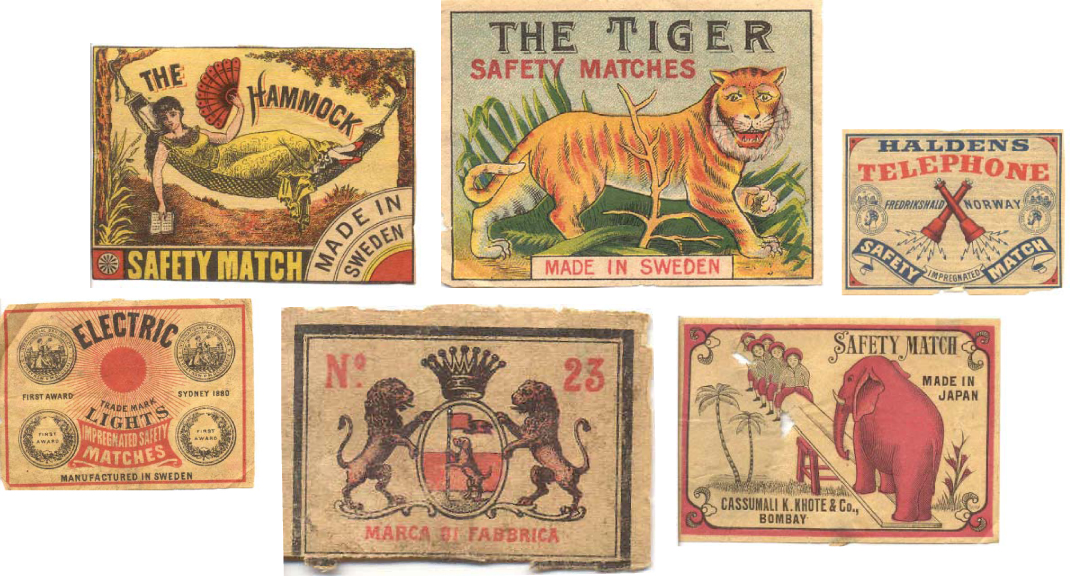
A Collection of Matchbooks, a short story

matchbooks.indd

A Collection of Matchbooks, a short story

1952, the Wayland Manor Hotel, Providence, Rhode Island.

The day is warm and humid, the yellow roses in the park across the street are in full bloom.  Eva tugs at the sleeves of her powder-blue silk suit.  She’s meeting Neal, the young lawyer she met at a Republican fundraiser last week.  Though Eva’s handsome, prep-schooled husband played tennis for Yale and still buys her wonderful presents, she’s lost her passion for him after five children.  Neal doesn’t have a dime, but he has smoldering dark eyes and soft, manicured hands.  He’s a good talker, very charming, the way he lights her cigarette seems so Continental.  Ever since the night Eva ran that girl over with her car after too many glasses of White Star, she’s been looking for a way out.  She knows her husband will never let her take the children, that’s what bothers her most.

1953, the Ambassador Hotel, Chicago.

Eva sits in the lobby waiting for Neal.  On the train back East from Los Angeles, Neal didn’t sleep more than two hours a night.  He’s frantic to make this business deal.  Eva’s money can only go so far, and though her mother contributes what she can, Neal’s ego is suffering.  Maybe if he didn’t spend so much time playing gin at the Club, he’d do better.  His wife really stung him in the divorce, he paid her a lump sum he could ill afford, but he felt so guilty.  He was only the second person in his family to divorce, the first was his older sister Nina.  She married the guy because her father told her to, so when he started getting weird in the head, she bolted.  Has her own dressmaking business back in Providence.  She dates the young boarder she took in.

1955, the Roosevelt Hotel, New Orleans.

Neal and Eva are stopping over for the night on their way to Savannah.  This trip was Eva’s idea, she wanted to revisit her childhood home, show him the house that survived the ’26 hurricane.  Her mother grew up there, raised by an aunt.  Eva remembers the switchings her nurse gave her for crossing the road by herself.  Lilly Mae had a gold tooth in front and wore the most outrageous wigs, red, blonde, honey chestnut.  Her bosom was soft, like feather pillows.  Eva is disappointed when the hotel can’t give them the Honeymoon Suite.  Neal shakes his head, smiles at Eva, pinches her fanny in the elevator on the way up to their room.

1956, annual convention of the California Polled Hereford Association, Berkeley, California.

Neal dances with his daughter, and Eva snipes at how clumsy the girl is.  Truth is, she’s gorgeous, and Eva’s feeling old.  They got both of Neal’s kids to live with them, Neal’s idea, Eva only wanted sweet little Patrick, not this sullen teenaged girl.  She misses her own children dreadfully.  Her ex-husband lets them visit in the summer.  Still, Eva manages to be kind to Neal’s daughter, she pays for Liza’s boarding school, the very best in the state.  Neal had this idea to raise prize Herefords, Eva’s mother thought it was a great idea, so they bought the ranch in Ojai.  The cattle women all look the same — brown cheeks, pale orange lipstick.  Eva doesn’t fit in, but she doesn’t care.  She orders another chilled vodka, downs it in three swallows.  Her throat burns, it feels cleansed.

1956, Diamond Jim Moran’s, New Orleans.

Liza’s in the ladies’ room, helping Eva to vomit.  Liza wipes Eva’s forehead with a damp towel.  The attendant turns away, afraid she’ll start laughing.  Eva’s hair flops over her forehead and Liza takes the comb and smoothes it back into her thick French twist.  Eva and Neal are on their way home after taking Liza and Patrick to visit their mother in Jacksonville.  It was the least Neal could do, considering his ex-wife’s frame of mind.  When the children left her, she lost 40 pounds in a month.  Liza misses her mother, but doesn’t want to move home.  Next summer, she’ll be a debutante.

1959, the Palace Hotel, San Francisco.

Liza’s on break from Mills College, meeting a boy, Ted, for drinks in the lobby.  She wanted to go to UCLA, but her father wanted her at a girls’ school.  It won’t help.  She’ll be pregnant within the year.  Ted, the baby’s father, fancies himself a Beatnik.  He grew a tiny goatee, sparse but bright red.  Liza is getting tired of the same old thing.  She sees a woman without legs being pushed in a wheelchair across the lobby.  Ted’s right behind, and Liza knows they’ll have sex in the car later.  She wonders what it would be like to have no legs to get in the way.

1959, the Luau, Beverly Hills.

Neal’s throwing a reception for Liza after she eloped to Las Vegas.  He put a good face on it, announced the wedding in the local paper, but he tried to talk her into an abortion.  Liza refused, and Neal thought about having her committed, but Ted talked him out of it.  Ted swears he’ll do the right thing, but Neal has a sick feeling.  The kid has dollar signs in his eyes, just like Neal at that age.  Neal should have listened to his heart, not Ted.  He envisions his daughter in a roach-infested apartment on Venice Beach, wearing nothing but black leotards, her enormous belly heaving as she dances to jazz records.  He wants to kill someone.

1960, Arnaud’s Restaurant, New Orleans.

Eva and her mother are on their way back out West after a shopping trip to New York.  Her mother bought a hat covered with white peacock feathers, and Eva hates it.  She wants to strangle her mother, wants her to hurry up and die so Eva can inherit the family money.  Eva’s ancestors made their money in shipping, sailing goods up and down the Eastern seaboard, and she is absolutely certain none of them owned slaves.  Eva’s mother is a spiritual nut, always falling for some Asian philosophy or another.  Next, she’ll run off with the little Mexican gardener, and Eva will have to concoct a suitable cover story.  They’ve never been close, not since her mother left for Mexico when Eva was two.

1961, the Redwood Room, Clift Hotel, San Francisco.

Ted and Liza are filing for divorce.  Neal is listening to his daughter sob.  She thinks Ted needs her, but Neal knows there’s nothing wrong with the kid that a good bank account won’t cure.  He had that illness himself.  Ted’s refused to work, has taken only art classes instead of working for his MBA like Neal wanted.  The baby lives on fried chicken and Pepsi.  Still, the little thing is cute — ten months and she walks, no, runs, already.  She’s got more of Neal in her than anyone else.  Ted’s parents pleaded with Neal not to interfere, but he can’t stand by and watch his daughter worry where her next meal is coming from.

1963, the Seven Seas Restaurant, Miami.

Neal sent the baby to live with his ex-wife, and sent Liza back to school.  Liza chose secretarial training, and works in a bank by day, looks for men at night.  Liza gets jealous sometimes at how happy her mother is with the baby, but Liza’s not very maternal to begin with.  This man she’s involved with is a sailor.  She’s never dated someone who didn’t go to college.  Even his hands are different.

Leave a comment

Filed under mysterious, short stories

a critical review of equatorial rhythms, “written” by rak, former coast guard seaman

Image

a critical review of equatorial rhythms, “written” by rak, former coast guard seaman

Equatorial Rhythms, “typed” by RAK, is the pathetic, badly written “story” of a young coast guard seaman (who enlisted in the United States Coast Guard because he knew his lack of basic survival skills, and in fact, life skills in general, wouldn’t enable him to survive being drafted to Vietnam for even one full day, nay, not even one full hour during the Vietnam War), crossing the equator south for the first time.  This self-absorbed, narcissistic young man’s self-pitying past and dismal present intersect with the foreknowledge of his bleak, frightening, and boring future, which he will spend lying on his wife’s couch, letting her pay the bills for ten years, then suddenly dumping her after she survives devastating brain surgery, because suddenly she isn’t content to pay all the bills and be a quiet, crocheting robot anymore.  This dull, depressing “story” examines life aboard a coast guard ship, with all its gray-tinted, salty, and decaying “friendships,” petty complaints about stuff that should be barely worth mention by normal humans, the author’s unique, sadly unfunny, bathetic humor and what the narrator incorrectly terms “violence,” a couch-potato-wannabe life, clumsily contrasted with the power of the impossibly vast, eternally wild open sea:  a power and majesty the narrator will never, ever, ever understand, or even appreciate with the respect it, the open sea, is due.

66 Comments

Filed under health, humor, legal writing, notes, science, short stories

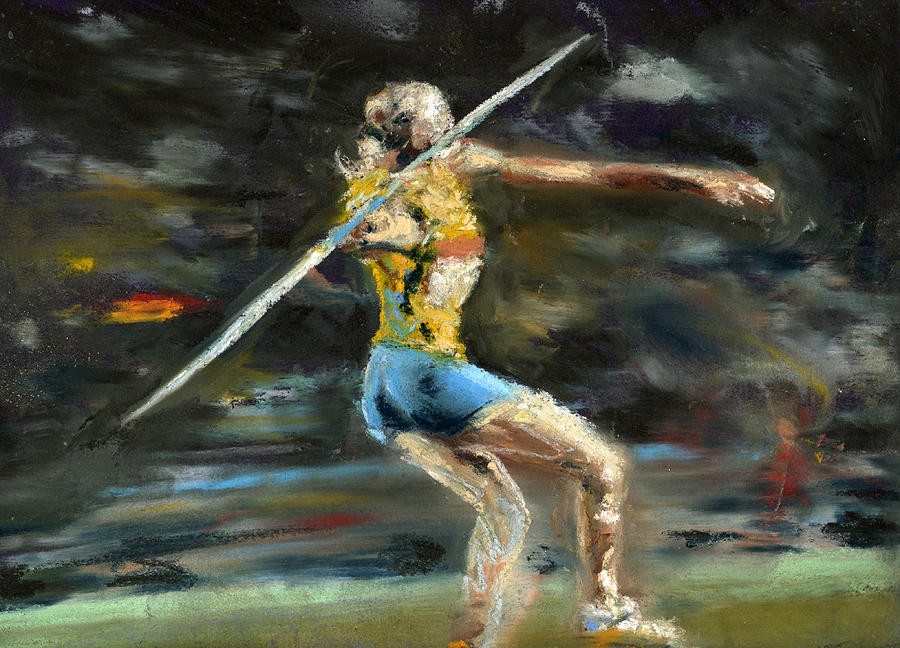
The Art of the Javelin, a short story

illustration the art of the javelin

The Art of the Javelin

There were certain lovers who never let you go, not even when it was over, officially over ‑‑ the kind of officially over where you both married other people.  It’s not anyone’s fault.  It’s something about chemistry, the chemistry of their skin on yours, your skin won’t ever stop wanting theirs and this is a really, really bad thing.  Marriages have been wrecked because of that skin, engagements broken, the valuables pawned.  The skin fling always started well, of course, the mad passion, so heated you never thought about the consequences.  And there were always consequences:  huge, nasty ones.  Perhaps those terrible consequences were what doomed the love affair from the very beginning.  Nothing so lovely and delicate could survive the stamping black boot of your own despair.

You loved him, but it was never enough.  Being with him was not enough.  Being without him was not enough.  Maybe your children, both dead, would have been enough.  You saw the first child, sleeping, its head tilted back, its eyes closed.  You do not know what color its eyes were.  You never saw its eyes.  It saw, and in seeing, died.  Suffice it to say the child would have been a master of language.  It would have been love, a fountain of it.  You left, not taking your child home.  You let someone else take it away.  Psyche never saw Cupid, and you cannot see him anymore.  Psyche is and was whatever Love loved.  You were loved by Love.  You died with the child.  You were crushed like a butterfly hovering in front of a fast-moving truck.  You were a crushed soul.

The land was flat, barren ‑‑ the horizon stretched like a satiated woman ‑‑ supine, theatrical, unconscious.  You missed the children, and you missed him.  Was it a garden you were in?  Was it a prison cell?  There was never enough air, anywhere.

Who wanted, as a woman wanted, simply to be loved?  All the boys wanted something else.  Girls, on occasion – and more than once — want abstract worship, admiration from afar, poems, flowers, sweet nothings in the ear.  Is that what the boys wanted, too?  With that divining rod in front of them it must have been difficult to remain abstract.  There was something embarrassing about need rendered visible.  They could not hide it from the world.  Did boys say, “No?”  As often as girls?  The urge was outward, not inward – the desire to pierce, rather than contain.  The needle ‑‑ the eye of the needle ‑‑ threaded with what, exactly?  The female soul?  Your feet were so cold in the water, wading for freshwater mussels, that your toenails turned stark white.  The mussels were brown and slippery, and the empty shells painted with pale, pearly rainbows in the light.  The little girls around you murmured with delight, squealing when they found a really big one.  Their little hands were sandy and damp on your arm.  Their voices piped so impossibly high.  You saw them at age 35, still hunting for the perfect shell.

You were tired of living your life.  It was satisfactory only in the material sense.  The lights were never turned off for lack of payment.  Your husband went to bed hours before you did; you sat doing needlepoint in the den and watching obscure re‑runs.  You resented your husband’s bulk upstairs in the king‑sized bed, you resented him sleeping turned towards you, resented the warmth of his breath wafting across the hump in the middle of the mattress that had arisen over the years between the depressions your bodies made on either side.  Once or twice you tried to get her husband to talk to you about God; he declined to do so, saying it was “too personal” a topic.  What is the use of a husband, you thought, without conversations about God?

So you wondered whether to leave him.  Suddenly, a young man, black‑haired, black‑eyed, entered your life, with a piercing gaze, but shy, downturned head.  He was marrying his girlfriend:  you thought they were both too young and naive to know what they were getting into.  You tried to talk him out of marriage, saying not that yours was terrible, just that marriage itself was really hard and bound not to live up to anyone’s expectations for it.

He married the girl, anyway, and in about a year was desperately unhappy.  His wife left him, run away several times, stole his money and his car and told him he was worthless both in bed, and out.  In another moment, you found yourself in bed with him, never once considering how you would get out again.  You were not ready to be called an adulteress, but he persuaded you that since you had already committed adultery in your heart, what did it matter in the flesh?  Oh, it mattered, it mattered plenty.  Only in a purely theoretical sense did it not matter.  It certainly mattered to your husband.  He wanted the child, all the money, the house, and your head on a platter.  Everyone told you not to be honest, not to tell him, but you couldn’t deceive him that way ‑‑ it would kill you to be so deceived by someone else.

It first happened on a rainy afternoon, the kind of afternoon that made sitting on a park bench impossible.  All you really wanted to do was talk.  You were lonely, you wanted to be alone with him in a comfortable place where you could take your shoes off and lie down flat and tell him your life story.  He was so kind and understanding.  You wanted everything to happen slowly.  Both he and you were married to other people at the time and you had a broken ankle so you couldn’t walk through the woods or the park, even if it weren’t raining.  You weren’t planning on committing adultery.  You wanted an affair of the heart, of the mind.  You were either hopelessly naive or lying to yourself.

When you were feeling bitter, you wore red clothes, covered with lint, and did not bother to go over them with sticky tape.  You slept only on goose down pillows, and drank only water bottled in France.  When hurricanes were coming, you cooked elaborate cream sauces, and served lemon and honey tea shot with brandy in a crystal cup.  Your rage gave you a sore throat, the tears and tissues a sore nose.  Anger was only depression turned outward.  Always, you received presents in the wrong size, but consoled yourself afterward with icy lime sherbet.  You slept a bitter sleep, on sticky sheets, dreaming of French noses, and purebred geese, white with pink feet.  On Halloween, you changed your name for good.

You took bitter medicine, while he slept through the hurricane.  He gave you red clothes, always the wrong size.  You fed the geese cracked corn with your bleeding hands.  The brandy shattered the crystal glass.  Cream sauces were poured over ice.  You strapped the pillows to the bed with sticky tape.  You cried while he was bleeding.  You whimpered after giving birth.  A deep, abiding melancholy.  Our Lady of Perpetual Melancholy.  The symbolism of the golden arches.  An icon for the ages.  Our Lady of Perpetual Cholesterol.  Our Lady of Sodium.  Our Lady of the Mall.  Where is food for the spirit?  Charge it on your MasterCard.  Ring it up on your Visa.  A deep melancholy, not easily abated or debated.

It happened on a day when you’d been fasting for religious reasons even though you weren’t religious.  A friend called that morning before you’d eaten breakfast and happened to mention it was Yom Kippur.  You felt ready to atone for everything you’d ever done regardless of whether you’d actually caused anybody to suffer.  Your husband, for example.  Your husband was suffering although he didn’t realize it.  He thought he was content, but he was wrong.  You knew that having sex with a woman for 12 years without her having a single orgasm constituted suffering.  You wanted his suffering to cease, quickly and permanently.  And it seemed you were the cause of all suffering, everywhere.  You had daydreams about running away and never coming back, living in a small rented room, anonymous.

So the fasting and the marital woes had taken their toll on your common sense, and the broken ankle had taken its toll on your ability for locomotion.  You were faint from low blood sugar and hobbled wearily into the motel room, collapsing on the lumpy mattress.  Being called a neurotic bitch by your husband had long lost its appeal.  You needed somebody to love you, not somebody to fuck.  But, as your soon‑to‑be lover undressed you, he told you it didn’t even matter whether you actually had sex with him because you’d already committed adultery in your heart.  At the time, you took your lover’s reasoning for spiritual altruism.  You snapped at it like a starving bass would snap at a rubber worm.  Hook, line and sinker, you purchased your fate.  It was silly to think you could ever keep a secret.  You obtained a divorce, slinking away from the ruins of your marriage guilty, nearly suicidal, your ex‑husband spitting contempt and moral integrity even as he made plans to marry his own recently‑acquired lover.

Then over and over again, between your ex‑lover and yourself, things exploded, imploded, burdened by your guilt and remorse and terror.  All this ruined mess wasn’t what you had in mind, you were just lonely and wanted to talk.  He thought everything was conquerable, everything, by the human will and true love.  Slowly, unmet needs that at first seemed unimportant loomed enormous and unsolvable.  He didn’t feel safe with you, nor you with him, albeit for completely different reasons.  You were nastily divorced, and suddenly a major skeptic when it comes to love.  Between your dead marriage and your dead alcoholic mother, you finally learned to cut your losses, and quickly.  What started with a bang ended with a bang?  First the relationship was a misery to you, and then it was a misery to him.

The copper gleam of your helmet hair was blinding.  Ivory soap floated in the tub, pale and fatty.  Hard gray metal breathed like a ghost.  The stains of divorce could not be removed with bleach, no matter how hard you tried.  Women in bikinis reminded you of how you used to feel in summer, naked, nearly free.  You decided to be laid out in a salt pine coffin from Jerusalem, your wake illuminated by jeweled lamps fueled by liquid chicken fat.  Stone gargoyles copied from Paris originals would be worked into bench seats.  For refreshments, cold meats with baked garlic.

You loved him even though you knew it was doomed, and that love kept pulling you back to the maybe‑I‑didn’t‑really‑give‑it‑the‑old‑college‑try sort of mistake.  So you got involved with him all over again, and it was a disaster, again, but to him the fact that you came back only proved the point that you two should never have broken up to begin with.  In the end, he never understood why you kept breaking it off, and each time it got over somehow you couldn’t understand exactly why you ended it, either.  It was the same kind of destructive amnesia that keeps a woman having babies after that first one.  She forgets how hard it was, how much it hurt, how much it broke her spirit.  This entire sad sequence repeated until you finally had enough.

That night, you dreamed your mother was unpacking long‑forgotten boxes ‑‑ animals carved out of brightly colored stone, gold‑glass paperweights, things you loved, and your mother was getting rid of it all.

Six months later you got a bill from the library for $173.00.  You remembered your lover checked out a bunch of library books on your card.  So you called him, asked him to return them so you don’t have to pay.  Time goes by, and you wondered.  You called his house for days, but the line was always busy.  You decided to drop in.

You knocked.  It took a long time, but finally he came to the door, disheveled but looking good, except around the ears.  His house smelled strongly like man.  You were startled by the smell.  Vanilla, cinnamon, and a touch of dirt, of mushrooms.  The rooms of women smelled like yourself.  You have been in other men‑only houses, and it was always the same.  There was a strength to their smell, a lasting power, an earthiness under the scent of the body that made you want to burrow into the bed-sheets.  This time, you did not.  He was growing a beard and wore jeans with holes in the knees which made him look as sexy as the third time you slept with him, the time in his father’s falling‑down barn ‑‑ you couldn’t wait one minute longer so you did it right there on top of some mildewed couches.  You broke up for the last time almost a year ago.  It was shocking, the physical part you’d thought was long gone.

You wanted him again, though you’d never let yourself have him, and he sensed it – that made him really angry, angrier than you had ever seen him.  For once, you ignored the physical passion.  You didn’t touch him, though you wanted to, badly.  He sensed it, and that sensing is what drove him mad.  He screamed.  He accused you of being shallow, insensitive, a manipulative bitch with the emotional capacity of a rock.  You were meant to be his, you did everything wrong, you shouldn’t have broken up with him, because it was meant to be, him and you, forever.  He forgot how you cried all the time, and how you couldn’t quite put your finger on the reason.  He forgot what it cost you to be with him:  half your daughter’s life.  He had no children himself, yet, then:  he couldn’t know how guilt had you in its death‑grip.

He screamed, he let you do things, “get away with things,” he shouldn’t have.  He didn’t want those things to occur, but he didn’t object at the time because it seemed like what you needed to do.  You told him maybe he should have given you his true opinion, back then.  Maybe, if he had given his opinion when it was so desperately needed, you’d have chosen to be with him.  Maybe it was his essential passivity that caused those late‑night crying jags.  Maybe you were crying because you felt like his parent, his dorm mother, his baby‑sitter.  You, too, sometimes wanted to be cared for, nurtured, sometimes you wanted to feel safe, to be warm in your own bed on your own pillows, not scurrying around in the corners playing catch‑up with the dust-balls.

But he did not, could not, and would not hear anything you had to say.  You were supposed to be with him forever — he believed this and never let go of it:  his personal Holy Grail.  He wrote you love letters up until the week you got married for the second time, after that, came only hate letters.  There would never be a remedy for his hurt.  There was no way to make amends.  The wounds between you never healed, because he never stopped being angry with you.  He was, is, and will always be angry with you.  For this reason, your affair with him will never be over.

Will he be angry, forever?  Yes.  Will his jealous wrath burn like fire?  Yes.  Blessed is the man whom God chastens, and God will chasten him in time.  Yes.  His entry into vagina, and your life, was like someone throwing the couch over, slitting all the cushions, smashing the picture glass, sawing the bookshelves into firewood.

Someone knelt.  Someone asked to be blessed, forgiven, and made whole.  Two people danced, and at the same time drew blood from one another.  The man you loved stood remote, erect, unbending.  You died, to him.  You murdered him, years ago — it was an accident, a terrible wreck of the heart and body.  You wanted only to find your true home.  They why did your heart feel like cold‑rolled steel?  It clanged shut — you were alone, again.  And, again, no one could reach you.

While his plane took off, you did jumping jacks next to the runway fence.  The chain link made you feel like you had a vision problem.  The vessel making up your love for each other was glass ‑‑ white but somehow full of colors, opalescent, and its inner lip was scarlet ‑‑ caressing the outside of the vessel were golden-brown, radiating leaves, quivering with life.  Nothing could hold that vessel down ‑‑ it rose of its own accord.  Once shattered, it could never be restored.  Your fault, you never knew how to live in this world.  You always desired things which could not be possessed ‑‑ could be kept, could not be domesticated.  Your own heart was not domestic, but, rather, wild, savage, and cruel.  It was the opposite of serene.  It held mother‑love and murder, sometimes in the same instant.  You were the living damned.  The only answer seemed to be to keep moving.  That is why you decided to entomb your legs in rock, solid and immovable.  That is why you always tied yourself to the ground.  The caged butterfly smashed itself over and over again, beating impossibly against prison bars of cold‑rolled steel.  Finally, its wings shredded, and the butterfly could only remember flying.  It knew only that something had gone terribly, terribly, terribly wrong.

3 Comments

Filed under health, legal writing, mysterious, prose poetry, short stories