Monthly Archives: June 2013

a-girl, a poem

illustration a girlillustration a girl african-american-embroidery-designsillustration a girl michelle obama imagesillustration a girl erykah badu download

Feisty owner behind wheel of A-Girl

The towing company has survived 15 years by moving into tough territory and trading on its pink trucks and unusual name.

By MARTY CLEAR
Published January 30, 2004
If you live in Hyde Park or Carrollwood or Temple Terrace, you may have never seen the bright pink tow trucks with the crudely painted words “A-Girl Towing” on the side.

If you live in College Hill or Belmont Heights or the un-redeveloped fringes of Seminole Heights, you probably know them well.

For the past 15 years, A-Girl’s tow trucks have been common and unmistakable sights in Tampa’s poorer neighborhoods.

“Nobody wants to go to those projects, but I don’t mind,” said owner Shelia Cole. “I’ve made a niche business for myself.”

Cole never set out to own a towing company. In 1989, with some money in the bank from a lawsuit settlement, she had planned to open a used-car lot. She would buy old cars and fix them up. As sort of an eye-catching gimmick, she would put fancy rims on all the cars in her lot.

“If I’d done that, I’d probably be rich,” she said. “Rims are huge now.”

While she was waiting to get her business licenses for the car lot, she acquired an old gray tow truck from a relative. She planned to use it to bring old cars to her lot.

“I didn’t know anything,” she said. “He showed me how to use it.”

Gradually, she started getting calls from people – friends, then friends of friends, then total strangers – who needed their cars towed,

“I’d get out of the truck and they’d say, “Hey, you’re a girl!’ and finally I said “That’s it!’ ” she said.

She realized that her gender was a better gimmick than fancy wheels. And she realized that even though she didn’t have any cars to sell, she already had a tow truck and some decent word-of-mouth business. She painted her truck pink, and A-Girl Towing was born.

(a note of preface:  i saw her tow truck years before the above article was published.  i wrote the poem a long, long time ago.  on a whim, looking for an appropriate picture to use in this entry, i searched “a-girl towing” and up popped the above article, at least a decade after i saw her on the highway while in tampa.  she was beautiful inside and out, then and now.)

A-Girl

The tow truck is ancient — dents,
fat rounded fenders, scattered
freckles of rust — but it’s painted

a shocking bubble-gum pink,
and across the door in a lavish
curly script is written, “A-Girl

Towing Service.” The appropriately
girlish driver is ebony-skinned, young,
possessing fine strong bones.

On her closely-shorn head
sits a circular, flat-topped cap,
embroidered in bright flowers.

The cap’s tassel flips saucily
in the breeze; our eyes meet
for a moment as she passes.

Her gaze seems calm, direct, filled
with the grace of one who understands
she owes absolutely nothing to the world.

When tow trucks are pink, is the world
necessarily a better place? Yes.
And suddenly I wish I could see:

who is this woman when surrounded
by her family, her dearest friends, her lovers?
Is she easy to laugh, does she enjoy

the scent of gardenias, can she whistle
with her fingers in her mouth
like I always wanted to but never could?

Leave a comment

Filed under poetry

made in heaven, a short story (originally published in exquisite corpse)

illustration made in heaven sheet

Made in Heaven

(originally published in Exquisite Corpse)


The Test

He believes in eugenics — his line was bred for sad brown eyes turned down on the outer corners.  He feels his Self slipping away, somehow.  The Self he was creating — he did it, he was tied to a woman, a woman who didn’t really want him, a woman who flailed at being tied to men like an unbroken yearling colt flails at the lead chain.  He fell in love with her watching her walk in the grass at the side of the road — bare arms, long brown dress, square brown handbag, pale white skin, waist-length brown hair.  He’d had ten cups of coffee pulling an all-nighter to teach his first medieval history class.  His role:  the nervous young professor.  He stopped to give her a ride — his first day on the job, he didn’t want to fail some test, by not stopping, and then she was just like some wild horse, he knew he had to marry her to keep the other predators at bay, they’d have chewed through her throat in a heartbeat.  He’d never seen eyes like hers.  Unattainable.  One morning, he woke up, he was married.

The Question

Sometimes he thought the way his wife acted in public was like doing a strip-tease inside the Dome of the Rock — asking for it; bad stuff going down out there, he said in his mind over and over whenever she started up, giving people looks of… what was it, exactly? Then one day, driving to work, dawn breaking, coffee clutched in hand, he watched a flock of birds pass by, bits of black looking like a school of fish coursing through the sky.  Landing on a new-mown field, the birds hopped among the grain stubble, picking up leavings.  His wife with her unsatisfiable longings was like that, a ballet too graceful to be endured.  How was he going to stay?  How was he going to leave?  He goes to the office and tries not to think about it, but it’s there every second, floating in the air in front of everything he tries to focus on, like text on an invisible TelePrompTer.  It wouldn’t matter — his wife could run off with the car, all the money, his heart — still he’d never stop asking her to come back.

The Wish

His newly-adopted hometown was full of squares and smiles:  people walking by, talking and laughing to the air.  For years, his wife had this best friend who always thought she, the friend, was dying.  Sometimes his wife got irritated with her best friend’s fear and wished the woman would get it over with already.  She’d been dying for over 10 years now.  Except one time, after his wife hung up on her friend disgusted by her seeming hypochondria, the friend actually ended up in the hospital with a heart attack.  His wife told him God was teaching her not to make wishes.  That night, she sat nude in front of the closet-door mirror bawling like she’d just gotten a bad haircut.  Which she had, at her own hand.  Hacked her hair off with kitchen shears like an insane nun taking her final vows.

The Need

Long ago, his wife says, she lived in a warmer climate.  Her first love was a coconut palm, phallic and bristly.  Round brown fruits.  She scaled the tree again and again, could never make it all the way to the top.  She got a crush on every boy that talked to her that year.  She quit reading the Bible when she got to Job — after her own father lost his two sons in separate car accidents, he just lay down on the couch and died, for which she never forgave him.  Maybe it was the fact her father willed himself to die, left her on her own too young — maybe that, and the two dead brothers, made her feel like any man was better than none.

The Surprise

A spade is a spade.  Death and time are as big as the universe.  Even your wife’s dying friend can be deceptively spry, hale and affectionate; she can give bear hugs.  The dying friend can move to Lulu, Florida, after she gets out of the hospital for what she doesn’t know will be the last time.  The sky over her can be blood blue with thin white clouds like cobwebs.  A dying woman’s dentures can deteriorate — first a missing eyetooth, then going brown in front in weird streaks.  Evidence of her inner corruption.  Even a dying woman can be financially abusive.  His wife always handed over his money like Kleenex to people with pathetic sob stories; whether they were dying or not, she’d have bankrupted him if he allowed it.  Surprise!  His wife’s so-called dying friend can actually die.  His wife cried and cried, even though she told him only yesterday she was afraid her friend only wanted her money.

The Rule

Yet, that impulsive woman he married, she got pregnant the first night, the condom slipped off and was found wadded up next to her cervix — she baked and baked, after she lost that baby.  Even the day of the miscarriage, her favorite Dixie Lily flour was soft and cool and white on the table, her nimble hands unevenly pigmented, strong and capable, dusted with the white powder, holding a green-handled rolling pin.  She was like a horse trainer, she’d never hit you with her hands, only with something held in them, usually a hairbrush, the bristly side.  She wanted you to obey, but not to fear.

The Nudity

Die, black smile — his wife was like any ordinary woman you fall in love with on the side of the road, touching her own lips, feeling her own breath.  She was not comfortable with him.  She was not comfortable belonging to any man.  She lost another man’s baby the year before she married.  Now she is fighting depression off with a big stick.  In his favorite picture of her, his wife’s flesh looks so soft as to be eminently pierceable by the polar bear tusks in the head she’s leaning on.  Sometimes she’d cry hard and couldn’t get out of bed, other times she was just plain hard and he couldn’t get through to her heart — like she was compensating for the too-naked times, by not allowing touch.

The Drug

They vacationed incessantly — Omega at the desert — she wore a backless sundress, and all her spinal knobs were visible to the casual observer.  She was verging on plump when he met her, then she became lean, tireless and angular.  He doesn’t care either way — he knows she’s no good for him but he can’t give her up.  Maybe it’s that he’s never had lovemaking that good with anybody but her.  An hour in bed makes up for the days of misery trying to live with the rest of her.  He understands now how addicts can keep shooting up, even when they know it’s killing them.

The Problem

At a frown from him, at the slightest disappointment seen or unseen, she’d bolt; he wouldn’t see her for days.  Then he felt as hollow as an abandoned house, weathered gray clapboard siding, rusty tin roof, part of the roof gone so you see the rafters underneath.  He took long walks early in the morning trying not to think about her; he saw a rising flock of birds, confetti against gray-blue.  He was walking through flatness, brown plains, splashes of green, a dull sky, murky at the horizon.  A grain elevator through the mist, far-off, looks small like a toy.  Is he a toy, for her?  He buys a cup of coffee at Love’s Truck Stop on Fountain Rd.

The Fear

Her name, he sees it written everywhere — on a metal tower with guy wires, the upper half of the tower obscured by clouds.  He sees her name on maps, even at City Hall on a quick stop in Broken Arrow, Oklahoma, for coffee and smokes.  Diana, the huntress — but she can’t bring herself to butcher her kills.  She leaves them to rot.  Or maybe she stores the carcasses in some psychic smokehouse, preserving them within herself for some imaginary future famine.  As if she’ll ever be alone, as if she’ll ever lose her gift for making others feel sorry for her, sorry enough that they pick her up hitchhiking and end up married.

The Disease

Heat and a white smile — he visited another sick friend, imagining making love to Diana in a hospital bed.  What would it be like, to care for her until death?  Would it make him forgive her at last?  Would she be able to forgive herself?  Diamond logic cuts through psychological scar tissue, removing old growths, old infections, but then comes pain, bleeding, and the collapse of drained and emptied dreams.  When he aches for her, but in the same moment rejoices in her absence, assault-eating seems like his only option.  He sits in front of the sports games on TV, bags of snacks next to him.  The cat sleeps on his feet.  It doesn’t matter who is playing, he always roots for the underdog.

The Conundrum

Before she came back after their first separation, he decided that the flat glare of the sun loved him more than any woman he’d ever known — he wasn’t even surprised when he read in the newspaper how two thugs beat a gay college student, tied him to a fence and left him for dead.  She is ill, mentally, spiritually; he knows this but something equally twisted in him needs to be around that illness, in order to feel himself healthy.  Who, then, is the worse off?

The Return

She came back to him over and over, and every time she was hard at her music again, trying to get perfect that rhythm only she could hear; practicing, pure mindless female energy — dressing up in fur and spangles, frothy material, fancy.  When she got like that, you could tell she wanted to persuade some mysterious Somebody to do a secret Something for her.  She wanted to tempt, to bewitch.  He let her practice her music on him, he took it into himself, her beauty, her nature, her vengeance.

The Desire

He had pity — she was piteous — her legs moving like a deer’s, then wrapped around his waist — thin, delicate, poised for fleeing.  Once she told him she loved to feel womanly, but the only way she could achieve that was to see herself as physically, mentally and spiritually complementary to whatever man she was with.  She could then mold herself to accommodate his subtle shape the way the space between her legs accommodated him, and the womanly experience came to her through that forming, that clinging.  Yin/yang, two halves of a sphere, with herself having structure only when against the man’s half.  And sooner or later, she always stopped assuming that complementary shape, as soon as she started seeing things in a man’s shape she didn’t want to cling to — what man doesn’t have weaknesses — and that left her feeling like a neutered being, not male, not female.  Barely alive.

The Change

A spade is to be pitied for having to bury a woman like her, he thought upon waking early one morning to stare at her sleeping face, drained of pain and fear, sweet as a baby’s — but the light was all wrong for this time of morning, damn that daylight savings time.  Change, he hated any kind of change.  She should stay in one place; there can be no love without commitment and full knowledge.  Yet even regarding her deep within the throes of her struggle, primed with the proper amount of pity, he felt their beauty together, as a couple, was almost equal to infinity — but then again, mating cockroaches could fly toward the light too.

The Ultimatum

One day when she said, “Let me out of the damned car, now,” he stopped, let her go — thought “finis.”  She ran toward an idle hay baler & mountains of mown hay in a field; after that, she ran through a field of milo.  Then came a sheet of rain.  While he waited for her to return, he picked handfuls of yellow flowers beside the brown stubble.  She was his ultimate fantasy — her hooded eyes, high cheekbones, firm jaw, and full lips.  Gleaming brown hair.  He said to her the next morning, grinning like a chimp, “I live for simple things now:  coffee and a cigarette in the morning, beer and a cigarette at night.  That’s my life.”

The Petition

Scent-paths are the most primal in the brain — one day he read about how, in the next state, a cyanide suicide’s body gave off fumes and made nine others ill.  His wife’s baby breath slowly turned into dragon breath.  A crazy tarot card reader told him seven was the optimal number for a point of view, whatever that meant — then during the month of July, his own mother walked the Great Wall of China, worrying about his pending divorce.

The Secret

Money could always make her come back — who was it that wrote, “Wealth is power?”  King Cotton.  After all, his family had bales of cotton the size of railroad cars, covered with blue or yellow plastic.  Chicken houses the size of football fields.  Tractor-trailer cars stacked with white chickens, still alive.  Numerous Arkansas mountain shanties.  On one particular tract of farmland, there was pampas grass and a rotting tin-roofed general store.  Not to mention abandoned buildings, too numerous to count.

The Charade

He felt his smiles turning into complex equations, numbers, letters, factors squared.  Also that July, his wife fell madly in love with Puerto Rican twins.  She sat in the college Spanish lab for hours, trying to acquire the accent of a native speaker.  Later, she asked him to take her in for an abortion.  Him, a male, like a wide column of stationary air before her warm front, her hurricane eye — she left him wishing he were a virile but tender auto mechanic instead of a college history teacher.

The Truth

Dig up the heart that was properly buried and leave it defenseless again — in a dream the next night, baby fists flailed against him, their full force like the blow of colliding with large bumblebees.  Heavy but miniature.  His wife, woozy with painkillers, crawled into bed beside him, woke him up, told him how in college a virgin boyfriend of hers, frustrated because she wouldn’t sleep with him, punched a brick wall, injuring his fist.  Crooked paths lead to God — his wife then told him how it was with the elder Puerto Rican twin, Emilio, that she first stayed awake all night long, so hungry, but then he pissed her off with his blond boyfriend:  using her as a cover so nobody would know he went both ways.

The Aftermath

The sun’s light always reminded him of diamonds — his favorite teacher once told him, “Don’t waste your gifts.”  He was too much in love with the teacher to ask what gifts she meant.  Now he thought he knew.  The sun ate his heart anyway, it didn’t care about his promises — he was bereft beyond bereft when his wife left him for the last time.  All his friends and acquaintances told him how he’d be better off.  He was, and yet he wasn’t.  Everything he has dreamt since then, since she was gone, was in black and white — he wanted to hear the white noises of the wind, he wanted to fly down the tunnels of green, he wanted the warm salt water to gently burn his eyes clean, he wanted all his enemies dead, he wanted the memories removed.

The Legacy

His wife loved white sheets — they made love that last time in a bed so white it looked like barely repressed violence.  In the center of all that pain, something brought them both rising smiles — together, they were convulsed by spasms of laughter, uncontrollable as an orgasm.  It seemed like laughing at a funeral — insane but maybe the sanest response of all.  She gave him one lasting gift, his black smile at infinity… infectious.  Even as he walked around, zombie-like, memories of the failed marriage ringing in his skull like aftershock of a car crash, total strangers started propositioning him out of the blue.  Male and female.

The Effort

The heart, it seems, can expand, then collapse, both to an infinite factor.  He noticed, one day at lunch downtown, lots of little people he’d never seen before.  Or maybe he saw before, but he didn’t notice.  Had she left him that ability as well?  Fat, strangely shaped people, people who looked mentally disabled, odd angles of eyebrow, odd expressions of puzzlement.  Then, he noticed a very pretty woman in a garden-print shift & orange straw hat, no makeup on except blood-red lipstick.  She could be his wife’s twin.  She ordered grilled turkey & Havarti with cucumbers.  Unlike his departed wife, she was apparently an effortless mother; her child was immaculate, dressed in hand-sewn clothes.  If she ever left her husband, the world outside might swallow her whole — but he’d do his best to convince her she had to — for both of them — at least try.

4 Comments

Filed under short stories

valentina and deucalion, a children’s story

illustration valentina and deucalion st valentines day

Valentina and Deucalion

Once upon a time, in the faraway city of Rome, there lived a beautiful young woman named Valentina. She dearly loved a handsome young man named Deucalion, whom she had known since she was a small child, but he did not know of her love for him, nor did he seem to be looking for love from any young woman. He was too busy learning to be a warrior, and fight in battles — how he loved to ride his beautiful horse, Melodius, over the green hills and through the dark forests. Melodius was black, with a long, thick mane and tail, and four white socks, and one tiny little snip of white upon his nose. The horse ran like the wind, and Deucalion loved to lean over Melodius’ neck and feel the rushing air upon his own face.

Valentina lived with her older married sister, Daphne, and she and Daphne were always busy, and worked very hard taking care of the household and the children. In those days, there were no vacuum cleaners, no microwaves, no telephones, and no refrigerators. Just making a simple breakfast was a great undertaking. The fire had to be lit, early in the morning, so that by the time the sun rose the coals would be just right to bake the bread. Some days, Valentina was so busy she didn’t have a moment to catch her breath. Still, she used to take her youngest nephew, Ovid, for long walks every afternoon, hoping to catch sight of Deucalion riding across the hills, but she hardly ever got to see him anymore.

It wasn’t like the days when they were children together, when they would play for hours, climbing trees or hiding underneath the great stone towers that bordered the city. Sometimes she would lie awake at night and imagine what Deucalion was doing at that very moment — whether he slept in a warm bedroom or out under the stars, whether he dreamed that very moment of her or, for that matter, of any young woman in the city. She wondered if he would ever fall in love.

It had been a very cold, wet winter in Rome, and Valentina was looking forward so fondly to the coming of spring, and to the beautiful flowers which would bloom in the gardens and in the country. One day towards the middle of February, she noticed two small, silvery doves cooing in the courtyard. The doves danced for each other, arching their necks and wings gracefully. All the birds in the city were busy building their nests and getting ready to lay their eggs, and Valentina remembered that the festival of St. Valentine was just two days away. Her heart beat faster at the thought, and she hoped Deucalion would be at the festival this year.

Every year on this day, the young men would run through the streets carrying long strips of leather made from goatskins. The young women would crowd the sides of the streets and try to catch the strips of leather as the men rushed by. Deucalion was always so fast that no one had ever caught his strip of leather, not even Valentina, who was a very fast runner, indeed. When they were children, she had beaten Deucalion in a race many times, and this had made him proud to be her best friend.

But Valentina’s favorite part of the St. Valentine’s festival was how each young woman would write her own name on a piece of paper, and put the paper together with all the other young women’s papers into a big box. Then, each young man of the city would close his eyes and draw out a name, and that name would be his love for the whole year, until the next St. Valentine’s festival. If he were especially pleased by his love, he would have her name embroidered in gold on the sleeve of his clothes, so that everyone would know, and be happy for them both, and rejoice. Valentina knew it wasn’t very likely that Deucalion would draw her name. Hundreds and hundreds of young women put their names into the big box. She would be happy, she thought, just seeing him at the festival and talking with him.

The morning of the big festival came, and Valentina dressed with care in her prettiest gown, with a round silver pin at the shoulder, and she put a circlet of delicate silver leaves on her head. She walked to the city square with her folded piece of paper, and dropped it into the box with the other young women. They laughed and teased one another while the young men drew the names. She saw Deucalion, and watched him take a paper from the box, and held her breath, but after he read the name, he walked right over to her old friend Corinna and took her arm. Corinna whispered something to Deucalion, and he whispered back, and Valentina’s heart was sad. There’s always next year, she thought.

As she stood waiting for the rest of the young men to finish drawing the names from the box, she suddenly felt something strange tickling her back. She turned with a start to see Melodius, Deucalion’s horse, right behind her. The horse had touched her robe with its soft mouth, and stood quietly in place as she looked at it with wide eyes, the animal nodding its fine head as if in greeting. Riding Melodius was, of course, Deucalion, and he smiled. He wore a new red tunic, and on the sleeve Valentina saw her own name embroidered in gold. “I asked Corinna to make this for me long ago,” Deucalion said. “I was hoping that one day, I would be lucky enough to draw your name.” He reached down, and helped her up onto Melodius’ strong back.

“This is not at all what I had expected,” Valentina said. “I thought you would never, ever love me.”

“Aren’t you glad you didn’t get what you expected?” said Deucalion, and off they rode, enjoying the fine clear day, the swift, smooth gait of the horse, and most of all, each other’s company.

Leave a comment

Filed under for children

the day before closing, a poem (for nana)

ktp 1964 nightgown841 oleander drive three sisters yellow doorktp 1964 backyard tree

The Day Before Closing (for nana)

Out in the yard there is the tree
you planted when I was born.
It’s tropical, fast-growing, but

even so — I can’t circle my arms
around the trunk! The thing
towers above the house, thick

branches like beams, supporting
my sky of childhood. Tomorrow this
place will belong to someone else:

the old gardenias, the dense hedge
of bamboo out by the laundry line,
the bent but still perfectly good mailbox.

Please let them leave a few things
the same. I’ve gone through closets,
cabinets, a dozen times but I keep

finding more old letters, more
scraps of paper bearing your quick,
vivid writing. There, amid

the dustballs glimmers one more
strand of your hair, catching
the wan light, curled and silvery

against the bare floor.
I slip it into my pocket,
then remember how you used to

put on your hose, sitting
on the edge of the bed, sighing
softly as you pulled the rolls

of nylon up your lovely legs.
Just as abrupt comes one last vision
of myself, at five, dancing wildly

in your filmy yellow nightgown,
whirling around the cleared
living room to your applause.

3 Comments

Filed under poetry

la cubana, a poem (for miriam)

illustration la cubana bay of pigsillustration la cubana

La Cubana
(for Miriam)

You wanted to be a ballerina;
you still have the feet to prove it.
Beautifully ugly — the large indelible corns

a badge of honor you wear snug
inside your stoic three-inch heels.
Even now, you move like a dancer;

that curious, hesitant grace making you
nearly transparent, your fingernails resembling
the vague glimmer of fallen sequins

against dusty wood. I first saw you
cloaked in heavy tweed, your blouse
buttoned like a nun’s, ponderous glasses

weighting your cheeks; a lyric ode
to fine print and words of limitation.
From across the room you smiled.

You have grown into your new profession…
even hair charmingly askew, you remind me
of money, of large parcels of land,

of failed invasions. I can see
how your grandfather whirled that quiet girl
from Boston into his life. When your own father

came back, two years late, from the Bay of Pigs,
you didn’t seem to know him anymore; his blue eyes
forever magnified by loss, his young wife grown bold at last,

they both still played their parts in the undeclared war.
Perhaps the real reason you let go
the lambskin, the pink satin, the sharp-edged slant

of ribbons against buoyant muscle,
was your brother. When he went away,
you had to be the son in that circular way

all Latins have. And yet, now that I finally see you
holding your small stubborn daughter,
I am reminded of the heroic way your tears fall,

winding mascara down with them, stubbornly
clinging to your neck until they simply
disappear. Forget the earplugs, the tranquilizers,

the last minute histrionics — it wasn’t until
you kissed me on the cheek that I truly mourned
my own mother. No one else could bestow

that strange catalyst. Your line of time
admittedly different, yet as familiar
as a vision. Can you possibly understand how,

in that one unending moment, you became
my sister, my lover, my own cool lips,
my own interminably carried broken dream?

1 Comment

Filed under Uncategorized

the day mrs. nixon asked for my elephant pin, a poem

illustration Pat-Nixon-9424065-1-402

The Day Mrs. Nixon Asked for My Elephant Pin

Though my star-struck grandmother urged,

I wouldn’t give it up.  Well, what did the President’s wife

expect?  She, mother of two, should have known better

than to ask such a thing.  Granted, I was tall


for a five-year-old; perhaps she thought I was six or seven

and capable of giving — the just-bought plastic trinket

was fastened tight over my heart, shiny red,

two imbedded rhinestone eyes, the elephant’s mouth


and trunk drawn back in a premature but apt leer

of triumph.  Everybody knew the President

had the nomination.  Hustled along the receiving line,

elaborately outfitted in my pale yellow spring coat and hat


from Sak’s, I reached for Mrs. Nixon’s offered hand,

scared silly when she didn’t let go.  All around stood

blank-faced men with crew-cuts.  “That’s such a pretty pin.

May I have it?”  She leaned in close and I could smell her


breath, sweet dried apricots, her hair-spray, each fragile

lock shellacked into a precise curl.  Mrs. Nixon’s face

was gaunt, her sad eyes sunk deep within her cheeks,

but her toothy smile was kind, her voice gentle.


My squirmy hand lay trapped within hers — her grip cool,

dry, firm, not the sort of woman who easily takes “no”

for an answer.  I couldn’t speak a word, just stared

at my feet and shook my head, ashamed.  At eighteen,


when I registered to vote for the first time,

I wrote in “Democrat” — the perfect coda.  Years later,

looking for a place to rent, my husband and I

toured the Nixons’ condo development in the remote wastes


of northwest New Jersey, and I saw my ancient nemesis

getting onto the elevator; wincing a little in sorrow

at her fixed, glassy expression, wondering if she still

remembered me, or even that breezy day in Miami.

Leave a comment

Filed under poetry

Scientific Method, a prose poem

illustration scientific method caviar petrossian

Scientific Method

It is raining on Fifth Avenue.  I see umbrellas in a rainbow of colors but only gray clothes, gray faces, black rain, black streets.  I wait for the sign it is safe to walk, assured God will never deceive me.  The caviar store on the corner is empty again, as usual, except for the man behind the counter.  My existence remains unproved.

I, like Descartes, come from a legal family.  I too am excused from morning duties and allowed to remain abed, contemplating theoretical problems.  This morning from my high window I saw the sun rise over the river.  Fire to light, line to plane, flames on a gray mirror — objects around me glowing.  I imagined an infinity of rulers.  I felt hope rising in me with the sun. Hope for what, exactly?

The fish eggs I buy are tiny black pearls, glued together with brine.  Bursting against the roof of my mouth, juicy exclamations of Universal Wisdom.  I imagine my soul to be something extraordinary and rare, like a flame, coursing through my body.  I exist; I think; I am free of doubt.  When I was a tender baby, with skin like fresh flower petals, who loved me enough to love my soul?  Who breathed dreams into my tiny shell ear?  Who wept over me?  Who wished me dead?

I am like any ancient geometer, my problems beg for elegant solutions.  This curve, this conic slice — where will the truest intersection lie?  A series of three dreams turns me into a timid comedian, hiding behind my garish painted mask.  I am not a soldier in uniform.  Quiet, the air is still — I can feel my heart, unscarred as yet.  It only feels as though it has been broken, that is deception, it is perfectly healthy.

I am already exhausted by so much living.  While I slept as a baby, the whispers came from someone close: I will lie to you for your health; I will mislead you for your own good; I will beat you up for your excuses, I will beat you for your carelessness; I will beat the drum of my own desires, never yours.  Now, the sun is dancing upon the sea.

Neither René nor I like to live long in the same location.  We will change our dwelling place twenty-four times in twenty years.  Think of an infinite number of points.  Across from the caviar store, an icon with a gold halo, painted on peeling white brick.

I pray to you, my silly angel.  Hoping for what, exactly?  For feelings of joy, like a drug….  The joy of watching water move, tickled from beneath by fish fins.  School has let out for summer.  The joy of heated skin as it is plunged into cool water.  Feet in wet sand, toes nibbled by fish; pinched by tiny crabs, scraped raw on rocks.  The pleasure of discovery.

My mind is unclouded and attentive.  I deduce the transition of blood into water, wine into water, wine into blood.  The firm eggs of the caviar burst in my mouth, tangy grains of hope.  Posterity will judge me kindly.

Like me, Descartes could not find leisure and quiet to write until he got away from his family.  Was it the way his father drank?  The drunkenness, the curses, will repeat every evening at sunset.  Children will scream, cry.  Children will beat themselves up for an explanation.  Hope for what, exactly?

René and I both trust thinking more than feeling.  We work hard to free ourselves from the element of probability.  Salty fish eggs, trips to the caviar store, and flare-ups of hope, repeated endlessly.

A toast to us, to our new lives.  René completes his law degree on my birthday.   Both of us will wear robes of black & purple; spread a velvet cowl upon our shoulders.  Envy, we can taste envy: who breathed such curses as we slept?  I have walked in darkness so long, I cannot bear the light of day.  I enter the labyrinth, clutching a flimsy thread.  Curiosity is blind, leads me to risk, to unexplored streets, to black fish eggs in the rain.  It is still raining on Fifth Avenue.

5 Comments

Filed under prose poetry

New Poem, a poem (for everyone i love — you know who you are)

leslie gaines CrazyViewIMG_0542

New Poem

Dearest, dearest God, my old teacher, my new teacher,
my classmate, my expedition, my mountain, my valley,

my sea, my river, my lake, my cloud, my tree, my rock,
my butterfly, my sweet love: Your new minister is a dear,

from New Orleans, young and trembling and with a pretty,
shy wife and two darling baby girls. Picture of earnestness

and kindness. Admirable. I felt my soul blossoming today,
I was moved, shaken, made warm and soft and open

by the children’s beauty. And part of all that was You
inside me. So much love for You, it hurts my damn chest.

I confessed my sins today and was absolved. Do I believe?
Well, partly. Enough that I don’t feel like a hypocrite.

Perhaps I should. I don’t know. I have no answers and
hardly any coherent questions. Mostly I am struck dumb

by all of this, all of this happening in my body and my mind
and my heart and my soul. It is profound. It is an opportunity.

I will not squander this precious gift, rest assured.
Simple things have become all the more profound and

complex things all the more understandable. Just heard
a strange noise coming from my daughter’s bathroom.

Both cats were on the counter with the goldfish bowl
up to their little catty elbows in same. Dripping wet,

they looked at me guiltily. I hissed, “Get your paws
out of there, ladies!” They fled, in haste and apprehension.

I did not follow to administer further lectures.
They’re cats, after all. Cats will fish, given the chance.

And absent lovers will pine. And awakened souls
will soar heavenward. Doesn’t life contain much

logically predictable inevitability which is nonetheless,
each time it presents itself, a mystery and a revelation?

I have gone mad with gratitude. Every thing
existing seems a gift. An opportunity. Priceless.

Even if I never get to live in Your arms again, know this:
I am Yours, forever. It is the first time I have felt this way

toward someone not my own child. I cannot imagine
the set of facts that would alter my feelings for You.

While watching Your last meteor shower, I thought of all our
souls — how we are all like meteors, our pinpoint of brilliance,

the variability of our paths — some meteors appear bright
but have no echoing trail — others are dimmer but leave

a long streak of fire in their wake — some travel in twos
or threes, others singly. I am dancing on the razor’s edge

between gratitude for this passion existing at all, and greed
for more of it, more of it, always more of it. No patience.

No patience with Your plan — wanting more knowledge,
even knowing how Cassandra received foreknowledge and

killed herself in the end, because it was too much for her.
So glad I don’t know but panicked that I don’t know

all at the same time. What Baby said: the sky
was gray and overcast, yet there was no rain,

borderline gloomy but also very pleasing in a way —
she said, “It’s a beautiful day today.” I agreed.

The sun was behind a layer of gray, you could still tell
it was there, you could see the disc behind the gray,

it had a translucent light, and though you couldn’t see,
exactly, the brightness, you knew it was there. Like You.

Today was a miracle, You were there with me
everywhere I went, except I couldn’t see You.

And neither could anyone else. I stood on the beach
between the surf and the dunes and listened to the waves

roar their white noise of love. There I met a cockatoo
named Pumpkin, she was gorgeous snowy white

with orange eyes, and I lulled her to sleep. “Pretty girl,”
I said to her, stroking her sweet feathers. “Pretty girl.”

She cocked her head and trilled at me. I think
her owner was surprised when she didn’t want to go

back to his arm from mine. Later, I bought a nightgown
printed with leaves, that makes me feel like a tree nymph.

I wish I could wear it for You. What I’ve learned:
the correct question is not, after all, could I/would I

kill Hitler. The question is, could I/would I love Hitler?
Thank You, God, my tutor, my scholar, my journey,

my height, my hollow, my ocean, my stream, my shore, my billow,
my standing timber, my paving stone, my mortar, my luscious beloved.

1 Comment

Filed under Uncategorized

my little brother was born on june 12, 1971, in fort lauderdale, florida, at holy cross hospital

100_0793chris with billfishchris and me 2724 uncle worthy slide from judi

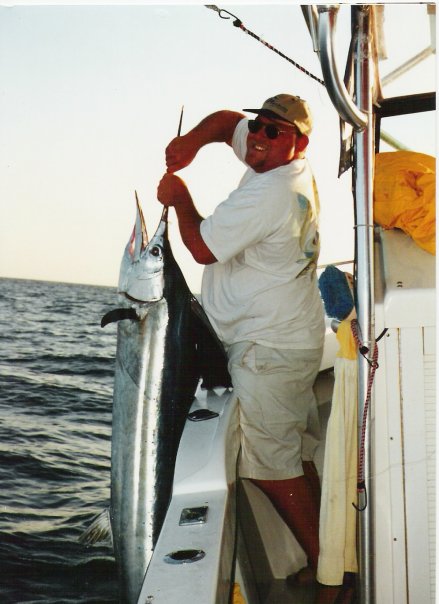
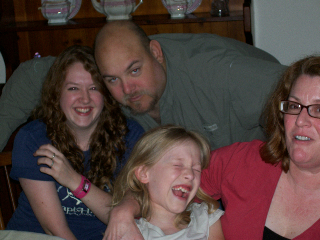
so, my little brother’s birthday is today. he would be turning 42, if he hadn’t passed away from me & this world at just 37. i miss him every single day. every. single. day. but even more on sundays & holidays, anniversaries & birthdays. he always made time for me; he actually & literally saved my life after i got divorced for the second time & he moved in with me, coming up to gainesville from the keys. he loved the sea, yet for me he moved inland, as he had once before when he gave everything he had of himself to his wife and she wanted to move to from fort lauderdale to atlanta (unfortunately they divorced years before he passed away). he was one of the sweetest, kindest, most compassionate people i have ever known. he was an angel child & i learned a lot about parenting from him, being his big sister by 10 & 1/2 years. i hope everyone who ever knew or loved him thinks kindly of him today. he was so scared of getting his hair washed; that was my job, bathing him at night. we developed a method of rinsing the shampoo out that worked, and he was the cutest little frogman playing in that tub of suds! what a person he was! how much he taught me about love, and living! and, somewhere where i cannot yet completely see or hear him, i know he still IS. my baby brother was a real, genuine MAN.

10 Comments

Filed under notes

I Love You, Joe Temeczko, a poem

illustration i love you joe temeczko liberty world trade

MINN. MAN LEAVES N.Y.C. NEARLY 1M
BY SCOTT SHIFREL / NEW YORK DAILY NEWS

MONDAY, NOVEMBER 12, 2001, 12:00 AM

Joe Tomeczko was a little old man who often carried around a paper bag, took buses everywhere and tried to earn a few bucks by doing odd jobs for neighbors and friends. But another side of the 86-year-old Polish immigrant was discovered after he died in Minneapolis on Oct. 14 and left nearly $1 million to the City of New York. “He wanted to somehow honor the victims of the World Trade Center disaster,” said his attorney, William Wangensteen, who helped Tomeczko change his will after Sept. 11. “He felt a real kinship for the whole city and was very saddened by what happened,”

Read more: http://www.nydailynews.com/archives/news/minn-man-leaves-n-y-1m-article-1.926202#ixzz2Vxy7hEYV


I Love You, Joe Temeczko

I am sorry you died with your heart broken,

but you were on the way to mending it in your

usual fashion, doggedly, with persistence,

never giving up, no matter how hard and dry


the bones they gave you to gnaw on,

your only nourishment.  I love you for that,

and for your dapper air, your ascots,

the beautiful women in your embrace,


before you lost it all, and came to America.

The war drove you from your Polish home,

to this shore, under the gaze of that beautiful,

but blank-eyed lady, the statue in the poster


next to your bed, where you slept with dreams,

and nightmares, even children can comprehend.

You felt this country’s warm embrace, you said,

and so made yourself at home here, a peddler


at heart, selling, selling useful things to everyone

you met.  A chandelier to your lawyer, soap to your

grocer, tools and services to neighbors.  But your greatest

service you gave away for free.  “I learned a lot about


persistence from him,” says the man next door, the one

you trusted to handle what was done with your small,

strong body and your possessions after you died.  Joe,

my friend, my teacher, generous and demanding, no one


you touched or didn’t touch is unmoved by your spirit.

You expected the best from people, and in the end

that’s exactly what you received.  Yes, once again

you’ve beat me up the stairs, but I am following


close behind.  My dear, dead darling,

accept this small kiss from these unworthy lips of mine,

gently, and wherever you are, or aren’t, know

how much I love you, and always will.

Leave a comment

Filed under poetry