
All sleepers seem helpless, snuggled up or spread out limp snoring a little breathing slowly completely at ease maybe some twitches when they dream, but they are not helpless. They are whole. They are sturdy.
They are filled with joy.
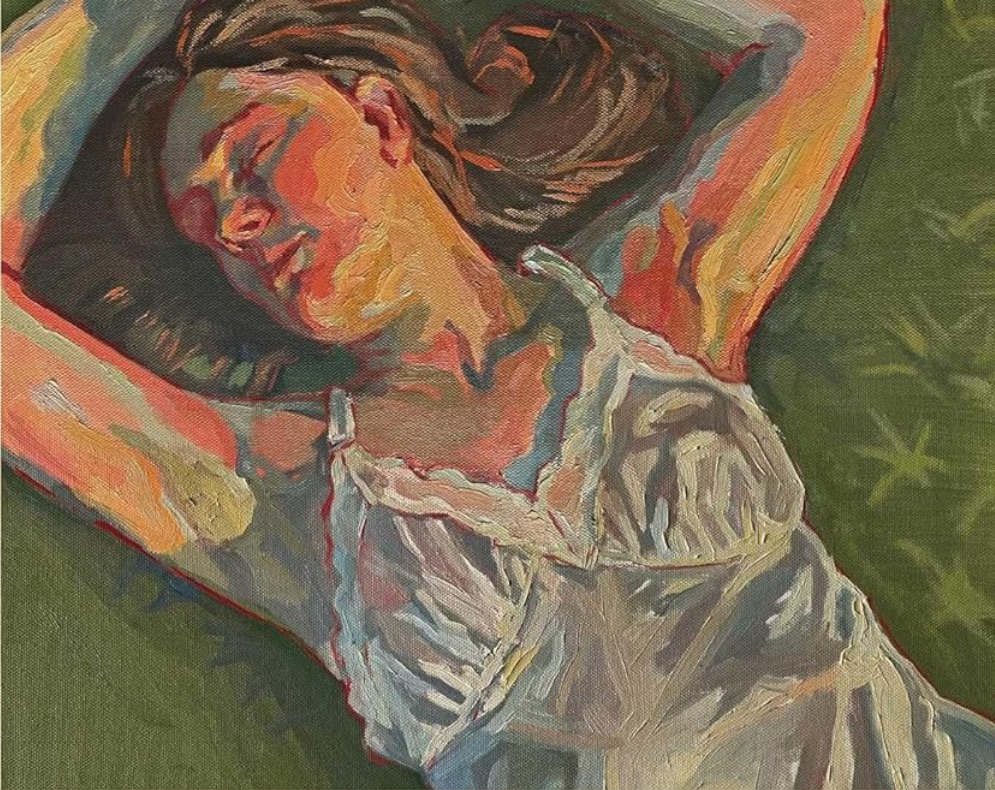
All sleepers seem helpless, snuggled up or spread out limp snoring a little breathing slowly completely at ease maybe some twitches when they dream, but they are not helpless. They are whole. They are sturdy.
They are filled with joy.
Filed under dreams, eternal, faith, forgiveness, hope, kindness, love, mortality, prose poetry, soul, spirit, transcendence, transitions

My Mother, My Mother
My mother, my mother, my mother.
Where to start?
She remembered the scandal about broadcasting Elvis‘s pelvis on national television. “Elvis the pelvis,” she’d laugh.
She wasn’t a huge Elvis fan. She liked Johnny Mathis, Ella Fitzgerald, Barbra Streisand, Maria Callas, Broadway show tunes, opera, folk, not so much rock ‘n’ roll.
My mother, she was soft. She was a soft girl, melting on the beach, into the waves, like the sea foam in her poem. Rolling on the beach with a magical someone, merging with the waves, and like seafoam, being swept away, swept away.
My mother wanted to be swept away from her feelings, from her deep, deep insecurity and shame, so much shame, my mother carried so much shame
First for leaving her mother behind at 14, and second for coming back divorced at 21, with a toddler and an ex-husband who was capable of paying exactly zero child support. The shame.
From the infinite promise to the dust of shame, my poor mother.
So sad all the time, she just wanted to blot it out.
Once in a while she’d be happy, once in a while.
That was the rare exception, for my mother to smile genuinely, and to laugh genuinely, and her eyes would clear, and they would look at mine and I could see her in there, not just a wall of shame and fear and alcohol.
A gypsy told me once that my mother was my soulmate, and that my heart broke the day I was born, because she was mine, but I wasn’t hers. That’s what the gypsy said, of course, then she wanted $10,000 to tell me more, which I did not pay, by the way
My mother, where to start?
Like one of the white flowers that smells like heaven, but you cannot touch because you will bruise it, my mother.
Even 40 years after losing her, 40 years later, the rusty sharp knife of it can still get you, right at the belly button. Right there. A kick in the solar plexus, 40 years later, it can still happen. It surprises you.
That’s how broken I was by losing her, broken by the whole thing, the whole sad episode, never on the track of my life again, always having to stay between the lines, for dear life.
Like that time I successfully hydroplaned in my car on the interstate, my child asleep in her carseat in the back, hydroplaned and lived to tell about it at the next rest stop, where I learned that a driver ahead of me hadn’t managed to hydroplane successfully, and their car skied up and over the concrete barrier into the oncoming traffic, and they were instantly killed.
I pulled into the next rest stop, which fortunately was not far, and I could not stop shaking, and my daughter was still peacefully asleep in her car seat. I shook and I shook, and eventually I recovered and drove another 150 miles to get back to my hometown, my dear little hometown.
My mother would be proud. She loved me.
Filed under acceptance, adult children of alcoholics, birth, compassion, courage, daughter, death, divorce, family, forgiveness, grief, hope, loss, love, mother, mourning

You were not built to carry the weight of this world, said God.
And yet. It is upon you; you feel it heavier each day.
Your prayers have been shouted & whispered, in communion
& all alone. There are four thousand languages in this world,
God said. Don’t you think I can speak every one? Never
be afraid to grieve; to cry; to pound the ground; to bang a drum
on a beach somewhere; to dance before the fire of your own soul.
And don’t be afraid to make your own mark, God said.
On the wall of a cave, on some paper, on a server, in a cloud.
Do you need a map? Some create their own — mandalas
with colored sand, swept away after three days.
There are so many ways to pray, and the most important way
is kindness, said God. You, my beautiful daughter, will begin
and end with a simple breath — and you, my well-loved child,
were not built to carry this weight, the weight of the world.
Filed under anthem, beauty, buddhist, christian, courage, death, dream, forgiveness, grief, jewish, love, mysterious, personal responsibility, spiritual, transcendence, zoroastrian

You were not built to carry the weight of this world. And yet. It is upon you; you feel it, heavier every day. Your prayers have been shouted and whispered, in communion and all alone. There are four thousand languages, in this world. Don’t you think God can speak every one? Never be afraid to grieve; to cry; to pound the ground; to bang a drum somewhere; to appear naked as a jaybird, before your maker. And don’t be afraid to make your own mark, on the wall of a cave, on a server, in a cloud. Do you need a map? Some create their own, mandalas with colored sand, swept away after three days. There are so many ways to pray, and the most important way is kindness. You, my beautiful daughter, will begin and end with a simple breath — and you, my well-loved child, were not built to carry this weight, the weight of the world.
Filed under compassion, courage, death, dreams, earth, enlightenment, eternal, eternity, everything, forgiveness, god, grief, heart, human beings, kindness, love, mourning, religion, soul, spirit, spiritual, spirituality, transcendence, universe, world

Notes from a Muddy Shore
Coral Shores in Fort Lauderdale — I grew up there. I fished, climbed trees, rode my bike, played tag, hide and seek, spin the bottle. Learned to drive. My first baby-sitting job, first real job, first 10-speed bike. My first kiss. Every plant had a spirit then. I huddled next to trees, bushes in awe. The sea-grape tree, the kumquat tree, the croton bushes, wild and colorful and hearty — nothing could kill them. The gardenias, the Key limes, the Norfolk pines, the hibiscus, the roses, the Florida holly, the ficus. And the grass and weeds. Some little weed grew a pod just like a pea-plant. I’d split the pod and eat the tiny sticky seeds, pop them between my front teeth, then pull a green blade of grass and suck on it. I’d eat coconuts fresh off the tree. The whole world was sensual, bright colors, tastes. The outside world was like my best dreams.
Our next-door neighbors, the Parkers, went back to Canada every summer. Mrs. Parker was almost bald. Small and stout, a good housekeeper and kind to kids. The kumquats in her yard looked like they’d be sweet — small, round, glossy orange, cute as the button on a baby’s tummy. But the taste made your whole face turn inside out. I’d gather kumquats, take in their beauty, and think, what a shame, what a waste. The birds liked them. The flies sucked on the mushy rotten ones in the neat circle of dirt surrounding the tree in the Parker’s ocean of perfect sod. “Kumquats,” my mom would sigh. Mrs. Parker made marmalade from them, sugary with an underlying tangy bite.
Mr. Parker was retired, always wore darkish, tinted glasses and didn’t speak much. Mrs. Parker made kumquat marmalade. I was fascinated by her baldness. The Parkers had two grown sons who visited a lot. Rickey and Charley. Rickey was my father’s childhood friend. A Vietnam vet. He was tall, wild-haired, and handsome. Sometimes he wore a beard, sometimes he was clean-shaven. His wife was Greer. Greer was thin, small-framed, with wispy hair and pale skin. And her eyes were great big smoky traps, too big for her face. She was always barefoot, indoors and out, sitting like a monkey with one foot up on her chair. Greer’s hands were always in motion, smoking, gesturing, touching her face, hair, anything. Her voice sounded like sex; like the Oracle of Delphi. Absolute authority. She wanted a baby, got only miscarriages.
She gave me things: a lion’s head silver ring; makeup and hair tips; sorrow. Her eyes were big and soft. Rickey didn’t talk to me much, but when he did my heart leaped in my chest like it was trying to get out. Charley, Rickey’s older brother, was a magician and clown. Card tricks, coin tricks. He spooked me a little. Rickey and Charley didn’t seem like brothers — not much physical or emotional resemblance. Personalities far apart — Mr. Chat-em-Up and Mr. Mountain Man.
Secretly, I was waiting for someone to discover me, like a diamond hidden in gravel. I wanted my discoverer’s joy to draw a crowd. I knew some elderly millionaire with no family would leave me his fortune; I was that lovable, at least to myself. To my mom and dad I was a handy, though lazy, fetch-it girl. I was in the process of forming an identity, like a larva inside a nacocoon. I wanted some clue on how to be a woman.
I was in love with Rickey and with Greer. She wasn’t exactly pretty, like my mom, but you wanted to touch her all the time. Be near her. The voice, the eyes, the manner, the name. Rickey had grown up with my dad, next-door neighbors. They were beach boys together. The soft life in Fort Lauderdale. My dad went to college to avoid the war. When he partied too much and flunked out, he enlisted in the Coast Guard rather than waiting for the draft. He was in Greece most of the time, getting drunk and squiring beautiful girls. He knew European girls didn’t shave their legs or under their arms. He made it clear how he knew this. His stack of Playboy magazines under the bathroom sink — in his bedside chest, under the bed. Always hidden, even the recent issue.
Geraniums and four o’clocks. Night-blooming jasmine and the plum-like fruits it gave, glossy and sticky. Someone said they were poisonous but I had to taste them anyway. I’d dissect every flower, every seed pod. I had to climb, or try to climb, every tree. Crawl into every shrub or hedge. Test the soil. Dig for fossil shells. Everything seemed beautiful and perfect, even when it was deformed. Like the seawall bugs that were missing half their legs. Never could catch one of those — my squeamishness, their speed.
Rickey and Greer gave me a birthday card one year. “To a very fine lady on her 13th birthday — don’t break too many hearts. Love, Greer.” Rickey had written: “Greer’s right about you, she’s always right, listen to her. You’re beautiful inside and out.”
Rickey would be there in the shadows while she gave me my feminine peptalks — she gave me the first idea I had that a man might want me, someday — yet she made me want her, too. She opened the bud of my sexuality without ever mentioning sex. Her makeup tips, her hairstyle tips, skincare tips, her fashion sense, her jewelry — giving me her lion’s head ring! She made being a woman (as opposed to being a girl) seem appealing. My mother, for all her beauty, made being a woman seem repulsive. Greer was the first person who made me want to grow up.
Hermit crabs, fiddler crabs — one day the road was littered with hermits, a mass migration. Where were they headed? Sometimes I’d sit on the edge of a murky mangrove bed and watch the fiddlers signaling each other with that one giant claw. The tiny claw would be busy, too, with feeding and grooming. From just the right distance, I could hear the music they were making. A symphony of small notes from a muddy shore. The claws moving up and down like piano keys.
Greer still wore Rickey’s dog-tags. They jangled, it became the sound of Greer to me. What are those? I asked her. These are Rickey’s dog-tags, from the Army, she said. Can I see them? She pulled them off, dropped them over my head. What’s this for? I asked, pointing to the notch. Rickey leaned over, picked up the tags, touched my lips with them. This is so they can stick it between your two front teeth when you’re dead. Ohhh, I said. Was it really terrible, being over there? I asked. Greer leaned in, her face still. She pulled the chain back over my head. She held the tags. Didn’t put them back on, then or ever again. She seemed afraid of something, but I didn’t know what. Rickey’s eyes softened, he blinked. It was pretty bad, he said.
Once, after a rainstorm, thousands of land crabs came out of their holes to keep from drowning. One found its way into our bathroom. Clacking its legs at me — get away, dangerous. I stretched out a stick for it to grab — it pinched on and rode all the way outside, hanging with ferocity. Eyes on stalks swiveling, like a watchful old lady schoolteacher.
I tried out for cheerleading — Pop Warner football league. Our team was the Red Tide. We hardly ever won, it was an embarrassment at first, then a tradition. We looked at the winning teams with pity — they didn’t know what real loyalty was. Our uniform was a white blouse and pleated skirt, red sweater vest and saddle shoes with red knee socks. We played our games at Holiday Park, under the bright lights. It was a horror when someone I actually knew came to see a game. Anonymity was preferred. The skirt would fly around, show my red-clad tush. I could feel all the blood rushing to my cheeks when someone, most notably Ricky Parker and Greer, would lean over the chain-link fence to say hi. If no one knew me, I was much braver, much more bold.
Later, Rickey carried me on his shoulders to the car, took us out for sundaes. I noticed circles under Greer’s eyes. She finally got pregnant, and as the months passed, looked more and more like a twig carrying a basketball.
Once Greer’s morning sickness passed, we were once more at home in our tropical landscape. Greer’s favorite flower was the hibiscus. We’d spend hours staining our lips with red hibiscus petals, eating the flowers, coating our cheeks with bright yellow pollen. And the three-pronged red velvet stamen, we’d use to stamp designs on our skin. Temporary tattoos.
Surinam cherries, all shades, from maroon to orange to clear red. Bright, everything bright. People decorated inside with bland colors — they needed a quiet zone to retreat to when all that tropical energy sapped them. Off-white, beige, celery green, pale yellow, baby blue. And the hum of the air-conditioners always in the background, like white noise machines. Terrazzo floor cool beneath the bare feet. Drapes pulled to keep out the light. And the butterflies. Inside was underwater.
I walked in one night while Greer was holding Rickey, who was in the grip of something I had no reference for and could only think of as late-night drunkenness. He had been drinking, yes, but later I realized that wasn’t the whole story. His tears, his shaking, his crying shocked me, but Greer calmed me down with her eyes while she calmed Rickey with her touch. She’d become a buoy he held onto. She was floating for him. She had a natural buoyancy, all women do, she told me, that’s what keeps men above water. Women are what keep them going after they’ve been through that hell, she said. And Greer shone in the light, Rickey’s salvation, his cuddly.
I got a POW bracelet that I would end up wearing forever, for Major Andrew Galloway. One, two, three, four, we don’t want your fucking war. “Mrs. Andrew Galloway,” I’d write in my spiral notebooks from school. One day toward the end of Greer’s pregnancy, shouting floated over from next door when Rickey and Greer came to visit. The U.S. was finally pulling out, it was on the news. I watched people I’d never seen before but would never forget, crowded on a rooftop, scrambling like bugs to cling to the helicopters, but too many, they started falling, falling off the bird, off the roof. Their panic made me panic, all the way across the world. What had Rickey really been through, and for what? Had we really lost the war?
I comforted myself with tree-snails, land crabs, Cuban toads, mockingbirds, cardinals, chameleons and Cuban anoles. Once I was digging and disturbed a lizard’s nest. Tiny white eggs buried just beneath the surface. I never saw one hatch. The lizards came in all sizes — from one inch to six or eight inches long. I was always startled when one of my captives bit me. They’d fake being tame until you finally relaxed around them — then they’d be gone.
I found Greer holding Rickey not just late at night anymore, but in the middle of the day, sometimes first thing in the morning. His eyes looked worn out all the time. Greer’s baby was due any day, but she decided I needed my hair done up fancy. We sat at the Parker’s kitchen table while she fussed behind me with pink plastic rollers and hairspray. She said Rickey was taking a nap, but we heard him tossing around restlessly all the way from down the hall. By the time he gave up on the nap I guess he decided he’d had enough of listening to himself crying like a baby. We didn’t hear anything then until he was in the doorway. He had something in his hands and then he put the gun under his chin and raised his head, tilting it back, never breaking eye contact. He looked at me, not at Greer. He pulled the trigger and his body fell back. From the front, he looked the same only dead. But the green sculptured rug was dark brown. His hair was bloody. Greer started to wail — long, deep, low, gut-wrenching. Listening to her wail was the worst part. Worse than Rickey’s eyes at the end.
Even after Rickey was gone, the neighborhood still burst with life — plant and animal. The ducks, the birds, the toads and lizards, the flock of wild parrots that would screech by overhead — the fish in the canal — catfish, mullet, puffers and mudskippers. The fish in our pond — mollies, swordtails, guppies, goldfish. That year during a hurricane the canal crept up and merged with the fishpond. I waded through the yard, the fish with me, swimming around my toes. Nothing to be done, no way to get them back. After that, my dad moved the fishpond indoors and built a waterfall. The tiny fish would leap at the falling water, like navigating salmon. Sometimes they’d miss their aim and I’d find a tiny body drying out on the rug. That made me so mad I wouldn’t even bury them, just toss them into the canal for the living fish to eat. Still, I could sit for hours at the edge of the pond and pretend I was down at the bottom with them, just another fish. We fish had a king and queen, a palace, all our favorite spots. I was the most beautiful of all the princesses.
I figured it out finally and then I wasn’t so mad at Rickey. When he looked at me like that, he was pushing off me like you’d push off the wall of the pool after you turn, to get yourself moving fast again. Putting all your leg into that push, because you were at your limit and it was all you were going to be able to do just to get back to where you’d started. He was so tired. Rickey didn’t want to swim any more. Not even with Greer holding him up, not even with a baby coming. He just wanted to get out of the water, back to dry land.
Filed under acceptance, compassion, courage, death, fiction, forgiveness, grief, loss, love, mortality, mourning, relationships, veterans, war
The faith grew from inside my bones, starting with incense, candles, and bells. I loved the magic of my church. First down the aisle came the Verger. Then came the majestic candles and banners, singers and acolytes, and the hypnotic clouds of incense from a swinging ball. Then came the Assisting Father, the bearer of the holy Gospels, and lastly the Celebrant Father. The sweet fog of the incense hung in the air like a cloud of God, making everything in my head holy… making me, myself, holy. Holy: as in whole, complete, well-loved.
It all helped me pray. I prayed for lots of things, on my knees, eyes closed, hands together, kneeling in the pew. I just knew someday I would live in a convent castle, and be the bride of Jesus. But at the same time I was always a tiny bit afraid I might speak out loud; what if I said a bad word? Even in elementary school, I understood this fear should be irrational and unlikely.
But it wasn’t! My little brother had once, when he was under the age of two, shouted the word “fuck” while the Congregation knelt with their heads-bowed, palms pressed, in one of the dramatic kneeling sections of the service. And my baby brother’s voice was so bright, so free, so joyous… that even the Celebrant Father couldn’t keep from laughing.
Everybody laughed. Including the Assisting Father, who was round as a ball and wore his red hair shaggy, and had round, hippie glasses. It may have been High Church Episcopalian, but it was still Fort Lauderdale in the 60s. Thank god my little brother didn’t do that when I got Confirmed by the Bishop was my only thought!
“Jesus loved children,” said the Celebrant Father, and the service flowed on without a hitch.

Rain
The woman sits up all night, listening to it rain. The woman has often sat up all night waiting for one thing or another to either leave or arrive: bandaged fingers, whooping cough, her own lookalike grandchildren. When she can, she sleeps next to her dying mother in the king-sized bed; she bangs her own shins on the high rails, climbing in. Her arms and hands are able to lift the wasted body of her dying mother with amazing ease.
She watches & waters the great rack of African violets in the living room; grows wheat grass for her mother’s cat. Other times, she sits in a high-backed wooden chair, needlepointing forests in wool, chain-smoking for hours. Her mother will die very soon; then the daughter will put on her navy dress with a large, elaborate organdy collar and fail to draw a deep breath for several days. The woman’s several brothers and their children will fly in from all over the country, and flower offerings will dwarf the grave itself.
After the burial, the woman will pack all sorts of mementoes into her mother’s old cedar “hope” chest: yearbooks, diaries, photographs, diplomas, invitations, programs, baby booties, baby spoons, baby cups, even a rather grisly alligator purse, complete with the head, legs, tail & feet and sharp black claws. When she has nightmares, more often now, she sits up all night, her fluffy gray tabby queen on her lap like a hot-water bottle. The cat’s purring leads the woman away from the perilous mountain passes & rocky cliffsides inside her head and back to level ground, so she can help her mother die properly. That is what proper love looks like, she thinks.

When you drink, your voice thickens sweet &
lethal as syrup. I know that sweetness —
once I let it go all through me, I let it stay & stay.
I don’t know if we will cry together, like sisters,
my nose pressed against your neck, but for now
we can drink together from the same bottle &
descend as one into our true blue depths, united
by our sadness, our terrible failure to be loved
enough. I will not flinch from your bloodstained
towels, your green veins, your broken arms.
I understand why you weep for the dead —
though you never loved them. Still,
the yearning to save rises in you as bread rises,
doubling your volume, your capacity for pain.
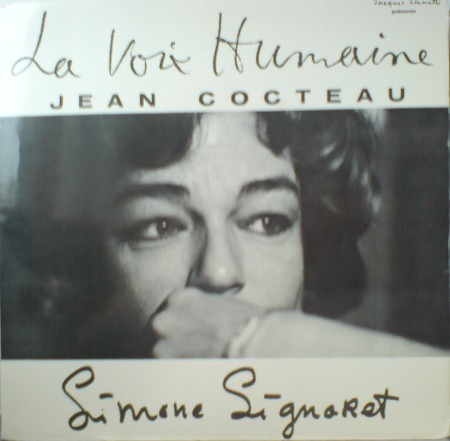
The Song of Women of Jaded Time
(for François Villon)
Talk to me this instant, or don’t ever bother
talking to me again. You think your sorrow
is like a flower, you beautiful, pitiful Italian;
but you are not a paragon, not crying like this.
Underneath my foot you shall find perfection.
You are like an echo of my own will, you shall
learn to speak of my brutality all the time,
and love it. Under this river or in your hands
I shall drown — how beautiful is too much human pain.
May you sing your own black heart forever!
Listen to what I say, but don’t hear it with your ears.
Listen with your heart, you are like a blooming flower,
you wild, beautiful fool. Your injured foot is far more
beautiful than my own. Don’t repeat me, speak only
of my brutality all the time. Under the water I will drown,
or under your hands. How beautiful is too much fever,
or human pain? May you sing your black song forever!
Or, perhaps you are like the wise, able Heloise,
and my blessed foot will kick you hardest
when you are already down. Like her dim-witted
Abelard — for love, he ceased breathing. Love,
I think you resemble the king that commands
none but the harridan. First, jettison your silly bag
of river water. Long may you sing your black heart!
You are wise, and blessed, as are all ill-fated lovers.
For love, we cease living — we all resemble royalty
in this way. I command the bitch who is my deepest
self: first throw away everything you hold dear.
May you sing with your thick blackness in my life.
The queen of white is coming to lie — she chants
regally in a serene voice. I was born of Bertha
with her grand feet, she of Beatrice, Alice,
harem dancers all, colored in the main for beauty rather than wisdom.
And we come, too, from Joanna, the beautiful Swiss girl.
The English back then were belligerent, though mainly
in Rouen. Or do I see in your sad eyes, your oldest
unforgotten queen? May you sing of your black, tight
heart until the words choke you with regret, with forgiveness.
I was once a queen, of all I surveyed.
I sang with a stilted voice. My mother,
my grandmother, my great-grandmother
were all such foolish harem dancers,
too lovely to look at and let live.
And the beautiful maid who cleaned
my rooms… I was always bitchiest
to her just before the dawn. O, your
sharp eyes went through me like a sword.
May you sing your own praises until nightfall!
O Prince, do not ask to love me except for cruelty,
do not wonder where those other ladies are, this year —
what a sad refrain your unshaven face reminds me of.
I used to know someone, he was a lot like you.
May you sing lullabies to your faithless black heart!
O my lord, do not ask me to come to you out of
kindness — do not ask where I have lived until now.
What an ancient sorrow you have reopened!
May you sing this pain into the book of all eternity.
Filed under acceptance, anthem, anthropology, beauty, birth, black, blood, civil rights, compassion, courage, death, dream, dreams, earth, enlightenment, eternal, eternity, evolution, faith, forgiveness, friendship, good, grief, health, heart, hope, human beings, humanity, justice, karma, kindness, law, legal system, life, logic, loss, love, manifesto, maturity, mysterious, passion, peace, personal responsibility, poetry, politics, regret, relationships, science, sex, sexism, soul, spirit, spiritual, spirituality, transcendence, transitions, tribute, truth, universe, wish, world, youth

Now a day man is impatience in the earth. We have no sympathy to others. Though we need to be kind as a greatest creature in nature. Because we are not beast. But lot of our activity is as like as animal. We are same blood colored human. Whereas we need to bond strong […]
Filed under anthem, appeals, beauty, birth, civil rights, compassion, courage, development, dream, earth, enlightenment, eternity, evolution, forgiveness, good, heart, human beings, humanity, justice, kindness, law, love, manifesto, peace, soul, spirit, spring, transcendence, truth, universe, wish, world
 | Kimberly Townsend Pa… on Sisterlove, a short story |
 | Anna Waldherr on Sisterlove, a short story |
 | Tom DeHart on … |
| Kimberly Townsend Pa… on Sleepers |
 | edthlion on Sleepers |
 Kimberly Townsend Palmer