Category Archives: ignorance

The Analysand, a short fiction

illustration analysand short fiction

The Analysand, a short fiction

“I’ll take your word for it,” she said.

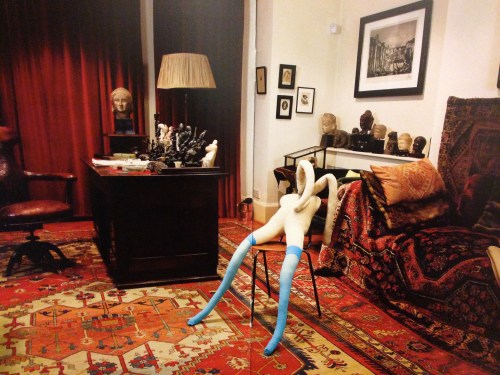
She remembered long-forgotten moments; instances of innocence, of confidence, of hope. Her analyst wanted more from her than pages in her journal, more than frozen images which may… or may not… have actually happened. Four bundles of smooth, shiny, purple rope lay on the coffee table in his office, four beautifully coiled bundles, bound & tied with intricate, ceremonial knots. His eyes met hers; bright blue lamps of inquisitiveness and Inquisition.

“Where do you get that kind of rope?” she asked.

“I make it,” he said. “I dye it with Tyrian purple and condition it with organic beeswax.”

She kept her face neutral; curious. She’d had enough of fake tourist traps for a dozen lifetimes; boring main highways hadn’t ever led her to anyplace she’d want to stay in for long. And the sun rises even after the darkest night. And the sun sets after the sunniest day. Night has its own charms. Her wounds were on the inside… and his? His… would be healed by helping her heal her own. The rope laid on the table, gleaming & inscrutable. Her favorite violin, a Bergonzi, sat silent & helpless on her lap.

She’d been dead so long; she’d wanted her to speak for herself for so long. Her mother had treated her like anything but a daughter; pupil, instructor, heathen, missionary, ghost, confessor, beggar, heir, therapist, patient. So strike a pose; strike a deal; strike a match. What difference does any of it make: preserving body & soul is not good enough; nurture your body and your soul. Peace arises where all paths meet; crossroads for weary travelers. Fevers can burn you up. Water can heal. She put the violin back in its case.

“Okay,” she said. “It’s worth a try.” She stood up off the couch and took off her clothes.

Dr. Zhu tied her up gently, kissing her as he did. Yes. He started at her ankles, and bound her up like a trussed bird. And then he helped her lie down on his soft purple couch and began his work. Where you find the water of life, is home.

3 Comments

Filed under adult children of alcoholics, birth, child abuse, child neglect, childhood, children of alcoholics, compassion, courage, daughter, daughters, death, development, dream, dreams, evolution, family, fear, forgiveness, grief, heart, human beings, identity, ignorance, karma, loss, love, mama, matricide, mea culpa, mortality, mother, mothers, mourning, museums, mysterious, personal responsibility, regret, relationships, sex, short stories, soul, transcendence, transitions, universe, war, woman, women

If You Seek It Like Silver, a short story

illustration if you seek it like silver bohemian rhapsody freddie mercury.jpgIf You Seek It Like Silver

My father was evasive on the subject of ancestors. Emigrating, as he did, from the dark heart of Bohemia, he must have understood that some mixing of races was inevitable. Otherness was part of him — visible in his eyes, in his cheeks, in the reluctant way he wore his necktie. He forced himself to stand still and proper his whole life — in due time even Anglicizing his name — but try as he might, never managed to forget who he was and where he came from. That was why he ended up erasing himself until all that was left with a pen & ink silhouette.

My mother was not evasive about anything. Or so I thought. In fact, she was so brutally honest, she admitted to my father that her idea of “socializing” was to invite everyone in the neighborhood over, once a year, for cocktails and hors d’oeuvres (whore’s ovaries, she called them). Other than that, she kept our family as stiff & guarded as Alcatraz. My father seemed to be quieter, to drink a little more, to sit a little longer in front of the television. Then one day my little brother came home dirty, sweaty & crying, from his very first day of school.

“They all called me a dirty Bohunk,” he sobbed.

“Well, why do you listen to the stupid, mean kids?” my mother grumbled. She sat at the dining room table hand-tinting my little brother’s most recent black-and-white, artsy portrait photograph. In the picture, he leaned against a Victorian-style porch railing, his blond curls glinting in the studio light, caressing a large sailboat. “Quit complaining about your feelings. Feelings were made to be conquered.”

My little brother and I were eight years apart, and were nothing alike. I was tall, angular and dark, and had a talent for rages that seemed to be sudden, but were slow-developing and complex in origin. He had inherited the large-boned, pink-and-ivory glow and the sound, dreamless sleep of my mother’s family.

“But I want to have friends, Ma,” he shouted. His chest, like mine, wheezed & he coughed

“You’re there to get education first,” she said. “In two weeks they’ll have forgotten all about your last name. They’ll go on to other games.”

“No they won’t. They’ll never forget. They’ll keep saying it until I die.” He turned, running out of the room, and then we heard him clatter down the porch steps, banging the porch door behind him.

My mother frowned and stared, as if waiting for me to go after him; instead I began setting the table for dinner. “He’ll get over it,” she said, turning around. “Just like you did.” No, I thought; he’s going to learn to ignore his feelings; just like you; disgust. The last thing I wanted to be was anything like my mother; who freaked me out; who wasn’t comforting; who scolded her way into your brain like a hot branding iron. Imposing her will; all over the place; over your spirit. Branded spirit; oppressed spirit; dying spirit.

My little brother wasn’t gone very long, but upon returning, got into his pajamas and went straight to bed, refusing to eat. This had never happened before. Daddy went up and sat on the edge of his bed. I watched from the hallway. Wake up, I thought; wake the hell up!

“Don’t you want something to eat, sport?” Daddy asked. He hadn’t cared so much about my feelings when this had happened to me. Then, he’d been silent, letting Ma handle the whole thing. I suppose he felt it was different for a boy — when a boy cried, it mattered. You too, Daddy, I thought; you need to wake up, too; ignoring things; postponing things; assimilating yourself into your life rather than creating your life; quit playing possum; get up out of that chair; change the channel; yourself.

I was surprised when the next day, Daddy told us what he wanted to do. So was everybody else. My mother most of all. I had never seen the two of them like this. My stomach fell into some icy, limitless abyss in the universe; I had to get out of it, immediately.

“I’m going to change our family name,” he announced. “I should have done it long ago. I should have done it before we were married.” My mother sat in her chair, breathing in short gasps, as if she’d received a sudden whack to the chest. Finally she spoke.

“But it’s my last name too,” she said. “I think it’s ridiculous!”

“It’s not just for him,” my father shouted, slapping the newspaper against his legs. “It’s for all of us. I’m God-damned sick and tired of having everyone get our name wrong. Every time we order something, open an account, write a check, we get these asinine comments. Life’s too short for this. I’m changing my name, and the kids’ names, and that’s that.”

“That’s not a choice,” she hissed, “and you know it.” She kicked her pumps off, throwing them against the floor. “You’ve allowed me no say in this.” Now she was all for individuality; feelings; identity; spirit; it’s always just a question of whose ox is being gored by someone else’s ox. I felt like an ox, dragging my dysfunctional family along. Get out of here, I thought. Get out of here and find something to laugh about; or at least smile about.

And what on earth would I tell people at school? Somehow, facing the teachers with a new name seemed even worse than telling all my friends. It was just like my mother and father to ignore the fact that this whole thing would be the hardest on me. They were already grown up, and Dennis was just a little kid. I was the one stuck in the middle. I sat there examining my nails, not wanting to see their faces at this moment. Fox-holing my soul, stuffing it into a warm, soft hidey-hole; as safe as that icy abyss had been dangerous.

***

The name change happened at the end of summer. On my last day before joining the WASP tribe, such as it was; white bread; vanilla ice cream; whipped potatoes; roasted meats; sugar cookies; freshly squeezed orange juice. The day was bright and sunny and dry; my best friend and I were out in the backyard, perfecting our variety show. That day I was the emcee, she was the sponsor, and we each did half the guest acts. We had tap shoes, and purple and yellow shorts from gym class, and a small piece of plywood to serve as a stage. She also had a fringed felt skirt of her cousin’s and a pair of black kitten heels, for the commercials. Nothing else mattered until tomorrow. Stranded on a desert island, nowhere to run to, nowhere to hide; naked but for the protective coloration in my mind. No one outside the family knew about our imminent name-change.

In an attempt to make peace, Daddy let Ma choose the new last name. She picked one which sounded horrible at first, but gradually became appealing. I begged Ma to send out announcement cards to my friends’ parents and to my teachers, but she just closed her eyes.

“You’re going to have to tell them yourself,” she said.

“She’s just scared to tell them she’s not going to be a dirty Bohunk anymore,” said my little brother. “I’m not scared.”

“What do you mean?” I yelled. “Don’t make me laugh. You’re the most scared one of all. You’re so scared, you’re the whole reason we’re doing this stupid thing.”

“No he isn’t,” said Ma. “Don’t blame your brother. Now go find something to do, both of you. I don’t want to hear any more fighting.”

“I bet you like being a Bohunk,” he whispered as we walked down the hallway toward the front door. “You’re stupid, not me. You’re a stupid Bohunk girl.” He ran out the door, ducking my attempted slap with an expert sideways twist.

When he appeared in the backyard, jeering and laughing at my best friend and me, pointing at us and smeared about the face with dirt and grape soda, I picked up a large rock and threw it at the fence where he stood — to scare him. The rock, being inanimate, didn’t understand, and so, obeying the laws of physics, bounced obediently off the fence, then into his head. A large egg-shaped lump sprang out instantly, right in the middle of his forehead. The skin swelled bigger and bigger before my eyes like a balloon. He swayed and fell down on the ground right where he was. Without even looking back at my friend, I ran — out of the yard, down the rear alley, and out of the neighborhood. I ran till my breath burned in my windpipe, then kept on walking.

***

Our house was five and a half miles inland. I walked all the way to the boardwalk in my tap shoes, the metal taps tapping and grinding against the sidewalk with every step. Blisters formed on my heels, but I kept on, walking slower, placing my feet against the sidewalks with more care. The wind had begun to pick up; the decorative streamers on my favorite ice-cream parlor puffed and snapped.

The boardwalk was crowded, as usual, with transient peddlers. Amid the portable push-carts was a large, gleaming Airstream trailer. Its bulbous surface reflected the milling crowd like a funhouse mirror. As I approached, drawn like a magpie to the smooth, shiny aluminum surface, I noticed a young woman sitting at a folding display table in front of the trailer. She was missing several of her front teeth. Other than that, she was beautiful, her eyes large and clear, her skin like velvet. The dumpy baby in her lap was drooling and babbling like any ordinary kid. My heart leaped inside my chest suddenly, for no reason.

The brand-new Airstream was hitched up to a horrible-looking pickup truck: scabrous, multi-layered paint, rotting fenders. I stood, my legs trembling, examining the large array of beaded purses on her table, and also peeking in the side window of the trailer — the built-in furniture inside was pale pink, and sheathed in plastic. I picked up one of the small purses, completely covered with tiny glass beads, sewn in a dark Oriental-rug pattern. The beaded bag was sinuous and heavy in my hands, like a living thing.

“Can you tell me my fortune?” I asked the lady, my heart pounding against my chest like a small fist.

She stared at me for a moment, then laughed, causing the baby on her lap to startle, his small fat arms jerking. But he, too, smiled after a moment, a toothless grin that matched her own. The baby grabbed at her long hair, stuffing a large handful of it into his mouth.

“No, I can’t,” she said, shaking her head. “But if you dance,” she said, pointing down at my dusty tap shoes, “I’ll give you something.”

“You mean right here?” I asked. “In front of all these people?”

“Sure,” she said. “I love tap-dancing. I’ll give you that purse, if you want.”

The purse’s beading was dark purple, amber and bottle-green. I glanced around at the people strolling by, wondering what they’d think, whether they’d laugh. But it didn’t really matter, did it? I had stepped across some invisible line: tap-dancing on the beach was nothing for a Bohunk like me.

“Okay,” I said. I moved away from the table and raised my arms, spreading them like stiff, flightless wings. Nodding at her, I began my spring recital piece, the one I did wearing a silver top hat and spats. Though the sound of my taps was muffled by the rough-laid planks of the boardwalk, I knew my form was perfect. I finished, and she brought her baby’s hands together with her own, holding his wrists and slapping his tiny palms in mock applause, but then she stopped and smiled, and I knew she’d been pleased.

“Take it,” she said, gesturing toward the table.

“Thank you,” I said, letting the prize swing from my fingers, the beaded loops of fringe rustling against my arm like the curious touch of a stranger. I stood for a moment, noticing her eyes, which from a distance had appeared dark brown, edged in black: surrounding her pupils were small featherings of blue, green, yellow, brown and gray. “I think I killed my brother,” I told her, starting to cry.

“No you didn’t,” she said. “He’s not dead. You can go home.”

“How do you know?” I asked, clutching the bag to my chest. The baby snuggled against her, leaning into her generous breasts, sucking his fingers and blinking his eyes slowly, falling toward sleep.

“You dance too well to be a murderer,” she said, frowning. “Go home to your… fortune.”

As I turned to leave, I saw a handsome boy in a vivid yellow windbreaker watching me from the boardwalk’s edge. His lean face was sculptured, his cheekbones and chin jutting out. His mouth was open — not a smile — and his teeth were square and white. As my eyes met his… his face benign, expressionless… he made his hands into tight fists, arms stiff and straight at his sides, and began nodding his head — forward and back, forward and back. Yes, he indicated. Yes.

“Take your new purse and go home,” the woman said again, turning to look at the strange boy. “But first give the baby a kiss, for luck.” So I bent down, kissing the baby’s drool-wet cheek, struggling with the impulse to dry my lips on my sleeve as I turned away.

***

By the time I got home, it was dark. A police car was parked in front of the house. As I tried the front door-handle and started to knock, it opened and my mother stood to one side, holding the door, as I walked into the foyer. She reached out, as if to embrace me, but at the last minute changed her mind and pushed me away. I don’t care, I thought. I don’t fucking care. For a moment? I hated her with every cell in my body. Then Daddy grabbed me, squeezing me so hard around the ribs I couldn’t inhale.

“Are they going to arrest her for throwing rocks at me?” asked my little brother from the top of the stairs.

“Certainly not,” said my mother. “Go back to bed.”

***

The next day was hot — the smog so thick it dimmed the sun’s rays. Somehow, that weird half-light made the air seem even hotter than the real temperature. We toured the marble-floored courthouse downtown, meeting our lawyer outside the judge’s office. The secretary ushered us in. The judge had a lot of fluffy white hair and a waxed, curlicue handlebar mustache that gave me the shivers. As I walked by him, he winked.

He asked us if we had any dishonest or criminal reasons for changing our names — then asked us if we were all sure it was what we wanted. I wasn’t sure — I saw my mother start to say something, too, but the judge didn’t notice. He looked at me.

“What about you, young lady?” he asked. “Do you want to change your name to something that everybody in the U.S. can spell?”

My heart felt like a fat frog, quivering, and I couldn’t speak. The judge didn’t wait for my answer, just started chuckling to himself, then he signed the sheaf of official papers with a judge-like flourish and changed me from a Bohunk into an American.

***

I went to confession that week with a lot to say. The new priest had a strange kind of beauty — artfully shaped eyebrows, large protruding eyes, fleshy but precise lips, dimpled chin. His English was faintly accented. I liked to imagine he was in love with me, but too saintly to break his vows — he twisted and turned each night upon his hard, narrow cot, praying in vain for relief from the tempting visions of me. In the booth, the words came easily.

“I almost killed my brother,” I told him. I waited in the hot, breathy silence. “I committed perjury.” Still nothing. “I looked on a man with lust,” I said, remembering the taut face of the boy on the beach. Now tell me I’m evil, I thought. Tell me I’m going to hell, talk to me about the pit of fire, the writhing serpents.

“Do you fear for your soul?” he asked.

“Yes,” I answered. “Everything has changed. I’m not the same as I used to be.”

“God knows what’s in your heart,” he said. “Sometimes being ashamed is the most important thing. It’s the first step to changing.” He cleared his throat.

“I’m supposed to be changing? Does changing your name count?” I couldn’t help laughing — then wondered if laughter in the confessional was some sort of sin.

“Changing your name? You mean by marriage?” He sounded shocked.

“No, my family — we all changed our last name. Because my father was ashamed. Because no one knew how to spell it. Because he didn’t want anyone to think we were — strange.” I waited; his silence was interminable. I heard him sigh.

“A name can be very important for the peace of the soul.”

“But nobody asked if I wanted to change.”

“Your father did what he thought was right.”

“But I can’t stop being angry,” I said, almost crying.

“Pray for your anger to be taken from you,” he said. “Pray for guidance.”

But wasn’t he supposed to give me that — guidance? Where was his usual sympathy? I felt weak, dizzy.

“Yes, Father,” I said, though tears had started. “I’ll pray for guidance.”   Pushing the booth’s wooden door open — so hard it knocked against the outer wall of the adjacent confessional — I felt Father startle and jump inside his half of the booth in the second before I slipped my shoes off and ran out of the church.

***

A bunch of us freshman girls journeyed to the first school dance of the year as a dateless yet hopeful group. As we stood talking and laughing — eyeing the large group of stag boys near the gym doors — we fussed with our hair and rattled our charm bracelets. The tall, good-looking boy I’d seen that awful day at the beach approached, and invited me to dance.

“Did you get married over the summer or something?” he asked, tossing his forelock out of his eyes as we twirled out to the middle of the floor.

“Married?” I said, peering up at his face in the dim, dance-floor light. His eyes were large, round and brown, and his lower lip full so that even his scowl had a goofy, angelic quality. “Are you kidding or something?” I asked.

“Well, last thing I knew your last name was different.” He smiled and tapped my name tag with one finger. “So, I figure either I’m going senile, or you got married.” He winked. “Odds are, I’m not senile.”

“Are you sure?” I asked, smiling.

“Well, sometimes I wonder.” He laughed, caressing my back softly as we danced.

“My father changed our last name over the summer,” I said. “Tired of having it misspelled, stuff like that.”

“Well, this one will attract less attention, that’s for sure.”

“Yes, it will,” I said, and then the fast song was over. We stopped, standing together for a moment, then another song began, but we didn’t resume dancing.

“Would you like to go get a soda?” he asked.

“Yeah, sure,” I said, nodding. We went out to the main entry hall, where some members of the student council were selling refreshments: Cokes, brownies, small bags of popcorn.

“It’s hot in there. Let’s walk around the courtyard for a minute,” he said, holding the cold green bottle against his forehead. He held out his hand to lead me, and I noticed it trembling. We sat down on the edge of a concrete planter, hidden from the dance behind its large circular hedge. The music sounded tinny from out here, but a slight breeze was blowing, and the air had a clean smell. He took a long swig of his soda, then put the bottle down. “You’re so beautiful,” he whispered, sounding like he might cry. He put his hand against my breast, squeezing me as though caressing some exotic fruit, and then, upon discerning no obvious resistance, he leaned forward with his lips pursed. As he kissed me, his hand kept on moving, pulling at the buttons of my blouse, sliding around under my clothing and tugging at the hooks on my brassiere like a small inquisitive animal.

***

My feelings over the next few days were a dizzying combination of exhilaration and despair. I’d let him touch me, and it had felt good — but the fact that I’d allowed it to happen disgusted me. It was part of my body that had betrayed me — some fundamental weakness — a new aspect of myself I’d never be able to get rid of. I kept looking in the mirror: the dark circles under my eyes seemed worse, and my complexion got hazy. My hair seemed altered, losing its shine, its color. I felt suddenly younger and older at the same time. Ma and I were shopping for groceries when I felt caution melt away inside me.

“Did anybody ever try to touch you under your blouse?” I asked her, in the frozen food aisle.

“What do you mean, touch?” she asked.

“Like on a date or something,” I said.

“Of course,” she snorted, throwing half-a-dozen packages of peas into the cart. “What do you think, that’s a recent invention?”

“What did you do, then?”

“I kept their hands away,” she said. “I made them stop.”

“Well, what about Daddy?” I asked. “Did he ever try? He must have.”

“I’m not going to go into the specifics with you,” she said. “Just don’t let things go that far.” She turned and stared at me.

“No, of course not,” I said, feeling the blood heat up inside my lying cheeks, my lying neck. I knew she noticed. No way out.

***

“I don’t know why I bother,” she said, stirring a pot of tiny meatballs in sauce, her hair coiled in gleaming pin-curl clips. “No one invites us back.” My mother was more cranky than usual about her annual cocktail party.

“That’s not why you give the party, is it?” my father asked, laughing. “You wouldn’t go to most of these people’s houses, anyway. No, you just want them to be in your debt.” He patted her. “Just like me,” he added. People were trickling in when one of Daddy’s friends brought up the name change.

“When I got the invitation, I was stumped for a minute,” he said. “I thought, who do I know who changed their damn name? If you’re trying to lose the bill collectors, you forgot the most important thing — get the hell out of Dodge!” He threw his head back and laughed; a braying ass. My mother felt the same way and poured her drink on his shoes. For once, for one blessed moment, I agreed with her completely on something. Common ground. The beginning of our real, far deadlier arguments.

“I don’t care what you think,” she said, waving her arms over her head. “Any of you!” The whole group fell quiet, and after a moment, people who had just arrived began moving toward the hall closet to get their coats.

“Now, wait a minute,” my father said. “He was just kidding!”

“Gee, so was I,” she said. “Couldn’t you tell?” She kicked off her shoes, then ran up the stairs; I watched, then scrambled up after her. In her bedroom, she flopped down on the bed, heedless of the starched, organdy collar and bows on her black dress. She jerked her legs back and forth, back and forth, and her stockings hissed against the satin of the bedspread. “I knew from the day I met your father we’d never be soul mates or anything,” she said. “But I was hoping for something better than this.”

“I’m sure he was hoping for something better, too,” I said. “Do you know how horrible you can be? Do you?” I wasn’t going to end up like her, or like him — or like anybody in my family. It didn’t matter what my name was. “If Daddy and I hadn’t been there watching, you wouldn’t have poured that drink on the man, would you?” I hate you, I thought. And you hate me, too. Own it, you fucking cunt.

“That’s the craziest thing I’ve ever heard,” she snorted, throwing her arm across her eyes. “You and your theories. I was just mad, that’s all.” She couldn’t, or wouldn’t, live for long outside her locked, electrified steel cage of rage, I realized.

She shook her head, and her hair, pinned in a loose bun, fell free and tangled in a soft cloak around her neck. My own breathing became the most delicate of rhythms. I closed my eyes and stood next to the door, swaying in place. She was absolutely right: her daughter was a rebel both by nature and by choice. Too much Order… too much Chaos… then back again, a beautiful, inscrutable figure eight. Ma kept on talking, talking about the right way to do everything, the petulant sound of her voice changing inside my head into a soothing, abstract blur, like river water over smooth, flesh-colored rocks. Grief and guilt flew out of me: sharp arrows of silver, or cobalt glass. My own insatiable needs burst their seed casings; moving shapes cast their inscrutable dark shadows against the walls of my secret cave; I fell in love with the light of my tiny, disobedient candle. I kept on nodding and nodding; pretending to listen; planning my escape.

3 Comments

Filed under acceptance, adolescence, anger, anthem, anthropology, baby, beauty, birth, blood, boys, child neglect, childhood, civil rights, compassion, courage, daughter, daughters, death, development, dream, dreams, eternal, eternity, everything, evolution, faith, family, father, fatherhood, fathers, fear, fiction, forgiveness, god, grief, health, heart, hope, human beings, humanity, hypocrisy, identity, ignorance, insecurity, judicial branch, judiciary, justice, karma, law, legal system, life, logic, loss, love, man, manhood, maturity, men, mortality, mother, mothers, mourning, mysterious, parenting, passion, personal responsibility, regret, relationships, religion, sex, short stories, soul, spirit, spiritual, spirituality, teenagers, transcendence, transitions, truth, united states of america, universe, wish, woman, women, world, youth

Love Kills

love-kills 2

Love Kills

My adversary and his minions usually attacked me right after we all got off the school bus in our small neighborhood. I’d be walking home, trying to pretend it wasn’t happening, but still hearing the sweaty, red-faced boys from my small neighborhood draw together and trail at my heels like a pack of wolves, barking. I was a dog-girl, they taunted me in my own language. I’ve wasted too much time trying to figure out this cruelty; and at the same time I can’t stop myself wondering why – falling into the black chasm of shame. Ugliness. Who defines it?

I love the idea of a man, regardless.

One of this group of horrid bullies was the first boy I ever kissed. That was the result of a game of spin-the-bottle, behind the holly bushes at the end of the canal. The trashy, sandy space between the seawall and the bowling alley parking lot, where the branches of the mangroves trailed down into the murky water like the sad arms of ghosts. He kissed me there. His lips were wet, trembling, soft as a child’s, and softer than mine. Why’d he kiss me, then? That’s what I’ve asked a thousand times. How often are we tested, and found wanting, and given another chance to learn? As many times as it takes. Neither Heaven nor Hell throw souls away. Souls are the green energy of the cosmos. Protect yours from those who would use, abuse, and dispose of yours.

I love the idea of a man, regardless.

Did you ever kiss someone you wouldn’t be caught dead with in daily life? The answer is yes. You all did; everyone does. But, following your mistake, did you then gather up your friends and acquaintances and confront that (unfortunately) kissed person daily? Did you, and a gang of six to ten of your closest friends, pant and bark at that person as a pack of relentless, nipping wild dogs, depositing flecks of their own frothy spittle onto the back of that person’s fleeing, burning neck? Did you then taunt that ugly person with your ugly sounds of ugliness every single ugly day for an ugly year, or two? Each time it happened, it threatened to swamp my tiny little life, which already sucked for reasons I will not go into here and now.

I love the idea of a man, regardless.

I beat that ugliness which was thrust into my face like a chunk of petrified dogshit… back and back and back… with the mental & emotional equivalent of a baseball bat, a tennis racket, a golf club, a shield, a mirror, a fantasy. My job was to strap that ugly shit into a straightjacket and lock it in the asylum of the mind. On better days my adversary wasn’t cruel, but fast and solid, like when I bounced against him in a crowded game of flashlight tag. His immovable, sweaty arms encircled me that late spring twilight, and though I wriggled and strained to get away, I wondered what it was like; making love with a boy, how it would feel, our naked bodies pressed together, his aroused skin slipping into my aroused skin, male into female, a warm knife into butter. If organized bullying is the modern equivalent of hair pulling… count me out.

I love the idea of a man, regardless.

Counterpoint to my adversary’s cruelty were the sweet, funny, flirty boys seated on both sides of me at the back of the room in seventh-grade English class, a tall one and a tiny one just like Mutt & Jeff. These boys wore their clothes confidently, as if the cloth covering them wasn’t important, wasn’t doing them any favors. The way their smooth skin flowed out of their shirtsleeves made me crazy. It was as if women were a part of them, not something foreign. The taller of the boys once reached out and touched my ass, not sly or shy, just placing his open palm against my turned hip like it was a loaf of bread. He never, ever looked my way without smiling.

I love the idea of a man, regardless.

A few years later, I was almost raped. I made a mistake and went to this older guy’s apartment, as clean and tidy as a church. That guy climbed atop me again and again, rumpling his king-sized, black satin-sheeted bed. It seemed as though hours went by, my legs protecting me like twin automatic pistons, pushing his nude weight off and away. He didn’t become violent; finally he quit trying. But later, I let him teach me how to kiss. To leave off a man’s mouth slowly, gently, instead of rising away like a slap interrupted. The sweetest postlude I ever had? A male model who brought me a warm, wet washcloth, after. His whole body was as hard and smooth and glossy as a horse’s. He held my knees up and softly swabbed me like a baby. I never saw him again.             And, ladies and gentlemen, devotees of love… is there any other kind but the kind that kills? Love is not a lifetime, money-back guarantee.

I love the idea of a man, regardless.

4 Comments

Filed under acceptance, adolescence, anger, anthropology, assholes, compassion, courage, criminal behavior, development, evolution, faith, forgiveness, grief, health, heart, history, hope, hypocrisy, identity, idiots, ignorance, insecurity, jerks, justice, karma, kindness, law, life, logic, loss, mourning, mysterious, personal responsibility, rant, relationships, soul, spirit, spiritual, spirituality, teenagers, transitions, truth, youth

How Art Thou Received? (a prayer for refugees)

How Art Thou Received? (a prayer for refugees)

Imagine: suddenly, without warning (because that is how war arrives) you are a war refugee! Simply running away from being murdered. And how are you received when you can finally stop running, when you are out of range of the guns, the bombs, the blood? No countries to take you. No one to feed you. You are a skeletal pawn in a skeletal game.

Embalmed corpses declare war on the living and fight for their “territory” against other embalmed corpses using armies of young people; embalmed corpses feeding on fresh, young blood.

I know something is very wrong, somewhere. It must be addressed, and addressed properly. Our prayer, our incantation, our spell to heal, must be more powerfully crafted, more distilled, more essential, than was the horrid spell we are trying to break: a tradition of might over right, strong but wrong, a spell of ignorance which has caused so much harm, and is trying to do more… powered by the love of power, the love of control over people.

The scarred parts of the heart can be replenished; the broken parts, glued; the weak parts, strengthened; the fear assuaged, the pain relieved. But the desire to change, to truly alchemize oneself, spin that straw into gold… the gold of the sun… the silver of the stars… the red planet… the North Star… primal navigation by looking not at the ground, but by looking up, to the sky… that kind of desire doesn’t visit often.

If you want to know where you are going, be sure your map is accurate, or at least doesn’t kill you. Migrating birds know this. Power & Liberation. Slave & free. Joy & Suffering. High & low.

Craving slaves, some are trying to roll us back to serfdom, only they can use our own science & technology to rape us! Serfdom: tied by birth to land. You are a pawn, a source of income; in thrall to your Lord and Master. Freeing serfs is always a struggle. Brute force arm-wrestles the human race, and brute force often pins people to the mat, but… you cannot keep people down for long. The oppressed will continue to spring up and defend their inalienable human rights. All people are created equal: including our ancestors, who existed long before the self-anointed first “private property” owners. Human beings are endowed by their creator with certain inalienable rights, yes? The earth cannot belong to any one of us. Period. We own this planet. All of us.


2 Comments

Filed under acceptance, amerka, ancient history, anger, anthem, anthropology, apologia, apology, appeals, assholes, baha'i, beauty, bible, birth, black, blood, born again, buddhist, Catholic, charity, child abuse, child neglect, christian, civil rights, compassion, con man, con men, corporate states of amerka, courage, criminal, criminal behavior, criminals, daughter, daughters, death, development, dream, dreams, earth, easter, emperor, empire, enlightenment, eternal, eternity, eve, everything, evil, evolution, faith, family, father, fatherhood, fathers, fear, fish, flowers, for children, forgiveness, friendship, funeral, gay marriage, girls, god, good, grief, health, heart, hindu, history, hope, human beings, humanity, hypocrisy, identity, idiots, ignorance, jesus, jewish, judiciary, justice, karma, kindness, law, legal system, legal writing, letters, lgbt, life, logic, loss, love, mama, man, manhood, manifesto, marble, marriage, matricide, maturity, mea culpa, men, mitochondria, mortality, mother, mothers, mourning, murder, muslim, mysterious, nature, notes, parenting, passion, peace, personal responsibility, pope francis, pregnancy, rant, rastafarian, regret, relationships, religion, rome, Saint Teresa, science, sex, sisters, soul, spirit, spiritual, spirituality, spring, star spangled banner, tea party mad hatters, teenagers, transcendence, transitions, travel, tribute, truth, ultra right wing loons, Uncategorized, united states of america, universe, users, veterans, war, warmth, wish, woman, women, wood, world, youth, zoroastrian

The Message She Sent, a short story

illustration the message she sent

The Message She Sent, a short story

Geri and her little sister, Rachel, were both deaf. Geri was a year or two younger than I; Rachel was a year or two younger than Geri. I never met their parents, so I don’t know if they were deaf, too. The two deaf sisters latched onto me probably because I was the only kid in the neighborhood who could bear to look them in the eye and try, laboriously, to understand what it was they were trying to say. This was during the era when all deaf children with even a small degree of hearing were made to wear cumbersome, boxy hearing aids strapped to the body and were trained, with varying but always limited degrees of success, to speak. Some deaf children growing up at that time were forcibly kept from using sign language.

The hearing world wanted them to blend in, to not cause trouble. The philosophy was to treat them just like the hearing, well-nigh ignore their disability. The approach had worked only slightly for Geri. She could speak, in a flat, nasal voice, but she left out many of the necessary sounds of the words. Her lips moved correctly, her teeth and tongue worked properly together as she’d been shown, but a word like “hello” would be unrecognizable without great effort on the part of the listener. I had to read her lips, too, just as she read mine.

She taught me the alphabet in sign language, and tried to teach me signs for whole words, but I couldn’t seem to remember them no matter how much we worked together. Sometimes I had her write things down, but mostly, I understood what she wanted to tell me without much trouble. We communicated a lot without any language. In fact, the very best times with Geri were when there was nothing to say, no requirement for communication whatsoever, when all that was necessary was a simple co-appreciation of events, a shared glance and smile. Geri’s hearty, soundless laughter was infectious and could usually cause me to fall to my knees with mutual hilarity.

She was a beautiful girl, far more so than I. Her hair was sun-streaked blonde and fell to her waist — her arms and legs were so long she seemed like a young antelope. Her skin was a clear, delicate buff — her eyes stood out, big, round and blue, set in a long, fine and lively face. Her eyebrows were usually raised in attitudes of curiosity, delight, or occasionally, trepidation. The only thing less than perfect were her buck teeth, but even those were startling white, gleaming, and pushed her rosy, full lips into a charming pout of concern.

Her sister Rachel, on the other hand, was a little troll. Similar to Geri in certain respects, but short-limbed and stout, not fat but packaged with strong, barrel muscles. She could not speak at all, wore no hearing aid, and only grunted. Geri’s hands flew, talking to Rachel. But Rachel, when she came over to my house, was interested chiefly in food, and eventually didn’t wait for an offering but rummaged through our pantry and refrigerator on her own and ate anything she pleased.

The first time she did so, I was shocked and angry because ours was not a house of plenty and I knew I would be in trouble when my parents found out, but Rachel turned her face to me with such complete incomprehension and joy as she ate, that I knew there was nothing to be done. Geri scolded her with her fingers but Rachel wouldn’t turn her head out of the refrigerator to look. She loved sweets, cookies or candy, even fruit yogurt. We didn’t have much, but she ate whatever we had in its entirety. Geri, by contrast, would hold one cookie and make it last, nibbling tiny bites in neat order.

Our daily bike races — Geri’s hair flying out behind her — were evenly matched. Geri always seemed on the verge of flight; sometimes it seemed God’s cruelest trick that she had no wings to carry her about. Climbing trees could take an entire Saturday. So could sitting under the bushes watching an anthill or hunting for duck nests. Geri always seemed to know where to look to find something beautiful. Her favorite game, though, was to give chase or be chased. She’d tap my shoulder and take off. I’d do the same. But the other kids in the neighborhood would leave the area in a hurry whenever they saw Geri and her sister coming.

Slowly, Geri and Rachel began to be my only company. They were always there. First thing in the morning, last at night. Whenever the doorbell rang, it was them. I didn’t mind, exactly, until the kids at the bus stop started conspicuously falling silent as I approached. They’d move their lips and pretend to keep talking. I tried to ignore them, not very successfully.

One day, Geri wanted to brush my hair — her fingers were monkeylike on my scalp, and her touch provoked a tender shiver and the rising of small hairs on the back of my neck and shoulders. Her hands were gentle, even courtly, with the brush. Then she indicated to me she wanted to braid it. She did, but so terribly loose that afterward I was afraid to move my head too far in one direction or the other for fear of spoiling her work.

She was guileless, unsullied by the meanness or lasciviousness that was slowly engulfing the other neighborhood kids our age — yet late at night in my bed, when she inevitably appeared in my winding-down thoughts, I was startled to find myself imagining her dancing in the nude — turning her head this way and that, angling her arms and legs in slow Kabuki triangles. She was above the messiness of our lives, lofted into the thin blue stratosphere by an absence of one sense combined with a flowering of something else — a physical sensibility like that of a genius. I was stunned to worship many times by her careful placement of herself — her torso, arms and legs, arranged so gracefully.

I cannot tell you why, 30 years later, the thought and image of Geri renders me still and quiet, hushed and worshipful, feeling clumsy, insignificant and most profoundly inept. No — that’s a lie. I can. She was a beautiful deaf girl who loved me — this was the message she sent into the roots of my hair, lifting each section of braid like it was a rare, dissected, pulsing nerve. She made two careful braids, one behind each ear. The way she parted my hair with the comb was like zipping my head open and rearranging the numb contents. She was a beautiful creation. Her deafness had become to me not a defect, but a gift. She seemed like a butterfly perched on my finger. That delicate — but a butterfly who came back to me over and over.

Other friends grew distant; it took me weeks to notice. I lived in a world of chosen wordlessness. More than once, Geri put on the huge padded headphones from my father’s stereo — signaling me to turn the volume all the way up — and we danced, Geri with the headphones on, trailing the cord. I could hear the beat of the music, tinny, through the cups around Geri’s ears. Geri’s smile grew bigger than her face. Her buck teeth glowed as she tossed her long hair around, and I was happy, too.

Then one particular Saturday, Geri did not appear shortly after the dawn as was her habitual routine. Feeling odd, a bit adrift but also a bit scot-free, I rode my bike aimlessly down the road and ran into another bunch of kids, playing a more or less moronic game we called “TV Tag.” I hadn’t played it with them in a long time. The point of the game was to hide, to run for the base at a strategic moment, but then to call out the name of a television show if and when you were tagged, and if the TV show hadn’t yet been called by someone else, that meant you wouldn’t have to be “it” yet. We were in the thick of the game when someone spotted Geri and Rachel on foot headed toward us.

The sudden, unspoken agreement was for the group — yes, even me — to hide from the deaf girls, not to embrace them in our play, but to banish them utterly. Thus, I learned from the other children who’d been doing so for months how pitifully easy it was to hide from the deaf girls and to stay hidden, since we could call out their moving whereabouts freely to the others, and merely shifted farther and farther down the block away from them, running as fast as we could, shrieking as loudly as we pleased. That day, I learned a most horrible game of hide & seek. I have never forgotten the way Geri’s face looked, alarmed at first, then slowly sad, so very sad and lonely, pale and drawn — and from my ever-changing hiding places I saw her eyes, felt her gaze as she scanned the bushes for me, and heard her calling my name, that nasal and malformed sound I had grown to love. We didn’t stop hiding until she and Rachel had given up and, presumably, gone home.

Yes, I was a droll girl in those days — I hid from my deaf best friend and later the same day fed a morsel of prosciutto, Italian ham, to my Jewish best friend, Melinda. My misdeeds had to keep chop-chop with my brand-new knowledge of my own baseness. I knew it wasn’t a sin for her if she didn’t know it was ham — I told her it was Italian corned beef, and she, with misplaced faith, believed me. I understood I would be the one who went to Hell for it. Oddly enough, Melinda was the least deaf of anyone I knew. She could hear, it seemed, my thoughts. But only Geri knew my feelings.

If I could hold that girl and kiss her now, I would. With delight and affection, as if she were a sweet, melting jelly bean against my lips. I would tell her how I never forgot her, and never forgave myself. Because from that day — when I heard her call my name over and over and could not bring myself to answer — it was as if I was the one who was truly deaf, and she the one who could hear.


1 Comment

Filed under ancient history, apologia, apology, beauty, childhood, compassion, fiction, girls, ignorance, karma, life, love, mea culpa, mysterious, personal responsibility, regret, short stories, sisters, soul, spirit, teenagers, youth

Summer Evening, Beaumont, a poem

illustration murder in beaumont

Summer Evening, Beaumont, a poem


I was not there. I am only an observer.

The four-year old on his tricycle is

dressed for the heat in loose shorts

and nothing else. His hair appears


disarrayed as he stares at the ground.

The back of his bare skull is as finely

carved as a newborn’s, the delicate

shadows of his shoulder bones ask for


touch. The clumsy chalk lines on the

pavement are from a murder and he

knows it — the blood came out last

night as the torpid sun was going down.


This boy has to make stories up in

his head, but the shy universe he

creates is a notion he’ll never share.

I was not there. I am only an observer.


The dead man was 300 pounds and didn’t

talk much, as he, too, was waiting for a

miracle. Gang members used five or six

bullets, then ran away without taking his


wallet, the item they wanted most of all.

I was not there. I am only an observer.

Hours earlier, the victim had left his

rented home in all-white Vidor; he told


how the folks there threatened to hang him,

he told how lonely it was to wake up every

day and remember where he was. He wasn’t

afraid, he said, just tired of fighting.


2 Comments

Filed under anger, blood, compassion, criminal, criminal behavior, criminals, death, evil, funeral, history, ignorance, karma, mortality, murder, poetry

The Elephant In The Room, an essay

illustration the elephant in the room

The Elephant In The Room, an essay

The American “Tea Party” is a radical, far-right organization which stands for nothing less than  rolling the evolution of contemporary civilization back by one, or two, or even three or four hundred years – back to a time when only rich, white, men governed society, and, preferably, rich, white, men governing that society in as “selective” a group as possible.  Monarchy – in extreme cases, even Feudalism — is, to Tea Partiers, the “good old days,” which they would like to see “restored.”  A potent ingredient to the Tea Party hallucination is “private enterprise,” a Holy Grail represented by entities like General Electric.  The United States of America is home to 13 of the 20 largest “transnational” corporations on the globe.  Multinational corporations are far more powerful than any prior tyrannical force in history.

Thus, the Tea Party explains, poor people are poor because they are stupid and/or lazy, and therefore “deserve” to be poor.  Rich people are rich because they are smart and/or hardworking, and therefore “deserve” to be rich.  The passage of inherited wealth from the elite class to its offspring must be protected because it is “deserved” by the offspring of such smart and/or hardworking people.  There is, of course, the mythology that every so often, one of the poor will find their way into the ranks of the rich, and one of the rich will find themselves thrown down into the ranks of the poor.

The history of the present multinational corporation is — much like the history of King George III of Great Britain (as observed by Thomas Jefferson) — “a history of repeated injuries and usurpations, all having, in direct object, the establishment of an absolute tyranny[.]”  This is precisely the moment the United States of America has reached; will we, as a people, do the work of rebuilding our troubled, restless, suffering nation?  Will we stop our own decades-long moral, structural, and economic demolition at the hands of a regressive, elitist, antidemocratic, power elite?   Will we abdicate our own social responsibility and continue to allow “too big to fail” multinational corporations to do irrevocable harm to us and the rest of the human beings on this planet?  Will we become, in reality, merely the Corporate States of Amerka?

Mass cultural hypnosis and mass public disinformation is essential to root out the harmful weeds of “equality,” “democracy,” “fairness,” and “justice.”  Dumbing down the population by a few decades of underfunding public schools is a prerequisite to the suitability of hypnosis and disinformation; as is a very carefully planned, gradual, economic destruction of the unpredictable, possibly dangerous, middle classes (who often demand treatment inconvenient to the ruling elite, and unlike the lower “wage slave” classes, actually have some power with which to back up their demands).  It is important to deprive the middle classes of adequate education and economic security with such a gradual, gentle, patient hand that the tightening of that “hangman’s noose” goes unnoticed until it is secure and inescapable.

Most important, however, is the control of the one branch of American government which is practically impervious to democratic principles or controls:  the federal judiciary.  Since federal jurists are appointed for life, popular opinion and social movements have little to no effect on the judicial branch, unlike the executive and legislative branches, where at least the fiction of “responsibility to the electorate” must be maintained in order to perpetuate the critically important elements of mass cultural hypnosis and disinformation.

Leave a comment

Filed under ancient history, anger, compassion, con man, con men, criminal, criminal behavior, criminals, development, earth, empire, evil, federal judge, good, health, history, hypocrisy, idiots, ignorance, judicial branch, judiciary, justice, karma, law, legal system, louvre, personal responsibility, spirit, tea party mad hatters, truth, ultra right wing loons, universe

Hungry Baby, a short story

hungry child

Hungry Baby

Whenever Ella was feeling close to the edge, a hair’s-breadth from lunacy, she liked to shop for groceries. She went up and down all the aisles, methodically picking out food. She threw boxes and jars and bags and cans willy-nilly in her cart, always stocking up for the big one, the storm that would tear the roof off. It’s a habit, one she learned as a child. The women in her family were bony, starry-eyed drunks, with bad skin and lank hair, but by God, they knew how to grocery shop.

She was in this twitchy, nervous state because her mother had showed up again last night. She would never know if it was just a dream: she hoped it was. Ella opened her eyes and saw her mother standing next to the bed, almost touching the mattress. She didn’t smile or speak, but simply shook her head. Mama seemed angry; Ella could tell her mother wanted to hit her. Mama was jealous that Ella was still alive, driving Mama’s car, watching her TV, wearing her jewelry. Ella met her fierce gaze without moving, then closed her lids against the image like hurricane shutters.

The room was so dark, and her mother was like a column of gray smoke, rising over Ella. Meeting death hadn’t changed Mama’s face one bit. How was it that Ella still missed her? That was an embarrassing, childish pain, an overgrown mouth sucking a rubber pacifier. There would never be a second chance for Mama and Ella; Ella wished she could believe in heaven like she believed in hell. If her mother had loved herself, or Ella, even a little, maybe she’d have pulled through the dark waters. But poor Mama was so full of self-hate there was no room for anything else. Now Ella was afraid her mother’s habits were coming after her.

Ella confessed it; often she had hated her mother too, while she lived. She even killed her mother once, in a dream. She stabbed Mama many times with a kitchen knife, and it felt right, like it was the only graceful way out for both of them. There wasn’t as much blood as Ella expected, though there was still enough to soak her mother’s nightgown all the way through. When she woke, clammy and trembling, Ella hurried to Mama’s room to make sure she still breathed. Ella knelt at the side of her bed, watching her mother’s scrawny chest. At first, it didn’t stir, and Ella almost cried out. Then she saw movement, enough to know her mother lived. Forever after, she feared the terrible anger in herself. It was always waiting, a tiger with ivory teeth and steel claws — waiting for her to stumble, to lose her grasp on mercy, on forgiveness, and throw open its cage.

Wishing her mother was dead half the time didn’t keep Ella from breaking down the door in a panic when she thought she’d overdosed. After the first incident, Ella wasn’t all that worried, she knew her mother to be too much of a bumbler, she would screw it up, or not finish, like she did everything else. The door became only an excuse for Ella to use her rage, to make her hatred tangible, give it life, a physical existence. She used a heavy folding chair, swinging it over and over again, watching first the splintered crack appear, then the bit of light, marveling at how the door-frame itself gave way all at once and the entire door fell cleanly into the room. Mama sprawled on her bed, half-clothed, her knobby knees the bulkiest part of her, her huge, brown, doe-like eyes looking puzzled. Even with all the noise, Mama was so out of it, she couldn’t figure out how Ella had gotten in the room. Later, sober, she realized she’d underestimated her daughter, she hadn’t known what Ella was capable of. Much later, a couple of years after Ella left home, after a hundred false starts, Mama managed to finish what she’d begun.

Ella shopped hours for the perfect funeral dress; pulled grimly through all the racks, looking at everything dark. No, not dark, black. “Nobody wears mourning black anymore,” the saleslady said, but for her own mother, Ella insisted. In photographs, she appeared the proper, bereaved daughter. She spent three days wearing the black dress, feeling grimy by the day of the burial, and glad of it.

They buried her mother in front of a croton bush, God, how Mama had hated those things, crotons. Ella stared at the shiny marble urn where it sat in the little hole, the tacky brass plaque glued to the top. She couldn’t object to the shrubbery, not with the priest standing there, tall and lean and handsome like some Marlboro Man, chanting and swinging his billowy canister of incense on its copper chain, the black robes clinging to him under the harsh weight of the sun, his hand so big and hard when she shook it, her knees almost gave way.

That night, Ella left the house long after dark, she walked in shaky high heels down the street and around the corner, ruining the delicate heel tips on the asphalt. She decided to keep walking until she dropped; to walk forever if no one came running after her. She stopped only a couple of miles away, limp from the humid August air. Crickets vibrated, frogs exhaled, stars flickered; the glowing, yellow windows of strangers were her last comfort, her final safe haven. Nothing but love for those strangers kept her from leaving for good, nothing but fear of the anger-tiger kept her from going any farther after her mother; Ella stood alone in the velvet grief of that hot summer night, calling her mother’s name over and over again like a stupid, hungry baby.

3 Comments

Filed under addiction, alcoholism, anger, apologia, black, child abuse, child neglect, daughters, ella, eve, evil, funeral, girls, god, good, health, ignorance, justice, karma, kindness, love, mama, matricide, mothers, mourning, murder, mysterious, parenting, regret, relationships, short stories, truth

Fast Food, poem

illustration fast food

Fast Food


Even a trip to the local burger joint

is a fright show these days. I observe


with alarm a flock of silvery shriveled

biddies: granted, every one of them’s


probably some kind of genius right down

to her to gnarled toetips, but as we all


know, the quality most admired in women

is not wisdom but rather, blank-eyed youth.


I myself am sliding down that gentle curving

slope to total invisibility, and worse;


in their gentle faces I read the pounded

knowledge of tasks left undone, words not


spoken, tricks never learned. One woman’s

eyes, set deep in bluish sockets, slide over


my small daughter’s body like guilty, halting

fingers. I know she remembers watching her own daughter


sleep night after night, I know exactly how she used to stand

over the child’s bed listening to the sweet


melody of inhale, exhale, sigh, feeling

against her wrist the exhilarating rhythm


of the flying hummingbird heart of her sleeping child.  Now, she smiles

to herself, clutching her cup of steaming coffee,


and nods.  Near her, at a different table,  is a young man, his hair

a glowing honey-blonde, drawn back tight


into a long, curling ponytail, and from his earlobe

dangles a dull silver cross.  His narrow hips barely


support his work pants, and in profile his perfect, cruel,

unshaven features promise every solemn gawker,


male or female, an expensive though unique mistake.

And I realize we are all here for the same thing: to fill up our


insides with this cheap, warm sustenance, to travel

homeward bearing an approximation of what we really


long for, which is to keep scrambling for the same

small favors tomorrow, the next day, and the next.


I find myself crying (for all of us) and stage-cough, pretending allergies,

wiping my eyes under my sunglasses and blowing my nose into my paper napkin.


1 Comment

Filed under boys, evil, fathers, girls, good, health, ignorance, karma, kindness, love, men, mothers, mysterious, personal responsibility, poetry, regret, women

Opening editorial message for Truth, the magazine, 1st draft

illustration truth the magazine opening editorial statement

Opening editorial message for Truth, the magazine, 1st draft:

First off, my name is not really Kimberly Townsend Palmer. It is, or rather, should be, Kimberly Townsend Pomikala. Pomikala is a Bohemian name, which my father was born with but which was changed by his family not too long after he started school in Arcadia, California. It was changed because one fine, sunny day he came home in tears after being called a “dirty Bohunk” by the other children. It was 1943, and the world, and finally the United States, had long been at war. The biggest battles were not being fought on battlefields but being fought inside the human heart. Many families lost their entire physical existence, multiple generations snuffed out in less time than it takes to inhale, exhale — mine lost only its identity. A small price to pay for being safe in southern California, in a town named for the residence of the Greek gods. So my father grew up as a camouflaged ethnic. The name was changed, but the inside could not be changed. He never felt at home anywhere he went. He might well have been a war refugee of a metaphysical battle — a battle, the fundamental struggle humanity has been waging since its inception, the inexorable war between truth and ignorance. Factual accuracy is not always the truth — truth goes to the essence of a thing. Not the surface, but what is deep within.

The story is told how Eve caused the fall of humanity from the garden of Eden by eating from the tree of the knowledge of good and evil. What is the remedy for this? What is the essential nugget of truth we may take away from that crucial moment? My answer is: there is no absolute good, there is no absolute evil — there is but truth and ignorance. Eating the apple and gaining the surface knowledge of good and evil was a trap humanity fell into, a trap we have been struggling to release ourselves from ever since. Love exists. Hate exists. Both can serve the truth. Both can serve ignorance. We must harness ourselves to the wagon of truth and pull our heavy burden to wherever the driver leads us. The driver is God, the driver is love, the driver is peace, serenity and acceptance of the way things are on this planet. Many things we label good and many things we label evil are in fact neither. They are simply in the service of truth or in the service of ignorance. Satan, in the guise of the serpent, led Eve and Adam into a terrible, incomprehensible trap and God is now and has always been guiding humanity out of that trap. The reason God forbade eating of that fruit was it was not yet the right time for humanity to have that knowledge.

Plainly put, we are not yet advanced enough to receive the knowledge of good and evil. God is the only entity qualified to eat of that tree. We have taken a small, superficial bite of knowledge and used our imperfect bodies, minds and hearts to inflict merciless cruelty and oppression on others. Our biggest enemy is pride — believing we, as fragile, physical and temporal beings, can ever know enough to accurately judge another’s worth before God. How dare judges and juries impose the death penalty! It is not our role to take life, which is bestowed by God. It is our role to live it and seek the truth and banish ignorance. We are entitled to keep ourselves safe, we can ensure our physical and emotional safety from injustice and repression — but we cannot ever presume to know the will of God.

2 Comments

Filed under adam, bible, eve, evil, god, good, health, ignorance, justice, karma, legal writing, love, mysterious, notes, science