Category Archives: love

Fluidity, a poem

illustration fluidity

Fluidity, a poem

Her dress–the color of pool water, printed with bright tropical flowers,

her earrings, falling beads like particles of sunlight on water, her hair, silvery-blonde, cascading down one side of her face like water, or frozen water… she is cool, refreshing, drinkable.

2 Comments

Filed under health, love, poetry

Trying To Explain, a poem

illustration trying to explain

Trying to Explain, a poem

How do you explain to outsiders what was bad about the marriage?

Take them down the aisle with you, make them wear the white satin dress so stiff and heavy, embroidered with pearls, it left deep red welts for 24 hours.

Was your first inkling when, on the way to the honeymoon bed, he had to stop to get the car washed?  Next, take them with you to the hotel room where there was nothing, absolutely nothing left to talk about.  Put on the black nightgown he requested and hunger for food if nothing else, order room service, you wanted a juicy cheeseburger, he even found fault in that.  He had steak, rare.  It was his wedding night, after all.

Don’t forget how his education was far superior to yours, he had worked harder for everything he possessed, including you.  His mental health put you to shame.  You were so tired from getting married you fell asleep before having sex.  Next morning it occurred to you it wasn’t too late, you could still get out on a technicality.  Mistakes get made, are remedied 9 years later.

In between the first day and the last, hordes of memories press between the sheets.  Detritus from a dying institution.  Tell them about your body, how it remained cold, so cold even the touch of a well-educated fool couldn’t wake it.  Give examples:  he called you a bitch 78 times, neurotic, 207 times, a whining baby, 134 times… tell me, how many times was too many?

1 Comment

Filed under health, karma, love, mysterious

August In Florida, a poem

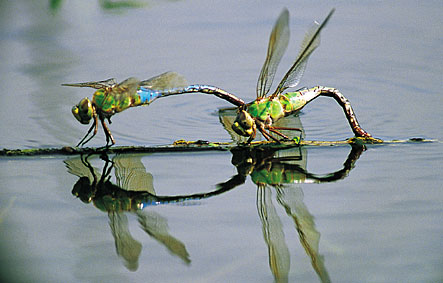
Dragonflies-mating

August in Florida

Outside, people crowd around water.  Heat, the bright aqua of water, smell of chlorine and sun lotion.  Coconut, spice.  Young girls with slender hips, high breasts.  Mincing, they walk barefoot over the burning concrete.  Ankle bracelets.  Hairless women, hairy men.  Some men look vaguely female–lack body hair, possess slender torso, a feminine grace.  They practice diving off the high platform, catapulting through the air like minor gods.

Spindly little children, bowlegged, one girl like a large walking doll, Wedgewood eyes, white skin, hair almost white, but so fierce.  She puts her face in the water, proud of herself, comes up spitting, does it over and over.  This girl’s mother, slim, pale body like a teenager’s, but her face red and sun-aged, enormous Southern twang.  A former cheerleader, rural Georgia or Alabama.  Lying on the blistering concrete, eyes closed, listening to the sounds of laughter and splashing.  My sore back, the heat melting the ache away.

On the towel closest to me, a young girl, pretty, bleached blonde hair with dark roots showing, golden-brown string bikini that matches her skin, her perfect feet.  Sudden thunder, the pool closed, into the locker rooms for 20 minutes.  Live oaks, huge spread branches like arms reaching into the sky.  The arms are shading, watchful.  The oaks are like sentinels.  The moss hangs like underarm hair.  Young boys, thick and awkward, walk stiff-legged.  They turn dark reddish-brown, but look silly next to the black kids.  Tall, skinny black boy with red hair, a crew cut.  His mama, a large woman in bright blue tank suit and neon orange shorts, matching neon bathing cap.  Her earrings graze the sides of her neck.  She isn’t ready to leave yet.  He watches the girls, pretending not to.

Over there, a skinny, burnt woman with bad teeth, yet her daughters are so lovely, so young and fair and smooth.  How did she produce them?  A hippie girl with a blonde baby boy, crooning one minute, yelling the next, she holds him on her hip, sways in the sun.  More and more women look like those prehistoric clay fertility figurines, heavy hanging breasts, stomach overlapping their thighs.  I lie still and watch, lazy with the heat, my own weight.

Leave a comment

Filed under health, karma, love, mysterious, poetry, prose poetry

Why I Hate You, a poem

illustration why i hate you

Why I Hate You

You know why I hate you?  You’re a weak vine, needing to be propped up, needing more comfort than a baby.  You imagine bugs, crawling up the walls, down your hair.  Their wings whir in the night like soft sobs.

I hate you because you’re ugly — a slob, a slut, a sucker.  Because you saw your mother passed out on the carpet in front of the television, one too many times, but you didn’t kill her the way she wanted to be killed.  You didn’t help when she needed you.  Because you let yourself be unimportant for so many years and did nothing to help yourself until it was too late, until you’d already lost the war.  Peace came on unfavorable terms, the enemy couldn’t be placated.

I hate you because you’re afraid of the dark.  When you’re with a man, you lean on the solidity of his body, the real beat of his heart, you listen to his rhythmic breathing, and you’re not afraid anymore, but you start to get antsy.  His body sounds so much stronger than yours.  They don’t cry the way you do.  Does that mean they don’t feel?  Why do they want to be with the likes of you?  You don’t have the slightest idea what you want from them.  Late at night is the worst.  The stars unfold ahead of you, and you can’t find your way to the future, stupid bitch.

That’s when I hate you the most.  You’re utterly without honor.  You imagine your ex-husband, fat and happy in his bed, eating candy.  He doesn’t suffer like you do, he has already forgotten why he married you in the first place.  He is perfect.  He is way above you in the cosmos, he is light, reason.  Your life is insignificant, ignorant and small, and won’t leave a shadow.

Leave a comment

Filed under karma, love, poetry, prose poetry

Heavenly Dances, Heavenly Intimacies, a short story

illustration heavenly dances heavenly intimacies

Heavenly Dances, Heavenly Intimacies, a short story

“Isn’t there any heaven where old beautiful dances, old beautiful intimacies prolong themselves?”

Ford Madox Ford, The Good Soldier

How can I be “dead” to any of the men I once loved?  They are not “dead” to me.  Not even H.  How can I be “dead” to H.?  They — even H. — are each as alive as when I was with them; as alive as the first time they touched me, whether tentatively or with confidence; whether softly or roughly; whether with passion or mere lust.  It is shocking and appalling how H. lurched so radically to the right after 9/11.  He began that journey to the Tea-Party-Mad-Hatter-Neocon-Bill-Buckley-Wall-Street-Apologist-Fringe-Brainless-Faux-News-Right when Ronald Reagan was shot; I was with him the very night it happened.  We had a short affair, right then, because we started thinking the end of the world had arrived and we decided, like the crazy college students we were, to get married to celebrate our courage in the face of chaos!  I realized very early on (but still way too late!) I was embarrassed to be seen in public with him.  Did you ever start seeing, and marry someone whom you later realized you were embarrassed to be seen with?  Perhaps the person in question was “dorky,” “geeky,” dressed “badly,” or had questionable “taste.”  H. readily admits he was a “dork” in high school.  He was on the debate team; need I say more?  When you can’t bear to be seen in your lover’s/spouse’s/significant other’s/partner’s company, things usually don’t work out.

Still, I put in ten dutiful years, trying to make amends for my mistake in marrying H.  The second he started making the big bucks, he dumped me.  He left me for my best friend!  I guess I deserved it, not taking control of my own life & filing for divorce two weeks after we married.  And I guess I deserved how my ex-best-friend S. ruined me, as she subsequently did.  She was in charge of the whole group we had socialized with:  dictating how everyone in our “circle” should think, speak, act, or react.  H. was dead wrong about most everything, but, to his credit, he was dead right about her.  At the time I thought him merely woman-hating, but I see now, even though he did hate women, there was something more than simply being a “woman” he hated about her.  He was covering up the fact he loved her by pretending to hate her.  Now, I have no desire to see her, not ever again.  She is definitely “dead” to me.  Yes, I understand intellectually, a living death (call it shunning) can happen to anyone.

The upshot of all this boring history?  I’ve been waiting for something a long time.  I can’t blame anyone but myself for my unhappiness, not anymore.  There is something dispirited inside me, something empty, drained, and beaten — something sick, something tired, something that has surrendered.  I gave up, when?  When my first ex-husband arbitrarily said no to children, breaking his solemn vow.  When I realized I couldn’t find happiness outside myself — not with an old love, not with a new love, not with any of my subsequent husbands, my friends, my eventual children, or my family.  Yes, to casual acquaintances and virtual strangers I am “happy, happier than I’ve ever been.”  And it’s true!  I’ve never been this happy, this contented, in my life.  Yes, there are still problems.  My oldest son is still half the world away, fighting an endless war on behalf of my “country.”  My youngest son still has an ignorant, racist, rabidly conservative father.  I am getting old.  My face is melting.  My neck is turning into a wattle.  I am drooping.

Still, I cannot imagine any of them, the men I have loved or made love to, being dead to me the way my former best friend, S., is dead to me.  Yet that is how they must feel about me, the way I feel about her.  Wanting her removed from my memories.  Wanting never to have met her.  Not missing anything about her.  She wants to see me, I heard from a mutual friend I still speak to.  I don’t want to see her, or even see the mutual friend.  I don’t even want to get as close as that!  Because of reasons.  Top secret, NSA, DOD, CIA, FBI, SEC, IRS, FDLE, GPD, ACSO reasons!  No further comment!

1 Comment

Filed under artistic failures, assholes, boys, con man, con men, criminal, criminal behavior, criminals, fathers, he, health, humor, hypocrisy, idiots, jerks, karma, love, mothers, mysterious, sex, short stories, tea party mad hatters, ultra right wing loons, users

what makes a good dominatrix, a short story

illustration what makes a good dominatrix

What Makes A Good Dominatrix

 1.  Married Men

I’ve had men, married men, fall in love with me and offer to leave their wives, just because I told them I had red hair all over. Years ago, I used to think I would never get involved with a married man. That was before my own marriage broke up and I realized just how bad it can be, trapped in that dry, crumbling life, that intimate desert. You’ll do anything for a sip of water. Anything. I’ve had married men tell me, before I met you, I hated to get out of bed in the morning. Yes, I’ve done things I swore I’d never do. Life carries certain traps for the unwary.

When my mother’s marriages broke up, she always took to the bottle. I haven’t done that yet, though the other night I did drink a whole bottle of wine by myself. Felt like shit the next day. Drinking kills two days, the day of the binge and the day after. When I got married, I thought it was forever. So did he. He was five years older. I only go with younger men now. Helps give me an edge, being female. Younger men are grateful to older women. One old boyfriend warned me that as I got into my thirties it would be harder and harder for me to find men. It hasn’t, though. Seems they pop up when I least expect them.

My soon-to-be-ex-husband, he’s even dating an older woman now. I call her the feel-good woman, because that’s what she does for him — makes him feel good about himself. I only remind him of everything he did wrong, all the mistakes he made that he plans never to make again. He thinks he won’t make the same errors in the future because he’ll be with a different person, and there will be a whole different load of emotional baggage to contend with. Do I sound bitter?

I should explain, the reason he has a girlfriend is because I have a boyfriend. It was unfortunate the way it happened — I did things out of order. I should have moved out before I got a boyfriend. I wasn’t thinking clearly. Was it my fault that after 17 years of not coming I went a little nuts?   Now, my husband admits he treated me in ways that make him ashamed of himself, but he’s not willing to make it up. He’s past all that, he’s healed, and he’s going to start rebuilding his life in a positive way. Wish I could. I’m not as quick on the uptake as he is. I had no idea how much my heart was woven into his coldness.

When he called me a slut in public the first time, we were out in front of our daughter’s gymnastics studio. You know the crowd that hangs out there — typical suburban moms — fashion coordinates, nice shoes, lipstick, sweet little clutch bags — I was inside a swarm of those when he laid that one on me. I tried to pretend no one was watching. I didn’t look at any of them, not even the one with the spangled t-shirt tied into a knot over her skinny hips. I stared at the sidewalk, counted to ten, inhaled, exhaled, and felt the moments wash over me like cool water. I thought about the endless waves of orgasms I planned on having that night with my lover, the way their magic would lift me up on their purple foamy crest and wipe all this ugliness clean out of my head.

2.  Love

In her early thirties, my mom’s sister was involved with a married man. He wouldn’t leave his wife because of the children. Aunt Frieda put up with his unannounced, late night visits for years. It’s all about men loving us. We love them without thinking, that’s the way our hormones take us. We’ve got to persuade them to love us in spite of theirs. I used to be so mad at Aunt Frieda for her lack of morals — I’ve since learned my moral desert is even more profound than hers. I was the first love of her life, she tells me now. She took care of me every weekend until I was almost two, used to chase me down the long dark hallways of my grandparent’s house, which I loved. I still love being chased down hallways, as long as it’s with a friendly intent. Everybody wants to be chased by someone who loves them, caught in their arms and held tight….

A couple days ago, I watched this documentary, about a lesbian sado-masochist. She seemed so calm, so together, so gentle and caring, and I’m not any of those things, so I paid her close attention. She said she gets put into bondage whenever she’s depressed — it makes her feel safe. I thought about all the ordinary power games people play out in the real world, and to twine it into sex seems perfectly natural. I can definitely understand why a person might want to dominate another, or be dominated by another.   The world is too scary; people have to put up with too many kinds of shit. They want to control when they get hurt.

This married guy I met in a bar, John, wants me to dominate him. His wife won’t, so he’s asked me. She thinks those sorts of people are weirdoes. Well, she’s right — but what’s wrong with being a weirdo? I mean, they’re not criminals. I think she’s just afraid she won’t be able to handle him. I love submissive men, the larger the better. That’s why you tie them up, see….

John was sitting there, looking perfectly normal, and a big beefy ex-football player. He bought me a drink, seemed harmless. We talked about his medical practice — he’s a chiropractor, the guys who crack your back. Big, strong hands; the way he held his drink at the bar was so graceful. He talked about his wife a lot at first. She’s perfect, he said. I mean, they’re soul-mates and everything. She just won’t dominate him. Isn’t it funny what people want? They want a little of everything, all at different times. Sometimes I really love to dominate a man. Other times, I don’t have anything but softness and submission in my whole body.

My soon-to-be-ex-husband will tell you how bitchy I am. My boyfriend says my husband didn’t know what kind of woman I was, but he did. My husband knew me to the core. He knew what was there, and decided one day he didn’t want any more of it. Talk about high maintenance! Some men will tell you they’ve never met a woman who wasn’t — but let my husband have his dreams. The bright, successful, completely self-sufficient woman. Like, what would she be doing looking for somebody like him then? For that matter, why would she want a man at all?

I’ve tried to do without men. I love women, I think they’re beautiful, I get along with them better than men — I just miss that crazy anatomical difference. Anatomy being destiny, and all.

3.  Loneliness

So John said, dominate me, please, Mistress. I said, how? But he can’t tell me, he doesn’t have enough words. I’m on my own to figure it out. He wants to be my slave. I guess I could pretend he’s my ex-husband, and go from there. John needs me to wear a leather jumpsuit, preferably red. He wants me to ride him like a big dog, make him crawl; lick the bottom of my shoes and stuff. He wants me to tie him to the bed and almost burn him with a cigarette.

He said the woman he used to do this with almost killed him. She sat on his face, started coming, and forgot to let him breathe. He had to bite her to get some air, and he explained what had happened, and she apologized for almost killing him, but then of course she had to whip him again for being bad. He said his dick springs into life when women are mean to him. He’s 6′ 3″, 235 pounds, and he wants to be powerless. He wants to surrender control. He wants the woman to have it all. It’s not whips and chains, it’s pure power.

I found this book called “What Makes a Great Dominatrix.” Full of practical pointers. For example, you have to be mysterious to the submissive person. You have to maintain a certain dignity and distance. If you’re too familiar, too chatty, evidently it ruins the illusion. Because it’s really the submissive who’s in control. A good dominant doesn’t do anything the submissive doesn’t really want. That torture thing is a myth. Nope, the submissives have to beg you for it. You’re doing them a big huge favor when you give them what they want. It’s so nice to be needed by someone. John needs me. Lots of loneliness out there in the world.

I don’t know whether I’m just afraid to be alone or whether I’m really loony over men just like my mother. She let it affect her mind, though — for her, it went way beyond the level of harmless hobby. Consequently, she lost a lot of things. One day, she even lost me. That’s when I knew it had to end badly. I knew she’d end up on somebody’s floor, naked to the waist, watch stopped.

I was crazy about horses — and boys — during my formative sexual years. Horses were all I drew, in the margins of my class notes, on the back of my class folders — the teacher’s voice would fade away, and all I’d hear was the clopping of hoofs, the whinnying of the great beast that could carry me away from all the pain. I wanted to run away every night, but didn’t because I didn’t know how I’d make my way in the world. I should have run away, it would have turned out better. All the things I would have missed, sure I think of those; but I would have been blissfully ignorant of many things. Such as the way my mother looked, dead on the floor, naked to the waist, watch stopped. Think of not knowing that, think of being spared that agony. Replaying in memory the nightly scenes, the gaunt body flung against my door, pleading for admission. Unlike me, she didn’t have what it takes to dominate anyone or anything. I think I’ve got what it takes. And yes, I still pray for amnesia every morning.

2 Comments

Filed under boys, daughters, fathers, girls, health, love, mothers, mysterious, science, sex, short stories

Alabaster, Briefly, a short story

illustration alabaster briefly

Alabaster, Briefly

After the hurricane, but before the power came back on, Ella went out walking with her daughter, Katie, to survey the damage.  The huge old ficus tree in front of the library had toppled over, its immense grove of roots lying naked, withering now in the sun.  “Nana’s tree gots broken,” the three-year-old said.  Humidity bore down on everything like a weighted fishing net.  The tree had been a twig thirty-five years ago, when Ella was a kindergartner.  She remembered the planting ceremony — her mother, president of Friends of the Library, in a blue linen sheath and white gloves, stepping on the edge of a shiny new shovel.

Now the tree, too, was dying.  The shelter it had provided was still dark and cool — the web of roots from each branch created a division of rooms like a house.  Ella pitied that sodden, gigantic mass, torn from the soil, not dead yet, but no hope, terminal.  How long did it take a tree to die?  Uprooted for half a day, the leaves were still supple and green.  It would take days for them to wilt, weeks for a crew to cut the tree into logs and load the logs into a wood chipper.  Her mother would be long-buried by then.

It was late August, and Sophia’s diagnosis had come in January, just after New Year’s.  Ella was far away when it happened, stuck in New Jersey with a new job.  Now her mother needed her and she was marooned.  She had turned into one of those people she hated, one of the ones who moved away from their family to chase money, thoughtless and selfish, leaving their sick, their aged in the hands of underpaid nurses.  “She’s in good hands,” Sophia’s friends told her over the phone, meaning the hospital.

Ella flew down after her mother’s surgery.  The decision to operate and the actual sawing open of her mother’s skull had happened faster than Ella could get there.  When she arrived, her mother was in the Surgical Intensive Care unit, bed number three.  Sophia couldn’t talk yet.  Her head was wrapped in a helmet of gauze, and over that, someone had placed a flowered disposable surgical cap.  She looked like a confused scrubwoman.

Ella’s reaction when, at first, Sophia didn’t know her was not heroism but, rather, numb acquiescence, a slow nod to absolutes.  Ella performed the worst sort of cowardice:  cutting the lines free before it was over.  In that first hour, Ella could feel the passage beginning, away from her mother — the slow casting off from love, the mournful horns, departing from a foggy land of illness.  Her mother had a ruddy stubbornness Ella was shocked to see.  Over Sophia’s lunch tray — each food sealed in a separate dish — her hands danced above a nonexistent teacup, squeezing a lemon primly into thin air.  She had gone another way, in her soft hat, her skin hot, glossy as if with fever, the surface papery-soft but no longer familiar.

After that, Sophia’s pale and knowing return to her usual self was anticlimactic.  Ella had expected to cry more, to feel something else, not this.  Nothing was how Ella had imagined it, not Sophia’s furtive, over-the-shoulder glances of fear, not the way Ella’s stomach dropped as she stepped into the room, not the aching bones, not the past no longer claimed.  Her mother seemed glued, as never before, to the newspaper and the television news shows.  Finally, Sophia confessed to Ella how, for a couple of weeks after the operation, she had been under the brain-surgery-induced delusion that she’d murdered somebody, by stuffing them full of shoe trees, and had been waiting for it to be on the news, in the paper.  How she’d kept waiting for the police to march in and cuff her, drag her off to jail.  Sophia and Ella laughed, and the way the humor was mixed with horror was something entirely new to them both.  Brain tumor jokes — a new genre, previously unexplored.  How do you get a woman to stop shopping?  Remove part of her brain.

The social worker at the hospital sent Ella out to look for nursing homes.  In one of them, a man, or rather, a man’s body — with no visible, communicable cognitive function — was being fed through a gastric tube, through his abdomen.  Ella took in the odor of urine, other bodily smells and functions.  The man was an ideal nursing home patient, permanently hooked to his nourishment line like a freakish, prize-winning, squash.  The nurses rolled him side to side in stages, every two hours, to prevent bedsores.  He never opened his eyes or moaned.  His family seldom, if ever, visited, the nurse said.  Ella stood at his open door until the nurse drew her away.  Ella wondered if she was seeing Sophia’s future.  Is that what her mother’s life — everybody’s life — would boil down to?  The specter of death winked at Ella through perfect cat’s eyes.  What was past the curtain?

There are far worse things than dying young, dying suddenly.  And so Ella said no to the nursing home.  She calculated how much money her mother had and decided to spend it to make Sophia’s remaining life as comfortable as it could be, considering the fact that inside Sophia’s skull was a bomb, gathering energy to explode.  Ella hired someone to nurse her mother twenty-four hours a day, seven days a week.  Someone with the right hands, the right smell.  She interviewed them over the phone, scheduled in-person interviews.

Lillie had a gold tooth in front and wore outrageous wigs:  red, blonde, honey chestnut.  Her bosom was soft, like feather pillows.  Ella knew Lillie was right for the job from the first second.  How was that possible?  All Lillie’s Bible-thumping was okay by Ella.  She knew Sophia would be well cared for.  She knew Lillie wouldn’t steal anything.  She knew Lillie wasn’t, in any way, a spoiler.

Lillie believed in Hell.  She described it one night, a pit filled with fire and snakes.  Lillie’s eyes widened and Ella could see the white all around the dark iris, merged with the pupil in fear.   Lillie believed in speaking in tongues, in visions, but she hadn’t made the commitment to become a Christian because, she confessed, she knew she wasn’t strong enough yet to keep all the Commandments.  Lillie had borne a six-year-old son, father unmentioned, who lived back home with family.  He was her shame but also her delight.  She named him Christophe and had him baptized the same day he was born.  She might not be saved, but her son was.

She was from Jamaica and already spoke in two tongues — one, a lilting version of Standard English, the other, a speedy patois she used to converse with family and friends.  Ella wondered if Lillie had secrets — when Lillie spoke like that, Ella tried but couldn’t understand.  She had inklings she, herself, was being talked about.

Lillie was good to Sophia and Katie.  Katie loved to snuggle with Lillie in her bed, rolling against her enormous bosom, watching cartoons.  Katie sought out Lillie’s bed even when Lillie was not in it.  Lillie cooked chicken and rice dishes with a lot of saffron.  Her hair oils and hygiene products covered the bathroom counter and the windowsill in the shower.  She had feminine cleansing wash, feminine cleansing wipes, feminine deodorant spray and coconut-scented douche.  Ella wondered what Lillie was trying to wash away with all that stuff.

Ella and Lillie met frequently in the night, checking on Sophia.  Ella usually slept in a T-shirt, Lillie in a long, shiny pastel gown with lace about the neck.  She glided softly on her plump bare feet and suffered from insomnia.  When Ella couldn’t sleep, she’d listen at Lillie’s door and if the television was on, she’d knock.  Together, they passed hours watching twenty-year-old British slapstick on PBS.  Lillie never laughed, but most of the time Ella couldn’t stop until she suddenly remembered why the two of them were there.

You never know enough about a particular cancer until after the patient, in this case, your mother, is dying, Ella thought.  Then you know, you get the whole picture.  Then you’re suddenly an expert on the ugliness of the tumor’s tentacles laying waste to the brain, pushing aside healthy cells, strangling them in the search for nutrients, a vigorous weed nothing can kill.  Healthier than normal brain tissue, hardy as a kudzu vine.  The operation had removed a clump from inside Sophia’s head — mixed normal brain and cancer.  What part of Sophia’s personality had been stored in those cells, then disposed of and lost to the hospital’s furnace?  These neurons and those neurons, together, perhaps held the memory of Ella’s birth — Sophia couldn’t remember what she couldn’t remember.  Ella didn’t want to know for sure what was gone.

An area of brain, diseased, removed, yet the surgeon explained how the microscopic roots fanned out — to remove Sophia’s entire tumor would be to remove her entire brain.  The surgery would provide some extra time on earth, a substantial number of better days, but would not stave the weed off for long.  Eight months almost to the day.  The radiation treatments barely slowed the growth.  The terrible vitality of the cancer equaled the slow deflation of Sophia’s life.  Ella was useless to help in that regard, but took care of all the practical details, made it possible for Sophia to die in her own room, her own bed, on her own sheets and pillows.

Time moved forward but memory moved in many directions.  Sophia’s oncologist said, “The cancer appears to be in remission.”  Ella, an intelligent woman, a scientific woman, found herself pleading for divine intervention, for the laser beam of God to drill into Sophia’s head and burn out the tumor.  Appearances of remission, external, controlled for a time.  Sophia walked, talked, and played bridge again.  But for eight months lived in the shadow of death.  Ella was buoyed by the mercy of not knowing; crushed by the agony of not knowing.  Sophia lived on the edge of the river, where each tussock of cool grass might be the last.

Sophia became confused, just as she had before they opened her head.  She started taking pain pills for the growing headaches.  “I don’t know if they think they’re fooling me,” Sophia said.

Ella caught her mother looking through her 19th-century medical dictionary, the same one Ella had pored over as a child, staring endlessly at the pictures of congenital birth defects.  Hydrocephalus, and the like.  You never know what cancer will do until it’s already done it, Ella thought.  She wanted to transcend her awkwardness in speaking to her mother about her own death, but wasn’t able to.  She held her breath until she felt faint, but no words came to her.  Sophia knew she was dying; Ella pretended she, herself, didn’t.  It felt like Sophia knew Ella was merely pretending, and spared her anyway, one last act of maternal grace.  Apparently, Ella was good for only the simplest things, things like comforting her mother with voice and touch as she became more and more childlike.

But really, Ella wasn’t good even for that.  One afternoon when Sophia was knocked flat with pain, Ella tried to lie down in bed with her, stroke her back, the way her mother had done for her all her life.  “No, don’t, it hurts,” Sophia said.

Ella, feeling helpless anywhere but at her mother’s side, stared for hours at old photographs.  In one was the three-year-old Sophia, sitting on her father’s knee, dressed in white, a huge bow on the top of her head, a mass of dark curls, her small legs unexpectedly spindly, her feet surprisingly bare.  The sole of her foot held the whorls of this day, this moment.  Ella tried but couldn’t decipher the expression in her grandfather’s eyes.  What would he say, that circumspect ghost?  How to explain to him, how to excuse the futility of all Ella’s lavish preparations?

That night, Ella dreamed Sophia gave her old Bible to Lillie instead of her.  And in the dream Ella was terribly hurt by that, but since her mother was dying, tried not to show it, and wondered, with the agony of a child, why her mother hated her so much.  Lillie’s eyes, round and widened, with either alarm or fear, darted hawk-like around each room, and those eyes, surrounded by her smooth features and her gleaming, dark-brown skin, those quick eyes seemed to hold all feelings, all knowledge.

It was Lillie, Ella had to admit, who did the most work for Sophia.  In the days that followed, Ella could only watch as the bond between the two became stronger.  The next week, Ella was back in New Jersey, resigning from her job and packing the contents of her office.

“Take as much time as you need,” her boss said kindly, but she knew he didn’t really mean it.

“I need more time than you can possibly imagine,” she said, and he nodded and tried to look sad.

On the phone later that morning, Lillie told Ella how Sophia seemed so much more cheerful since Ella had departed.  “She’s perked up so much,” Lillie said.  Ella wasn’t surprised.

Back in Florida for good, Ella grew angrier by the day.  She lay awake nights fuming about the receptionists in the oncologist’s office who made her feel like an obnoxious pest for calling.  Their crisp, girlish voices made plain there was nothing more they could do other than prescribe painkillers.  Why didn’t Ella realize that and leave them alone?  Then she chided herself for being enraged by their callousness.  Rational thought had vanished.  Ella’s remaining thoughts and feelings flew around like feathers and fur and sometimes, like lazy dust balls.

Katie, at bedtime:  “I’m scared of monsters.  A tiger is in here.”  When asked to cease and desist:  “I’m just being quiet.  Don’t talk, Mommy.”  Ella watched her breathe after she fell asleep — both her daughter and her mother were flying along far, far above her, and she couldn’t seem to rise.

The day before the hurricane Sophia said, “Hi, sweetie,” and smiled when she saw Ella.  Sophia was close to dying but Ella felt her mother still knew her.  Sophia held Ella’s hand and kissed it.  She rubbed Ella’s arm.  Her mother’s head, as Ella adjusted it on the pillow, felt so warm, so heavy, and so sweet.  Her hair — smoothed flat behind her ears.  Her nails painted red by Lillie, she lay on pink embroidered sheets, sporting pale shamrocks on her homely nightdress.  The steel bed-rail gleamed, chilling against Ella’s thighs as she leaned in to try to glean some intricate, fine-grained meaning from the hour.  The charging ceramic horse she had hung over her mother’s bed, the one which had driven bad dreams away in childhood, his mane still wild and golden against the gloom, would be only a minor talisman in the end.

A urine catheter and bag hung on the hospital bed’s side-rail.  “Is that juice?” Katie asked the first time she saw it, and Sophia and Ella both laughed.  The tubes were transparent at first, then, growing clouded and organic with use, became less a fixture than anything.

It was too hard for Ella to bear.  Every time she went in the room her mother grabbed her hand, gripping with all her strength.  The way she looked at Ella — she wanted to tell her something, but what?  Ella wished she could stay away.  She wished it wasn’t like this.  She wished they could just sit in the living room together, watching TV and Sophia could needlepoint.

Ella waited for the hurricane.  Last week had been her mother’s birthday — the storm would be her penultimate gift.  But Ella didn’t know that until afterward.  Memory back-filtered such telling details — pictures of the dying mother were snapped, then parts of the view faded but parts brightened.  Life as journey, as vision, as caress.  Each thing became smaller at first, then loomed larger.  Her mother’s eyes, teeth, hair.  Perception was flawed.  The hopeless interpretation of the mind.  Where was her guardian angel?

Suddenly, Ella was in love with hurricanes as never before — yes, there was the threat of death, nothing new, especially these days, but there was also the stupefying power of the wind, the pelting rain.  Ella longed to be in awe, in supplication, flattened, watching the storm roll over her body like a man would, naked, trembling with powerful need of her, shouting with passion as she lay under him.  She was overwhelmed by the feeling that this was the way things needed to be.  For so long, a storm had been raging inside her — it was a relief to have it visible, a relief to simply be reduced to holding on.

In the past, when Ella’s mother wasn’t dying, she always drank to excess when a hurricane was approaching.  Sophia had always seemed terrified by the darkening sky, the strengthening gusts of wind, and the first huge, cold, solitary raindrops that pelted heads at random.  When hurricanes were on the horizon, she cooked elaborate cream sauces, and served lemon-and-honey tea shot with brandy in crystal cups.  When a hurricane arrived, Sophia was always more or less unconscious.

But this time, Sophia wasn’t afraid at all, instead, comforting Katie from her deathbed — the three-year-old crawled in with her, not Ella, in the middle of the hurricane.  Ella was too tired to have any more hurt feelings.  “There, there, nothing’s wrong, baby,” Sophia crooned.  Ella pretended it was herself in her mother’s grasp.

Sophia wasn’t afraid, and then Katie wasn’t, either.  Sophia, in the middle of that hurricane night, showed Katie it was just the wind… showed her the trees, whispered into her ear, in the midst of baby curls.  Ella knew how that felt, her mother’s velvet skin between the ear and the shoulder, all of it perfumed silk.  Ella closed her eyes and slept.

Later that night, just before dawn, while the wind ravaged the trees and tugged on the roof of the house, Ella woke to hear Sophia speak for the last time, the sleeping Katie draped across her chest.  “Ella, Ella,” her mother breathed over and over, quietly, so as not to wake the child she held.  “Ella, Ella.”  Sophia smoothed hair she believed was Ella’s as she whispered.  Ella watched from her mattress on the floor, afraid to move.

Sophia’s death waited while the wind roared, her death staring with great golden leopard eyes, unblinking.  The mercy of the teeth sunk into the throat.  To stay, to leave — it became the tiniest of steps.  The tears in her eyes.  The death dance, the death rattle.  The odd, rhythmic, hitching respiration, the sticky sweat, the clock wound up by Sophia’s parents’ lovemaking finally unwound.  Sophia died late on the morning after the hurricane.  Ella was there, holding Sophia, as she drew her final breath.  And then exhaled.  Tick-tock — then nothing.

In truth, she lost track of her mother’s breathing as it stuttered and missed — her own heartbeat seeming to slow down — had that really been the last, the last?  Waiting for the next inhalation, straining to hear.  Ella just missed it, missed it.  Then it dawned on her, too late, Sophia wasn’t breathing any more.  Or was she?

“I think I saw her chest move,” Lillie said, panting hard.  She ran to Sophia’s dresser and grabbed a mirror, holding it in over Sophia’s face, peering for signs of breath.  Lillie’s eyes were dazed, her hands trembling, humid, as she passed the mirror to Ella.  At first Sophia’s hand felt the same as always, but in a few minutes her color had completely gone.  Her skin was whiter than Ella had ever seen it.  White, translucent, her dead mother became alabaster, briefly — a warm, heavy sculpture.  The funeral home people didn’t let Ella watch her mother stiffen, cool.  They hustled her out of the room, didn’t let the daughter see them zipping her mother’s body into a bag.  Had they forgotten that zippers made noise?

Lillie hovered over Ella as if she were spun glass, falling toward the floor.  Lillie’s hands were once again warm, strong and capable, but in the end had not been enough to keep Sophia alive.  She stripped the rented hospital deathbed and sponged the plastic-covered mattress with lilac-scented disinfectant.  Ella crept into the bathroom and locked the door, listening to the sounds outside with great weariness.  She eyed the bathroom window, wondered if she could fit through.

The water Ella drank to wash down her first tranquilizer was terribly cold.  On her tongue it was like an immaculate knife.  When Ella told Katie that Sophia was up in heaven now, with God and the angels, Katie’s voice grew soft and sad:  “I wanted her to stay the way she was.”  Me, too, Ella thought.  Me, too.

Ella stood in the driveway and watched the black hearse move off down the road.  Lillie was soon engrossed in cooking — gigantic pots of black beans and yellow rice.  The smells filled the house, harmonizing with the soapy lilac already there.  Ella’s first post-hurricane, post-mother walk with Katie was a mixture of familiarity and revelation — she was used to seeing that kind of wreckage.  She was prepared for the smell – the ocean things, dead and rotting washed-up things.

That night, Lillie snored through it all, her mouth hanging open, trusting, defenseless, still waiting to be strong enough to get saved.  She had not heard Sophia’s last words, and for that Ella was glad. Ella, Ella, Sophia sang out in the night like a chant, the repetition of the name apparently bringing her ease when might otherwise have been terrified.  Ella realized, as she had not before, how much she loved wind and rain, how much she loved how the world was made disheveled and clean by a hurricane.  She clutched her daughter’s small, hot hand, wondering how the child would remember this day; remember her when it came to that.  “Nana’s tree gots broken,” Katie said again.  The child lifted her arms, asking to be held, and Ella obeyed.  She buried her nose in the curve of Katie’s neck and breathed.

3 Comments

Filed under acceptance, anthem, baby, beauty, bible, birth, childbirth, childhood, compassion, courage, daughter, daughters, death, development, dream, dreams, ella, eternal, eternity, evolution, faith, family, health, love, mothers, mysterious, science, short stories

Baby Chicks and Free Speech, a short story

illustration baby chicks and free speech free_speech

Baby Chicks and Free Speech, a short story

Here I am, sitting on the long, narrow side patio of “Ye Olde Neighborhood Coffee Parlor” listening to yet another, tiresome & self-aggrandizing, homeless guy tell some adoring young female his “war stories.” So this one night, under this bridge… they usually begin, as does this one.

And then they arrive as quickly as possible (as does this one) at the “no one dares to call the police on me anymore,” stage, or is it no one dares call the state troopers, or the FBI, or the CIA, or the NSA? Whatever. Boils down to the fact that some dangerous, or just plain, old, drug-addled sociopath, is trying to pick up a drunk, defenseless-seeming chick (and I do mean chick – even her hair is fluffy like a newly hatched & dried chicken’s) on the side porch at “Ye Olde Neighborhood Coffee Parlor.” Then I hear the magic words: crazy bitch! Bingo!

So, to cut a long, boring, pointless ordeal short, I let him have it in the face with both barrels. Told him from where I sat, not even lifting my head to look, or my pencil from page of the blank composition book I was writing in, that if he could call someone a “crazy bitch” loud enough for me to hear him all the way at the opposite end of the uncovered concrete patio, then I could call him a “stupid, fucking sociopathic, prick asshole” as loud as I wanted to, from my end of the patio.

“Yes,” he said, “that’s your right of free speech.” And then he went inside to have the management call the cops on me. Ooh, he just trotted back out to tell me he works at the College of Law — he’s real important!

The poor, homeless chick I was afraid was going to end up as a body dumped by him somewhere along the nearest exit of the nearest interstate is not going with him now, she’s clutching her head and moaning how she was “just on my way to the lake, man!” She sounds like Janis Joplin after a shot of heroin and half a bottle of whiskey. I just kept telling her I loved her, over and over and over. And that he most definitely did NOT love her. Or have her best interests at heart.

I gave him a fucking piece of my mind. Maybe I didn’t save her life, but I definitely saved her poor, little, skinny ass from a predatory, muscle-bound hunk of steroidal ego-maniac-ism. With a tanning booth tan, or maybe it’s a spray tan, who gives a fuck. I think the other patrons inside this place just told him to get the hell out of here. We’re all here, some of us twice a day, almost like clockwork – since this is the first time I’ve ever seen him, I doubt he is a “regular.”

Oh, but the poor, unjustly accused, wee man-child protests plaintively he was “just trying to do somebody a favor, buying a homeless person a cup of coffee.” The “crazy bitch” he referred to outside on the patio was, drum roll please… his mother! Wow, there’s a shocker. What sociopath/serial killer/manipulator/user/con man/misogynist/racist/violent/physically or emotionally or financially abusive A-hole doesn’t blame their “crazy bitch” of a mother for everything they’ve brought on to themselves!

I told him she must really love him, his mom, especially when he calls her “crazy bitch” to her face on Mother’s Day! I thought his head would explode right there, all over the rusty, rickety, nasty tables the owner is too cheap to replace. Why I keep coming back here, I’ll never know. My nephew says it’s haunted… maybe the spirits are trying to get me here so they can tell me something I desperately need to know. What if I don’t want to listen to them? And I don’t! Not the bad ones, anyway. So I generally try to ignore them all, altogether, because trying to sort the good spirits from the bad spirits seems like tempting fate.

Miss “Chicken Little/Little Chicken/My Little Chickadee” would have paid handsomely for that “free” iced coffee drink with a priceless piece of her tiny, bony ass. Look on the bright side: maybe she would have left him with a little something infectious and/or potentially itchy to remember her by. Of course, if she had gotten pregnant, he would have denied everything, including ever having met her. And pity the poor child born of such a freak-o-zoid union!

Now the musclebound sociopath is gone, back on his expensive racing bike, continuing on his way to the neighborhood weightlifting “meat market” joint three blocks down the road, where he can peacock his spray-tanned asshole-ry around for all the other macho/macha bodybuilders. College of Law employee? We’ll just see about that. Yeah, that’s what I thought… nobody on the staff possesses his distinctive face. How considerate of the College of Law to have its own mini-facebook thing! Legal Sociopath Dude vacated the premises, and quickly. Thank you, all good spirits haunting “Ye Olde Neighborhood Coffee Parlor!”

5 Comments

Filed under boys, fathers, girls, health, humor, legal writing, love, mothers, mysterious, prose poetry, science, sex, short stories

Elf Therapists I Have Known, a short story

illustration reichian elf therapists i have known

Elf Therapists I Have Known, a short story

I went to a Reichian therapist (a disciple of Wilhelm Reich, who was a student of Sigmund Freud) once, and it was some experience. She was this neat little lady named Lila. She had these big flashing eyes and she looked like an elf except she didn’t have pointed ears. Well, actually, maybe she did. I’m not sure. Wow, I think they really were pointed ears! So, like, dude, I think she actually was an elf! How spooky is that? The elf Reichian therapist/analyst/spiritual counselor? Who just happened to be counseling my dad? In group therapy? With my Aunt, his baby sister, who was ten years younger than him? Like I was ten years older than my baby brother? My two daughters that I have now, thirty something years later, are ten years apart. How many times do we have to repeat this generational pattern thing to get it right? To infinity, and beyond, it would seem.

***

So, the reason I went to see her, Lila the elf therapist, is that I was in California visiting my father the Communist criminal defense lawyer. He was really tall and thin with wild, curly hair. He was what I call now an “interesting” person. Which my older daughter will tell you really means “eccentric,” which is supposedly good, and which my younger daughter will tell you means “weird,” which is not so good, in fact, is bad in a major way, that is, any way which embarrasses her in front of her friends, which may be perfect strangers, but, you can never be too careful. Someone might turn out, in the end, to be a friend. Or they might turn out to be your worst enemy, so don’t give them any ammo they might be able to use against you in future.

Well, anyway, I was out visiting him, my Commie criminal defense lawyer father whom I didn’t see from the ages of four to twelve, over Easter break when I am fifteen going on sixteen, the exact same age my younger daughter is now, and he had an appointment for group therapy while I was there, and for some unknown reason, he invited me to go along with him. Because I guess he thought exposing a vulnerable adolescent to some of the wackiest, mid-1970s-counterculture, radical German existentialist-inspired group therapy that ever existed was a great idea to heal our battered and bruised father/daughter relationship! Which is exactly the sort of thing my father would think! Which is one of the things I most love about him now, but let me tell you, then was a completely different story!

***

I didn’t love this characteristic of Popsy at all when I was fifteen. No, that characteristic made my stomach hurt. In fact, the entire time I was with him, mostly, I was always on the verge of passing out, throwing up, breaking into a horrible sweat, having diarrhea, or all of those things simultaneously! Not that I was tense, mind you, just that he made me ever the teensiest bit nervous because of his unpredictable-ness. Excuse me while I wipe the tears from my eyes from writing that last couple of sentences! Tears of laughter! Now! Tears of sickness, then. See what a difference 36 years can make to a person? From one of your most horrible experiences to one of your most cherished, a few dozen deaths and a few divorces and a couple of children later! I’m laughing so hard I have abdominal cramps right this second! Whew!

4 Comments

Filed under boys, daughters, fathers, girls, health, humor, love, mothers, mysterious, short stories

She Finally Had Enough, a short story

illustration she finally had enough

She Finally Had Enough, a short story

One fateful, thunder-stormy, early summer, north central Florida evening, this thrice-divorced, somewhat neurotic, fairly attractive for her age, fifty-three year old woman suddenly and completely unexpectedly decided she’d finally had enough snuggling. Not just enough for the moment, the hour, the day, the week, the month, the year — no, she’d finally had enough for an entire lifetime. From February 15th to June 15th, she tortured her brand-new, super-hot boyfriend (who had long, luxuriant, ginger hair with a couple of silver strands mixed in to add visual interest) with so many snuggling demands, and he was so kind, so generous with his snuggling (and other) abilities, which were, shall we say, subtle, complex, and mature, as well as multiple in nature. If you get the hidden meaning. No pun intended. That’s a damnable lie. Every pun intended, and included for general salacious effect upon you, dear reader. Deal with it! Go get your own damned snuggling, right this second, from whomever it is you most wish to snuggle. Maybe it’s your wife, your husband, your child, your parent, your neighbor, your bitterest enemy, your dearest friend, maybe it’s Adolf Hitler or George W. Bush, or your dog, or the armadillo that’s digging a big trench next to your driveway and gave birth to a litter of babies last week, maybe it’s your hippie nephew you’ve taken into your care who’s living in your former mother-in-law suite, whoever. Maybe it’s the lonely woman eating at the take out Chinese restaurant downtown, maybe it’s the funky bartendress at your favorite liquor lounge, maybe it’s the espresso maker at your local coffee parlor…. See the picture? Find yourself somebody to snuggle and leave me the fuck out of it!

So anyway, in four short months this awesome dude donated so much snuggling to the fifty-three year old woman that she’d finally, finally, finally had enough. And just like that, she never needed to be snuggled again. The teletype machines couldn’t spit out enough copy; she was nominated for International Lifetime Snuggling Achievement Woman of the Year, the Decade, the Century, the Millenium, in whatever year you think this could happen in, whichever is your favorite year, whichever year of the cat or rabbit or duck or dog or snake, whatever year you want to choose, pick the year you were born, for example, or the year in which you’ll die, whatever year gives you the most satisfaction. Because when the Stones sang, “I can’t get no satisfaction,” that was a vicious lie, a piece of propaganda promulgated to make women everywhere stop expecting said “satisfaction,” and to make skanky little slutty Mick Jagger seem more handsome and powerful than he actually was. The Beatles will forever kick the Stones’ lame asses. Forever and ever, amen. No matter what cowards who enlisted in the Coast Guard to avoid being sent to Vietnam might think. Cowards can’t be trusted. Ever. And that’s my final word on this subject. Forever and ever, AMEN.

2 Comments

Filed under boys, girls, health, humor, love, mysterious, sex, short stories